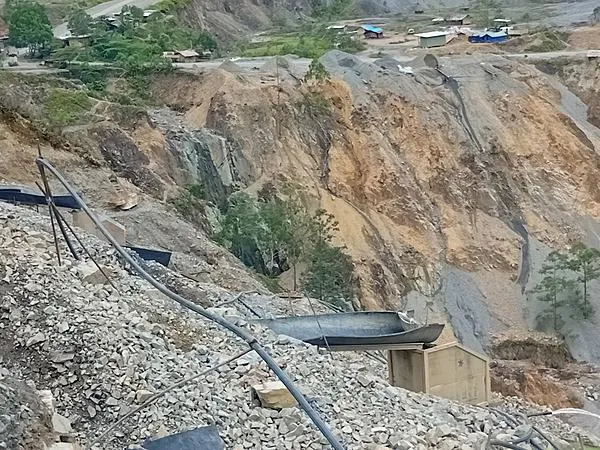
The independent Panguna Mine Legacy Impact Assessment (PMLIA), in its Phase 1 report released in December 2024, identified safety risks associated with geotechnical instability in the slopes of the open pit.
Persistent alluvial and small-scale mining (ASM) activities have contributed to these risks, alongside erosion and water run-off.
As a precautionary measure, the Autonomous Bougainville Government (ABG) erected warning signs and issued text message alerts in December and January to individuals in the area, warning of potential landslides exacerbated by informal ASM activities.
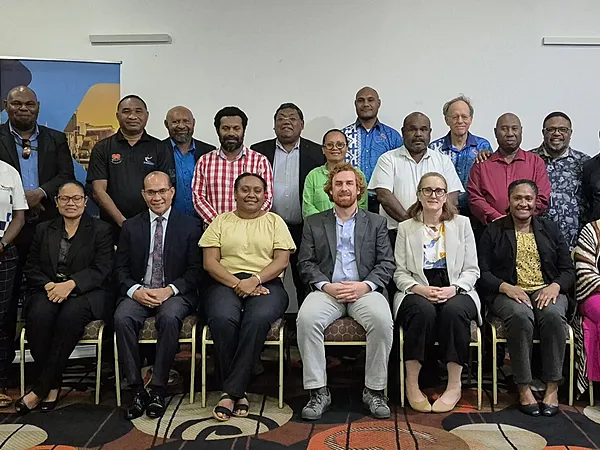
As part of ongoing follow-up efforts, officials from the ABG, Bougainville Copper Limited (BCL), the Panguna Landowners Interim Council (PLIC), Ioro 2 Community Government, and Central, North, and South veterans met with local landowners and alluvial miners on 7 May.
The meeting in Panguna aimed to raise further awareness and foster cooperation. BCL outlined the need for safe access to the site to carry out early-stage exploration activities under its existing EL01 exploration licence. Both the ABG and BCL respectfully requested that informal miners vacate high-risk areas in the interest of public safety and to enable BCL’s planned pre-feasibility project work.
Following this engagement, the ABG convened a multi-agency meeting on 5 June to begin developing a Trigger Action Response Plan (TARP), designed to complement existing disaster management plans and protocols.
Global consulting firm Tetra Tech Coffey, which has been engaged to carry out the PMLIA work, presented updates on geotechnical monitoring now underway as part of Phase 2 of the assessment. The ABG will have access to relevant data on ground movement at vulnerable sites within the pit and along the mine access road.
The Papua New Guinea Chamber of Resources and Energy (PNG CORE) is proud to announce ExxonMobil PNG Ltd, the operator of the PNG LNG Project, as the Principal Sponsor for the 2025 PNG Resources Week, to be held from 28 to 31 July 2025 at APEC Haus, Port Moresby.
ExxonMobil PNG, a core player in Papua New Guinea’s energy sector and operator of PNG LNG, has a long-standing record of consistently supporting key PNG CORE events, including CANCONEX, international conferences, and national initiatives that promote collaboration, innovation, and sustainable development in the country’s resource sector.
Their continued sponsorship reflects a deep commitment to the growth of Papua New Guinea’s energy industry and the communities it serves, and continues their legacy of contributing to PNG’s development for over 100 years.
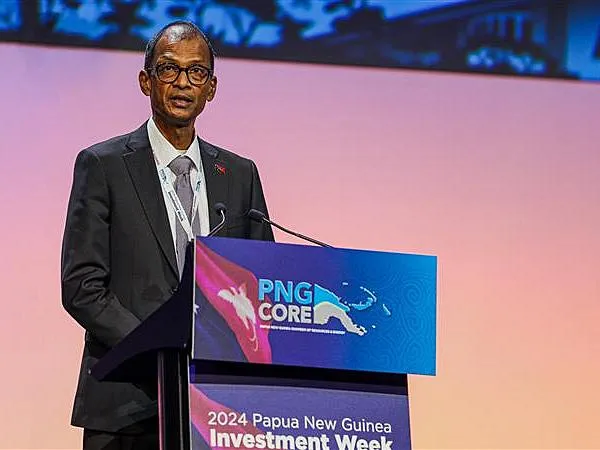
Speaking on the announcement, Mr Anthony Smaré said: “We are pleased to welcome ExxonMobil PNG as our Principal Sponsor for PNG Resources Week 2025. ExxonMobil PNG is an industry role model in how it manages stakeholder relationships with the National Government, government agencies, and community stakeholders. Their partnership with PNG CORE has helped shape many of our flagship events, and their leadership in the energy sector continues to inspire progress and inclusive development. With ExxonMobil’s support, this year’s Resources Week will be a powerful platform for dialogue, innovation, and shared vision.”
“PNG CORE is the leading body for our industry in PNG and has a proven track record for bringing together thought leaders and diverse industry stakeholders on the issues that matter most to the country,” said Dinesh Sivasamboo, Chairman and Managing Director of ExxonMobil PNG Ltd. “We are proud to do our part to support its efforts and those of the Government of PNG to strengthen investment in the country’s extractive industries.”
The 2025 PNG Resources Week will convene stakeholders from government, industry, academia, civil society, and landowner groups to engage in meaningful discussions and help shape the future of PNG’s resource landscape. The event will feature high-level panels, technical sessions, and networking opportunities aimed at fostering collaboration and knowledge exchange.
A highlight of the week will be the PNG Resources Golden Exhibition, a special showcase marking 50 years of progress in PNG’s resource industries. This jubilee-themed celebration will include an interactive digital map display, spotlighting the contributions and legacy of member companies such as ExxonMobil PNG across the country.
PNG CORE looks forward to working closely with ExxonMobil PNG Ltd and all participants to deliver a memorable and impactful Resources Week in July.
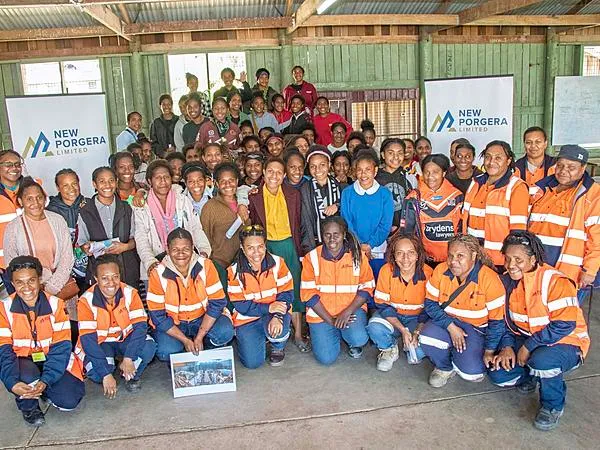
The Papua New Guinea Chamber of Resources and Energy (PNG CORE) today congratulated New Porgera Limited (NPL) for its outstanding performance in the first quarter of 2025, calling it “a new era of responsible resource development and national ownership” in Papua New Guinea.
PNG CORE President Anthony Smaré praised NPL’s achievements, noting that the company had delivered tangible results in its first full quarter of operations. PNG CORE is the peak industry body representing the mineral resources and energy sectors in Papua New Guinea.
“Our mission and vision is to create the understanding, generate the knowledge, and forge relationships which empower Papua New Guinea to capture sustained nation-building benefits from its natural resources,” Smaré said.
“Congratulations to the management, staff, shareholders and stakeholders that have contributed to this strong quarter by New Porgera Limited. It’s wonderful to see this great mine producing again and contributing to its host communities, Enga Province, the Highlands business ecosystem and the country again,” he added.
“This has been the result of tremendous hard work by the NPL team and their partners, showing grit and resilience in a challenging condition – and they should be proud of their performance,” the official said.
His remarks come amid growing recognition from industry leaders and stakeholders, including Prime Minister James Marape, who has earlier hailed the early success of NPL, calling it “a model for responsible, equitable and inclusive resource development in Papua New Guinea.”
"The company’s delivery of 84,800 ounces of gold, declaration of an eighty million US dollar dividend, and payment of forty-eight point nine million US dollars in corporate tax are remarkable outcomes that benefit our economy and our people," Smaré said.
Smaré also acknowledged the successful connection of the Mulitaka Bypass Road, which has significantly improved logistical access and demonstrated NPL’s commitment to overcoming infrastructure challenges in remote regions.
He commended the company’s workforce development efforts, highlighting that 97 percent of NPL’s 2,811 employees are Papua New Guinean nationals and that 43 industrial trainees have been hosted to build future capacity.
While celebrating these achievements, PNG CORE also expressed concern over the serious law and order issues reported during the same period. Smaré noted 33,499 intrusions into the mine area, 11 armed robberies including the shooting of an NPL employee and ongoing highway disruptions.
“These incidents are unacceptable and threaten the progress NPL have made. PNG CORE supports the government’s review of a Security Tax Credit Scheme and a Highway Tax Credit Scheme to assist both the company and affected communities,” he said.
In an exclusive interview with PNG Business News, TWM Group managing director Kori Chan shared key insights from the 40th Australia–PNG Business Forum and Trade Expo, held from June 23 to 25 at The Stanley Hotel in Port Moresby.
Chan described the event as informative and “suitably sized” to encourage meaningful dialogue among business leaders, government representatives and international stakeholders.
“There were great presentations such as that from Kramer Asia Pacific managing director Adam Kramer, who emphasised the importance of local knowledge and experience with global thinking and alignment,” Chan said, noting Kramer’s message about the legacy and regional reach of his family business, which operates across PNG and Australia.
TWM’s involvement culminated on Day 3 with Chan joining a panel discussion on green finance and climate impact funding. His talk traced the company’s 14-year journey in environmental services, rooted in a vision to deliver world-class, environmentally responsible essential services for Papua New Guinea.
“We’ve been guided by a distinct corporate charter to protect our pristine environment, our people and our culture. ESG has been a fundamental part of our growth from the beginning,” Chan said.
He acknowledged clients like ExxonMobil PNG and the PNG LNG Project for helping shape TWM’s adherence to international best practices, including IFC lending requirements and US EPA standards.
TWM presented its Resource Recovery Centre (RRC) as a model for public–private partnership in sustainable waste management. Designed with climate resilience in mind, the facility includes air emissions control, stormwater management, renewable energy systems and biodiversity safeguards.
By diverting waste from landfills and open burning, the RRC reduces greenhouse gas emissions and promotes sustainable resource use by recovering materials otherwise lost to disposal.
Chan highlighted the project’s social and governance dimensions, including policies on gender equality, disability inclusion, employment, human rights and anti-violence.
“We have ensured that the RRC provides defined benefits to the Kuriu landowners — from legitimate land titles to equity participation and employment opportunities,” he said.
“It will also serve as a live educational facility for schools and universities to engage directly with sustainability.”
On governance, TWM integrates risk management, compliance with national and international standards, and transparent reporting. These include anti-corruption and anti-bribery protocols, along with ESG compliance throughout its supply chain.
Chan said the forum allowed TWM to forge meaningful connections with like-minded leaders and government officials, opening doors for future collaboration.
He also used the platform to raise concerns over policy delays. Chief among them is the long-awaited National Waste Management Policy, which has remained in development for over six years.
“It has gone through all the necessary stakeholder consultations with government, private sector and partners, and now requires urgent attention from key policy decision-makers and implementers,” he said.
Asked what policy incentives would best support Papua New Guinea’s green infrastructure sector, Chan laid out a bold wishlist for decision-makers. He proposed the establishment of a special economic zone along the Napa Napa peninsula, offering tax-free incentives to attract investment. He also called for tax and duty breaks for companies that invest in sustainable technologies, along with grants and subsidies to support ESG-focused research and development.
Chan urged the government to enforce green procurement policies across all levels and require public reporting of ESG performance by government agencies. He also recommended introducing regulations that reward both emissions reductions and job creation, increasing the use of public–private partnerships to secure investment, and ensuring that government regulators apply compliance measures fairly.
Finally, he stressed the importance of upholding responsible and transparent procurement practices in all public sector engagements to build trust and drive long-term environmental and economic benefits.
During the discussion, an audience member raised the potential of PNG’s growing diaspora, particularly in Australia, to contribute to national development.
Chan replied, “More can be done to strengthen the ties between PNG and Australia, including with our PNG diaspora based overseas. They have the ability to drive positive change in the country and PNG must find ways to entice them to return, invest and bring with them their knowledge and experience.”
His call for PNG to transition from a linear to a circular economy resonated with the broader sustainability discussions throughout the forum. “It is the way of the future. It is morally right if we are to act sustainably,” he said.
The 40th Australia–PNG Business Forum and Trade Expo showcased diverse voices and visions, but TWM’s message was clear: with the right policies and partnerships, green infrastructure can become a cornerstone of PNG’s sustainable future.
Westpac is proud to announce the close of nominations for the 2025 Westpac Outstanding Women (WOW) Awards, marking a triumphant return of the programme after a five-year hiatus. The response has been nothing short of extraordinary, with nominations pouring in from every province. It is a powerful testament to the growing momentum behind women’s leadership in Papua New Guinea.
This year’s nominations reflect a groundswell of support for women who are breaking barriers, leading change and uplifting communities. Remarkably, forty percent of nominations came from outside major centres, underscoring the national relevance of the awards and the deep desire to celebrate women’s achievements in all corners of the country.
Westpac PNG CEO Andrew Cairns expressed his admiration for the overwhelming response: “To see such a strong wave of nominations from across PNG is truly inspiring. It speaks to the calibre of women driving progress in our communities and the collective belief in recognising their contributions. We are honoured to continue championing women’s advancement through the WOW Awards.”
The return of the WOW Awards has reignited a national conversation about the importance of visibility, recognition and opportunity for women.
Dame Meg Taylor, former Pacific Islands Forum Secretary-General and current WOW Awards judge, shared: “The WOW Awards are more than a celebration – they are a platform for storytelling, for honouring resilience and for inspiring the next generation. These women are shaping the future of Papua New Guinea.”
Public health and community development consultant Michelle Hau’ofa echoed this sentiment: “These nominations are not just entries – they are declarations of courage, community and conviction. We are witnessing a movement, and it’s a privilege to be part of it.”
Each category winner will receive a K5,000 grant and participate in a year-long mentorship programme led by Westpac, designed to strengthen leadership skills and expand professional networks.
The judging process is now underway, with winners to be announced at the highly anticipated WOW Awards Gala in July 2025.
Westpac extends heartfelt thanks to everyone who nominated, supported and stood behind the incredible women of PNG. Your voices are helping to build a more inclusive and empowered future.
Prime Minister James Marape has hailed the early success of New Porgera Ltd (NPL), calling it a model for responsible, equitable and inclusive resource development in Papua New Guinea.
Speaking in Port Moresby following the release of NPL’s first-quarter report for 2025, Marape commended the gold producer for exceeding operational targets and making strong economic contributions in its first few months of operation. The company poured 84,800 ounces of gold and declared a USD80 million dividend, while contributing USD48.9 million in corporate tax.
Marape also attributed the strong performance to the company’s commitment to overcoming logistical and infrastructure challenges, including the completion of the Mulitaka Bypass Road—a critical connection to the mine.
He framed the mine’s revival as symbolic of PNG’s growing control over its natural resources.
“I commend NPL and our partners at Barrick for demonstrating that this new model — 51% PNG-owned, including 15% for landowners — is not only possible but is already producing results,” said Marape.
“This is not just a mine reopening — it is a symbol of PNG’s sovereignty over its resources, negotiated in the 50th year of our Independence, and delivering real dividends for our people.”
Marape also credited Barrick President and CEO Mark Bristow for his “leadership and vision” in supporting a deal that gives PNG majority ownership. “Mr Bristow is a true global citizen. He understood our desire for equitable ownership and supported our push for a deal where both PNG and our investment partners win,” Marape said.
New Porgera Ltd, which operates the Porgera Gold Mine, is jointly owned by Papua New Guinea stakeholders and Barrick Niugini Limited (BNL). Specifically, PNG stakeholders, including Kumul Minerals Holdings Limited, the Enga Provincial Government, and local landowners, hold a 51% ownership, while BNL, a joint venture between Barrick Gold and Zijin Mining, holds the remaining 49%.
The Prime Minister highlighted employment gains from the project, with 2,811 people employed—97% of whom are Papua New Guinean nationals—alongside 43 industrial trainees.
“This shows what is possible when Papua New Guineans have real equity and strong management,” he said.
According to Marape, New Porgera’s early achievements validate his government’s broader resource policy reforms. He noted that Papua New Guinea has recorded average GDP growth of more than 4% over the past four years, underpinned by policy reforms and growth in agriculture and renewable resources.
“New Porgera Ltd is proof that responsible investment, national ownership and strong leadership can coexist and thrive. It’s a shining example of what a reformed resource sector can look like when PNG takes charge of its destiny.”
Despite the success, Marape flagged persistent law and order issues within the mining tenement, including more than 33,000 unauthorised intrusions, 11 armed robberies and the shooting of an NPL employee.
“These law-and-order issues are unacceptable,” he said, adding that the government is reviewing proposals for a Security Tax Credit Scheme and a Highway Tax Credit Scheme to support community and operational safety.
Marape urged all stakeholders—particularly the Enga Provincial Government and landowner groups—to work with Mining Minister Rainbo Paita to finalise the Community Development Agreement (CDA).
“Only once the CDA is concluded will the equity benefits be transferred to the province and landowners. Until then, the funds will remain in escrow for accountability and transparency.”
He also called for support from the energy sector to address emerging power supply challenges due to declining gas reserves at Santos-Hides.
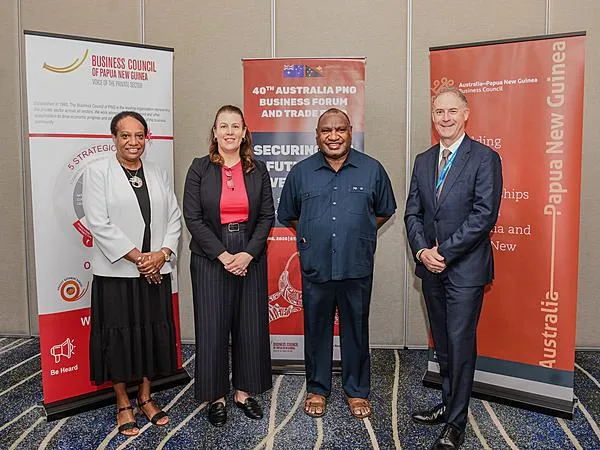
Papua New Guinea and Australia marked four decades of business partnership at the 40th Australia–PNG Business Forum and Trade Expo, held from 23 to 25 June at the Stanley Hotel in Port Moresby.
The forum came at a key moment for PNG, which is preparing to celebrate 50 years of independence. More than 800 delegates from government, business and development sectors attended, discussing how the partnership can evolve in a world shaped by technology, climate challenges and shifting global markets.
With the theme “Securing the Future of Investments, ‘Stori Bilong Yumi’: From Shells to Artificial Intelligence,” the event looked at the journey of PNG–Australia ties and the road ahead.
Business Council of PNG President Susil Nelson-Kongoi opened the forum by reflecting on unity and shared purpose. Using PNG’s national bird as a metaphor, she said, “In order for the Kumul to display elegance, vitality and strength, like all birds, the strength of its wings must prevail.”
She warned against division and called for stronger collaboration. “Where there is no partnership, the tribe divides,” she said, adding that lasting development depends on working together.
Nelson-Kongoi highlighted the growing PNG diaspora in Australia, now over 100,000 people, calling them “vital bilateral builders” who are already contributing to trade, tourism, logistics and tech. She praised the launch of the Coral Sea Dialogue as a way to include diaspora voices in shaping future policies.
She also raised security as a growing concern, calling for improved cyber defences, youth-focused jobs programmes and the creation of a Copyright and Cultural Rights Commission. “Markets must be protected if they are to prosper,” she said.
Rugby league, too, featured heavily in her speech. She described PNG’s push for an NRL franchise not just as a sporting move but as a national development project. With over $300 million planned investment, it will support city planning, infrastructure, public transport and national identity. “Perhaps the most important part of the NRL initiative will inspire other sporting codes to initiate similar partnerships,” she said.
Across three days, sessions covered farming, value-adding industries, infrastructure, climate finance and digital disruption. Speakers from Trukai, Helping Hand Honey, the Australian High Commission and local tech firms shared how rural innovation and responsible use of AI could drive inclusive growth.
One highlight was the Stan Joyce Jersey Session, where Australian Minister for the Pacific Pat Conroy joined NRL Bid CEO Andrew Hill, former NRL player David Mead and Gulf Isou CEO Carolyn Mom to talk about sport as a tool for unity, health and jobs.
The final day focused on PNG’s resources sector. Executives from Ok Tedi, Kumul Petroleum, Santos PNG and TotalEnergies shared updates on major projects and stressed the need for clear policies and consistent regulation to attract long-term investment.
Australia PNG Business Council President Vaughan Mills closed the forum by reaffirming both countries’ commitment to a future based on mutual growth and respect.
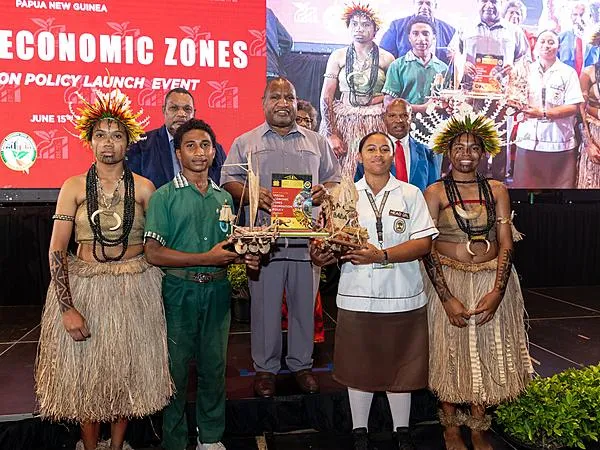
15 June marked a significant milestone for Papua New Guinea as the government officially launched the Special Economic Zones (SEZ) Foundation Policy 2025–2032 during a high-profile ceremony at APEC Haus in Port Moresby—an event hailed by national leaders as a transformative moment in the country’s economic journey.
Hosted by the Ministry of International Trade and Investment in collaboration with the PNG Special Economic Zone Authority, the event brought together national leaders, investors and international partners to witness the country’s renewed commitment to industrialisation, job creation and economic independence.
The policy aims to establish SEZs as the primary vehicle for economic growth and transformation in PNG, enabling sustainable development, large-scale job creation and the elevation of the country to a competitive middle-income economy by 2032.
This vision aligns with PNG’s national development goals, focusing on economic diversification, regional development and the reduction of poverty and inequality—ultimately steering the nation towards economic independence.
A Vision Anchored in Self-Reliance and Reform
In his keynote address, Prime Minister James Marape emphasised the country’s longstanding quest for economic self-reliance and sustainability since independence. He reaffirmed the government’s commitment to providing enabling infrastructure, taking up state equity and collaborating with development partners and stakeholders in the establishment and success of SEZs.
“I urge all key stakeholders and Papua New Guineans to effectively support this policy,” Marape said, adding that the government places a high priority on SEZ development across the country as a practical means to drive economic diversification, industrialisation and rural development.
He also highlighted the competitive incentives to be provided by the government to attract multi-million kina investments into the zones.
For his part, Minister for International Trade and Investment Richard Maru described the SEZ Foundation Policy as “the most important policy since Independence.”
“Our greatest policy failure since 1975 has been our over-reliance on the mining and petroleum sectors and the export of raw materials. That era is over,” Maru said.
Diversification and Investment at the Forefront
He noted that PNG—often referred to as the last frontier of industrialisation due to its vast natural resources—is now committed to unlocking its full economic potential through diversification. This includes tapping into downstream manufacturing, fisheries, forestry, large-scale agriculture, tourism and other non-extractive industries.
“With special economic zones as our vehicle, we will chart a bold new course toward economic independence within the next 20 years,” he added.
Maru cited the Philippines as a successful case study, noting that the country started developing SEZs 50 years ago and now boasts 420 SEZs, four million jobs and annual exports valued at USD 68 billion. “PNG missed the opportunity, but now we begin the reset,” he said.
The minister projected that the PNG’s special economic zone policy could generate over one million jobs, attract billions in investments and transition PNG’s economy beyond its traditional reliance on extractive industries.
Population Growth Drives Urgency for Change
The rapid growth of PNG’s population further underscores the urgency of the SEZ strategy. According to the Department of National Planning and Monitoring, the country’s population is growing at a rate of 4.8% per annum. From just 2 million at independence, it has surged to over 11 million in under five decades. This demographic trend has intensified development challenges, necessitating innovative and large-scale economic interventions.
Recognising this opportunity, the Marape-Rosso government has positioned SEZs as a cornerstone of its economic agenda. Leveraging PNG’s youthful and expanding population as a competitive asset, the government, through the Ministry of International Trade and Investment, is driving the SEZ initiative as a series of high-impact national projects.
These zones are expected to aggressively promote industrialisation, expand economic diversity and accelerate development at a scale not experienced since independence.
To date, the Marape-Rosso Government has already secured K7 billion in investments across three SEZs. “With seven more licences to be issued, our trajectory is exponential,” Maru said.
Learning from the Past, Building for the Future
Secretary Jacinta Warakai-Manua of the Department of International Trade and Investment (DITI) said the policy would serve as a guide for all stakeholders – whether government agencies, private investors or local communities – to ensure collective support for the government’s Special Economic Zone Development Program agenda through a coherent and well-coordinated approach, and to ensure the benefits of SEZs are fairly distributed across the country.
The DITI as the policy arm of the Ministry will provide policy oversight, as well as the coordination and monitoring in collaboration with the SEZ Authority and other key stakeholders.
To ensure clarity and consistency, the policy is structured in an “SEZ-specific format” that aligns with international best practice, as seen in SEZ policies across Asia, Europe and Africa, Warakai-Manua explained during her speech.
This globally recognised approach, according to the DITI secretary, not only strengthens the credibility of the policy but also enhances its adaptability for international investors and development partners.
Moreover, the order of presentation within the policy has been deliberately aligned with the corresponding sections of the already enacted SEZA Act 2019, making it easier for stakeholders to reference and align regulatory provisions between policy and legislation, the official added.
Special economic zone is not a new concept to PNG, with similar concepts already existing for about 30 years. This includes the Malahang SEZ in Lae in 1993 and Ulaveo SEZ in East New Britain, and the Free Trade Zone in Vanimo, the Pacific Marine Industrial Zone (PMIZ) in Madang, and the recently launched Konebada Petroleum Park.
PNG has also allowed the development of the Tourism SEZ by Paga Hill Development Estate, and the Manus SEZ and the Gazelle Aoro Industrial SEZ in East New Britain Province established by legislation. However, PNG failed to deliver on the projects, except for the Malahang SEZ, according to Minister Maru.
“We must learn from our past mistakes and develop a new policy and regulatory framework to anchor SEZ development in our country based on world-class models that are very successful,” Maru said.
Maru, sharing his recent visit to Indonesia, highlighted the economic potential of SEZs, particularly in the extractive industries and the fishing sector. He said that plans are underway to replicate this through the PMIZ in Madang, which will soon be rebranded as the Integrated Energy SEZ.
“PMIZ aims to host up to 10 canneries and employ 100,000 Papua New Guineans,” he said, adding that a single nickel-processing SEZ in Indonesia supports 80,000 workers.
The launching event concluded with renewed commitment from all sectors of government and stakeholders to fully implement the policy, overcome bottlenecks and drive inclusive economic growth.
Papua New Guinea Prime Minister James Marape has called for sweeping reforms, deeper cooperation, and renewed unity among Melanesian countries.
Addressing the 23rd Melanesian Spearhead Group (MSG) Leaders’ Summit on Monday, 23 June, in Suva, Fiji, Prime Minister Marape urged MSG member states to reinforce their solidarity by recognising their ancient ties, cultural kinship and shared destiny.
Speaking under the theme “Shaping a Stronger, Resilient Melanesia for a United Pacific Future,” PM Marape reminded delegates that the peoples of Melanesia—from Papua New Guinea, Solomon Islands, New Caledonia, and Fiji, to parts of Polynesia and beyond—have coexisted in this region for thousands of years.
The prime minister, in wide-ranging and resolute address, also reflected on PNG’s 50 years of independence and presented a forward-looking vision for a strengthened MSG.
“It is a deeply significant milestone – one that invites national reflection and regional recommitment,” Marape said. “PNG has never walked the journey of nation-building alone. We are Melanesians first, by language, culture, ancestry, and geography.”
Marape described the MSG as the anchor of the Pacific Islands Forum (PIF), especially during times of regional uncertainty, as he urged member states to uphold the MSG’s unique identity while complementing broader Pacific mechanisms.
Regional challenges call for collective action
Marape highlighted the shifting global landscape and the mounting challenges confronting Melanesia, including climate change, fragile economies, border insecurity, and growing inequality.
He urged collective leadership over fragmented efforts, warning that “this is not a time for siloed thinking.”
Referring to the Pacific Islands Forum Eminent Persons Group Talanoa Consultations held the previous evening, he stressed the need to restructure and streamline regional institutions such as the MSG and PIF to ensure they remain effective and relevant.
Support for West Papua
On the sensitive issue of West Papua, PM Marape reaffirmed PNG’s support. He praised the dialogue and openness under the leadership of Fiji’s Prime Minister Sitiveni Rabuka, Chair of the MSG.
He confirmed that dialogue with Indonesia is already underway at the leaders’ level under a PIF mandate, referencing a 2023 meeting in San Francisco with the former Indonesian President and PM Rabuka.
Marape urged MSG members to fully support the current PIF-endorsed dialogue process, emphasising respect for sovereignty and constructive engagement. He also welcomed Indonesia’s continued participation in MSG discussions, clarifying that engagement does not infringe on sovereignty but highlights MSG’s responsibility to uphold Melanesian cultural and land rights.
Reaffirming PNG’s support for New Caledonia, Marape expressed solidarity with the Kanak people and the FLNKS movement. “The right to self-determination is enshrined in international law and must be respected,” he said, calling for continued support from the United Nations and other multilateral forums to ensure peaceful and inclusive political dialogue.
He also confirmed that formal letters expressing unified MSG positions on New Caledonia and West Papua would be sent to the respective governments in Paris and Jakarta.
Institutional reform and MSG membership
Marape has expressed strong opposition to the recommendation to outsource the appointment of the MSG Secretariat’s Director General to an independent consultant, pointing to the Revised MSG Agreement of 2015, which outlines a clear internal process.
“To outsource this decision would be to deviate from our own constitution,” he warned, commending the consensus reached on adopting a transparent, merit-based, and rotational system for future appointment.
He further supported reviewing MSG membership guidelines to establish clear, consistent standards for full, associate, and observer status, avoiding political sensitivities and confusion.
The current MSG membership framework is “too vague,” Marape said, urging the Secretariat to present revised guidelines at the next Senior Officials Meeting.
Trade, connectivity and regional development
While PNG has yet to sign the MSG Free Trade Agreement (MSGFTA) due to technical alignment with WTO schedules, Marape reaffirmed the country’s commitment to finalising the process.
“We see the MSGFTA as critical to building our economic resilience and unlocking intra-Melanesian trade potential, particularly in agriculture, fisheries, labour mobility, and value-added products,” he stated.
He also announced PNG’s plan to open its northern land border at Wutung, allowing direct overland travel into Indonesia via Jayapura. “This complements existing air links and reflects PNG’s commitment to enhancing regional connectivity, mobility, and trade in our shared border zone,” he said.
Marape also confirmed PNG will host the next MSG Prime Ministers’ Cup, calling sports “a unifying force” and inviting all MSG members to participate in celebrating Melanesian identity through football.
Calling climate change “the defining crisis of our time,” Marape expressed full support for Vanuatu’s initiative to seek an advisory opinion from the International Court of Justice on states’ climate obligations.
“We are committed to building a climate-resilient Melanesia that values our natural ecosystems and protects the rights of customary landowners,” he said, reaffirming belief in carbon markets with integrity, equitable benefit-sharing, and community-driven climate solutions.
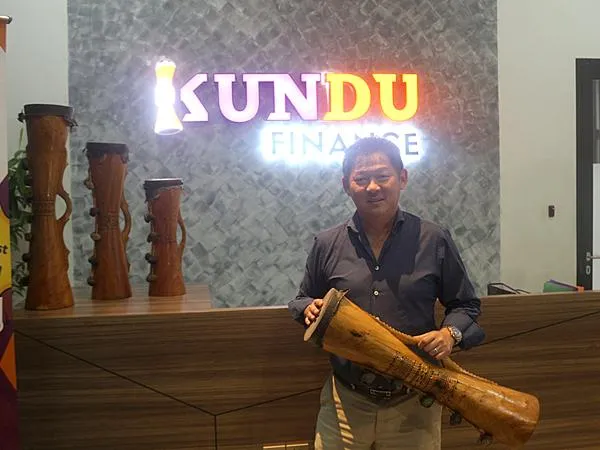
Kundu Finance, one of Papua New Guinea’s newest but fastest growing financial institutions, is setting a new standard in responsible lending, one that blends cultural identity, innovation, and a people-first approach.
Recognizing the daily demands of the modern workforce, Kundu Finance offers online loan applications that allow clients to apply from anywhere even during working hours. This digital convenience removes the need to visit a branch, making the process faster and more efficient. It's especially helpful for employees and their Human Resource teams, as it reduces disruption to business operations and enables financial support without leaving the workplace.
In a country crowded with financial institutions, Kundu Finance stands apart with a philosophy deeply rooted in PNG culture and community responsibility. What makes them unique? Their focus on responsible lending, a value that informs everything from client relationships to loan approvals.
Kundu offers accessible and reliable financial services, even while you're at work. This saves time and the cost of travel to Port Moresby for those in other provinces. Kundu Finance aims to reach workforces in Mining, Petroleum, Agriculture, Education, Health, Business, and the Public Sector across PNG.
In an exclusive interview with PNG Business News, CEO Benjamin Wong shared,
“Our goal is simple: help people within their means. We are not here to burden them with large debts. We want them to grow with us.”
The "Kundu" in Kundu Finance is more than just a name, it is a symbol of PNG’s identity and tradition. The kundu drum, an iconic instrument used in storytelling and cultural expression, lies at the heart of the company’s brand.
“Our slogan is ‘Our Drumbeat, Our Stories, Our Future…’ It reflects the stories of our clients, our journey, and our future with Papua New Guinea. We are not just a financial institution, we are part of the community,” Mr Wong explained.
“Our vision is to be an innovative financial service provider with a strong sense of community responsibility. Every decision, from how much to lend, to how we advise, is based on transparency and empathy.”
Changing Lives, One Client at a Time
Kundu Finance is not just processing loans, it is /transforming lives. Mr. Wong shared stories that illustrate the company is unique, client-first approach:
“We didn’t make money off him that day, but we gained a long-term client who trusts us.”
“We saw the urgency and helped her. To this day, she visits our office just to say hello. That is a connection money cannot buy.”
“No one had ever explained it to him before. He walked away financially smarter—and loyal.”
“Now he has repaid part of his loan and is proud of being a responsible borrower,” Mr Wong added, beaming.
Rapid Growth and Technological Edge
Though incorporated in 2018, Kundu Finance officially began operations in late 2024. In less than a year, it has amassed over 2,000 clients, an impressive feat for a new entrant. Its rapid growth reflects the power of word-of-mouth and client satisfaction.
Kundu Finance is also the first in PNG to operate a cloud-based loan management system, hosted on Microsoft Azure. This ensures speed, security, and scalability.
“We chose the cloud for its top-tier security and flexibility. Cyber threats in PNG are real, so protecting our clients' data is non-negotiable.”
The cloud also enables efficient nationwide service delivery, positioning Kundu well for national expansion.
Speed, Service & Security
With a tiered client approach and a streamlined process, Kundu offers fast loan approvals.
“We can’t always promise 24-hour turnaround, but for priority clients especially in government departments and corporate payroll systems, we strive for same-day disbursements,” Mr Wong confirmed.
The company partners with employers to process salary-deducted loan repayments, simplifying access for employees. We encourage HR departments to work with us to make financing easier and more efficient for their staff.
Financial Literacy at the Core
Unlike many lenders, Kundu treats financial literacy as a core responsibility.
“Why do we run financial literacy programs? Because financially literate clients are better clients. We teach them to plan, manage debt, and borrow responsibly. We want to create a financially strong PNG not just grow our loan book.”
This educational approach will inform future products, such as savings accounts, asset financing, and housing loans.
The Road Ahead
Currently operating from Port Moresby, Kundu is preparing to open a back-office sales and finance center in Waigani and plans to open a branch in another province by early next year.
Over the next three to five years, Kundu plans a gradual national rollout, prioritizing areas with the strongest demand.
“Our biggest challenge is unrealistic borrowing expectations. Many want more than they can repay. Changing that mindset takes time and trust.”
Still, the CEO’s proudest achievement is his team.
“The proudest thing? Building a team that shows up every day with integrity and care. We call it the Kundu way.”
Mr. Wong ended his interview saying,
“I treat everyone with respect staff, clients, partners regardless of background or title. We are building something not just about money, but about people. Something that lasts.”
Kundu Finance is more than a lender. It is a movement with cultural roots, innovative technology, and a deep focus on client wellbeing.
A new beat in PNG’s financial rhythm.
For six decades, the PNG Institute of Banking & Business Management (IBBM) has stood at the forefront of professional development and business education in Papua New Guinea.
From the institution’s humble beginnings to becoming the nation’s premiere leadership and training institution, IBBM has continuously evolved to meet the needs of PNG’s people, industries, and the economy.
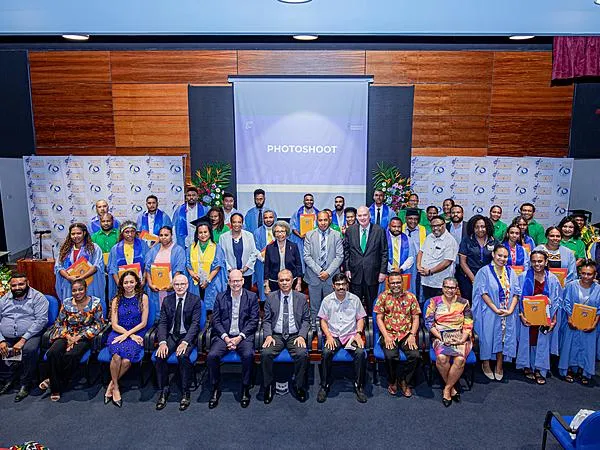
IBBM celebrated this milestone alongside their 71st graduation ceremony on 30th May 2025. CEO Ms Susil Nelson Kongoi said during her speech: “This Diamond Jubilee is more than a celebration of longevity – it is reaffirmation of our commitment to shaping future-ready leaders and contributing meaningfully to the nation’s progress.”
With Papua New Guinea celebrating its 50 years of independence, institutions like IBBM have been producing leaders that have shaped PNG’s last 50 years and are now ready for the next 50 years.
The keynote address by Ms. Winnie Kiap CBE highlighted the need for quality education in shaping Papua New Guinea’s future.
“The foundation of every state is the education of its youth -- so as an aspect of statecraft, education is an old craft. It is for us to acknowledge its relevance to life and progress and that is what IBBM is doing - empowering agents of good governance, justice and progress,” Ms Kiap said.
She reminded the audience that the root of PNG’s strength “lies in knowledge, unity and the unshakable belief that education is a nation-building force.”
The inspirational address by IBBM’s MBA Alumni, Mr Amos Tepi, the CEO of Telikom PNG, also echoed the nation building sentiments with embracing the institution’s legacy.
“A nation disconnected from its roots becomes a stranger to itself. But people who embrace their legacy stand tall, not just at a global stage but in their own souls,” he said.
This challenged the graduands that to become future leaders every young person should learn their history, speak their languages, and know the names of those who made it possible for them to sit here today.
His call to action was that “the future does not belong to those who complain but to those who build,” encouraging the next generation of nation builders for PNG’s next 50 years.
IBBM celebrated the graduation of 40 students in the Class of 2024, marking achievements across a range of business and leadership programs.
Graduands earned qualifications in the Master of Business Administration, Graduate Certificate in Business Administration, Bachelor of Business, Bachelor of Business Information Systems, Diploma of Business, Diploma of Project Management, Certificate IV in Leadership & Management, and the Certificate in Professional Banking Fundamentals.
These programs are delivered in collaboration with Torrens University Australia, Lyons College, and the Financial Services Institute of Australasia, reflecting IBBM’s commitment to providing internationally benchmarked education that empowers Papua New Guineans to lead, innovate, and drive national progress.
Mrs. Davara Roga, from the Bank of South Pacific Financial Group, was named the 2024 Chairperson’s Medal recipient in recognition of her exceptional academic achievement in the MBA program.
In her acceptance speech, she credited the program’s flexibility for her success, stating: “The program’s structure—eight core subjects like Strategic Management, Dynamic Leadership, and Financial Management, paired with relevant electives—was both comprehensive and future-focused.”
“Its flexible delivery made it possible for working professionals like myself to stay committed, despite life’s many demands,” she said, as her story exemplified the power of accessible, professionally aligned education.
Ms. Deborah Puka, recipient of the Dux Award for the Bachelor of Business program, reflected on the transformational impact of her studies, stating that the course significantly enhanced her skills in job readiness, report writing, time management, adaptability, and flexibility.
“It pushed me out of my comfort zone, and I am truly grateful,” she shared, as her journey was a powerful testament to how quality education not only builds individual capacity but also equips future leaders to actively contribute to nation-building.
As PNG continues to grow, so does IBBM. The institution is committed to nation-building by providing quality higher education, corporate training, and supporting local content through our Enterprise Centre’s supplier management portal.
As it celebrates 60 years of service aloongside PNG’s golden jubilee of independence, IBBM embraces its legacy and look forward to shaping the next 50 years.
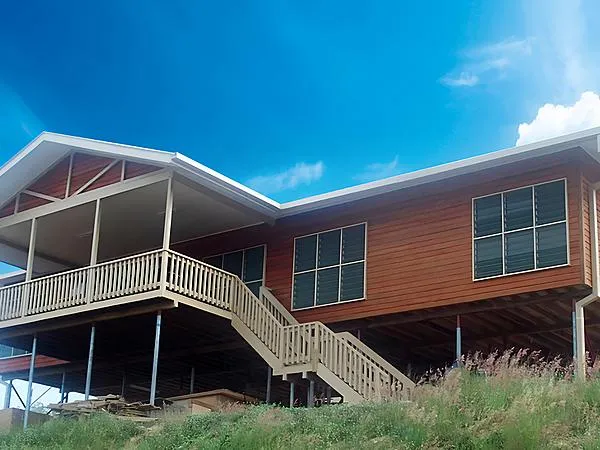
NiuHomes, from PNG Forest Products, manufacture premium designed, quality kit homes in ranges to suit every budget and lifestyle.
Perfect for those starting out on a tight budget, the Baset Range starts at K73,000 and provides low-cost 3 & 4 bedroom (BR) kit homes that are designed to lock-up stage only, with no internal fixtures or fittings apart from flooring and wall frames. This allows you to complete the inside of the house within your own timeframe and budget, making it truly your home.
With 2, 3 & 4 BR options, the Residential and Suburban ranges are complete kit homes with a huge range of quality inclusions, right down to the kitchen sink.
In fact, many models have everything you need including electrical wiring and fittings; full plumbing kit including toilet and shower; ceramic tiles; joinery kit; ceiling fans; solar hot water heater, even paint, all included in the price of the kit home! Prices range from K97,000.
The Contemporary Range sets a new standard in modern kit home designs with the Komoa and Pacifica models. Their sleek, modern designs uniquely complement the PNG urban landscape whilst providing spacious, elegantly comfortable homes for the extended family. The Komoa starts at K310,000 while the top-of-the-range Pacifica is just over K600,000.
For village living, the Haus Ples range offers a choice of high-set and low-set kit homes that start from a low K73,500 for a 2-bedroom Lewa model, up to K107,800 for the 3-bedroom, split-level Namo with bathroom, laundry and kitchen. All prices stated are ex-GST and ex-Lae.
When it comes to quality, NiuHomes are PNG's only preservative pressure treated kit-homes engineered to the most stringent PNG and Australian building code standards. All timber is randomly and rigorously tested in Australia and the Timber Training Institute in Lae to ensure compliance with the relevant Australian and PNG building standards.
PNGFP’s ability to produce pressure-treated timber at their certified and international standard compliant plant in Bulolo, ensures quality, durable kit-homes that are protected from termites, rotting and fungal decay.
Employing over 1,500 Papua New Guineans, PNGFP is committed to building a better future through sustainable manufacturing practices. All timber is sourced from renewable pine plantations in Bulolo and Wau, which are managed by the PNG Forest Authority.
The manufacturing facilities are powered by PNGFP’s own hydro power stations. All sawdust, woodchips and offcuts are then used to fuel the biomass boiler, which generates heat for the dryers and kilns.
PNGFP’s combination of renewable timber resources processed with sustainable hydro power and biomass heat energy, makes PNGFP’s NiuPine timber truly and uniquely green.
So, when you’re investing in a PNGFP NiuHome, you are not only investing in the best quality kit homes in the country, you are also investing in 1,500 local jobs and supporting the PNG economy whilst also supporting the environment. That’s an investment in everybody’s future.
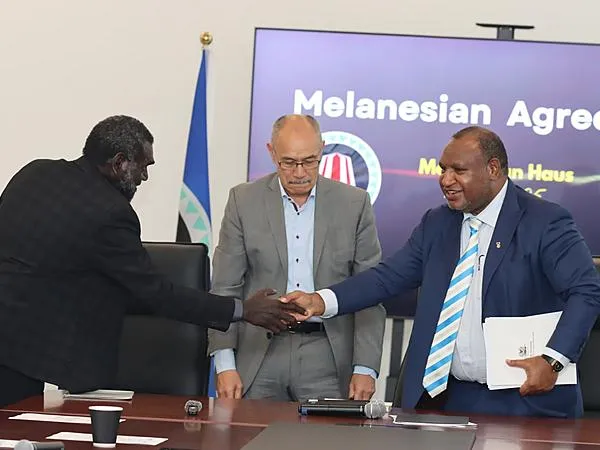
Prime Minister Hon. James Marape and Autonomous Bougainville Government President His Excellency Ishmael Toroama today signed the landmark Melanesian Agreement in Port Moresby, charting a peaceful and legally defined course for the next phase of the Bougainville peace process.
The ceremony was witnessed by Moderator Sir Jerry Mateparae, ministers from both governments, members of the bipartisan Parliamentary Committee on Bougainville, senior public servants, and international partners including the United Nations and foreign diplomatic missions.
PM Marape: We Honour the Law and Respect Bougainville’s Voice
Prime Minister Marape reaffirmed the National Government’s total adherence to the constitutional process, stating that the Bougainville issue must proceed according to the provisions of the 2001 Bougainville Peace Agreement, now enshrined in Part XIV of the Constitution.
He acknowledged the 97.7% referendum result as clear and decisive, but emphasised that the outcome must still pass through the legal pathway: “The people of Bougainville have expressed their will through the referendum, and we fully respect that. However, our Constitution outlines a clear process—we must conduct consultations and present the outcome to Parliament, which holds final decision-making authority. As Prime Minister, I cannot bypass or override that process.”
Agreement Grounded in Partnership, Not Separation
The Melanesian Agreement provides a framework for the two governments to finalise consultations and prepare a report for submission to Parliament. Prime Minister Marape described it as a collaborative and conditional document that continues the journey, rather than ends it.
“This is not an agreement to divide us—it is a roadmap to guide us through the remaining stages, grounded in constitutional integrity and mutual understanding. Our ultimate goal is to reach a destination that respects Bougainville’s aspirations while preserving the legal foundation of our nation.”
Melanesian Spirit of Dialogue and Shared Heritage
Drawing on the deep historical bonds between Papua New Guinea and Bougainville, Prime Minister Marape reflected on the ancestral unity of Melanesian peoples long before the creation of the modern nation in 1975:
“Before there was a constitution—before there was a country called Papua New Guinea— there were Melanesian people living in this part of the earth. We lived on the mainland, on the islands, and in the Pacific. The Melanesian concept of people is inherent—we were already sovereign in our own way.”
He stressed that Papua New Guineans and Bougainvilleans are “people of the same stock,” and that the constitutional process must reflect both modern governance and traditional values:
“We don’t have to fear the past or the future. Let’s jointly work together. The constitutional process is clear. Respect for the authority of our Constitution is paramount.”
Acknowledging Bougainville’s Sacrifice and Commitment
Prime Minister Marape thanked the people of Bougainville for honouring the constitutional process, and made special mention of Bougainville’s historical relationship with Papua New Guinea:
“I want to say thank you to President Toroama and the people of Bougainville for respecting the Constitution of our country. The Melanesian Agreement we signed today acknowledges our shared responsibility to walk this path together, with mutual respect and in the spirit of Melanesian brotherhood.”
He reminded the people of Bougainville of PNG’s long-standing commitment, citing a pivotal moment in 1997 when members of the PNG Defence Force, including now-Minister Hon. Belden Namah, opposed the Sandline operation as an act of solidarity with Bougainville:
“Our soldiers cared for you. That was a clear statement from Papua New Guinea—that we care.”
Economic Empowerment and Self-Determination
Prime Minister Marape reaffirmed the government’s commitment to empowering Bougainville economically, referencing recent decisions to transfer full shareholding in key resource projects to the Bougainville Government: “Giving back Panguna to you means you decide your own destiny. That is the highest form of acknowledgement from your brothers and sisters in the rest of the country.”
He pledged support for Bougainville’s sustainable development across agriculture, fisheries, forestry, and infrastructure:
“We are here to empower you so your people can prosper. Let us prepare Bougainville not just for political settlement, but for a thriving future.”
Tribute to President Toroama and Sir Jerry Mateparae
Prime Minister Marape acknowledged President Toroama’s pivotal role in the peace process—from being a signatory to the original 2001 Peace Agreement to now leading Bougainville through this crucial chapter:
“Your leadership at this crucial time is no accident. You bring historical wisdom and strength to a very delicate and important process.”
He also paid tribute to Sir Jerry Mateparae for his longstanding role as moderator: “Sir Jerry has been with us since 1997. His calm leadership and presence have helped us maintain focus and discipline throughout this journey. We deeply appreciate his service to both Bougainville and PNG.”
A Shared Future Ahead
Looking ahead to the submission of the final consultation report by June 30, Prime Minister Marape assured both Bougainvilleans and Papua New Guineans that the journey would continue in peace, unity, and trust:
“Let no one fear. We remain united in purpose. As one people, we are navigating this process together—with humility, with care, and with faith in our Constitution and in each other.”
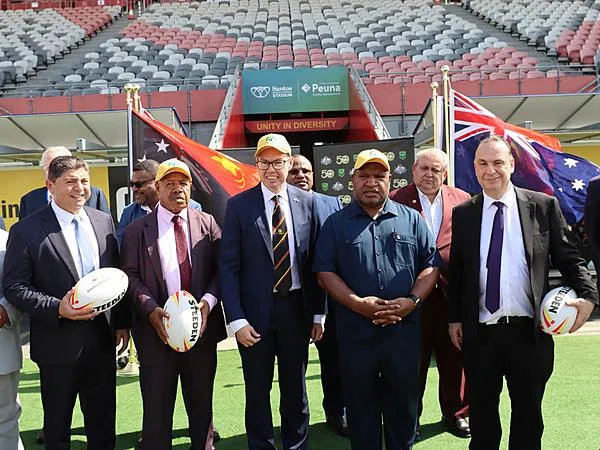
Prime Minister Hon. James Marape has officially unveiled the inaugural board of Papua New Guinea’s National Rugby League (NRL) team and launched a national competition to name the team and compose its theme song, declaring the moment as “historic for sport and nation.”
The announcement was made during a packed press conference held at the Santos National Football Stadium, attended by dignitaries from both Papua New Guinea and Australia, executives from the National Rugby League, and media personnel.
“This is more than just sport—it’s our national unification project,” Prime Minister Marape told the gathering, drawing applause as he invoked Nelson Mandela’s use of rugby to unite South Africa. “One team, one people, one nation—that is the vision behind our NRL team.”
He was joined by Australia’s Minister for the Pacific, Hon. Pat Conroy, who praised the initiative as “visionary” and likened it to the iconic 1975 partnership between Grand Chief Sir Michael Somare and former Australian Prime Minister Gough Whitlam.
“This team has been talked about for decades,” said Minister Conroy. “But it’s only through the leadership and vision of Prime Minister Marape, and the support of Prime Minister Albanese, that it’s becoming a reality. It’s about jobs, tourism, unity and pride—this will go down in history.”
Board Unveiled to Lead PNG’s Entry into NRL
Prime Minister Marape formally announced the members of the inaugural PNG NRL Team Board, emphasising their combined experience in business, sport, and leadership:
• Mr Ray Dib – Chairman, former Canterbury-Bankstown Chairman and respected rugby league administrator
• Ms Lorna McPherson – Long-time rugby league official and community leader
• Mr Stan Joyce – Former SP Brewery Managing Director and rugby supporter
• Mr Richard Pegum – Chairman of Mayur Resources and financial expert
• Mr Ian Tarutia – Leading voice in the PNG private sector
• Mr Wapu Sonk – Managing Director of Kumul Petroleum and Chair of the PNG NRL Bid Team
• Mr Marcus Bai – Former Kumuls captain and one of PNG’s most celebrated rugby league players
“The two governments will support from the sidelines, but will not interfere,” Prime Minister Marape stressed. “This is a sports business, and it must be run professionally.”
He credited the efforts of the bid team, including Wapu Sonk, Ian Tarutia, Lorna McPherson, and others who had worked tirelessly to bring the franchise to this stage.
Naming and Theme Song Competition Launched
Prime Minister Marape also launched a nationwide team naming and theme song competition, calling on the country to unite behind the identity of the new team.
“The name must unite us, tell our story, and reflect our past, present and future,” he said. “It must also resonate with our Australian friends—it must become every Aussie’s second team.”
He tasked the newly formed board, especially Ms Lorna McPherson, to lead the engagement campaign on social media and in communities.
“We are a democracy. The name must have the support of 60 to 70 per cent of our population,” Prime Minister Marape added.
Reflecting on PNG’s shared history with Australia, the Prime Minister recalled an emotional moment from his 2024 Kokoda Trail trek with Prime Minister Albanese. He shared a conversation with a local chief at Isurava, who explained why his people chose to support the Australians during WWII.
“He told me, ‘We had no choice but to defend our territory.’ That story remains with me. It reminds us of where we come from and why we must build a future together.”
Australian Government: Jobs, Unity, and a Shared Legacy
Minister Conroy confirmed that the Australian Government will invest over A$600 million into PNG rugby league, infrastructure, and franchise development over the next 10 years.
“This is not just sport—it’s economic development and national building,” he said. “We expect over 5,000 Papua New Guineans to be employed directly through this initiative, from stadium upgrades to managing the team.”
He said thousands of Australians would travel to Port Moresby every year to watch games, boosting the tourism sector and people-to-people ties.
“This team will not just compete. It will dominate. It will make Penrith look like minnows,” Conroy joked to loud applause, referencing the strength of PNG’s player base and fan passion. “The names Marape and Albanese will be remembered in history, just like Somare and Whitlam.”
Infrastructure and Road Connectivity
Prime Minister Marape revealed that infrastructure planning is already underway to support game-day logistics. Roads from the Highlands, Morobe and Alotau into Port Moresby will be upgraded to allow easy access to the stadium.
“By 2028, fans will drive in, watch the game, and return home. We are building not just a team, but a nation,” he said.
The Santos National Football Stadium will host the team in its early years, with the Sir Hubert Murray Stadium set to become the permanent home.
Prime Minister Hon. James Marape has restated his government’s strong and clear commitment to small and medium enterprises (SMEs), describing them as the “heartbeat of Papua New Guinea’s economic future”, and central to national efforts to grow the economy to K200 billion.
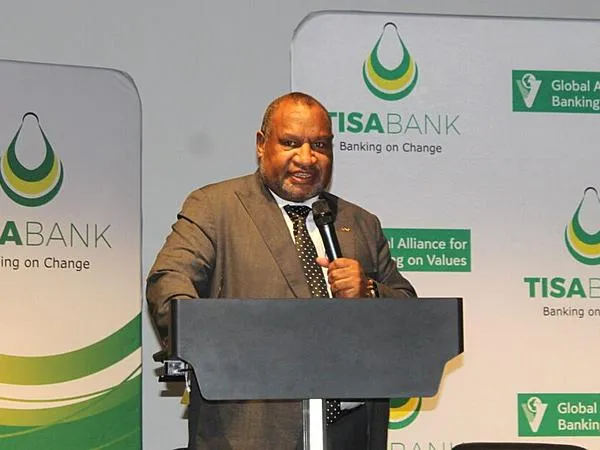
Speaking during the 7th TISA Bank SME Breakfast and Awards Launch in Port Moresby, Prime Minister Marape paid tribute to local entrepreneurs, financial institutions, and stakeholders for driving the SME sector; while outlining key reforms and policies his government has implemented over the past six years to support inclusive, sustainable growth.
“This time in our country’s history calls for Papua New Guineans to believe that they can – not that they cannot. The SME space belongs to those who are willing to work, innovate, and grow,” Prime Minister Marape told a packed audience of entrepreneurs, bankers, government officials, and development partners.
Turning Crisis into Reform and Recovery
Recalling the economic challenges his Government inherited in 2019 — including high commercial debt, a slowing economy, and declining business confidence — Prime Minister Marape said bold decisions had to be taken to stabilise public finances and steer the economy back towards growth.
“We inherited an economy worth K79.6 billion. By 2025, we are pushing beyond K130 billion. Despite COVID-19, global disruptions, and internal challenges, we turned crisis into opportunity by restructuring debt, injecting capital into the economy, and supporting businesses.”
He credited concessional support from key development partners — including the World Bank, International Monetary Fund (IMF), Asian Development Bank (ADB), and bilateral partners such as Australia and Japan — for enabling the Government to refinance expensive debt, including the Credit Suisse loans, and redirect funding into priority infrastructure and social services.
A standout example was a K940 million loan from Japan at an ultra-low 0.01% interest rate, which replaced commercial borrowings with an 8.8% interest rate.
SMEs at the Heart of Growth
The Prime Minister highlighted SMEs as a critical driver of job creation, innovation, and inclusive economic participation.
“That’s why we’re serious about SME support — because these are the people creating jobs, producing exports, and building a future.”
Pro-PNG Economic Reforms and Support Mechanisms
PM Marape outlined a series of key policy reforms and support mechanisms aimed at fostering SME growth and strengthening the overall business environment:
• SME Credit Guarantee Scheme – Assisting entrepreneurs to access credit without traditional collateral.
• State Equity Participation – Supporting import replacement sectors such as rice, beef, and fishing, through strategic co-investment by Government.
• Price and Freight Support Programme – Providing support to farmers and rural SMEs during periods of low global prices and high logistics costs.
• Export Licensing Reforms – Prioritising Papua New Guinean-owned exporters who repatriate foreign earnings, and ensuring licence holders bring value back to the country.
• Zero Tax Threshold – Individuals earning below K20,000 are now fully exempt from personal income tax, putting more money into household consumption.
• GST Removal on Basic Goods – Tax exemption on 13 essential household items to reduce the cost of living and stimulate domestic demand.
Reforming the Foundations: Central Bank, Judiciary, Land, and Anti-Corruption
The Prime Minister also highlighted deeper reforms aimed at building investor confidence and reducing bureaucratic barriers:
• Central Bank Reform – Establishment of a new oversight board, introduction of multi-currency convertibility (notably between PNG Kina and Chinese Yuan), and licensing of new banks to improve competition and access to finance.
• Judiciary Expansion – Doubling the number of national judges from 40 to 80 (eventually to 200), establishment of a dedicated Court of Appeal, and integration of international judges to improve investor confidence and strengthen commercial arbitration.
• Land Reform and Registration – Enabling customary landowners to formally register their land, use it as collateral, and access credit for SMEs and housing development along major highways and economic corridors.
• ICAC Establishment – Activation of the Independent Commission Against Corruption to seal economic “sinkholes” and ensure public funds support honest enterprise and national development.
Investing in Human Capital: Education, Labour, and Productivity
PM Marape reaffirmed his government’s focus on building a skilled and productive workforce through education reform and targeted labour mobility programmes:
• 100,000 School Dropouts Re-Enrolled – Through flexible and open learning initiatives.
• Labour Mobility Scheme Expansion – In partnership with the Australian Government to place skilled Papua New Guineans in overseas employment opportunities with long-term career potential.
• One Million Families into the Cash Economy – Mobilising rural households through agriculture, SME ventures, and targeted financial literacy and entrepreneurship training.
A Call to Action: Owning the Next 50 Years
Marking Papua New Guinea’s 50th anniversary of independence, Prime Minister Marape urged every Papua New Guinean to rise above cynicism and take ownership of the country’s development: “The harvest is plentiful — but the workers are few. Let us stop waiting and start doing. Let us stop asking what the country can do for us, and ask what we can do for our country.”
He concluded by thanking TISA Bank and the nation’s teachers: “To TISA Bank — go out and find the million unbanked families. Support them, empower them, and help grow this country.
“To our teachers — you have shaped generations of leaders. The PNG of today and tomorrow owes much to you.”
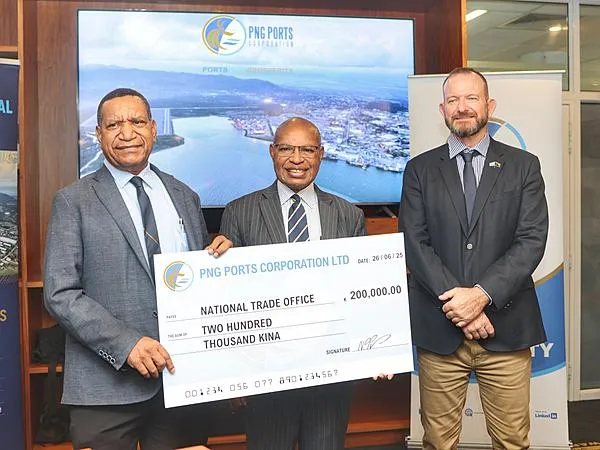
The PNG Ports Corporation (PNG Ports) has presented a cheque of K200,000 to take up Gold Sponsorship for the upcoming 2nd Papua New Guinea Special Economic Summit that will be hosted at the APEC Haus in Port Moresby from August 31st- September 3rd, 2025.
The Minister for International Trade and Investment, Hon. Richard Maru, thanked the Chairman of the PNG Ports Board, Mr. Harvey Nii, Managing Director, Mr. Neil Papenfus, the Board and Management of PNG Ports and the Minister for State Enterprises, Hon. William Duma, for their support towards this very important Summit.
PNG Ports owns and manages 15 out of the 23 declared ports in the country with the Port of Lae being the largest port in the country and the busiest and the most economical port of the PNG Ports.
Minister Maru said: “My Ministry and Department are very happy to work with the PNG Ports to grow their business because bulk of our trade is done using ports. PNG Ports is the most important entity which we must continue to support and make important strategic decisions for the business must grow and be more efficient into the future. We look forward to receiving their Submission for the proposed Lae Port Industrial Park so we can take it to the NEC next week to be processed and approved, and the SEZ Authority will grant them license subject to PNG Ports meeting all the regulatory requirements. We are ready to provide PNG Ports all fiscal incentives provided they have all the utilities including water supply, sewerage system, and reliable power supply which is a very important factor that will attract investors to be located within their proposed SEZ. There are already two major investors who are keen to be located within this proposed SEZ and we are also looking at the possibility of establishing a downstream processing facility, specifically a copper smelter within this SEZ.”
Minister Maru also encouraged PNG Ports to consider becoming a partner to build a new international wharf in the proposed Madang Integrated SEZ.
“With the plan to have 10 new fish canneries in the proposed Madang Integrated SEZ and with the new road being built from Baiyer in Mt. Hagen to Madang, the proposed international wharf will be an alternative to Lae Port to service the Highlands because of the proximity. We are hoping that the PNG Ports can be a partner in this so instead of two ports competing in Madang, we can have only one international wharf,” said Minister Maru.
Minister Maru further stated: “In West Sepik, the pipeline for the Freida Mine will go into Vanimo Port and the proposed Vanimo Free Trade Zone will be a major manufacturing hub with manufactured goods for export especially into Indonesia and Asia. We also have more oil palm coming into Vanimo port for export. In East Sepik, we already have 20,000 hectares of palm and we plan to go into major oil palm development in the proposed Sepik Plains SEZ. With this development, we are of the view that both Wewak and Vanimo should have international ports because there will be huge increase in the volumes of cargo into the future. We must be visionary and not just look at the short-term rehabilitation of the existing ports that are unsuitable to cater for large volumes of cargo.”
Santos’ pioneering Global Support Centre in Port Moresby is creating more pathways to enhance skills and leadership development for young Papua New Guineans with the recent establishment of the Global Support Centre Academy.
The establishment of the Santos Global Support Centre Academy in Port Moresby marks a significant step in leadership development and skills enhancement for young Papua New Guineans.
Announced by Santos Country Chair PNG, Leon Buskens, during the recent Australia Papua New Guinea Business Forum, this initiative underscores the company's dedication to local employment and skill-building.
Launched in March 2024 with the support of Prime Minister James Marape, the Santos Global Support Centre aims to 'in-source' engineering and maintenance roles, focusing on employing PNG nationals to support the Eastern Australia PNG asset portfolio. Staff from the Global Support Centre are also gaining valuable insights by visiting Australian facilities.
As Papua New Guinea approaches its 50th Independence Jubilee, the partnership between Santos and the PNG people is a testament to mutual growth and development, positioning the company not just as an energy provider but as a catalyst for national progress.
“We are also proud to welcome our first graduates to the Santos Global Support Centre Academy a year after the launch of the Global Support Centre itself. This demonstrates our ongoing commitment to PNG and local workforce development with very close support of the Santos Australia business.
Mr. Buskens highlighted the academy's role in nurturing top graduates from leading universities in PNG, celebrating the first cohort just a year after the launch of the Global Support Centre. This initiative reflects Santos's commitment to local workforce development, with over 90% of roles held by PNG citizens and 80% of leadership positions occupied by locals. And all this is backed by business merits.
“As the nation celebrates its 50th Independence Jubilee, we also celebrate the partnership between Santos and the people of Papua New Guinea. We recognise that this journey has been marked by mutual growth and progress.”
Santos has not only been an energy provider, but also a catalyst for national development.
As Papua New Guinea continues to strengthen its economic ties with Australia and the broader Pacific, Westpac is proud to reaffirm its commitment to regional growth and connectivity as a Diamond Sponsor of the 40th Australia Papua New Guinea Business Forum & Trade Expo.
Held in Port Moresby, the Forum remains a cornerstone event in the bilateral business calendar, attracting senior government officials, business leaders, investors, and development partners from both countries. For four decades, it has been a key platform for dialogue, collaboration, and business-to-business engagement.
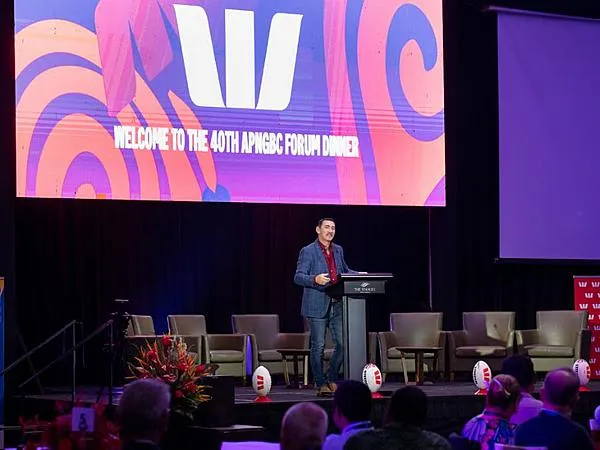
As part of its longstanding support, Westpac will once again host the Forum’s signature welcome dinner, an event the bank has proudly organised for more than a decade. The dinner sets the tone for the days ahead, fostering connection and conversation among stakeholders committed to shared progress.
“The Australia-PNG Business Forum & Trade Expo is a vital platform for shaping the future of trade and investment in our region,” said Andrew Cairns, Chief Executive of Westpac PNG. “We are proud to be part of this journey. For 115 years, Westpac has supported PNG’s growth not just as a bank, but as a committed partner working alongside businesses, governments, and communities to create long-term impact.”
This year’s dinner featured a keynote address by Mat Rogers, Australian dual-code rugby legend, media personality, and public speaker. With a career that spans elite sport, broadcasting, and philanthropy, Mat will speak on leadership, resilience, and the value of authentic partnerships offering a unique lens through which business leaders can reflect on the power of purpose in driving success.
“It is a privilege to join Westpac at such a significant moment in its journey,” said Rogers. “Partnerships whether in sport, business, or life are built on trust, shared values, and a common goal. The relationship between Australia and PNG is a powerful example of this, and it’s inspiring to see organisations like Westpac continuing to invest in that future.”
As Westpac celebrates 115 years of service in PNG, the welcome dinner is not just a celebration it is a contribution and a reminder that being a financial and community partner means showing up with purpose, creating space for important conversations, and helping to shape the environment in which business and communities thrive.
Westpac remains committed in staying connected with clients, stakeholders, and partners to continue building the relationships that drive sustainable growth across PNG and the Pacific.
After more than 25 years of drilling expertise across Papua New Guinea’s most remote and rugged terrain, Zenex Drilling is stepping boldly into its next chapter, with international growth on the horizon, a growing fleet of specialised equipment, and a workforce strategy that puts Papua New Guinean talent at the centre.
"This isn’t just about buying new machines," says Emmanuel Bonte, General Manager of Zenex Drilling. "It’s about how we’ve built the capacity to scale. The growth we’re seeing now is the result of years of effort investing in our people, refining our processes, and building genuine partnerships in the communities we work in."
At the heart of Zenex Drilling’s latest expansion is the acquisition of a heavy-duty Piacentini 130t Low Loader. This specialist piece of equipment allows the company to move large-scale plant machinery with precision across mine sites, a capability increasingly sought by Tier 1 clients operating in PNG and abroad. This asset is already proving its value, recently photographed carrying machinery on-site.
The Piacentini Low Loader isn't just a logistical asset; it's a symbol of the company’s operational maturity. "With equipment like this, we’re able to offer integrated, end-to-end support to our clients," says Bonte. "We don’t just turn up with drill rigs. We come in with solutions for mobilisation, production support, maintenance, and everything in between."
Zenex Drilling's story is as much about people as it is about machines. The company has long been recognised for its inclusive workforce model and investment in local talent. Many of its senior staff began as general labourers, rising through the ranks thanks to internal training programs and a cultural commitment to progression.
"One of the best decisions we made years ago was to stop waiting for qualified people to show up and start growing them ourselves," Bonte reflects. "That’s been transformative. We have local teams that are capable, confident, and leading projects in PNG and beyond."
This commitment to workforce development is formalised through Zenex’s 'Way We Work' initiative, a safety and leadership program tailored to the PNG context. Delivered through an open coaching model, the program equips employees not just with technical skills, but with the mindset and confidence to lead.
"It’s easy to forget how challenging these environments can be," Bonte says. "We’re often operating in terrain with no roads, no infrastructure, sometimes no phone reception. To succeed in those conditions, you need more than gear, you need people who know how to think on their feet and work as a team."
With more than 5.1 million hours worked without a lost time injury, Zenex Drilling’s safety record is a testament to the strength of its systems and the discipline of its crews. That safety culture is one of the reasons clients are turning to Zenex not just in PNG, but across international markets.
"We’re now being approached for work in Australia and South America," Bonte confirms. "We’ve spent decades building trust, and that reputation is starting to carry across borders."
The decision to scale internationally hasn’t been taken lightly. For Zenex, it’s not about rapid expansion but sustainable growth built on the same principles that served them well at home.
"We’re not chasing every opportunity. We’re choosing the right ones, where we know we can deliver value and maintain the quality we’re known for," Bonte explains. "That’s why investment in equipment including the low loader and the dual head sonic rig is so important. It’s a capability that makes us more agile, more responsive, and more competitive."
As the industry faces ongoing challenges in supply chains, skills shortages, and environmental, social and governance (ESG) expectations, Zenex’s approach offers a compelling model: invest in people, build capability from within, and let excellence speak for itself.
"I’m proud that we’re a PNG company growing globally," says Bonte. "We’re proving that with the right mindset, our local expertise can compete anywhere in the world."
From humble beginnings to global growth, Zenex Drilling is showing what’s possible when technical innovation meets long-term community investment. And as their Piacentini Low Loader rolls across yet another mine site, carrying not just heavy machinery but the weight of decades of progress, one thing is clear: this is only the beginning.
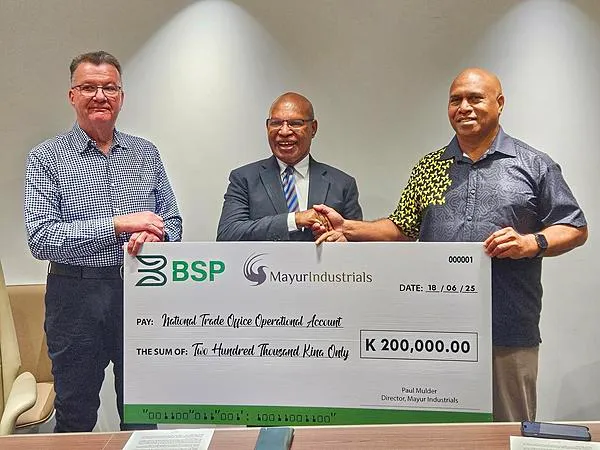
The Minister for International Trade and Investment, Hon. Richard Maru, this morning, welcomed Mayur Industrials PNG Limited as a Gold Sponsor for the upcoming 2nd Papua New Guinea Special Economic Zones (SEZ) Summit, to be held at the APEC Haus in Port Moresby from August 31st to September 3rd, 2025.
Mayur Industrials PNG Limited is a wholly owned subsidiary of ASX-listed Mayur Resources Limited (the Company or Mayur).
Minister Maru said: “We are pleased to welcome Mayur Industrials as a Gold Sponsor. Their Central Cement and Lime Project residing in a Single Factory Zone SEZ exemplifies the type of transformative, nation-building initiative the SEZ framework is designed to support.
Minister Maru expressed satisfaction that the SEZ Authority (SEZA), himself, and the Prime Minister, Hon. James Marape, MP, had resolved recent concerns, with SEZA and the Company now aligned.
“Central Cement and Lime Project will shortly come before the National Executive Council to formalize its recognition as a strategic national priority after the State Negotiations are concluded. This project will directly create over 1,000 jobs during construction.”
“The Marape-Rosso Government is very supportive of this project because we want to replace all cement imports and reduce the cost of cement. Cement is essential in building our nation. We have four other limestone projects on the way. We want to see all our roads built with cement from the lime resources within PNG. We do not want to see any of our lime by-products like clinker to be sent overseas. All our lime must be used for our nation-building projects in PNG,” said Minister Maru.
“We are currently importing cement from China and we know that our cement factory in Lae is importing cement from other countries. We want this to cease when this project starts. We have enough resources here to supply our own needs and be the net exporter of cement.” Minister Maru added.
Minister Maru invited other PNG investors to partner with Mayur Industrials and its 50/50 local landowner partners in complementary industries such as cement manufacturing, pre-cast concrete, and other high-demand construction materials essential to industrialising PNG.
“The SEZ Summit will be a platform to showcase these opportunities and attract serious partners who want to help build PNG’s industrial base.”
Minister Maru also acknowledged that Mayur Industrials had responded to his call to seek a dual listing on the Papua New Guinea Stock Exchange (PNGX).
“Their dual listing application reflects growing confidence in PNG’s economy. We will support them to complete this before the end of this year.”
Minister Maru further commended Mayur Industrials for establishing its main operating office in Port Moresby alongside its Brisbane headquarters. The new office, recently completed, will accommodate approximately 50 staff as the project ramps up.
“This aligns with our vision for SEZs—to attract investment, create jobs, and embed companies in the national economy. With partners like Mayur Industrials, we are confident SEZs will help drive PNG’s economic transformation through resilient, export-ready industries,” said Minister Maru.
In a crucial step towards improving transparency and governance in the extractive industries, the Papua New Guinea Extractive Industries Transparency Initiative (PNGEITI) convened a two-day Pre-Validation Workshop from 9–10 June in Port Moresby. The workshop brought together members of the Multi-Stakeholder Group (MSG) and staff from the PNGEITI National Secretariat
The two-day workshop was facilitated by Asia Country Manager Ms. Sarah Hayton and Validation expert Mr. Riley Zecca from the EITI International Secretariat’s Validation Team with the primary focus to prepare Papua New Guinea for its upcoming EITI Validation scheduled to commence in January 2026.
EITI Validation is a cornerstone of the global Extractive Industries Transparency Initiative (EITI) process. It provides an independent and comprehensive assessment of a country’s performance in disclosing critical extractive sector data—from licensing and production to revenue flows and public spending.
For Papua New Guinea, EITI Validation is not merely a compliance measure—it is a vital tool for reform. It fosters informed policy dialogue, builds public trust, strengthens institutional frameworks, and demonstrates the country’s commitment to transparency to investors and development partners. The recent Pre-Validation Workshop was strategically designed to support this reform agenda by explaining the Validation process and agreeing on the preparatory steps that the Multi-Stakeholder Group (MSG) must undertake. It also provided hands-on training for MSG members on the newly introduced Validation templates, reviewed outstanding corrective actions from the 2022 Validation, and developed an action plan to address them. In addition, the workshop focused on building capacity around key disclosures required under the revised 2023 EITI Standard, particularly in emerging areas such as energy transition, gender, and anti-corruption.
By the end of the two-day session, MSG members had developed a clearer understanding of the specific actions required to close existing implementation gaps and strengthen Papua New Guinea’s standing ahead of the 2026 EITI Validation. Key outcomes of the workshop included a shared understanding of the critical steps needed to achieve full compliance with the EITI Standard, agreement on roles and responsibilities for addressing corrective actions, and the development of a draft timeline outlining key activities to be undertaken in preparation for the upcoming Validation. Speaking on the significance of the workshop, PNGEITI Executive Director Mr. George Kauli stated “This two-day Pre-Validation Workshop has been a timely and strategic opportunity for us to regroup, refocus, and build a shared understanding of what is required for Papua New Guinea to meet the EITI Standard. As we prepare for Validation in 2026, it is critical that all stakeholders—government, industry, and civil society—are aligned in their roles and responsibilities. Our collective commitment to transparency, accountability, and reform will ensure that the benefits from our extractive sector are managed responsibly and equitably for all Papua New Guineans.”
This statement reaffirms PNG’s national commitment to transparency and sets a collaborative tone for the coordinated efforts needed as the country advances toward its next Validation.
Papua New Guinea last underwent Validation in 2022, during which the EITI International Board awarded the country an overall score of 70.5 points, indicating a moderate level of progress in implementing the EITI Standard. The score was based on an average of three component areas:
While the 2022 results reflected PNG’s strong commitment to transparency, the Validation also identified several gaps—particularly in data accessibility and the completeness of reporting. Addressing these gaps is critical for improved governance and accountability.
In a resource-rich country like Papua New Guinea, where the economy is heavily reliant on mineral, oil, and gas revenues, the transparent and equitable management of these resources is essential to achieving sustainable development. The Pre-Validation Workshop has set a clear and structured path forward to enhance good governance, strengthen public oversight, and ensure that the benefits of extractive resources are shared fairly among all Papua New Guineans.
The Papua New Guinea Extractive Industries Transparency Initiative (PNGEITI) has a new Executive Director and he is George Kauli. Mr Kauli succeeds Lucas Alkan, who served as the organization’s first head since its establishment in 2013.
PNGEITI governing and oversight body, the PNGEITI Multi Stakeholder Group (MSG), appointed Mr. Kauli after a rigorous recruitment process.
Mr. Kauli brings a wealth of experience in policy, governance, and resource sector management, backed by a distinguished career spanning over two decades. He holds a Bachelor of Arts in Environmental Sciences & Physical Geography from the University of Papua New Guinea, complemented by numerous certificates in energy governance, economic aspects of production sharing, and public service induction from institutions in the USA, Australia, and PNG.
Since joining PNGEITI in 2024 as Director of Policy and Programs, Mr. Kauli has led the Secretariat’s preparation for transition into a Commission. He also played a lead role in ensuring subnational reporting clauses were integrated into major resource agreements such as the Porgera Community Development Agreement and the recently initialled Hidden Valley Community Development Agreement—a first for the PNG extractive sector.
Prior to PNGEITI, Mr. Kauli held several senior roles at the Department of Mineral Policy and Geohazards Management, contributing to the review of major mining laws and policies, and representing Papua New Guinea in international forums on deep sea mining and sustainable resource development. He brings a wealth of experience to drive the National Secretariat through.
Mr. Kauli expressed his gratitude to the MSG (Multi-Stakeholder Group) for having confidence in him. The PNGEITI MSG is a tripartite body comprising key economic government agencies, all mining and petroleum companies in operations, and relevant civil society bodies including Transparency International PNG.
“I am honored to take on this role and would like to thank the MSG for their confidence in me. I am committed to working collaboratively to further strengthen transparency and accountability in our resource sector,” he said.
He also acknowledged Mr. Alkan’s significant contributions.
“I wish to extend my sincere appreciation to Lucas Alkan for his dedicated service over the years. His efforts have laid a strong foundation that has propelled EITI implementation in PNG forward, setting us on the path to progress to the next level,” Mr. Kauli remarked.
Mr. Kauli highlighted immediate initiatives following his appointment.
“One of our immediate priorities is passing the PNGEITI Commission Bill, which will formalize and strengthen the organizational framework. Additionally, we are preparing for PNG’s third EITI validation, set to commence in 2026. These two tasks are chief among other important tasks immediately before me to execute head-on going forward,” he said.
“Together with our stakeholders, I am eager to advance our programs and ensure that our extractive industries contribute meaningfully to sustainable development and national prosperity,” he added.
“Formalizing our legal framework through the Commission Bill will ensure long-term sustainability and give us the mandate needed to implement the EITI Standard he said. “Additionally, the 2026 validation will be a defining moment for PNG, and we are focused on ensuring that all corrective actions and new requirements under the 2023 EITI Standard are fully addressed.”
Mayur Resources Limited (ASX: MRL) is pleased to update the market on several positive developments with the main highlight of civil construction equipment being ordered for the Central Lime Project (CLP), located in Papua New Guinea. The CLP wharf (Phase 2) coming to completion - now enabling roll-on-roll-off vessel access and enabling the transfer of bulk commodity cargo (presently in barges) to and from the Wharf. Additionally, the commencement of bulk earthworks, has commenced. These and other milestones below positions Mayur well to commence major construction activities post the impending Final Investment Decision (FID).
Wharf Infrastructure Progress
Mayur’s Wharf is now capable of receiving vessels via roll-on/roll-off (RO/RO) ramps, as well as barges using conveyor and stacker loading systems, with the completion of all sheet piling for the finger wharf and earthworks on the wharf. The Phase 2 wharf milestone coming to completion, allows the wharf to receive bulk commodity cargo via barges. Phase 3 wharf is now underway to cater for domestic and international downstream product cargoes to be shipped via ocean going Handymax class vessels in the coming months.
Bulk Earthworks and Geotechnical Investigations Connecting Project & People to Port Moresby
Following approvals from the Chief Mines Inspector from the Mineral Resources Authority, Mayur has commenced significant bulk earthworks, including drilling and blasting to establish the Quicklime kiln bench cutting.
Mayur has confirmatory geotechnical investigations underway for major bridge abutments to cater for 15-70m wide bridges, both with a 60-tonne payload design. The mine access road once completed will be 27.6km long, providing a vital logistics corridor for the Project and creating a critical transport link for the Kido community.
Additionally, the Company has completed earthworks for a new sports field in the Kido community, with final stages of topsoil spreading and goal post installation in progress.
Procurement of Long Lead Items
Mayur has recently ordered a number of key long-lead items that are now in transit to the site, including fuel storage tanks, a modular water desalination plant, and materials for fencing, camp, and maintenance upgrades
Additionally, Mayur has placed orders for various civil construction and earthmoving equipment which are being prepared for shipping. Mayur expects this equipment to arrive on site in Q3 CY2025.
The construction equipment includes several excavators (8t to 45t capacity), tipper trucks, a dozer, a grader, a roller, a watercart, loaders, service trucks, light vehicles, light towers, and power generators.
Port Moresby Office Upgrade
The Company has established a new office as its principal and in-country operating office in Port Moresby, complementing its smaller Brisbane headquarters. The newly completed facility will house approximately 50 staff as project activities increase, demonstrating the company’s long-term commitment to Papua New Guinea. This move reflects Mayur’s strategy to embed its operations locally, create meaningful employment, and contribute to the development of a strong, sustainable national industry base. Mayur remains focused on executing the CLP efficiently and will continue to provide updates as development milestones are reached.
Geopacific Resources Limited is pleased to announce that a major 30,000 metre RC and diamond drilling campaign has commenced at its 100% owned 1.67 Moz Woodlark Gold Project in Papua New Guinea (‘Woodlark’, the ‘Project’), with the aim of extending known gold mineralisation and testing new targets to increase the Projects Mineral Resources.
In total, 174 drill holes have been planned in a staged approach. The exploration drill program is broadly split into three categories; exploration targets, targets with potential for new Mineral Resources, and resource development drilling (Figure 1)3 to support the upcoming Definitive Feasibility Study (DFS). The sequence of drilling will prioritise areas where the targets are well-defined, have good access and a high degree of confidence in the potential for mineralisation relative to more regional exploration prospects.
Geopacific CEO James Fox said: “Following the successful mobilisation of equipment and personnel safely to the Project, we are pleased to have commenced drilling at Woodlark. This is the most significant exploration campaign the Company has undertaken in several years and is expected to continue into 2026. With numerous highly prospective targets to be tested, this program is a major step forward in unlocking further value from, and expanding, our 1.67 Moz resource base.”
Exploration Drilling
RC drilling at Boscalo North, to the north of Kulumadau, is targeting near surface mineralisation4 along the same structural corridor as the main Kulumadau West zone (host to 1.78 Mt @ 4.9 g/t for 279,600 oz Au 5 ). The target zone is coincident with a magnetic signature synonymous with gold mineralisation. Six (6) holes for approximately 900 m are planned.
The Great Northern gold deposit (0.75 Mt @ 1.53 g/t Au for 37,000 oz Au (Inferred)) 1 contains high-grade nearsurface mineralisation that remains open over an approximate 300 m strike extent along the Kweiyan Fault (WSW to ESE control).
Limited drilling exists along the structural zone and the existing deposit that may be part of a much larger accumulation that has not yet been tested with drilling. Nine (9) holes for approximately 1,450 m (RC and DD) are planned.
Recent field work at the Little MacKenzie and Wayai Creek prospects, part of the Woodlark King Mining Centre (Figure 1) in the under-explored southwest corner of the Project, highlighted several large coherent >0.1 g/t gold anomalies with a peak result to 63.6 g/t Au6 at the northernmost sample line at Little MacKenzie, where the mineralisation remains open to the north. Multiple adjacent samples exceeding 1.0 g/t Au have also been returned in both prospects. Trenching is ongoing at Little Mackenzie with further assays expected in July 2025. Drilling will commence on these targets after the completion of the Boscalo North and Great Northern programs.
Project Development Update
The diamond drill rig is completing geotechnical drilling as part of the assessment of ground conditions at key infrastructure locations, including that of the Process Plant (‘Plant’). It will then head to Kulumadau and Busai for geotechnical holes to support the DFS mining studies including pit design.
A second diamond drill rig is expected to arrive on site during Q3 2025 to accelerate the exploration drilling.
GR Engineering have advanced the updated Plant design, with vendor quotes for major capital plant items being sourced. Detailed design of the Plant civil works will take place at the completion of the geotechnical studies.
The mining consultancy contract has been awarded for undertaking mine optimisation, pit and dump designs and all production scheduling and cost forecasting. This critical body of work will be completed during Q4 CY25 in advance of DFS delivery.
The consultancy agreements for critical infrastructure design and engineering required for the Project, including employee accommodation and wharfing facilities are also well advanced and expected to be awarded in due course.
The aim of the DFS, based on the 2024 Woodlark Scoping Study7 (‘Study’), is to finalise the various operational parameters, optimise the process plant and infrastructure design, and to provide essential validation for the technical, economic, and operational feasibility of the Project.
The Study confirmed the Project is technically robust and capable of generating significant free cash flows. The current spot gold price of A$5,185/oz8 is approximately 79% higher than the gold price used to inform the Study financial model of A$2,900/oz, and will significantly increase the Project financial metrics allowing flexibility to maximise Project returns.
The Company continues to work with its environmental consultants, Erias Group Pty Ltd, to advance the technical studies required to support the updated environmental approvals for the Project, including up to a 3.5 Mtpa throughput rate to allow for flexibility when finalising process plant engineering work. The updated Environmental Assessment Report is expected to be submitted late June 2025.
Follow on LinkedIn:
PNG Business News
Be the "First" to get our exclusive Digital Magazine & Weekly Newsletter.