

September 29, 2025

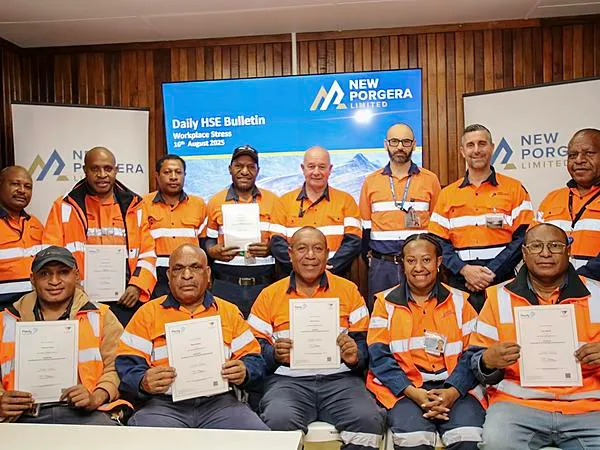
New Porgera Limited (NPL) has announced the launch of the NPL Youth Community Development Committee (Youth CDC), an advisory body tasked with proposing and evaluating youth-related community development projects for NPL funding.

The inaugural Youth CDC comprises a male and a female youth representative aged 18 to 24 from each of the four Local Level Governments (Porgera Urban, Porgera Rural, Paiela Hewa and Maip Mulitaka) in the Porgera-Paiela District, along with two youth living with disabilities.

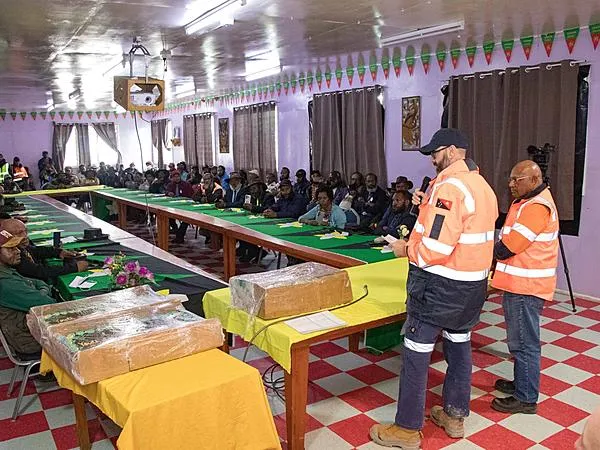
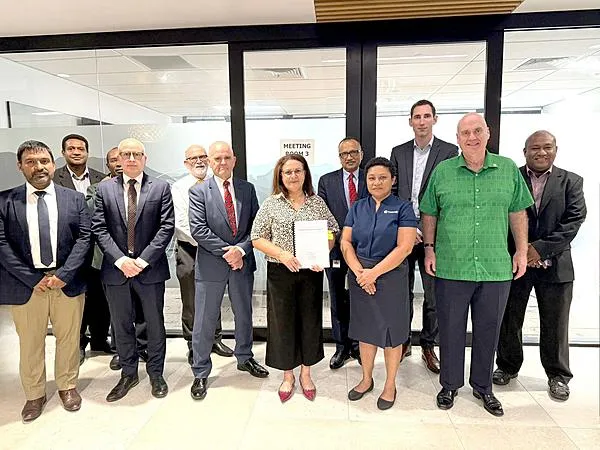
Ten members were officially sworn in on 26 September, witnessed by their respective LLG representatives, NPL management and members of the community.

Addressing the occasion, NPL General Manager James McTiernan encouraged members to be good leaders and agents of change for the growing youth population in the Porgera-Paiela District.

“Today is an important occasion, as we witness the establishment of the first NPL CDC. Although this Committee is launched in partnership with NPL, its direction will be shaped by you – the youth," McTiernan said.

The Youth CDC is designed not only as a committee but as a platform – a new beginning for the region’s young people to be heard, to participate and to help shape a future that works for them.

The Committee’s work will be guided by the values of faith, inclusivity, kindness, growth, transparency and honesty – principles seen as vital to bringing positive change to the Porgera-Paiela District. Its initiatives will support priorities such as access to education and skills training, small business opportunities, sports and the arts, as well as providing safe spaces for young people to gather and express themselves.

“We commend the inaugural members of the Youth CDC, and we look forward to working closely with them to bring positive development for Porgera-Paiela District,” McTiernan said.

NPL also acknowledged the efforts of its Corporate Social Responsibility team, which worked with stakeholders to establish the Committee. The company said it would continue to provide guidance as part of its community partnerships.

“Together, we will continue bringing positive development through Porgera’s community partnerships," McTiernan said.

September 29, 2025

The Farmers and Settlers Association (FSA) has urged the Marape-Rosso government to take bold action to reverse the decline in agricultural production and rural employment, stressing the need for fresh interventions to stimulate Papua New Guinea’s primary industries.

In a statement issued to PNG Business News on 3 September, FSA President Wilson Thompson said that while the government’s priorities in health, education, law and order and infrastructure are commendable, stronger emphasis is needed on agriculture and rural industries, which have seen production, income opportunities and employment decline over the past five decades.

He noted that past initiatives, including the Small Agriculture Credit Scheme in the 1990s, the Agriculture Commercialisation Fund in the 2000s, and more recent programmes such as the Productive Partnership in Agriculture Project (PPAP) and the Partnership for Commercialisation and Diversification (PACD), had limited long-term impact.

“Until 1991, Papua New Guinea had successful commodity plantations and agriculture settlement schemes that provided production volume, skills transfer, buying access, employment, and income for rural communities,” Thompson said.

He pointed out that despite declining production and export volumes since 2000, foreign exchange earnings have increased due to high global commodity prices.

“This means export value has risen even while production and employment are falling. To reverse this trend, we need to rehabilitate plantations and settlement schemes, replant, and distribute quality seeds, while encouraging smallholders,” he said.

Thompson urged the government to draw lessons from history, highlighting the plantation redistribution and block development programmes launched by the Somare-led Pangu government in the 1970s and expanded under Sir Julius Chan in the 1980s. He said the recently launched National Agriculture Strategy Plan (NASP 2023) presents an opportunity for the commercialisation and mechanisation of agriculture and could drive real transformation during PNG’s 50th anniversary.

According to the association, rural industries such as coffee, cocoa, rubber, coconut and oil palm directly inject money into communities through daily wages, farm purchases and operational expenses, unlike extractive industries where benefits are largely limited to royalties. Thompson stressed that plantations, settlement schemes and associated factories could contribute up to 50 percent of the government’s target of one million new jobs, with forestry, fisheries and support services contributing another 25 percent.

He also called on the government to extend tax exemptions and tariff relief currently enjoyed by mining, oil and gas projects to agriculture.

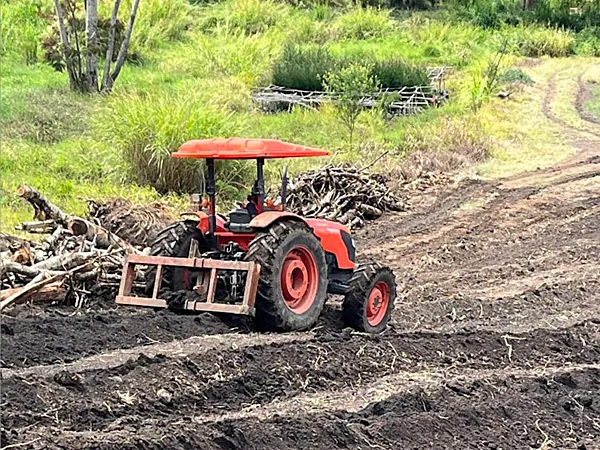
“There is no reason why tractors, implements, fertilizers, weedicides, and factory building materials cannot be exempted,” he said.

The association further expressed disappointment over the lack of budget allocations for seed production, nurseries and livestock breeding. “Although there is much focus on downstream processing, the question remains: what will be processed if production continues to fall?” Thompson said.

While acknowledging progress under Connect PNG, which has opened access to remote areas such as Aseki to Kaintiba, Menyamya to Marawaka, Tabubil to Telefomin and Abau to Alotau, he emphasised that these new economic corridors must be matched with the introduction of commercial crops and livestock to maximise their benefits.

“The Marape Government must break the cycle of declining agriculture production and productivity. New interventions must start now if we are to achieve meaningful growth in revenue, exports, and employment,” Thompson said.

September 29, 2025

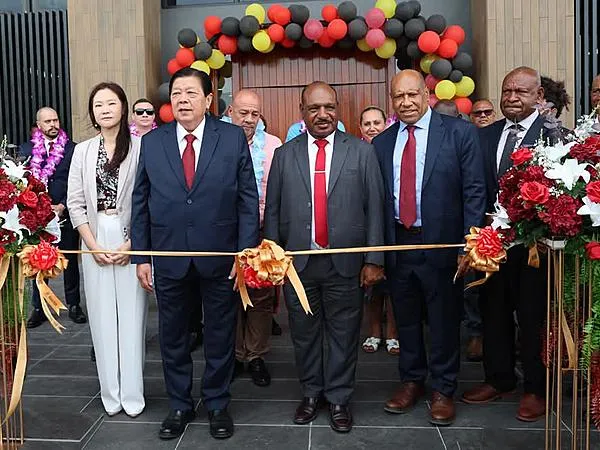
Coffee Minister William Bando officially opened the new state-of-the-art Homestate Coffee Factory at Tanam in Lae, Morobe Province, Papua New Guinea on 25 September 2025. The investment marks a milestone for Morobe’s coffee sector, creating opportunities for farmers who previously had to transport their produce to Goroka for processing.

The opening of the Homestate Coffee Factory is a major step forward for the country's coffee industry, strengthening rural livelihoods and reaffirming coffee’s place as the “green gold” that sustains millions of households nationwide.

The occasion was witnessed by leaders from both the provincial and national governments, business representatives, coffee stakeholders, and industry partners.

Minister Bando congratulated Homestate Chairman Tony Wetwattana and his team for their commitment to the industry, adding that the facility would not only boost coffee production in Morobe but also benefit farmers from other maritime provinces.

“When we talk about taking back PNG, we must take our people with us. I have travelled to a couple of coffee plantations and factories, and I can say that our people are so engaged and resilient,” Bando said.

“As minister for this important sector that supports over 450,000 households that equates to about 2-3 million individuals, this is where the money should be spent. To the chairman of Homestate Mr Paiboon, our host, distinguished guests, industry partners and most importantly the coffee growers of Morobe, thank you for your commitment to our nation,” Bando said.

The minister added that his role goes beyond official duty, highlighting coffee’s deeper meaning for rural communities. “I stand before you today not just as your coffee minister, but a son of this land who understands that coffee is not just a crop. It's a heartbeat of the rural economy, hope of our families and the green gold that will one day underpin the course of our country,” he said.

Bando stressed that the new facility symbolised more than just a corporate achievement.

“Its a profound political statement. It's a declaration by this Government that we are decisively moving away from a colonial era model of raw commodity extraction. We are now marching towards a new era of in-country value addition, job creation, and national wealth retention,” he added.

He also announced that his ministry is working with government and partners to strengthen the sector through building coffee access roads, tackling the coffee berry borer pest, introducing the soon-to-be-launched Green Gold Card to support farmers with pricing, and driving research and development into climate-resilient seedlings and modern farming techniques.

Coffee Industry Corporation (CIC) Acting CEO and Chief Operations Officer Steven Tumae also commended Homestate, noting their long-standing relationship with CIC.

“They initially approached CIC and asked for a permit to build in 2016 and we denied their application because of some irregularities in relation to policy guidelines. From that initial contact a decade ago, we fast-forward to January 2025 when Homestate was licensed as a Dry Coffee Processing Mill. Today, we open its doors to the growers of Morobe and wider PNG,” Tumae said.

He added that Homestate is already a major player in industries such as rice, instant noodles, salt, sugar, and foam boxes.

“Their strategic diversification into coffee signals immense confidence in the coffee industry. It also adds significant capacity to Morobe Province, a province with a rich coffee heritage,” he said.

“I also take this time to acknowledge the contributions of past and present factory owners and exporters in Morobe who have served farmers well and continue to this day. You have laid the groundwork. Today we build upon it,” he added.

September 25, 2025

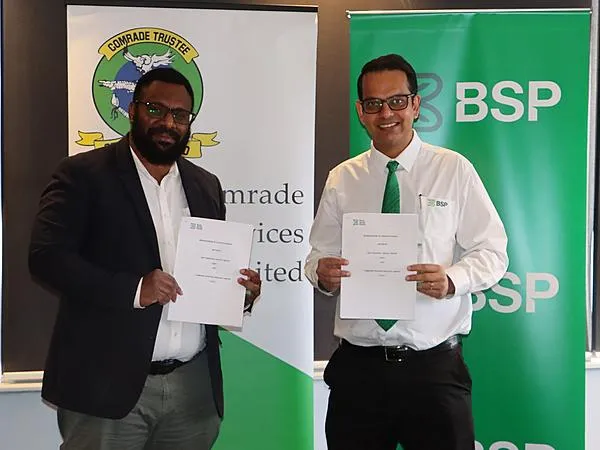
Members of Comrade Trustee Services Ltd (CTSL) can now enjoy a faster and more convenient process when applying for superannuation withdrawals, following a new partnership with BSP Financial Group Ltd (BSP).

The two organisations signed a Memorandum of Understanding (MoU) on 23 September, that allows, with members’ consent, bank statements to be shared directly and securely between BSP and CTSL. The arrangement removes the need for members to visit BSP branches to obtain statements when applying for partial or full withdrawals of their superannuation contributions.

CTSL General Manager for Member Service Freddy Manihoru said the initiative was about making life easier for its more than 6,000 members.

“Our focus is always on our members. By removing the need for extra paperwork and branch visits, we are giving them back valuable time while ensuring they receive a smoother, faster service,” Manihoru said.

The MoU also sets out strict guidelines for protecting member information in line with legal and privacy requirements to ensure data is handled securely and responsibly.

BSP Group General Manager for Retail Ronesh Dayal said customer convenience remains central to the bank’s service delivery.

“At BSP, we care about our customers, we aspire to make banking simpler, and we continue to grow with our communities. This partnership reflects our shared commitment to put people first by making financial services and retirement processes easier, faster, and more secure," Dayal said.

“We also recognise the paramount importance of customer data privacy and security. That is why this MoU outlines among others, the very necessary legal, operational and technological guidelines to ensure customer information is handled with the highest standard of care and responsibility,” the official added.

Through the partnership, BSP and CTSL said they aim to reduce barriers and improve the customer journey, enabling members to access services with greater ease and confidence.

BSP, formerly the Bank of South Pacific Ltd, is the leading retail and corporate banking group in the Pacific. Founded in 1957 and headquartered in Papua New Guinea, it operates across seven Pacific countries with more than 120 branches, 300 agents, 550 ATMs and upwards of 11,000 EFTPoS machines.

The group employs more than 4,000 people and is listed on both the Port Moresby Exchange and the Australian Securities Exchange.

September 24, 2025

A delegation of Korean investors has visited Papua New Guinea to explore opportunities in poultry, trade and education, a move the government hopes will spark long-term economic partnerships.

Minister for International Trade and Investment Richard Maru said the visit was an important signal of growing interest from Asia’s fourth-largest economy.

“This is the first visit we have had from the Koreans this year. Korea has transformed from being war-ravaged to a global economic powerhouse. We are hoping that as a result of this visit, they (the Korean investors) will make some investment decisions in PNG. I am extremely delighted and excited about the future.”

Among the visitors were representatives from Charmfre Inc, Korea’s second-largest chicken producer and a global leader in animal welfare standards. The company is considering a major investment in PNG’s poultry industry.

Maru said the opportunity could not be more timely, adding that PNG is a net importer of chicken.

"We are currently importing over K200 million worth of chicken annually, which means we are not producing enough chicken to meet our own domestic demand. Port Moresby does not have a major poultry operation. Our city is supplied from Lae and that is why the cost of chicken is very high because of the freight cost," he said.

“We need some global players like Charmfre to partner with the National Government, the Central Provincial Government and with Papua New Guinean companies to invest in a major poultry operation within the Central Province. Our need is not only broiler meat, but also eggs and day-old chicks. We are looking at a major investor who can operate in the entire value chain of a chicken, including exports," he added.

Maru said that the PNG government has already indicated to Charmfre that a poultry project in Central Province will be considered a Special Economic Zone (SEZ) with incentives to be offered.

"With our population growing at the rate of 4 percent per annum and with more resource projects and SEZs in the pipeline, the demand for chicken will continue to grow so investors in the poultry space will not go wrong investing in PNG," he said.

He added the government was determined to build local capacity. “The Marape-Rosso Government is keen to replace all chicken imports and be a net exporter of chicken. Partnerships with countries like Korea and its leading poultry companies who own global export brand like Charmfre would be a very exciting investment prospect," he said.

The visit also drew support from the PNG Poultry Industry Association. Chairman Chris Prestwood said global supply shocks underscored the urgency of investment.

“We have had difficulties in chicken supplies this year with number one reason being the countries that we have been importing chicken from being hit by avian influenza. It is critically important that our industry builds capacity by having our Government opening doors for other countries to come and partner us to create that capacity. We have to overcome malnutrition, stop importing and create opportunities," he said.

“Over the next ten years, the poultry industry needs to invest more than K1.2 billion to ensure we meet these milestones. We have the potential. Meanwhile, our existing producers are doing wonderful job. This year, production in PNG has grown by 40 percent which is tremendous," he added.

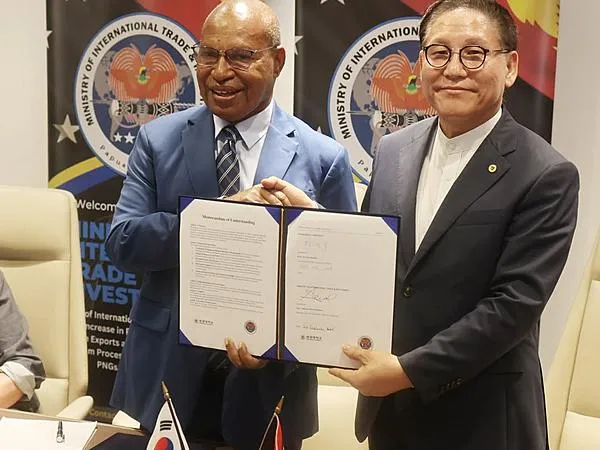
A highlight of the Korean delegation’s trip was the signing of a Memorandum of Understanding (MoU) between the Ministry of International Trade and Investment and Wonkwang University, whose Vice President for Academic Affairs, Professor Jin-Soo Hwang, was part of the visiting team.

Maru said the agreement was a starting point for a broader partnership.

“The purpose of this MoU is for us to cooperate in vocational training, industrial talent development, trade, investment, and research and development in import and export with the aim of contributing to economic development and strengthening industrial cooperation between our two countries," he said.

“This is a start of our relationship. While they have signed an MoU with my Ministry, I will channel them to other Ministries and agencies that will be required to work with them," the minister said.

During their stay, the Korean investors also toured the Paga Hill SEZ in Port Moresby to evaluate investment opportunities.

For PNG, the visit offered not just the prospect of poultry investment but also the hope of a deeper economic partnership with one of Asia’s most dynamic economies.

September 24, 2025

The Conservational and Environmental Protection Authority (CEPA) has granted the Level 3 Environmental Permit for the upstream component of the Papua LNG Project to TotalEnergies EP PNG Limited (TEP PNG), marking a key step toward the project’s eventual Final Investment Decision (FID).

The Level 3, or “L3,” permit is the principal regulatory approval under Papua New Guinea’s Environment Act 2000 for activities declared to be of national significance. It allows companies to proceed — subject to stringent, independently peer-reviewed impact assessments — with mitigation and monitoring measures.

The permit requires the development of Environmental and Social Management Plans (ESMPs), which define how potential impacts will be managed, continually monitored and reported throughout the project’s life cycle. It also enshrines public participation and transparency, giving stakeholders opportunities to raise concerns, contribute local knowledge and engage in project dialogue.

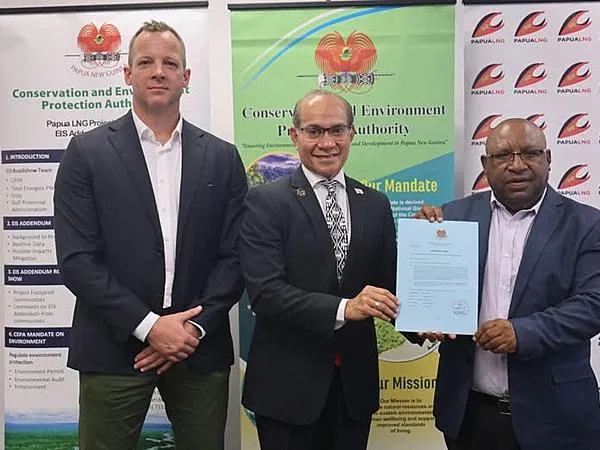
In a formal handover ceremony, CEPA Managing Director Jude Tukuliya presented the permit to TotalEnergies EP PNG’s Public Affairs Manager Richard Kassman in a gesture officials said signified forward momentum for the project.

 “This significant milestone will lead to alignment to Prime Minister James Marape and government’s aim of having nearly K200 billion worth of oil, gas and mining projects in the next 15 years,” Tukuliya said.

Observers see the permit issuance as the culmination of a decade of collaboration, regulatory scrutiny and negotiation between CEPA and TEP PNG. It brings the Papua LNG initiative one step closer to full investment approval, although final decisions have yet to be made.

For many observers and stakeholders on the ground, the permit is more than a bureaucratic milestone. It is a sign that hopes for job creation, infrastructure investment and revenue generation for affected communities remain alive — even as environmental and social safeguards remain under close watch.

As Papua New Guinea balances economic ambition with environmental responsibility, the permit’s conditions and the strength of enforcement will be keenly observed by local communities, civil society groups and international partners.

September 24, 2025

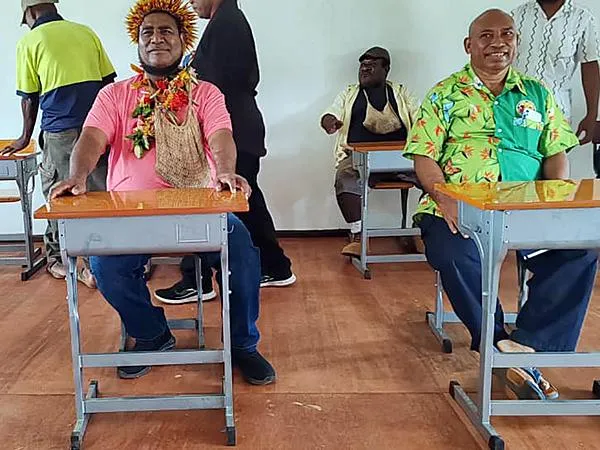
Theodist Limited, a leading Papua New Guinean business, has partnered with Kairuku MP and Minister for Energy Peter Isoaimo to provide essential school furniture to St Michael’s Bakoiudu Primary School in Kairuku District, Kuni LLG.

The donation, comprising 15 desks and 15 chairs, was presented during the official opening of the school’s new 3-in-1 classroom in the Kuni Local Level Government area of Kairuku.

The partnership reflects a growing trend of public–private collaboration aimed at improving educational facilities and outcomes across Papua New Guinea.

Theodist’s contribution is part of its long-standing commitment to the education sector, a mission it has upheld for more than 50 years.

“Our commitment extends to every part of the education sector because we believe every student deserves a safe and well-equipped space to learn,” Theodist said in a statement.

This philosophy, the company added, “drives our efforts to provide classroom furniture, supplies, and tailored support programmes to schools nationwide.”

Theodist’s involvement, it stressed, aims to send a powerful message to students: they matter, and their future matters.

The company reaffirmed its commitment to working alongside government officials, educators, and local communities to ensure schools, regardless of their location, are well resourced to educate and inspire future generations.

September 24, 2025

From Insurance to Real Estate – making new roads into the future

Established in 1977 and now nearing five decades, Kwila has long been a trusted name in Papua New Guinea. The company began as an insurer, serving both corporate and individual clients, and its brand has remained strong across PNG’s diverse communities.

Kwila entered the real estate sector in the late 1980s and, in 2019, made a strategic decision to exit insurance and focus entirely on property. Its presence in the market grew quietly until recently, when the company took direct control of its own portfolio.

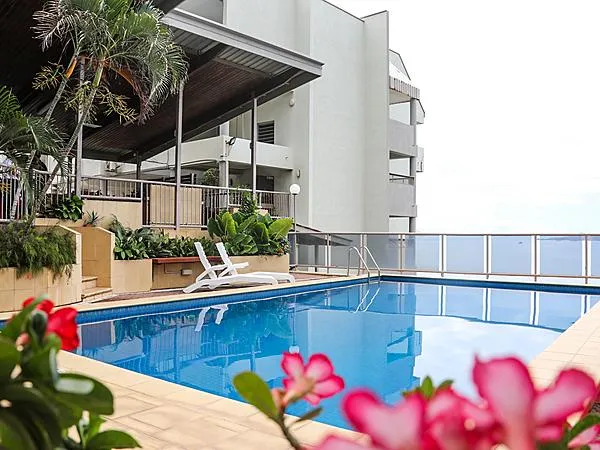
From 1 August 2025, Kwila Corporation Limited will manage 129 residential apartments in Port Moresby, firmly establishing itself as a key player in the city’s competitive property market.

As Papua New Guinea celebrates 50 years of Independence, Kwila has launched a dedicated Property Management Team and officially opened the Kwila Corporation Residence Office within the Kwila Kermadec Apartment compound, Section 24, Lot 15, Kermadec Street, Granville.

Kwila offers a portfolio of intimate, modern, and secure properties, delivering high-quality living spaces with refined service at every touchpoint in some of Port Moresby’s most sought-after locations.

Catering to both corporate and private tenants — expatriates, professionals, and families alike — each property blends comfort, convenience, and breathtaking views of the city, sea, and harbour.

With Kwila’s repositioning as a hands-on property management company, it delivers more than just homes: it offers the assurance of a respected home-grown brand, private communities of like-minded residents, and long-term value.

“Our shift from insurance to real estate is a natural progression. At Kwila, we’ve always cared about people’s peace of mind — now we extend that same care into the homes and communities we build and manage," Acting General Manager Sara Hillman said.

“Kwila’s highest priority is providing secure homes and communities, which is one of the most decisive factors shaping the quality of life in PNG," she added.

The company’s mission is clear:

  • To create residential communities that combine comfort, convenience, and security.
  • To provide stylish living spaces that embrace the country’s tropical lifestyle.
  • To deliver professional management and seamless service to all its residents.

September 23, 2025

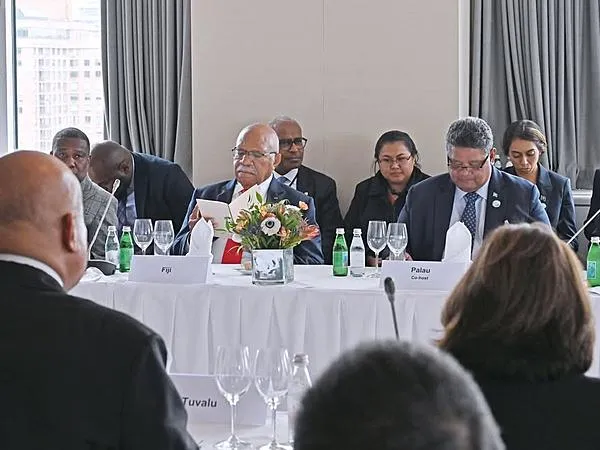
The Republic of Fiji has once again underscored the urgent need for renewed global commitment to climate action and stronger support for Small Island Developing States (SIDS).

At a high-level side event held on the margins of the 80th United Nations General Assembly (UNGA80), Prime Minister Honourable Sitiveni Rabuka stressed that climate change continues to inflict severe and disproportionate impacts on Fiji and other SIDS, forcing nations to divert scarce resources from development priorities to rebuilding and recovery efforts.

The event, co-hosted by Palau and Germany, brought together heads of government and senior policymakers to deliberate on pressing challenges at the nexus of climate change, geopolitics and development finance.

In his address, Rabuka called on G20 nations to show leadership in tackling the climate crisis.

“Together, we continue to uphold principled leadership in advocating for stronger and more urgent climate action. As we look towards COP30 in Belem, Brazil, we must remain steadfast in our commitments dating back to 1992 — to hold major emitters accountable, ensure compliance with the Kyoto Protocol and deliver ambitious Nationally Determined Contributions (NDCs).”

The Prime Minister further highlighted the need for genuine partnerships to address debt vulnerabilities, expand access to climate finance and secure recognition of the unique challenges faced by SIDS within global financial frameworks.

Concluding his remarks, Rabuka reaffirmed Fiji’s commitment to working in solidarity with the global community to advance urgent, just and effective climate action.

The event served as an important platform for leaders to exchange perspectives on international climate policy, including the recent ICJ advisory opinion, preparations for COP30 and the continuing challenges of development and climate financing for SIDS.

September 23, 2025

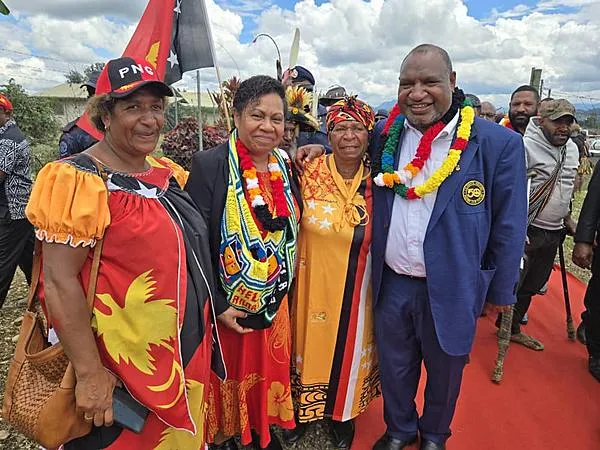
 Prime Minister James Marape received a rousing and colourful welcome in his home electorate of Tari-Pori, Hela Province, as he returned from the nation’s historic 50th Independence Anniversary celebrations in Port Moresby on18 September.

Thousands gathered in traditional attire, with singsing groups and community members filling Tari with the spirit of celebration and unity.

The Prime Minister’s arrival followed the highly successful Golden Jubilee celebrations in Port Moresby and across Papua New Guinea, which showcased the nation’s unity, diversity and resilience since independence on 16 September 1975.

Speaking to the jubilant crowd, Prime Minister Marape reflected on the journey of Papua New Guinea over the last five decades and set out his vision for the future — one centred on economic independence, strong faith and quality education.

“Our political independence was delivered by Sir Michael Somare and our founding fathers in 1975,” Prime Minister Marape said. “Now, our generation’s responsibility is to deliver economic independence for Papua New Guinea. By 2030, I aim for our country to reach a K200 billion economy, K300 billion by 2035 and K500 billion by 2045. That is my task as Prime Minister and it is a responsibility I will not shy away from.”

The Prime Minister stressed that while his Government is committed to building a stronger economy and creating opportunities, the true strength of the nation lies in its people. He called on citizens across the country to embrace two vital institutions — the Church and Education.

“Today, I reminded our people in Tari that the future of Papua New Guinea rests on two pillars: God and Education,” Prime Minister Marape said. “I stand here as living proof of what faith and schooling can do. From a barefoot boy with no English in a remote corner of our country in 1975, I have been carried by God’s grace and the power of education to serve as your Prime Minister today. That is why every child must go to Church and go to School.”

The Prime Minister announced that under the Government’s Medium Term Development Plan IV, a Grade 12 Certificate will be institutionalised as the minimum benchmark of educational achievement for young people across the nation. This will ensure that every child is equipped with the knowledge and skills to participate in the modern economy and contribute positively to society.

He further called upon Provincial Governments, particularly Hela, to partner with the National Government in strengthening Churches and Schools. “Churches provide the moral values and strong character that our nation needs, while education equips our children with the skills and empowerment to live meaningful lives and build our country,” he said.

As the crowd cheered, Prime Minister Marape reassured them that the journey beyond 50 years of Independence will be one of shared responsibility. “My job is to work for economic independence, but for the rest of our people, the call is to work hard, save hard, stay united and keep faith in God. Together, we will create a prosperous Papua New Guinea,” he declared.

The atmosphere in Tari was festive, as cultural groups and families expressed pride in their Prime Minister and in the nation’s Golden Jubilee. The event was described by many as a true reflection of the “PNG spirit” — colourful, passionate and united in diversity.

As Papua New Guinea steps into its next fifty years, Prime Minister Marape’s message from Tari was clear: economic independence will be achieved only if every child is grounded in faith and education and every citizen takes ownership of the nation’s destiny.

September 23, 2025

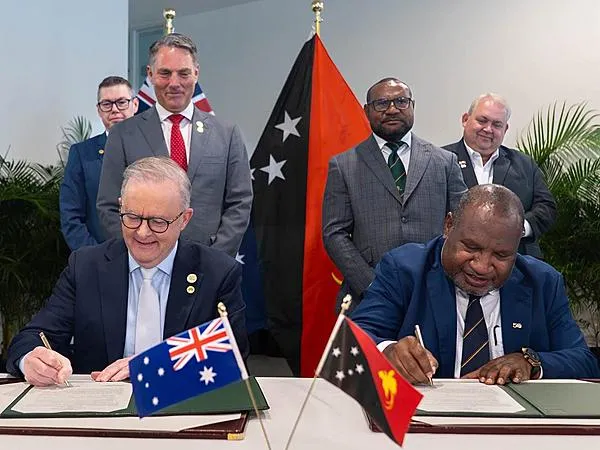
Prime Minister James Marape has announced that Papua New Guinea and Australia have agreed on the text of a Mutual Defence Treaty, elevating the two nations’ security partnership to the highest level in their shared history.

The Treaty — to be known as the Pukpuk Treaty — will be formally signed after Cabinet processes in both Port Moresby and Canberra. It was unveiled following a bilateral meeting between Prime Minister Marape and his Australian counterpart Hon. Anthony Albanese at Melanesian Haus in Waigani, a day after Papua New Guinea celebrated its 50th Independence Anniversary.

A New Chapter in Bilateral Relations

PM Marape reflected on the symbolic timing of the announcement. “Yesterday we reflected on our 50 years of democracy, freedom and sovereignty. And in our reflections we identified our strengths and weaknesses. Government from now on into the first 20 years of our nationhood must work to fix those weak spots.

“One of these weaknesses is a rundown military that is not fit to defend 10 million-plus people in 462,840 square kilometres of land and over 3 million square kilometres of ocean space. We face theft of our fisheries, unaccounted-for vessels and planes encroaching our sovereign spaces, illegal border crossings and the trafficking of guns and drugs," he said.

“And as part of our reflection, we know for certain that our defence is not in good shape. Over time, successive governments have eroded the capacity of our Defence Force. We are now giving back priority to rebuilding the Defence Force at the earliest opportunity, along with rebuilding our Police Force and Correctional Service institutions. These will be restored so that they become the frontline defenders against external security threats, the protectors of our borders and key actors in restoring internal security — ensuring that we become a stronger and more secure people going forward into the future," he added.

Today, Marapa said that PNG take the first step into the next 50 years by cementing a security alliance with its closest neighbour and partner, Australia.

The Prime Minister emphasised that the decision was rooted in history and geography. “From the womb of Australia, we were birthed into our sovereign nationhood in 1975. Australia lowered its flag with dignity and we raised ours in dignity — our friendship remains. Fifty years on, Australia has never abandoned us. This Treaty reaffirms that bond — not as subservient partners but as equals, standing side by side and walking side by side," he said.

The Core Principles of the Pukpuk Treaty

The Pukpuk Treaty will establish a mutual defence alliance, recognising that an armed attack on either Australia or Papua New Guinea would endanger the security of both nations. Its core principles include:

  • Mutual Defence Commitment — recognising an attack on one would be a threat to both.

  • Expansion and Modernisation — deepening defence ties, including a recruitment pathway for Papua New Guineans into the Australian Defence Force.

  • Enhanced Capability and Interoperability — greater integration of defence forces, training and operations.

  • Protection of Sovereignty — ensuring agreements with third parties do not compromise the Treaty.

  • Regional Stability — reaffirming respect for the sovereignty and independence of neighbours across the Pacific.

Marape said the Treaty was proposed by Papua New Guinea as part of its Golden Jubilee year, with Australia honouring the request.

“This is our foresight and investment in long-term security. The Treaty is not for 2025 or 2026, but for generations to come. It secures PNG, Australia and our shared region in the Indo-Pacific," he said. "Because it is a Treaty, after Cabinets on both sides have cleared it, it will then go to Parliament for ratification. That is the process. If Parliament ratifies it, then the Treaty is affirmed and it will govern the administration of those relationships going forward.”

Building Defence and Internal Security

Marape acknowledged the current limitations of PNG’s defence capacity, noting the country cannot yet fully defend its vast land and maritime domains.

“God forbid, but if there were to be a war tomorrow — if someone were to invade Papua New Guinea — as your Prime Minister, as your number one defence man to defend this country, I must be frank: I do not yet have the gears to effectively defend our nation. That is why governments establish such strategic partnerships with forces of similar ethics, values and background. This Treaty ensures we work in tandem, hand in hand, without compromising our sovereign interests but always for the mutual benefit of our shared space and region," he said.

He further outlined his vision: “To every child of Papua New Guinea: your Prime Minister’s number one duty is to defend you. That is why I have made the conscious choice to make Australia our security partner of choice. Together, we will build a Defence Force of 7,000 personnel and a Police Force of 10,000 over the next decade, supported by a modern law and justice system.”

PM Marape also drew on international examples, stressing the importance of long-term security arrangements.

“You look at Israel today — Israel has had a longstanding security agreement with the USA for over 70 years. Under such covenants, nations sustain strong relationships for their mutual protection," he said. "In today’s world of many tensions and contests, both internal and external security are big considerations for any responsible government. Such arrangements act as a buffer, ensuring we step up to secure our borders and protect our people from external threats and internal challenges. They give us security.”

He said the Treaty would also address PNG’s pressing internal security challenges, working in tandem with policing, judiciary and community law and order improvement initiatives the Government is putting in place.

An Alliance of Equals

Both leaders stressed that the Alliance is grounded in respect and trust built over five decades.

“Our Alliance will reflect our true commitment to each other and to a region that is peaceful, stable and prosperous,” PM Marape said. “It builds on the kinship of generations of our defence personnel, the sacrifices made in the cause of peace and our enduring commitment to democracy and the defence of our respective sovereignties.”

He also acknowledged Australia’s broad support for PNG’s development, including youth employment, bilateral programmes and the forthcoming inclusion of a PNG team in the National Rugby League in 2028.

“At 50 years of independence, Australia remains head and shoulders above any other partner in supporting our growth. This Treaty is not just about defence; it is about prosperity, stability and preparing our children for the next 50 years," he added.

History in the Making

Prime Minister Albanese was joined in Port Moresby by Deputy Prime Minister Richard Marles and Minister for Defence Industry and Pacific Island Affairs Pat Conroy. PM Marape described their presence as “history in the making,” symbolising Australia’s deep affinity with PNG.

“The fact that Prime Minister Albanese has effectively relocated his Cabinet to Waigani for our 50th speaks volumes. Labour was with us in 1975 and Labour is with us today as we chart a new chapter together,” PM Marape said.

He concluded by calling the Treaty a defining moment for both nations:

“The Pukpuk Treaty is a pact between brothers, neighbours and equals. It ensures that when history tests us again, Papua New Guinea and Australia will stand — side by side — ready to defend our peoples, our sovereignty and our shared future," he said.

September 23, 2025

The Bank of Papua New Guinea (BPNG) and the country’s commercial banks have reached a historic milestone with the signing of a Master Repurchase Agreement (MRA), a development that will transform the operation of Papua New Guinea’s financial system.

The MRA establishes a framework that allows commercial banks to borrow and lend to one another—as well as with the Central Bank—on a collateralised basis. This means interbank transactions can now be backed by Government Inscribed Stock, removing counterparty risk, building confidence between financial institutions, and supporting the development of a deeper and more active interbank market.

Governor Elizabeth Genia said commercial banks had traditionally lent funds to each other on an outright basis with no underlying collateral. “Collateralised repos and reverse repos remove counterparty risk and lay the foundation for a deeper and more liquid interbank market,” Governor Genia said.

This achievement follows the introduction of the Bilateral Repurchase Agreement in 2019, which applied only to transactions between each commercial bank and the Central Bank. The new Master Repurchase Agreement extends this to transactions directly between the commercial banks, aligning Papua New Guinea with international standards.

The next step will see these operations integrated into the Central Securities Depository (CSD) system portal later this year, enabling online transactions. By December 2025, BPNG aims to annex the MRA into the Global Master Repurchase Agreement (GMRA), fully aligning Papua New Guinea with global best practice.

Governor Genia expressed her appreciation to the BPNG team, the IMF Technical Assistance Team, and the commercial banks for their cooperation in delivering this landmark reform.

“This is a truly historic moment. The agreement, signed with all our commercial banks, strengthens the foundation of our banking system and will support the stability and resilience of Papua New Guinea’s financial system for many years to come,” she said.

September 22, 2025

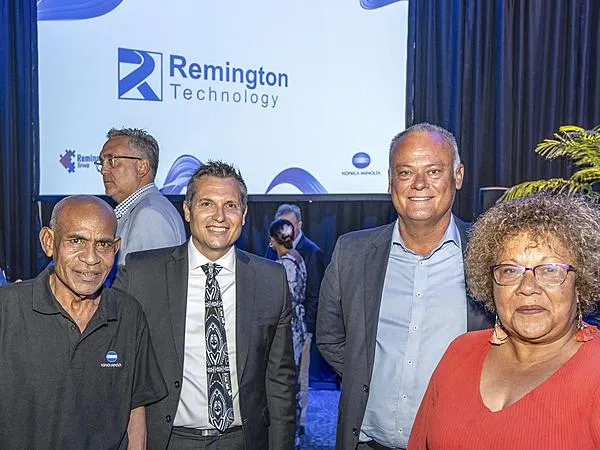
When Papua New Guinea celebrates 50 years of independence this September, one business stands out for having journeyed with the nation long before 1975: Remington Group.

Established in 1948, Remington began as the country’s typewriter supplier, introducing modern office equipment to government, schools and businesses. Those machines helped lay the foundation for administration and communication in a young nation finding its feet.

Over the decades, as PNG transformed, so did Remington. The Group evolved from typewriters to photocopiers, printers and ultimately into today’s full-service technology organisation.

With a national footprint stretching from Port Moresby to Lae, Goroka, Mt Hagen, Kimbe, Kokopo, Wewak and Kavieng, Remington has become a trusted partner for thousands of businesses.

The company is the exclusive authorised Konica Minolta dealer in PNG and has been recognised regionally, winning the 2024 Konica Minolta Dealer of the Year award across the Australia-Pacific region.

But the Group’s impact goes far beyond hardware.

Through its divisions—Remington Technology, FX Business Centre (the only authorised Fujifilm dealer in the country), BizPrint, OFC Tech Solutions and Remington Digital Solutions—it delivers everything from managed print services and IT infrastructure to document digitisation, cloud storage and workflow automation. Its mission is clear: help organisations work smarter, faster and more securely in a rapidly digitising world.

Looking ahead, Remington is preparing to launch Remington Hi-Tek, a bold retail venture that will bring electronics and technology directly to customers through modern stores in Lae and Port Moresby, and an online shop serving the entire nation.

Together with Remington Digital Solutions, the Group is positioning itself as a leader in PNG’s digital transformation, empowering businesses, government and communities to embrace the next era of innovation.

From typewriters to the cloud, Remington Group’s story mirrors Papua New Guinea’s own journey: resilient, adaptive and forward-looking. As the nation marks its Golden Jubilee, Remington remains firmly committed to shaping the next 50 years of progress.

September 22, 2025

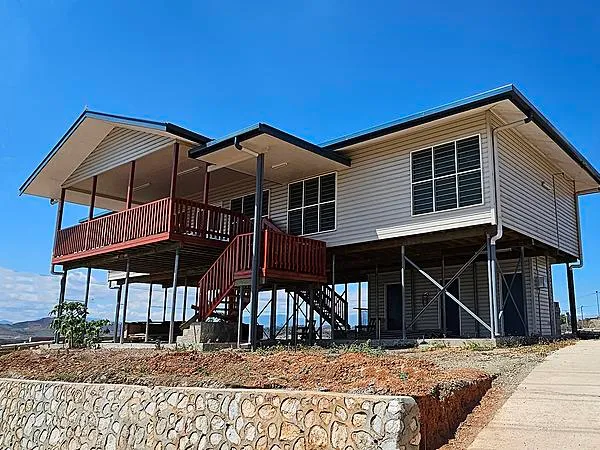
Everyone knows that to be truly independent, you need your own home. But for many, there is the question of whether to buy or build, while for others, housing affordability is a challenge. The answer to both is NiuHomes from PNG Forest Products.

With over 30 models to choose from, NiuHomes are PNG’s first choice for quality, affordable kit homes, available in a range of styles to suit every budget and lifestyle. NiuHomes come with a wide range of quality inclusions, right down to the kitchen sink.

Models in the Residential Range have everything you need to achieve independence as a homeowner, including electrical wiring and fittings, a solar hot water system, a full plumbing kit including toilet and shower, ceramic tiles, a joinery kit, ceiling fans, and even interior and exterior paint—all included in the price of the kit home.

Then there is their exceptional quality and durability. NiuHomes are the only kit homes in PNG engineered to PNG and Australian building codes that are preservative pressure treated to fully protect against termites and rot, ensuring your investment will last for years to come.

Have you thought about where your money goes when you buy a house? Some manufacturers import their steel and other materials, sending much of your money overseas.

NiuHomes are made from PNG timber, sourced from pine plantations managed by the PNG Forest Authority, putting money back into the PNG economy. NiuHomes are not just PNG Made—they are PNG Grown.

Find your independence in a NiuHome and celebrate the fact that you are supporting your country. After all, isn’t that what Independence Day is all about?

September 22, 2025

Papua New Guinea’s 50th Independence Anniversary, celebrated from 14 to 19 September, brought the nation to the world stage as global leaders, regional partners and international dignitaries joined in commemorating the Golden Jubilee.

From Independence Hill to the streets of Port Moresby, the celebrations on 15 and 16 September showcased the unity of “One People, One Country, One Future” while highlighting the country’s growing role in the Pacific and the global economy.

Global Leaders Gather in Port Moresby

The capital city became the gateway for world leaders and Pacific dignitaries who converged to witness Papua New Guinea’s milestone anniversary. United States Deputy Secretary of State Christopher Landau and Commander of the U.S. Indo-Pacific Command Admiral Samuel J. Paparo joined U.S. Ambassador Ann Marie Yastishock, PNG Foreign Secretary Elias Wohengu, Solomon Islands Prime Minister Jeremiah Manele and Pacific Islands Forum (PIF) Secretary General Baron Waqa for a U.S.–Pacific Islands Forum Roundtable in Port Moresby.

The discussions focused on shared priorities including economic development, disaster preparedness and regional security. The visit also saw the United States and Papua New Guinea strengthen bilateral ties with the signing of a Framework for Strategic Engagement, alongside the groundbreaking of a K1.6 billion U.S.-funded fuel storage facility, marking a significant investment in PNG’s energy security and economic future.

“From strengthening our shared interests to dancing alongside Papua New Guineans to Wan Kantri, the U.S. is committed to its partnership with Papua New Guinea and the Pacific,” Deputy Secretary Landau said during the events.

UN Secretary-General, who visited PNG and addressed Parliament on Tuesday, 2 September 2025, congratulated PNG on achieving 50 years of unbroken democracy.

Israeli President Isaac Herzog delivered his message on behalf of his people via video. He said it was a true privilege to share his congratulations with Prime Minister Marape and the people of PNG on 50 years of Independence.

At the bilateral meetings on Monday, 15 September 2025 to Wednesday, 17 September 2025, all visiting leaders congratulated PNG on its historic milestone:

  • China: Special Envoy of the Chinese President and Minister for Ecology and Environment Huang Runqiu delivered a personal letter of congratulations from President Xi Jinping to Prime Minister Marape.

  • United States: Deputy Secretary of State Christopher Landau congratulated Prime Minister Marape and the people of Papua New Guinea on achieving 50 years of democracy and for maintaining a relationship with the USA based on similar ideals of democracy, Christianity and mutual goals.

  • Japan: Special Envoy of the Japanese Prime Minister and Minister for Foreign Affairs Takuma Miyaji delivered a personal letter of congratulations from the Japanese Prime Minister.

  • Indonesia: Vice President Gibran Rakabuming Raka passed on President Subianto’s congratulatory message on behalf of Indonesia.

  • France: French Representative for the Pacific Veronique Roger-Lacan delivered President Emmanuel Macron’s personal congratulatory message to PM Marape and the people of PNG on reaching the 50-year independence milestone.

  • India: Minister for State for External Affairs and Minister for Textiles Pabitra Margherita congratulated PNG on its achievement as a sovereign nation.

  • Australia: Prime Minister Anthony Albanese, joined by Deputy Prime Minister Richard Marles, expressed to PM Marape Australia’s most heartfelt message of congratulations and well-wishes as the country that granted PNG its independence in 1975.

Congratulatory messages also came from Pacific Islands Forum leaders who arrived from the Solomon Islands after the 54th PIF Leaders Meeting. They included the President of the Federated States of Micronesia Wesley Simina, President of Palau Surangel Whipps Jr., Prime Minister of Niue Dalton Tagelagi, Prime Minister of Tuvalu Feleti Teo, Prime Minister of Cook Islands Mark Brown, Prime Minister of Solomon Islands Jeremiah Manele, Deputy Prime Minister of Vanuatu Johnny Koanapo Rasou and Deputy Prime Minister of Fiji Manoa Kamikamica.

President of the Asian Development Bank Masato Kanda, who also met with Prime Minister Marape and later with the PIF leaders, congratulated the people of PNG on achieving its Golden Jubilee.

Pacific Islands Forum Affirms Solidarity

Pacific Islands Forum Secretary General Baron Divavesi Waqa joined the celebrations on behalf of the Blue Pacific family, underscoring PNG’s central role in the regional bloc since joining in 1974.

“On behalf of the Forum Family, we extend our warmest congratulations to the Government and the people of Papua New Guinea on this significant milestone. We wish Papua New Guinea continued peace, prosperity and unity as it looks with confidence to the next 50 years and beyond,” Waqa said.

Royal Visit: Duke of Edinburgh Reintroduces Youth Award
Adding to the prestige of the celebrations, His Royal Highness Prince Edward, Duke of Edinburgh, visited PNG and announced the reintroduction of the Duke of Edinburgh International Award in Port Moresby. The ceremony, attended by Governor General Sir Bob Dadae, Prime Minister James Marape, Foreign Affairs Minister Justin Tkachenko and UK High Commissioner H.E. Anne Macro, took place at the Airways Hotel.

The non-formal education programme will provide young Papua New Guineans aged 14–24 with opportunities to build resilience, leadership, teamwork and community engagement. Successful participants will gain internationally recognised certificates, boosting career and education prospects while encouraging personal growth and social responsibility.

“This award will empower the next generation of Papua New Guineans to take ownership of their futures while building lifelong friendships and networks,” Prince Edward said.

Port Moresby: The Stage of PNG50

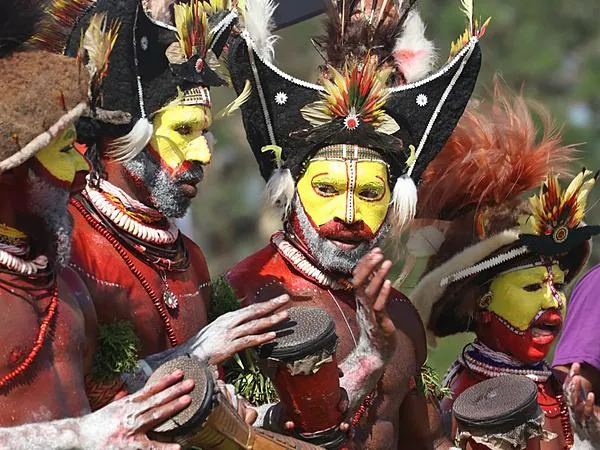
Hosting thousands of visitors, Port Moresby stood tall as the gateway to Papua New Guinea as the capital city became a showcase of PNG’s more than 10,000 tribes and 22 provinces, bringing together cultural performances, music, arts and food in a safe, vibrant and family-friendly environment.

The National Capital District Governor Hon. Powes Parkop hailed the celebrations as a turning point in reshaping the narrative of the capital.

“I am proud of the people of Port Moresby for turning up in record numbers and for conducting themselves with discipline and pride throughout the PNG50 Independence celebrations,” Governor Parkop said. “These events showcased our unity and sent a powerful message to the nation and the world that Port Moresby is a modern international city.”

He highlighted the year-long build-up of events at the beginning of this year, from the Anniversary Launch in February, Pacific and Asian story celebrations, the PNG Story in July, the Meganesia Concert and the Amazing Port Moresby festivals in September, which all built momentum towards the Golden Jubilee.

Beyond the capital, it was also a peak week for tourism, as thousands of visitors travelled to provinces across the Highlands, Islands, Momase and Southern regions to celebrate 50 years of independence. From cultural shows in Goroka and Mt. Hagen, East Sepik and Central Province, Hula canoe races to the Mask Festivals held in the island and Momase regions, to traditional dances in East New Britain, Milne Bay and Manus, the Golden Jubilee sparked nationwide festivities that brought economic opportunities to local communities while showcasing the beauty and diversity of PNG to the world.

Economic Impact: SMEs and Creative Industries Thrive

The celebrations lifted national pride and also provided important economic opportunities. Hundreds of small and medium enterprises (SMEs) showcased and sold products ranging from arts and crafts to food and cultural items in Port Moresby and other venues. Local artists, traditional troupes, musicians, choreographers and media houses also gained income and visibility from their participation.

Port Moresby was entertained by international artist Akon on 17 September, including musicians, bands and artists from Vanuatu, Solomon Islands, Torres Strait Islands and Indigenous Australia.

“This is economic empowerment in action,” Parkop emphasised. “Our SMEs are not only earning income but also gaining the confidence and visibility to grow their businesses in front of a national and international audience.”

PNG Looks Ahead to Another 50 Years

With incident-free celebrations, full participation from international partners and renewed confidence in the capital city’s ability to host world-class events, Papua New Guinea’s 50th Independence Anniversary has set a strong foundation for the next half-century.

Prime Minister James Marape, who led the national flag-raising ceremony alongside thousands of students, teachers and citizens on Independence Hill, said the Golden Jubilee was not just about reflecting on the past but about inspiring the next 50 years.

Speaking after the Jubilee, Prime Minister Marape said the milestone was a reminder to all Papua New Guineans that the country’s future must rise above tribal, provincial and personal interests.

“As we come out of our 50th anniversary, the country is still united under one flag. For me, James Marape, my commitment to Papua New Guinea will always rise above my commitment to tribe, district or province. Our nation must always come first,” Prime Minister Marape said.

He further highlighted that stability in Hela, Enga and Southern Highlands is vital, not only for communities but also for the protection of nationally significant resource projects.

“Projects such as Porgera and the PNG LNG, which today contribute billions to our economy, cannot be sabotaged. In the last three years alone, PNG LNG has contributed over K10 billion to our budgets. These projects must be safeguarded for the benefit of all our people,” PM Marape said.

The Prime Minister revealed that work is underway with development partners and investors to open alternative roads in project areas, including routes between Mendi, Margarima, Tari and Kikori.

“We are mobilising resources through Tax Credit Projects to ensure these vital roads are opened up. This is about connecting our people, securing investment and guaranteeing the free flow of services and opportunities,” he added.

PM Marape underscored that as the country enters its next 50 years, the focus must be on peace, development and unity.

“The 50th anniversary calls us to rise above self and tribal interests and to put our country first. We are in the 21st century. If someone feels aggrieved, the courts are there—not tribal lawlessness. This is the mindset that will carry us forward into the next 50 years,” he affirmed.

As the curtains close on the historic celebrations, PNG has shown the world its diversity and potential as a young nation confident in its future and proud of its journey.

September 22, 2025

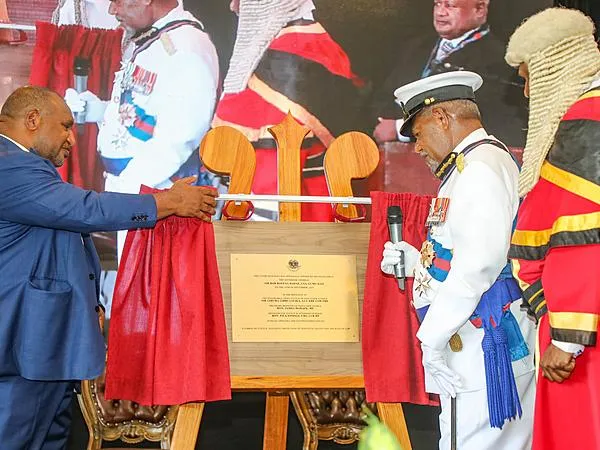
Papua New Guinea Prime Minister James Marape, alongside Governor-General Bob Dadae and Chief Justice Gibbs Salika, officially opened the new National and Supreme Court Complex at Waigani on 10 September, describing the K653 million project as a national investment in democracy and institutional stability.

Positioning the development as a cornerstone for the country’s governance and business environment, Prime Minister Marape said the new court complex represents “a national monument to justice and democracy” as PNG marks 50 years of independence.

“This building is an investment in the very core of our democracy and justice. It is a monument in our nation’s 50th year to the rule of law and the protection of our court system so that it remains independent, functional, and vital to keeping our country united,” Prime Minister Marape said.

The complex, regarded as one of the most modern judicial facilities in the southern hemisphere, was first initiated in 2016 under former Chief Justice Salamo Injia and former Prime Minister Peter O’Neill. Since 2019, the Marape Government has provided more than K400 million to complete the project. Mr Marape stressed that the funding came entirely from Papua New Guinea’s own budget.

“For the first time, we have delivered a facility of this standard, fully financed by our country. It symbolises that our nation must live under one law, with courts resourced to deliver justice free of influence or intimidation,” he said.

A Milestone for the Judiciary

Chief Justice Salika, in his keynote remarks, expressed deep humility and pride in welcoming dignitaries to what he called “one of the most important milestones in the life of our nation’s justice system.”

He paid tribute to past leaders, including prime ministers and chief justices who supported the vision of a modern judicial facility, and honoured the widows and families of PNG’s pioneering justices for their enduring contributions.

Construction of the complex began in 2017, and Chief Justice Salika emphasised that it was “funded fully, fully and completely by the people of Papua New Guinea.”

The facility features 15 modern courtrooms, advanced digital infrastructure, e-justice systems, and dedicated spaces for the National Judicial Staff Services.

“This building is not funded by local agencies or big partners. This is money from Papua New Guinea, our own money, our own people,” he said, highlighting its national significance.

The Chief Justice commended the professionalism of contractors China Railway Construction Engineering (PNG) Ltd, Peddle Thorp Australia, and local firms, who delivered the project despite supply shortages, funding pressures, and the COVID-19 pandemic. He also acknowledged engineers, artisans, and public servants whose efforts made the vision a reality.

Economic and Commercial Significance

For the business community, Marape underscored the economic importance of judicial independence. He noted that case backlogs, once around 5,000, have been reduced to 2,000, with reforms underway to modernise case management and strengthen the three-tier higher court system.

“Our economy has grown, our population has expanded, and the complexity of cases has increased. This investment ensures that disputes—whether commercial, civil, or constitutional—are resolved in a timely, impartial manner. The stability of our judiciary is the stability of our nation, and that is critical for business confidence,” he said.

Salika added that the complex symbolises PNG’s confidence in its institutions and reflects unity.

“Justice is not the privilege of a few people. It is a right of all. That is why there is no gate, no fence at the front of this community, because we know the importance of open access to justice,” he said.

He also paid special tribute to judges past and present, recalling his own 35 years on the bench and honouring colleagues who passed away during the construction period. He acknowledged the foresight of his predecessor, Sir Salamo Injia, who initiated the vision for the project.

Salika said the building should inspire future generations. “Let this complex be a heart of justice for generations to come. The rule of law is not just an idea; it is seen in reality. May this institution inspire us all to build a society that is more just, fairer, and more united,” he said.

The opening ceremony was attended by distinguished guests, including the Chief Justice of the Federal Court of Australia, regional judicial counterparts, members of the diplomatic corps, and representatives of the business community.

Prime Minister Marape cut the ribbon to mark the official opening and pledged that the court’s doors would always remain open to every Papua New Guinean and those doing business in the country.

“May this door never close to any Papua New Guinean seeking justice. This building is a symbol of who we are and what we aspire to be—a nation bound by fairness, equality, and democracy,” PM Marape added.

September 22, 2025

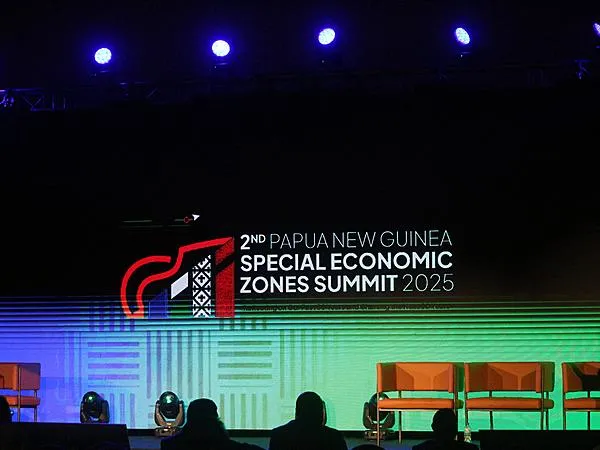
Papua New Guinea has concluded its Second Special Economic Zone (SEZ) Summit, hailed as the country’s largest international investment gathering to date, drawing over 450 delegates, including more than 100 foreign investors from Asia and the Middle East. The three-day summit, held from 1–3 September at APEC Haus in Port Moresby, has been described by organisers and officials as a turning point in positioning PNG as a competitive global investment hub.

Rebranding PNG’s Investment Image

The SEZ Summit provided a platform to rebrand PNG’s investment image. Speaking ahead of the event, Dr Lawrence Sause, Managing Director of the Special Economic Zone Authority, said the summit was designed to counter negative perceptions about PNG and demonstrate the country’s ability to attract credible global capital.

“For a long time, PNG’s reputation, due to bad press, has been that this is a place where investment will not take off. But PNG is still a great place for investment, despite all the doom and gloom,” Dr Sause emphasised.

He revealed that four SEZ projects have already been licensed, valued at K7.4 billion, including Parker Hill, the Pacific Lime and Cement Project, Sea Park, and the Central Industrial Park. These projects, he said, represent investor confidence in PNG’s future.

Record Foreign Investor Participation

Minister for International Trade and Investment Hon. Richard Maru, host of the summit, confirmed that investor participation far exceeded expectations.

“For the first time, we are getting 30 investors from China, 11 from the United Arab Emirates, and 13 from India. We also have participants from Malaysia, Indonesia, Japan, Thailand, and other countries. This is an investment seminar like no other,” Maru said.

The summit featured 50 business booths for networking and matchmaking between foreign investors and local businesses, with the government targeting USD 20 billion (approximately K70 billion) in new investments across agriculture, fisheries, forestry, mining, manufacturing, energy, transport, hospitality, and retail.

One example Maru highlighted was a planned retail complex in Port Moresby that would be “three times the size of Vision City,” underscoring the scale of projects under discussion.

UAE Signals Deeper Engagement

A notable highlight was the presence of a high-level delegation from the United Arab Emirates (UAE), which announced its intention to strengthen ties with PNG. The UAE has proposed three major agreements before the end of the year:

  • An Investment Promotion and Protection Agreement

  • An Air Service Agreement

  • A Comprehensive Economic Partnership Agreement

Maru also confirmed that PNG is preparing to establish a diplomatic mission in Abu Dhabi by the end of 2025, with the UAE seeking to become PNG’s first major new bilateral partner following its 50th Independence Anniversary.


Private Sector-Led Success

Remarkably, the summit was hosted without direct government financing, relying instead on K5.5 million in sponsorships from 25 private and state-linked entities, with only four government agencies contributing. Both Dr Sause and Minister Maru praised the private sector’s role, describing the event as a milestone for public-private collaboration.

“This summit is about building partnerships and attracting capital. Without investment, PNG cannot create jobs, build industries, or sustain its growing population,” Maru said.

PNG is offering competitive incentives, including 10-year tax holidays and duty-free importation of materials, modelled on successful SEZ frameworks in countries such as the Philippines, which operates 420 zones generating USD 68 billion annually.

Minister Maru said he is convinced SEZs will eventually outpace the mining and petroleum sectors in job creation and export earnings. “The potential of SEZs is unlimited. We have the raw resources. Our future as a country is going to be anchored on SEZs,” he declared.

Closing Reflections: From Talk to Action

In his closing speech, Minister Maru reflected on PNG’s economic journey since independence and the urgency of reform.

“Our economy is now valued at US$32 billion, while nations like Singapore and the UAE—once behind us—are now at US$500 billion. We must change the way we do business if we are to provide for our people and future generations,” he said.

He acknowledged delays in government processes, citing stalled agreements with the UAE, and challenged public servants to move with urgency to secure investor confidence.

Maru reaffirmed that the first four licensed SEZs will deliver K8 billion in investments and over 10,000 new jobs. Seven more applications, valued at an additional K20 billion, are already under Cabinet review.

“This is a game-changer for our country. SEZs will grow more jobs than the mining and petroleum sector. Our challenge is to move beyond talk and take decisive action,” Maru urged.

As PNG enters its 50th year of independence, the SEZ Summit has set an ambitious tone: to drive industrialisation, job creation, and economic diversification through a competitive SEZ framework. With investor enthusiasm high and private sector support evident, the government now faces the challenge of turning commitments into tangible projects.

“The talk fest must end today, and the actions must start tomorrow,” Maru concluded. “Together, we will build the new PNG economy.”

September 22, 2025

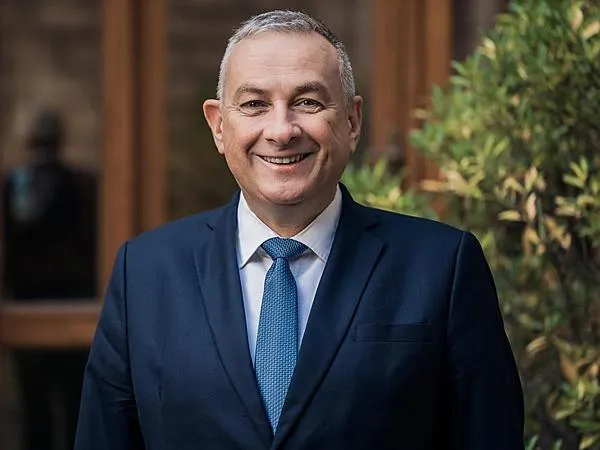
The European Union is advancing its Global Gateway strategy in Papua New Guinea (PNG), with European Commissioner for International Partnerships Jozef Síkela arriving in Port Moresby on 11 September to strengthen investment ties and development cooperation. His two-day visit concluded on 12 September with the signing of a PGK 125 million budget support programme aimed at enhancing governance, climate resilience, and infrastructure development.

Commissioner Síkela’s visit underscores the EU’s longstanding partnership with PNG, a relationship that stretches back to 1977.

The Global Gateway initiative is the EU’s flagship investment framework, designed to bridge global infrastructure and development gaps. By mobilising up to €300 billion in public and private investments between 2021 and 2027, the strategy seeks to boost clean energy, transport connectivity, digital infrastructure, and social sectors such as health, education, and research.

Commissioner Síkela’s visit to PNG follows his participation in the first EU-Pacific Business Forum in Fiji, where he announced nearly €300 million in new investments across the Pacific region, including PNG. In Port Moresby, he held high-level discussions with the PNG Government to accelerate investment opportunities under Global Gateway, particularly in transport and climate-resilient infrastructure.

Discussions built on ongoing cooperation in the water sector and the Rabaul port rehabilitation, two projects supported by the European Investment Bank during a recent mission to PNG. Their implementation is expected to allow PNG to leverage European expertise and finance to modernise infrastructure, enhance connectivity, and drive sustainable economic growth.

As part of the visit, Commissioner Síkela and PNG’s Minister for National Planning, Ano Pala, signed a €25.6 million (PGK 125 million) budget support programme focused on state-building and resilience. The funding aims to strengthen governance systems, promote sustainable forest management, address climate challenges, expand access to clean water, and improve justice delivery.

In addition, the Commissioner announced the disbursement of a final €1 million tranche under an existing governance programme, further underlining the EU’s role as a long-term development partner. Since 1977, EU-PNG cooperation has supported forestry, climate adaptation, biodiversity protection, and water and sanitation services, alongside governance and trade initiatives.

Commissioner Síkela said: “I am honoured to visit Papua New Guinea to celebrate the country’s 50th independence anniversary. The cooperation between PNG and the European Union has been an important part of these past decades. I believe that the newly signed budget support to enhance forest conservation, climate change responses, water, and governance in PNG will allow us to make our partnership even stronger under the EU’s Global Gateway investment strategy.

“Together we can create tangible benefits for local communities by boosting sustainable economic growth and strengthening their capacity to tackle climate challenges,” he added.

Beyond development aid, the EU-PNG partnership carries significant trade implications. PNG was one of the first signatories of the interim Economic Partnership Agreement, giving its exporters duty-free and quota-free access to the EU market for key products such as fisheries and agricultural goods.

Strengthening infrastructure and governance under Global Gateway is expected to further reinforce PNG’s competitiveness in global trade.

Concluding his two-day visit, Commissioner Síkela described Papua New Guinea as a “strategic partner for the European Union”, reaffirming that the partnership is anchored in trade, development, climate resilience, sustainable growth, and good governance. His bilateral meetings with Prime Minister Hon. James Marape, Foreign Minister Hon. Justin Tkatchenko, National Planning Minister Hon. Ano Pala, Treasurer Hon. Ian Ling-Stuckey, and Justice Minister & Attorney-General Hon. Pila Niningi highlighted the EU’s enduring role in advancing shared priorities under the Global Gateway strategy.

The EU remains a critical development and investment ally for PNG, offering a combination of financial support, market access, and technical expertise. With new Global Gateway-linked projects on the horizon, PNG is positioned to secure stronger infrastructure foundations and improved access to European markets, aligning with its long-term growth and diversification goals.

September 22, 2025

Over the past year, PNG Ports Corporation Ltd (PNG Ports) has taken a significant step forward in shaping its leadership for the future. It appointed four exceptional professionals to senior roles, in line with its most ambitious infrastructure programme since the relocation of Port Moresby’s terminals to Motukea and the expansion of Lae Port.

The appointments reflect a deliberate strategy pursued by the State-Owned Enterprise (SOE) over the past decade – to build and nurture leadership talent from within while also recruiting outstanding expertise from outside the organisation.

The newly appointed senior leaders include Chief Operations Officer (COO) Felix Bauri, Chief Commercial Officer (CCO) Deborah Onga, Chief Financial Officer (CFO) Dorothy Kore, and Senior Civil Engineer – Major Projects Denmark Gimiseve, who also heads the Joint Implementation Unit (JIU) overseeing the A$621.4 million Australian Government investment in the national port upgrade programme.

Chair Harvey Nii emphasises that “these appointments are more than simply staffing changes. They reflect a long-term strategy to cultivate a new generation of leadership talent that will carry the organisation forward for the next 50 years.”

Building Leaders from Within

COO Felix Bauri is a standout example of PNG Ports’ ability to develop its own people. Beginning his career two decades ago through the Graduate Trainee Program, Bauri has worked his way through a diverse range of roles across the port network, from Wharf Superintendent to Regional Business Manager.

After serving multiple acting stints in senior roles, he was formally appointed COO in 2024. Nii describes Bauri’s corporate knowledge as “second to none” and notes his operational expertise is vital to PNG Ports’ performance across its 15 port operations.

Bringing in Fresh Perspectives

In contrast, CCO Deborah Onga joined PNG Ports in April 2025. A commercial lawyer with extensive experience in large-scale property development, she is leading efforts to advance the 400-hectare Lae Industrial Park adjacent to Lae Port and to secure its Special Economic Zone (SEZ) status.

She is also tasked with unlocking the commercial potential of all ports in PNG Ports’ network, including the 12 Community Service Obligation (CSO) ports currently funded by the SOE.

Bringing with her property experience as well as more than a decade of aviation industry expertise, PNG Ports’ Chief Financial Officer, Dorothy Kore, joined the SOE in August 2024. Complementing her strong accounting background with an MBA in International Business, Kore also brings highly regarded strengths in project and change management. These capabilities underpin her leadership of core responsibilities spanning financial management and reporting, treasury accounting, and corporate strategy. They are proving particularly valuable in navigating the financial dimensions of the AIFFP-funded port upgrade programme—most notably the complex tax components.

Alongside this, she is driving the modernisation and upgrade of the accounting system and port operations system.

Senior Civil Engineer – Major Projects, Denmark Gimiseve, who joined the SOE in late 2023, brings 15 years of engineering expertise across high-profile projects such as APEC Haus, Angau Memorial Hospital, and the National Football Stadium.

Highly regarded for his technical skills and project management capability, Gimiseve has been “instrumental” in progressing PNG Ports’ nationwide programme of port upgrades since becoming head of the JIU in March this year.

Developing the Talent Pipeline

Today, Bauri, Onga, Kore, and Gimiseve are part of a 12-strong senior leadership team that combines long-serving employees with fresh external talent.

Human Capital Manager Rex Kini notes that “PNG Ports’ dual strategy of developing its own people while recruiting top professionals from outside the organisation has proven highly effective.”

Central to this has been the Graduate Trainee Program, which has trained 60 graduates since inception – 90 per cent of whom secured full-time positions, with most staying at least five years.

Four other senior managers are alumni of the programme. Beyond this, PNG Ports invests heavily in leadership programmes for high-potential staff, including rotational placements, stretch assignments, strategic projects, acting appointments, and external study support.

Strong Results, Strong Future

This strategy is paying off. In the past decade, PNG Ports has strengthened its operational efficiency and global standing, with Lae and Port Moresby climbing the World Bank’s Container Port Performance Index. At the same time, profitability has been consistent, allowing substantial dividends to be returned to the State.

The company’s leadership evolution underscores its broader ambition of being led by an exciting new generation of talented professionals – people who combine deep corporate knowledge with fresh perspectives – ensuring PNG Ports continues to deliver value to the nation.

September 22, 2025

Papua New Guinea (PNG) marks half a century of independence this year, a journey defined by cultural resilience, political milestones, and the transformation of its resource-driven economy. 

From shedding colonial rule in 1975 to emerging as a strategic player in regional diplomacy and climate advocacy, PNG’s story is a tapestry of triumphs and challenges that continue to shape its future. Let’s look at these national milestones set in the last five decades: 

From Independence to Global Stage 

On 15 September 1975, PNG adopted a home-grown Constitution that enshrined democratic governance, human rights, and cultural preservation.  

A day later, on 16 September, the nation won full sovereignty from Australia under the leadership of Grand Chief Sir Michael Somare, its first Prime Minister and a unifying figure among more than 800 language groups. 

In 1977, PNG held its inaugural national elections, empowering citizens to shape their own Parliament despite the logistical hurdles of rugged terrain and dispersed communities.  

Mere weeks after independence, on 10 October 1975, PNG joined the United Nations (UN), launching its diplomatic presence and amplifying Pacific voices on development, peace, and environmental protection. 

Resource Revolution: Mining, Oil & Gas 

The late 1970s and 1980s heralded PNG’s first resource boom. The Bougainville mine, operational since 1972, became the country’s leading copper and gold producer, though landowner disputes and civil unrest led to its 1989 closure. In 1984, the Ok Tedi mine opened in Western Province, diversifying PNG’s mineral portfolio. 

The 1990s saw a pivot to petroleum with the Kutubu and Gobe oil fields, while the turn of the century brought financial sector reforms: the privatization of Papua New Guinea Banking Corporation and the rise of Bank South Pacific bolstered economic stability.  

The 2004 Napa Napa oil refinery near Port Moresby marked PNG’s entry into downstream processing, and initial moves to privatize PNG Power Limited aimed to modernize the national grid. 

The PNG LNG Project in 2014 was a watershed moment—ExxonMobil’s multi-billion-dollar investment turned the nation into a major gas exporter.  

More recently, the Porgera gold mine reopened in 2023 with majority local ownership, and the Wafi-Golpu copper-gold venture promises another long-term revenue stream. 

Governance, Peace, and Social Progress 

The late 1980s brought turbulence: the Bougainville Crisis erupted over demands for autonomy and fair resource sharing. Its resolution—the Bougainville Peace Agreement of 2001—granted greater self-rule and set the stage for a future referendum, showcasing PNG’s capacity for peaceful reconciliation. 

In the 2000s and 2010s, PNG strengthened its institutions. The Independent Commission Against Corruption (ICAC) was established to tackle graft, while Prime Minister James Marape’s decentralization efforts increased resource allocation to districts and provinces. 

Parallel investments in human development soared. Free education policies rolled out in the 2010s improved literacy rates, while expanded healthcare programs bolstered maternal and rural health. These initiatives underscored PNG’s commitment to lifting every citizen. 

Climate Leadership and Cultural Renaissance 

Facing the frontlines of climate change, PNG has championed regional sustainability. In the 2020s, it emerged as a vocal advocate for biodiversity and green development.  

A historic visit by UN Secretary-General António Guterres in 2025 will celebrate PNG’s environmental stewardship and highlight links between conservation and community well-being. 

Simultaneously, tourism and cultural identity have taken center stage. Under the Golden Jubilee theme, “Celebrating 50 Years of Tourism – Honouring Our Past, Transforming Our Future,” the Bird of Paradise and Southern Cross adorn the anniversary logo.  

Investments in eco-tourism and cultural festivals not only fuel local economies but also honor PNG’s ancestral heritage. 

 Business Evolution: Diversification Beyond Extractives 

While mining and energy have historically driven PNG’s growth, recent decades have spurred diversification: 

- Special Economic Zones (SEZ) policy to attract manufacturing, agriculture, fisheries, and tech investments   

- The Bank of Papua New Guinea’s Green Finance Centre, funding renewable energy and sustainable agriculture projects   

- Regional expansion of conglomerates like Steamships Trading Company and Remington Group into Lae and Mount Hagen   

These moves aim to reduce reliance on extractives, create jobs, and foster resilience against commodity price swings. 

Regional Diplomacy and Golden Jubilee Celebrations 

Earlier this year, New Zealand Prime Minister Christopher Luxon’s visit underscored PNG’s pivotal role in Pacific unity. Strategic partnerships with Australia, China, Japan, and India have deepened through trade agreements, infrastructure projects, and development programs. 

The Golden Jubilee itself—branded “Stronger Together, Growing the Future”—features cultural festivals, youth-led innovation challenges, a national prayer day, and global investment forums. Inspired by the biblical Jubilee (Leviticus 25:10), events emphasize renewal, justice, and collective prosperity. 

Charting the Next Fifty Years 

As PNG commemorates 50 years of independence, its journey offers both inspiration and a roadmap. Democratic institutions have matured, peace has healed old wounds, and economic progress has lifted communities—yet challenges remain. Environmental sustainability, equitable resource sharing, and diversified growth will define PNG’s path forward. 

Papua New Guinea at fifty stands as a testament to unity in diversity, a nation forging its destiny with cultural pride and entrepreneurial spirit. The coming decades beckon with promise: a resilient PNG, stronger together, ready to grow its future. 

We in PNG Business News congratulate the nation on this landmark anniversary. We are thankful to be a small part of chronicling the country’s strides since 2019, and we join all Papua New Guineans in declaring liberty throughout the land and moving forward with hope. We pray for wisdom, unity, and courage for all as we enter the next 50 years.  

Mekim yumi stap wantaim. Mekim yumi go het wantaim -- Let's be together. Let's move forward together. 

September 22, 2025

Weir, a mining technology company, has redesigned its market-leading heavy-duty submersible slurry pump to deliver reliable performance in the harshest slurry environments.

Weir has made several design improvements to address the operational challenges miners face in submersible pumping applications.

The WARMAN® SHW-XTR heavy-duty submersible slurry pump uses a larger shaft and heavy-duty bearings to keep everything stable, run smoothly, and avoid motor failure from shaft deflection.

Weir has also raised the strainer off the ground and added protective legs to shield it from tools, debris, and other job site hazards.

To prevent fluid from entering the motor, Weir has developed a custom double mechanical seal with a pressure-balanced oil chamber that keeps water out and extends the life of the motor.

In line with Weir’s commitment to reducing the environmental impact of its products, the WARMAN® SHW-XTR pump uses a glycol-based cooling system that does not waste water. Its simplified design and standard materials reduce waste, and the biodegradable oil in the seal helps protect the environment in case of a leak.

Ian Ross, Weir Global Product Manager, Dewatering Solutions, said: "We’re fortunate to be redesigning this pump from a position of strength. The legacy WARMAN® SHW pump has been a mainstay in demanding applications in mining operations all over the world. Its hydraulics are trusted throughout the industry, which is why we’ve preserved these design elements and focused on making improvements elsewhere.

"We wanted to make the pump easier to maintain, which is why the WARMAN® SHW-XTR pump has fewer components and a smarter design. This will ensure it is easier to maintain and will also reduce the need for a large parts inventory.

"Two of the key challenges across the mining industry today are longer lead times and higher costs, so it was important that these factors informed the decision we made. As a result, the WARMAN® SHW-XTR pump is a standardised product, meaning faster delivery and better availability of spare parts."*

Founded in 1871, The Weir Group PLC is one of the world’s leading engineering businesses, with a purpose to make its mining and infrastructure customers’ operations more sustainable and efficient. Weir’s highly engineered technology enables critical resources to be produced using less energy, water, and waste while reducing customers’ total cost of ownership.

Weir is ideally positioned to benefit from structural trends that support long-term demand for its technology, including the need for more essential metals to support economic development and carbon transition. The Group has approximately 12,000 employees operating in over 50 countries, with a presence in every major mining region of the world. Find out more at www.global.weir.
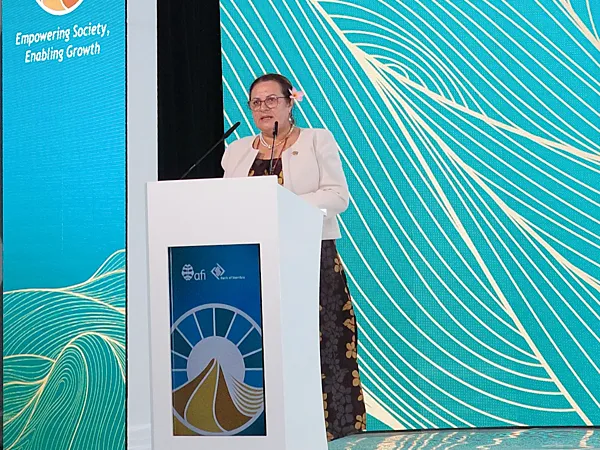
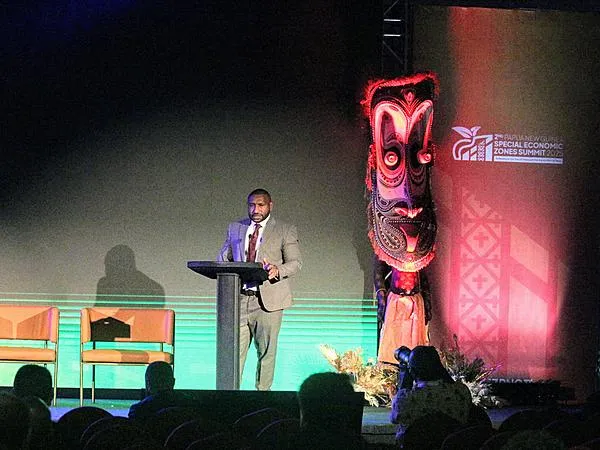
September 22, 2025

Papua New Guinea will co-host the Alliance for Financial Inclusion (AFI) Global Policy Forum (GPF) in 2026, the Bank of Papua New Guinea (BPNG) confirmed.

Governor Elizabeth Genia accepted the hosting offer on behalf of the country during the 2025 AFI Global Policy Forum in Swakopmund, Namibia, which drew senior policymakers and central bank leaders from across the developing world.

“I am honoured that AFI has chosen Papua New Guinea to co host the 2026 Global Policy Forum, where central bank governors and policymakers from around the world will gather to advance financial inclusion worldwide,” Genia said.

She added that the event would highlight regional unity: “This will not just be Papua New Guinea’s event. Our fellow Pacific island nations will stand alongside us as co-hosts, ensuring that the 2026 Forum reflects the shared values and aspirations of our Blue Pacific.”

Pacific priorities

Looking ahead, Genia said the 2026 Forum would tackle pressing issues that are common across island states. “Our focus will be on building resilient economies for an inclusive future. Across the Pacific we share the challenges of distance, climate change, and connectivity, but we also share solutions rooted in innovation, culture, and community,” she said.

Hosting the forum in Port Moresby will shine a spotlight on the Pacific region’s efforts to deepen financial inclusion and build sustainable economies. It will also allow Papua New Guinea to demonstrate its leadership in financial sector reforms.

The AFI Global Policy Forum has become the world’s premier platform for financial inclusion, providing opportunities for regulators and policymakers from over 90 developing and emerging economies to share experiences and shape policy agendas.

Financial inclusion gains

Papua New Guinea’s own financial inclusion record will be featured at the event. The Bank of Papua New Guinea, through its Centre for Excellence in Financial Inclusion (CEFI), has led the delivery of programmes under the National Financial Inclusion Strategy (NFIS), now in its third phase covering 2023–2027.

These initiatives include the creation of more than two million new bank accounts, an expansion of financial service access points nationwide, and an accelerated roll-out of mobile and digital banking, particularly designed to reach women and rural communities.

Financial literacy has also been a central focus. According to BPNG, CEFI has trained more than 250,000 Papua New Guineans in financial literacy, of which 120,000 were women. The country’s NFIS has set a target of bringing at least 50 percent of the population into the formal banking sector by 2030.

In addition, BPNG is preparing to launch its first lending under its green refinance and guarantee facility in 2026. The scheme is aimed at encouraging investments in clean and sustainable projects, thereby strengthening Papua New Guinea’s resilience to climate risks while opening up new financing options for local businesses.

Economic and diplomatic boost

The 2025 AFI forum in Namibia drew around 700 delegates, including 50 central bank governors, and organisers expect similar numbers in Port Moresby next year. The influx of international delegates is forecast to provide economic benefits through increased tourism and spending, while positioning Papua New Guinea on the global stage.

Officials said the event would also attract global media coverage, boosting the country’s visibility as a trusted partner in the international financial inclusion community.

Genia joins AFI Board

Alongside the hosting announcement, Governor Genia was also nominated to the AFI Board of Directors, where she will represent Papua New Guinea and the Pacific Islands Regional Initiative grouping.

“I step into this role with a strong sense of responsibility. Papua New Guinea, like many developing economies, sees in AFI a unique platform where our voices are not just heard but shape global policy,” she said.

“I accept this nomination representing Papua New Guinea, but I am also committed to championing issues which are important to Papua New Guinea's Pacific friends and neighbours.”

In her acceptance, Genia underscored the urgency of addressing climate change through financial systems. “For the countries of the Pacific, our blue-green economy is at the heart of our cultures, our communities, and our economies. Our financial systems must play a central role in addressing the negative impacts of climate change, protecting our cultures and traditions, and building resilience in our economies,” she said.

AFI background

The Alliance for Financial Inclusion is the world’s leading international grouping dedicated to financial inclusion, comprising more than 80 central banks and regulators from over 90 countries. Its annual Global Policy Forum is a platform for dialogue, knowledge sharing, and peer learning, helping member institutions advance policies to expand access to financial services.

Its diverse membership stretches across Asia, Africa, Latin America and the Pacific, providing opportunities for regulators to exchange insights on policies such as digital banking expansion, small business financing and green lending.

September 22, 2025

Papua New Guinea’s Minister for Mining Rainbo Paita has urged investors to embrace the country’s Special Economic Zone (SEZ) initiative, stressing the need for competitiveness, strong incentives, and practical reforms to attract long-term investment.

Speaking during the Second Special Economic Zone Summit at APEC Haus, Minister Paita commended the Minister for International Trade and Investment Richard Maru and his team for organising what he described as a “very successful three-day conference” from August 31 to September 3, which brought together local participants and international investors.

Paita highlighted the logistical challenges of hosting such a forum but praised the Ministry for Trade and Investment, the SEZ Authority, and supporting agencies for their support and execution of the summit.

“It takes time, resources, and planning to bring together investors from across the world. I commend Minister Maru, the Secretary, the Chairman, and the CEO of SEZ for their leadership,” he said.

Early SEZ Legislative Push

Reflecting on his own role in the early stages of the SEZ agenda, Paita revealed that he contributed personally to the drafting of the initial version of the SEZ Authority Act during his early years in Parliament.

“We did not have a lawyer at the time, so I took ideas and wrote them myself. I brought the submission to Cabinet without a policy framework, but it was passed because members believed it was important,” he said.

He acknowledged that both he and Minister Maru had faced scepticism over the country’s readiness to manage SEZs due to gaps in infrastructure, technology, and experience. However, he said determination was key: “Business is like a wheelbarrow. Nothing moves until you start pushing. Minister Maru has been pushing this initiative forward.”

Paita stressed that PNG must focus on competitive incentives rather than relying on cultural or emotional appeals to attract investment.

“The world has gone past the stage of isolation. Seventy to eighty percent of global manufacturing is done in China. If we want SEZs to succeed, we must be practical,” he stated.

He argued that investors would only commit if PNG could offer cost advantages and streamlined processes.

“We need to provide the cheapest energy, reliable water, competitive port services, and incentives that are better than what others are offering. Companies will only invest if they see profits and long-term growth,” Paita said.

Call for Strong Reforms

The minister emphasised the need to cut bureaucratic red tape and create an investor-friendly environment within SEZs. He called for one-stop-shop services, fast-tracked visa and work permit approvals, simplified registration, and strong guarantees for investors.

“Without special incentives, no one will invest. We must ensure SEZs are truly special. Why would anyone choose the districts in PNG or SEZ unless we make them competitive? Incentives and concessions must be clear, and bureaucracy stripped away so investors feel safe,” he added.

Minister Paita also appealed to the broader vision of development, urging investors to see PNG as a place where they could make a mark, not just profits. He contrasted established SEZs in Dubai or the Philippines, already crowded with investors, with the opportunity to pioneer new industries in PNG.

“If you go to Dubai, you will be one of many. But if you come to PNG, you will be creating something new—changing lives, making money, and building a story of your own,” Paita told delegates.

Strong Cabinet Support

Paita reaffirmed his commitment to the SEZ policy, assuring Minister Maru of his full backing in Cabinet and beyond.

“I support you in driving this initiative because SEZs are the only way we can attract serious foreign direct investment into PNG. The challenges are real, but the opportunities are greater,” he said.

He further encouraged investors present at the summit to take bold steps into PNG.

“We may not have the full infrastructure like others, but we have the vision, the people, and the commitment. This is the time to invest in Papua New Guinea.”

September 22, 2025

New Porgera Limited (NPL) continues to invest in the growth and professional development of its people, with a team of eight Employee Development (ED) trainers recently completing the Certificate IV in TAE (40122).

The Certificate IV is a nationally recognised Australian qualification that equips trainers with the skills and knowledge to design, deliver, and assess training programs, including vocational training, to industry best-practice standards. Through this certification, NPL’s ED trainers are now able to provide high-quality, accredited training to the workforce, facilitating learning programs that meet both national and international standards.

“It is also a requirement for trainers delivering Resources and Infrastructure Industry (RII) units of competency, which cover critical areas such as Health, Safety, and Environment (HSE) training. Trainers must also maintain ‘currency’, keeping their skills and knowledge up to date so employees receive training that meets the latest industry and safety standards,” stated Employee Development Superintendent Gary Giles.

A certificate presentation was held on 16 August 2025, officiated by NPL General Manager James McTiernan. The event was also witnessed by Barrick Gold Corporation’s Asia Pacific Head of Human Resources, Richard Barley, and NPL Human Resources Manager Adlyn Nagwi.

The training was delivered in partnership with Harness Training, a Port Moresby–based Registered Training Organisation (RTO), and Plenty Training.

The achievement did not come without sacrifice. The trainers balanced their work responsibilities while dedicating personal time, including their field break days, to complete the course.

“This certification is a big step forward for me as a trainer. It has equipped me with advanced skills in training and development areas such as facilitating vocational training, facilitating workplace-based learning, assessing competence in online environments, designing training, and working effectively in the VET sector, among other areas of the subject,” ED Training and Safety Specialist Dickson Paul said.

This milestone is part of NPL’s broader vision to empower the national workforce, improve training quality, and leave a sustainable legacy in the communities where it operates.