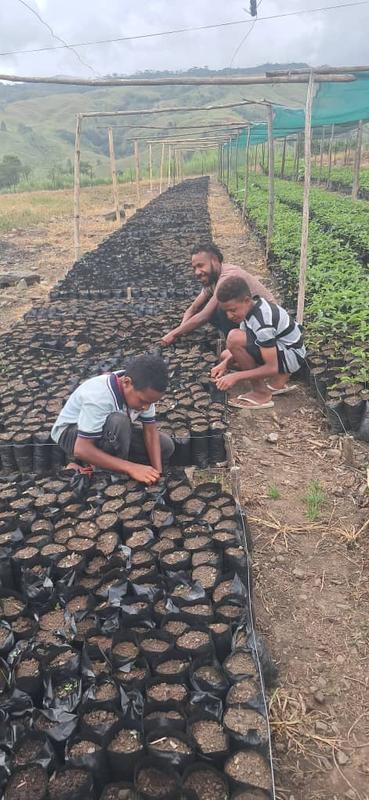
The Farmers & Settlers Association is calling on Papua New Guinea to accelerate its transition from food security-focused agriculture to commercially driven farming, mechanisation and downstream processing as the country marks its 51st year of Independence.
The call comes as the association marks 70 years of involvement in PNG’s coffee industry, agriculture, rural business development and the establishment of the Goroka Show.
In a statement released on September 16, Farmers & Settlers Association President Wilson Thompson said primary industries had remained a major contributor to economic development through rural employment, domestic production, imports and exports.
“Wherever you work, in the remote or rural areas to the town and cities, the primary industry sector has been the engine for growth and sustenance including large workforce,” Thompson said.
He said the next phase of agricultural development should focus on expanding commercial production and retaining more value from agricultural commodities within PNG.
“As we move beyond the 70th Anniversary of the establishment of the HFSA, the Coffee industry and the Goroka Show, 2026 also marks the new era of the coffee industry under the National Coffee Authority and the onset of El Nino and drought that should challenge us in our communities and in our business,” he said.
“We must emphasise and move towards more commercial agriculture using mechanised farming and going into downstream processing in PNG.”
Coffee and rural enterprise
The association said its history was closely linked to the development of coffee as a commercial crop in the Highlands and across PNG.
Its involvement in the sector included policy and industry initiatives dating to the 1950s, including the visit of University of Hawaii Professor Baron Goto in 1953, a 1961 inquiry into coffee tariffs, the establishment of the Coffee Marketing Board — now the Coffee Industry Corporation — and the development of direct coffee exports.
The association also promoted other agricultural and rural industries, including passion fruit, peanuts, tea, tobacco, beekeeping, honey production, inland fisheries, sheep and goats, to diversify rural incomes and improve food and nutrition security.
Its work extended into rural commerce and supply chains. In 1969, it established the Farmers and Settlers Marketing Cooperative Ltd to transport farm supplies and produce between members’ farms and Lae. It later established Farmers and Settlers Cooperative Ltd, now Farmset Ltd, to provide agricultural supplies to farmers and communities.
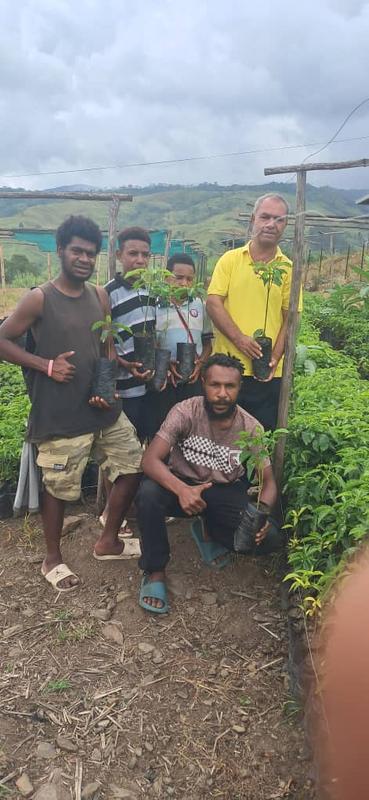
Building value within PNG
The association said its current focus on downstream processing was aimed at retaining more of the value generated by agricultural commodities within PNG instead of relying primarily on exports of raw or minimally processed products.
It said processing, packaging, manufacturing and related services could create additional businesses and jobs, particularly in coffee and other agricultural industries.
The association has also promoted locally made products and domestic consumption as part of efforts to expand the local economy.
Its agricultural activities have been complemented by rural shows and cultural events that provide platforms for farmers, businesses and communities to showcase agricultural products, livestock and local industries.
The Goroka Show remains one of the most prominent outcomes of this work. The association has also been involved in agricultural shows in Wau, Kainantu, Morobe and the Waghi Valley, as well as the Papuan Agriculture Show, later known as the Port Moresby Show.
The association acknowledged the contributions of generations of farmers, businesses, employees and industry organisations to the development of PNG’s agricultural sector.
Thompson said the association’s seven decades of work had been underpinned by the contribution of farmers, businesses and communities to the wider economy.
“We thank your board and management and employees, past and present, for contribution to the business and agriculture sector and the imports and exports that underpins the economy of PNG,” he said.
As PNG enters a new phase of coffee industry development and faces climate pressures including El Nino and drought, the association said commercial agriculture, mechanisation and downstream processing should form part of the sector’s next stage of development.
It said the focus should be on expanding production, strengthening rural businesses, creating employment and developing industries that retain greater economic value within PNG.