

October 10, 2022

Port Moresby based Security Services Company DEXSS Limited has recently launched a new rideshare service incorporating a smartphone application that is set to change the way people move around Papua New Guinea.

The app called “DEXSS PNG” assimilates a fleet of vehicle owner drivers who can use their personal vehicles to taxi people around their local area via the system.

Managing Director of DEXSS Limited and Small Business Owner, Jonathan Ilau recently launched the new technology into Papua New Guinea. Mr. Ilau believes the new rideshare app “DEXSS PNG” app will add significant benefits to the community.

“The rideshare service will create hundreds of income opportunities for regular PNG people who want to make money, all you need is a reliable car, smartphone and a good service attitude,” said Mr. Ilau.

“People are very excited at the prospect of a secure, reliable transport system to move around that can be followed live via GPS.”  

There have been a lot of Car owners who have already been registering their interests in working as Drivers in their local area and have sent through their information and vehicle details to be registered.

The DEXSS PNG Application is available on both apple and android phones and utilizes GPS tracking technology and thousands of registered addresses across the country to enable people to arrive safely at their destination.

Mr. Ilau, stated that “The app itself is not just about profit, it is a part of our vision for this great nation, for us to prosper in business and life we need to work together and ensure security, safety and accountability in all we do.” Said Mr. Ilau.

“We have been approached by many PNG businesses who want to setup an account and use this system as a cashless way of taking their employees to work locations”. 

The DEXSS PNG Rideshare service has already begun in Port Moresby will soon be rolled out to the rest of the country in the coming months.

October 10, 2022

Photo credit: Shane McLeod

Former National Fraud Director for the National Fraud and Anti-Corruption Directorate, Mathew Damaru said the lack of cooperation between government agencies has led to a halt in prosecutions of over 500 money laundering cases resulting in suspects still hijacking millions of kina from stolen public assets.

“There is outstanding money laundering investigations because of a no cooperation between the Police, Financial Analysis and Supervision Unit (FASU) of the Bank of PNG and the office of the Public Prosecutor. This has resulted in high profile suspects taking advantage of this unfortunate situation. Therefore, we can’t enforce the Proceeds of Crime Act to recover properties bought and attained through stolen public funds”, said Damaru.

Damaru stated this after acting Bank of PNG Governor and Director for the Financial Analysis and Supervision Unit (FASU) Mr. Benny Popoitai revealed that Police had failed to investigate and prosecute these high profile suspects for allegedly breaching the Money Laundering Act.

Prime Minister James Marape upon hearing this said that all these money laundering cases must be referred to the Independent Commission against Corruption (ICAC).

The Prime Minister was shocked to learn from Mr. Popoitai that Police have failed to investigate and prosecute this high profile suspects for allegedly breaching the Money Laundering Act. He affirmed that when the ICAC is fully established, these suspects will be arrested, investigated and prosecuted successfully.

However, recently retired Chief Superintendent Damaru who had been the head of NFACD for 20 years stated that police should not be the only agency to be blamed and held responsible for this lack of prosecutions.

“The three main agencies that are responsible for enforcing the Proceeds of Crime Act in PNG are; Police, FASU and the Office of the Public Prosecutor. Police are responsible for conducting investigations based on information gained and provided by FASU” he said.

He added that “Based on this information arrests are made and brought to the Public Prosecutor to be prosecuted. That is the process. During my time as Director for NFACD, there has always been a lack of cooperation between these three responsible agencies.”

October 10, 2022

Photo: James Marape

The Prime Minister has vowed to bring out past Commission of Inquiry (COI) reports and prosecute suspects recommended by these reports. These COI reports include the Union Bank of Switzerland (UBS) Loan inquiry, Department of Finance Inquiry, The inquiry into the Moti Saga, The national Provident Fund inquiry (Nasfund) and The Paraka case.

“There have been many inquiries conducted over the years. We will gather them from our file backrooms and address the issues as recommended. We stand committed to ensure that those findings are clearly addressed.  We must ensure that those who have erred must account for their errors”.

“We must correct our people’s expectations on what is right and what is wrong. These actions will be taken swiftly as there is a public demand for actions to take place and for wrong doers to take responsibility for what they have done wrong”. The Prime minister said.

Prior to this, the Prime Minister also stated during his maiden speech when re-elected that corruption has spread throughout our society relentlessly.

“Our Government has supported funded and established the Independent Commission against Corruption (ICAC). We have passed the amendments to the Proceeds of Crimes Act. It is an economic concern that we are addressing, there is no point getting back more from our resources when resources are wasted through corruption”. Marape said.

The PM added that “We will make sure that the ICAC is fully functional, we have now inserted provisions on undisclosed wealth into the Proceeds of Crimes Act. This ensures that no public official is living beyond his means. We must make sure that public officials are doing their best at work and not conducting business geared for their personal gain. Any public servant who wants to venture into business may be supported by the Government but they must resign from public office”.

Since the establishment and set up of the House of Assembly during colonial administration, there have been about 107 Commission of Inquiries that were set up and conducted. However, after independence COIs seemed costly and most implicated in this inquires have never been successfully prosecuted, especially politicians and bureaucrats. 

There have been notable COIs such as the inquiry into the UBS loan and the Julian Moti saga, These inquiries only made recommendations for relevant Government Authorities that were responsible to conduct further investigations and eventually prosecute, but most that were implicated have used court discretions to suspend sentences and have disgracefully been successful in their appeal in overturning court decisions.

To date, so much of public funds have been spent to inquire into scandalous affairs of mismanagement and misappropriation of public assets by Government officers and politicians without anyone being prosecuted successfully.

Prime Minister James Marape’s interest in addressing this issue will finally urge responsible parties to fully conduct and carry out COIs and complete the process. It has become a common practice for COIs to be tabled only to be shelved and laid aside to collect dust.

Now with the creation and establishment of the ICAC, responsible authorities must work closely and effectively to address these pending inquiries so that the country can move ahead and focus on development.

October 10, 2022

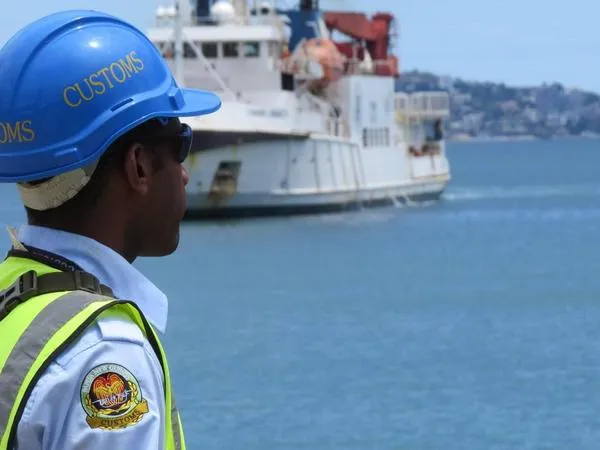
Photo credit: Papua New Guinea Customs Facebook Page 

A total of K7.4 million in duties (taxes) and penalties (fines) have been recouped from enforcement operations by the PNG Customs Services. With a new direction, reform and approach the efficient recovery process was a result of the tireless efforts shown by the Customs enforcement team. The enforcement activities carried out were strictly in compliance with PNG Customs Laws.

PNG Customs Services Chief Commissioner, David Towe stated that as trading activities increased in the country, customs are keeping a close watch on unlawful trade and traveling activities to serve business interests and protect PNG citizens.

Mr. Towe disclosed that in the mid of this year 2022, a total of K7.4 million from customs duties and penalties were recovered as a result of enforcement operations. Previously, in the first half of 2020 Customs PNG had seen an increase in activities managed and undertaken at the national border command.

“The critical role of protecting Intellectual property rights interventions, investigations and prosecutions reflects PNG Customs efforts in securing the community and promoting legitimate trade and travel, importantly to safeguard PNG’s economic prosperity and sovereignty”. Mr. Towe said

“Customs enforcement activities are driven by intelligence and targeting roles of high risk traders who are profiled and kept under close scrutiny” He said.

He further stated that Customs intelligence do the assessment reports and provide this information to customs operations for interventions such as; inspections, searches, interdictions, and detections leading to investigations and prosecutions. This also includes the recovering of evaded revenue.

“Over the first half of 2022, the Customs intelligence team have completed and disseminated two intelligence assessments on areas of risks. Five monthly bulletins highlighting trends in customs breaches and detections, 6 cargo profiles, 49 container examinations and facility cargo targets to be referred for container X-ray examinations”. Mr. Towe said.

October 06, 2022

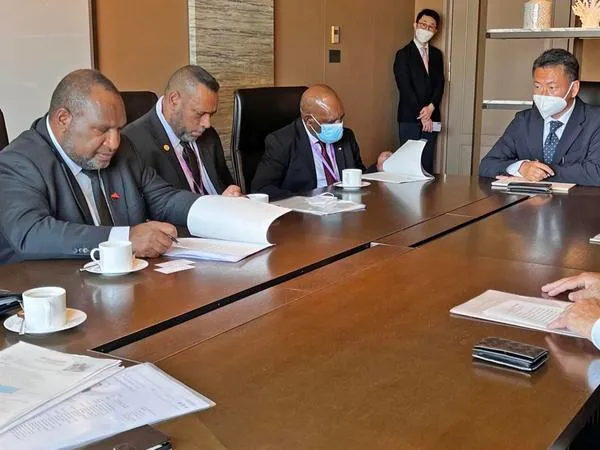
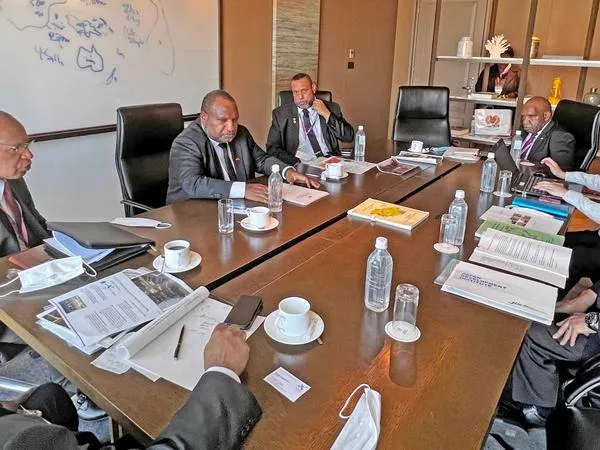
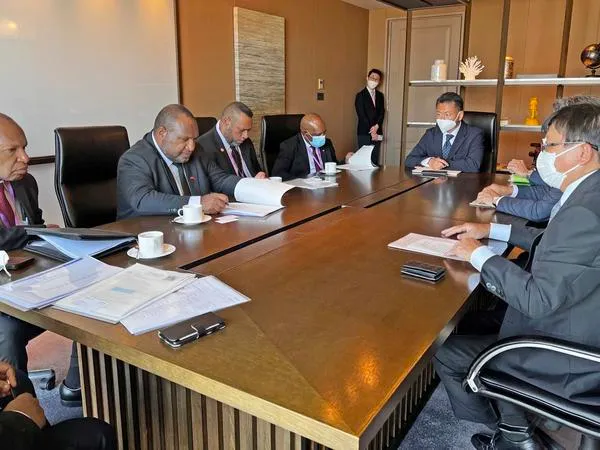
Photo: International Trade and Investment Minister Richard Maru (left), PM Marape and East Sepik Governor Allan Bird meeting with executives of leading Japanese company Sojitz Corporation in Tokyo

Department of International Trade and Investment will be a “one-stop shop” for all large foreign investments in Papua New Guinea, according to Prime Minister Hon. James Marape.

This includes large mining and petroleum investments in the country.

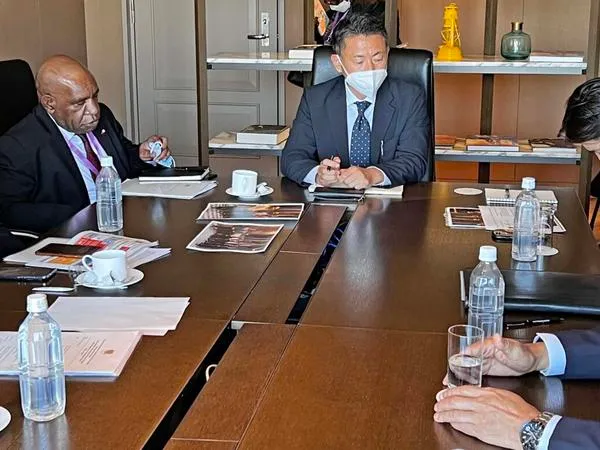
PM Marape made this clear in Japan last Tuesday (September 27, 2022), when he met with executives of three large Japanese energy companies, and Japan Development Institute (JDI) which will help to develop special economic zones in PNG.

This is a direct intervention by PM Marape to do away with the bureaucratic red-tape and corruption, through asking for enticements from investors, that has hindered so many foreign investments from happening in PNG over the last 47 years.

International Trade and Investment Minister Hon. Richard Maru was present at all meetings in Japan and later travelled to Singapore and Manila, Philippines, as he starts globetrotting to bring in foreign investments into PNG.

“Minister Maru is the Minister for International Trade and Investment, and although he is not Petroleum Minister, he is involved in any large foreign investments through his ministry and department,” PM Marape said.

“We are having Department of International Trade and Investment as a ‘one-stop shop’ ministry and agency to facilitate all large-scale foreign investments in our country.

“This will take away the problem of you having run around looking for departments.

“Your job is to put forward your proposal to Minister Maru and his job is to ensure that this is ticked off.”


Article courtesy of PM James Marape News Page

October 06, 2022

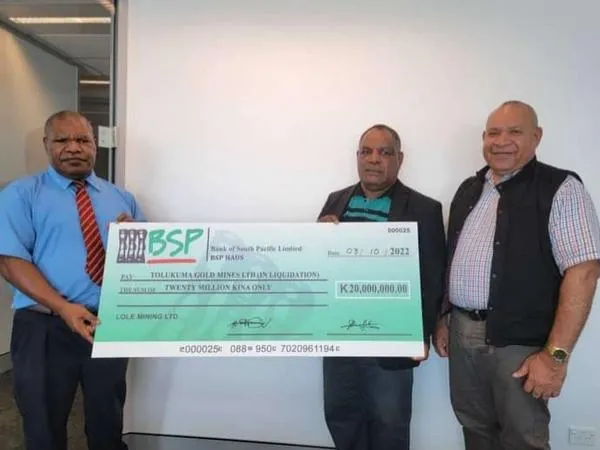
Photo: Executive Managing Director Howard Lole and Larry Andagali of Lole Mining Limited presenting K20 Million payments Liquification to BSP 

Local mining firm, Lole Mining Ltd has paid K20 Million to the Liquidator Pini Accountants and Advisors on Monday, 22nd of October as part of its process in the transfer of ownership of Tolukuma gold mine in the Central Province. 

Lole Mining Ltd (LML) is now the owner of the Tolukuma Gold Mine. LML Executive Director Howard Lole, Director Larry Andagali and PNG based Lawyer Steven O'Brian with principal liquidator Andrew Pini presented the ML 104 license transfer instruments on Tuesday 4th of October to Mineral Resources Authority Registry to formalise the process on the tenement holding. 

MRA Executive Manager for Regulatory Division Stanley Nekitel and transferee (LML) was present to MRA to enter in the registry to formalize the holder.

Mr. Nekitel explained that the custodian of the tenement who is the liquidator is satisfied and has informed MRA to capture the name of the transferee as the legal holder of Tolukuma mine Tenements.

Mr. Pini said he had given notice to MRA in writing after the K20 Million was paid on Monday to complete the deal. 

LML Managing Director while thanking the liquidator and MRA said many critics have said it was impossible but thanked the guidance of MRA that they have made it this far. 

I appreciate the support given to me by my supporters and colleagues who have helped me along the way including Mr. Larry Andagali for investing into the establishment of Lole Mining. 

"I've dreamed that one day Papua New Guineans should try their best to have ownership of our our resources".

Present at MRA office to witness the occasion was Managing Director of MRA Jerry Garry and Larry Andagali who is also Managing Director of Transwonderland Group of Companies, both thanked all parties involved for reviving the Tolukuma Mine. 

October 03, 2022

Photo credit: PNGEITI

An undertaking by state owned Kumul Petroleum Holdings Limited (KPHL) to increase its PNGLNG equity through a conditional arrangement between PNGLNG partner Santos has raised concerns over the lack of transparency surrounding the whole arrangement and the partial financial transaction that already took place between the parties involved, according to the PNG Extractive Industries Transparency Initiative. (PNGEITI).

KPHL has offered to acquire five percent (5 %) of Santos equity in the PNGLNG Project with asset valued at US$ 1.4 billion. This includes a proportionate share of project finance debt of approximately US$ 0.3 billion which is the condition upon which this commercial arrangement that has been made.

PNGEITI Head of National Secretariat Mr. Lucas Alkan said following publication of this arrangement in the media this week .

“While it is understood that the compromise between two major players in the PNGLNG project as purely commercial, the PNGEITI is concerned at the opaque nature of the environment in which such arrangements are being made, particularly when substantial amount of money belonging to the people of PNG entrusted under the stewardship of KPHL is involved.

This deal can easily be likened to the controversial UBS transaction which recently ended up being investigated by a Royal Commission of Inquiry that cost the State millions of Kina in tax payers' money.

We understand KPHL had already made partial payment of US$55 million and subsequent payments to finalise the transaction are expected to be made before the end of December this year.

KPHL has a moral and corporate reasonability to be transparent and accountable to Parliament and the people of this country when conducting its business in this sector” Mr Alkan said.

“The PNGEITI, a global best practice standard for the good governance of the extractive sector that PNG is a member of takes the position that KPHL must inform the public on where financing is being sourced to secure the purchase of the 5% additional equity for the State.

The details of this transaction, whether it is being funded from KPHL’s budget, any external borrowing by KPHL on behalf of the State (if so, what asset is being used as collateral) or through the National Government Budget (this is not in the 2022 supplementary budget). Further, it is not clear as to whether NEC had approved for KPHL to execute this transaction to acquire additional equity from Santos. The public has the right to know these details and understand as to how KPHL’s balance sheet would be affected given that a US$ 0.3 billion debt would be inherited from Santos.

The PNGEITI is not against KPHL’s proposal to acquire an additional 5% equity from Santos as it is consistent with the Government’s policy objective of having a greater equity interest in resources developments however, Santos’ intention to deal exclusively with KPHL regarding the sale raises a lot of questions. 

We strongly urge KPHL and Santos who are both active members of the PNGEITI Multi Stakeholder Group (MSG) to demonstrate good corporate citizenship and uphold the principles of the EITI Global Standard by disclosing the commercial and economic nature of this transaction for the sake of transparency and accountability in this planned sale of Santo’s 5 percent share in the PNGLNG to KPHL,” Mr. Alkan said.

October 03, 2022

Photo credit: European Union

The Delegation of the European Union in Papua New Guinea, the PNG National Trade Office, PNG Investment Promotion Authority, Department of Commerce and Industry and the PNG-Europe Business Council hosted a joint Press Conference at Lamana Hotel on the 3rd of October 2022 regarding the Third EU - PNG Trade, Business and Investment Conference which will take place on 11-12 October 2022 at the APEC Haus in Port Moresby.

The Conference will be facilitated by the PNG-EUROPE Business Council , It's President Mr. Michael Sullivan spoke during the media conference and expressed his invitation for all business houses to take part in the event. 

" The conference will be more of awareness to help involve Papua New Guineans in the European Market".

Managing Director of Investment Promotion Authority (IPA) Mr Clarence Hoot emphasize that PNG needs to set the environment right to bring in European investors. 

The two-day conference will help increase business contacts, discover new business opportunities and new collaboration partners between the EU and PNG, Fiji, Samoa, Solomon Islands, Tonga, and Timor-Leste with particular attention to trade and investment aspects of sustainable development.

The conference intends to build further on previous EU actions including in the context of EPA (Economic Partnership Agreement)implementation, the technical assistance provided to PNG trade policy (which led i.a. to the adoption of a National Trade Policy) and could pave the way for further activities to promote EU-Pacific trade and investment.

The Theme of the conference is "Strengthening sustainable business, trade and investment ties between EU, PNG and the Pacific".

October 03, 2022

Photo: PM Marape and the PNG team in discussion with Dr Kobayashi in Tokyo

Prime Minister Hon. James Marape has given the green lights to Japanese think tank Japan Development Institute (JDI) to help develop a new Special Economic Zone (SEZ) Master Plan for the country and work with partners like the Asian Development Bank (ADB), Japan International Cooperation Agency (JICA) and the World Bank to build SEZs right across the country.

He gave the blessing to CEO and Chairman of JDI, Dr. Shoichi Kobayashi, during a meeting with him in Tokyo last Tuesday (September 27, 2022).

PM Marape was accompanied by International Trade and Investment Minister Hon. Richard Maru, East Sepik Governor Hon. Allan Bird and Papua New Guinea Ambassador to Japan Hon. Samuel Abal.

Minister Maru and Ambassador Abal also had comprehensive discussions with Dr Kobayashi to progress the SEZ concept in PNG as a matter of urgency, starting with the Pacific Marine Industrial Zone (PMIZ) in Madang.

The JDI is an independent think tank/consulting firm, specialised in international development. It was first established in 1982 as the World Consultant Service (WCS) and later changed its name as JDI after merging with the think tank of the Institution of Engineering Consulting Firms Association, Japan (ECFA) in 1997. With its distinguished experts from numerous disciplines and the network with its associate institutions and experts in the world, JDI provides a broad range of consulting services in the field of development, carries out practical studies, and proposes concrete projects and strategies.

“I give JDI my full support to come into PNG,” PM Marape told Dr Kobayashi.

“I thank you for responding promptly to our request to meet with you to progress the SEZ concept.

“You have the expertise that we need, and Minister Maru and Ambassador Abal have given me the okay to engage you, so let’s work together to progress this.

“We have moved ahead with passage of the Special Economic Zones Authority Act in 2019, so the political will is there, it’s just a matter of getting the nuts and bolts in place.”


Article courtesy of PM James Marape News Page

October 03, 2022

Photo: PM Marape in discussion with LNG Japan Corporation President and CEO, Kyo Onojima, in Tokyo.

Prime Minister Hon. James Marape has told the LNG Japan Corporation that Papua New Guinea has about 20-trillion cubic feet (TCF) in stranded gas fields, apart from the major LNG projects, waiting to be developed.

He said this in Tokyo on Tuesday (September 27, 2022) when inviting LNG Japan Corporation to invest more and diversify in PNG LNG.

He made the invitation to LNG Japan Corporation during a meeting with President and CEO, Kyo Onojima, and his delegation in Tokyo during his one-day visit to attend the state funeral of former prime minister Shinzo Abe and bilateral meeting with current Prime Minister Hon. Fumio Kishida.

PM Marape – who was accompanied by International Trade and Investment Minister Hon. Richard Maru, East Sepik Governor Hon. Allan Bird and PNG Ambassador to Japan H.E. Samuel Abal – said there were so many opportunities for LNG production in PNG as he invited LNG Japan Corporation.

LNG Japan Corporation was formed on October 1, 2001 on the foundation of LNG business long established by Sojitz Corporation (formerly known as Nissho Iwai Corporation) and business network established through solid trust from customers by Sumitomo Corporation.

“We have a lot of opportunities in upstream and downstream of LNG, as well as in stranded fields hanging around,” PM Marape told Onojima and his delegation.

“We have up to 20 TCF of stranded gas fields, and are looking for investors who can partner Kumul Petroleum Holdings Ltd (KPHL) and Mineral Resources Development Company (MRDC), with both companies having a combined value of K10 billion.

“MRDC represents the landowners, who are important stakeholders, and we also want to give them more opportunity to participate with investors.

“I appreciate the fact that LNG Japan Corporation already has an agreement with KPHL in the upstream business, as well as possibly venture into midstream, given that the stranded gas fields need to be mobilised.”

PM Marape said LNG Japan Corporation already had enough exposure to PNG’s LNG industry to know of business opportunities available in the country.

He previously had a meeting with LNG Japan Corporation in December 2019 in Port Moresby with then President and CEO, Hiroshi Kawahara, who is now Chairman of the company.

LNG Japan is studying feasibility of potential LNG-to-power projects in PNG, leveraging its long experiences in the LNG industry, including a small-scale domestic LNG sea transportation project in Indonesia.

It is also looking at producing methanol as a raw material for plywood manufacture, hence, contributing to downstream processing of logs.

LNG Japan, from the days of its predecessor, has over 40 years of experience in upstream development, financing, marketing, trading and shipping in the global LNG Industry.

LNG Japan and Kumul Petroleum entered into a joint venture agreement on June 7, 2017 (amended on August 2, 2018) to set up as unincorporated joint venture for marketing of spot and short-term cargoes from PNG LNG.

The company, together with JX Nippon Oil & Gas Exploration Corporation and Marubeni Corporation (Japanese consortium) and Kumul Petroleum entered into a memorandum-of-understanding on August 30, 2018, to jointly pursue any opportunities to participate in the Papua LNG Project, as equity participants and financiers


Article courtesy of PM James Marape News Page

October 03, 2022

Photo: The PNG and JX Nippon Oil & Gas Exploration delegations after their meeting in Tokyo.

Prime Minister Hon. James Marape has encouraged major Japanese company JX Nippon Oil & Gas Exploration, which already has a 4.7 per cent stake in the PNG LNG Project, to also participate in upstream and downstream of Papua LNG (Gulf), P’nyang LNG (Western) and the exciting new Muruk LNG (Hela).

JX Nippon Oil & Gas Exploration has been involved in the oil exploration and development projects at Kutubu and Moran as well as other oil fields in PNG since the early 1990s, and has a 4.7 percent interest in the PNG LNG Project.

PM Marape made the invitation to JX Nippon Oil & Gas Exploration during a meeting with President and CEO, Nakahara Toshiya, and his delegation in Tokyo on Tuesday (September 27, 2022) during his one-day visit to attend the state funeral of former prime minister Shinzo Abe and bilateral meeting with current Prime Minister Hon. Fumio Kishida.

The Prime Minister – who was accompanied by International Trade and Investment Minister Hon. Richard Maru, East Sepik Governor Hon. Allan Bird and PNG Ambassador to Japan H.E. Samuel Abal – said PNG’s economy would be powered by LNG for at least the next 30-40 years and JX Nippon Oil & Gas Exploration was welcome to increase its investment portfolio.

JX Nippon Oil & Gas Exploration has been involved in the PNG LNG Project, which ranks as its third LNG project following those in Malaysia and Indonesia, from the business feasibility study stage. The project links Highlands’ production facilities with a liquefaction plant and exporting facilities outside Port Moresby through an onshore and subsea pipeline that extends for more than 700km. It began production in 2014 and supplies LNG to Japan and other Asian nations.

“JX Nippon has been an active partner in our oil and gas sector space,” PM Marape told Toshiya and his delegation.

“You are involved in the PNG LNG Project and we sincerely appreciate your presence there.

“We have moved Papua and P’nyang, and we now want to ensure that Muruk is secured.

“Our Government is moving to secure at least five per cent for domestic market use, and I invite JX Nippon and your other subsidiaries in the petro-chemical space, to venture into this as I want a robust petro-chemical business in PNG for domestic consumption as well as export.

“I also ask JX Nippon to advocate for PNG LNG in Japan so that the gas we produce can be sold more on the Japanese market.

“We’re looking at PNG being an LNG producer for the next 30-40 years.

“JX Nippon has been part of the growth of PNG’s oil and gas industry and we invite you to go more into downstream processing, as well as upstream in partnership with Kumul Petroleum Holdings Ltd (KPHL) or as a stand-alone.

“You know our culture and environment, having been here since 1990 in the petroleum business and are most welcome.”


Article courtesy of PM James Marape News Page

October 03, 2022

Photo: PM Marape and the PNG delegation (left) meeting with Sojitz Corporation President and CEO Masayoshi Fujimoto and his team in Tokyo.

Prime Minister Hon. James Marape has invited leading Japanese company Sojitz Corporation into the upstream and downstream processing of liquefied natural gas (LNG) in Papua New Guinea.

He made the invitation to Sojtiz during a meeting with President and CEO, Masayoshi Fijumoto, and his delegation in Tokyo on Tuesday (September 27, 2022) during his one-day visit to attend the state funeral of former prime minister Shinzo Abe and bilateral meeting with current Prime Minister Hon. Fumio Kishida.

PM Marape – who was accompanied by International Trade and Investment Minister Hon. Richard Maru, East Sepik Governor Hon. Allan Bird and PNG Ambassador to Japan H.E. Samuel Abal – said the Government would make land available for Sojitz to come into PNG in a big way.

PM Marape said Sojitz had been wanting to venture into downstream processing of LNG in PNG, as well as go into the upstream sector, and apologised for delays in making this become a reality.

Sojitz Group, which has been in PNG since 1963 when it started exporting lumber to Japan, is engaged in a wide range of businesses globally, including manufacturing, selling, importing, and exporting a variety of products, in addition to providing services and investing in diversified businesses, both in Japan and overseas.

It is particularly wanting to break into the petro-chemical industry in PNG – for which it already has an agreement with Kumul Petroleum Holdings Ltd (KPHL) – to produce ammonia.

“You have been waiting patiently for the last six to seven years,” PM Marape told the Sojitz delegation.

“Now that I am prime minister, we have no excuses not to progress these business intentions of Sojitz, an established company in Japan which is also involved in business in PNG since 1963.

“I thank Sojitz for its continued presence in PNG since 1963 and we have a special place in our heart for you.”

PM Marape said Minister Maru has been tasked with bringing in investors such as Sojitz into PNG and he would be a “one-stop shop” for all foreign investors.

He asked Sojitz for a fresh expression-of-interest which would be fast-tracked by his Government as a matter of urgency.

“This is consistent with the global trend into the cleaner energy space,” PM Marape said.

“Going forward, the Government in keen on KPHL getting more gas for the domestic market, at an affordable process.

“Sojitz is welcome to partner in downstream processing of gas.

“If you can give me cheaper petrol and cheaper diesel, and even the ammonia that you want to process, you’re my friend for life.

“Papua New Guinea needs to find solutions to the expensive petrol and diesel we are currently importing.

“It is ironic that we produce oil and gas, however, continue to import expensive petroleum products

PM Marape said there were also opportunities in the upstream for Sojitz to go into.

“KPHL will now have first right to some of the smaller gas projects, and Sojitz is most welcome to join,” he said.

“If you want to go into upstream by yourself, you don’t have to partner with KPHL, you can go in on your own as well as in the midstream and downstream.”


Article courtesy of PM James Marape News Page

October 03, 2022

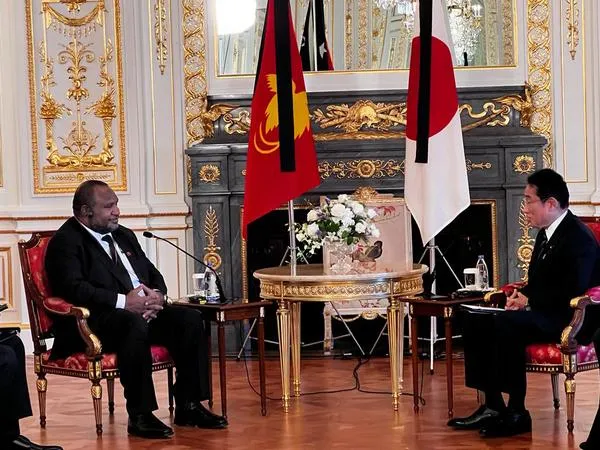
Photo: PM Marape meeting with Japanese PM Kishida in Tokyo

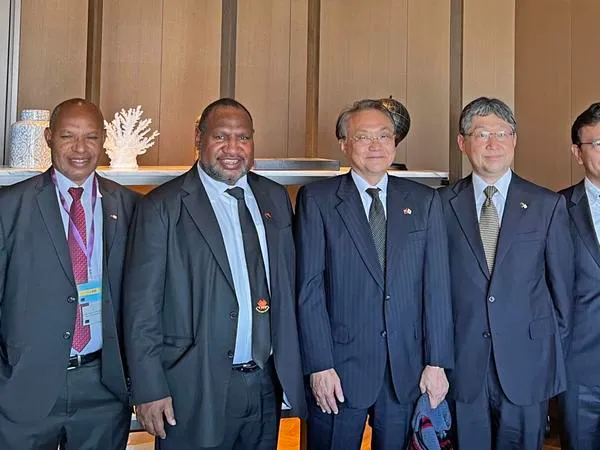
Prime Minister Hon. James Marape says he is privileged to have met Japanese Prime Minister Hon. Fumio Kishida in Tokyo today (Tuesday, September 27, 2022) before the state funeral of former Prime Minister Shinzo Abe.

PM Marape, one of many world leaders attending Abe’s funeral, had a bilateral meeting with PM Kishida at Akasaka Palace this morning.

He was accompanied by International Trade and Investment Minister Hon. Richard Maru, East Sepik Governor Hon. Allan Bird and Papua New Guinea Ambassador to Japan H.E. Samuel Abal

The Prime Minister, who is in Tokyo for a day before leaving for Washington DC to attend the Pacific Islands’ Summit, also met with executives of three top energy companies – Sojitz, JX Nippon Oil & Gas Exploration Corporation and LNG Japan Corporation.

He also met Japan Development Institute (JDI) CEO and Chairman Dr Shoichi Kobayashi to progress the special economic zone (SEZ) concept in PNG.

“Today was just a short, one-day visit to Japan for me, but very important in consolidating relations between our two countries,” PM Marape said after the meeting.

“There are 191 world leaders here today to attend the State Funeral of the late Shinzo Abe, and for PNG to have been accorded the honor of meeting Japanese Prime Minister Kishida is very special.

“Today is a day of mourning, however, for Prime Minister Kishida to invite us to meet him shows the respect that Japan has for PNG.”

“Japan and PNG have a very strong bilateral relationship which goes way before our independence in 1975.

“Prime Minister Kishida, during our discussions, highlighted Japan’s need for energy security as well as the need for trade between our two countries to grow.

“He highlighted the fact that PNG is an important bilateral partner of Japan.

“I have invited Prime Minister Kishida to visit PNG and I will reciprocate with a visit to Japan.

“Japan is currently involved in several major projects in PNG, including Nadzab Airport, and several others.

“The late Abe, when he was prime minister, approved for US$280 million to come to us for which we as a nation are so grateful.”

PM Marape said PNG would reciprocate by ensuring that outstanding trade treaties between the two countries were resumed

“I assured Prime Minister Kishida that PNG can help Japan’s energy security needs with a continuous supply of LNG,” he said.

“I assured him that if there are any additional gas fields to be developed, Japan would be given priority in developing these, which I discussed later with Sojitz, JX Nippon Oil & Gas Exploration Corporation and LNG Japan Corporation.

“I have also invited these companies to be involved in downstream processing of our LNG resources in PNG.”


Article courtesy of PM James Marape News Page

October 03, 2022

Photo credit: Porgera Joint Venture Facebook Page

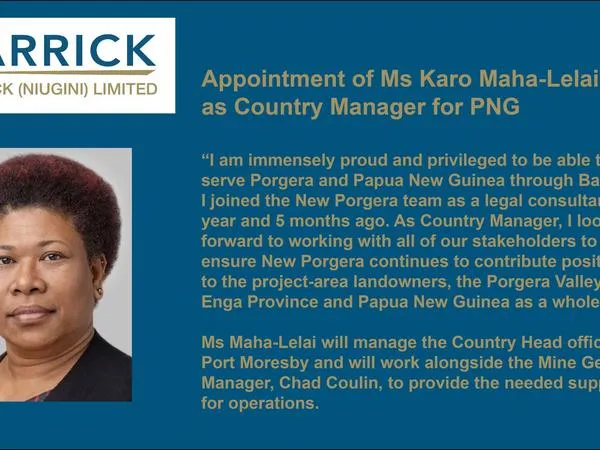
Barrick Niugini Limited (BNL) is pleased to announce the appointment of Ms Karo Maha-Lelai as Country Manager for Papua New Guinea Operations.

Ms Maha-Lelai is a lawyer by profession and has over 23 years of experience in the petroleum and mining industry. She previously held executive positions with Petromin PNG Holdings Limited (now known as Kumul Minerals Holding Limited), Tolukuma Gold Mines Ltd and more recently established a private consulting practice specializing in the petroleum and mining industry.

Ms Maha-Lelai is also well known for her contributions to sports in PNG and internationally, as former Chairperson of PNG Athletes Commission, current President of the Basketball Federation of PNG, representative of women in Oceania on the Central Board of Federation of International Basketball Associations and Chairperson of the Oceania National Olympic Committees’ Athletes Commission.

“I am immensely proud and privileged to be able to serve Porgera and Papua New Guinea through Barrick. I joined the New Porgera team as a legal consultant a year and 5 months ago. As Country Manager, I look forward to working with all of our stakeholders to ensure New Porgera continues to contribute positively to the project-area landowners, the Porgera Valley, Enga Province and Papua New Guinea as a whole.” said Ms Maha-Lelai.

Ms Maha-Lelai will manage the Country Head office in Port Moresby and will work alongside the Mine General Manager, Chad Coulin, to provide the needed support for operations.

She takes over from Dr Ila Temu, who has been with Porgera Mine for close to 23 years. Dr Temu joined Placer Dome Niugini in 2000 where he held various roles including the Country Manager role in Tanzania. In 2006, following Barrick’s acquisition of the Porgera Mine, Dr Temu was appointed PNG Country Manager for Barrick (Niugini) Ltd.

BNL takes this opportunity to thank Dr Temu for his many contributions over the past 23 years to Porgera Mine operations, to the communities in the Porgera Valley and to the PNG business community.


Article courtesy of Barrick Niugini Limited

October 03, 2022

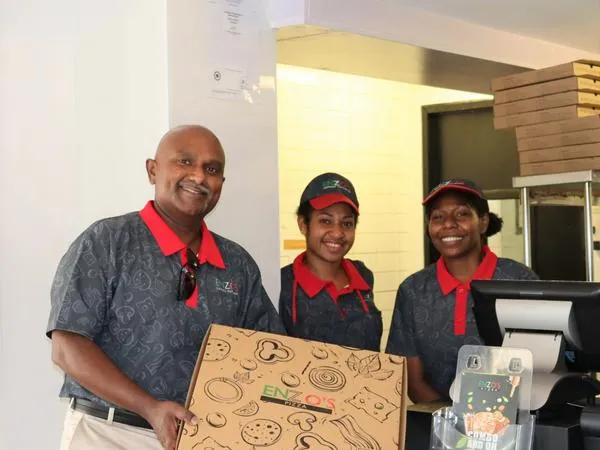
Coral Sea Hotels & Hospitality is in growth mode, part of this includes changes to the Coral Sea Hotels. Papua New Guineans are familiar with the Coral Sea Hotel offering of ENZO’s Pizza. ENZO’s has traditionally been a feature offering of Coral Sea Hotels, however as the business grows there are changes taking place to accommodate this growth.

“The wait is over and one more ENZO’s Pizza outlet opens, to get a taste of our renowned pizzas, said Country Manager Sudeep Geethanandan for ENZO’s Pizza. “So here we are, welcoming you all to the newly opened ENZO’s Pizza at Courts, in the middle of Port Moresby. We believe located at Gordons, its more central and thereby able to cater to a lot of our loyal customers who would have had to visit us at ENZO’s Pizza at Gateway, ENZO’s Pizza at Beachside or ENZO’s Pizza at Harbourside.

Enzo’s Pizza Country Development Manager Sudeep Geethanandan said, “At ENZO’s Pizza, our vision is to be Papua New Guinea’s most loved takeaway pizza brand and now we are at Gordons ready to deliver on the same. Operating Monday to Saturday from 9AM to 5PM. Please visit www.coralseahotels.com or Facebook @enzospizza.p.n.g

“We at ENZO’s Pizza are driven by a passion to bring our customers faster, fresher quality pizzas and other food items, which is enabled by our highly engaged and motivated staff who are always ready to WOW our customers.” added Sudeep Geethanandan

ENZO’s Pizza is Papua New Guinea’s pizza destination of choice with 7 locations across our nation with a lot more in the pipeline.
October 03, 2022

Photo credit: ADB

Masatsugu Asakawa, the president of the Asian Development Bank, and Treasurer Ian Ling-Stuckey recently met in Manila, Philippines.

Following this meeting, Treasurer Ling-Stuckey stated that the ADB has been PNG's largest and most dependable multilateral aid donor, having contributed approximately $US4.26 billion (K15 billion) in aid to PNG since 1977, encompassing 292 projects.

He claimed that the majority of this assistance went to the transportation industry, including airports and road projects. Twenty percent of it went to the crucial health industry, and significant sums were also given to public sector management, energy, agriculture and rural development, finance, education, and water projects.

In honouring these 45 years of service, Mr. Ling-Stuckey thanked ADB on behalf of the James Marape-led PNG government.

“We continue to face uncertain economic times, and it is reassuring that we have the ADB as a friend to stand with us now and as we continue the Marape-Rosso Governments economic reform program.

“In the discussions, I also highlighted the valuable interactions we have with the local ADB office headed by Mr. David Hill. His leadership is well-admired across government as a good listener and pro-active contributor to policy discussions within PNG,” Mr. Ling-Stuckey said.

“He leads a good team located in Port Moresby but extensively traverses PNG.

“I explored further possibilities for expanding technical assistance through his office.

“The President and I then discussed the challenging environment facing all countries in the region.

The global impacts of COVID-19 were still depressing the speed of economic recovery.”

The difficulties brought on by climate change, as well as ADB's desire to help, according to Mr. Ling-Stuckey.

“There was also a good discussion of the broader strategic environment and challenges facing the region.

I greatly welcomed listening to the ADB President’s wisdom on such issues, as well as sharing some PNG perspectives” stated the Treasurer.


Reference: Post-Courier (27 September 2022). “ADB President Welcomes Treasurer In Manila”. 

October 03, 2022

The long-awaited realization of quality services from the government has seen a real estate boom mainly from property owners in the Small to Medium Enterprise Sector (SME) in the Moresby South electorate of NCD. A rapid transformation from the shanty colonial suburbs to a modern looking electorate has created an abundance of opportunities for property owners, small businesses, and residents in and around the electorate.

Recently after retaining his seat current Member for Moresby South and newly appointed Minister for Foreign Affairs and International Events, Hon Justin Tkatchenko highlighted that he was humbled and overwhelmed by the huge support shown by the people of Moresby South and stressed on the development aspects of his electorate.

 “I am satisfied that Moresby South is setting the standard in many different ways under my leadership and I thank the administrative staff and others who have ensure that requirements by laws are fulfilled. “This is important in the use of public funds,” Mr. Tkatchenko said.

The development in the electorate has made way for the creation of businesses with the building of Housing and rental properties along the Motu Koitabu villages of Mahuru, Kilakila, Pari and around the suburbs of Sabama and Joyce bay has been quite a remarkable turnaround from its original state and has fast become a potential prospect for the real estate industry.

A notable example is the back-hill road that connects from scratchy road leading towards the Joyce bay sewerage plant. The hillside area along this back road is now occupied with newly built Modern styled houses and the area has been largely in demand for land purchases particularly because of the magnificent view and also from the lighting at night that overlooks the shoreline from Joyce bay and continues up around to the newly built state of the art Butuka Academy School and stretches across Scratchly road down to Badili.

There is already a hotel in place in the area which has created opportunities for residents and the growth of business has prompted property owners into becoming competitive with rental fees directly resulting in the influx of residents from other parts of the city which has really worked well to the advantage of businesses. The vicinity of shops, markets and bus stops are all within walking distance from each other and is much more convenient for residents which mainly contrast of Public Servants, middle to low income earners and SME's

The sale, leasing and purchasing of land has also become a lucrative market for landowners both at a large and small scale and businesses that are keen for change and development have been at the forefront of purchasing large portions of land for housing and business purposes. Most Homeowners in the area have also sold or renovated and refurbished their homes into quality houses and Duplexes with all the conveniences of a modern home and have ventured into the real estate market as well.

The major factor for this real estate growth is due to the competition of rental properties which have in one way relaxed the constraints of daily livelihood for the residents of the electorate due to reduced rentals. Many residents have stated that the developments taking place around the surrounding suburbs have triggered a population increase in the electorate.

Retired Police officer and Long-time resident and Community leader in the Moresby South area, Anthony Aphranick Guken said “In the past, Moresby South was regarded and labelled as a notorious place in the city, but now there is huge change in infrastructure, roads, markets, schools and health services, this is because of the hard work put in by the business community and the local member to develop and change the electorate”

Adding significantly to this is the construction of a state-owned hospital and recreational facility which will consist of a modern Gym, park and playground. This facilities are all currently in progress with the beautification process slowly taking shape along the footpaths leading to the intended area of construction.

Once a notorious part of the city is now fast becoming a jewel greatly because of the outstanding and tireless efforts of the elected member and the business community in developing and creating a solid profile for the suburbs in this electorate.

October 03, 2022

The EU-STREIT PNG Programme in collaboration with the Cocoa Board rolled out eight capacity building workshops for 470 local cocoa processors on cocoa quality control measures.  

The Greater Sepik region of Papua New Guinea is leading area in cocoa production in the country, but quality has been a concern compared to other cocoa producing provinces.

To address this quality issue, the FAO-led EU-STREIT PNG Programme in collaboration with the PNG Cocoa Board organised a series of capacity building trainings for small fermentary business owners in East Sepik and Sandaun provinces.

The weeklong workshops were intensive and conducted simultaneously over five weeks in August and September 2022 in eight different districts of East Sepik and Sandaun provinces namely Angoram, Yangoru-Saussia, Wewak, Maprik, Wosera-Gawi, Ambunti-Drekikier, Nuku, and Aitape-Lumi.

A total of 470 participants including some model farmers were taken through Cocoa Act 1981, Cocoa Inspection Regulations, requirements for registration of cocoa fermentaries, PNG export standards, and different agencies involved in the cocoa industry.

The cocoa business actors were also trained on proper cocoa drying and fermentation processes, including how to break cocoa pods, and quality management skills.

Group discussions with field visits to model cocoa blocks and small fermentary set-ups and exporters’ processing facilities were part of these weeklong trainings.

While opening the session in Wewak, the EU-STREIT Deputy Programme Coordinator Dr Pavel Burian said: “As a fermentary owner, you have crucial roles to play in the value chain to ensure quality beans are exported for an improved financial return for your business as well as for cocoa farmers to improve their livelihoods in a more sustainable way.”

“It is everyone’s responsibility to ensure quality beans that are exported for higher financial returns for processing as well as to benefit smallholder farmers with better incentive. After this training, you learn how to process your beans properly, but the beans from other fermentary owners who didn’t get this opportunity will be mixed with yours for export, so it is important to share this knowledge with others to maintain uniform quality for holistic benefit” explained the Programme’s Senior Agricultural Officer, Dr Rabi Rasaily, while closing the training held for Aitape cocoa businesspersons.

Facilitating these set of trainings were three female and three national male experts from the Quality Section of the Cocoa Board Head Office in Kokopo, East New Britain Province.

Mr Daryll Worimo, the PNG Cocoa Board Regional Manager for Sepik, also emphasised: “the aim of these trainings is to address the quality issues experienced at the farmers and fermentary owners’ levels. With these trainings, we found that many participants are very happy and understand the importance of quality.”

For the participants, the opportunity has set them well to improve on their practices. “As fermentary owners I think we now know what to do because the training was presented in practical way and we understood well,” said Grace Klembesa a female beneficiary who attended the session in Aitape.

Highlight of Cocoa for Papua New Guinea

Papua New Guinea, and namely the Greater Sepik region, has excellent agro-ecological potential to produce valuable agricultural economic crops, including cocoa, and to further downstream agri-businesses activities development.

Cocoa production provides jobs and income for the rural population, which remains predominant throughout Papua New Guinea. In the main regions of production, around 30% of households produce cocoa, while representing 15% of the number of households at the national level. 

Around one million people’s livelihoods depend on cocoa. In East Sepik and Sandaun provinces, where the Programme is being implemented, cocoa is an important source of income for about 500,000 people. Cocoa in PNG is estimated to grow on 130,000 ha in coastal provinces, as a monoculture or intercropped with coconuts or other food crops.

However, this potentiality mostly remained untapped or under-developed, mainly due to lack of sufficient investment, support and capacity, and insufficient infrastructures, leaving the Sepik region less equipped with resources to progress toward sustainable economic development.

The EU-STREIT PNG, being implemented as a United Nations joint Programme (FAO as the leading agency, and ILO, ITU, UNCDF and UNDP as implementing partners), is the largest grant-funded Programme of the European Union in the country and the Pacific region. The Programme focuses on increasing sustainable and inclusive economic development of rural areas through Increasing the economic returns and opportunities from cocoa, vanilla and fishery value chains and strengthening and improving the efficiency of value chain enablers including the business environment and supporting sustainable, climate-resistant transport and energy infrastructure development.  

September 29, 2022

Photo credit: Oxford Business Group

The creation of the new ministries by the current government for both major agricultural commodities, Coffee and Oil Palm is a huge step forward in achieving the agriculture sectors economic potential.

For the past years the agricultural sector had not been fully utilized by consecutive governments as the focus had mostly been centered on the extractive industry and Mining & Petroleum sector. This important and vital sector is eventually and currently being recognized as an economic pillar to boost the state coffers.

Prime Minister Hon. James Marape said the allocation and restructure of the four newly created ministries concentrating on Horticulture (Fresh produce), Coffee, Oil Palm, and Livestock to the agricultural sector is a complete paradigm shift to get agriculture moving again.

The focus of the Marape Government on ‘Taking Back PNG’ is deeply rooted and aligned with the mechanisms and functions of the agricultural sector as most of the country’s population are situated in rural settings and largely depend on subsistence agriculture to sustain themselves.

Coffee, Cocoa, Oil palm and Fresh produce have been a mainstay that this rural population rely on for income for so many years. As far as many Papua new Guineans can recall and relate, Agriculture has always been the foundation and backbone of the country and it can surely drive the economy forward.

Although the agricultural does not match in monetary turnovers for the country, it is an economic foundation and is here to stay. In comparison over monetary benefits with other sectors, Agriculture had not been performing to expectation due to so many underlying issues concerned and faced with the value chain of agricultural commodities prompting a decline in agricultural activities over the years.

The Prime Minister said it was no secret that agriculture had declined since independence in 1975, and the current allocation of the four agricultural ministries was to revive the sector for it to be a major income generator for PNG. PM Marape said this when explaining the concept and rationale for his allocation of four ministries to the agricultural sector.

This direction by the Marape/Rosso Government to emphasize more on agriculture will boost agricultural activities in and around the country. Mostly the sector had not been given proper recognition for decades and had been lacking government intervention from past successive governments.

Now with the current Government’s backing, the respective agricultural ministries and its industries are expected to flourish dramatically and are likely to bring more benefits. The new ministries will also empower provinces that currently do not have mining and petroleum resources. This will certainly build stronger local economic activities for future generations.

“We want to see import replacement and more exports within the agriculture sector, which is why we have allocated four separate ministries to agriculture,” PM Marape said.

The recognition of this agricultural industries will also ease and slowdown rural-urban drift. The number of people migrating from rural areas into towns and cities in search for better opportunities have risen in the past couple of years due to inequality in the distribution of wealth and lack of government services. Thus, the governments focus on agriculture will encourage many unemployed Papua New Guineans living in urban areas to go back to their home Provinces or villages and be self-reliant.

As economic opportunities arise in rural areas from vibrant and innovative policy interventions within these newly created agricultural ministries, it will attract many to contribute meaningfully and be productive on their own customary land.

Prime Minister Marape said over the last three years prior to the creation of the new agricultural ministries, his government has given millions of kina to support agriculture through price and freight subsidies and SME support.

“We are now targeting specific commodities through the establishment of the four ministries. Over the next term of government, we will give specific production targets for Coffee, Oil Palm and all other major agricultural Commodities” he said.

The government also plans to revive and rehabilitate once thriving agricultural hubs in the country such as Cattle farming in the Central Province and the Coffee plantations of the Highlands region that produced quality organic Coffee and grew the fledgling industry pre-independence in the 1960’s.  

Now that the agricultural sector has been categorized into four industries, there will be room for much improvement in economic activity within the agricultural sector as people will start contributing meaningfully to the economy.

September 28, 2022

Treasurer Ian Ling-Stuckey is dismayed at how the 2022 National Elections were conducted and is now looking forward to a complete review of the allocated funds that were spent on the elections.

Ling-Stuckey recently stated in parliament that the government had allocated and funded enough money for the election process to be conducted this year.

“We provided a further K50 million to cover the costs for the 2022 election, bringing the total funding for the election to nearly double the level of expenditure in the 2017 national elections. There was enough money to support a much better election this year, so I look forward to the proposed parliamentary committee examinations of what went wrong and what can be done better” he said.

The Treasurer also expressed concern that there was a decrease in the public servants’ salaries.

He explained that “Once again there is a salary cost overrun. This is K201 million much lower than in previous years, and out of this, over 70 percent is related to teacher wage overruns. We contributed to bring this area under control. After no pay increases during the latest part of the Covid-19 crisis, it is now time to start increasing some salary payments”.

“There is also the need to provide additional funding for the seven new districts that have been created and K3 million each has been provided. There are also new members in existing electorates, and it is appropriate that they be given some funds for commencing programs through to the end of the year. For equity reasons all districts and provinces needed to benefit the same so an additional 2 million per district and province have been allocated bringing the funding back to 10 million per districts and provinces” he said.

Meanwhile there was an announcement on Thursday last week that the Department of personnel management, Treasury and Finance are working together to ensure that there will be a three percent pay increment in the salary of public servants.

This pay increment is to be adjusted and effective by December this year, the welcoming news for public servants was confirmed by the Secretary of the Department of Personnel Management, Taies Sansan.

September 28, 2022

Commentary by Stephen Howes, Kingtau Mambon and Kelly Samof

The urban minimum wage has been an important part of Papua New Guinea’s economic history. In the last few years before independence (in 1975), it was greatly increased. In the decade or so after independence, it was widely regarded as too high. In 1992, it was slashed, merged with the rural minimum, and hardly increased again for more than a decade.

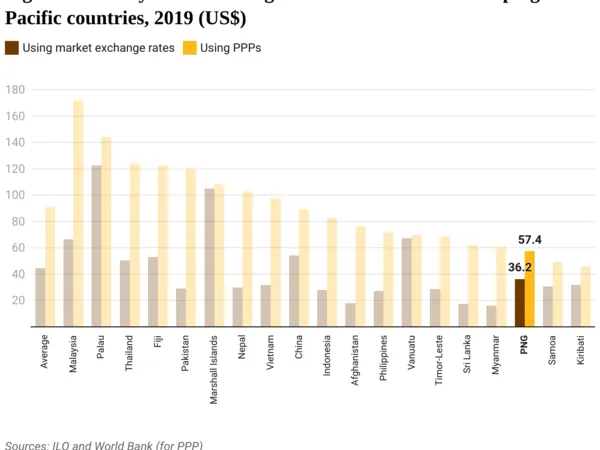
We can compare the minimum wage in PNG today with other Asia and Pacific developing countries using International Labour Organization (ILO) data. As Figure 1 shows, PNG’s minimum wage is 18% below the average of the 19 countries shown if the market exchange rate is used to compare minimum wages. It is 37% below the average if differences in cost of living are also taken into account (with conversions made on the basis not of market exchange rates but so-called purchasing power parities or PPPs). The greater difference in terms of PPPs reflects PNG’s relatively high cost of living. Of the countries shown, only Samoa and Kiribati have a lower minimum wage than PNG when a PPP comparison is made.

This is very different to the past. Raymond Goodman, Charles Lepani and David Morawetz in their 1985 report The economy of Papua New Guinea compared minimum wages in PNG with a subset of the countries above back in 1978. Then, the PNG minimum wage was about twice as big or more than the other comparators. Today (using market exchange rates, and the earlier authors do), PNG comes in the middle of the pack, as Figure 2 shows.
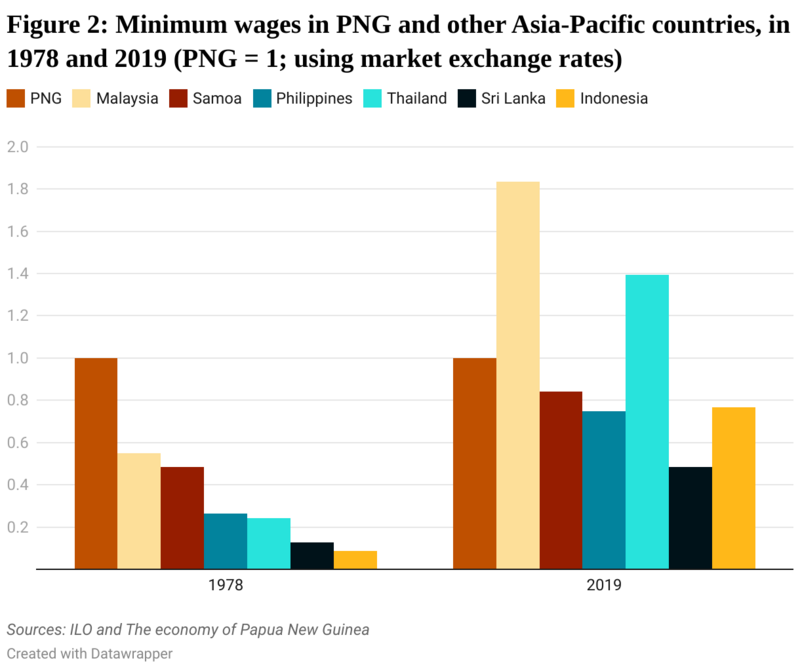
So far, we have shown that around the time of independence minimum wages were very high in PNG by international standards, and that they no longer are. Figure 3 shows how this change came about – also, for interest, comparing trends in PNG with those in Australia.

Both the PNG and Australian weekly minimum wages are shown in Figure 3 measured in Australian dollars. The PNG minimum wage is converted into Australian dollars using the current exchange rate. Both wages are then adjusted for inflation and expressed in 2021 prices.
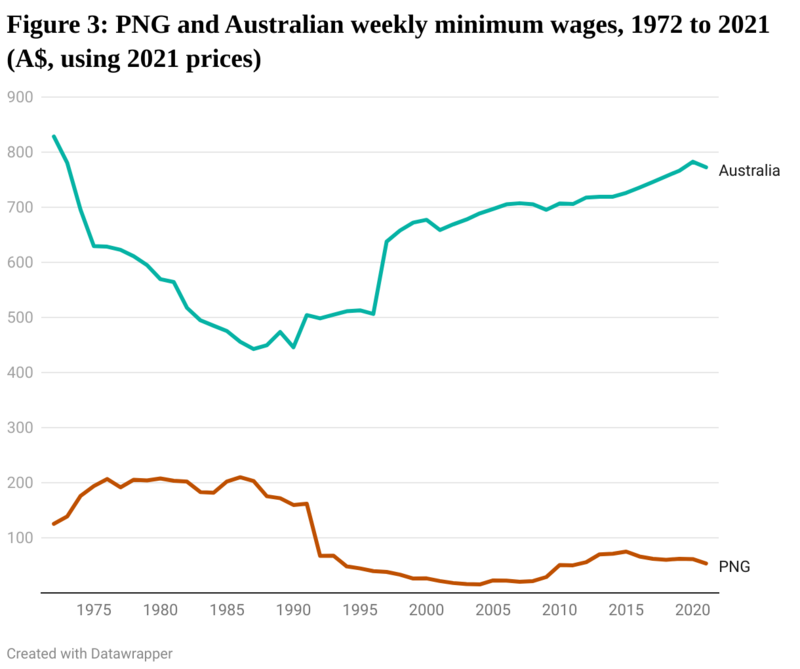
The two series follow diametrically opposed paths. The Australian minimum wage fell with the high inflation of the 1970s and industrial relations reforms of the 1980s, and by the early 1990s was little more than half its value in the 1970s. It then increased in the late 1990s and 2000s during the resource boom, and has continued to increase. Adjusting for inflation, it is now almost back to where it was in the early 1970s.

The PNG minimum wage does the opposite. It increased in the 1970s and was then held stable due to indexation, until the big bang reforms of 1992. Adjusted for inflation, PNG’s minimum wage continued to fall until 2004. There have since been some significant increases, but today PNG’s minimum wage is only about one-third of its value at independence, and below its value even in 1972, which is when the steep minimum wage increases began.

The Australian minimum wage has always been significantly higher than the PNG one, but the ratio has changed a lot over time. The lowest that ratio has ever been is 2.2 in 1986, the highest 45 in 2004.

The gap between the two wages is much higher now than at independence: the ratio of the Australian to the PNG minimum wage was 14.5 in 2021, compared to only 3.2 at independence (1975). This reflects PNG’s 1992 deregulation, and the faster growth in the Australian economy, which has enabled an increase in the Australian minimum wage.

The solution to low wages in PNG is not necessarily to increase the minimum. In some sectors, where there is a lot of international competition, a higher minimum wage might lead to job losses.

For example, in tuna processing, one of PNG’s main competitors is the Philippines. From Figure 1, we can see that PNG’s minimum wage is lower than the Philippines' on the basis of PPPs, but actually higher on the basis of market exchange rates. While the former is what matters for the welfare of workers, the latter is what matters for international competitiveness. Whether PNG’s minimum wage should be increased will require a lot more analysis.

The point of this blog is simply that PNG’s minimum wage does not look high any more by international comparisons, as it has fallen a lot since independence. PNG is often described as a high-cost economy, and this is a fair description. However, with regards to unskilled labour, it is no longer a high-wage economy.


Data note: The PNG Economic Database provides the weekly minimum wage of PNG going back to 1972, and the PGK-AUD exchange rate. Wikipedia provides the Australian weekly minimum wage data (hourly and weekly, on the assumption of a 38-hour week) starting from 1966. The Australian CPI is from the Australian aid tracker. There are some years where Australian minimum wage rates change more than once in a year. For such cases, we took the average as annual minimum wage rate. The data for Asia-Pacific comparisons are from the International Labour Organization and the World Bank. The different frequencies of minimum wages for each country in 2019 in the ILO’s report are adjusted to convert to weekly rates. World Bank data is used to obtain market exchange rates and PPP conversion factors. For the Goodman, et al., data go to Table 3.6 on p.61 in their report.\

Disclosure: This research was undertaken with the support of the ANU-UPNG Partnership, an initiative of the PNG-Australia Partnership, funded by the Department of Foreign Affairs and Trade. The views are those of the authors only.

This article appeared first on Devpolicy Blog (devpolicy.org), from the Development Policy Centre at The Australian National University. Stephen Howes is Director of the Development Policy Centre and Professor of Economics at the Crawford School of Public Policy, at The Australian National University. Kingtau Mambon is currently undertaking a Master of International and Development Economics at the ANU Crawford School of Public Policy, for which he was awarded a scholarship through the ANU-UPNG Partnership. Kelly Samof is a lecturer in economics at the School of Business and Public Policy, University of Papua New Guinea.

September 28, 2022

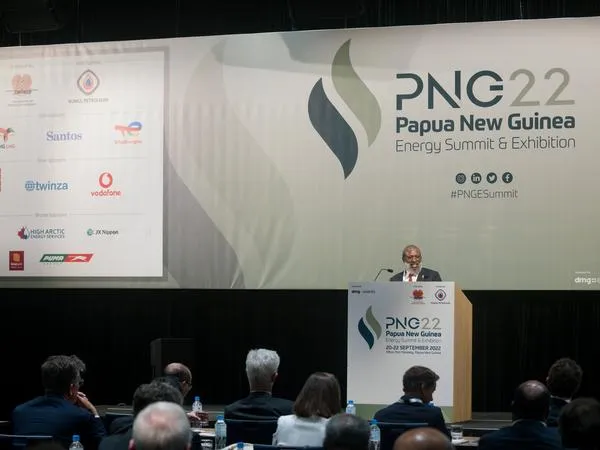
Photo: Hon. Kerenga Kua, Minister for Petroleum & Energy. Credit: Papua New Guinea Energy Summit & Exhibition Twitter Page

The Energy Sector of Papua New Guinea is just awaiting to be tapped into as it has the capacity to generate massive returns in revenue.

Gas projects such as The Papua LNG project and P’nyang Gas project are expected to bring in huge revenue into the country’s economy when they come into operation.

Not only will PNG be generating revenue from these upcoming projects but opportunities such as employment, infrastructure development, skills training, business ventures and small to medium spin off projects will also arise through these gas projects.

Minister for petroleum and Energy, Hon. Kerenga Kua has been at the forefront of boosting these projects into operation as early as possible without letting the construction phase of the projects to be delayed.

In his speech at the 4th PNG Energy Summit, the Minister stated that PNG is now ready to generate revenue from the energy sector.

He further stated that after the completion of the construction phase for the Total Energy Papua LNG Gas Project, which is to begin in 2024, the construction phase for the P’nyang Gas project will be scheduled to commence.

Kua said “Total Energy has already announced its Final Investment Decision (FID) for the Papua LNG Project which shows that the future of Petroleum and Energy resource development is heading in the right direction.”

Minister Kua also stated that PNG’s exports of Liquefied Natural Gas (LNG) will almost double when these two projects start LNG exports.

Minister Kua said, “Due to the ongoing demand of gas increasing in the European and Asian Markets, the two projects are set to generate more revenue into the country’s economy with our exports expected to double from the current 8.5 million tons per annum (MTPA) to 14 to 15 MTPA”.

He further stressed that Papua LNG is to reach its FID in 2023 and the first LNG export is expected around 2027.

“This will be followed by the FID and construction phase of the P’nyang Gas project by 2023” he said.

Developers also will allow a percentage of this gas projects for Domestic Market Obligation (DMO) “This gas will be used within the country mainly for power generation and other purposes such as Industrial use and LPG” said Kua.

September 28, 2022

Leading digital bank, Kina Bank is continuing to push the digital boundaries when it comes to everyday banking in Papua New Guinea (PNG).

“This latest digital advancement will take personal banking to the next level, it is a game changer,” Kina Bank Chief Transformation Officer, Mr Ivan Vidovich said.

“Our team has developed a banking tool that is easy to understand but most of all it runs across a platform that everyday Papua New Guineans are familiar with, the WhatsApp application. According to recent digital stats, WhatsApp is one of the most downloaded mobile applications in this country and it made sense to allow our customers the opportunity to bank across the platform,” he said.

Kina WhatsApp Banking is a secure online banking solution that will enable customers access to their Kina Bank accounts and allow them to complete everyday transactions across the WhatsApp platform. Better still, Kina WhatsApp Banking will allow customers to bank on the go, anywhere in the world.

The platform will be a free tool for all Kina Bank customers, furthering Kina Bank’s mission to bridge the digital divide in PNG.

Mr. Vidovich acknowledged that technology had become a driver in banking, but it has to be presented to people in a way they understand and feel comfortable with.

Kina Bank customers are able to complete a range of everyday transactions on the newly developed platform. From mobile top up, to making funds transfers and even requesting statements, it can all be done by sending a message to Kina WhatsApp. In total, Kina customers can complete over 11 different banking actions via the platform.

Mr. Vidovich said Kina Bank prided itself on being the leader in digital banking in Papua New Guinea. Kina takes seriously the need to bring customers, and potential customers, respectfully into the digital age and help them understand and navigate change.

“We remain the nation's leading digital bank and we respect the need to help our customers to adapt where necessary and explore opportunities to achieve their financial goals.

“The bottom line is that accessibility, simplicity and a helping hand are all key principles of Kina Bank.”

September 27, 2022

Photo: Oil Search

Santos advises it has received a binding conditional offer from Kumul Petroleum Holdings Limited (Kumul) to acquire a 5 per cent project interest in PNG LNG for asset value of US$1.4 billion, including a proportionate share of project finance debt of approximately US$0.3 billion (the Offer).

Kumul is Papua New Guinea’s national oil and gas company and existing partner in the PNG LNG project.

To secure the Offer, Kumul has paid an amount of US$55 million to Santos which will be held in escrow to be released to Santos as a deposit for part payment of the Offer price if it accepts the Offer.

The Offer is conditional on Kumul obtaining the waivers of certain pre-emptive rights by each other PNG LNG project participant under the project operating agreement to allow the transaction to proceed

The Offer is expressed to be irrevocable, except in limited circumstances, and will remain open for acceptance until 31 December 2022. Santos has agreed to deal exclusively with Kumul during this period regarding the sale of equity in PNG LNG.

The proposed transaction will have an effective date of 31 December 2022 with Santos to retain all 2022 cash flows. Completion will be subject to customary conditions including necessary regulatory approvals and Kumul securing financing.

The potential sale would increase the equity interest of the State to approximately 22 per cent supporting the PNG government objectives for the people of PNG to have a greater equity interest in the development of their natural resources.

Santos Managing Director and Chief Executive Officer Kevin Gallagher said the potential sale of a 5 per cent interest in PNG LNG to Kumul represents an opportunity to build strategic alignment for the future development of PNG’s natural gas resources, including via PNG LNG infrastructure.

“PNG LNG is a low-cost and low emissions intensity asset that contributes strong cash flows to the project participants and economic and social benefits to the nation,” Mr Gallagher said.

“Following the transaction, Santos would maintain a 37.5 per cent interest in this world-class project.

“Santos has been a committed partner in PNG for over 40 years, involved in more than 30 different licenses and has significant community partnerships and projects across the nation.”

As part of the proposed transaction, Santos and Kumul will negotiate a Heads of Agreement to further collaborate on the development of Kumul’s regional capacity and capability, including carbon emission reduction opportunities to achieve net-zero operations.

JB North & Co is acting as financial adviser and Allens is acting as legal adviser to Santos.


Article courtesy of Santos