January 12, 2023

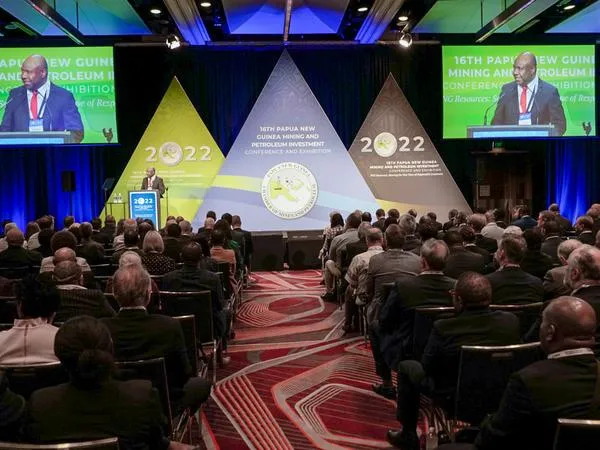
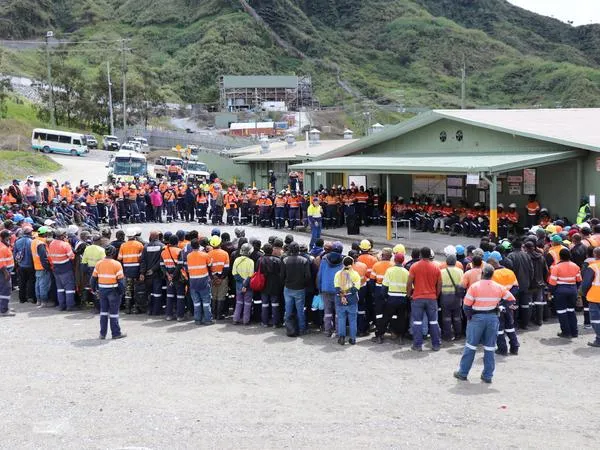
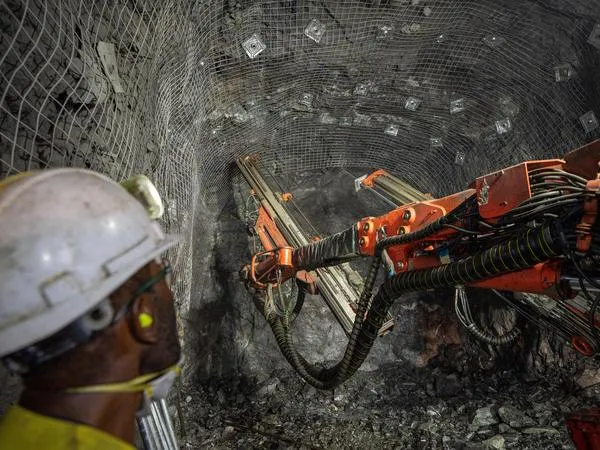
Photo: Barrick CEO and President Mark Bristow addressing PJV Town Hall meeting at Porgera Mine site during a quaterly visit in 2022

Barrick Niugini Limited (BNL) has clarified in a media statement that the Porgera Mine remains and is progressing in a care and maintenance mode of operation and that the current defined rehiring process of the skilled workforce is only to assist with ongoing maintenance work carried out in the mine.

A protest was held in Porgera on Friday (6th January) claiming that Barrick's current recruitment process was improperly overlooking unemployed locals within the Special Mining Lease area. Barrick Niugini Limited has completely opposed these claims.

Since the closure of the mine, Porgera was placed into care and maintenance operations in April 2020, BNL has invested more than K1 billion in maintaining its integrity in the hope and expectation that the various structural and regulatory conditions for its reopening can be satisfied to allow for its reopening.

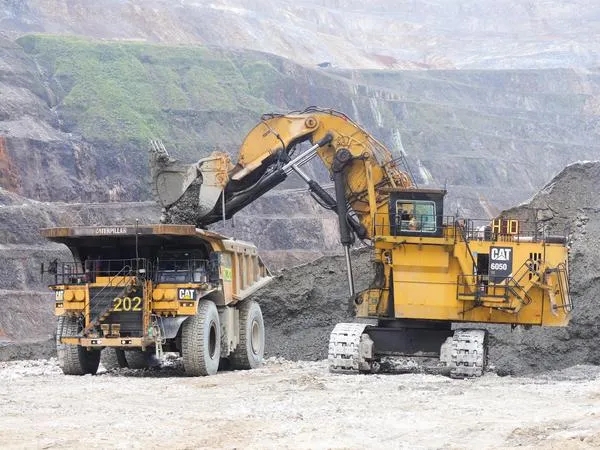
While these conditions have not yet been satisfied, BNL has approved limited maintenance work on plant infrastructure and the repairing of mobile equipment, with rehabilitation work on the open pit and underground sections of the mine.

The ongoing maintenance at the mining site requires highly skilled and experienced work personnel to ensure that operational readiness is maintained, the company said in a statement.

“BNLs recruitment policy is based on transparency and best practice and gives first preference to skilled and experienced workers with the best-recorded performances who are based in Porgera,” it said.

Due to a limited pool of local workers that need the necessary requirements for the current ongoing work, Barrick highlighted that they had to rehire a small number of skilled workers from beyond Porgera and within Enga and PNG. Most of these workers are on short-term contracts.

BNL claims that certain individuals have been creating false exploitations of employment by unskilled youth in Porgera and spreading baseless claims and rumours of inappropriate hiring practices by the company.

“The current maintenance work at the Porgera Mine, however, requires specific skill sets so that safety and other important requirement are properly compiled. As with any other professional organisation, BNL has stated and made a firm stance that it would not recruit a person with unsatisfactory employment or community history,” it said.

Once the mine restarts the new Porgera will commence the “historically successful” job-ready programme for the benefit of youths in Porgera, the company added.

Job Ready Program provides the best avenue for inexperienced local youth to enter the mining workforce and has produced skilled miners who are now employed at Porgera as well as other mines in PNG and abroad.

It is also the responsibility of local leaders to work with the Government and other stakeholders to invest in training and other opportunities for the youths in Porgera.

BNL has made its stance clear that any threat to the Porgera mine assets or employees and contractors will be immediately referred to the relevant authorities.

January 12, 2023

Many of Papua New Guinea’s most unruly problems are inseparably tied up with the country’s most promising sources of wealth. Mining, gas, timber, and other extractive industries are the most productive sectors of Papua New Guinea’s otherwise ailing economy. But exploitation of these resources has also led to violence, corruption, and lack of service delivery.

Porgera is the site of the disputed giant gold mine which has been closed for 3 years now. A violent tribal fight between the Aiyala and Nomali tribes has been raging and has put a complete halt to Government services in the district, which has severely affected the communities in this once thriving mining township.

The tribal conflicts at Paiam Station last year in July in the Porgera-Paiea District in Enga Province now have refocused the attention of the mining township over the Government’s failure to restore and provide basic services, such as health, education, law and order, and banking services in the district.

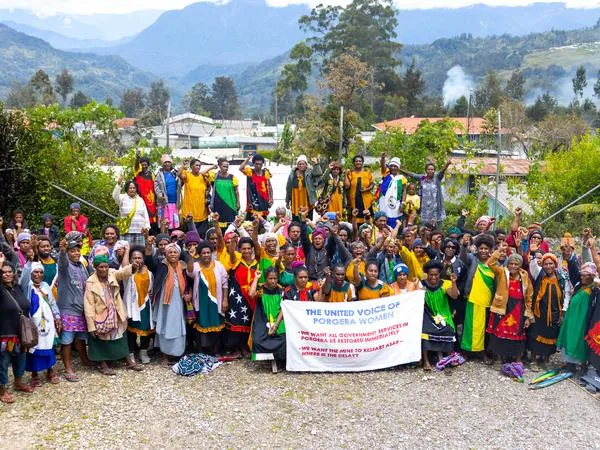
In a recent media conference in Porgera, representatives from women's groups in the area voiced their concerns that despite “significant increases in resourcing over the last two decades, service delivery in Porgera is still failing to reach its people.”

This conclusion was drawn following the recent tribal conflicts and the breakdown of law and order in the district. Women’s groups in the district expressed their grievances and called on their leaders to assess the deteriorating state of the Government’s service delivery in the valley and restore basic services in the area.

Many businesses, especially in Paiam, had closed amid the fighting or had been operating on reduced schedules; there were a lot of commercial disruptions during the fighting as well as the closure of Government services in the district. Security measures and clashes had also triggered localized transport disruptions.

For months, the people have urged and called for the restoration of Government services in Porgera District after essential services that included the Paiam Hospital, Porgera Secondary and Primary Schools, Judicial Services, and the District Administration office had been closed down following the tribal conflict. The government has consistently failed to maintain law and order in the face of these security challenges

Porgera Women in Business President and Aumbi Lodge Owner Elizabeth Iarume stated that restoration of government services in Porgera needs to be a priority for the National and Provincial Government as the daily challenges of accessing government services outside of Porgera has seen people dying on the road while seeking medical services, looting and hold-up of public transport, and now students are expected to miss another year of education as schools remain closed.

"So many people in Porgera have been affected, The communities struggle with economic and social hardship far from public view, because access to these areas is difficult and State presence is limited," Iarume said.

The women have observed that provincial administrators generally failed to perform responsibly; provincial accountability mechanisms were severely weakened, provincial governments lacked resources and oversight of what happens in the district; and legal arrangements had minimal impact on the behaviour of politicians in ways that would improve service delivery.

Youth rep Joy Tero recently spoke on behalf of impacted young girls and women of Porgera on the ongoing challenges faced as government services remain closed in Porgera. Joy highlighted that young girls have been the main victims of kidnapping and rapes during tribal conflict and asked for a Police/PNG Defense Force Barracks to be set up permanently in Porgera. 

The women have also made calls for the restart of Porgera Mine in 2023 as the economic impact of the mine closures continues to be a day-to-day struggle for small businesses and the informal sector in Porgera. 

A key question addressed by the women was whether the decline in service delivery is “causally related to the country's political precedence on the Porgera Mine.”

Porgera District Women Association President Serah Erasi called on the National Government and Barrick Niugini Limited to make it known on when the Porgera Mine will reopen, as economic struggles of the people of Porgera drag onto 4th year since the closure of the mine.

"Why has the mine not been reopened? We have been struggling to sustain our families since the closure of the mine. When the mine was in operation we benefited from its economic outputs, The Prime Minister must come to Porgera and give us an amswer on when the mine will be reopened," Erasi said.

Porgera is one of Papua New Guinea’s longest running goldmines. Operating for 30 years in the highlands province of Enga, this large mine was expected to produce around 250,000 ounces of gold in 2019. It employs more than 5,000 people and the 5% landowner and provincial equity stake has helped to fast-track the efforts to bring services and education to one of the country’s most remote provinces. In spite of all the wealth it generates, Porgera still suffers from poverty and a lack of basic government services.

January 12, 2023

Small and medium-sized enterprises (SMEs) can be a force to reckon with in Papua New Guinea if the funds parked in the two banks, National Development Bank (NDB) Ltd and Bank South Pacific (BSP) Financial Group Ltd, by the Government are fully fulfilling the vision of the Government by reaching the wider population and are in line with the goals outlined in the Government’s SME policy.

In 2016 through the draft of the Small and Medium Enterprise Policy, the Government of Papua New Guinea positioned SMEs as a vehicle for inclusive growth, job creation and poverty reduction. A master plan was introduced at the same time to grow the number of SME business in the country in which a target of 500,000 small and medium enterprises were to be established by 2030, which is now just 7 years away.

Back in August 2020, the Papua New Guinea government announced that it would provide K200 million for loans to help small businesses struggling in the wake of the global pandemic. The money was to be split between Bank South Pacific (50%), the National Development Bank (40%) and Department of Commerce and Industry (10%) and be loaned out at a competitive rate to in-need SMEs as subsidised business loans. The first K100 million was delivered to BSP and the next grant of K80 million was later given to the NDB.

However, reports suggested in a recent business forum that there are currently about 45,000 SMEs operating in PNG, notwithstanding the recent economic slowdown. It has been generally acknowledged that a lack of financial inclusion and financial infrastructure, little or no entrepreneurial training, limited access to commercial land, markets and infrastructure are just some of the barriers people face when trying to open a new business in PNG.

So, what can be done to help create those additional SMEs to reach the Governments goal of establishing 500,000 SMEs by 2030?

Chairman of the SME Corporation, John Pora, stated that if the PNG government is to reach its stated goal of bringing 500,000 small and medium-sized enterprises (MSMEs) into existence by 2030, the Small and Medium Enterprises Corporation (SME Corp.) must have the capacity to activate around 240 new entities every day across PNG’s 22 provinces.

As the arm of the PNG government that deals with all things SME, Pora said the SME Corporation has formulated three strategies geared towards building a bridge between the government and the MSME sector.

The SME Corp. had launched a strategy document last year in September and the strategy is based on three principles: integration, communication and people, processes and performance.

However, many Papua New Guineans in the SME sector have spoken out about their grievances in the country's two dailies, saying the two banks that the SME funds are parked at to help develop local businesses are not doing much to reach the wider population.

The two banks have their own separate criteria of giving out loans to entrepreneurs in the country as one is state owned (NDB) and the other is privately owned (BSP), but it always differs on how the loans are awarded to the successful applicant as there is always a profit motive.

The SME funds should be spread out to other commercial and national micro banks operating in the country as well, apart from the two nominated banks for the wider population to have access because a lot of business enterprises don’t have equity available to them.

A leading commercial bank in the country, Kina Bank, had also unveiled its long-term plan for the development of SME in PNG even though the commercial bank was not nominated into the Government’s K200 million funding.

Chief Executive Officer Greg Pawson said Kina Bank are very encouraged by the Government’s focus on the SME sector.

“We see that as being integral to the future growth and prosperity of PNG. Kina Bank has come out with a SME loan product of up to K500,000 (secured) or K100,000 (unsecured) at four per cent interest per annum, with an extended term of up to 15 years. It goes to businesses that are turning over up to K5 million a year. We’ve allocated an initial amount of K50 million for that particular product and we’ll see how that goes.

The underlying understanding and the core purpose of these SME funds is to give meaning and add value to the lives of Papua New Guineans and impacting the nation at a larger scale. It is time the Government serves the entire population to see lives changing and moving forward and not a select group of people being served by the financial institutions the funds are being parked in.

But the government has stated otherwise. In Prime Minister James Marape's New Year speech, he stated that small and medium enterprises (SME) have been an emerging class of business in PNG, thanks in part to government policies designed to support their development, such as preferential tendering and subsidised loans.

"In Micro, Small and Medium Enterprises, the government will continue to support the growth of small businesses in the sector. This follows through from the success of 2021, where almost 600 SMEs Papua New Guineans have started out of low cost borrowings," PM Marape said.

He said that the Government will support the SMEs contribution to the country and continue to diversify its economy, which has been dependent on the extractives industry for several decades. Even when COVID-19 disrupted global economies, most SMEs in PNG remained steadfast in their growth despite the drastic challenges they faced financially.

In 2022, when the world started rebounding from the fallout of the pandemic, the support offered by the government to SMEs in PNG was instrumental in helping them get back on their feet. With new regulations, reforms and financial support aimed to create an accommodative environment, the government is transforming the SME sector into an engine for economic growth.

The growth of SMEs in 2021 was successful as the number of registered SMEs in PNG hit more than 50,000. The Government will continue to offer entrepreneurial platforms such as business incubators, business accelerators, and co-working spaces for SMEs to evolve and thrive in the market.

Through these initiatives, the Marape Government aims to successfully achieve the targets outlined in it SME policy to have 500,000 registered SMEs by 2030 which include lowering the unemployment rate, increasing women’s participation in the workforce, and expanding SME contribution to the gross domestic product (GDP) by the end of this decade.

There are still many opportunities in PNG for small business. it’s a matter of choosing the right type of business.

"At the end, you need to look at what’s needed in the local environment and understand how your business can serve that need," Marape explained.

January 11, 2023

A review into the Superannuation and Life Insurance industry has been compiled and recommendations have been presented to the regulator, The Bank of Papua New Guinea.

It is a step towards making the necessary amendments towards Superannuation and Life Insurance legislations passed by Parliament more than two decades ago.

The Superannuation and Life Insurance Act review committee worked over 18 months conducting various public forums across the key regions of the country in order to seek reviews from a wide spectrum from the urban, semi-urban and the rural population.

The committee’s findings and recommendations were presented on Thursday to the Acting Governor for the Bank of Papua New Guinea Mr Benny Popoitai.

The Superannuation and Life Insurance Act has not been reviewed after it was passed nearly 23 yeras ago. BPNG Acting Governor Popoitai, before receiving the review recommendations in Port Moresby last Thursday, spoke on the importance of legislations adapting to the changing economic trend.

"With economic development there are challenges that need to be identified, where there are inefficiency we need to improve so that amendments and changes in legislation may be necessary," Popoitai said.

The superannuation and life insurance industry plays a huge and critical role in mobilising savings and making strategic investments with the objective of providing a comfortable retirement for contributing members and to protect policy holders and their beneficiaries from the risk of illness and death.

Given the significance of both industries to Papua New Guinea's economy, it is vital to ensure the legislative regulatory framework in which they operate is consistent and is in line with international best practices that takes into consideration domestic circumstances and stakeholder expectations.

The superannuation and life insurance review committee chairman, Erastus Kamburi, said the contents of the two reports will be made public and available by the Bank of PNG after its presentation to the Minister for Treasury, who had commissioned the review of the act back in 2020.

"The report has been formally presented to the owner of the report which is the Bank of PNG and Treasury and the contents of the report will be made available to the public by the Central Bank and the Department of Treasury," Mr Kamburi said.

January 11, 2023

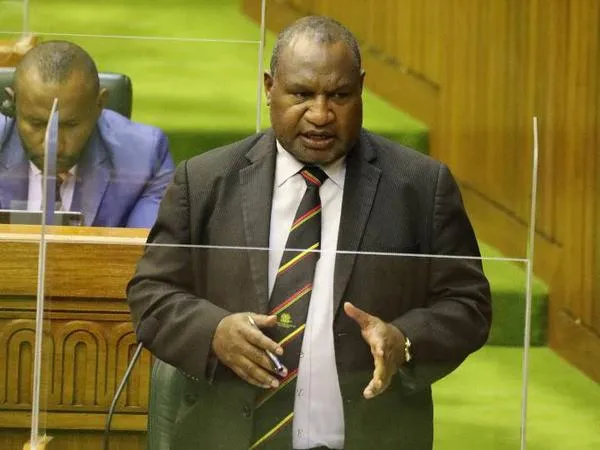
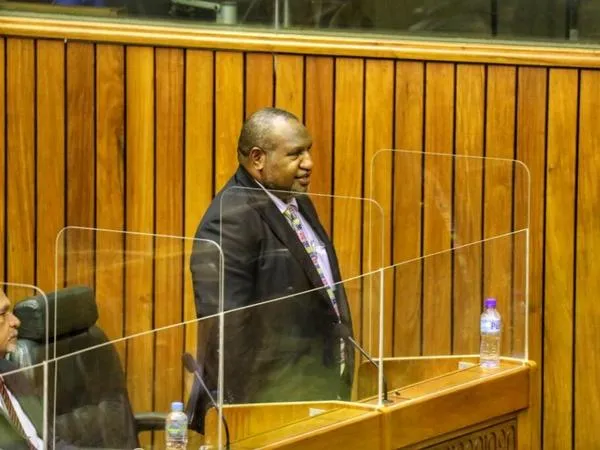
Photo: PM Marape in Parliament

Prime Minister Hon. James Marape has welcomed the Investment Promotion (Amendment) Bill 2022, unanimously passed by Parliament today (January 11, 2023), which encourages the growth of Papua New Guinea-owned small-to-medium enterprises (SMEs) while at the same time attracting foreign direct investment (FDI).

PM Marape also welcomed passage of the accompanying Associations Incorporation Bill 2022, which will ensure better governance and accountability, especially among rural people who form associations to benefit their communities.

Both bills were passed 91-0 by Parliament after introduction by Commerce and Industry Minister Hon. Henry Amuli.

The Investment Promotion (Amendment) Bill 2022 is a change from the Foreign Investment Regulatory Authority (FIRA) Bill, tabled by the previous Government, in response to concerns that SMEs were facing unfair competition by foreign businesses. The FIRA Bill went too far in restricting business activities and was damaging PNG’s reputation as an attractive destination for foreign investors.

After in-depth consultation with the public and the business community, the Government accepted a balanced policy proposal put forth by the Investment Promotion Authority (IPA), which addresses SME concerns while providing investors with confidence.

Key changes are:

  • Changing the foreign certification system to process applications quicker, and automatically rejecting applications for reserved activities to support SMEs;
  • Reviewing the Reserved Activities List at least every three years;
  • Introducing more reporting obligations on foreign investors, and providing powers to cancel certification where key business laws are breached;
  • Improving IPA’s enforcement and compliance, and making better allowances for cross-agency enforcement;
  • Creating a dedicated Registrar of Foreign Investment to oversee the system with powers to speed up unwanted incoming investment, automatically deny unwanted investment, and enforce compliance.

PM Marape said the new law was the culmination of work started by his Government in 2019 after he became Prime Minister.

“As we took office, our focus was on taking back the country from wrong hands, and one major focus was on business and SMEs,” he said.

“We made a commitment to empower our people to be engaged in businesses – a key focus which differentiates our Government from past governments.

“In the 2021 Budget, 20222 Budget and now the 2023 Budget, we have placed more support and funding to ensure SMEs start moving.

“We have also put in money this year to unlock land for people to settle on and do business, both big and small.

“This bill is a first step towards clearly segregating and ringfencing businesses that PNG citizens can participate in.”

January 11, 2023

"The Bank of Papua New Guinea has an excess of US$3.7 billion (K13 billion) worth of foreign reserves sitting in the bank that can cater for the country for one year," said Prime Minister James Marape in response to questions raised by the Governor for Southern Highlands William Powi in Parliament. He went on to say, "I was informed by BPNG that the Central Bank has K13 billion (US$3.7 billion) in foreign reserves currently in the bank," and, "the K13 billion currently at the Central Bank is the highest the country has held in reserve at the Central Bank."

Marape also addressed the FX issue between Puma Energy and the Bank of PNG, stating, "BPNG did allow Puma Energy to be on the board for the commercial bank order to supply FX to Puma to do their purchase because BPNG saw an unusual order of FX from Puma and felt that Puma needed to answer to those issues." He went on to emphasize the importance of the BPNG's role in ensuring the foreign reserve threshold in the country is suitable for the economy and emphasized the need for the monthly release of US dollars into commercial banks for them to transact and supply to those who need US dollars for import expenses.

"This issue points us to the fact that we need to relook at how Central Bank regulates and controls flow of FX to commercial banks and traders. We want ease of forex to our business community," said Marape in reference to the FX issue with Puma Energy and the wider business community's need for FX, especially for the import of products into PNG.

January 11, 2023

Photo credit: K92 Mining

K92 Mining has announced production results for the fourth quarter of 2022 at its Kainantu Gold Mine in Papua New Guinea, of 35,538 oz AuEq or 31,204 oz gold, 1,827,085 lbs copper and 40,517 oz silver. Annual production achieved a record of 122,806 oz AuEq or 107,546 oz gold, 6,247,950 lbs copper and 126,043 oz silver, achieving the guidance range of 115,000 to 140,000 oz AuEq and increasing 18% year over year. Sales during the fourth quarter were 35,212 oz gold, 1,923,116 lbs copper and 44,828 oz silver. Annual sales were 110,654 oz gold, 6,072,879 lbs copper and 125,155 oz silver.

During the fourth quarter, the process plant delivered record quarterly ore processed of 121,686 tonnes or 1,323 tpd, an increase of 22% from Q4 2021. On an annual basis, a record 448 kt of ore was processed, increasing 33% from 2021. Importantly, in November, the process plant achieved record monthly throughput of 1,382 tpd, greater than the Stage 2A Expansion run-rate of 1,370 tpd. The strong throughput is especially significant as the final Stage 2A Expansion plant upgrade is not yet complete, with the flotation expansion that will double rougher capacity expected to be commissioned in Q1 2023.

The flotation expansion is expected to provide a boost to metallurgical recoveries and provide flexibility to potentially increase throughput further and beyond the Stage 2A design-run rate (500,000 tpa / 1,370 tpd). The new filter press and TC-1000 secondary/tertiary crusher for Stage 2A are installed and operational.

Mine performance during the fourth quarter recorded 111,448 tonnes of ore mined, and delivered a total material mined (ore plus waste) record of 287,446 tonnes mined, representing an increase of 28% from Q4 2021. On an annual basis, material movements of 448 kt of ore mined and 994 kt of total material mined both achieved records, increasing 40% and 25% from 2021, respectively. During the quarter, long hole stoping continued to perform to the design, with operations focused on Kora’s K1 and K2 veins, and Judd’s J1 Vein for a total of 11 levels mined. Mining on Kora was conducted on the 1130, 1150, 1170, 1205, 1245, 1265 and 1285 levels, and Judd on the 1235, 1265, 1285 and 1305 levels.

The operation delivered head grades of 8.75 g/t gold, 0.74% copper and 13.31 g/t silver (9.98 g/t AuEq) in Q4. Metallurgical recoveries averaged 91.2% for gold and 91.8% for copper during the quarter, with recoveries expected to improve upon the commissioning of the flotation expansion in Q1 2023.

Record mine development advance was achieved in the fourth quarter, of 2,221 metres (including the twin incline), a 45% increase from Q4 2021. Twin incline development advance also made significant progress, exceeding the budget by 76% during the quarter and by 52% during 2022. As of December 31, 2022, incline #2 (6m x 6.5m) advanced to 1,843 metres and #3 (5m x 5.5m) advanced to 1,811 metres. On an annual basis, record overall underground development of 7.5 km was achieved, a 31% increase from 2021.

John Lewins, K92 Chief Executive Officer and Director, stated, “We are very pleased with the performance of the Kainantu Gold Mine in the fourth quarter. Once again, Kainantu achieved multiple operational records, delivering record mill throughput, total mined material, and underground development rates. Quarterly production was the second highest on record, with 35,538 oz AuEq produced and on an annual basis we confidently achieved our production guidance.

The performance of the process plant has been a major positive. During the quarter, another new daily throughput record of 1,714 tonnes processed was achieved and on a monthly basis, Stage 2A Expansion throughput rates of 1,370 tpd have already been achieved ahead of the flotation expansion, the last major upgrade of the Stage 2A Expansion. The flotation expansion which will double rougher capacity, is now planned to be commissioned in Q1 2023, and is expected to provide a boost to not only recoveries but also plant flexibility, with the potential to ultimately exceed the Stage 2A Expansion run-rate.

In the mine, Kainantu delivered record material mined of 287 kt and record development advance of 2,221 metres, representing a 28% and 45% increase from Q4 2021, respectively. Development, as noted in previous press releases, is a major focus going forward as we open up the mine ahead of the Stage 3 and Stage 4 Expansions while also boosting our immediate mine operational flexibility. I am pleased to report that quarter over quarter, development advance increased 18% in Q4. The strong increase has been driven by a combination of a new replacement jumbo, improvements in ventilation, haulage, drill and blast, plus improvements to maintenance and servicing, benefiting from the recently constructed new equipment workshop. We expect development advance to continue to increase through 2023, as new equipment arrives and the development cycle continues to be optimized.

As we look at 2023, we have tremendous excitement about our exploration programs. The number of drills will be ramping up from 11 to 13 and our focus is on resource growth. Surface drilling plans to focus on Kora South, Judd South, Judd and the A1 Porphyry, with underground drilling focusing on Kora, Kora South, Judd, Judd South and Northern Deeps. The strong development advance from our southern drill drive and twin incline is also opening up new prospective drilling horizons.”


Article courtesy of K92 Mining
January 11, 2023

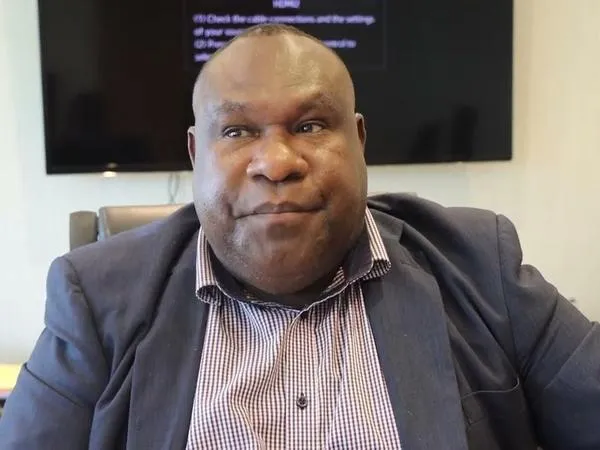
Photo: Secretary Dr. Nelson Simbiken

The Department of Agriculture and Livestock (DAL) is set to launch its 2023-2027 corporate plan this month, according to acting Secretary Dr. Nelson Simbiken. This plan will aim to drive the sector forward and for the first time, DAL is also upgrading its information and communication technology (ICT) systems.

Dr. Simbiken stated, "For so many years, DAL did not have an ICT infrastructure. The only one we had was the Food and Agriculture Organization (FAO) supporting us, and they only came in as consultants. As a result, DAL was not connected through ICT to the regional offices." However, things are changing. "Since I came on board in May 2022, we have set up an ICT system in the department. We contracted Telikom to do a complete audit of the department's ICT system and now DAL has a modern ICT system that will connect to the provinces," he said.

The department is also digitizing its finances and will eventually move to a cloud-based system. Dr. Simbiken highlighted that this is a significant achievement for DAL as it has never been done before.

The corporate plan also aims to 'right-size' the sector and cut excess expenditure. DAL will establish an internal committee to review every expenditure in the agriculture sector to ensure that funding is being used to deliver services to the people and improve compliance and governance. Dr. Simbiken emphasized that this is the first time DAL is taking such initiative and it is key to making DAL accountable for all its funding.

In conclusion, Dr. Simbiken stated that agriculture will be the driver for economic independence for the government's vision.

January 09, 2023

Prime Minister Hon. James Marape says Puma Energy has said they replied to Bank of Papua New Guinea’s (BPNG) 13 queries in relation to supply of foreign exchange (FX), but is still in court in a BPNG initiated court proceeding.

He said this resulted in Puma stopping its supply of aviation gasoline to Air Niugini, because it could not get the required FX to bring in fuel, resulting all in flights being cancelled last Thursday.

PM Marape said this recently (January 8, 2022) after meeting with top executives of Puma Energy in Singapore.

He was accompanied by Petroleum and Energy Minister Hon. Kerenga Kua and State-Solicitor Daniel Ropalgarea.

“I made it clear at the meeting that there must never again be a repeat of such a situation in Papua New Guinea, where there is no supply of fuel to planes and ships, and that Puma and BPNG must resolve all issues,” PM Marape said.

“I have asked Puma to come to a meeting with BPNG, with the State as arbitrator, for outstanding issues to be resolved.

“When we return from Singapore, we will hold a meeting with the Central Bank, to find out exactly what are the issues with Puma so there is never again a repeat of what happened last Thursday.”

PM Marape said BPNG had raised 13 issues against Puma, which the company had already responded to last September, however, BPNG twice took the company off the FX registry resulting in two stoppages of avgas to Air Niugini.”

“This is not just a Puma-Central Bank issue, but one of FX required by our business community, especially for the import of products into PNG.

“This issue points us to the fact that we need to relook at how Central Bank regulates and controls flow of FX to commercial banks and traders. We want ease of forex to our business community.”

PM Marape said Puma also highlighted at the meeting that Kutubu crude oil from Southern Highlands was not supplied on a regular basis to its NapaNapa refinery. He has directed Minister Kua to liaise with Santos and ExxonMobil as to how this supply could be increased – either to NapaNapa or a new refinery to be set up.

“Downstream processing of our natural resources, including oil and gas, is a major policy of this Government and our coalition partners,” he said.

“Therefore, we cannot be energy-insecure, as we are producing oil that goes to refineries in Singapore and is then sent back to us.

“We can reverse this arrangement if the cost structure is right.

“Oil from Kutubu can be sold in Kina to NapaNapa refinery, or a new refinery to be set up, and processed in the country.

“I will be having meetings with Santos, ExxonMobil, Kumul Petroleum Holdings Ltd and Mineral Resources Development Company – upon my return from Singapore – to look at producing petroleum products from our own resources instead of importing as we go into the future.

“The whole idea is to ensure that we are energy-secure, instead of being wholly-dependent on one supplier, to save the country from grinding to a halt as we’ve seen last Thursday.”

January 02, 2023

First elected member for the Newly created electorate Hiri Koiari in the Central Province, Keith Iduhu launched the District's Five Year Development plan recently at the Apec Haus. Government Representatives and distinguished guests led by the Prime Minister were present to attend the launching ceremony.

Mr Iduhu stated in his speech that he had promised to bring change to his people and the Five Year development plan is the first step forward.

"I have promised to provide services where they are needed and the District Development plan has been created basically from the ground up through listening and consulting with my people and coming up with initiatives and workable interventions to provide solutions through adheering to processes and proper planning that can get the job done," Mr Iduhu said.

In the next five years Mr Iduhu and his team are looking forward to delivering basic services and infrastructural development were needed to see the district prosper.

Governor for Central Province Rufina Peter congratulated Mr. Iduhu in taking the lead in launching his District's Five Year Development plan and is certain that other districts in the province will also do the same. She said the Central Provincial Budget is underway and is hopeful that by the end of January 2023 the Central Provincial Assembly will pass the budget.

Prime Minister James Marape said Hiri Koiari was one economic district that was split by his government to bring leadership and development closer to its people.

January 02, 2023

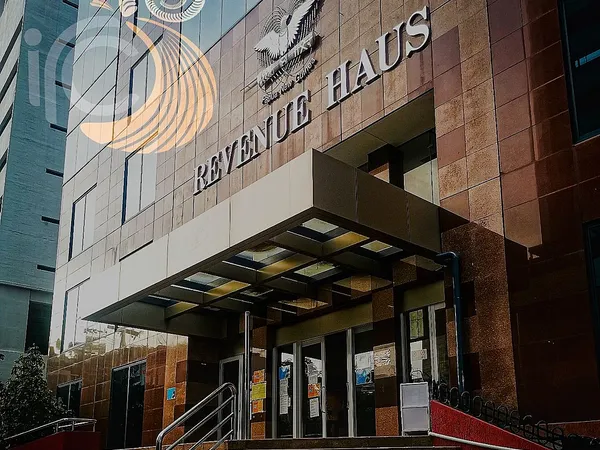
Photo credit: Internal Revenue Commission PNG - Revenue Haus in Port Moresby

The Internal Revenue Commission has collected a record revenue of K15 billion for the public purse this year, according to Prime Minister, James Marape.

In a media statement PM Marape has commended the management and staff of Internal Revenue Commission (IRC) for being an exemplary public service organization whose performance, he said, has been improving year after year in the work they do with increasing revenue collection for the country.

The Prime Minister said this during an event he officiated yesterday for the launch of the organisation’s 2022 Work Plan and 5-Year Corporate Plan.

“ICR, thank you very much for another successful year. I say thank you to you all – from the management down to the staff, every one of you who make this organisation functional,” said the Prime Minister.

“Thank you for putting together a K15 billion revenue this year.

“In 2021, without the oil price increase, you collected about K270 million for our country.

“In 2020 during the COVID-19 year, when the entire planet shut down, you collected over 100 percent, beyond what we asked of you to collect.

“This is an indication to the country that IRC is not sleeping but has been working. Your performance speaks for itself. Numbers do not lie.

“It is also an indication to all government departments that the organization that makes money takes precedence. We must support them.”

Prime Minister Marape assured IRC that his Government would fully support its 2023 work plan and that he was looking forward to seeing the implementation of the 5-year strategic plan so that as PNG celebrates its 50th anniversary as a country in several years, IRC would have matured into a dynamic organisation carrying forward the country through the revenue it collects.

“We want our country to be bigger and better in terms of Education, Health, Law & Order, Infrastructure, and Economy. These five things we want to focus on. I look forward to supporting you as we deliver these.”

He said in delivering the corporate plan, IRC must endeavor to abide by these three rules – firmness (corporate and individual citizens to abide by the laws), fairness (all taxpaying citizens to be treated with fairness), and friendliness (tax-collecting business to be handled in a cordial atmosphere).

“I look forward to the time when IRC will bring those in the black economy into the formal economy to ensure that we all pay our fair share of dues.

“We must all work to leave behind a legacy in our country. Appreciate your place and the job you have today. Look at what you must do, for your country in the big picture. There is no one else placed to make your country better but you.

"You will deliver in 2023, you will deliver in 2024; I look forward to the time when IRC becomes a robust organisation that collects all revenue required by law,” said PM Marape.

The Prime Minister said regarding housing for IRC staff, his government is currently setting aside K10 million for an housing program that would assist government workers to own a house. This is to assist with job security, so IRC staff concentrate on doing a good job in delivering the organisation’s plans and making more money for the country.

January 02, 2023


Prime Minister James Marape recently stated that the Country has over K12 Billion in Foreign Reserves sitting in the Bank of Papua New Guinea which is the highest Foreign Reserve for the country ever. Marape said this is the Fiscal Policy intervention that the Government is concerned with and the power to make interventions on foreign exchange remains with the Central Bank.

This comes to light after Deputy Opposition Leader Douglas Toumeriesa had recently reiterated calls by businesses and corporate entities within the private sector that the government has not done enough to address the foreign exchange shortage in the country. Toumeriesa added that the Government cannot continue to blame the Russian-Ukraine War for the country's economic setbacks and warned that 70 percent of tax on the forest industry will worsen the shortage in foreign exchange.

In response to these statements on foreign reserves, PM Marape said as a government they have done their part in terms of fiscal policy, and it is now up to the Central Bank to intervene as it is an independent body.

"The governments concern is in our Fiscal Policy and interventions that have been made in our economy has seen the increase in foreign reserves in the Central Bank which is also the highest ever foreign reserves that our country has ever experienced".

"We have over K12 billion sitting at the Central Bank as reserves and the equivalent of that is held as US Dollars for the Central Bank to make interventions on the market".

"The Governments Fiscal Policy Interventions have ensured that we have reached this mark in terms of our reserves. It is now up to the Central Bank to ensure that initiatives to reach foreign exchange demands in the market are in place as it is an independent body from the control of the executive Government. That is how our law is stated and I cannot change this structure," PM Marape said.

The Prime Minister also called on the Governor of the Central Bank to work with the commercial banks to allow the regular supply of the trading currency which is the US Dollar to be made regularly available to the market.

January 02, 2023

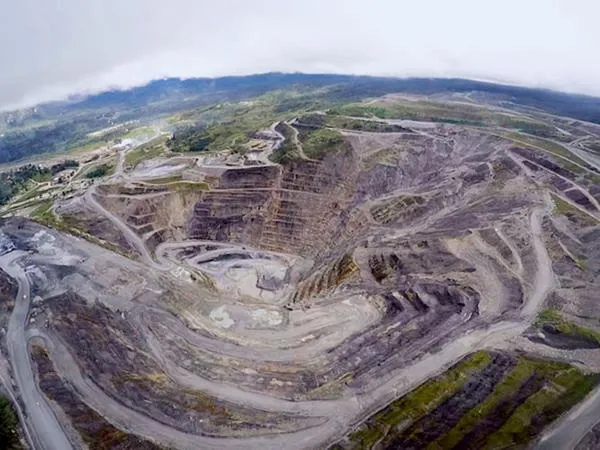
Photo credit: Zijin Mining. Aerial view of the Porgera gold mine

The Prime Minister recently responded to the press statement that was published by the Deputy Opposition Leader in relation to the reopening of the Porgera Mine.

“The Deputy Opposition Leader has never sat down at the table with any project stake holders to negotiate a way forward for any national projects and can only make uninformed statements from the sidelines.

“The National Government together with Barrick have jointly concluded all the important milestones contained in the Porgera Project Framework Agreement, which was initially signed in April 2021. Since then, we have concluded the Commencement Agreement, the Shareholders agreement and now Kumul mining is completing the Operators Agreement which is between the new joint venture company and the Barrick Operating entity rather than with the State,” Prime Minister Marape said.

“The New Porgera Limited has been incorporated and the State parties are now 51% majority owner of the mine which means the risks and responsibilities that must be negotiated through the various legal agreements are different and more complex than what the State is used to. They must now go through the regulatory process with the Mineral Resources Authority in accordance with the Mining Act which will include dealing with licensing, other technical regulations and a Development Forum for the Landowners and Provincial Government stakeholders.”

He said it is now this internal process and the settlement of legacy issues that the old Porgera Joint Venture between the Mineral Resources Enga (owned jointly by the Landowners and Provincial Government) and Barrick that needed to settled that will drive the timing of the reopening of the mine and not further commercial, technical and administrative negotiations with the Marape – Rosso Government.

“PNG deserves the best outcome in our resources negotiations and our stakeholders have a right to be heard and benefit from those projects,” the Prime Minister said.

“There are no ulterior motives in the delay, other than to ensure that all stakeholders views are considered. It was important for both Barrick and the National Government to secure the support of the Enga Provincial Government, and the landowners in the early part of the negotiations, and with the signing of the revised PPCA in September 2022, those issues are now sorted out.

“The government is working through a process of properly establishing the SNT as an organization. But these two processes are happening simultaneously,” the Prime Minister said.

“We have had State Negotiation Teams since 2007 when we started negotiations on the PNG LNG Project, and we are fortunate that a handful of these experienced resources are still around and available to the State. These are high value industries and we have had some high quality resources who have effectively secured important gains for our people.

“I want high quality negotiations, advisory services and project coordination that result in positive results and reputation for our people and our government. If we do not have those immediately available, we procure them.

“The Government part of the negotiation is supported by high technical advisors and advisory firms where required who are procured internationally. These advisors support Public Servants who serve the interest of the SNT over and above their day-to-day duties. The consultants are paid industry rates within the legal limits of the authorizing officer and within the terms of their contracts.”

In relation to Wafi Golpu project, Prime Minister Marape said that the negotiations were focused on ensuring that the landowners are able to participate throughout the construction phase and then build value over the life of the project.

“My government is committed to ensuring that we get better fiscal terms from large scale projects such as those proposed for the New Porgera Gold Mine, Wafi Golpu, and the gas projects P’nyang and Papua LNG Project. In P’nyang we achieved a 63% benefit split outcome which is a record. I have achieved more than the previous governments and a large part of this is due to the leadership of the various State Negotiations Team over the last two years under my leadership,” the Prime Minister said.

“Any bonuses that may be due and payable to public servants working in this space would normally be based on the bonus guidelines approved by NEC and the SRC back in 2009 when the PNG LNG was first negotiated.

“This is not something that my government initiated, but we are determined to support and recognize the commitments made by good public servants who are useful to any government in this line of work. Most importantly these incentives are performance based and allow us to compete with the Statutory Authorities and the private sector where our public servants could go to because of remuneration.”

Prime Minister Marape said he is surprised that the good Deputy Opposition Leader has chosen to rubbish the efforts that our public servants put into this work, which is over and above the regular duties they have on a day to day basis.

The Prime Minister added that considering the work of the SNT is negotiating an estimated USD30 billion worth of resource projects, arguing over the payments to advisors and advisory firms shows inexperience and immaturity.

December 30, 2022

Photo credit: International Trade and Investment Ministry of Papua New Guinea Facebook Page

The Minister for International Trade and Investment, Hon. Richard Maru who is the Minister responsible for the capital market of Papua New Guinea along with its regulator the Securities Commission of Papua New Guinea (SCPNG) said the capital markert will see major reforms over the next few months to modernize the capital market and improve governance in the industry. Minister Maru said that these reforms are critical as the Marape-Rosso government sets out to grow the capital market in Papua New Guinea as a key vehicle to mobilize domestic capital for critical investments in helping the government grow the economy of the country.

“While our government is going all out to attract direct foreign investors, we must develop our domestic capital market to be a major source of capital raising in the domestic market. The government needs to attract more PNG institutional investors in many of our large investments in our proposed Special Economic Zones in the country,” said Minister Maru.

Work has already started with the assistance of the Australian Government who have engaged ADB at the cost of K1.3 million to assist the SCPNG by way of technical assistance. The reforms will be broad and will cover the following areas including SME capital raising platforms, equity crowd funding, debt securities issuance, and reforms in many schemes.

The Securities Commissions Act is being reviewed with major changes to include the complete separation of the Board and Management of the Commission where no longer will we have an Executive Chairman. The Board and Management functions and powers will be defined clearly by the amended legislation in 2023.

“Due to the public confusion of the name of the Securities Commission over security companies, even the name of the regulatory body, the Securities Commission will be reviewed,” said Minister Maru.

Minister Maru has also written to the Acting Chairman of the SCPNG, Mr. James Joshua and asked him to remove all stock brokers or market intermediaries to have any shareholding in the Port Moresby Stock Exchange. Their shares should be sold to Papua New Guinea shareholders who have no conflicts as market intermediaries in the capital market in Papua New Guinea. They have three months to share sell their shares as part of the Marape-Rosso government’s clean-up of the capital market under the reforms of the capital market our government is instituting.

“We are keen to develop a world class capital market in Papua New Guinea. We have advertised globally for Directors who will be on the Board of the Securities Commission and for the appointment of a very qualified and experienced CEO for the Securities Commission,” said Minister Maru.

The new Board and CEO will be appointed early in the New Year, 2023 to fill these critical positions.

“These reforms are aimed at making sure the PNG capital market is robust, agile and risk free and we are able to secure and maintain investor confidence for capital formation,” said Minister Maru.

December 30, 2022

Photo: PM Marape

Prime Minister Hon. James Marape has welcomed the decision by Bank of Papua New Guinea (BPNG) to issue a provisional license to the Teacher’s Savings and Loans Society (TISA) to set up a fully-fledged commercial banking operation in PNG.

“We would like a local bank with share offering to ordinary Papua New Guineans, mothers and fathers and to our grassroot population to be set up as soon as possible,” he said.

“We need truly Papua New Guinean banks which are owned by our people and are committed to better serve our people.

“I await with keen eagerness to see the Teachers Savings and Loan Society formally obtaining a full banking license to commence operations subject to it meeting all the prudential requirements of the BPNG.”

PM Marape said the National Development Bank (NDB) Group was also working on a proposal to obtain a commercial banking license from BPNG.

“However, they will have to meet the prudential requirements of BPNG to do so, and that could well mean they must partner a major commercial bank to give confidence to BPNG that they will run independently of Government and any adverse political influence,” he said.

“The success of BSP is a good shining example of the success of public-private partnership in the banking sector and we cannot go wrong if NDB follows the same model.

“I also want to see ordinary Papua New Guineans buy shares in the establishment of such commercial banks.”

December 30, 2022

Prime Minister, Hon. James Marape met with the officials from the Bank of China on Wednesday, December 21, 2022, and welcomed their plans to extend their Representative Office license which they obtained from the Bank of Papua New Guinea (BPNG).

PM Marape has also encouraged the Bank of China to apply for a full commercial banking license from BPNG to set up and operate a full banking network in PNG.

The Bank of China operates in 60 countries around the world and is the world’s fourth biggest banking group. It has a diverse portfolio of investments which also includes investments in airline companies.

“It will be a very significant boost to have such a high-profile and highly-respected global banking group enter the PNG market to not only serve PNG, but also the South Pacific Region with Port Moresby as its regional headquarters,” PM Marape said,

“My Government is keen to see more new banks enter the PNG market to increase competition, to help reduce interest rates, banking fees, expand services to unreached areas using various e-banking platforms, and also to reduce the long queues in all our banks today.

“It will also create thousands of new jobs which our country badly needs.

“While our Government supports and welcomes the Bank of China to apply for a commercial banking license from BPNG, they will have to apply for it from the BPNG and meet the prudential standards set by BPNG which is clearly laid out in their website.

“BPNG is independent and cannot be directed by the Government on its licensing and regulatory functions.”

PM Marape said the entry of Bank of China into PNG would also enhance the Government’s plans to strengthen and deepen the trade and investment relationship between China and PNG.

“The feasibility study and negotiations leading to a Free Trade Agreement with China is set to start next year with the Chinese Government to fund the study at the cost of K1 million,” he said.

“Our Government will also set up a Trade Mission next year in Shanghai to be headed by a Trade Commissioner – whose focus will be to secure more foreign direct investments from China into PNG and secure more Chinese markets for our goods, including our LNG gas and agriculture, fisheries, marine, and forestry products.

“China with a population of over a billion people is a very big market that is ready to accept more PNG products.

“Amongst our highest trade priorities is the immediate arrangements for direct flights from Shanghai to Port Moresby. Our Government is looking for a Chinese Airline that can service the route under a Code Share arrangement with our national airline, Air Niugini. Our Government is excited about the plans of the Bank of China to open up operations in the country as it will be a big vote of confidence in PNG as an investment destination and also of my Government’s economic management of the country.”

December 22, 2022

Photo: PNG Treasurer Ian Ling-Stuckey and ADB Country Director for Papua New Guinea David Hill  Credit: ADB in the Pacific Facebook Page

The Asian Development Bank (ADB) and the Government of Papua New Guinea (PNG) recently signed loan and grant agreements amounting to more than $66 million to help improve the country’s technical and vocational education and training (TVET) program.

The agreements, part of the Improved Technical and Vocational Education and Training for Employment Project approved on 29 November, were signed by PNG Treasurer Ian Ling-Stuckey and ADB Country Director for Papua New Guinea David Hill. PNG Ministry of Higher Education, Research, Science and Technology Acting Secretary Francis Hualupmomi and Australian High Commission Minister Counsellor Paul Lehmann witnessed the signing.

The project, financed by ADB and the governments of Australia and PNG, will strengthen the country’s TVET program and help prepare students to be more competitive and responsive to employment and industry demands.

“We look forward to working with the governments of PNG and Australia through this project to help reduce youth unemployment,” said Mr. Hill. “The project will support TVET colleges by providing programs that are relevant and responsive to labor market needs in priority sectors of construction and agriculture.”

Planned reforms include strengthening the capacity and management of 10 colleges, providing high-quality teacher training, developing a curriculum for demand-driven TVET programs, upgrading teaching facilities at colleges to increase female students access to TVET, and strengthening governance of the TVET program. The project will forge closer partnerships with industry and business groups.

“This project aims to boost the numbers of skilled workers—both men and women—in the construction and agriculture sectors where demand is high,” said Mr. Ling-Stuckey. “This innovative project will expedite the government’s reform in TVET and will create centers of excellence, as models for subsequent reforms to other TVET colleges in the country.”

“We are thankful to ADB and the Government of Australia in supporting us in building our abundant human capital, especially in developing the critical skills needed to grow our economy. I am pleased to note that they understand the skills required in the construction sector, which is a focus for skills development in this project, as well in developing skills in the agriculture sector,” said PNG Minister of Higher Education, Research, Science and Technology, and Sports Don Polye.

“Australia is committed to supporting the Government of PNG to achieve its reform goals in the TVET sector and increase the number and quality of skilled, job-ready workers in the country,” said Australian High Commission Minister Counsellor Paul Lehmann. “TVET is a key element of the Comprehensive Strategic Economic Partnership between Australia and PNG and will contribute to PNG’s economic recovery from COVID-19.”

The TVET sector of PNG’s education system comprises public, private, and church-affiliated institutions. These include technical and business colleges offering post-secondary courses and vocational training.

The Improved Technical and Vocational Education and Training for Employment Project is funded through a $50 million concessional loan from ADB and a $10.6 million grant from Australia. The Government of PNG is also contributing $5.7 million.

December 22, 2022

Economic growth in the Pacific will rebound in 2022–2023, according to the latest issue of the Asian Development Bank’s (ADB) Pacific Economic Monitor (PEM) launched today.

Growth for the subregion is projected to be 5.3% in 2022 and 4.8% in 2023, partly fueled by stronger-than-expected tourism activity in Fiji and a recovery in Papua New Guinea’s minerals sector. The PEM says the positive outlook masks economic challenges in the subregion, including the impact of the volcanic eruption in Tonga in January; slower-than-expected tourism recovery in Palau; and rising inflation due to volatile international prices. 

“While modest recovery is expected for the subregion, Pacific economies cannot be complacent,” said ADB Director General for the Pacific Leah Gutierrez. “Now is the time to strengthen social protection systems to help build resilience to future economic shocks.”

This issue of the PEM explores ways Pacific countries could improve social protection systems despite constrained fiscal resources, to help address long-standing development concerns and boost resilience to further shocks. Country-specific articles cover different aspects of social protection, including food security, social insurance schemes, youth and overseas employment, and protection of vulnerable groups.

The PEM’s policy briefs examine key issues on social protection, which has critical implications for the Pacific’s broader economic recovery in the wake of the COVID-19 crisis. An article based on a forthcoming ADB publication, The Social Protection Indicator for the Pacific–Tracking Development in Social Protection, highlights the significant challenges and unique opportunities to channel the impacts of the pandemic into resilience-building strategies. A policy brief contributed by an Australian government initiative, Partnerships for Social Protection, examines the history of social protection in the Pacific and how governments can sustainably finance their social protection systems. A contribution from the International Labour Organization makes the case for universal access to comprehensive, adapted, and sustainable social protection systems.
December 22, 2022

The Asian Development Bank (ADB) and the Government of Papua New Guinea (PNG) recently signed two loans to fund improvements to air services in PNG.

Minister for Treasury Ian Ling-Stuckey and ADB Country Director for PNG David Hill participated in the signing ceremony.

“This innovative program will help boost economic and social development in PNG,” said Mr. Hill. “Our investments aim to improve connectivity in the country and, in doing so, drive growth in businesses and jobs.”

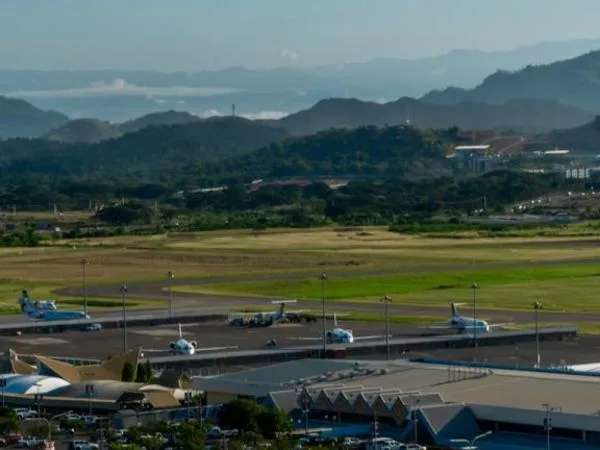
Loans amounting to almost $163 million were signed at the ceremony for the newly approved $171.5 million Civil Aviation Development Investment Program Phase 2. The program will upgrade five national airports for better safety and security, improve the power supply at Port Moresby International Airport, and enhance navigation and weather services by installing a standard automatic weather observation system.

“Major sectors of PNG’s economy such as mining, tourism, and agriculture rely on civil aviation for access to production sites and markets,” said Mr. Ling-Stuckey. “This ADB-supported program will play a lead role in enabling economic recovery after COVID-19.”

The program will pilot the upgrading of rural airstrips in four locations: Finschhafen, Hayfield, Jacquinot Bay, and Tapini. Civil aviation institutions in PNG will be strengthened through the provision of training on project management and gender inclusiveness.

The program builds on the successes of the ADB-supported Civil Aviation Development Investment Program, which was approved in 2009 and targeted sweeping improvements to 21 national airports that serve more than three million people in PNG per year. It also strengthened the safety, accessibility, and reliability of air services, and opened new economic opportunities in regional centers.

December 22, 2022

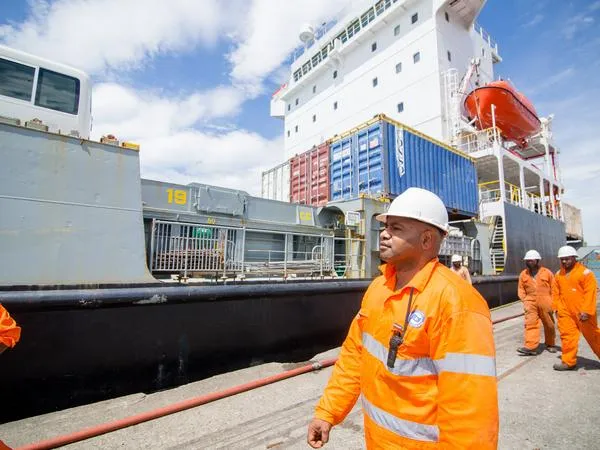
Photo: Project cargo specialist, Steamships Logistics Division, has a fleet of nearly 30 ships, tugs, and barges, more than 200 trucking assets, as well as an expanse of machinery and equipment. It employs more than 1,700 staff (98 % PNG nationals).

Papua New Guinea’s oldest business group, Steamships Trading Company Ltd, has invested millions in its Logistics Division in re-fleeting and new equipment with several million more to be expended prior to 2025.  The re-fleeting, together with changes to provide more comprehensive and intermodal end-to-end logistics solutions ensures that Steamships has ample capacity to increasingly service the logistics requirements of not only its PNG clients but those in the broader region.

Steamships’ Logistics Division is PNG’s largest operator of transport and logistics, with a more extensive service network than any other logistics provider.  The division comprises four operating entities (Consort Express Lines [domestic & regional shipping], EastWest Transport [general transport, customs clearance & warehousing, fuel transport], JV Port Services [stevedoring & handling, heavy equipment leasing], and Pacific Towing [harbour towage & marine services) and operates 16 offices and agencies across the country.   

The division’s four operating entities have each recently made multi-million dollar investments in re-fleeting (e.g., ships, tugs, barges, containers, trucks, fuel tankers), as well as in new machinery (e.g., cranes, reach stackers, empty container handlers, forklifts).   

Central to Steamships’ capacity to service countries in the South Pacific and beyond, is its shipping business, Consort Express Lines (‘Consort’).  In addition to being PNG’s premier coastal shipper, Consort is a regional project cargo specialist and has several vessels (i.e., conventional container vessels, landing craft, and tug and barge sets) available for both domestic as well as international charter. 

Consort has experience with all categories of project cargo (i.e., overweight and oversized, sensitive [including dangerous], and break bulk). 

Consort works in partnership with its international shipping partner Swire Shipping, as well as ‘sister’ Logistics Division entity, EastWest Transport to provide clients – no matter where they are in the region – with a full suite of logistics services (e.g., container packing, stevedoring, customs clearance, warehousing, storage and laydown facilities, depot to wharf transport, etc.,). 

“Our key competitive advantage is that we focus on giving clients exactly what they need” says Thomas Bellamy, Chief Operating Officer of Steamships’ Logistics Division.  “Increasingly this means comprehensive and integrated logistics solutions. With our network we can pick up any kind of project cargo from suppliers – no matter where they are in the world – and deliver it safely and efficiently to a client’s doorstep.”

Bellamy reports that additional competitive advantages enjoyed by Steamships’ Logistics Division are its safety and local content credentials.  “We are firmly committed to working towards ‘Zero Harm’.  This means reducing injuries, environmental damage, and asset damage in the workplace through an embedded ‘Work Seif’ culture.  Furthermore, Steamships is a proud Melanesian business with an exceptional track record of helping drive the development of the communities in which it operates – 98 percent of its 2,600+ staff are Papua New Guineans.

December 19, 2022

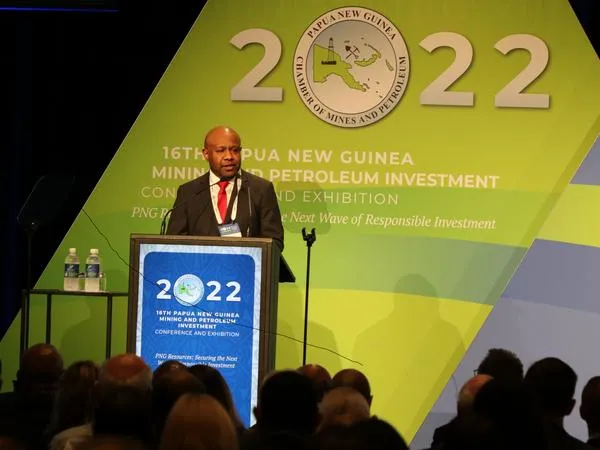
Photo: PNG Chamber of Mines and Petroleum President Anthony Smaré addressing delegates at the opening of the 16th PNG Mining and Petroleum Investment Conference and Exhibition in Sydney, Australia.

President of the PNG Chamber of Mines and Petroleum, Mr Anthony Smaré during the 16th PNG Mining and Petroleum Investment Conference and Exhibition, acknowledged that Australia remains a vital development partner to PNG, but stated, the country no longer holds the position as dominant investor in PNG.

Mr Smaré presented Australia’s historic relationship with PNG in the mining and petroleum sector, in terms of early exploration and investing.

“Much of the Wau-Bulolo gold rush of the 1920s was funded by Australian capital, and Australian funded explorers and mining companies discovered and/or developed much of our most important projects – for example, Conzinc Rio Tinto found and developed Panguna, Australia’s BHP was the majority partner who developed Ok Tedi in the early 1980s, Australia’s Niugini Gold discovered Misima and Lihir, and Rio Tinto was the majority partner in the development of Lihir in the early 1990s.”

He also stated that while Australia remains one PNG’s most important investors, the resources and energy sector has in the last 15 years seen major investments other economies, such as the US, Canada, France and China through multiple large-to-mega investments.

Australia remains one our most important investors, but the PNG resources and energy sector has in the last 15 years seen major investments from America primarily through Exxon Mobil, Canada through Barrick and K92, France through Total and China through multiple large-to-mega investments.  Australia’s significant interests in our sector are represented by Newcrest, the owner of the Lihir gold mine and the developer of the Wafi Golpu Gold Copper project with South Africa’s Harmony Gold,  and Santos the largest interest holder in the PNGLNG, supported by smaller companies such as St Barbara,  Twinza and GeoPacific.   Australian resource and energy companies are important and valued members of our industry family in PNG, but Australia no longer holds that position of dominance as the clear leader in new investment into PNG in a year to year basis. 

President Mr Smaré in closing, posing to the Australian audience, the question of what role did they wish for Australia to play in PNG in the future.

“So what role will Australia play in PNG’s development going forward? Will it take up the running to match the US, France and China with their increased investment in PNG, drawing inspiration from Australia’s historical legacy of driving development of PNG’s resources and energy sector by investing in exploration and development of new projects that can power the growth of a country and the social and economic progress of its people, projects in transition minerals, renewable energy and non-resource priority projects identified by the PNG Government?”