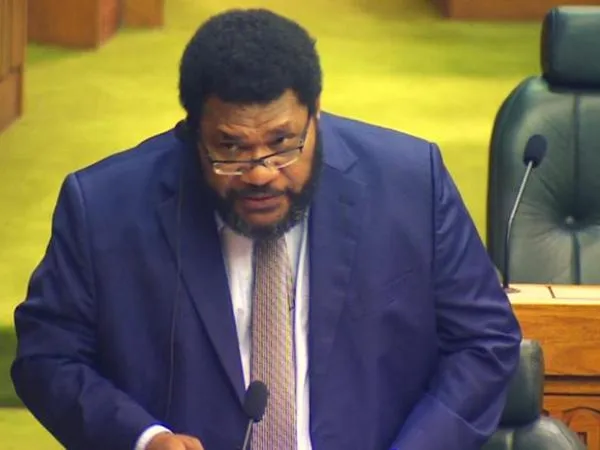
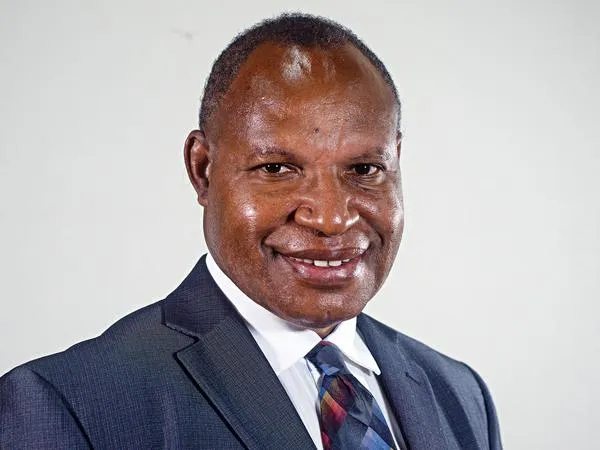
The Government will be advertising the position of Chief Executive Officer (CEO) for the Special Economic Zones Authority in the new year, 2023. Minister for Trade and International Relations Richard Maru announced this last week.
Minister Maru said the position will be advertised globally as the government wants the best to develop the Special Economic Zones in the country.
"Early next year I will advertise the position of the Chief Executive Officer (CEO) of the Special Economic Zones Authority. We will advertise throughout the world to find the best possible candidate, we need someone who is vastly experienced and specialised in these areas as it is a new concept to us. We have so many young people that we need to train and mentor so we are going to go for the best in order to develop these Economic Zones because that is where our country's future lies".
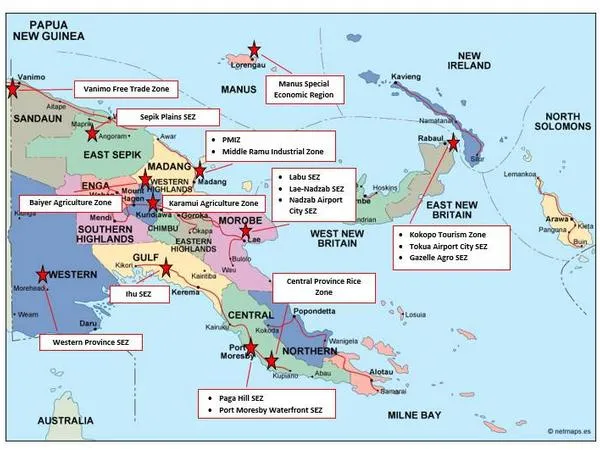
The Government has identified 18 possible Special Economic Zones and these possible SEZs include Karamui in Chimbu, Manus, Morobe and the two Sepik provinces among others. A Special Economic Zone is an area of land set up to be developed for a business opportunity that produces a product that the people want, and this will create jobs & other opportunities. The country has been depending on gold and copper and other sectors of the extractive industries that have come and gone.
Meanwhile, the new Ministry for International Trade and Investment has engaged the Japanese Development Institute (JDI) to assist in assessing these possible Special Economic Zones and they are currently in the country.
Minister Maru said the experts from JDI have been doing the initial rounds throughout the country to assess and find potential SEZs.
"JDI have been doing this work around the world for the last 40 years, they know what will work and what may not work. They have also experienced which components in the Special Economic Zones that may prosper, and which might take time, so they are here to help us independently assess the potential of each SEZs and give recommendations from their assessment to present to cabinet and suggest which projects to be carried out first within these SEZs" Maru said.
Minister Maru concluded that these Special Economic Zones will be the greatest economic growth drivers in the country when they are in progress.
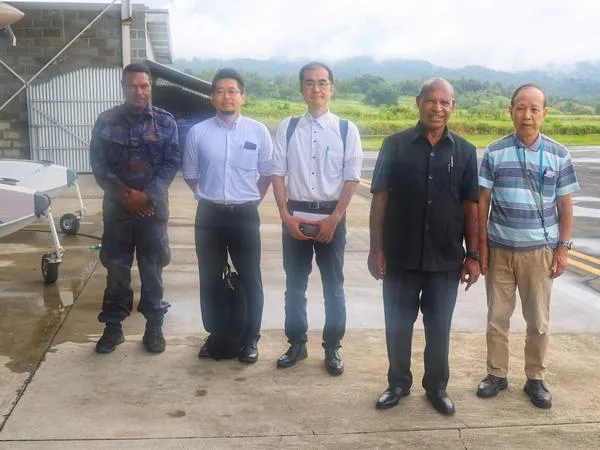
Minister for International Trade and Investment, Hon Richard Maru led a team of experts from the Japan Development Institute (JDI) as well as local consultants on a tour to visit East Sepik Province especially on all proposed agricultural hubs on Friday last week.
The team of experts were given a helicopter tour of the province starting at Wewak, over Turubu oil palm project, all the way to the Sepik River and across the Sepik Plains. The team also visited the Yangoru Mobile Police Barracks which will be completed next year. Minister Maru said that the purpose of building the barracks was to secure all the investments and investors in the proposed Sepik Plains SEZ in the Province.
The contingent of experts visited the Sepik Fresh Farm at Huaripmo where they were given a tour of the farm by the staff before returning to Wewak and concluding their visit to the province at Mengar to inspect where a proposed international wharf is to be built.
East Sepik Province is one of the 18 potential Special Economic Zone (SEZ) locations identified by the government. The province holds one of the largest records in producing leading cash crops in the country with Yangoru-Saussia District being the leading cocoa producing district in the country.
“East Sepik Province is one of the provinces identified by the government as a potential SEZ location and Yangoru-Saussia District has the advantage to benefit from it as it is located in the heart of the province and has two stretches of state land available in the Sepik Plains- Urimo (15, 000 hectares) and Huaripmo (9, 000 hectares). We are looking at oil palm, cattle and cocoa projects, including the two new crops that we want to introduce which are kava and coconut,” said Minister Maru.
“By early next year, once we complete sealing the road at Huaripmo and build a mini police station there, Prime Minister James Marape will visit the district to officially open those projects and at the same time he will launch the project to build the biggest dairy farm in the country at Huaripmo. We are also looking at establishing a chocolate factory at a site that we have identified along the highway at Baimuru. We will talk to the landowners there and hopefully they would agree to give the land to have the factory established. We want the factory to be located on the highway so we can buy cocoa from the neighboring districts for processing. Yangoru-Saussia is the biggest cocoa growing district of Papua New Guinea, so the chocolate factories have to be located there,” said Minister Maru.
“While preparing for these big projects ahead, we first have to secure the place with law and order and that is why we are building the mobile barracks. There will be 45 men and women living here and they will not be ordinary police but a special unit; their job will be to secure all the investors and the investments,” Minister Maru said.
The building of houses at the mobile barracks is nearing completion and contractors who will work on the drainage systems and sealing of the road are expected to start work in the coming weeks.
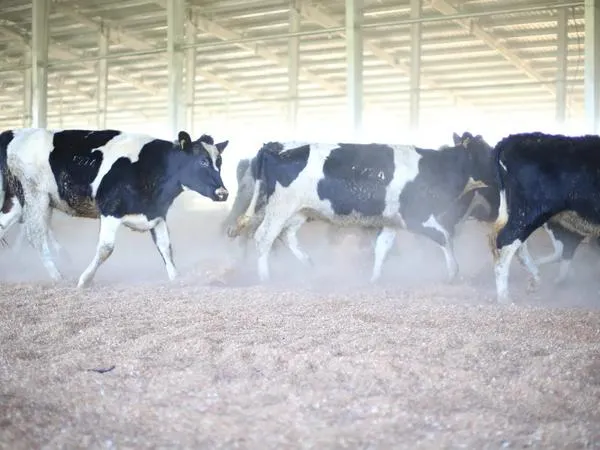
Photo: Ilimo Dairy Farm. Credit: LR Group
There is a need to build two more dairy farms in the country since Papua New Guinea is still importing around K300 million worth of milk products into the country. Minister for International Trade Relations and Investment, Richard Maru said this when emphasizing on the need to bring in more investors into the country last week during the appointment of his acting Secretary.
Minister Maru said that the only Dairy Farm in the country is the Ilimo Dairy Farm outside Port Moresby which has saved the country K100 million in imports in a year and the farm has also created up to 500 job opportunities for Papua New Guineans, However PNG is still importing K300 million worth of milk products and the Minister has said that his Ministry and Department will make sure that two new dairy farms will be built in Morobe and East Sepik.
"We have been importing dairy products until we brought in the technology from Israel to set up the dairy farm in Ilimo and we have saved K100 million in dairy exports annually and also created 500 jobs but we are still importing K300 million worth of milk products, so we need to build two more Dairy Farms",
"This Department will make sure that by next year we will build two more Dairy Farms, one in East Sepik and the other in Morobe so in the next two years we will finally cease all these imports". Minister Maru said.
He added that the new Ministry of International Trade Relations and Investment is an important and Vital ministry that needs to be funded.
"We should know the importance and role of the Ministry and the need for this Ministry to be funded for our recurrent and capital",
Minister Maru further stated that he will look for partners around the world to come into the country and invest.
Meanwhile The Department of International Trade Relations and Investment had also announced the appointment of its acting Secretary Jacinta Waraku Manau who will head the new Department of International Trade Relations and Investment while James Joshua who was also appointed will lead as the Chairman of the Securities Commission.
Photo credit: NEA
The National Energy Authority (NEA) will soon establish a new office complex following their groundbreaking ceremony in Port Moresby last Friday. The new office complex will be built at the cost of K150 million through a partnership between the National Energy Authority and the Australia New Guinea Services.
Present to officiate the groundbreaking ceremony was the Secretary the Department of National Planning and Monitoring, Koni Samuel and NEA's Managing Director, Ronald Maketa.
Last Friday staff of the National Energy Authority gathered at the old energy office space at Gordon's to witness the groundbreaking ceremony of the new NEA 22 floor office complex. The K120 million project is expected to commence construction phase next year.
National Energy Authority Managing Director, Ronald Maketa said "while energy is the backbone of for any organization in the country it has been overlooked throughout the years by progressive Governments but now it is starting to regain momentum and is positively progressing".
National Planning and Monitoring Secretary, Koni Samuel who officiated at the event said that he is pleased to see NEA partnering with the private sector to deliver and realise the huge potential of the energy industry in Papua New Guinea.
The NEA is taking the lead in building its own office complex following the National Governments intention to build its own office spaces to cut Government expenses after recent issues concerning millions of kina paid to rentals by the Government.
Photo credit: RNZ
Prime Minister Hon. James Marape has launched his government’s policy on coffee which includes a target of 2,500 trees per family that aims to return interest to one of Papua New Guinea’s leading commodities that once was the highest agriculture revenue earner in the country.
The Prime Minister announced this in Banz, Jiwaka Province last Friday where he travelled to officiate at the launch of the Coffee policy and opening of the coffee festival where thousands of people gathered to witness and participate in the event.
He also announced that the Marape-Rosso Government would make sure that the price of coffee remains constant between K7 and K13 per kilogram for growers throughout the year starting next year in 2023.
“Do not listen to critics on Facebook and in newspapers. There are political and corporate critics who are against what we are doing and saying because there is now a tectonic shift against their corporate interests from the status quo,” said PM Marape.
“We are taking care of your children’s education with free education. We are connecting the country with good roads so now you can have access to good markets. We are putting in programs so you can become engaged where you are.
“You must return to your land and work. Grow coffee.”
PM Marape explained part of the new policy to elevate coffee quality and individual family interest in the cash crop was to encourage as many families as possible within the 17 coffee-producing provinces grow 2,500 trees.
The logic is that if families can get into smaller, more manageable coffee orchards as SMEs, they can concentrate on giving the trees and their beans the best care to ensure quality at the market.
“If one family can grow 2,500 trees, it can make between K21,000 and K25,000 per year to sustain itself,” said PM Marape.
The Prime Minister said beginning next year onwards, the price of coffee would not be allowed to drop below K7 as the Government has several agriculture support programs such as Price Support and Freight Subsidy to buffer against price drop.
“For price, A-Grade Coffee will make you between K9 and K13; B-Grade Coffee K8 and K12; and C-Grade Coffee K7 and K11. I assure you all, we will not go below K7,” he said.
PM Marape also called on the provincial governments of Jiwaka, Western Highlands and Chimbu to begin working collaboratively on coffee with a view to opening a Special Economic Zone to develop this cash commodity further.
He committed K5 million to each of the two provincial governments (Jiwaka and WHP) and K2 million to each of the coffee-producing districts of Jiwaka (North Waghi, South Waghi, Kerowagi, Dei, Mul Bayer, and Jimi) to begin exploratory and preparatory work to coordinate and link all coffee growers in the province and to begin implementing the 2,500 coffee trees per family policy beginning in 2023 where this sector is supported in the budget.
Prime Minister Marape also used the time to call on the youth of Jiwaka to give up drug and alcohol abuse and return to toil their land, grow coffee and make money to better their lives.
Photo credit: Malum Nalu
Oil Palm Industry Corporation is embarking on building and developing a 60,000 Oil Palm Seedling Nursery at Erap in the Markham Valley of the Morobe Province to supply seedlings to local smallholder growers in the Markham Valley and Ramu Valley.
General Secretary for OPIC, Mr Kepson Pupita recently was at the Department of Agriculture and Livestock's station in Erap in the Markham Valley to initiate this project which is a 60,000 hybrid Oil Palm seedling nursery for smallholder growers in the area to benefit from.
Mr Pupita said "Because there were already two Oil Palm Mills operating in the area there is not much smallholder involvement and activity apart from big companies that operate. So as the Government Authority responsible for smallholder development, OPIC has to establish an avenue for smallholder Oil Palm growers in the Markham and Ramu area to benefit and sustain themselves".
The 60,000 seedlings are enough for 500 hectares of fast growing hybrid Oil Palm. OPIC has also started building a special projects office, two staff houses and have installed a generator as well as equipment and machinery to assist its officers in getting the project started.
This initiative is in line with the Marape-Rosso governments vision for agricultural development in the country. The Oil Palm seedling nursery will be built on 6 hectares of land that is owned by the state under the Department of Agriculture and Livestock.
Opposition Leader Joseph Lelang stated that the 2023 Budget has not done enough to cover the Papua New Guinea economy against unfavorable global developments.
Mr Lelang said the opposition sees that much of these adverse external developments since 2019 has contributed to shortages in foreign exchange, forced businesses to fold or streamline their operations, pushed a lot of our people out of jobs and hike in prices. He said real wages have declined and many families have suffered.
“It is difficult to see how the 2023 Budget will address many of the problems in Papua New Guinea as there is no direction on how jobs will be created, inflation will be reduced or shortages in foreign reserves will be reversed,” Lelang said.
Lelang added there were a lot of uncertainties, either short-lived or simply part-time solutions from the way the government is going.
He said the Government’s subsidy scheme on food and fuel was only temporary and did not impact families in shortening their burden across the country.
“The increase in tax free income threshold up to K20,000 would assist many families on low income, however, he said the impact of this was narrow and affected only those on regular income,” he said.
“The Budget was an important instrument that can be used to protect our economy, create opportunities and protect our people’s welfare. However, there is no visibility of that in the 2023 Budget. Inflation had risen from a low 2.9 per cent in 2019 to 6.7 per cent in 2022, while according to the Bank of PNG’s Employment Index by Industries, employment continues to remain below pre-covid 2019 levels.” The Opposition Leader said.
Mr Lelang said there was need to ensure the Kina remains convertible, but this meant we need to generate foreign exchange. According to an ADB report, the backlog of unmet orders for foreign exchange runs into billions of Kina and it takes 3-12 weeks to process demand for foreign exchange which is taking too long.
Mr Lelang said that in September this year, the Treasurer told Parliament PNG had K14 billion (US$3.9 billion) in foreign reserves but a month later in November, while handling down the 2023 Budget, the Treasurer said the country’s total reserves was K13 billion (US$3.7 billion), a shortfall of K1.0 billion.
He said the Opposition is concerned that the problem of currency shortages was taking too long to reverse and the external borrowing of K3.5 billion to fund the 2023 Budget deficit will only provide temporary relief.
“More effort was needed to focus on export- oriented industries, not kill them like the 70 per cent taxing on the forestry sector and we need to focus more on investing in long term domestic factors to drive GDP growth in this country, not become overly dependent on volatile high commodity prices to drive growth.
Mr Lelang singled out the Pacific Marine Industrial Zone (PMIZ) Project saying this would impact positively on job creation and reverse the foreign exchange shortages experienced in the country.
He said investing in the PMIZ infrastructure must be completed immediately so the country can start moving into production and exporting.
“Only K50 million was allocated in 2023 Budget for PM1Z spread over next five years totaling K200 million,” he said.
Mr Lelang said funding must be frontloaded because PMIZ had the potential to generate more than K8 billion annually, create more than 15,000 jobs and contribute to the long-term sustainability of the PNG economy.
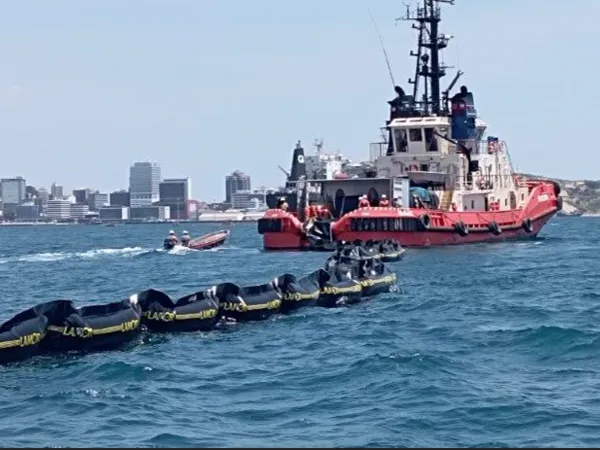
Photo: Pacific Towing’s ASD tug Waiowa (4,300 BHP and 57 Tonne BP) and her crew were responsible for deploying oil spill booms in the NMSA led National Oil Spill Response Exercise in Port Moresby’s Fairfax Harbour.
Papua New Guinea is better equipped to respond to a major maritime incident resulting in a significant oil spill following a national oil spill response exercise in Port Moresby’s Fairfax Harbour. PNG’s National Maritime Safety Authority (NMSA) in cooperation with Oil Spill Response Ltd from Singapore led the exercise in November.
NMSA Executive Manager Maritime Operations, Captain Krzysztof Orlowski described the hypothetical disaster at the centre of the exercise: “ A container vessel proceeding to Motukea Wharf in Port Moresby experienced black out, temporarily lost control of the steering, and collided with bulk carrier MV Kumul Arrow anchored in Fairfax Harbour. The impact of collision led to damage of the MV Kumul Arrow’s hull and spillage of 1,000 tonnes of Heavy Fuel Oil (HFO) from her fuel tank. One crew of the MV Kumul Arrow suffered a head injury and required immediate medivac ashore.”
Partnering with NMSA and Oil Spill Ltd in the exercise were, PNG MRCC, French Navy Ship D’Entrecasteaux, MV Kumul Arrow (chartered by Ok Tedi Mining), PNG Ports VTS, AES, St Johns Ambulance, Pacific Towing, and Puma Energy.
Captain Orlowski confirmed that the exercise was a great success with all participating entities working well together. He acknowledged the value of the theoretical training that had been conducted beforehand in terms of preparing everyone for the demands of the actual exercise, as well as the “professionalism and enthusiasm” of all participants. Captain Orlowski also confirmed that additional oil spill response exercises will be planned and budgeted for 2023.
One of the exercise participants, Gerard Kasnari, Marine Operations Manager – Pacific Towing, commented on the oil spill exercise saying that “both the theoretical and practical training were valuable in improving participants’ understanding of the different response techniques, and enhanced their appreciation of all aspects of oil spill response. As a result, I believe that we’re collectively much better prepared to handle a major spill here in PNG.”
The ‘Oil Spill Clearance – On Scene Commander (IMO Level 2 Equivalent)’ training was conducted by Oil Spill Response Ltd and was certified by the UK Maritime and Coastguard Agency.
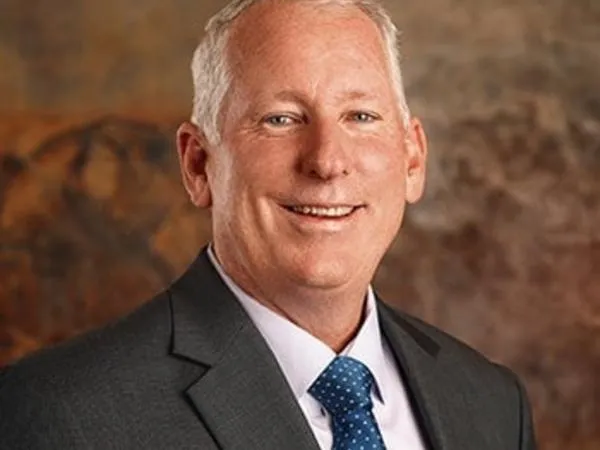
Photo: Mayur Resources Managing Director, Mr Paul Mulder. Credit: Mayur Resources Facebook Page
Mayur Resources Limited and Santos Ventures Pty Ltd (Santos), a subsidiary of Santos Limited, have extended their exclusivity arrangements to jointly develop a portfolio of nature-based carbon offset projects in Papua New Guinea (Carbon Projects).
Mayur has agreed to provide Santos with an extended exclusivity period to 1 December 2023 (Exclusivity Period) during which Santos and Mayur are to negotiate in good faith and if agreed, enter into binding transaction documents to jointly develop the previously announced Carbon Projects.
The Carbon Projects focus on preserving 1.4 million hectares of pristine rainforest in Papua New Guinea through avoided deforestation. Phase 1 development is already being progressed which includes up to 800,000 hectares in the Western Province.
Santos has already provided Mayur with a US$3 million facility (in June 2022) to, amongst other things, fund ongoing detailed feasibility and landholder consent work on the Carbon Projects.
Mayur Managing Director, Mr Paul Mulder noted “This is a transformative transaction for the development of Mayur’s carbon portfolio. Mayur proposes to use the Santos loan to develop its carbon portfolio to help preserve 1.4 million hectares of pristine rainforest, which has arguably one of the most biodiverse ecosystems on earth”.
“Mayur is also encouraged that Santos has agreed that together we shall commit to secure premium carbon credit certification and ensure these projects achieve positive social elements to the communities associated with the project offset areas. It is essential that these projects result in the majority of the financial benefits and revenues being provided to the local landowners of PNG”.
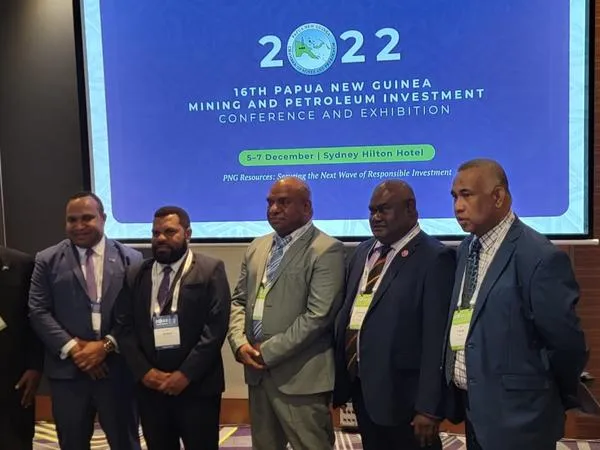
The opening remarks by President Mr Anthony Smaré, paved the way for strong discussions on bilateral trade, development of the PNG economy, riding off the back of PNG’s trading partners in Australia and the Asian region, as well as a push for more direct investment in the resource and renewable energy sector. A sector that is of growing importance as the industry appreciates the finite resources available globally.
Prime Minister James Marape, in his keynote address assured the audience of PNG’s capacity for an investor-friendly environment, stating “We are a mineral and petroleum nation. We know how to give incentives, embrace and protect investors, and allow investors to make a fair and profitable return on their investments; “
The PM added “our experiences from Bougainville, Ok Tedi and Porgera compels us to ensure we negotiate a fair agreement that allows investors to have a global benchmark return on their investments while PNG parties, including landowners and Provincial Governments have a share in an improved benefit-sharing arrangement.”
As the Prime Minister simply put “And if you may allow me to emphasise that PNG is a fair place for investments. The State always is on the lookout to protect our investors because to not to do so is negligence of our responsibilities.”
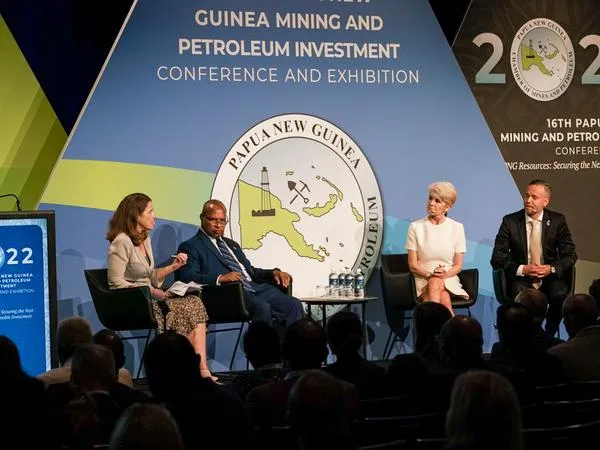
From an international trading perspective, the Chamber is particularly pleased with the dialogue that occurred, with representation from the government of Papua New Guinea, by Hon. Richard Maru, Minister for International Trade and Investment and former Australian Foreign Minister, Julie Bishop.
Minister Maru in his remarks expressed gratitude to the chamber stating he was ecstatic in being able to bring a different slant to the conference.
Maru stating that post-independence and with only a single project in 1975 -Bougainville Copper Limited, the operators of the Panguna Mine, Papua New Guinea’s economy had been vibrant, holding a surplus of foreign currency in its reserves. By 2022, only 8 projects are fully operational, and with depleting resources, the Minister for International Trade and Investment stated “we recognize that, that is why we are improving the numbers in the coming weeks, and we will be going all out to bring in incentives to bring in more exploration dollars”
Importantly, the Minister informed the conference that the GPD growth from 1960 to 2022 shows investor partnership has raised PNGs economy from US$5billion to an expected US$101.0 billion by the end of 2022.
“It is a big leap, and thank you very much to the resource sector, you have been such an important part of our journey and you will continue to be” said Mr Maru.
Special commendation from the Chamber to Ms Julie Bishop on a deeply compelling speech, on PNG and Australia’s relationship since independence, offering PNG as an equal economic partner, saying “that is a vision that not only the Australian government has but I know is shared by PNG”
Ms Bishop clear in what she felt Australian businesses could provide invaluable investment into the PNG economy, recollecting her first interaction with Prime Minister James Marape who had said in July 2019, that PNG’s aspirations were that over a 10-year period, PNG would no longer need Australian foreign aid because it would be economically self-sufficiently resilient and economically independent
Ms Bishop adding “and I remember he spoke about embracing technology and Innovation and downstream processing and Manufacturing and building the human capital in PNG so that the people could help the development and modernization of the PNG economy and again in his most recent speech to Parliament after becoming prime minister on the 9th of August this year he spoke about a pledge he would make to the people of PNG that he would achieve that level of economic independence that previous leaders had achieved with political Independence and that is a magnificent Vision that we very much admire and his connect PNG policy is so exciting because he's identified areas of focus where I know Australian business has expertise and will have great interest in partnering with PNG”
The sentiments expressed by Ms Bishop and Minister Maru at the 16th PNG Mining and Petroleum Investment Conference and Exhibition has largely highlighted the purpose of the event. To pull together PNGs policymakers, project partners, and seek potential investment opportunities from the region’s largest market in Sydney. Landowner participation throughout the event was also of paramount importance with Mineral Resources Development Company, pulling together all landowner chairmen from the various Petroleum, Oil and Gas, and Mining project-impact areas to attend the conference.
This incredible opportunity by Landowners especially to be part of the investment and developmental process is unique only to Papua New Guinea.
With the chamber now looking to reach out toward potential investment partners for future project, the Asian region is an enticing market.
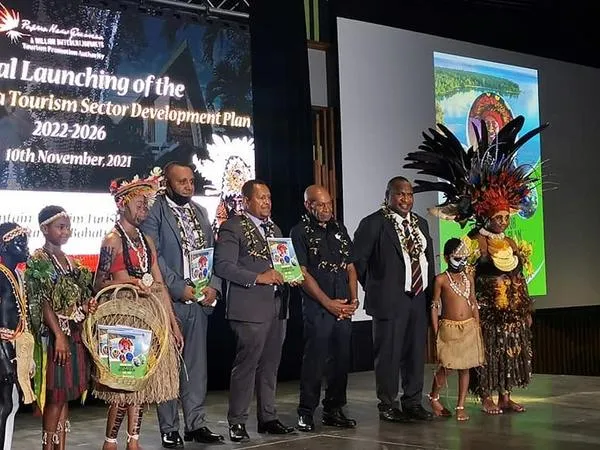
The Papua New Guinea Tourism Promotion Authority hosted its first Implementation Steering Committee Meeting for the recently launched Tourism Sector Development Plan 2022-2026 on the 29th June 2022, at the Lamana Hotel in Port Moresby.
The Chief Executive Officer Mr. Eric Mossman Uvovo, chaired the inaugural meeting in the presence of 16 organisation representatives to deliberate on the purpose, functions and reporting mechanisms of the TSDP-ISC.
The Implementation Steering Committee (ISC) is the highest working committee that is designed to coordinate all tourism related agendas pursued under the various sub working committees that exist within the sector for national prioritization and development in Papua New Guinea.
The CEO provided his welcome remarks and invited organisations to become members of the ISC to help contribute to the implementation of the TSDP and to grow the industry in the next five years amidst the global pandemic.
Some of the work that will need to be done under the ISC include;
Mr. Uvovo further stated that through collaboration at the TSDP-ISC level, this will enable PNGTPA as the lead sector agency to steer the development of the national tourism industry products and services to a level that is globally and regionally competitive.
The ISC plans to meet quarterly and envisions more organisations to join in the membership to provide sound advice and judgement for all tourism related matters that are escalated at the high level.
All provincial governments have been urged by the CEO to take ownership of the new tourism plan by participating in the ISC in order to ensure that the national plan cascades down to the provincial level through the setup of provincial ISCs as well. The Provincial-ISCs will be utilised to inform the national TSDP ISC as a reporting mechanism for all tourism initiatives and issues encountered in the provinces.
The CEO also stated that stakeholder partnerships with the private sector will also be prioritised to ensure that plan achieves its full potential.
PNGTPA has extended invitation to all other government agencies and private sector stakeholders who would like to be a part of the committee to express their interests to the PNGTPA Division of Policy and Planning for consideration and partnership.
Tourism, Arts, and Culture Minister Isi Henry Leonard claims that the National Cultural Commission (NCC) cannot reasonably promote Papua New Guinea's tourism industry.
“We have to work in partnership with provincial governments at the national level to develop the industry,” he added.
Leonard stated that the government was, therefore, signing MOU with various provincial governments to partner in tourism-culture based promotions at the national level while speaking at the signing of a memorandum of understanding (MOU) between the NCC and the Autonomous Region of Bougainville Government (ABG).
“We need partners and stakeholders to work in partnership to preserve, safeguard, protect, develop and promote our cultural heritage,” he said.
The MOU that was signed between the ABG and NCC, according to Leonard, would guarantee that Bougainville assumed ownership of the arts, cultures, cultural institutions, assets, buildings, places, cultural programmes, and events that were held in the area.
“Tourism is the second highest and growing industry with an annual net worth of K500 billion across the world, and that the country can benefit from a slice of that K500 billion,” he added.
According to Leonard, Bougainville is well-positioned along the routes taken by cruise ships and would be a popular tourist destination.
Additionally, he said that Bougainville's World War II remnants had elevated the independent zone and would be crucial to drawing tourists.
“That is a bonus to what you already have in-terms of your traditional culture to showcase,” he said.
“I believe the war relics, such as the site where Japanese army general Yamamoto was said to have crashed could be turned into a tourist site, likewise many other areas across Bougainville.”
Reference: The National (6 December 2022). “NCC, ABG ink tourism agreement”.
Photo credit: Santos - Brett Darley
PNG will continue to be a major focus of strategy as Santos works to decarbonize operations, according to the upstream chief of Santos.
Santos president of Upstream Oil and Gas, Brett Darley, stated that Santos is still eager to keep that region as its primary investment priority.
“More broadly as a company, Santos is developing our three-hub carbon capture and storage (CCS) strategy.
As we seek to decarbonise our economy, carbon capture and storage will be critical in achieving that goal,” Mr Darley said.
“Australia needs to get behind CCS, because we know net zero cannot be achieved without it. If Australia and the world is serious about net zero, then we must be serious about decarbonising existing energy sources as the market evolves over time for new clean fuels, such as hydrogen,” Mr Darley said.
He said that there are countless chances in PNG, both professionally and socially.
“People might be surprised to know that around 80 per cent of global primary energy today still comes from hydrocarbons – the same as 45 years ago.
However, with less than 15 per cent of the population in Papua New Guinea having access to electricity, and those with access facing the challenges of temperamental supply, we must bring on new supply and continue to develop our product safely and sustainably, for years to come,” Mr Darley said.
“We know global supply will be tight for years to come due to OECD supply constraints, government policy, and activism.
Gas must become the baseload, alongside renewables in developed countries, otherwise the transition will be very messy.
For this reason, the next 30 years calls for a structural shift in the way that the world generates energy. As an industry, we need to maintain supply while we innovate to transition to net zero emissions.”
According to him, Santos's new plan is to backfill existing infrastructure and then maintain production across all of its assets until the mid-2040s and beyond. It also focuses on decarbonization and clean fuels.
“While we backfill and sustain our core assets to deliver the critical fuels the world needs, we will also decarbonise these critical fuels and produce clean fuels as customer demand evolves,” Mr Darley said.
“Santos is in a very strong position to be a leader in all three of these areas over the course of this decade and beyond.
As a core region for Santos, our Papua New Guinean assets will be key in this strategy, and we are keen to maintain our investment focus there.”
Reference: Post-Courier (7 December 2022). “Santos Looks At Decarbonisation”.
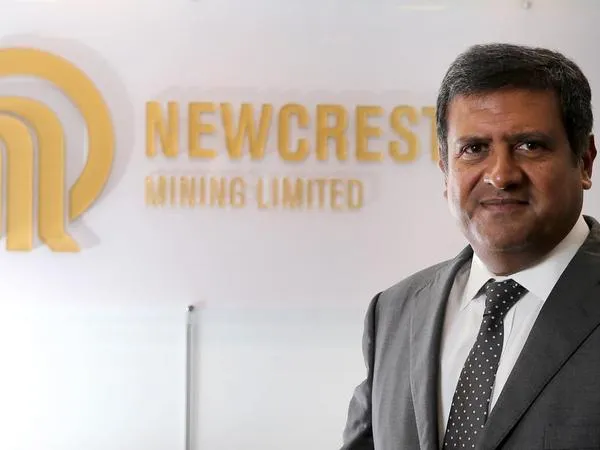
Photo: Sandeep Biswas
According to the International Energy Agency, copper is essential for additional solar PV, wind, bioenergy, networks, electric vehicles (EVs), and battery storage in the field of clean energy solutions.
According to Sandeep Biswas, managing director and chief executive officer of Newcrest Mining Limited, the International Energy Agency has predicted that by 2040, the entire mineral demand for usage in clean energy solutions alone is likely to rise by 300%.
By weight, copper, graphite, and nickel, according to him, will be the most in demand minerals in 2040.
“As Newcrest steps up our role in addressing climate change, it makes plenty of sense for us to increase our focus on copper.
It is important for hydro, nuclear and concentrating solar power, while playing a role in geothermal and hydrogen,” he said.
The forecasts vary, but according to Australian government research, 31.1 million tonnes of copper will be consumed in 2030 – but only if it can be supplied.
That’s an increase of 26 per cent on estimated 2022 consumption.”
According to Mr. Biswas, current copper inventories are the lowest they have been since 2006. “Of course, the other side of the equation is supply, and that’s a significant factor in PNG’s continued relevance as a major global resources player,” he said.
However, the world’s insatiable hunger for the commodities we produce to help countries reach net zero doesn’t guarantee us an acceptable return on investment, income, profitability or efficient project approvals by any means.”
According to Mr. Biswas, Newcrest and other ethical global miners recognise that mining is much more than a for-profit business.
“The investments that we make in PNG are for the long term and must be built on a shared vision with the government and community if they are to succeed,” he said.
“We are committed to mine responsibly, produce less waste, use safer processes, incorporate new technologies, promote the wellbeing of local and Indigenous communities, curb emissions, and strengthen environmental stewardship.
Large, long-term investments are necessary to search for minerals, establish mines, and run them for a number of years before they become profitable. These investments are not made randomly or haphazardly.
“PNG, while not the cheapest operating environment in the world, certainly has the potential to become one of the best.
In PNG, as in the rest of the world, we value certainty, stability and pro-mining government policies to ensure we can maintain and grow our mining of copper, gold and silver.
“Companies who want to operate successfully in PNG should understand how to navigate not just the global challenges, but how to build, maintain and grow strong and enduring relationships with communities and governments.
“Long-term partnerships based on actions as well as words are central to the future of a successful PNG resources sector.”
Reference. Post-Courier (7 December 2022). “Newcrest Looks To Copper For Climate Change”.
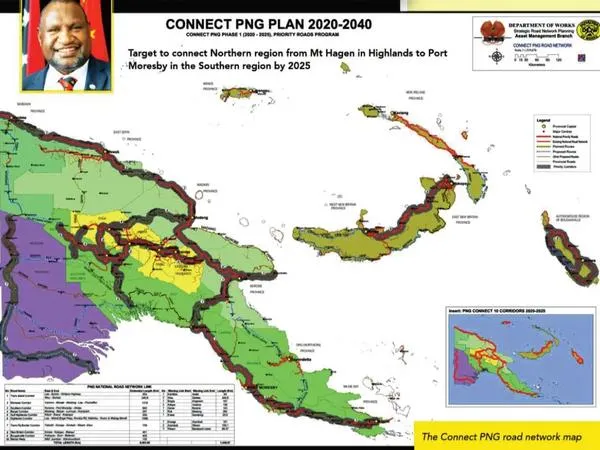
The connect PNG program implemented by the government is said to be rejected by the people of Central Province. Governor for Central Province, Rufina Peter announced the issue and raised this concern in parliament last week. Governor Peter said the road project is essential but will have consequences faced by Central Province Communities such as land grabbing and ethnic clashes among others.
The Central Governor told parliament and expressed her people's concern while stating that her Provincial Government was not consulted before the road plan was created. She said the road plan may surely lead to other social issues in Central and NCD.
"The Central Province Government and the people of Central Province strongly oppose the connect PNG program as far as it relates to connecting the missing link," Governor Peter said.
The connect PNG program constitutes 5 to 6 per cent of the 2022 budget and is a government sanctioned road connectivity program. The program is purposely to ensure that the mainland of Papua New Guinea from the Highlands to the coastal region are connected through improved road conditions and are maintained but Governor Peter announced that the people of Central Province are not keen on the outcome of the influx of people into the Central Province and the Nation's capital and strongly oppose a road link into Central as there are still a lot of ongoing and existing social issues mostly relating to ethnic clashes that needs to be thoroughly resolved.
"Given that Central Province is not ready, connecting the stated missing link through the road plan will most likely result in negative consequences and social impacts that will outweigh the benefits of the Connect PNG program," Governor Peter said.
In response to the queries opposing the program made by the Central Governor, Minister responsible for roads and highways, Solam Mirisam responded and made it clear that the road program is not for a particular Province but by constitution is for a connected Papua New Guinea".
"If we have good road conditions, we will likely be able to see growth in our economy, that's why the aim of this country's Government is to give road accessibility to areas that have economic potential so that the economy can grow," Minister Mirisam said.
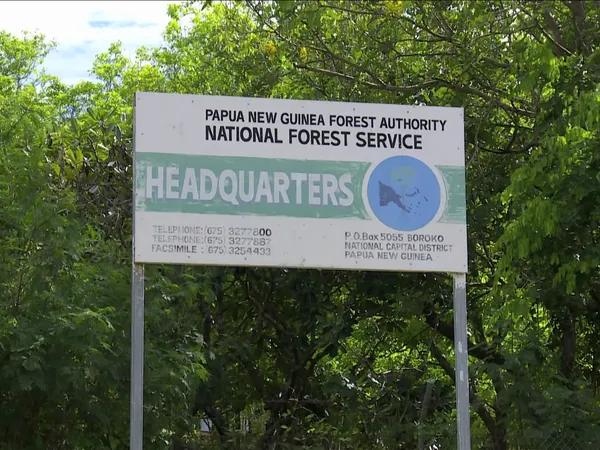
Photo credit: Papua New Guinea Forest Authority
The Papua New Guinea Forest Authority (PNGFA) has increased their budget for the remainder the year to remove the economic barriers that have been preventing them from generating revenue. PNGFA Managing Director John Mosoro said the budget that is proposed is well over what they have received before.
"It is quite an ambitious budget," Mosoro said. One of their main focuses after the budget is approved would be to immediately reform the forest authority into a new entity which would better promote the economic and the social sector.
"We will be looking at much better approaches in generating revenue for PNGFA as well as paying our dividends to the state while also looking at the welfare of all our staff throughout the country, especially those in the provinces where we need to consider and look after in terms of housing, land and proper monitoring and surveillance in their work," Mr Mosoro said.
"PNGFA also wants to promote good governance in the forest board".
"The board will be similar to other state owned enterprises in terms of remuneration and other things as well," he added.
"Those are some of the things that PNGFA will start to focus and work on immediately once we get our budget through to the government,"
The PNG Forest Authority has one over-riding aim: to promote the management of Environment and Forest resources as a renewable asset for the benefit of present and future generations, in other words, to ensure that the forestry industry in Papua New Guinea is a sustainable one.
The main aim of government policy in recent years has been to phase out log exports in favour of processed timber products to add value and provide employment, but at present 90% of the timber exports in this K600 million industry is still in the form of crude logs.
Meanwhile, Minister for Forestry Hon Solio Waipo raised a concern that the forest ministry had been given little support by the Government and it was not enough for the Ministry to utilise all their plans especially in reaching the remote parts of the country.
"That is what I will take up to the National level to see through the National Executive Council that we can secure enough funding for our budget to see our plans delivered to our people in the remote parts of the country," said Minister Waipo.
Minister for International Trade Relations & Investment and Member for Yangoru-Saussia Hon Richard Maru aims to deliver a development package to his people in the District of Yangoru-Saussia in East Sepik Province that would take the district forward to the next level in the coming five years.
He explained the outcomes and focus involved and included in the district’s development package that would be rolled out within the next five years to improve the outlook and status of the district.
Maru who would be serving his third term as the MP for Yangoru-Saussia said he was looking to attract large scale multi-billion investors to invest in Agriculture within Yangoru-Saussia for further development and investment to take place.
"Taking the District to the next level includes connecting electricity to more villages than we have currently. We will increase the number of houses that are going to be given roofing so we can have more permanent houses in our district, we will provide more cocoa seedlings to local farmers, build one more high school to make a total of eight junior high schools, complete phase two of Yangoru school of excellence and solve the electricity problem in the District by buying our own generator and having our own standalone mini power grid so that Yangoru-Saussia can provide power for itself instead of depending on power from Wewak town," Minister Maru said.
He added that "This is very important for us because we are the only District in East Sepik Province that has significant State land in the Sepik plains. We are working to find investors to come into the district’s vast Sepik plains and invest especially in Oil Palm, Cattle, Dairy Farming, Rice and other investment opportunities".
Furthermore, he said that "Our people are also keen on a new chocolate factory or cocoa processing plant so that we can increase the price of cocoa to the wet bean farmers. We're also working to build a vanilla processing plant in our district so we can increase the price of vanilla beans to our local farmers who are struggling to find good markets".
Minister Maru is also determined to increase business opportunities for the people of Yangoru-Saussia District and that his focus on education and health will not be interfered and would continue as well.
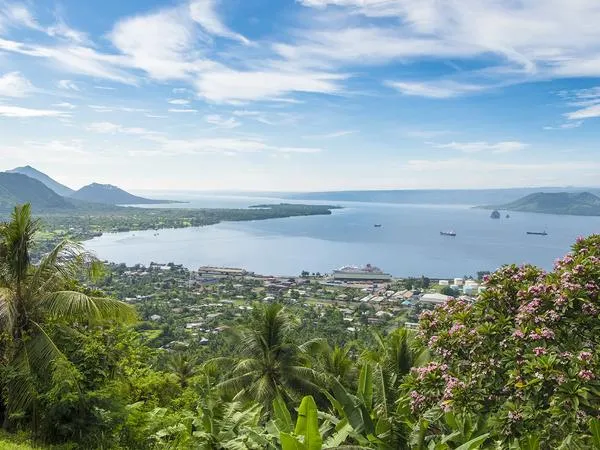
The people of East New Britain Province may see the redevelopment of the once iconic Rabaul town if the current Moratorium is reviewed next year. Prime Minister James Marape said this when responding questions raised by Rabaul MP Graham Piniau in parliament recently.
Mr Piniau said the township of Rabaul still has a lot of potential to develop and bring in more revenue for his district and the province, but they cannot do much with the Moratorium that is in place on the redevelopment of Rabaul town.
When speaking in parliament MP Piniau said his Rabaul District that also houses the Rabaul town has been seeing a huge number of tourists visiting them and they are Keen to start redevelopment work but cannot do so due to the Moratorium.
"Rabaul town has a deteriorating road system that needs to be upgraded and lacks basic essential tourist amenities for that matter. The anticipated economic return is incredibly high and needs serious attention," Piniau said.
"Development plans for this town and sector underway but how long can we wait while Moratorium drive away national and Foreign investors away in this once iconic town," Piniau added.
Prime Minister James Marape when responding to these questions assured the MP Rabaul and his people and East New Britain as a whole, that a review will be carried out once they get a report on the volcanic activity in Rabaul.
"We will look at the conditions surrounding the Moratorium and it's uplifting. Our investigation will focus on what is currently happening in and around the volcanic area to determine the outcome. My government will make it our responsibility to assess and check what is happening on the ground within the balance of this year and I will be able to get a report to the people of Rabaul and this parliament so that we can restore back Rabaul town to what it was before.”
The Moratorium to stop the redevelopment of the once famous Rabaul town was issued after the twin volcanic eruption in September 1994.
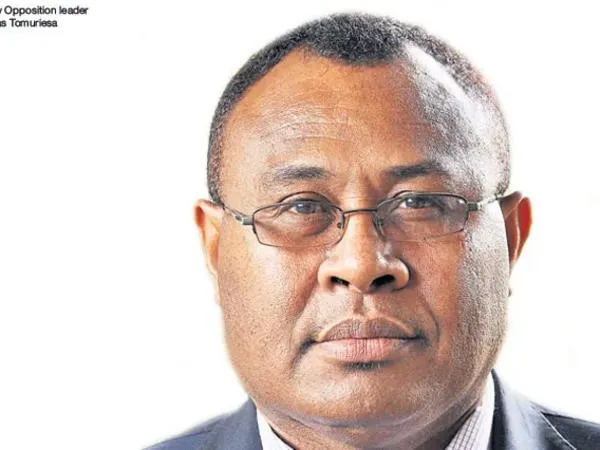
The Shadow Minister for Treasury, Douglas Tomuriesa has that stressed that the Government’s Relief Assistance Package of K590 million is inadequate and translates to a mere of K65 per person, per year or a very meaningless of 18 Toea per day when divided by the 9 million people of PNG.
He said that when highlighting the inefficiency of the Treasurer, Ian Lingstukcy in failing to bring the much needed legislation to Parliament for the K590 million.
“How is the Government going to ensure that these amounts will go down well to the ordinary people,” he said.
He added that the Government’s so call Housing Assistance Package relief is not helping families instead it is pushing and escalating law and order issues in the country.
“What is required of this budget is prudent management and strict adherence to strict budget expenditure framework and strong sound policy,” he added.
“And the Government has also been talking about Porgera Mine, Wafi Golpu, P’nyang has low laying fruits.
“When will these low laying fruits be picked and harvested so that employment in this country can begin to improve so that the economy and revenue can be strengthened.”
Tomuriesa added that the Treasurer has been hacking the K590 million of the so called cost of living Relief Assistance Package before the elections in March and yet has continuously failed to bring the enabling legislations to the floor of Parliament.
He said from the Supplementary Budget tabled mid this year there was no enabling legislation so, the K611 million Relief Package in the Supplementary Budget was supposed to have been postponed to January 2023.
“Was that all a real and serious government policy to assist our ordinary Papua New Guineans or just a plain election promises to show up numbers for elections,” he questioned.
Photo: James Marape
Prime Minister Hon. James Marape has reminded heads of Government departments and agencies to submit their annual reports by March 31, 2023, to show what they have achieved in 2022.
Marape said that this would ensure timely and regular checks and balances on government departments and agencies.
“All heads of Government departments and agencies are required to report back to us, by March 31, 2023, on what they have done for the country,” PM Marape said.
“We will not tolerate any late reports and warn, in no uncertain terms, that failure to comply with this deadline will result in termination. All reports, covering what they have done in 2022, should be handed in to the Chief Secretary’s Office. We want to operate our country in a smarter, business-like, modus-operandi," PM Marape said.
“As the heads of departments and agencies give in their reports, we will get the Auditor-General to hire independent audit firms outside of Government, to check on the reports.
“This is for the benefit of our tax-payers and the ordinary people of Papua New Guinea.”
PM Marape said his government was not a new one, but a continuing one, and all heads of departments and agencies should know what was required of them.
“We want to do better for our country,” he said.
“We are in the process of taking back our country and putting it back on the right road.
“The people have given us their mandate and we want to do the right thing for them.”
One of the Country's biggest alcohol manufacturers and producers, Vitis Industries Ltd has appealed to the Marape-Rosso Government to review the decision made to increase alcohol tax to almost 500 per cent.
Vitis Industries Ltd Managing Director Vicky Mossine said the tax increase will affect the business negatively and would eventually result in the dismissal of staff and the option to close operations.
According to Mrs Mossine the recent announcement on the increase in alcohol tax during the handing down of the 2023 national budget recently which showed a 500 percent hike in alcohol tax rates would drastically put the company in a position to wind down their operations. The rapid increase in excise duty tax by almost 500 percent is totally unfair and the local company is not ready to meet the challenges.
"Marape-Rosso Government, it would be good and fair before passing the bill on alcohol tax increase on the alcohol industry if we have our representative which is the Manufacturers Council who represent all manufacturers in the country to be present in your consultations and consideration because the current tax increase has been done without any form of consultation of companies concerned within the alcohol industry," Mrs Mossine said.
"We have not been notified or consulted prior to the announcement of the increase for premix alcohol products and it is very dissapointing because as an investor and a local company Vitis has invested alot in this country right from our humble beginnings to currently being a large scale manufacturer in the industry," she explained.
Mrs Mossine further stated that as the company struggles to offset costs in its business operations and wages for its employees it has no choice but to lay off its staff and this decision has affected employees economically and as a result the company cannot meet the cost of expenses and assist their staff.
Vitis Industries Ltd Production Supervisor, Marrie Kove said the issue of the tax increase has become a huge burden to all employees of Vitis.
"We are all in a bad position due to this tax increase and it has also affected our families especially our children and this is so unfair as this situation also determines their future in terms of our job security as we are all likely to lose our jobs," Ms Kove said.
Apart from producing and manufacturing Alcohol and Tobacco as the main income generators, the local company also produces and manufactures fast moving consumer goods such as Food and Beverages but most of the company's expenses and costs are off-settled at the back of profits gained from alcohol sales and there would be a chain reaction and other sectors of their business would also be affected regardless of its sales.
Moreover, the profits generated from business operations are re-invested mostly in the agricultural sector of the country in building new opportunities and creating employment for the people.
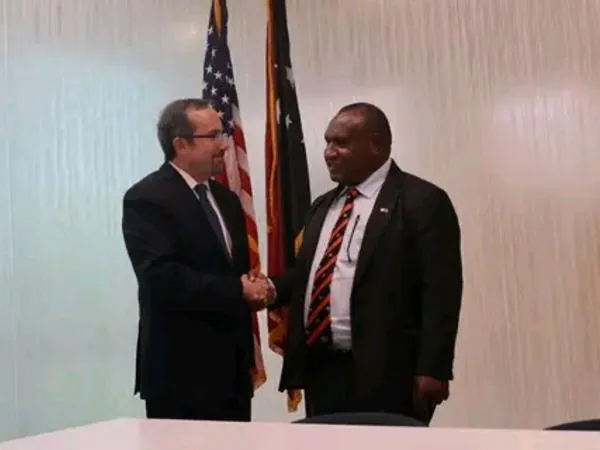
The new United States Embassy in Port Moresby was officially opened recently when Prime Minister James Marape and US Under Secretary of State for Management, Ambassador John Bass cut the ribbon into the new complex. US State Department said the $US250 million or over K800 million project is a symbol of their commitment to supporting democracy, prosperity and security in Papua New Guinea, Solomon Islands and Vanuatu.
Ambassador Bass said the new building marks a significant relationship between PNG and the US as well as Indo-Pacific US relations. He added that there are a lot of Americans who play an important role in the US-PNG partnership and the Pacific.
"This Embassy says a lot about how the US thinks about PNG and our relationship with its people and it's quite bigger than our prior embassy and that reflects the growing size of our embassy staff, the increasing number of US Government personal visiting to consult and work on joint initiatives and the expanding scope of our shared agenda," Ambassador Bass said.
Prime Minister, Hon James Marape was thankful for the establishment of the new embassy building and expressed that it increases the partnership between both Nations and the Indo-Pacific region. He said PNG is looking forward to increasing trade relations with the US.
"We are happy that you have decided to make a bigger and permanent base in the country, we hope the new embassy building reflects our relationship with the United States going forward," PM Marape said.
Marape also thanked all Americans who contributed to the development of Papua New Guinea including Missionaries, aid, and volunteer workers.
In attendance at the launching of the Embassy complex where Heads of Missions in PNG and the Pacific, members of parliament, government dignitaries, corporate heads stakeholders and other contributing partners.
The quality of the conduct and management of elections in Papua New Guinea has deteriorated in the 2022 national elections. This was revealed in an elections observers report presented by Transparency International Papua New Guinea (TIPNG) last week at the election seminar in Port Moresby.
TIPNG was among other observers engaged to observe the 2022 national election. In the report that was presented TIPNG highlighted areas that needs improvement for the future, and it is focused on providing evidence sharing based practices to the Electoral Commission and the Government for interventions to promote transparency and integrity within the National Elections.
Chairman of TIPNG Peter Aitsi said they are pleased to have the newly established Special Parliamentary Committee for Elections which is chaired by the Governor for East Sepik Allan Bird to look into the report and hopefully take onboard recommendations and Initiate reforms.
Governor Bird said it took many years for the committee to be approved by the Government and thanked the Marape-Rosso Government for making it possible.
"In January, the Government will appear before the committee to handover their reports and be subject to questions related to the conduct of the elections if the committee deems it necessary and the general public as well as academics will also be invited to raise their concerns. Then we will proceed on to all provinces of the country to see how the elections were conducted according to the observer’s report," Governor Bird said.
Electoral Commissioner Simon Sinai thanked Governor Allan Bird for taking the initiative and leadership in recognizing the elections in the country for the first time. Mr Sinai said this will give the people of the country the freedom and hope that there will be improvements in future elections.
"We must know that there are processes and procedures in place and there are people controlling and managing the system so when the system starts letting lose people will take advantage of the system for their own agendas. Those are some of the issues relating to the election but now with the observers report we will start incorporating and integrating their recommendations into our operational setup," Sinai said.
The Investment Promotion Authority is calling on business houses, corporate organisations, small and medium enterprises and the general public, to look out for new changes in the display and content of its newly launched online registry service as it undergoes transition.
In addressing participants at the PNG Mining and Petroleum Conference in Sydney Australia, Managing Director of the IPA Mr. Clarence Hoot alerted companies of the need to re-register their companies to avoid them being struck off the new upgraded online registry system.
Mr. Hoot said. “Re-registration is free and a window of one year period from 1 December 2022, will be given for clients to update all their company records for free. Companies who fail to re-register within this period will have their companies struck off the IPA business/company registry”.
The IPA’s new and upgraded online registry service went live on the 1st of December 2022 with additional features for users to manage their company records and also register entities.
The IPA is informing its clients that there will be some teething-in issues from the Go-Live date and cautioned its clients that not all data would be available at this stage. The Authority will continue to provide updates on what is happening and what is expected from them as part of embracing the new changes.
Since the new system went live, the IPA has ceased accepting hard copies of forms lodged to renew or update business records. It is only accepting paper forms for the registration of new entities.
Existing entities will be able to update their data online once the data migration process has been completed. During this period the IPA will waive any late filing fees for companies whose annual returns are due during this period.
Clients who have an existing online account should expect an email from the system prompting them to create new passwords for their accounts. Those with prepaid accounts are not able to access their accounts at this stage as the account balances are being migrated at the moment.
The IPA continues to embrace ICT to modernize its systems and processes to to be on par with the current global trends in doing business.
Follow on LinkedIn:
PNG Business News
Be the "First" to get our exclusive Digital Magazine & Weekly Newsletter.