Category:
Prime Minister Officially Launches Review of Government Form and System, with Election of PM
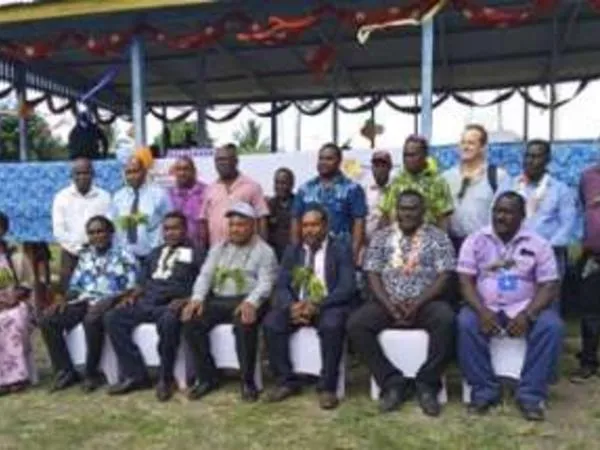
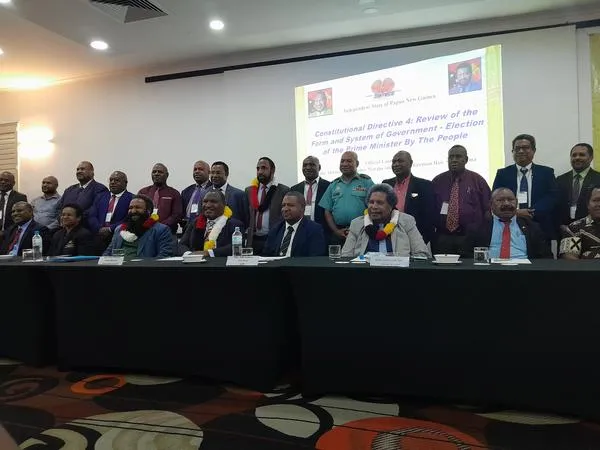
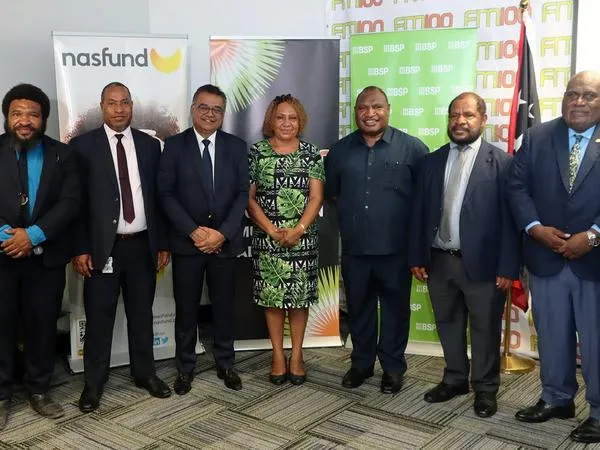
Photo: The Prime Minister with government delegates and members of Parliament at the Launching Ceremony
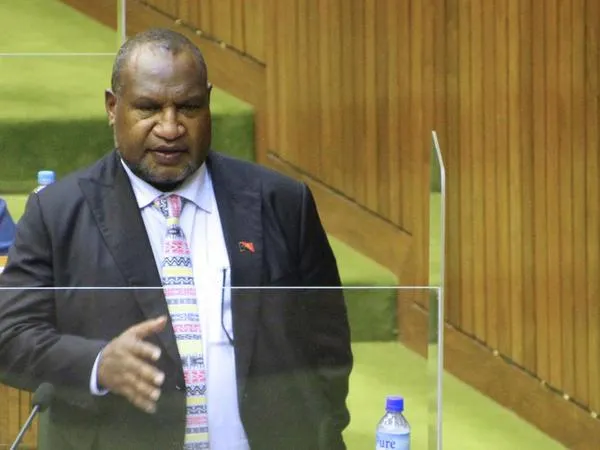
Prime Minister Hon. James Marape and Constitutional and Law Reform (CLRC) Chairman Hon. Saki Soloma launched the Constitutional Directive No.4: Review of the Form and System of Government -The Election of the Prime Minister on 15 February at Holiday Inn Hotel (Waigani)
The Prime Minister also launched an online questionnaire or survey for the Review, to allow citizens and interested persons and organizations to access and contribute their views using the links below to access the online questionnaire or survey and give their views.
http://bitly.ws/AgaK or https://docs.google.com/forms/d/15Wm-wVFkfthb-WCqy3cflDSktCnME2CW-W2WHAiMesQ/prefill
Speaking at the launching, Mr. Marape acknowledged that Papua New Guinea needed a wholistic review of the way the country should be governed, looking into the three arms of government (the Executive, Judiciary, and Legislative) as politicians "are usually more overlapped in the legislative process" and the time spent in listening and identifying the people's needs in the provinces is limited.
"In my honest opinion, voting for the Prime Minister is the way forward and every Papua New Guinean should exercise their rights in voting for a Prime Minister as the Reform exercise is underway," he said.
"This will give Papua New Guineans the opportunity to speak their mind using the survey that will be carried out as to how best the country should be governed after 50 years of Independence. We need a refurbishment and refined government that will suit the interest of the people," stated the Prime Minister.
The online survey is accessible from today until the 30th of June 2023 when the Inquiry closes.
CLRC will also accept written submissions either delivered by hand, postal mail, or email to the following contact details:
Postal Address: The Secretary - Constitutional and Law Reform Commission Paragon Building, Second Floor, Kumul Avenue, Waigani P. O Box 3439, BOROKO, NCD Papua New Guinea
Other methods of data collection include:
- Nationwide consultations in the Provinces and AROB from the 5th March to 18 May 2023;
- Public forums;
- One-on-one meetings;
- The use of social media, including the official CLRC Facebook page;
- Technical papers; and
- Study Tours
Key areas or matters of study under this Review include and are not limited to:
- the current structure of the National Parliament;
- the election of the Prime Minister;
- the system of government; and
- the different levels of Government
The final report will also contain the recommendations that are expected to be completed and delivered to Mr. Marape in November or December 2023.
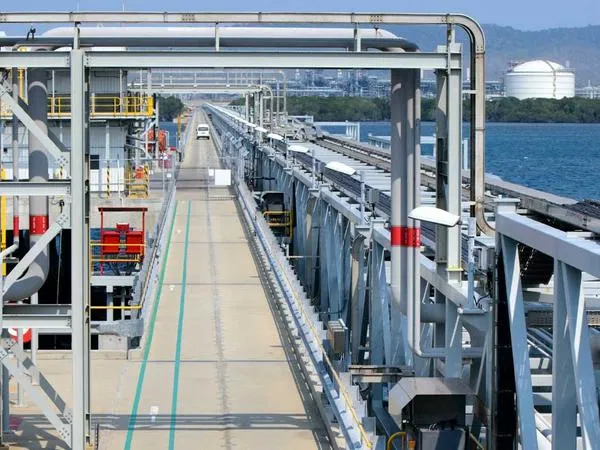
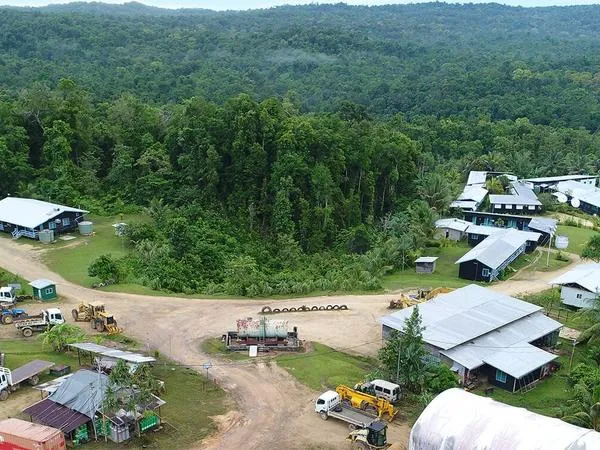
Woodlark Gold Project Update
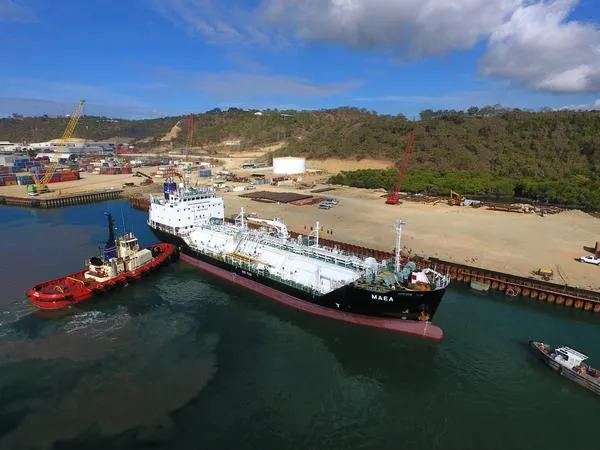
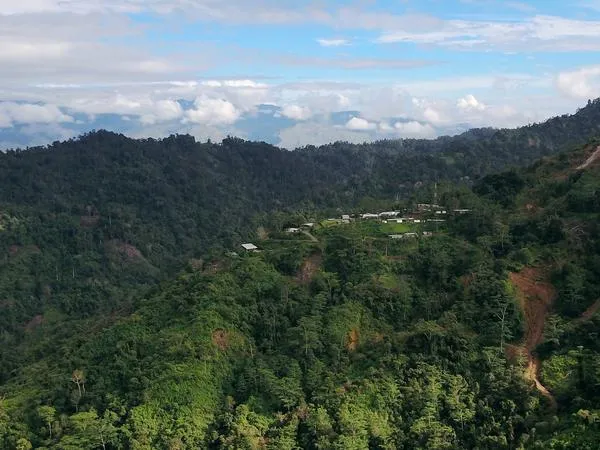
Photo credit: Geopacific Resources
Geopacific Resources Limited is pleased to provide an update on corporate and project activities conducted at the Woodlark Gold Project together with an outline of planned future work programs for 2023.
Outcomes from 2022
In February 2022 Geopacific announced suspension of development activities at the Project due to a significant capital cost increase which impacted on available project funding. Geopacific provided a corporate update in May 20221 outlining a business transformation plan with a clear focus on re-evaluating the future pathways for the Project including clearing residual contractual matters and maintaining the Company’s social licence to operate.
The following are key outcomes from activities undertaken in 2022 which included execution of the business transformation plan.
- The completion of 23km of resource infill, extension and exploration drilling. This drilling improved confidence in high grade areas and identified new zones of mineralisation adjacent to the existing deposits.
- The completion of an updated Mineral Resource Estimate for the Woodlark Project. The update improved confidence in the 1.5Moz Mineral Resource with 94% now in the Measured and Indicated categories2 .
- The community relocation project continued to progress, with the project now 66% overall complete. This provided access to largely untested areas of the Kulumadau deposit within the footprint of the open pits delineated by past studies.
- The community relocation program has been well received by the Papua New Guinea (‘PNG’) government and regulators resulting in a letter of commendation from the Mineral Resource Authority of PNG and positive press coverage within PNG.
- Continuing community engagement and provision of services maintained the Company’s social licence.
- A strategic review was conducted following unsolicited approaches to the Company. This resulted in the identification of potential development partners and dialogue is ongoing.
Outlook for 2023
Following receipt of the Mineral Resource Update in December 2022, the Company has been busy preparing a work program for 2023, with the aim of maximising value in a cost-effective manner. The initial planning of the work program for 2023 is now complete, and subject to available funding, it is the Company’s intention to execute the following work streams during the course of 2023:
- Complete a geological and targeting review focused on high grade opportunities.
- Update of Project operating and capital cost estimates to reflect the current economic environment.
- Assess the potential to optimise the Project via relocation of the processing plant and associated project infrastructure, along with the potential for staged development with an initial focus on the high-grade core of the Mineral Resource.
- Update of open-pit designs and production schedules based on the Mineral Resource Update.
- Preparation of a Pre-Feasibility level study, taking into account the above, and subject to study outcomes enabling the re-statement of Ore Reserves for the Project.
- Continue with the community relocation project on a cost effective ‘self-perform’ basis. This will initially target houses which are near completion.
Interim Chief Executive Officer, Richard Clayton commented
“The work programs executed in 2022 have provided a platform for future work to unlock value from the Woodlark Gold Project. Importantly, the exploration activity and Mineral Resource Update executed in 2022 have delivered valuable data to re-optimize the Woodlark development plan. We will continue to advance the key work packages in 2023, to define the optimal pathway to maximise value from the Project, and to unlock the island’s considerable exploration potential.”
Article courtesy of Geopacific Resources. The full press release can be found HERE
PNG Tourism Promotion Authority Commences Consultations on New National Tourism Policy, Marketing Strategy
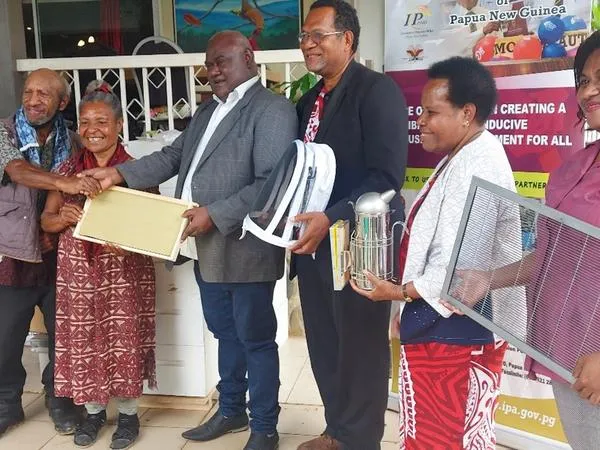
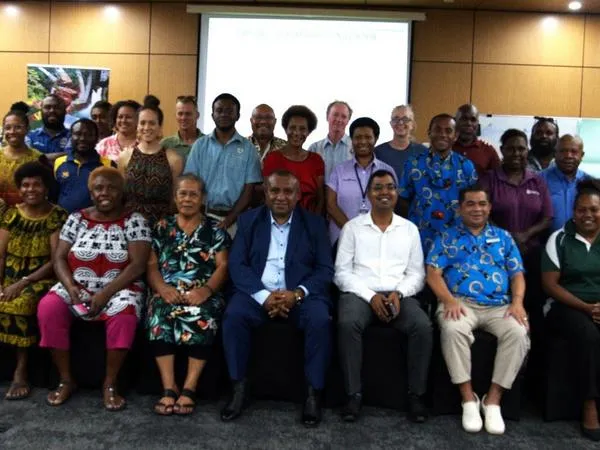
Photo: 2023 Regional Tourism Consultation Workshop participants made up of the New Guinea Islands tourism industry and the PNG Tourism Promotion Authority.
The Papua New Guinea (PNG) Tourism Promotion Authority (TPA) has commenced a series of regional consultations on the development of a new PNG National Tourism Policy and Marketing Strategy.
The TPA, in partnership with the Asian Development Bank’s (ADB) Pacific Private Sector Development Initiative (PSDI), will travel across PNG from 9-28 February 2023 to speak with tourism industry stakeholders as part of its National Tourism Policy 1995 review.
The regional consultations will cover PNG’s four regions—New Guinea Islands (Kokopo), Momase (Madang), Highlands (Mt Hagen) and Southern (Port Moresby).
The first consultations, held on 9-10 February in Kokopo, were attended by the region’s tourism industry stakeholders, operators, guides, event organizers and provincial tourism offices.
Attendees discussed PNG tourism policy reform issues, priorities, and options; the policy development process; future opportunities for New Guinea Islands’ tourism industry; and the role of the TPA in enabling, marketing, and coordinating the tourism sector.
PNG TPA Chief Executive Officer Eric Mossman Uvovo said consultations on the new National Tourism Policy and Marketing Strategy were critical, and would inform subsequent legislative amendments to the PNG Tourism Promotion Authority Act 1993.
“Since the establishment of PNG’s National Tourism Policy 1995 and Destination Marketing Strategy 2018-2022, a lot has changed,” Mr. Mossman Uvovo said.
“The tourism industry is primarily driven by the private sector, so these consultations are important to ensure the new policy helps PNG to develop tourism sustainably, maximise its resources, and position itself as a potential lead Pacific tourism destination.”
Alongside these private sector consultations, PSDI held interviews with multiple PNG government departments and agencies to gauge views on the policy and potential avenues of reform.
PSDI is an ADB technical assistance program undertaken in partnership with the Governments of Australia and New Zealand. PSDI supports ADB's 14 Pacific developing member countries to improve the enabling environment for business and to achieve inclusive, private sector-led economic growth.
It is supporting the TPA to rebuild the PNG tourism sector following COVID-19, and to undertake longer-term tourism sustainability and resilience planning.
The new PNG National Tourism Policy is scheduled for completion by April 2023.
The PNG TPA is a statutory body funded by the Government of PNG. The ultimate goal of the TPA is to market and promote PNG to the world as a desirable travel destination.
Article courtesy of PNG Tourism Promotion Authority
LNG Camp Specialist Designs 2,500-Person Camp Complex
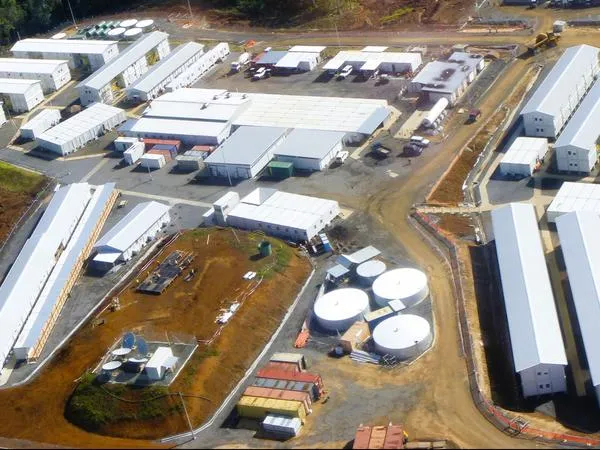
Modular building specialist Ark Pacific (‘Ark’) has delivered 1,800 camp rooms and a multitude of building types for PNG’s resource sector. Most recently, Ark has finalised the design of a 2,500-person camp complex for the imminent Papua LNG project. The company also has two other LNG camp complexes (i.e., another 1,000 rooms) in the design pipeline. Ark’s building systems are engineered for ease of assembly as well as transportation, making them ideal for remote development sites.
Ark’s modular building systems were first introduced to PNG in 2010 during the PNG LNG construction phase, with the design, supply, and installation of both the pioneer and main camps for construction of Komo Airfield. A 1,000-person, multi-storey accommodation complex and support buildings were delivered utilising a 99 percent local workforce in less than one year.
Numerous and diverse Ark buildings have since been delivered throughout PNG. Many of these buildings are on the gold mining island of Lihir where Ark has successfully delivered projects (including 800 camp rooms) for the last six years. Currently scheduled projects on Lihir will see Ark delivering another fifteen buildings, as well as a further 800 camp rooms over at least the next three years.
Ark’s 2,500-person camp complex design for the Papua LNG development is based on its flatpack building system. The system can be likened to ‘Lego’ in that its individual modules literally ‘click together’ (both horizontally and vertically), providing clients with virtually endless building configurations.
The ‘Lego-like’ like nature of Ark’s flatpack system has the following advantages:
- Rapid assembly: Ten camp rooms can be assembled in just one day by four workers.
- Unskilled workforces: Local unskilled workers from footprint communities can easily assemble Ark buildings – maximising the client’s local content and benefiting local economies.
- Repurposeability: Buildings can be disassembled once they are no longer needed and transported elsewhere to be used for diverse purposes, such as for schools or medical clinics.
A significant feature of Ark’s product is its extremely low freight footprint (up to 70 percent less than competitors). Ark’s flat-packed rooms are designed to be transported to remote development sites quickly and cost-effectively, with minimal environmental impact.
Unlike competing products, six of Ark’s flat pack units are equivalent to a single standard 20 foot shipping container when stacked together ready for transport – this means less ships, trucks, and barges, etcetera when building with Ark.
Not only are freight costs drastically reduced when building with Ark’s building systems, so too are carbon emissions. Furthermore, degradation of local road networks is reduced and in the case of the Purari delta and river system which will be used for the Papua LNG project, local shoreline communities will be subjected to less water traffic and hence less vessel wake erosion.
The sustainability of Ark’s buildings extends beyond their low freight footprint, repurposeability, and utilisation of local workforces. Ark has invested in solar technologies and is now providing its resource clients with high quality and fit-for-purpose solar systems, further assisting them to both drastically reduce their emissions and minimise their energy costs.