
Category:



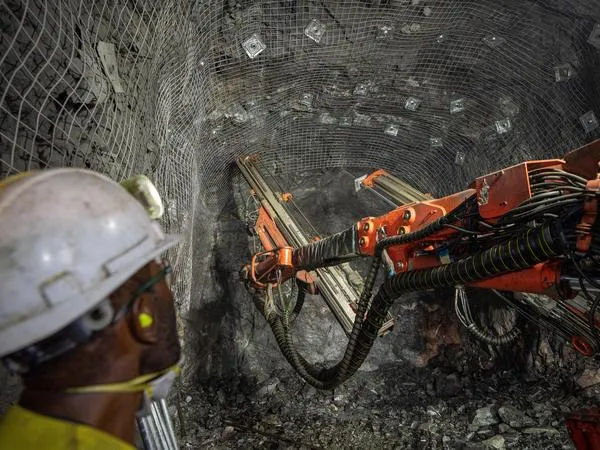
K92 Mining Announces Latest High-Grade Gold & Copper Drill Results at Kora-Kora South and Judd-Judd South; Multiple Dilatant Zones Intersected
K92 Mining Inc. is pleased to announce its latest high-grade results from the ongoing surface and underground diamond drilling of the Kora, Kora South, Judd and Judd South deposits in addition to the Kora Northern Deeps target at the Kainantu Gold Mine in Papua New Guinea.
The results for the latest 89 diamond drill holes completed from surface and underground are summarized in the tables below. The results continue to demonstrate the high-grade, continuity and expansion potential of the Kora-Kora South and Judd-Judd South vein systems.
Surface drilling focused on southern strike extensions and extending Judd mineralization towards surface, while underground drilling focused on expanding the known Judd mineralization, increasing drill density at Kora and extending mineralization at Kora to the South of the Kora resource. Importantly, all drill holes at Kora-Kora South intersected mineralization, with 13 intersections exceeding 10 g/t AuEq and 36 intersections exceeding 5 g/t AuEq. At Judd-Judd South, all drill holes intersected mineralization, with 11 intersections exceeding 10 g/t AuEq and 29 intersections exceeding 5 g/t AuEq.
Kora South Drilling Results
At Kora South, the results are highlighted by surface hole KUDD0035 recording multiple intersections including 50.05 m at 1.60 g/t Au, 34 g/t Ag and 2.01% Cu (5.25 g/t AuEq, 31.53 m true width) from the K1 Vein, 6.35 m at 1.81 g/t Au, 483 g/t Ag and 2.77% Cu (12.29 g/t AuEq, 4.00 m true width) from the K2 Vein and 6.40 m at 0.83 g/t Au, 237 g/t Ag and 3.24% Cu (9.00 g/t AuEq, 4.03 m true width) from the Kora Link Structure. KUDD0035 is especially significant as it represents the first dilatant zone to be intersected from the K1 Vein. Previous dilatant zones at Kora South have only been intersected from and between the K2 and K3 Veins.
The latest surface step-out drilling at Kora South intersected mineralization in all holes and recorded multiple dilatant zone intersections. Step-out drill highlights include holes KUDD0033, which also intersected a dilatant zone, recording multiple intersections including: 27.90 m at 4.65 g/t Au, 76 g/t Ag and 3.03% Cu (10.48 g/t AuEq, 19.25 m true width) from the K2 Vein; KUDD0038 recording multiple intersections including 14.00 m at 0.91 g/t Au, 35 g/t Ag and 2.58% Cu (5.49 g/t AuEq, 8.82 m true width) from the K1 Vein and 6.90 m at 5.86 g/t Au, 111 g/t Ag and 6.77% Cu (18.12 g/t AuEq, 4.35 m true width) from the K2 Vein; KUDD0037 recording multiple intersections including: 6.70 m at 5.04 g/t Au, 135 g/t Ag and 6.99% Cu (17.96 g/t AuEq, 4.76 m true width) from the K1 Vein, and; KUDD0039 recording multiple intersections including 6.50 m at 3.32 g/t Au, 103 g/t Ag and 7.76% Cu (17.08 g/t AuEq, 4.81 m true width) from the K2 Vein. We note that within the existing Kora deposit, grade tenor is higher at depth, and drilling is underway to target this area from the southern 1205 Level underground drill drive plus deeper surface drilling.
Judd South Drilling Results
At Judd South, the results are highlighted by hole KUDD0032 recording multiple intersections and a dilatant zone, including 30.30 m at 3.49 g/t Au, 27 g/t Ag and 1.43% Cu (6.13 g/t AuEq, 16.06 m true width) from the J1 Vein. KUDD0032 is located in a cluster of J1 Vein dilatant zone intersections, including previously reported hole KUDD0001 located ~100 m to the north of KUDD0032, which recorded 66.55 m at 3.65 g/t Au, 9 g/t Ag and 0.78% Cu (5.02 g/t AuEq, 43.26 m true width) and KUDD0038, ~100 m up-dip and to the south from hole KUDD0032, which also recorded multiple intersections, including 28.70 m at 2.85 g/t Au, 25 g/t Ag and 0.85% Cu (4.53 g/t AuEq, 18.08 m true width) from the J1 Vein.
Other drill highlights include: KUDD0034 recording multiple intersections including 10.32 m at 9.20 g/t Au, 30 g/t Ag and 2.36% Cu (13.36 g/t AuEq, 5.68 m true width) from the J2 Vein; KUDD0033 recording multiple intersections including 1.50 m at 11.03 g/t Au, 18 g/t Ag and 0.03% Cu (11.30 g/t AuEq, 1.04 m true width) from the J2 Vein, and; KUDD0036 recording multiple intersections including 7.70 m at 3.98 g/t Au, 10 g/t Ag and 1.18% Cu (6.01 g/t AuEq, 4.93 m true width) from the J1 Vein. The system remains strong to the south recording solid thicknesses and 52% of all Judd South J1 Vein surface holes have recorded grades exceeding 5 g/t AuEq to date.
Kora Drilling Results
At Kora, underground drilling towards the south is highlighted by holes KMDD0503 recording multiple intersections including 6.63 m at 0.91 g/t Au, 91 g/t Ag and 6.34% Cu (12.21 g/t AuEq, 2.34 m true width) from the K2 Vein and KMDD0511 recording multiple intersections including 12.04 m at 7.20 g/t Au, 28 g/t Ag and 2.22% Cu (11.11 g/t AuEq, 7.34 m true width) from the K2 Vein. These holes extended high-grade mineralization to the south and notably, the holes continue to demonstrate increasing copper grade tenor as drilling approaches the A1 Porphyry target. This has also been observed in Kora South surface holes KUDD0033, KUDD0035, KUDD0037, KUDD0038 and KUDD0039 noted above. Mineralization remains open along strike to the south and at depth, and the Company plans to target both areas from underground via the 1205 Level southern drill drive (Kora South) and once the twin incline development progresses closer to the Kora resource (Kora Deeps, targeting 2Q 2023).
Underground drilling in the central and northern areas of Kora continue to record high-grade intersections, highlighted by holes KMDD0504 recording multiple intersections including: 6.12 m at 88.12 g/t Au, 5 g/t Ag and 0.16% Cu (88.44 g/t AuEq, 4.87 m true width) from the K1 Vein; KMDD0499 recording multiple intersections including 6.23 m at 13.93 g/t Au, 3 g/t Ag and 0.13% Cu (14.18 g/t AuEq, 4.60 m true width) from the K1 Vein, and; KMDD0506 recording multiple intersections including 3.45 m at 15.79 g/t Au, 3 g/t Ag and 0.41% Cu (16.48 g/t AuEq, 3.20 m true width) from the K1 Vein.
Other underground drill highlights include KMDD0519 recording multiple intersections including: 5.30 m at 13.49 g/t Au, 30 g/t Ag and 0.61% Cu (14.84 g/t AuEq, 4.65 m true width) from the K2 Vein; KMDD0516 recording multiple intersections including 4.15 m at 8.83 g/t Au, 39 g/t Ag and 1.82% Cu (12.24 g/t AuEq, 3.30 m true width) from the K2 Vein, and; KMDD0515 recording multiple intersections including 8.30 m at 8.61 g/t Au, 19 g/t Ag and 0.51% Cu (9.67 g/t AuEq, 7.83 m true width) from the K2 Vein.
Judd Drilling Results
At Judd, underground and surface drilling continue to demonstrate high-grade and expansion potential with the known deposit open along strike in both directions, up-dip and down-dip. To date, four known veins have been recorded at Judd, with the J1 Vein being the most productive, and similar vein orientation and quartz-sulphide Au-Cu-Ag mineralization as Kora.
The drill results are highlighted by surface hole KODD0026 recording multiple intersections including 5.40 m at 56.46 g/t Au, 2 g/t Ag and 0.17% Cu (56.76 g/t AuEq, 3.46 m true width) from the J1 Vein. KODD0026 demonstrates the strong potential for high grade mineralization to extend up-dip from the Judd resource estimate towards surface. This substantial area is largely untested and is a key focus of our surface drilling program.
Underground drilling to the south and down-dip encountered multiple high-grade intersections with highlights including: JDD0163 recording multiple intersections including 4.06 m at 14.27 g/t Au, 65 g/t Ag and 0.90% Cu (16.53 g/t AuEq, 2.80 m true width) from the J1 Vein; JDD0159 recording multiple intersections including 2.49 m at 6.62 g/t Au, 32 g/t Ag and 1.91% Cu (10.08 g/t AuEq, 1.40 m true width) from the J1 Vein, and; JDD0172 recording multiple intersections including 10.90 m at 6.06 g/t Au, 16 g/t Ag and 0.73% Cu (7.43 g/t AuEq, 4.74 m true width) from the J1 Vein.
Other drill highlights include KODD0020 recording multiple intersections including 16.65 m at 6.92 g/t Au, 4 g/t Ag and 0.33% Cu (7.49 g/t AuEq, 9.66 m true width) from the J1 Vein, and underground hole JDD0170 recording multiple intersections including 3.15 m at 10.10 g/t Au, 12 g/t Ag and 1.12% Cu (12.05 g/t AuEq, 2.09 m true width) from the J1 Vein. These results continue to demonstrate that the vein system remains open at depth, to surface and along strike.
John Lewins, K92 Chief Executive Officer and Director, stated, “The drill results continue to demonstrate the significant resource growth potential of the Kora-Kora South and Judd-Judd South vein systems as shown by multiple high-grade gold and copper intersections at significant thickness.
The most recent results have certainly enhanced our understanding of the dilatant zones with 5 dilatant intersections recorded from surface drilling, including KUDD0035 recording 50.05 m at 5.25 g/t AuEq from the K1 Vein and KUDD0033 recording 27.90 m at 10.48 g/t AuEq from the K2 Vein, and KUDD0038 recording 14.00 m at 5.49 g/t AuEq from the K1 Vein at Kora South, plus KUDD0032 recording 30.30 m at 6.13 g/t AuEq from the J1 Vein, and KUDD0038 recording 28.70 m at 4.53 g/t AuEq from the J1 Vein at Judd South. Dilatant zones have the potential to be a significant endowment multiplier due to their thickness being several times greater than the vein system thickness average.
The results have also significantly expanded the known deposit dimensions at Judd-Judd South, documenting multiple high-grade intersections. In addition to the highlights noted above, highlights include: KODD0026 recording 5.40 m at 56.76 g/t AuEq from the J1 Vein, JDD0163 recording 4.06 m at 16.53 g/t AuEq from the J1 Vein, JDD0172 recording 10.90 m at 7.43 g/t AuEq from the J1 Vein and KODD0020 recording 16.65 m at 7.49 g/t AuEq from the J1 Vein. Judd South has demonstrated a very strong hit rate to date, with 52% of surface holes drilled exceeding 5 g/t AuEq and at solid thickness. It is important to note that high-grade mineralization at Judd was encountered from underground development in 3Q 2020 and has only been a recent exploration focus. We see significant expansion potential along strike, at depth and towards surface.
Also, we are pleased with the results at Kora, highlighted by hole KMDD0504 recording 6.12 m at 88.44 g/t AuEq from the K1 Vein. Over the next few months, the twin incline, which is currently advancing ahead of budget, will be in position for drilling to target Kora Deeps, the down-dip extension of Kora, which we see as a high-potential target area.
We have almost completed a new drill cuddy at the southern extent of the 1205 level development, which is located in our Exploration Lease 470, approximately 125 metres to the south of the previously most southerly drill cuddy and almost 200 metres along strike from the Mining Lease 150 boundary. This will allow us to further ramp-up drilling to the south from underground. We plan to continue the development of 1205 to the south to allow additional drill cuddies to be developed, enabling us to further increase the number of underground drill rigs operating in EL 470 targeting Kora South and Judd South from underground.
The press release and figures can be found HERE


PM Marape welcomes successful outcomes of Australia-PNG Ministerial Forum
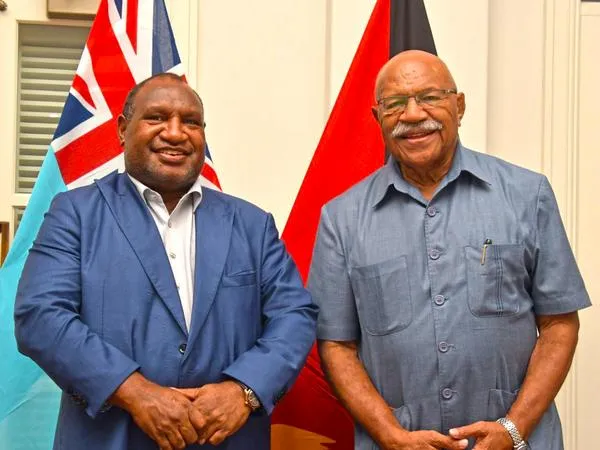
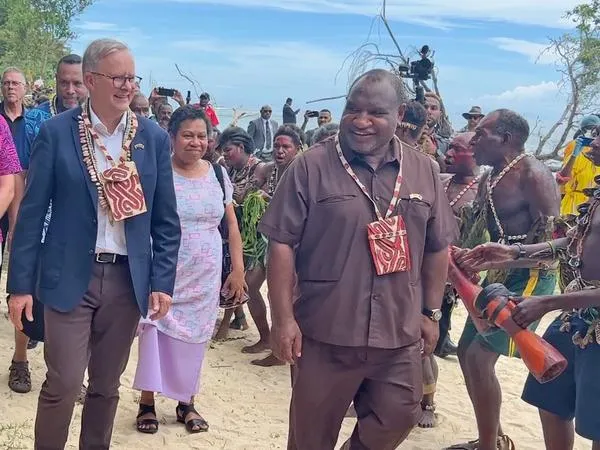
Photo: Prime Ministers Albanese and Marape at Commander’s Beach at Moem Barracks in Wewak last month.- PM’s Office Media
Prime Minister Hon. James Marape has welcomed the successful outcomes of the 29th Australia–Papua New Guinea Ministerial Forum which was held in Canberra, Australia, on February 17, 2023
“I welcome the outcomes of the very-successful Forum which follows on from my meeting with Australian Prime Minister, Hon. Anthony Albanese, last month,” he said
“One of the most-significant is our Ministers undertaking to ensure efficient and speedy Australian visa-issuing arrangements to help underpin labour, business and broader people-to-people connections
“This means that at least 75 per cent of completed visitor visa applications will be processed within 14 days, with in-country visa processing in PNG."
“This expands opportunities for Papua New Guineans to enter the Australian labour market, including increasing training and skilled labour under the new Australian Pacific Engagement Visa.
“I thank our PNG team led by Foreign Affairs Minister Hon. Justin Tkatchenko for a very-successful meeting which will be mutually-beneficial for both countries.”
The Forum was co-chaired for Australia by Senator Hon. Penny Wong, Minister for Foreign Affairs and for PNG by Minister Tkatchenko.
Participating Ministers for PNG were Hon. John Rosso, Deputy Prime Minister, in his capacity as Minister for Immigration and Labour plus other Ministers whose attendance was necessitated by the agenda of the Forum.
This was the first Ministerial Forum following elections in both countries in 2022. It was also the first in-person Forum held since 2019, due to border closures related to the COVID-19 pandemic. The last Ministerial Forum was held virtually on September 2, 2021.
The major outcomes are:
- Ministers renewed their commitment to the Comprehensive Strategic and Economic Partnership (CSEP), to guide the modern partnership between PNG and Australia. They undertook to implement this partnership through coordinated, deeper sectoral engagement led by Ministers from each side, and to take forward the outcomes and commitments arising from the 2023 Annual Leaders Dialogue;
- Ministers reflected on the deep historical and familial connections which have brought the nations together in a unique partnership, and committed to ensuring that this partnership of equal and sover’eign neighbours grows to reflect contemporary opportunities and challenges;
- Ministers undertook to further accelerate the integration of the two economies, including through the Australia-PNG Economic Partnership. They noted the importance of expanding opportunities for Papua New Guineans to enter the Australian labour market, including increasing training and skilled labour under the new Australian Pacific Engagement Visa. They acknowledged that efficient and speedy visa issuing arrangements would help underpin labour, business and broader people-to-people connections and announced separately a range of steps that would be taken to improve their respective systems. Ministers agreed to aim to process at least 75 per cent of completed visitor vias applications within 14 days. Ministers agreed to open in-country visa processing in PNG. They agreed to establish a joint ministerial working group to oversee this work, including Deputy Prime Minister Marles, Foreign Minister Wong, Minister for International Development and the Pacific Conroy, with Immigration Minister Giles, and on the PNG side, Deputy Prime Minister Rosso and Foreign Minister Tkatchenko;
- Reflecting the significant role of business and industry in the relationship, and the importance of Australia’s AUD24.8 billion (K58.8 billion) in investment in PNG, Ministers encouraged the two business communities to consider how to invest in the many opportunities such as special economic zones that PNG offered, including in downstream processing of agriculture, fisheries and forestry, and the green economy and in agriculture. They committed to examining recommendations and implementing mutually agreed outcomes of the bilateral trade assessment, as agreed in the CSEP, with particular focus on support for PNG’s biosecurity arrangements to enable it to access export opportunities including in Australia. They also welcomed the valuable input of the two business communities, as represented in their respective Business Councils;
- Ministers welcomed progress made in discussing the scope, purpose and structure of a broad Bilateral Security Treaty, in accordance with the timeline set by Prime Ministers at the Annual Leaders Dialogue in January 2023. They noted the need for consideration of domestic legal and constitutional aspects to enable a treaty to come into effect. They noted the importance that PNG placed on addressing internal security and law and justice issues, and Australia’s commitment to assist. Ministers agreed to establish a joint ministerial working group – including Deputy Prime Minister Marles, Foreign Minister Wong, Minister for International Development and the Pacific Conroy, and on the PNG side, Deputy Prime Minister Rosso and Foreign Minister Tkatchenko with Internal Security Minister Tsiamalili – to oversee deepening cooperation in these areas;
- Ministers noted the two countries’ commitment to supporting regional peace, security, economic resilience and Pacific unity as the most populous members of the Pacific family and recommitted to a Pacific-family first approach to regional security needs as endorsed by PIF leaders and as we work together to implement the 2050 Strategy for the Blue Pacific;
- PNG welcomed Australia’s renewed focus on climate change and Ministers agreed that Australia partnering with the Pacific to co-host the 31st UNFCCC Conference of the Parties (COP31) in 2026 would allow us to combine forces and secure ambitious climate change outcomes and help place Pacific voices at the centre of international climate discussions. Ministers recognised PNG’s interest in securing a greater share of international climate finance and welcomed PNG’s participation in the Indo-Pacific Carbon Offset Scheme (IPCOS). Ministers committed to sign the IPCOS Joint Action Plan as early as possible this year; and
- Ministers welcomed conclusion in 2022 of the first annual CSEP Action Plan and looked forward to progress under the 2023 CSEP Action Plan, as a tool to help take forward Prime Ministerial and Ministerial priorities. The six CSEP pillars are:
- Strong Democracies for a Stable Future;
- Close Friends, Enduring Ties;
- Economic Partnership for Prosperity;
- Strategic Cooperation for Security and Stability;
- Social and Human Development; and
- Near Neighbours, Global Partners


PNG as resource dependent as Saudi Arabia
Commentary by: Stephen Howes and Alyssa Leng
When we think of resource-dependent economies, we normally think of the Middle East, and economies like Saudi Arabia. Where does Papua New Guinea fit in?
Data available from the UN allows us to isolate value added in the resources sector from the rest of the economy (resource GDP). The ratio of resource to total GDP is a measure of resource dependency. This is available for 106 countries, and the top 15 are shown in the graph below by the blue bars (left hand side). The data is for the latest available year, which for most countries, including PNG, is 2021.
PNG comes in sixth place, just above Saudi Arabia.
We’ve told this story before using a different data set, based on World Bank data on resource rents. Writing in 2019, this indicator had PNG in tenth place, actually just below Saudi Arabia. But the resource rent measure is difficult to estimate as it requires estimates of the cost of production. Resource GDP is a more reliable measure as it comes straight from the national accounts. That said, some countries are missing from the UN data set: Democratic Republic of the Congo, Iraq and Angola for example.
Whatever its precise ranking, the overall message is clear: PNG is one of the most resource-dependent economies in the world.
How did this happen?
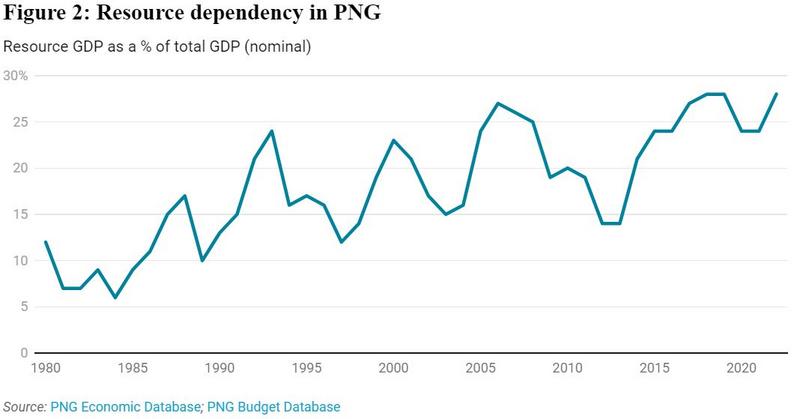
At independence, PNG’s resource sector was represented by a single mine, the now-closed Panguna copper mine in Bougainville. Looking at a graph of resource dependency over time traces out many of the key developments in PNG’s recent history (Figure 2). The ratio fell in the early 1980s as copper prices fell, but rose in the late 1980s as those prices recovered and as the second mine, Ok Tedi, opened. The resource-dependency ratio fell again sharply in 1989 when Panguna closed due to conflict in Bougainville, but soon hit a new high in the mini-boom of 1993 – of 24% – due to new oil projects and the new Porgera gold mine.
Resource dependency then fell as oil production declined, but increased again in the late 1990s with new oil fields and the Lihir gold mine. The 24% record of 1993 wasn’t broken though until the resource boom years of the 2000s when commodity prices skyrocketed. A new record of 27% was set in 2006. Then the ratio fell as commodity prices eased and as PNG LNG construction boosted the rest of the economy. (Construction of a resource project is not counted as part of resource output.)
The dependency ratio started on another upward cycle when liquified natural gas exports began in 2014 and reached a new record of 28% in 2019. COVID-19 caused commodity prices to fall, and Porgera was closed, so the ratio fell again, but now the Ukraine war has pushed oil prices up and the ratio is back up to 28%.
In summary, the resource sector is a bigger part of the PNG economy than ever, and a bigger part of it than nearly all other economies. PNG really is the Saudi Arabia of the Pacific. This important finding has several implications and raises some important questions.
First, GDP is an increasingly meaningless indicator for PNG, given the high foreign ownership of the increasingly important resource sector. We should focus on non-resource GDP as a better measure of national economic activity.
Second, it helps explain many other features of the PNG economy. For example, the ‘Dutch disease‘ associated with resource dependency helps explain why PNG is a high-cost economy. When this high level of resource dependency is also combined with PNG’s low level of urbanisation (the lowest in the world), it also becomes clear why income inequality in PNG is among the highest in the world. The benefits of resource dependency are not widely shared.
Third, one benefit of resource dependency should be government revenue generated from the resource sector. Figure 1 also shows resource revenue (the brown bars on the right hand side), using data from UNU-WIDER. It’s clear that the amount of resource revenue collected by resource-intensive economies varies significantly.
Yet PNG’s resource revenue is noticeably low considering the size of its resource sector. It appears to be getting less out of its resource sector compared to other countries. Why this is needs to be urgently understood.
While the resource sector is no doubt important to PNG’s future, the historical trend and international comparisons shown in this blog suggest that it is unlikely that the secret to economic success in PNG is more resource projects. If it was, the country’s economic success would be obvious for all to see.
Article courtesy of DevPolicy Blog. This research was undertaken with the support of the ANU-UPNG Partnership, an initiative of the PNG-Australia Partnership, funded by the Department of Foreign Affairs and Trade. The views are those of the authors only. Stephen Howes is Director of the Development Policy Centre and Professor of Economics at the Crawford School of Public Policy, at The Australian National University. Alyssa Leng is a research officer at the Development Policy Centre, working on the Papua New Guinea economy.
