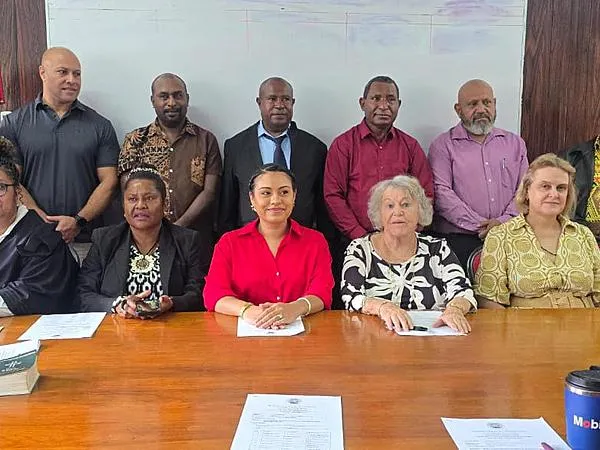
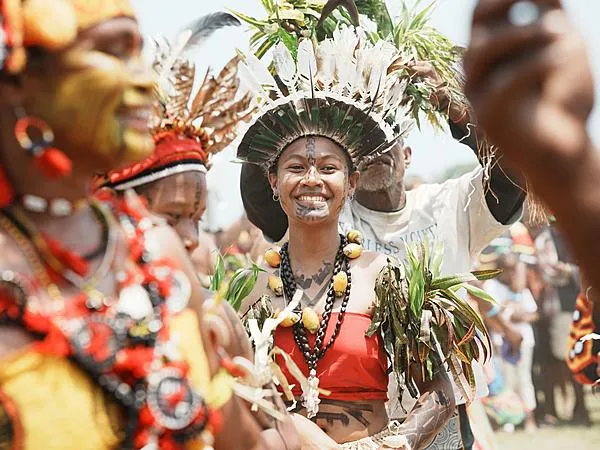
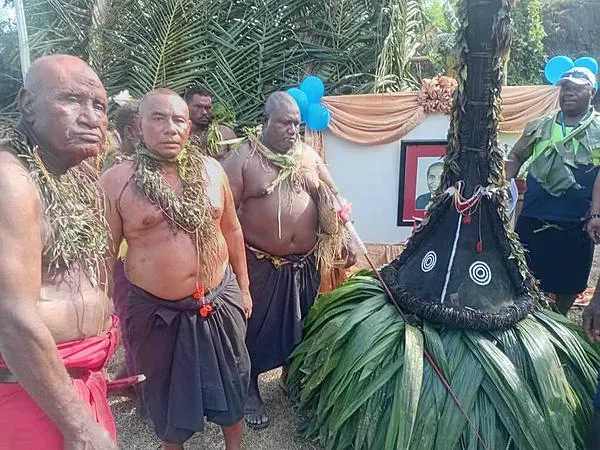
Papua New Guinea is preparing to strengthen its position in the global tourism market with a new national destination brand, Kam, Yumi Raun! (Come Explore With Us!), designed to raise international awareness and attract more visitors.
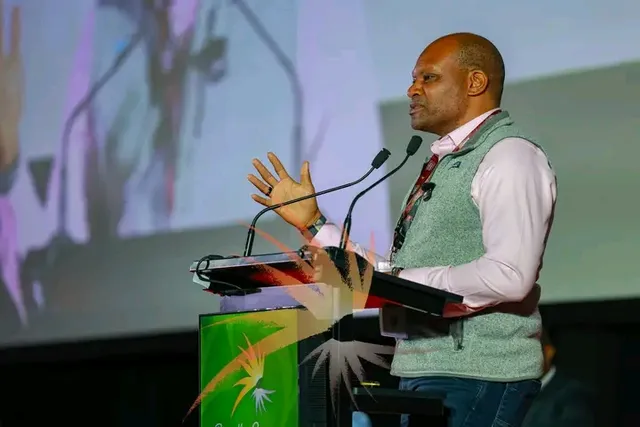
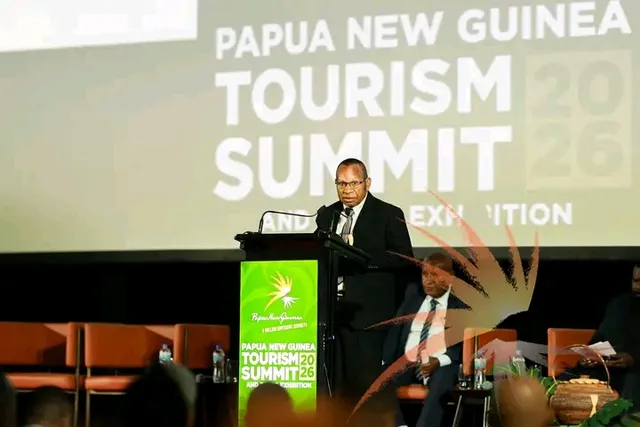
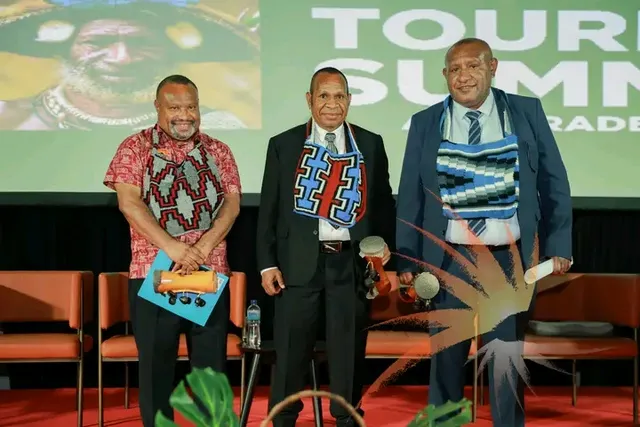
The Papua New Guinea Tourism Promotion Authority (PNGTPA) unveiled the brand and logo at the PNG Tourism Summit and Trade Exhibition 2026 at APEC Haus in Port Moresby, marking a new phase in the country's efforts to establish a recognisable identity in the international tourism market.
Developed in partnership with Trove Tourism Development Advisors, the brand will provide a consistent identity for international marketing campaigns, digital platforms, travel trade engagements and promotional activities.
The tagline was developed through research involving local communities, regional consultations and international travellers. It reflects four priorities: inviting visitors to explore PNG, celebrating its people and cultures, showcasing its natural environment and adventure opportunities, and encouraging authentic experiences rather than mass tourism.
PNGTPA Executive Manager for Marketing and Promotions Joel Keimelo said the brand placed Papua New Guineans at the centre of the country's tourism identity.
"Papua New Guineans told us who they are, and this brand lets them say it to the world. Kam, Yumi Raun! (Come Explore With Us!) is more than a tagline. It is an invitation from our people to the world to experience our country, discover our cultures and appreciate the natural beauty and diversity that make Papua New Guinea unique," Keimelo said.
Danny Cohanpour, chief executive and founder of Trove Tourism Development Advisors, said more than 5,500 people had contributed to the research and development of the brand.
He said the findings reflected the country's national identity and its potential to distinguish itself from competing tourism destinations.
Research conducted by Trove found that 84 per cent of surveyed past visitors rated PNG's natural environment as very or extremely appealing, while 80 per cent gave the same rating to the warmth and generosity of its people.
However, 59 per cent of surveyed travellers who had never visited PNG said they were only slightly familiar with the destination, highlighting the need for stronger international promotion.
The new brand will showcase tourism experiences across the country's four regions, including diving, trekking, birdwatching, adventure activities and cultural heritage.
PNGTPA said increased international arrivals could generate opportunities for local businesses, accommodation providers, tour operators and transport services, while supporting tourism investment and employment.
The authority expects the brand to underpin its international marketing campaigns from early 2027, positioning PNG as a distinctive destination and encouraging more travellers to explore its natural attractions and cultural diversity.
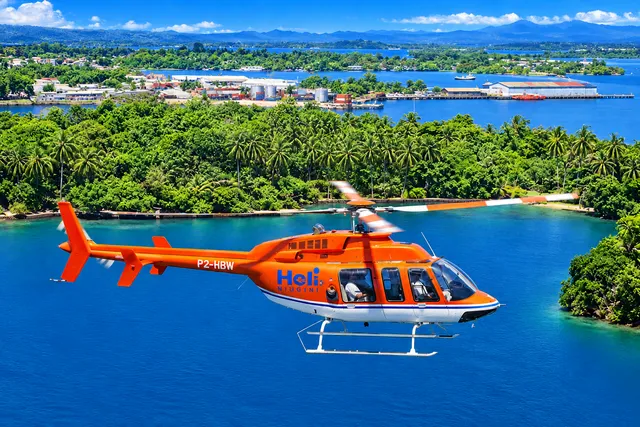
Papua New Guinea’s vast tourism potential could be further unlocked through improved aviation connectivity, with locally owned aviation company Heli Niugini positioning helicopter services as an important link between visitors and some of the country’s most remote and spectacular destinations.
With more than 40 years of operational experience, Heli Niugini is looking to expand its involvement in the tourism industry by exploring dedicated helicopter tourism products, scenic flights, historical tours, adventure tourism and private charter services.
The company highlighted these opportunities during the PNG Tourism Summit 2026, held at APEC Haus in Port Moresby from October 13 to 14, where it set up an information booth and engaged with tourism operators and industry stakeholders on ways to improve access to PNG’s unique natural, cultural and historical attractions.
Heli Niugini Customer Account Manager Wallace Takendu said accessibility remained one of the country’s biggest challenges in developing its tourism industry, despite having some of the world’s most spectacular landscapes, cultural attractions and historical sites.
“Papua New Guinea has enormous tourism potential, and Heli Niugini is ready to help connect the world to it,” Takendu said.
As a proudly Papua New Guinean-owned aviation company, Heli Niugini believes its aircraft, operational expertise and local knowledge can help connect visitors to destinations that are otherwise difficult or time-consuming to reach.
“Our helicopters can provide scenic flights, private charters, customised tourism experiences and access to remote locations, subject to appropriate landing arrangements and operational conditions.
“For Heli Niugini, it is not simply about transporting tourists. It is about helping unlock parts of Papua New Guinea that the world has yet to experience, while ensuring the benefits of tourism reach our people,” he added.
Among the destinations offering opportunities for helicopter-supported tourism are the Kokoda Track and its significant World War II historical sites, the Sepik River and its rich cultural heritage, the Owen Stanley Ranges, the fjords of Tufi, and remote highlands and coastal destinations.
Through scenic flights, private charters and customised tourism experiences, the company sees opportunities to develop new ways for international and domestic visitors to experience PNG, subject to appropriate landing arrangements and operational conditions.
Tourism Partnerships and New Products
Heli Niugini is looking to strengthen partnerships across the tourism industry to develop commercially viable visitor experiences.
Takendu said the company wanted to build stronger relationships with hotels, resorts, tour operators, cruise tourism providers, provincial tourism authorities and international travel companies.
The objective is to develop integrated tourism packages combining helicopter transport with accommodation, cultural experiences and guided activities.
For example, visitors arriving in Port Moresby could potentially experience helicopter sightseeing over the Owen Stanley Ranges or participate in specially arranged historical tours of the Kokoda region.
Takendu said the company wanted tourism operators to recognise Heli Niugini as more than an aviation service provider, but as a long-term partner in developing and promoting new tourism products for Papua New Guinea.
He said collaboration across the industry would help make these experiences accessible, professionally managed and commercially sustainable.
Kokoda Tourism Among Key Opportunities
One area Heli Niugini believes has significant potential is helicopter-supported Kokoda tourism.
The concept would allow visitors to experience the historical significance and natural beauty of the region through carefully planned tourism itineraries.
Kokoda, in Oro Province, is recognised for its important World War II history and challenging trekking experience. Helicopter-supported tourism could provide additional ways for visitors to explore the region, subject to operational and landing arrangements.
The company is also exploring opportunities to work with tourism authorities, resorts and established tour operators to identify other destinations where helicopter access could create new visitor experiences.
As demand develops, Heli Niugini will evaluate opportunities to further enhance its aircraft capabilities, operational infrastructure and tourism services to support the growth of this market.
Creating Economic Opportunities for Local Communities
An important part of Heli Niugini’s tourism vision is ensuring that the growth of the sector creates economic opportunities for Papua New Guineans.
Takendu said helicopter tourism had the potential to benefit local communities through employment, guiding services, accommodation, cultural activities and other tourism-related businesses.
He emphasised the importance of working closely with local landowners, communities and tourism operators to ensure tourism development delivers shared economic benefits.
“More importantly, we believe helicopter tourism can generate real economic opportunities for local communities through employment, guiding services, accommodation, cultural activities and other tourism-related businesses,” he said.
For Heli Niugini, the opportunity extends to connecting communities, creating new tourism experiences and helping bring lesser-known parts of PNG to the international market.
Heli Niugini sees opportunities to play a greater role in positioning PNG as a premium destination for adventure, cultural and nature-based tourism.
Takendu said the country had extraordinary tourism assets and experiences that few other destinations could offer.
Through stronger industry partnerships, investment and improved aviation connectivity, the company believes it can contribute to making these experiences more accessible to visitors.
Heli Niugini is positioning helicopter connectivity as an opportunity to diversify PNG’s tourism products, improve destination accessibility and expand the economic benefits of tourism for local communities.
Papua New Guinea’s tourism industry could benefit from faster visa processing, secure digital identity verification and more accessible online bookings and payments as the government and technology partners explore ways to reduce barriers for international visitors and local tourism operators.
These opportunities were highlighted during a digital transformation session at the PNG Tourism Summit 2026 on Wednesday, October 14. The Department of Information and Communication Technology (DICT) and digital payments provider NuiPay outlined how technology could improve access to tourism services, connect cultural experiences with commercial opportunities and strengthen revenue collection.
The session focused on three areas: digital identity and verification, digital platforms linking cultural experiences with e-commerce, and government initiatives to streamline trade and related processes.
Jesse Biribudo, DICT’s executive manager for digital government coordination, governance and digital public infrastructure, presented the department’s ServicePass digital identity platform.
ServicePass to simplify identity verification
Biribudo said ServicePass was designed to address the limitations of paper-based identification, including the risk of documents being lost, copied or forged and the difficulties involved in verifying their authenticity.
The platform provides digitally verifiable identity credentials issued by DICT and stored in the ServiceWallet mobile application. This allows users to present their credentials without repeatedly submitting photocopies of passports and other personal documents.
ServicePass uses cryptographic verification to establish the authenticity of credentials, while biometric checks help link an identity to the individual presenting it.
Biribudo said the platform was intended for both Papua New Guinean citizens and international visitors, distinguishing it from the National Identification (NID) system, which serves a civil registration function.
The platform could also reduce the amount of personal information people need to disclose when accessing services. For example, users could prove they meet an age requirement without sharing their full name, residential address and other details unnecessary for the transaction.
To accommodate people without smartphones, ServicePass offers an assisted registration process through which an agent can register an individual and issue a QR-coded card. The card can then be scanned alongside a biometric check to verify the holder’s identity.
ServiceWallet can also support credentials issued by participating organisations, including education qualifications, public service identification and other service-related documents, Biribudo said.
For the tourism and travel industry, potential applications include hotel check-ins, banking services, membership cards and digital boarding passes for domestic travel.
DICT has also trialled account opening with MiBank through ServicePass, with the process taking only a few minutes, according to Biribudo.
Beyond tourism, the department sees potential applications in public administration and fraud prevention. Linking verified identities to public service payroll records could help identify duplicate records and support payroll verification. Similar principles could be applied to electoral identification to help address multiple voting.
DICT is also considering links between biometric identity verification and SIM card registration to reduce fraudulent SIM activations that could expose users to financial fraud.
Biribudo said ServiceWallet was available through the Apple App Store and Google Play Store.
Connecting digital identity with payments
The presentations also highlighted the importance of linking digital identity verification with payment systems and other government services to create a more integrated digital ecosystem.
Secure digital identification can help establish who is accessing a service, while digital payment infrastructure enables transactions and transfers revenue to the businesses providing tourism products and experiences.
For tourism operators, these capabilities could reduce administrative burdens, simplify transactions and create opportunities to reach visitors before they arrive in the country. Easier online bookings and payments could also help local businesses connect with international customers seeking accommodation, tours and cultural experiences.
The session also underscored the practical challenges of digital transformation, including internet connectivity, system integration and the cost of adopting new services. Addressing these constraints will be important to ensuring that investments in digital infrastructure translate into tangible benefits for businesses, government agencies and visitors.
By improving identity verification and connecting digital services, the initiatives presented at the summit could help PNG make tourism services more accessible while creating greater opportunities for local operators to benefit from visitor spending.
Papua New Guinea’s tourism industry needs stronger private-sector participation and closer collaboration between businesses, government agencies and local communities to turn the country’s cultural and natural attractions into economic opportunities, Tourism Minister Belden Namah said.
In an exclusive interview with PNG Business News on October 13, Namah urged businesses to work with the Tourism Promotion Authority (TPA), National Cultural Commission and National Museum and Art Gallery to promote the country’s heritage, traditions and tourism offerings.
“My direct call will be for the industry people, the business houses to actively participate in collaborating efforts with the Tourism Promotion Authority, National Cultural Commission and the National Museum and Art Gallery to promoting tourism, our heritage, our cultures, our traditions,” he said.
He identified the hotel and hospitality industries as key partners and cited the Mineral Resources Development Company (MRDC) as an example of private-sector participation in tourism.
“By more actively involving the hotel industry, hospitality industry, like what MRDC is doing. That is my call to all the business houses and industry players in the country,” he said.
Improving the visitor experience
Namah said tourism development also requires cleaner public spaces and better public behavior to make towns and cities more welcoming to visitors.
He cited littering, graffiti and loitering as issues that undermine the country’s image, pointing to the condition of public streets in Port Moresby.
“Look at the streets of Port Moresby, they are filthy. So I’m a believer of first impression is the last impression,” he said.
Namah said addressing these problems would help improve the visitor experience and tackle broader law-and-order concerns while preserving Papua New Guinea’s cultural identity.
“We have a beautiful way of life, the Melanesian way, the Papua New Guinea way. But this idea of throwing rubbish everywhere, graffiti, loitering, sitting around doing nothing, it’s not good for the country,” he said.
He stressed that tourism must be inclusive, with communities encouraged to develop their own tourism assets rather than relying solely on government initiatives or major investments.
“So with tourism, it’s people-based, people-centred. So it must be an inclusive business. Everybody must create their tourism asset themselves,” he said.
“We expect things to be done for us, but we must be creative and innovative.”
Stronger partnerships
Namah said improving visa arrangements and the overall visitor experience, alongside stronger cooperation among national, provincial and local-level governments, businesses and communities, would help expand tourism opportunities.
He said international perceptions of Papua New Guinea did not always reflect the experience visitors could have in the country.
“It’s just a perception. But when they come here, it’s a totally different place,” he said.
Namah expressed confidence that stronger industry participation, improved public spaces and greater community involvement would help position Papua New Guinea as an international tourism destination.
“Once we change our mentality, PNG will be the tourist destination for the rest of the world,” he said.
Digital payments, faster visa processing and secure digital identity systems could help Papua New Guinea attract more international visitors, expand tourism markets and ensure local operators benefit from the industry’s growth.
NuiPay Chief Operating Officer Trevor Manokore outlined the role of digital technology in reducing barriers to tourism during Session 8 of the PNG Tourism Summit on 14 October, which focused on digital transformation and technology-driven solutions.
Manokore said technology should address practical challenges and deliver tangible benefits to people and businesses.
“Technology is only really important if you can demonstrate that it impacts a person. If it makes a difference to someone, that is actually why it's important,” he said.
He highlighted the modernisation of Papua New Guinea’s visa processing system, developed with the Immigration and Citizenship Authority, as a key step towards making the country more accessible.
Manokore said an artificial intelligence-driven system had reduced visa processing times from two to three weeks to about four minutes for 95% of applications. It automatically processes eligible low-risk applications, including short-term tourist and business visas.
Long processing times could discourage prospective visitors from choosing PNG, prompting them to consider alternative destinations such as Fiji or Bali, he said.
Digital payments for local operators
Manokore said the next priority was making it easier for visitors to discover, book and pay for tourism experiences while ensuring revenue reaches the local communities and businesses providing those services.
NuiPay is working with government agencies, including the Department of Information and Communication Technology, and tourism stakeholders to develop digital solutions connecting tourism products with customers.
He stressed that payment systems must be affordable and straightforward, particularly for small businesses and community-based tourism operators.
Using a hypothetical K20 transaction, Manokore said operators would have little incentive to adopt digital payments if K5 went towards processing fees.
High charges, complicated processes and delayed settlements could discourage adoption and push businesses back towards cash, limiting the benefits of digitalisation.
NuiPay aims to automate revenue collection and enable near-real-time payments to tourism service providers, helping businesses manage their operations more efficiently, he said.
Digital identity for tourism services
Jesse Biribudo, DICT’s executive manager for digital government coordination, governance and digital public infrastructure, presented the department’s ServicePass digital identity initiative.
ServicePass provides verifiable digital identity credentials through the Service Wallet, allowing users to prove their identity when accessing participating services.
Biribudo said digital identity could reduce reliance on photocopied documents that can be lost, stolen or falsified, while allowing users to share only the information required for a transaction.
The system is intended to accommodate international visitors as well as Papua New Guinean citizens. Those without smartphones could register through an agent and receive a QR card, with biometric checks used for identity verification.
Potential tourism applications include hotel check-ins and local travel services, alongside uses in banking and the digital issuance of credentials by participating organisations.
The presentations underscored the need to coordinate digital identity, payment infrastructure and government systems to improve the visitor experience and connect PNG’s tourism offerings with wider markets.
The goal is a smoother journey from visa applications and destination discovery to bookings and payments, with more tourism revenue reaching local providers.
Manokore said NuiPay looked forward to working with government agencies and tourism operators to reduce barriers for visitors and improve business operations.
The session formed part of the PNG Tourism Summit 2026 programme examining how digital transformation could support tourism development and improve service delivery.
Papua New Guinea’s Minister for Tourism, Arts and Culture, Belden Namah, has called for reforms to tourist visa processes, increased private sector investment and improved infrastructure to unlock the country’s tourism potential and strengthen its competitiveness in the Pacific.
Speaking at the opening of the PNG Tourism Summit and Trade Exhibition 2026 at APEC Haus in Port Moresby on 13 October, Namah said a coordinated approach to tourism development was needed to turn the country’s natural and cultural assets into sustainable economic benefits.
Cumbersome visa requirements, high travel costs, limited connectivity and infrastructure constraints continued to hinder PNG’s ability to attract international visitors, he said.
Namah outlined five priorities for the sector: positioning tourism as a pillar of national development, encouraging private investment, improving connectivity and digital services, protecting natural and cultural heritage, and developing the skills of Papua New Guineans.
“Tourism is not simply about attracting international visitors. It is about creating employment, empowering communities, stimulating local businesses and generating income for our people,” he said.
Tourist visa reforms needed
Namah called for an urgent review of tourist visa application and approval processes, proposing visa-on-arrival arrangements to make PNG more accessible to international travellers.
He said existing requirements discouraged potential visitors and put the country at a disadvantage compared with competing destinations.
“We should now seriously look at giving visa on arrival to our tourists and visitors. Let’s open the doors for our visitors to come and enjoy our natural beauty and the warmth of our country,” he said.
Simplifying travel arrangements would help attract foreign currency, stimulate tourism activity and improve PNG’s competitiveness, he added. The country’s ambition to become a Pacific tourism hub would require practical measures to ensure visitors could reach destinations safely, affordably and reliably.
Private investment and local businesses
Namah said the government could not finance all the infrastructure and facilities needed to develop the tourism industry, making partnerships with private investors, financial institutions and development partners essential.
He recognised the role of Mineral Resources Development Company (MRDC) in advancing tourism investment and called for greater collaboration to develop hotels, resorts, eco-tourism lodges, cultural attractions, conference facilities and other tourism services.
Provincial governments should identify their tourism strengths and work with investors to develop commercially viable projects that protect the environment and benefit local communities, he said.
Namah also urged greater participation by Papua New Guinean-owned small and medium-sized enterprises, particularly in accommodation, restaurants, transport, tour operations and community-based tourism.
Stronger links between tourism, agriculture and fisheries could create domestic markets for local farmers, fishermen, manufacturers and service providers. Hotels and restaurants, for example, could source food, furniture, transport and other supplies from local businesses that meet commercial and quality requirements.
“Our success must be measured not only by visitor arrivals, but also by the jobs created, businesses developed and economic benefits retained by Papua New Guineans,” Namah said.
Connectivity and digital transformation
Improved transport infrastructure and digital services were essential to developing tourism destinations across PNG, Namah said. He called for stronger domestic and international air links and better roads, airports, telecommunications and essential utilities in priority destinations.
He identified East New Britain, Milne Bay, East Sepik, Western Province, the Highlands, the National Capital District and the Autonomous Region of Bougainville as areas with diverse tourism opportunities requiring targeted development.
Investment decisions should be guided by sound planning, visitor demand, commercial viability and local community needs, he said.
Namah also urged tourism operators to strengthen their digital presence as travellers increasingly use online platforms to discover destinations, compare prices and book accommodation and experiences.
Digital technology could help locally owned businesses reach wider markets while improving tourism promotion, customer service and access to information for visitors.
Protecting natural and cultural heritage
Namah said PNG’s forests, marine ecosystems, biodiversity and cultural traditions were among its greatest tourism assets and must be protected as the industry expanded.
Sustainable development should respect customary land rights and ensure landowners and local communities had meaningful opportunities to participate in decision-making and share in the economic benefits, he said.
He highlighted traditional dances, music, carvings, festivals, historical sites and ceremonial practices as expressions of national identity and opportunities for cultural tourism and creative enterprise.
Cultural development must respect the wishes of traditional custodians and avoid commercial practices that undermine the significance of cultural traditions, he said.
Namah also called for greater investment in cultural institutions, heritage sites, museums, galleries and community-led initiatives to preserve PNG’s cultural heritage for future generations.
Positioning PNG as a Pacific destination
PNG has opportunities to expand its presence in cultural and heritage tourism, diving, marine tourism, adventure travel, trekking, birdwatching, nature-based experiences, historical tourism, cruise tourism, business events and sports tourism.
However, Namah cautioned that geography alone would not make the country a regional tourism hub. PNG needed reliable infrastructure, quality services, effective marketing, stronger travel connections and a more accessible visa system to compete successfully.
He encouraged closer cooperation with neighbouring Pacific countries through regional marketing, improved travel links, cruise itineraries and tourism partnerships.
Destination promotion must be matched by professional services, appropriate safety arrangements and reliable visitor experiences to build international confidence in PNG, he said.
Skills development and measurable results
Namah said tourism depended on the skills, professionalism, creativity and hospitality of people working across the industry. He called for investment in vocational education and training in hospitality management, culinary skills, tour guiding, customer service, tourism marketing and business development.
He challenged summit participants to move beyond discussions and declarations by identifying investment barriers, developing priority projects, strengthening partnerships and setting measurable targets.
Government agencies, provincial administrations, tourism operators and development partners needed to work together to translate policy commitments into programmes that generated employment, attracted investment and improved tourism services.
Namah also called for better tourism data to support evidence-based decision-making. Progress should be measured not only by visitor arrivals but also by visitor expenditure, length of stay, employment, local business participation and the economic benefits retained by communities.
He said the summit’s theme, Research for Success: Addressing Papua New Guinea’s Tourism and Hospitality Potential in Africa and the Pacific, challenged stakeholders to examine existing barriers, learn from experience and adopt a more coordinated approach to industry development.
The government must provide leadership and an enabling environment, the private sector must invest and innovate, communities must be empowered to participate, and development partners must support sustainable growth, he said.
“Papua New Guinea must not remain a country of untapped tourism potential. But rather we must become a country that confidently converts that potential into sustainable prosperity,” Namah said.
He urged stakeholders to turn their discussions into concrete action, saying the sector’s success would depend on collective commitment and the delivery of tangible results.
PNG’s long-term goal, he said, should be an inclusive and sustainable tourism industry that creates opportunities for its people and establishes the country as a distinctive Pacific destination.
Pacific Tourism Organisation (SPTO) chief executive officer Christopher Cocker has called for stronger regional collaboration, sustainable tourism practices and greater investment to position Papua New Guinea and the wider Pacific as competitive tourism destinations.
Speaking at the PNG Tourism Summit and Trade Exhibition on 13 October 2026, Cocker said PNG had significant potential to strengthen its position in the regional tourism industry through its rich cultural heritage, biodiversity and unique visitor experiences.
He congratulated the PNG Tourism Promotion Authority (TPA) for bringing together the country’s tourism stakeholders under the theme Research for Success: Harnessing PNG’s Tourism and Hospitality Potential, the Hub of the Pacific.
Cocker said PNG was an important player in the future of Pacific tourism, ranking as the region’s fifth-largest destination by visitor arrivals in 2025.
“Papua New Guinea has enormous potential to strengthen its position as a leading destination and as an important tourism hub for our region,” he said.
He acknowledged the support of the PNG Government, the country’s people, TPA and local tourism stakeholders for SPTO’s work to promote tourism development across the Pacific.
Cocker said Pacific destinations shared common opportunities and challenges, including improving transport connectivity, attracting investment, embracing digital transformation and building resilience to climate change.
He stressed that closer cooperation among Pacific countries was essential to sharing knowledge, strengthening tourism workforces, connecting markets and creating greater opportunities for local communities.
“At SPTO, we believe that the future of Pacific tourism is stronger when we work together, sharing knowledge, connecting our markets, strengthening our people, and creating opportunities for our destinations and communities,” he said.
Through collective efforts, the region could build a tourism industry that was better connected, more resilient, sustainable and inclusive.
Cocker also highlighted the importance of responsible tourism management in maintaining the region’s competitiveness while mitigating the effects of climate change.
He said tourism performance should not be measured solely by visitor numbers but also by the industry’s long-term contributions to communities and the environment.
“Ultimately, tourism success in the Pacific should be measured not only by the number of visitors we receive, but by the legacy we leave behind,” he said.
Cocker emphasised the need for destinations to prepare for potential risks, adapt to changing conditions and recover quickly from crises while continuing to deliver benefits to residents and visitors.
He encouraged participants at the 2026 summit and trade exhibition to use the gathering to forge partnerships, exchange ideas and develop practical solutions to advance tourism across the Pacific.
He wished the PNG Tourism Summit and Trade Exhibition 2026 success, reaffirming the importance of regional cooperation in building a stronger, more sustainable tourism industry.
Mineral Resources Development Company (MRDC) managing director and chief executive officer Augustine Mano has called for greater investment in Papua New Guinea’s tourism industry, saying the country’s natural environment, cultural heritage and biodiversity offer significant opportunities to diversify the economy beyond oil, gas and mining.
Speaking at the PNG Tourism Summit 2026 on 13 October, Mano said tourism could become a major driver of economic growth, regional development and long-term prosperity with coordinated investment from the Government, private sector and development partners.
He said PNG had spent decades generating national income from mineral and petroleum resources but must also recognise the economic value of its natural and cultural assets.
“Today we are here to talk about the enormous wealth that lies above the ground. Not a wealth measured only in financial dividends, but one whose value to our nation extends far beyond what can be measured in money,” Mano said.
He identified the country’s people, cultures, rainforests, landscapes, biodiversity and artistic traditions as valuable assets whose economic potential remained largely untapped.
Tourism, he said, created opportunities across multiple industries, benefiting farmers, fishermen, transport operators, artisans, performers, airlines, restaurants and small businesses while generating foreign exchange.
In 2025, travel and tourism contributed almost US$11.6 trillion to the global economy and supported 366 million jobs, representing nearly 10 per cent of global economic activity and almost one in every nine jobs, he said.
“Tourism is one of Papua New Guinea’s greatest opportunities for economic diversification, regional development and long-term prosperity,” Mano said.
MRDC advances tourism investment
Mano said MRDC had committed to investing in tourism to demonstrate the sector’s potential contribution to the national economy.
PNG needed to look beyond the resources beneath its land and recognise the long-term value of its people, culture and natural environment.
“If we develop this asset responsibly, they can contribute to our nation’s prosperity for generations to come. At MRDC, we have taken the first step and now I invite you to join us,” he said.
He acknowledged that investing in tourism before demand was fully established carried commercial risks but said MRDC believed the long-term economic benefits justified the commitment.
As part of its investment programme, MRDC had supported tourism development, with the projects expected to accommodate business and leisure travellers while creating opportunities for surrounding communities and local enterprises.
He also highlighted MRDC’s investment in PNG Air Ltd as part of efforts to improve domestic connectivity and support tourism growth. The airline had recorded an on-time performance rate of 86 per cent and a cancellation rate of 3 per cent, according to Mano.
He said MRDC’s tourism investments reflected its responsibility to ensure that wealth generated from natural resources created economic opportunities that would endure beyond the lifespan of individual oil, gas and mining projects.
Biodiversity offers untapped economic opportunities
PNG’s diverse ecosystems, spanning the highlands, rainforests, river systems and coral reefs, offered opportunities for scientific research, conservation and nature-based tourism.
Mano stressed that tourism development must protect the natural environment rather than exploit it unsustainably. Forests, protected water catchments and carbon stores provide environmental benefits, while natural habitats support wildlife and healthy marine ecosystems sustain fisheries and coastal communities.
“Unlike the minerals we extract from the earth, our forests, our wildlife, our cultures and our natural landscapes can continue generating economic opportunities for generations, provided we have the wisdom to protect them,” he said.
Mano said conservation must therefore be central to PNG’s tourism strategy, as the loss of species and ecosystems could have lasting environmental, cultural and economic consequences.
He also highlighted traditional carving, painting, pottery, weaving, architecture, dance, music and storytelling as important expressions of the country’s identity.
While established events such as the Goroka and Mount Hagen cultural shows demonstrated the international appeal of PNG’s traditions, Mano said more opportunities should be created for contemporary musicians, filmmakers, visual artists, dancers and designers.
Tourism could connect these creative practitioners with international audiences and create markets for their work, strengthening the country’s creative industries.
He stressed that cultural tourism must respect communities and preserve the authenticity of their traditions rather than reduce them to entertainment for visitors. Communities and artists must be properly represented and share in the benefits of tourism activities built around their cultural heritage.
Government urged to improve investment conditions
Mano said building hotels alone would not be enough to establish a competitive tourism industry.
Reliable air services, roads, electricity, water supply, telecommunications, security and efficient visitor entry processes were also essential to supporting tourism businesses and improving the visitor experience.
He called for stronger coordination among the Government, state-owned enterprises, provincial administrations, infrastructure providers, financial institutions and private investors to address these needs.
Tourism planning should integrate transport infrastructure, workforce training, local agriculture, conservation, cultural development and small-business participation into coordinated regional development strategies.
Mano also urged the Government to consider targeted investment and tax incentives to encourage tourism development across the country.
Such incentives should benefit not only large hotels and established operators but also traditional landowners, local entrepreneurs and community-based businesses.
Activities such as birdwatching, trekking, guided expeditions, cultural tourism, eco-lodges and guesthouses could generate income directly for rural communities.
“Our goal should be to make Papua New Guinea a country where tourism is encouraged, where local participation is supported and where the economic benefits would extend well beyond our major cities,” he said.
Mano added that the industry’s success should be measured by the number of Papua New Guineans employed, businesses supported, foreign exchange earned and economic activity generated in local communities. Environmental protection and cultural preservation must also remain central measures of progress.
PNG already possessed many of the natural and cultural assets that other countries spent considerable resources recreating artificially. The challenge, he said, was to protect these advantages and develop them responsibly to generate sustainable economic returns.
Mano acknowledged that MRDC had taken initial steps by investing in tourism accommodation and supporting infrastructure but said transforming tourism into a significant national industry would require broader commitment.
He called on the Government to establish an enabling investment environment, state-owned enterprises to provide essential infrastructure and services, and provincial governments, traditional landowners and private businesses to participate actively in tourism development.
The Papua New Guinea Tourism Promotion Authority (TPA) is targeting annual tourism output of more than K3.6 billion by 2028 and beyond, as the government and industry stakeholders seek to increase the sector’s contribution to economic growth, employment and investment.
TPA chief executive officer Eric Mossman Uvovo announced the target when he welcomed delegates to the PNG Tourism Summit 2026 at APEC Haus in Port Moresby on 13 October.
Speaking under the theme “Reset for Success: Unleashing Tourism and Hospitality Potential, the Hub of the Pacific”, Uvovo said PNG had the natural and cultural assets to become a leading tourism destination in the Pacific. However, realising that potential would require coordinated action by government, industry and communities.
He said tourism should be recognised as a strategic economic sector rather than merely a promotional activity, given its capacity to attract investment, create jobs, support small and medium-sized enterprises (SMEs) and expand economic opportunities for communities.
“The question before us is not whether PNG has tourism potential. The world already knows we do. The question is whether we can work together to unlock that potential at scale, sustainably, and in a manner that delivers benefits to our people,” Uvovo said.
Tourism generates K1.2 billion in economic impact
PNG welcomed more than 130,000 visitors in 2025, generating an estimated K1.2 billion in economic impact, Uvovo said. Cruise arrivals also exceeded 26,000 passengers, highlighting opportunities to expand the country’s tourism market.
Digital engagement has also increased, with TPA recording a 166% rise in traffic to its website, indicating growing international interest in PNG and its tourism experiences.
Uvovo cited the global exposure generated by a photograph of a distinctive bird-of-paradise species taken in the PNG Highlands. The image attracted about 100 million views worldwide, demonstrating the international appeal of the country’s unique wildlife.
He said PNG’s biodiversity, marine environments, landscapes and living cultural traditions gave it a competitive advantage that few destinations could replicate.
The priority, he added, was to convert that interest into visitor arrivals, business activity and sustainable economic benefits.
To achieve this, TPA is pursuing an integrated tourism development framework covering destination marketing, tourism hubs, industry incubation, support programmes for operators and airlines, rural infrastructure, sports tourism, visitor safety and investment attraction.
Uvovo said these initiatives needed to work together to improve visitor experiences, expand access to destinations and create conditions conducive to private-sector investment.
“When airlines can access new markets, visitor numbers grow. When tourism operators are supported, experiences improve. When infrastructure reaches rural communities, economic participation expands,” he said.
He also highlighted the financial returns from international tourism promotion, citing TPA’s participation in ITB Berlin, a major international travel trade exhibition. The authority invested about K250,000 in attending the event and reported a return on investment of K4.5 million.
Uvovo said such trade and marketing activities, conducted with tourism operators and industry partners, could connect PNG businesses with international markets and generate additional visitor spending.
However, he stressed that promotion alone would not deliver sustainable growth. Policy coordination, infrastructure, air connectivity, workforce skills, visitor safety and tourism product development were equally important to building a competitive industry.
K200 billion economic ambition creates opportunities for tourism
Tourism also has a role to play in the government’s ambition to grow PNG’s economy to K200 billion by 2080, Uvovo said.
TPA’s targets include increasing annual visitor arrivals to more than 280,000 by 2028 and beyond, raising tourism output above K3.6 billion, increasing the sector’s contribution to gross domestic product (GDP), creating more jobs and attracting greater private-sector investment.
Achieving these goals would require government leadership in developing supportive policies and infrastructure, industry investment and innovation, continued development-partner support, and active community participation in tourism while protecting cultural and natural heritage.
Uvovo identified sports tourism, major international events, cruise tourism, cultural festivals, adventure tourism and investment-led destination development as opportunities to diversify the sector.
Upcoming National Rugby League (NRL) opportunities, international partnerships, global trade events and improved international connectivity could further raise PNG’s profile and stimulate tourism activity across the country.
“Tourism’s true value is measured not only in revenue but in the lives it improves,” he said, pointing to the benefits the industry could deliver to local businesses, families and provincial communities.
The two-day summit, running from 13 to 14 October, brought together government representatives, tourism and hospitality operators, investors, airlines, cruise executives, development partners and provincial representatives to discuss the sector’s future.
It was held alongside the APEC Tourism Working Group meeting, which brought representatives from APEC economies together for discussions and presentations.
Uvovo said the summit was intended to strengthen partnerships, improve coordination and secure practical commitments to advance tourism development.
He urged stakeholders to work towards a shared national vision, arguing that PNG did not need to imitate other destinations to compete internationally.
“Our competitive advantage lies in our authenticity. Our culture, language, traditions, biodiversity, and landscapes are unlike anywhere else in the world.
“Our task is not to become someone else. Our task is to become the very best version of Papua New Guinea.”
Tourism trade exhibition open to the public
Alongside the summit, the Tourism Trade Exhibition was held at APEC Haus on 13 and 14 October, from 10am to 4pm, with free public entry.
The exhibition gave visitors an opportunity to meet exhibitors, explore tourism products and services, connect with industry representatives and participate in prize draws. It also provided tourism operators and businesses with a platform to showcase their offerings and build industry connections.
Uvovo said collaboration, investment and a shared commitment to sustainable growth would be essential to turning PNG’s tourism potential into a stronger contributor to national economic development.
He welcomed delegates and industry participants to the summit, calling for meaningful partnerships and practical action to strengthen PNG’s position as a distinctive tourism destination in the Pacific.
The Morobe Provincial Government is restructuring its tourism board to strengthen coordination across the industry and give businesses and communities a greater role in developing tourism opportunities across the province.
The Morobe Provincial Executive Council has appointed a new Tourism Board to advise and support the Provincial Government and Administration, with its membership drawn from tourism, business, agriculture, transport and community sectors.
The new structure moves away from appointments based primarily on political nominations and is intended to establish closer links between government and businesses and organisations involved in tourism and related economic activities.
Morobe Governor Rainbo Paita said the province needed a tourism board capable of working closely with the provincial administration and key sectors including commerce, transport, tourism attractions and tourism products.
He said tourism should be viewed as a broad economic activity extending beyond conventional tourism operators and major attractions.
“Tourism is everyone’s business,” Paita said, pointing to the movement of people between villages and Local Level Government areas as part of local economic activity.
People travelling for church conferences, community events and other gatherings contribute to local economies through the movement of people, goods and money, he said.
The broader approach is intended to identify and develop tourism opportunities at the local level while increasing participation by communities and businesses across Morobe.
The provincial government also wants to increase Morobe’s capacity to host sporting events and tournaments, including local competitions that can generate demand for accommodation, transport, food, retail and other services.
Agriculture is another area identified for tourism development, reflecting Morobe’s agricultural base and the potential to connect farming activities, agricultural organisations and tourism experiences.
The board will also focus on awareness and education, as well as promoting eco-tourism, culture and heritage.
Its composition reflects the provincial government’s push for greater industry and business participation in tourism planning and development.
Nominations came from the Chamber of Commerce, tour promoters, accommodation providers, transport operators, farmers and settlers, the Bulolo Agriculture Society, Morobe Agriculture Society, guides and porters, and community representatives.
PEC Chairman for Tourism and Hospitality Gideon Kepusing said the new board reflected the Paita-led provincial government’s “Move Morobe Up” policy of encouraging economic activity at the local level.
Kepusing said the board would provide advice and support to him and the Provincial Executive Council while helping communicate government policies and its tourism vision to communities across Morobe.
The newly sworn-in board comprises Jemmima Colbran as chairperson and Donna Harvey Hall as deputy chairperson, with members Debra Bubun, Zoe Harrison, Steven Wata, Tim Rodgers, Aaron Bimbo and Paul Pople.
Ex-officio representation includes the PNG Tourism Promotion Authority, National Development Bank, Air Niugini and the adviser for the Division of Commerce, Tourism and Industry.
The board members have been appointed for three years.
The new structure is expected to improve coordination among government, tourism operators, businesses, financial institutions, transport providers, agricultural organisations and communities as Morobe seeks to increase tourism’s contribution to the provincial economy.
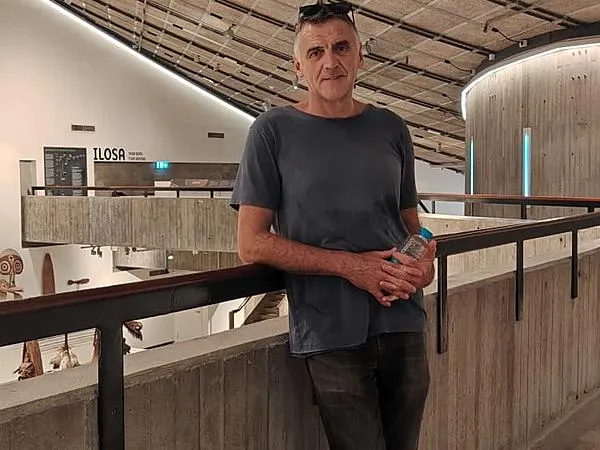
An Australian professional who arrived in Papua New Guinea for work on Friday, 28 August 2026, took time to explore the country’s history, culture and traditions through a guided Port Moresby tour arranged by Wisdom Travels Limited on 29 August 2026.
Mr Peter Smith said he came to PNG for work but also wanted to understand the nation beyond what is shared on social media. He specifically requested to visit Bomana War Cemetery, the National Museum, Parliament House, Nature Park, Koki Market and Ela Beach.
He was picked up from his hotel and taken on a tour of Port Moresby. He described the experience as emotional, particularly his visit to Bomana War Cemetery.
Mr Smith said the National Museum was the most important place to learn about Papua New Guinea’s culture.
“From there, I learned that Papua New Guinea is not just Port Moresby. It has a long, rich and beautiful history that is unique in the world, with more than 800 languages and diverse tribal cultures and ways of life,” he said.
“That is something we have forgotten in the West, and it makes me want to experience more of Papua New Guinea, not just the capital.”
Reflecting on his experience, Mr Smith encouraged visitors to get out and explore.
“From what you hear on social media, you get one picture. But Port Moresby is a city that is still growing. It is spread out, and the only way to really feel it is to get out and take a tour of different places,” he said.
He thanked Wisdom Travels Limited for organising the tour and taking him to the places he wanted to visit.
Mr Smith said he plans to return to Papua New Guinea to experience more of its culture, with a particular interest in visiting the Highlands.
The Central Music Arts and Culture Festival, or CMACF, has opened in Bereina, Kairuku District, showcasing how cultural tourism, small businesses and community enterprise can contribute to Central Province’s local economy.
The festival began on Sept. 11, 2026, drawing a large crowd for traditional performances, contemporary music, local small and medium-sized enterprise displays, and community engagement.
The event provides a platform for local businesses and entrepreneurs to promote their products and services while bringing visitors and communities together through music, arts and cultural performances.
Beyond the entertainment programme, the festival grounds featured SME stalls, government agencies and commodity organisations engaging directly with the community. Representatives from the Papua New Guinea Cocoa Board, National Fisheries Authority and Internal Revenue Commission conducted public-awareness activities throughout the opening day.
Their participation added an economic dimension to the festival by connecting communities with information on agriculture, fisheries, taxation and opportunities in the formal economy.
Culture as a tourism asset
Kairuku District Administrator Henry Oa welcomed visitors and dignitaries, thanking Central Governor Rufina Peter and the Central Provincial Administration for selecting Kairuku as the host location.
Oa said the festival was about more than music and dancing. It was an opportunity to showcase Papua New Guinea’s heritage, beauty and talent to the country and the world.
“This festival is not just about music and dancing; it is about our heritage and showing PNG and the world our beauty and talent,” Oa said. “Unity is what binds us together.”
The festival offers an opportunity to position Central Province’s cultural heritage as part of its wider tourism offering while enabling local businesses to benefit from increased visitor activity.
Acting Provincial Administrator Bala Kapa emphasised the importance of preserving traditional knowledge as younger generations become increasingly exposed to modern technology and changing lifestyles.
Kapa challenged elders to pass on their knowledge, including traditional songs, tattoos, tapa-making, canoe carving, and local languages such as Motu, Roro and Mekeo.
“You are our library. If you close, we lose everything,” Kapa said.
He also encouraged young people to take pride in their cultural identity and use music and the arts to strengthen their connection to their communities and heritage.
Preserving and presenting these traditions can also support cultural tourism by giving visitors opportunities to experience local music, art, craftsmanship, language and traditional practices.
Governor Peter formally declared the festival open, commending the youth, local leaders and organising committee for bringing the event to life.
“This festival exists because of you,” Peter told the crowd.
“It is your colour, your song and your strength that make Central Province shine. The festival is more than an event—it is memory. It is the drumbeat of our ancestors speaking to us today.”
The opening day concluded with musical performances that kept the audience engaged into the afternoon. Gaire musician Hitsy Golu headlined the programme, alongside Martin Rawali, Igo Otto of Rearea, the Kanakas of Erima, the Rapids of Sogeri, and Bereina’s Iva Ovia and the Vmates, who closed out the first day.
The turnout and combination of cultural performances, music, SMEs and public-sector engagement showed how community festivals can bring together tourism, culture and local economic activity.
The festival continued through the weekend in Bereina, creating further opportunities for communities, performers, entrepreneurs and visitors to celebrate Central Province’s culture and creative economy.
The return of the Malagan Festival to Kavieng after more than 30 years is creating a platform for local businesses, producers and communities to showcase products while strengthening New Ireland’s cultural tourism potential.
The three-day provincial festival, held under the theme “Stronim Pasin Tumbuna! Strongim Pasin Niu Aila”, brings together communities from across New Ireland for traditional rituals, dances, music, arts and crafts, food, cultural exhibitions and an agricultural show.
The festival opened with a colourful Kinavai ceremony at the Kavieng beachfront, where communities and visitors welcomed New Ireland Governor Byron Chan before activities moved to the Kopkop Showground.
Governor Chan said the revival of the festival was significant, as the Malagan Festival had previously been one of New Ireland’s major cultural events before disappearing for more than three decades.
“The festival provides an important opportunity for New Ireland communities to come together and celebrate the customs, traditions and traditional knowledge systems that have shaped the province’s identity,” Chan said.
From a business perspective, the festival is providing local entrepreneurs and community groups with an opportunity to sell and promote traditional arts and crafts, cultural products, local food and other locally produced goods.
Business houses are also participating through exhibitions, while cultural groups and choirs are contributing to the three-day programme, attracting visitors from within and outside the province.
The revival comes as New Ireland continues to position its unique cultural heritage as an asset for tourism and local economic activity. Increased visitor participation in cultural events can create opportunities for accommodation providers, transport operators, food vendors, handicraft producers and other small businesses.
The festival also incorporates an agricultural show, providing producers with an avenue to display local agricultural products and potentially connect with markets and customers.
A major announcement during the festival was the decision to establish a monument honouring the late Grand Chief Sir Julius Chan, founding father of New Ireland and former Prime Minister of Papua New Guinea.
Chan said the statue would be erected within the Provincial Assembly precinct as a permanent tribute to Sir Julius Chan’s contribution to New Ireland and the nation.
“The statue will be erected at the Provincial Assembly precinct as a permanent tribute to his contribution to the province and the nation,” he said.
The Malagan Festival continues through Saturday, with further cultural presentations and community activities planned.
Meanwhile, the official launch of the Sir Julius Chan Foundation is scheduled for Saturday at the Chan family residence at Huris in Namatanai District.
The festival’s return marks not only a cultural revival for New Ireland but also an opportunity to strengthen community-based enterprise and develop cultural tourism as part of the province’s broader economic potential.
The Papua New Guinea Tourism Promotion Authority (PNGTPA) is moving to revive a dormant ferry in Port Moresby Harbour as part of efforts to expand marine tourism, develop new tourism products and unlock greater economic value from the capital's coastline.
PNGTPA has partnered with Happy Soles Ltd. and Marine Contract Management to operate and manage the vessel, which has been out of service for some time.
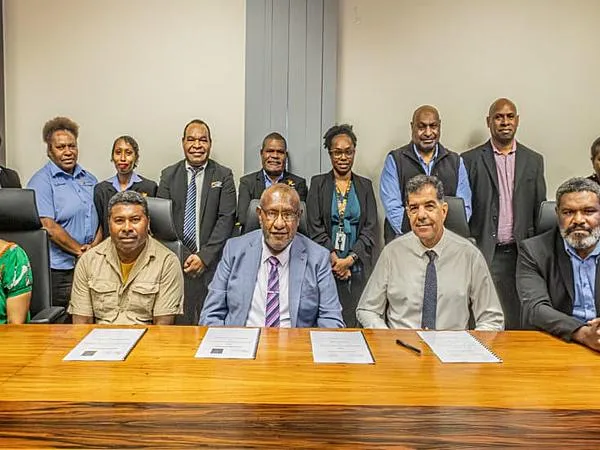
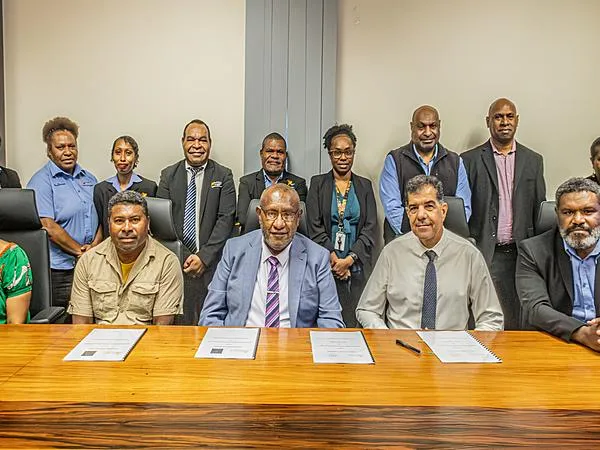
The partnership was formally signed on Aug. 6, with the three organizations expected to work together to return the vessel to safe and professional operation.
For PNG's tourism industry, the initiative provides an opportunity to diversify the visitor experience beyond traditional land-based attractions while increasing private-sector participation in marine tourism.
PNGTPA Chief Executive Officer Eric Mossman Uvovo said returning the vessel to service was an important step in making better use of tourism assets and developing new opportunities for the industry.
“This boat has been sitting idle for some time, and today marks the beginning of a new chapter. Our goal is to get it back on the water as quickly and safely as possible so it can support PNGTPA's work in promoting Papua New Guinea and creating more tourism opportunities,” Uvovo said.
New marine tourism products
The vessel will initially be used for tourism promotion activities, official engagements and sightseeing around Port Moresby. It is also expected to provide a platform for developing commercial marine tourism products.
Potential offerings include island cruises, private functions, family celebrations and sightseeing experiences, creating opportunities for local businesses to provide supporting services.
Happy Soles Managing Director Yiannis Nicolaou said the company plans to upgrade the vessel with more comfortable seating and modern features while developing experiences that complement existing marine services in Port Moresby.
“We want to give visitors something different by creating enjoyable experiences on the water,” Nicolaou said.
The planned upgrades and operation of the vessel could generate business opportunities in hospitality, catering, events, transportation, maintenance and other tourism-related services.
Marine Contract Management Managing Director Capt. Matthew Dieni said his company would focus on vessel maintenance, safety and professional operations.
“It is an honor to partner with PNGTPA on this important project. My team and I are committed to ensuring the boat is well maintained, safely operated and ready to deliver quality services,” Dieni said.
Expanding marine tourism infrastructure
The partnership forms part of PNGTPA's broader effort to strengthen the country's marine tourism infrastructure, including the development of jetties and waterfront facilities.
Uvovo said Port Moresby would provide a starting point, with the potential to replicate similar initiatives in other coastal provinces and destinations.
Papua New Guinea's extensive coastline, islands and marine environment provide significant potential for marine tourism, but developing that potential requires investment in infrastructure, transportation links, tourism facilities and professionally operated visitor experiences.
For the tourism sector, expanding marine-based products could increase visitor spending and encourage longer stays by giving tourists additional activities while in the country.
It could also create opportunities for local communities and small businesses to participate in the tourism supply chain as marine tourism products expand.
PNGTPA said it would continue working with industry partners to unlock the potential of the country's coastline and coastal attractions, with the broader objective of positioning Papua New Guinea as a destination offering authentic and memorable experiences.
The return of the Port Moresby ferry therefore represents more than the reactivation of an idle tourism asset. It provides a potential platform for developing a new segment of PNG's tourism economy, with longer-term opportunities to expand marine tourism services beyond the capital to other coastal destinations across the country.
The Papua New Guinea Tourism Promotion Authority has urged communities, government agencies and tourism stakeholders in Enga province to strengthen cooperation to preserve cultural heritage and unlock the province’s tourism potential.
Speaking at the opening of the 2026 Enga Cultural Show at Aipus Oval in Wabag on Aug. 7, PNGTPA chief executive Eric Mosman Uvovo said stronger collaboration was needed to protect and promote the province’s cultural heritage.
Uvovo acknowledged the Enga Provincial Government, event organisers, cultural groups, community leaders and participants for sustaining the annual cultural celebration.
“We are working closely with the National Cultural Commission and the people and communities to ensure that our culture continues to be respected, protected and promoted,” he said.
He said PNGTPA was working with the National Cultural Commission, provincial authorities, communities and tourism industry stakeholders to promote Papua New Guinea’s culture, landscapes, people and tourism experiences to domestic and international audiences.
“Culture as one of Papua New Guinea’s greatest tourisms provides an important opportunity to showcase traditional dances, customs, knowledge, identity and way of life to visitors from across the country and overseas,” Uvovo said.
He also stressed that peace, stability and law and order were essential to developing the province’s tourism industry.
“Enga has the culture, the people and the beautiful environment to become a major tourism destination. But for tourism to grow, we must have peace, stability and law and order,” he said.
Uvovo encouraged provincial leaders and communities to work together to create a safe and welcoming environment for visitors, tourism operators and investors.
Greater stability could help generate employment, business, investment and income opportunities for local communities, he said.
The two-day 2026 Enga Cultural Show brought together cultural groups and communities for traditional performances and displays celebrating Enga’s identity and showcasing its tourism potential.
PNGTPA said it remains committed to strengthening the links between culture, tourism, investment and economic development while supporting communities in preserving their heritage and creating sustainable economic opportunities.
The Papua New Guinea Tourism Promotion Authority (PNGTPA) has taken another important step towards strengthening marine tourism in Papua New Guinea through a new partnership that will bring a ferry back into service in Port Moresby Harbour.
The partnership was formally signed on 6 August 2026, bringing together PNGTPA, Happy Soles Limited and Marine Contract Management to operate and manage the vessel.
The partnership aims to ensure the vessel is safely, professionally and efficiently operated while supporting PNGTPA’s tourism promotion activities and creating new experiences for both local and international visitors.
The vessel will initially support tourism promotion activities, official engagements and sightseeing experiences around Port Moresby, while also providing a platform for the development of new marine tourism products showcasing the capital’s coastline and surrounding waters.
Speaking at the signing ceremony, PNGTPA Chief Executive Officer Eric Mossman Uvovo said the partnership marked an important milestone for the Authority and demonstrated its commitment to making better use of its tourism assets.
“This boat has been sitting idle for some time, and today marks the beginning of a new chapter. Our goal is to get it back on the water as quickly and safely as possible so it can support PNGTPA’s work in promoting Papua New Guinea and creating more tourism opportunities. This is only the beginning of what we hope will become a bigger marine tourism initiative for our country,” Mr Uvovo said.
He added that the initiative was also aligned with PNGTPA’s long-term vision of strengthening marine tourism infrastructure, including the development of jetties and waterfront facilities.
According to Mr Uvovo, Port Moresby will serve as an important starting point, with the potential to expand similar marine tourism initiatives to other provinces and coastal destinations across the country.
Happy Soles Limited Managing Director Yiannis Nicolaou welcomed the partnership, saying the company was excited about the opportunity to help transform the vessel into a unique tourism attraction.
“We’re proud to work alongside PNGTPA on this exciting project. We want to give visitors something different by creating enjoyable experiences on the water. From island cruises and private functions to family celebrations, we believe this boat can become a memorable attraction that people will want to experience again and again,” Mr Nicolaou said.
He added that Happy Soles Limited plans to upgrade the vessel with more comfortable seating and modern features while developing creative tourism experiences that complement existing marine services in Port Moresby.
Meanwhile, Marine Contract Management Managing Director Captain Matthew Dieni said his company was pleased to be part of the initiative and would place a strong emphasis on safety, vessel maintenance and professional operations.
“It is an honour to partner with PNGTPA on this important project. My team and I are committed to ensuring the boat is well maintained, safely operated and ready to deliver quality services. We look forward to working together to make this a success,” Captain Dieni said.
As the vessel prepares to return to service, PNGTPA remains committed to building strategic partnerships that enhance Papua New Guinea’s tourism offering and support sustainable tourism development.
PNGTPA will continue working with industry partners to unlock the potential of the country’s extensive coastline, pristine marine environment and unique coastal attractions, helping position Papua New Guinea as a world-class destination offering authentic and memorable experiences to visitors.
Follow on LinkedIn:
PNG Business News
Be the "First" to get our exclusive Digital Magazine & Weekly Newsletter.