July 06, 2023

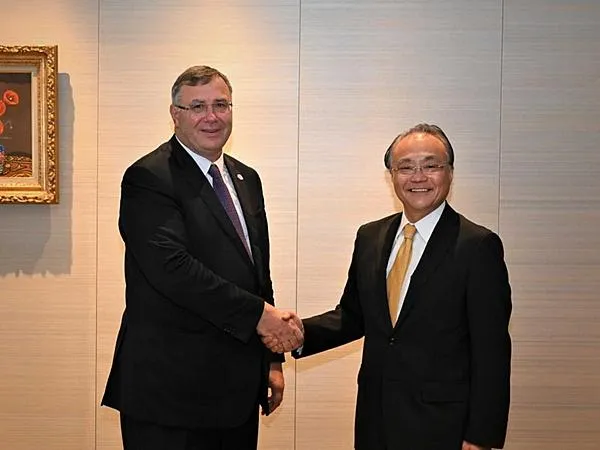
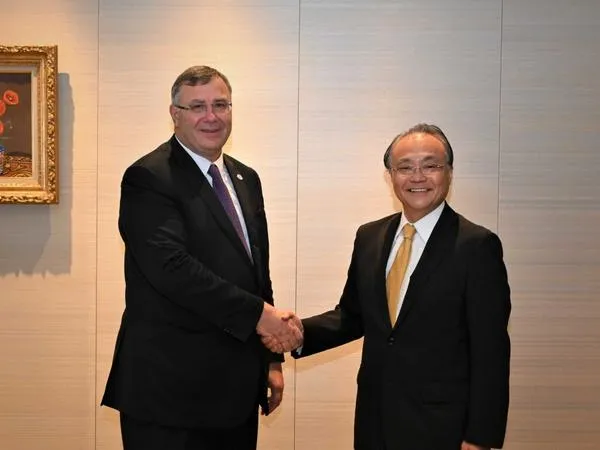
Photo: Patrick Pouyanné, CEO TotalEnergies, and Toshiya Nakahara, CEO of JX Nippon (Credit: JX Nippon)

JX Nippon oil and gas exploration has received approval to acquire a 2.58 percent stake in the Papua LNG project from TotalEnergies EP PNG Ltd.

According to Paulus Ain, commissioner and CEO of the Independent Consumer and Competition Commission (ICCC), TotalEnergies will continue to operate the project, and the positions of both parties in the oil and gas industry in PNG will remain unchanged. He stated, "It will remain the same, either pre or post-acquisition."

Ain further explained the details of the proposed acquisition, saying, "The proposed acquisition involves TotalEnergies selling to the acquirer a minority interest of 2.58 percent (pre-state back-in right) in the Papua LNG project." He emphasized that the 2 percent participating interest being sold is too small to have any decision-making power or significant control over the Papua LNG project or any markets in PNG. Therefore, it is unlikely to raise any concerns regarding completion.

After carefully reviewing the applicant's submissions, market information, and feedback from relevant industry stakeholders, the ICCC concluded that the proposed acquisition would not result in a substantial lessening of competition in any markets in PNG. Ain stated, "The ICCC was satisfied that the proposed acquisition will not have, or will not be likely to have, the effect of substantial lessening of competition in any markets in PNG."

July 06, 2023

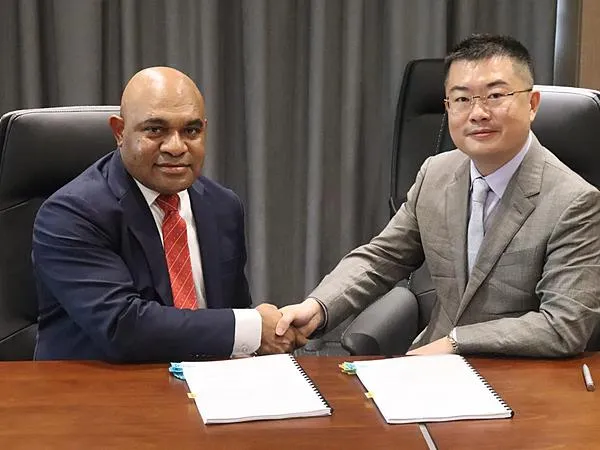
The planned Fabrication Facility came one step closer today, when Kumul Petroleum Holdings signed a contract with China State Construction Engineering Corporation PNG Limited China to undertake Phase 1 of early works civil work.

The contract was signed by Wapu Sonk, managing director of Kumul Petroleum Holdings, and Wang Ounan, general manager of the construction contractor.

Mr. Sonk, said, “This contract, for a total of US$10 million, about K35 million, will result in construction of access roads, building foundations and necessary associated site work and services rights of way.”

“This is the first step in the establishment of the KPHL training and fabrication facility. Civil construction work under the contract will prepare the training facility pad, fabricating facility pad, construction lay down pad, ready for phase 2 activities.”

Mr Sonk outlined that the contractor would mobilise on the 15th of July, with planned completion in the mid-fourth quarter of the year. He noted that when complete the facility would fabricate large, high-value structural, mechanical and piping modules for land-based process and non-process facilities used in LNG liquefaction and regasification facilities, petrochemical and refinery plants.

He continued,”KPHL is establishing the Kumul Construction Industry Training College on this same site, since it will be necessary to train a cadre of Papua New Guineans with skills necessary to participate in industry construction activities between now and 2032.

Mr Sonk concluded,” Kumul Petroleum, as the national petroleum and energy company, is proactively establishing this Fabrication Facility to maximise national content in future petroleum, mining, renewable energy and general heavy industry projects, through local manufacturing of products that until now have all been imported from overseas.”

June 23, 2023

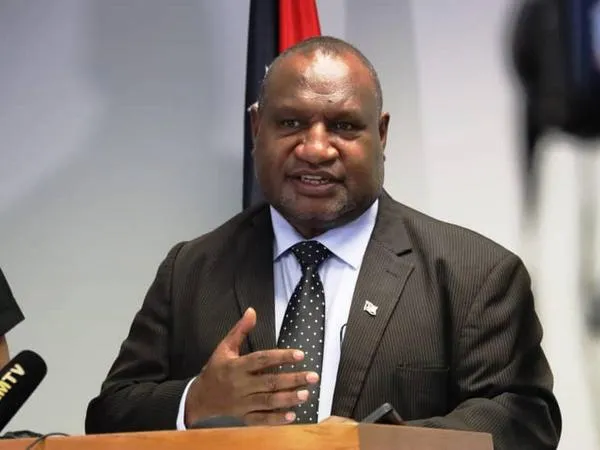
Prime Minister Hon. James Marape has recently commended multinational oil and gas corporation, ExxonMobil, for continuing its exploration in Papua New Guinea over the last two years, which has revealed “some good finds”.

The Prime Minister said the company has spent up to $300 million on exploration in the last two years.

“From my discussions with ExxonMobil leadership in Houston, Texas and my follow-up engagements, I am glad to see the company take up exploration again.

“I commend them for investing between $200 million and $300 million on exploration in the last two years. They have been exploring in the south-eastern Papuan Fault Belt area, and have indicated some good finds, which we will make sure are protected.”

PM Marape said the government has been working on an incentive regime for ExxonMobil and those in the exploration space and would be announcing soon.

“This is so that we not only earn ‘construction dollar’ for the development of the fields, but we also have ‘exploration dollars’ coming into our country.

“Our government will soon be announcing these incentives.

“I want to commend ExxonMobil for the fact that, even before the commencement of these incentives and just going by my word with its Houston headquarters, the company has brought over $200 million into our country through exploration alone. This was over the last two years when our economy needed it the most during the aftermath of COVID-19.

“PNG might be the only one or two countries in the world where EExxonMobil has engaged in exploration. I commend ExxonMobil leaders in Houston, Texas; Asia Pacific, and Papua New Guinea for continuing to invest in our country.”

The Prime Minister also called upon companies within the oil & gas, and mining sectors to take up exploration in PNG.

“Many of the resources we have today both in the oil & gas, and mining spaces are resources established in prior years of exploration.

“I encourage Total and partners who are in country to move into this space beyond just the development phase of Papua LNG.

“Likewise, we call on other companies who want to come into the exploration of mining and petroleum: if you have an interest, place a call to the two departments concerned for license or permit. We will help you.”

The Prime Minister has also called on companies holding onto exploration licenses to look into developing their fields quickly before they lose them to expiration.

“If they do not have the capacity to engage in explorations, it is in their interest to talk to the Petroleum and Mining departments for assistance.

“Our country has abundant potential for oil & gas, and mining, and so I want to assure our people that we are still an attractive place for investments, as indicated by ExxonMobil,” said PM Marape.

June 10, 2023

Photo: Patrick Pouyanné, CEO TotalEnergies, and Toshiya Nakahara, CEO of JX Nippon (Credit: JX Nippon)

Japan, the largest importer of liquefied natural gas (LNG) from Papua New Guinea (PNG), has further strengthened its position in the country's LNG sector. Japanese oil and gas exploration company JX Nippon has acquired a 2.58% stake in the Papua LNG project from TotalEnergies, marking a significant development for both JX Nippon and Japan's energy interests. The Japanese embassy in Port Moresby hailed this move as a "huge step" for JX Nippon, emphasising the potential for collaboration between PNG and Japan in various sectors.

"With the full support of the PNG Government, activities relating to front-end engineering design, LNG marketing, and financing are progressing well," stated Embassy economy councillor Isono Satoshi, highlighting the positive progress made in the Papua LNG project. "Papua LNG partners are targeting to achieve the final investment decision by the end of this year or early next year," Satoshi added, underscoring the importance of JX Nippon's involvement in the project.

The Papua LNG project is centred around the Petroleum Retention Licence 15 area (PRL15), which encompasses the ELK-Antelope fields in Gulf, the largest onshore fields in the region and the foundation of the project. In a statement, JX Nippon expressed their anticipation for the project, stating, "The Papua LNG project would have liquefaction capacity of 5.6 million metric tonnes of LNG per year with first production expected by the end of 2027 to early 2028. JX Nippon anticipates the demand for liquefied natural gas as a transition was expected to remain strong globally."

Satoshi commended JX Nippon's acquisition and its implications for both PNG and Japan. "Japan is PNG's biggest importer of LNG and this agreement between JX Nippon and TotalEnergies is a sign of the potential the country has for international investors," he affirmed. "This is a huge step for the firm and for Japan as we look to the future where PNG and Japan can continue working in collaboration, not only in the realm of politics but also in the economy and trade."

TotalEnergies, a French multinational and one of the leading LNG producers worldwide, has also been an active participant in the Papua LNG project. The company has agreed to sell a 2.8% stake in Papua LNG to JX Nippon, further solidifying the latter's presence in the project.

"Roughly half of LNG from PNG had been shipped to Japan consistently," Satoshi highlighted, emphasising the significance of Japanese companies' involvement in the country's LNG sector. "It is of mutual benefit for both PNG and Japan that a reliable Japanese company was fully involved in the new LNG project. In other words, participation by JX is an important step to a win-win situation for both PNG and Japan, where the former is seeking stable export destinations and the latter is seeking stable suppliers of energy."

Satoshi also emphasised that JX Nippon's acquisition of an operating stake in Papua LNG strengthens the PNG-Japan relations practically. "The Papua LNG project would be the firm's fourth LNG project," Satoshi mentioned, citing JX Nippon's experience and expertise in the industry.

June 10, 2023

Marking yet another milestone for the Papua LNG project, six (6) of the required petroleum license applications licenses were submitted to the Department of Petroleum and Energy (DPE) on May 30th, 2023.

DPE Secretary Mr David Manau while addressing the key stakeholders present at the submission, stated that his department will continue the review and evaluation of each submission and as the Front End Engineering and Design phase progresses, they will work to complete the process.

Minister for Petroleum and Energy Hon. Kerenga Kua applauded TEP PNG for filing the application for a Petroleum Development License (PDL) in a timely manner which will now take the department several months to review.

TotalEnergies EP PNG (TEP PNG) Managing Director Jean-Marc Noiray noted that this positive step marked the continued streaming-up of the Project.

“Sticking to the highest principles of quality and compliance, are absolute requirements for this world class project to succeed,” he said.

He thanked Secretary Manau and the DPE team for their steady support to the progress of the whole project, including the very efficient way in which the LOBID (Landowner Beneficiary Identification) process was recently concluded for the upstream part of the Project area.

He acknowledged the support of joint venture partners ExxonMobil and Santos for their constructive involvement in the submission of the license applications. 

Having submitted the Environment Impact Report to fellow regulator, the Conservation Environment Protection Authority (CEPA) in 2020, a draft National Content Plan is the next essential piece of work, to be submitted imminently to DPE.

May 23, 2023

The advantages of having a second Liquefied Natural Gas (LNG) project in a country like Papua New Guinea is important and strategic in that the people are attached to the land, and they want to feel they are part of the extraction of resources and wealth -- and they can only do that through the development of their customary land.

The focus has shifted from Oil to Liquefied Natural Gas (LNG) in the 2000s and the country is now looking at three more LNG trains to be added to the two trains that exist now.

Total Energies EPPNG, the developer of the Papua LNG project in the Gulf Province, will be progressing to utilize the Elk and Antelope gas fields before ExxonMobil's proposed development of P’nyang in Western Province, as this phased approach to gas development would support ongoing economic growth in Papua New Guinea.

Design work on the upstream, gas production side of the Papua LNG project, involving tapping the Elk and Antelope fields in the eastern Papuan Basin, started in July 2022, and this will now be extended to be ready for construction that could begin as soon as 2024.

In contrast, the P’nyang project will be an independent project with landowner benefits to be provided under a future benefit sharing agreement to be negotiated by the State in accordance with the Oil and Gas Act.

Currently the Papua LNG project is on course to be PNG’s second natural gas project, and PNG Prime Minister James Marape hopes the development will spur economic growth in a country where majority of the population live below the poverty line.

Wapu Sonk, Managing Director of the country's national petroleum company Kumul Petroleum Holdings Limited (KPHL) recently stated in an interview: "Papua New Guinea is well known for its extensive and profitable gas fields. While our LNG reserves are lower than those found in Qatar or Mozambique, for example, we still have a significant amount of discovered gas, and that allows us to play an increasingly important role in the global LNG supply chain". [1]

"We will continue to benefit from our proximity to Asian markets, which limits transportation costs and offers lower geopolitical risk than the Middle Eastern market. It will be important for us to capitalise on this advantage by maintaining the progress we have made in terms of project development in our country". Mr Sonk said.[1]

Papua LNG Project - Early Works and Infrastructure

Recently the business fraternity in Port Moresby sat over a breakfast organised by Papua LNG's project developer TotalEnergies EPPNG in conjunction with Port Moresby Chamber of Commerce and Industry (POMCCI) to give both national and international businesses an insight on the early works of the Papua LNG project, and a brief on the progress of the project on the 11th of May 2023 at the Royal Papua Yacht Club in Port Moresby. [2]

Speaking at the breakfast was Managing Director of Total Energies EPPNG Jean-Marc Noiray, who said the Project has not yet started work but has already started implementing community based projects and infrastructure within the project area. [a]

"The Papua LNG Project is a big project and we are just at the begining of construction of its multi-decade production life, but already we can see the impact through the successful early works and start up in and around the project," Noiray said. [a]

"Do not underestimate the confidence that the Papua LNG project's reputation will give others as they consider investing in this great country,” he said.

"Integrated efforts by all stakeholders in the early progress of the project is key to see PNG reap benefits from the project through development of Roads, Bridges, Airstrips as well as developing local content during the early works and infrastructure start up phase of the project". Mr Noiray said. [a]

The project is expected to create significant economic benefits for Papua New Guinea, including job opportunities, infrastructure development, and revenue generation. The project is also expected to contribute to the country's energy security and reduce its reliance on imported fuel. [a]

During the information session, representatives from TotalEnergies and EPPNG provided details on the project's timeline, scope, and potential impact on the local communities. They also discussed the company's commitment to environmental sustainability and social responsibility. [a]

Local business owners and entrepreneurs expressed their interest in participating in the project and learning more about potential business opportunities. They also raised concerns about the project's potential impact on the environment and the need for effective community engagement and consultation. [2]

National Content

Business opportunities for PNG companies will be mostly in the aspect of supplier development of the project. This will be In accordance with the Oil and Gas Act, and PNG companies will be used for the supply of goods and services wherever they are competitive with foreign sourced goods and services. [2]

Strategic Community Investments will be a mainstay within the lifespan of the project as these are corporate contributions and other voluntary community investments made in host communities. They are designed to reduce barriers to development, build capacity and improve standards of living through programs targeting health, education, sustainable livelihoods and environment. [b]

The Papua LNG project will ensure that a skilled local workforce is established and expected to offer over 5,000 positions to nationals through the WAN PNG recruitment platform over its lifespan. The project is focused on setting an exemplary stance in its implementation by paying particular attention to the environment and biodiversity,  while ensuring the rights of the local communities and landowners. [b]

Wan PNG platform

The much anticipated strain on human resources, particularly in relevant skilled areas, is a contributing factor in phasing each developing project. [2]

The competition for skilled workforce is already underway domestically and internationally. Its also a revolutionary opportunity to build up PNG’s current local workforce, with the technical and soft skills which will be needed as the country progresses into this new wave of economic development. [2]

The collaboration between Ubidy and KPHL with the support of Total Energies has made way for the emergences of Wan PNG a National recruitment Platform focused on developing local talents and is intended to provide 5,000 job opportunities for PNG nationals for the Papua LNG project when it launches. [c]

At a glance, the Wan PNG platform was developed by Ubidy, a global recruitment marketplace for employers, jointly with KPHL. The platform is dedicated to expanding opportunities for local Papua New Guineans with the goal to increase the development and employment of local PNG talent in sharing newfound opportunities in the country's booming resource and industrial sectors. [c]

Papua LNG Project objectives

Papua LNG project's commitment is to produce natural gas, the lowest carbon fossil fuel, with a very high focus on protecting land, wildlife, local inhabitants, and their livelihoods, as well as expanding knowledge of PNG's biodiversity and its preservation. [d]

The project also aims at creating employment opportunities during both construction and production to provide a catalyst for further gas-based industry development in the country. It supports capacity building of government agencies involved in the petroleum sector as well as supporting capacity building and skills development of domestic SMEs and workforce. [d]

To move national content, TotalEnergies and its partners are working closely with an independent panel of experts highly recognized for their contribution on environment and socio-economic development, to make the Papua LNG project best-in-class in terms of sustainability. [d]

Technological aspect - LNG e-Trains

The most important infrastructure needed for LNG production and transportation is an LNG plant consisting of one or more LNG trains, each of which is an independent unit for gas liquefaction (melting and condensing) and purification. [3]

A typical LNG train consists of a compression area, propane condenser area, and methane and ethane areas. In the context of the midstream oil & gas sector, a train consists of various components to process, purify, and convert natural gas to liquefied natural gas (LNG). [3]

They are called trains because of the consecutive  arrangement of the equipment used to process and liquefy natural gas.[3]

TotalEnergies confirmed the use of four electric LNG trains to process gas at 6 million tonnes a year. The use of the revolutionary new technology for processing gas will ensure lower emissions and better efficiency. [4]

The electric trains will be supplemented by two of the existing conventional trains used at the PNG LNG facility at Caution Bay, which is 20km out of Port Moresby.[4]

One of the new LNG trains would be fed by the P’nyang expansion and the other two by Papua LNG. By sharing infrastructure at the PNG LNG plant, it is estimated that stakeholders could save US$2bn-3bn in construction costs. Altogether the two projects would almost double the country’s LNG export capacity, with Papua LNG alone adding 5.5m tonnes per year to existing capacity at the PNG LNG plant. [4]

Papua LNG is expected to have liquefaction capacity of up to six million mt/year of LNG, with first production expected by the end of 2027 or early 2028.

Current Project Timeline

Prime Minister Hon James Marape recently remarked that the project is on track, setting the stage for 4 years of Papua LNG construction, immediately followed by another 4 years of the P’ynang project construction, and that the FEED phase will be completed in less than 12 months, which will include the marketing project resources to potential markets and counterparts abroad compared to PNG LNG FEED phase which spans over 16 months. [5]

Papua LNGs FID is expected by 4th quarter 2023 or 1st Quarter 2024 and construction is to begin thereafter from 2024 to 2027. P’nyang LNG will commence construction in 2027 to 2032, effectively giving 8 years of construction phase and its benefits to the economy. [5]

The venture partners in the Papua LNG project are currently TotalEnergies (31.1 per cent), ExxonMobil (37 per cent) and Santos (22.8 per cent). A final investment decision is expected to trigger the PNG State’s direct involvement in the venture, with the following percentages expected. [2]


References:

1) Australian Financial Review (23 March 2023) |  PNG hatches plan for new,gas fields https://www.afr.com › ... › Energy

2) TotalEnergies insight into  Early Works and Infrastructure of Papua LNG (11th May 2023/ Business Breakfast and Infornation Session (Attended session)

  • Papua LNG Project - Early Works  and Infrastructure
  • National Content
  • Wan PNG platform
  • Papua LNG Project objectives

See press releases and full insight and speeches on website: https://papualng.com.pg/

3) What is an LNG Train? Cameron LNG/ LNG and Liquefaction https://cameronlng.com › lng-facility

4) Papua New Guinea: TotalEnergies launches integrated engineering studies ... ( 7th March 2023) https://www.google.com/url?sa=t&source=web&rct=j&url=https://totalenergies.com/media/news/press-releases/papua-new-guinea-totalenergies-launches-integrated-engineering-

5) Oil & Gas Journal (7 March 2023) TotalEnergies launches integrated FEED for Papua LNG project https://www.ogj.com › ... › LNG

May 02, 2023

Santos refers to its announcement of 27 September 2022 regarding the binding conditional offer from Kumul Petroleum Holdings Limited (Kumul) to acquire a five per cent interest in PNG LNG for asset value of US$1.4 billion, including a proportionate share of PNG LNG project finance debt of approximately US$0.3 billion (the Offer). On 23 December 2022, Kumul extended the Offer period until 30 April 2023.

Kumul has advised Santos it has now extended the period in which the Offer will remain open until 31 August 2023. Santos has agreed to deal exclusively with Kumul during this period regarding the sale of equity in PNG LNG.

Kumul has agreed it will work closely with Santos during this extension period in order to assist it in arranging the finalisation of its acquisition financing with third parties. There is also strong support from both the government and the Joint Venture partners for the transaction proceeding.

Santos Managing Director and CEO Kevin Gallagher said PNG LNG continues to represent compelling value for shareholders.

“With the significant changes in the global energy landscape over the last 12 months, PNG LNG remains a world-class asset that is low-cost, low emissions intensity and delivers reliable LNG supply to our customers in Asia,” Mr Gallagher said.

“The project is positioned in a supportive regulatory environment, with fiscal stability arrangements in place ensuring that it contributes strong cash flows to project participants and delivers significant economic and social benefits to the nation. While the PNG project is a very valuable asset and Santos’ balance sheet is strong, Santos remains committed to selling five per cent equity in the project to support the PNG government to achieve the nation’s equity objectives.”

Prime Minister James Marape said, “I am fully supportive of continuing the transaction to purchase five per cent of PNG LNG in pursuing PNG national interest and its nation building programmes. Given the volatility in the financial markets and high interest rate environment, I support Kumul’s request for a time extension to complete the transaction. With credible private sector lenders significantly advanced, I am confident that Kumul will secure an appropriate financing package.”

April 12, 2023

Santos achieved a new production, revenue, and underlying profit record in the last financial year. According to Kevin Gallagher, Managing Director, and CEO, these results were driven by strong customer demand and higher commodity prices. During the recent annual general meeting, Gallagher emphasized that 2022 was the first full-year period after the merger of Santos and Oil Search. He added that production increased by 12% to 103.2 million barrels of oil equivalent (BOE), and sales revenue increased by 65% to US$7.8 billion (about K17.8 billion). Additionally, a record US$3.6 billion (about K8.23 billion) of free cash flow, up by 142%, was generated due to the strong operational performance and higher prices.

Chairman Keith Spence stated that the company would continue to focus on value accretion and delivering sustainable returns to shareholders over the long term. Despite the company's strong performance and new strategy, the share price has yet to reflect it. Spence highlighted that the balance sheet is stronger, with gearing reduced to 18.9% in 2022. As a result, the company declared the return of US$1.5 billion (about K3.4 billion) to shareholders. This includes a 78% increase in the final dividend to 15.1 cents per share unfranked, bringing the total dividends declared for the year to 22.7 cents per share (up 62%). Moreover, an on-market share buyback of US$700 million (K1.6 billion) will also be implemented.

"The board has responded to shareholder feedback and is targeting shareholder returns of at least a 40% payout of free cash flow generated from operations each year," said Spence. This announcement reflects Santos' commitment to creating long-term value for its shareholders while maintaining its sustainable growth strategy.

In Gallagher's words, "Santos' record performance last year was a testament to the company's operational excellence and the strategic value of the merger with Oil Search."

March 30, 2023

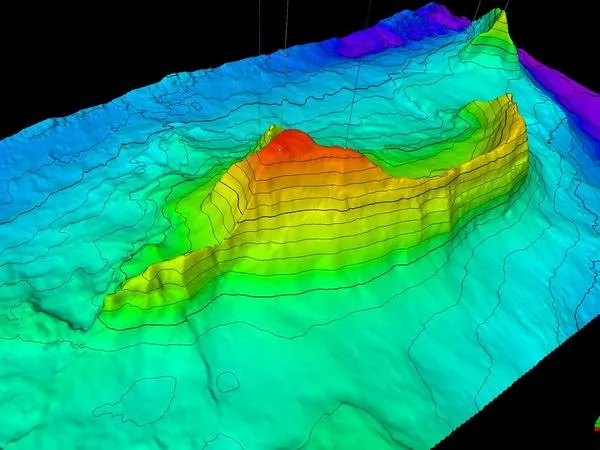
Photo: 3D visualisation of the Pasca A carbonate reef. Credit: Twinza Oil

Twinza is pleased to announce that it has completed two new major reservoir assessments for the Pasca A field:

  • An updated independent assessment of the Pasca A hydrocarbon resources has confirmed a total resource increase of 35%, and
  • An independent assessment validates the potential for sequestration of up to 200 million tonnes of carbon dioxide in the Pasca A field.

The studies were completed by Twinza’s technical team and independent assessments have been prepared by Gaffney, Cline & Associates (“GaffneyCline”).

Pasca A Resource Assessment

  • The updated GaffneyCline resource assessment of the reservoir confirms a 35% increase in total resource size relative to the prior assessment prepared in 2018.
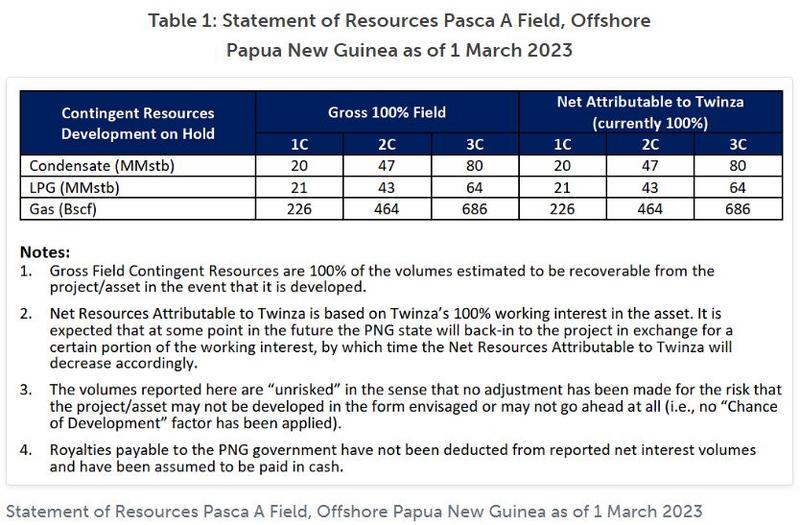
  • Updated Contingent Resources (best estimate basis) of Pasca A are 167 million BOEs including 464 Bcf of LNG feed gas, 47 million bbls of condensate and 43 million bbls of LPG
  • The resource size corresponds to 1 Tcf of LNG feed gas on an energy equivalent basis1.
  • The results of the assessment are consistent with the Pasca A Field Development Plan included in Twinza’s Petroleum Development License (“PDL”) application.
  • The Contingent Resources will likely be classified as Reserves after award of the PDL.
  • The updated resources significantly increase the value of the PNG State’s revenue from the Pasca A project through the development life of the project for the benefit of the people of Papua New Guinea.

Carbon Sequestration Assessment

  • GaffneyCline validated the subsurface feasibility and quantified carbon dioxide (“CO2”) sequestration in the Pasca A field and aquifer.
  • The study validated a storable quantity of more than 50 million tonnes of CO2 in the gas cap section of the reservoir and an additional potential of more than 150 million tonnes in the aquifer directly below the gas water contact.
  • GaffneyCline validated that CO2 injection is technically feasible concurrently with gas production.

Announcement

Twinza Oil Limited and Twinza Oil (PNG) Limited (“Twinza”) is pleased to announce that it has completed both an updated, independent assessment of the Pasca A field’s hydrocarbon resources and an independent assessment of the potential sequestration of large volumes of CO2 in the reservoir.

The updated resource assessment confirms a 35% increase in total resources of the Pasca A reservoir compared to the last assessment prepared in 2018. This increase reflects improved reservoir characteristics confirmed by a combination of advanced core analysis, drilling data, log interpretation, correlation with reprocessed 3D seismic and completion of a comprehensive dynamic production model which brought all this additional information together. The updated assessment more closely reflects Twinza’s own internal view and further validates the Company’s Pasca A Petroleum Development License (“PDL”) application and project development concept. The breakdown of components is detailed in Table 1 below.

GaffneyCline has assessed the resource class as “Contingent Resources” as the Pasca A project is still awaiting regulatory approvals. The “2C Contingent Resources” will likely be reclassified as “2P Reserves” in accordance with the Petroleum Resource Management System after award of the PDL.

The Carbon Sequestration study has resulted from the Company’s technical work on the concept, which was initiated in response to the evolving expectations of energy investors. Although Twinza has no immediate plans to utilise the capability, it represents an opportunity to dispose of emissions from proximate regional projects or to potentially work towards a world scale Carbon Capture and Storage project at the Pasca field location.

Commenting on the announcement, Executive Chairman Stephen Quantrill said:

“The upgraded assessments are a credit to our CEO Robert Gard and our whole Twinza technical team who have used the delays in securing regulatory approvals to add value to the project for the benefit of all stakeholders including the people of Papua New Guinea. 

Once operational, the project will generate more than K500 million per year to the PNG State, generate around 500 permanent jobs and bring significant US$ into the PNG economy.  Twinza has complied with all laws, regulations and information requests since entering PNG in 2011 and stands ready to proceed with Pasca Phase 1 FEED as soon as the outstanding regulatory approvals are granted.”

The carbon sequestration opportunity is one which offers the potential for the Pasca field to be carbon neutral, and in fact carbon negative over its full life cycle. Although no carbon dioxide source for sequestration at Pasca has yet been identified, the quantifying and certifying of this opportunity provides the foundation information required for the potential development of the Pasca reservoir for carbon sequestration, in support of the world’s objectives for 2050 net emission targets.”


1 “Best estimate” is the Petroleum Resources Management System (PRMS) term for the most realistic assessment of recoverable quantities if only a single result were reported.
2 BOE - barrels of oil equivalent - is the quantity of hydrocarbons expressed in terms of the volume of oil which would contain an equivalent amount of energy. Twinza has used 1 BOE = 6000 scf = 1 bbl liquids.

March 27, 2023

Photo: Petroleum Minister Kerenga Kua

Petroleum Minister Kerenga Kua has recently stated that the Papua LNG project is critical in addressing some of the economic challenges that are currently faced in the country. He said about K75 billion will be generated over a 15 year period when the project is in progress. He added that the initial stages of the project has commenced with K500 million said to be inputted into PNGs foreign exchange capacity in 2023.

During a press conference on Thursday the 9th of March, The Petroleum minister highlighted the progressive stages of the Papua LNG project and emphasized the importance and significance of the benefits that the project will provide. According to studies the project life is expected to operate over a 15 year period that will generate about K75 billion and significantly boost Papua New Guinea's struggling economy.

"The K75 billion benefit is inclusive of what comes to the state directly as levies, to Kumul Petroleum, to the landowners as royalties and the provincial governments. All of us put together are going to be collecting and sharing that benefit in the next 15 to 20 years", Kua said. 

Minister Kua said that studies for the Papua LNG project began in 2004 following the discovery by Interoil, the resource estimate is in the range of 6 trillion cubic feet of gas and 98 to 100 million barrels of condensive oil. 

The benefit of this project is immense and a positive component is the national content which is expected to positively impact GDP, export earnings, forex, revenue to impacted levels of government, landowner benefits and Job opportunities. 

Minister Kua said the project developer Total Energies will inject K500 million into the PNG economy in 2023.

"The Papua LNG project is a project of national significance for Papua New Guinea and will stimulate business confidence and will provide a significant impetus for our economy",

"The Marape-Rosso government places high priority on the delivery of the Papua LNG project, we have an improved deal for our people, and improved contribution for our national contractors and workforce. The government strongly supports the Papua LNG project and encourages all stakeholders including project partners to work diligently to deliver the project on time and on budget", Minister Kua said.

Petroleum Secretary David Manau was also present at the conference, he highlighted that the petroleum department will work closely with impacted provincial governments and landowners as this is important in ensuring that all stakeholder grievances are discussed and addressed. In light of this, a development forum is expected in the third quarter of this year.

Meanwhile, Kua also revealed a unique aspect of the upcoming project which will mitigate the project's carbon footprint and is set to make PNG in  becoming the first country in the Asia Pacific region and only the second on the world to re-inject carbon dioxide back into the well pad in a LNG project.

He said the re-inspection of carbon dioxide into the well pad is a significant step towards reducing the project's carbon footprint and will help mitigate the environmental impact of the project and contribute to Papua New Guinea's efforts to combat climate change.

The Papua LNG project is a joint venture between the PNG government, TotalEnergies and Exxon Mobil. It is one of the largest investments in the country's history and is expected to generate significant revenue for PNG's economy.

Total Energies holds 40.1 percent interest in Papua LNG, along with its joint venture partners Exxon Mobil (37.1 percent) and Santos(22.8 percent). The Papua New Guinea government may exercise a back-in right of up to 22.5 percent interest at the Final Investment Decision (FDI) planned by end of 2023 to early 2024 and production will be scheduled for four years later.

March 27, 2023

Papua New Guinea (PNG) is poised to supply Taiwan with its liquefied natural gas (LNG) as the latter phases out nuclear power plants by the end of 2025. With Taiwan's demand for energy expected to increase during its transition to renewable power capacity, PNG is set to become a crucial supplier of LNG and raw materials, which will create job opportunities and boost the country's export revenue.

PNG is currently operating the US$19 billion (K67 billion) PNG LNG project, and the US$10 billion (K35 billion) Papua LNG project is set to commence production in 2027, followed by the P’nyang LNG and the Pasca A oil and gas project. The demand for LNG is growing worldwide, particularly in Asian markets, according to TotalEnergies Limited, the developer of the Papua LNG project.

Taiwan is PNG's fourth-largest export market and fifth-largest trading partner, with a trade volume exceeding US$1.4 billion (K4.9) in 2022. According to the Taipei Economic and Cultural Office in PNG representative, Ben Wang, "Taiwan's nuclear power phase-out by the end of 2025 will create a huge energy demand gap during its transition to renewable power capacity, and PNG can seize this opportunity to become a vital LNG and raw materials supplier to Taiwan."

Petroleum gas was PNG's top export in 2020, amounting to US$2.95 billion (K10.4 billion). While the Taiwan Ministry of Economic Affairs (MOEA) estimates that Taiwan's energy demand will catch up with supply in 2023, international reports suggest that the MOEA has failed to consider the rapid increase in energy demand across Taiwan. Taiwan's annual power consumption increased by 2.1% in 2020, which is above average when compared with the past decade, and is expected to grow by an average of 2.5% every year until 2027.

March 21, 2023

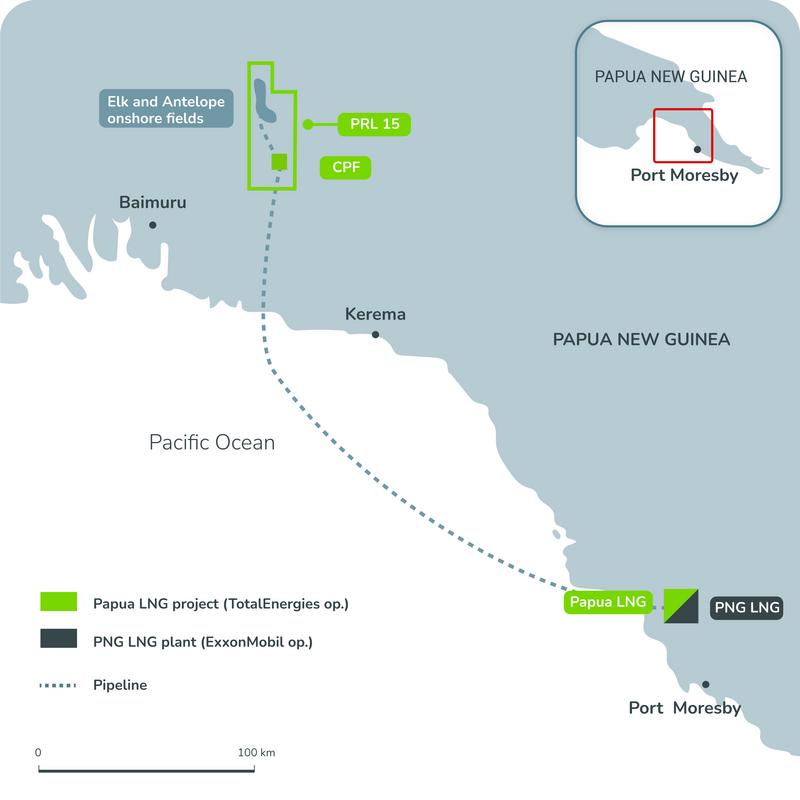
Photo Credit: Papua LNG - Map showing 260 km of offshore pipeline and 60 km of onshore pipeline extending from Elk and Antelope fields to Caution Bay

On March 07, 2023, in separate announcements, Santos, TotalEnergies, and Exxon announced the Papua LNG project had launched the first phase of a fully integrated front-end engineering and design (FEED) for the Papua LNG project in Papua New Guinea.

This follows a formal announcement by Prime Minister Hon James Marape a day earlier at the APEC House in Era Kone, PNG.2 Last December, PM Marape pressed mining and energy giants in the country to advance projects.

Papua LNG is one among the five gas and mining projects that are seen to expand the country’s economy to 200 billion kinas (US$55 billion) by 2029.

Papua LNG is expected to contribute 75 billion kinas to both the local and national economies over the next 20 to 25 years of production, according to Petroleum and Energy Minister Kerenga Kua. This is from an investment of US$10 billion (K35.2 billion) project.

With so many billions of dollars at stake, the front-end engineering design is a significant milestone towards a Final Investment Decision (FID), its eventual construction, and finally into production.

The Project

Papua LNG is a liquefied natural gas (LNG) production project with a gas resource estimated at over 1 billion barrels of oil equivalent. The LNG export volume is expected at 5.6 million tonnes per year (Mt/y). The project comprises 9 production wells, one water injection well, 1 CO2 reinjection well and a gas processing plant. A 320 km pipeline will be laid out (out of which 60 km is onshore) from the processing plant to the liquefaction plant in Caution Bay, close to Port Moresby. 

The FEED is expected to be followed by a Final Investment Decision (FID) later this year or early in 2024. If favorable, construction of the project will commence, and production is expected in late 2027 or early 2028.
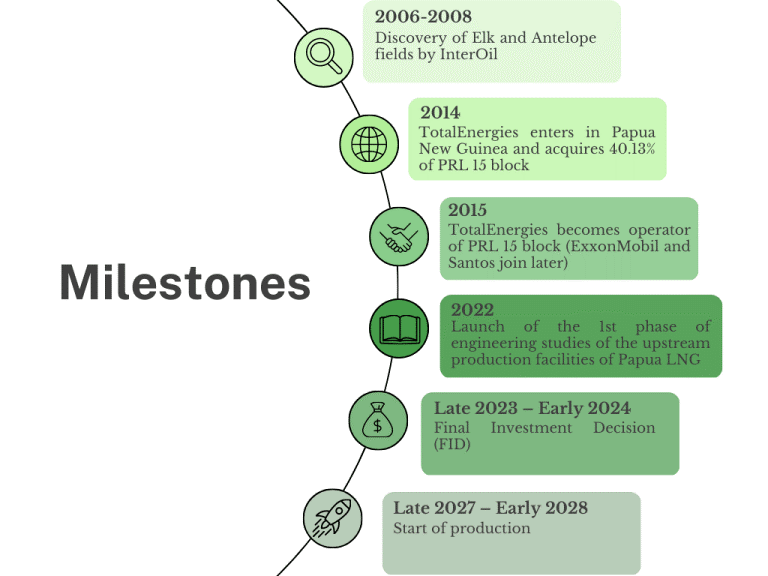
Milestones in Papua LNG Project. It could take  20 years or more from discovery to production.  Photo Credit: Papua LNG

Major Players

TotalEnergies (LON:TTE) holds 40.13% interest in Papua LNG and is the operator. TotalEnergies SE is a multi-energy French company, which produces and markets oil and biofuels, natural gas and green gas, renewables and electricity. 

Santos (ASX: STO) holds 22.83% of interest in Papua LNG Project. Santos is an energy pioneer since 1954 and is one of Australia’s leading gas producers. The company commenced oil and gas exploration and production in Papua New Guinea in the late 1980s.

ExxonMobil (NYSE: XOM) affiliates holds 37.04% and has been in Papua New Guinea since the 1920s. As well as being responsible for the construction and operation of the US$19 billion PNG LNG project (33.2 percent interest).

ExxonMobil is the parent company of ExxonMobil PNG Limited, the operator of the PNG LNG project, who successfully and safely delivered PNG’s first LNG project in April 2014. 

Kumul Petroleum Holdings Limited (formerly NPCP Holdings Limited) is a company incorporated under the laws of Papua New Guinea with all of its issued shares beneficially owned by the Independent State of Papua New Guinea through Kumul Consolidated Holdings (KCH) (formerly, Independent Public Business Corporation of PNG).

Kumul Petroleum may exercise a back-in right of up to 20.5 percent participating equity interest in the Papua LNG project, at the time of grant of the Project’s Petroleum Development Licence.

Mineral Resources Development Company Limited (MRDC) is a 100 percent State-owned company. It was incorporated in 1975 under the Companies Act to hold and manage State and Landowner equity interests in mining and petroleum development projects in PNG.

MRDC may exercise a back-in right of up to 2 percent interest in the Papua LNG project, at the time of grant of the Project’s Petroleum Development License.
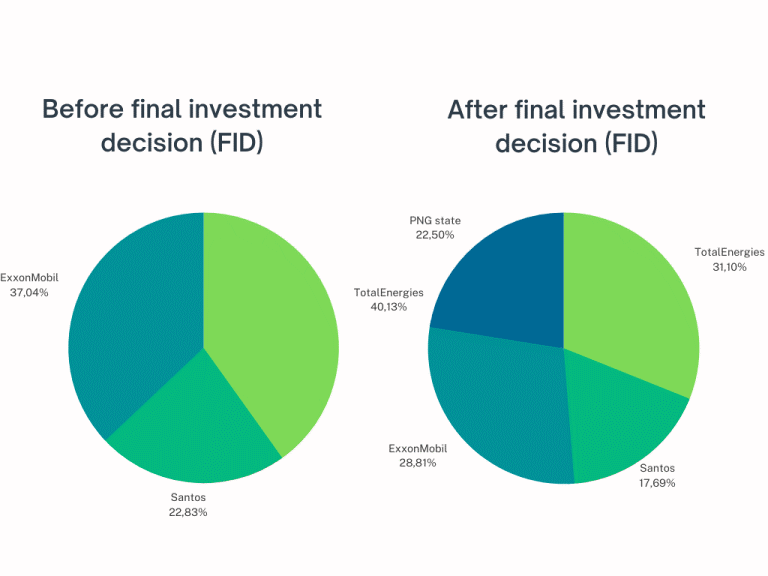
Interest shares before and after final investment decision (FID) that comes after FEED is completed.  Photo Credit: Papua LNG

PM James Marape has been pressing for PNG to receive a bigger share of the benefits from mining and energy projects since he first became prime minister in 2019, and so far, has succeeded in renegotiating deals with energy giants ExxonMobil Corp (XOM.N) and TotalEnergies on their gas projects. 3 In Papua LNG, PM James Marape says that the government has secured a 5% stake in the Papua LNG project for domestic market gas. 

Front-end Engineering Design

Globally, liquefied natural gas (LNG) has drawn interest as a green energy source in comparison with other fossil fuels, mainly because of its ease of transport and low carbon dioxide emissions. However, LNG production is an energy- and cost-intensive process because of the huge power requirements for compression and refrigeration. Therefore, a major challenge in the LNG industry is to improve the energy efficiency of the LNG processes through economic and ecological strategies.

The FEED used 4 electric LNG trains with a cumulative capacity of 4 Mt/y, to be developed within the existing liquefaction plant in Caution Bay. It has secured up to 2 Mt/y additional capacity. The Project opted for 4 innovative electric liquefaction trains of 1Mt/y capacity each, a more modular solution that will reduce the Project’s carbon footprint when combined with renewable energy.

PNG Petroleum Minister Kerenga Kua said the Papua LNG venture will “build four small electric trains, four smaller ones, that’s to spread the risks, minimise costs and minimise risks of downtime.”

Another special feature is that a system for storing so-called “native” CO2, i.e. CO2 produced with natural gas, was designed to be operational on the first day of operation. The CO2 will be separated and reinjected into one of the two reservoirs to reduce the GHG emissions by circa 1 Mt/y. 

Lessons from PNG LNG

According to PwC, Papua New Guinea has been exporting crude oil since the early 1990’s. Although production is modest and has relatively reduced overtime, it is one of the country’s major exports. In 2014, PNG launched the commercial operation of liquefied natural gas, boasting as the country’s top revenue-generating export product. The combined contribution of crude oil, LNG, and condensate will potentially comprise around 60% of the nation's export revenues in the near term.10 It is but fitting and proper that the PNG government maximizes returns from these investments.

PNG is not a new LNG country, says PM James Marape. He added that the country has gained experiences from PNG LNG on how to deal with landowners, and local and provincial governments. PNG LNG took 16 months from FEED to FID thus setting a benchmark for other LNG projects. 

On the issue of local employment, Carmen Voigt-Graf and Francis Odhuno cited that while national employment figures in the formal economy grew substantially during LNG construction, many jobs were held by foreign workers. The major LNG developers have been criticized for not providing more training opportunities for local workers and instead heavily relying on foreign workers.

Many PNG government departments were taken by surprise by the project, and training institutions were not ready to provide training in relevant areas. They further illustrated the case of welders where according to the PNG Department of Labor and Industrial Relations (DLIR) had 600 licensed welders, but more than 5,000 were needed when construction began, so large number of specialist welders were imported, mostly from the Philippines.

Local employment is a direct impact benefit that citizens gain from any project. The issue of appropriate skills and training for such projects should not be taken lightly even to the extent that the company itself needs to train locals. While in cases where foreigners are required, they should work with an apprentice to ensure that they train someone behind to take over since PNG’s liquified natural gas industry is here to stay for the long term.

Investment share and employment along with other hard-earned lessons in PNG LNG will for sure be under the watch of Papua New Guineans to ensure these lapses will not be repeated then they and the government can truly say “we are better now.”


References:

  1. TotalEnergies. (2023, March 07). Papua New Guinea: TotalEnergies launches integrated engineering studies for the Papua LNG project            [Press Release] https://totalenergies.com/media/news/press-releases/papua-new-guinea-totalenergies-launches-integrated-engineering-studies
  2. Marape, J. (2023, March 06). Statement By Prime Minister Hon. James Marape on the Occasion of the Formal Announcement of the Papua Liquefied Natural Gas (Lng) Front End Engineering Design Phase, PM James Marape News Page. https://pmjamesmarape.com/pm-marape-announces-papua-lng-project-feed-design-phase/
  3. Needham, K. (2022, December 05). Papua New Guinea PM Marape presses mining, energy giants to advance projects.Reuters. https://www.reuters.com/world/asia-pacific/papua-new-guinea-pm-marape-urges-miners-go-ahead-with-projects-2022-12-05/
  4. Esila, P. (2023, March 13). Papua LNG set to bring in K75bil. The National. https://www.thenational.com.pg/papua-lng-set-to-bring-in-k75bil/
  5. Papua LNG. (2023). Project. https://papualng.com.pg/papua-lng/project/?amp=1
  6. Papua LNG. (2023). Partners.https://papualng.com.pg/papua-lng/partners/?amp=1
  7. Luma, D. (2023 March 08). Five Percent Space for Papua LNG Domestic Market. Papua New Guinea Post Courier. https://postcourier.com.pg/five-per-cent-space-for-papua-lng-domestic-market0/
  8. Qyyum, M. A., Qadeer, K., & Lee, M. (2017). Comprehensive review of the design optimization of natural gas liquefaction processes: current status and perspectives. Industrial & Engineering Chemistry Research, 57(17), 5819-5844. https://pubs.acs.org/doi/abs/10.1021/acs.iecr.7b03630
  9. Energy Voice. (2022, December 12). TotalEnergies’ Papua LNG to use electric liquefaction trains in net zero push. Total Energies. https://www.energyvoice.com/uncategorized/468886/totalenergies-papua-lng-to-use-electric-liquefaction-trains-in-net-zero-push/
  10. PwC.Oil & Gas. https://www.pwc.com/pg/en/industries/industries-oil-and-gas.html
  11. Voigt-Graf, Carmen and Odhuno, Francis Odongo, Assessing the Labour Market Impact of the PNG LNG Project and Implications for Future Projects (March 26, 2019). Development Policy Centre Discussion Paper No. 78, Available at SSRN: https://ssrn.com/abstract=3360134 or http://dx.doi.org/10.2139/ssrn.3360134
March 07, 2023

Santos recently announced the Papua LNG joint venture has launched fully-integrated front-end engineering and design (FEED) for the Papua LNG project in Papua New Guinea.

Papua LNG is expected to have liquefaction capacity of up to six million tonnes of LNG per annum with first production expected by the end of 2027 or early 2028.

Following pre-FEED studies, the Papua LNG partners have selected a concept using four electric LNG trains (e-trains) with a combined capacity of four million tonnes per annum to be developed within the existing PNG LNG project site. Papua LNG has also secured access to up to two million tonnes of existing liquefaction capacity from PNG LNG.

Integrating the Papua LNG midstream development within PNG LNG maximises the value of both projects and delivers increased capital efficiency by reducing upfront capital expenditure and maximising integration synergies. PNG LNG will receive an access fee, pro-rata opex sharing and ongoing processing toll revenue that compensates PNG LNG for making the capacity available.

Selecting e-trains and re-injection of reservoir CO2 will reduce the carbon intensity of the project.

Santos Managing Director and Chief Executive Officer Kevin Gallagher said Papua LNG FEED entry was consistent with Santos’ strategy to backfill and sustain its core natural gas assets.

“The concept selected for Papua LNG maximises value through midstream integration with PNG LNG to deliver increased capital efficiency and lower operating costs, consistent with our disciplined operating model,” Mr Gallagher said.

“FEED entry for Papua LNG is a significant step for the project and we are working closely with our partners, the PNG government, communities and local companies to deliver new jobs and help support the local economy.”

The selected concept for Papua LNG is expected to have a lower capital expenditure outcome than the previous concept. Costs will be refined during the FEED phase and the project participants intend to explore project finance opportunities for a portion of the project cost.

Santos holds a 22.8 per cent interest in Papua LNG along with joint venture partners TotalEnergies (40.1 per cent and operator) and ExxonMobil (37.1 per cent). The State of Papua New Guinea may exercise a back-in right for up to a 22.5 per cent interest at the final investment decision, which is planned by the end of 2023 or early 2024. Should the State exercise its full back-in right, Santos’ interest in the project would reduce to 17.7 per cent.

Santos also has a 42.5 per cent interest in PNG LNG and in September 2022 announced a conditional agreement to sell a five per cent interest in PNG LNG to Kumul Petroleum Holdings Limited (Kumul) for asset value of US$1.4 billion. Completion is subject to customary conditions including necessary regulatory approvals and Kumul securing financing.

March 07, 2023

Photo: Petroleum Minister Hon. Kerenga Kua, PM Marape and TotalEnergies Senior VP Asia Pacific Exploration & Production Julien Pouget at the launching.-PM’s Office Media

TotalEnergies, operator of the project, announces the launch of the fully integrated Front-End Engineering and Design (FEED) for the Papua LNG project.

Following pre-FEED studies, in order to maximize synergies and minimize the costs, Papua LNG partners have selected a concept including four electrical LNG trains (e-trains) with a total capacity of 4 Mt/y. These trains will be built within the existing liquefaction plant of PNG LNG in Caution Bay. Papua LNG has also secured the use of 2 Mt/y of additional liquefaction capacity in the existing trains of PNG LNG. By selecting e-trains and re-injecting the native CO2 produced into the reservoirs, Papua LNG demonstrates its commitment to the reduction of the carbon intensity of the project. The construction and operation of the electrical liquefaction trains will be delegated to ExxonMobil, operator of the PNG LNG project since 2014.

In the framework of this integration between Papua LNG and PNG LNG, TotalEnergies is pleased to also announce the signature of a head of agreement with JX Nippon in the view to sell a 2% interest (post Kumul back-in right) in Papua LNG. JX Nippon is an affiliate of ENEOS and already holds a 4.7% interest in PNG LNG.

TotalEnergies holds 40.1% interest in Papua LNG, along with its joint venture partners ExxonMobil (37.1%) and Santos (22.8%). The State of Papua New Guinea may exercise a back-in right of up to 22.5% interest at the Final Investment Decision planned by end 2023- early 2024. Production start-up is scheduled four years later.

“The integrated FEED entry is a significant step in the development of the Papua LNG project. TotalEnergies and its partners are working closely with the Government, the communities, and the local economic network to ensure the Papua LNG Project serves as a landmark on the societal and environmental front for the LNG industry”, said Julien Pouget, Senior Vice President Asia Pacific for Exploration & Production and Renewables at TotalEnergies. “This project, strongly supported by the Papua New Guinea State, will contribute to the security of LNG supply, especially for customers in Asia, where LNG can substitute coal for power generation and participate in a substantial reduction of CO2 emissions in the region.”

“The Papua LNG Project is a project of national significance for Papua New Guinea and will stimulate business confidence and provide a significant impetus for our economy” said the Honorable Kerenga Kua, Minister of Petroleum and Energy of Papua New Guinea. The Marape-Rosso government places high priority on the delivery of Papua LNG project, we have an improved deal for our people, and improved contribution of our national contractors and work force. The government strongly supports the Papua LNG project and encourages all stakeholders including project partners to work diligently to deliver an “on time-on budget” project.”

February 21, 2023

Photo: An empty service station at 8-Mile in Port Moresby after the fuel bowsers ran dry.

The Government is now in serious discussions with Kumul Petroleum Holdings Ltd (KPHL) and three multi-national petroleum companies to find solutions for the fuel shortage in the country, with a major announcement expected soon, Prime Minister Hon. James Marape has said.

The Prime Minister said the Government has been holding talks with ExxonMobil, Total Energies and Santos, together with Mineral Resources Development Company (MRDC) and State-owned company KPHL, to look into the immediate import of fuel and a long-term solution in the construction of a locally-based refinery for downstream processing to secure the domestic market.

Prime Minister Marape said today (February 19, 2023) Papua New Guinea, under his Government, was heading in the direction of downstream processing of its resources but Puma Energy’s actions of recent months have forced the Government to act now rather than later in this area.

“Our fuel insecurity due to reliance on one or two suppliers is forcing the Government to urgently call on its State-owned Enterprises and major oil companies operating in the country to finding solutions,” said PM Marape.

“The Government is now collaborating with Kumul Petroleum, MRDC, ExxonMobil, Total Energies and Santos to explore solutions that can ensure the country’s fuel security, including aviation fuel and general fuel.

“We are leaving no stone unturned. What has happened under Puma must not be repeated. For far too long, this country has been victimised when, in fact, Papua New Guinea continues to export petroleum and gas to the world year after year. The irony is staggering.

“I am, therefore, pleased to note the progress the Government is making with our national development partners – ExxonMobil, Total Energies and Santos.

“I am also looking forward to the moment when we can make the announcement on the immediate solutions we have worked out to resolve this relatively long-standing issue.”

Papua New Guinea was plunged into an acute shortage of fuel at the end of last year 2022 when Puma Energy PNG Ltd announced it could no longer source crude oil and finished products because of unresolved foreign currency issues. This affected its supply of fuel to PNG, especially to the aviation industry where Air Niugini was forced to ground its flights and left the travelling public stranded for days as a result. The matter raised huge concerns on supply monopoly and the country’s fuel security both for short and long term.

February 16, 2023

Photo credit: Twinza Oil

Regulatory issues between the Government and Twinza Oil Ltd. need to be addressed before discussions on the Pasca A project in Gulf recommence, Prime Minister James Marape said.

In a press conference, Marape stated that Papua New Guinea is governed by the Constitution, and there are laws that regulate the mining and exploration activities.

The Prime Minister highlighted this in reminding foreign investors to comply with all the necessary mining and petroleum requirements.

Marape made the statement when referring to the status of the Pasca A project in Gulf, after regulatory issues emerged between Twinza Oil Ltd and the State. He said some of the requirements for the exploration and mining licenses were not met by the investor to allow it to proceed with the project.

“I just want to encourage all our foreign investors in our country, that we don’t run a banana republic, we have due processes in our country, and you have to comply with all requirements of law in our country,” he said.

“If you acquire an exploration license then you have to deliver to the intent of that license. You have a retention license in the petroleum space, then you have to deliver to the conditions of that retention license,” the Prime Minister said.

“When you are applying for development license and you’re in the APDL (application development licence) stage then you must comply with the rules and requirements of the process.”

Marape said the Department of Petroleum has done its part towards the Pasca issue, meaning that now it only needs a review by the national government.

“The Twinza and the Pasca project is a small low-hanging project within reach. The petroleum department have done their bit with the issues that have been outstanding, and now the project partner has given his view, which will be subject to a review,” he said.

The Prime Minister said his government wants to tick off Porgera, Papua LNG, P’nyang and Pasca LNG projects, including the Wafi-Golpu projects, soon.

Mr. Marape was not able to provide the actual commencement dates but is determined to provide a firm statement on these proposed multibillion-kina projects five months from now.

Twinza’s Country Manager, Roppe Uyassi, said the company was ready to have the Pasca gas project in progress and was awaiting reengagement with the Government through the state negotiation team.

See Our Latest Issue