Category:
K92 Mining Announces High Grades, Record Thicknesses From Maiden Surface Step-Out Drilling Results at Kora South and Judd South, Airborne Geophysics Defines Extensive New Targets
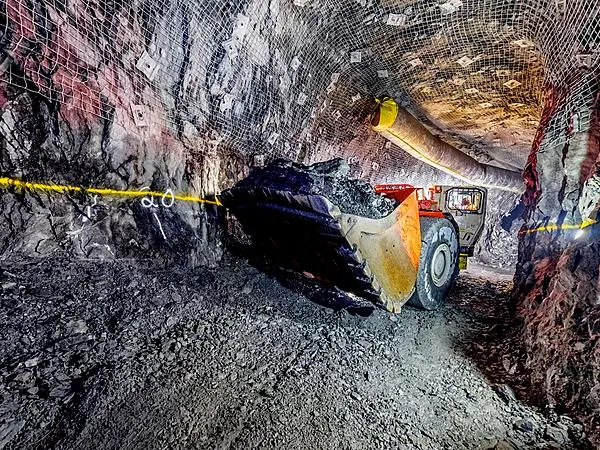
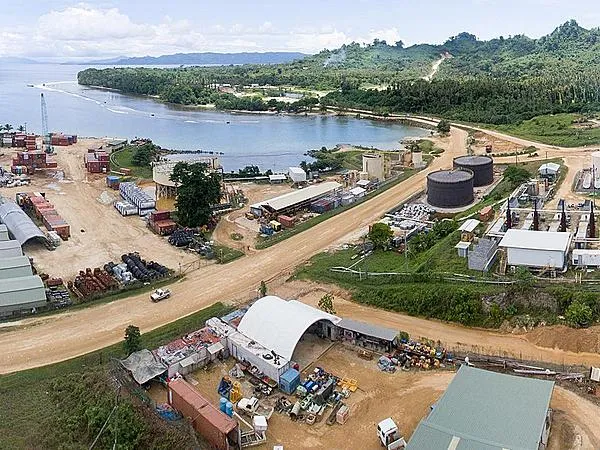
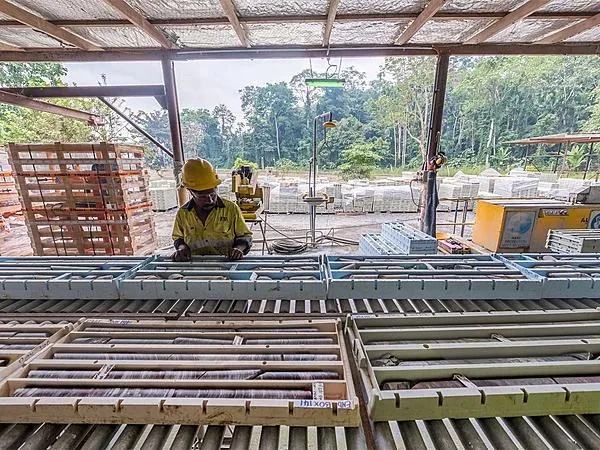
Photo credit: K92 Mining Inc
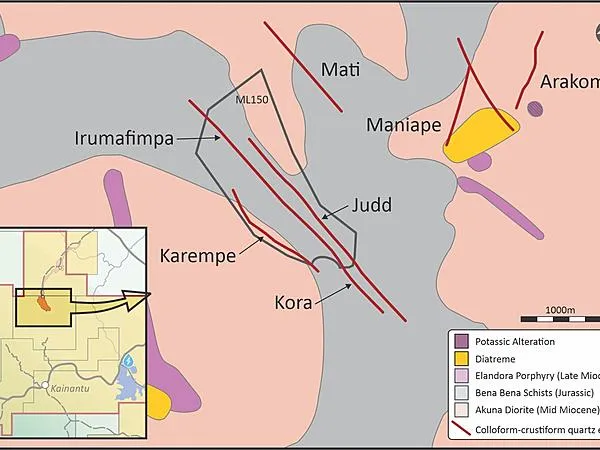
K92 Mining Inc is pleased to announce results from the first two surface holes at Kora South and Judd South and from the property-wide airborne geophysics program at the Kainantu gold mine in Papua New Guinea. This is the first time that drilling at Kora South and Judd South had been undertaken from surface by either K92 or prior operators. The results for the latest surface diamond drill holes completed are summarized in Table 1 below.
Kora South and Judd South Drilling Results
Step-out drilling at both Kora South and Judd South delivered strong results with multiple high-grade and solid thickness intersections in addition to record thickness with the discovery of dilatant zones at both Judd South and Kora South.
At Judd South, the results are highlighted by hole KUDD0001, the southernmost step-out hole to date, stepping out 150 metres to the south from the nearest historical surface drill hole. KUDD0001 recorded multiple intersections including 15.25 m at 15.87 g/t AuEq or 13.23 g/t Au, 15 g/t Ag and 1.53% Cu (9.93 m estimated thickness) from the J1 Vein and strong grades from the J2 Vein that recorded 2.90 m at 8.52 g/t AuEq or 5.41 g/t Au, 16 g/t Ag and 1.81% Cu (1.89 m estimated thickness). The hole was terminated early due to loss of hole from drilling before it could reach Kora South.
Importantly, KUDD0001 discovered for the first time a dilatant zone within the Judd / Judd South vein system, representing the longest intersection to date recorded at Kainantu at 66.55 m at 5.02 g/t AuEq or 3.65 g/t Au, 9 g/t Ag and 0.78% Cu (43.26 m estimated thickness). The dilatant zone is punctuated by higher grades from the J1, J2 and potentially the J3 veins, with continuous gold and copper mineralization between the various veins. Geotechnical conditions observed in the core were also competent and analogous to that of Judd underground.
At Kora South, drill hole KUDD0002, the southernmost step-out to date along the Kora-Kora South vein system, stepping out 75 m to the south from the nearest drill hole, recorded solid thickness and high grades from multiple veins including 6.20 m at 17.26 g/t AuEq or 1.62 g/t Au, 151 g/t Ag and 8.56% Cu (4.04 m estimated thickness) from K2 Vein; 0.93 m at 36.39 g/t AuEq or 0.06 g/t Au, 93 g/t Ag and 21.88% Cu (0.60 m estimated thickness) from the K1 Vein; 5.00 m at 7.99 g/t AuEq or 4.67 g/t Au, 47 g/t Ag and 1.70% Cu (3.25 m estimated thickness) from the K3 Vein. A notable feature of the K1 and K2 vein intersections is the very high copper grades, with ~1 metre assay composites up to 21.88% Cu over 0.93 m in K1 and up to 20.40% Cu over 1.04 m in K2, driven by massive copper sulphide veins punctuating the broader vein intersection. Encouragingly the K3 vein recorded one of its thickest intersections to date, despite the hole bottoming while still in K3 mineralization.
Notably, at Kora South, KUDD0002 intersected a dilatant zone, similar to Judd South, intersecting 35.90 m at 5.98 g/t AuEq or 1.42 g/t Au, 47 g/t Ag and 2.48% Cu (23.34 m estimated thickness), a record in terms of thickness for the Kora-Kora South vein system. The dilatant zone is punctuated by higher grades from the K2 and K3 veins with continuous gold and copper mineralization between the veins. While early days, these dilatant zones represent a potential step-change in terms of the tonnage and metal endowment per vertical metre at Kora South and Judd South. As our drill and surface sampling programs progress its impact will be better understood.
Drilling results also intersected a previously unknown vein, located approximately 75 m to the east of Judd, recording 3.45 m at 10.36 g/t AuEq or 10.09 g/t Au, 20 g/t Ag and 0.01% Cu (2.24 m estimated thickness). This was the first time drilling had been conducted this far east of Judd and modifications to the drill program to test this vein are underway.
Other drill results include KUDD0002 recording 0.9 m at 15.43 g/t AuEq or 14.32 g/t Au, 39 g/t Ag and 0.39% (0.59 m estimated thickness) from J1 Vein; and 1.3 m at 16.63 g/t AuEq or 16.60 g/t Au and 0.01% Cu (0.84 m estimated thickness) from J2 Vein, located approximately 80 m north of KUDD0001.
Advanced Airborne MobileMT Geophysics Results
In November 2021, for the first time in over 10 years, airborne geophysics over the entire ~860 km 2 property was flown. The program engaged Expert Geophysics Limited (EGL) to conduct the helicopter-borne MobileMT electromagnetic and magnetic survey. MobileMT is the latest generation of airborne AFMAG technologies, designed in 2017 by the inventor of the ZTEM system. MobileMT measurement frequency range is 25 Hz – 30,000 Hz, while ZTEM range is 25 Hz – 720 Hz, thus delivering a much greater depth range of investigation. Electromagnetic and magnetic data was collected along east-west survey lines, nominally spaced at 200m, and north-south tie lines nominally spaced at 2,000 m.
The results from the MobileMT geophysics delivered excellent correlation between known mineral deposits and conductive bodies. In particular, the results demonstrate a potential extensive untested strike length to Kora / Kora South and Judd / Judd South vein systems, beyond the A1 porphyry for several kilometres to the southeast. The results also show a possible confluence of the vein systems between Kora / Kora South and Judd / Judd South with the north-northeast Maniape and Arakompa vein systems, representing a highly prospective target.
In addition to the vein targets, known mineralized porphyries were highlighted by geophysics, including A1, Blue Lake, Tankaunan and Timpa.
Core Photos and Figures
Long sections of Kora South and Judd South, showing the location of the latest drill holes reported, are provided in figures 1 and 2, respectively. A cross section of KUDD0001 and KUDD0002 are shown in figures 3 and 4, respectively. A core photograph of the K2 Vein from hole KUDD0002 featuring massive copper sulphide mineralization is shown in figure 5 and closeup core samples from KUDD0001 and KUDD0002 are shown in figure 6. A map from the airborne geophysics program proximal to the Kainantu underground mine is shown in figure 7, and a long section illustrating the Highly Conductive Zone from geophysics is in figure 8.
Chris Muller, K92 Vice President Exploration, stated, “Drilling beyond the boundaries of the Mining Lease on Exploration Lease EL470 has confirmed our interpretation that the high-grade Kora and Judd vein systems persist well to the south. The mineralized Kora and Judd trend, implied by newly acquired sub-surface conductivity data from geophysics, will be tested with an expanded drilling campaign during 2022.”
John Lewins, K92 Chief Executive Officer and Director, added, “While this may be one of the smallest batches of drill holes we have released, we believe it is one of the most impactful. Since K92 acquired Kainantu in 2015, there has been a great belief in the potential to the South, as we get closer to the A1 porphyry which is interpreted to be the main heat source for the vein systems.
As Chris Muller highlighted earlier, mineralization remains intense at both Kora South and Judd South, with solid thickness and high grades. Judd South has been highlighted by 15.25 m at 15.87 g/t AuEq in the J1 Vein from KUDD0001 stepping out ~150 metres to the South from the nearest historical drill hole, and Kora South has been highlighted by 6.20 m at 17.26 g/t AuEq from K2 Vein and 0.93 m at 36.39 g/t AuEq from the K1 Vein both from KUDD0002 stepping out ~75 metres to the South from the nearest drill hole. K1 and K2 also delivered very high copper grades, both punctuated with ~1-2 metre veins of massive copper sulphides grading approximately 20% Cu.
The discovery of dilatant zones at both Judd South and Kora South has significant potential in terms of overall endowment and throughput potential, recording 66.55 m at 5.02 g/t AuEq at Judd South and 35.90 m at 5.98 g/t AuEq at Kora South. While it is still early days, we are very pleased that we made the decision to significantly oversize the twin incline that is currently being developed. Based on engineering review, modifications can be made to the conveying system to handle throughputs exceeding 5 million tonnes per annum.
The drill results have also highlighted the potential for multiple productive veins beyond K1, K2 and J1. Results at J2 and K3 delivered solid grades and thicknesses and hole KUDD0001 intersected a previously unknown vein approximately 75 m east of Judd South recording 3.45 m at 10.36 g/t AuEq. Prior K92 and historical drilling had not drilled this far east of Judd / Judd South and plans are underway to test this potential vein system.
The results from the advanced geophysics program has underscored the significant near-mine and regional exploration potential at Kainantu, including the potential for vein mineralization continuing for kilometers from Kora South and Judd South. We strongly believe we are just scratching the surface in both our vein and porphyry exploration programs.”
Full article, tables and figures can be found HERE - Article courtesy of K92 Mining
Near surface drilling success showcases Woodlark potential
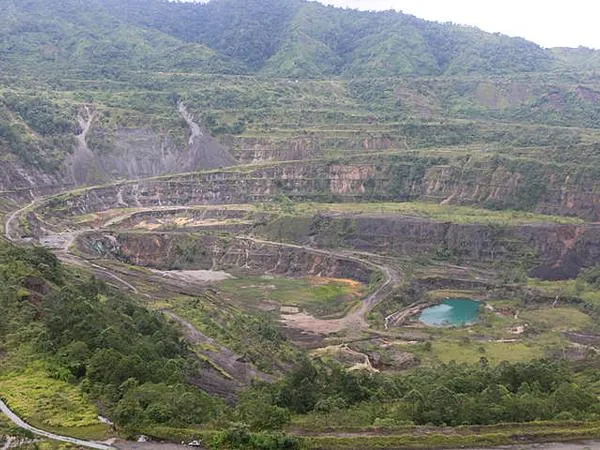
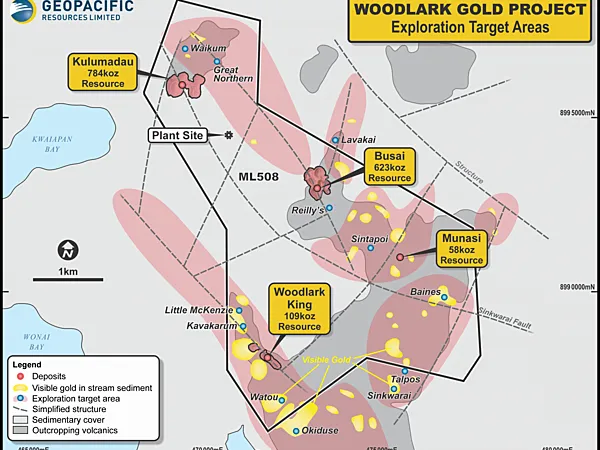
Photo credit: Geopacific Resources - Mining lease exploration target areas
Chief Executive Officer, Tim Richards, said: “The drilling campaign continues to deliver exceptional results. Grade control drilling supports our view that there is considerable upside potential within the existing pit shells, whilst first results from resource extension drilling highlight the exciting opportunity for further discoveries across the mining lease. We look forward to receiving further results as assays are received and our step out drilling program continues.”
Summary of recent Woodlark drilling results
Geopacific Resources Ltd is pleased to provide an update on drilling results at the Woodlark Gold Project (‘the Project’). Results from grade control drilling at the Company’s Kulumadau pit continue to highlight upside within the existing pit shells and identify potential for near term resource growth. In addition, the initial phase of resource extension drilling focussed around the Busai and Kulumadau pits reinforces the potential for pit extension, with all three planned pits at the Project open along strike and at depth. “These results reinforce our view that the current pit shells are constrained by data, not geology,” Mr Richards said.
Grade control drilling
Further results from the grade control RC drill campaign at Kulumadau (ref ASX release 30 September 2021 and 23 December 2021) have been received. This drilling was undertaken to further define near surface ore zones at stage 1 of the Kulumadau pit. Drilling to date indicates potential upside to the high-grade zone in Figure 1. A reconciliation of the grade control model to the Mineral Resource (ref ASX release 12 March 2018) will be undertaken upon receipt of all outstanding samples. This will allow the Company to quantify whether resource upside exists within the existing Kulumadau pit shell.
Exploration Drilling Focus
A larger drill rig was mobilised to site in January 2022 to facilitate the drilling of deeper holes to test down dip and extension targets associated with the current pits. The drill results (Figures 2 & 3) indicate mineralisation extends down dip of the current pit shells, which provides positive indications of the potential to increase the size of the Kulumadau and Busai pits.
Drilling will continue into Q2 2022, focussed on Woodlark’s significant near pit growth potential, including areas previously inaccessible due to the proximity of the local community as well as other high priority exploration targets within the mining lease.
Full article and figures can be found HERE - Article courtesy of Geopacific Resources
St Barbara Releases Quarterly Report and Simberi Sulphide Project Update
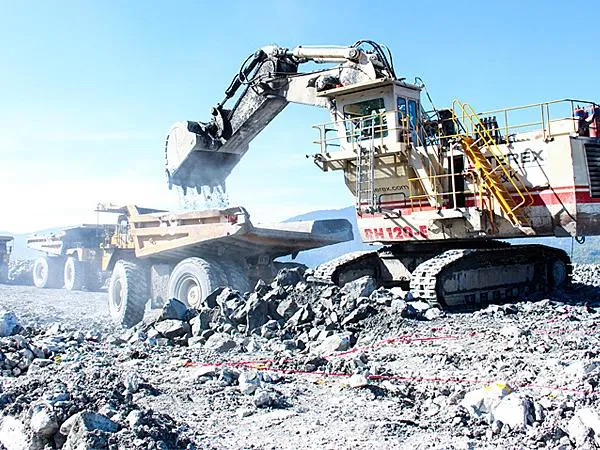
Photo credit: St Barbara
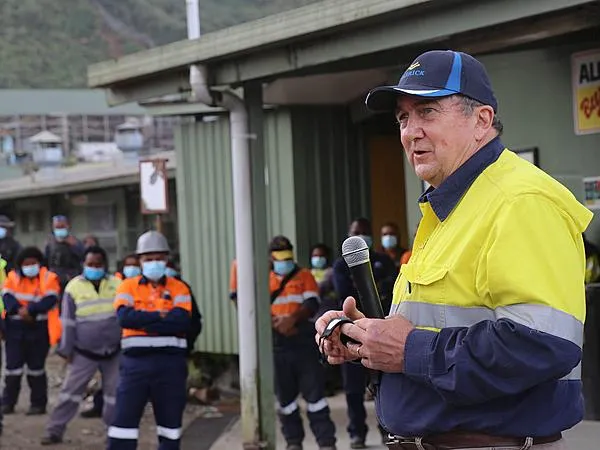
St Barbara Managing Director and CEO Craig Jetson said, “The end of the December FY22 quarter marks a momentous period for St Barbara. Through the announcement of our acquisition of Bardoc Gold, we took decisive steps towards securing Leonora’s future as a significant processing hub in the Western Australian goldfields. The acquisition uniquely positions St Barbara to add value to the high quality Bardoc ore bodies by processing the ore at the Leonora processing plant. We also had some very encouraging drilling results in the Old South Gwalia ore body, which has the potential to add new mining fronts higher up in the mine. By the end of this financial year we are targeting an updated Mineral Resource for this area.”
“In conjunction with this, we continue to progress the Pre-Feasibility Study (PFS) on Tower Hill, Harbour Lights and associated processing plant expansion. Mine optimisations and designs were completed. The selection of open pit mining as the preferred development approach for Tower Hill means that we increased the resource base by 600koz. Infill drilling is underway at Tower Hill and Trevor Bore and will start at Harbour Lights this coming quarter.”
“The end of the quarter also heralded the completion of laying the DSTP pipeline at Simberi. The success of this project has meant that Simberi has been able to re-commence production in early January 2022.”
“Production from Leonora has been stronger than we anticipated which helps offset lower production guidance for the Atlantic operations which has continued to be impacted by delays in obtaining routine waste rock permits.”
“Importantly, these significant growth and production achievements were underpinned by strong safety results in the quarter with TRIFR down 25% to 2.7 per million hours worked.”
Overview
Group gold production for the December quarter was in line with the prior quarter. Production was slightly lower at Leonora in the second quarter due to lower grade, however the impact of this was largely offset by higher feed grades at Atlantic.
Drilling at Old South Gwalia has identified an area between 600mbs and 1000mbs, which has the potential to add mining fronts at significantly shallower depths. Drilling will continue to test the South Gwalia Series between 600mbs and 750mbs with an updated Mineral Resource expected to be completed in Q4 June FY22.
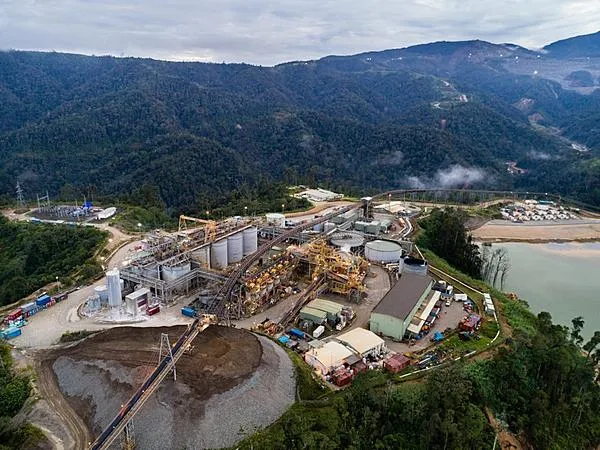
Completion of the Simberi DSTP pipeline was achieved during the December quarter, enabling the restarting of the process plant in early January 2022.
Group All-In Sustaining Cost for the September quarter was 6.5% higher at A$1,587 per ounce compared to the prior quarter in line with slightly lower production at Leonora.
At 31 December 2021, St Barbara total cash at bank position was A$94 million (up from A$42 million on 30 September 2021). Total debt owing under the Company’s syndicated facility on 31 December 2021 was C$80 million and A$50 million. A drawdown of A$50 million on the Australian tranche during the quarter was a prudent measure taken to maintain liquidity in a volatile operating environment due to potential COVID-19 interruptions.
The COVID 19 pandemic is beginning to cause issues sourcing required labour and equipment for the Atlantic and Simberi operations. The company remains proactive and pragmatic in its approach to the management of the pandemic. It notes that there has been tightening of the labour market in Western Australia as a result of border closures. St Barbara has developed contingency plans to minimise any potential interruption which could be caused when the West Australian border does open. With the safety of its people and communities paramount, St Barbara continues to work with and follow the advice of State and Federal governments and health authorities.
Atlantic has continued to experience delays in obtaining routine waste rock storage permits and when combined with significant rainfall events in the December quarter and the updated forecasts from the improved block model and associated mine plan, FY22 production for Atlantic has been revised down to 55koz to 65koz (previously 65koz to 85koz). Due to the reduction in production per ounce AISC guidance is now expected to be between A$1,650 to A$1,850 per ounce (previously A$1,305 to A$1,515 per ounce).
Production guidance for Leonora is expected to be towards the top end of its range while Simberi’s production is expected to be towards the bottom end of its guidance range. As a result, Group production guidance range has been narrowed to be between 305koz and 335koz (previously 305koz to 355koz).
Simberi Operations
The laying of the replacement DSTP pipeline was completed, with production recommencing after the quarter end, with the first gold pour occurring in the third week of January 2022. While the mill was offline a 130kt oxide ore stockpile on ROM pads was established. Multiple processing plant upgrades were also conducted during this time. These upgrades included the replacement of cyanide mixing and storage tanks, refurbishment of the rope conveyor, installation of downcomers in the carbon in leach (CIL) circuit to promote slurry mixing, a new lime circuit and several process control enhancements to CIL and thickener circuits.
Over the last six months the mine has been reconfigured to optimise waste haulage distance which has increased haulage capacity of ore to the 3.5Mtpa capacity processing plant. A new mine plan has also been developed targeting higher grade material and also enabling the batching of oxide, transitional and sulphide material which is expected to result in better recoveries than previously anticipated.
With the installation of the DSTP pipeline achieved late in December 2021, gold production is expected to be at the bottom end of the guidance range for FY22. The prior AISC guidance range had been calculated on the potential for production in the first half and was based on 12 months of cost divided by production from November to June. With production commencing in January 2022, the AISC guidance has now been recalculated based on production and cost for six months and includes the cost of ore stockpiles built in the first half. AISC cost guidance has been lowered to A$1,600 to A$1,850 per ounce (previously A$2,465 to A$2,650 per ounce).
Total capital expenditure guidance for Simberi remains the same, however A$10 million has been reallocated out of Sustaining into Growth capital expenditure to more accurately reflect accounting for the DSTP pipeline which is able to support a sulphide expansion.
Simberi Sulphide Project update
The pre-investment phase continues to advance well with procurement of long lead items underway. The front end engineering and design (FEED) work continues and construction packages will be issued to market early in Q3 March FY22 for competitive pricing and identification of key contractors for the project. Submission of the FEED study to the Board for the final investment decision remains on schedule for the end of March FY22.
The Social and Environmental Impact Statement review has been completed by the Conservation and Environmental Protection Authority (CEPA).
Anticipated approval of the permit remains unchanged for Q3 Mar FY22, and pending approval, first sulphide ore production is expected in Q2 December FY24.
Full report can be found HERE. Article courtesy of St Barbara