October 09, 2025

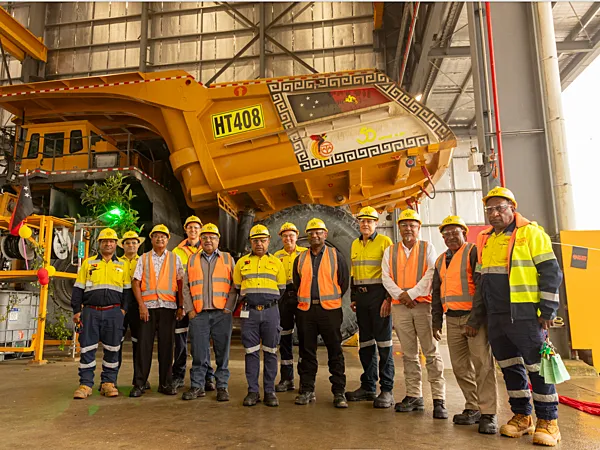
Ok Tedi Mining Limited (Ok Tedi) has officially commissioned its new Mine Operations Workshop, a modern facility purpose-built to support the maintenance of the company’s recently introduced fleet of XDE 260 XCMG electric trucks.

Named “Workshop 50” in recognition of Papua New Guinea’s 50th Independence Anniversary, the facility represents a major step forward in strengthening Ok Tedi’s mining operations, offering increased capacity and tailored facilities to service the larger and more advanced truck fleet.

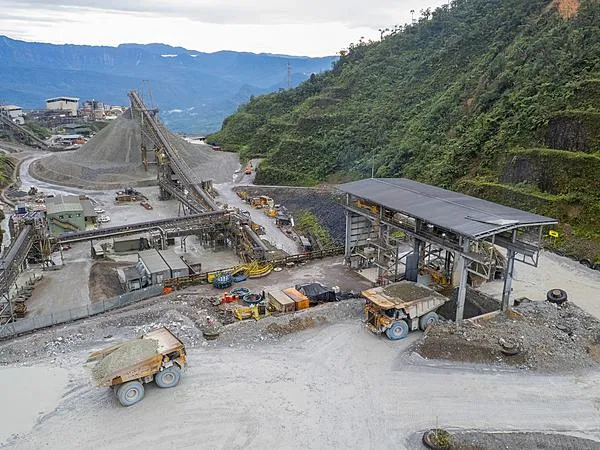
Ok Tedi anticipates operating a total of 15 electric trucks by the end of the year. The company currently runs 10 units, with five more being assembled. The XCMG trucks are used to haul ore and waste from the mine to the crusher and waste dumps respectively.

Designed and equipped to meet the unique maintenance needs of the XCMG electric fleet, the new workshop is expected to enhance operational efficiency and reduce downtime.

Ok Tedi Mine Manager for Mobile Maintenance Tommy Mambu thanked Ok Tedi Managing Director and Chief Executive Officer Kedi Ilimbit and the Ok Tedi Board, saying the investment reflects the company’s ongoing commitment to innovation and operational excellence.

“The new Mine Operations Workshop gives us the capacity and capability to properly maintain our electric truck fleet, ensuring safe, reliable and efficient operations. It is another important milestone as we modernise our mining fleet and invest in the long-term future of our operations,” Mambu said.

The construction and commissioning were completed within budget, with additional works including the installation of a 50-tonne crane and lube facility delivered through project contingencies and cost optimisations. Thorough commissioning checks were carried out prior to the official handover.

Despite challenges such as adverse weather and budget pressures resulting from changes to scoped requirements, the project team applied adaptive planning and close coordination to mitigate delays and ensure safe delivery.

Ok Tedi General Manager Operations Ben Burger underscored the strategic importance of the new facility.

“The new workshop will primarily benefit the Mine Maintenance Department, but its impact will extend across the broader Ok Tedi business by enabling more reliable fleet performance,” Burger said.

This milestone supports Ok Tedi’s 2050 Growth Strategy, with a focus on transformational growth and sustainability, paving the way for a stronger and more resilient future for the company and its shareholders.

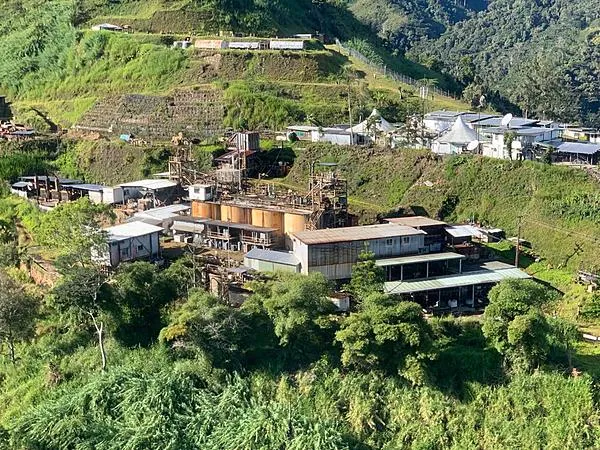
Ok Tedi Mining Limited (OTML) is a majority state-owned company that operates an open-pit copper, gold and silver mine located in the Star Mountains of Western Province, Papua New Guinea. The company exports copper concentrate to smelters and refineries in Japan, the Philippines, Indonesia, South Korea, India and Germany.

Operating in the region for over 40 years, Ok Tedi has made a significant contribution to development in Western Province through direct and indirect employment, royalties, compensation payments and business opportunities.

October 09, 2025

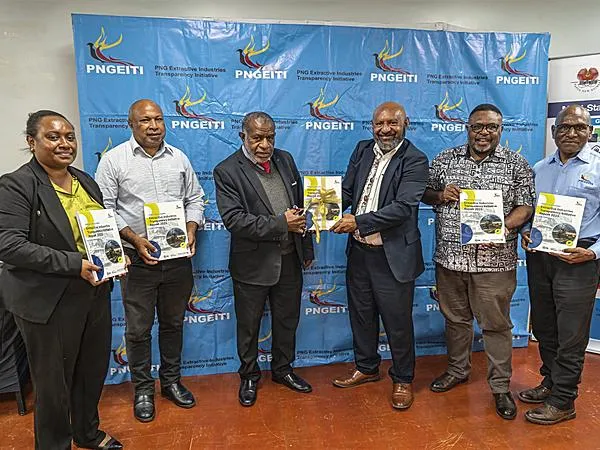
The PNG Chamber of Resources & Energy (PNG CORE) has commended the PNG Extractive Industries Transparency Initiative (PNGEITI) on the recent launch of the 2023 PNGEITI Annual Report.

This annual report represents a signpost for the resources sector and a milestone in the industry’s collective commitment to transparent, accountable and responsible resource governance that serves all Papua New Guineans.

It also provides a detailed, data-driven view of payments flowing from the extractive sector to the State and state-owned enterprises (SOEs), including taxes, royalties, dividends and equity-related payments.

In 2023, the extractive sector contributed significantly to Papua New Guinea’s economy, accounting for:

  • 27.4% of GDP
  • 23.1% of direct government revenue
  • 88.6% of total export earnings

PNG CORE reaffirmed its unwavering commitment to the principles of EITI — transparency, accountability, governance and sustainable development. Transparent reporting builds trust, reduces conflict, enhances investor confidence and strengthens the social licence for member companies to operate.

The 2023 EITI Report underscores the importance of robust, consistent reporting to shed light on where resources come from, how they are allocated and where gaps may exist — enabling policymakers, revenue authorities and communities to make informed, evidence-based decisions.

Key payments and contributions in 2023:

  • K3.6 billion (US $857 million) in mining and petroleum taxes paid to the IRC
  • K843 million (US $201 million) in salary and wages taxes paid to the IRC
  • K1.67 billion (US $398 million) in equity payments to state-owned enterprises
  • K680 million (US $162 million) in royalty payments to landowners, local-level governments and provincial governments
  • K564.5 million (US $135 million) in mandatory and discretionary social contributions
  • K366 million (US $87 million) in development levies to subnational governments
  • K218 million (US $52 million) in infrastructure tax credits

Transparency achieved through EITI reporting has been instrumental in identifying opportunities to improve tax administration, royalty flows and the management of state equity interests.

PNG CORE remains open to collaboration with government, regulators and communities to strengthen systems, close gaps and ensure that taxation and revenue mechanisms serve the public interest without compromising the competitiveness and viability of the resource sector.

“We support ongoing EITI reporting cycles and independent assurance to maintain high standards of accuracy and accessibility. We encourage the use of EITI findings as constructive input into policy reform, ensuring that changes promote fairness, predictability and sustainable development,” said Senior Vice President Richard Kassman.

PNG CORE commends the PNGEITI for its continued leadership in promoting accessible and impactful disclosures, and for fostering a collaborative environment where industry, government and civil society work together to translate resources into lasting development outcomes for Papua New Guinea.

September 30, 2025

The Special Parliamentary Committee on Public Sector Reform and Service Delivery has held a high-profile inquiry into the integrity of alluvial gold operations in Papua New Guinea, bringing together key state regulators and industry players for a series of presentations and Q&A sessions.

The inquiry aims to address long-standing issues in the alluvial gold sector, including compliance, regulation, environmental impact and the role of state agencies in ensuring transparency and accountability. Alluvial gold mining, largely carried out by small-scale miners and local enterprises, remains a critical income stream for rural communities, but concerns about governance, environmental protection and revenue flows have triggered renewed parliamentary scrutiny.

In the first session, the Committee heard from state authorities tasked with oversight of the sector. Each agency presented its involvement in the industry, its current challenges and its approach to improving regulatory effectiveness.

These agencies included the Mineral Resources Authority (MRA), Bank of Papua New Guinea (BPNG), Conservation and Environment Protection Authority (CEPA), Immigration and Citizenship Authority (ICA), PNG Customs, National Airports Corporation (NAC) and Maritime Transport Authority.

Committee members engaged the regulators in a robust Q&A session, raising critical questions about coordination gaps, weaknesses in enforcement and opportunities for digital monitoring of gold exports.

The second session featured representatives from the alluvial gold industry, providing the Committee with first-hand perspectives from miners, enterprises and advocacy groups.

These representatives included the Artisanal Gold Council, Tribal Mining, Golden Valley Enterprise and Sustainable Alluvial Mining Services.

Industry participants also raised concerns about inconsistent enforcement of regulations, limited government support for artisanal miners and the need for stronger partnerships with state regulators.

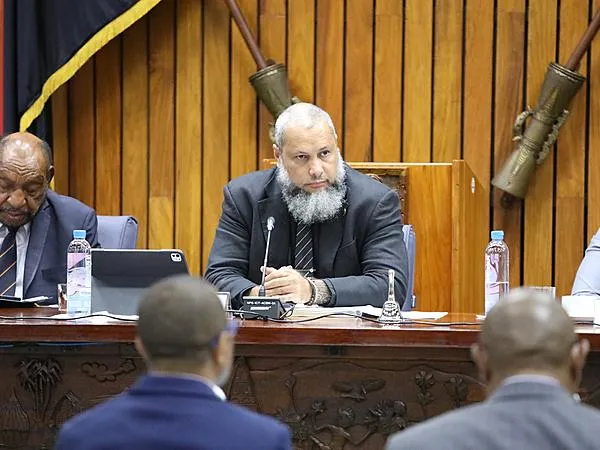
Committee Chair and Governor of Northern Province, Garry Juffa, stressed that the inquiry was not only about uncovering challenges but also about charting a way forward for a transparent and sustainable alluvial gold sector.

The hearings emphasised the need for inter-agency collaboration, stronger compliance mechanisms and policies that balance economic benefits with environmental protection.

The Committee is expected to compile its findings into a comprehensive report with recommendations for reforms in regulation, oversight and support to small-scale miners.

The committee members are Garry Juffa (Chairman), Allan Bird, Rufina Peter, William Powi, Peter Ipatas and Marsh Narawec.

September 29, 2025

Great Pacific Gold Corp. has reported strong assay results from its expanded Phase 1 diamond drill program at the company’s flagship Wild Dog Project on New Britain Island, Papua New Guinea.
The latest results include surface samples of up to 127 grams per tonne (g/t) gold equivalent (AuEq) and drilling intercepts grading as high as 11.1 g/t AuEq.

Key results included:

  • 0.8 metres at 127 g/t AuEq from surface sampling of the Main Vein.
  • 2.4 metres at 22 g/t AuEq from additional surface samples.
  • Hole WDG-09 returned 5.0 metres at 4.9 g/t AuEq from 169 metres depth, including 2.0 metres at 11.1 g/t AuEq.
  • A second mineralised zone from 182.4 metres yielded 2.6 metres at 6.6 g/t AuEq, with copper grades up to 5.5% and elevated silver.

“Hole 9 was drilled approximately 30m to the north of hole 7, into an area where we had very little information,” said CEO Greg McCunn.

“The intercept with the main Wild Dog structure supports the continuity of the system. With hole 10 also intercepting the main structure a further 70 metres north (assays pending), we are increasingly confident in our geological model that is supporting the Phase 1 drill program,” McCunn said.

With the second rig being mobilized, the official said that Great Pacific is expecting to accelerate the completion of the planned 28 holes at Sinivit which are providing valuable information on vein orientation allowing us to start testing the system at depth.

“Mobile MT geophysics has highlighted significant potential at depth and along strike to both the North and South from Sinivit on the large-scale epithermal Wild Dog corridor,” he said.

The company said that recent mapping and sampling at the historic Southern Oxide pit confirmed high-grade mineralisation.

The recent mapping and sampling campaign in the historic Southern Oxide pit area was undertaken to support modeling of the vein structures intersected in drill holes WDG-03, 04, 05 and 06 earlier in the Phase 1 program. The high-grade results in the veins exposed in the historic pit confirm the high-grade nature of the system.

Exploration work continues across the 15-kilometre Wild Dog epithermal vein corridor. A second drill rig is being mobilised to site, and a high-resolution LiDAR survey covering 187 square kilometres of the Wild Dog district has been completed.

Results of the survey, which will support structural mapping and target definition, are expected by October 6.

The Phase 1 program began in May 2025 and is expected to run into early 2026, with 28 diamond drill holes planned. Drilling to date has tested only a small section of the corridor, which remains open to the north, south and at depth.

September 29, 2025

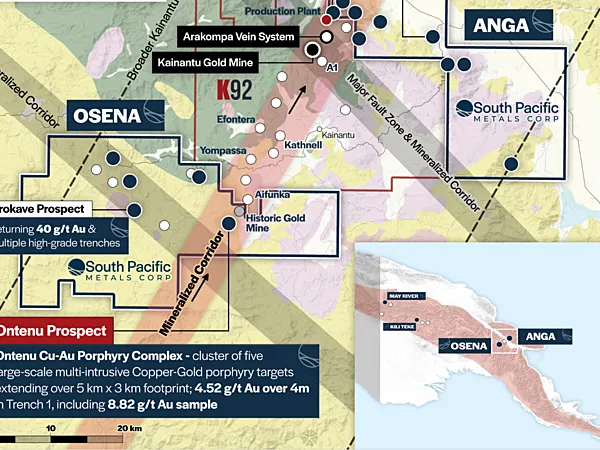
South Pacific Metals Corp. has reported exciting new assay results from its Ontenu NE prospect in Papua New Guinea, with rock chip samples returning high grades of gold, copper and silver.

The discovery, announced on 17 September, comes from the company’s Osena Project, located in the highly prospective Kainantu District. This region is already home to K92 Mining’s world-class Kainantu Gold-Copper Mine.

According to South Pacific Metals, field teams recently uncovered several new mineralised structures at Ontenu NE. Rock chip samples collected from outcrops returned values of up to 3.95 grams per tonne (g/t) of gold, 1.2 percent copper, and 603 parts per million (ppm) silver.

Other standout results included 7.69 g/t gold in a narrow vein with visible gold and 9.34 g/t gold with 272 g/t silver from a creek boulder.

 “Within a short time, we have found several new mineralised structures which we suspect could represent the upper levels of epithermal gold-copper veins,” said company CEO Timo Jauristo.

“To encounter high gold, copper and silver in some of these structures is encouraging. These results, with continuing mapping and sampling, will guide our drill planning. We hope to start drilling within the next month — the first drill holes in the Ontenu NE area,” Jauristo added.

The Ontenu NE target shows geological features similar to those at the nearby K92 Mine, with multiple gold-arsenic and copper soil anomalies stretching for more than a kilometre. Exploration is still at an early stage, with further mapping, trenching, and sampling underway before drilling begins.

The Osena Project, which covers 738 square kilometres of ground, is one of South Pacific Metals’ flagship ventures. Ontenu is considered particularly promising, with a cluster of five copper-gold porphyry and epithermal vein systems spanning an area 5 km by 3 km.

For Papua New Guinea, the results highlight the country’s growing profile as a destination for world-class mineral discoveries. For South Pacific Metals, the findings mark an important step toward unlocking the potential of the Osena Project.

September 22, 2025

Weir, a mining technology company, has redesigned its market-leading heavy-duty submersible slurry pump to deliver reliable performance in the harshest slurry environments.

Weir has made several design improvements to address the operational challenges miners face in submersible pumping applications.

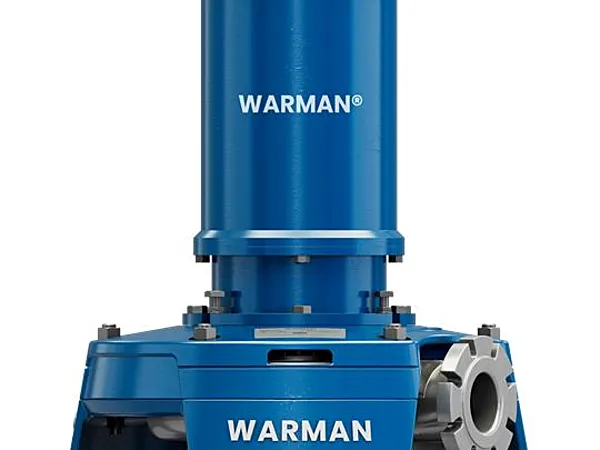
The WARMAN® SHW-XTR heavy-duty submersible slurry pump uses a larger shaft and heavy-duty bearings to keep everything stable, run smoothly, and avoid motor failure from shaft deflection.

Weir has also raised the strainer off the ground and added protective legs to shield it from tools, debris, and other job site hazards.

To prevent fluid from entering the motor, Weir has developed a custom double mechanical seal with a pressure-balanced oil chamber that keeps water out and extends the life of the motor.

In line with Weir’s commitment to reducing the environmental impact of its products, the WARMAN® SHW-XTR pump uses a glycol-based cooling system that does not waste water. Its simplified design and standard materials reduce waste, and the biodegradable oil in the seal helps protect the environment in case of a leak.

Ian Ross, Weir Global Product Manager, Dewatering Solutions, said: "We’re fortunate to be redesigning this pump from a position of strength. The legacy WARMAN® SHW pump has been a mainstay in demanding applications in mining operations all over the world. Its hydraulics are trusted throughout the industry, which is why we’ve preserved these design elements and focused on making improvements elsewhere.

"We wanted to make the pump easier to maintain, which is why the WARMAN® SHW-XTR pump has fewer components and a smarter design. This will ensure it is easier to maintain and will also reduce the need for a large parts inventory.

"Two of the key challenges across the mining industry today are longer lead times and higher costs, so it was important that these factors informed the decision we made. As a result, the WARMAN® SHW-XTR pump is a standardised product, meaning faster delivery and better availability of spare parts."*

Founded in 1871, The Weir Group PLC is one of the world’s leading engineering businesses, with a purpose to make its mining and infrastructure customers’ operations more sustainable and efficient. Weir’s highly engineered technology enables critical resources to be produced using less energy, water, and waste while reducing customers’ total cost of ownership.

Weir is ideally positioned to benefit from structural trends that support long-term demand for its technology, including the need for more essential metals to support economic development and carbon transition. The Group has approximately 12,000 employees operating in over 50 countries, with a presence in every major mining region of the world. Find out more at www.global.weir.

September 22, 2025

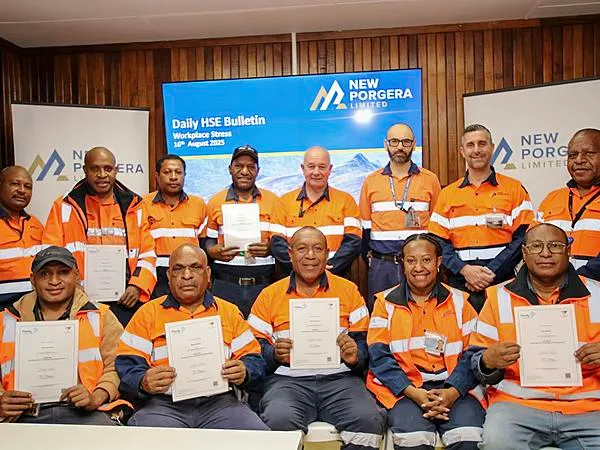
New Porgera Limited (NPL) continues to invest in the growth and professional development of its people, with a team of eight Employee Development (ED) trainers recently completing the Certificate IV in TAE (40122).

The Certificate IV is a nationally recognised Australian qualification that equips trainers with the skills and knowledge to design, deliver, and assess training programs, including vocational training, to industry best-practice standards. Through this certification, NPL’s ED trainers are now able to provide high-quality, accredited training to the workforce, facilitating learning programs that meet both national and international standards.

“It is also a requirement for trainers delivering Resources and Infrastructure Industry (RII) units of competency, which cover critical areas such as Health, Safety, and Environment (HSE) training. Trainers must also maintain ‘currency’, keeping their skills and knowledge up to date so employees receive training that meets the latest industry and safety standards,” stated Employee Development Superintendent Gary Giles.

A certificate presentation was held on 16 August 2025, officiated by NPL General Manager James McTiernan. The event was also witnessed by Barrick Gold Corporation’s Asia Pacific Head of Human Resources, Richard Barley, and NPL Human Resources Manager Adlyn Nagwi.

The training was delivered in partnership with Harness Training, a Port Moresby–based Registered Training Organisation (RTO), and Plenty Training.

The achievement did not come without sacrifice. The trainers balanced their work responsibilities while dedicating personal time, including their field break days, to complete the course.

“This certification is a big step forward for me as a trainer. It has equipped me with advanced skills in training and development areas such as facilitating vocational training, facilitating workplace-based learning, assessing competence in online environments, designing training, and working effectively in the VET sector, among other areas of the subject,” ED Training and Safety Specialist Dickson Paul said.

This milestone is part of NPL’s broader vision to empower the national workforce, improve training quality, and leave a sustainable legacy in the communities where it operates.

September 17, 2025

Geopacific Resources Ltd. (ASX: GPR) has reported encouraging new drilling results from its 100 percent-owned Woodlark Gold Project in Papua New Guinea, including a potential new discovery adjacent to one of the site’s key deposits.

The company is midway through a 30,000-metre drilling campaign designed to expand known gold resources and test multiple new targets across the project area. The program, which combines reverse circulation (RC) and diamond drilling, is central to Geopacific’s aim of increasing Mineral Resources beyond the current 1.67 million ounces.

New find at Kamwak

Among the latest results, Geopacific highlighted a near-surface gold intercept at the Kamwak target, where drilling returned 7 metres at 2.48 grams per tonne (g/t) gold from 21 metres in hole KURC25005.

The company said seven RC drill collars completed across a 600-metre strike length at Kamwak had intersected previously unrecognised mineralisation. The target lies immediately adjacent to the 711,000-ounce Kulumadau gold deposit and shares geological characteristics commonly linked to mineralisation on Woodlark Island.

According to Geopacific, the RC hole was stopped short of its planned depth due to groundwater, but additional drilling is being planned to test the potential of the zone. “Diamond tails and further collar designs (RC & diamond) are being prepared to follow-up on this encouraging intercept, which highlights the potential for a significant new zone of gold mineralisation adjacent to the Kulumadau deposit,” the company said.

Geopacific CEO James Fox described the Kamwak results as a strong sign of the project’s growth potential. “These initial results from Kamwak are highly encouraging and demonstrate the significant growth potential that remains at Woodlark. With our 30,000 metre drill campaign underway, we are confident of delivering further resource growth beyond the current 1.67 Moz base.”

Wider drilling results

The company also reported additional promising intercepts from other targets within the project area. At Busai, drilling returned 2 metres at 11.4 g/t from 9 metres in hole BSRD25002. At Boscalo North, assays showed 4 metres at 2.92 g/t gold from 145 metres in hole KURD25015.

Exploration continues at the Great Northern deposit, where diamond drilling is currently focused on extending RC pre-collars. Once geotechnical drilling is completed, the program will also test broader regional targets.

Geopacific has mobilised an RC rig to the Woodlark King mining area to begin drilling at the Little MacKenzie and Wayai Creek prospects. These follow earlier surface auger and trench sampling that returned positive results, giving the company further confidence in the potential for new discoveries.

Expanding Kulumadau

In addition to exploration drilling, Geopacific is also considering opportunities to expand existing deposits. The company noted that geotechnical drilling at Kulumadau presents an opportunity to extend mineralisation by about 50 metres beyond the current pit design, potentially enlarging the planned mining area.

Progress to date

By the end of August 2025, Geopacific had completed 54 drill collars across five main prospects, totalling 4,567 metres. This included 3,411 metres of RC drilling and 1,156 metres of diamond core drilling.

A second diamond drill rig was mobilised to site in August and is now working on diamond tails to RC pre-collars at the Great Northern deposit.

The overall drill program has been divided into three categories: exploration targets, prospects with potential for new Mineral Resources, and Resource Development drilling. In total, 192 drill collars covering approximately 31,300 metres are planned under the current staged approach.

Looking ahead

With multiple exploration targets now underway and further results pending, Geopacific is positioning the Woodlark Gold Project for potential growth in its resource base. The company emphasised that several of the latest holes remain incomplete, with diamond tails still to be drilled or assays yet to be received.

The identification of mineralisation at Kamwak, alongside strong results from Busai, Boscalo North, and Great Northern, underscores the possibility of extending both the scale and scope of the project.

Geopacific said the combination of new discoveries and extensions to existing deposits supports its strategy of building on the 1.67 million-ounce resource base and advancing Woodlark as a key gold project in Papua New Guinea.

September 17, 2025

Papua New Guinea’s government has thrown its weight behind Geopacific Resources Ltd., granting the company more time to develop its flagship Woodlark Gold Project in Milne Bay Province.

Mining Minister Rainbo Paita has approved an extension to Condition 7 (ii) of Mining Lease 508, which hosts the project, pushing the deadline to complete construction and commissioning of the mine to 5 October 2027. The lease itself runs until July 2034.

For Geopacific, the decision offers breathing space and certainty as it works through financing, environmental approvals, and a major drilling campaign ahead of delivering a definitive feasibility study later this year.

“As PNG celebrates 50 years of independence, we acknowledge this significant national milestone and commend the Government and people of PNG,” said Geopacific Chief Executive James Fox.

“We also recognise the leadership of the Minister for Mining and the team at the Mineral Resources Authority in approving our application to extend ML508 C7(ii),” he added.

The company recently submitted an environmental permit amendment request and supporting assessment report to the Conservation and Environment Protection Authority, aimed at reflecting project improvements in the updated feasibility study.

Fox said the extension provides “the flexibility and certainty needed to align the timing of project construction with the DFS and our exploration success,” describing it as both an endorsement of Woodlark’s potential and a sign of government support for responsible mine development.

The Woodlark project, which contains an estimated 1.67 million ounces of gold, is seen as a potential new engine of economic activity for Papua New Guinea. With drilling delivering encouraging results and government backing firming up, Geopacific hopes the project can soon shift from planning into reality.

Earlier, Australian-listed gold producer St Barbara Ltd has become a substantial shareholder in Geopacific Resources Ltd after acquiring a 14.4% strategic interest, strengthening ties between two companies with deep connections to Papua New Guinea’s mining sector.

The deal, completed through a transaction with Patronus Resources Ltd, saw St Barbara acquire 458.6 million Geopacific shares in exchange for returning 158.1 million Patronus shares. As a result, St Barbara now holds a 14.4% stake in Geopacific, while Patronus retains an interest of around 41 million shares.
September 17, 2025

St Barbara Ltd. is working to steady its footing in Papua New Guinea as the gold miner juggles a long-awaited mining lease renewal and a complex tax reassessment — two issues with big implications for the future of its Simberi operations.

The Australian-listed company confirmed that Papua New Guinea’s Mining Minister Rainbo Paita has received formal documentation recommending an extension of the Simberi Mining Lease 136 through to 2038. The advice came from the Mineral Resources Authority following a decision by the Mining Advisory Committee in August.

For the more than 1,000 employees on Simberi Island — most of them Papua New Guineans — the lease extension would secure jobs and community programmes tied to the mine for another decade. The mine has been operating since 2012 and has become a major employer in New Ireland Province, where economic opportunities are limited.

But first, St Barbara must resolve a lingering tax issue with the Internal Revenue Commission. The company has been disputing reassessments issued in December 2024, which it says it met with a formal objection earlier this year.

The IRC has since indicated that the original assessments will be revoked, with revised figures expected as soon as 19 September. With the nation in the midst of its 50th independence celebrations, St Barbara has signalled patience but is eager for clarity.

“The Minister has been clear that once the reassessments are clarified and the tax matters are regularised, the mining lease extension can proceed,” St Barbara Managing Director and CEO Andrew Strelein said after speaking directly with Paita.

The stakes are high. The uncertainty has already weighed on financing preparations for the Simberi Expansion Project, which would increase production and extend the life of the mine. Without resolution, the timeline for a final investment decision remains under pressure.

Still, the company stresses it is operating in good faith. Simberi Gold Company Ltd., St Barbara’s local subsidiary, has contributed royalties and community benefits for more than a decade, with strict governance and more than 90 percent of its workforce drawn from PNG.

“We remain in full compliance with all tax obligations and are committed to working constructively with the IRC to finalise the matter,” the company said.

For many in New Ireland Province, the mine is more than a workplace — it has funded schools, health facilities, and basic infrastructure in one of PNG’s more remote regions. With independence week festivities fresh in people’s minds, the prospect of a long-term future for Simberi is both a corporate and a community concern.

September 17, 2025

 Frieda River Ltd. (FRL) is celebrating Papua New Guinea’s 50th year of independence, congratulating the people and government on this historic milestone.

FRL reaffirmed its commitment to work with communities, stakeholders, and the government to advance the nation-building Sepik Development Project (SDP). The company is awaiting environmental permits and preparing for the special mining lease process to develop the Horse-Ivaal-Trukai-Ekwai-Koki porphyry copper-gold deposit, which holds an estimated 12 million tonnes of copper and 19 million ounces of gold.

“The copper-gold deposit at the centre of the Sepik Development Project was discovered before Independence. Frieda River can be a nation-building project, delivering sustainable development for generations,” said Phil McCormack, FRL’s project director.

As FRL staff observed the public holiday, PanAust’s Brisbane office prepared to host a lunch on Thursday, 18 September, to celebrate the occasion. The event will be catered by Lambinades, a Brisbane-based, Papua New Guinean–owned company.

“I consider PNG a second home and am looking forward to continuing to celebrate the 50th anniversary of Independence alongside my colleagues and friends,” McCormack said.

The SDP is expected to deliver both local and nationwide benefits, with direct and indirect contributions anticipated to be significant and far-reaching. Since 2014, PanAust’s investment in the project has exceeded $290 million, supporting education, healthcare, and community infrastructure in addition to project development.

At its peak, the Frieda River Copper-Gold Project and Frieda River Hydroelectric Project are expected to generate more than 5,000 full-time jobs, with 90% targeted for local employment. That figure has already been exceeded and sustained by PanAust’s Phu Bia Mining operation in Laos throughout the life of its mines.

The SDP will also create indirect benefits by unlocking business opportunities and stimulating investment in social assets by project partners.

September 08, 2025

Great Pacific Gold Corp. (GPAC) has announced a breakthrough at its Wild Dog Project in Papua New Guinea (PNG), reporting what it describes as one of the country’s best gold exploration results in recent years.

The highlight came from hole WDG-08, which intercepted 8.4 metres at 49.9 grams per tonne gold equivalent, including 3.8 metres at an exceptional 105 grams per tonne. The results also contained strong copper and silver credits.

“Hole WDG-08 has delivered one of the best exploration hits in PNG in recent years, 8.4 metres at nearly 50 grams gold equivalent, including a bonanza zone grading over 300 g/t Au,” said Callum Spink, Vice President Exploration.

“These results highlight the exceptional tenor of this epithermal system. The combination of multi-ounce gold with significant copper and silver credits confirms the presence of a robust polymetallic vein structure,” he said.

Importantly, Spink said that the semi-massive sulphide textures and associated copper mineralization in this interval demonstrate that the company is drilling directly into the heart of the system.

“With mineralization open along strike and at depth, we see clear potential for continuity of these high-grade zones and for scale across the broader 15 km structural corridor,” he said.

The company launched its Phase 1 diamond drill programme in May at Sinivit, a 1.5 km target zone within the Wild Dog structural corridor. The campaign has since been expanded to 28 holes totalling 5,000 metres, with nine completed so far and assays pending for WDG-09.

“The Sinivit target continues to generate high-grade near-surface mineralized intercepts,” said Greg McCunn, CEO. “With the drilling program at Sinivit expanded to 5,000 meters, we are looking forward to continued drilling success for the balance of 2025 from Phase 1.”

Mineralization is open at depth, and North-South along strike over the 15 km corridor. With both high-grade and district-scale, the Wild Dog epithermal target has the potential to host a major gold-copper deposit.

In parallel to the continued drilling, company said it is starting to increase field activity on the adjacent Magiabe porphyry in preparation for a potential maiden drilling program in 2026.

The company is also advancing projects in PNG’s Eastern Highlands, including Kesar and Arau, located near K92 Mining’s operations. Both have shown encouraging signs of gold and copper mineralisation.

McCunn said GPAC’s vision is to become a leading gold-copper developer in PNG by combining near-term high-grade discoveries with district-scale potential.

September 05, 2025

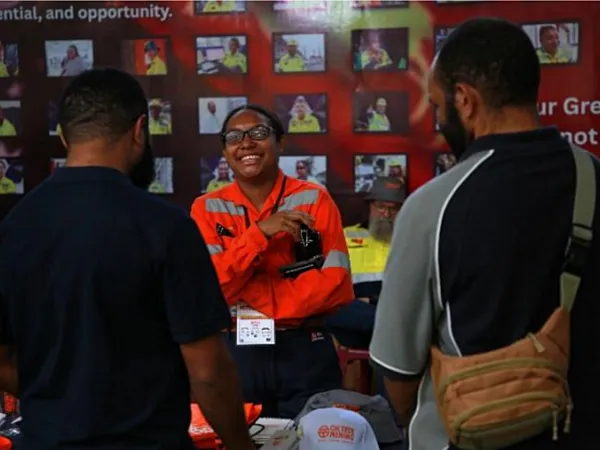
Ok Tedi Mining Ltd. (Ok Tedi) has reaffirmed its commitment to supporting Papua New Guinea’s future workforce, announcing it will remain the platinum sponsor of the University of Technology (Unitech) Career Fair for the next two years.

The announcement was made on 31 August, during the closing dinner of this year’s fair, where Ok Tedi also served as platinum sponsor.

Over three days at Unitech, Ok Tedi drew strong interest from tertiary students, showcasing its operations from the pit to the port and highlighting positive contributions to communities, the workforce, stakeholders and the nation. Since its first gold pour in 1984, the company has played a central role in Papua New Guinea’s nation-building and socio-economic development.

Representatives engaged directly with students, sharing insights into the skills and qualifications needed for careers at Ok Tedi. They also discussed the advantages of working for a company that is 100% nationally owned.

The initiative, led by Ok Tedi’s Training Capability and Development Department, aims to inspire the country’s future workforce to excel in their studies and prepare for meaningful careers after graduation. The company also highlighted the wide range of training opportunities and career paths available within its operations.

“Our goal is to connect with the next generation of leaders and innovators. By participating in these career fairs, we are not only promoting the values and opportunities at Ok Tedi but also encouraging young Papua New Guineans to aspire to careers that contribute to the nation’s growth and development,” said Ian Strachan, manager of Training Capability and Development at Ok Tedi.

This engagement forms part of Ok Tedi’s broader strategy to invest in human capital development and aligns with its vision of contributing to Papua New Guinea’s socio-economic prosperity and sustainable future.

August 28, 2025

Great Pacific Gold Corp. has expanded its drilling programme in Papua New Guinea, doubling its efforts at the Wild Dog Project in East New Britain from 2,500 metres to 5,000 metres, and is introducing advanced LiDAR technology to map the remote, jungle-covered terrain.

The Phase 1 campaign, which began in May this year, is focused on a 1.5-kilometre strike length within the Wild Dog structural corridor. Early drilling has confirmed the high-grade nature of the system, with results such as 7.0 metres at 11.2 g/t gold equivalent from 65 metres and 3.5 metres at 13.1 g/t from just 12 metres below surface.

In total, the programme now includes 28 diamond drill holes and is expected to run into early 2026. To date, only a fraction of the mineralised corridor has been tested.

Chief executive Greg McCunn said the decision to scale up was driven by promising results at the Sinivit Target.

“The success of the Phase 1 diamond drilling at the Sinivit Target to-date has led us to expand our program and we expect to continue drilling at Sinivit into early 2026,” he said.

The final hole at Sinivit will be a bold step-out to the north, aimed at testing a gap area where no historical drilling exists but where geophysics suggests a connection to the Sinivit system.

“This step out will be a precursor to moving the diamond drill to Kavasuki for Phase 2 drilling in 2026,” McCunn added.

Technology Takes Flight

To complement the drilling, GPAC is mobilising an airborne LiDAR and high-resolution imagery survey across 200 square kilometres of the Wild Dog district. Mounted on a fixed-wing aircraft, the system can pierce dense jungle canopy and deliver a digital terrain model accurate to within 10 centimetres.

The company expects this data to sharpen geological maps and, when combined with MobileMT geophysical results, help define high-priority drill targets with greater precision.

Next Steps

Since May, nine drill holes have been completed, with assays for holes WDG-08 and WDG-09 due in September. The next results are eagerly awaited, as they will shape plans for the transition into Phase 2 drilling.

The results signal growing confidence in the Wild Dog Project, one of Papua New Guinea’s most promising exploration frontiers. By marrying boots-on-the-ground drilling with eyes-in-the-sky technology, the company is betting that this mix of tradition and innovation will unlock the district’s true potential.

August 28, 2025

For the first time since the Tolukuma Gold Mine was commissioned in 1995, vehicles have successfully reached the remote site by road, marking a breakthrough moment for both the mine’s future and surrounding communities.

Tolu Minerals Ltd. announced that its new access road, connecting the mine to Port Moresby, has officially opened to traffic. The development is expected to cut operating costs dramatically by reducing reliance on helicopters, long seen as the only viable means of transporting fuel, equipment and supplies across the treacherous Central Highlands terrain.

Managing Director and CEO Iain Macpherson described the milestone as a “game changer” for the mine and a “truly historic moment” for Goilala District.

“The significance of the new roadway cannot be underestimated,” Macpherson said. “It delivers enhanced and efficient access to mining and exploration infrastructure and opens up nearly 1,300 square kilometres of mineral exploration licences across the broader Tolukuma structure.

For the local communities, it brings access to health care, education, employment and markets for locally grown produce. This is a great engineering achievement given the mountainous terrain and heavy rainfall that made road-building so challenging.”

Cutting Costs, Boosting Potential

The road is expected to reduce the mine’s reliance on helicopter transport for fuel and consumables by more than 75 percent. Bulk fuel, capital equipment and everyday supplies will now be delivered by truck directly from Port Moresby — a shift that promises long-term savings and operational efficiency.

Company officials said additional service and exploration roads are already under construction across the mine lease and adjoining exploration licences, further improving logistics and reducing costs.

Benefits for Goilala

The project is more than an industrial milestone — it’s a lifeline for the remote communities of Goilala, which despite being just 100 kilometres from the capital, have long struggled with isolation due to rugged terrain and limited infrastructure.

With the road now open, residents are expected to gain greater access to health and education services, while farmers will be able to transport fresh produce to markets in Port Moresby and beyond. Local employment opportunities are also set to expand as mine operations become more sustainable and exploration activities increase.

An Engineering Feat

Engineers faced steep challenges constructing the road, which winds through some of the most difficult terrain in Papua New Guinea. Heavy rainfall, unstable slopes and rugged mountain ranges required extensive cutbacks, culverts and diversions to stabilise the route.

Despite the difficulties, the road now connects seamlessly with the mine’s internal road network, built over the past 18 months. Deliveries of fuel and machinery have already begun.

Macpherson said the company will continue to refine and upgrade the road to meet contractual standards, ensuring safe and reliable access year-round. “The benefits of this road are enormous and already being realised,” he said.

August 27, 2025

Students attending the Morehead Vocational Centre in the South Fly District of Western Province can now undergo hands-on training with Ok Tedi Mining Ltd.

This follows the signing of a memorandum of agreement between Ok Tedi and the Morehead Vocational Centre on 14 August 2025, marking a significant milestone aimed at providing on-the-job training for students enrolled at the institution.

The collaboration addresses the pressing challenge of securing practical placements for students, a vital component of their educational development.

Morehead Vocational Manager Ken Ware Potang expressed his gratitude, saying, “This collaboration marks a pivotal moment for Morehead Vocational Centre and a tremendous blessing to our 229 students and the broader South Fly community.”

Potang emphasised the transformative impact of Ok Tedi’s support: “Ok Tedi is not just rescuing Morehead Vocational; they are also securing the future of our students. Despite pursuing various courses, many of our students had previously struggled to find hands-on training opportunities.”

He further commended Ok Tedi and its training department for their unwavering commitment to expanding opportunities to mine-associated communities within the region.

Ok Tedi Manager for Training, Ian Strachan, said, “Through this agreement, Ok Tedi is dedicated to facilitating vocational training for our students, ensuring they acquire practical experience that equips them for their future careers.

“Ok Tedi is committed to building Papua New Guinea’s workforce. Our ongoing training initiatives—including Preferred Area Development training, apprenticeship training, the Graduate Development Scheme, and industrial training—demonstrate our commitment. Morehead is now the second school, apart from Kiunga Vocational School, we are onboarding in this commitment to develop the youth of Western Province.”

Ok Tedi’s dedication to supporting Morehead Vocational Centre represents a sustainable initiative, fostering growth and innovation within the community for years to come.