Studying abroad is all exciting but can also be very expensive and concerning for parents whose children will be miles away for months on end in a foreign country.
Is this the right school for me or for my child? Is the fee within our budget and do they provide quality? Who will provide support and help settle in? What about accommodation and meals? What other options are available? And what is the total cost including health insurance and visas?
These are some of the myriad of questions faced by parents and students considering studying abroad options.
Most times they will have to enquire with different institutes, attend road shows, get conned by foreign marketing agents with no educational background or stand in long queues to get a visa. And many times they will end up paying extra and not get the best possible options that are available for their unique situation.
A ONE-STOP-SHOP
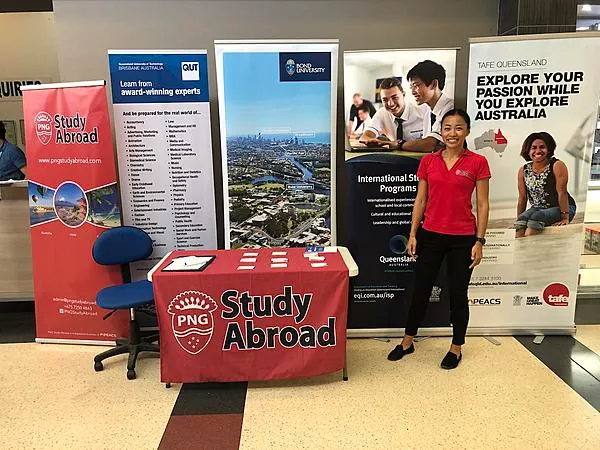
Well, that is no longer the case with the advent of PNG Study Abroad – a one-stop-shop for all your study abroad requirements, established four years ago by Mitsuki Sato, originally from Japan and now residing in PNG.
Seeing the lack of support for both students and parents looking for the best future by study abroad options, Mistuki set up what is now PNG Study Abroad, located at 5Mile in Port Moresby and has big plans for 2020 and beyond.
PNG Study Abroad provides the best possible options for parents and their children after one-on-one consultations to better understand their needs. They also provide free assessments through their website.
Many PNG students and their families have and are benefiting from the professional services of PNG Study Abroad.
“I realised that there was no support and lots of unfortunate and unsuccessful stories. I saw the need for help so decided to set up my own education agency,” she said.
She registered what was initially Pacific Education Agency Consulting Services (PEACS), now PNG Study Abroad and acquired certification as a Qualified Education Agent Counsellor (QEAC) in Australia.
“It was still a new concept in PNG being an education agent. The first three years was really hard, 4th and 5th year started picking up,” Mitsuki said.
She started with placements in Australia where globally recognised education and qualifications are offered to international students.
She actively looks for more study abroad opportunities and last year also got Fiji and Japan included in her Study Abroad options.
“It’s all about honesty and giving genuine advice to help those wanting to study abroad successfully, showing them the best options considering their individual interests and funding availability.
PNG Study Abroad does ‘one-on-one’ consultations and individual assessments on a case by case basis providing clients all the information necessary to make informed decisions.
“I show them a realistic fact and not a dream that leads them to a failure so I focus on giving the best and doing it properly,” she said.
‘It is challenging as a business, although the best moment is when I send off students overseas and they return and thank me, that is greatly rewarding...,” Mitsuki said.
From attention to detail and proper assessments procedure, she reveals that PNG Study Abroad has sent more than 50 students overseas successfully.
PLANS FOR 2020
For 2020, Study Abroad is looking at introducing a decent medical program that can be used in PNG as the medical schools in Australia and even PNG are quite expensive according to Mitsuki.
Other plans for 2020 include:
Finding more reasonable and decent quality education options outside of pacific regions ie Europe
Reaching out to people outside of Port Moresby
Discussions on involvement with private companies on Scholarship Management Services
The focus has always been to help students finding the best study options to realise their dreams and making sure that the qualification they obtained is needed in PNG.
PNG Study Abroad currently represents globally recognised education providers in Australia, Fiji and Japan as well as working closely with the government agencies to maintain its quality service and standard.
Growing up Mitsuki participated in short-term study abroad programs and also studied as an international student at TAFE Queensland and the University of the Sunshine Coast where she was later employed as an Administration Officer, experiencing and excelling in the broad area of Student Administration for seven years.
In 2013, she moved to Port Moresby and even though there was so much negative news about PNG on the international media but arriving here (in her own words) ‘I fell in love with the country’.
With PNG Study Abroad you can expect genuine assistance through one-on-one consultation to empower you to choose the best Study Abroad option for you and your family.
Pacific Towing (PacTow) is using its fleet of strategically positioned vessels and 200+ staff to help keep vital food and medical supplies coming in to its home country, Papua New Guinea (PNG). The company also has capacity to further support PNG’s various marine sectors, all key contributors to the economy. Moreover, with COVID-19 severely hampering maritime operations in the region, PacTow has capacity to provide assistance and deliver a range of services outside PNG’s waters.
Like many countries, PNG declared a state of emergency and implemented a lock down seriously restricting international as well as domestic flights and shipping. However, due to the essential nature of PacTow operations the company continues to provide its harbour towage services enabling ships to berth and unload supplies and thus keep the country running. It is estimated that approximately 90 percent of PNG’s food is imported as are up to 100 percent of its medical supplies.
In addition to keeping PNG’s food and medical supply lines open, PacTow has also advised marine service providers that it has vessels and crews available to support them if required. General Manager, Neil Papenfus explains that “operators all over the world are struggling to re-crew because the COVID-19 lockdown prohibits them from flying in their staff. PacTow doesn’t have these re-crewing problems because we have a 94 percent nationalised workforce with the majority of our tugs being crewed solely by Paua New Guineans.”
When asked about PacTow’s capacity to provide services outside of PNG waters, Operations Manager Gerard Kasnari reports that PacTow has been expanding its geographic footprint internationally for nearly 10 years. “We have businesses established in Fiji and Solomon Islands and we have successfully completed ocean towage, salvage and emergency response projects in these countries as well as in Northern Australia, Indonesia and Micronesia.” (At the time of writing, PacTow were part way through an ocean towage project to Guam.)
“Of course COVID-19 places some restrictions on our operations and we’ve made numerous changes and introduced risk controls so that we don’t compromise the health and safety of our crew, our clients or our communities” emphasises Kasnari. With only two confirmed cases of COVID-19 in PNG at time of writing, companies like PacTow had additional time in comparison to those in other countries to prepare for the pandemic.
World Health Organisation (WHO) recommendations were taken on board and new procedures and guidelines implemented. Senior managers from PacTow worked with regulatory authorities to ensure that tugs and additional staff could be deployed to the most significant PNG ports. “These tugs and additional staff will prove critical if there is a breakdown or an emergency” explains Kasnari. “PacTow has a long history of emergency response, including saving lives and vessels, as well as cleaning up oil spills.”
Kasnari reports that PacTow has new procedures in place to specifically safeguard the health of its crews. “We have new cleaning and disinfecting protocols for example and staff can no longer take shore leave. Likewise, all non-essential visitors are banned from our worksites, vessels and accommodation facilities. We’ve also introduced a range of measures to keep our crew safe when it comes to transferring persons such as Customs and Quarantine staff or marine pilots. Some of these measures include social distancing, not allowing the transferred persons inside the tug, and no longer letting them use PacTow lifejackets.” PacTow has also converted its decommissioned tug ‘Koranga’ as its designated Isolation Unit in the event that any of its crew contract COVID-19.
“PacTow is in a more fortunate position than many other businesses in this time of crisis” says Papenfus. “As an essential service that helps the country keep running we are still able to operate and we are not laying off staff. Also, we will potentially see an increase in business if other marine services operators in the region struggle with their crewing and vessel deployment thus requiring outside assistance.”
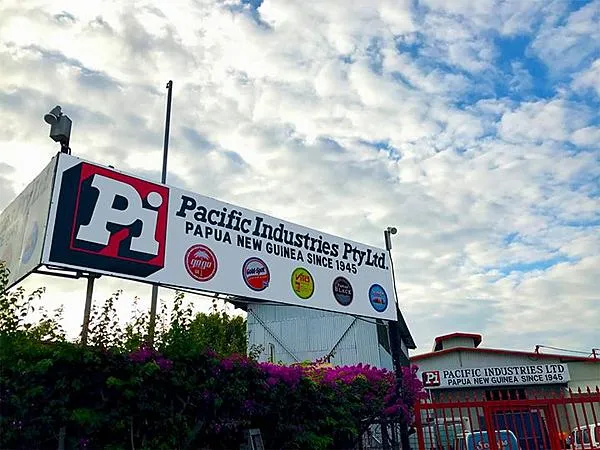
‘Home-base’, were the words Company Director of Pacific Industries Limited, Ashlon Chue, chose to describe Papua New Guinea and the company’s operations.
He said the Chue family, having come to PNG in the early 1900’s have ‘always maintained the philosophy of Papua New Guinea as home-base’.
“So we have always seen the positive side of investing in PNG and continue to invest in our business here,” Ashlon said revealing plans for a second state of the art Carbonate Production Facility (beverages) and export plans for the Pacific.”
Ashlon and dad Mr Paul Chue, Managing Director of Pacific Industries Ltd, were responding to questions about the current tough economic challenges and investments in PNG during an exclusive interview with PNG Business News.
‘Business is tough at the moment with delays in new major projects with a shortage of foreign exchange, PIL is not immune and feeling this impacts in our daily business,” Mr Chue said.
‘We have invested heavily in our PNG business...we are here to stay, he said.
Ashlon further revealed that in past five years PIL has invested significantly in PNG, particularly in its Rabaul plant which now has a state of the art Carbonate Production Facility (beverages).
The investments have increased production and distribution in all their beverage ranges.
“Two of our focus projects this year are the major expansion of our Port Moresby and Lae facilities. The construction of a new warehousing facility in Port Moresby is 50% completed which will give PIL three times the amount of current warehouse space. A similar model is planned for roll out in Lae later this year, and might I add, we are very proud to relay that the POM project from start to end will be built by PNG owned businesses,” Ashlon said proudly.
The PNG companies are J&M sons for surveying, PhilMak engineering services and Anuitua constructions.
These new facilities will see an increase to current national staff ceiling of 1000 employees across an established distribution network that includes 11 depots nationwide. It has also invested heavily in training, up-skilling and mentoring program for national employees.
Last year, Pacific Industries picked up the Pepsi franchise which has helped make up for some of the drop in revenue sales.
“It has softened the blow for Pacific Industries,” Paul says.
As one of the oldest companies in Papua New Guinea, Pacific Industries initially set up as a manufacturer of beverages in Rabaul and now has depots in Pom Moresby, Lae, Mt Hagen, Goroka, Madang, Kokopo, Rabaul, Kavieng, Kimbe, Buka Island and Arawa in the Autonomous Region of Bouganville (AROB).
MAJOR FOCUS AREAS 2020
Increasing our production capabilities –warehouses, equipment
Development of our national workforce with ongoing trainings
Up-skilling of senior management team and localisation programs
Ashlon commended the Government’s move to support local industry in 2018 that introduced new laws to ensure local companies are not being disadvantaged by fraudulent and illegal activities and imports.
“We are very optimistic about the outlook for PNG. It has huge potential in many areas that are yet untapped, not just the resource sector. We are not concerned, but optimistic...,” Ashlon says.
“We are here to stay, all our investments are here,” Paul said.
Despite the tough times, for Pacific Industries, ‘home-base’ PNG will come out bigger and better.
Pacific Industries like many business houses has scaled down operations and put in place mitigation strategies and measures due to COVID-19 lock down, after PNG Prime Minister James Marape declared a SOE following PNG’s first confirmed case of coronavirus.
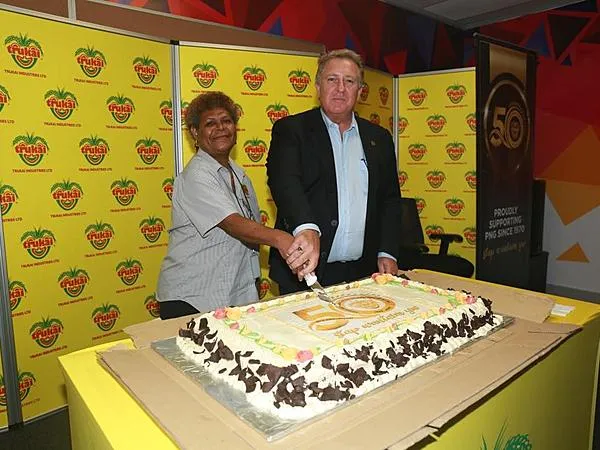
Papua New Guinea’s leading rice manufacturer and distributer, Trukai Industries Limited has reached a significant milestone as it reaches its 50thanniversary in PNG.
From its humble beginnings in Lae, Morobe Province, on February 17, 1970, the company has now grown to be a leading household name in PNG with over 1,000 employees and 12 distribution centres nationwide.
Trukai Industries Limited, Chief Executive Officer, Greg Worthington-Eyre said this is a huge milestone for the business and dedicated it to all staff, past and present who have contributed to making Trukai to what it is today.
“Our success is driven by passionate people in our business that has supported us over the years. We also acknowledge our customers and consumers at large who are an integral part of our business and we remain committed to continue providing the best quality rice for them.
“Apart from providing food security for the people of PNG for the past 50 years, we are also proud of our social responsibility programs and our contributions back to the community, We have a strong Corporate Social Responsibility (CSR) program that spans across various social sectors such as education health, youth and women empowerment, sports and agriculture amongst others.
“We have invested significantly over the years across these various sectors and that is a testament of our strong commitment towards supporting the communiti9es in which we operate in,” he said.
‘Despite many challenges, Trukai had invested over K60 million in the past 15 years testing different agricultural crops, training landholders and providing equipment to provide food security capabilities in PNG.
“We are pleased to be the leading rice company in PNG that encourages and supports local communities to grow rice and provide them with income earning opportunities by providing them with market access.
“We want to ensure that we properly develop a viable local rice industry for PNG that can gradually reduce rice import overtime and we look forward to working with the government and relevant stakeholders to achieve this dream for PNG.
“After many years or trial and research, we are pleased with our most success story to date where we pioneered and delivered PNG’s first commercial rice project through our Markham Valley Rice Project in 2018. Unfortunately we are not able to continue new plans for this year due to challenges beyond our control such as law and order and landowner issues.
“However, we hope that this will be resolved soon and we can be able to continue on the project to help support the government’s vision to encourage and promote a viable rice industry for PNG,” he said.
Mr Worthington-Eyre also announced that just yesterday, Trukai Industries Limited signed an agreement with local landholders in Luhu LLG in the Nawaeb District of Morobe Province, to venture into commercial rice farming to supply the PNG rice market.
Last year, 38 tons of rice was harvested from the pilot project and it was proven that they can now upscale that to commercial farming.
When ready, the rice will be harvested and packed into Trukai Hamamas rice, which will be the brand to cater for all our local rice products.
As for the loyal consumers, there are promotions in place to reward them and it will be announced accordingly in the coming months.
A growing number of PNG businesses are enjoying the benefits of sourcing a diverse array of quality products direct from Chinese factories. Sourcing direct, as opposed to via retailers and wholesalers, cuts out expensive middlemen, saving businesses thousands and making them more competitive. Sourcing from the manufacturing mecca of China provides businesses with an almost infinite array of product choices. Indeed ‘anything and everything’ is manufactured and ready for export in China.
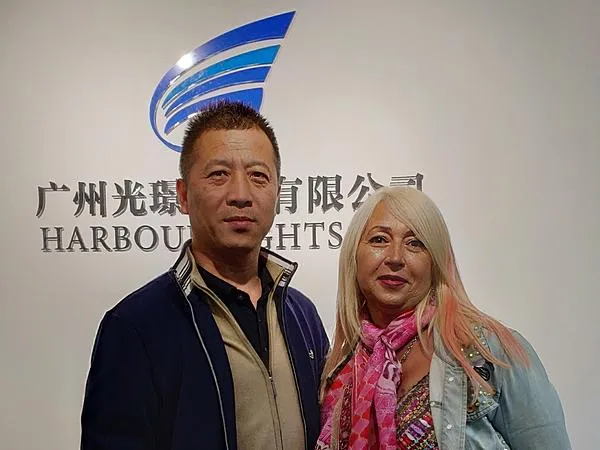
Tom Yang, Managing Director of ‘Harbour Lights’ – a company that specialises in helping PNG businesses source direct from Chinese factories – has been travelling back and forth to PNG for more than 10 years. “Just over 80 percent of our business is done in PNG” says Tom “we know the nuances and challenges of the market here exceptionally well and it’s fair to say that we are PNG experts.”
Although most Harbour Lights clients are based in Port Moresby, the company also has a track record of sourcing for businesses in other parts of the country such as Lae, Mount Hagen and Kokopo.
Yang has considerable experience servicing hotel, resort, restaurant and apartment clients, sourcing a vast array of building and fit out materials, as well as furniture, linen, bedding and so much more. Indeed numerous readers will have dined at a table, sat on a lounge, or slept in a bed sourced by the Harbour Lights team!
Although many of his clients represent the ‘high end’ of PNG’s hospitality and accommodation providers Yang also assists mid-tier organisations and NGOs and not just in PNG. One recent Australian project saw Harbour Lights supply furniture to a nursing home. Another in the Philippines involved sourcing items for a large office-share project. Harbour Lights also sources for staff and student accommodation projects as well as for retail operations.
“PNG retailers, whether they sell furniture, floor tiles, office equipment, sporting goods, or just about anything really, will be able to source these through us at anywhere between 10 – 50 percent of what they pay their current suppliers” says Yang. “Our retail customers end up being considerably more competitive as they can pass savings on to customers. Alternatively, they can enjoy much higher profit margins.”
Harbour Lights is not the only sourcing enterprise servicing PNG. Yang advocates that “businesses shop around and do their homework before selecting a sourcing business partner”, ensuring that they work through a well reputed and experienced agent who ticks the following boxes:
Only uses quality vetted suppliers who manufacture to Australian or New Zealand standards – China has undergone a quality revolution and produces items of the most exceptional quality (however it also produces items of atrocious quality)
Very good English literacy skills – save time, frustration and misunderstandings with excellent and clear communications
PNG experience and legitimate (verifiable) testimonials from satisfied customers – a ‘no brainer’
Willing and able to take clients on a tour of Chinese factories/suppliers for product viewing and quality assessment – allowing clients to touch and feel the products before purchase
To learn more on how to source smartly, safely and cost-effectively from China: tomyang7503@harbourlightsltd.com
Pacific Towing, the region’s dominant marine services provider, has introduced an in-water Hull Cleaning service. A first for PNG and indeed Melanesia, this crucial service will save shipping companies potentially hundreds of thousands of kina.
Hull cleaning is necessary when there is a build-up of marine fouling such as barnacles or tubeworm. It is a vital service that can result in considerable improvements in a vessel’s hydrodynamic performance and therefore its fuel consumption.
Pacific Towing (PacTow) launched its long awaited hull cleaning service in December. The service is performed near its headquarters in the sheltered inner anchorage of Port Moresby’s Fairfax Harbour.
General Manager Neil Papenfus says that “PacTow’s investment in hull cleaning technology will be highly valued by our existing shipping company clients and will undoubtedly generate new clients as well.” Papenfus reports that most shipping companies in the region currently have the service performed thousands of kilometres away in Australia or New Zealand.
A PNG-based hull cleaning service means that clients will save tens of thousands of dollars in fuel and downtime associated with having vessels out of service. It also means that additional and much needed revenue will be brought in to PNG. Furthermore, the 100 percent nationalised PacTow commercial dive team who perform the service have all received valuable and highly specialised training, further building their skill sets.
Papenfus adds that shipping companies will save additional money by having hull cleaning performed by PacTow because the service is done underwater as opposed to vessels being dry docked. “Dry dock cleaning performed by international providers takes longer and costs more” he says.
A diversity of vessels including container ships and cruise liners up to 250m in length can be serviced by the PacTow hull cleaning team. The servicing of larger vessels is planned for 2021. The time taken to clean a hull varies, ranging from one to four days. Service duration depends on such factors as hull size and shape, as well as the extent of marine fouling build-up (i.e., relatively minor through to 100 percent coverage) and type of fouling (e.g., barnacles, tube worming, calcium scale, weeds, slime). Whether the vessel is heavily loaded or already discharged also impacts how quickly the service can be performed because ‘load status’ impacts how high or low a vessel sits in the water. PacTow hull cleaning is performed underwater.
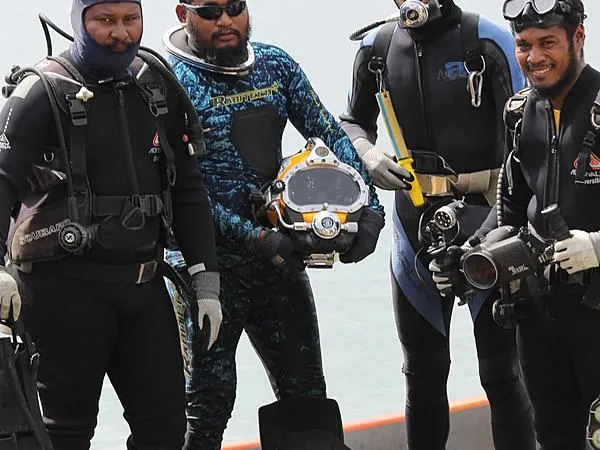
Commercial Dive Manager, Ricky Leka stresses that “hull cleaning is a high risk, technically challenging and physically demanding service to perform.” PacTow’s entire eight-member dive team participates in any single hull clean. Leka explains how his divers work in pairs on a two-hourly rotation to literally drag, manoeuvre and correctly position the hull cleaning machinery (i.e., a series of high-precision, rotating brushes and suction mechanisms) around the surface of the hull. “The divers are in constant motion, their legs are always moving and their applying continuous force with their upper bodies” notes Leka “this is why the 2-hourly rotations are so necessary.” A dive supervisor and technical assistant, as well as standby divers and machine operators are in close proximity on PacTow’s ‘Wanilla’ a bespoke dive support vessel recently upgraded specifically to enable the new hull cleaning service.
PacTow imported environmentally responsible hull cleaning technology from Denmark. The Dive, Technical and Engineering teams worked collaboratively to improve the effectiveness of the technology as well as refine its environmental credentials. Leka explains how the original technology was hydro driven but proved ineffective on barnacles, leading the PacTow engineers and technicians to convert it to hydraulics. The new improved technology was pilot tested and further refined on PacTow’s fleet of tugs with resounding success.
All necessary environmental testing and accreditation was finalised in 2019 and regulatory authorities, including the National Maritime Safety Authority, have approved PacTow’s Hull Cleaning system.
More on PacTow
Pacific Towing is a marine services business headquartered in PNG with additional businesses in Fiji and Solomon Islands. The company services Oceania as well as South East Asia and is a full member of the International Salvage Union. Towage, mooring, salvage, commercial diving, and liferafts have long been Pacific Towing’s ‘core’ services. However, the company is increasingly sought out to provide customised solutions in diverse project settings. To learn more about Pacific Towing: www.pacifictowingmarineservices.com.
By: Alasdair Smith, Strategic Projects Manager, Oceaneering
Digitalisation and improved data capture can positively impact asset performance and efficiency in a number of ways. It can help confidently assure the condition of production equipment through streamlined inspection and maintenance programmes and also help assure safety and reduce risk for personnel.
Until now there has been little standardisation of non-destructive testing (NDT) application. The execution of inspection can vary between individual inspectors, organisations and by region. For example, at Oceaneering we found that in one organisation they had more than 20 different ways of recording ultrasonic inspection (UT).
Finding efficiencies in asset integrity
A typical oil and gas installation will have tens of thousands of inspection data points, generating a flood of information. However, indiscriminate collection of data does not automatically equal more efficiency. The process of converting this data into usable information, in order to enhance decisions and performance, is all too often found wanting.
Existing digital inspection solutions often amount to well-presented, but basic, electronic spreadsheets. As more and more processes become digitalised and automated, these tools cannot keep up with operator requirements for a more aggregated and integrated inspection management solution that builds consistency and accuracy for the future.
Digital tools for asset integrity
One pioneering example that is debunking this trend is Oceaneering’s new Inform Inspect™ platform, a non-destructive testing (NDT) and inspection management solution designed to help manage the full inspection life cycle.
The system was created by an in-house team, which initially looked to source a holistic NDT and inspection management paperless solution that would work globally. The team could not find one on the market that covered all the requirements that they knew, as inspectors themselves, were necessary to create a truly flexible, intuitive and integrated solution.
The team categorised the four methods of NDT: visual, ultrasonics, electromagnetics and radiography. These were split into individual deployment techniques and over the space of six months were added into a system that aligns with regional and operational requirements, whilst also providing consistency of reporting and methodology by applying a global standard for capturing data.
This has developed into a configurable process that enables users to customise reports, manage access, add preferences such as the prioritisation of inspection tasks and bespoke picklists, and also offers added rigor with options to approve, amend or reject inspections from the office in real-time, using information provided onsite.
The system helps inspectors prepare for their shift in advance of being on site, using quality pre-designed work packs that are ready to view on the recommended tablet. The system also contains information that helps accurately pinpoint inspection locations in order to process the inspections quicker. This, in turn, reduces time on site, providing a particular advantage to inspectors working in high risk or remote areas.
Results from Inform Inspect global trials include measurable safety improvements and an increase in productivity of up to 30%.
The future of asset integrity
Digital asset integrity systems such as Inform Inspect are changing the way in which integrity issues are identified and actioned. The system provides an enhanced level of accuracy by providing usable data from site to the office almost immediately. A far cry from illegible, rain damaged paper reports that can take weeks to get back to the beach and even longer before any remedial action is implemented.
There is no doubt that smarter, faster, digital applications can and will have a significant impact on predictive maintenance in the oil and gas industry. The trick is to ensure you use applications that do more than just simply collect data, and move to those which provide practical insight, better control and deliver true value to the in
From Papua New Guinea to Singapore, New Caledonia, Fiji and Australia, five young Papua New Guinean women are following their dreams of becoming future deck officers in the maritime industry – and experiencing new cultures and professional challenges in the process.
The young seafarers are undertaking a three-year maritime cadetship through an innovative partnership between the Australian Government and Steamships, China Navigation Company and Pacific Towing.
Glenda Amu, Lyllelah Kunai, Jamie-Lee Baim, Amy-Lee Turia and Irma Rua are five of an overall cohort of 20 female cadets studying to qualify as Officers of the Watch Deck and Officers of the Engine Room, under the Australia Awards Maritime scholarships program for women since 2018. The scholarships involve study in Papua New Guinea and sponsored international work experience at sea. The Australia Awards Maritime scholarships are contributing to addressing the skills shortage in Papua New Guinea’s transport industry and contributing to positive cultural change in the maritime sector.
They are part of the overall Australia Awards In-PNG Scholarships program, whose awardees develop the knowledge and skills to drive change and to make positive contributions to social and economic development in Papua New Guinea.
The five young women during a recent visit back to Port Moresby, could not contain their excitement about the ports they had visited and experiences they obtained in a recent six-month training block at sea.
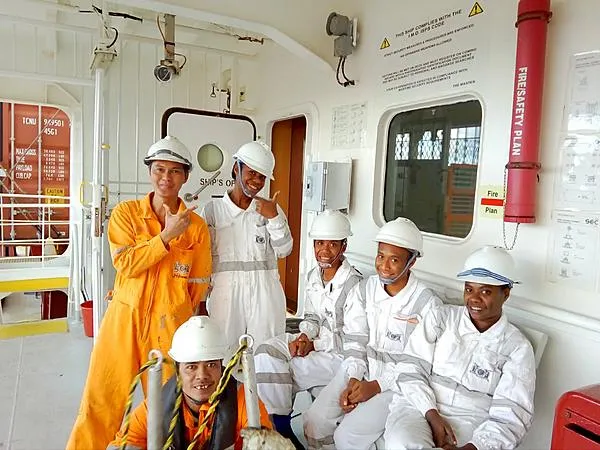
Between October 2018 and April 2019, the five trainees undertook practical seatime experience on board the MV Szechuen, gaining important skills and learning more about the international maritime industry – and themselves.
‘At first it was quite new to us, working with such a multi-national crew on board. So, we had to get used to working in a new environment,’ Lyllelah Kunai said.
Her fellow awardees expressed similar sentiments. ‘But then as time went along, we became friends,’ Glenda Amu said.
The awardees undertook practical elements of the cadetship training program, on board MV Szechuen, building on theoretical knowledge gained during classes in Papua New Guinea.
For Irma Rua, working alongside more senior officers and observing all aspects of the ship’s operations – at sea and during port calls across the Asia-Pacific – were highlights.
‘On a daily basis our Cadet Training Officer went through with us as per the cadet training program. We covered topics including navigation, cargo watch and mooring,’ Ms Rua said.
It was not all plain sailing being away from home for an extended period, and there was much to learn beyond the classroom. However, the five cadets agreed that they had a very supportive cadet training officer, crew and peers.
‘Our cadet training officer pointed out our weaknesses,’ Jamie-Lee Baim laughed.
‘So, every morning when I woke up, I told myself that I would improve, and I would be better.
‘I’m still working on them though,’ Ms Baim added with a grin. ‘I’m not saying that I’ve completely overcome them.’
The five awardees recently began a second phase of sea experience, this time with Pacific Towing, and are due to complete their cadetships in 2021.
Buoyed by their successes at sea, the five young seafarers hope to see more women follow them into the maritime sector, in which females remain under-represented.
‘Women bring in a different perspective,’ Ms Kunai said, a view which fellow trainee Ms Amu shared.
‘It’s a tough industry. But if we can do it, other women can too,’ Ms Amu said.
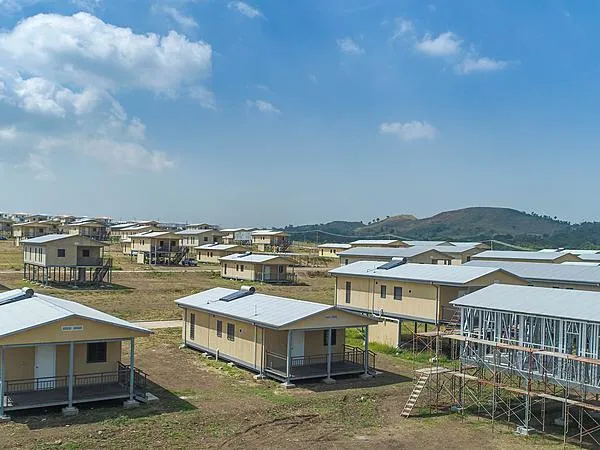
After three years of delays and frustrations, Anitua Housing Solutions (AHS) celebrated a significant milestone in October at its large-scale housing development at Kennedy Estate - 7 Mile, Port Moresby. The first set of keys in its 158 house project was handed over to PNG’s latest homeowner.
"I am happy to finally move in and my family and I now have a place to call home" said new homeowner Oripa Popat. “It was a long wait due to delays with the previous management but the AHS team was very dedicated and professional, working hard to get us in to our home.”
The Anitua Group, like many businesses, entered the housing market in Port Moresby in 2015, looking to be part of First Homeownership Schemes and commitments made at the time. Anitua originally invested in a joint venture arrangement with an Australian owned and operated entity. The joint venture partner was to supply materials, manage regulatory approvals and sales while Anitua Constructions would build the houses – Perfect.
Unbeknown to the Group however, like many of the families who had provided deposits and were anticipating the joys of first homeownership, they were sold a fallacy.
Over the next two years the project, its contractors and its homeowners would experience delays and frustrations associated with material supply and regulatory approvals. There was minimal response to their concerns and refund requests. At the start of 2018 Anitua had seen enough, buying out the entity of the failing joint venture in an effort to rescue the homeowners, protect its hard-earned reputation and the interests of their shareholders.
The project then began to operate as Anitua Housing Solutions, under the sole management of Anitua, progressing through a range of issues while being able to further support local businesses across Port Moresby.
AHS Site Manager Tyrrell Maring reports that he has been impressed with everyone’s efforts to successfully turn the housing development around and have families start moving in to their new homes. “The estate has been a collaborative effort between multiple stakeholders and can now be called a success. Very importantly, before the end of the year AHS will fulfill long overdue promises to another 70 homeowners by getting them in to their homes to celebrate Christmas.”
Anitua is a proud, nationally-owned company and the deliverance of such a high-quality housing estate using a majority of locally supplied materials and local workforce is a great achievement.
Anitua CEO Daniel Kaima says “We are grateful for the support of the Lands Ministry and its Department, Eda Ranu, PNG Power, NCDC, several other government agencies and the major banks who have worked with us since inception of our housing project in 2015. It is extremely rewarding to see that this support is facilitating the avenue for Papua New Guineans to own homes.”
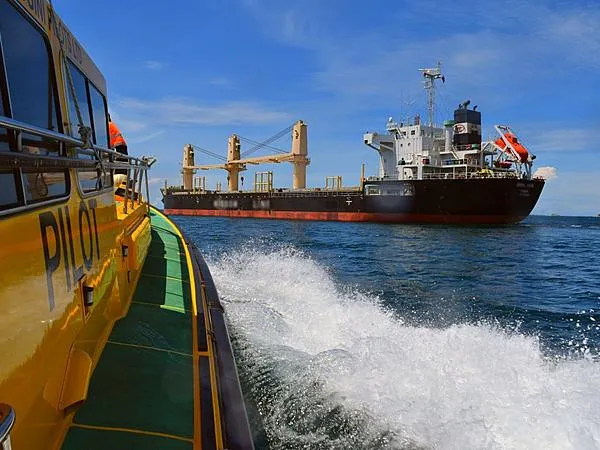
Marine pilotage plays a vital role in marine safety and accident prevention ensuring designated sea ports continue to contribute to economic prosperity through import and export via international commerce and trade.
As professionally licensed mariners, pilots board and assume the conduct of a vessel and guide it along the safest route to its port of call.
A pilot’s role is equally as important as that of a captain. Although while Captains are experts at navigating their vessels, they are not experts on the regulations and specific environments of each port at which their vessels call. This is where the local expertise of a marine pilot is needed to ensure that vessels and their crews, passengers and cargo arrive at their next port of call in a safe and efficient manner.
Captain Max Taikika Stoessel of Niugini Pilots Limited is a name synonymous with Papua New Guinea’s marine industry, and one of, if not the nation’s leading Marine Pilot.
I recently met Captain Max in the company of fellow Captains Neil Farmar and Ben Ransom, who are respectively President and Vice President of the Australasian Marine Pilots Institution (AMPI).
They discussed the importance of all regional associations including AMPI, NZMP and the Asia Pacific Maritime Pilots in working together to have a stronger voice in addressing cross-cutting issues and improving pilotage services in the Asia Pacific.
Captain Neil said AMPI’s goals are to improve services to clients.
“There is a need to disseminate relevant information, interact with stakeholders and Increase Pilotage services,” he said.
“We will also look at legislation, regulation, advice on ways of regulation and compliance and establish quality standards for the industry,” Captain Neil said.
Referring to a recent Mariners Workshop that was going to happen, Captain Ben said such events when brought closer to home ‘is a valued learning service and Marine Pilots in PNG and the region had a big opportunity to attend.”
“AMPI’s objective is to improve the professionalism of Marine Pilots and Marine Pilot Services in Australasia, through workshops and developing high quality standards,” he said
AMPI runs two workshops yearly and an international conference quarterly.
This October AMPI will he holding one such event – ‘The Upcoming event it will be hosting is the 2019 Pilotage and Port Logistics Conference themed: embracing the future to be held at Dolton House, Jones Bay Wharf, Sydney, Australia. There will also be a Women in Maritime Breakfast on conjunction at the same location on October 29.
Having a passion to pilot the seas, an ingrained commitment to Continuous Personnel Development (CPD) and a selfless dedication to operating in accordance with highest International Maritime Standards, Captain Max has and continues to make immense contributions to the PNG and regional maritime industry.
Niugini Pilots Limited (NPL) is a Papua New Guinean-owned Marine Pilotage company currently licensed and operating in 17 ports throughout Papua New Guinea.
Capt Max and his management team help ensure that their pilots attend regional and international Marine Pilot meets, training, workshops and conventions – to keep up with the ever-changing standards in a high-risk and demanding work environment.
With a focus on exceeding client expectations, providing Pilotage service based on International Operational Standard second to none, Continuous Professional Development for its pilots and providing better benefits for its employees, Niugini Pilots Limited is on par as the First-choice PNG Marine Pilotage Service Provider.
NKW Fresh Field Extension Officers impacting rural communities through PNG-Australia Partnership
THERE are many stories of the positive impact that many resource projects across Papua New Guinea are having on the lives of rural communities, particularly so for impact and nearby communities.
Many landowner companies have come out from these projects. Some of them have been very successful like the National Catering Service (NCS) belonging to Lihir Gold mine landowners or NKW Fresh, a subsidiary of the NKW group, owned by landowners of the Hidden Valley Gold Mine in Morobe province. Recently catering and camp management company NCS Holdings Ltd, sold its share of its Hidden Valley operation to joint venture partner and fellow landowner company, NKW Holdings. The sale was finalised early August after a 15-year mutually rewarding partnership between two of the country’s most successful landowner companies.
With the support of developers providing expertise and transferring skills across a multitude of sectors, from technical to agriculture and accounting to becoming drone pilots, these landowner companies (Lancos’) have risen from humble beginnings to now being able to bid for and win multi-billion kina projects in PNG and abroad.
The success of these stories came about through collaboration, innovation and partnerships between all stakeholders from developers to landowners and development partners.
One such special story, told through a video provided during the recent PNG Investment Week, is that of the positive impacts that the PNG-Australia Partnership through its Market Development Facility (MDF) initiative, is having in the Morobe province in partnership with NKW Fresh.
Extension support services are no longer as vibrant as they once used to be with Government support services in agriculture (Didiman) being near non-existent throughout PNG.
Many resource companies have delved into providing these services, at their own expense, filling a massive gap in ensuring skills transfer, sustainability of projects and a change from sustainable to commercial farming.
Last year, NKW Fresh Field Extension Officers were sent out on motorbikes, tablets in hand, to collect data and support rural farmers in Morobe province.
One of these FEO’s is Tracey Eki, who goes out every morning on her motorbike, then walks to reach rural farmers to support them and commercial their crops.
“I usually wake up around 6am every morning and head out on my bike. Then I have to walk for one and a half to two hours to reach the rural village,” Tracey says.
“The community usually welcomes me with open arms, knowing that I am there to help them”.
Tracey talks to them as a group then they break up into smaller groups and head to their gardens where she visits them.
The road is slippery as she sometimes walks treacherous paths to reach isolated farms across mountains.
“Getting crop plans done is one of the primary activities I do,” she says.
“It is a struggle sometimes but seeing the smile on their faces keeps me going.
With a spark in her eyes and a giggle Tracey says learning to ride the motorbike and standing up when riding over potholes ‘was the epic part’.
There are currently four Field Extension Officers working with NKW Fresh in Wau, Markham and Kainantu.
General Manager of NKW Fresh David Stewart said: ‘we had a particular focus when interviewing and recruiting on trying to get women for the role’.
“They have demonstrated to me their courage. They certainly surprised me. They don’t fit a particular mould, I suppose no one really does,” Stewart said.
“The perception I had was they would not be able to do the hard yards. They would not be able to ride a motorbike or challenge the norms in a patriachal society.
“Our words of encouragement before they go out are that they are professionals and they must work as professionals. And, gee, there is a certain love for them because the communities know that they are trying to help them,” Stewart said.
Tracey says: ‘There are different types of Field Extension Officer’s for different purposes that are reaching out to rural places and I am one of those reaching out to rural farmers trying to help them commercialise their production’.
“In PNG we are so used to subsistence way of farming so we try to teach them how they can commercialise their production,” Tracey said.
Though it is a challenge, she says she likes helping people and seeing them smile and feeling that they now have money in their bank accounts.
One such NKW farmer is Helen Lucas. Previously Helen used to take only the good produce to market, but after learning to commercialise she was paid more than K1,000 in one week for her produce.
“When I got this first harvest, fortnightly payment from all of my receipts, I got K1,500 and I was very happy indeed,” Helen said.
Tracey and her fellow NKW FEO’s will be revisiting Helen and other rural farmers to support them commercialise their crops so that they can improve their standards of living and that of their families.
MDF is part of the Papua New Guinea-Australia Partnership - #PNGAusPartnership.
Thanks to Hornibrook NGI Limited (HNGI) travellers living at the Lumbrum Naval Base and between Lombrum and Lolak junction in Manus can now ride easy, safely and travel in less time. On top of this, Hornibrook sourced road base material locally on Manus.
These were later crushed and screened by another Manus business and locals were employed to carry out the works.
According to Marketing Manager, Samadhi Lewis, prior to using the crushed road base material, samples were sent to a laboratory in Lae for testing with results passing all criteria for suitability, which reduced HNGI’s need to import materials from elsewhere.
The aggregates for the asphalt sealing works were also sourced locally on Manus, and also passed the test criteria for suitability.
In June 2018 Hornibrook NGI LTD (HNGI) were engaged by Jacobs on behalf of the Australian Department of Home Affairs to submit a tender for the remediation of 4.4 kilometers of unsealed roads within Lombrum Base and for the sealing of a further 5.65 kilometers of road between Lombrum and Lolak junction. The total project was valued at K22.48 milion. The road sealing option of an asphalt surface was accepted by the client.
The works also included the fabrication, supply and installation of a 12mtr bridge over a section where a tidal creek dissected the road.
The bridge was fabricated by HNGI’s Lae Fab steel division and transported to Manus and installed by the HNGI bridge team.
HNGI provided a full engineered design for the works that encompassed geo technical investigations and reports, full survey and as constructed details, and the base course preparation and road building specifications, which were all aligned with the PNG Department of Works and Aust.Roads standards.
Extensive drainage works and remediation of existing table drains and culverts were carried out prior to commencement of the road building activities, along with clearing and grubbing of the verges.
The works included the use of a Wirtgen road recycling machine, which was the first time such methodology had been used on Manus, to prepare and cement stabilize the basecourse prior to the sealing works.
The cement stabilization methodology provides a vastly increased quality of substrate for the road, and increases the lifespan of the sealing.
A high level of quality documentation was developed by HNGI’s Project Engineer for the works, which ensured that all works achieved the relevant standards and specifications.
This resulted in an outstanding road surface which has been recognized by the client and also the Manus Regional Department of Works management team.
The Base Commander at Lombrum, where a large contingent of personnel reside, has praised the HNGI team for their support and co operation during the project and has mentioned that the new road provides everyone living in that area of Manus with a greatly enhanced means of transport into the island center of Lorengau for shopping, hospital and other activities.
The road works were successfully completed in January 2019 on schedule, without any safety incidents for the duration of the project.
Pacific Towing has become the first business in the Steamships Group to set up in Fiji and is on track to successfully complete its first major project in Fiji since registering a new business last November.
Based at the main wharf in Suva, Pacific Towing’s newest business employs four Papua New Guinean divers and six Fijian locals.
The team of divers, engineers, welders and a crane operator is characterised by a raft of diverse skills and is presently engaged in the wreck retrieval of the container ship ‘Southern Phoenix’ which capsized and sank in Suva Harbour, Fiji on 6th May 2017.
Pacific Towing commenced the multi-stage retrieval of the 88 metre long vessel in November 2018 and was expected to complete the project by May 2019. Wreck retrieval can be technically challenging and high risk.
“Safety of our staff as well as safety of the reef is critical for the Southern Phoenix project and a lot of careful planning is necessary - but of course these plans mean nothing when unexpected bad weather picks up” explains Marine Operations Manager, Camara Geita.
He stresses that this is just one reason having Fiji staff is so important to ensuring projects stay on schedule as “no one knows Fiji’s waterways, reefs and weather patterns like the locals do.” Although local knowledge will be a key ingredient to Pacific Towing’s success in Fiji, so too will be an investment in training.
Pacific Towing staff benefit from training in numerous countries including Hong Kong, Japan, Thailand, Philippines, Singapore, Denmark, Qatar and Australia.
General Manager, Neil Papenfus, reports that in 2018 his staff received an average of 377 hours of training each. He sees no reason to do things differently in Fiji and one of the local divers there is confirmed to travel to Australia mid-year where he will complete his commercial dive training to ‘Commercial Diver Level 1’.
“Just like we have in PNG” says Papenfus “we will grow our Fiji business as we grow our people and we will make sure that the majority of our Fiji team are locals.”
Papenfus is also adamant that female employees will play an important role in the Fiji business.
Papenfus is a known advocate for the employment, development and promotion of women.
He introduced Pacific Towing’s ‘Women’s Maritime Scholarship’ program in 2017 and is a long-term director of the PNG Business Coalition for Women.
When asked about other business opportunities for Pacific Towing in Fiji. Papenfus, confirmed that he is not just pursuing wreck retrieval contracts.
“We are experienced in towage, salvage, mooring and commercial diving, as well as life raft servicing and sales so it makes good sense to take this experience to Fiji too” says Papenfus.
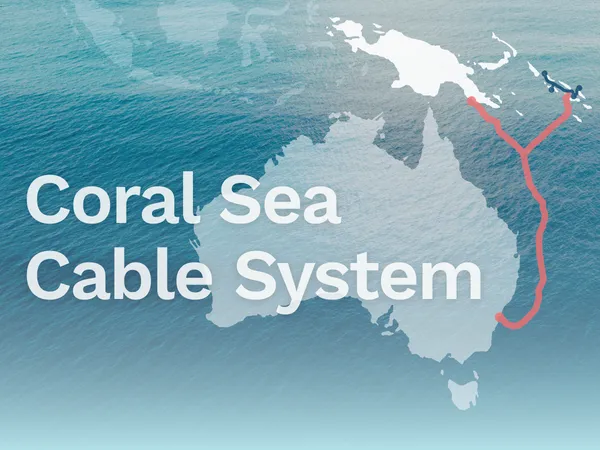
Economic activity will get a major boost when the Coral Sea Cable System is completed later this year. Internet users in Papua New Guinea will have access to improved internet access when the K331 million (AU$136.6 million) International Submarine Cable project linking Papua New Guinea, Solomon Islands and Australia is completed.
The Coral Sea Cable System will link PNG, Solomon Islands and Australia and is being jointly funded by the Australia and PNG governments.
When it comes on line, with commissioning earmarked for November 2019, the cable system will link Port Moresby to Sydney and increase the communications bandwidth capacity up to a massive 20Tb/second.
The advent of the cable system will ease PNG’s dependence on expensive satellite connectivity and unreliable ageing, congested infrastructure, thus boosting connectivity and improving access.
PNG’s National Executive Council had approved the Domestic Submarine Cable network to provide reliable, affordable and consistent in-country communications connectivity to existing networks.
Currently, the country’s communications systems rely on limited bandwidth microwave connections or expensive satellite connectivity.
A domestic fibre cable system will allow the rest of the country the opportunity to experience fast, affordable communications.
The Government secured a loan from China’s EXIM Bank to fund the Domestic Submarine Cable network, estimated at US$ 270 million (K879 million) – the Government is putting forward 15% of the cost while the EXIM Bank loan covers for 85%. DataCo, the wholesale arm of Kumul Telikom Holdings, is the implementing agency.
The project is intended to utilize approximately 5, 600 kilometres of submarine fibre optic cables to connect at least 15 coastal and maritime provincial centres across Papua New Guinea. The cable is manufactured in China and had been delivered to PNG by the end of October 2018.
Last year, Phase 1 commenced with signing of contracts and included appointment of the main contractor and survey of the domestic system.
Kumul Consolidated Holdings (KCH) is Papua New Guinea’s flagship trustee working with the State-Owned Enterprises to improve the national landscape for potential investment. w
Follow on LinkedIn:
PNG Business News
Be the "First" to get our exclusive Digital Magazine & Weekly Newsletter.