Category:


Steamships launches 2024 Community Grants Programme
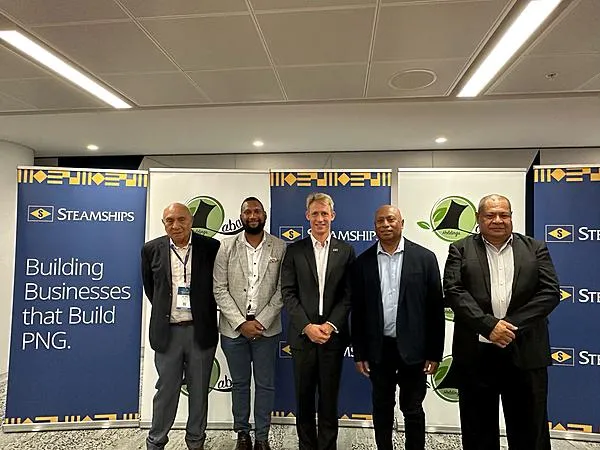
For over 100 years Steamships Trading Company has invested and partnered with the people of Papua New Guinea.
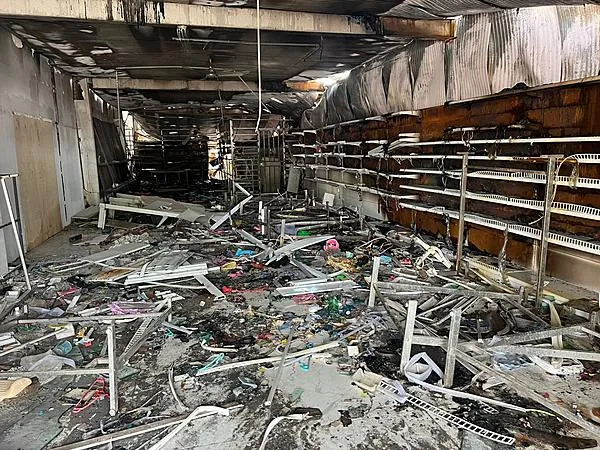
Despite the destruction experienced heavily in Port Moresby in the past week, Steamships is proud to launch the 2024 Community Grants Programme, opening the application submissions to Papua New Guinean registered (IPA) charities and Non-Government Organisations that provide development and community advancement in health, education, social welfare, and environment.
“Our Community Grants Programme is one of the many ways Steamships gives back to, and supports our communities around Papua New Guinea,” says Managing Director, Rupert Bray. “Through thick and thin, the private sector, as responsible corporate citizens actively contribute to the well-being of the communities it serves, supporting programs which make meaningful and positive impacts.”
Recognising the vital role that the private sector plays in contributing to social progress, the programme seeks to empower local initiatives that make a sustainable and lasting impact on the lives of community members. By investing in local initiatives, Steamships is strategically contributing to the long-term development and prosperity of Papua New Guinean lives.
Steamships community investment and partnership dates as far back as 1941 when the company constructed a two-storey building school for the Sisters of Our Lady of the Sacred Heart in Port Moresby. The cost at that time was £1,624.
Today, the grants program supports projects which fall into four pillars of the Steamships Sustainable Development: Our People, Our Community and Our Environment.
Steamships encourages local organisations to apply for the Community Grants Programme and become partners in this collaborative effort to create a better future for all. The application process details and eligibility criteria can be found on the official Steamships website, www.steamships.com.pg/sustainability/community-grants-programme
New study by Weir highlights big energy saving opportunity in mining
The Weir Group PLC, a global mining technology leader, has completed a comprehensive study that highlights a significant opportunity to reduce energy use and emissions in comminution, the rock crushing process that is key to minerals extraction, and that consumes around 3% of the world’s electrical power each year1. The study shows that replacing conventional technology with innovative new solutions can cut energy use by 40% while also avoiding 50% of CO2e emissions.
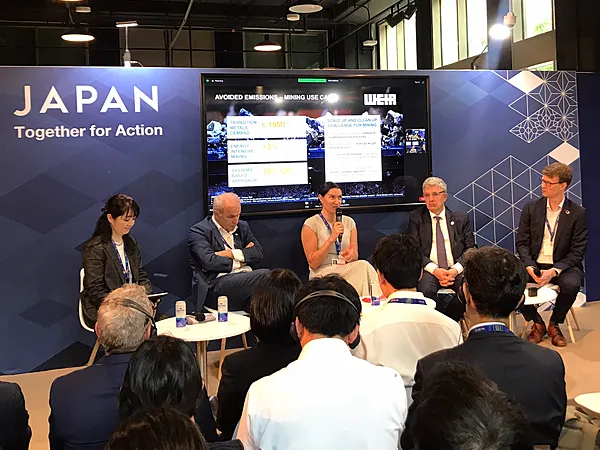
Speaking at a COP28 panel discussion hosted by the Ministry of Economy, Trade and Industry of Japan and moderated by the World Business Council for Sustainable Development (WBCSD), Paula Cousins, Chief Strategy and Sustainability Officer at Weir revealed the details of the study that demonstrates how using innovative technologies to crush rocks can yield significant sustainability benefits at lower operating cost.
The findings of the study come at an important time. Metals, such as copper, nickel and lithium, are critical elements of the technologies that will power a low carbon future and it is widely accepted that a substantial increase in the production of these metals is needed for the transition to net zero. In response, the mining industry is actively seeking to adopt new technologies which extract and process those metals in more energy efficient and sustainable ways, alongside increasing the use of renewable power.
Weir’s study focuses on comminution – the crushing process that turns big rocks into tiny particles to expose the entrapped mineral so that it can be extracted later in the mining process. Comminution is the most energy intensive stage of a typical mine site process. It is already electrified and is responsible for at least one-third of an average mine’s energy use and CO2e emissions1 and globally consumes around 3% of the world’s electrical power1.
Given its energy intensity, the decarbonisation opportunities in comminution are huge, with the basic comminution process not having changed significantly for many decades. Weir is collaborating with customers and other partners to redefine the process, developing innovative combinations of proven technologies to make significant improvements to efficiency and environmental performance.
Unveiling the study during the panel discussion at COP28, Paula Cousins, Chief Strategy and Sustainability Officer at Weir said:
“The need for technology solutions in mining is compelling – the world needs more transition metals to achieve net zero, but the mining industry needs to extract these using significantly less energy and water. Our new, externally assured study highlights the potential for energy savings of 40% and for 50% of CO2e emissions to be avoided in comminution, the most energy intensive stage of mining processes. By adopting a systems-based approach to technology collaborations, we can help the mining industry scale up and clean up at the same time”.
The full video of the panel discussion will be made available to view by the Ministry of Economy, Trade and Industry of Japan shortly.
About the avoided emissions study
The study is the first to utilise WBCSD’s Avoided Emissions Guidance to study mining processes and the avoided emissions results have been independently assured by SLR Consulting Limited. Three of Weir’s technology combinations were evaluated against a conventional comminution circuit design for an archetypal mine processing 15 million tonnes of copper ore per year in Chile.
All three of the technology combinations are shown to yield sizeable benefits versus the traditional circuit. In the optimal combination, the comminution process consumes around 40% less energy and can avoid up to 50% of CO2e emissions. Importantly, there is no trade off elsewhere, as the redefined process uses less water too.
Further details of the avoided emissions study are available here.
Invest in First Aid Training with St John Ambulance
In the dynamic workplace environment of Papua New Guinea (PNG), first aid training is not only a responsible choice but also a legal requirement.
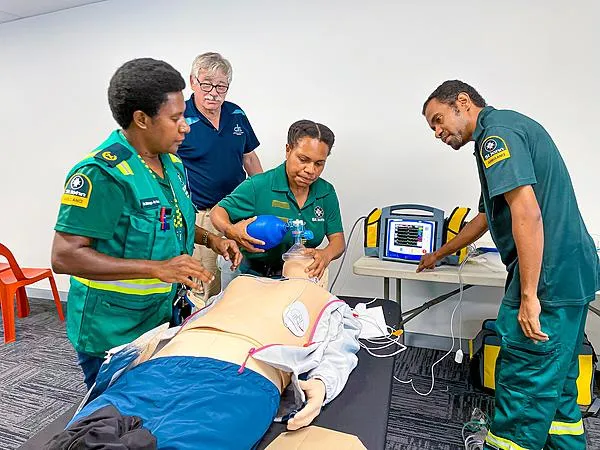
St John Ambulance is passionate about teaching first aid because every life matters, and no one should suffer or die due to a lack of basic medical knowledge.
By equipping the people of PNG with essential first aid skills, St John Ambulance empowers individuals to save lives and aims to achieve zero preventable deaths from trauma, childbirth, or snakebite.
Beyond the moral imperative, investing in first aid training is crucial due to legal requirements. Accidents and injuries can occur in any workplace, spanning industries like printing, office work, mining, forestry, and construction.
Having knowledgeable first aiders on-site is essential to provide immediate and timely assistance during emergencies. From bleeding and burns to fractures and cardiac arrest, prompt first aid measures can prevent complications and expedite recovery.
Moreover, PNG's geography makes first aid knowledge even more critical. In these situations, trained workers can provide immediate care until professional help arrives, potentially saving lives.
Investing in First Aid Training with St John Ambulance not only ensures compliance with legal requirements but also safeguards the well-being of workers. It empowers individuals to effectively respond during emergencies, minimize injuries, and protect lives.
Every worker should know first aid because every life matters.
The team at St John Ambulance are dedicated to supporting all your first aid and emergency response needs.
You can contact the team at enquiries@stjohn.org.pg or visit www.stjohn.org.pg