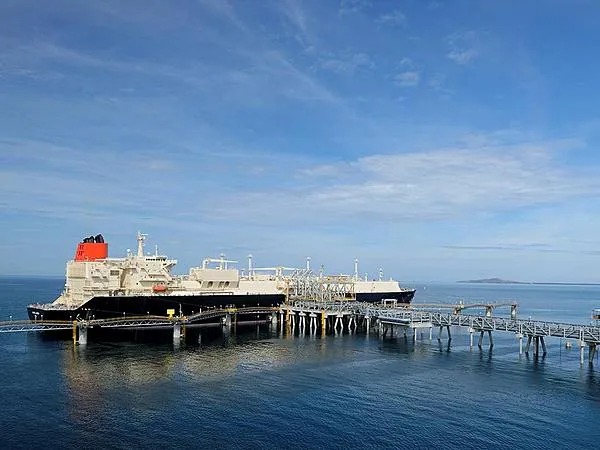
Bank South Pacific (BSP) chief executive officer Robin Fleming said that companies are interested in updates on resources related projects, which will help them plan out the direction for future investments.
According to Fleming, the improvements of the projects such as the Papua LNG, Wafi-Golpu and the Porgera mine would give businesses clear direction.
“Many businesses are interested in announcements on key projects such as Papua LNG, Wafi-Golpu and the Porgera mine as they are in the budget specifics as those projects will give businesses clarity on where they should be focusing their future investments,” Fleming said. “Any government budget is focused on not just specific revenue generation and expenditure required to support the delivery of government services but equally, the policies that support the generation of future revenues, improving the infrastructure that enables the business to grow and policies that facilitate investment.”
Fleming added that there were still no talks on bank tax or baking levies and that it is expected that there will be no modifications to the existing regime. In the passing of the 2020 National Budget, a rise in the banking levies was suggested - which was not embraced by banks and their shareholders as any increase can negatively impact returns to shareholders.
For his part, Credit Corporation PNG chief executive officer Peter Aitsi remarked: “As indicated by the Government, it is important to progress the major resource projects such as P’Nyang and Wafi Golpu. The inflow of investments from these projects should generate flow through benefits for businesses generally and provide a stimulus to further support Government’s efforts to grow the SMEs (small to medium enterprises) and MSME (micro small to medium enterprise) sectors.”
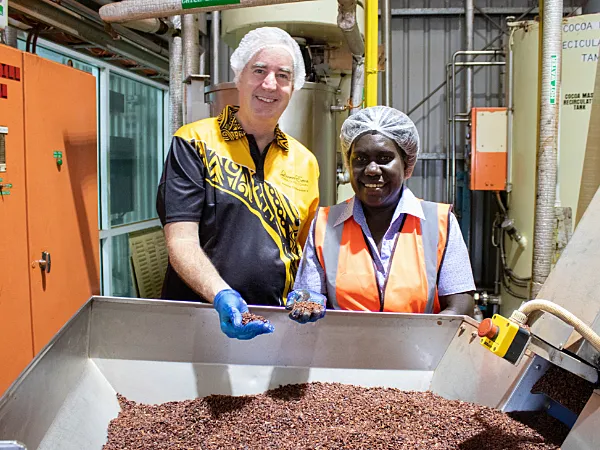
Cocoa farmers have a chance to grow their production now and for new growers to begin supplying. According to chief executive officer James Rice, Paradise Foods Ltd is set to build a K55 million Queen Emma Chocolate factory in Lae that will create 75 jobs and support more cocoa farmers.
“I like to create jobs,” Rice said. “We have had a lot of regions that contacted us about planting more cocoa because it is a great income for farmers. So next year, we will be building a new factory which will be 20 times bigger than our current factory in Port Moresby which (produces) 10 tonnes a month. The new factory will be 200 tonnes a month.”
He added, “We will be buying by the end of next year 13 per cent of PNG’s beans which is very good for the people here.”
Rice also said that for K320, they have already purchased a 62.5kg normal unit bag. “We pay K520,” he said. “We pay a higher price. Everybody knows. That is why we get the best beans and we are happy to pay to get the best stuff. By the end of next year, we will be buying a lot more. We have a lot of areas interested in planting. If they start planting now, it will be ready in two years’ time.”
Cabinet has approved K10.2 million in assisting COVID-19 research, including the development of research laboratories and the procurement of sampling of drugs.
According to Prime Minister James Marape, the funds may also be used on the drug trials - if the Health Department approves. He said that this initiative was a “genuine pursuit by some of our own young scientists and doctors”.
“Based on their research, they established a hypothesis that they can find a cure for the Covid-19,” he said. “I am not here to stop the ingenuity and brilliance of Papua New Guineans, hence, we offer our support but we will do it properly through a State-sanctioned process. All NEC documents eventually become public when associated documents to pronounce government programmes and policies are released.”
In addition, Marape said that the money will be used for research and that organizations such as the University of Papua New Guinea, the Health Department and the PNG Institute of Medical Research will all be a part of it. He added that the bulk is for the re-building of the science faculty laboratories at the University PNG and is not intended for the company Niugini Biomed by scientists and doctors.
“And if the medical and scientific community through peer review gives the okay, then the next phase of the work that will involve drug procurement and laboratory mix and trial will proceed,” he said.
Institute of National Affairs (INA) executive director Paul Barker said that the government must implement measures to provide jobs, boost the economy and improve revenue. This also includes paying off debt.
He also added that what is needed in this economy are some public sector reform and expenditure control, saying that the budget must zero in on priorities such as “genuine human resource development, through quality education and health services”.
“PNG’s population continues to grow at a relatively fast rate and 40 per cent of that population is below 15 years of age, eagerly seeking quality education and jobs,” Barker said. “The formal job market remains very small – at around half a million. But these jobs play a critical part in the economy, sustaining households and often many relatives, as well as paying a large slice of the total tax bill.”
He added, “Boosting formal sector employment is critical, as well as boosting opportunities in the larger informal economy, which provides most of the agricultural export earnings and food for the domestic market. Succeeding in launching some of the major resource projects in a short time period will provide a valuable stimulus and boost to wider economic confidence. What will be critical will be providing greater assurance to domestic and foreign direct investors that there will be welcoming and particularly stable investment conditions. So, while it’s important to ensure fair benefit-sharing from new resource projects, between the Government, investors and local interests and needs to quickly restore existing projects such as Porgera. Longer-term and broader-based investment requires confidence that the investor can make a profit, and potentially remit that profit, that the exchange rate is at the market level, that basic infrastructure will be restored and maintained.”
Deputy Head of PNGEITI National Secretariat Christopher Tabel stressed on the importance of ensuring contract transparency and systematic reporting is built into transparency mechanisms in contracts and MoAs.
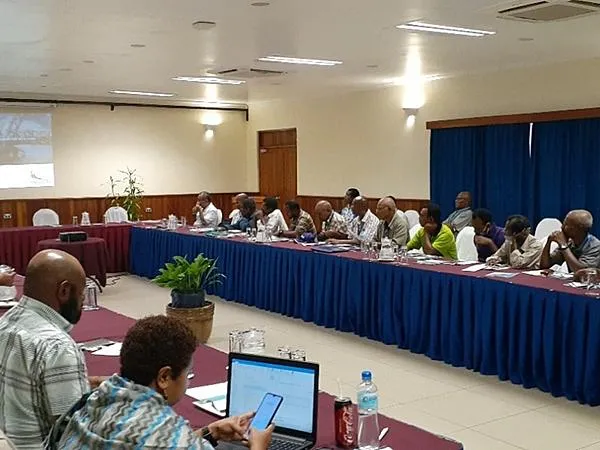
The recent participation of the PNG Extractive Industries Transparency Initiative (PNGEITI) in the week-long review of the Woodlark Mining Project MoA (Memorandum of Agreement) has brought the opportunity to advance the present scope of EITI mainstreaming from policy to practice.
Head of National Secretariat Mr. Lucas Alkan said the objective of the participation of PNGEITI was to make sure that the provisions of the EITI were included in the project agreement for disclosure of contracts or contract transparency. This has now become a requirement for all EEITI implementing countries, which includes PNG.
“As part of its efforts to mainstream the EITI Standard and requirements on National and Subnational payments, including Beneficial Ownership, and Contract Transparency reporting, the Secretariat has been undertaking joint workshops, presentations and information sessions together with its Multi-Stakeholder Group (MSG)that comprises representatives from the Government, Extractive Industry and the Civil Society groups,” Mr Alkan said. “On the last day of the forum, the State team included the EITI reporting clause into the agreement. This is actually the second project MoA after the K92 project to have an EITI Reporting clause included. The PNGEITIenvisage to cover all mining projects in the country to capture national and subnational reporting requirements.”
Other discussions included:
Creating awareness of EITI at the project impacted areas, especially within the communities
Reporting royalty distribution in monetary value
Disclosing in monetary value the Developer and State’s share of the total aggregate on the mine project
Disclosing the production values and volumes for gold extracted
Informing landowners well on the ownership of the services and infrastructure during the operation of the mine before closure
Disclosing data on special support grant
Creating bigger awareness of information linking to social and economic impact assessment report by the people in the area
According to Kumul Consolidated Holdings Limited (KCHL), the government will sell off its companies that are not making money. These include Datec, EMTV and FM100.
KCHL managing director Isikeli Taureka said that the National Executive Council (NEC) had already approved of this sale. “EMTV and FM100 are all up for sale because they are not going to bring in any money. They are all making a loss,” he said. “That’s the whole idea of the KCHL Amendment Act to separate the political decisions from commercial decision-making. Unfortunately, we won’t get that till we privatise some of those entities.”
Taureka said that in November, the NEC approved the changes supported by the Asian Development Bank. With a loan of K500 million over three years, the decision of the NEC involved debt-free financing and SOE reform.
“The NEC decisions allow us to go through the reform, selection process, better boards, better management selection process, returning to a (sound) financial footing and delivering services,” he said.
Taureka added that bmobile Solomon Islands would also be sold although there are no details yet.
“Kumul Telikom Holdings retail (arm) bmobile PNG had divested along with non-core assets and duplicated mobile towers,” he said. “We want them to focus on the sale of the non-core assets and integrate Telikom and bmobile. DataCo on the other hand is sitting on the other side. It is a wholesale business and it is competing with its two sister companies. We have to get rid of this competition among SOEs. At the end of the day all we want is better services for Papua New Guineans.”
New Zealander Aaron Underdown has replaced Moses Liu as the managing director of National Development Bank after six years in his position.
Underdown joined NDB in March as the group executive manager risk and compliance (chief risk officer) and served for 25 years as a senior risk professional in different fields - property and asset finance, agriculture and commercial, and retail and banking, and also involves policy and portfolio reporting with the ANZ bank and credit risk management.
The National Executive Council has already made the decision to finish the contract of Liu but later on, William Duma will make an official announcement.
The termination of the contract of Liu has been widely shared on social media and raised questions on the K80 million for SMEs to be delivered to the bank. The bank, on the other hand, commended Liu for his achievements during the years 2014 to 2019 in spite of the challenges he has faced.
Over the years under his leadership. NDB has grown to K781 million (K24m – K781m) as the priority lied on encouraging people from Papua New Guinea to start their own businesses or grow existing ones.
Because Australia has pledged to provide economic assistance of A$596 million in the year 2020/21 and has agreed to suspend interest and principal repayments for the US$300 million concessional loan given last November 2019, Treasurer Ian Ling-Stuckey has expressed his gratitude for their strong support for the people of PNG.
In addition, Australia is providing economic assistance for COVID-19 such as a new infrastructure facility, guaranteeing that PNG (and other countries in the Pacific and Southeast Asia) are a beneficiary when a vaccine has been developed. Total cost is at A$500 million.
“Combined, it is likely that 2020 and 2021 will represent the highest levels of support in Kina terms ever. This demonstrates the very high level of international support being received by the Marape-Basil government for the reforms they are implementing,” said Ling-Stuckey. “Our increased budget transparency and genuine willingness to work with international organisations to meet international best standards are paying dividends for the people of PNG.”
In providing vaccines to the people of PNG, he said, “Early access to vaccines will save lives and underpin PNG efforts to tackle health issues and overcome the economic downturn caused by the Covid-19 pandemic. The Australian government has signed advance purchase agreements for vaccine supplies from the University of Oxford and the University of Queensland. The benefits from the supply of safe vaccines will have an inestimable value to the government and people of PNG.”
Over the next two years, Australia will also provide economic assistance worth A$304.7 to help PNG and other Asia-Pacific countries recover from the brunt of the pandemic through food security, health initiatives, and improved air services. Australian Infrastructure Financing Facility for the Pacific (AIFFP) which has been in operation since July 2019 has also targeted PNG as a direct beneficiary for high priority infrastructure projects such as the suggested solar power facility in Morobe Province.
Particular areas in the laws on resources projects should guarantee that the State, investors and the people benefit, said Petroleum Minister Kerengua Kua.
According to Kua, the laws need to be reformed so that the government should not have to borrow to finance commercial projects. He mentioned that previously the state had given 100 per cent ownership to developers when it signed a project agreement, forfeiting its ownership. As a result, he is ready to see some changes in these laws, particularly in the fields of:
Rising debt level
Losing ownership rights without any compensation
Having more revenues for the people
“We want to reform the structure of mining and petroleum laws that underpin how the business is conducted and how we all can benefit out of it – the investors, people and the government,” Kua said. “Investors are more concerned about their rate of return. If they put in K1 billion, they want their profit to be better than over investment destinations. If they were to put money into PNG, we must give them confidence.”
He continued, “So if we are to sell their resource, we have to give them a bigger benefit. We have to extend consultations to the investors and the people. Every time there is a mining or petroleum project when you sign a development agreement you forfeit the ownership of that resource. We need to remove borrowing to finance commercial projects in mining and petroleum. State ownership in minerals and petroleum will remain all the way to the point of sale. We will not transfer ownership on the signing of a gas agreement and mining development contract. All costs for the project must be financed by the project.”
Following the opening of its gas plant outside Port Moresby recently, NiuPower, a joint venture between Kumul Petroleum Holdings and Oil Search Ltd. has been supplying power to the area since November, according to chief executive officer Michael Uiari.
He said that power supply is enough in the city but more investments are needed for distribution and transmission. The Port Moresby power station provides up to 10megawatts of power and NiuPower funded the construction of a new transmission line from Gerehu Stage 6 to the Port Moresby power station.
The line enables the power plant to fully dispatch its 58megawatt capacity and give off cheaper power.
“There is sufficient generation. Transmission and distribution require investment,” he said. “Once transmission and distribution is fixed, things should be fine. NiuPower has been dispatching to the grid since November 2019. The transmission and distribution infrastructure requires investment as well, not just generation.”
He added, “In the interim, we are working with PNG Power to provide black-start capability so we can start up the grid in the event of a total system failure, adjust some of our own settings to respond to an unstable grid in a way that does not cause a total system shutdown, understand what investment is required in transmission and distribution so we can jointly consider who is best placed to assist PNG Power and closely managing dispatch of electricity to the Port Moresby grid to ensure we achieve our respective targets.”
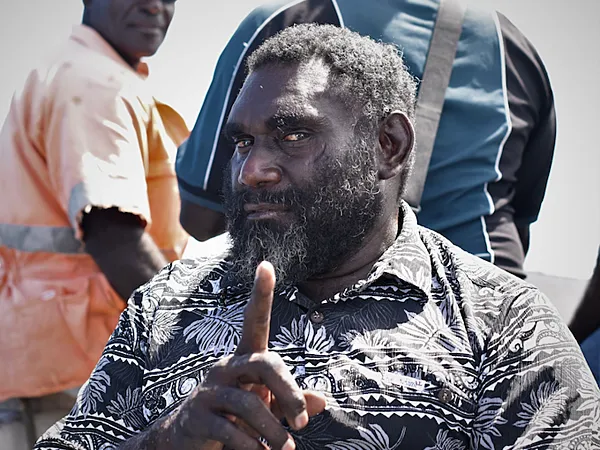
In response to business news making allegations against his past business work, Autonomous Bougainville Government President Ishmael Toroama says that any foreign investment is done according to the Bougainville Inward Investment Act 2014.
“This act regulates all investment into Bougainville and parties wishing to bring investors into Bougainville must abide by the act,” he said. “While my past business dealings were done as a private citizen, I as the President of the Arob must set the record straight,” he said.
He continued, “The Bougainville Sustainable Timber Resources Ltd was set up with the intent to bring in foreign investors to Bougainville to be involved in sustainable logging as well as alluvial gold projects. The proposed business model to be employed by the company is straightforward: identify a development project on Bougainville, identify a credible investor, liaise with the Autonomous Bougainville Government and progress the project. Everything would be done in compliance with the laws and regulations on Bougainville. Revenue in taxes would be earned by the ABG.”
After consulting the Investment Promotion Authority and the Ombudsman Commission, his shares in the company have been brought to a third party in accordance with the law.
“I want to put to rest rumours that I will not be entertaining cronyism and business partners to create a monopoly over Bougainville’s resources,” he said. “That was a bad precedent by the past government and my presidency will not be compromised by it.”
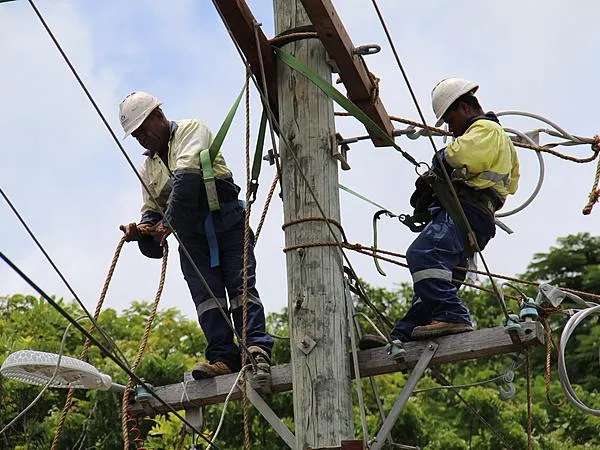
The frequent blackouts in PNG are caused by technical challenges. This was revealed by PNG Power Limited Managing Director Flagon Bekker who said that the blackouts are attributed to the challenges of PNG Power’s (PPL’s) ageing infrastructure, in addition to an ongoing transition.
He said, “PNG Power acknowledges that this is not an acceptable level of performance and we have been and will always continue to work hard to restore service as quickly and safely as possible. We also acknowledge that we are experiencing significant technical challenges across all power sector business units. As is well documented, they are mostly due to the challenge of our ageing infrastructure coupled with the transition as we work on targeted investment projects to improve the reliability and availability of the affected assets. Our focus since the return of service has been to follow our standard operating procedures and perform the required root cause analyses".
He added, “PNG Power acknowledges we can always improve on the timely update on our progress or the status during the outage events and, while our focus is on restoration activities, we will endeavour to provide more timely updates during the event around the estimated return of service and associated key developments.”
He also explained the Monday blackout in Port Moresby. He said, “The recent events over the last few hours (Monday night) were attributable to inadequate frequency regulation of the grid. This happens when the grid comes under pressure from a mismatch of load and supply. Typically, this can happen with ageing grid-related power quality support infrastructure. The emergency corrective actions commenced immediately and focus was on restoring system service, safely, as a matter of urgency. Upon completion of the activities, the system was finally restored to full service at 10.56 pm.”
In addition, he said that PPL continues to review its performance and implement the necessary measures.
“As an example, PNG Power intends to undertake a deeper review of its asset management practices in order to better balance decisions between short, medium, and long term actions as it relates to the age of the infrastructure, its remaining useful life and how best to manage the transition between the old and the new. This will be key to the maintenance practice improvements going forward. But, we want to be transparent on this – improvements of this type will take time,” he said.
He added that although the improvements are not fast enough, rest assured that they are doing everything in their power to solve the problem. He added that PPL remains committed in its programs and will update when needed.
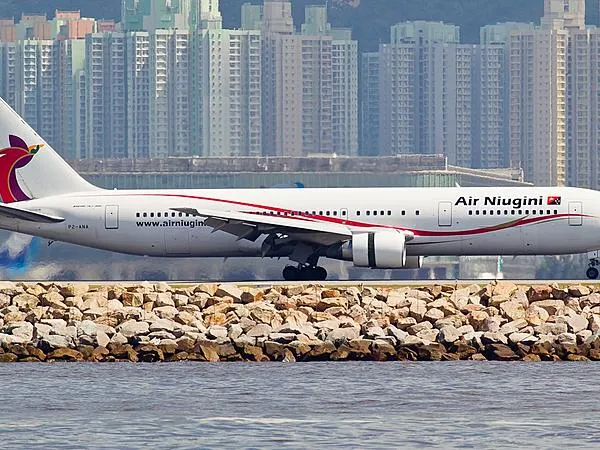
In partnership with Cathay Pacific Airways, Air Niugini will resume its operations between Port Moresby and Hong Kong. In a statement, Air Niugini said that it will use it's Boeing 767 aircraft to operate its service.
At the onset, flights will operate at least once a week every Wednesday.
The code-sharing with Cathay Pacific, as well as with Air France, allows passengers to transfer flights in Hong Kong.
According to Air Niugini chief executive officer Bruce Alabaster, Hong Kong is a major gateway and connecting hub for cargo and passengers.
“Hong Kong-based Cathay Pacific is one of the largest and most respected airlines in Asia,” he said. “With Cathay Pacific’s global marketing reach and connections to destinations worldwide, we are confident that our Hong Kong service will become popular (for) travellers and freight shippers.”
He added that Singapore is still closed to transit passengers. The Hong Kong flight would bring passengers to and from Port Moresby, including exports from PNG to the Asian markets. Eventually, he said that the number of flights would increase when “demand for international travel gradually recovers”.
“Air Niugini continues to operate with strict health and safety measures in place including temperature-testing of all passengers and providing face masks and hand sanitisers to ensure your air travel is safe,” he said.
In response to the announcement made by Investment Promotion Authority (IPA) managing director Clarence Host of the proposed amendments to the IPA Act (1992), the Independent Consumer and Competition Commission (ICCC) has welcomed these changes.
According to ICCC commissioner and chief executive officer Paulus Ain, many businesses across the country are owned by foreign nationals.
“Our people operating small to medium enterprises (SMEs) need to be protected and a review of the reserved business activity list included in the IPA Act is most welcome,” he said in a statement. “Over the years and as recently as during our price monitoring exercise that ICCC undertook during the state of emergency we found that many businesses that were meant for Papua New Guineans were in fact owned by foreigners. While I agree that there are operators who have been paying taxes and providing employment, there are still others who continue to break laws and engage in activities meant for Papua New Guineans.”
Ain said that aside from consumer protection, they would be supporting amendments by the IPA to protect the welfare of the people from Papua New Guinea.
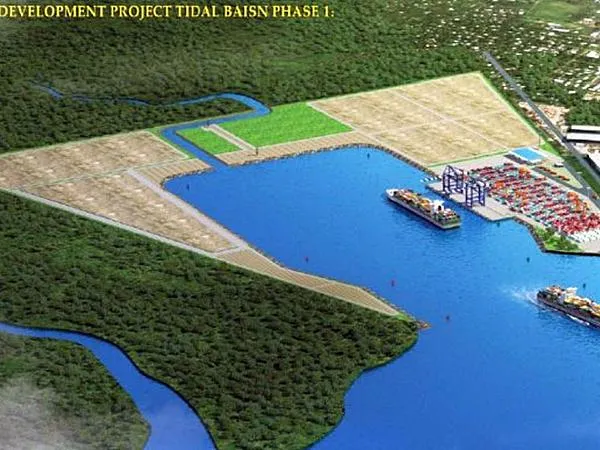
Because of the poor work quality, the second phase of the multi-million kina Lae Port Tidal Basin has been suspended. According to State Enterprises Minister Sasindra Muthuvel, they will now move on to the third phase.
“The third phase has now being brought in as the second phase is said to be the Huon Industrial hub or the Lae Tidal hub,” he said. “They were supposed to have removed at least one or two meters of topsoil, instead the contract was prepared and even agreed by the contractors in such a way that they only backfilled the road where cars and vehicles can pass through living the rest of the area because they said it is like a swamp.”
He said that the developer is in charge of building the warehouses or industries but the ports have said it was supposed to be a port standard and the area was supposed to be backfilled also.
“I don’t know whether the contractors are taking the matter to any arbitration of work but it’s completely stalled and we are still waiting for them to respond on the technical queries,” Minister Muthuvel said. “This, however, is a Chinese Exim-funded project and has been suspended based on the quality of work and the difference in contractor’s actual eagerness only to fix the roads leading to the industrial development area.
Papua New Guinea’s Labour Laws are outdated and need reviewing. This, according to Labour and Industrial Minister Lekwa Gure, who said that these reforms are on top of his agenda.
Among the laws that need reviewing include the Industrial Relations Act, the Employment Act, the Industrial Organisations Act and others that are now subject to a review by responsible State agencies.
“Our labour laws are outdated and need to be revamped to suit our present times, give more protection to the workers as well as to take in the latest developments in international standards. This will be done by incorporating the latest ILO Conventions as we update the various pieces of legislation under which the Department of Labour and Industrial Relations carries out its work,” said Gure. “I am very pleased to announce that this important work is already captured in the work plan of the government’s SLOS Ministerial Committee which is headed by the Minister for Justice and Attorney General and I am assured that this work will be given priority. The new Industrial Relations Act will give rise to the establishment of an Industrial Relations Commission that among other powers can reinstate dismissed workers and award damages, which is timely because there is growing concern by labour trade unions on the prevalence of unfair dismissal cases.”
He continued, “The new Industrial Organisations Act will safeguard the rights of the workers to join a registered industrial organisation like a trade union as accorded under Section 47 and 48 of the national Constitution of PNG and this right must not be denied by any employer. We have a vibrant democracy that gives cognizance to human rights and the workers have the right to belong to a trade union of their choice without being intimidated by their employers. “Under these arrangements, it is my view that collective bargaining becomes the norm for resolving issues between both parties and we are more than prepared to interface with both the trade unions and the employer organisations to facilitate the same. The new Workers Compensation Act will give rise to potential increases in compensation paid to workers when they suffer injury or death at the workplace. This is well overdue as these rates have not been reviewed for the last 26 years.”
Follow on LinkedIn:
PNG Business News
Be the "First" to get our exclusive Digital Magazine & Weekly Newsletter.