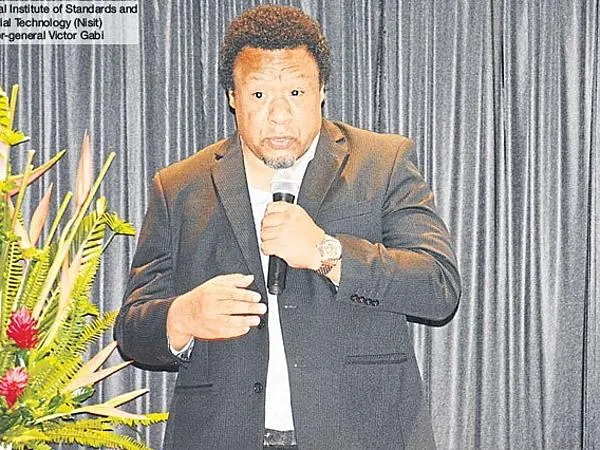
Papua New Guinea should have a strong team for negotiations at the World Trade Organization when it comes to the standards of the country in relation to trading with others. This is according to the National Institute of Standards and Industrial Technology (Nisit).
Director-general Victor Gabi said that the multilateral trading systems among countries should be looked at. “What we are having in terms of trading negotiations is that countries have the upper hand in trading with us, so when you go through a free trade agreement with a number of countries, they seem to get the better of PNG because they bring in a lot of products,” he said. “They beat us with the trade numbers. For instance our bilateral trade with Australia; they kill us hands down with the number of products coming to us, we have very little going to them. And that’s because of issues with technical areas of trade and one of the key areas of trade is standards.”
He added, “You can have something to sell but it’s the buyers’ choice, hence the features of your products need to meet some standards in order for them (buyers) to be able to buy your products. Whatever (businesses) that the people are doing, they must make standards important because, at the end of the day, their buyer is interested in that.”
Gabi also highlighted how businesses should ask advice from Nisit regarding the quality of their products.
Papua New Guinea needs a proper standard pathway for companies. This is because businesses who trade internationally get blacklisted quite often because of safety and health breaches, according to Manufacturer’s council chief executive officer Chey Scovell, as not everyone understands standards.
The problem, he said, that except for the major manufacturers, no one needs a global safety and food system because this comes off as stringent for smaller businesses.
“To have accreditation you need to be able to go to a honey producer in the highlands for instance and go and talk to anybody in that factory and ask them about hygiene processes and stores and they have to answer the question,” he said. “If they don’t answer the question how do you know it goes clean from here to there.”
Mr Scovell said that the challenge is still with low literacy levels which really don’t have any standards at hand.
“Each thing is different, movement of people, services and goods and losing market access,” he said, “We don’t lose market access if we don’t have a standard for trade we can potentially lose market access if we don’t have recognised systems for certification particular around biosecurity products.”
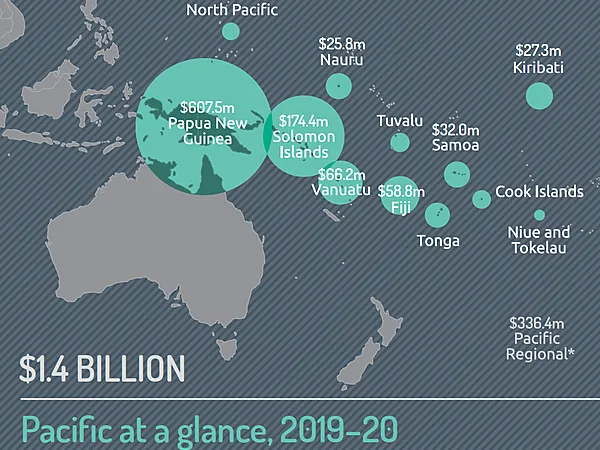
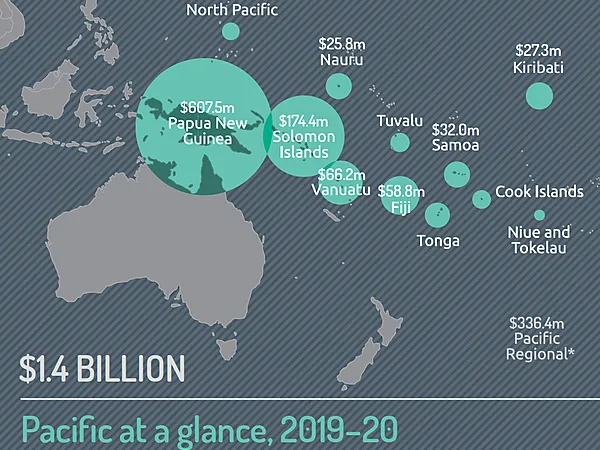
In 2020-2021, Australia will make contributions to the official development assistance (ODA) in the amount of K3.5 billion ($1.44 billion). The Australian High Commission said that this is an increase from $1,381.4 billion (approximately $1.4 billion) in 2019-20, adding that Australia will provide the same levels of ODA compared to the previous year.
According to the Commission, the funding will go to the Australian projects such as strengthening health security, laying economic foundations and ensuring stability
Plus, the Australian government has also established the Pacific Covid-19 Recovery Fund that helps the Pacific and Timor-Leste to bring funding to the most critical areas. The fund will build on existing bilateral partnerships, investment, and implementing initiatives by the PacificStep-Up. In addition, the Australian government claims that this fund - $23.2 million over three years - will go to make sure that the vaccine is available to all when the vaccines become available. This support may include all support and building to develop policies of immunisation and roll-out of the vaccines when available.
This is also on top of the $80 million contributions to the Gavi COVAX Facility Advance Market Commitment as the Minister for Foreign Affairs Marise Payne has declared.
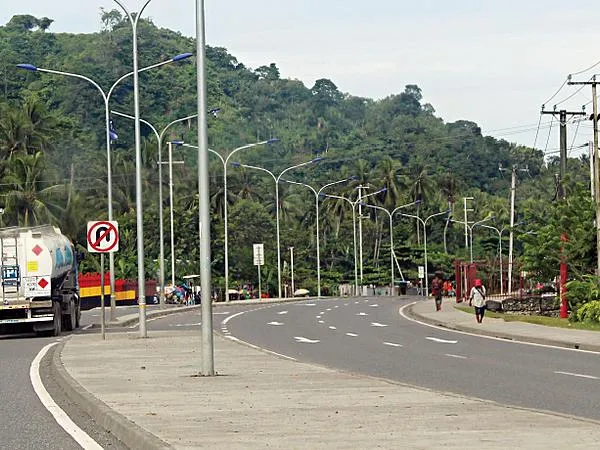
Developed under the Marape government, the Department of Works Connect PNG Policy 2020-2040 guides the development of vital road links in the country which aims to connect communities across PNG for an increase to untapped economic potential, especially for SMEs and agriculture.
This project highlights road transport as the dominant road in the PNG and as part of the vision 2050, apart from electricity airport development, energy and power supply. It is part of the government’s response in alleviating the road problem in PNG and will construct, repair and rehabilitate a total length of 4,200km of standard 2 lane economic highways and 16,000km of provincial and district main backbone highway. at a price of K20 billion in a span of five years.
The first five years will upgrade, rehabilitate, and maintain existing roads with a length of 2,000km and construction of new missing links at 1,300km and connecting provincial district roads at 5,000km. All these at an estimated cost of K5 billion.
The construction works include:
K2 billion worth of contracts for the national highways sub-national roads
New tenders pried at K1.44 billion of projects covering 554km on the core road network
New tenders worth K300 million and year rolling contracts that cover 5,000km major district and provincial roads
Ongoing new tenders equal to K7.5 billion or K1.5 billion a year
The budget, however, can only afford K500 to K700 million a year as compared to the spending of K1.5 billion a year - which may create a shortfall of K1 billion generated through foreign governments such as trade partners in China and Australia.
According to Nasfund Contributors Savings and Loans (NCSL) Chairman Ian Tarutia, banking is its next step.
He said that he is currently gathering requirements to see how they could venture into that next step, adding that Papua New Guinea had only four commercial banks providing opportunities for other operators.
“We have actually engaged a feasibility study and we are doing that now,” Tarutia said. “This is to help guide us to see the steps that will be taken and what it would be like if we are going to go into that banking arena because there are a number of things that you need to fulfill as requirements. Things like adequate capital base, infrastructure spread and all requirements that go with a bank. So once we get to that stage, we will have a clearer picture but in terms of the intent, we believe we can do more than what the savings and loans legislation is allowing us to do. Hence our push to get into that arena.”
He added, “We have got membership growth and our governance overlay and just the infrastructure that we have at the moment is helping us get there so step by step. At this point in time, we need to have a clear indication of what we need to do to help us get into the banking sector.”
Tarutia remarked that no loan and savings society had not acquired a banking license yet and NCSL was looking for ways to make this grow.
“We can take a specific step or targeted approach or we can be a bank for all and provide everything and these are the questions that we have asked ourselves and we are getting answers by engaging outside expertise and possibly by 2021, we will have an indication of where to go,” he said.
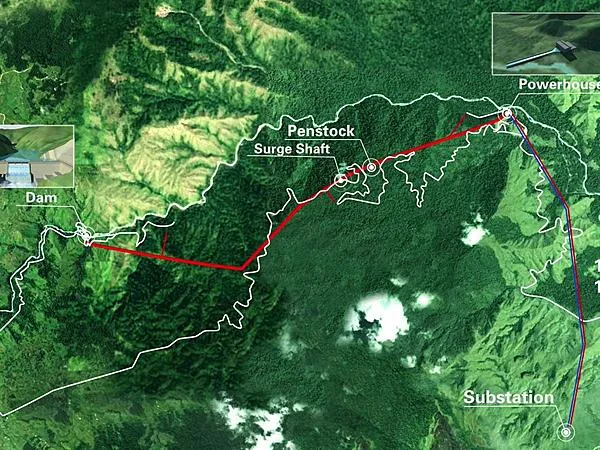
Launched in 2015, the Ramu 2 hydropower project is one of the biggest impact projects for both the people of the Eastern Highlands and Morobe provinces. This, according to Mining Minister and Kainantu MP Johnson Tuke.
He said, “Ramu 2 is a power project which the government has done its feasibility studies with a decision made by the National Executive Council, but the hold-up is with the PNG Power Limited (PPL) to endorse the Power Purchase Agreement (PPA). If endorsed, it will be the second biggest impact project in the Eastern Highlands apart from Ramu 1. It will provide vital economic flow, job opportunities, allowing the people of the Eastern Highlands province to benefit. The Kainantu people have given their land for the country’s development, Ramu 1 and if it’s the government’s intention to give an impact project for the people of Eastern Highlands.”
Mr Tuke added that Ramu 2 should be given consideration as the project benefits both the Eastern Highlands and Morobe. He said that he has given the benefits of supplying power to all mining operations to PPL but as time passed by, PPL has proven to be unreliable and the mining companies have established their own power.
He added that the project can add value to existing mines and other new projects. “The Mining Ministry has issued the first writ of refusal to PNG Power Limited, if incapable of providing power to mines then the mining companies will look for alternatives to settle for,” he said.
The Ministry of State Enterprise, meanwhile, said in Parliament that the government doesn’t want to rush the K3.5 billion power project as this can affect PPL. Minister for State Enterprise Sansindran Muthuvel said that this Ramu 2 is one of the biggest projects to date and that it can allocate 180-megawatt power.
He added that this project depends on other situations such as that the PNG Power doesn’t have the capability to buy 180-megawatt power. In the contract, they seek to take up the pay component of a minimum of 130-megawatt power and so, the project is subjected to a power sale agreement.
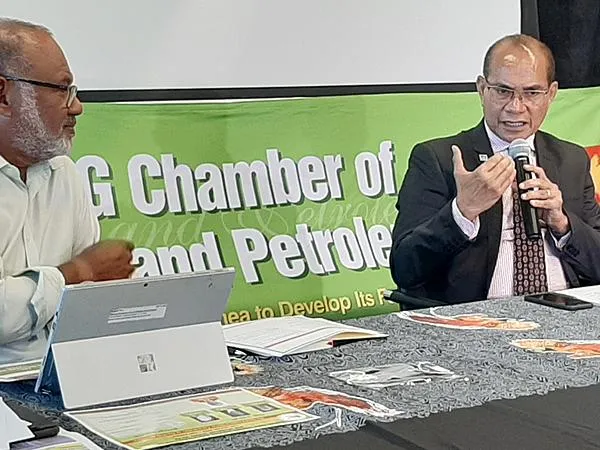
PNG Chamber of Mines and Petroleum Vice President Richard Kassman together with local representatives from Deloitte, the Business Council of PNG and the Institute of National Affairs stressed the importance of Papua New Guinea’s resources sector to the economy and community following the call on the government to review its proposed Organic Law into an agreement for the petroleum and mining sectors.
Deloitte highlighted statistics from an economic review that the PNG resources sector is at 23.9 per cent of government revenue, higher than previous figures. This revenue has come from sources such as salaries and wages tax, corporate tax, and dividend contributions, as well as indirect sources.
Deloitte Director of Tax and Business Services Maygen Turliu said that this revenue allows the government to offer more extensive support to provinces and communities around the nation, and calls the government to undertake a robust consultation. “Given the significance of this contribution, and of the industry to the financial position of the PNG Government and country, it is essential the Government provides the industry with a clear consultation framework as complex employment and industry structure reforms are discussed,” she said. “Tax reforms don’t have to be something very big. You can tweak the current system so it fits both parties. You don’t need to do a totally new thing that could disrupt business, particularly with COVID-19 in place.”
She added, "Consultation is key for businesses in PNG. The Government should be giving more access for open discussion on proposed reforms and allowing businesses to work with them to inform these reforms as they're being developed.”
Meanwhile, Executive Director of national independent think tank organisation, the Institute of National Affairs, Paul Barker, said this pandemic has brought to light the need for collaboration and certainty between the resource sector and the government.
“Now is the time to stimulate greater activity in this essential sector to our economy by creating a secure environment that provides investors with the confidence to act,” he said. This will deliver Government much greater volumes of direct and indirect revenue, and do it much more quickly, than looking to nationalise the operation of this critical sector. At this point in time, as a nation, we should be looking to expand the size of the resources sector rather than doing anything that risks reducing it. This will only be achieved by creating an environment where the Government is working alongside the industry and providing the necessary financial assurance required to stimulate activity across the industry and its investors.”
Furthermore, Steamships Trading Company General Manager for Corporate Affairs David Toua stated that stability is an important factor in making a triumphant business recovery. He further cautioned the government not to risk revenue loss through the misinformed resource to the business sector.
“Businesses around the country rely on the resources sector to help create demand for their services,” he said. “Putting the resources sector at risk jeopardises the livelihoods of a huge number of PNG business owners, as well as their employees – a move that would simply exacerbate the uncertainty of a looming recession in our nation.”
Mr Kassman repeated the willingness of the parties to discuss the matter at hand. “The concerns that we as a sector express are not anti-Government. Time and time again we hear the views some of us as Papua New Guineans have are either anti-government, antinationalistic or unpatriotic, and that is far from the truth,” he said. “What’s important is that we want to contribute to an effective discourse, so our leaders are well informed in order to make good decisions for the future of our country.”
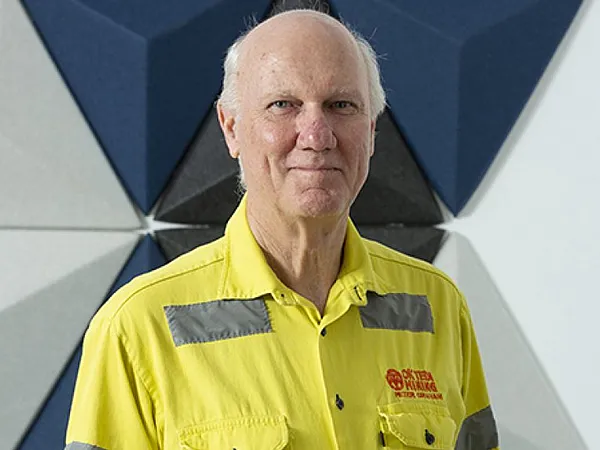
Peter Graham has tendered his resignation to Prime Minister James Marape. The Chairman and acting managing director of the Kumul Minerals Holdings Limited (KMHL) and former managing director of Ok Tedi Mining Limited and ExxonMobil PNG is returning home to Australia.
He has worked for 15 years in the country’s mineral and oil & gas industries.
“I have now been away from my home almost continuously for 27 years – 12 years in the US and 15 years in PNG. It’s simply time for me to go home,” he said. “When I finished at Ok Tedi at the end of May 2020, I made a personal commitment to Prime Minister James Marape to work at Kumul Minerals as chairman and acting managing director for six months to November 2020. I have confirmed my intention to retire and return to Australia after an enjoyable and challenging 15 years in PNG, firstly on the PNG LNG for almost 10 years, then five years at Ok Tedi, and now six months at Kumul Minerals.”
For Marape, he has yet to receive his resignation letter but according to him, the timing was unfortunate as they are now in the process of naming the new KMHL board.
“I have not got Graham’s letter formally yet, however, it’s unfortunate that a letter he circulated to two former directors of KMHL got circulated in public space,” Marape said. “But (he had) told me six months ago when he took office that he would resign in November. So I was already expecting his resignation. It’s unfortunate that his letter may be taken out of context with the Government filling in new board members of KMHL.”
For Vice-minister Manasseh Makiba who is assisting the prime minister on KMHL, he also said that it was unfortunate that the news leaked on social media first.
“I will continue to provide support as needed to the SNT (state negotiating team) in negotiations with Barrick (Niugini Ltd) on the Porgera (mine) until my departure,” Graham said.
The new KMHL board consists of Graham, Dr John Kuwimb, Aho Baliki, Bonny Ninai, Marjella Meles, Hansel Maven and Nelly James.
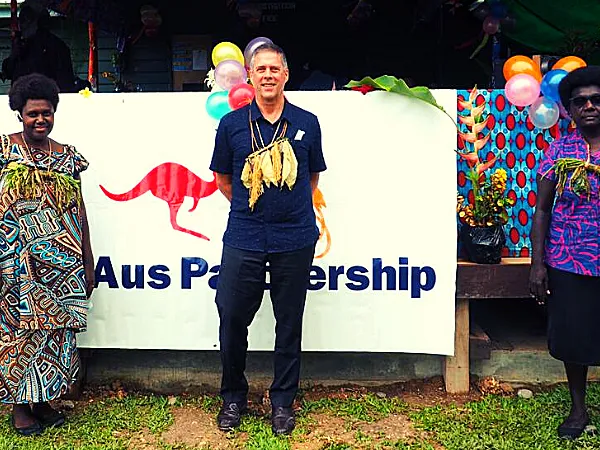
Growing the number of skilled workers in the country means growing Papua New Guinea’s Technical Vocational Education and Training (TVET) sector. This was an initiative by Australia and Papua New Guinea through the Comprehensive Strategic and Economic Partnership which was signed during the virtual summit leaders of Prime Ministers James Marape and Scott Morrison.
This initiative expands support to the TVET sector in three locations - beginning with Bougainville, the Western Highlands, and Manus, and was launched by Australian High Commissioner to Papua New Guinea, Jon Philp.
“Skills development will be essential to PNG’s economic recovery from the impacts of COVID-19,” said Philp. “Continued access to education and skills is vital for livelihoods, human development and national advancement. Australia is committed to working with the Papua New Guinean Government to expand TVET training opportunities.”
Philp added that both governments continue to work hard to service more people from Papua New Guinea - including disadvantaged groups and women.
“For PNG to become globally competitive, we must ensure that higher and technical education is equally accessible to all students and is of quality and relevance to meet economic and local needs. This in turn will reduce the country’s dependence on skills workers from abroad,” said the Department of Higher Education, Research Science and Technology Secretary, Professor Father Jan Czuba.
Over the next six years, Australia will also provide PGK107 million to support the Australia Pacific Technical Coalition to work with the TVET colleges in meeting local industry demand for skilled labour. It is also expected that through institutional partnerships, improving TVET means having the people grow local industries and welcome opportunities provided by Australia’s Pacific Labour Mobility programs.
After submitting its 2018 audit results, PNG Air says that it can continue trading on the PNG National Stock Exchange (PNGX).
According to Chief Executive Anthony Pereira, the company has already passed to PNGX its 2017 report. “2017 audited accounts were signed off today (Tuesday) and a copy was handed over to PNGX Markets while 2018 is expected to be signed-off by next week Monday,” he said. “Once we submit 2018 next week to PNGX Markets, we expect to have the suspension lifted.
Previously, he mentioned that the financial reports for 2017-2019 of the airline were already audited after the engagement of an independent Australian accounting firm to review and submit all major erroneous entries that were done between 2017 to 2019 that depicted losses instead of profits.
This eventually led to the subsequent suspension of PNG Air from PNGX.
“These have now been rectified following advice from the independent chartered accounting firm and forwarded to our auditors in PNG to finalise the audit,” he said. “We have communicated with PNGX and have informed them that the accounting errors have been fixed and forwarded to our auditors who are now conducting the audit. Once this is done and the audited financial reports for 2017, 2018 and 2019 are finalised and signed off, they will be submitted to PNGX. PNG Air’s suspension at PNGX will then be immediately lifted.”
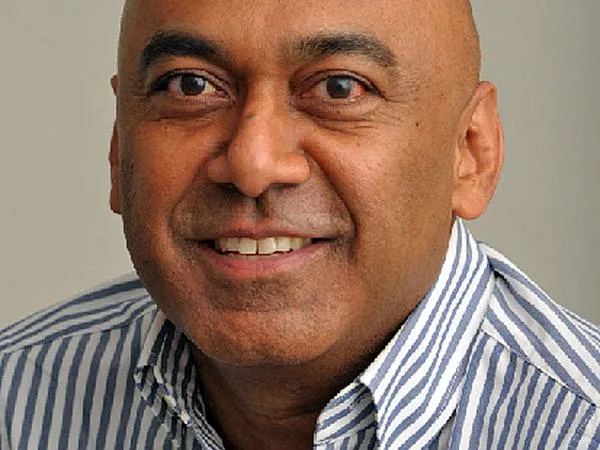
In January 2021, the City Pharmacy group of companies welcomes Navin Raju as group CEO. Raju will replace Sir Mahesh Patel as the latter will focus on his duties as the CPL Foundation Chairman and will remain on board as a non-executive director.
According to CPL Group Chairman Stan Joyce, who announced the appointment, Mr. Raju is the perfect fit to take on the role. He said that Mr. Raju has the capacity to restructure an organisation, transform strategy and achieve growth in return for the investments and sales. He also added that he has driven down costs through smarter buying.
“A graduate of Auckland University with a Bachelor of Commerce and an MBA from Southern Cross University we are confident that he possesses the skills necessary to drive CPL forward,” he said. “CPL remains committed to the development of staff and these changes at the CEO level reflect the ongoing succession plans which operate throughout CPL. The commitment and input of Sir Mahesh and his family at a time when CPL was facing dire financial stress were indeed truly remarkable.”
Mr. Rahu joined CPL in 2018 and has had leading roles in the Hardware Haus business and the Azurium business transformation project (BTP).
“And he was promoted to the role of group chief operating officer of CPL at the beginning of 2020, during which time he has continued to oversee the BTP whilst ensuring the gains made in HHL were sustainable,” Mr Joyce said.
To continue the development and construction of the Lae-Nadzab four-lane road in the province of Lae Morobe, the government has allocated K19 million. This news is according to Deputy Prime Minister and Minister for National Planning and Monitoring and Member for Bulolo Sam Basil who added that the funding has already been made to the contractor, China Railway, and the project is now in progress.
He added that aside from this, the Wafi-Golpu project is also in the pipeline.
“For Wafi-Golpu, the national government has given K10 million to the Morobe Provincial Government and K2 million each to Bulolo and Huon Gulf districts for impact project management programs,” he said. “For Bulolo, our share of K2 million funding has been used to build the Golpu House for our landowners at a cost of K1.6 million. The building is currently under construction. And we still have a remaining budget of K400, 000 to fund other impact projects for our landowners.”
He added that aside from these two projects, also in the works are the Wagan fisheries project, Nadzab airport redevelopment, satellite township and provincial boundary for the development of rural district bus stops, expansion of the Lae market, and many others. The deputy prime minister also added that the government has allocated K140 million in tax into the MPG through GST from the Internal Revenue Commission (IRC).
According to the Kina Bank, investment from resource projects is a prerequisite to medium-term economic growth in PNG. Its mid-year outlook has noted that the estimate of the International Monetary Fund would shrink by 4.9 per cent this year.
“PNG, by comparison, is expecting a relatively modest 2 per cent fall in the real gross domestic product (GDP),” the bank said. “Additional Covid-19-related expenditure was required and revenue losses were felt by the economy, which placed upward pressure on PNG’s debt-to-GDP ratio. Initially projected at 40.3 per cent of GDP, debt is expected to increase to 48.9 per cent at the end of 2020 with a forecast medium-term track of increasing debt-to-GDP in line with ongoing fiscal deficits. This 8.6 per cent increase can be compared to the 19.3 per cent increase in Australia’s debt-to GDP expected from 2020 to 2021, and the 32 per cent increase in Fiji’s within the same period.”
The bank also added that although this track was not ideal, any withdrawal of fiscal support is negative.
The bank said, “An increasing track is tolerable if there is a level of confidence that the resource deals that are currently under negotiation, which represent up to US$31billion (K105.94bn) in foreign direct investments, are agreed. This will lead to further investment in the country creating a large multi-year stimulus that will ultimately add to the longer-term cash inflows for the country.”
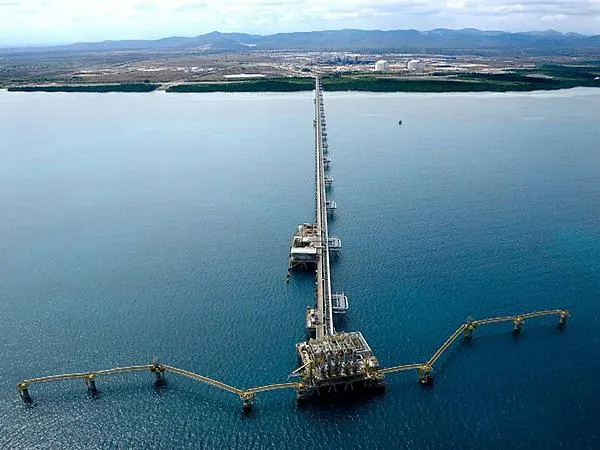
“The road to recovery post-Covid looks promising relative to some of PNG’s neighbours, with the distinguishing local positive feature being the large potential investments to be made,” it added. “We are quietly confident that the Government and project developers will confirm the US$13billion (K44.42bn) Papua LNG project late this year or early next year, with some progress being made in discussions.”
According to an economist, many of the Pacific Island countries that rely much on tourism such as Vanuatu and Fiji have been hit hard by the pandemic.
Institute of National Affairs Executive Director Paul Barker said the pandemic had caused PNG a major drop in commodity prices such as gas and copper, adding that the government had been “in a severe budgetary squeeze even before Covid-19 hit, after years of major budget deficits, relatively weak expenditure control and a growing level of debt and debt servicing costs”.
He responded to a report that said that Australia’s biggest financial aid was still PNG - with AU$596 million (K1,495mil).
He said, “The global pandemic has impacted the global community in direct and indirect ways, with the direct health effects and the economic results from fall in demand, lower commodity prices and government-imposed restrictions on travel and trade. Governments and international institutions around the world have to be innovative to respond to an almost global economic crisis, with some countries having been much harder hit than others, to date. Australia has long had aspirations as a player on the global stage, particularly since the days of foreign minister (Gareth) Evans. With AusAID, they provided some valuable contributions across the developing world.”
He added, “But as their aid became more strategic and absorbed into foreign policy objectives, and as more international interest started focussing on the Pacific, invariably Australia, as only a medium level economic power, recognised its limitations and need to focus, unless it was going to increase overall development assistance, (which would also have both a humanitarian and strategic value). Considering the current Australian government didn’t gain office on the back of enlarging the overall aid programme, clearly it was logical to focus its efforts.PNG and some of its neighbouring economies are badly hurting.”
He said that in PNG and the Pacific, Australian assistance can make an essential difference while safeguarding its own doorstep, in a way, or extent, that it really cannot achieve in other parts of the world, even though some of them may be really desperate, with years of conflict and need for humanitarian assistance.
He said, “It’s what the funding is earmarked for, and how those Pacific Island nations utilise and account for the support (both to their own citizens and the donor) that really matters, whether it will have a lasting impact or be just some stop-gap intervention. PNG citizens will judge the assistance on its utility, how it engages and impacts on the ground and withstands the test of time, rather than on monuments to prevailing leaders, that fail to address the underlying concerns.”
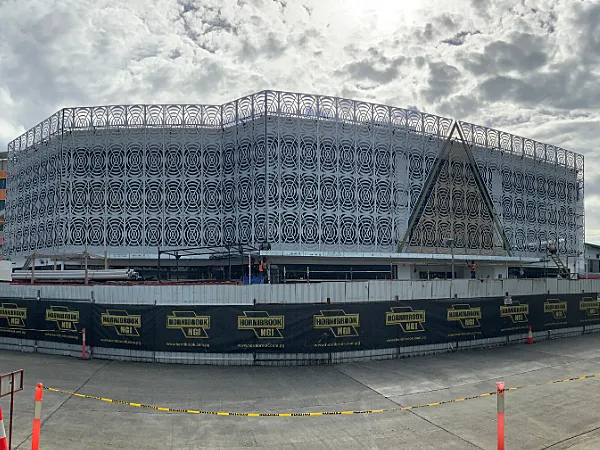
The Gobe Haus which was a K26.5 million investment by the Mineral Resources Development Company (MDRC) has brought assets to the company in PNG and the Pacific to a total of K6 billion.
According to MRDC board chairman Isaac Lupari, MMDRC’s most recent development was the three-storey office building in Top Town.
Deputy Prime Minister Sam Basil expressed his gratitude to MRDC for developing what was an “eyesore in the heart of Lae city” since it was gutted by fire 10 years ago. He added that the project took almost two years to rebuild. “I am pleased to note that the K26.5 million investment was delivered on time, below budget – savings of more than K2 million – and to the quality level set and expected by MRDC,” he said. “I am advised that Gobe Haus is ready for use with the ground floor already fully leased and high interest for the remaining two floors.”
Basil gave his hearty congratulations to the MRDC board and managing director Augustine Mano for the finish, adding that the redevelopment was the latest testament of the growth of MRDC since 2015.
The year 2021 will witness Papua New Guinea revealing all agreements related to oil and gas, and mining. This, according to the Head of PNGEITI National Secretariat Mr. Lucas Alkan, who added that all contracts and MOUs signed between two parties next year are required to be disclosed to the public.
“The current practice in Papua New Guinea is that once the agreements are signed, they are filed by the State Solicitor’s office and not disclosed as public information,” he said. “A number of project agreements including that of the multi-billion Kina PNG LNG Project are protected by secrecy provisions and have not been disclosed for EITI reporting purposes. These agreements need to be disclosed, not only because PNG is implementing the EITI Global best practice standard but it is also in the best interest of the resource owners and the people of this country to know what is contained in these agreements.”
Mr. Alkan added that development licenses, petroleum contracts, and associated agreements are essential factors in the legal framework of the governance of the country’s natural resources and wealth.
“Disclosure of project agreements, MoAs and contracts, allows the public to monitor the conduct of the parties involved in the extraction and sale of mineral and petroleum commodities to determine who is accountable for non-compliance, whether it be benefits sharing, environmental impacts, social obligations and so forth,” he said. “The government has been talking about getting its fair share from resource projects, however, if the deals have been done badly in the first place by giving away too many fiscal concessions like a 10-year tax holiday or other tax exemptions then we have locked ourselves into a position where we cannot do much.”
He added, “If there are any legislative impediments to the disclosure of contracts and agreements, the laws must be reviewed as part of current legislative reforms in the extractive sector to amend these legislations that have prevented public disclosure of these important documents.”
He said that disclosing the contents of these contracts has benefits. Aside from better understanding of the project agreements, disclosing the contracts entail a better understanding of how revenue flows, enabling the public and the government to check tax incentives and subsidies available, and a better perspective and view of the responsibilities that developers are required to meet.
Among the new projects in the pipeline include the following:
• Frieda River copper and gold project
• Woodlark Gold project
• Wafi-Golpu Gold project
• Papua LNG Project
• P’nyang
• Pasca A Petroleum Project
Follow on LinkedIn:
PNG Business News
Be the "First" to get our exclusive Digital Magazine & Weekly Newsletter.