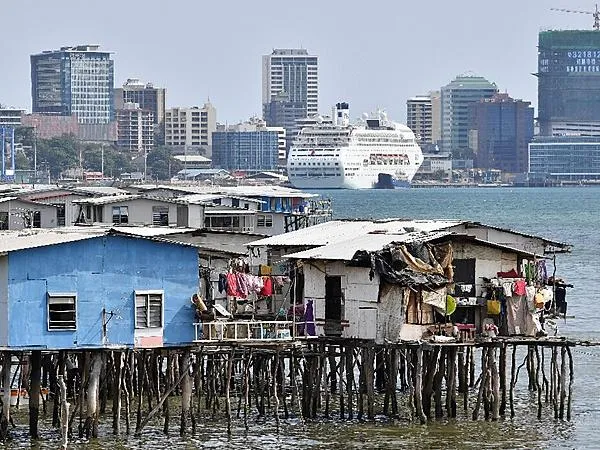
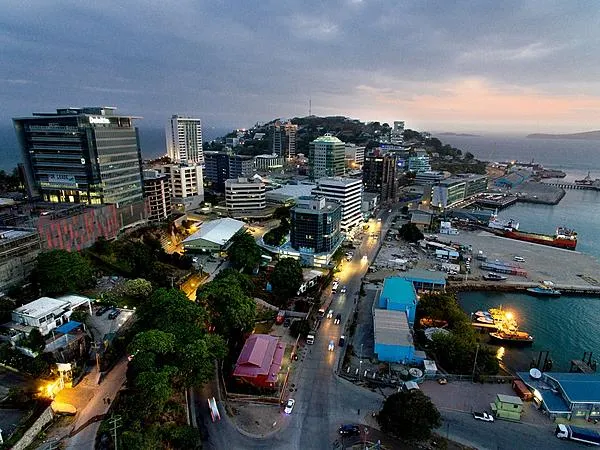
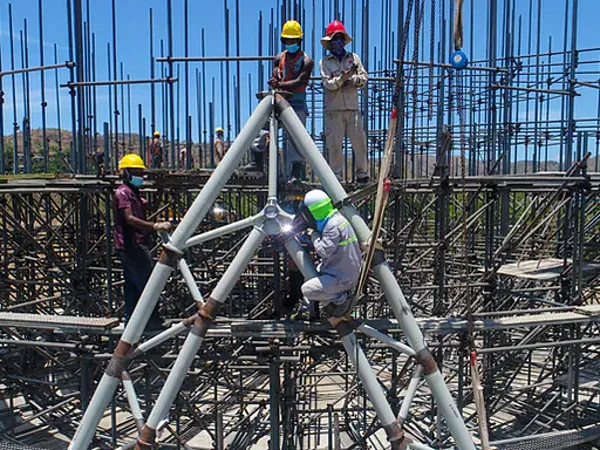
Although there are uncertainties in the business environment, the economy of Papua New Guinea might recover faster in 2021 as compared to its other Pacific neighbours.
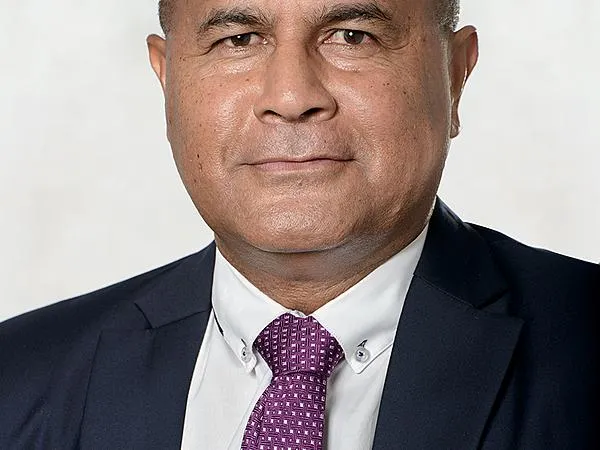
This was revealed by Credit Corporation PNG chief executive officer Peter Aitsi, who said that the forecast of the Asian Development Bank showed that the recovery of the country relies on several factors such as the release of a vaccine.
“As a tool to help stimulate economic activity, the Government through the 2021 National Budget, has given priority to spending on key national infrastructure through its Connect PNG programme,” Aitsi said. “It has also committed further funding to the small-to-medium enterprise (SME) sector in an effort to achieve broad social and economic impact. The Government’s money plan will require further raising of funds to meet the planned deficit. This is a priority task for the Treasurer and his team and their success will be of significant importance in underpinning the proposed recovery measures.
He added, “From a business prospective, there still remains a high degree of uncertainty in our operating environment with no near term improvement likely for at least for the first half of 2021. The emergence of variant strains of the Covid-19 in Europe added further complexity to the global response and suggested an extended time to recovery. The major issue for PNG business, besides the public health risk, will be the on-going restrictions to the free movement of people, which has caused the reduction of domestic and international traveller numbers. We can expect the global economy to be disrupted for a good part of this year, so the challenge for us will be how, we as a country can best support our business sector to maintain their operations and where possible how we stimulate our domestic market to counter the external factors.”
As for the view of Credit Corporation, Aitsi said that they would resume working with their customers and helping them as much as they can.
“As we have done so for the last 42 years, our business development teams in Port Moresby, Lae, Mt Hagen and Kokopo are available and ready to assist with funding enquiries from individuals and companies,” he said.
With more investments, more jobs are in store for the people of Papua New Guinea.
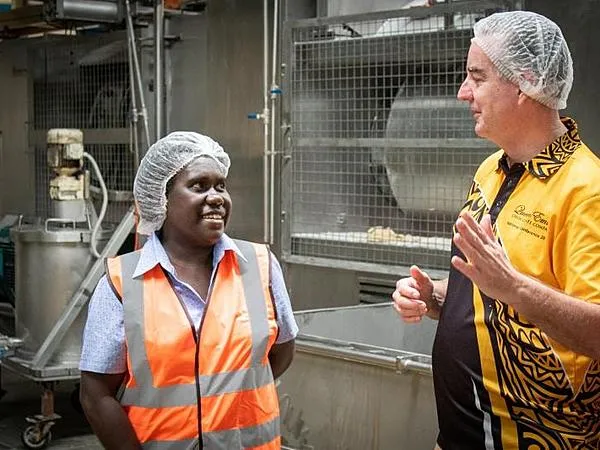
According to Paradise Foods Company chief executive officer James Rice, their new strategy is investing in home-grown products and localising of product brands and labels, thus creating more livelihood opportunities.
“Every job we can bring to PNG is a victory for our country and a benefit to our people. It means another family with food on the table, another consumer, and another taxpayer,” he said. “We are looking at replacing imported bottles, bottle caps, and labels hence; all these will mean fewer imports for the country and more jobs for the people in PNG.”
He noted that these are the kinds of investments to help the country.
“The people need jobs and the country needs economic growth. We should focus on doing what we can do, and on making what we can make,” he said. “There’s no reason to import something PNG can make itself, otherwise we are just sending our money and jobs to other countries. My plan was always to grow the business, stay focused on what is right for my customers, employees, and shareholders. When I make the right choices all three benefit. I’m a guest in this country and the best legacy I can leave is jobs for Papua New Guineans.”
According to PNG Institute of National Affairs Director Paul Barker, 2021 would also be another difficult year.
In giving an outlook for the year, he said, “Demand for goods and commodity prices have increased, and the rollout of several vaccines provides grounds for optimism over constraining the coronavirus during the year, and particularly safeguarding the most vulnerable.”
He added that the pandemic has caused major damage such as revenues and income and has also increased the forecast deficit to K6.6 billion for 2020 - in spite of the major cuts for the public and private sector operations.
“The Government secured highly concessional funding under the Covid-19 global response from the International Monitory Fund (IMF) and other international sources, with K4.6 billion secured from external borrowing (US$400 million (K1.4bil) from Australia, US$364mil (K1.2bil) from IMF and US$500mil (K1.7bil) from ADB sources) and K2bil envisaged from domestic borrowing,” he said.
He continued, “These may permit some return to a new normal, including restoration of economic activities and jobs, including in PNG. Addressing global challenges and tensions will be a major issue, most notably climate change and destruction of the major sinks, such as forests and marine habitats, other environmental threats, as well as growing geopolitical and trade tensions, including in the Pacific. For Papua New Guinea, a major focus must be on kick-starting the economy and the long static or declining job market, by addressing major business and investment constraints and boosting domestic and foreign investor confidence. But, also encouraging greater local participation and diversity of activities using local capital and skills.”
Peter Aitsi has resigned from his post as director and chairman of Kumul Consolidated Holdings Limited (KCHL).
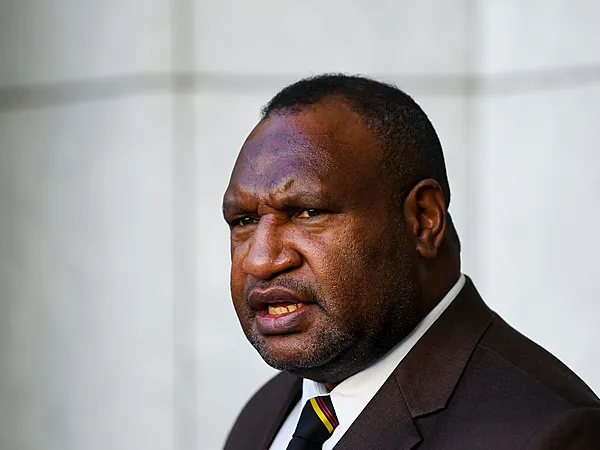
In a letter addressed to Prime Minister James Marape, he said his resignation came after recent “changes to ministerial portfolios”, expressing his gratitude to the government for this privilege “to be chair of this prestigious and important organisation”.
“In recognition of the changes to ministerial portfolios, I have reviewed my own position (and) decided to resign from my position as a director and subsequently from my role as chair,” Aitsi said.
In his resignation letter, he remarked that the KCHL board “over the past 18 months had made significant headway in achieving your government’s State-Owned Enterprise (SOE) reform agenda”. He also recognized the appointment of KCHL managing director Isikeli Taureka as “an important step in bringing, experienced and capable Papua New Guinean leadership to the reforms and clearly, this has been evident in the achievements to date”.
He added that the accomplishments of KCHL are as follows:
The passing of the amendments of the KCHL Act, making sure that the funds from the Asian Development Bank are released early
The appointment of key chief executive officers
Start of the restructuring of the debt which had damaged the SOEs.
“The progress is encouraging but there is still a long way to go,” Aitsi said, adding that with his achievements, he remained “very committed to contributing where I can to the positive advancement of PNG and importantly to securing outcomes that protect the well-being of our people.
“I extend my sincerest thanks for the opportunity to serve our nation and I remain open to assisting your government wherever I can make a meaningful contribution,” he said.
Aitsi said that there was a decision to replace him but the Cabinet hasn’t released any official letter yet.
For his part, James Marape said that from his understanding, Aitsi no longer held that role after Professor David Kavanamur replaced him, when Muthuvel was minister.
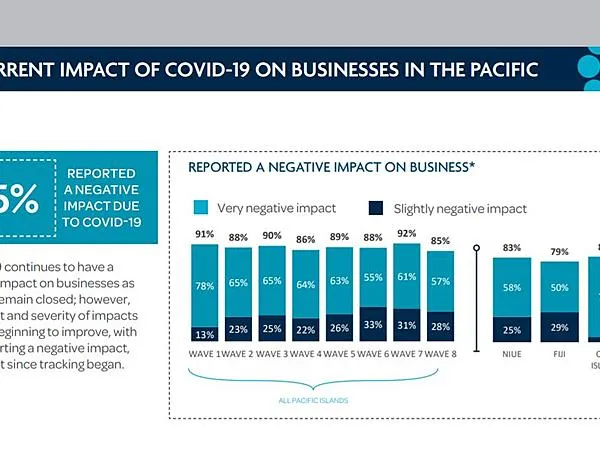
Almost 85% of respondents claimed that COVID-19 has had negative impacts on their businesses, including revenue loss and damage to the local economy - with nearly a quarter temporarily closed and 43% somewhat operational.
In addition, the top three challenges include the effect of closed international borders, poor cash flow, and not sure when the pandemic will last. Meanwhile, the top three initiatives that businesses have been calling for are financial position, financial support, and enhancing online commerce capabilities.
These were revealed by Pacific Business Monitor, a monthly survey monitoring the effects of COVID-19 in business across the Pacific region.
In spite of many Pacific nations not facing this pandemic, border control and quarantine measures brought interruptions to tourism, trade, and remittances.
PTI Australia Trade & Investment Commissioner Caleb Jarvis said that having a trans-Tasman in early 2021 is already a good sign of opening the borders again. He added that it is possible that the negative impacts of the pandemic will continue in the first quarter of 2021.
“Businesses in the Pacific have now faced immense challenges for the majority of 2020. Closed borders have meant those in the tourism sector have had no business or revenue since March. Our survey confirms what we are hearing from businesses, that the pressures have not eased and financial pressures are compounding due to no revenue,” Jarvis stated. “As the year draws to a close, we look to 2021 to provide the respite and global response needed to ensure the survival of so many Pacific enterprises. The announcement of a Transtasman bubble and the development of vaccines provide the first concrete glimmers of hope on a road towards recovery.”
Jarvis added, “PTI Australia continues to use the data from the PTI Pacific Business Monitor to champion the Pacific’s private sector at a regional level and bring a spotlight to the current reality Pacific businesses are facing. It reinforces the findings from the Lowy Institute that the Pacific is staring at a potential ‘lost decade’ due to economic damage of COVID-19, projecting the average income per person in the Pacific will not recover to its 2019 levels until 2028. We also use this data to help inform the design and delivery of our programs across the 16 Pacific nations we service. This month we launched our Social Media for an e-Business scholarship program, a bespoke 6-week program designed specifically for Pacific businesses to help bridge the digital capability gap and enhance e-commerce skills.”
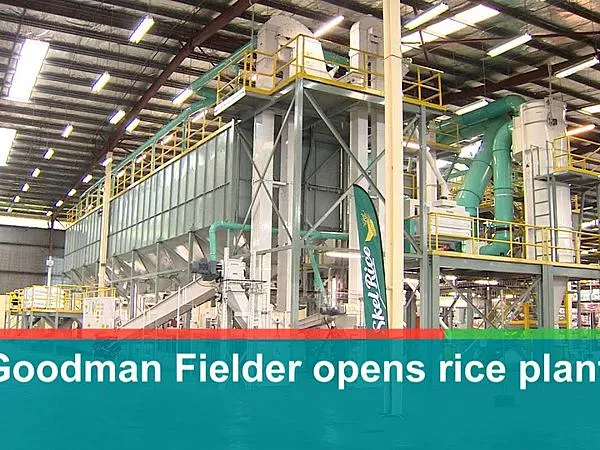
Goodman Fielder (PNG)’s K10.2mil rice plant has opened in Port Moresby. According to general manager Manish Randev, the rice plant has a capacity of producing 360 tonnes of rice a day.
“This plant can produce 15 tonnes an hour which means in a day it can produce up to 360 tonnes,” Randev said. “We are putting a lot of money in investment and Goodman Fielder is here to stay. It’s not about taking the price hike or increasing the prices. Our motto is ‘we are committed to making everyday food better for everyone, keeping the focus on quality, consistency on deliveries and ensuring that it is at an affordable price.”
Randev noted that their company was investing about K500 million for a plant in Lae.
“We are doing a heavy investment in Lae as well,” he said. “We’re putting up a state-of-the-art plant with the latest technology to give us a very good product. Goodman Fielder is committed to making everyday food better for everyone. We work with locals to build up the talent and ensure that everyone grows as the economy of Papua New Guinea grows.”
Aside from creating more jobs, the rice plant would also support growth in Western, Central, Gulf, and Milne Bay, and in the Southern region.
Randev added that there are three more organisations: one who sees the growth, one who wants to become included in the growth, and one who does the growth.
“And we at Goodman Fielder, through our Flame and our various brands, stand committed to fuelling the growth of this country,” he said.
Meanwhile, Agriculture and Livestock Minister John Simon nodded positively to the investment of the firm - which showed its commitment and dedication to growth.
The government should be a facilitator for investment in the nation, said the Papua New Guinea Manufacturers Council (PNGMC).
According to PNGMC chief executive officer Chey Scovell, “Investment provides many jobs, skills training and of course you’ve heard about a few hundred jobs created here (Goodman Fielder). But they will be using predominantly the SMEs. Like you see the fences outside, security and electrical contractors. So the manufacturers are also the linchpin for SMEs. When you support a big manufacturing operation, it’s got a massive flow-on effect.”
Scovell adds that there are a million jobs that the manufacturing industry could create since this can be done through investment and expansion.
“Goodman Fielder is leading by that example with that commitment to PNG, their employees and their commitment to putting affordable food on the table for Papua New Guineans,” he said, encouraging others to buy products locally-made. “When you buy PNG made, you create more jobs.”
Meanwhile, Paradise Foods Limited chief executive officer James Rice said that the manufacturing industry accounted for 40% of the jobs but only five per cent of the gross domestic product (GDP).
“That’s because manufacturing companies like mine have an exponential impact on jobs when we buy locally,” he said. “Government actions and policy needs to support and develop manufacturers to ensure we have jobs in this country for everyone that wants one.”
Parliament recently passed its 2021 budget again, following the Supreme Court’s rule that the sitting previously passed was not proper.
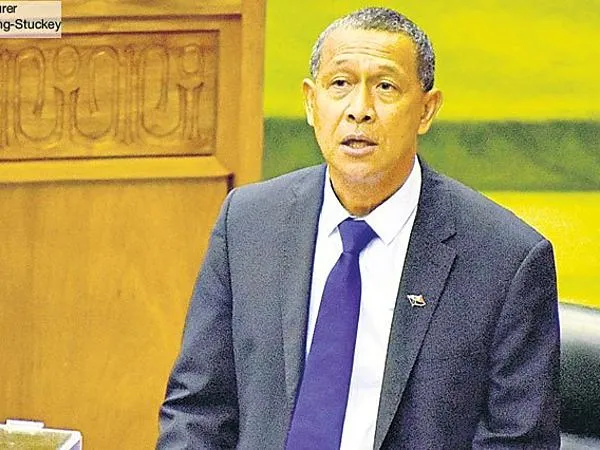
According to Treasurer Ian Ling-Stuckey who tabled the budget, working on the budget was a challenge.
“Since 1975, there has never been a global crisis such as the one we are now facing,” he said. “The latest world economic outlook talks of a long and difficult ascent recovering from the Covid-19 pandemic. The global growth rate is expected to be minus 4.4 per cent in 2020.”
Ling-Stuckey added that the economy went in a downward spiral mode for only two years.
“In 2009, following the global financial crisis and the current year,” he said. “And this year’s focus economic drop is minus 4.4 per cent, is more than twice as bad as the minus 1.7 per cent of 2009. While we are slowly recovering from the debt, the deficit, the growth holes PNG is hit with is by far the worst global crisis since our nation’s birth. We need a steady hand on the ship’s rudder to navigate through these extraordinary times.”
Ling-Stuckey noted that for the new initiative in the budget, there would be no huge announcements. “Rather a wise and steady hand consolidating our growth path to begin rebuilding the living standards of our people,” he said.
As for the expenditure, Ling-Stuckey said it is anticipated to arrive at K19.6 billion.
“This is a substantial increase of 9 per cent from the K17 billion 2020 supplementary budget,” he said. “The main sources of expenditure increase are first to fund K600 million in round two of the Covid-19 activities and second to fund increased repayments of arrears. Although there is a large increase in expenditure, it must be seen in the context of responsible policies. We are responding to the Covid-19 pandemic and we are repaying arrears which PNG businesses are saying is the best way to support the economy.”
Arrears payment, meanwhile, is expected total of K1.2 billion in 2021.
“The simplest way to reduce the deficit is not to pay our businesses money that the Government owes,” he said. “Within the expenditure budget, the Government will continue to give priority to health, education, law and justice. We are supporting activities that will build growth through substantial increases in capital investment.”
Prime Minister James Marape said that in the next year, the government plans to focus on stabilising the economy.
“We are using our own budget to ensure stimulus is maintained in our economy,” he said. “The construction activity is taking place across the country.”
Marape added that he wasn’t the cause of lost jobs.
“Far from the truth. Companies shut down and decide what to do in their investment (decisions),” he said. “Through direct budget interventions, we put more than 10,000 jobs in 2019 and 2020. The Works Department will confirm that our interventions in the construction space are keeping more than 100 companies afloat. Our direct interventions in districts and provinces are keeping small to medium enterprises in the construction business, contributing to about 10,000 people engaged across the country.”
Marape noted that the budget functions as an avenue to keep a level of economic stimulus.
“In 2021, we will be having a different story,” he said. “We are coming back, ensuring that our debt does not go out of proportion. We are using low-cost borrowings, zero per cent interest 1 per cent interest from credible lenders that can have an impact on our budgets. Next year, our strategy is to maintain our budget is funded fully. This will ensure that we are serving our country, education and health are functional that the recurrent grants are running and the country is keeping our heads above the water.”
Marape added that the dialogue on Wafi-Golpu and Porgera “will mature”. This includes Papua LNG.
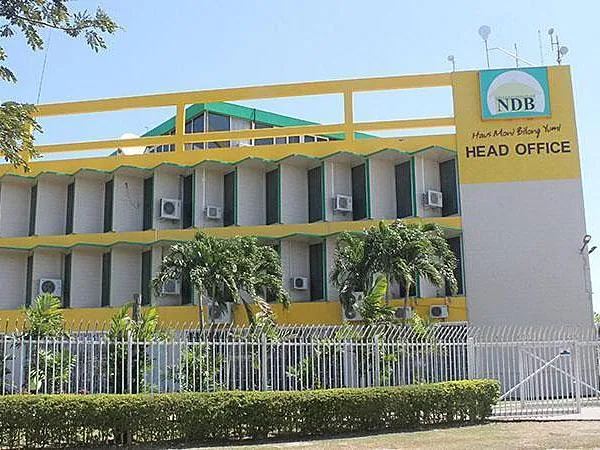
The National Development Bank (NDB) desires to buy Westpac Bank.
According to chairman Michael Mell, this is part of its long-term goals of going commercial. He said in a press conference in Port Moresby that a monopoly has no room and wants Westpac Bank to consider this offer.
“I have set up a committee from both NDB and People’s Micro Bank. We have been working tirelessly in the background for the last four months,” he said. “We were quietly preparing a bid for it. I was collecting the information about the sale of Westpac and then looking at what kind of money we need to raise to buy the bank but then this announcement came. The deal between the two banks has been done at their level. I have tried to reach out to them and could not."
He added, “In PNG, we need not monopolise the banking system because that is going to kill us. If there are two existing banks, I want to make an offer to Westpac, if NDB can purchase Westpac Bank. We should have three banks for customers to choose from. This is a concern to see Westpac Bank sold to another commercial bank is limiting the choice for PNG businessmen and women to expand, to borrow to grow their businesses. On behalf of the National Development Bank, I want to make an offer through our business arm which is the People’s Micro Bank, a semi-commercial bank, to Westpac. I would like to be given that opportunity so that I can buy that commercial bank for the people of PNG, which will become NDB’s commercial bank while NDB remains as a small to medium enterprises bank.”
Mell said that the bank should think about its offer.
“The banking industry in PNG will no longer be a free market place,” he said. “I see this as a monopoly that is going to kill businesses in Papua New Guinea.”
He called on the Internal Revenue Commission and the Independent Consumer and Competition Commission to look into the matter and to vet it properly, considering, of course, the potential negative effect on the banking sector.
PNG has good investment opportunities, but fewer as compared to a few years ago.
This, according to Trukai CEO Alan Preston, who said that it takes extra precaution to invest now. He added that this pandemic has brought many challenges to businesses and customers alike, and still, these people are coping better than most around the world.
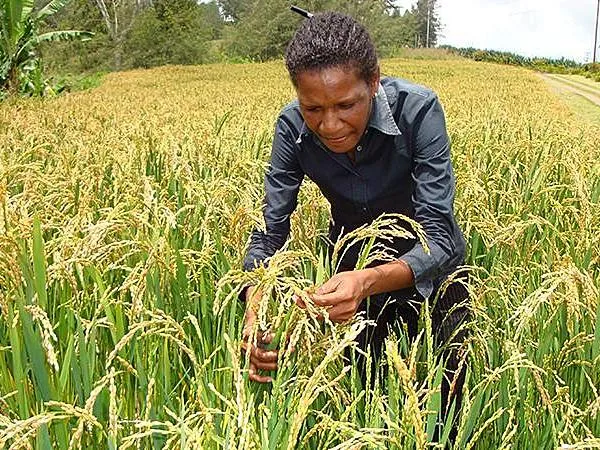
He said that over the last 10 years, Trukai has invested more than K40 million in rice-growing projects in the Morobe province.
“Some of which have worked very well. In the last year we have celebrated three new and successful small grower rice harvests, which is wonderful to see,” he said. “Rice growing has to compete with many other agricultural products, which means some farmers are more interested in richer cash crops.”
He noted that the Trukai industries have been the market leader, offering fresh products and competitive costs to their customers.
“We expect to grow every year and will continue to expand our product portfolio to ensure we meet the customers’ needs and requirements,” he said. “At the higher end of this range if the government can provide a stable and helpful set of policies to incentive business investment and reduce business risk.”
For its major plans, Mr Preston said that they plan to bring in more products. For the next five years, it is expected that its income will grow from five to 10 per cent.
In creating a steady stream of income, the people of Bana in Bougainville launched the Bana special economic zone (BSEZ), which is a project intended to form development by tapping into agriculture, tourism and the fisheries industry.
This project also creates opportunities for Bougainville by attracting investments to the economic zone.
The future of this project includes:
Employment opportunities
Increased trade balance
Increased investments
Trading at a global level
An initiative of the leaders of Bana in its three constituencies, the project aims to increase development and stimulate economic activities in the district.
The steering committee of the project is the creation of the Bana development initiative.
The business development initiative chose to put up the Bana free trade zone under the PNG Free Trade Zone Act 2000 which had been replaced by the Papua New Guinea Special Economic Zone Act by the Marape government.
Once the registration of the landowner group is finished, this would let people dispose of, hold, and manage their lands to facilitate investment.
President Ishmael Toroama launched this initiative at the Mamarego Primary School in Baba, South Bougainville.
Swire Shipping recently enhanced both its North Asia Express (NAX) and Southeast Asia (SEA) services
Swire Shipping operates 13 liner services connecting over 400 ports via an extensive network of services in the Asia-Pacific and globally. Dedicated to facilitating and growing trade in regions where it operates, the company operates a fleet of owned and chartered vessels to provide a wide range of specialist customer solutions for containerised, project, heavy lift, breakbulk and mini-bulk cargoes.
A fixed-day fortnightly service from North Asia to PNG
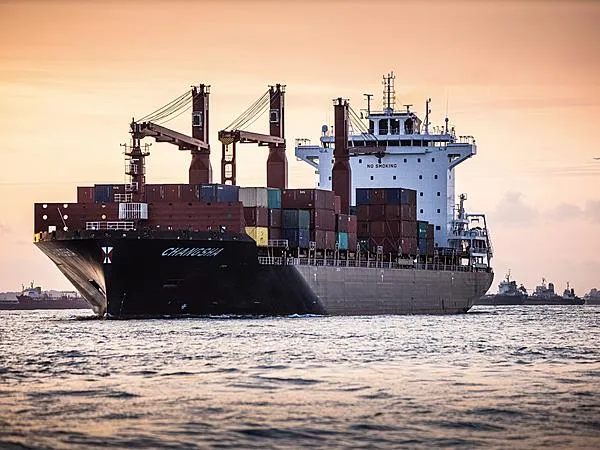
In November, Swire Shipping launched its fixed-day fortnightly North Asia Express (NAX) service with the deployment of its newest 2,750teu vessel, MV Lae Chief. The newly upgraded service will connect North Asia with Papua New Guinea and Australia with a market-leading frequency of 14 days and offers market-leading transit times to and from major ports in the region.
Under this enhancement, customers can look forward to a nine-day transit time from Hong Kong SAR to Lae.
Making its first PNG port call at Port Moresby on 27 November 2020, MV Lae Chief, at 2,750teu nominal capacity, is Swire Shipping’s largest container vessel calling in PNG. The vessel subsequently called at Lae on 22 November 2020 and was warmly received by a small contingent from PNG Ports, International Container Terminal Services, Inc. (ICTSI), local press and Swire Shipping staff.
To commemorate this occasion, a contactless plaque presentation ceremony was held at the port of Lae. In his opening address, Alistair Skingley, Country Manager for Swire Shipping in PNG, said, “Swire Shipping has a proud association and legacy with PNG, and the Pacific region for more than 80 years. We aim to enrich lives by connecting customers with communities in the Pacific. To be able to welcome Lae Chief in Lae itself is very meaningful indeed.”
Increased frequency from Southeast Asia to PNG
Shortly after launching its upgraded NAX service, Swire Shipping announced that it will enhance its Southeast Asia (SEA) service from December 2020 to connect Southeast Asia, Middle East, Indian Subcontinent, Europe, Africa and USA with Papua New Guinea and the Solomon Islands on an 11-day frequency using two loops.
The service enhancement will increase the number of port calls into Port Moresby and improve the interval times between vessels arriving in Lae. Port Moresby will be served with a market leading frequency of 11 days, a significant upgrade from a 22-day frequency. Customers shipping from Singapore and Malaysia to Motukea Port in Port Moresby on the SEA service can look forward to a transit time of only nine days.
The new rotations for the SEA service’s two loops will be as follows:
Loop 1 (Challenger loop)
Port Klang - Singapore - Motukea - Lae - Honiara - Lihir - Kimbe - Port Klang
*Oro Bay and Alotau will be serviced as ad-hoc calls.
Loop 2 (New Guinea Shuttle loop)
Port Klang - Singapore - Jakarta - Motukea - Lae - Lihir - Rabaul - Madang - Port Klang
Following the changes to the two loops on the SEA service, customers can expect better spacing between arrivals into Lae. The initial three and 19-day interval time between voyages into Lae will now be improved to a 13 and 15-day interval.
Mr Jeremy Sutton, General Manager of Swire Shipping, said, “We are excited to announce the upgrade of our Southeast Asia service which will boost our services to Papua New Guinea and Solomon Islands. These enhancements will benefit our customers and their supply chains on the Papua New Guinea-Southeast Asia trade.”
New, modern vessels deployed to support growth in the region
Swire Shipping will deploy three 2,750teu and four 2,400teu newbuild vessels, on the upgraded NAX and SEA services respectively, offering its customers and the communities it serves reliable products that will support continued growth in the region.
Both the 2,400teu and 2,750teu newbuild vessels are fitted with three 45mt cranes capable of dual lifts, ensuring that they are well-equipped to carry all cargo types, including breakbulk, out of gauge and reefers. Equipped with 75T SWL stoppers, lashing eyes and strengthened tank tops to 20t/m², the vessels are well-suited to handle both containerised and non-containerised cargo including breakbulk such as steel and forest products, as well as vehicles up to 70t.
Commenting on the deployment of Swire Shipping’s newly built vessels, Mr Jeremy Sutton, General Manager of Swire Shipping, said, “Communities in the Pacific rely heavily on seaborne trade to supply essential goods such as food, fuel, equipment, industrial materials and manufactured products, and to export commodities vital to global growth. Despite the challenges brought about by the COVID-19 pandemic, we continue to look to the future as we phase in our newbuild vessels, improve our network coverage and launch new digital products.”
“By deploying these new ships on our upgraded service, customers will enjoy a more frequent product, delivered on fixed-days and with the ability for future growth,” added Mr Sutton.
Committed to the PNG community
Swire Shipping has a long history operating in the Pacific and PNG remains a key market for the company. The company has made significant investments in modern vessels and improving schedule reliability, which underpins its commitment to enriching lives by connecting its customers with the communities in the Pacific.
To highlight its commitment to the region, Swire Shipping named its first 2,750teu newbuild, MV Lae Chief.
In addition to offering reliable services connecting PNG to the world, Swire Shipping is also committed to supporting the local community. Mr Jeremy Sutton, General Manager of Swire Shipping, said, “We have invested significantly in Project Cerulean and the Moana Taka Partnership to benefit the local communities, and we are confident that the fixed-day fortnightly service and the deployment of new, modern vessels to the Pacific will also enable our customers and communities to thrive in the long term.”
In October 2020, Swire Shipping donated K30,000 to Port Moresby Nature Park to help the park overcome its struggle to survive during the COVID-19 pandemic. The company also teamed up with Australian charity HEAPS International Foundation Ltd in 2019 to support educational needs for remote village children in the Sepik River region.
Said Alistair Skingley, Country Manager for Swire Shipping in PNG, “We feel part of the community and support environmentally sustainable projects that provide educational opportunities in that community wherever possible.”
Swire Shipping is the brand name for all liner shipping services operated by The China Navigation Company Pte Ltd (CNCo), the oldest operating entity of John Swire and Sons Limited.
The Papua New Guinea National Stock Exchange (PNGX) has encouraged foreign businesses in the country to register with the national stock exchange.
According to chairman David Lawrence, this will give Papua New Guineans more opportunities to have an ownership interest in the wealth of the country.
“Publicly listed companies are significantly under-represented in PNG compared to similar economies and other markets in the region,” Lawrence said. “This is surprising given the natural resources and wealth of the country. We would like to see more foreign companies with commercial activities in PNG listed on PNGX to provide Papua New Guineans with more opportunities to have an ownership interest in the country’s wealth. There are opportunities for a number of State-owned enterprises (SOEs) to be brought to the public market as part of the Government’s plans to reform the SOE sector. There are numerous ways in which SOEs could be brought to market to attract foreign investment whilst retaining majority national ownership and giving Papua New Guineans ownership stake in the future.”
He said that with many untapped potentials in the country, this could provide opportunities for investors.
“Such a change could stimulate the building industry, which could, in turn, support small-medium enterprises (SMEs) and create more jobs in the economy,” he said. “We know there is market demand for a listed property trust sector.”
He added that it had been a challenging year.
“Notwithstanding these challenges, PNGX has been moving forward with its redevelopment of the PNG market, albeit slower than had been planned,” he said.
Replace foreign fabricated steel in the market.
This was a statement given by Steel Industries chairman Frank McQuoid who witnessed a significant decline in the steel fabrication market. He added that the way to move forward was to replace foreign fabricated steel.
In the past two decades, PNG fabricators lost up to 80 per cent of the structural steel fabrication market to inexpensive imports.
“This means a market rebalancing is required,” McQuoid said.
He added that doubling of local production can be done by the PNG industry.
Meanwhile, Steel Industries managing director Derek Hunter said that this can come with challenges.
“It will require increased productivity, featuring new cost-effective computerised equipment and increased manufacturing floor space,” he said. “While this all requires a significant upfront investment, the future payoff will be globally competitive production costs, competitive pricing for our clients and increased local employment opportunities.”
Director of operations Paul Speedy, noted that he had seen the positive feedback in this replacement.
Pioneering research being undertaken in Papua New Guinea by IFC and the Business Coalition For Women will for the first time measure the costs, and crucially, also the benefits to businesses of workplace responses to gender-based violence. The groundbreaking project, launched this month, aims to build evidence demonstrating the benefits to business of providing coordinated and comprehensive responses for employees affected by family and sexual violence. There has been a jump in the number of gender-based violence cases globally, with initiatives to prevent violence and protect people cut back, while in jurisdictions where lockdowns have been enforced, it has become more difficult for those in need to access help. In Papua New Guinea (PNG), a nation where more than two thirds of women experience rape or assault in their lifetime, there was a 31 percent decrease in the number of those accessing gender-based violence services in the period in which authorities there enforced a COVID-19-related state of emergency, according to the United Nations Population Fund.
“There are many types of gender-based violence that impact the workplace, such as client aggression, workplace bullying and sexual harassment and violence experienced by employees at work, home and in their communities,” said Business Coalition For Women (BCFW) Executive Director Evonne Kennedy. “When many companies are downsizing, employees may not raise issues of violence with their employer as they may fear an increased risk of retaliation, including being fired,” she said, noting the impact from COVID-19.
While this research, to be collected over two years, is focused on PNG, the results are expected to inform policy responses to gender-based violence in other countries. It also aims to motivate private-sector interest in responding to family and sexual violence in workplaces and seeks to encourage more businesses in PNG to adopt workplace support for staff affected by family and sexual violence.
“We know from our work with companies in the Pacific that they are well aware addressing all forms of violence affecting the workplace is an integral part of ensuring employees and businesses can operate in a safe and resilient environment,” said Thomas J. Jacobs, IFC Country Manager for Australia, New Zealand, Papua New Guinea and the Pacific Islands. “Businesses working with IFC have demonstrated that employees who receive training on domestic and sexual violence at work behave more respectfully towards each other and feel safer at work and it’s good for companies’ bottom lines.” The research, supported by the governments of Australia and New Zealand under the PNG Partnership, and in collaboration with Femili PNG and Oil Search Foundation, will leverage the links between BCFW, its business members and Bel isi PNG, an organization helping those who experience family and sexual violence. The project will analyze data from major PNG companies including Bank South Pacific Limited, Nambawan Super Limited and Steamships Trading Company Limited, and from Bel isi PNG. IFC continues to advise firms around the world on approaches to addressing gender-based violence, including through this guidance note to firms specific to the COVID 19 pandemic. This project will build on IFC’s research in Fiji, prior to the pandemic, which showed high rates of domestic and sexual violence led to lost staff time and reduced productivity equivalent to almost 10 days of work per employee each year.
About IFC
IFC—a member of the World Bank Group—is the largest global development institution focused on the private sector in emerging markets. We work in more than 100 countries, using our capital, expertise, and influence to create markets and opportunities in developing countries. In fiscal year 2020, we invested $22 billion in private companies and financial institutions in developing countries, leveraging the power of the private sector to end extreme poverty and boost shared prosperity. For more information, visit www.ifc.org.
About PNG Business Coalition for Women
The PNG Business Coalition for Women (BCFW) is the Papua New Guinean corporate sector’s ‘go to resource’ for gender equality services. A not-for-profit and registered membership organization, it was established in March 2014 to drive women’s economic development and promote equality in Papua New Guinea. BCFW supports its member organizations to recruit, retain and promote women and to enable their full participation in the private sector, including as suppliers and customers, and in doing so harnesses the corporate sector to advance the status of women in PNG. The Coalition comprises like-minded businesses who know that gender equality is smart business. Supporting the corporate sector to address Family & Sexual Violence is a key focus area of the BCFW.
About Bel isi PNG
Launched in 2018, Bel isi PNG is an organization that aims to change attitudes towards family and sexual violence and improve services for survivors. Bel isi PNG provides case management and a safe house (women’s refuge) in Papua New Guinea’s capital Port Moresby for people who experience family and sexual violence. Employees from subscribing companies are eligible to access Bel isi PNG services as part of structured workplace responses to family and sexual violence. Bel isi PNG is run by Femili PNG, a local non-government organization, and managed by the Oil Search Foundation, a development organization focusing on health, leadership and education, and women’s protection and empowerment.
Papua New Guinea Partnership
IFC’s work in Papua New Guinea is guided by the Papua New Guinea Partnership. Australia, New Zealand and IFC are working together through the Partnership to stimulate private sector investment and reduce poverty in the Pacific.
Follow on LinkedIn:
PNG Business News
Be the "First" to get our exclusive Digital Magazine & Weekly Newsletter.