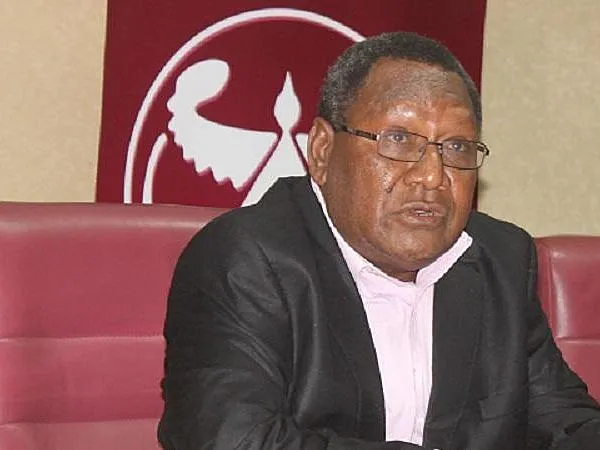
With the increased costs of minerals, Bank of PNG Governor Loi Bakani said that exporters should take advantage of these favourable costs at a time when the pandemic is still ravaging the country.
“Mineral prices increased, with those for copper and nickel driven by a pick-up in growth in China,” he said. “Precious metal increased by 16.5 per cent, with the price of gold reflecting its role as a safe-haven investment during the Covid-19 pandemic and also due to global monetary easing.”
In the latest report published by the World Bank last September, costs for non-energy and energy, and precious metals have risen.
“Energy prices rose by 33.9 per cent, driven by cuts in crude oil production by members of the organisation of the petroleum exporting countries (Opec),” he said. “Non-energy prices increased by 9.6 per cent, with higher prices for most agricultural commodities, including cocoa, coffee, tea and palm oil. Given these unprecedented times, PNG exporters should capitalise on these favourable international prices. The country’s foreign exchange reserves are K9.31 billion as of Dec 24, 2020, an increase from K7.13 billion at the end of September. The increase was a reflection of loans and dividend payments, such as loans from the Australian government (US$100 million), Asian Development Bank (US$500 million) and dividend payments to the Government from Ok Tedi (US$113 million).”
Against all major currencies, the daily kina exchange rate depreciated as of December 17, 2020.
“The kina depreciated against the British pound sterling by 2.4 per cent, the euro by 2.2 per cent, and both Australian dollar and Japanese yen by 2 per cent,” Bakani said. “Against the US dollar, it depreciated by 0.6 per cent.”
While many new manufacturing entrants haven't met the required industry standards which can be a setback for the industry, Manufacturers Council of PNG chief executive officer Chey Scovell believed that the industry may recover this year.
According to him, many entrants lack The Hazard Analysis and Critical Control Points (HACCP) equivalents which is a food safety system, designed to control the production processes.
He added that unlike now, five or six years ago, 99 per cent of all manufacturers in PNG were making products safe.
“The functions of approvals and licensing are the responsibility of provincial and local level governments,” he said. “But it’s clear that there is a lack of competence and likely an abundance of inducement going on. Certainly, we have put our hands up to do it in partnership with the government, but to date, it’s fallen on deaf ears.”
He also noted that the Department of Health has failed to maintain the National Food Sanitation Council board.
“It’s unacceptable and this needs to be the starting point.,” he said. “The lack of governance needs to be addressed, and it requires merit-based not political appointees without the necessary knowledge and experience.”
Compared with the revenue of K2.86 billion generated yearly, state-owned entities (SOEs) are valued at around K10 billion.
According to Isikeli Taureka, the managing director of Kumul Consolidated Holdings Ltd, this amount shows that SOEs are not doing well in coming up with revenues.
“Our value of the portfolio is K4.4 billion and in terms of dividends last year we received about K95.8 million,” Taureka said. “K2.86 billion is the actual revenue.”
Among the major revenue earners were the following: PNG Power, Telikom, Air Niugini, and Ports PNG, although only Air Niugini was badly affected by the pandemic and the others were not.
To bring capital into the business, PNG Power Limited, along with Kumul Consolidated Holdings and other shareholders, are reviewing all their options.
Managing director Flagon Bekker said that this will be based on the cost of capital and getting the best deals available.
“It will allow the broadening and deepening of the PNG financial sector, showing that it is becoming more sophisticated and more in line with how other regional countries’ developed their sectors,” he said.
In the next few months, Mr Bekker said they will improve the dispatch of the Dirio power plant.
“A normal practice in power station development to manage disruption to the Grid and in line with customer connection rate, substations is critical. In the interim we do not have a shortage of power for the POM Grid,” he said. “Substations are the nodes that allow customers to connect to power sources. They are integral and critical to the future of economic growth in Port Moresby as they are across all our cities, towns and villages. Investing in infrastructure is made against the background of a balanced business case in the context of our commitment to Vision 2030. We will build out substations in the most optimal order, aligned with our commitments to the connection of customers.”
Meanwhile, Niupower chief executive officer Michael Uiari said they are also in talks with PPL management on ways where capital can be realized to restore the reliability for customers.
“At least 2 of the IPPs in Port Moresby along with our local financial institutions are key to realising this capital for PPL, without further burdening our Government,” he said. “There is broad alignment amongst these stakeholders on this objective. We hope to progress discussions in February, mindful that PPL’s needs are immediate.”
Former KCH chairman Peter Aitsi said that it is also important that they should pay for their long-outstanding bills, and to put in much-needed funds back into PPL. This will be used for upgrading and repair of the infrastructure.
“The appointment of a new CEO by the Board of PNG Power is a positive step forward and will require the ongoing support of all stakeholders in order for us to see long term change and improvements in services to customers,” he said.
The recent power outages have impacted trade and increased the cost of doing business, especially with refuelling and servicing generators.
This was according to Brian Bell group chief executive officer Cameron Mackellar, who added that his company had strong back-up plans across the country despite the frequent power outages - which was not good, he said
“We spent more than K300,000 in generator fuel across the group in 2020 and you only need a generator when you don’t have power,” he said. “This was nearly twice as much as we spent in 2019. Servicing and maintaining or replacing generators is an added cost as well. While we know this is just part of the fabric of being in business in PNG these days, there is an expectation it should not be getting worse. Particularly, given the agreed electrification project by 2030, the Government has committed.”
Meanwhile, Paradise Foods Ltd chief executive officer James Rice said, “However, it seems we are a long way from that in 2021.” He added that the power outages haven’t impacted their operations so far because they have generators - which are, however, increasing costs. He added that the outages have affected their production equipment which resulted in damaged products and repairs, costing the company thousands of kina a month.
Meanwhile, the Port Moresby Chamber of Commerce and Industry (POMCCI) revealed that the outages were also affecting their operations.
According to President Rio Fiocco, some of their equipment and plant - which were expensive - were destroyed as a result of the outages.
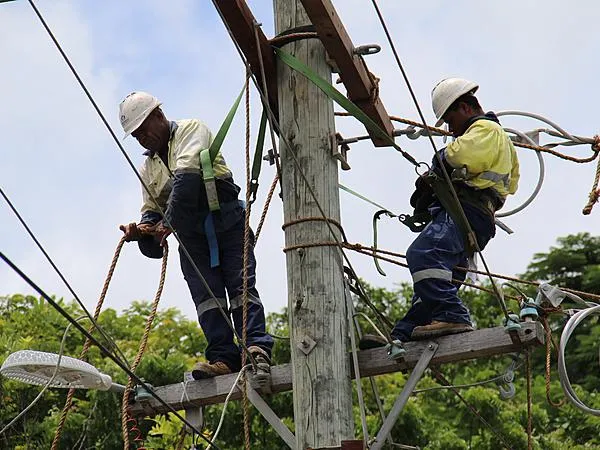
PNG Power Ltd said that the power interruption was caused by a failure in the Waigani substation distribution transformer, which according to managing director Flagon Bekker, was perhaps caused by excessive tap-changing cycles.
The technical team, he said, was working to have this fixed.
Furthermore, Bekker said that PNG Power was also working with donor agencies to enhance the Port Moresby distribution and transmission system this year that would improve the power in the next five years.
The COVID 19 pandemic has not only impacted local and international travel, but has grave impacts on livelihood, unemployment, and international labour mobility.
A new World Bank report, Pacific Island Countries in the era of COVID 19: Macroeconomic impacts and job prospects, shows how the Pacific may take advantage of a changing environment, as well as other opportunities - and at the same time, details the extent of these job losses.
The report also talks about how seven Pacific countries (Samoa, Fiji, Solomon Islands, Vanuatu, Kiribati, PNG, and Tonga) are having a difficult time coping, especially those that rely heavily on tourism. Vanuatu, for instance, has dropped an estimated 64 per cent in tourism-related employment and has tripled the unemployment claims in Fiji last June 2020. The job advertisements of PNG have also dropped by 76 per cent between February and May 2020.
“The changes that we have seen in labour markets and employment across the Pacific are profound and are hitting the most vulnerable hardest - but importantly they are also leading families who would have been previously secure into vulnerable positions, especially workers in the tourism sector,” said Yasser El-Gammal, Practice Manager, Social Protection and Jobs, the World Bank.
The report also includes ways on how to mitigate these economic and unemployment challenges. Among them are prioritizing and retaining skill development of workers in affected areas so they can move to other industries that have the same skill sets; promoting digital literacy skills, and discovering new employment opportunities.
“Ultimately, workers from the Pacific will remain in demand in Australia, New Zealand, and elsewhere for a long time to come,” said report author Matthew Dornan, Senior Economist at the World Bank. “The various Pacific labour mobility schemes that are focused on employment in rural and regional areas are not only crucial to livelihoods and employment in the Pacific, but beneficial for employers and businesses in Australia and New Zealand.”
The report also suggests the need for workers for re-skilling - which includes subsidizing their reskilling, support for apprenticeship schemes, temporary wages for the unemployed, as well as the expansion of international labour mobility opportunities. Resilient countries can also work through labour policies.
“Labour mobility requires close cooperation between countries,” said co-author Soonhwa Yi, Senior Economist at the World Bank. “While policy improvements from Pacific governments could help expand the overseas employment opportunities available to Pacific Islanders, receiving countries also need to ensure their migration and working visa policies support future demand for increased labour mobility.”
While the report highlights the need for the government to respond to these livelihood and unemployment impacts, it also asks that the government should consider supporting businesses too, like in PNG and Tonga. Examples of this are in Solomon Islands, Samoa, and PNG where cash flow has been safeguarded through tax and import duty relief; and looking at other opportunities for social assistance and direct cash transfers to sensitive populations.
“The COVID-19 pandemic also highlights the urgency for Pacific countries to expand IT-related infrastructure and increase their engagement in the digital economy,” said Soonhwa Yi. “This would provide opportunities for workers in the digital economy and better position Pacific countries to export digital services across borders.”
The Independent Consumer and Competition Commission (ICCC) has recently announced that the Paradise Company Limited can now acquire shares in Hugo Canning Company Limited.
“This essentially means that, in its considerations of likely negative effects this acquisition may have on competition, the ICCC did not find any serious concerns,” stated the consumer watchdog. “On 04th December 2020, Paradise Co lodged a clearance application seeking approval from the ICCC to proceed with acquiring Hugo. Paradise Co is 100 per cent owned by local companies; namely Nambawan Super Limited and Comrade Trustees Limited, having 91 per cent and 9 per cent interest respectively. Paradise Co is in the food manufacturing business but more specifically manufactures biscuits, chocolates and beverages (bottled water). Hugo, on the other hand, manufactures and distributes imported canned protein. It manufactures the famous Ox & Palm corned beef and the exclusive local importer and distributor of Ocean Blue branded tinned fish, besides other products. Since it is owned by HJ. Heinz Company Australia Limited (“Heinz”), it also does the exclusive distribution of Heinz’s products in PNG.”
According to ICCC Commissioner and Chief Executive Officer Paulus Ain, the proposed acquisition needs the approval of ICCC as the transaction value was greater than K50 million, leading to Paradise Co with more than 50 per cent market share.
“For any clearance applications, the ICCC is required to assess competition effects associated with the proposed acquisition,” Commissioner Ain clarified. “If the ICCC is not satisfied that a proposed acquisition will not have, and will not be likely to have, the effect of substantially lessening of competition in a market, the ICCC declines to give clearance for that proposed acquisition. Conversely, the ICCC gives clearance if it is satisfied that a proposed acquisition will not have, and will not be likely to have, the effect of substantially lessening competition in the relevant market.”
Commissioner Ain added they were satisfied with the proposed acquisition, and would not likely have the impact of significant lessening competition in identified markets. Last December 31, 2020, ICCC gave clearance for this proposed acquisition to move forward.
According to Bank South Pacific group chief executive officer Robin Fleming, the key priority this year is to have a new banking system in Papua New Guinea and Vanuatu.
He also added that they will be introducing a new payments platform so that clients can access payments through the internet. Another is to have an active promotion of school fee payments through text messaging.
“In 2021, the key priority areas will be our new banking system in Vanuatu initially, and then PNG by the end of the year,” he said. “BSP’s new mobile merchant payment channel is also being trialled which will allow customers registered with mobile banking to pay a merchant registered with mobile banking. BSP has a number of great digital products and general manager (retail) Daniel Faunt and our retail team will place a lot of emphasis on informing our customers of the benefits of our digital products and channels, promoting the use of these channels, making the process of registering for mobile banking and access to replacement cards for our customers less difficult and improving the quality and consistency of our service.”
He added that the current pandemic has indeed brought challenges to the banking platform.
“The travel restrictions that were introduced by countries worldwide and countries BSP operates, had financial implications for many of our corporate and retail customers and BSP was able to respond with support packages of varying terms and periods for those customers who were affected,” he said.
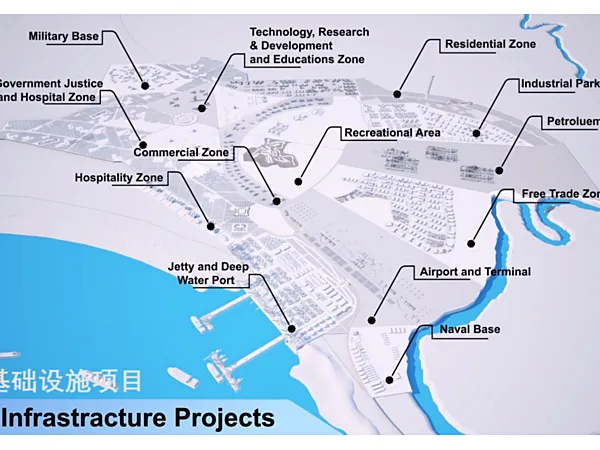
For the next five years, the Ihu Special Economic Zone (ISEZ) project will receive K100 million, as allocated by the National Executive Council, said MP Soroi Eoe.
Meanwhile, discussions are going on between the government departments and the project development office about partnership choices.
“Kumul Petroleum Holdings Ltd, PNG Ports Corporation, Water PNG, National Airports Corporation and PNG Power have all expressed interest to develop the project,” he said. “Discussions are also underway with super funds. Standard project partnership memorandum of understanding will be signed to enable these institutions and companies to provide technical, commercial and management assistance to develop the project.”
The location of the site is accessible to resources such as water, timber, fish, gas, oil, land for agriculture, air and sea transport. The site also has access to international routes to Indonesia, New Zealand, and Australia, and around Asia.
“The site selected geographically starts in the east from Bluff Point to the mouth of the Purari in the west along the seafront,” Eoe said. “From Bluff Point, it goes inland towards the headwaters of Vailala and to the Purari and Wabo area. The geographically delimited area also includes surface and underwater.”
Because of this new development, the ISEZ can generate between K10 billion and K12 billion a year and is also expected to create small-to-medium enterprises with cottage service industries in the area. In addition, the site is expected to create 12,000 jobs and another 25,000 jobs indirectly.
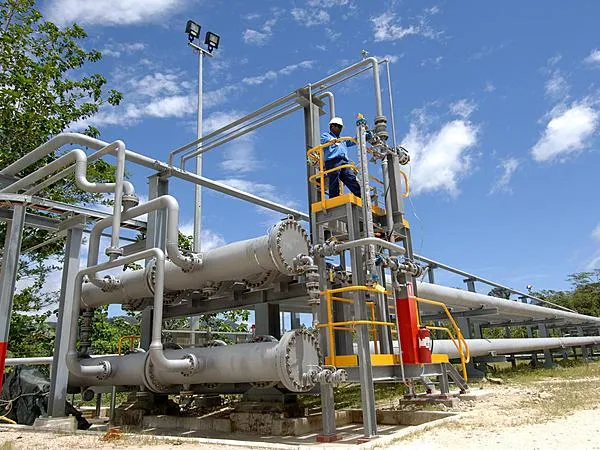
“Kikori is also presumed to be the country’s economic frontier for the future, with its abundant petroleum resources, fisheries, agriculture, forest products such as timber, potential iron sands and coal mining and many others,” Eoe said. “About 17.8 trillion cubic feet (TCF) of discovered proven economical gas reserves are in Kikori, which represent 80 per cent of the country’s total gas reserves of more than 19 TCF. My district currently hosts the Kutubu oil export pipeline and terminal, the PNG LNG project pipeline, and will soon host the country’s second LNG project, the Papua LNG project, and Pasca gas condensate project. These massive projects will no doubt make significant contributions to the country’s economic growth, increase the gross domestic product, create employment, boost growth in the small-medium enterprise (SME) sector, meet local and national content obligations, and improve livelihood through infrastructure development.
He added, “While I applaud the Government’s policy initiatives to deliver infrastructure in the rural areas, for the benefit of the population, Kikori has, over the years, remained in dire need of basic infrastructure development to service more than 51,000 people. Basic services for the people have been denied mainly because there is no road linking it to mainland Kerema, no wharves and jetties, lack of proper district towns, no serviceable airstrips, lack of clean water and power supply. The unavailability of these basic infrastructures had affected the district’s education system, health, SME activities, economic growth and human resource development. On the back of these setbacks over many years, the new district administration under my leadership has pursued forward planning and developed programmes for infrastructure development. The development of an integrated infrastructure development plan – the Kikori critical capital infrastructure project (CCIP) programme – is an achievable plan.”
“The CCIP includes six infrastructure projects including Deep water multi-user strategic port facility; New airport; New industrial urban town development; Water supply and reticulation system; Power generation and reticulation system; and, Ring road development connecting all CCIP facilities in Kikori and linking Kerema,” he said, “The CCIP programme facilities will become the backbone infrastructure facilities to host the five major impact resource development projects. They are the Papua LNG project development, Offshore Pasca gas development, Western LNG gas development, Gulf gas/industrial hub development and the Gulf free trade zone development. These six CCIPs are economic projects, strategic and multi-user facilities, strategically positioned to accelerate the delivery of government services as well as the development of the five IRDPs, once implemented. The CCIP facilities will be important in enabling the development of the billion-dollar Papua LNG project, Pasca gas project and other government projects such as the Gulf Industrial Hub project and Gulf free trade zone project. Such magnitude of development in Kikori will have a major impact on the lives of the people. The infrastructure will provide accessibility to basic government services for my people. Hence, the proposed development will also provide accessibility to commercial project operators such as Total SA E&P Ltd, Twinza Oil, Oil Search Ltd, ExxonMobil, logging companies and fishing companies.”
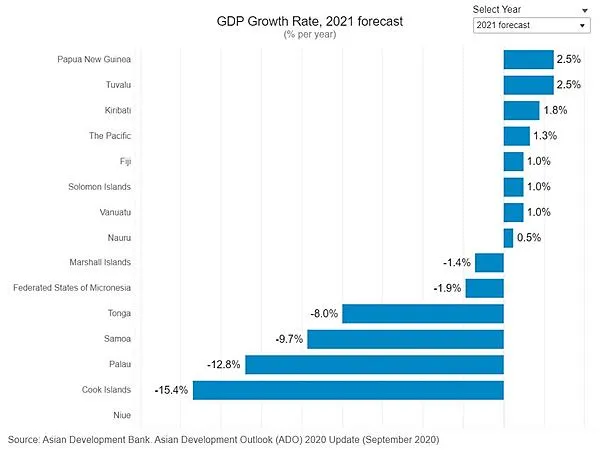
According to the Asian Development Bank as indicated by its latest “Pacific Economic Monitor”, PNG will have the equal highest real economic growth rate in the Pacific this year.
“The ADB statistics highlight once again the extraordinarily bad economic impact the COVID-19 pandemic is having around the globe, producing the most challenging economic times in a century. In this global context, the PNG economy is doing so much better than most,” said Treasurer Ian Ling-Stuckey. “PNG’s forecast real growth rate of 2.5 per cent in 2021 is equal highest of the thirteen countries covered by the ADB report, with Tuvalu having a similar estimate. On average, across the 12 other Pacific countries (Fiji, Solomon Islands, Tuvalu, Vanuatu, Cook Islands, FSM, Kiribati, Palau, Nauru, Tonga, Marshall Islands, Samoa), the country average real growth rate is minus 3.4 per cent – so PNG’s 2021 real growth rate of 2.5 per cent is expected to be 5.9 per cent better. The impacts of the COVID-19 pandemic have been very severe on the Pacific. Looking backwards to last year, in 2020 the average real growth rate was minus 5.8 per cent. PNG was less severely affected, with a minus 2.9 per cent estimate.”
He added, “Across the rest of the Pacific, there is an expected average economic improvement of 2.4 per cent (from minus 5.8 per cent to minus 3.4 per cent). PNG’s improvement is expected to be more than twice as good as the Pacific average, with a lift of 5.4 per cent in growth prospects. This will provide improved opportunities for PNG’s businesses and families that have been doing it tough because of the global COVID-19 pandemic. This information from the ADB, backed by similar estimates from other independent international organisations, lifts my confidence. Under the Marape-Basil government, 2021 will be a year where PNG emerges from the global COVID-19 pandemic crisis to a stronger and better economy and budget,” stated Treasurer Ling-Stuckey.”
Like many other businesses, those in New Ireland will need more time to recover due to the COVID pandemic.
According to New Ireland Chamber of Commerce and Industry President Nolis Thomas, the recovery would be slow.
“Businesses will not recover to what it was prior to the Covid-19 and the restrictions,” he said. “We do not anticipate it (business) to recover to what it was in the earlier part of the year last year. We will have some recovery this year but not what it was.”
Thomas said that the economic stimulus package released by the government would only cover some factors - but not all. He added that robberies had started happening and businesses who plan to raise the cost of products and services might impact the people. But this was what businesses might need to do: increase the costs to recover the price of robberies.
“Stealing started happening frequently around three years ago and has been continuing,” he said.
He added that the chamber has condemned these unscrupulous activities.
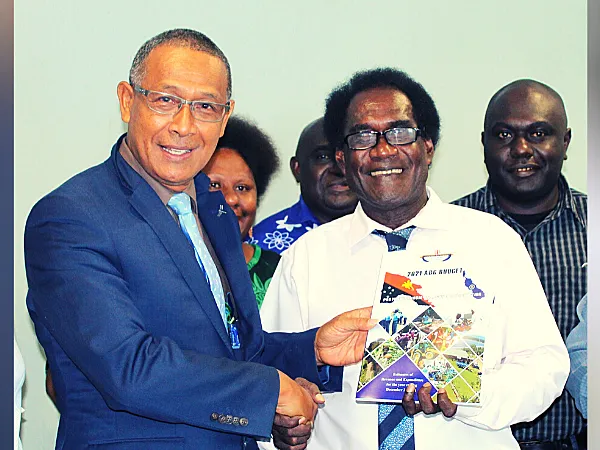
Following the submission of the Autonomous Bougainville Government (ABG) 2021 budget, Treasurer Ian Ling-Stuckey delivered words of appreciation of a “concise and professional” ABG budget.
He said, “I was pleased to receive the 2021 Budget Submission from the Autonomous Bougainville Government for an appropriation of K390,489,916. The budget was delivered on behalf of the ABG President, Ishmael Toroama, by the ABG Minister for Finance and Treasury, Mathias Roman Salas. I was very impressed by a professional and concise overview of the budget presented by the ABG team and enjoyed discussing some key budget issues. The Budget highlighted a balanced approach between operational expenditure (K158 million) and the capital development budget (K159 million). One half of the operational expenditure was spent on supporting teachers’ salaries and leave fares, showing the importance given to education. With my electorate also based around an island economy, I could sympathise with many of the issues raised, such as the difficulties of remoteness, water transport and safety.
He continued, “The 2021 ABG Budget highlighted the development needs of ABG and actions being taken, drawing on both internal revenues from ABG (7 per cent) as well as National Government grants (81.5 per cent) with the remainder from cash balances. Looking forward, as it is for the national government, there is the vital issue of how we can raise additional local revenues to support our development needs.”
The Treasurer invited the ABG team to meet with representatives at the Treasury to know more about the challenges of working in New Zealand and Australia. Some of the discussions covered were funding shortfalls from 2020, more technical budgeting issues, and funding for three road projects.
“It was a productive and useful discussion, the first of many planned in 2021 between the National Government and the ABG,” he noted.
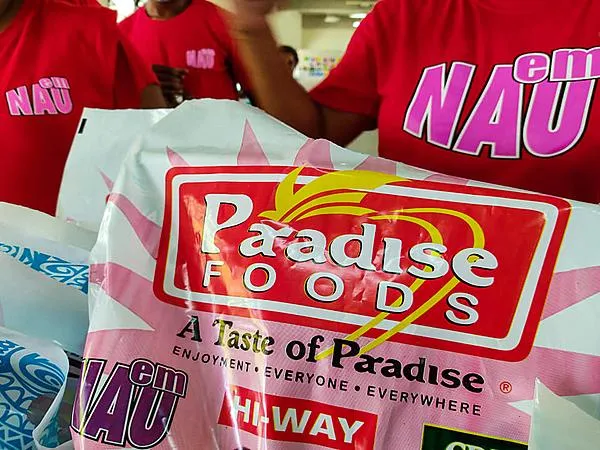
In expanding its business operations, Paradise Foods Ltd. will invest K115 million this year, according to chief executive officer James Rice.
He said that the firm is also introducing new products this year.
“I believe the economy in PNG will remain the same unless some large projects that bring investment and jobs are approved,” he said. “The economy will be tough for everyday Papua New Guineans, so we will not raise our prices on any of our products except for chocolate, we still expect our business to grow but not because the economy grows.”
He added, “We will grow our business by more hard work. The current economic difficulties for PNG is only temporary. Our outlook for the long-term growth of PNG’s economy is still optimistic. The Covid-19 pandemic gave us a pothole in a rising road. Our group will still be investing K115 million in 2021 on expansion and improvements, and we will be launching new products into the market. We still have the potential to grow and so does the country.”
The firm also plans on building a chocolate factory in Lae for its Queen Emma brand. This is expected to draw 75 jobs and support more cocoa farmers - which would also give them the opportunity for production and for growth to begin supplying. The new factory is expected to be 20 times bigger than the factory in Port Moresby, which has 10 tonnes a month.
“We need more farmers to supply our growth,” he said. “We want our chocolate business to be 20 times bigger,” he said. “My passion is I like to create jobs,” he said.
In response to one of the addresses of Prime Minister James Marape outlining key economic indicators expected in 2021, President of the Port Moresby Chamber of Commerce and Industry, Rio Fiocco said it would be hard for the government to come up with a K2 billion deficit as said by the Treasurer.
He said this in particular to some businesses which have made a loss and some which have closed down permanently.
“Businesses have had a very tough year last year and so one would expect that the corporate tax revenue will be down further to last year,” he said. “And it will also be a challenge for the government to raise the K2 billion deficit that has been projected by the Treasurer. They are hoping to raise that domestically, but if that’s the case the problem there is if the government borrows or if (and) when the government thinks to raise that through treasury bills or borrowing from the private banks then that comes down to private sector which could have an impact on pushing up the interest rate. So it’s going to be a challenging year for all.”
He also added that the tax accountancy firms are having dialogues on the changes made in the budget for tax this 2021. He said that more consultations should be made.
“So our members are concerned,” he said. “Our chamber along with the other chambers in the PNG chamber would like to have more dialogue with the treasurer and his officials to discuss what tax changes are going to be done and what could be done to assist what the private sector is wanting.”
In his 2021 economic outlook, PNG Institute of National Affairs Director Paul Barker said that there is a need to review and update fiscal arrangements in the resource sector. He said that the requirements involved constructive dialogue with project investors and operators.
“Review and updates also for individual projects when their licenses fell due for review or renewal, but this needed to be conducted in an open and orderly manner, avoiding undue disruption,” he said. “Constructive dialogue with the State using sound international reviews and evidence, and not being pushed about or spoon-fed. However, the art of making a good deal requires a readiness for compromise, unless there are very good grounds for not doing so, such as if the project is of marginal benefit, or can be advantageously deferred or rescheduled, rather than having multiple new projects simultaneously. Clearly, the costs or risks (including environmental) for some projects may be excessive and the Government fully justified in rejecting or deferring them, at least until better knowledge or technology is available.”
Barker said that in the past two years, the stand of the government was “unduly rigid over some prospective resource projects, seen as potentially providing a substantial economic stimulus impact, but most notably with the Porgera mine”.
“Unlike other projects, the Porgera mine was a long-operating mine in a remote part of the Highlands, in which the State had once held a significant equity, which was subsequently sold, except the province’s small but valuable share, together with the landowners’,” he said. “The investors were ready to improve the State’s and local equity and other benefits, and robust negotiations were certainly justified, but unfortunately the State’s demand seemed excessive and unduly rigid, and failed to appreciate the extent of economic and social benefits and revenue provided by the mine.”
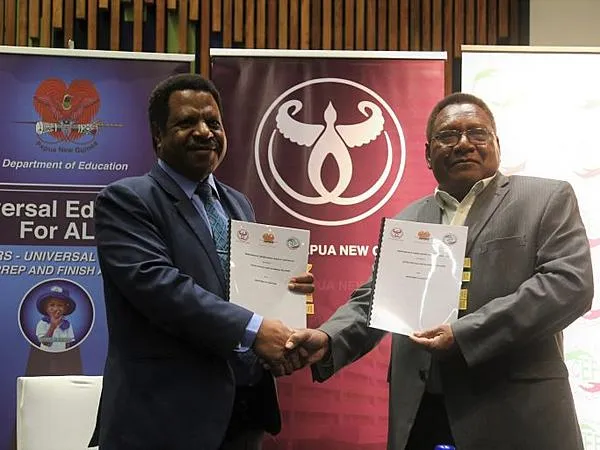
In collaborating on a National Financial Education Curriculum for preparatory level up to Grade 12, the Bank of Papua New Guinea has signed a Memorandum of Understanding with the Centre for Excellence in Financial Inclusion (CEFI) and the Department of Education.
Loi M. Bakani, CMG, the bank’s governor, signed the agreement with Dr. U Uke Kombra, the Department of Education Secretary to promote Financial Inclusion partnership under the theme of “Financial Education for a Better Future.”
This initiative is to educate school children about income generation, money management, budgeting, savings, and investment.
Governor Bakani said that the curriculum shows financial competency and social responsibility.
“BPNG has invested in technological innovations to expand access to financial products and services. These initiatives include the Regulatory Sandbox, Retail Electronic Payments System and Digital Identification Project which are key drivers of the financial products and services. Building Financial Education into our education curriculum will complement these innovations and allow our young generation to acquire knowledge and skills to build responsible financial behaviour and competency.” Mr Bakani said.
For Department of Education Secretary Dr Uke Kombra, “Jointly DoE and CEFI will ensure teachers are given specialized in-service financial education training and will be certified accordingly."
He added, “We will ensure necessary arrangements are in place for project pre-planning and implementation in order to achieve an effective roll-out of the financial education curriculum. The project team consisting of curriculum development specialist, CEFI and BPNG will provide technical oversight throughout the development, assessment, and delivery of the Curriculum.”
The project covers the sequence and content scope of the financial education school curriculum. This will be developed into their Student Activity Books and Teacher Resource Manuals from Prep to Grade 12 and for each section of development.
Before rolling this out to the whole country, this curriculum will first be tested in 48 schools in 2021 and 2022.
Follow on LinkedIn:
PNG Business News
Be the "First" to get our exclusive Digital Magazine & Weekly Newsletter.