The Internal Revenue Commission has signed a Memorandum of Understanding with the Gulf Province in Port Moresby.
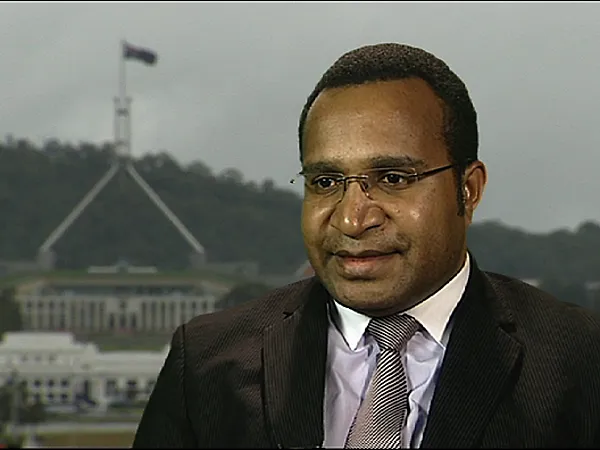
IRC Commissioner-General Sam Koim said that they have also forged similar partnerships with other provinces except for Hela, Southern Highlands, and Gulf and that this partnership is very timely because they will also be forming relationships with others.
He said that these are the places where businesses are taking place.
“With the Papua LNG project signing, Pasca and other significant projects taking shape.,” he said. “These projects will bring a lot of revenue to the province and it is important for the tax office to be close where business activities are happening so we can collect the taxes.”
This is the reason why they are going forward with these partnerships, he said.
“We are also undertaking a project where we are identifying where the businesses are operating and where the money is coming from so we will be degrouping a lot of businesses who file from the headquarters in Port Moresby.,” he said.“So we will be making sure that we collect the goods and services taxes (GST) at the point of sale so that whatever the 60 per cent is attributed to that point of sale and we can give that per cent back to the province and help in generating that money.”
Meanwhile, Gulf Governor Chris Haiveta said that they have embraced this partnership as they both can help each other with revenue programs, among other things. “We will province an office space and housing for the staff to take this partnership forward and work with the tax office to deliver the much-needed services moving forward,” he said.
The Global Sustainable Seafood Initiative (GSSI) has welcomed the country’s Fishing Industry Association (FIA) as a funding partner.
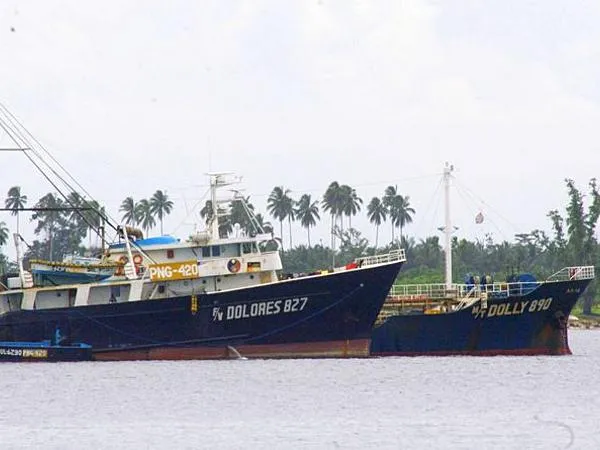
According to Fishing Industry Association (PNG) president and chairman Sylvester Pokajam, this partnership was an achievement for them to improve and to raise their commitment to the conservation of the ecosystem and to protect people who are working in the industry.
He said that to do this, several approaches such as the marine litter and fishing gear management practices and labour onboard improvement should be implemented.
“This partnership is also a great opportunity to collaborate with global stakeholders to ensure sustainability, transparency and traceability in the seafood supply chain,” he said.
Established in 1991, the FIA provides a voice for the fishing industry and encourages promotion in the country.
Papua New Guinea has lost a great man.
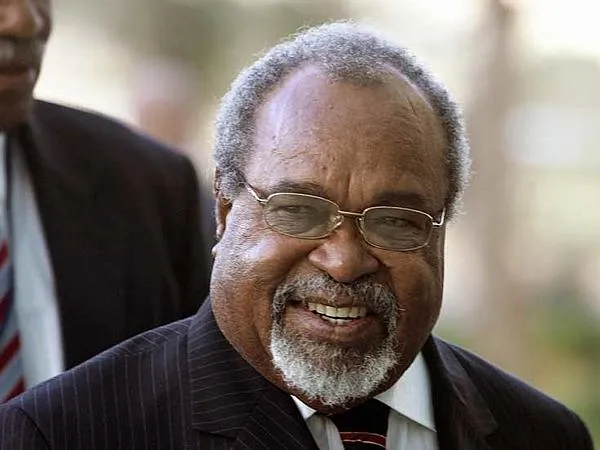
Grand Chief Sir Michael Thomas Somare, the man who led the country to independence in September 1975, died of pancreatic cancer at the Pacific International Hospital in the country’s capital. He was 84 years old.
The national government has urged all flags to lower at half-mast to honour the great man.
In a statement, Somare’s family announced, “Sir Michael was only diagnosed with a late stage of Pancreatic Cancer in early February and was admitted to hospital on Friday 19 February 2021. Sadly, pancreatic cancer is one of the most aggressive cancers that are rarely detected early. We as a family had only two weeks to look for possible treatments.”
Born on April 9, 1936, in Rabaul, Sir Michael was an important politician leading PNG into independence on September 16, 1975. His political career ran from 1968 to 2017 and has been the longest-serving prime minister for 17 years. He has been a minister of foreign affairs, governor of East Sepik, and the leader of the opposition.
The family said, “As a man of great faith, we are pleased that Sir Michael was able to be given his last rites and Anointing by Cardinal Ribat. In our presence, Sir Michael opened his eyes to acknowledge the blessing by his Emminence before passing away peacefully. We take this opportunity to thank the Cardinal for making himself available so quickly.”
The family added that in due time, he will be laid to rest in the East Sepik province.
“We, his children know that it is the wish of both our parents to be laid to rest together on Kreer Heights in Wewak,” the family said. “We thank everyone who in those few days had worked so hard to save Sir Michael’s life be it through a Medivac, healthcare itself or providing transport. We also thank everyone who wrote in to express their support and offer their prayers to our father and our family. We are humbled.”
The major cause of the lack of foreign exchange is trade imbalance.
According to Acting Chief Trade Officer Richard Yakam, import service are costing the economy about K5 billion and that the constant increase and leakage in the economy is causing an imbalance in trade.
“This leakage in the economy has resulted in the forex issue that means more currencies are going out and that has impacted the Kina value,” he said. “The trade-in services particularly importing services such as the hiring of engineers in the mining areas, sub-contractors engagements in project sites, and recruiting of foreign professionals, and seeking medical treatment overseas are all added that is costing the country’s economy running into billions.”
Import services are also increasing, he said. The challenges in these sectors are therefore huge.
“For manufacturing sector across the board, I can’t give you a figure, but from the import of services like those who provide support services in the extractive sector is constantly increasing and is running into K5-K6 billion,” he said. “The cost of manufacturing itself is very high as well, mainly because of utility costs that hinder the growth and expansion in the economy like the freight costs, water, electricity, internet costs and infrastructure.”
The sad part, he said, is that the SMEs in the manufacturing sectors face challenges in meeting international standards for consumption reasons.
“This is one of the challenges that are faced by some of our local manufacturers who are not up to standard and it continues to be an impediment in the growth and expansion of the industry,” he said. “In the instances where the country is going for a third lockdown, while we are putting in restrictions we are killing the economy. Otherwise, the government should implement the COVID-19 Act and allow the business to continue.”
In the last two years, PNG exports to China Have risen over K13 billion.
According to Deputy Prime Minister Sam Basil, “It is public knowledge that PNG exports to China have grown from K11.829 billion in 2018 to K13.185 billion in 2020.”
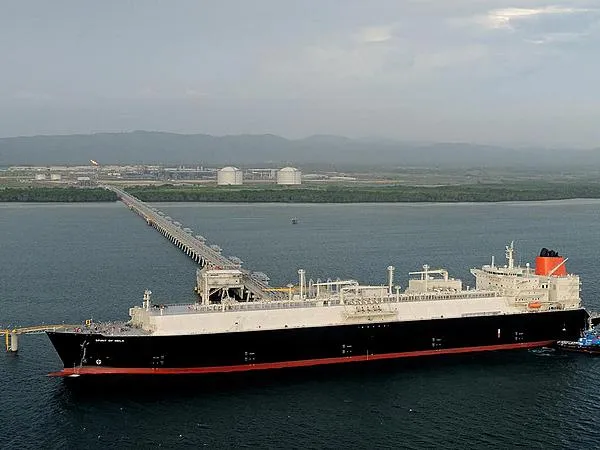
He added that the dominant exports were from the liquefied natural gas (LNG) industry.
“The three leading recipients of our exports based on 2018 figures are China, Japan and Australia,” he said. “In comparison, 50 per cent of imports were from Australia followed by Singapore, China and the United States.”
He added that there was potential with other imports and exports, guaranteeing the Chinese Ambassador Xue Bing that the focus of PNG in the relationship between the two countries was because of economic matters, commerce and mutually beneficial trade.
“As a primary producing country with raw materials, my country is aware of the huge market in China for raw products,” he said. “I understand we will be discussing the gas component sometime next week, with the upcoming Papua LNG, but our country’s interest – and I believe yours – extends beyond energy to mining, agriculture, forestry, fishery and other fields of technology. We also note China’s growing involvement in civil and road construction as well as in the electronic and computer sectors.”
In spite of the growing competition between China and the United States, Basil said PNG would remain a neutral friend to China and all other industry players.
“The tensions on many fronts are churning waves and tossing many countries of the world including us in the Pacific like driftwood,” he said. “PNG stands neutral and remains friends to all and enemies to none.”
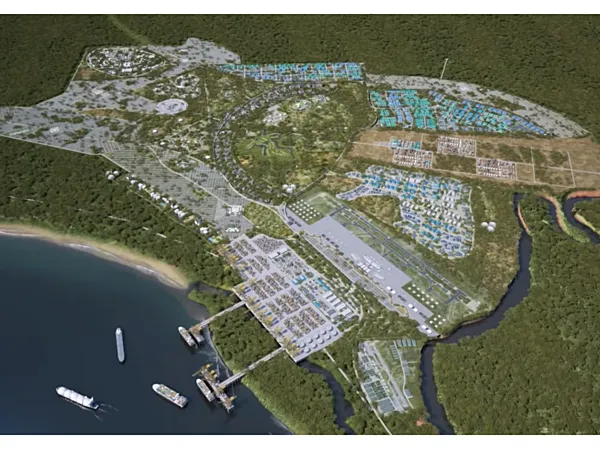
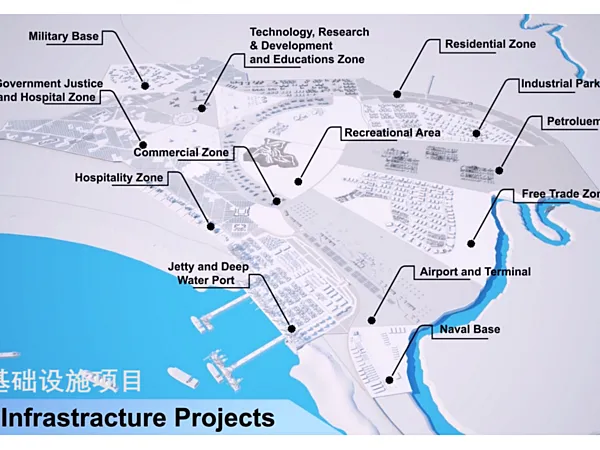
The initiative of the Ihu special economic zone project will promote and boost international trade among countries trading with Papua New Guinea.
This was revealed by Acting Chief Trade Officer Richard Yakam, who said that this project is very significant in promoting export and import between countries and increasing trade relations.
He added that with the support of the government, this project will soon be getting traction - in spite of not being implemented yet.
“I have confidence you can deliver the project with the support and I commended your team for taking this approach,” he said. “From trade perspective, we will not contribute anything to the district or infrastructure development aspect of it but towards the end of it that’s when the trade comes in.”
He added, “As you know in PNG, the cost of doing business is very high and we are encouraging downstream processing and exports as well. We need to go to special economic zones, where we can minimise the cost and export more and that’s where we are looking at from trade as much as possible.”
He said this is also part of attracting investments. “Its part of implementing our free trade policy thus, will be collaborating and work together going forward,” he said.
With the signing of the HR recruitment contract, the $US6 billion (K21 billion) Ihu Special Economic project spearheaded by the Kikori district development authority has moved into its second phase of development.
Minister for Foreign Affairs and Kikori MP, Soroi Eoe said the signing is significant in that it enables the National Executive Council decision No.269/2020 to transform this project from a Kikori DDA funded project to a National Government project from this year onwards.
The National Executive Council has approved the Ihu Special Economic Zone (ISEZ) project with Public Investment Program funding of K100 million for development for the next five years. This program is going to be implemented through GoPNG PIP funding, as approved in the 2021 national budget.
ISEZ project director Peter KenGemar said that the price of such a project is US$6 billion - which is about K21 billion over 15 years. He said that in the first five years, US$2 billion may be used.
“Right now is to get the social licensing done which is to do with land mobilisation with the landowners and the environmental licensing done which are two critical issues that we have to overcome. We are using the current funding to make sure we get those work programs out of the way,” he said. “We have to build the infrastructure first. Once we deliver the infrastructure then the industries should come in, but not to say that other smaller industries already interested can start its SME spaces that is why we are putting a little bit of funding into this space.”
He also noted that they are looking for other ways to fund the project. “The government gave us K2m last year and another K10m will be given this year,” he said.
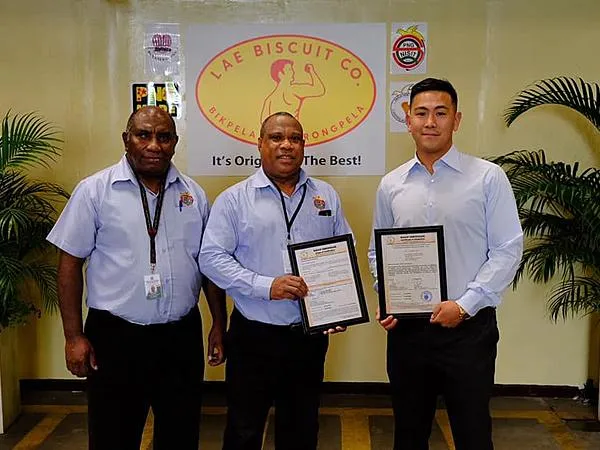
The Lae Biscuit Company (LBC) has met internationally recognised and approved food safety and control measures.
One of 10 certified food manufacturing companies in Papua New Guinea, the LBC has been awarded the Hazard Analysis Critical Control Point (HACCP) certification by the Papua New Guinea Certification Services through the National Institute of Standards and Industrial Technology (NISIT) in PNG.
According to Lae Biscuit Company Group general manager John Chow, this is a milestone achievement. He expressed his gratitude to the Lae Biscuit Company HACCP team for working on this achievement.
Meanwhile, Lae Biscuit Company general manager Edwin Wong said that the firm takes pride in this achievement. Also the team leader of the company’s HACCP team, he said that the HACCP intensifies quality production and productivity by specifically identifying hazard and control points and implementing proper control.
For Lae Biscuit’s HACCP coordinator, Crystal Sundae, the achievement took them three years. She added with the October 2017 opening of the state-of-the-art Lae Biscuit Company factory, the HACCP certification assures the progressive processing of the firm’s manufacturing safety management and systems.
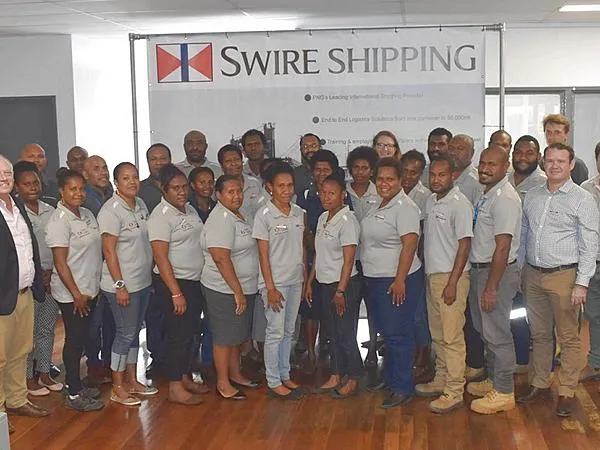
In spite of the effects of the pandemic, Swire Shippes continues to thrive as it unveiled its new office in Lae.
In attendance during the opening were Swire Shipping country manager Alistair Skingley, partners, customers, employees, and members of the business community.
According to Skingley, this new office signals the successes of Swire Shipping, which has been trading in the country since 1942.
“Lae port is one of PNG’s busiest ports and our vessels make regular port calls here. We want to be situated nearby so that we can be closer to our partners and better serve our customers and the community,” he said. On his staff, he said, “I am proud of my team here and we enjoy engaging with our customers and we are here to help them in what they need to do and make sure we do that.”
For Branch manager Isabel Maguire, the opening of the office is just timely not only for customers but for its staff and investments.
“We have designed the office to promote interaction and improve communication between different teams. In doing so, we hope to be able to shorten the turnaround time for customer requests and save our customers’ time,” she said. “People are our greatest assets and we strive to provide a good working environment for all our employees. Swire Shipping’s purpose is to enrich lives by connecting customers with communities in the Pacific and we can only achieve this with the help of our people.”
The merging of bmobile and Telikom into a single operator will be complete in June.
According to State Enterprises Minister William Duma, both companies had their own structures, payroll system and assets so the merger would not be straight forward.
“When you look at employees and assets, we have to have alignment,” he said. “There are many technical issues that are involved, including the assets that both companies have. But we are working to completing the merger by June.”
Five years ago, the government investment in a broadband project that gave Telikom a converged 4G communications network. Similarly, the phased upgrade of bmobile finished this year, enjoying 4GLTE network capabilities.
This has been an initiative of Kumul Telikom Holdings Limited (KTHL) to provide competent, affordable and competitive mobile communications.
The government introduced state-owned enterprise (SOE) reforms in October 2019 which included greater governance and accountability. This also provided greater SOE objectives: provision of accessible, affordable and dependable services while developing an appropriate return of investment.
This integration was the first major investment in its infrastructure worked out by the firm in the last three years. The National Executive Council approved the merger and work began in 2018.
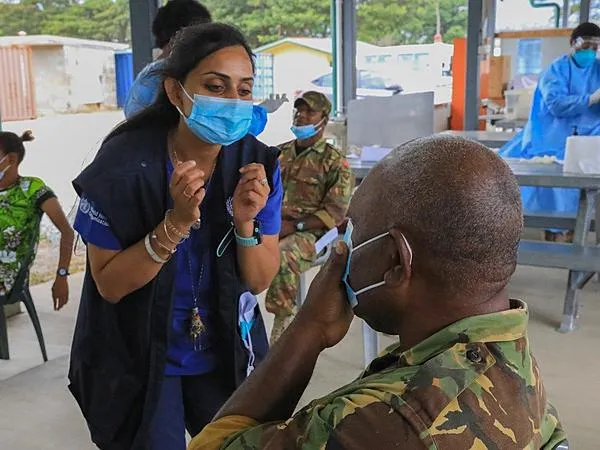
Papua New Guinea is expecting the delivery of the COVID-19 vaccine around April.
This was according to National Pandemic Controller David Manning who said, “We’re working closely with the Australian authorities to make sure that we have a fair share of the vaccination. At this point, we are looking (at) around April. As to what vaccination we will be seeking, further direction or advice from our Australian counterparts as to what is the best vaccination for us. We (are) taking on advice from the Australian health authorities as to what would be the preferable vaccination and once that (is decided), we will let the country know as to what vaccination we will be using. National Control Centre continues to provide that dialogue between PNG and Australian authorities as well as the World Health Organisation (WHO).”
Manning, who is also the Police Commissioner, said that the timeline would rely on the vaccination programme of Australia for the Pacific.
“We understand that there’s some concern raised by the public at large as to whether or not they want to subject themselves to vaccination,” he said. “We understand that (and) we recognise people’s individual rights. But for us to conduct ourselves as individuals and as a country in the context of the global community, we need to see what the rest of the world is doing and understand why they are doing it and allow us to at least approach this vaccination responsibly. There’s a lot of economies around the world that are insisting that some sort of vaccination needs to be done in order for us to participate at the global level in terms of whether it’s travel overseas for work or for studies.”
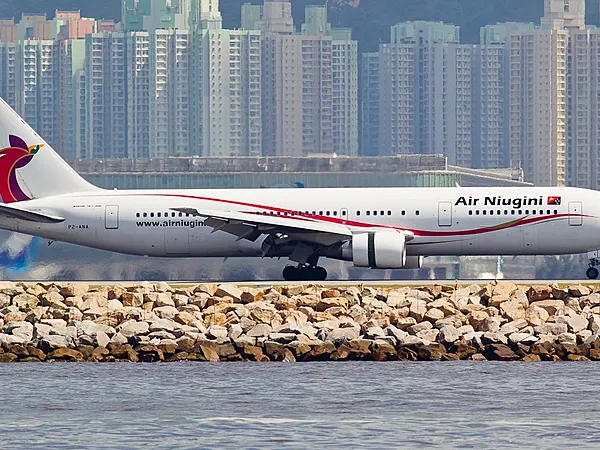
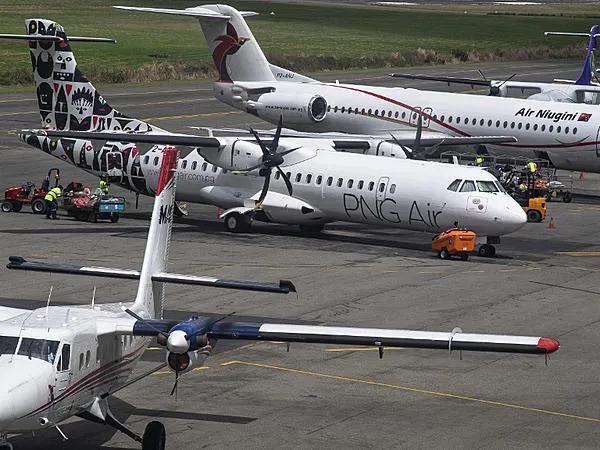
Starting April 3, 2021, Air Niugini will increase its flight services between Port Moresby and Hong Kong from once to twice weekly.
Under a codeshare arrangement, services will be operated by Air Niugini’s Boeing 767 aircraft, in partnership with Cathay Pacific Airways.
Flights to Hong Kong continued in October last year, operating every Wednesday which allowed freight and travellers to and from Port Moresby. But with this new flight schedule, visitors can now travel on Wednesdays - and Saturdays.
Air Niugini Chief Executive Officer, Mr Bruce Alabaster said, “Hong Kong is a major global gateway and connecting hub for both passengers and freight, and Hong Kong’s home-based airline Cathay Pacific is one of the largest and most respected airlines in Asia. When we resumed Hong Kong flights in October last year we were confident that the service would quickly become popular with both travellers and freight shippers – and this has proved to be the case.”
He continued, “With Singapore and Manila still effectively closed for transfer/transit passengers, we are sure that the capability of Air Niugini and Cathay Pacific, as well as our other three partner carriers, to provide seamless and convenient transfers via Hong Kong, including issuing of boarding passes from origin to destination, and through check-in of bags to the final destination, will prove to be a winner with our customers."
From April 3, flight PX008/CX6898 leaves POM at 1500 on Wednesdays and Saturdays, arriving in Hong Kong at 1935 local time. In the return direction, flight PX019/CX6899 departs Hong Kong on Wednesdays and Saturdays at 2045 local time, arriving POM at 0530am on Thursday and Sunday mornings.
Air Niugini resumes operations with strict safety and health measures.
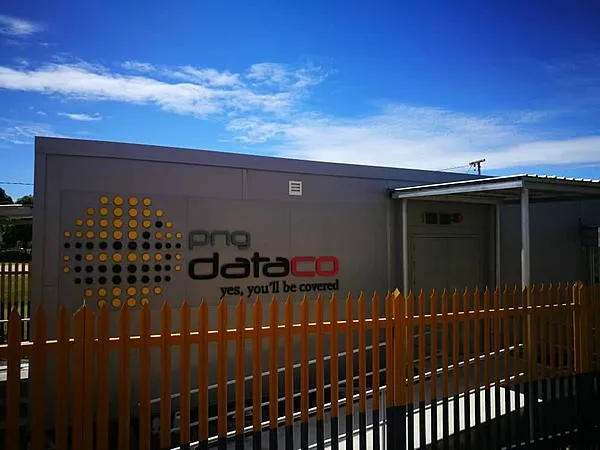
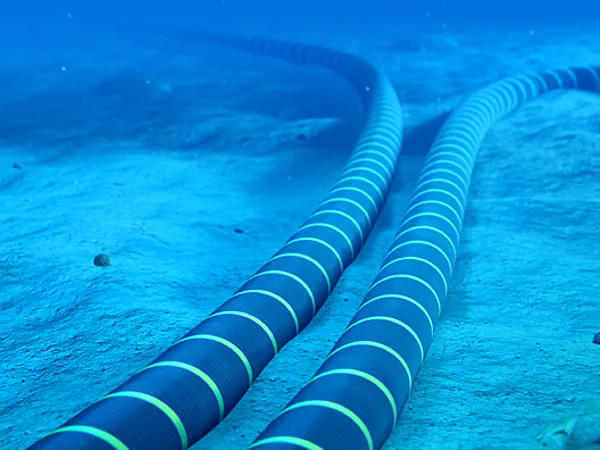
To bring communication services to the country, State Enterprises Minister William Duma says the Government will provide K100 million to PNG DataCo Ltd. This was after the submarine cable, Australia PNG-2 which served the country for more than 15 years has been decommissioned.
For his part, PNG DataCo chief executive officer Paul Komboi expressed his gratitude to the Australian government for funding the CS2 which came into operation last February.
Komboi said the APNG-2 had achieved its lifespan, adding that moving into CS2, it had a technical maximum capacity of 10 terabytes per second, about 1,000 times the current capacity with increased reliability and latency.
He said that the PNG Dataco had not fully finished the National Transmission Network (NTN) and had asked for some funding from the Government.
After 15 years of service, the link of Papua New Guinea to the outside world - through PNG-2 submarine cable - has been decommissioned.
According to Minister for State-Owned Enterprises William Duma, this has been a symbol of the relationship between Papua New Guinea and Australia - but things must come to an end. “We have reached the end of an era from 2005 to 2021, 16 years of efficient service in communication that has brought benefits, especially to our country PNG,” he said. “Our government and our country are grateful to the never-ending assistance from the Government and the people of Australia.”
Kumul Telikom Holdings acting managing director Jessie Wangua said that this occasion marks the transitioning in technological transformation. “At the backdrop of APEC 2018 with the theme “Harnessing Inclusive Opportunities, Embracing the Digital Future,” our government has invested time, resources and financial capital to fuel growth and transformation across key sectors of the economy,” he said. “Decommissioning of APNG2 cable means we have transformed. It is a tangible outcome. We now have a more modern cable infrastructure with improved electronic systems and ample capacity to meet current and future voice and data requirements.”
DataCo chief executive officer Paul Komboi said: “This submarine cable system achieved over its lifespan a remarkable record for error-free performance and ultra-reliability. An outstanding achievement and testimony to the integrity of the original Alcatel S560 submarine cable design.”
This cable system originally connected Australia to Guam and in late 2006, commissioning tests were completed and in 2007, the cable carried live traffic.
The economy of the country will have steady growth this year.
According to Senior economist Ilyas Sarsenov of the World Bank, it was predicted to be nine per cent smaller in 2023 compared with pre-pandemic.
“Like in the rest of the world, the pandemic’s shock was expected to lead to a long period of below-trend economic growth in Papua New Guinea, “ he said. “This outlook reflects both delays to forthcoming resource projects and some level of ‘scarring’ caused by pandemic-related disruptions, whereby the consequences of higher unemployment, falling incomes, and reduced economic activity impact future consumer spending and business investment. The outlook is expected to follow a shallow ‘U-shaped’ recovery instead of a more rapid ‘V-shaped’ bounce back. These forecasts are subject to a high level of uncertainty. They will depend on the speed of both domestic and international vaccine rollouts, future levels of demand for Papua New Guinea’s exports, and Government efforts to improve economic and fiscal resilience to external shocks.”
The World Bank PNG economic update said that developments in the external sector would be dictated by the health and economic implications of the Covid-19 pandemic.
“Export receipts from commodities will determine the external financing requirement, level of international reserves, and exchange rate developments,” he said. “Sluggish global economic conditions owing to the second wave of the pandemic and associated lockdown measures are likely to keep commodity prices down, leading to large losses of export earnings for Papua New Guinea. On a positive note, commodity prices for Papua New Guinea’s exports recovered in the third quarter of 2020 in response to an acceleration of industrial activity globally, particularly in China.”
By the end of November, the National Airports Corporation is set to finish its Tranche 3 projects under the Civil Aviation Development Investment Program. According to acting managing director and CEO Ephraim Wasem, these projects began in March 2017.
The projects began with 12 project sites that included Mount Hagen in Western Highlands, Momote in Manus, Madang, Wewak in East Sepik, Vanimo in West Sepik, Mendi in Southern Highlands, Kavieng in New Ireland, Wapenamanda in Enga, Kerema in Gulf, Tari in Hela, and Kiunga in Western.
He said that those airports are doing well expect for Gurney airport in Milne Bay Province, which was finished under the CADIP program, a K1.67 billion aviation investment undertaken by the Papua New Guinea government with support from the Asian Development Bank and implemented by the National Airports Corporation.
Wasem said the primary objective of the CADIP program is to revitalise and redevelop the aviation infrastructure of the nation and to make sure of the operational safety and security compliance to International Civil Aviation Organisation standards and regulations as administered by CASA PNG. This also includes creating a sustainable civil aviation network that supports the needs of the demands of PNG.
Started by the government and the ADB in 2009 with a price of K1.67 billion, the 12-year program is funded through the ADB Multi-Tranches Financing Facility loan of K1.4 billion and GoPNG’s counterpart funding of K221 million.
The CADIP has been delivered through Tranches 1 to 3 of a series of projects. Tranche 1 started in 2009 and was completed in 2015 while Tranche 2 was started in 2014 and is predicted to be finished in September 2021.
Follow on LinkedIn:
PNG Business News
Be the "First" to get our exclusive Digital Magazine & Weekly Newsletter.