March 01, 2023

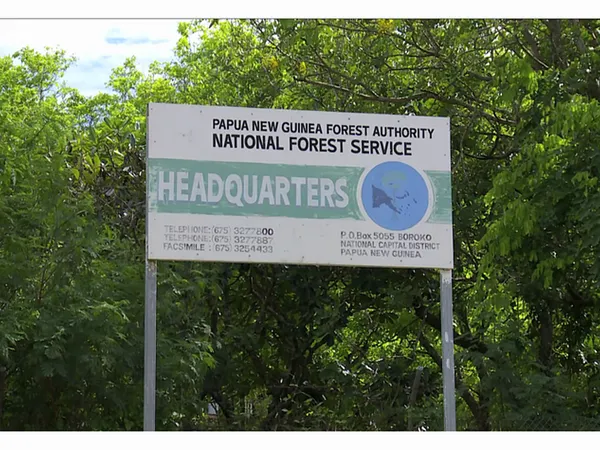
Photo credit: PNG Forestry Authority

The PNG Forest Authority and the Australian Department of Agriculture, Fisheries and Forestry have signed a memorandum of understanding (MoU) aimed at transforming and reforming the forestry sector. The MoU outlines key platforms for collaboration, including the review of forestry legislation, the regulatory framework for forest carbon, technical advice to promote downstream processing and market access to Australia, building capacity for timber testing and new forest products, and increasing technical support to the Forest Research Institute.

Forestry Minister Salio Waipo praised the Forest Authority management and board for their successful negotiations and highlighted the significance of the MoU. "The MoU is a partnership understanding between PNG Forest Authority and the Australian Department of Agriculture, Fisheries and Forestry which will promote, strengthen and implement the joint decision of both partners to maintain close cooperation to support the advancement of the forestry sector and the forest industries of Australia and PNG," he said.

Mr. Waipo emphasized the importance of the MoU as the beginning of a greater reform for the forest sector in years to come, stating that the MoU reflects the common shared values of promoting economic development in the region.

"This MoU will enable our countries to work together towards sustainable forest management, protecting the environment, and advancing the livelihoods of our people," he added.

In light of the MoU, it is clear that the PNG Forest Authority and the Australian Department of Agriculture, Fisheries and Forestry are committed to working together to ensure a sustainable future for the forestry sector in both countries.

March 01, 2023

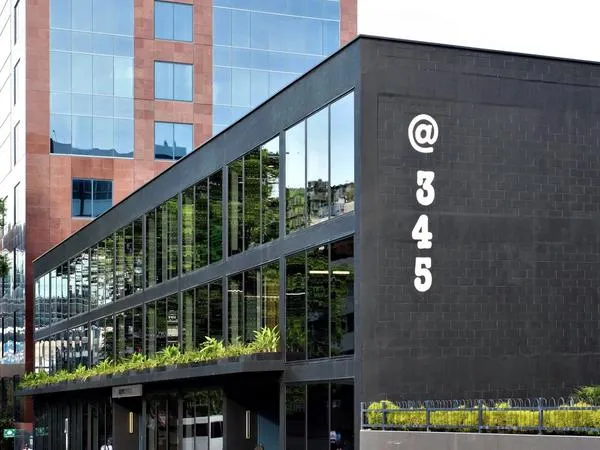
Photo: Steamships new head office, the completed @345 on Champion Parade, formerly Burns House.

Port Moresby listed Steamships Trading Company Ltd has announced a stronger than expected year in 2022, for the group, as the PNG economy recovered well from the constraints imposed as a result of the COVID-19 pandemic. 2022 results show improved revenue across the business, as sales revenue increased 12% to K631.3 million against last years K563.9 million. The company declared a total dividend of 120 toea per share, in comparison to the previous years 100 toea.

The hospitality and property divisions saw improvement with more demand due to the lifting of COVID-19 restrictions. Pacific Palms property experienced and increased residential occupancy across the portfolio. Coral Sea Hotels continue to expand with the opening of new Enzo’s Pizza outlets despite food and beverage margins compressed due to rising input inflation.

The integration of Logistics businesses, compromising Consort Express Lines shipping, EastWest Transport, Joint Venture Port Services and Pacific towing continued throughout the year with the aim of offering an improved service for customers. Additional shipping, towing, and trucking capacity was added to meet the demand for services.

Despite recording positive results, the Company was not immune to the supply chain constraints and inflationary pressure that prevailed globally. These limited the progress of various property projects and new investments.

“As the effects of COVID-19 receded, businesses and the economy in Papua New Guinea slowly recovered during 2022. Demand for goods and services increased throughout the year with an anticipated post-COVID downturn not materialising.” Said Chairman, Geoff Cundle of the results, “Steamships performance in 2022 was solid. Profit attributable to shareholders declined on the absence of property sales; a strong underlying performance means the company is in a good position to benefit from Papua New Guinea’s encouraging economic growth prospects”.

There is growing optimism that early-works activity for the Papua LNG project and boarder infrastructure investment should gain traction in 2023. Steamships is well positioned to benefit from the improving economic conditions. It remains committed to continuous improvement in productivity and vigilant in identifying opportunities for growth.

Managing Director Rupert Bray “PNG is our home and primary place of business. The anticipated openings of Harbourside South, the BSP Branch at Dobel in Hagen, and Portside Business Park this year are all exciting additions to our portfolio. We remain committed to contributing to the social and economic growth of PNG, and look forward to what we expect to be another strong year in 2023.”

February 28, 2023

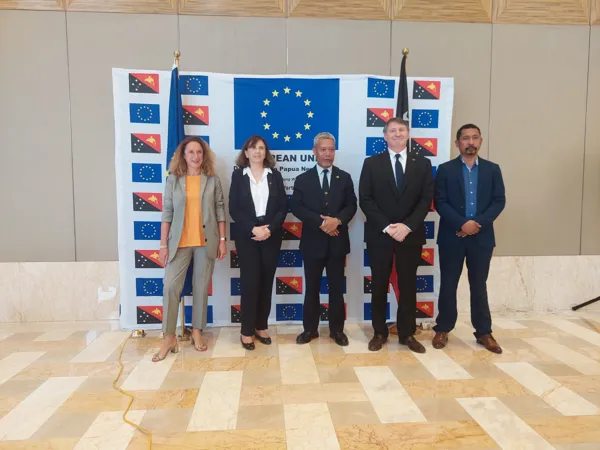
Photo: (L-R) Myriam Ferran, Deputy Director General, European Commission/ Directorate General for International Partnerships; Paola Pampaloni, Deputy Managing Director, European External Action Service; Kapi Maro, Acting Secretary for Foreign Affairs; Jacque Fradin, EU Ambassador to PNG; and Buri Gari, Acting Director General Multilateral Division, Foreign Affairs.

European Union political delegates met with their Papua New Guinea foreign affairs counterparts at the latter's Waigani office on the 27th of February to discuss their shared political interests and development agendas between the EU and PNG. 

The 5th High Level Papua New Guinea and European Union Political Dialogue was co-chaired by Paola Pampaloni (Deputy Managing Director Asia and Pacific, European Union External Action Service) for the EU side and Kapi Maro (Acting Secretary for Foreign Affairs) PNG side. 

Present for the dialogue were Myriam Ferran, Deputy Director General, European Commission/ Directorate General for International Partnerships; Jacque Fradin, EU Ambassador to PNG; and Buri Gari, Acting Director General Multilateral Division, Foreign Affairs. It was witnessed by French Ambassador Guillaume Lemoine.

The discussion included good governance, peace and security, multilateral relations and rule-based order, the Indo-Pacific Strategies for the European Union, preventing gender-based violence, and fostering children's rights.

A major program eyed for the next seven years is the continuation of the "WaSH" program (water, sanitation, and hygiene) and the establishment of a human rights commission. A new program to be launched soon is for climate change and biodiversity, led by the EU Team.

Both the EU and PNG governments are looking forward to attending the COP 28 climate change and carbon emissions meeting starting the 28th of November 2023, stressing the need to tackle these global issues and the Paris Agreement.

The EU delegates also presented the tool box "European Fund for Sustainable Development" under its development goal to attract capital and investments to PNG.

Both parties also agreed on the continuation of the Economic Partnerships Agreement (EPA).

Mr. Maro announced after the dialogue that Papua New Guinea values its important relationship established between the European Union since 1975 and are keen to work in partnership in terms of economical, political, and social ties established. 

Ms. Pampaloni responded that they were happy with the dialogue and are looking for progression to be made, adding: "A steady form of governance and a secure society ready for development is the way forward." 

February 28, 2023

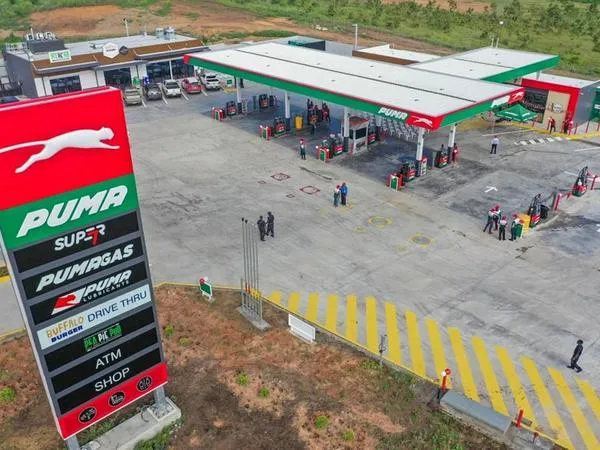
Photo credit: Puma Energy

Amid current economic issues in Papua New Guinea such as high inflation and unemployment, a shortage of foreign exchange currency last week crippled the country's fuel supply immensely, marking the second major nationwide fuel crisis within three months.

This was the result of an ongoing situation between the Bank of Papua New Guinea (BPNG) and the country's major fuel products supplier, Puma Energy, due to a lack of diligence in discussions by both parties concerning the approval of the fuel firm's foreign exchange orders by the country's financial regulator.

By 17th February, the nationwide shortage in fuel prompted business houses and the public to be held to ransom and left to squander what was left of Puma Energy's limited supply.

Puma Energy confirmed in a letter to the media that none of its propositions have been satisfied from agreements discussed with Prime Minister James Marape during his meet with company executives in Singapore.

Puma's Country General Manager, Hulala Tokome, revealed that what was discussed and agreed upon in Singapore with the government had not been honoured.

"Our FX orders have been restricted by the Bank of PNG, which is limiting our ability to operate and ensure the supply of product into the country. The root cause of the problem is for the Bank of PNG to approve our FX orders. If our FX orders are not settled this will impact the availability of fuel supply," he said.

"A total shutdown by Puma is going to affect a lot of businesses nationwide, because it takes us more than a month to replenish our fuel stock," Mr Tokome said.

Propositions by the government in ensuring an immediate solution since the last fuel shortage have not come to fruition, and it has shown no tangible outcomes in affirming a confirmed alternative.

This has prompted major service providers to ration their fuel intake, leading to flight disruptions, constant power blackouts, cuts in water supply, and a huge delay in business activities and operations due to the limit suppliers have put on fuel consumption.

State entities have also voiced their concerns with Commissioner of the Independent Consumer and Competition Commission (ICCC), Paulus Ain, stating that the impact of fuel disruptions in PNG is of "grave concern" and that the ICCC is encouraging fuel suppliers to enter into the PNG market.

"There is no restriction for other suppliers to enter into the fuel supply market," Mr. Ain said.

Government departments and agencies responsible for facilitating potential entrants should not become a barrier but assist and facilitate possible and potential entrants," he said.

In addition, Institute of National Affairs (INA) executive director Paul Barker also said there needs to be honest and transparent negotiations between Puma Energy and Bank of PNG. 

Barker said all major forex transactions for each month should be made available and posted online to the market and public, so that ongoing disputes and claims can be openly verified.

In relation to the ongoing fuel saga, discussions by the government with Kumul Petroleum Holdings Ltd. (KPHL) and multinational companies ExxonMobil, Total Energy, Santos, and the Mineral Resources Authority (MRA) are still pending.

The Prime Minister recently stated that the government will be heading towards locally based downstream processing, but Puma's current stance has questioned the government's timing on when a local refinery is scheduled to come into play.

While the government has made its appeal to suppliers of fuel there are also underlying issues affecting the flow of foreign currency to the domestic foreign exchange market. The fall in forex together with issues concerning PNG's major economic sectors are contributing to high inflation, unemployment, and the ongoing threat in fuel supply.

February 27, 2023

Photo: Richard Maru

International Trade and Investment Minister Richard Maru has expressed his concern about the ongoing fuel shortage in Papua New Guinea, stating that it could send the wrong signal to investors willing to do business in the country. Maru emphasized the need to resolve the issue quickly, saying, "This will leave a bad impression on our investors. It cannot be an ongoing situation where we hold up business activities and service suppliers. My concern is the investors. It is beginning to create a pattern and we must not allow it (to continue)."

Maru also urged Puma Energy and the Bank of Papua New Guinea (BPNG) to find a solution to the constraints in the supply of foreign exchange (FX) that prevented Puma Energy from purchasing crude oil. He said, "I'm sure Puma Energy and the Bank of PNG understand that and will come up with a resolution that will benefit everyone."

Puma Energy's country manager, Hulala Tokome, confirmed that the company had not received FX flows for over six weeks, which was the reason behind the fuel shortage. he said, "Puma Energy could not purchase crude oil due to the constraints in the supply of foreign exchange (FX)."

BPNG has maintained its stance that Puma Energy should be dealing only with commercial banks. The fuel shortage has affected motorists and fuel service stations in Port Moresby, Lae, and Mt Hagen.

Maru emphasized that the fuel shortage would mostly affect businesses, saying, "It is important that the issue be resolved quickly. This will leave a bad impression on our investors. My concern is the investors. It cannot be an ongoing situation where we hold up business activities and service suppliers."

In conclusion, Maru called on Puma Energy and BPNG to find a resolution that would benefit everyone and ensure that such fuel shortages do not happen again in the future. He said, "We must not allow it (the fuel shortage) to continue."

February 27, 2023

Photo credit: International Trade and Investment Ministry of Papua New Guinea Facebook page

The world experts on Special Economic Zones (SEZs) from Japan Development Institute (JDI) together with the local experts and the Ministry and Department of International Trade and Investment are now wrapping up their initial fieldwork of visiting the identified potential SEZ locations in the country to collect information to formulate the Masterplan for Papua New Guinea (PNG). Their last two visits will be to the Port Moresby Industrial Zone and the Western Province next week.

Minister for International Trade and Investment, Hon. Richard Maru said that after all fieldwork are completed, the JDI team together with the local experts will work together to provide three key deliverables.

“The SEZ Act of 2019 was done without the policy and a strategy so they will complete a new policy framework, new strategy to develop SEZs, and propose a completely revised legislation that will regulate the setting up and operating of SEZs in Papua New Guinea. They will also do a report on how to build the capacity of the SEZ Authority and help us with the selection of the best candidate for the position of the CEO of SEZ Authority who must be a world class expert on the management of SEZ Authority,” said Minister Maru.

Minister Maru said he was impressed with the work to date.

“I am looking forward to the presentation of the new policy framework, the SEZ development strategy and the revised SEZ legislation which will be delivered during the SEZ Summit that will be hosted in Port Moresby on April 24-25 this year. Following feedback from the global experts and stakeholders from throughout the country who will attend the Summit, these three documents will be finalized and submitted to the Government in May for consideration and approval,” said Minister Maru.

“This work is the start of the transformation of our economy. There are already a number of investors from countries as far as Japan, Thailand, Malaysia, the Philippines and Australia who are expressing interest to invest in our SEZs. We need to ensure that we have the institutional capacity and the mechanisms in place to attract the investors to come and invest in PNG. We want to get the first investors in this year so we are working tirelessly to ensure that we can deliver on this target,” said Minister Maru.

Minister Maru added that the Memorandum of Understanding (MOU) that was signed today between the Ministry and Department of International Trade and Investment and the Kumul Petroleum Holdings Limited (KPHL) for KPHL to supply cheap, reliable and clean energy solutions to the SEZs was timely.

“I want to commend the KPHL Board and Management for partnering us on this journey,” said Minister Maru.

“We will also be working with the Ministry and the Department of Works and Highways in the Connect PNG Program to involve them very closely in the development of the SEZ Masterplan because we need high economic potential areas that need to be connected by road and also other enabling infrastructure for these SEZs to be realized,” added Minister Maru.

February 27, 2023

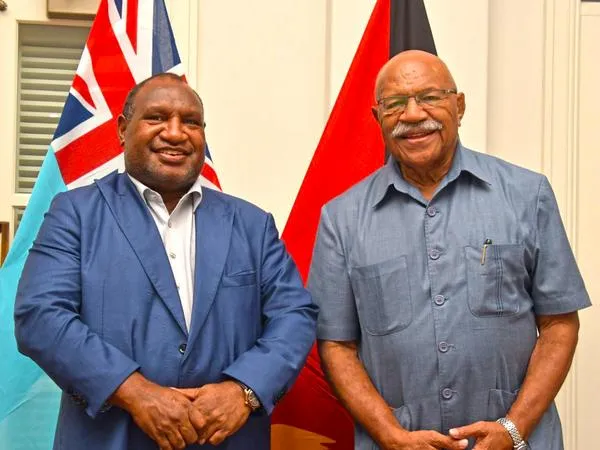
Photo: Prime Ministers Marape and Rabuka in Suva, Fiji

Prime Minister Hon. James Marape says Fiji and Papua New Guinea must work together for the greater good of the Pacific Islands’ family of nations.

He said this on Tuesday (February 21, 2023) after a bilateral meeting with Fiji Prime Minister Hon. Sitiveni Rabuka in Suva. PM Rabuka is also Chair of the Pacific Islands Forum (PIF).

Discussions centred on economic and trade relationships between Fiji and PNG, people-to-people relationships, co-operation and exchange between public servants, military relationships and police relationships. PM Marape said this would be for beneficial for both countries, Melanesia and the PIF family.

The two leaders also agreed to give each other land in their respective capitals to build their diplomatic missions.

PM Marape also congratulated PM Rabuka on being re-elected on December 24, 2022 for a third time. He was first democratically elected as Prime Minister of Fiji, serving from 1992-199, and again in 2002.

He alluded to the strong relationship between the two nations forged by pioneer leaders, the late Ratu Sir Kamisese Mara of Fiji, and Sir Michael Somare of PNG.

“Mr Prime Minister, and your country, you and me walk under the shadows of great men who walked ahead of us,” PM Marape said.

“Our nations have a shared history. We, even before being grouped as countries, were living on this part of Earth. Our ancestors were travelling on high seas. We have a common heritage, a common bond, we belong to one Pacific, one Melanesia.

“It is only proper, as you assume leadership, for Papua New Guinea to come and give our respect in that context. Papua New Guinea and Fiji, working side-by-side, will ensure that we stabilise the canoe that is taking our people with us, will ensure that the future is bright for our people is as far as development is concerned.”

PM Marape thanked PM Rabuka, as Chair of the PIF, for bringing back Kiribati into the PIF family after it withdrew last July.

“Papua New Guinea stands ready to work in partnership, as you once again lead your country, and are ready to offer our support,” he said.

PM Marape arrived in Nausori Airport, Suva, to a red-carpet welcome on Monday night (February 20, 2023) with a colorful welcome by Fiji police and military.

He was accompanied by Enga Governor Hon. Sir Peter Ipatas, Nipa-Kutubu MP Hon. Dr Billy Joseph, Hiri-Koari MP Hon. Keith Iduhu and Kundiawa Gembogl MP Hon. Muguwa Dilu.

PM Marape also paid a courtesy call on Fiji President, H.E. Ratu Wiliame Katonivere, at the State House on Tuesday.

He then headed to the Pearl Resort Hotel, owned by PNG through Mineral Resources Development Company (MRDC), to meet and hold discussions with PNG business community.

February 21, 2023

Photo: Prime Minister Hon. James Marape

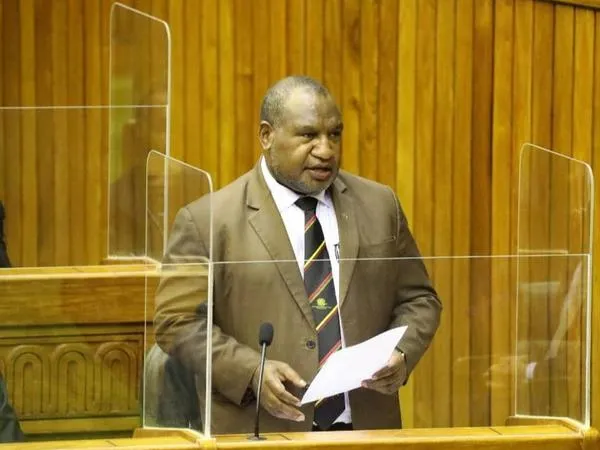
Prime Minister Hon. James Marape announced recently (Sunday, February 19, 2023) that the economy is looking good with Papua LNG in Gulf to announce its Front-End Engineering Design (FEED) next week and negotiations on Wafi-Golpu Mine in Morobe nearing competition.

FEED is the process for conceptual development of projects in processing such as Papua LNG.

PM Marape also announced that Porgera Gold Mine would reopen as soon as tax matters of the old Porgera between developer Barrick and Internal Revenue Commission (IRC) were sorted out.

“The two major resource projects of Papua LNG and Wafi-Golpu have not been progressed substantially for more than 20 years with their known resources, but we are now making big strides to get the projects developed,” he said.

“I have just received the very good news that FEED for Papua LNG will be announced next week – which is an indication that the project is moving.

“After the FEED stage is Final Investment Decision (FID). The project developer, TOTAL, has given its full assurance that the project is moving on time and on plan.

“This is very good news for the country.”

PM Marape said an issue with Papua LNG joint-venture partners with PNG LNG partners had been resolved thanks to TOTAL Energy’s leadership – which paved the way for FEED and FID.

He said the good news for PNG was that P’nyang LNG in Western would be developed immediately after Papua LNG – “which means that the country will have eight years of LNG construction involving Papua LNG and P’nyang”.

“I assure both Gulf and Western provincial governments, and landowners, that we will have having consultations with them in the second half of this year,” PM Marape said.

As regards Wafi-Golpu, the Prime Minister said negotiations between the developers and the State Negotiating Team (SNT) were drawing to a close, with a financial agreement and technical aspects of the project to be completed.

“Both joint-venture partners, Harmony and Newcrest, and our SNT, are continuing with their negotiations,” he said.

“Our country must be reminded that once you sign into such long-term agreements, it’s in place for the next 40 years, as in the case of Wafi-Golpu.

“We don’t want to rush headlong into signing an agreement that we will regret later on, such as we have come to regret in Porgera, Ok Tedi, Lihir and Bougainville.

“People may be complaining that our Government is slow, however, we are looking thoroughly through all the fine print so that we maximise revenue for landowners, Morobe Provincial Government and the State.

“I appreciate the patience of both Harmony and Newcrest, and we’re drawing to a close now, with the Financial Framework Agreement to be completed. Once that is done, a mining development contract will be issued, which should be in the first half of this year.”

As regards Porgera, PM Marape said the Government did not have everyday control over IRC’s work IRC had made assessments and had been in conflict with Barrick over their assessment criteria.

“Barrick has asked some fundamental questions, especially on the IRC’s definition of ‘taxable stripping’, in as far as resource harvest is concerned,” PM Marape said.

“Barrick is of the view that the current ‘taxable stripping’ definition is not consistent with practice and law, hence the prolonged dispute, so we had to intervene.

“The laws of our country allow for the arbitration process to be deployed if disputes arises at the end of IRC’s assessment, but in the national interest, we felt that instead of going through a lengthy arbitration process, it was better that we get an independent panel to look into the issue.

“We’ve asked the independent panel to look at the law and current practice, and measure against IRC’s assessment, on Barrick’s SML 1 operation and tax submissions.

“I thank Barrick for paying for care and maintenance of the mine up to this point in time, and is increasing by the day, which is why the independent panel was established to look into the taxation issue and have the mine back in operation at the earliest.”

February 21, 2023

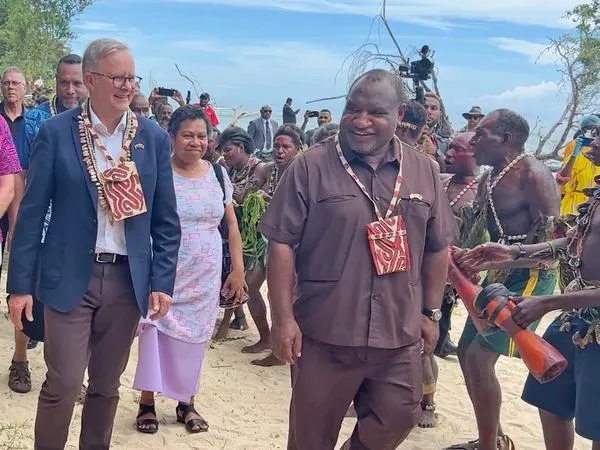
Photo: Prime Ministers Albanese and Marape at Commander’s Beach at Moem Barracks in Wewak last month.- PM’s Office Media

Prime Minister Hon. James Marape has welcomed the successful outcomes of the 29th Australia–Papua New Guinea Ministerial Forum which was held in Canberra, Australia, on February 17, 2023

“I welcome the outcomes of the very-successful Forum which follows on from my meeting with Australian Prime Minister, Hon. Anthony Albanese, last month,” he said

“One of the most-significant is our Ministers undertaking to ensure efficient and speedy Australian visa-issuing arrangements to help underpin labour, business and broader people-to-people connections

“This means that at least 75 per cent of completed visitor visa applications will be processed within 14 days, with in-country visa processing in PNG."

“This expands opportunities for Papua New Guineans to enter the Australian labour market, including increasing training and skilled labour under the new Australian Pacific Engagement Visa.

“I thank our PNG team led by Foreign Affairs Minister Hon. Justin Tkatchenko for a very-successful meeting which will be mutually-beneficial for both countries.”

The Forum was co-chaired for Australia by Senator Hon. Penny Wong, Minister for Foreign Affairs and for PNG by Minister Tkatchenko.

Participating Ministers for PNG were Hon. John Rosso, Deputy Prime Minister, in his capacity as Minister for Immigration and Labour plus other Ministers whose attendance was necessitated by the agenda of the Forum.

This was the first Ministerial Forum following elections in both countries in 2022. It was also the first in-person Forum held since 2019, due to border closures related to the COVID-19 pandemic. The last Ministerial Forum was held virtually on September 2, 2021.

The major outcomes are:

  • Ministers renewed their commitment to the Comprehensive Strategic and Economic Partnership (CSEP), to guide the modern partnership between PNG and Australia.  They undertook to implement this partnership through coordinated, deeper sectoral engagement led by Ministers from each side, and to take forward the outcomes and commitments arising from the 2023 Annual Leaders Dialogue;
  • Ministers reflected on the deep historical and familial connections which have brought the nations together in a unique partnership, and committed to ensuring that this partnership of equal and sover’eign neighbours grows to reflect contemporary opportunities and challenges;
  • Ministers undertook to further accelerate the integration of the two economies, including through the Australia-PNG Economic Partnership. They noted the importance of expanding opportunities for Papua New Guineans to enter the Australian labour market, including increasing training and skilled labour under the new Australian Pacific Engagement Visa. They acknowledged that efficient and speedy visa issuing arrangements would help underpin labour, business and broader people-to-people connections and announced separately a range of steps that would be taken to improve their respective systems. Ministers agreed to aim to process at least 75 per cent of completed visitor vias applications within 14 days. Ministers agreed to open in-country visa processing in PNG. They agreed to establish a joint ministerial working group to oversee this work, including Deputy Prime Minister Marles, Foreign Minister Wong, Minister for International Development and the Pacific Conroy, with Immigration Minister Giles, and on the PNG side, Deputy Prime Minister Rosso and Foreign Minister Tkatchenko;
  • Reflecting the significant role of business and industry in the relationship, and the importance of Australia’s AUD24.8 billion (K58.8 billion) in investment in PNG, Ministers encouraged the two business communities to consider how to invest in the many opportunities such as special economic zones that PNG offered, including in downstream processing of agriculture, fisheries and forestry, and the green economy and in agriculture. They committed to examining recommendations and implementing mutually agreed outcomes of the bilateral trade assessment, as agreed in the CSEP, with particular focus on support for PNG’s biosecurity arrangements to enable it to access export opportunities including in Australia.  They also welcomed the valuable input of the two business communities, as represented in their respective Business Councils;
  • Ministers welcomed progress made in discussing the scope, purpose and structure of a broad Bilateral Security Treaty, in accordance with the timeline set by Prime Ministers at the Annual Leaders Dialogue in January 2023. They noted the need for consideration of domestic legal and constitutional aspects to enable a treaty to come into effect. They noted the importance that PNG placed on addressing internal security and law and justice issues, and Australia’s commitment to assist. Ministers agreed to establish a joint ministerial working group – including Deputy Prime Minister Marles, Foreign Minister Wong, Minister for International Development and the Pacific Conroy, and on the PNG side, Deputy Prime Minister Rosso and Foreign Minister Tkatchenko with Internal Security Minister Tsiamalili – to oversee deepening cooperation in these areas;
  • Ministers noted the two countries’ commitment to supporting regional peace, security, economic resilience and Pacific unity as the most populous members of the Pacific family and recommitted to a Pacific-family first approach to regional security needs as endorsed by PIF leaders and as we work together to implement the 2050 Strategy for the Blue Pacific;
  • PNG welcomed Australia’s renewed focus on climate change and Ministers agreed that Australia partnering with the Pacific to co-host the 31st UNFCCC Conference of the Parties (COP31) in 2026 would allow us to combine forces and secure ambitious climate change outcomes and help place Pacific voices at the centre of international climate discussions. Ministers recognised PNG’s interest in securing a greater share of international climate finance and welcomed PNG’s participation in the Indo-Pacific Carbon Offset Scheme (IPCOS). Ministers committed to sign the IPCOS Joint Action Plan as early as possible this year; and
  • Ministers welcomed conclusion in 2022 of the first annual CSEP Action Plan and looked forward to progress under the 2023 CSEP Action Plan, as a tool to help take forward Prime Ministerial and Ministerial priorities. The six CSEP pillars are:
  • Strong Democracies for a Stable Future;
  •  Close Friends, Enduring Ties;
  • Economic Partnership for Prosperity;
  • Strategic Cooperation for Security and Stability;
  • Social and Human Development; and
  • Near Neighbours, Global Partners
February 21, 2023

Photo credit: International Trade and Investment Ministry of Papua New Guinea

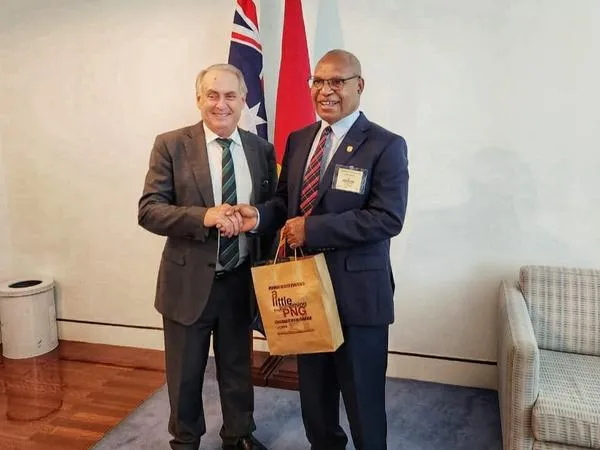
The Papua New Guinea-Australia bilateral relations must advance to another level and must be anchored on Trade and Investment relations between the two countries, says the Minister for International and Trade and Investment, Hon Richard Maru. Minister Maru said this during his bilateral meeting with his counterpart Australian Trade Minister, Hon. Don Farrell in Australia at the margins of the PNG-Australia Ministerial Forum held last week. The 29th PNG-Australia Ministerial Forum was convened on the back of the historic visit by Australian Prime Minister Anthony Albanese to PNG.

“For the last 47 years the current status quo has been in favour of Australia. PNG’s exports to Australia are mainly gold and other precious metals which comprise over 98% of total exports. This means less than 2% are from the non-extractive sector and is valued at K50 million per annum. Australia’s total exports to PNG is estimated over K500 million, which translates to a ratio 1:10. A very huge trade imbalance,” said Minister Maru.

Minister Maru said that Papua New Guinea (PNG) would like to see a win-win whereby PNG can also export its goods and services into the Australian market.

“The current status quo is heavily skewed in Australia’s favour. Without taking actions to shrink this huge trade deficit with Australia. PNG is losing thousands of job opportunities and much income especially for our villagers, farmers and our tax revenue. This is the reason why PNG withdrew from the PACER Plus trade negotiations that where not addressing the very issues that continued to see PNG locked of exporting its competitive products and services to Australia. Without attending to these issues, the current PNG-Australia bilateral trade assessment study will be another a waste of time,” said Minister Maru.

In this regard, Minister Maru requested his counterpart to assist PNG in building its capacity to export to the Australian market in terms of both market access and market entry or the “last mile”.

“This will address the trade imbalance and create an even level playing field for the two countries, then we can talk about free trade agreement which will create win-win opportunities for both countries,” said Minister Maru.

“I want to see PNG export its taro, casava, banana and others to the Australian market, particularly targeting the over 60,000 Papua New Guineans diaspora living in Australia. The two countries need to work together to ensure the bio security issues and other technical barriers to trade that is affecting PNG’s exports are addressed especially in getting PNG produce on the shelves in big Australian supermarkets such as Coles or Aldi. This must be the year of action. No more talkfest. We have been talking and asking for the same market access for the last 20 years in every Ministerial Forum without any tangible results. Without results this year there will be no more trade and investment talks with Australia,” said Minister Maru.

Minister Maru said that PNG currently faces huge challenges with high unemployment, increased law and order, foreign exchange issues and high inflation amongst others.

Minister Maru stated that despite the challenges, there were many opportunities for Australia private sector to invest in PNG.

“PNG is an economy in transition and the Marape-Ross Government is looking to partner with likeminded countries ready to invest in PNG,” said Minister Maru.

Minister Maru explained that one of the vehicles that the Marape-Rosso Government would be utilizing to grow the PNG economy was through the creation of SEZs. He informed his counterpart of the SEZ study currently being undertaken by the Japan Development Institute (JDI), the Oversees Development and of the SEZ Summit that will be held in April this year. Minister Maru further informed him of his recent visits to the Philippines and Thailand to learn from south-east Asian neighbours of the successes of their utilization of the SEZs for economic growth and development.

“PNG is now walking across Asia to find investors and Australia can either join the trend or miss the opportunity. Under the Marape-Rosso Government PNG is in transition and is actively seeking investors from Philippines, Thailand, Vietnam and Malaysia to invest in domestic industries for onshore processing of natural resources and new dairy, rice and feed industries in PNG,” said Minister Maru.

Minister Maru whilst acknowledging Australia for agreeing to process visas for Papua New Guineans within two weeks in the country, said a lot more needed to be done to allow the issuance of visas upon arrival. Minister Maru said this was very important to encourage for trade and investment to flow between the two countries.

“PNG citizens are issued visa on arrival by Singapore, Philippines, Israel, UK and others but does not see the reason why PNG citizens are not issued visa upon arrival by Australia. More work needs to be done in this regard to allow the movement of people between the two countries,” said Minister Maru.

Minister also encouraged Australia to have a program in place for semi and skilled Papua New Guineans to access the Australia labour market. Minister Maru reiterated that besides the Labour Mobility scheme for unskilled workers, PNG was also keen on accessing opportunities for semi-skilled and skilled workers to work in Australia, for example, in the area of age care.

“PNG would really like to see more skilled labour moving to the Australian Labour market,” said Minister Maru.

Minister Maru extended an open invitation to Minister Farrell to visit PNG. Senator Farrell acknowledged PNG as a valuable partner and neighbour in an increasingly unstable world. He stated that Australia saw immense value in that relationship and was favourable to assist where possible.

February 21, 2023

Photo credit: International Trade and Investment Ministry of Papua New Guinea Facebook page

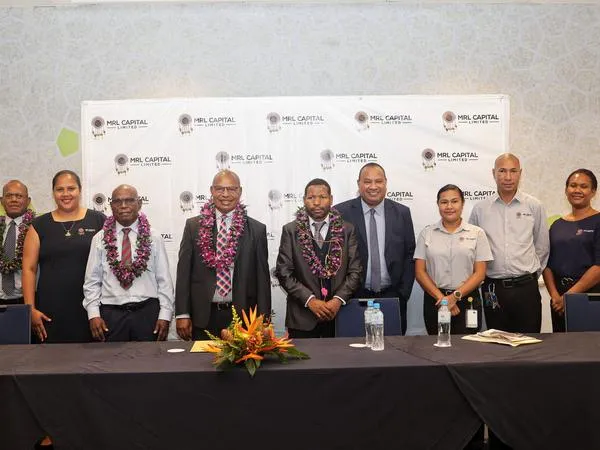
For the first time in over 24 years after approving the Pacific Balance Fund (PBF) and the Pacific Property Trust as Unit Trust Schemes, the Securities Commission of Papua New Guinea (SCPNG) recently approved the Lihirian Investment Fund Unit Trust as a new Unit Trust Scheme in the local securities industry. The wholly owned subsidiary of Mineral Resources Lihir (MLR) Capital Limited, the MRL Funds Management Limited made history by being granted two Capital Licenses by SCPNG. Minister for International Trade and Investment, Hon. Richard Maru made the presentation of the two licenses- a Trustee Mangers License and Funds Management License to MLR Funds Management Limited today.

“I want to congratulate the Board and Management of MRL Capital Limited for achieving this very significant milestone today,” said Minister Maru.

Minister Maru said Lihirian Investment Fund Unit Trust was granted the two licenses based on their performance and on their record where they managed the fund from the initial value of K60 million in 2015 to K700 million today.

“This represents an annual growth rate of an average of 10 per cent of this fund which is a very impressive record of performance,” said Minister Maru.

“I am also happy that MLR Capital Limited out of their annual profit of K100 million to K200 million uses 25% to support community projects in Lihir especially in health, education and infrastructure,” said Minister Maru.

Minister Maru, on behalf of the Marape-Rosso Government encouraged Lihirian Investment Fund Unit Trust to also look at managing funds from other individuals and companies around the country apart from Lihir.

“The people, especially our mothers and fathers and our SMEs are looking for low-risk and high yielding investment opportunities and the Lihirian Investment Fund Unit Trust presents a very good investment vehicle for them,” said Minister Maru.

Minister Maru also encouraged Lihirian Investment Fund Unit Trust to partner the Marape-Rosso Government to invest in low-risk investment opportunities in the Special Economic Zones that will be announced in May this year.

“One of the reasons why I am excited about today is if the Lihirian Investment Fund Unit Trust can grow these funds, they can take up investments in high yielding low-risk agriculture investments. I would really like to encourage the Lihirian Investment Fund Unit Trust to seriously look at long-term agriculture investments in Papua New Guinea,” said Minister Maru.

“Our country needs billions of Kina in new investments to grow the economy so supporting high performing funds managed by competent fund managers is a key policy agenda of the Marape-Rosso Government to support economic growth,” said Minister Maru.

“I also encourage other landowners in areas with resource projects to follow the successful path of the MLR Capital Limited,” added Minister Maru.

February 16, 2023

Photo: James Marape

The country's lawmakers have unanimously voted in favor of the updated investment law passed by PNG's parliament, specifying the intention to prevent foreigners from operating small businesses that are reserved for locals.

This law includes measures to ensure locals remain in control of businesses such as general stores and taxi and bus services without discouraging other foreign investment.

It followed a public outcry that local businesses face increased competition from Asian migrants. Papua New Guinea’s population is almost entirely indigenous, with a small fraction of Australians, Chinese, Filipinos, and other nationalities.

“It’s time our people take the lead,” said Prime Minister James Marape. “The law is a step toward protecting businesses that only Papua New Guineans can participate in.”

Dozens of business activities, from small-scale farming to owning a security company, are reserved for citizens under Papua New Guinea’s 1992 Investment Promotion Authority Act, but the law has lacked monitoring and enforcement.

The updated law aims to improve compliance so local businesses are protected while still encouraging foreign investment in industries where Papua New Guinea needs outside capital and expertise.

A local general store owner in PNG’s capital city, Port Moresby, said the new law is long overdue. “It took the government 31 years to come up with this bill to protect us from competing with foreigners doing the same business,” said the local, who requested anonymity.

“For example, we are competing in running trade stores in the settlements,” he said, referring to the urban communities that have sprung up as more people move to towns from the country’s highlands.

Marape’s government has a policy of developing small- and medium-sized businesses for indigenous Papua New Guineans.

A Bangladeshi expatriate who runs a store in one of Port Moresby’s settlements said the shop is leased to him for K10,000 monthly from a Papua New Guinean who was tired of family and relatives urging him for financial assistance towards customary and cultural obligations, such as bride price and haus krais (funeral expenses).

“We are doing business because the locals are not really competitive in running their own business. So, the law is good for indigenous Papua New Guineans to take ownership of their own business activities. But then they have to be committed, and their relatives should be supporting them by not asking too much for financial assistance,” the expatriate said.

Generally an influx of foreigners running small businesses reflects decisions and factors that are made by local businesses and their owners, the Port Moresby store owner said.

“Trade stores can be built, but then we rent them out to foreigners to manage due to social and cultural issues that most owners are obligated to because of their outlook and status in society. That’s how most foreigners initially run businesses that locals are supposed to run,” he added.

February 16, 2023

Papua New Guinea's resource-rich areas are located at some of the most rugged, mountainous, and treacherous terrains, and the designing, building, and maintaining of project site facilities in these resource areas require constant upkeep.

The process of creating fabricated units that can be quickly assembled has shifted as developers become more innovative in building structures faster and getting better quality control while reducing waste and carbon footprint.

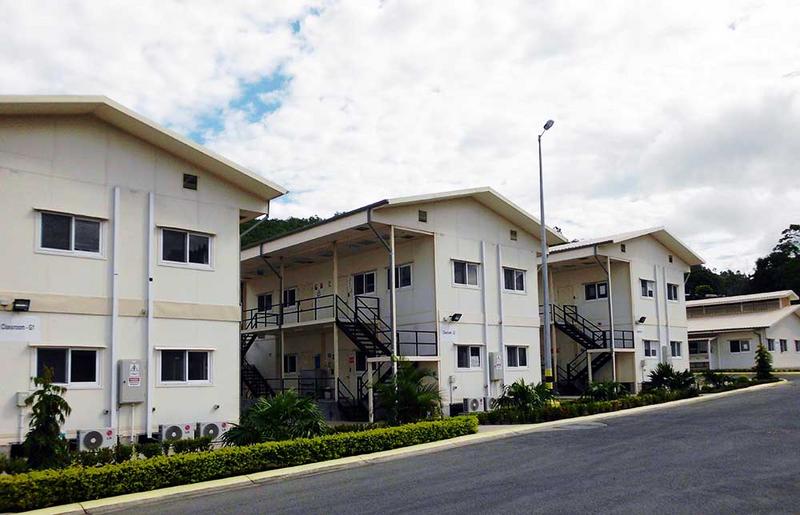
Since the inclusion and start of the PNG LNG project in 2012, a number of prefabricated and modular building providers have emerged, notably PNGCR (formerly known as RED SEA Housing Company), Ark Pacific, PNG Forest Products, and Oilmin Ltd.

These companies are pioneers in this industry and have been servicing the mining and oil & gas sector by providing infrastructure to campsites all over Papua New Guinea. Their core services are designing and building campsites in which all supplied modular buildings are installed locally.

According to PNGCR, the intensity and rate of modular building providers have provided logistics and operation to PNG's petroleum sector by adapting to their changing nature of activities day to day in most campsites, from managing routine maintenance projects to emergency situations.

Over the years, these pioneers’ achievements have seen them bring in more manufacturing on campsites while combining it to benefit the landowners of project-impacted areas as well.

Apart from servicing tier-one clients of the oil & gas sector, partnerships have seen the companies provide and supply infrastructure for law and order, health, and other public sectors on various refurbishment and building projects throughout the country alongside other government entities.

Transitioning and adapting have been a big part of modular building providers. During the peak of the Covid-19 pandemic, their flexibility to adapt their services saw most of these companies change their product lines to adapt to the business demand by moving their core services of supplying camps in the oil & gas sector to providing structures across different economic sectors.

PNGCR

For instance, PNGCR provided all the support and infrastructure to the Australian Government and St. Johns to send mobile and testing clinics throughout the country, especially to remote areas.

The company has a strong partnership with St. Johns as well, in which they provide medical services for landowners of resource areas that live close to project-impacted areas.

PNGCR's Managing Director, Mr. Allen Tyson, who has been in PNG most of his life, said projects must support local businesses and focus more on driving local and national content, because most local companies who have been here since the LNG project started have been investing in the community and are still in business after PNG LNG.

Most have been through the difficult period of Covid, and it would be disappointing if upcoming projects do not provide opportunities to such local companies, he added.

"It’s really going to come back to the project owners. There's a lot of really good companies here in PNG who are able to service these projects that have stuck it out through the good times and the bad and have done it tough through the Covid period, and it would be great for these companies to rebound for the benefit of Papua New Guineans," Mr. Tyson said.

“Most companies that come in for resource projects disappear when the projects are over, and this does not create long-term employment for Papua New Guineans," he added.

For the past 12 years, PNGCR transitioning from RED SEA has consistently employed between 250 and 300 people and has been one of the country's leaders in manufacturing and supplying modular buildings.

One of PNGCR’s significant Projects over the years

ARK PACIFIC

With LNG projects about to take off in 2023, Ark Pacific’s Flat Pack modular building range has become sought after by the oil & gas sector given the remoteness of project locations, some of which are only accessible by river.

Ark Pacific’s low freight footprint -- up to 75 percent less than other prefabricated alternatives – is a key factor in the popularity of its building systems.

Ark Pacific’s General Manager, Cassius Ruka, also a longtime resident of the country, in a commentary last year said: “Due to its simple flatpack design, this means that unskilled workers in remote footprint communities can be used to assemble Ark buildings, which is, of course, beneficial to these workers and their families, and therefore to resource clients wanting to achieve their local content objectives.”

This also meant that construction sites installing Ark buildings during the peak Covid-19 period were relatively unaffected by travel restrictions, as majority of staff are local and not FIFO (fly in fly out).

Modification and the repurposeability of buildings are highly valued features of Ark’s building systems. “Particularly significant when building in PNG,” says Ruka, “is the fact that our buildings can easily be reconfigured and relocated to benefit footprint communities as schools, clinics, or libraries once clients no longer require them.”

Local workforce installing Ark Pacific building units for a replacement camp at one of PNG's biggest mines. The camp encompasses 800 rooms in 16 two-story accommodation blocks.

PNG FOREST PRODUCTS

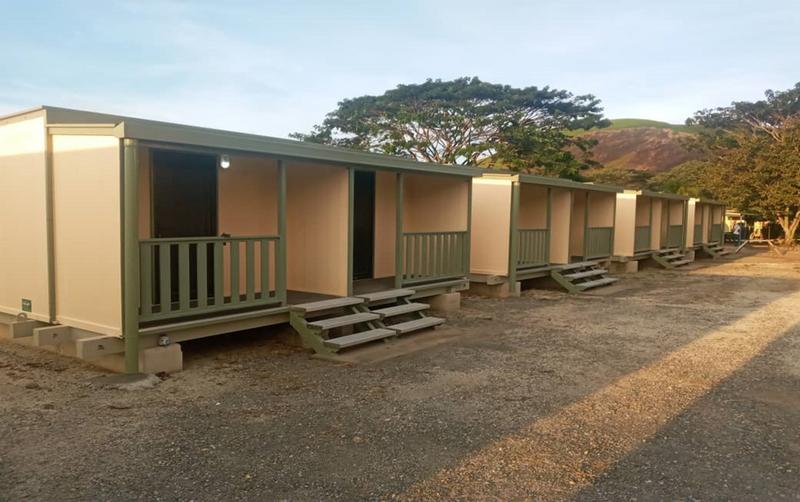
PNG Forest Products, a major player in developing this sector since 1954, have also been a dominant force throughout the years in providing transportable units with simple solutions for mining, gas and petroleum camp relocation. Its innovative products and services include their modern Duplex with an ensuite. This product has been found to be reliable and comfortable by its clients.

Recently, K92 Mining Ltd., who have been acquiring the services of PNGFPs, pointed out the significance of its modular units and how it has helped them minimize costs, time management and construction difficulties in a mining camp.

K92 Mining's Project Maintenance Superintendent, Reis Colley, highlighted: "As operations at K92 mine grew different accommodation options were considered until PNGFP proposed their transportable 2-bedroom individual ensuite unit with a verandah. We agreed and initially purchased 18 of these units and installed this established infrastructure, which allowed us to minimize disruption to existing camp rooms."

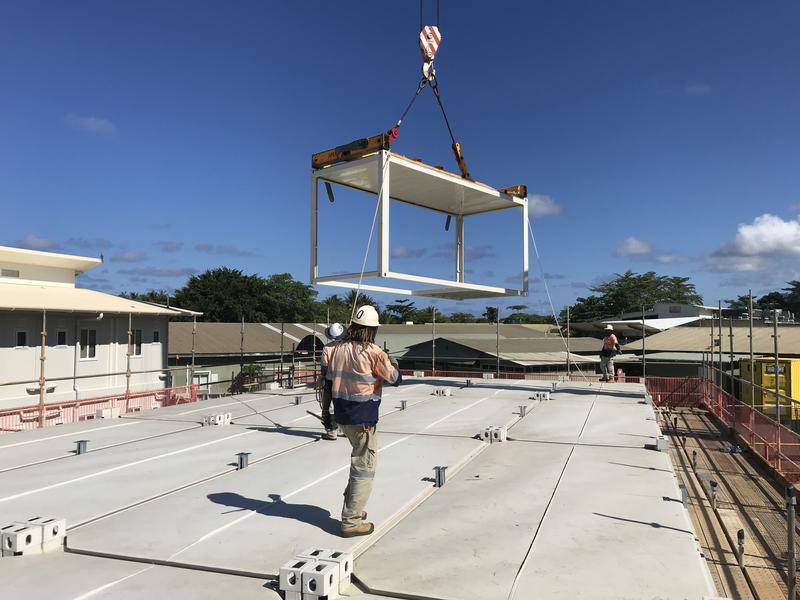
"As the modular unit is built in PNGFP's factory offsite, once delivered it only had to be lifted onto the footings and connected to plumbing and electrical services," Colley explained.

PNGFPs Duplex installed at K9 Mine

OILMIN FIELD SERVICES

Oilmin's Construction Division are providers and distributors of the Ezy House Units, which are multi-functional modular building systems, manufactured to the highest international and applicable local standards. The Ezy House construction system uses prefabricated components to build camps and other structures.

The units are designed for a variety of applications, with the product found in various industries including government, construction, private and exploration sectors. Currently, their partnership with Ezy House is in line with their commitment to provide innovative and cost-effective building solutions for their clients.

Ezy House is a versatile solution for a wide range of scenarios. Some of the advantages of using Ezy House include faster construction time, affordability, assured highest quality, and increased flexibility. This means Ezy house components can be customized to meet specific requirements, and can be adapted to different building designs.

The Ezy House concept can be used in housing developments, remote locations, temporary structures, mining camps, and disaster relief. Oilmin’s partnership with Ezy House is a testament to their commitment in providing innovative and cost-effective solutions for their clients.

Oilmin Ezy House

What to expect

Consistent with their strategies, these companies’ next stage of growth will be targeted towards adapting to any unexpected changes and focusing on local and national content, while supporting infrastructure for new and upcoming resource projects in the country.

The resource sector in PNG has seen great change over the past year. The rise and establishment of new resource projects seem to be the biggest forecast for future projection.

While service providers for this important sector may not have a certain projection of what the future will look like, there’s no other industry that can adapt to these sudden changes better than the modular construction industry, as these companies have proven.

February 16, 2023

Photo: Greg Pawson

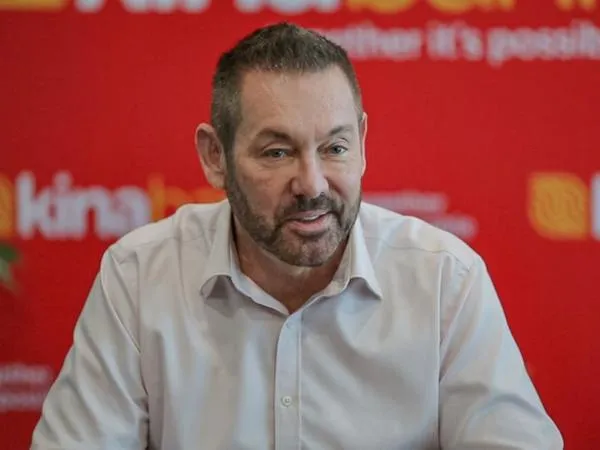
Kina Bank's CEO, Greg Pawson, has announced plans to expand the bank's presence offshore due to the government's decision to increase tax on banks this year. Pawson described the tax increase from 30 per cent to 45 per cent this year as a "disincentive for growth" and said, "We will be bringing forward our plans for offshore expansion."

"We are still very much committed to PNG," Pawson added, "however a tax increase to the banking sector will impact the confidence of our investors who provide us with the capital to expand and grow. A 45 per cent tax rate would be among the highest in the world, if not the highest. We have been reviewing the potential for us to expand offshore, and the proposed tax hike certainly gives us the motivation to progress this."

Pawson said Kina Bank is reviewing all its planned investments for this year, including new regional branches, digital technologies, and concessional lending to small-medium enterprises (SME) and the agriculture sector. "Some of these, including all concessional lending (SME, agriculture and home loans), will be suspended if the tax hike goes ahead," he explained.

"We are vehemently opposed to the tax increase," Pawson continued, "and it will impact future investments, reduce competition, and play to BSP's already dominant market position. Sadly, the treasurer (Ian Ling-Stuckey) has made no concerted effort to consult with the banking sector directly. We will continue to challenge it."

February 16, 2023

Photo credit: PNG Chamber of Mines and Petroleum - Dr Albert Mellam, PhD

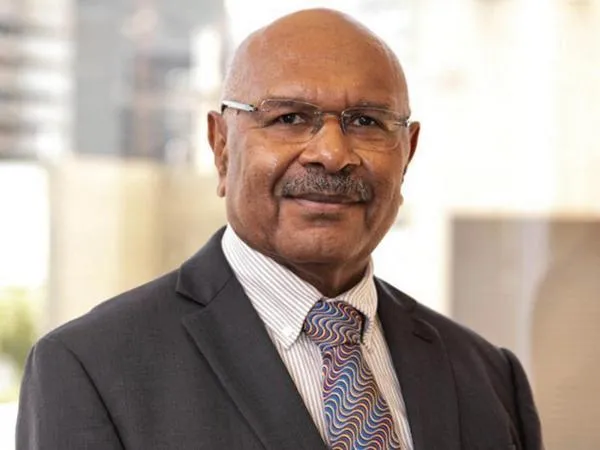
Credit Corporation Finance Ltd (CCF), a subsidiary of Credit Corporation (PNG) Ltd, has received approval in principle from the Bank of Papua New Guinea (BPNG) for a banking license. According to the chairman of Credit Corporation PNG, Dr. Albert Mellam, "the BPNG offered an approval in principle for a period of 12 months to transition CCF’s current license from a financial institution to a commercial bank." Mellam expressed his gratitude for the approval, calling it "a milestone in the group’s new strategic direction, which included becoming a fully-fledged commercial bank and ultimately aiming to be listed on the ASX."

Mellam went on to say that Credit Corporation has been lending for 45 years in Papua New Guinea, and that its board and senior executives have extensive experience in financial services and banking. "We are well-positioned to become a new bank given we have a strong understanding of the local market and what is required to be a successful financial services company," he said. "We have already made some significant investment decisions to set ourselves up for success, including upgrading our core banking system, introducing a new web-based application and enhancing our processes, while recruiting new talents and upskilling our people."

Mellam also emphasized that Credit Corporation is committed to delivering a high level of service to the people of Papua New Guinea. "We are proud of our heritage, which will enable us to become a truly home-grown PNG bank," he said. "PNG needs more banking competition to help reduce costs and expand services such as e-banking for customers."

February 16, 2023

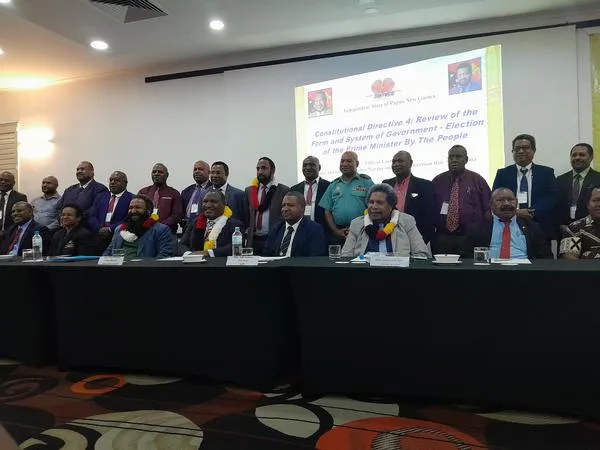
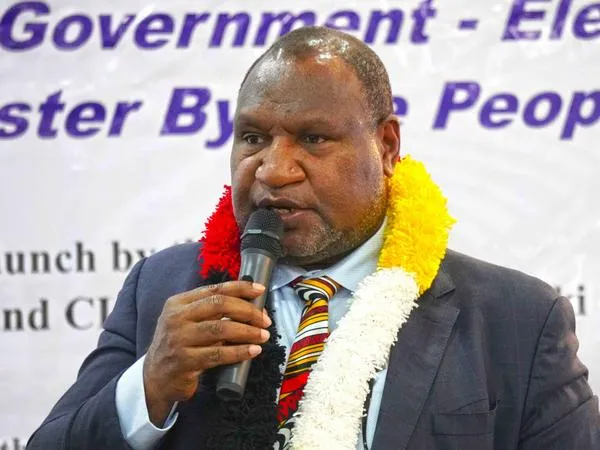
Photo: The Prime Minister with government delegates and members of Parliament at the Launching Ceremony

Prime Minister Hon. James Marape and Constitutional and Law Reform (CLRC) Chairman Hon. Saki Soloma launched the Constitutional Directive No.4: Review of the Form and System of Government -The Election of the Prime Minister on 15 February at Holiday Inn Hotel (Waigani)

The Prime Minister also launched an online questionnaire or survey for the Review, to allow citizens and interested persons and organizations to access and contribute their views using the links below to access the online questionnaire or survey and give their views.

http://bitly.ws/AgaK or https://docs.google.com/forms/d/15Wm-wVFkfthb-WCqy3cflDSktCnME2CW-W2WHAiMesQ/prefill

Speaking at the launching, Mr. Marape acknowledged that Papua New Guinea needed a wholistic review of the way the country should be governed, looking into the three arms of government (the Executive, Judiciary, and Legislative) as politicians "are usually more overlapped in the legislative process" and the time spent in listening and identifying the people's needs in the provinces is limited.

"In my honest opinion, voting for the Prime Minister is the way forward and every Papua New Guinean should exercise their rights in voting for a Prime Minister as the Reform exercise is underway," he said.

"This will give Papua New Guineans the opportunity to speak their mind using the survey that will be carried out as to how best the country should be governed after 50 years of Independence. We need a refurbishment and refined government that will suit the interest of the people," stated the Prime Minister.

The online survey is accessible from today until the 30th of June 2023 when the Inquiry closes.

CLRC will also accept written submissions either delivered by hand, postal mail, or email to the following contact details:

Postal Address: The Secretary - Constitutional and Law Reform Commission Paragon Building, Second Floor, Kumul Avenue, Waigani P. O Box 3439, BOROKO, NCD Papua New Guinea

Other methods of data collection include:

  • Nationwide consultations in the Provinces and AROB from the 5th March to 18 May 2023; 
  • Public forums; 
  • One-on-one meetings; 
  • The use of social media, including the official CLRC Facebook page; 
  • Technical papers; and 
  • Study Tours

Key areas or matters of study under this Review include and are not limited to:

  • the current structure of the National Parliament; 
  • the election of the Prime Minister; 
  • the system of government; and 
  • the different levels of Government

The final report will also contain the recommendations that are expected to be completed and delivered to Mr. Marape in November or December 2023.