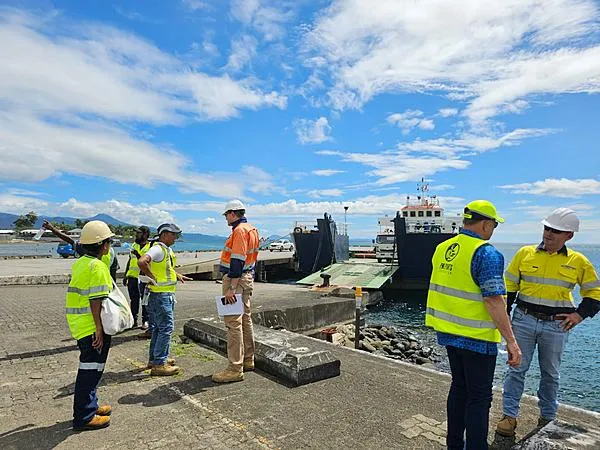
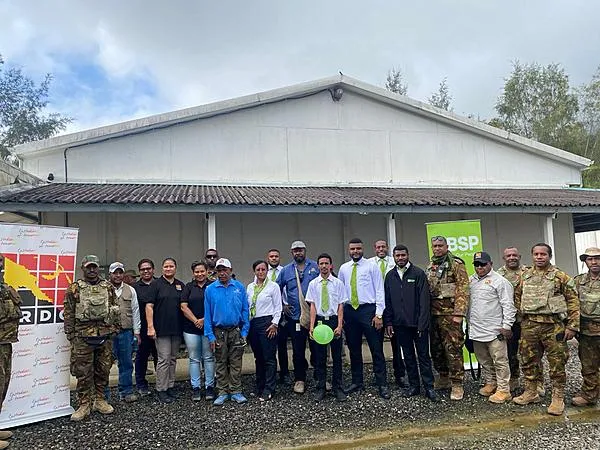
PNG Ports Limited (PNG Ports) has enhanced its maritime infrastructure, by completing a pre-bid site inspection with potential contractors for the Kimbe Port Upgrade Project in West New Britain Province in Papua New Guinea.
This significant project is set to receive a substantial boost through part of the K1.5 billion Australian Government funding, facilitated by the Australian Infrastructure Financing Facility for the Pacific (AIFFP).
CEO of PNG Ports, Neill Papenfus, underscored the importance of this development, saying these contractors were invited to bid for the Marine Package of the Kimbe Port Upgrade Project which is currently in its bid stages.
"The inspection will give the contractors a fair idea of the physical features of the site, scope of work and raise any queries before the bidding period ends.”
“The Land Package for the Project is currently in the evaluation stage and will follow soon after the awarding of the Marine Package.” He added.
Papenfus further emphasized that the project marks a significant milestone, being the first of several ports earmarked for comprehensive upgrades to ensure alignment with global industry standards.
“Kimbe Port Upgrade Project will be the first of a number of selected ports to undergo similar upgrading to ensure that the ports are fit for purpose and on par with global industry standards.”
Acknowledging the collaborative efforts of various stakeholders, Papenfus extended gratitude to the Australian Government and its agencies, alongside key local entities including port services providers, PNG Government Departments, and regulatory bodies such as the Conservation Environment Protection Authority and National Maritime Safety Authority.
“I would like to acknowledge all stakeholders involved in the planning and implementation of the project, including the Australian Government and its agencies, port services providers, PNG Government Departments in Treasury, Transport, the Conservation Environment Protection Authority, and National Maritime Safety Authority, among others.”
Furthermore, PNG Ports expressed its commitment to collaborative endeavors with the West New Britain Provincial Government and leaders to ensure the successful completion of the project, ultimately benefiting the people of the province.
Representatives from AIFFP and the Australian Transport Sector Support Program (ATSSP) were also present during the site inspection, underscoring the multinational support and collaboration driving this endeavor forward.
The beginning of this transformative project traces back to the AIFFP’s K1.5 billion blended financial package, and to PNG Ports' comprehensive 20 Year Port Infrastructure Master Plan, launched four years ago by PNG Ports. This strategic blueprint identified the pressing need for rejuvenating port facilities across the country to accommodate increasing sea trade demands and capitalize on emerging economic opportunities.
The Kimbe Port Upgrade Project, emblematic of this broader initiative, is poised to revitalize critical maritime infrastructure, ensuring sustainable development and positioning PNG Ports to thrive in the evolving global trade sector.
As PNG Ports progresses towards the realization of this ambitious vision, stakeholders anticipate tangible socio-economic benefits to the region, underscoring the transformative potential of strategic infrastructure investments in PNG.
As Papua New Guinea takes its course towards a sustainable, climate-resilient future, the Climate FIRST Project stands as a point, to the power of partnership, innovation, and collective action in tackling the defining challenge of our time.
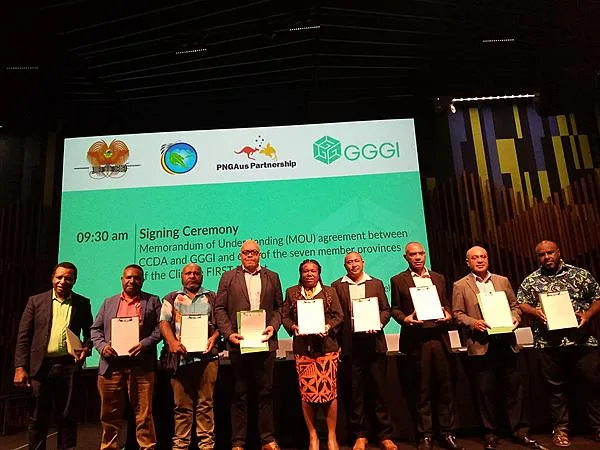
Climate resilience and sustainable development was marked by the Climate FIRST Inception Workshop and the Memorandum of Understanding (MOU) signing, uniting the Global Green Growth Institute (GGGI), Climate Change and Development Authority (CCDA), and seven provinces in PNG. The inception workshop, held from June 3rd to 4th at the Hilton Hotel, Port Moresby, served as a pivotal platform for strategic discussions and collaborative agreements aimed at supporting climate finance and resilience across the nation.
The project is implemented in partnership between the CCDA, GGGI, the Australian High Commission (AHC) on behalf of the department of Foreign Affairs and Trade Australia, and Provincial Administration of seven provinces which are Eastern Highlands, Enga, Manus, Milne Bay, Morobe, New Ireland and Simbu. The partnership and participation between organisers and stakeholders emphasized the urgency of addressing climate change's adverse impacts on PNG's rich and natural ecosystems.
The two-day event commenced with deliberative sessions aimed at making clear the project's objectives, expected outcomes, and associated risks. It was also the first opportunity to bring all stakeholders together to discuss implementation arrangements at the national and provincial level.
Key sessions on the first day encompassed comprehensive discussions on Climate FIRST's overarching goals, governance structure, stakeholder roles, and progress updates on green investment pipelines. The engagements fostered a deeper understanding among stakeholders, laying the groundwork for effective collaboration and decision-making.
The second day featured a formal inception meeting, highlighted by a momentous signing ceremony of MOUs between CCDA, GGGI, and the seven participating provinces.
Attendees included Nic Johnson, Counsellor (Enonomics), Australian High Commission and Motsy David, First Secretary, on behalf of Hon. Simo Kilepa, Minister for Environment, Conservation and Climate Change, underscoring the significance of collective action in addressing climate challenges.
Crucial sessions on the second day included discussions on governance structures, provincial capacities, and future action plans, reinforcing the commitment of all parties to uphold transparency, accountability, and sustainable development principles.
The event drew over 50 participants from diplomatic corps, donor partners, government representatives, civil society organizations, and academia, signaling broad-based support for Climate FIRST's ambitious objectives.
During the Inception Workshop First Secretary Motsy David gave the keynote speech on behalf of Hon. Simo Kilepa MP, Minister for Environment, Conservation and Climate Change delivered the keynote speech, advocating for transformative climate action.
First Secretary Motsy David underscored the transformative potential of the Climate FIRST initiative, emphasizing its pivotal role in reshaping PNG's approach to development and resource management.
David's remarks resonated with a diverse audience of stakeholders, highlighting the project's ambitious objectives and the collective commitment required to address climate change challenges.
“Climate change is no longer a distant threat but a present reality that affects every facet of our lives. Our Communities, rich in culture and tradition, our pristine natural landscapes, and our diverse ecosystems are increasingly vulnerable to the adverse impacts of changing climate patterns. Rising sea levels, extreme weather events, and shifting agricultural conditions pose existential threats to our way of life”
“This project is not just about responding to climate change; it is about transforming our approach to development and resource management. It is about ensuring that our economic growth does not come at the expense of our environment. It is about fostering inclusive growth that benefits all Papua New Guineans, especially those most vulnerable to the impacts of climate change.” He added.
David commended the visionary leadership of the Climate Change and Development Authority, Provincial Governments, Global Green Growth Institute, and the Government of Australia in spearheading the Climate FIRST initiative. He particularly lauded Australia's AUD 20 million investment in the project, emphasizing its significance in fostering bilateral cooperation to combat the impacts of climate change.
“Climate FIRST will build on the success of the initial four-year UAD 6 million DFAT funded Climate Resilient Green Growth Project (CRGG) that was implemented by GGGI between 2019 and 2023. This project which was fully completed in June 2023 was piloted in Enga, Milne Bay and New Ireland province resulting in the adoption of CRGG strategies and action plans in these provinces.”
“The project had among other results mobilized USD 24 million in climate investments which included the USD 10 million Adaptation for Small Scale Agriculture (ASSA) project and the establishment of the Credit Guarantee Corporation (CGC) with USD 14 million equity from Kumul Holdings and Bank of Papua New Guinea. This initiative will now be scaled up under Climate FIRST to include four more provinces which include Eastern Highlands, Manus, Morobe, and Chimbu bringing the total provinces under Climate FIRST to seven, which is one third of PNG's total provinces and population.” He added.
David hailed the government's unwavering commitment to partnership at all levels, emphasizing its role in advancing a greener economy and fostering resilience. He lauded the collaborative efforts of all stakeholders, citing Climate FIRST as a beacon of hope in PNG's journey towards a greener, more secure future.
The purpose of the project's inception meeting, as outlined by David, is to foster a shared understanding among stakeholders, laying a solid foundation for success. He emphasized the importance of stakeholder engagement and ownership in delivering key project components, including strengthened climate finance mechanisms and increased private sector engagement.
“I believe that your workshop from yesterday has provided all stakeholders the opportunity to discuss these projects aspects and scope in greater detail to foster a better understanding which will lead to a stronger stakeholder 'Buy-In" and ownership. This is essential for the project's success in delivering its key components including strengthened national coordinating mechanism for climate finance and investments, scaled up access to climate finance from blended financial sources including innovative financing mechanisms and increased private sector engagement, strengthened subnational CRGG policies and increased GEDSI (gender equity, disability and social inclusion) benefits.”
“As you deliberate on the Governance set up of Climate FIRST today, as you commit each other in partnership to work together, closely, to mobilize the resources we need, let us also recognize that this delivery is a collective victory in itself. It is the testament to enduring partnerships, shared vision, and unwavering dedication to a cause that transcends borders and unites us all in a common purpose.
He urged every stakeholder, including policymakers, private enterprises, local communities and international allies, to come together. “Let us forge ahead to deliver what we promised our people and environment. And that is, a greener economy for Papua New Guinea, is a step towards a more secure, prosperous, inclusive, and sustainable future for our country.”
As deliberations on Climate FIRST's governance structure continue, he extended special thanks to the Government of Australia for its steadfast commitment and acknowledged the collaboration of the Ministry and delivery partner, GGGI, in driving the project forward.
About the Climate FIRST Initiative: Australia and PNG collaborative efforts
The Climate FIRST initiative was launched jointly by the Prime Ministers of Australia, Hon. Anthony Albanese, and the PM of PNG, Hon. James Marape earlier this year, during their Annual Leader’s Dialogue in Camberra on 8 February 2024. The initiative aims to enhance PNG's access to climate finance and investments, thereby fortifying climate resilience and promoting low-carbon development. With Australia's substantial funding commitment of AUD 20 million (PGK50 million), funding for the four-year project, spanning from March 2024 to March 2028, the project is poised to catalyze transformative change across the nation.
The project's comprehensive approach, encompassing stakeholder engagement, governance reforms, and strategic investments, reflects a shared commitment to sustainable development and environmental stewardship.
In the final day of the inception workshop, Nic Johnson emphasized the collaborative efforts between Australia and PNG in tackling climate change. He underscored Australia's unwavering commitment to supporting PNG and the wider Pacific community amidst the challenges posed by climate change.
Highlighting the significance of the partnership, Jonnson reiterated Australian Prime Minister’s assertion that Australia stands in solidarity with the people of PNG, expressing a steadfast commitment to aiding the nation in its climate resilience efforts.
He commended the cooperation between PNG and Australia to take action against climate change, under the PNG-Australia Climate Change Action Plan, which was established at the ministerial level.
Adding on he said, since its inception, Australia has contributed over $100 million towards climate change mitigation and disaster resilience initiatives in PNG. These funds have been allocated to various sectors, including infrastructure, transportation, healthcare, and education, aimed at supporting PNG's capacity to withstand the impacts of climate change.
“That includes mainly in infrastructure, so looking at transport, health and education and disaster risk reduction. So we will continue to take a climate change perspective to all our infrastructure investments going forward. Overall, Australia has committed about AUD $2 billion towards climate financing in the Pacific, and that will be spent between 2020 and 2025.”
Furthermore, building upon past achievements, Jonnson unveiled the Climate FIRST initiative, designed to strengthen PNG's ability to secure international climate finance and advance its National Adaptation Plan. The initiative aims to facilitate the development of high-quality project proposals aligned with PNG's priorities in agriculture, energy, transportation, and infrastructure.
As a significant milestone, he emphasized on the crucial role of involvement of provincial administrators and leaders, in driving effective climate action. He expressed optimism that Climate FIRST would empower communities to confront the realities of climate change head-on and access vital resources for resilience-building projects.
The Mineral Resources Authority (MRA) has announced that it would donate K200,000.00 worth of relief supplies to the people of Yambale Village who have been affected by the landslide.
Yambale village in the Maip-Mulitaka Rural Local Level Government in the Porgera-Paiela electorate, was affected out by landslide on May 24, 2024.
The MRA has already procured the supplies from a wholesale shop in Wabag, and will transport them (supplies) early next week to the disaster site, in collaboration with the Enga Provincial Disaster Committee.
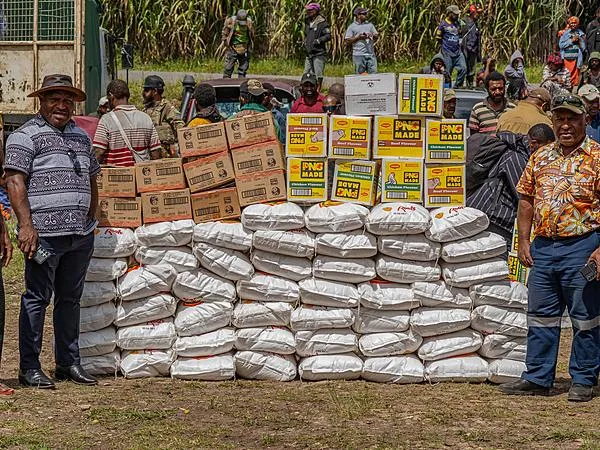
The goods include 600 bags of rice, 400 cartons of tinned fish, 400 cartons of noodles, 200 bales of sugar, and 200 bottles of cooking oil among other basic goods.
A team of MRA officers led by the Project Coordinator for the Porgera Mining Project, Joe Kak Ryangao, went to Yambale village where he made the announcement and presented some of the goods. The announcement coincided with the visit to the village by the Prime Minister Hon James Marape, where he also announced the National Government's assistance of K20 million. The PM was accompanied by the Governor for the Enga Province, Hon Sir Peter IPatas and other regional leaders, who also made financial commitments towards helping the affected villages.
Mr Ryangao on behalf of the Managing Director of the MRA, Jerry Garry, conveyed the MRA's condolences to the families of the victims of the natural disaster. He said the Porgera- Paiela electorate is host to the giant Porgera mine, which is one of the government's priority projects. He said because of the mine, MRA officers frequently travel the highway, passing by Yambale village.
He said: “To see the very village that MRA officers pass by every other week completely wiped out in such a tragic manner was devastating.”
Mr Ryangao said the assistance was part of the MRA's Corporate Social Responsibility.
Meanwhile, Ward Councilor for Mulitaka Mangalo Jaman Yandam, so far eight bodies had been recovered from the rubble at the time of the presentation, with hundreds still missing.
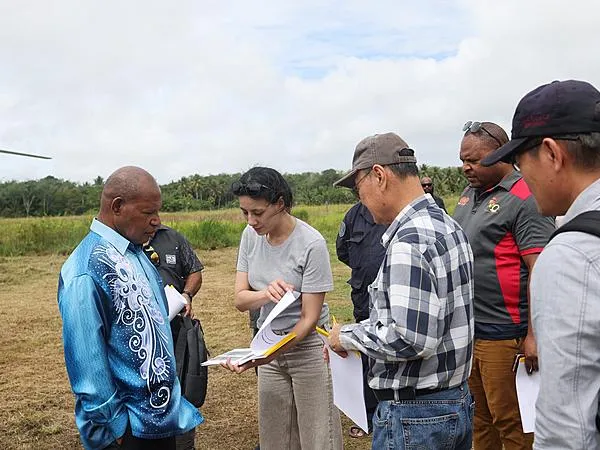
The Minister for International Trade and Investment, Hon. Richard Maru visited the Cocoland Sugar Development Project in Abau, Central Province recently. He was received by the Chairman of the company- Yaosoeng Sugar and Cane Consultant Company, Mr. Prapat Jenlapwattanakul and his team, the landowners, leaders of the community, and the people of Cocolands. Minister Maru described his visit as ‘a very useful visit’.
After visiting the project site, Minister Maru said: “I do appreciate now that there is enough grassland for the project, there is enough State land to build the sugar mill, and the local people are very supportive of this project.”
Minister Maru stated: “The process that we now have to follow is firstly, my Ministry will be putting together a NEC Submission to bring to Cabinet to endorse this project as a project of national importance. The Cabinet will basically approve that the Government must support this project and it will be developed as an SEZ meaning the company will be given incentives to invest here including tax holiday and duty-free exemptions. This is subject to phase two which is negotiations between the company, the landowners, the DDA, the LLGs, the local MP, the Provincial Government, and the State, to agree to the elements of the project like benefits for landowners, new wharf, power supply, etc which will be captured in the Project Agreement. The Project Agreement will be signed subject to the negotiations. After the signing of the Project Agreement, the State can give the land title to the company. The company will need the title to have security of land tenure so they can go to the banks to raise capital to build the sugar mill and to start this project. The shareholders of this project can be the State through KCH, the Central Provincial Government, and other investors.”
Minister Maru said this project was one of the most important projects for the Government and the country.
“Nothing must get in the way of this project- not politics and not self-interest. We must all focus on delivering this project,” said Minister Maru.
Minister Maru said as the Minister responsible for International Trade and Investment, he will be giving this project his highest priority.
“Without any investment we cannot build the economy of our country, we cannot create jobs, and we cannot generate wealth for our people. We need investments. This project will develop a township, create over 20, 000 jobs and significant business opportunities for the landowners who will be planting sugarcanes as out-growers and supplying the sugar mill, and the project will also deliver a power project- 45 megawatts to be used for the mill and 20 megawatts to be sold to PNG Power Limited to provide cheap and reliable power in Abau District. This is a very capable company and a serious investor- I have seen their operations in Thailand with my own eyes. They will spend over a billion Kina to make it happen from planting to milling of sugar, and the power station. This is the kind of investment that we need especially in the rural areas where the bulk of our people live,” said Minister Maru.
To the leaders and the people of Cocolands Minister Maru said: “The bulk of the sugarcane will be planted on traditional land, not State land. The Government will not acquire more land from you. You must keep your land so you can develop it and make money from your own land and your own sweat. It is the company’s job to train you, plough your land, and provide tractor and the seedlings. Look after the investor because we need them to help us develop this project so we can all benefit from it. We have to make this project happen and I need all your support.”
Spokesperson of the Gabina Clan said: “We are ready to support this project so we can benefit from it to improve our livelihood.”
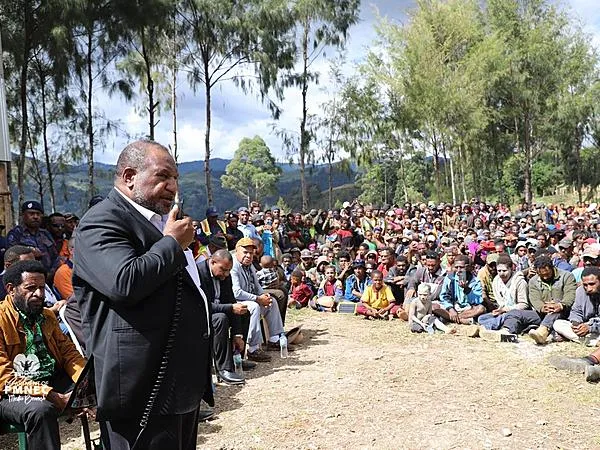
Prime Minister Hon. James Marape made a visit to the landslide-affected area of Maip-Mulitaka LLG in Porgera-Paiela, Enga, on Friday, May 31, 2024.
Accompanied by Enga Governor Hon. Sir Peter Ipatas, Defence Minister Hon. Billy Joseph, and Hela Governor Hon. Philip Undialu, the Prime Minister met and talked to people affected by the May 24 disaster in which an estimated 670 people lost their lives and over 7800 were displaced.
During his visit, Prime Minister Marape provided K20 million to the Enga Provincial Government to address immediate disaster needs. Additionally, the Hela and Southern Highlands provincial governments contributed K1 million each. Prime Minister Marape expressed gratitude to the international terminal operator ICTSI South Pacific for its K1 million support.
“I express my heartfelt sorrow to the people of Maip-Mulitaka who lost loved ones in the disaster,” Prime Minister Marape said.
“Although I may be late, the government, through relevant departments and agencies like National Disaster Centre and PNG Defence Force, acted promptly in attending to the disaster.
“I thank the Enga Provincial Government of Governor Sir Peter and Provincial Administration of Sandis Tsaka, who, even if the landslide had occurred at 3am on Friday, responded immediately and by 8am, disaster work was already in progress.
“I also thank, on behalf of the affected people and the country, all the global friends of Papua New Guinea for their kind words and support.
“I thank our partner countries including Australia, New Zealand, USA, Japan, China, United Kingdom, Indonesia, France, Israel, South Korea, Phillipines, Malaysia, Singapore, India, Czech Republic and many others, United Nations, International Organisation for Migration and Pacific Islands Forum for responding very quickly to the disaster.
“I assure the people of Maip-Mulitaka, Porgera-Paiela, Enga, and Papua New Guinea that you are not alone in this difficult time.”
Prime Minister Marape assured the people of Maip-Mulitaka that the national government would work with the Enga Provincial Government in continuing relief and restoration work.
“Our focus should now be on relief, restoration, and reconstruction into the future,” he said.
“We will respect and follow whatever long-term plans of the Enga Provincial Government.”
Prime Minister Hon. James Marape on Friday, May 24, 2024, launched the Madang Provincial Integrated Development Plan 2023-2027 in Madang Province. This marks the first drafted and approved development plan for Madang Province in over 20 years.
Madang Governor, Hon. Ramsy Pariwa, made the announcement at a significant ceremony held at Bates Oval in Madang Town. He informed attendees that the plan would serve as a compass for the province’s development. Governor Pariwa commended the Marape-Rosso Government for developing the Medium-Term Development Plan IV (MTDP IV), which allows provincial governments to access public funds by aligning their programs with national initiatives.
Governor Pariwa also called on the Prime Minister to collaborate with his Provincial Government to resolve the ongoing court proceedings hindering the appointment of a Provincial Administrator and to address the completion of key infrastructure projects committed by the government. These projects include the Baiyer-Madang Road, a four-lane road from Madang Airport to Madang Town, the Madang Airport Terminal, the development of the Pacific Maritime Industrial Zone (PMIZ), and the rehabilitation of cocoa, coffee, copra, and vanilla plantations in Madang. Additionally, he highlighted the need for better collection of levies and royalties from major projects, especially the Ramu Nickel Project.
He also appealed to the government to consider permanently resettling the people of Manam. Furthermore, the Governor pledged to work with the government to initiate the downstream processing sector of Papua New Guinea in Madang Province.
Prime Minister Marape expressed his pleasure at launching the Madang Provincial Integrated Development Plan 2023-2027. He acknowledged Madang’s significant contribution to the economy of Papua New Guinea and welcomed the Governor’s remarks on the lack of development and support from the National Government for provincial projects.
The Prime Minister committed K10 million to the Madang Airport to Gav Store Road, K10 million to the Divine Word University to Modilon Road project, and another K10 million for the rehabilitation of the agriculture sector and plantations in Madang Province.
He noted that portions of the road construction are currently subject to court proceedings, but assured that work would begin on the unaffected sections while seeking legal advice on how to proceed with the disputed areas.
Prime Minister Marape reiterated his vision for the people of Papua New Guinea to have robust economic infrastructure and achieve economic independence. He emphasized the need for collective effort from both the government and the citizens to ensure the success of development programs and projects. He stressed the importance of improving law and order and ensuring that allocated funds are used effectively.
During the event, Prime Minister Marape also launched the District Development Plan 2023-2027 for Usino-Bundi, completed by the late Jimmy Uguro and now set to be implemented by the Madang Provincial Government.
Prime Minister James Marape has announced an K18 million funding from the National Government to the Middle-Ramu District to construct the missing link Madang-Baiyer Road.
The road will connect Madang and Baiyer in the Western Highlands Province and will serve as a short and alternate route to connecting the seven Highlands provinces.
Prime Minister Marape announced the funding when launching the Madang-Baiyer Road project and the Middle-Ramu District’s Five-Year District Development Plan 2023-2027 at Sagapi Village in the Kovon Local Level Government area today.
He said not only Middle-Ramu but many other remote areas like Kaintiba in Gulf Province, Telefomin in Sandaun, Menyamya, and others who have been left out and are not yet connected will be connected through the Connect PNG programme.
“I have come here today because I see your Middle-Ramu Member Hon. Kansol Kamdara has you people in his heart by doing the right thing to connect the district. Therefore, the National Government will fully support the district plan and ensure funding of K100 million will be disbursed to the district in the next five years,” Prime Minister Marape said.
“I have been growing up and attended school in remote areas of the country during my childhood years and know what life is like in areas like Middle-Ramu and I am emotionally taken back.
“I wish we had enough money to fix everything we need to do with money. However, we do not have enough resources, but I urge every one of you not to give up hope. I have to say that one day a machine will come to your area to construct your roads. I appreciate the work your local Member and Madang Governor Hon. Ramcey Pariwa are doing to build the Madang-Baiyer Road and have put aside a funding of K18 million. The National Government will also match that and add another K18 million towards that road project.”.
He said that the National Government has the kina-for-kina policy where the government will add the same amount a district or province comes up with on any programme or project that has high economic value and benefits the majority of the people.
Prime Minister Marape said he was pleased to see Middle-Ramu as the first district in Madang Province to come up with a district development plan. The National Government will support the Middle-Ramu District plan and will commit K20 million a year and urged the district to use the resources wisely.
Prime Minister Marape also challenged the people of Middle-Ramu not to claim any form of compensation or demand money from the contractors who will be working on the Madang- Baiyer Road so the road can be constructed without any hassle.
He urged the people to show a good example to other districts and parts of the country.
“When they are constructing the road, do not claim compensation. I want you to make a commitment and say no to compensation. My good people of Middle-Ramu, do not put claims for monetary gain for your trees being cut, stone and gravels being taken or used on the road, and unnecessary claims The contractors and the Department of Works and Highways know and will assist you as and when they construct the road.
“The National Government does not want to hear this issue of money and compensation first before any roads or project is constructed, especially in the development of this Madang-Baiyer Road. The road is a vital economic link and lifeline that will last generations, but the money you get will be wasted in days,’’ he said.
Prime Minister Marape said the government does not have enough money to pay for compensation and at the same time build roads.
He said roads will unbundle rural PNG and districts like rural Baiyer, rural Middle-Ramu, and the rest of the country.
Prime Minister Marape also commended the local MP Kansol Kamdara for his efforts and for coming up with the District Plan, which the government will support The National Government also noted the district’s ambition to connect its people with other parts of the country with the Madang-Baiyer Road.
Prime Minister Marape and Minister for Works and Highways Solan Mirisim, who accompanied the Prime Minister, told the people of Middle-Ramu that the National Government has seen and heard the people’s plight and will fund the road project and the district’s five-year development plan.
Hela Province Governor Philip Undialu has congratulated the Mineral Resources Development Company (MRDC) and Department of Petroleum for facilitating the opening of Hides Petroleum Development License 1 (PDL1) Bank Accounts Opening in Hela Province, Papua New Guinea.
Governor Undialu commended this monumental achievement, saying: "I am pleased to see landowners started opening accounts with BSP at Juni, Hides. This is a historic moment we all have been waiting for."
MRDC, DPE and Bank South Pacific (BSP) collaborated successfully to eventuate the project in the resource-rich province despite challenges, he added.
The initiative saw the participation of 97 out of 120 clans in electing their executives, with 23 clans currently in mediation. However, the JP Karai Block remains embroiled in a court dispute, highlighting ongoing challenges in the region's resource governance.
The culmination of Clan Executive mediations paves the way for the final step in the entitlement process – the election of Block Leadership. These elected leaders will subsequently form two Gas Resources Companies in accordance with the Hides PDL1 License-based Benefits Sharing Agreement (LBSA), ensuring fair and transparent distribution of benefits.
Governor Undialu extended his appreciation to MRDC and BSP for their pivotal roles in resolving this longstanding issue. "I am happy with MRDC and congratulate the team led by Managing Director Mr. Augustine Mano for resolving this long-standing issue," he said.
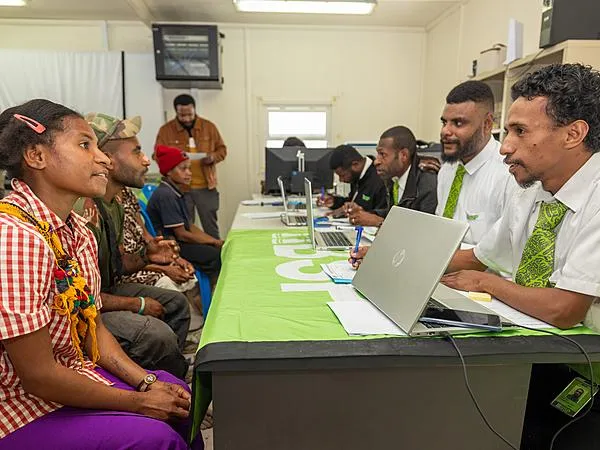
The Mineral Resources Development Company (MRDC) spearheaded the launch and facilitation of the Petroleum Development License 1 (PDL1) Clan Bank Account Opening for the landowning communities of the PNG LNG project in Hides, Nogoli, Hela Province on May 21.
This account opening process enables the clans to access their rightful royalty and equity entitlements through their bank accounts.
Prime Minister Hon. James Marape presided over the occasion in Hides, accompanied by distinguished guests, stakeholders and representatives from project partners.
MRDC Managing Director Mr. Augustine Sanga Mano lauded the efforts of MRDC, the Department of Petroleum and Energy (DPE), and BSP bank staff who, over the past two months, have worked closely with the landowners for this event.
"I am pleased to announce that 90 of the 121 clans have fulfilled the compliance requirements and are now poised to open their bank accounts," Mr. Mano remarked. "This marks a notable milestone, and I extend my gratitude to the landowners and their leaders for their collaborative efforts thus far."
He reiterated the MRDC and the Department of Petroleum's commitment to assist the remaining clans in addressing any outstanding issues in the days ahead.
Independent observers oversaw the meticulous clan meetings over the preceding two weeks, during which representatives from the Department of Petroleum and Energy received the meeting minutes and resolutions to uphold transparency.
“The people are ready. An impressive 96 out of 121 clans have fully complied with the process. This week Bank South Pacific will open their clan bank accounts through which they will receive their royalty and equity benefits,” Mr. Mano said.
Despite a report of a minor incident, Mr. Mano was pleased that most of the clans came out to welcome the BSP and MRDC officials for the opening of their respective clan bank accounts.
“The PDL1 beneficiaries have waited patiently since 2014. They must not wait any longer. This is a momentous occasion, and they should feel happy and look forward to receiving what is rightfully theirs,” he said.
Mr. Mano said that MRDC, DPE and other stakeholders would ensure that the remaining 19 clans complete their account opening compliance process.
The next step after the account opening is the election of directors, which the Electoral Commission will facilitate in June to elect new directors to represent the landowners' interests.
Independent observers are on the ground overseeing the account opening process, ensuring its integrity and transparency, the MRDC said.
“This additional measure, initiated by MRDC, underscores our commitment to a fair and transparent implementation of the program,” said Mr. Mano.
Papua New Guinea DataCo and Oracle have signed a memorandum of understanding to advance the country’s critical digital infrastructure and to introduce world-class cloud infrastructure through the Oracle Alloy product.
The MOU was signed on May 10th in Port Moresby as Information and Communication technology Minister Timothy Masiu welcomed Oracle Corporation into PNG to support the government's digital transformation agenda.
Mr. Masiu congratulated DataCo for this initiative and welcomed the signing of the MOU. He said the world re-known company Oracle, specializing in cloud technology has offered to invest in critical digital infrastructure in Papua New Guinea.
"I met with PNG Dataco and Oracle officials this week and am impressed with what they can bring in including training and capacity building and to work with PNG DataCo to strengthen and expand their digital infrastructure to support the overall government digital transformation agenda."
Mr. Masiu encouraged PNG DataCo and Oracle to continue working in partnership with the Department of Information and Communication Technology as the department under the Digital Government Act 2022 is managing a "whole-of-government" approach to delivering cloud technology services.
The Department has advanced design and development of various critical e-government services including single sign-on to digital services and the eGovernment Portal, he said.
Mr. Masiu urged government entities to work with DICT, DataCo and Oracle to make this partnership feasible through providing required information and data to plan, tailor and customize their infrastructure and technical skills and build rollout plans in line with DICTt s framework and road map.
"Our people desperately need digital services made simple, fast, and easy. With our geography and terrain, services are hard to reach our people but there are certain services that can be offered digitally and this is what the government envisions through the Digital Transformation Policy. We are ambitious in this endeavor as we head towards our silver jubilee in 2025."
PNG DataCo Limited are keen for Papua New Guinea’s communications infrastructure and the future of connectivity.
PNG DataCo Limited CEO, Paul Komboi, GCL, OBE, made a presentation on Papua New Guinea’s communications infrastructure and the future of connectivity in the region at the Innovation PNG 2023, held at APEC Haus, Port Moresby on 10 November 2023.
He discussed the PNG Communications Market Snapshot, Supporting PNG’s Digital Ecosystem, DataCo Digital Infrastructure Plan, alignment with GoPNG’s MTDP-IV, Key Programs, and other innovative programs.
This is the next step Dataco is taking in supporting PNG’s future in digital connectivity.
Recognizing the paramount importance of human rights, both for Papua New Guineans and those engaging in business, investment, and other activities within the country, the PNG Government, through the Department of Justice & Attorney General (DJAG), is spearheading efforts to establish a National Human Rights Institution (NHRI).
With financial backing from the European Union (EU) and in collaboration with DJAG's Human Rights Secretariat, a team of experts is actively supporting the setup of the NHRI.
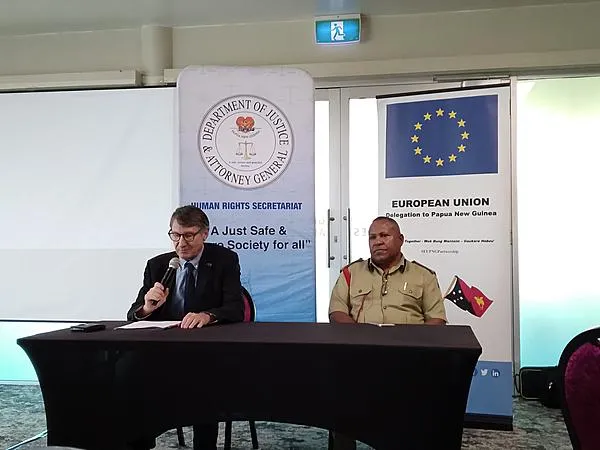
At an Inception Workshop for advancing the establishment of the NHRI, European Union Ambassador Jacques Fradin, Head of Delegation to PNG, expressed profound enthusiasm to EU’s support towards the establishment of a Human Rights Institution.
He highlighted the extensive groundwork laid over the past two decades, emphasizing the collaborative efforts with key government departments.
H.E. Fradin conveyed the EU's honor in receiving the request for assistance from the Department of Justice and Attorney General, marking a significant milestone in the EU-PNG Partnership for Good Governance.
The commitment of 4 million kina in funding underscores the EU's dedication to fostering human rights and democracy globally, aligning with the Universal Period of EU Recommendation.
Acknowledging the complexities ahead, H.E. Fradin outlined the threefold support from the EU:
He stressed the importance of adherence to international standards, ensuring the commission's independence and effectiveness.
In April 2024, the PNG Government through DJAG, The Human Rights Secretariat and the European Union commenced the project to supports the establishment of a Human Rights Commission.
This inception workshop was held on 14th May to plan the execution of the NHRI’s establishment, as it brought together key Government stakeholders and representatives of Civil Society Organization (CSO) groups to discuss crucial issues around the NHRI.
The deployment of a team of experts to the Department of Justice Human Rights Secretariat marked the inception phase's commencement, with consultations ongoing with government stakeholders and civil society representatives.
PNG stands as a growing business and investment hub in the Pacific, with a current population of 10,491,934 as of May 17, 2024, according to the latest United Nations data. The Worldometer elaboration of the latest United Nations data 1:
PNG's significance lies not only in its abundant natural resources but also in its allure for investment and tourism, drawing in a considerable number of people from various backgrounds.
Ambassador Fradin expressed confidence in the project's success, attributing it to the strong national commitment and leadership of the Department of Justice and Attorney General.
Throughout his speech in Port Moresby, H.E. Fradin emphasized collaboration and gratitude, recognizing the contributions of the Department of Justice, Attorney General, Civil Society Organizations, and the deployed team of experts.
He reiterated the EU's sustained support, spanning over a year, with the expectation that it will yield the desired outcomes for Papua New Guinea's human rights landscape.
“As the European ambassador speaking on behalf of the European Union, I hope that the necessary constitutional amendment bill and the organic law will soon become a reality, leading to an independent Human Rights Commission that meets the international standards. Of course, this will take time. This is paved with many difficulties, but as I said in the beginning, this is also paved with good intentions, coordination and our support can only go right,” the envoy added.
“I am confident that your support and the establishment of this Human Rights Commission will be successful, due to the strong national commitment and the Department of Justice, Attorney General's leadership. I extend my gratitude to the Department of Justice, Attorney General, for the great cooperation under the EU-PNG Good Governance Project, to the Civil Society Organization, and also, now I am naming them, to the team of experts that we have been deploying. They are very good, I think.”
The EU's commitment, coupled with the dedication of local stakeholders, sets a promising way forward for the establishment of a robust Human Rights Commission and Policy in the nation.
“It's a long endeavor. It comprises a lot of different interpretations, but at the end, as it's handled by the Department of Justice, it has a meaning, and the way forward, to be approved, is a beautiful one, and I believe in it.” H.E. Fradin reiterated.
Members from the DJAG, Department of Foreign Affairs, Constitutional and Law Reform Commission (CLRC), Department of Personal Management (DPM), Ombudsman Commission of PNG, Independent Commission Against Corruption, Department of Education, and the Department of Health joined the workshop.
Also present were the PNG Police, Department of National Planning and Monitoring (DNPM), National Judicial Staff Services ((NJSS), Department of Provincial and Local Level Government, First Legislative Counsel, and selected members of Civil Society Organizations (CSOs) and Faith-Based Organizations (FBOs).
The inception phase allows the Government and the experts tasked with overseeing the support towards a NHRI identify and discuss crucial human rights issues around a national institution and identify issues to consult with key stakeholders.
The Inception Workshop gave a clear understanding of;
Public consultation will be held following the inception phase.
The Minister for International Trade and Investment, Hon. Richard Maru recently announced that Cocoland Sugar Development Limited in Abau, Central Province, will be developed as a Special Economic Zone (SEZ). Minister Maru made this announcement in his meeting with the management team from Yaosoeng Sugar and Cane Consultant Company Limited (a Thai company) and the Abau MP, Hon. Sir Puka Temu.
The proposal is for a 40, 000-hectare sugar farm, a processing mill, and a power plant. This follows a very successful trial in Abau on the proposed sugar farm land. The plantation will produce 3 million tonnes of sugar every year with the target market to be PNG and other countries, especially Indonesia. The project is expected to create over 20, 000 jobs for Papua New Guineans.
“PNG is still importing sugar from Thailand despite the presence of Ramu Sugar in PNG, so we need another large-scale sugar project which will also be good for price competition,” said Minister Maru.
Minister Maru said this project will be developed as an SEZ and has the highest Government priority.
“We want to open a Diplomatic Mission in Thailand and having this project here in PNG gives us one reason why we should be in Thailand. We want to see more Thai companies coming and investing in PNG because there is a lot we can learn from them, and we can get more investments from Thailand. If we cannot get this project across the line then we will not have confidence from Thailand investors to come and invest in PNG, especially in large-scale agriculture projects. This project is important; it is an anchor investment for us because it affirms that our Government’s decision to open a Diplomatic Mission in Thailand is a very sound decision,” said Minister Maru.
Minister Maru further added: “I will be visiting Abau to see the project site before taking a Submission to the Cabinet to get their approval. This is very critical because once we have the approval, we can negotiate and sign a State Agreement between the State and the developer. The developer is keen to develop the large-scale sugar mill which will take over 2 years to construct with the sugarcane farm to cost USD126.01 million and the sugar mill and the power plant to cost USD295.01 million- a total of USD421.03 million. The investor is happy to fund the project itself or to partner the Government and other partners and wants to commence construction of the mill and the sugar estate this year.”
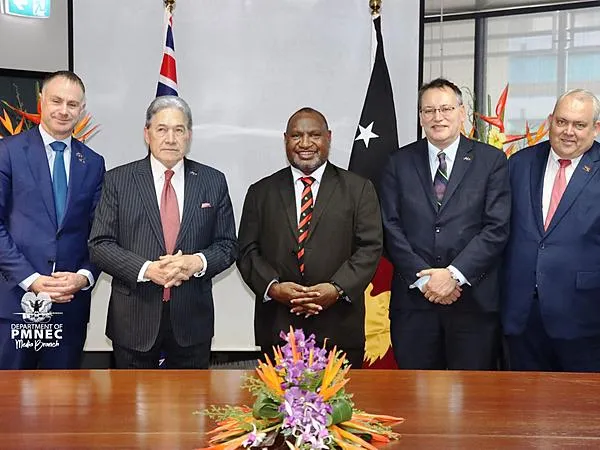
New Zealand and Papua New Guinea have agreed to strengthen bilateral relations following a meeting between New Zealand’s Deputy Prime Minister and Foreign Affairs Minister, Hon. Winston Peters, and Papua New Guinea’s Prime Minister, Hon. James Marape, in Port Moresby on Monday, May 13, 2024.
Prime Minister Marape recognised New Zealand as a steadfast development partner since 1975 and noted the positive state of current bilateral relations. He expressed optimism about expanding cooperation in business, trade, and investment, particularly in agriculture and energy sectors, emphasising the principles of a free-market economy.
Highlighting the economic benefits of the Recognised Seasonal Employer (RSE) Programme, especially for New Zealand’s Hawkes Bay Region, Prime Minister Marape requested an increase in the quota for PNG workers. “I note that PNG seasonal workers are very efficient and call for the increase in PNG’s quota,” stated Prime Minister Marape.
He also extended his gratitude to New Zealand for its prompt support during the COVID-19 pandemic, remarking, “The New Zealand government was one of the first to respond to the COVID-19 crisis in PNG, and I express my appreciation and thanks.”
Prime Minister Marape commended New Zealand’s involvement in the Fred Hollows Foundation’s eye care initiatives at Port Moresby General Hospital and lauded New Zealand’s efforts in mediating the Bougainville peace process. He provided an update on the Bougainville Referendum, emphasising its non-binding nature and the forthcoming discussions in the National Parliament.
In his dialogue with Deputy Prime Minister Peters, Prime Minister Marape stressed the importance of tertiary and technical education for development goals in PNG and other Pacific Island Countries. He proposed exploring partnerships for open campuses of New Zealand’s tertiary institutions in PNG.
Acknowledging ongoing military cooperation, Prime Minister Marape thanked the New Zealand Government for supporting the establishment of the Kumul Leadership Centre at Murray Barracks in April 2022.
On key regional issues, Prime Minister Marape urged continued commitment from both nations as members of the Pacific Islands Forum (PIF) to the 2050 Strategy for the Blue Pacific Continent, focusing on sustainable development and environmental conservation.
In addressing sea level rise and other environmental threats, Prime Minister Marape proposed that New Zealand consider cooperating with PNG on land reclamation projects for at-risk Pacific islands, offering an alternative to relocation.
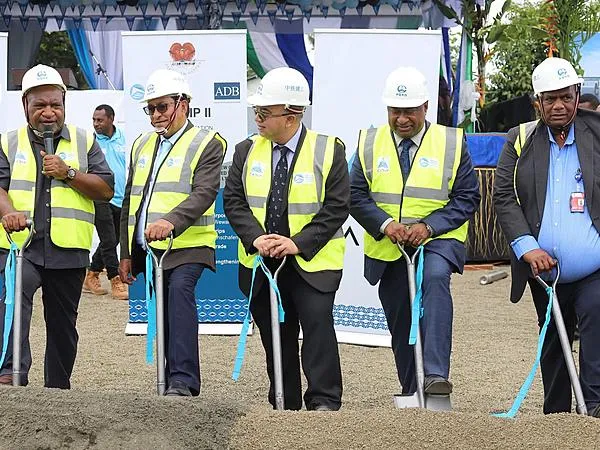
Prime Minister Hon. James Marape on Friday, May 10, 2024, lauded the National Airports Corporation (NAC) and the Civil Aviation Development Investment Project (CADIP) for their significant role in constructing the new K76.8 million Gurney Airport in Alotau, Milne Bay Province. He expressed his commendations during the groundbreaking ceremony held in Alotau, highlighting the initiative as a crucial component of the Government’s Connect PNG initiative.
In partnership with the Asian Development Bank (ADB), the upgrade of provincial airport terminals under CADIP represents a strategic element in the nation’s infrastructure development aimed at bolstering economic growth and tourism. Since its initiation in 2010 with CADIP1, the project has facilitated the enhancement of numerous airports across the country, accumulating investments totaling up to K1.6 billion.
The project, expected to complete within 26 months, aims to enhance travel time, cargo and passenger handling services, and overall facilities for travellers. This initiative not only supports improved operational efficiencies but also fosters economic growth and tourism development throughout the region.
Prime Minister Marape extended his gratitude to the ADB for their enduring support and underscored the importance of infrastructure in improving the livelihoods of Papua New Guineans. “Upgrading airport terminals, enhancing safety and security, and generating job opportunities are pivotal for the holistic development of the region,” stated Prime Minister Marape.
He also remarked on the promising prospects for tourism in Milne Bay and encouraged local leaders to prioritise this sector. The collaboration among the National Airports Corporation, various investors, and the ADB exemplifies a unified commitment to advancing transportation and connectivity within Papua New Guinea.
Alotau’s Gurney Airport proudly stands as the first recipient under the second phase of CADIP, denoted as CADIP 2.
“The diligent efforts by our investors compel us to rise to the occasion, ensuring we match their commitment to delivering 21st-century infrastructure,” added Prime Minister Marape.
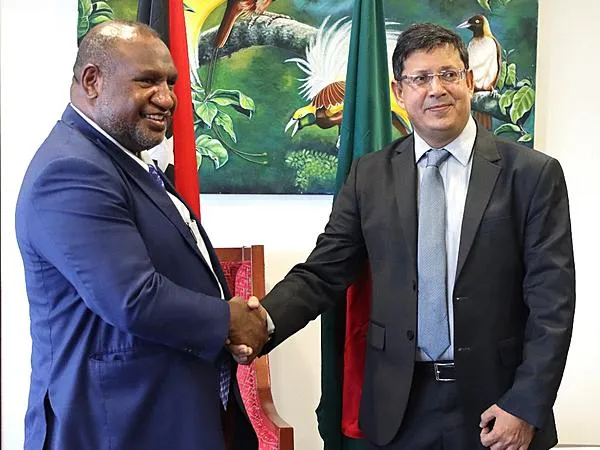
Prime Minister Hon. James Marape on Thursday, May 16, 2024, extended a warm welcome to the High Commissioner of the People’s Republic of Bangladesh to Papua New Guinea, H.E. Mr. Tarukil Islam, upon his maiden visit to PNG.
Prime Minister Marape, in meeting him at Sir Manasupe Haus, congratulated High Commissioner Islam upon his new appointment and affirmed the PNG Government’s eagerness to work closely with him to further strengthen the cordial relations between the two countries.
“A warm welcome to you, High Commissioner Islam. This meeting is important for us as since our diplomatic ties were forged in 1982, our relations have been friendly, and so we need to strengthen this through greater cooperation activities between us. I hope you will further strengthen the efforts of your predecessor to consolidate in a practical way the relations between our two nations,” said Prime Minister Marape.
“Our government’s intention is to explore mutual areas of cooperation to strengthen the bilateral relations between us. I am glad to say that our relations have been strong in recent years in the areas of employment and business investment, where a good number of Bangladeshi workers came and worked here in the ExxonMobil-led PNG LNG Project, particularly during the construction phase, and the number continues. There are also notable Bangladeshi businesses operating in PNG, especially in the service sector, which have provided job opportunities for Papua New Guineans. And so, there is enormous potential in enhancing this through greater cooperation in the economic sectors of both of our countries. There is also potential for us to strengthen our trade relations,” said Prime Minister Marape.
Prime Minister Marape also pointed out and encouraged the need for regular and increased exchanges of high-level visits between political leaders and senior officials of both countries, which would positively contribute towards promoting goodwill, better understanding, and cooperation between the two countries.
“My government is prepared to provide land for you to establish your High Commission office here to enable closer and greater cooperation between us, and I hope we will do the same in your country. This can be from an economic point of view where I specifically note your thriving textile industry in which I invite investors from Bangladesh here in this space.
“There are great opportunities here for your businesses not just in textile but also in agriculture, mining and petroleum, forestry, and fisheries on a joint venture basis with local entrepreneurs,” he added.
Prime Minister Marape emphasised his government’s plans to strengthen relations with countries located directly west of Papua New Guinea in the South-East Asian region, in which Bangladesh is also included.
High Commissioner Islam expressed his gratitude for Prime Minister Marape’s warm welcome. He welcomed the proposition by the PNG Government on regular dialogue and exchange visits between the two countries’ Governments to enhance relations between them.
He also highlighted Bangladesh’s key areas of focus in the economic sector, which the country can assist PNG with. These include agriculture, information technology, education, and training. During the discussions with Prime Minister Marape, High Commissioner Islam mentioned their need for LNG Gas, which PNG can supply through its hydrocarbon potential, given that Bangladesh can produce ships which can load LNG Gas for their use in industry and residential areas.
The courtesy call was witnessed by Foreign Affairs Minister Hon. Justin Tkatchenko and officials from both countries’ diplomatic offices.
The International Monetary Fund (IMF) Country Head, Mr. Sohrab Rafiq, recently gave an update on the multinational lender’s program with the Papua New Guinea government.
Mr. Rafiq highlighted the progress made in the IMF program, with successful completion of the first and second review missions, and underlined the importance of the IMF's concessional financing, offering affordable options for the PNG government.
Mr Rafiq’s presentation addressed the government's fiscal position, noting a decline in the fiscal deficit post-COVID, with projections indicating a return to a balanced budget by 2027, provided government implements policies effectively.
He also discussed foreign exchange (FX) issues, emphasizing evidence-based policymaking to guide advice on the exchange rate and FX matters.
“Based on 2023 actual fiscal numbers, the fiscal deficit now of the government of PNG is back where it was pre-COVID. Based on current projections and based on discussions that we've had on the policies that are in the pipeline, on the revenue-generating capacity of the government, on the spending, and so on, the fiscal deficit is projected to narrow over the coming years,” Mr. Rafiq said.
“Assuming that the policies are implemented and assuming that there's no large economic shock, by 2027 the government should be running a balanced budget, which is quite an achievement,” he added.
Mr. Rafiq also tackled head-on the misconceptions surrounding PNG’s debt situation in the media.
He addressed the prevalent notion that PNG's debt is alarmingly high, stating: "When compared with regional peers, PNG's debt is broadly in line and not exceptionally high. In fact, it's lower than countries like Fiji, Mongolia, and Malaysia, all of which are significant commodity exporters."
The Port Moresby Chamber of Commerce and Industry (POMCCI) hosted the Business Breakfast where the updates were shared, on May 10th at the Royal Papua Yacht Club, which also included commentary from Mr. Marcel Schroeder, PNG Country Economist of the Asian Development Bank.
Clarifying IMF's role and financing, Mr Rafiq said contrary to misconceptions, the Fund’s role is to advise and support the PNG government, not to undermine sovereignty. The IMF provides concessional financing at low interest rates to assist in fiscal management, he noted.
He also underscored the successful completion of the first two reviews of the IMF program in PNG, attributing it to the government's commitment to reform.
“The IMF is only here to advise and support the government. The ownership of the government, the ownership of the reform agenda belongs to the government.
Mr. Rafiq acknowledged the challenges of foreign exchange shortages and overvalued exchange rates in PNG. He explained the economic implications, such as reduced GDP growth and declining per capita income, citing empirical evidence from other countries.
He stressed the need for investment and highlighted the IMF's role in providing policy advice and financing to address these challenges.
“The kina has been depreciated against the US dollar, which is true. Whenever you are sort of looking at the exchanges, you need to look at what is your initial condition. Where are you starting? Where are we today? I don't think that's a controversial statement to make.”
“Now, what that means is that there's a persistent, more accumulation in the exchange rate because of the persistent mismatch of supply and demand for foreign currency. Because of this mismatch exists, the central bank, will have to come into the market and make interventions and try and enforce policies.”
Mr Rafiq reiterated, “There is not a single example of a country (in Asia-Pacific) that has diversified its economy with a normal value exchange. That's just a matter of historical record.”
Within the IMF, comprising 190 countries and in comparison, PNG is not the only country going through currency deficit and foreign exchange issues, he said.
“That's just empirical data. Now, with a normal value exchange rate, there's a mismatch of supply and demand in the foreign exchange market. The central bank has to intervene to try and clear that mismatch.
“Of course, unless you're an oil-rich dollar country that has trillions of dollars in foreign exchange and you can go on to intervene in the market at any rate and clear the market at any rate, unless you're a country like that, BPNG has to manage its foreign exchange reserves. And it can only intervene at the level that is sustainable for its balance and for its level of foreign exchange. And that's what produces the effects.”
Mr. Rafiq outlined the importance of gradual adjustments in the exchange rate to align with market levels, emphasizing the need for sustainable reforms. He reassured stakeholders that the IMF stands ready to support PNG in reversing economic challenges and promoting growth.
“If this country's average growth rate had been maintained at its pre-2014 level, the economy of PNG would be billions of dollars bigger than what it is today. Billions of dollars bigger than what it is today. Now, some of you may argue it's entirely coincidence that the declining of PNG's average GDP growth happens when the FX shortage has begun.”
“I've heard some people say this, that it's entirely coincidental. But if you look at the patterns in the data, it's an incredible coincidence that PNG's GDP growth began declining when the FX shortage began.”
Mr. Rafiq highlighted persistent supply-demand imbalances leading to FX interventions by the central bank. He stressed the need for a realistic exchange rate, citing examples from the Asia-Pacific region.
“And that's the cost that the FX shortages, which is the result of an overvalued exchange rate, that is the cost that's being imposed on this country. Now, based on current trends, if we assume this level of GDP growth, and we assume overvalued exchange rates, and we assume population growth of 3.5%, what it suggests is that this country is going to continue to get poorer."
Mr Rafiq added, “There's no investment. This is a cross-country comparison chart on foreign direct investment. There's only one country on this list that has had a persistently overvalued exchange rate and FX shortages. So no investment, very low levels of growth, declining per capita GDP.
“As I said, there's no example in the world of a country having diversified its economy with a normal market exchange rate, and you see that in the data for PNG as well.”
He also commented on IMF’s dedication to fostering global monetary cooperation, ensuring financial stability, facilitating international trade, promoting employment and sustainable economic growth, and reducing poverty worldwide.
Mr. Sohrab Rafiq emphasized the IMF's role in engaging with various stakeholders, including the business community and NGOs.
He further explained the method used by the IMF to gauge fiscal sustainability, the debt-to-GDP ratio, noting, "Despite an upward trend in recent years, projections indicate stabilization, contrary to media portrayals. This marks a significant departure from the pre-COVID era's sliding debt trajectory."
Attributing this stabilization to the government's reform agenda supported by the IMF, Mr Rafiq highlighted the Fund’s role in providing technical assistance on finance and expenditure policies.
He emphasized the concessional financing provided by the IMF, by which the arrangement for the current three-year program, the interest rate on PNG financing is 2.8% with an interest rate of 2.8% and a five-year grace period, contrasting it with the considerably higher rates in international capital markets.
"This concessional financing affords the government breathing room to implement reforms gradually, thereby avoiding undue strain on the economy," Mr. Rafiq stated.
He underscored the importance of IMF financing in bolstering foreign exchange reserves and attracting other sources of multilateral financial assistance.
Follow on LinkedIn:
PNG Business News
Be the "First" to get our exclusive Digital Magazine & Weekly Newsletter.