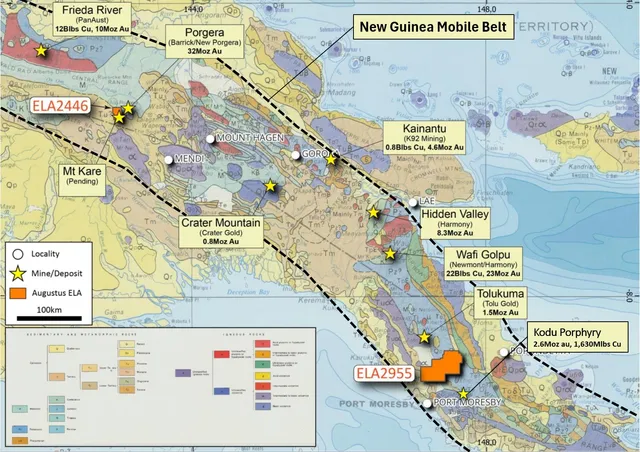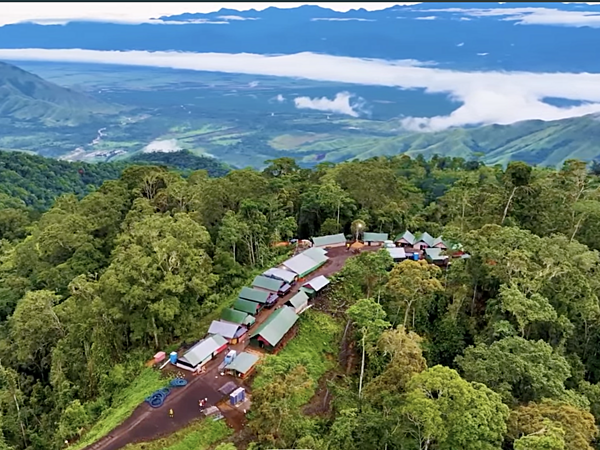
K92 Mining has reported further high-grade drilling results from its Arakompa discovery near the Kainantu Gold Mine in Papua New Guinea, expanding the AR1 high-grade zone and delineating what the company described as a substantial near-surface high-grade bulk tonnage zone ahead of a maiden resource estimate planned for mid-2026.
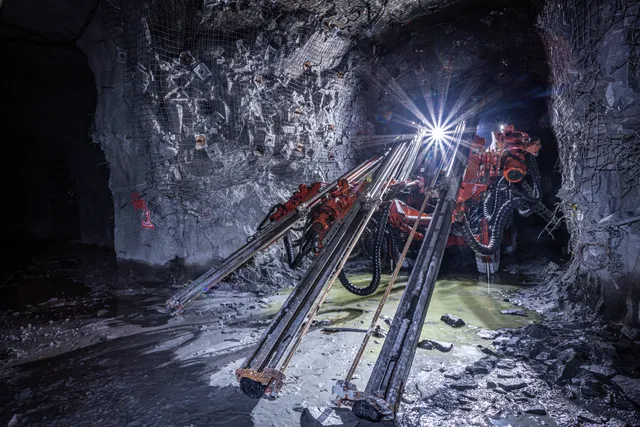
The company announced results from 33 additional surface diamond drill holes, bringing the total number of holes released to date from its maiden drill programme at Arakompa to 100. The prospect is located approximately 4.5 kilometres from the Kainantu Gold Mine process plant.
According to K92, all drill holes intersected mineralisation, with 40 intersections exceeding 5 grams per tonne gold equivalent, or AuEq, and 20 intersections exceeding 10 g/t AuEq.
The latest drilling expanded the AR1 high-grade vein zone, which is now defined over up to 300 metres of vertical extent and up to 400 metres of strike length, starting at a depth of about 100 metres. Within the zone, the weighted average grade is 9.47 g/t AuEq across an average true width of 4.32 metres.
Among the reported highlights, hole KARDD0076 intersected 11.90 metres grading 14.30 g/t AuEq, including 1.70 metres at 92.43 g/t AuEq, while hole KARDD0106 returned 10.00 metres grading 15.21 g/t AuEq, including 4.00 metres at 36.65 g/t AuEq. Hole KARDD0100 intersected 16.50 metres grading 8.06 g/t AuEq, including 3.00 metres at 18.03 g/t AuEq.
The company also reported multiple high-grade intercepts from the AR2 vein, including 4.70 metres grading 41.90 g/t AuEq in hole KARDD0084G and 6.80 metres grading 15.21 g/t AuEq in hole KARDD0104, including 2.00 metres at 49.00 g/t AuEq.
K92 said drilling has also confirmed and expanded a near-surface high-grade bulk zone. Notable intersections included 49.30 metres grading 1.95 g/t AuEq in hole KARDD0091 and 140.10 metres grading 1.27 g/t AuEq in hole KARDD0106. Both holes are located about 60 metres from previously reported hole 005AD92, which returned 41.9 metres at 2.21 g/t AuEq.
The company said increased drill density has improved confidence in geological continuity while highlighting the potential for grade profile upgrades through both infill and step-out drilling. Surface sampling has also indicated that mineralisation extends to surface along Arakompa's known strike length of more than two kilometres.
Additional broad mineralised intersections reported from the bulk-tonnage zone included 99.00 metres grading 2.90 g/t AuEq in hole KARDD0076, 105.40 metres grading 2.26 g/t AuEq in hole KARDD0084G, 106.50 metres grading 2.22 g/t AuEq in hole KARDD0090 and 163.50 metres grading 1.02 g/t AuEq in hole KARDD0104.
The company also reported progress from porphyry vector drilling following the previously announced discovery hole KARDD0065. The latest results intersected intervals of outer potassic alteration, which K92 said provide an important vector towards a potential high-grade potassic core.
Hole KARDD0077 returned 1,151.20 metres grading 0.30% copper equivalent, while hole KARDD0093G returned 800.70 metres grading 0.33% copper equivalent and hole KARDD0074 intersected 494.00 metres grading 0.35% copper equivalent.
K92 said a second drill rig is being allocated to the porphyry target and is expected to commence drilling shortly.
Chief Executive Officer John Lewins said the latest results represented another step towards the planned maiden resource estimate.
“The latest results from Arakompa represent another important step in advancing the discovery towards a maiden resource estimate planned for mid-2026,” Lewins said.
“Drilling continues to demonstrate a large, near-surface mineralized system, highlighted by the significant expansion and improved continuity of the AR1 high-grade zone and the delineation of a substantial high-grade bulk tonnage zone. Increased drill density is enhancing our geological confidence while also highlighting the potential for grade profile upgrades through ongoing infill and step-out drilling.”
Lewins said surface sampling indicated that mineralisation extends to surface along Arakompa's known strike length, reinforcing what he described as significant exploration upside.
“Arakompa is increasingly emerging as one of the most significant exploration successes in the Kainantu district in recent years, and we look forward to providing further updates as drilling continues,” he said.
Vice President of Exploration Robert Smillie said drilling continued to demonstrate both the scale of the system and exploration upside across the broader corridor.
“Additionally, an exciting aspect of the latest results is the growing evidence for a potential porphyry system to the south, which could represent a significant new exploration opportunity within the district,” Smillie said.
“We are excited by the latest drill results that provide valuable vectoring towards a potential high-grade porphyry core.”