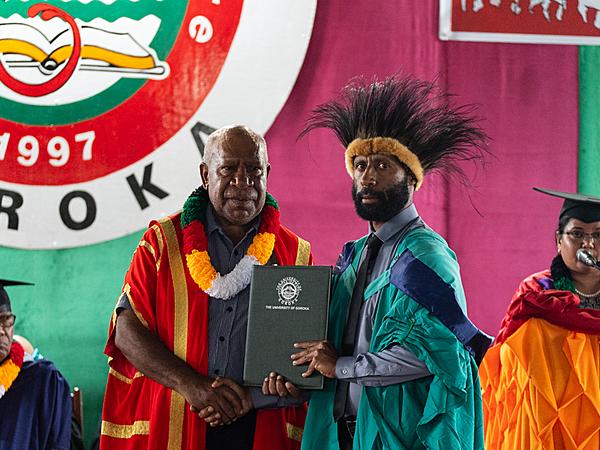
An aspiring educator from Southern Highlands Province is planning to use digital learning tools and e-library facilities to improve education outcomes in remote communities after completing his university studies.
Nicholas Yawi, from Yanguri Village in the Kagua-Erave District within the Petroleum Development Licence (PDL) 3 and 4 project area, recently graduated from the University of Goroka with a Bachelor of Science in Chemistry and is now pursuing a postgraduate diploma in teaching.
Yawi has been supported over the past five years through Petroleum Resources Gobe's Education Subsidy Program, which is administered by the Mineral Resources Development Company (MRDC).
The graduate said he intends to return to his home province and help address educational challenges in rural communities by combining traditional teaching methods with digital learning technologies.
He said the introduction of computer laboratories and e-library facilities funded through initiatives supported by MRDC and Petroleum Resources Gobe had demonstrated the potential of technology to transform learning opportunities for students in remote areas.
According to Yawi, access to digital resources has become increasingly important as education systems continue to evolve and students require greater exposure to technology and online learning tools.
"There are projects like e-learning facilities funded by MRDC and PRG back at home," he said. "We are now living in a digital world, and students need guidance from teachers on how to use tools like the internet and other technologies, as teaching methods continue to evolve."
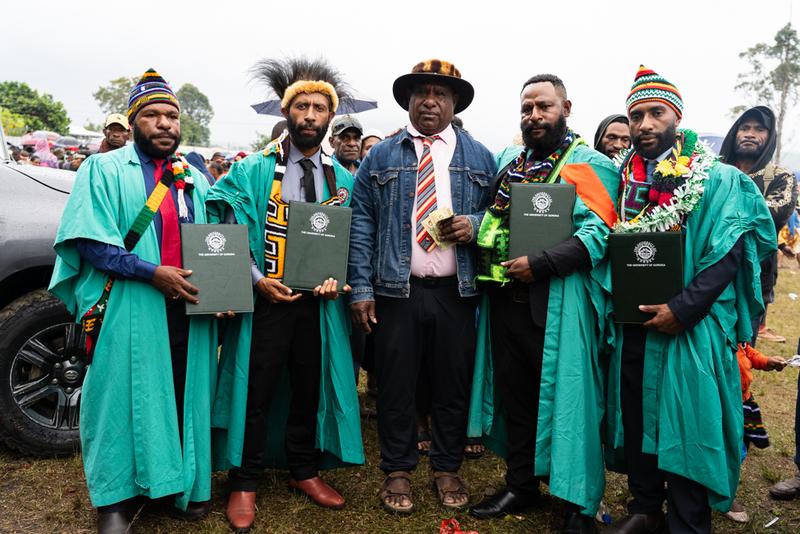
Yawi was among more than 1,000 students who graduated from the University of Goroka in April and views his postgraduate teaching qualification as the final step towards becoming a fully qualified teacher.
He said he hopes to use his skills and education to help improve teaching standards and expand educational opportunities in underserved communities across Southern Highlands Province.
"Coming from a rural area, access to education is a major challenge. There are not enough teachers, and the quality of teaching services is low," Yawi said.
He added that improving education could help create better opportunities for future generations and contribute to broader community development.
The Education Subsidy Program has played an important role in supporting students from project areas who face financial barriers to tertiary education, Yawi said.
"The support has not only helped us but also our families back home. It motivates us to continue our education," he said.
Yawi said graduates have a responsibility to return to their communities and contribute to local development through the knowledge and skills they acquire during their studies.
"We are going back to develop our communities and give back by improving education for our people," he said.
Petroleum Resources Gobe's Education Subsidy Program forms part of broader efforts to support human capital development in communities within the PDL 3 and 4 project areas, helping students access higher education and build skills that can contribute to social and economic development in Papua New Guinea.