Papua New Guinea is currently undergoing its third validation under the Extractive Industries Transparency Initiative (EITI), marking a significant milestone in the country’s ongoing efforts to strengthen transparency and accountability in the management of its natural resources.
Executive Director of the Papua New Guinea Extractive Industries Transparency Initiative (PNGEITI), George Kauli, confirmed that the validation process commenced on 1 April and is expected to conclude in June, with final results anticipated later this year.
Kauli highlighted that extensive preparatory work has been undertaken ahead of the validation, including efforts to improve data accessibility, strengthen the functionality of the Multi-Stakeholder Group (MSG), and address corrective actions identified during the 2022 validation. These measures aim to further enhance transparency and accountability across Papua New Guinea’s mining, oil and gas sectors.
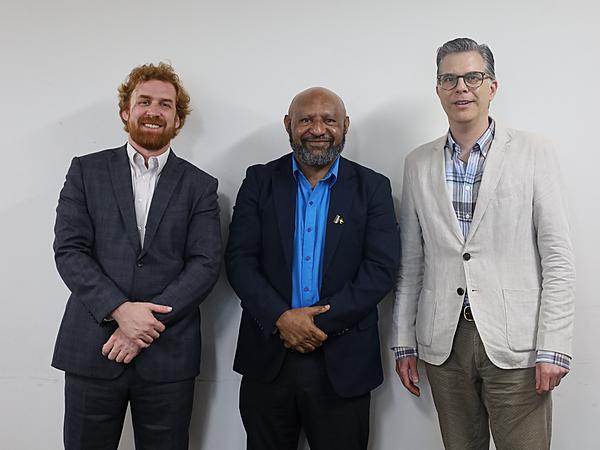
An international validation team is currently in the country to assess progress. The delegation includes Validation Advisor Riley Zecca and Regional Director – Europe, Mark Burnett, who are engaging with key stakeholders. Consultations are being held with government ministers, senior officials, civil society organisations, extractive industry companies, and state-owned enterprises.
Speaking on the purpose of the mission, Zecca emphasised that EITI serves as a global benchmark for good governance in the extractive sector.
"EITI is a global standard for the good governance of natural resources. This validation is a check-in on Papua New Guinea’s progress after more than a decade of implementation. The aim is to ensure that citizens understand how they benefit from the country’s natural resources and can hold decision-makers accountable," he said.
He further clarified that the validation process is not intended as a test, but rather as a collaborative mechanism to support countries in refining their systems.
“While validation provides a score and assessment, it is not a test. We are here to support Papua New Guinea in tailoring EITI implementation to its national context and priorities,” Zecca added.
During their mission, the validation team has met with the PNGEITI National Secretariat, the Independent Administrator for the 2024 EITI Report, Kuna Taberia Kiruwi (KTK), and representatives from the University of Papua New Guinea’s Division of Earth Sciences. The mission is expected to conclude with a high-level debrief with MSG Chair and Minister for Treasury, Ian Ling-Stuckey, before the team’s departure.
Kauli explained that validation is a core component of EITI implementation, providing an independent and objective assessment of whether a country meets the requirements of the EITI Standard.
Papua New Guinea first underwent validation in 2018, achieving a rating of “meaningful progress”. In its second validation in 2022, the country improved to a “moderate” score of 70.5 per cent. The EITI International Board commended PNG for implementing reforms to address weaknesses in government systems, improving transparency, ensuring effective multi-stakeholder oversight, and producing timely and accessible reports.
Looking ahead, Kauli expressed optimism that the current validation will yield further improvements, reinforcing Papua New Guinea’s reputation for transparency and good governance.
He noted that a stronger validation outcome would be particularly significant as the country works to address concerns related to its grey listing by the Financial Action Task Force (FATF).
A positive result, he said, would send a strong signal to the international community that Papua New Guinea remains committed to strengthening governance systems and ensuring that its natural resource wealth delivers tangible benefits to its people.