Editor’s Note: In this issue, Michael McWalter, former Director of the Petroleum Division and Adviser to the Government of Papua New Guinea, and erstwhile petroleum adviser to the Governments of Ghana, Liberia, Cambodia, Sao Tome, and South Sudan provides a more general commentary on the oil and gas industry in relation to Papua New Guinea.
As we approach the end of 2026, we may reflect on what a tumultuous year it has been for the oil and gas industry – the petroleum industry and all of us across the world who have a dependency on it directly or indirectly. The petroleum industry remains the most important source of global energy and is the provider of fundamental feedstock to many industries. It is a colossal primary industry which extends to the furthest corners of the globe. In Papua New Guinea, we are just a small part of it, but we are just as affected by the issues that the industry has had to endure as anyone else. In this article, I take a look at the broad extent of the petroleum industry as a supplier of global energy, and then I focus on issues that affect it both domestically and internationally.
Global Energy Use
In 2025, global energy use was an enormous 600.31 Exajoules. But what is an Exajoule? It is a million, million, million Joules, the international measurement of energy. It is a quintillion Joules, or perhaps, now that we hear so often of trillion-dollar companies and trillion-dollar national debts around the world, we could express it as a million trillion joules. For those scientifically inclined, an Exajoule (EJ) is 1018 Joules. In more familiar terms, it is 166.75 million gigawatts-hours. We all know about kilowatt-hours (KWh) when we buy electricity; that is a thousand watts-hours, which is electrical power amounting to a thousand watts used for an hour. A gigawatt is the power of a large power station. It seems that globally we are using the energy equivalent of the annual output of more than 19,000 of them!
|
Energy Type |
Oil |
Natural Gas |
Coal |
Nuclear Energy |
Hydro-electricity |
Renewables |
Total |
|
Exajoules (EJ) |
200.97 |
150.70 |
166.03 |
31.04 |
16.12 |
35.45 |
600.31 |
|
Million GWh |
55.82 |
41.86 |
46.12 |
8.62 |
4.48 |
9.85 |
166.75 |
|
Percentage |
33.5% |
25.1% |
27.7% |
5.2% |
2.7% |
5.9% |
100.0% |
Figure 1: Global energy supply by type for calendar year 2025, after the Statistical Review of World Energy, 75th Edition, 2026 by the Energy Institute.
Hydrocarbon fossil fuels continue to dominate the global energy mix contributing 86.2% of our energy supply in 2025. Some 33.5% of that energy supply come from oil and 25.1% from natural gas; together providing some 58.6% of our energy supply.
Meantime, renewable energy production is growing at a fast pace, and year-on-year, it rose by at least 10%, led by solar photovoltaic and wind energy, However, even if that rate of growth of renewable energy supply could continue unabated, it would take almost 30 years to match the current global supply of energy from hydrocarbons.
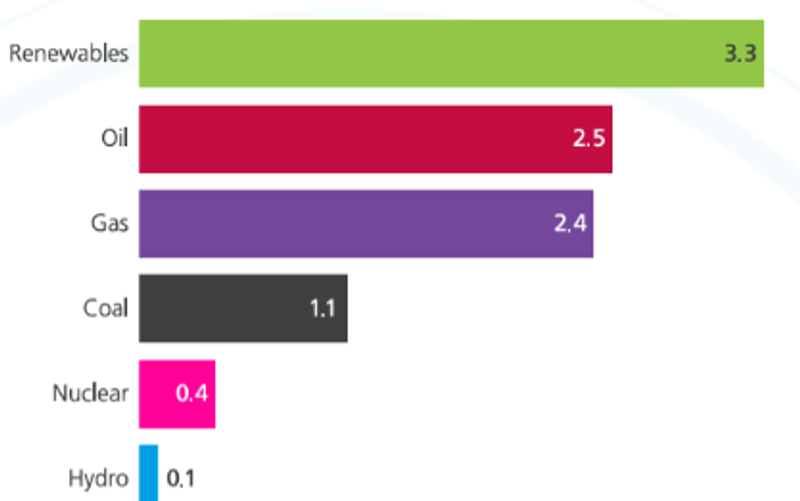
Energy transition from fossil fuels to renewables will take a long time and require enormous investment. Moreover, the overall global energy demand is still growing. This is not balanced or even growth across the world though as the economies of some countries are developing at faster rates than others, and some are doing so from a much less energy-intensive base. Conversely, some more mature economies are using less energy by being more conservative and economical in their energy use, whilst newly-developing countries are using more energy as their economies grow and they seek to support better living standards for their people, more commerce and industrial development.
Global energy supply exceeded 600 EJ in 2025, a rise of 1.7% above 2024. That rate of growth was similar to the 2023-2024 increase, but above the average of the last ten years. Renewable energy supply’s annual growth at 10% outpaced the annual growth in the supply of coal, oil or gas for the first time. Noticeably, energy consumption in non-OECD (Organisation for Economic Co-operation and Development) countries grew by more than three times that of the OECD countries. The disparity of energy use between different nations is quite striking. It highlights the affluence of some countries and the poverty of others. A world that had everyone consume as much energy per capita as the United States of America currently does, would necessitate almost four times more energy supply, and with that the consequences of enhanced polluting emissions from the combustion of likely much more fossil fuels use.
Daily energy consumption in Papua New Guinea is just a meagre 8 KWh per person as compared to that of the USA at a staggering 211 KWh per person. Papua New Guinea’s significantly low energy consumption belies the predominant subsistence living of many of its people, relatively low levels of urbanisation, lack of access to electricity, and low levels of industrialisation. One could say that Papua New Guinea’s energy consumption is decidedly frugal as compared to the profligate energy consumption of the likes of the USA. Quite obviously, Papua New Guinea has tremendous development potential which will doubtlessly be propelled by the normal human appetite for better livelihoods and hopefully by sound human development policies.
|
|
Energy Use |
Population |
Annual Energy Use per Capita |
Daily Use |
|
|
Country |
EJ |
millions |
KJ/year |
KWh |
KWh/capita |
|
USA |
94.83 |
341.8 |
277,442,949 |
77,067 |
211.1 |
|
Australia |
5.33 |
27.8 |
191,726,619 |
53,257 |
145.9 |
|
Indonesia |
11.52 |
288.3 |
39,958,377 |
11,100 |
30.4 |
|
Papua New Guinea |
0.13 |
11.8 |
11,146,464 |
3,096 |
8.5 |
|
All Countries |
600.31 |
8239 |
72,861,998 |
20,239 |
55 |
Figure 3: Total energy usage and per capita daily use for four nations and all countries, after the Statistical Review of World Energy, 75th Edition, 2026 by the Energy Institute.
Energy is a fundamental ingredient to the development and sustained operation of any economy. The relationship between energy use and Gross Domestic Product (GDP) has a strong positive correlation because higher economic output requires greater energy input. GDP is the total monetary or market value of all goods and services produced within a country, typically expressed per annum. It serves as a measure of a country's overall economic health.
It is said that the amount of energy consumed per unit of economic output serves as a good metric for how efficiently an economy converts energy into financial value, but financial value only. There are other values in society which are all too easily forgotten by modern mankind. Certainly, the energy use per capita is an indicator of economic development, but it does not scale absolutely linearly. The richer nations tend to use energy more efficiently as they scale-up their economies.
In the developed economies, many wealthier nations are experiencing a decoupling of GDP growth from energy consumption. This shift occurs as their economies transition away from heavy industries and energy-intensive manufacturing toward high-value service sectors, and technological energy efficiencies are achieved. Local manufacturing output may remain high, but as heavy industries move overseas energy intensity drops. In the developing nations, a much more coherent, near-linear relationship is observed between GDP growth and energy consumption. Expanding infrastructure, large-scale industrialisation, and urbanisation mean that rising economic output in these regions heavily depends on scaling-up energy supplies. Papua New Guinea will clearly need increasing larger supplies of energy as it grasps it development challenges and grows as a nation.
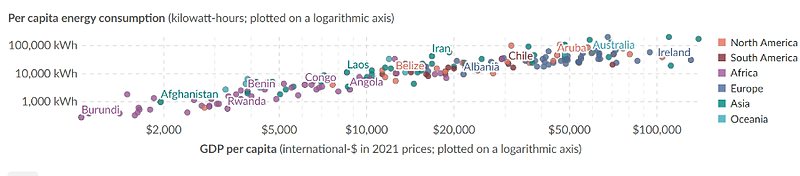
Figure 4: Per capita energy consumption versus GDP per capita, after the Statistical Review of World Energy, 75th Edition, 2026 by the Energy Institute and https://ourworldindata.org/energy.

Figure 5: Per capita energy consumption versus GDP per capita for Papua New Guinea, after ibid
For now, though, much of Papua New Guinea’s interaction with the energy sector is dominated by its export of oil and gas. In 2025, Papua New Guinea exported 7.9 million tonnes of Liquefied Natural Gas (LNG) to energy-hungry markets in East Asia. In doing so, it supplied just 2% of a global LNG supply of 387 mta supplied by some 22 countries worldwide.
This LNG export was supported by approximately 1,124 million standard cubic feet per day (MMSCFD) of natural gas production in the PNG LNG Project. Oil production in 2025 amounted to an average of just 31,516 barrels per day (bopd). Summed, this was the energy equivalent to 254,849 barrels of oil equivalent per day (boed), or 0.5693 EJ per year, equivalent to 36.72 KWh per capita per day. Papua New Guinea is thus producing about 4.33 times more energy than it is currently consuming. Papua New Guinea is thus very much a net energy exporting nation.
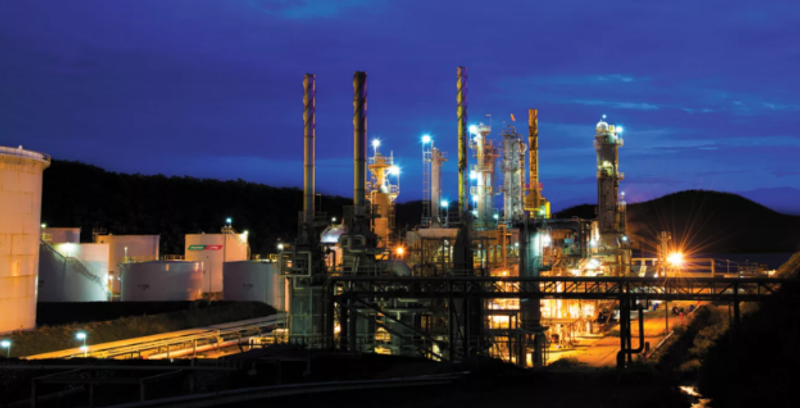
Despite having a 32,500 barrels per day crude oil refinery located on the west side of Port Moresby Harbour at Napa Napa, Papua New Guinea imports almost all of its liquid petroleum products. This amounts to some 26,000 barrels per day primarily of diesel, followed by jet fuel and petrol. The Napa Napa refinery was only designed to take a light sweet crude oil such as the Kutubu crude oil produced locally. As Kutubu crude oil, and in the last decade Kutubu Blend (a mix of Kutubu crude and gas condensates) have a very low sulphur content, it is somewhat of a waste to use such a quality crude for distillation into simple automotive products. Papua New Guinea’s crude production is thus sought after as an excellent blending stock by regional refineries, and thus achieves a better value by being exported.
Nevertheless, the refinery site does have a large-scale tank farm capable of holding approximately 1.9 million barrels of crude oil and/or petroleum products and a deep-water marine jetty capable of accommodating vessels up to 110,000 deadweight tonnage. The refinery infrastructure is thus still used as a major terminal and petroleum facility providing fuel storage, a terminal, and a distribution hub for the country.
As the economy of Papua New Guinea grows, it will need more and more primary energy in its various forms. At an economic growth rate of just 6% per annum, that energy demand will double in just nine years, and if growth rates were to be sustained, that energy demand would double again in a further nine years. So, by 2045, the energy demand could possibly exceed the current amount of Papua New Guinea’s energy exports. Whilst exporting oil and gas to achieve much needed revenue for the Government and the economy, one has to conjecture where might the future energy requirements to fuel a future more developed nation come from.
The PNG LNG Project has been operating most successfully since 2014 and regularly exports near to 8 mta LNG. Papua New Guinea’s second LNG project, the Papua LNG is expected to be approved soon by the Government leading to a final investment decision by the project proponents, possibly by the end of 2026. Negotiations about the apportionment of the statutorily-defined community benefits are well-advanced and project development could start in the first quarter of 2027.
The Papua LNG Project will entail the development of the Elk-Antelope gas field in the Gulf Province and the production and conveyance of its natural gas to the current site of the PNG LNG Project at Caution Bay, some 20 kms north west of Port Moresby. It is expected that the Papua LNG Project will export about 5.6 mta of LNG, of which 2 mta will be processed using ullage in the existing liquefaction trains of the PNG LNG Project and the balance will be processed by three new project specific liquefaction trains with a total capacity of 4 mta.
Thus, the overall output of LNG from Papua New Guinea will rise to about 11.5 mta by the time Papua LNG starts production in 2030. Together with crude and condensate volumes, gross oil and gas exports may reach as much as 356,613 boed exacerbating the net export imbalance of petroleum trade, and raising that imbalance to 6.05 times more than the current demand for energy in Papua New Guinea. In recent news, it was announced that ExxonMobil will take over operatorship of the Papua LNG Project from TotalEnergies thus making it possible to realise more synergies with the PNG LNG Project operated by ExxonMobil.
There are approximately twenty-six discovered oil and gas fields in Papua New Guinea, many of which remain yet to be developed for recovery of their gas resources. The discoveries to date indicate that gas resources are predominant over oil resources by a factor of about 8.5 times.
The estimated aggregate discovered ultimate recoverable gas reserves of Papua New Guinea stand at a proven and probable 28.6 trillion standard cubic feet (TCF) of gas. Some 10.9 TCF of these reserves have been approved for development and are in production, whilst some 12.2 TCF have been planned for development, but are not yet in production, and a remainder of 5.4 TCF remain to be considered for development.
The main undeveloped gas fields are: the Elk-Antelope gas field for which development is imminent with the Papua LNG Project, and the P’nyang gas field for which development planning has ensued and a project gas agreement has been negotiated with the Government. Oddly, the Juha gas field remains undeveloped, despite being a gas field included in the PNG LNG Project, and the Stanley gas field (a separate project) also has yet to be developed even though it was approved by the Government after the project for its development stalled.
|
Field Name(s) |
Year of Discovery |
|
Current Licence |
Current Operator |
Est. Ultimate Recoverable Gas Resources and Reserves, BCF (2C & 2P) |
Development Status: Developed, Planned, or Undeveloped |
||
|
Barikewa |
1958 |
|
PRL 49 |
Kumul Petroleum |
439 |
Undeveloped |
||
|
Bwata |
1960 |
|
PRL 39 |
ExxonMobil |
68 |
Undeveloped |
||
|
Cobra & Iehi |
1960 |
|
PRL 14 |
Santos |
72 |
Undeveloped |
||
|
Uramu |
1968 |
|
PRL 60 |
Kumul Petroleum |
92 |
Undeveloped |
||
|
Pasca |
1968 |
|
PPL 328 |
Twinza |
464 |
Planned |
||
|
Juha |
1983 |
|
PDL 9 |
ExxonMobil |
578 |
Planned |
||
|
Kutubu |
1986 |
|
PDL 2 |
Santos |
1733 |
Developed |
||
|
Hides |
1987 |
|
PDL 1 |
ExxonMobil |
6938 |
Developed |
||
|
Pandora |
1988 |
|
PRL 38 |
Kumul Petroleum |
644 |
Undeveloped |
||
|
Agogo |
1989 |
|
PDL 2 |
Santos |
541 |
Developed |
||
|
Angore |
1990 |
|
PDL 8 |
ExxonMobil |
1079 |
Developed |
||
|
Elevala & Ketu |
1990 |
|
PRL 21 |
TWL Energy |
640 |
Undeveloped |
||
|
P'nyang |
1990 |
|
PRL 3 |
ExxonMobil |
4600 |
Planned |
||
|
SE Gobe |
1991 |
|
PDL 3 |
Santos |
156 |
Developed |
||
|
Gobe Main |
1993 |
|
PDL 4 |
Santos |
159 |
Developed |
||
|
Paua |
1995 |
|
PPL 378 |
Giri Energy |
0il Only |
Undeveloped |
||
|
Moran |
1996 |
|
PDL 2 & 5 |
Santos |
344 |
Developed |
||
|
Stanley |
1999 |
|
PDL 10 |
TWL Energy |
399 |
Planned |
||
|
Kimu |
1999 |
|
PRL 48 |
Kumul Petroleum |
525 |
Undeveloped |
||
|
Triceratops |
2005 |
|
PRL 39 |
ExxonMobil |
30 |
Undeveloped |
||
|
Douglas |
2006 |
|
PRL 40 |
TWL Energy |
500 |
Undeveloped |
||
|
Pukpuk |
2006 |
|
PRL 40 |
TWL Energy |
365 |
Undeveloped |
||
|
Elk-Antelope |
2006 |
|
PRL 15 |
ExxonMobil |
6200 |
Planned |
||
|
FlInders/ Hagana |
2006 |
|
PRL 41 |
Santos |
1100 |
Undeveloped |
||
|
Ubuntu |
2011 |
|
PRL 28 |
TWL Energy |
100 |
Undeveloped |
||
|
Muruk |
2016 |
|
PPL 402 |
Santos |
845 |
Undeveloped |
||
|
|
Summation |
28611 |
|
|||||
|
The summation above is a pseudo-summation only, not a statistical aggregation and should be used as a guide only. |
||||||||
Figure 8: List of oil and gas field discoveries in Papua New Guinea, their estimated ultimate recoverable resources and reserves (2C & 2P respectively) and current field status, after Manau, Dept. of Petroleum and Energy modified and amended by the author from public information.
Beyond the large gas fields which have been the subject of LNG based development, there are about 13 more stranded gas fields with an average of about 0.4 TCF of gas reserves each, which are disparately spread out across mainland Papua New Guinea. These fields may eventually be developed, but their gas reserves will require gathering and aggregation, plus development optimisation by utilisation of existing gas infrastructure for both the conveyance of the natural gas and its processing. Some more remote and stranded gas fields may need innovative development strategies and concessionary fiscal treatment to realise their development. The average age since discovery of these stranded gas field is 36 years as compared to 20 years from discovery to development approval for those fields which have been developed in the PNG LNG Project, and about the same for the Elk-Antelope gas field, which is to be developed by the Papua LNG Project. In order to have further gas fields for development, beyond and after the production life of these LNG projects, petroleum exploration and the drilling of wildcat exploration wells, which is necessarily thwart with risk, need to be pursued now.
One must anticipate that more oil and gas fields will most likely be discovered, but only if more exploration drilling is encouraged and actually takes place. To date, only about 276 genuine wildcat exploration wells have been drilled throughout Papua New Guinea. These wells have elucidated gross recoverable oil and gas reserves of approximately 5.5 billion barrels of oil equivalent (BOE) of which only 585 million barrels have been liquids. We may certainly expect more gas discoveries. On average, each wildcat has found approximately 20 million boe or 0.116 TCF of gas equivalent resources.
What emerges from the above discussion is that Papua New Guinea is a small, but significant LNG exporter which has only meagre energy use of its own. It has chosen to grow its economy based on resource wealth for which the petroleum industry contributes significantly alongside the mining industry. In the future as the nation’s GDP grows, it will need more and more energy for its own needs. Whether it will eventually have to curtail LNG exports in favour of domestic gas consumption will be a critical decision that will need to be prepared for. We have seen in recent years how Australia has encumbered itself by overzealous LNG export ambitions that have seriously compromised the domestic supply of natural gas to households, commerce, and industry. Alas, this is not an uncommon problem. It may be best managed by comprehensive natural gas resource planning, particular in tandem with forecasts of economic growth, the likely geopolitical situation and environmental constraints, particularly those associated with carbon dioxide emissions from the combustion of hydrocarbons fuels.
Gas Resource Planning
Gas resource planning is necessary so that a nation may optimise the use and value of its gas resources over time. In a developed industrialised nation, the abundance of natural gas may have immediate benefit in providing for a ready and flexible new source of energy. In the 1960s in the United Kingdom, natural gas essentially replaced coal which had been the dominant source of energy for households, commerce and industry for many decades. Natural gas was very much cleaner, and natural gas-fired power plants were cheaper, cleaner and easier to build than coal fired plants.
In the absence of an industrialised economy, and particularly one with only small urban areas and many disparate and isolated settlements, an abundance of natural gas is not such a panacea. The size of Papua New Guinea’s gas resources gas is massively greater than the nation’s current energy demands. It therefore seems sensible to monetise the discovered gas resources to develop the economy and enhance the welfare of the people by allowing the export of these resources. In doing so, it is intrinsic that one should attempt to get the very best terms for development that the Government can negotiate commensurate with enabling the investing petroleum companies to make a reasonably fair return on their investments that will satisfy their commercial appetite to invest in that development.
Inevitably though, the currently somewhat meagre energy demands of Papua New Guinea will grow with time, so it is perfectly reasonable to seek and encourage domestic gas utilisation where it is commercial feasible. Having garnered the wealth from early resource developments and boosted the economy, one wants to ensure that there is energy enough for those future domestic needs as they grow with the expected economic development of the Nation. Natural gas may supply those needs and help propel the growth of the Papua New Guinea economy beyond being just a resource exporter.
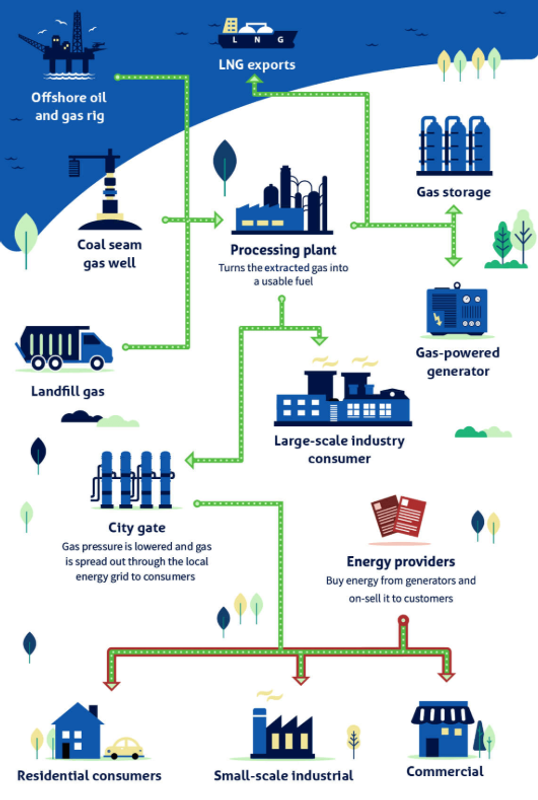
This is where gas resource planning comes into play with the mapping of various scenarios. Factors that have to be taken into account are many, such as: overall petroleum basin resource assessment; yet-to-be-discovered resource estimates; gas field discovery rates; the forecast price of natural gas; forecasts of exploration, development and production costs; ease of access for exploration, development and production; optimisation of existing gas transportation and processing infrastructure, and of course, forecasts of the likely future energy demand both in export markets and domestically. Circumstances can change as we have seen with the amazing volatility of oil and gas prices caused by supply disruptions this year occasioned by ghastly international conflicts. These conflicts have been far from Papua New Guinea, but as oil and gas markets are globally integrated, they have greatly impacted Papua New Guinea’s economic and its people.
Some of the factors affecting the future outlook of Papua New Guinea’s petroleum industry are local and some are exogenous depending on global geopolitics and international trade and commerce; some are a mixture.
Local Issues
Access
Of course, to explore for oil and gas, one needs access to land no matter howsoever it is owned, by custom or otherwise. The Oil and Gas Act variously provides that “the conduct of geological surveys, seismic surveys, test drilling and other prospecting operations for petroleum;…the drilling for and the recovery of petroleum in a licence area;…the storage of petroleum or petroleum products in connection with the operations of a licensee;…the processing of petroleum or petroleum products by a licensee; and the conveyance of petroleum or petroleum products by a licensee, whether by pipeline, land transport, sea transport or air transport, including the pumping, loading, unloading and discharging of petroleum or petroleum products are… for public purpose…and in the national interest (my emphasis).” The Act states this pursuant to the Constitution, Section 53(1) (protection from unjust deprivation of property), the Oil and Gas Act “permits possession to be compulsorily taken of any property and permits any interest in or rights over property to be compulsorily acquired.” It reasons that this “is reasonably justified in a democratic society that has a proper regard for the rights and dignity of mankind.”
It also provides for ancillary uses of land “for accommodation for personnel, the disposal of waste material from operations for, the establishment of a town to service the industry, the construction, maintenance or operation of facilities (including, without limitation, access roads, docks, ports, airports, marinas and accommodation) to be used by a licensee, and the acquisition of land or other property for activities in connection with any of the above purposes.”
In doing all of the above, the Act also strictly requires compensation to be paid by a licensee “to the lawful owners and rightful occupiers of, and any persons interested in, any private land in relation to their several interests, in respect of the entry on or occupation of the land by the licensee.” Compensation shall be paid for deprivation, damage, severance and rights of way and easements. Fair compensation may be adjudicated by a Petroleum Warden appointed by the Minister.
Community Benefits
Beyond compensation, the Oil and Gas Act 1998 also introduced a system of statutorily-defined benefit sharing for affected provinces, local level governments and project area landowners. This is variously comprised of a royalty benefit, an equity benefit, development levies, project grants, and other project area landowner benefits as the State see fit. It is the sharing of all these benefits and the definition of other landowner benefits that occupies all those relevant parties that participate in a development forum with the Government for a petroleum project.
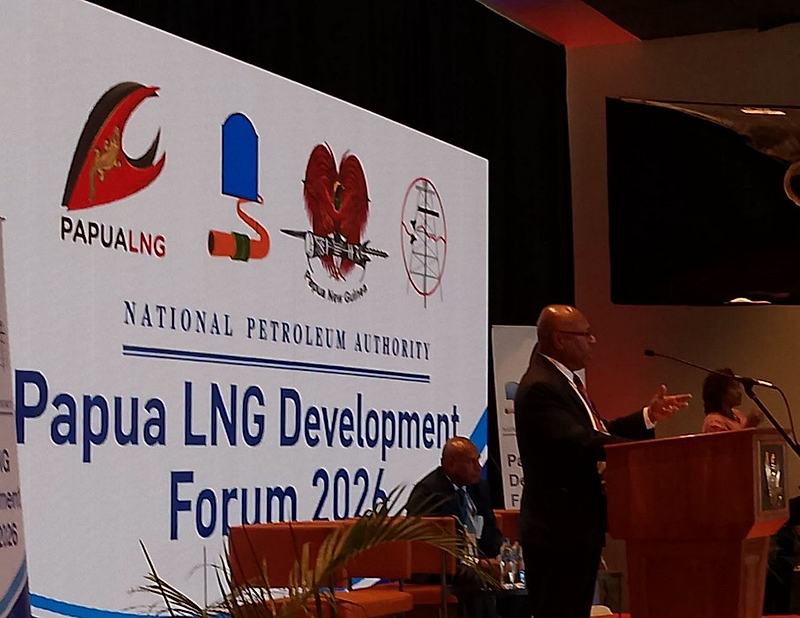
Once agreed and petroleum production commences, the benefits are ably administered by the Mineral Resource Development Company (MRDC), a whole-owned Government entity, through project-specific trusts. MRDC is mandated by the Oil and Gas Act to serve as trustee through project-specific trust companies on which community representatives serve as Directors.
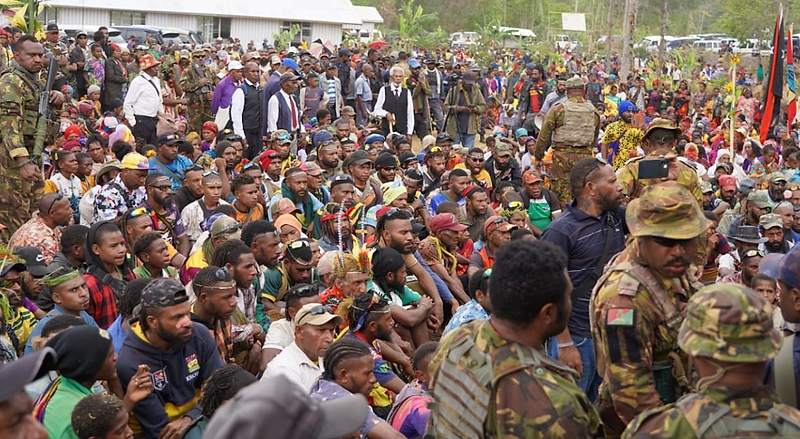
Obviously, when rural people who are remote from Government and its normal service delivery, the excitement of receiving a slice of such benefits on offer from the Government and associated with an oil and gas project can be quite overwhelming. It may seem like it is the only chance to achieve any element of development. These benefits are zealously sought and rivalries occur amongst all parties. These contests have to be managed and dealt with appropriately and respectfully. This may seem irksome, but sharing is intrinsic to traditional Papua New Guinea custom and culture. Regrettably, in far too many nations, local communities that are host to petroleum projects get little out of petroleum resource development, and the making of any provisions for the welfare of such communities is often eschewed or ignored. Most regretfully, in some nations, military force is applied to remove bothersome communities with no respect for human dignity. To my mind, the process of treating with the communities and providing for their welfare in Papua New Guinea is very much part of the game, and a sign of respect for them as is required in a declared democratic society.
Alas, this is not the case is so many places, where communities may just be ordered (sometimes at gun point) to move away by government authorities without regard to their welfare. Community affairs programmes in Papua New Guinea oil and gas developments thus become an essential ingredient of project maintenance this must be understood by both the petroleum licensees and the Government alike. Issues may develop, especially when unfairness or greed enters into these matters and as daunting as it may seem at times, speaking with the communities and properly explaining to them and advising them of their lawful rights and responsibilities ultimately earns their respect and pay dividends.
Petroleum Resource Regulation
Another local issue is the unfair bargaining power of the Government when compared to the in-house expertise and excellence of the major oil and gas companies. I have often spoken out about the strengthening of Government capacity, and indeed I have spent much time involved in such work, not only in Papua New Guinea, but in the petroleum ministries, authorities and agencies of many other countries.
There is no substitute for a well-endowed national petroleum industry governing body staffed by well-educated and well-paid petroleum technocrats in service and loyal to the State and its people. If there are citizens who have had experience within the corporations of the petroleum industry, they should be encouraged and enticed to join the government’s petroleum agency and bring their knowledge and experience with them.
More staff is not always the best solution, but more specific industry knowledge and experience is. This is a consistent challenge everywhere to maintain industry competence and capacity on the government side; it is not unique to Papua New Guinea. The staff of a government managing its petroleum affairs should be the best of the best, after all they are charged with looking after the natural petroleum resource treasures of the nation, which can only be produced and turned into wealth, development and human advancement once.
Having a highly-organised petroleum resource management system with well-designed laws and regulations reduces risk for investors and diminishes the chance for capricious and abrupt changes to the commercial and fiscal regime applied to petroleum projects for the State from which its gains its sovereign value or take from petroleum resource development.
Petroleum Regime
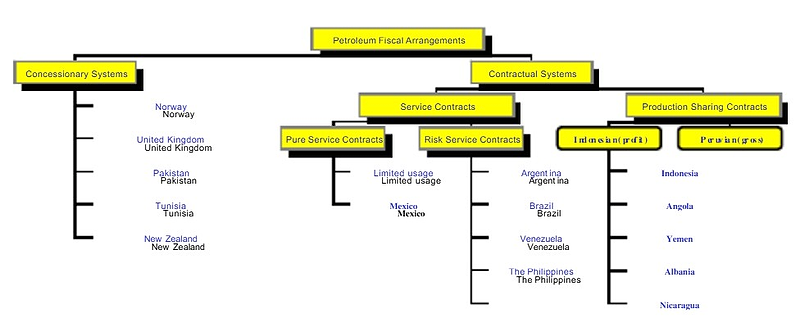
Related to the above, the oil and gas industry does not like surprises. The cycle of petroleum development from survey to drilling and from discovery to development and production can take decades. Whatever type of petroleum regime is applied, whether it is hybrid concessional-equity one, as is currently used in Papua New Guinea, or a production sharing contract regime as has previously been proposed for Papua New Guinea, certainty of commercial and fiscal terms is very important to the investing oil and gas companies. This is not to say that the Government needs to lock in the same terms for small and large field development alike, or for marginally economic to generously commercial field developments. Any regime should countenance and expect a range of different scales of discovery and economic outcomes depending principally on the extent of the recoverable oil and gas reserves, oil and gas markets, and the likely prices of the oil and gas that will be produced. One needs to attract investment and not dispel it due to uncertainty of outcomes when a discovery arises and much may lead to commercial development and production. Whatever regime is used, we have to be very clever before we start the process and avoid being held hostage by the intending developers of discovered oil and gas fields. The fiscal and commercial regime is the Government most important tool for managing its petroleum resources and it should be mandatory that all managers and technical personnel both in the Government and the industry understand the basics of such arrangements and that they are conversant with what is defined by applicable law and regulations, and what is not.
Infrastructure
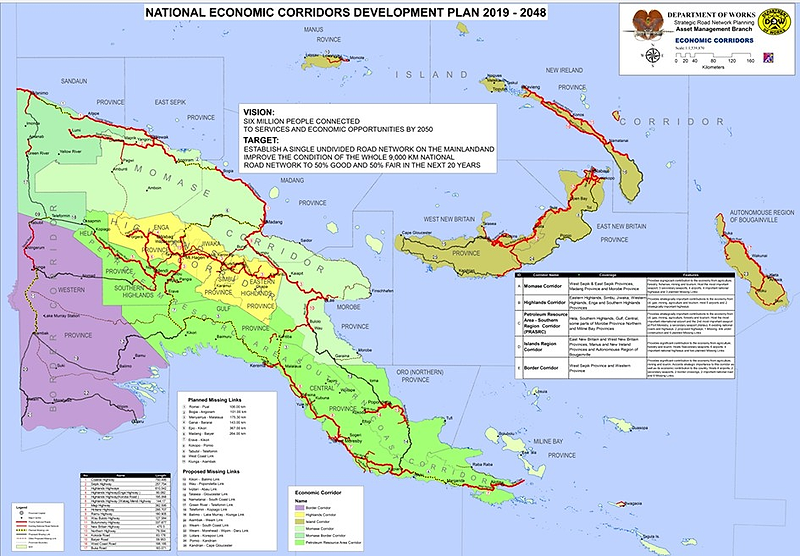
As mentioned above, Papua New Guinea has only been scantly explored as measured by the aggregate number of wildcat exploration wells drilled to date. Papua New Guinea’s geography comprised of a mainland and some 600 islands, large river systems and their deltas, and much rugged and mountainous land, dominated by a massive central cordillera make access quite formidable. A quite limited road network of just some 9,000 kms of national highways compounds the problem, though airstrips and river systems aid access to some degree.
All of this restricts petroleum resources development making exploration very expensive. This in turn makes the search of smaller accumulations of oil and gas uneconomic. The Government has plans to improve road connectivity throughout Papua New Guinea and has launched what it calls Connect PNG. It is a 20-year strategic development program (2020–2040) run by the Department of Works and Highways to build and maintain over 16,000 km of roads across the country. This should be a great help to national development in many ways.
In a petroleum province, there are typically vastly more small fields than large fields, with just a small fraction of the fields being giants that contain the majority of the total volume of hydrocarbons. The potential recoverable resource volumes of these smaller fields often falls below the minimum economic field size as determined by oil prices, finding costs, and infrastructure proximity, both civil and petroleum. They may thus never be discovered, or even if discovered, they may be left stranded and undeveloped. Infrastructure is key to unlocking the resource potential of these smaller fields, and typically such business may often attract local investment in due course once the economics work capturing more value in country.
Global Issues
Supply and Demand
The dominant global industry issue is, of course, the price of crude oil. Most international trade in natural gas is also dependent on and related to such whether it is natural gas transported through pipelines or LNG carried on ocean-going LNG carriers to customers. Crude oil prices are primarily driven by global oil supply and demand balances, which can be quite delicate. The world produces and consumes a lot of crude oil. In October 2025 the International Energy Agency (IEA) said that there was an impending glut in crude oil markets which was expected to widen into 2026. The IEA was forecasting a 4% oversupply in 2026, which would necessarily have put downward pressure on crude oil prices.
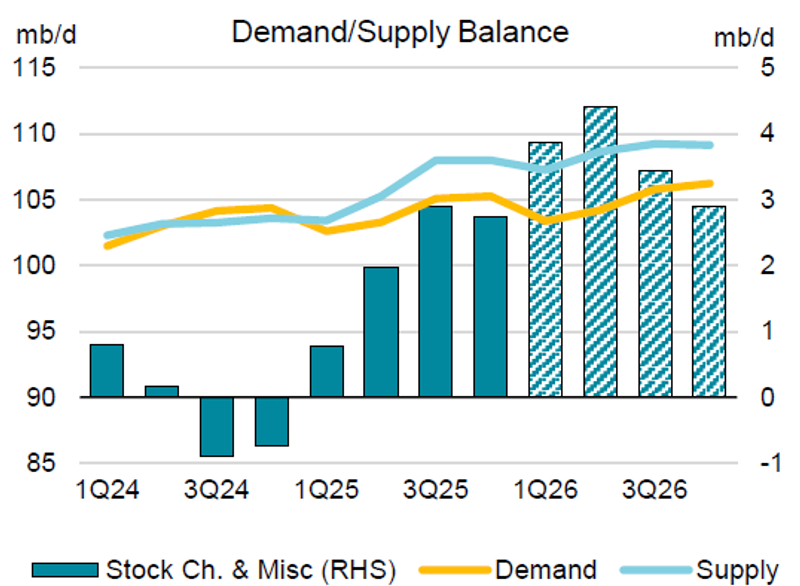
In September 2026, the IEA said it expected global supply to decline by 5.7 million bopd to 101.7 million bopd in 2026, representing a 6% decrease from 2025. The crisis in the Middle East has shown us that notwithstanding such contraction in demand, if crude oil cannot be reliably delivered prices can still be severely affected. If the markets had been tighter with demand tracking supply, the effects of the Middle East conflicts might have been more exaggerated in the current price of crude oil.
As we discussed earlier, crude oil still provides 33.5% of global energy supply. Maintaining the balance between supply and demand requires an organised global supply chain. Anything that interrupts that supply chain confounds both producers and consumers alike, as we have clearly seen this year. It is hard not to think that a grand complacency had set into oil and gas markets that the balance or near balance could be enduringly maintained. Now, we know that is not the case.
Another problem exists as supply disruptions have impacted consumers. That is one of demand destruction induced by the increase prices of crude oil and natural gas. Both oil and gas are realising a contraction in demand in 2026 with a likely drop of 5 million barrels per day for crude oil and 6.3 TCF per day for natural gas. Persistent supply, not production constraints, and high prices are accelerating permanent replacement of some oil and gas demand by electric vehicles in some places that had not considered such and a shift away from gas-fired power plant construction in emerging economies Asia, sometimes back to coal. Simple economic pressures caused by high fuel costs have forced freight carriers, airlines, and industrial consumers to cut back on their operations, or seek alternative efficiencies.
Security of Supply
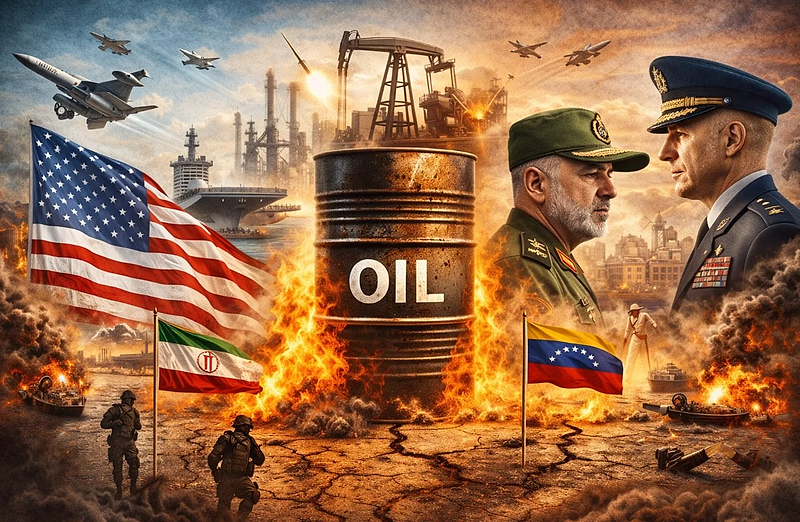
The issue of the security of energy supply has been elevated by the impact of several geopolitical clashes and conflicts around the world. The interruption of the supply of crude oil and LNG to consuming nations passing through the Strait of Hormuz between Iran and Oman and the United Arab Emirates has emphasised this.
The impairment of some 20% of global petroleum supply has alerted and reminded us of quite how fragile is the global supply of petroleum, and as a consequence somewhat relegated sustainability energy issues as we realise how punishing this can be.
Whilst it is reasonable to pursue non-hydrocarbon energy sources to bring about a cleaner environment, classic hydrocarbon use is not going to be forsaken quite so readily. We will shy away from energy poverty as we are globally hooked on using energy of which we have seen 86.2% come from hydrocarbons (oil, gas and coal). One has to wonder whether we are not seeing the start of what one day in the future historians will describe as the 21st century oil wars, the end of which will come when we sensibly end the use of the combustion of fossil fuels for their release of energy.
As the supply of LNG has been temporarily compromised from the Middle East to Asian markets, it necessarily opens up opportunities for other suppliers of natural gas and particularly LNG, such as Papua New Guinea. I have long extolled the value of the supply of natural gas from Papua New Guinea on account of its geographic lack of dependence on any strategic shipping lanes and straits. Papua New Guinea is also a non-aligned, non-Muslim nation supplier, and it is a willing seller of its petroleum resources at this time to garner finance for national development. The realisation of the fragility of supply of petroleum sourced from the Middle East will not only give better opportunity to Papua New Guinea petroleum resource development, but also to LNG developments in East Africa and pipeline-based gas developments out of central Asia to East Asia.
Security of supply may be achieved by obtaining and maintaining reliable imports and by encouraging renewed domestic exploration and production. Otherwise, buffer stocks of crude oil and/or refined petroleum products can alleviate supply shocks, but only temporarily. However, reduced global oil stockpiles can make the markets very sensitive to sudden additional supply shocks. Moreover, if stockpiles are drawn down during periods of supply interruption, it must be remembered that to be effective again, those stockpiles have to be replenished.
Interruptions of the production and supply of crude oil and natural gas are only one part of the petroleum supply chain; the other is the reliable and affordable transportation and delivery of that petroleum to consumers. Weakness have been exposed in supply chains by global clashes and conflicts and intrinsic buffers in that supply chain have been lost. Costs of supply have also risen alarmingly in some circumstances, especially insurance and shipping costs. It is therefore necessary that the petroleum industry rethinks how it builds, protects and delivers supply after a year of disruption.
Exploration and Production Decisions
Production decisions whether brought about by institutions like the Organisation of the Petroleum Exporting Countries (OPEC), or even the US White House and Presidential policies, can change the global supply and demand balance. Some decisions are purely commercial, whilst others are politically contrived. OPEC has typically tried to set production quotas for its members to moderate the price of crude oil at levels adequate to support production and earnings, and yet not too excessive to cause supply gluts and price depression.
Quirky political decisions like that of the government of the United Kingdom recently endorsing the development of two offshore fields: the Jackdaw gas field in the North Sea and the Rosebank oil and gas field, the largest undeveloped field in the United Kingdom in the North Atlantic, perhaps indicate the degree of scare that has been produced by events in the Middle East. Oddly, the UK government has simultaneously sought to ban any new exploration for oil and gas in the North Sea due to commitments to lessen carbon dioxide emissions.
The opening of offshore areas and Alaska to oil and gas exploration in the USA is also having an effect, as is the lifting of many of The USA’s environmental sanctions against petroleum development. The encouragement of the fracking of petroliferous shale rock formations throughout the USA has propelled the USA into being the leading global petroleum producer nearing 14 million bopd and 109 billion cubic feet per day (bcfd) (as compared to just 31,516 bopd and 1.139 bcfd in Papua New Guinea).
Direct political and military action by the USA with the taking of President Maduro from Venezuela has led to a rapid re-opening of the petroleum-laden sedimentary basins of Venezuela to renewed foreign investment. Erstwhile, places like Libya are once again on the radar of petroleum explorationists, as is Syria. The petroleum industry is adept at adjusting for post-conflict investment opportunities. Countries like New Zealand and Sierra Leone have opened up again for exploration spurred by geopolitical changes. This is very important when oil and gas production has continued to grow, whilst in recent years exploration expenditure has been in successive decline, with capital spending on exploration never having been so low relative to production.
Reserve Replacement
We can only produce oil and gas from discovered oil and gas fields. Inexorably, the production of oil and gas falls year upon year as fields are depleted. For conventional oil and gas fields, the global average decline rate is about 5.6% for oil and 6.8% for natural gas. In unconventional production of oil and gas from shale reservoirs, year-on-year decline without renewed investment is about 35% within the first twelve months and an additional 15% in the second year. Because unconventional wells experience such rapid initial drops in production, often losing 60%–80% of their production within their first few years, operators must continuously drill new wells just to keep overall production flat or growing. Drilling has to be exceedingly cheap and efficiently performed and maintained as part of regular field operations; this is highly unlikely to occur in Papua New Guinea despite there being the optimistic introduced legislation in the form of the Unconventional Hydrocarbons Act 2015 a few years ago.
Overall, global oil reserve replacement has lagged behind production due to reduced upstream exploration spending, while natural gas reserve replacement has generally remained more resilient. Oil producers have struggled to replace produced oil reserves as mature fields decline and exploration spending has slowed. Studies indicate that replacement ratios are less than 100%, indicating a decline in producible reserves. As for natural gas, replacement ratios have remained healthily above 100%. A very large amount of industry capital is these days being deployed toward maintaining existing production capacity rather than discovering new, large-scale conventional fields, though with the crises of this year, exploration budgets are again blossoming.
Current proven global oil reserves are estimated to be about 1.7 trillion barrels which may last for approximately 44 years at current rates of production and consumption, but not all of that oil will be easily or readily produced. The real endurance limit of crude oil production may not be determined by the physical depletion of reserves, but by a global shift toward electric vehicles, renewables, and likely a lessening of demand for crude in the coming decades. However, a lack of investment in renewables, together with a lack of adequate regulation of the renewable energy industry, and a messy, awkward or deficient provision and planning for energy transition could stretch the demand for crude oil supply out far longer than expected. Moreover, and most likely, political uncertainties and conflicts will affect supply and demand, though any further increase in oil and gas prices does indeed encourage more investment in renewables.
Energy and Papua New Guinea
In Papua New Guinea, oil production only commenced in earnest with the Kutubu Project 1993 and large-scale gas production only in 2014. Papua New Guinea was thus late in emerging as a petroleum producing nation, and it has done so only when developments have been commercially viable. The quite low levels of exploration to date might point to much more petroleum resource potential that could be monetised in due course for domestic and/or export-based development, depending on the country’s economic circumstances and needs. As access improves further exploration should be possible if appropriate policies are pursued to the ensure that Papua New Guinea obtains as best a take from the resource developments as it can and that affected communities are properly looked after and their benefits are well managed.
Domestic petroleum product supply and security will need to be reviewed in the light of global issues and conflicts, though the economics of small-scale refining are not good. However, security of supply issues may have to take precedence.
The global move to renewables much promoted by those nations that have contributed most of the carbon dioxide and other atmospheric emissions will inevitably have to be considered as it has the ultimate potential to dampen consumer demand for the widespread use of oil and gas for energy supply. The oil and gas industry is not dying out now though, and the transition to energy sources with less emissions will take decades, so there is a window in which Papua New Guinea may yet supply substantial amounts of petroleum-based energy, particularly LNG, which for some countries is a cleaner transition fuel than oil.
The consideration of appropriate use of natural gas for domestic energy supply seems to be necessary as an expedient, as does the development of reasonable security of supply of refined products, particularly diesel. However, Papua New Guina is blessed with other sources of energy some in relative abundance.
It was estimated some years ago that Papua New Guinea’s ultimate theoretical un-tapped hydroelectric generating capacity might be as much as 20,000 MW, of which some 14,000 MW was likely to be technically and economically feasible. Added to that solar energy is manifestly abundant and wind energy may nicely augment that.
However, one might suggest that Papua New Guinea should be careful not to be unduly persuaded to take an unfair diversion from petroleum production just because other countries have fouled the Earth’s atmosphere with increasing levels of carbon dioxide which are now intensifying the greenhouse effect that actually makes Earth habitable to human kind.
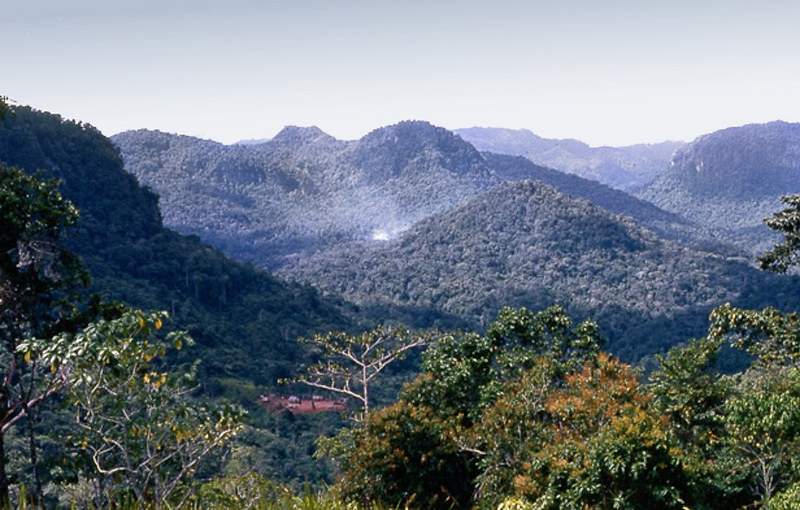
Papua New Guinea has most meagre energy usage and hosts the third-largest tropical rainforest in the world, ranking behind the Amazon Basin and the Congo Basin which help sequester carbon dioxide from the atmosphere.
To bring these thoughts and ideas together, and serve the nation and its people, a comprehensive energy plan needs to be developed for the next 50 years taking into consideration all of the above and the development priorities of Papua New Guinea and its people.