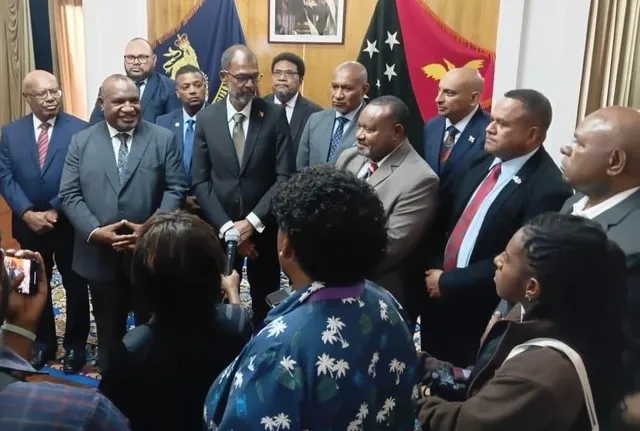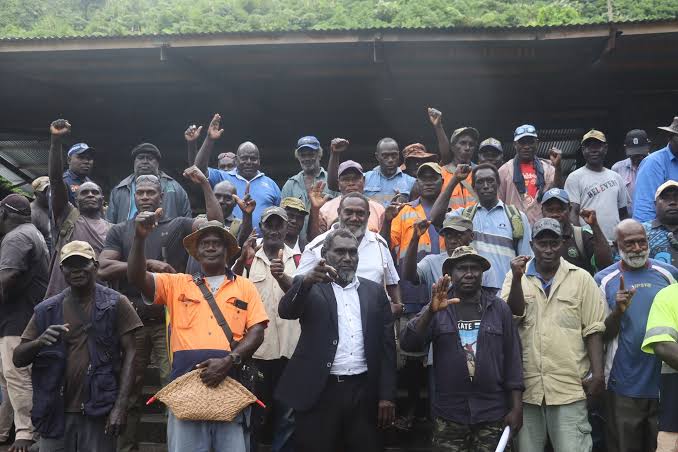
The PNG Chamber of Resources and Energy (PNGCORE) welcomes the announcement by Rio Tinto, Bougainville Copper Ltd (BCL) and the Autonomous Bougainville Government (ABG) that they have reached an agreement with community leaders to establish a fund supporting efforts to address impacts identified through the Panguna Mine Legacy Impact Assessment. Rio Tinto has committed a voluntary contribution of US$250 million (approximately K1.1 billion) over the coming years.
Panguna's history is closely tied to the Bougainville Crisis, and communities in the mining, river, delta, port and town areas have lived with the mine's legacy since operations ceased in 1989.
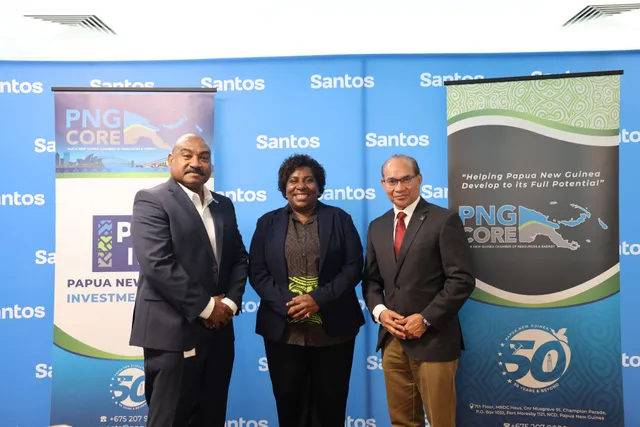
PNGCORE President Anthony Smaré said the affected communities had endured a long period of hardship and described the fund as an important step towards recovery.
"The people of the affected areas have carried a heavy burden for many years, and we acknowledge that first. No fund can undo the past, but today's announcement is a meaningful and long-awaited step towards healing and recovery, and we congratulate all who worked to reach it," Smaré said.
Smaré paid particular tribute to the community members and landowners who brought the original human rights complaint, led by Theonila Roka-Matbob, and to the Oversight Committee, comprising government, landowner, community, company and Human Rights Law Centre representatives, which oversaw the independent Panguna Mine Legacy Impact Assessment published in December 2024.
He also recognised the successive Bougainville presidents, the late Joseph Kabui, the late John Tabinaman (acting), James Tanis, John Momis and Ishmael Toroama, for their leadership throughout the long process of peace and recovery. He acknowledged the ABG and BCL for their work through the Roundtable.
PNGCORE particularly thanked Rio Tinto for providing most of the funding for the independent assessment, accepting its findings and making a substantial voluntary commitment to addressing the identified impacts, setting an important standard for the industry.
Smaré said the outcome was primarily an achievement of the affected communities, who had persistently sought recognition of the impacts of the mine.
"The people of Panguna asked to be heard, and they were persistent, patient and principled. This outcome belongs to them first," he said.
PNGCORE noted that remedy priorities and governance arrangements would be developed in consultation with affected communities, consistent with the UN Guiding Principles on Business and Human Rights. The fund is separate from any future redevelopment decisions, which rest with the ABG and the people of Bougainville.
Smaré encouraged affected communities, including women, young people and elders, to participate fully in the consultations and help shape decisions on the use of the fund.
"Your knowledge of the land and rivers, and of what has been lost, should shape every decision," he said.
He also urged the parties to prioritise community needs, address urgent safety concerns and maintain transparency in the fund's administration.
"We encourage the parties to keep communities at the centre, act quickly on works that protect life and safety, and report openly on how funds are governed and spent, so trust can be rebuilt over time," Smaré said.
Smaré said the initiative was an important reference point for the resources sector in Papua New Guinea and the wider region.
"Responsible mining means taking responsibility for the whole life of a mine, including what is left behind. An independent assessment, a seat at the table for affected people and a long-term commitment to providing remedies are the right approach, and our industry should learn from it," he said.
Smaré said PNGCORE and its members were prepared to share their experience in rehabilitation, water management and community development where it could be useful.