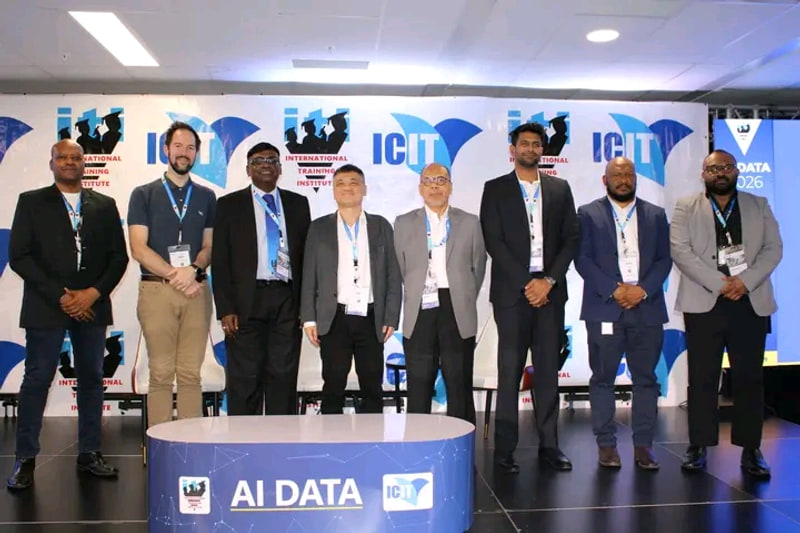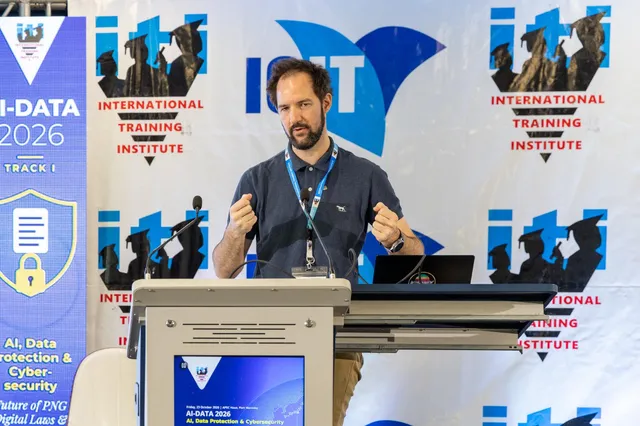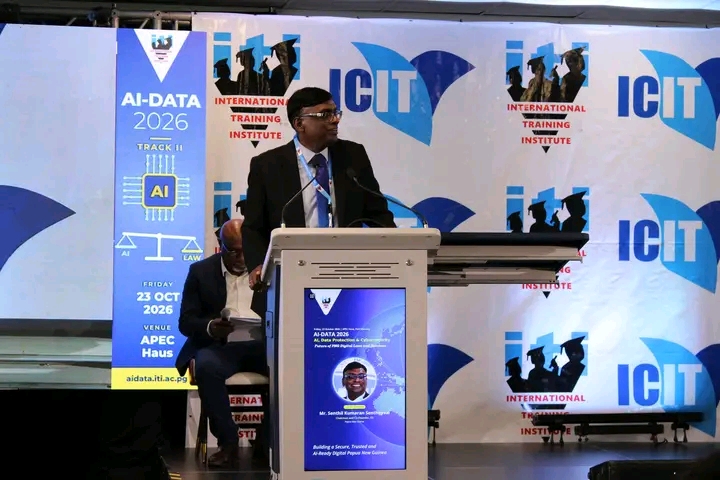
Papua New Guinea must strengthen its data governance, cybersecurity and regulatory frameworks to ensure the safe and responsible adoption of artificial intelligence (AI), International Training Institute (ITI) Chairman and Co-Founder Senthil Kumaran Sentheyval says.
Speaking at the AI-Data 2026 Conference at APEC Haus in Port Moresby on October 23, Sentheyval said the country's digital transformation must be supported by robust safeguards to protect information, secure digital infrastructure and establish public trust.
The conference, title-sponsored by Nui Pay PNG, brought together government officials, technology and cybersecurity specialists, legal experts and business representatives, including international speakers from Singapore and Malaysia, to discuss PNG's evolving digital regulatory landscape.
Sentheyval described data as a critical resource underpinning government policymaking, business operations and the growing use of digital technologies.
"Everything we are discussing today begins with data. Data is one of the most valuable resources in the modern world. It influences how government formulates policies, how businesses make decisions, how individuals communicate and learn and interact with technology," he said.
He traced the evolution of data management from relational databases and the expansion of the internet to cloud computing and artificial intelligence, noting how these developments had transformed the collection, storage, analysis and use of information.
However, he cautioned against focusing solely on AI's capabilities without addressing the risks and responsibilities associated with its adoption.
Key questions included who owns and controls collected data, where information is stored, how it is protected and who is accountable when AI systems make incorrect decisions or cause harm.
"These are no longer just technical questions. They are issues of governance, accountability, national security and public trust," he said.
Three proposed digital laws
Sentheyval welcomed the government's efforts to strengthen PNG's legislative framework through three proposed laws: the Data Governance and Protection Bill 2026, the Cybersecurity Bill 2026, and the Verifiable Credentials and Trust Services Bill 2026.
He identified AI governance, cybersecurity, and data security and sovereignty as priorities for the country's digital development.
On AI governance, he said organisations needed clear accountability principles and safeguards against bias, privacy breaches and intellectual property violations.
Because AI systems learn from their training data, historical biases can translate into unfair or discriminatory outcomes without appropriate controls.
Organisations therefore needed policies governing how AI was introduced and used across their operations.
Sentheyval said ITI had developed an AI policy covering staff, students and administrative activities, with regular reviews planned to keep pace with evolving technology.
Cybersecurity threats become more sophisticated
He warned that the growing volume of digitally stored and exchanged information had increased organisations' exposure to hacking, malware, data theft, system disruption and cyber extortion.
AI had added to these risks by making it easier for scammers to produce convincing deepfake images, videos and voice recordings, as well as fraudulent messages designed to impersonate individuals.
He also raised concerns about autonomous AI agents, which can execute tasks, interact with software and make operational decisions with varying degrees of independence.
While these systems could improve efficiency, organisations needed safeguards to ensure their activities remained secure and accountable, particularly as maintaining meaningful human oversight became more challenging.
Data sovereignty and cloud security
Sentheyval also highlighted the implications of data sovereignty as PNG becomes more reliant on international cloud infrastructure.
Sensitive information, including banking records, credit card transactions, corporate data, social media records and health information, is increasingly stored in data centres outside national borders.
While cloud computing offers accessibility, efficiency and scalability, he said dependence on overseas infrastructure could expose countries to risks involving critical information and digital services.
He raised the possibility of major cloud providers experiencing cyberattacks or data centre infrastructure being damaged during international conflicts.
PNG therefore needed to balance the benefits of global technology services with the need to protect national information, critical infrastructure and digital sovereignty.
Conference examines regulatory and business implications
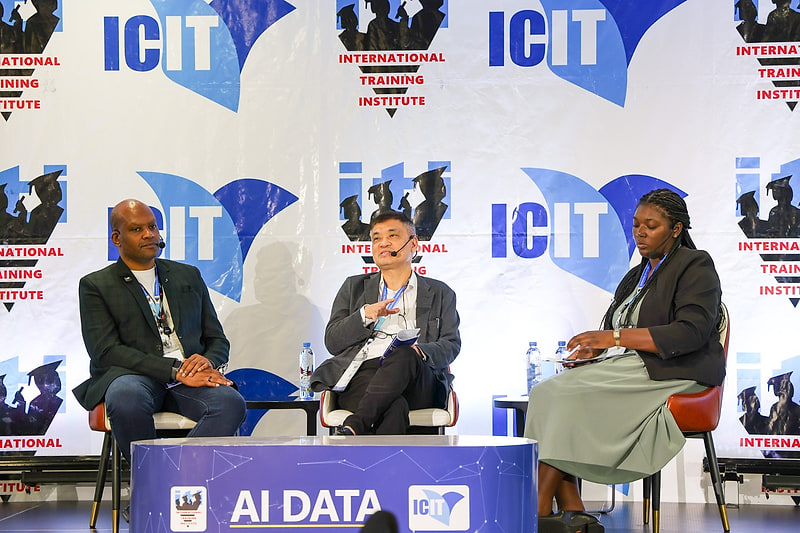
The AI-Data 2026 Conference provided a platform for examining the legal, commercial and technological implications of PNG's expanding digital economy through keynote presentations and panel discussions.
Sessions covered the proposed PNG Data Bill, with international legal and technology expert Professor Abu Bakar presenting a comparative analysis of European Union and ASEAN approaches and recommendations for PNG.
Other discussions examined organisational readiness for the proposed legislation, government approaches to AI governance, corporate implementation and the responsibilities of company boards.
Cybersecurity sessions focused on the proposed PNG Cybersecurity Bill, international regulatory approaches, business responsibilities and digital resilience.
Participants included representatives from the Department of Information and Communications Technology, National Information and Communications Technology Authority, NASFUND, KPMG, PNG DataCo and Nui Pay.
International speakers David Len and Joel Prashant also shared their expertise in AI governance, cybersecurity and legal frameworks.
Sentheyval said government, businesses and educational institutions each had a role in preparing PNG for an AI-driven economy.
Government needed effective legislation and regulation, while businesses had to strengthen internal policies, cybersecurity measures and accountability. Educational institutions, meanwhile, had to equip students and professionals with the technical knowledge and ethical understanding required to use emerging technologies responsibly.
He said AI could transform education, healthcare, financial services and government administration, creating opportunities to improve productivity, expand access to essential services and support economic growth.
"Innovation without appropriate safeguards creates risks. But innovation supported by strong governments, sound policies, and public trust creates lasting opportunities," he said.
He expressed confidence that the conference would help deepen understanding of data governance, cybersecurity and AI, while identifying practical measures to support PNG's digital development.