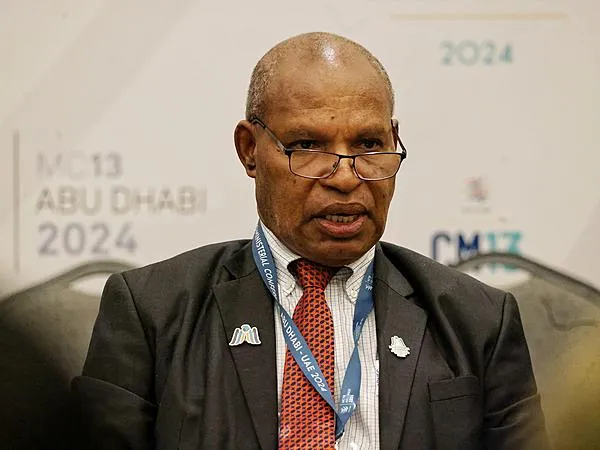
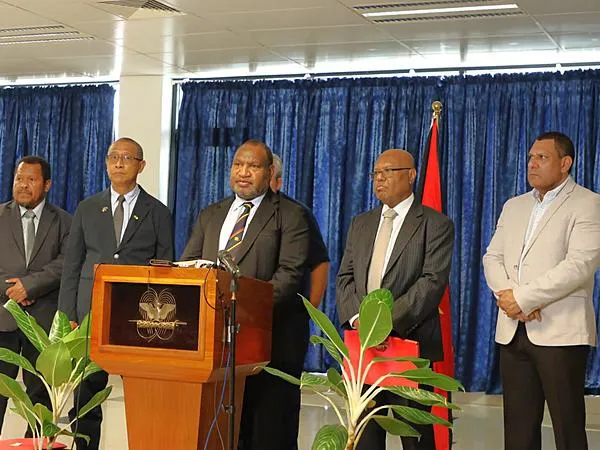
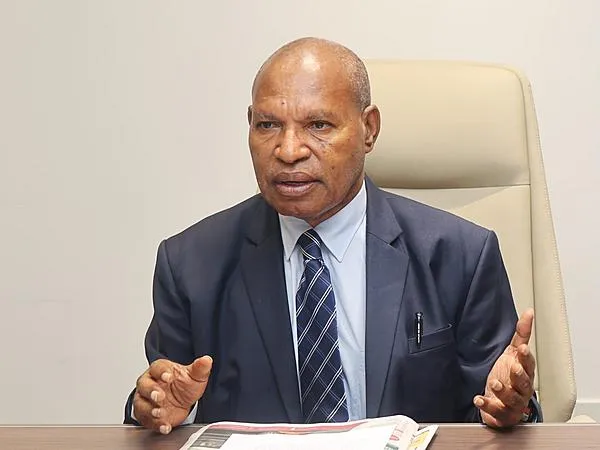
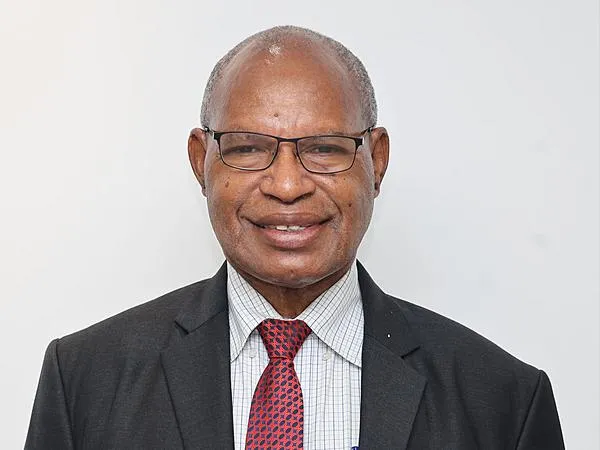
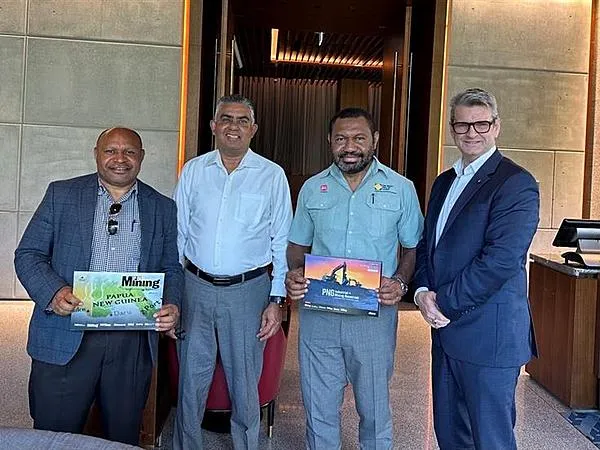
The Minister for International Trade and Investment, Hon. Richard Maru in his statement to the World Trade Organization (WTO) on the Fisheries Subsidies Agreement which had been discussed for many years said the Pacific Region had every reason to be concerned about the future of the fisheries industry because 50 per cent of the world’s tuna supplied by the Pacific Island States, with PNG accounting for 10 percent of the world’s supply.
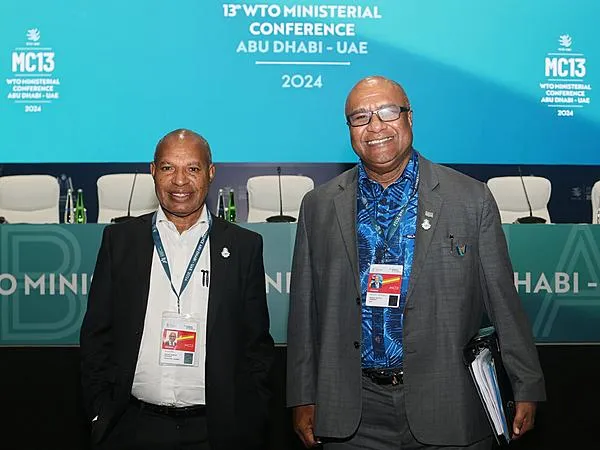
“For the Pacific, we are concerned about overcapacity and overfishing because of the harmful effects that it will have in depleting all our fisheries resources, hence we cannot allow anyone to destroy the industry. The Fisheries Subsidies Agreement must safeguard the interest of the Pacific Region not only because we own and supply 50 per cent of the world’s tuna but because most of our island countries’ only renewable and sustainable resource is their fisheries resources. We cannot continue to allow a fisheries regime where few distant water fishing nations continue to exploit our resources in an unsustainable manner by proving subsidies that result in overcapacity and overfishing. Destroying our fisheries means destroying the lives of our people, destroying our current and future generations, destroying our economies, and destroying our livelihood. We will ratify the Agreement only when we are happy with the text because it is our responsibility as the custodians of the healthy fishing stocks on earth to make sure that it is responsibly harvested so that the world will continue to have fish supplies now and into the future,” said Minister Maru to set the context of his statement yesterday at the WTO 13th Ministerial Conference (MC13) in Abu Dhabi, United Arab Emirates.
Minister Maru fully supported the statements made by Fiji and Samoa who spoke on behalf of the Pacific ACP Member States and also thanked Australia, India, Bangladesh and the African nations for strongly supporting the position of the Pacific Island States and for their appeal to the WTO to hear the plight of the Pacific Island nations.
“For us the bottom line is this: Papua New Guinea and all our Pacific Island States continue to demand that the Additional Provisions must include a standstill and a rollback for the top subsidizers which mirrors the commitment we have all made in Sustainable Development Goal (SDG) 14.6. In W10 this would be a new A.1.1(d). Without a standstill and rollback for the Tier 1 members, the negotiations will be a failure,” said Minister Maru.
Minister Maru further stated: “We appreciate the negotiations, however, there are several pertinent issues that I wish to raise regarding disciplines to Overcapacity and Overfishing in Article A, Special and Differential Treatment in Article B and Transparency and Notification in Article C. If we are to deliver on SDG 14.6, we need a pragmatic, concise and credible agreement that will eliminate certain forms of subsidies that contribute to Overcapacity and Overfishing. The most harmful subsidies are the ones that keep distant water fleets at sea. Yet we see the watering-down of the text to reflect a select few distant water fishing interests. Firstly, Article A.1 does nothing to reduce the level subsidies. It requires measures that aim for sustainability, but it does not require actual sustainability. A proposed text for a standstill and rollback has been submitted to the Secretariat. These would require minor amendments to C.4 and C.5 to add the base year of 2023. A.2 is currently the only article that addresses the economic harm of subsidies. It needs to survive. Without it, the Pacific is being punished for having the sole remaining sustainable tuna fishery. Distant water interests are being subsidised to exploit our waters. Footnote 16 is also essential to clarify the meaning of A.2. Secondly, Article B – there is still an imbalance between effective disciplines on subsidies contributing to overcapacity and overfishing on one hand, and appropriate and effective special and differential treatment on the other hand because it does not take into account our special and unique circumstances - it does not meet our interests on small scale fisheries with no clear definition to demonstrate its characteristic and features to be fishing more or less that its contribution to OCOF is unjustifiable; it falls short on the mandate to accord appropriate and effective SDT principle. This Agreement must not prevent Small Island Developing state members from using subsidies to develop its fishing fleet. This includes exemption on disclosure of pricing of fishing access through allocation of licences, fishing rights or quotas which are important fisheries management tools. In doing so, we strongly view larger subsidizers should be excluded from B.5. In relation to Article C, we continue to propose the deletion of paragraph (iii). I conclude by reaffirming Papua New Guinea’s commitment to reaching an outcome in the fisheries subsidies negotiations so we can have an agreement.”
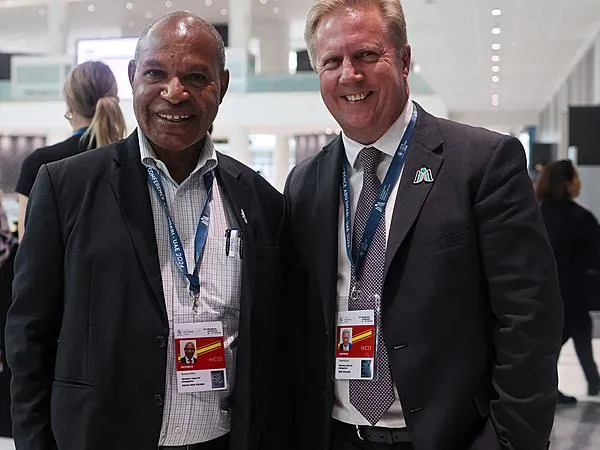
The Minister for International Trade and Investment, Hon. Richard Maru and the New Zealand Minister for Agriculture, Hunting and Fishing, Forestry, and Trade, Hon. Todd McClay have agreed for a small Papua New Guinea (PNG) delegation to visit New Zealand in the last week of April to hold high-level trade talks. The two Ministers agreed on this in their meeting recently at the margins of the World Trade Organization (WTO) 13th Ministerial Conference (MC13) in Abu Dhabi, United Arab Emirates (UAE).
Minister Maru said the visit to New Zealand in April will be to learn from the experience of New Zealand’s capital market industry and seek New Zealand Government’s support to transform the Securities Commission of PNG and the capital market industry of PNG. Apart from the capital market industry, the PNG delegation will also visit the chicken and dairy farms in New Zealand and invite the New Zealand investors in these industries to invest in PNG.
“We want to look at New Zealand’s chicken industry and invite the New Zealand investors in this industry to come and invest in PNG because we still continue to import an estimate of over K100 million worth of chicken annually and this results in loss of jobs and revenue for our MSMEs, SMEs, and our industry. We want to stop that. We also do not want to be exposed to the risk of imported chicken diseases like the Avian Influenza and others. We want to produce enough day-old chicks to supply the entire need of our nation, our farmers, and our industry so we are able to produce enough chicken locally to meet the growing demand for chicken. We also want to meet and invite some potential New Zealand investors to invest in our Special Economic Zones,” said Minister Maru.
Minister Maru added: “We also want to meet the Indigenous Maori Commission to discuss and learn about how indigenous Maori businesses are doing business in major industries. This is a lead-up on part of our preparations to host our first PNG Indigenous Business Summit in August this year at Kokopo, East New Britain Province. We really want to learn from the success of Maori indigenous businesses and also consider inviting some of them to be the speakers at our PNG Indigenous Business Summit.”
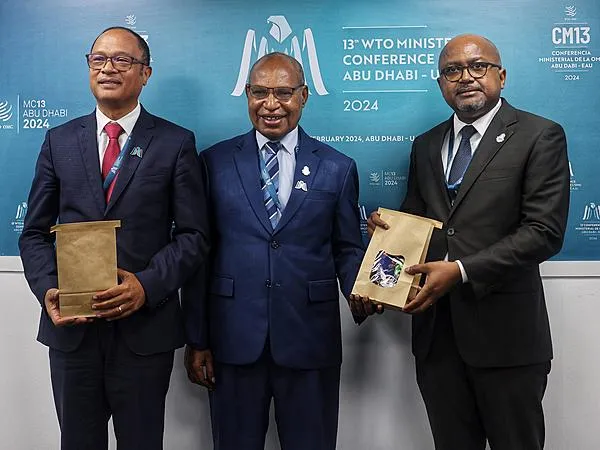
The Trade Ministers for Papua New Guinea (PNG), Madagascar, and Comoros have agreed in their three-way bilateral meeting that they would work together to establish a world association for vanilla growing nations. The meeting was held in Abu Dhabi, United Arab Emirates (UAE) on the margins of the World Trade Organization (WTO) 13th Ministerial Conference (MC13). This association is proposed by Madagascar which is currently the world’s leading vanilla producing country leading the global market with over 60 per cent of exports and generating approximately USD1 billion a year for the country. Madagascar has over 1 million vanilla farmers out of their population of almost 30 million people.
Madagascar Minister for Industrialization, Trade and Consumption, Hon. Edgard Razafindravahy said: “This organization will address the issue of price instability, sustainable development of the industry, threats to the value chain, search for new markets, and production of natural vanilla to consumers around the world. The creation of the organization will make it possible to establish a mechanism for setting prices according to quality and in terms of sustainable development, the organization will promote sustainable practices that will not only guarantee vanilla quality but also fair income for farmers. Through this organization we can also strengthen the value chain which includes development of strategic partnership, search for new markets for natural vanilla, and development of the vanilla industry. The organization will also be a powerful tool for promoting natural vanilla worldwide and raising consumer awareness on responsible vanilla consumption.”
PNG Minister for International Trade and Investment, Hon. Richard Maru said PNG was keen to join the association as one its foundation members if the association would look at increasing prices for the farmers to encourage them to plant vanilla and grow the industry on a long-term sustainable basis instead of the constant too frequent fluctuations which has been very discouraging for our farmers in PNG. Minister also asked Madagascar as the world’s leading vanilla producing country to assist PNG by proving technical support in terms of farmer training, improving quality of vanilla, and helping to build the industry in PNG.
Minister Maru said: Compared to Madagascar, PNG is a small producer of vanilla. Based on recent research, PNG is estimated to produce 495 tons of vanilla a year which equates to 10 per cent of the global vanilla supply and the vanilla market in PNG was valued at K29.9 million in 2023. We have a lot of scope for increase in terms of our production of vanilla but the issue that have really undermined the growth of the industry is price instability and regular price fluctuation which has made it difficult to maintain farmer interest. Unlike cocoa and coffee where we have the world market prices, vanilla prices fluctuate too often and therefore it is not attractive for farmers and this is a challenge that hopefully the organization that is being initiated will support so we can maintain high prices in order to maintain the farmer interest at all times. The other area is quality- higher the quality the better the price. We need processing technology to maintain quality at the highest level and the farmers need to be trained so they do not harvest the beans when they are not ready to be harvested. Another issue is the market for our vanilla. In PNG, we have a land border with Indonesia, so our farmers just walk across the border and sell the beans to Indonesian buyers, but they do not know if they are selling their vanilla beans at the correct price or not because they are not aware of world market prices, who is offering what prices, and how to access those global markets.”
Minister Maru further stated: “This association is only worth forming if the volume and demand for natural vanilla will grow because the most serious threat to the growth of the industry is artificial vanilla. The association will have to work hard to ensure that people will continue to prefer natural vanilla so that the industry can grow into the future.”
With Madagascar, Comoros, Uganda, Indonesia, and PNG being the only five vanilla producing countries, Minister Maru suggested to his counterpart from Madagascar to invite all Trade and Agriculture Ministers of these countries to meet immediately to have an initial meeting about incorporating and establishing world association for vanilla producing countries and be the foundation members of this association.
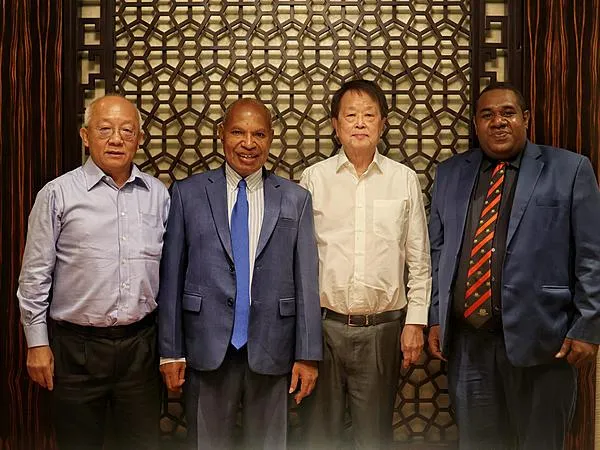
Wilmar International Limited is set to immediately commence detailed feasibility study on two Joint Ventures (JV) with the Government of Papua New Guinea (PNG) on commercial large-scale rice farm and chicken production. Wilmar CEO & Chairman, Mr. Khoon Hong Kuok said this in a meeting today with the Minister for International Trade and Investment, Hon. Richard Maru in Singapore.
Mr. Kuok said: “PNG can be transformed through agriculture; it has so much potential to be a giant in agriculture. It just needs good partners and strong commitment from the Government and the availability of state land to realize its potential. Wilmar is ready to come to PNG in the next two weeks to start a feasibility study for commercial large-scale rice farm in Rigo, Central Province and in the Sepik Plains, and chicken production for broilers, eggs, and day-old chicks in Port Moresby. These are the two low-hanging fruits. PNG can easily produce enough chicken its own chicken needs and be a network exporter. The same is true for rice. PNG has great weather, very rich soils, high yielding rice varieties, and if land is made available PNG can easily produce enough rice to replace the 400,000 metric tons of rice PNG imports valued at K900 million annually. We have large-scale rice and chicken operations in China and in Indonesia and we are very keen to partner the Government of PNG in these two areas initially and we are also happy for Papua New Guineans to buy into these two proposed joint venture companies.”
Mr. Kuok further stated: “The price of chicken in PNG is three times the price of chicken in Malaysia. The main reason for this is the cost of feed. We are determined to work with the Government of PNG to go into domestic production of feed to help reduce the price of chicken for the benefit of Papua New Guineans whose main protein is chicken. The price of chicken in PNG is simply ridiculous and unacceptable and the PNG Government has a duty to reduce the cost of chicken as part of its overall plan to reduce the current very high cost of living in PNG.”
Wilmar International Limited is the largest and most integrated leading agribusiness group in the Asia Pacific Region and it is ranked amongst the largest listed company by market capitalization on the Singapore Stock Exchange. The Independent State of PNG signed an MoU with Wilmar International Limited in December last year to invest in domestic rice industry, chicken operations, feed industry, flour, oil palm, and sugar as equity partners.
Minister Maru assured Mr. Kuok in the meeting today in Singapore that the PNG Government was ready with equity to fund the large-scale commercial rice farm and chicken production in Port Moresby subject to the feasibility studies to determine commercial viability of these two potential projects under the proposed JV.
“Rice and chicken are our number one priority- these two are the low-hanging fruits which we want to start immediately so we can stop importing K200 million worth of chicken and K900 million worth of rice annually and create hundreds of new jobs, more business opportunities for our SMEs, and wealth creation opportunities for our village people including our landowners who are able to unlock their land and participate in many of these potential business opportunities under our planned nucleus estate project modality,” said Minister Maru.
Minister Maru further stated: “The Government really wants a major supplier of broiler, day-old chicks, and eggs for the Port Moresby market. We have so many farmers and SMEs who are into chicken production, but they cannot get their supplies of day-old chicks constantly because we have shortage of day-old chicks in the country. This is a very serious situation that is resulting in loss of business for our farmers and our inability to meet the domestic needs of our people. Air Niugini operates out of Port Moresby so if we have a big supplier of day-old chicks in Port Moresby it will make sense as we can be able to reach the rest of the country every day through the Air Niugini flights. This is why we need Wilmar to invest in this space in a JV with the National Government, Central Provincial Government, and other local investors so we can fill this gap. The other issue is chicken and eggs supplied out of Lae are expensive because of freight. By investing in Port Moresby, we will reduce the cost of broilers, eggs, and day-old chicks. We also have to further reduce the price of the chicken by establishing domestic feed industry to reduce the cost of feed, and we may have to support the local feed industry by imposing tax on importing feed from other countries. These are some of the issues that the Government will seriously look at.”
“Morobe Province already has a world class feed mill in Lae and all we need to do is produce crops like corn or maize on a large scale and consistent basis to supply to this feed mill instead of the company Goodmen Fielder importing from outside the country. We have to move to large-scale mechanized farming which will require both significant capital and land. The Morobe Provincial Government is encouraged to pursue these potential opportunities for its farmers with Goodman Fielder in Lae that is owned by Wilmar International Limited,” Minister Maru added.
Highlights
St Barbara Limited is pleased to announce that all assay results have been returned for the 14-hole, 1846-metre metallurgical diamond drill program at the Simberi Operations in Papua New Guinea (PNG). This has allowed the collection and dispatch of 2,434kg of sulphide ore for the planned comprehensive metallurgical testwork program in Canada.
Managing Director and CEO Andrew Strelein said “The receipt of remaining assay results for the metallurgical diamond drill program is another important milestone for the 2023/24 campaign. This has allowed the finalisation of the second batch of sample material now in transit to the selected laboratory in Canada.” Assay results for all 14 metallurgical diamond drill holes is set out below in Table 1.
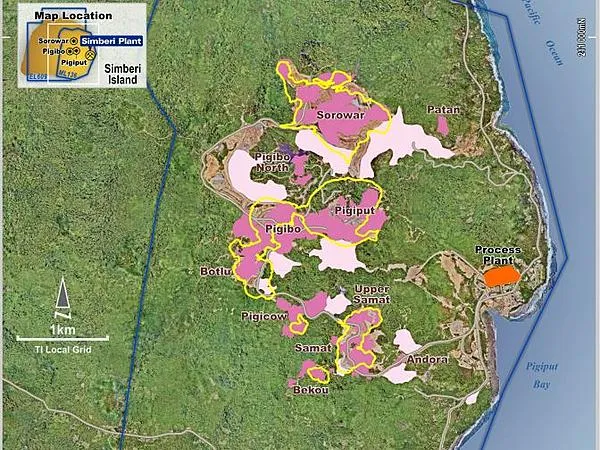
Figure 1 below shows the location of the respective open pits on the main mining lease (ML 156) and Figure 2 shows the locations of the planned and completed diamond drill holes including both resource definition and metallurgical sample holes.
Prime Minister Hon. James Marape has urged Central Province Governor Hon. Rufina Peter and her provincial administration to unleash the enormous untapped economic potential of Central Province.
The Prime Minister particularly stressed the unique tourism potential of the province, given its proximity to the nation’s capital, and the opportunity this offers in revenue generation for the province.
“Central Province’s culture and natural environment is ideal for tourism, great attractions visitors from Papua New Guinea, Australia and other neighboring countries would want to see,” said Prime Minister Marape.
Prime Minister Marape also highlighted the rich agriculture potential that Central has across its five districts and 16 LLG areas.
“You have enormous potential in the agriculture sector right across your province. And you can supply and feed Port Moresby with your food.”
PM Marape also brought up the construction of the Central provincial hospital, urging Governor Peter to prioritise it so the National Government could come in to support its construction. He also mentioned the Edevu Power supply project; the reopening of Tolukuma mine; and the Central/NCD boundaries clarity for better GST management.
Despite you being in the Opposition, my government prioritises service delivery for the people; not our politics. We will support Central and get you funding,” he said.
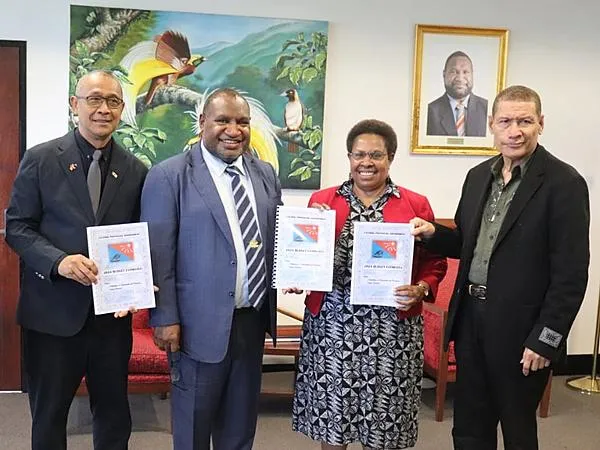
The Prime Minister made these remarks while receiving the K405 million 2024 Central Provincial Government Budget recently at Sir Manasupe House.
The budget was presented by Governor Peter who was joined by her new Acting Provincial Administrator Edward Kila and senior members of the administration.
With a total budget figure of K405,672,688, Infrastructure, Education, Economic, and Law & Justice take up the priority areas for the province. Internal Revenue stands at K43.68 million.
Governor Rufina Peter acknowledged Prime Minister Marape for affirming National Government support to assist Central Province in the budget implementation, with some projects already off the ground.
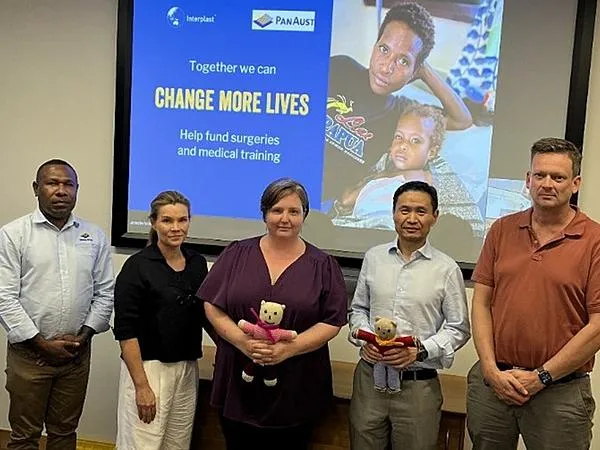
Improving access to healthcare is at the heart of a three-year partnership agreement signed recently by Interplast and PanAust.
Interplast sends teams of volunteer plastic and reconstructive surgeons, anaesthetists, nurses and allied health professionals to provide life-changing surgery and medical training in 17 countries across the Asia Pacific region.
The partnership launched on Tuesday afternoon at PanAust’s Brisbane office, commits PanAust to pay $120, 000 per year for three years to deliver a range of far-reaching health benefits to the East and West Sepik Provinces of Papua New Guinea.
The partnership will formally commence with a series of health assessments in Sepik communities near the Frieda River Project site, followed by scheduled surgeries at the Wewak’s General Hospital where a highly skilled surgical team will undertake reconstructive surgical procedures. It is expected that up to 60 people, including Frieda River community members, will receive much-needed surgical care during each visit.
Additionally, the collaboration aims to enhance the capability of local surgical teams through capacity building, ensuring rapid and effective medical response in the event of accidents or other emergencies.
Daling Zheng, Managing Director and CEO of PanAust said the agreement is a significant commitment towards improving healthcare accessibility and outcomes for those living in remote and often inaccessible communities.
“In Papua New Guinea our focus is on improved health and education services and capacity-building with an emphasis on the maintenance and establishment of infrastructure to support these services.
“We are here for the long haul and acknowledge our responsibility to support current and future generations. We believe that access to health is a fundamental right, and we are proud to play a role in ensuring that right is upheld in remote communities near the Frieda River Project.
“Through this MoU with Interplast, we are deepening our impact and know that we are bettering the lives of so many by delivering life-changing surgeries and education,” Mr Zheng said.
PanAust and Interplast have had an enduring relationship with the two first collaborating in 2012 to deliver reconstructive surgery to people in Xieng Khouang Province in Laos.
Since 2012, more than 250 people in the Asia Pacific have received life-changing clinical care, more than 50 clinicians have received clinical training opportunities, and hospital and health systems in two countries have benefited from PanAust and Interplast’s support.
Interplast’s Director of International Programs, Jess Hill, said that: “Interplast is pleased to be continuing our partnership with PanAust which will enable us to deliver much-needed specialist clinical services to the populations of East and West Sepik Provinces, as well as training and mentoring for local medical and nursing personnel. Both children and adults will have access to life-changing surgery, and our local counterparts will build their clinical skills, which will in turn enable them to provide better treatment to their community.’’
Prime Minister Hon. James Marape has urged the New Ireland Provincial Government to do more to modernise the province.
PM Marape said this can be done relatively easily because of the existence of some enabling infrastructure, revenue from Lihir Mine, and the strong observance of the Rule of Law in the province.
The Prime Minister highlighted New Ireland’s key economic potential revenue-earners in agriculture, tourism and fisheries.
“New Ireland Province can easily be ticked off in terms of development and modernisation.
“There is big potential for revenue in agriculture, tourism and fishing. Given your rich and fertile land for agriculture; your ‘bilas peles’ tag for tourism; and your beautiful waters rich in fish, there is huge potential for increased revenue and rapid modernisation of the province,” he pointed out.
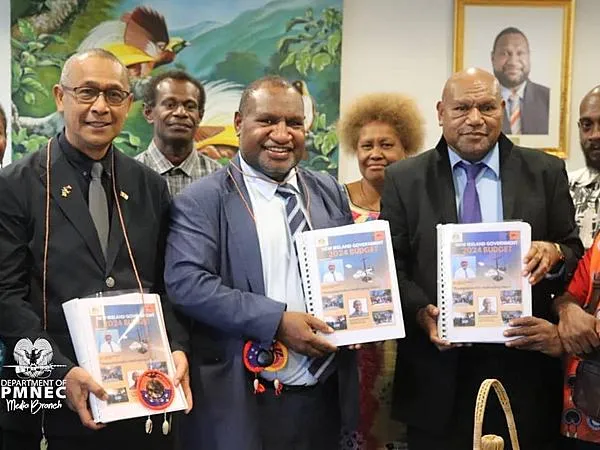
Prime Minister Marape made these comments while receiving the 2024 New Ireland Provincial Government Budget of K450 million at Sir Manasupe House recently (28/02/2024).
He also assured the provincial government of his government’s support, and offered his respects to former prime minister and founding father, Governor Hon. Sir Julius Chan.
Kavieng District Development Authority CEO David Lens presented the budget on behalf of the provincial government. He was joined by officials from the New Ireland Provincial Assembly.
The K450 million budget encompasses 13 LLG budgets from across the province in the two districts of Kavieng and Namatanai.
Kavieng MP and Minister assisting the Prime Minister on Treasury matters Hon. Ian Ling-Stuckey was also present to witness the budget presentation.
Prime Minister and Treasurer Hon. James Marape announced recently that Cabinet has invoked provisions of the Essential Services Act in light of the fuel crisis now affecting the country.
“This allows for the Government emergency powers to give directions to companies in the fuel and banking sector in the best interests of Papua New Guinea,” stated Prime Minister Marape. He emphasised that stringent penalties would be imposed on those who fail to abide by the orders.
Prime Minister Marape attributed the fuel crisis to a 1999 agreement between the State and InterOil, predecessor of Puma Energy, which allowed for a monopoly in wholesale importation of fuel and distribution throughout PNG until 2027.
Parliament, reconvening in May, will pass laws aimed at lessening this monopoly of fuel supply, Prime Minister Marape announced.
“The decisions we have made are decisions to compel,” Prime Minister Marape reiterated.
“If those we have passed directions to do not comply, under the Essential Services Act, there are penalties. We are willing to deploy all legal means possible to ensure that our country’s fuel is not sabotaged, our planes keep on flying, our cars keep on moving on.”
Cabinet, acting on advice of the National Security Council, has implemented several measures to address the fuel crisis:
“I want to apologise if the nation is under stress in respect to fuel,” Prime Minister Marape said.
“We have this monopolistic arrangement, with Puma having a substantial slice of our market, but we are working through legal means to unbundle the monopoly. We will also ensure that Kumul
Petroleum is prepared to bring in additional fuel.”
Prime Minister Marape extended gratitude to ExxonMobil for bringing in additional fuel cargo and announced the Australian Government’s assistance in bolstering fuel security.
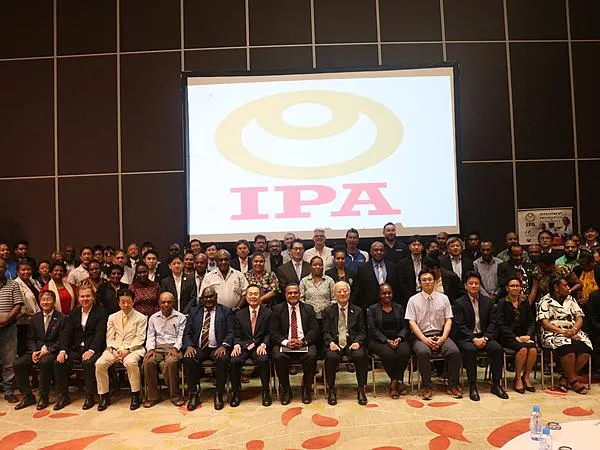
The Minister for Commerce & Industry, Win Bakri Daki through the Papua New Guinea Investment Promotion Authority (IPA) has praised the 50- member delegation from Japan who visited the country recently seeking business and investment opportunities.
Minister Daki told the investors that even though PNG has been hitting the media for the wrong reasons recently, these issues did not deter the plans and intentions of the business delegation to come to PNG.
“We are honored and humbled to have you with us during our challenging times. Your visit signals a great message to the outside world that PNG’s problems are not unique to what’s happening around the world and it adds to our endeavor to rebuild investors’ confidence and demonstrate that PNG is still open for business.” Minister said.
He was pleased with the discussions held during the forum and as Minister responsible for Commerce and Industry he said he was confident that the B2B, B2G and G2G discussions would be beneficial for both the Japanese and PNG side.
“I will be working with my Ministry after this forum to ensure that there is continued dialogue to maintain trade and bilateral arrangements between PNG and Japan.
I will also use this forum to propose to the Prime Minister of Papua New Guinea Honorable James Marape for a business delegation to accompany him to Japan when he attends the Pacific Islands Leaders Meeting (PALM) later this year. This is the commitment I intend to take up as the Minister responsible for Commerce and Industry in Papua New Guinea.”
The theme of the public private economic mission was: Co-creation by the Japanese and PNG private sectors for a balanced promotion of various industries that contribute to sustainable economic development in PNG.
The sectors of interest from the Japanese side include Energy, Infrastructure, Tourism and Environment and Agriculture. For agriculture, discussions will be on cultivating distinctive agricultural products and building resilient supply chains to increase profitability and revitalize local communities. In tourism, the focus will be on fostering a sustainable tourism industry in collaboration with the environmental industry, aiming to preserve and harmonize with the rich natural environment and culture of PNG.
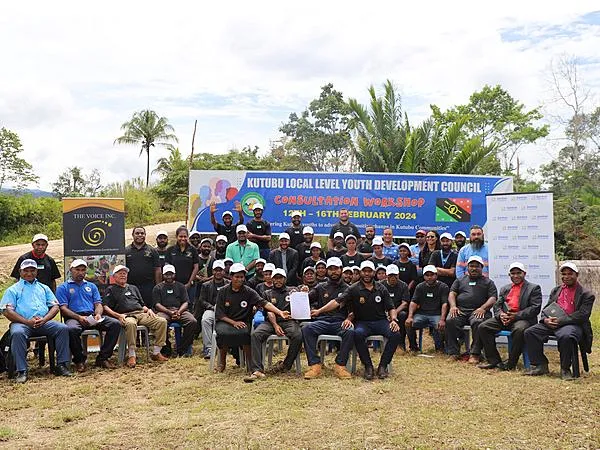
An exciting milestone under the Youth Opportunities program was completed last week. Thirty-nine participants made up of nine Kutubu Local Level Youth Development Council (KLLYDC) executives and 30 representatives from 18 wards attended a week-long consultation workshop. The representatives were from a range of sectors including education, health, sports, local council, police, church, women's and men's groups from the Lake Kutubu area.
The KLLYDC executives and ward representatives spent the time developing the youth council constitution and 5- year development plan. Key partners that also attended this workshop to support KLLYDC included the National Youth Development Authority (NYDA), Department of National Planning & Monitoring (DNPM), Nipa-Kutubu District Development Authority, Kutubu Local Level Government, Santos PNG Stakeholder Engagement, and Santos Foundation. These partners presented key policies and programs for youth development and provided guidance with aligning and including these key strategies in the KLLYDC 5-year development plan. The Voice Inc. facilitated the consultation and encouraged the young executives in planning for a better Kutubu.
A key element of this workshop was also having the Santos Foundation Gender Program Manager’s involvement to ensure the voices of women and girls were included.
At the end of the week, the draft constitution was signed and handed over to NYDA officials to table at the NYDA Board for vetting and approval. The 5-year development plan is being refined with stakeholders.
Upon closing, David William, KLLYDC Chairman thanked Santos Foundation saying "Santos Foundation, with its unwavering support, enabled the NYDA youth governing body to conduct elections and establish the Kutubu Local Level Youth Development Council. This council, represented by 18 ward members within Kutubu, is a crucial platform for the long-overlooked youth of Kutubu to emerge as leaders, contributing to the betterment of our communities, wards, and families. With the invaluable partnership of the Santos Foundation, I am confident that we are laying the groundwork for a brighter future."
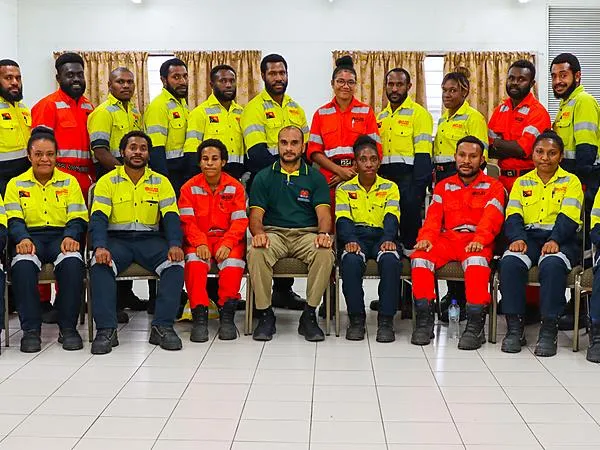
Twenty-two new apprentices officially joined Ok Tedi Mining Limited’s (OTML) Apprenticeship Training Program, after signing their Indenture Contracts with OTML and the National Apprenticeship Trade Testing Board (NATTB) on January 30th in Tabubil, Western Province.
The 22 apprentices are enrolled in various trades including auto electrical, carpentry, cabinet making and joinery, electrical, heavy equipment fitter, maintenance fitting and machining, metal fabrication & welding, plumbing and refrigeration and air-conditioning.
The 14 males and 8 females will undergo four years of apprenticeship training, which includes practical placements within the company and extension and block courses that will contribute to the final attainment of their trade certificates.
OTML General Manager Engineering, Infrastructure & Projects Franz Hemetsberger, welcomed the new apprentices and highlighted the importance of making good choices and finding purpose in one’s life even while in training. He emphasised on the OTML values of integrity, accountability and performance to be used as guiding pillars in their apprenticeship journey.
“You are starting to embark on your journey and in your age, you have the ability to search and learn everything, unlike in the past. What you do with your time, and what you do with your learning is entirely up to you. So put the time in and spend the time you have, learning. We need people who are focused and dedicated and keen and have the right values to succeed,” said Mr Hemetsberger.
NATTB Acting Director, Brian Clowes, urged the new hires to have the right attitude and to practice humility while doing their apprenticeship training.
“If you are humble, it will be easy for your trainers and trades person to teach you. Learn to be humble and learn as much practical skills as you can in the next four years. Never throw your apprenticeship away. After four years you will be receiving your papers and that will be your foundation, whatever you build up will be entirely up to you. The choice is yours,” Mr Clowes said.
“Ok Tedi has been producing quality apprentices over the past 40 years and some were the best in the country and some are working overseas and you are part of this process now. On this day of signing this Indenture Contract, OTML and NATTB are here to train you.”
Since 1989, a total of 1,153 apprentices have undergone the OTML Apprenticeship Training Program.
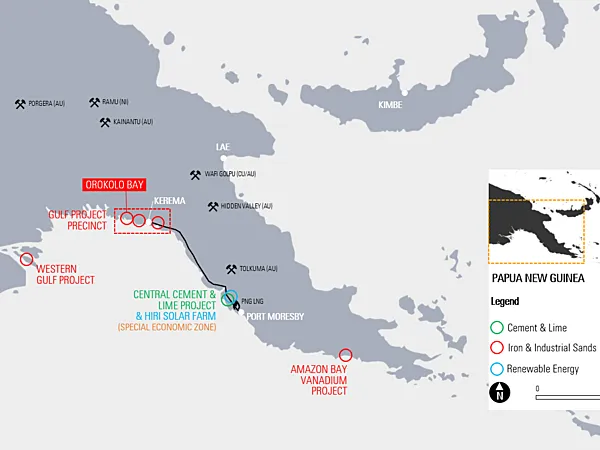
Mayur Resources Limited wishes to update shareholders regarding its announced partnership with PT SEA First Nickel Industry (PTSFNI) on 23 January 2024 concerning the Orokolo Bay Vanadium, Titanium, and Iron Sands project in Papua New Guinea (PNG).
PTSFNI has requested to put on hold its obligations to fund the development of the Orokolo Bay project, citing “sudden financial difficulties” related to the depressed state of the global nickel market and these prolonged conditions being forecast to continue.
PTSFNI wish to continue cooperation with the Company in respect of the Orokolo Bay project should it’s circumstances change. As a result, the Company has agreed with PTSFNI that Mayur has the right to transact with other development partners in relation to the Orokolo Bay project.
As previously announced, as part of the proposed strategic partnership, PTSFNI wished to additionally gain ownership exposure to Mayur’s flagship Central Lime Project (Phase 1), the Central Cement Project (Phase 2) and other Company assets by agreeing to acquire a 9.9% stake (Proposed Stake) in the parent Company being 21.99 cents per share representing a 15% premium to the then 30-day VWAP. Given Mayur's share price presently is trading at circa a 43% premium, the Company has agreed with PTSFNI that it no longer has the opportunity or right to acquire such Proposed Stake, nor would it be fair or reasonable to Mayur shareholders to do so.
Subject to PTSFNI's financial situation improving and the potential resumption of its paused projects, Mayur has the opportunity to re-engage with PTSFNI on similar terms previously announced in the absence of other development partners in respect of Orokolo Bay.
While the Orokolo Bay project is an attractive asset, and the Mayur Board is disappointed at these developments, Mayur purposely embarked upon a structure to bring in a 51% majority controlling strategic investor, as the asset is viewed as a non-core asset. Mayur’s focus is to become a carbon-neutral downstream processing lime and cement manufacturing business. Most of the Company’s focus is devoted to closing the conditions precedent and financing documentation to achieve Financial Close for its Phase 1 Flagship Quicklime development and finalise construction of the associated wharf as previously announced.
The seven landowning communities of the proposed Frieda River Copper-Gold Project have reaffirmed their commitment to work collaboratively with PanAust Limited at the first Community Leaders Forum for 2024.
The Community Leaders Forum is a regular pre-development meeting that provides an opportunity for Frieda River Limited to inform and consult with key stakeholders in the lead up to the final permitting of the Frieda River Project. The forum is an important part of Frieda River Limited’s engagement and consultation process.
Twenty-four representative community leaders met with Frieda River on 1-2 February 2024. The meeting provided an update to the leaders on the advancement of the permitting phase of the project and the Frieda River Hydroelectric Project. The sessions were extended to openly discuss and resolve community concerns and answer questions on the technical and engineering aspects of this project of national significance.
The meeting concluded with a review of the Frieda River Accord. Signed in 2018, the Frieda River Accord calls for a PanAust and community shared vision and values of working cooperatively and resolving any differences of opinion and expectations while mutually advancing the Frieda River Project.
Financial Statement Highlights:
• Strong Balance Sheet o Cash on Hand of $214 million including $168 million available cash and $46 million restricted cash
• Growth Capital of $4.6 million incurred to rapidly advance development projects:
• Sustaining Capital investment of $3.9 million at Simberi
• Exploration of $1.5 million spent across Goldboro East, South West Nova Scotia, Tabar Island and Back Creek
• Corporate costs reduced to $7.7 million from $13.4 million in H1 FY23
• Underlying Loss After Tax of $27.3 million including:
• Statutory Loss After Tax of $42.7 million after the following Significant Items
Managing Director and CEO Andrew Strelein said “St Barbara’s balance sheet has the strength and liquidity to fund the demonstration of the development potential of the projects in Nova Scotia and the Simberi Expansion in the quickest possible time.”
“Net Cash Outflow for the continuing St Barbara business was $16.6 million, with the close out of taxes and working capital payments on the sale of Leonora Assets consuming $56.1 million.”
“We have moved quickly to eliminate costs that do not directly relate to the demonstration of this development potential or which do not contribute to the preservation of value at Simberi to achieve projected neutral operating cashflow through FY26.”
“The Underlying Loss After Tax reflects outcomes consistent with guidance given in October, while the Significant Items largely reflect work done to identify more precisely what will be utilised in the proposed transfer of the Touquoy processing plant to 15-Mile.”
The offical report can be found HERE
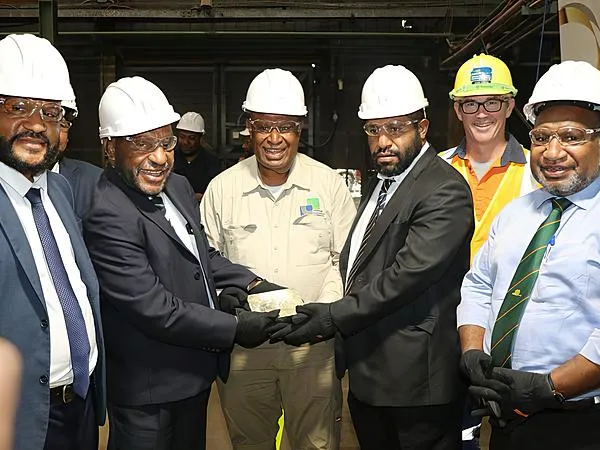
Prime Minister Hon James Marape, recently witnessed the first gold pour of the New Porgera Mine, since the expiry of the then Special Mining Lease (SML1) in 2019.
The event signifies that it will be 'all systems go' come July when full operations are expected to commence.
The PM was on-site accompanied by the Governor for Enga Province Hon Sir Peter Ipatas, Mining Minister Hon Muguwa Dilu, Member for Laiagap Hon Amos Akem, Country Manager for Barrick Niugini Limited Karo Lelai, Managing Director of the Mineral Resources Authority (MRA) Jerry Garry, and Managing Director of Kumul Minerals Holdings Limited (KMHL) Sarimu Kanu.
PM Marape said this was an historical event that marked the beginning of a brighter future for the country, especially landowners and stakeholders. He said when his government got into office in 2019, it embarked on a mission under the banner 'Take Back PNG' to ensure that the country must get a fair-share of benefits from all its natural resources including benefits from mineral resources. However, he said his government was also mindful and respectful of the fact that investors’ must also make their return on investments so that it is a win-win for all parties.
MRA MD Mr Garry said he was happy that the project had come this far. He said it had been a huge challenge for the MRA, in terms of ensuring that the application for SML13 by New Porgera Limited ( NPL) in 2023, met all regulatory requirements and were compliant with laws.
He said another challenge had been to effectively manage landowners' and stakeholders' expectations.
“As far as the MRA is concerned, all regulatory requirements under the Mining Act 1992, have been fully satisfied,” said Mr Garry.
He said the regulatory process begun from the time, the operator New Porgera Mine Limited (NPL) applied for the SML13, followed by the conducting of Wardens Hearing, the technical assessments, the Mining Advisory Council (MAC) deliberations and recommendations for grant to the Mining Minister.
The MD said the Community Development Agreement (CDA) process had almost been completed, and that stakeholders were now preparing to go into CDA negotiations proper.
Note: All amounts in United States Dollars unless otherwise indicated. (1): Refer to Integrated Development Plan (IDP) Definitive Feasibility Study (“DFS”) Case and PEA Case. IDP effective date is January 1, 2022. IDP has not been updated to reflect the updated Kora and Judd resource estimates (effective date September 12, 2023); however, the Company does not expect the design parameters and conclusions to materially change. The Company expects the potential mine life to be extended for both the DFS and PEA cases.
John Lewins, K92 Chief Executive Officer and Director, stated, “We are very excited about the outlook for the Company this year and in particular over the next 18 months, as K92 transforms into a Tier 1 Mid-Tier Producer with the delivery of the Stage 3 Expansion while also having the potential to deliver very significant exploration results from multiple targets as we saw earlier this week with the first two holes reported from our maiden drill program at Arakompa.
Operationally, in 2024, our focus is on increasing production from last year, while progressing with various infrastructure projects on surface and underground for the Stage 3 and 4 Expansions. The various growth capital packages, led by our Vice President Projects and Engineering, Chris Kinver, have made significant progress with 48% of the total growth capital either spent or committed as at December 31, 2023. Chris Kinver’s team is also well advanced awarding contracts for our second largest package, the Paste Fill Plant, with the tender process underway for long lead time items, which are expected to be awarded in the coming weeks.
On the underground mine, we are making significant investments in sustaining capital ahead of the Stage 3 Process Plant commissioning to establish multiple mining fronts while also introducing infrastructure that we expect will deliver a step-change in productivity. In 2023, Kainantu effectively operated with one mining front, and by the end of 2024, we plan to have three fronts producing, with a fourth planned for 2025. Infrastructure, such as the twin incline, ore and waste passes, in addition to ventilation upgrades are expected to significantly improve efficiencies and material movement capacity. This is also expected to realize very significant economies of scale.
And lastly, we continue to see significant value creation potential from exploration, maintaining near-record expenditures through 2024 while we progress the Stage 3 and 4 Expansions. We look forward to providing updates in due course.”
The Minister for International Trade and Investment, Hon. Richard Maru recently announced that the Government has issued new policy directions for Special Economic Zones (SEZs) in Papua New Guinea (PNG) to give first priority to PNG investors.
“The Marape-Rosso Government enacted the Special Economic Zone Authority Legislation in 2019 without the policy. Since my appointment as the Minister responsible for Special Economic zones, one of my KPIs is to ensure that the new SEZ Policy of Papua New Guinea is completed and launched this year. Among the key policies will be a policy on local ownership of investors or locators of Special Economic Zones. The policy will prescribe that Papua New Guineans will be given priority to invest in the Special Economic Zones and either be majority owned or be substantial shareholders of any investments in Special Economic Zone development in Papua New Guinea. This is so that they benefit from the incentives provided by the Government and the wealth of this nation is shared among our citizens, not only the institutional shareholder like Nasfund but also the landowner companies, SMEs, and ordinary mothers and fathers in the villages. As part of this undertaking, the Government is keen for investors to partner the Government through my Ministry (Ministry of International Trade and Investment) to set up Joint Venture (JV) companies that are publicly owned by our citizens and investors both local and international,” said Minister Maru.
As part of this undertaking the Government had directed the Paga Hill Estate to give first priority to Papua New Guinean investors for other investments on Paga Hill SEZ other than the Radisson Blu Hotel development.
“We understand that Paga Hill Estate already has investors locked in for the Radisson Blu Hotel which will be 40 per cent owned by Papua New Guinea investors. Apart from this, the Government has now directed Paga Hill Estate that all other investments in the Paga Hill Special Economic Zone including the new shopping mall, private hospitals, and other business ventures must be majority owned by Papua New Guinean citizens,” said Minister Maru.
Minister Maru further stated: I have now written to the Paga Hill Estate to advise them to immediately work with my Ministry (Ministry of International Trade and Investment) to put together a public company that will be listed on the Port Moresby Stock Exchange and jointly owned by the institutional investors, landowner companies, and the ordinary people of Papua New Guinea through an initial public offering. This company will be used to raise funds for all the investments so that companies residing in Papua New Guinea and Papua New Guinean owned companies including superfunds, landowner companies, and ordinary mothers and fathers from the villages will invest in the Paga Hill Special Economic Zone. We will have discussions with the Securities Commission of Papua New Guinea and the Port Moresby Stock Exchange to put together this company. The Paga Hill Special Economic Zone is a gamechanger for our country and we want it to be proudly owned by Papua New Guineans with them being the major shareholders in all new developments other than the Radisson Blue Hotel development.”
“We are also looking at similar companies to be also created for other Special Economic Zones right across the country so Papua New Guineans can maximize the benefits of investment opportunities in our country. We want more and greater Papua New Guinean equity and we can do that through the special purpose vehicle which is a listed Papua New Guinea company created specifically to be an investment vehicle for Papua New Guineans in the Special Economic Zones,” said Minister Maru.
Minister for International Trade and Investment, Hon. Richard Maru today announced that Papua New Guinea (PNG) will roll out Trade Commission Service this year.
“I am happy to inform the country that PNG is appointing Honorary Trade Commissioners across the world this year with the first being the Honorary Trade Commissioner to Australia and the Philippines which the Prime Minister will be announcing soon. We are now aggressively working towards appointing one in Indonesia and we will also be looking towards appointing Trade Commissioners in other countries around the world. We are diversifying our trading partners with the view to securing PNG’s economic future. We are open to recommendation of names from the trade and commerce industry, especially of people that will best serve our country in the area of trade and investment and two-way trade between PNG and various countries. Those who will be appointed must be resident in the countries that we will establish the Trade Commissions,” said Minister Maru.
Minister Maru added: “The primary responsibility of the appointed Trade Commissioners will be to look for export markets for PNG goods and to promote trade and investment opportunities in PNG especially to attract foreign direct investments. One of the major priorities is to attract investors in our Special Economic Zones and also to enter into Free Trade negotiations with various countries starting with China and Indonesia. Without investors from across the world it will be difficult to realize our vision to build a bigger and most sustainable and robust economy as we work towards achieving economic independence by 2032.”
Abu Dhabi, February 25, 2024- The Minister for International Trade and Investment, Hon. Richard Maru indicated to his counterparts from Pacific ACP who had gathered in Abu Dhabi, United Arab Emirates for the World Trade Organization (WTO) 13th Ministerial Conference (MC13) that Papua New Guinea will maintain its position to standstill on fisheries subsidies.
Minister Maru in the Pacific ACP WTO Trade Ministers Briefing yesterday evening (local time) said: “We own the resources, but we keep being used because we have no capacity and we have never really had a vision to rise up. We have been used and larger fishing nations think that they can continue to come and walk over us. The time has come for us to rise up and we need to start giving them a signal that the days of using our resources and using us just for our resources has to be a thing of the past. For PNG we are in transition. We will for the first time in our history introduce an export tax to all fishing companies that bring out unprocessed fish from our waters starting in July this year. We are also now negotiating to buy into a major fishing company in PNG with the view to owning our own vessels and fishing our own waters. We are very determined to domesticate our fishing industry, and we are hoping that the negotiations will conclude in the next two to three months and for the first we will start to own a company and build our own processing facilities in a very big way. We are going to declare the proposed Pacific Marine Industrial Zone (PMIZ) in Madang a free trade zone. We will give tax incentives to every company who wants to build their own processing facilities in the PMIZ including those from the Pacific Region. We already have a wharf, and we are working on servicing all the vessels and we are going to start work in a very serious way starting this year. We cannot continue to be rent collectors; that has to be a policy of the past. We have had enough; the time for change has come and PNG is prepared to lead that change.”
The Sustainable Development Goals (SDG 14.6) stipulated that certain fishing subsidies cause environmental and economic harm and must be prohibited. The Agreement of Fisheries Subsidies (AFS) concluded at MC12 in June last year at Geneva aimed to address two pillars of the three pillared problem- subsidies to illegal, unregulated, and unreported (IUU) fishing and subsidies to fishing on overfished stocks. It did not cover subsidies that contribute to overcapacity and overfishing (OCOF) which has always been the most commercially important third pillar of the longstanding negotiations. At MC12, Ministers decided to continue negotiating on that topic with a view to adopting “comprehensive disciplines” within four years of the AFS entering into force. If members do not do so, the AFS may be terminated. This creates an incentive to come to an agreement on OCOF within a certain timeframe. So far 61 members have accepted the AFS. 110 must accept it (two-thirds of the 164 total in the WTO) for it to enter into force.
“The current high level of subsidies by a handful of distant water fishing nations causes environmental problems and creates unfair competition, making it difficult for the Pacific to build its own fleet. A strong OCOF agreement at MC13 to complement this is in the interests of Pacific Island members,” said Minister Maru.
Minister Maru also met with the Fijian Deputy Prime Minister & Minister for Trade, Cooperatives, Small and Medium Enterprises, and Communications, Hon. Manoa Seru Narakasabaria Kamikamica after the briefing and agreed to meet in Suva in the last week of month for bilateral talks.
“The agendas of the discussions will include ratification of the Melanesian Spearhead Group (MSG) Trade Agreement, dual listing of the PNG stocks in the Fiji Stock Exchange and vice versa, investment opportunities for Fiji investors in Special Economic Zones in PNG especially manufacturing companies, investment opportunities for PNG companies in Fiji, training of Papua New Guineans in Fiji in the area of tourism, and non-tariff barriers of PNG export goods to Fiji,” said Minister Maru.
Notes: (1) Drill highlights presented above are core lengths (not true widths). (2) Gold equivalent (AuEq) exploration results are calculated using longer-term commodity prices with a copper price of US$4.00/lb, a silver price of US$22.50/oz and a gold price of US$1,750/oz.
John Lewins, K92 Chief Executive Officer and Director, stated, “We are very excited to be announcing the first two drill hole results from Arakompa, demonstrating very high potential from both the multiple intersections and significant size potential from surface sampling, drill holes and local workings covering a strike of 1.7 km, a mineralized corridor of approximately 150 to 225 metres wide, and a demonstrated vertical extent of over 500 metres.
Arakompa is also near infrastructure, located closer to the process plant than Kora and Judd, with relatively gradual terrain for road access up from the Markham Valley, and importantly, represents a highly prospective opportunity to potentially grow production at Kainantu beyond the Stage 4 Expansion (see Figure 4).
Plans have already been actioned to expand the program at Arakompa in the near-term.”
Chris Muller, K92 Executive Vice President Exploration, stated, “The Arakompa project represents another vein system analogous to the Kora-Judd consolidated corridor, with just as much potential. In addition to the high grade massive sulphide veins, the intervening gold mineralization at Arakompa is well developed and intimately associated with widespread phyllic alteration likely representing the upper expressions of a fertile porphyry at depth.
Almost all of the 18 holes drilled by former operators, Renison Goldfields Consolidated Limited and Highlands Gold Limited, intersected excellent gold-rich intercepts, even with only 1,766 metres drilled historically. Though drill tested over a substantial strike length, drilling by these companies only tested the very shallow parts of the veins. Clear indications of the vein system at surface, around 1000m RL, are a testament to even greater strike potential to the north and exceptional depth extent as well.
The proximity of the Arakompa mineralized corridor to the Kainantu Gold Mine infrastructure, even closer to the Lae-Madang Highway than Kora, is a significant attribute and will enable a major drilling campaign to be carried out cost effectively. We look forward to working with our stakeholders to delineate potentially the next major resource for Papua New Guinea.”
The offical press release and figures can be found HERE
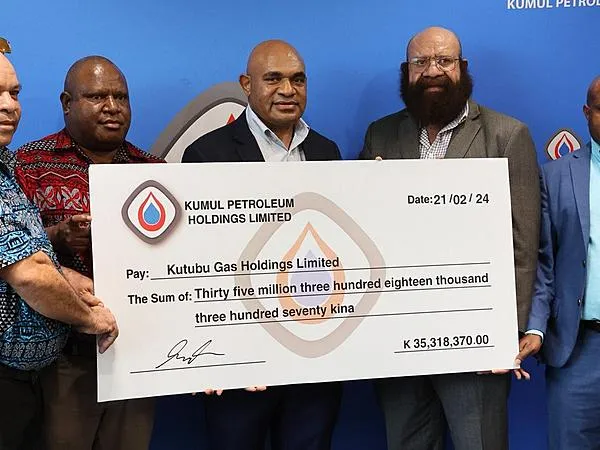
Kumul Petroleum Holdings Limited, Papua New Guinea’s national petroleum and energy company, announced recently that all necessary verification had been completed with the representative company of the PDL 2 landowners, enabling them to receive their portion of accrued Kroton Equity Option (KEO) preferential dividends.
Wapu Sonk, Managing Director of Kumul Petroleum said, “together with DPE we have completed verification of the directors and beneficiaries of the PDL 2 representative company, Kutubu Gas Holdings Limited.”
Mr. Sonk explained that under the 2009 PNG LNG Project Umbrella Benefit Sharing Agreement between the State, recognised provincial governments and landowners impacted by the project, certain beneficiaries were entitled to exercise a commercial option to acquire shares in the State entity holding shareholding in the project. Vendor finance for this was arranged by KPHL and known as the Kroton Equity Option.
“Today I am pleased to announce that Kumul Petroleum can award the PDL 2 landowner representative company, Kutubu Gas Holdings Limited, a cheque of K35.3 million for their preferential dividends accrued from 2017 to 2022, a significant sum.”
“I thank these landowners for their patience over the past 6 years.”
After consultation with their licence area communities, the PDL2 landowners established Kutubu Gas Holdings Limited, under the chairmanship of Sakai Kei, to receive their KEO dividends.
Mr Sonk added, “It is important that Kumul Petroleum follows due process in this exercise, including proper beneficiary identification, verified by the Department of Petroleum.”
“The PDL 2 landowner beneficiaries are the second landowner group to complete this process, after the PDL 7 landowners, who were paid their preferential dividends in August 2022.”
Other Kutubu Gas Holdings Limited directors present at the event included John Kapi Natto, Mark Sakai, Gibson Pole and Asi Ibusubu.
Mr Sonk took the opportunity to encourage other PNG LNG Project beneficiary groups to complete their eligibility criteria compliance so that they too could receive their KEO related benefits.
Freeport Resources Inc. is pleased to announce that further to the Company’s news release of December 11, 2023, Papua New Guinea’s outgoing Minister for Mining, the Honourable Sir Ano Pala, approved the renewal of the Yandera Copper Project’s Exploration License 1335 (“EL”) through November 19, 2025, in accordance with the regulatory processes prescribed by the Papua New Guinea (“PNG”) Mining Act.
“We are pleased to have successfully completed the exploration license renewal process for another two year renewal period, and would like to thank the Mining Advisory Council and the Government of PNG for their dedication in advancing large-scale resource projects such as Yandera Copper,” commented Dr. Nathan Chutas, Senior Vice-President of Operations for Freeport Resources. “These Exploration Licenses are typically issued many months or more in arrears so this renewal of Yandera Copper Project’s Exploration License clearly demonstrates the increasing commitment of the Government of PNG to building strong, working relationships with international mineral exploration and development companies such as Freeport Resources. We would also like to congratulate PNG’s newly appointed Mining Minister, the Honourable Muguwa Dilu, who was sworn in to his new position on January 18th, 2024,” said Dr. Chutas, who continued, “Over USD $200 million has been expended on the project since 2005, culminating in a comprehensive 2017 Pre-Feasibility Study delineating one of the world’s largest undeveloped copper resources.* With the extension of the exploration license to November 2025, we are excited to finally have the visibility going forward that we have lacked since Freeport took over the project. We can now commence to plan work programs on the Definitive Feasibility Study and continue discussions with potential strategic partners for development of the mine.”
Appointment to Mining Advisory Council of PNG
Freeport Resources would also like to announce that Tobias Kulang Thomas, a member of the Company’s Advisory Board, has been appointed to the Mining Advisory Council of PNG. The Mining Advisory Council is an independent committee established under PNG’s Mining Act comprised of representatives of the Mining Resources Authority, PNG’s governing regulatory body, and senior representatives of the mining industry. The Mining Advisory Council reviews and deliberates on the Exploration License and Special Mining Lease application processes and makes final recommendations to the Minister for Mining. Tobias Kulang Thomas was nominated as a member of the Mining Advisory Council by the Honourable Muguwa Dilu, PNG’s new Minister for Mining.
Yandera – Strategic Review
Freeport Resources’ wholly-owned Yandera Copper Project is located in the highly prolific PNG Orogenic Belt, the same geological arc as some of the world's largest gold and copper deposits including Grasberg, Frieda River, Porgera, Lihir, Wafi-Golpu and Kainantu. Yandera is a project of strategic national interest in PNG and has the potential to become one of the country's most significant copper mines. The project’s proximity to Asia, the world’s largest copper refiner and consumer, positions Yandera as an attractive potential long-term source of copper supply.
The renewed license EL 1335 covers a 245.5 square kilometer (“km”) tenement comprising the Yandera Project. Approximately USD $200 million in exploration and development expenditures have been spent on EL 1335 since 2005. Work completed and studies funded to date include approximately 154,600 meters of exploration drilling, the vast majority of which has focused on the Yandera Central deposit, as well as scoping studies, engineering studies, environmental studies, the 2017 Pre-Feasibility Study*, and infrastructure-related studies.
The Preliminary Feasibility Study titled, Independent Technical Report on the Yandera Project - Pre-Feasibility Study*, prepared by Worley Parsons, with an effective date of November 27, 2017, estimated a historical open-pit, Measured and Indicated resources of 728 million tonnes grading 0.39% copper equivalent.
Freeport Resources has initiated a strategic review process aimed at maximizing the value of the Yandera Copper Project which the Company believes is significantly undervalued based on historical expenditures, current copper prices and the potential for resource expansion.
* Independent Technical Report on the Yandera Project – Pre-Feasibility Study, prepared for Era Resources Inc. and dated effective November 27, 2017. The study was prepared prior to the Company acquiring an interest in the Yandera Project, and is derived from historical estimates which the Company is not treating as current. This information is intended to provide readers with context on historical analysis conducted on the Yandera Project, however the Company cautions that a qualified person has not done sufficient work to classify any historical estimates in respect of the Yandera Project as current and any analysis conducted by previous owners of the Project may rely upon assumptions which are no longer reasonable or accurate in the context of the current market.
Yandera – Feasibility Study
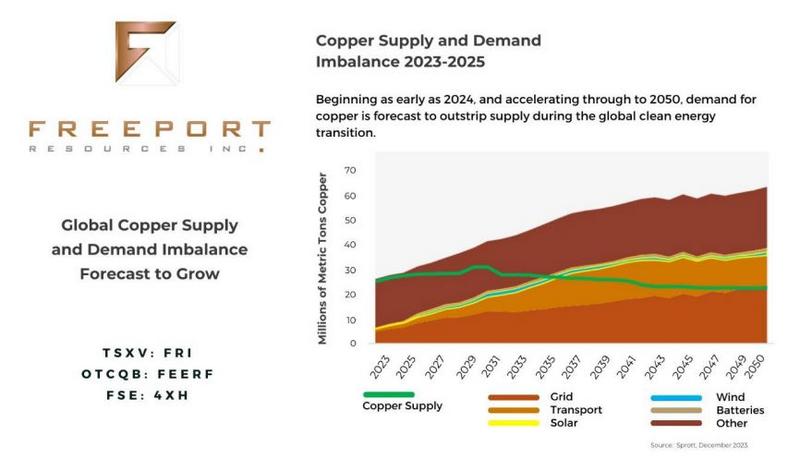
The renewal of EL 1335, through November 19, 2025, allows Freeport Resources to commence work on a Definitive Feasibility Study to advance the Yandera Copper Project toward a Final Investment Decision. Concurrent with the Definitive Feasibility Study program, Freeport Resources has begun discussions with key international strategic investors and prospective partners for development of the Yandera Copper Project. Demand for copper is forecast to undergo unprecedented structural change driven by the global energy transition with mined copper supply forecast to enter a deficit position starting as early as 2025 (see Copper Supply and Demand Imbalance Chart below).
Copper Supply and Demand Imbalance Forecast
The Definitive Feasibility Study will build on earlier work undertaken with local and regional communities to determine opportunities to achieve mutually beneficial partnerships and sustainable long-term social benefits related to job creation, indigenous advancement, health and wellness, environment, education and community development. Freeport Resources is also planning a wider exploration program of porphyry copper targets within the largely underexplored 245.5 square kilometer land package.
Freeport and the Community
The Yandera Copper Project is 95-km southwest of the capital city of Madang Province and 235-km to the northwest of Lae which is the largest port city in PNG and an important industrial center. As one of the largest undeveloped copper resources* in the world, the Yandera Project has the potential to support communities and create jobs along the Yandera Corridor. The Company anticipates the potential economic influence of the Yandera Copper Project could span 5 provinces and create wealth for 4 generations including, but not limited to, strategic road and highway building, power generation and related infrastructure.
The landowners and communities of Yandera are stakeholders in the Yandera Project. The overwhelming community support that the Company received at the Warden’s Hearing held during the summer of 2023, demonstrated the level of commitment the people of Yandera have for the project. Freeport is also firmly committed to advancing the project and continuing support of the community. The Company expects to continue to develop initiatives to be an active and visible presence in the Community.
The PNG Industrial & Mining Resources Exhibition and Conference set to be bigger and better in 2024.
The PNG Industrial & Mining Resources Exhibition and Conference (PNG Expo) is the premier event that brings together all sectors of the industrial, mining and resources industries into one location to create a marketplace where business is done.
Held from July 3–4, the PNG Expo, now under new ownership with Prime Creative Media, is set to see significant improvements this year.
With a strong history in mining, manufacturing and associated industries, Prime Creative Media CEO John Murphy is confident that its business is an ideal match to help grow the Papua New Guinean industries.
“We are excited to bring our extensive knowledge and expertise to PNG Industrial and Mining Resources Exhibition and Conference,” said Murphy.
Prime Creative Media is committed to investing the time and resources needed to grow this event and the broader Papua New Guinea industries.
To this end, the PNG Expo will be held in the Stanley Hotel in Port Moresby, a venue selected not just for its sophistication, but to limit travel and prioritise guest comfort.
A gated complex designed to enhance guest safety, the Stanley Hotel features air-conditioning and multi-layered security protocols to provide a comfortable backdrop to the event’s strong conference format.
“We have received really positive feedback from the industry so far,” show director Lauren Chartres said. “We’re excited to see this event moving to a new phase of development and bringing additional value to the Papua New Guinea resources sector.”
Prime Creative Media is excited to bring an event that celebrates the people of Papua New Guinea as well as the industries that keep the country moving. Murphy travelled to the Pacific nation in October 2023 to meet with government delegates and heads of top miners in the country ahead of the event.
“We had great feedback from these meetings and are looking forward to working closely together in the future,” he said.
“The event will be a champion for the entire Papua New Guinea resources sector, so it was important that we meet with professionals and decision-makers from across the local industry.”
The format for two-day exhibition will feature over 100 displays of equipment and stands, while the conference will showcase experts from across the mining and resources sector presenting on challenges and opportunities for the local industry.
The event is an opportunity to hear from landowners, as well as government, mining, energy, petroleum and infrastructure representative on topics of productivity, safety, sustainability, and innovation in technology and equipment.
“The PNG Expo will be the platform to engage and drive transformative changes towards a sustainable future,” Chartres said. “Our mission is to equip the industry with the right tools.”
Leaders in delivering productivity solutions will be exhibiting at the event to present their innovative technology, showcasing how they can benefit the Papua New Guinea mining industry.
“We know productivity and efficiency is a huge driver of future success in Papua New Guinea,” Chartres said. “We can’t wait to see the solutions that are available being demonstrated at the event in July.”
The Prime Creative Media events team is ready to launch an event that will help grow the Papua New Guinea resources industry like never before.
Follow on LinkedIn:
PNG Business News
Be the "First" to get our exclusive Digital Magazine & Weekly Newsletter.