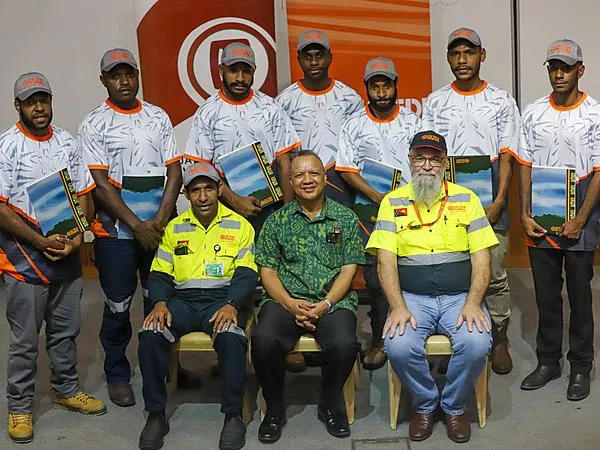
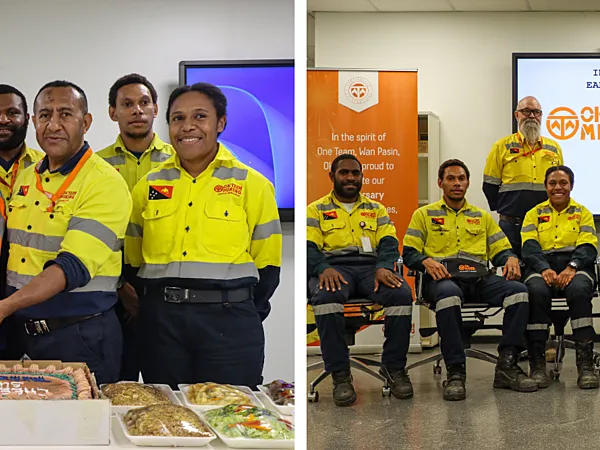
Ten (10) university students are the elated recipients of Ok Tedi Mining Limited’s (OTML) 2025 Undergraduate Scholarship Scheme totalling over K300,000.
The students who are in their third year of studies are studying various courses. Of the ten students, one is studying Human Resources Management at the University of Papua New Guinea (UPNG); while seven students are studying Applied Physics/Instrumentation, Surveying, Civil Engineering, Electrical Engineering, Mechanical Engineering, Mineral Processing and Mining Engineering at the PNG University of Technology (UoT); and two are studying Accounting and Environmental Health at Divine Word University (DWU).
The 2025 batch of awardees include two females and eight males, among which four are top performing students from Western Province. The total amount of the two-year scholarship program is K313, 968.27 and covers the cost of their tuition fees, boarding/lodging, book allowances, travel assistance, and stipend for each student for this year. Of the total amount, K14,187 has been paid to UPNG, K76, 380 has been paid to Divine Word University and K189,401.27 to UoT as part of the Tuition and Lodging fee.
The OTML Undergraduate Scholarship Scheme is an initiative to help support high performing students attending tertiary institutions in PNG.
OTML Manager Training & Capability Development, Ian Strachan, said the program aims to assist third-year university undergraduate students with school fees and other associated costs while ensuring OTML maintains an industry-institution relationship with respective universities that provide graduates to its training programs and workforce.
“An additional component of this scholarship is the opportunity for these awardees to conduct their industrial training with OTML. It also sets a pathway for them to join our Graduate Development Program upon completing their studies,” he said.
The continuation of scholarship is dependent on each student’s academic performance in the first year of the scholarship whereby the student must maintain a Grade Point Average (GPA) of 3.5 or above to continue the scholarship for a second year, which is their final year of studies.
Since the inception of the OTML Undergraduate Scholarship Scheme in 2007, the company has so far sponsored 70 undergraduates and since re-introduction in 2023, the company has spent over K1.4Million on the Undergraduate Scholarship program.
Averages over 70% (Asia-Oceania & Oceania-Asia) and 80% (Asia-North America West Coast) On-Time Performance based on 12-month data from Sea-Intelligence
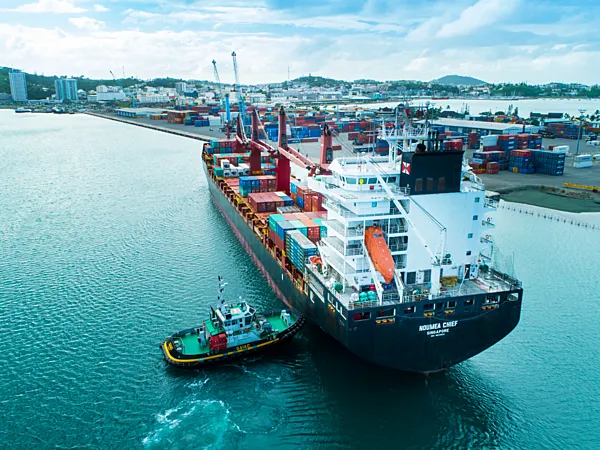
Swire Shipping, a leading shipping company in the Asia-Pacific, reaffirmed its commitment to the region as the most reliable carrier in Asia-Oceania and on the Asia to North America West Coast (NAWC) trade lane in 2024. This was according to 12- month data published by Sea-Intelligence in their Global Liner Performance Report from Jan/Feb to Nov/Dec 2024. Swire Shipping averaged over 70% reliability (as measured by On-Time Performance) on the Asia-Oceania and Oceania-Asia trades and over 80% reliability on the Asia-NAWC trade lane.
Swire Shipping’s Chief Operating Officer Ben Pike said, “Swire Shipping has been trading into the South Pacific for over 80 years, and we recently expanded our footprint in the North Pacific through the integration of Westwood Shipping Lines and our partnership with UWL on the award-winning Sun Chief Express transpacific service.”
”We understand the importance of reliable shipping for businesses, and the provision of predictable and reliable weekly and fortnightly services empowers customers to optimise their supply chains and reduce waiting times,” he added. “Despite challenging conditions, our consistent on-time performance in the Asia-Oceania and Asia-North America West Coast sectors demonstrates our commitment to reliability and placing the needs of our customers first.”
Swire Shipping has been steadily expanding its presence in the Asia-Pacific, with the opening of a new branch office in Tokyo in 2024. In 2025 it relocated its Tokyo and Port Moresby offices to new, expanded premises to better serve customers in the region.
“Our customers have come to depend on us to ensure that their goods arrive on time and make the right intermodal connections,” said Randy Selvaratnam, Chief Commercial Officer of Swire Shipping. “In Japan we now have an expanded team, and plan to open a second office in Nagoya this summer. In South Korea we have consolidated our representation on the ground into one agency. With dedicated teams in Japan, South Korea and Puyallup, Washington, we are confident that we can continue to maintain a strong and consistent schedule performance and provide our customers with an even better service experience in 2025.”
The Sea-Intelligence Global Liner Shipping Report is the industry's most comprehensive study of ocean liner schedule reliability, measuring schedule reliability and vessel delays across all deep-sea liner services in the world.
Conveniently located in the central business area, the new premise will enable Swire Shipping to be closer to its customers, partners and the community
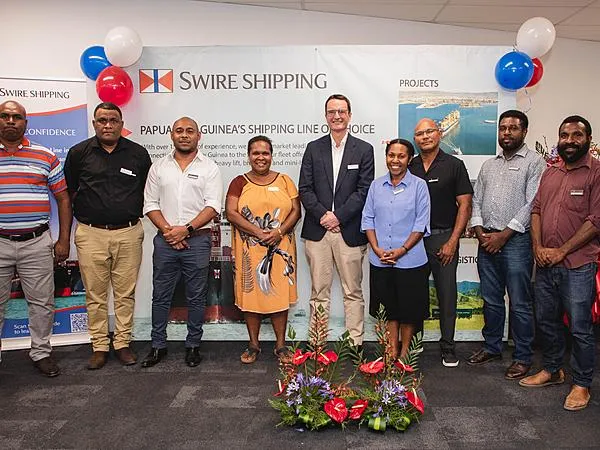
Swire Shipping has announced its move to a new office location in the central business area, at Gordons Business Centre, commemorating this milestone with a celebration attended by over 70 guests comprising of key customers, business partners and suppliers. The move to a new, enhanced office space demonstrates Swire Shipping’s commitment to the Papua New Guinea (PNG) market in the long-term. In addition, the new premise is strategically located in the proximity of local businesses, enabling Swire Shipping to be closer to its customers, partners and the community.
Guests were welcomed with a traditional dance performance. Swire Shipping’s Chief Executive Officer, Jeremy Sutton and Chief Commercial Officer, Randy Selvaratnam commemorated the official opening of the new office with a ribbon-cutting ceremony.
Opening the event, Jeremy underlined Swire Shipping’s commitment to the South Pacific region. “Swire Shipping has been in business in the Asia-Pacific for over 150 years,” he said. “Over the years, we have established ourselves as a leading shipping company in the Asia-Pacific, with a reputation for safety, integrity, and reliability. This has been made possible by our dedicated teams on the ground, and a relentless focus on service and reliability that resonates with our customers.
“In the South Pacific, today Swire Shipping has over 20 offices strategically located throughout the region. We expanded our presence over the years to provide even better support to our customers and the communities here. Most recently, in 2022, we opened a new branch office in Tonga,” he added. “Our teams on the ground have worked tirelessly to create better experiences for our customers by offering fixed-day weekly and fortnightly on-time services. Through these efforts, we are delighted to be the most reliable carrier on the trade lanes between Asia and Oceania in 2024, according to SeaIntelligence. We look forward to building stronger relationships and creating lasting value for our customers and all whom we work with.”
Expanding on the significance of the PNG market, Country Manager – PNG, Isabel Maguire said, “Swire Shipping has deep roots in PNG; we have been shipping into and out of the country for more than 80 years. Today, we have nine offices in PNG, having opened our latest in Wewak in 2023. Throughout the years, we have built a strong reputation in PNG as a consistent and dependable company that prioritises safety and sustainability, and cares about its people, its partners and the local communities. We have lasting relationships with many customers and partners here. PNG is an important market for us, and we look forward to growing our business here, leveraging our presence on the ground to enable our people, customers and partners to succeed.
Guests were taken on a tour of the new office. One of the highlights of the new workspace is the addition of improved collaboration areas and breakout spaces, designed to encourage interaction between teams and provide room for brainstorming and idea generation. Workstations are also equipped with ergonomic furniture to enhance employee wellbeing and safety.
“People are our greatest assets,” explained Isabel. “By providing a conducive environment and opportunities for collaboration and improved communication between teams, we want to make work more efficient and productive for our people. This in turn will enable us to shorten turnaround times for customer requests and thus help to save our customers’ time.
“We look forward to creating even better experiences for our customers and nurturing a collaborative and inclusive work environment for our people out of the new office.”
The celebration concluded with mingling over canapes and drinks.
Papua New Guinea has looked towards ambitious development goals with Vision 2050 aimed to transform the country with the construction industry playing a pivotal role.
These include billions of kina invested annually in infrastructure across the country, thus the stakes are too high for business-as-usual for government agencies, private sector clients, and development partners.
In PNG, the story of construction projects often follows a frustratingly familiar script: contracts are awarded, funds disbursed, and expectations set high — only for projects to be plagued by delays, cost blowouts, substandard quality, and eventually never seeing completion.
This cycle of disappointment has eroded trust in the construction sector, leaving government agencies, businesses, and communities grappling with unfinished or poorly executed infrastructure.
Construction contractors in PNG face a complex web of issues that undermine project delivery. The root causes are multifaceted. A significant factor is the lack of technical expertise among some local contractors, which hampers their ability to manage complex projects effectively. Compounded by poor financial management, many firms struggle with budgeting, leading to incomplete projects when funds run dry.
Moreover, non-compliance with building standards, whether due to cost-cutting measures or limited awareness, results in safety hazards and inferior construction. This is exacerbated by corruption and mismanagement, with some contractors overcharging or failing to deliver on contractual obligations.
Complicating matters are supply chain disruptions, logistics, labor shortages, restrictions in FX (foreign exchange) and inconsistent government policies, which create additional hurdles for contractors trying to stay on schedule and within budget. Legal disputes over contracts are common, and the slow pace of PNG’s legal system only adds to the frustration of stakeholders seeking accountability.
However, amid these persistent challenges, companies like PNG CR Services are setting a new standard -- proving that projects can be delivered on time, within budget, and with exceptional quality, even in the country’s most remote regions.
“Delivering projects on time, within budget, and to the highest quality isn’t just a goal for us, it is our standard operating procedure. It is what separates us,” said Allan Tyson, Managing Director for PNG CR Services.
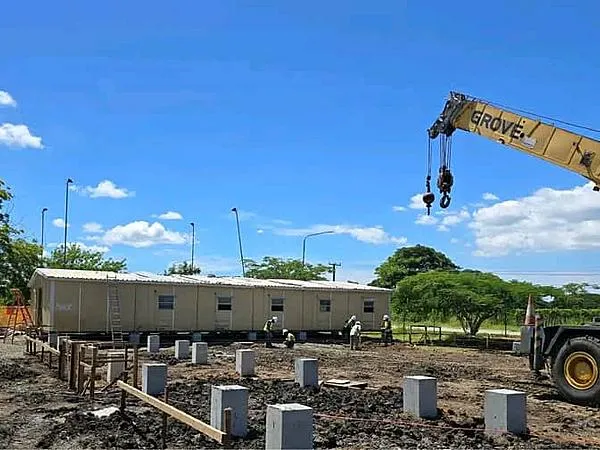
PNG CR Services’ projects can be tracked to Port Moresby, where the company is currently working on a project by the Australian High Commission-PNG to deliver accommodation for the Pacific Policing Initiative Regional Centre of Excellence, which draws training participation from across the region. Another project is with Abt Associates in the Morehead Agri-College in Western Province.
The team at PNG CR Services is committed to delivering high-quality, durable, and resilient infrastructure solutions, Tyson said.
“The progress of this project reflects the company’s commitment to deliver its services up to the required standard, quality, on time. The project also highlights the importance of environmentally friendly construction methods through the reuse and repurposing of materials,” he added.
Setting a New Standard with PNG CR Approach
While the country’s infrastructure challenges may seem endemic, PNG CR Services offers a refreshing counter-narrative. Unlike many contractors that rely heavily on large foreign workforces and neglect local capacity-building, the company’s model is rooted in national content.
Remarkably, only 5% of their direct staff are from the company headquarters, while the vast majority of construction workers and tradespeople are recruited from local villages and communities near project sites. Moreover, 10% of the workforce is female, and PNG CR focuses on a total inclusive working environment to provide opportunities for the disabled.
Localizing the workforce not only reduces costs associated with fly-in-fly-out (FIFO) labor, but also fosters community ownership and economic empowerment. By tapping local talent, PNG CR Services ensures that projects are completed, embraced, and maintained by the communities they serve.
“We have built a reputation for meeting client expectations with limited variations or cost increases unless there’s a formal change in project scope. Our success comes from robust project management, transparent financial practices, and a deep respect for the local workforce,” Tyson added.
PNG CR Services’ track record offers critical lessons for the country’s construction sector. Their success underscores the importance of:
PNG’s 50th Independence Jubilee marks the time for country’s construction sector to move beyond excuses and deliver the infrastructure that communities deserve – and PNG CR Services is leading the way.
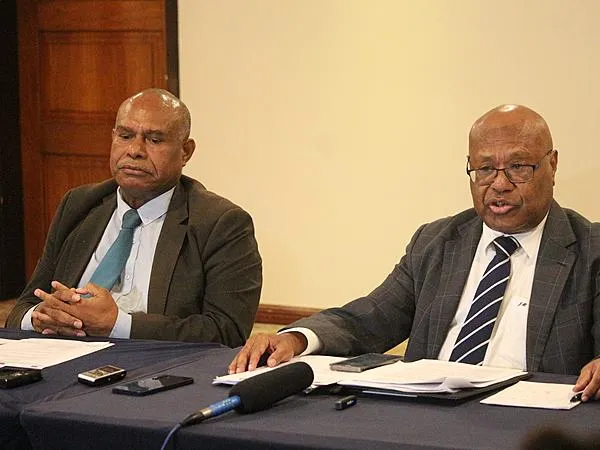
The long-standing dispute over the Kutubu Petroleum Development License 2 (PDL 2) benefit-sharing structure has reached a critical point, with landowners issuing a 14-day ultimatum to the national government to reinstate the original benefit-sharing arrangement.
In response, the Minister for Petroleum, Hon. Jimmy Maladina, assured all parties that the government is actively working toward a lawful and peaceful resolution.
Government’s Position on Kutubu PDL 2 Dispute:
In a media conference held on February 11 in Port Moresby, Minister Maladina acknowledged the growing tensions surrounding the project, and reaffirmed the government’s commitment to addressing the concerns of all stakeholders.
“As you are aware, the issue of Kutubu PDL 2 has become quite significant, and we as a government are very concerned. We believe that we should try to resolve this issue. The government is not sitting back; we are on the forefront of this matter,” he said.
The dispute traces back to a Ministerial Determination issued in 2022 under former Petroleum Minister Hon. Kerenga Kua, which altered the distribution of royalties and benefits from the project.
The determination shifted the previous equal-sharing arrangement among all landowners to a more impact-based model—allocating 80% of benefits to the most impacted landowning groups and 20% to others. It led to multiple court proceedings between 2022 and 2024.
Minister Maladina clarified that while the Supreme Court upheld the 2022 determination, one faction of landowners remains opposed and has now given the government 14 days to reverse the decision.
“We as a government have to respect the Supreme Court’s decision and the ministerial determination, as it is a legal instrument,” Maladina explained.
“However, we also recognize that some landowners feel aggrieved. We will engage with them and explore lawful ways forward to resolve this matter peacefully.”
The Secretary for Petroleum, Mr. David Manau, provided background context to the Kutubu project, which began oil production in 1992, predating the Oil and Gas Act.
He outlined the previous benefit-sharing agreements, including the 1990 and 1996 Kutubu Memoranda of Agreement (MOAs), which governed benefit distribution before the 2022 determination. He explained that the new arrangement was based on landowner impact assessments and aimed to ensure a fairer distribution of benefits to the most affected landowners.
However, the changes sparked resistance from groups who argue that the original formula, which ensured equal distribution across all licensed blocks, should remain intact.
Landowners hold separate presser
At a separate media conference held at the Hilton Hotel in Port Moresby, Kutubu landowner leaders expressed frustration over the 2022 Ministerial Determination and demanded its immediate reversal.
The landowners delivered a petition to the current Marape-Rosso government, calling for the reinstatement of the original benefit-sharing structure.
Mr. Johnny Yawari, Chairman of the Foe Association Inc. and Director of Petroleum Resource Kutubu (PRK), strongly criticized the landowner benefit identification (LOB-ID) exercise introduced by the Department of Petroleum in 2013 and the subsequent 2022 determination.
“Our country faced an economic crisis in the late 1980s due to the Bougainville conflict, and the Kutubu project helped sustain the PNG economy,” Yawari stated.
“From 1992 to now, we have worked with successive governments, and all have respected the original Kutubu benefit-sharing structure. This government must do the same,” added that the determination was made without proper consultation with Kutubu landowners.
He called on Prime Minister James Marape and his government to immediately revoke the decision and uphold the original agreements.
“The Kutubu people were generous enough to give 70% of the benefits to the Southern Highlands Provincial Government while receiving only 30%,” Yawari said. “Instead of further dividing our entitlements, the government should be talking about increasing our benefits, not reducing them.”
Yawari warned that if the government fails to meet the landowners’ demands within 14 days, they will take action, including shutting down the Kutubu PDL 2 project.
‘Complex Situation’
Minister Maladina acknowledged the complexity of the situation, noting that the government faces a dilemma between upholding the Supreme Court’s decision and addressing landowner grievances.
“One faction wants the previous equal-sharing arrangement to continue, while another supports the new 80-20 and 70-30 distribution model,” Maladina explained. “Both sides have valid arguments, but the law as it stands upholds the new determination. We will carefully consider our next steps and announce a way forward by next week.”
He appealed to all parties to remain calm and refrain from disrupting operations at the Kutubu project.
“I ask all landowners to re-engage with the government and my office. We are committed to finding a peaceful resolution within the framework of the law,” the minister emphasized.
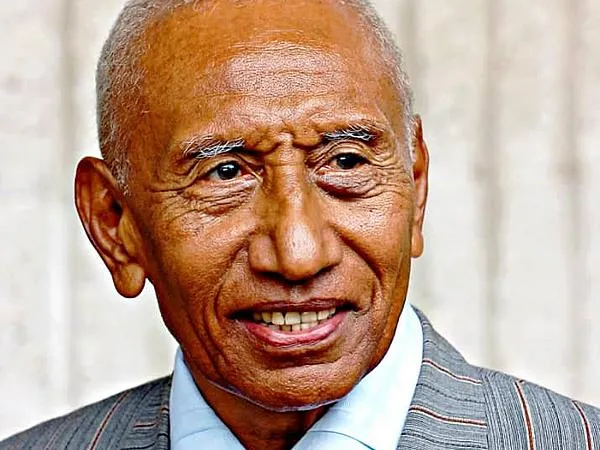
Huris, Manmantinut in New Ireland Province is the final resting place of Papua New Guinea’s last living founding father, the late Right Sir Julius Chan, who was buried on Thursday, February 7.
Amid news of his passing, leaders from across the country expressed their admiration and gratitude for Sir Julius Chan’s immense contributions during the ‘National Haus Krai,’ a week of national mourning.
PNG Business News gathers the words of historic recall and inspiration in memory of Sir Julius Chan:
Prime Minister James Marape: Sir Julius was “a towering statesman, whose service to Papua New Guinea spanned decades of political and economic transformation.” “As PNG’s second Prime Minister, he shaped the trajectory of our nation’s economy and governance. His contributions will never be forgotten.”
Opposition Leader Douglas Tomuriesa said: “Serving as Governor till his final days is a testament to his life of service. The Opposition is grateful that he chose to be in the Opposition throughout this term of Parliament. We have always valued his advice, thoughts, and suggestions on how we can serve our nation better.”
East Sepik Governor Allan Bird: “They are a rarity in the birth and life of a country. Sir Julius was the last of his kind, men set apart by destiny to do things no one else can. On behalf of the Sepik people, I thank you, Papa, for your service to our country and more so for the special relationship you had with the Sepik people through Sir Michael.”
Kandep MP Don Polye: “I am indebted to Sir Julius, who was a father figure to my son. I will miss him in Parliament; he was a friend, a wise leader who was firm and focused.”
West New Britain Governor Sasindra Muthuvel: “Sir Julius’s life is a testament to service, commitment, and the pursuit of a brighter future for our people.”
Hon. Thomas Opa, MP for Kerema and Minister for Energy: “Sir Julius was a builder of dreams, a bridge between tradition and modernity, and a steadfast advocate for the people of New Ireland and Papua New Guinea. (Highlighting the impact of Sir Julius’s Trans-Island Highway project, which connected Bereina to Malalaua) For that, we the people of Kerema and Gulf Province are forever grateful. This vital infrastructure was more than just a highway—it was a lifeline.”
Hon. Jimmy Maladina, MP for Esa’ala and Minister for Petroleum: “Sir Julius was a mountain of a man, a river of wisdom, and a visionary who shaped our nation’s finance and economy.” He recalled first meeting Sir Julius in 1993 as a young lawyer and praised his commitment to national unity and progress.
Hon. Wake Goi, Minister for Mining: (Reflecting on the profound influence Sir Julius had on him as a child) “I was inspired when Sir Julius visited Kol Station in Jimi District in a helicopter. That moment shaped my desire to become a politician. His fine legacy will be our beacon of hope.”
Hon. Francis Kikin Siune, MP for Kerowagi and Vice Minister for Public Services: (Acknowledging Sir Julius’s remarkable 50-year career in politics) “His unwavering commitment to PNG’s development is something we will always remember and honor. A great void has been left in PNG’s leadership with the passing of Sir Julius Chan. His generation built the foundation of the country, now, the torch must be carried forward.”
Hon. Belden Namah, Minister for Tourism, Art and Culture, and MP for Vanimo-Green: (Calling for a new generation of leaders) “All the men of this land have now left! And it is up to the sons that remain to continue the legacy. Either we find the next fathers of PNG, or the flicker succumbs to fate and fades into the annals of history.”
“Where are the next lot of Papua New Guineans who will lay the cornerstones, chart the course, and set the sails for the next 50 years as we head to our 100th anniversary as a nation? The meaning of leadership and duty must be re-found. In our haste, we seem to have dropped it along the way. Purpose and sacrifice must rekindle and guide our efforts like the North Star. We are truly at the threshold of a defining moment. All hands must labor together in service.”
MP Namah added: “When PNG reflects in later years, perhaps on the eve of its 100th year, it must look back and celebrate the sacrifice and ingenuity of leaders today who forged the way. Sir Julius Chan’s journey has ended, but his vision and legacy remain alive. His impact is etched in the roads we travel, the currency we use, and the policies that continue to shape our nation. May his memory inspire future generations to lead with courage, serve with dedication, and build a stronger PNG.”
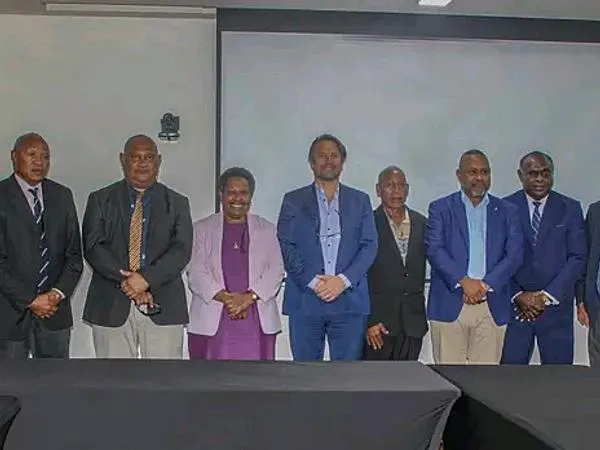
The Community Development Agreement (CDA) for the Central Cement and Lime (CCL) Project located in the Hiri-Koiari District of Central Province was initialed on February 6, in Port Moresby, the parties involved said in a statement.
A CDA is a government process and is basically a mine-derived benefits package, negotiated between concerned parties in any given mining project. The agreement, which outlines the distribution of benefits and responsibilities among CCL’s stakeholders, was signed by the following parties:
The initialing follows a week of negotiations, which began on January 30 in Port Moresby. Local landowners, government representatives, and the project developer, Mayur Resources Limited, engaged in discussions to finalize benefit-sharing agreements.
During the negotiations, Governor Peter and Hiri-Koiari MP Keith Iduhu reaffirmed their support for the project, emphasizing its potential economic impact on the district, the province, and the nation. They assured stakeholders of their commitment to securing benefits for the local people.
The CDA, a government-mandated process for mining projects, ensures that landowners and impacted communities receive equitable benefits from resource extraction. Key benefits negotiated include:
Next Steps: Government Clearance and NEC Approval
The initialed copy of the CDA document will be put through the government process, where the various responsible government departments will give clearance.
Once approved by the NEC, the agreement will be formally signed, and all parties will begin implementing their respective commitments.
The National Government has indicated that the formal signing of the CDA is expected within the first quarter of this year. It is set to be a significant milestone alongside other major projects, such as the Porgera Gold Mine and Wafi-Golpu mining developments, as PNG celebrates 50 years of independence.
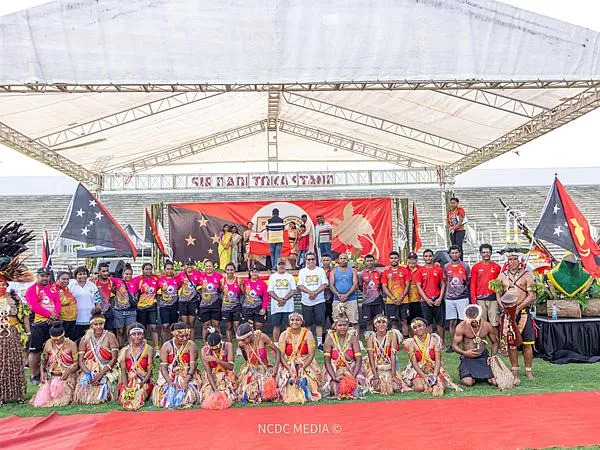
Cricket Papua New Guinea’s (CPNG) national teams, the Barramundis and Lewas, alongside CEO Richard Done, coaching staff, and CPNG employees, proudly joined the NCD 50th Anniversary Celebration Launch and Walk in Port Moresby.
Their participation highlighted the role of sports in uniting communities and shaping PNG’s history over the past five decades.
The event, launched by National Capital District Governor Hon. Powes Parkop at Sir Hubert Murray Stadium, commenced with a vibrant community walk at 5 a.m. from Ela Beach.
More than 1,000 participants, including international communities and dignitaries from Australia, New Zealand, India, and the Pacific Islands, came together to mark the beginning of the city’s golden jubilee celebrations.
Governor Parkop praised the unity displayed, emphasizing the significance of sports in national development.
“I thank Cricket PNG for joining us in launching the 50th Anniversary Program for our capital city. Their presence signifies the vital role sports have played in the development and advancement of our country. Sports is a unifying factor and a powerful platform for national unity, consciousness, pride, and patriotism.”
“Our anniversary celebrations are also a celebration of our sporting progress. Sports will play a key role this year, with the much-awaited PNG Games and our own planned Sporting Festival for the Southern Region and NCD," he added.
"On behalf of our City, Amazing Port Moresby our capital, I thank Cricket PNG for their participation yesterday and wish the Barumandis and the Lewas all the best in their campaign this year our Golden Jubilee year," Governor Parkop said.
Cricket PNG’s participation reinforced its commitment to community engagement and national pride.
Lewas’ captain Brenda Hoi Tau expressed her excitement about being part of such a meaningful event.
“It was great to participate in such a special occasion. I’m happy that Cricket PNG, including our teams, were there to support and celebrate with the community. It was a joyful moment, and I look forward to more opportunities like this.”
Barramundis player John Kariko also reflected on the experience. He said, "It was a great time to engage with different groups and experience a national public event. It is important for us as players to show our support and connect with the community.”
“I hope to be involved in more events like this, especially in Motu Koita and NCD, as that’s how I first found my passion for cricket, through community sporting initiatives.”
The celebration continued at Sir Hubert Murray Stadium, where cultural performances from diverse communities, including Chinese, Filipino, Indian, Australian, Samoan, Fijian, and West Papuan groups, showcased PNG’s rich multicultural fabric.
The event symbolized cross-cultural understanding and the shared vision of “One People, One City, One Future.”
Prime Minister Hon. James Marape has provided assurances on the K1.4 billion (approximately A$580 million) loan from the Australian Government, stating that it is well within Papua New Guinea’s 2024 Budget framework and does not increase the country’s debt burden beyond planned fiscal targets.
Speaking at the NASFUND FM100 Talkback Show launch, PM Marape reiterated that the loan is part of the government’s fiscal strategy and fits within its ongoing fiscal consolidation plan.
“It’s within our 3.3% deficit of last year. Those of you commentators in the economic space, our report on our budgeting side is clearly outlined in our final budget outcomes,” the Prime Minister explained.
PM Marape emphasised that PNG remains on track towards achieving a balanced budget by 2027, with consistent deficit reductions over the past five years.
“We want to move to a surplus in 2027, and we are on target. In 2020, our deficit was at a high of over 8% due to COVID-19. Since then, we have scaled down: in 2022, it was around 5.3%, in 2023, it was 4.3%, and last year, we brought it down to 3.3%,” he stated.
The Prime Minister reassured the public that the Australian loan is not an additional financial burden but rather part of an agreed-upon fiscal framework.
“The Australian financing is within the 2024 money plan, part of our 3.3% deficit element. It is not something new and does not aggravate our debt plan. It is consistent,” he said.
Furthermore, the terms of the loan include a grace period and a 4.2% interest rate, making it a structured and manageable component of PNG’s financial plan.
“By the way, concessional means grace period and a 4.2% interest rate,” PM Marape added.
The government remains committed to responsible financial management while ensuring that resources are effectively utilised for economic growth. PNG’s fiscal strategy is aligned with long- term economic resilience, and the government will continue to make strategic financial decisions that balance growth and fiscal responsibility.
“I want to give assurance to our country: we are on a fiscal consolidation path. Our target remains clear—stabilising our economy while ensuring sustainable financial management,” PM Marape concluded.
Prime Minister Hon. James Marape has reaffirmed his administration’s unwavering commitment to strengthening the Independent Commission Against Corruption (ICAC) as a key pillar in the fight against corruption. The Prime Minister emphasised that ICAC will be fully empowered with the necessary resources, legal backing, and institutional support to fulfill its mandate effectively.
“We have prioritised ICAC as the leading agency in the fight against corruption. My government is committed to ensuring that ICAC is fully empowered to investigate, prosecute, and deter corruption at all levels of government,” Prime Minister Marape stated.
The Prime Minister announced that additional funding has been allocated to ICAC to expand its reach and enhance its investigative capabilities. He also confirmed that key legislative measures are being introduced to further strengthen ICAC’s authority, ensuring that it can operate independently and without political interference.
“As we work to improve governance and transparency, we are committed to enforcing strict anti- corruption laws and holding those responsible for financial misconduct accountable. ICAC is central to these efforts, and we urge the public and international partners to support this institution in its mission,” he added.
Prime Minister Marape acknowledged the findings of the 2024 Corruption Perceptions Index (CPI) released yesterday, which ranked Papua New Guinea with a score of 31 out of 100. While this reflects a slight improvement from the previous year’s score of 29, the ranking underscores the continued need for stronger governance, transparency, and accountability in public administration.
The Prime Minister reiterated his government’s commitment to fighting corruption, emphasising that recent reforms and enforcement efforts are beginning to show progress. However, he also recognised that the battle against corruption remains a significant challenge.
Prime Minister Marape reaffirmed that his government remains steadfast in implementing anti-corruption measures, including strengthening ICAC, enforcing transparency in government contracts, and prosecuting those involved in financial misconduct.
“As a government, we are taking concrete steps to address these concerns. The fight against corruption is not just about improving our global ranking—it is about securing a better future for Papua New Guineans and ensuring that resources meant for the people are not stolen by a few,” he stated.
Prime Minister Marape called on all sectors of society, including businesses, civil society organisations, and the public, to work together in promoting transparency and accountability.
“We must stand united in tackling corruption and ensuring that Papua New Guinea moves forward as a nation of integrity,” he concluded.
Mayur Resources Limited is pleased to announce the execution of definitive agreements with Pacific Unison Holdings Limited for the construction and operation of the Orokolo Bay Industrial Sands Project, located in Gulf Province, Papua New Guinea.
The execution of these agreements follows the previously announced terms sheet signed in December 20241 and represents a significant milestone in the development of the Project. After more than a decade of planning and work completed at OBP, the agreement with Pacific Unison enables OBP to become a producing asset, aligning with Papua New Guinea’s economic and social development goals. While the current focus is on the production of magnetite, this initiative enhances the nation’s internal capabilities and may, in the future, provide the opportunity to use domestically produced magnetite as the key raw material - a development that would mark a first for PNG.
Highlights
Commenting on the execution of these agreements, Paul Mulder, Managing Director of Mayur Resources, said:
“Identifying and securing the right long-term partner has taken some time, however via the execution of these definitive agreements, we feel confident in the rapid development of the Orokolo Bay Project up to a nameplate production capacity of 500,000 tonnes of Magnetite per annum2. We feel the parties are well aligned in the commercial arrangements and have a shared vision for the Project’s significant economic and community outcomes not only during production, but also in post-mining industries being established in the agriculture sector.”
“Bringing the Orokolo Bay Project into production alongside our flagship Central Cement and Lime Project will generate attractive cashflows and importantly, compliments Mayur’s commitment to developing the building blocks within PNG – domestically produced and affordable downstream iron, cement/lime are the key pillars that will build PNG, and also displace imports and set up an export industry.”
Hon. Chris Haieveta, Governor of Gulf Province said:
“As Governor of Gulf Province, I am proud to reaffirm my full support for the Orokolo Bay Project, a gulf province-building initiative I have championed since taking office. It is a transformative project that will drive economic growth, create over 130 direct and 450 indirect jobs, and create province-building capacity using local skills and resources. This marks a pivotal step for PNG having its own domestic iron ore resources for export, but to also consider development of PNG’s own small-scale iron and steel industry, being a critical ingredient to build our nation, alongside cement.”
About the Orokolo Bay Project
The OBP is situated within Mining Lease 541 (ML 541) and Exploration Licence 2305 (EL 2305) and is the primary Project within Mayur's industrial sands portfolio.
The Project is fully permitted and offshore construction of equipment is already underway. Initial production targeted to commence late calendar 2025.
Broader Mineral Sands Portfolio Synergy
The signing of these agreements and partner Pacific Unison already commencing construction works has laid the foundation for Mayur advancing its broader portfolio of higher-grade titanium and vanadium mineral sands projects in PNG. These projects, including Amazon Bay and Kiwai Island, are distinguished by their superior grades of critical minerals, which are essential for large-scale power generation and battery storage solutions. Titanomagnetite, a key resource in these projects, offers unique advantages due to its dual composition of titanium and iron, making it highly sought after in industries such as aerospace, renewable energy, and advanced manufacturing. Similarly, vanadium plays a critical role in vanadium redox flow batteries (VRFBs), which are increasingly being deployed for grid-scale energy storage due to their exceptional efficiency, scalability, and long lifespan. It also acts as a key ingredient to strengthen steel.
Next Steps
As stated, construction and procurement activities have already commenced, funded by Pacific Unison.
Simultaneously, Mayur will maintain active engagement with local communities, having already established a construction camp, and manage all regulatory requirements to ensure the Project’s execution proceeds smoothly, and aligns with broader PNG Government economic and development goals. This agreement reflects Mayur’s dedication to delivering value to its shareholders while contributing to Papua New Guinea’s economic growth and sustainable development.
“There will be no riverine disposal by the Frieda River Copper-Gold Project (FRCGP).”
This clarification comes from Phil McCormack, Project Director of Frieda River Limited (FRL), a part of PanAust Limited. Phil made the clarification to help the public understand the design of the proposed copper-gold development.
“Frieda River Copper-Gold Project will not dispose of its waste into the river system. It will protect the Sepik ecosystem at all costs, PanAust does not take lightly its commitment to ensuring the safe design, safe construction, and safe operation of the dam. PanAust is mindful of the ecosystem it is in including its host communities. As a values-driven organisation, it assures its host communities and governments that is committed to sustainably operating its business in an environmentally, socially, and culturally responsible way for the benefit of all stakeholders.” stressed Phil.
FRL is proposing to develop one of the world’s largest untapped copper-gold resource in a socially responsible way, through the multi-billion-kina Sepik Development Project (SDP) which includes the building of Frieda River Hydroelectric Project (FRHEP) which will include a 191-metre-high asphalt core rockfill dam as an integrated storage facility for the mine waste, and hydro power. The hydro power will be then fed through the Sepik Power Grid Project to ‘light up’ the region and stimulate commerce and industry and generate clean electricity for communities.
The design of the FRHEP dam is in accordance with international standards and uses the internationally recognised and proven dam construction method of asphalt core rockfill dams. There are numerous examples of asphalt core rockfill dams currently operating well in other parts of the world, including Asia, Europe, and the Americas, in similar high seismic and rainfall environments as the Sepik region.
“The Sepik Development Project is owned by PanAust, a high performing Australian based mining company that operates successful mines with waste rock and tailings storage facilities in Laos. We understand the importance of the Sepik ecosystem, where the project is based, and our work is committed to ensuring the safe design, construction, and operation of the dam for the long-term benefit of all its stakeholders,” emphasised Phil.
Phil said the significant lack of public infrastructure and services in the far-to-reach villages of the Sepik region was the reason for PanAust’s non-traditional mining approach to the Frieda River copper-gold resource.
“It is a transformative approach to the project for the Sepik region and Papua New Guinea, aimed at protecting the environment while enhancing living standards, and general well-being in the remote Sepik communities,” said Phil.
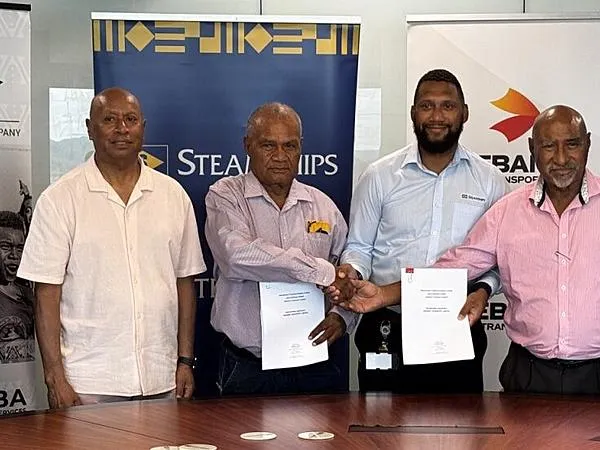
Steamships Trading Company (Steamships) and Laba Holdings Limited (Laba) are pleased to announce the formal establishment of Hebamo Transport Limited (HTL), a dedicated landside logistics company specialising in project cargo and heavy transport.
This milestone follows 14 months of collaboration since the signing of a Memorandum of Understanding (MOU) between the two partners at the 2023 Sydney Investment Conference, culminating in the execution of the Shareholders Agreement. The joint venture, structured as a 51%-49% partnership with Laba holding the majority stake, is now operational and positioned to play a key role in the downstream construction phase of the Papua LNG Project.
Hebamo Transport Limited was formed to provide specialised transport solutions for major resource projects, ensuring the safe, efficient, and cost-effective movement of materials and equipment. With the Papua LNG Project entering its critical construction phase, the demand for reliable logistics services has never been greater. Hebamo is uniquely positioned to meet this demand by combining Steamships’ industry-leading expertise and infrastructure with Laba’s deep-rooted landowner participation and local knowledge.
Chief Executive Officer of Laba Holdings, Isikeli Taureka, expressed confidence in the venture, stating: “It has taken over a year of dedicated planning and partnership to bring Hebamo Transport Limited to life, and we are proud to see it officially operational. This joint venture is a testament to our commitment to ensuring landowner participation in the economic opportunities of the downstream component of the Papua LNG project at Papa Lealea. It is not just about business—it is about creating sustainable benefits, employment, and skills development for our people - project impacted landowners.”
Steamships General Manager of Corporate Affairs, Vele Rupa affirms: “We are excited to formalise our partnership with Laba through Hebamo Transport Limited. Steamships has a long history of delivering best-in-class logistics solutions in PNG, and this venture strengthens our ability to support large-scale infrastructure projects like Papua LNG Project. Our shared goal is to ensure efficiency, reliability, and local content development in the project’s supply chain.”
With Hebamo Transport Limited now operational, the company is ready to mobilise project cargo and heavy transport services, supporting not only Papua LNG but also future major infrastructure projects across Papua New Guinea. The joint venture represents a new benchmark for industry-landowner collaboration, setting the foundation for long-term economic growth and local business development.
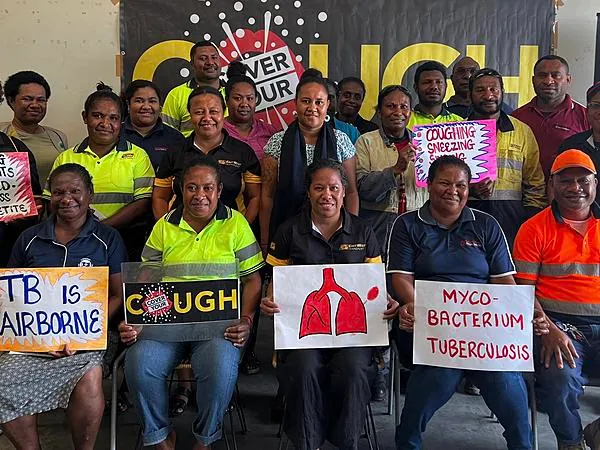
The recent announcements of significant resource development projects in Papua New Guinea are promising for the nation’s economic future. However, the success of these projects—and the prosperity of PNG businesses—relies on a healthy, productive workforce. While foreign investors and project operators are required to employ local workers, only PNG businesses bear the full burden of managing the worst rates of Tuberculosis (TB) on the planet, alongside rising HIV infections and persistent threats from vaccine-preventable diseases.
TB is not just a public health issue—it is a business investment issue. High rates of illness among workers mean increased absenteeism, lost productivity, and mounting costs for human resource management.
This year another 45,000 people will be sick with preventable TB, forcing businesses to absorb the economic impact. Over 3000 people mostly people of working age will die of TB. In PNG we know businesses are asked to cover the costs of flying thousands of coffins to the home provinces of people who died of a preventable disease.
With such large project in the pipeline, PNG can provide the world with trained and skilled resource sector workers, but this vision is only achievable if we eliminate TB from our workplaces, homes, and communities of our employees.
Businesses for Health (B4H) remains at the forefront of supporting PNG employers in tackling TB and HIV, ensuring that businesses have the knowledge and resources to protect their workforce. As we move into 2025, there has never been a more critical time for businesses to step up.
You are welcome to invite me to present at your next shareholders’ meeting to help them understand how TB-related costs are eroding productivity and what your company can do to be part of the solution. Together, PNG businesses can lead the way in eliminating TB, securing a healthier workforce, and strengthening the nation’s economy.
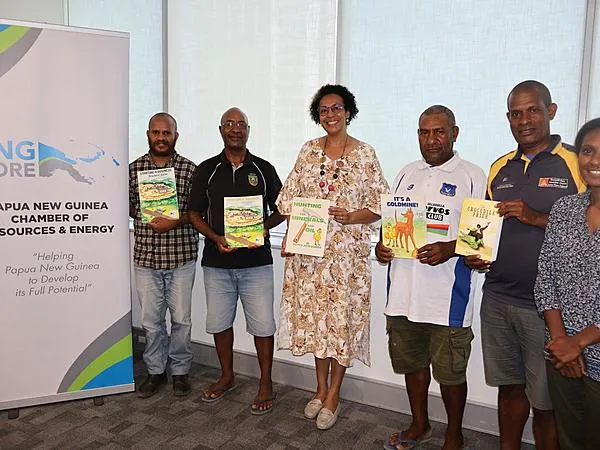
The PNG Chamber of Resources & Energy (PNG CORE) has made a contribution to Efogi Adventist Primary School to help enhance students' educational experience.
The donation, handed over on Monday, February 10, 2025, includes books such as "The Crocodile Prize," "Hunting for Minerals and Oil," "It's a Gold Mine," and guides on starting a business for both teachers and students.
Efogi Adventist Primary School, located along the Kokoda Track in Central Province, has been facing challenges due to the absence of a dedicated library, limiting students' access to a variety of reading materials.
To address this, the school administration, led by Head Teacher Mr. Japheth Sie, has encouraged teachers to create classroom bookshelves. This initiative has helped promote a reading culture among students despite limited resources.
The support from PNG CORE will help expand students' access to learning materials, contributing to improved literacy and academic development.
This effort aims to bridge the gap in access to books and strengthen the educational environment for students, fostering their learning and growth.
Efogi Adventist Primary School has an enrolment of 128 students for the year 2025.
PNG CORE's donation aligns with its commitment to supporting education and literacy in Papua New Guinea. The organization believes that access to quality reading materials is crucial for students' academic and personal development.
Chief Operating Officer Mrs. Pansy Taueni-Sialis stated, "This donation is part of our commitment to supporting communities. By providing these resources, we hope to contribute to a brighter future for the students of Efogi Adventist Primary School."
“The donation to Efogi Adventist Primary School is in response to their request for assistance – one which we were pleased to support.”
“We also encourage other organizations willing to assist the school to reach out to PNG CORE so we can connect you with Mr. Sie and the team at Efogi Adventist Primary School.”
Prime Minister Hon. James Marape has reaffirmed his government’s commitment to strengthening superannuation and voluntary savings for Papua New Guineans, announcing key reforms aimed at ensuring financial security for retirees.
Speaking at the NASFUND FM100 Talkback Show launch on Monday, Prime Minister Marape emphasised the importance of saving for life after active employment and ensuring that citizens are financially secure in their later years.
The Prime Minister noted that too many elderly citizens struggle financially after having contributed meaningfully to society in their younger years. He said the government is determined to change this by encouraging long-term savings and exploring mechanisms to match voluntary contributions.
Under the proposed policy framework:
The Prime Minister stressed that superannuation should not be treated as an ATM for immediate withdrawals but as a sustainable financial resource that guarantees lifelong security.
He also called on businesses, corporate entities, and SMEs to support superannuation contributions for their employees. The government will encourage companies to integrate superannuation planning into employment structures, ensuring workers have financial security beyond their active working years.
Additionally, the policy will extend support to SMEs, market vendors, and informal sector workers, encouraging participation in long-term savings programmes.
This initiative is part of the government’s broader economic reform agenda, which includes:
The Prime Minister urged all Papua New Guineans to embrace a culture of saving and financial planning for a secure future. He reaffirmed his government’s commitment to ensuring that every citizen has access to a financially secure retirement and encouraged full participation in superannuation programmes.
Further details on matching contributions, incentives, and implementation timelines will be announced in the coming months as the government finalises the policy.
Prime Minister Hon. James Marape has reaffirmed his government’s commitment to advancing the Papua LNG project, confirming that Final Investment Decision (FID) is expected by the end of 2025, paving the way for a new wave of economic growth in Papua New Guinea’s oil and gas sector.
Speaking at the launch of the NASFUND FM100 Talkback Show on Monday, the Prime Minister addressed recent delays, explaining that cost escalations had necessitated a review of engineering, procurement, and construction (EPC) contracts to align with financial expectations.
“The initial construction cost estimate for Papua LNG was US$12 billion, but tenders came back at US$18 billion, which has prompted the project developers to re-evaluate and optimise costs before proceeding to FID,” Prime Minister Marape explained.
He noted that TotalEnergies and ExxonMobil remain committed to progressing the project, as reaffirmed during his recent discussions with company executives at the World Economic Forum in Davos.
Once FID is announced, Papua LNG is expected to generate significant construction activity over the next six to seven years, creating employment opportunities, supporting local businesses, and boosting government revenues. The Prime Minister also confirmed that the P’nyang gas project will follow Papua LNG in sequence, extending the economic benefits of the petroleum sector for the next decade.
“Papua LNG will create a multi-year economic stimulus, driving investment in infrastructure and services. We are ensuring that P’nyang and other gas projects are carefully sequenced to sustain economic growth, employment, and business opportunities over an extended period.”
He encouraged Papua New Guinean businesses, SMEs, and workers to prepare for the opportunities arising from these large-scale investments.
Prime Minister Marape also highlighted strong economic fundamentals, revealing that foreign exchange reserves have surpassed US$4 billion, marking the highest level in PNG’s history. Additionally, forex supply is sufficient for 18 months, indicating a stable financial outlook.
“The growth of non-extractive sectors—particularly in agriculture, fisheries, and manufacturing—is starting to bear fruit, with non-resource sector growth exceeding 4% for the first time in our nation’s history,” he added.
The government remains committed to structural economic reforms, ensuring that the benefits of resource projects flow into other industries to drive diversified and sustainable economic growth.
In addition to Papua LNG, several major resource projects are moving towards development, including:
With an estimated US$20-25 billion in construction activity over the next decade, the government is ensuring that PNG is positioned for long-term prosperity.
Prime Minister Marape called on PNG businesses, SMEs, and local entrepreneurs to position themselves strategically to benefit from the upcoming investment boom.
“We are in a strong position for economic growth, and I encourage our financial institutions, superannuation funds, and private sector players to align with these developments. We must ensure that Papua New Guineans are at the forefront of these opportunities.”
The government will continue engaging with investors, development partners, and the business community to maintain momentum towards sustainable economic expansion as Papua New Guinea moves toward its 50th anniversary of independence.
Whilst there is potential for growth and opportunities within Papua New Guinea’s mineral petroleum and energy sectors, security challenges remain a cause for concern, particularly in certain regions of the country.
This is according to the Papua New Guinea Chamber of Resources & Energy (PNG CORE), when presenting at the recent Business Council of PNG 2025 Praivet Gavamani Konekt session on protecting PNG businesses.
PNG CORE Manager Policy and Analysis Gretel Orake provided an overview of industry, and its outlook on security, and the efforts industry is taking to deal with them.
“As the peak organization representing the mineral petroleum and energy sectors, we recognize the important role of security in the success of projects. In terms of law & order, for all projects, safe and secure communities translate to safe projects – this relationship is critical for shared success.”
“We note that there have been instances of a breakdown in law & order, which have in turn affected project security in recent times. Much of these have been due to tribal conflicts, landowner disputes, as well as increasing instances of illegal mining. These have all had an effect on projects.”
“As an industry, we remain committed to working with all stakeholders to deal with these challenges, through constant engagement at the community, district, provincial and national levels.”
“Whilst individual projects engage with the respective levels of government where they operate, PNG CORE acknowledges the need for industry to continue engaging in strategic areas.”
“Some of these strategic measures include Community Engagement and Negotiations, Infrastructure and Social Services Restoration, Legal and Policy Advocacy, as well as contributing to the local economy through job creation, local hires, and community development programs.”
“These are just some of the measures taken to support the restoration of law & order, in areas where there have been challenges.”
“We continuously work with stakeholders to ensure that security concerns from our members, are dealt with in a timely manner, so that operations can continue without disruption, and in turn contribute meaningfully to communities where they operate.”
“This is critical, especially as we prepare to celebrate our nation’s 50th Independence Anniversary.”
Papua New Guinea has reaffirmed its commitment to successfully hosting the 42nd Board Meeting of the United Nations Green Climate Fund (GCF), scheduled for the last week of June this year in Port Moresby.
The GCF Board Meeting is expected to attract more than 300 international delegates, marking the first time the board will convene in the Pacific region.
The Green Climate Fund, established under the UN Framework Convention on Climate Change, manages global financing for climate-related programs and initiatives worldwide.
Minister for Environment, Conservation, and Climate Change, Hon. Simo Kilepa, MP, gave this assurance during a meeting with the visiting GCF advanced technical team, who are on a three-day tour of the capital to assess preparations for the high-level event.
“We are ready, both logistically and financially, to host this important event, which aligns with the many activities leading up to our country’s 50th independence anniversary celebrations,” Minister Kilepa said.
The Minister emphasized PNG’s strong stance on climate change, referencing Prime Minister James Marape’s recent statements criticizing US President Donald Trump’s decision to withdraw from key climate commitments.
“Our Prime Minister has boldly spoken out on behalf of Small Island Developing States (SIDS), demonstrating our unwavering commitment to the global fight against climate change,” Minister Kilepa added.
The National Capital District Governor, Hon. Powes Parkop, also assured the visiting team of Port Moresby’s readiness, citing the city’s successful track record of hosting major international events.
“We have hosted the 2016 FIFA U-20 Women’s World Cup, the 2018 APEC Summit, and, more recently, the visit of the Indian Prime Minister. These events showcase our capability to deliver world-class experiences,” Governor Parkop said.
Security preparations were another key focus during the technical team’s visit. Minister for Internal Security, Hon. Peter Tsiamalili Jnr, confirmed the government’s commitment.
“You have our full support in terms of security. We have hosted numerous international events in Port Moresby, and we will maintain the same high level of attention to detail for the GCF Board Meeting,” Minister Tsiamalili Jnr stated.
Prime Minister James Marape has announced a bold tax reform strategy aimed at fostering investment, increasing consumer spending, and driving local industry growth. The reforms will take effect once Papua New Guinea’s economy reaches a K150 billion milestone, a target expected to be achieved within the next three to four years. He announced this at the Back to Business Breakfast in Port Moresby today.
The Prime Minister emphasised that these changes will create a business-friendly environment, ensuring that economic expansion benefits both investors and citizens.
Prime Minister Marape outlined key tax initiatives that will come into effect once PNG reaches the K150 billion economic threshold:
“These tax reductions will create the conditions necessary for businesses to thrive, ensuring that investment remains in Papua New Guinea and continues to support employment, infrastructure, and industry growth,” said Prime Minister Marape.
To further strengthen PNG’s economic position, the government is focusing on Special Economic Zones (SEZs), including a tax-free business hub in Manus Province, designed to attract regional trade, investment, and industrial development.
“Our vision is to position Manus as a strategic trade hub, opening up new economic opportunities and fostering partnerships with businesses seeking to expand in the Asia-Pacific region,” said the Prime Minister.
Prime Minister Marape also called upon leading business organisations, including the PNG Chamber of Commerce, the PNG Business Council, the Manufacturers Council, and the Chamber of Resources and Energy, to collaborate with the government in identifying growth opportunities and shaping investor-friendly policies.
He highlighted import replacement and local manufacturing as key government priorities, urging multinational and domestic firms such as Trukai Industries and those in the food sector to invest in local production to reduce PNG’s dependence on imports.
“With the right incentives, streamlined regulations, and stronger industry collaboration, we can transform PNG into a regional centre for manufacturing and downstream processing,” the Prime Minister added.
The government is committed to:
“This is a defining moment for Papua New Guinea’s economy,” said Prime Minister Marape.
“We are restructuring our fiscal policies to ensure PNG remains an attractive destination for investment while delivering tangible benefits for businesses, workers, and the wider population.”
The Marape-Rosso Government remains focused on building a robust, sustainable economy that supports private sector growth, employment creation, and long-term prosperity for Papua New Guinea.
Prime Minister Hon. James Marape recently addressed the annual Back to Business Breakfast, reaffirming his government’s commitment to economic growth, business sector stability, and national security as Papua New Guinea approaches its 50th anniversary of independence.
In his fifth consecutive appearance at the prestigious event, organised by the PNG Business Council, Prime Minister Marape highlighted the nation’s economic trajectory, which has grown from under K80 billion in 2019 to over K122 billion in 2025, despite challenges. He credited the resilience of PNG’s business community, stating, “For the last 49 years, you have stood by us and contributed to the progress of our nation. Your unwavering commitment is invaluable.”
Prime Minister Marape outlined his vision for PNG’s economy to reach K200 billion in the near future, emphasising the importance of private sector participation. He underscored ongoing government efforts to streamline regulations, enhance investor confidence, and remove structural impediments to business growth.
“We are listening,” he assured the business community.
“The government does not claim to know everything. Your input is essential in shaping policies that foster business expansion, drive innovation, and create employment.”
To support local enterprises, the Prime Minister commended the contributions of Kina Bank, Bank South Pacific, National Development Bank, and other financial institutions in facilitating SME growth. He noted that over K552 million in loans had been provided to SMEs, with 3,851 new businesses supported in the past year alone.
Addressing the theme of the breakfast, “Securing Papua New Guinea,” Prime Minister Marape reaffirmed the government’s unwavering commitment to law and order, with a record K703 million allocated to police modernisation in 2024.
“Our police force has faced challenges, but we are implementing critical reforms to ensure stability and security,” he said. Key initiatives include:
He also emphasised PNG’s robust judiciary, stating, “A strong, independent judicial system is essential for business confidence. Our reforms will enhance efficiency and ensure legal security for investors.”
The Prime Minister provided updates on major resource projects, including the P’nyang LNG, Papua LNG, and Pasca LNG projects, all of which will drive economic expansion over the next decade. He also highlighted the government’s focus on non-resource sectors, particularly agriculture, fisheries, and manufacturing, to diversify the economy.
“We are modernising our economy, with a strong push toward import replacement and value- added industries,” he stated. Initiatives include:
The Prime Minister concluded his address by urging businesses to partner with the government in achieving PNG’s economic ambitions. “Together, we can build a stronger PNG. A thriving private sector means a thriving nation,” he said.
He called for continued engagement between the government and business community, inviting industry leaders to participate in regulatory reviews and policy discussions. “We want PNG to be a land of opportunity, innovation, and prosperity,” he affirmed.
As PNG approaches its 50th independence anniversary, the government remains steadfast in its commitment to economic modernisation, investment promotion, and security enhancement— laying the foundation for a stronger, safer, and more prosperous nation.
Prime Minister James Marape on Tuesday, February 4, 2025, held a high-level meeting with senior officials from the World Bank, including Country Director for Papua New Guinea and the Pacific Islands Stephen Ndegwa, PNG Country Manager Khwima Nthara, and Lead Economist for Education in East Asia and the Pacific Lars Sondergaard. Also in attendance were Treasurer Ian Ling- Stuckey, Chief Secretary Ivan Pomaleu, and National Planning and Monitoring Secretary Koney Samuel.
Discussions focused on two major development initiatives: the New Country Partnership Framework (2025–2031) and the Learning Enhancement & Access Project, both of which align with the government’s broader vision for economic growth, education reform, and social transformation.
The New Country Partnership Framework (CPF) 2025–2031 was a central topic of discussion, as it sets out key priority areas for development collaboration between Papua New Guinea and the World Bank over the next six years. The CPF is designed to address critical economic and infrastructure challenges, with a focus on four key outcome areas:
The CPF aims to support Papua New Guinea’s long-term economic growth by fostering investment, enhancing infrastructure development, and strengthening financial systems.
Parallel to the economic discussions, the meeting also focused on education reform through the Learning Enhancement & Access Project, an initiative led by the National Department of Education. This project is designed to improve access to quality education, particularly in rural and underserved communities, while addressing critical gaps in literacy, numeracy, and teacher capacity.
Prime Minister Marape reiterated his commitment to making teachers among the highest-paid professionals in the country, recognising that investing in educators is fundamental to national development. Discussions emphasised:
The Learning Enhancement & Access Project aligns with the government’s vision of building a strong and skilled workforce for the future by ensuring that every child receives a quality education.
“As Papua New Guinea approaches its 50th anniversary of independence in 2025, both the Country Partnership Framework and the Learning Enhancement & Access Project are viewed as strategic initiatives to drive national transformation,” Prime Minister Marape said after the meeting.
“The government is committed to ensuring that investments in education, infrastructure, and economic stability contribute to long-term prosperity.
“The meeting reinforced the strong partnership between Papua New Guinea and the World Bank, with a shared commitment to economic growth, education reform, and national development. The government will continue working closely with development partners to implement policies that create jobs, strengthen education, and improve infrastructure for all Papua New Guineans.”
Ok Tedi Mining Limited (OTML) hosted six geoscience students from the University of Papua New Guinea’s School of Earth Sciences, who undertook an intensive eight-week Industrial Training Program with the company’s Operations (Mining) Business Unit.
The trainees were immersed in hands-on learning with different departments and sections such as Exploration, Resource Development, Mine/Production Planning, Drill and Blast, Geotechnical Engineering, Hydrogeology/Dewatering and Mine Geology/Grade Control.
They were involved in various technical activities, including site visits, data collection, analysis, and assisting with technical reports. These experiences provided them with a solid understanding of the challenges and intricacies of the mining sector.
Manager Mine Technical Services, James Bu, emphasised the company’s dedication to nurturing local talent.
“As a PNG-owned company, we take pride in playing a role in developing the future leaders of the mining industry. This is a critical part of our Growth 2050 Strategy, as we focus on building a skilled and professional workforce. By offering these trainees real-world experience, we are preparing them to contribute immediately to the industry once they graduate,” said Mr Bu.
He also highlighted the importance of collaboration between academic institutions and industry.
“For us to go beyond 2050, we must ensure that our future workforce is not only academically prepared but has the practical experience needed to thrive in a fast-paced industry. Our goal is to make sure that these students are ready to hit the ground running when they enter the workforce.”
Manager Training & Capability Development, Ian Strachan, said the level of skill and commitment shown by the students has been impressive.
“The Industrial Training program is so valuable for us, as we continuously look for the future workforce of this company and our country. But it’s also very valuable for the students,” said Mr Strachan.
“Our business has in the last 6 to 8 months put through more than 20 industrial trainees. This year we would like to increase that number.”
Associate Professor UPNG’s Earth Sciences, Dr Joseph Espi, praised Ok Tedi for its ongoing support of students’ professional development.
“This partnership offers our students valuable exposure to the mining industry, which is vital for bridging the gap between academic learning and real-world application. Ok Tedi’s commitment to capacity building ensures that our students gain critical skills that will benefit them in their future careers,” said Dr Espi.
OTML is reinforcing its role as a key contributor to the growth and sustainability of Papua New Guinea’s mining sector, while maintaining an industry-institution relationship with key tertiary institutions, such as UPNG, to ensure they produce quality graduates that are ‘industry-ready’.
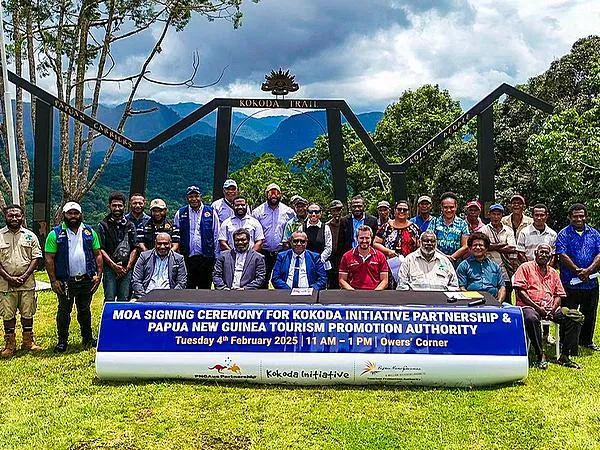
The Papua New Guinea Tourism Promotion Authority (TPA) and the Australian Government-funded Kokoda Initiative Partnership (KIP) have signed an MOA to boost tourism infrastructure and services along the Kokoda Track.
The MOA, signed at Owens Corner on Tuesday 4 February, launches the “Kokoda Sanitation Project”. The Kokoda Sanitation Project is part of a broader effort to strengthen sustainable tourism development in Papua New Guinea. It will address inadequate and poor sanitation along the Kokoda Track, which have been longstanding challenges for both tourists and locals.
TPA’s CEO Eric Mossman Uvovo said that the primary objective of the MOA is to strengthen tourism development along the Kokoda Track.
"This partnership marks a significant step forward in our efforts to not only preserve the historical importance of the Kokoda Track, but to enhance the visitor experience by improving facilities and services," said Uvovo.
Uvovo also emphasized the importance of upgrading campsite facilities and improving working conditions for porters.
"The Kokoda Track is a national treasure. By improving the amenities and ensuring that local operators are better equipped to serve tourists, we are ensuring that the benefits of tourism reach the communities directly involved.
Local communities are at the heart of our tourism industry. This partnership ensures that they will directly benefit from the development projects along the trail,” said Uvovo.
The MOA will be in effect until 2026, with between three and five major projects planned for implementation. Success will be measured by the timely delivery of projects, the positive impact on local trekking facilities, and the subsequent benefits to the communities involved.
The core focus of this partnership is the promotion of sustainable tourism development and the utilization of local resources and knowledge. The TPA, with the support of KIP, aims to enhance the tourism infrastructure along the Kokoda Track while preserving its cultural and historical significance.
The partnership is expected to deliver many benefits, including improved services and facilities, which will enable local businesses to charge higher campsite fees and increase revenue for the communities along the Track.
Future capacity-building initiatives for local tourism operators and associations will strengthen the Kokoda trekking industry, making it more competitive and sustainable, while environmentally, the introduction of upgraded sanitation services will support a healthier and safer environment for both locals and visitors.
Daniel Wells, Counsellor for Kokoda and Bougainville at the Australian High Commission, emphasized the significance of the Kokoda Track to the Australia-Papua New Guinea bilateral relationship.
“The Kokoda Track remains one of the most important people-to-people links between PNG and Australia, with nearly 3,000 people, most of them Australian, walking the Track each year.
This is an investment by Australia in PNG’s most important tourism asset. Australia, through the Kokoda Initiative Partnership, is proud to have invested in measurable improvements to livelihoods outcomes for Kokoda Track communities, including through sustainable tourism initiatives,” said Wells.
Follow on LinkedIn:
PNG Business News
Be the "First" to get our exclusive Digital Magazine & Weekly Newsletter.