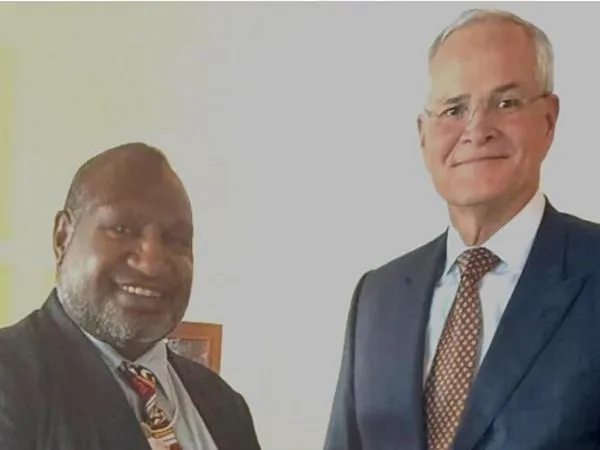
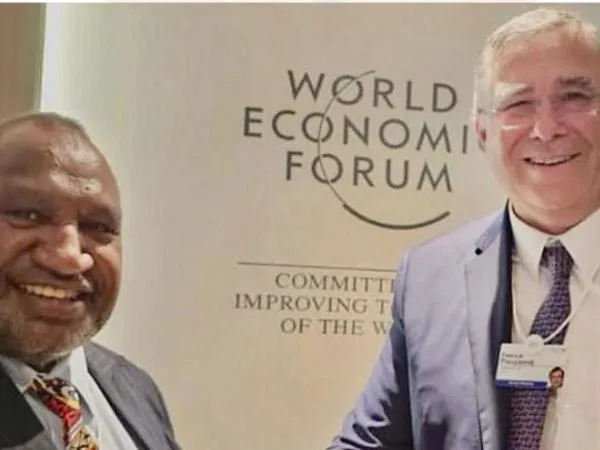
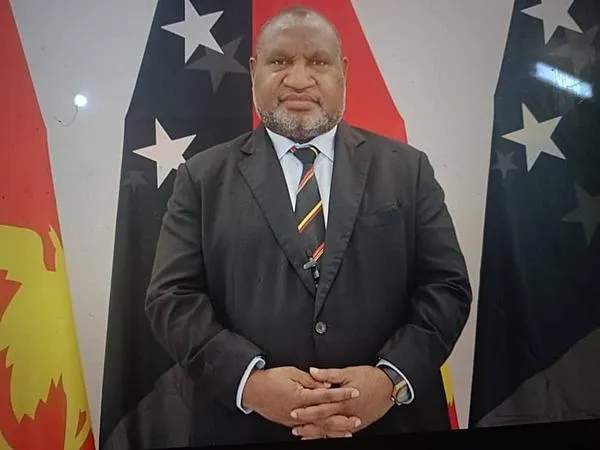
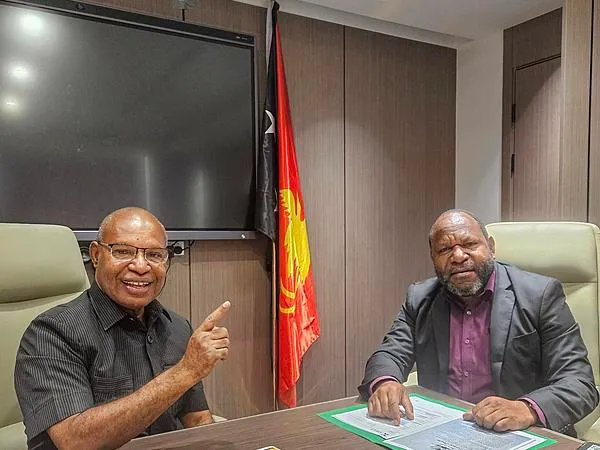
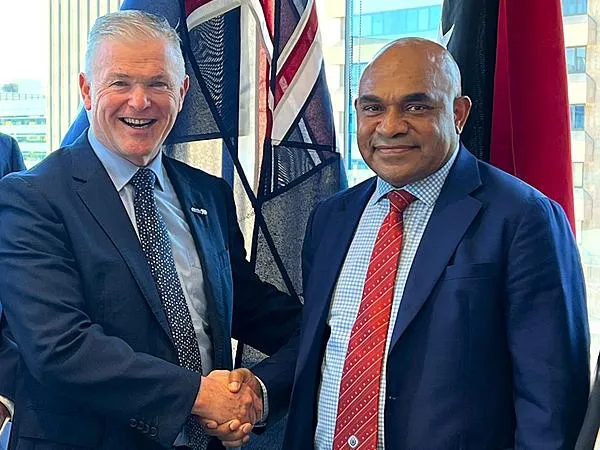
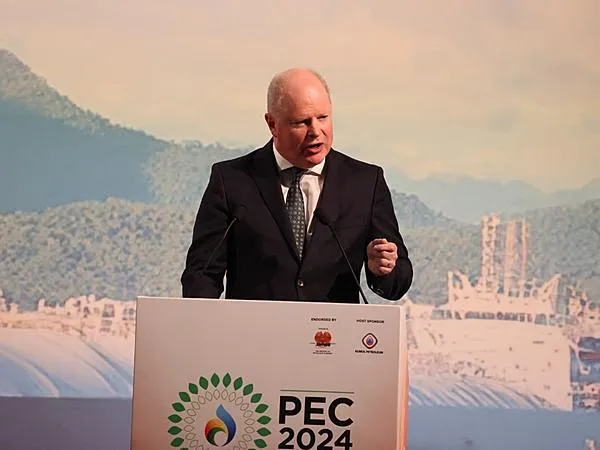
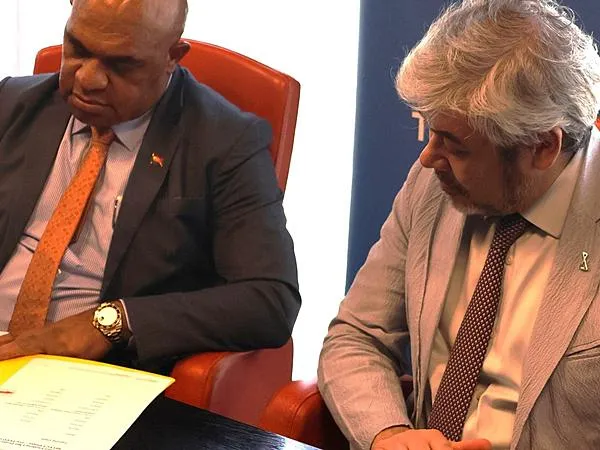
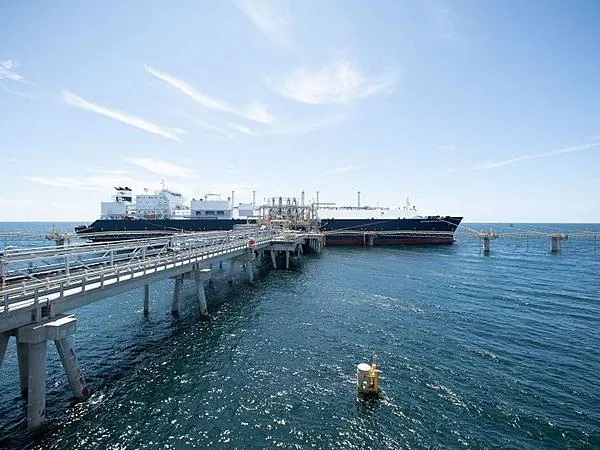
Prime Minister James Marape provided an update following his productive meeting with ExxonMobil CEO Darren Woods during the World Economic Forum in Davos, highlighting key discussions on the PNG LNG, Papua LNG, and P’nyang LNG projects.
During the meeting, Mr. Woods reiterated ExxonMobil’s strong commitment to progressing these critical energy projects. As the world’s leading oil company, ExxonMobil continues to play a pivotal role in developing Papua New Guinea’s energy resources. Prime Minister Marape shared that Mr. Woods assured him of ExxonMobil’s dedication to collaborating closely with TotalEnergies and other partners to ensure timely decisions and progress on Papua LNG.
“Mr. Woods assured me that he will also be meeting with TotalEnergies CEO Patrick Pouyanné , and I will similarly engage with Mr. Pouyanné to align commitments and expedite the Papua LNG project,” Prime Minister Marape stated.
The Prime Minister emphasised the government’s focus on synchronising Papua LNG and P’nyang LNG to maximise benefits for Papua New Guinea.
“When we combine the gas resources from Papua LNG and P’nyang LNG fields, we have 11 trillion cubic feet (TCF) of gas. This is a tremendous opportunity, and our government is committed to supporting ExxonMobil, TotalEnergies, and their joint venture partners to sequence the projects effectively,” he said.
The discussions centred on expediting final investment decisions (FID), construction, and the first production of gas for Papua LNG, followed by transitioning resources to advance the P’nyang LNG project.
“We aim to ensure that once Papua LNG is operational, efforts are swiftly mobilised to develop P’nyang LNG. Together, these projects, along with the existing PNG LNG operations, will secure Papua New Guinea’s status as a leading gas-producing nation through 2060 and beyond,” Prime Minister Marape added.
Prime Minister Marape highlighted that later, Mr. Woods and Mr. Pouyanné will be meeting to discuss their joint approach to advancing Papua LNG and P’nyang LNG. These discussions aim to ensure a collaborative path forward for the projects.
“The commitment of these global leaders to Papua LNG and P’nyang LNG is crucial for PNG’s economic future. Their shared focus on these projects gives us confidence in achieving our vision of sustainable resource development that benefits all Papua New Guineans,” he concluded.
Prime Minister Marape reaffirmed his government’s dedication to supporting the projects and ensuring their successful implementation, securing long-term economic growth and energy security for Papua New Guinea.
Prime Minister James Marape concluded a series of high- level meetings at the World Economic Forum with a productive discussion with Patrick Pouyanné, CEO of TotalEnergies, focusing on the Papua LNG project and its future progress.
Prime Minister Marape confirmed substantial progress on the re-engineering and re-scoping of Papua LNG, which is now moving toward the next phase of development.
“Mr. Pouyanné provided updates on Papua LNG’s progress, assuring us that the project remains on track despite earlier delays due to cost concerns. The initial tender of $18 billion for construction was deemed economically unfeasible, so the project partners went back to the drawing board. Now, the re-engineering work is in an advanced stage, and they are on schedule to move from the concept stage to final investment decisions and project development by the end of this year,” Prime Minister Marape said.
The Prime Minister highlighted the strong commitment from both TotalEnergies and ExxonMobil, the lead investors in Papua LNG.
“This meeting reaffirmed the earlier discussion I had with Mr. Darren Woods, CEO of ExxonMobil. Both companies are aligned in their commitment to ensuring Papua LNG progresses within a feasible economic framework, providing a solid return on investment for all stakeholders, including Kumul Petroleum, which holds a 22.5% stake in the project,” he noted.
Prime Minister Marape also emphasised that Papua New Guinea remains a robust and attractive destination for energy producers, given its proximity to key Asian markets.
“Mr. Pouyanné confirmed TotalEnergies’ long-term presence in PNG. Beyond Papua LNG, they are also pursuing new exploration opportunities, including the Mailu offshore drilling project in the eastern part of Central Province, along with additional exploration in fields near the Pasca gas condensate project,” he added.
The Prime Minister encouraged all current energy investors, including TotalEnergies, ExxonMobil, and Santos, to expand their exploration activities in Papua New Guinea.
“It is also exciting to see TotalEnergies investing substantial resources into new exploration. Offshore drilling in Central Province could yield promising results, and their commitment to exploration signals long-term confidence in PNG’s energy potential,” he said.
Prime Minister Marape also discussed Papua New Guinea’s environmental commitments and invited energy investors to partner with the government in conservation efforts.
“I have invited TotalEnergies and ExxonMobil to collaborate with the government in dedicating specific parcels of forests for carbon offsetting, ensuring their operations in PNG achieve carbon-neutral or even carbon-negative outcomes. This initiative aligns with our broader efforts to conserve forests and contribute to global climate solutions,” he said.
The timeline for Papua LNG remains on track, with a final investment decision expected later this year. Both TotalEnergies and ExxonMobil reiterated their commitment to progressing not only Papua LNG but also associated projects such as P’nyang LNG.
“The consistent commitment from these two global energy leaders, TotalEnergies and ExxonMobil, is encouraging. Their focus on advancing Papua LNG and exploring new opportunities positions Papua New Guinea as a key player in the energy sector for decades to come,” Prime Minister Marape concluded.
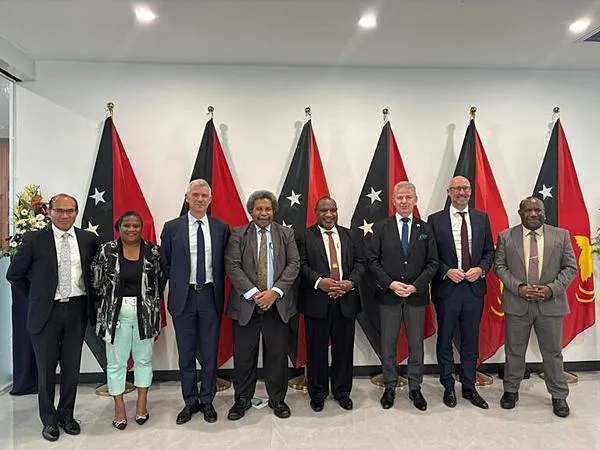
Prime Minister Hon. James Marape on Tuesday, January 28, 2025, welcomed a high-level delegation from TotalEnergies to discuss the progress of key LNG projects in Papua New Guinea, including the flagship Papua LNG project and new exploration opportunities at Mailu in Central Province. The delegation included Mr Mehmet Celepoglu – Vice President Oceania and Southeast Asia, Mr Daniel Domine – Managing Director of Marketing and Services PNG, and Mr Arnold Berthet – Managing Director of Exploration and Production for Papua LNG. The meeting centred on project timelines, workforce development, and the significant economic benefits these initiatives are expected to deliver for the country.
During the discussions, TotalEnergies provided an overview of their operations and outlined their strategic roadmap for advancing LNG production in PNG. Four key work streams were highlighted: securing competitive contractor offers, marketing LNG, finalising project financing, and obtaining regulatory approvals. Substantial progress has already been made, including optimising project designs, encouraging competition among contractors, and securing supply agreements with LNG buyers.
The delegation detailed specific design optimisations that have helped reduce project costs.
These included reducing the diameter of gas pipelines to attract more competitive bids, replacing condensate pipelines with an FSO (Floating Storage and Offloading) pipeline system, and implementing horizontal drilling to minimise environmental impacts. These measures have not only lowered costs but also ensured alignment with global sustainability standards.
Prime Minister Marape used the opportunity to underscore the importance of prioritising Papua New Guineans in the workforce. He stated, “I do not want 10,000 overseas workers to fill these roles. I want 10,000 Papua New Guineans—from Kikori, Gulf Province, and other communities across the country—trained and ready to contribute.”
Prime Minister Marape delivered a strong message to TotalEnergies and its contractors, emphasising that employing Papua New Guineans is non-negotiable. “We expect at least 5,000 Papua New Guineans to be employed in these projects. This is imperative, and we will work closely with all stakeholders to make it a reality,” he said.
The Prime Minister also reiterated his government’s commitment to creating a favourable investment environment. He offered access to land at reduced costs to facilitate operations, storage facilities, and long-term strategic developments. “Compared to Singapore or other regions, Papua New Guinea offers a more affordable and strategic location for investments. We are open to discussions about relocating parts of your operations to key project sites,” he said.
Additionally, Prime Minister Marape addressed the need to reduce fuel costs and improve supply chain efficiency. He encouraged TotalEnergies to explore partnerships with local companies to develop integrated supply chains that reduce reliance on costly imports.
The meeting underscored a shared vision for a sustainable and inclusive future for Papua New Guinea. Both Prime Minister Marape and the TotalEnergies delegation expressed optimism about the transformative potential of these LNG projects. The Prime Minister concluded, “Investing in Papua New Guinea is investing in a free market and a growing economy. Together, we can create opportunities that will benefit not only Papua New Guineans but the entire Pacific region.”
The TotalEnergies delegation reaffirmed their commitment to working closely with the PNG government to ensure the success of these projects, further strengthening PapuaNew Guinea’s position as a key player in the global energy market.
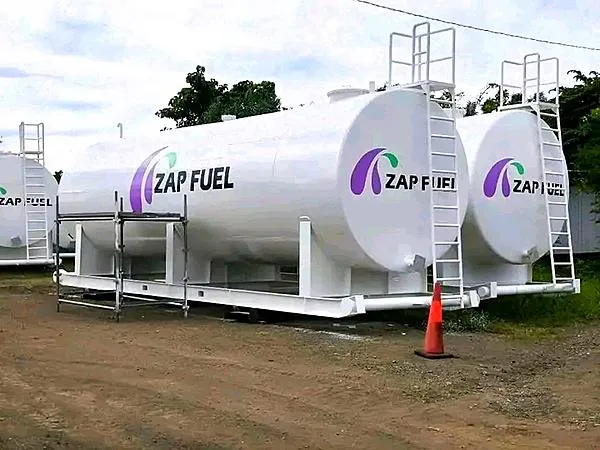
Residents of Sepik, Papua New Guinea can look forward to relief from prolonged fuel shortages as Zap Fuel, a private distributor, prepares to establish a temporary fuel storage facility in Wewak.
Governor for East Sepik Province Hon. Allan Bird announced this on January 19.
“I am pleased to advise our people that a fuel distributor is ready to locate 600,000 liters of temporary fuel storage to Wewak as soon as possible and supply fuel to the Sepik region,” Governor Bird stated.
After two years of chronic fuel shortages in Sepik, Zap Fuel, which already supplies fuel to Manus, Gulf, and the Autonomous Region of Bougainville (AROB), committed to addressing Sepik’s demand of over one million liters of petroleum products per month.
“This week, we will connect them with potential business partners in Wewak so they can start as soon as possible,” Bird revealed.
Over the coming year, the East Sepik Provincial Government (ESPG) will assist Zap Fuel in securing land for a permanent tank farm to ensure sustainable fuel supply options.
In addition to the fuel crisis, Governor Bird acknowledged another pressing issue affecting Sepik residents: unreliable power supply.
“Our next challenge is to solve our continuous power blackouts. We need reliable power supplies, and PPL [PNG Power Limited] sadly doesn’t have the solutions,” he said.
“This year, we will find solutions and seek out the partners who will help us with solutions.”
Bird emphasized that the Zap Fuel initiative is a fully private sector-driven solution, with the ESPG serving only as a facilitator.
“The fuel supply by Zap Fuels is a 100% private sector solution. ESPG will only help to facilitate. We will not be providing any funding for the business,” he clarified.
Governor Bird concluded by welcoming businesses like Zap Fuel that are committed to delivering practical solutions for the people of Sepik.
Prime Minister Hon. James Marape has extended his gratitude to senior leaders from ExxonMobil’s headquarters in Houston, Texas, who visited Papua New Guinea to reaffirm the company’s long-term commitment to the country’s energy sector.
Three senior ExxonMobil corporate executives, led by outgoing Upstream President Liam Mallon, traveled to PNG to personally bid farewell to Prime Minister Marape as he prepares to retire from his role. Mr. Mallon, a key figure in ExxonMobil’s operations in PNG, expressed his appreciation for the strong partnership between the company and the Government of Papua New Guinea.
“I want to thank the ExxonMobil leaders from their Houston head office, especially Liam Mallon, who flew all the way to PNG to say farewell,” Prime Minister Marape said.
“He has been a strong partner in ensuring the success of PNG LNG and has worked closely with us over the years. His commitment to our country will be remembered, and we wish him well in his retirement.”
During the meeting, Mr. Mallon introduced his successor, Dan Ammann, the incoming Upstream President, who will now take over ExxonMobil’s global upstream operations.
Prime Minister Marape also congratulated Ms. Tera Shandro, the outgoing Managing Director of ExxonMobil PNG, on her promotion to Vice President of Upstream Business, based at the company’s global headquarters in Houston.
“We are proud that Ms. Shandro, after her time in Papua New Guinea, has been elevated to a senior global role within ExxonMobil. This speaks volumes about the importance of PNG in the company’s operations,” PM Marape said.
“We wish her all the best in her new role and look forward to continuing a strong relationship with ExxonMobil under the leadership of Dinesh Siwasimboo, the incomingChairman and Managing Director of ExxonMobil PNG.”
The meeting also included Peter Clarke, Senior Vice President for Global LNG, who provided updates on ExxonMobil’s commitment to advancing key projects in PNG, including the ongoing developments at Angore, progress on P’nyang, and efforts to synchronise multiple LNG fields for greater efficiency.
Prime Minister Marape noted that ExxonMobil is also working closely with TotalEnergies to support the successful delivery of the Papua LNG project, which is expected to play a significant role in PNG’s energy future.
“This collaboration between ExxonMobil and TotalEnergies will ensure that Papua LNG is developed efficiently and contributes to the broader synchronisation of PNG’s LNG projects, maximising benefits for our country,” Prime Minister Marape said.
“They assured me that PNG LNG remains one of the best-performing fields globally and that the company remains committed to ensuring PNG continues to be a major energy producer for at least the next 30 years,” he added.
ExxonMobil’s leaders also discussed the importance of positioning Papua New Guinea as a producer of clean and green LNG. The company recognises PNG’s negative carbon footprint and the country’s potential to market its LNG as a cleaner, more sustainable energy source in the global market.
“We discussed the importance of aligning our LNG production with PNG’s green credentials,” PM Marape said.
“Our goal is to brand Papua New Guinea as a green energy nation, producing LNG from a country with a negative carbon footprint. This will make our LNG more attractive to buyers in both spot and long-term contracted markets.”
ExxonMobil further highlighted PNG’s strategic location and proximity to major markets, which places the country in a favorable position for energy exports.
Prime Minister Marape concluded by expressing his confidence in ExxonMobil’s continued leadership in PNG’s energy sector and the Government’s commitment to supporting further LNG developments.
“ExxonMobil’s senior leadership has assured me that PNG is a top priority in their global portfolio,” PM Marape said.
“We look forward to continuing our partnership to ensure the success of current and future LNG projects, which will play a significant role in the country’s economic growth for decades to come.”
The Minister for International Trade and Investment, Hon. Richard Maru, recently declared that 2025 will be the year that Konebada Petroleum Park Authority (KPPA), under the Chairmanship of Mr. Martin Kombri will be proactive in recovering the parcel of land known as the “Konebada Petroleum Park Zone” as declared and defined in the National Gazette No. G76 published on February 7, 2017, by the Minister for Lands and Physical Planning.
Minister Maru, who is the Minister responsible for KPPA elaborated: “Pursuant to Sections 5 and 12 of the Land Act 1996 (as amended), the Declaration by the Minister for Lands and Physical Planning on the Konebada Petroleum Park Zone effectively vests ownership of that parcel of land totaling approximately 23, 000 hectares on KPPA pursuant to Section 3 (4) of the Konebada Petroleum Park Act 2008 (as amended).”
In this regard, Minister Maru explained that: “Any rights and interests that existed on the Konebada Petroleum Park Zone land prior the Declaration on February 7, 2017, have been nullified and have ceased to exist on February 7, 2017, the date of the National Gazette No. G76. The owner of the land located in Konebada Petroleum Park Zone has been KPPA since that Declaration.”
“Any acquisition of parcels of land within the Konebada Petroleum Park Zone by whatever means after the Declaration on February 7, 2017, will be null and void if the acquisition was not done with KPPA pursuant to Section 38 of the Konebada Petroleum Park Act 2008 (as amended). That is, no land located in the Konebada Petroleum Park Zone may be acquired, disposed of or otherwise dealt with unless KPPA is a party to the dealing or the dealing was and is approved by KPPA.”
“Any contrary dealings in the land or interest in the land located in the Konebada Petroleum Park Zone is null and void and of no effect,” added Minister Maru.
The new Boad of KPPA chaired by Mr. Kombri was tasked to ascertain the status of the land located within the Konebada Petroleum Park Zone and further to recover any parcels or pieces of land that have been acquired by any person or company contrary to Section 38 of the Konebada Petroleum Park Act 2008 (as amended).”
“I now convey my word of appreciation to the KPPA Board for implementing the task by engaging a reputable surveying company and the work had commenced. When the status of the land located in Konebada Petroleum Park Zone is ascertained, then necessary actions will be embarked on to recover what had been lost through illegal deals and for those parcels of land not affected in any manner will be utilized for the purposes which that land have been acquired for,” said Minister Maru.
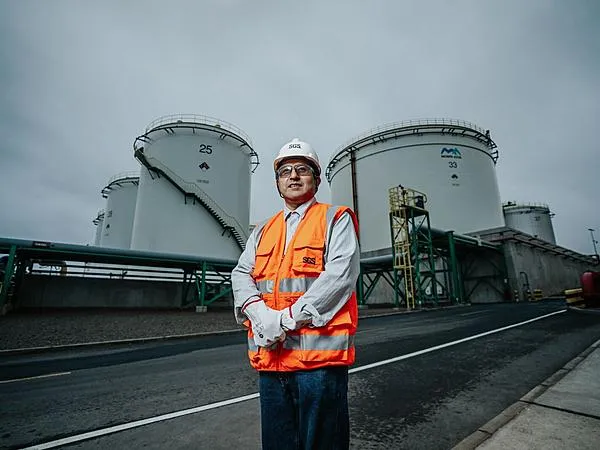
In the rapidly changing field of fuel management, maintaining the integrity of your fuelling system is crucial. Leaks compromise fuel quality, pose significant environmental risks and lead to costly operational disruptions. Our acoustic leak detection method is a highly effective, revolutionary solution for maintaining and securing fuel infrastructures.
Importance of controlling leaks
Ensuring there are no leaks in your fuelling system is crucial for several reasons:
Acoustic leak detection process
The process begins with meticulous preparation to ensure accurate results. All tank-related activities, including fuel delivery and filling, are suspended. We ensure that all openings and gaps, including the filling line, vent, and suction lines, are securely closed to create a controlled testing environment.
Once preparation is complete, a specially designed coupler, which holds two sensors, is used to facilitate vacuum application. One sensor is placed within the liquid in the tank, while another is positioned in the air space above the liquid. This dual-sensor setup allows for comprehensive monitoring.
The background noise level inside the tank is measured and recorded to establish a reference value.
A vacuum is then used to create a controlled environment, essential for accurate leak detection. The background noise level is measured again, allowing for precise comparison of the noise level before and after the vacuum was applied. Significant discrepancies between the reference background and post-vacuum noise levels may indicate potential leaks. All readings are meticulously documented, and an inspection report is generated and printed on-site for immediate review.
Why choose SGS’s acoustic leak detection method?
More than 90% of leaks stem from accessories, fittings and joints, rather than the tank itself, and 95% of these leaks can be easily repaired by qualified pipefitters. This highlights the importance of comprehensive system checks and the efficiency of the acoustic method in identifying even the most minor vulnerabilities.
Widely recognized and approved, our acoustic method for leak detection is trustworthy and reliable, with many advantages:
The acoustic leak detection method is a game-changer in fuel system maintenance. Its precision in detecting even the tiniest leaks ensures your entire system's integrity, from the tank to the piping, and allows you to invest in the future of your fuelling infrastructure by prioritizing safety, efficiency and reliability.
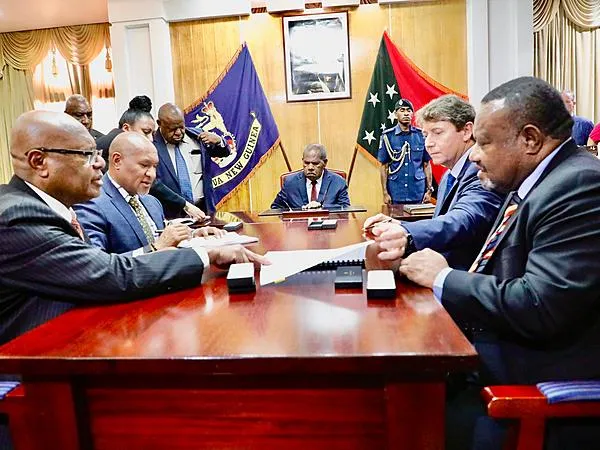
The Government of Papua New Guinea (PNG), Hevehe Petroleum, and Twinza Oil have signed the Pasca Gas Agreement, marking the country’s first offshore petroleum project. This landmark deal promises significant economic and social benefits.
Historic Signing Ceremony
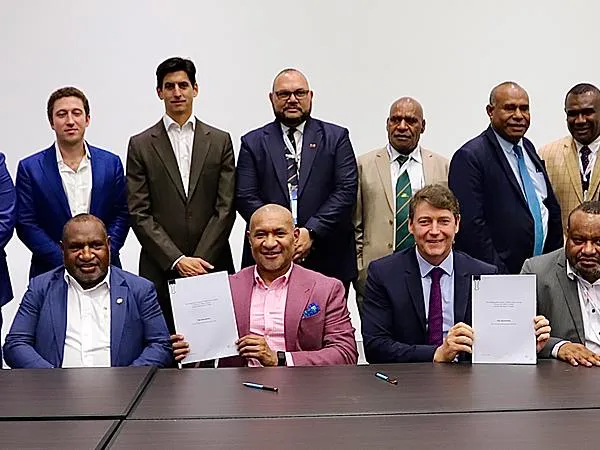
The signing ceremony, led by Governor General Sir Bob Dadae and attended by Prime Minister Hon. James Marape, senior ministers, and key stakeholders, took place on December 19, 2024, at the Government House in Port Moresby.
Prime Minister Marape hailed the agreement as a transformative milestone, emphasizing its potential to benefit landowners and the Gulf Province.
“This agreement secures better terms for PNG while fostering a stable environment for our project partners,” Marape said.
Swift Negotiations Yield Results
Negotiations were completed within six months after MRDC’s acquisition of an equity stake in the Pasca project. The agreement secures a 70% state take, one of the most favorable in PNG’s history. It includes:
A Domestic Market Obligation (DMO) mandates 5% of production for local use at favorable prices. Twinza Oil will also deposit USD 20 million into the Bank of Papua New Guinea to stabilize foreign exchange reserves.
Focus on Local Participation
The Pasca Joint Venture involves MRDC, the Gulf Provincial Government, and other stakeholders. It targets 80% local workforce participation within five years and 25% involvement of locally owned businesses.
The agreement prioritizes national content, sustainable practices, and human rights, Minister for Petroleum Hon. Jimmy Maladina said, adding the project’s benefits will flow directly to the people, contributing to national development.
“This agreement reflects our commitment to ensuring PNG’s resources drive prosperity for our nation,” he said.
Phased Development
The project will be developed in two phases:
Phase 1: Focus on liquid petroleum production, with an estimated 135 million barrels of oil equivalent.
Phase 2: Transition to liquefied natural gas (LNG) production, with an estimated 115 million barrels of oil equivalent.
The Joint Venture Agreement will be finalized within 90 days, followed by securing the Petroleum Development License (PDL) and Final Investment Decision (FID).
Key Highlights
Benefits to Gulf Province
The Gulf Provincial Government holds 10% equity in Hevehe Petroleum and benefits from levies and royalties.
Governor Hon. Sir Christopher Haiveta stated, “The entire Gulf Province will benefit directly from this project. This is a testament to making things happen for our people.”
MRDC played a pivotal role in securing favorable terms, leveraging decades of experience to ensure equitable outcomes.
The Pasca project sets a benchmark for future offshore developments, empowering landowners and provincial governments to shape PNG’s resource future.
Prime Minister Marape concluded, “This milestone lays the foundation for sustainable development and inclusive growth in PNG’s resource sector.”
Santos has improved facility reliability of its assets to more than 97 per cent this year with production seeing record days, weeks and months.
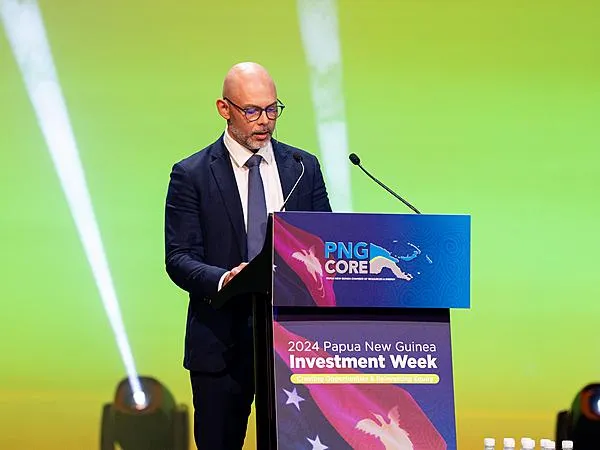
This was announced recently by Sigurdur Jonsson, Santos Vice President for PNG Operations during the 2024 PNG Investment Week in Sydney.
“In our efforts to optimise maintenance strategies, we thoroughly examined all PNG maintenance approaches and drew upon Santos’ extensive experience. Subsequently, we successfully implemented a comprehensive new maintenance program for PNG which is consistent with our company operations excellence standard.
“I am proud to say that we improved even further from last year’s record reliability of 95 per cent to more than 97 per cent this year. This was done through vigilant focus on our engineering and maintenance programs as well as critically reviewing and prioritising the work executed at our facilities.
“This year alone we have accelerated 16 billion cubic feet of gas from the Santos operated fields to feed PNG LNG infrastructure before Angore was brought on by ExxonMobil PNG during this quarter. The Angore project ties in an additional TCF of gas to the PNG LNG infrastructure which will see the plant full,” said Jonsson.
Santos also concluded a 4 well infill program successfully without any HSE incidents. “We saw oil rates from our fields that we have not seen since 2021 despite operational challenges such as a landslip in the Moran area that saw us curtail production from there for a few months.
“Last year I stood here and talked about the criticality of delivering high facility reliability to provide feed gas to PNG LNG and to optimise our oil production. We were also in the midst of executing our 4 well infill program and looking at standing up our gas production at Hides to support the Porgera mine.
“I’m delighted to stand here today to say that we have delivered on these commitments.”
The Government of Papua New Guinea, has initialed a landmark Gas Agreement with Twinza Oil Ltd, the operator of the Pasca offshore gas project. This transformative agreement paves the way for the development of Papua New Guinea’s first offshore petroleum project, located off the coast of Gulf Province. It will be submitted to the National Executive Council for approval next week before being presented to Government House for formal endorsement by the Governor-General and signing.
This Gas Agreement represents the Pangu Government’s unwavering commitment to ensuring that the wealth generated from Papua New Guinea’s natural resources benefits its people. The 70% state take achieved in this agreement -inclusive of taxes, royalities and equity participation - is a testament to the leadership of Prime Minister Marape and the tireless efforts of the State Negotiating Team (SNT) to secure the best possible outcomes for the nation.
The Pasca A Gas Project represents a significant step forward in Papua New Guinea’s energy ambitions, laying the foundation for future offshore resource developments. The project will initially produce natural gas liquids, including condensate and liquefied petroleum gas (LPG), while also establishing the groundwork for liquefied natural gas (LNG) exports.
Prime Minister Marape emphasised the importance of the initialing, stating:” This Gas Agreement is a testament to our commitment to securing the best outcomes for Papua New Guinea. With an unprecedented 70% state take, we are ensuring that the benefits of this resource are channeled directly to our people. This is not just a project—it’s a step toward economic sovereignty and a brighter future for all Papua New Guineans.”
Discovered in the 1960s, the Pasca field has undergone decades of extensive appraisal and preparation. Its development is projected to deliver over K500 million annually in revenues and create approximately 500 permanent jobs, with significant local benefits for Gulf Province.
Prime Minister Marape added: “The Pasca A Gas Project symbolises what Papua New Guinea can achieve when we prioritise unity and sustainability. As we approach our 50th anniversary of independence in 2025, this project reflects our nation’s resilience and potential. It is an example of how we can leverage our natural resources responsibly to uplift our people.
“The agreement underscores the government’s commitment to transparency and accountability. It will be submitted to the National Executive Council for approval next week before being presented to Government House for formal endorsement by the Governor-Genera and signing.”
Highlighting the project’s strategic importance, Prime Minister Marape stated: “This project isn’t just about energy production—it’s about positioning Papua New Guinea as a key player in the global energy market. The Pasca A Project will enhance our energy security, fulfill domestic market obligations, and create export opportunities, while opening the door to further exploration in the Gulf of Papua.
“In May 2024, the Mineral Resources Development Company Limited (MRDC) and Twinza formalised a partnership agreement regarding the Pasca A Gas Project. This collaboration allows MRDC to acquire up to a 50% participating interest in the project, while Twinza retains its role as the project operator. This partnership ensures greater local participation and guarantees that benefits flow directly to the people of Papua New Guinea.”
Prime Minister Marape concluded:” As the nation prepares to celebrate its golden jubilee, the Pasca A Gas Project stands as a beacon of progress, unity, and sustainability. It is a symbol of what Papua New Guinea can achieve through collaboration, innovation, and a shared commitment to national development.”
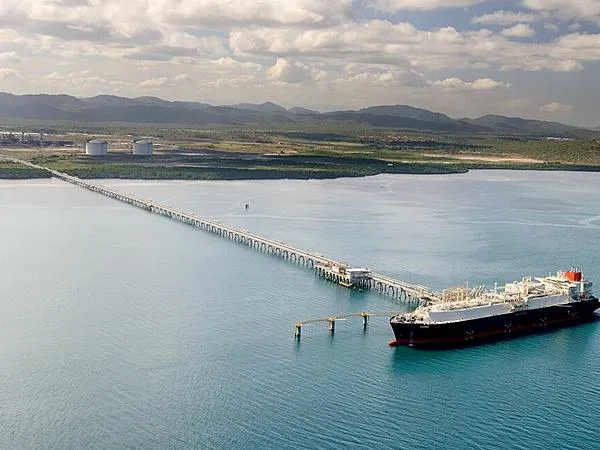
Santos has announced the successful completion of the Angore project in Hela Province, Papua New Guinea, further bolstering the country’s liquefied natural gas (LNG) production capacity.
This milestone development, unveiled on November 19, marks a significant step forward for the PNG LNG venture, delivering up to 350 million standard cubic feet (mmscf) of gas per day.
The Angore project unlocks access to an estimated one trillion cubic feet of natural gas resources, strengthening PNG’s position as a key player in the global LNG market.
Santos Managing Director and Chief Executive Officer Kevin Gallagher highlighted the importance of the project in showcasing PNG’s abundant natural gas potential.
“The startup of Angore is one of several PNG highlights in 2024 for Santos and our joint venture partners – ExxonMobil, Kumul Petroleum Holdings, Mineral Resources Development Company, and JX Nippon,” Gallagher said.
He also praised the success of other ongoing developments, including the Kutubu field, which has accelerated 16 billion cubic feet of associated gas production this year.
Gallagher outlined several future projects aimed at sustaining and expanding PNG’s energy output:
Additionally, Santos is advancing front-end engineering for the Papua LNG project in the Eastern Highlands Province and exploring promising fields like Wildebeest in the Gulf Province.
“The prolific nature of PNG’s gas resources gives us a strong platform to continue reliably supplying our Asian customers well into 2040 and beyond,” Gallagher said.
Since its inception in 2014, PNG LNG has supplied over 83 million tonnes of LNG to Asian markets, including long-term buyers such as CPC, JERA, Osaka Gas, and Sinopec.
The $19 billion project celebrated its 10th anniversary in 2024 and routinely exceeds its nameplate capacity of 6.9 million tonnes per annum by 30%.
The venture has contributed more than $7 billion to PNG through taxes, royalties, and community benefits, all while maintaining one of the lowest greenhouse gas emissions intensities among global LNG producers.
The Angore development reinforces Santos and its partners’ dedication to the long-term sustainability of LNG production in PNG.
As global demand for cleaner energy grows, projects like Angore ensure that PNG remains a vital player in meeting the energy needs of Asian markets.
Santos CEO Mr. Kevin Gallagher recently called Papua New Guinea’s Liquefied Natural Gas (PNG LNG) project a "world-class asset" that boasts a low-cost, low-emissions intensity profile.
He told PNG Business News that the project continues to deliver reliable LNG supply to key markets in Asia, reinforcing its vital role in the global energy landscape.
“PNG LNG remains a world-class asset that is low-cost, low-emissions intensity and delivers reliable LNG supply to our customers in Asia,” Mr. Gallagher said.
He made this comment following Santos’ successful completed sale of a 2.6-percent interest in the PNG LNG project to Kumul Petroleum Holdings Limited on November 4th, which highlights the continued growth and potential of one of the country’s most significant energy assets.
Mr. Gallagher also pointed to the favorable regulatory framework surrounding PNG LNG, which ensures stability and continued investment in the sector.
The project is expected to generate significant economic returns for both domestic and international stakeholders, making it an essential driver of growth for the nation's economy.
“The project is positioned in a supportive regulatory environment, with fiscal stability arrangements in place ensuring that it contributes strong cash flows to project participants and delivers significant economic and social benefits to the nation,” he said.
“The finalisation of Kumul’s participation in PNG LNG is an important milestone for the country’s national petroleum and energy company."
The transaction marks an important milestone for KPHL, and with this acquisition, the company solidifies its position as a key stakeholder in the lucrative PNG LNG venture.
Santos has completed its sale of a 2.6% interest in the Papua New Guinea Liquefied Natural Gas (PNG LNG) project to Kumul Petroleum Holdings Limited (KPHL). The transaction, first announced on 29 December 2023 and detailed on 1 February 2024, was completed on 4 November 2024 and is worth US$602 million in cash (2.43 billion kina).
In addition, Kumul will assume approximately US$90 million (363 million kina) of existing project finance debt associated with the sale interest. Effective 4 November, Santos’ working interest in PNG LNG is 39.9 per cent.
Santos reaffirmed its 2024 market guidance, stating there is no change to it this year. Managing director Kevin Gallaher and KPHL managing director Wapu Sonk confirmed the equity sale on the same day.
Mr. Sonk also said that under its agreement with Santos, KPHL made a partial payment of US$352 million (1.42 billion kina) earlier this year, with the balance due by December 2024.
“We have just completed this share acquisition, well before the end of the year,” he added.
The acquisition increases KPHL’s stake in PNG LNG to 19.2%, including the 4.27% Kroton Equity Option shareholding, held for beneficiaries who are impacted provincial governments and landowner groups.
“Kumul Petroleum having an increased shareholding in the PNG LNG Project is clearly of great benefit to the company and the country,” Mr Sonk said. “The project will be fully depreciated by end of 2024 and project finance fully repaid by 2026, which means this additional equity is expected to provide high returns immediately and strengthen KPHL’s balance sheet.”
Mr Sonk said this increased equity will enable KPHL to expand its role in the country’s energy sector.
“For KPHL, the higher income from the PNG LNG Project means more ability for us to play a greater role in the country’s petroleum and energy sector as well as our ongoing support for nation-building development projects that will improve the lives of all Papua New Guineans,” he added.
In discussing KPHL’s future plans, Sonk said: “This acquisition positions the company to prepare to take up its mandated 22.5% equity in the forthcoming Papua LNG Project, whose FID is expected in late 2025, as well as other activities that the company continues to pursue.”
KPHL Finalises LNG Forward Sale with Chevron
On the same day, KPHL also completed a forward sale agreement with Chevron USA Inc. (Singapore Branch) to support KPHL's acquisition of additional equity in PNG LNG.
As part of the deal, Chevron will make an advance payment to KPHL in exchange for LNG and condensate cargoes over the next two years.
Sonk explained: “KPHL made a partial payment to Santos earlier this year with the balance to be paid by December 2024. Following an extensive bid process with major trading, utility and other entities to source funding, we selected Chevron’s forward sales agreement.”
This agreement follows KPHL's successful participation in the spot market, where it sold four LNG cargoes in 2024. Sonk emphasized the deal with Chevron will provide more security for KPHL as it continues to grow its energy portfolio.
“We appreciate Chevron being able to finalise this deal. This agreement advances PNG’s hydrocarbon business, where we believe there is significant potential in LNG and related energy businesses, including carbon offset possibilities. We look forward to working with Chevron in the future,” he said.
ExxonMobil Senior Vice President of Global LNG, Mr. Peter Clarke, recently shared his insights on the success of Papua New Guinea’s liquefied natural gas industry and the bright opportunities ahead as a keynote speaker at Kumul Petroleum Holding Limited’s Petroleum and Energy Conference held in Port Moresby.
“Papua New Guinea is truly well-positioned for the future -- one where LNG will have an even larger presence in the global energy mix,” said Mr. Clarke.
“With proximity to market and high-quality resources, PNG can continue supporting regional demand for decades to come, with Asia Pacific countries set to be core natural gas customers, and in the process help these countries meet their energy security and emissions reduction goals,” he added.
Through the PNG LNG Project, Papua New Guinea has demonstrated the ability to deliver reliable supply to customers, Clarke said.
“When the first shipment of Papua New Guinea’s LNG set sail on the ‘Spirit of Hela’ to Japan in 2014, and PNG entered an esteemed club of LNG exporting nations, no one could have foretold what the future would bring. But with the benefit of 10 years of hindsight, I can confidently say that through the strength of our partnerships, we have exceeded all expectations -- and together, we have firmly established Papua New Guinea’s global reputation for excellence in the LNG industry,” Clarke said.
“In just its first decade of operations, the PNG LNG Project has generated tens of thousands of jobs and strengthened PNG’s economy. It has engaged 155 local businesses, including 10 LANCOs in the production phase, and invested 6.8 billion kina in PNG with these businesses,” Clarke said.
“And along the way, we have helped to deliver more than 27 billion kina back to the State of Papua New Guinea and its people.”
ExxonMobil and its co-venturers’ investments in the country continue today, with multiple works currently underway to bring new volumes online and further strengthen PNG LNG’s production levels, Clarke said.
“We are also pleased to announce that the P’nyang LNG co-venturers are currently progressing its concept evaluation phase. This phase is critical to ensure that the design to develop this proven 4.6 TCF resource is as capitally efficient as possible which is particularly important given P’nyang’s remote location,” he added.
“Thanks to our close partnerships with the national and provincial and governments, our co-venturers including Mineral Resource Development Company and Kumul Petroleum Holdings Limited, TotalEnergies, Santos and JX Nippon, our LANCOs, local communities and landowner leaders and other business partners -- we are incredibly excited for LNG’s next decade and beyond in Papua New Guinea,” he added.
“Together, we have built a resilient, successful and globally respected LNG industry in PNG.”
On the sidelines of the 2024 Petroleum & Energy Conference today, Kumul Petroleum Holdings Limited Managing director, Wapu Sonk signed a Pre-Front-End Engineering & Development (FEED) contract for a Floating LNG (FLNG) facility in the Gulf of Papua, in PNG.
Mr Sonk announced that this important contract had been awarded to Shanghai Wison Offshore & Marine Company Ltd. Mr Damien Nguyen, the Chief Technical Officer (CTO), who signed on behalf of the company said Wison is delighted to work closely with Kumul Petroleum in its ambitious plan to commercialise gas fields in Papua New Guinea.
“Kumul Petroleum Holdings Limited has for some time been investigating how to commercialise stranded gas resources, particularly those in our Petroleum Retention Licenses (PRLs 47 &50) over the Pandora and Uramu gas fields, offshore of Gulf Province,”
“This is a critical step and in the right direction, one we are extremely excited about as the National Petroleum Company,” Mr Sonk said.
“KPHL has evaluated these gas discoveries and completed reserve certification, which has given us confidence to move to this stage of the commercialisation plan.”
“KPHL is 100% license holder of the two PRL offshore licenses at the moment and intends to farm down post this study to interested partners who see value in the 1.5mtpa FLNG project in PNG.”
“This pre-FEED study is a necessary step to ensure that we understand the full scope, cost, schedule, risk and the full economic value before making a decision on moving to FEED and Final Investment Decision. The pre-FEED study is expected to take 8-12 months, leading to entry of FEED thereafter, and FID sometime in 2026 or 2027.
Santos has announced the signing of a mid-term LNG supply contract with TotalEnergies Gas & Power Asia Private Limited (TotalEnergies).
The contract entails the supply of 20 LNG cargoes, or up to approximately 0.5 million tonnes of LNG per annum, over a period of three years plus one quarter. The contract will commence in Q4 2025, with LNG being supplied from Santos’ global portfolio of world-class LNG assets on a delivered ex-ship basis.
Santos Managing Director and Chief Executive Officer Kevin Gallagher said the contract with TotalEnergies marks a new LNG relationship for Santos, building on its existing joint venture partnerships.
“This oil-indexed contract, along with the recently executed long-term LNG Sales and Purchase Agreement with Hokkaido Gas in Japan and the mid-term contract with Glencore, demonstrates Santos’ strong LNG portfolio position and customer relationships in the region. Our portfolio is well-balanced over the short to medium term, with around eighty percent of volumes indexed to oil prices and about twenty percent exposed to spot pricing,” Gallagher said.
“There continues to be extremely strong demand in Asia for high-heating-value LNG from projects such as Barossa and PNG LNG, as countries focus on reducing their carbon emissions. Santos is committed to supporting the energy security of our valued customers across Asia, where gas will play a crucial role in decarbonisation efforts throughout the region,” Gallagher added.
Follow on LinkedIn:
PNG Business News
Be the "First" to get our exclusive Digital Magazine & Weekly Newsletter.