February 14, 2023

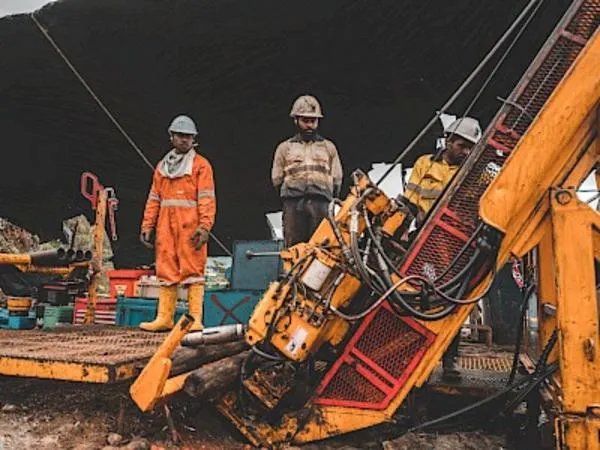
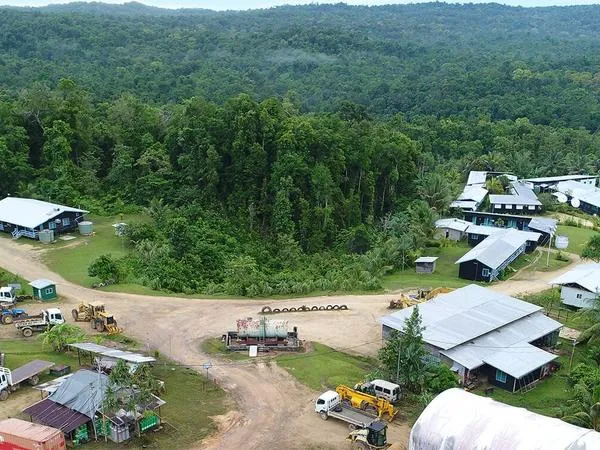
Photo credit: Geopacific Resources

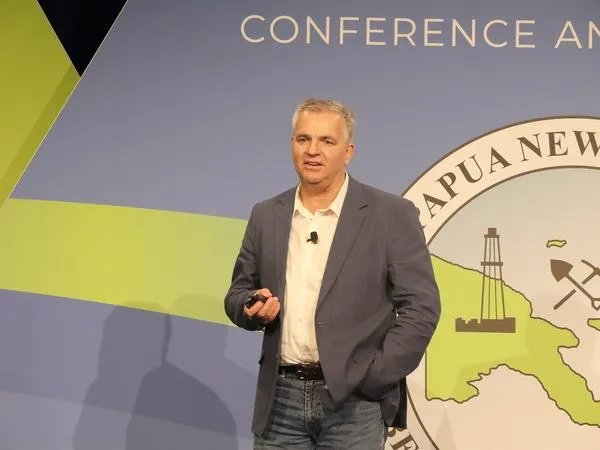
Geopacific Resources Limited is pleased to provide an update on corporate and project activities conducted at the Woodlark Gold Project together with an outline of planned future work programs for 2023.

Outcomes from 2022

In February 2022 Geopacific announced suspension of development activities at the Project due to a significant capital cost increase which impacted on available project funding. Geopacific provided a corporate update in May 20221 outlining a business transformation plan with a clear focus on re-evaluating the future pathways for the Project including clearing residual contractual matters and maintaining the Company’s social licence to operate.

The following are key outcomes from activities undertaken in 2022 which included execution of the business transformation plan.

  • The completion of 23km of resource infill, extension and exploration drilling. This drilling improved confidence in high grade areas and identified new zones of mineralisation adjacent to the existing deposits. 
  • The completion of an updated Mineral Resource Estimate for the Woodlark Project. The update improved confidence in the 1.5Moz Mineral Resource with 94% now in the Measured and Indicated categories2 . 
  • The community relocation project continued to progress, with the project now 66% overall complete. This provided access to largely untested areas of the Kulumadau deposit within the footprint of the open pits delineated by past studies. 
  • The community relocation program has been well received by the Papua New Guinea (‘PNG’) government and regulators resulting in a letter of commendation from the Mineral Resource Authority of PNG and positive press coverage within PNG. 
  • Continuing community engagement and provision of services maintained the Company’s social licence. 
  • A strategic review was conducted following unsolicited approaches to the Company. This resulted in the identification of potential development partners and dialogue is ongoing.

Outlook for 2023

Following receipt of the Mineral Resource Update in December 2022, the Company has been busy preparing a work program for 2023, with the aim of maximising value in a cost-effective manner. The initial planning of the work program for 2023 is now complete, and subject to available funding, it is the Company’s intention to execute the following work streams during the course of 2023:

  • Complete a geological and targeting review focused on high grade opportunities. 
  • Update of Project operating and capital cost estimates to reflect the current economic environment. 
  • Assess the potential to optimise the Project via relocation of the processing plant and associated project infrastructure, along with the potential for staged development with an initial focus on the high-grade core of the Mineral Resource. 
  • Update of open-pit designs and production schedules based on the Mineral Resource Update. 
  • Preparation of a Pre-Feasibility level study, taking into account the above, and subject to study outcomes enabling the re-statement of Ore Reserves for the Project. 
  • Continue with the community relocation project on a cost effective ‘self-perform’ basis. This will initially target houses which are near completion.

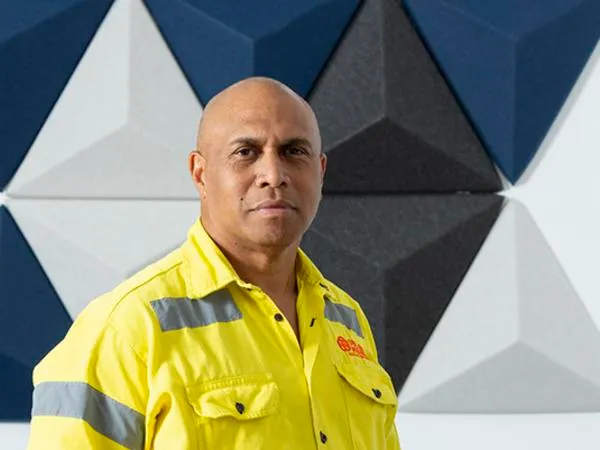
Interim Chief Executive Officer, Richard Clayton commented

“The work programs executed in 2022 have provided a platform for future work to unlock value from the Woodlark Gold Project. Importantly, the exploration activity and Mineral Resource Update executed in 2022 have delivered valuable data to re-optimize the Woodlark development plan. We will continue to advance the key work packages in 2023, to define the optimal pathway to maximise value from the Project, and to unlock the island’s considerable exploration potential.”


Article courtesy of Geopacific Resources. The full press release can be found HERE
February 07, 2023

Mining or exploration licenses that are given to a company go through a process called a warden hearing. This gives opportunities to communities, individuals, or organizations to present their objections.

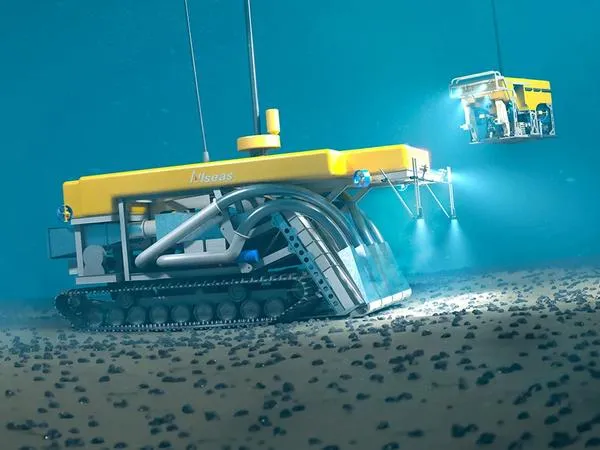
The Alliance of Solwara Warriors, a coalition of coastal communities in PNG, recently held a warden hearing concerning seabed mining, but no officials or representatives from the Mineral Resource Authority (MRA) and the Government were present.

In a press conference, the Alliance called on the government to cancel seabed mining and exploration licenses in the country. It is also calling for the termination of Nautilus Minerals’ license as it is still active after the company went bankrupt in 2019.

Director of NGO group West Coast Development Foundation, Jonathan Mesulam, issued the call during a media conference in Port Moresby. He said PNG should follow the footsteps of other Pacific islands that are calling for a pause or a complete ban on seabed mining.

“Our stance today is to call on the government to cancel all the licenses on sea bed mining either exploration or mining licenses. We want those licenses to be canceled, why should we keep those licenses and invite other investors to come and destroy our ocean?”

“If we are talking about ocean then we are also addressing a climate action so when we are talking about the ocean we are also talking about climate change so both these aspects are connected.”

“We also want the government to respond to the objections in a petitioned that we have presented in 2022 and also in a media statement that was published in November last year. To date there has been no response from the government. Prior to this we are also yet to be given a response from objections that were presented in a petition in 2018 and 2021 especially from Mineral Resource Authority,” Mesulam said.

Meanwhile, Caritas PNG supports the Alliance of Solwara Warriors campaign as Mesulam together with his West Coast Development Foundation team had launched three objections in pursuit of the cancellation and ban of seabed mining.

“Objection number one states that there is no national policy on seabed mining, two states that there is no legal regulatory framework in provinces or at the national level to monitor impacts of projects, and the third objective states that the intended project is unknown, as there is not enough information on the impacts, the benefits, and the risks for it. These are some of the points that we have stated in our objections,” Mesulam highlighted.

Three objections have already been filed under the Mining Act sections 4 and 14, with one filed on 31 January.

“For this campaign on seabed mining this will be the third objection. We filed the first objection in 2018 to EL 1196, and in 2020 we filed the second objection to EL2537 and yesterday (Tuesday 31st Jan.) we filed the third objection to EL 1374 to cancel exploration license to Nautilus Minerals or Companies that have paid off Nautilus assets,” Mesulam said.

Most coastal provinces are in support of this campaign and are currently awaiting the government’s responses on the objections that were launched and presented.

February 05, 2023

The PNGEITI Head of Secretariat Mr. Lucas Alkan says all parties to the Pogera Mine must adhere to rules governing the extractive industry, particularly when dealing with fiscal matters that must be administered and observed according to law. His comments follow a news article on The National citing the Internal Revenue Commission (IRC) that unmet tax obligations of the Pogera mine stood in the way to expedite the mine re-opening process.  Mr. Alkan says a workable and timely strategy that does not impinge on basic laws is a way forward.   Below is the full comment on this issue. 

“The Papua New Guinea Extractive Industries Transparency Initiative (PNGEITI) commends The National newspaper for attempting to bring to light what appears to be the final outstanding issue (among others) in the Porgera Mine recommencement negotiations (more on this in footnote). We’ve noted from the reporting that taxation matters are legacy issues that appear to be standing in the way for the multi-million-kina Porgera Gold Mine to re-open.

We have observed that the Government was on track to conclude negotiations and re-open the Mine by June last year, however this did not eventuate as anticipated. Attempts to reopening the Mine in the second half of last year was not feasible due to the national general elections and the formation of government. It appeared that all negotiations were concluded and a new Porgera Mining Agreement Framework was in place for the Mine to be re-opened in the first quarter of this year.

Surprisingly, we learn that an old Porgera Tax liability dispute is standing in the way for the Mine to be re-opened. The early recommencement of the Mine, preferably within the first quarter of this year is critical for the country as the lead time required for mobilizing resources and the significant start-up capital needed to get the mine back into its full operating capacity would be a significant challenge. On this, we are aware there are also discussions going on with the developer and the government as to who is going to meet the startup cost but we understand Barrick Niugini Limited might meet the full cost of starting up the Mine and government would refund later but unsure as to whether this understanding has been reached or not yet.

With regards to the current standoff, the EITI based on its global best practice principles is of the view that the existing law governing taxation matters must dictate or take precedence over any political intervention. We do not know the specifics of the on-going tax matter but understand that it is related to a tax dispute concerning the ‘old Porgera Mine’. If it is a significant amount of tax owed by Barrick to the Government based IRC’s audit in 2013 then it is a legal tax obligation that Barrick and its joint venture partners need to settle as required by law.

We fail to understand as to why the old Porgera tax obligation/liability clause was inserted into the new Porgera Mining Framework Agreement making it a condition to resolve this legacy tax issue before reopening the Mine. If whatever was reported and commented by PM Marape recently is true then Barrick Niugini Limited and the State need to speed up the negotiation process and resolve this dispute immediately. Both parties should exercise good faith – Barrick Niugini Limited should not pull strings on this old Porgera tax liability matter and delay the re-opening of the Mine. It is understood the State (IRC) may not easily forego if there is a substantial amount of tax liability to be paid by the operator.

Whatever the parties decide to do, they should resolve the tax liability issue through the due process of law but allow the Mine to re-open immediately under the New Porgera Framework Agreement. Political intervention is not recommended to resolve this dispute as this can undermine investor confidence, set bad precedence for the Government and create an uneven playing field for project developers. Barrack Niugini Limited should not put undue pressure on the State to resolve this matter politically in order to re-open the mine as it is not a best business practice.

All stakeholders and the citizens have the right to know the specific issues or the nature of this tax liability issue between Barrick Niugini Limited (BNL) and the Internal Revenue Commission (IRC) as the continued delay in re-opening the Mine continues to have negative consequences on the economy.  The prolonged delay has not only resulted in significant revenue loss to the Government (including the provincial and local level governments in the impacted resource area) but also loss of employment, business opportunities and spin-off benefits to the landowners and the wider communities.

The shutting down of the Mine 3 years ago has had significant negative consequences on the economy including the current foreign exchange shortage that has constrained business operations in the other sectors of the economy. Porgera Mine had been a good source of foreign exchange inflows and its continued shutdown will definitely not going to contribute to the 4% economic growth (that was largely to be driven by the extractive sector) projected for by the World Bank for last year and the real GDP growth of 4% projected for this year in the 2023 National Budget.

PNGEITI commends the transparent negotiation process to date that took substantial amount of time and effort to ensure the interests of all parties were reflected in those agreements. We encourage all parties to continue to respect and observe the laws of the land in this dispute resolution process to address the tax liability issue. We believe that a win-win situation for both parties (Government and Barrick) is to re-open the mine first and work together to resolve the outstanding tax liability dispute later going forward.

January 30, 2023

Photo: Sam Basil Junior. credit: Sam Basil Junior Facebook Page

The alluvial mining sector is a fast-growing sector in Papua New Guinea, with more than 80,000 alluvial miners engaged in the sector, which also generates a significant amount of export receipts in millions of kina to the PNG economy annually.

The Bulolo area in Morobe has been known for its alluvial mining activities since the colonial era. This area is still active today, but it has been found that certain individuals who are not locals and landowners in the area have been granted licenses to carry out alluvial mining in the Wau Bulolo area.

These concerns have been raised and forwarded to the Wau Bulolo MP Sam Basil Jnr, who in turn raised it on the floor of Parliament last week with Mining Minister Ano Pala.

Basil Jnr questioned the laws surrounding the alluvial mining sector, particularly on why Landowners' rights were overlooked and not prioritized and urged the Mining Minister to clarify why locals are not being protected.

"This is in regard to the need to amend the Mining Act of 1992, particularly relating to the protection of landowner rights, especially in the sector of alluvial mining. If the mining department has not started work on amending the Mining Act yet, does it have any plans to push for an alluvial mining act that will protect Landowner rights over other citizens?" Mr. Basil Jnr said.

Mr. Pala said his department is working to amend certain sections of the alluvial mining laws to give more access and opportunities to locals. The minister also stated that currently there is confusion surrounding this law and the amendments that will be made will qualify who should conduct alluvial mining and where it should be conducted.

"Under the law that is in place now, it states that only Landowners can operate in alluvial gold mining, but there are instances where exploration licenses have been issued to other parties who are not landowners to conduct alluvial mining operations," Mr. Pala said.

The mining minister said there is a lot of confusion relating to alluvial mining since the laws relating to it are from the colonial era. He gave assurance that the process of amending these laws is in progress and will come through with amendments to the Mining Act.

Mr. Pala said these confusions surrounding the laws relating to alluvial mining will be sorted out shortly.

"I agree that there are some adjustments that need to be made because only nationals are allowed to do alluvial gold mining. But unfortunately, the current law also states that someone can get an exploration license to operate alluvial mining over the area in which you have the legal right and that is now the area of concern that the mining department is looking to amend and sort out," he said.

As of November 2020, more than 100 leaseholders have registered with the Morobe Alluvial Mining Limited created by the former Morobe Governor Ginson Saonu to participate in projects in the areas of Wau and Bulolo.

Before these, in a report in August last year by the Post Courier, Justin Parker, CEO of Golden Valley Enterprise, a mining and metals company that specializes in buying and smelting gold, also expressed his concern about the lack of Government intervention in this sector.

He stated there was a huge need to mechanize alluvial mining in PNG and the Government must take responsibility in supporting the sector because there are families in rural settings that mostly benefit from it.

Alluvial mining is a legally recognized economic activity and is readily seen in all provinces of the country. Leases are held only by naturalized citizens, who must be the owner of the land over which the lease falls, and gold is the mineral usually mined alluvially across PNG.

January 22, 2023

Photo credit: K92 Mining Inc

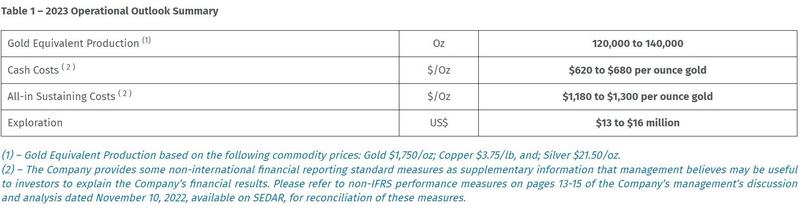
K92 Mining Inc is pleased to provide its operational outlook for 2023. The Company expects gold equivalent production of 120,000-140,000 ounces, while also delivering low-cost production with an estimated cash cost of $620-$680 per ounce gold and AISC of $1,180-$1,300 per ounce gold. Cash cost and AISC per ounce have increased from 2022, driven predominantly by accelerating sustaining capital and development expenditures related to the Stage 3 and Stage 4 Expansions approved on December 6, 2022 (see December 6, 2022 press release: K92 Mining Announces Extension to Mining Lease 150 and Approval of the Kainantu Gold Mine Stage 3 and Stage 4 Expansions ), in addition to sustaining capital items that were planned to arrive in 2022 and are now arriving on-site in 2023 due to supply chain related delays. The Stage 3 and 4 Expansions are expected to transform the Kainantu Gold Mine into a Tier 1 mine, through significantly increased production and economies of scale. The Stage 4 PEA Case outlines peak annual production of 500,192 ounces AuEq in 2027, life of mine average AISC of $687/oz (co-product) or $444/oz net of by-product credits, and self-funding from mine cash flow at $1,600/oz Au.

For exploration, 2023 is forecasted to have a significant increase in both near-mine and regional activities with forecasted expenditures of $13-16 million. Since 2020, the drill fleet has more than doubled to 11 drill rigs currently operating, with the number of drills planned to increase to 13 in 2023. Importantly, surface and underground exploration activities will continue to focus on resource growth at Kora, Judd, Kora South, Judd South, Kora Deeps, Judd Deeps and Northern Deeps vein systems, and the A1 copper-gold porphyry targets.

In terms of growth capital, the tender process commenced in late-2022 for the Stage 3 and 4 Expansions. Upon completion of the tender process, timing of growth capital items that will be incurred this year will be established to provide 2023 guidance.

John Lewins, K92 Chief Executive Officer and Director, stated, “In 2022, Kainantu once again took a major step forward, achieving its sixth consecutive year of production growth, including multiple records such as ore tonnes processed, ore tonnes mined, total tonnes mined and underground development. Importantly, Kainantu finished 2022 strong, achieving multiple quarterly records in the fourth quarter. In 2023, we look to continue to build on this positive operational momentum while also focusing on investing in the long-term future of Kainantu via the Stage 3 and 4 Expansions, which was approved in December 2022 following the renewal of the Mining License for a further 10 years through until the end of 2034. This will transform the Kainantu Gold Mine into a Tier 1 mine.

As part of our guidance, we have incorporated contingency for supply chain related impacts as the global economy recovers from lingering effects of the COVID-19 pandemic environment, particularly in relation to suppliers in Asia. Based on our expectations of supply chain impact timing and stope sequencing, we expect the second half of 2023 to be our strongest in terms of production.

We are also very excited about exploration in 2023, and are pleased to be expanding our activities, through increasing the number of drill rigs from 11 currently operating to 13. The number of highly prospective drill targets at Kainantu is very large and has grown considerably over the past 18 months through surface exploration work. Our surface drilling plans to target Kora South, Judd South, Judd and the A1 Copper-Gold Porphyry Target, with underground drilling targeting, Kora, Judd, Kora South, Judd South, Kora Deeps, Judd Deeps and Northern Deeps. Other targets identified may be drilled in 2023 and we look to provide exploration updates in due course.”


Article courtesy of K92 Mining

January 20, 2023

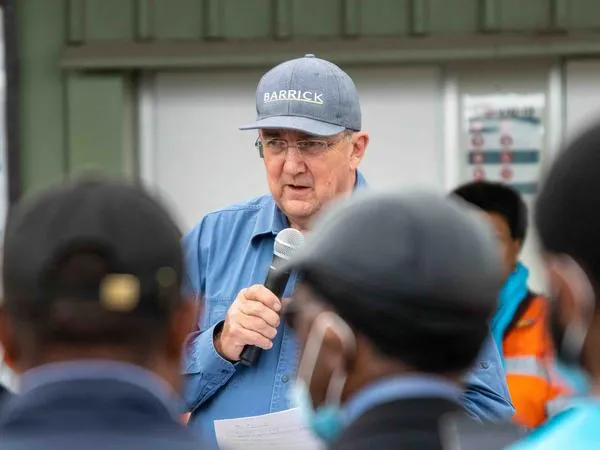
Photo: Barrick Gold Corporation Chief Executive Officer Mark Bristow

Barrick Gold Corporation Chief Executive Officer Mark Bristow has urged all PNG parties involved in the Porgera Mine reopening negotiations to complete the process by the end of the first quarter 2023.

Bristow was in country as part of his quarterly visits to all Barrick owned and operated mines. In Port Moresby, Bristow met with Prime Minister James Marape, Mining Minister Sir Ano Pala, State Owned Enterprise Minister William Duma, Internal Security Minister Peter Tsiamalili Jr, Vice Minister of State Negotiations Jimmy Maladina, State Solicitor Daniel Rolpagarea and State Negotiation Team Chairman Dairi Vele. He also travelled to Porgera to meet with landowner and community leaders. This is Bristow’s 17th visit to PNG since joining Barrick as CEO in 2019.

“The Porgera Mine has been closed for almost three years without good reason. When I visited the mine again yesterday, the landowners and community pleaded for the restart of the mine so that the local economy could be revived and put an end to their suffering. Despite the partnership with the State that we have built, it is unfortunate that certain critical issues remain to be resolved to enable the restart of the mine.” Mr. Bristow said.

Porgera was placed under care and maintenance in April 2020.

“Delaying the restart of Porgera is not in any stakeholder’s interest, especially the people of Porgera and PNG who have been deprived of the economic benefits of the mine for too long. It would be remiss of us to ignore the impact that the mine closure has had on the residents of Porgera Valley, local and national businesses, and the country’s economy as a whole. Barrick is ready to start the process of reopening the mine. What is needed is equal urgency on the part of all other parties to resolve the remaining issues,” Bristow said.

While awaiting the restart of the mine, Bristow also urged government authorities to take necessary actions to restore essential government services to Porgera. Since the national elections of July last year, communities have been unable to access health, judicial, education and banking services in the Porgera Valley due to tribal conflicts, warlordism and ongoing law and order issues. Bristow was pleased with the news of the Ceasefire Agreement signed between the two warring clans this week in Wabag, and commended the Porgera Crisis Management team for their work in ensuring this important agreement was signed. Bristow agreed with the women’s group in Porgera that more action still needs to be taken by Government Authorities and local leaders to ensure security and normalcy returns to the district.

January 16, 2023

Photo: Minister for Mining Ano Pala

The Mining Act of 1992 is set to undergo adjustments to address sensitive areas and unclear areas such as alluvial mining and exploration activities. This was announced by Minister for Mining, Ano Pala, in response to questions raised by Member for Bulolo, Sam Basil Jr, in Parliament.

Mr. Basil highlighted the need to amend the Mining Act of 1992, particularly with regards to protecting landowners' rights, especially in relation to alluvial mining. He asked, "If the Mining Department has not started work to amend the Mining Act 1992, does the Mining Department have any plans to push for an Alluvial Mining Act, one which will protect landowners rights over other citizens?”

Minister Pala reassured that the Mining Department has already made appropriate changes to the law to safeguard landowners. Under the current law, only landowners are permitted to operate alluvial gold mines. However, he acknowledged that there are instances where exploration licenses are issued for land where alluvial operations are taking place. He stated, "That is the area that we need to sort out. We are in the process of introducing a Mining Amendment Act to address the sensitive areas or unclear areas like alluvial mining and exploration activities.”

This announcement is a positive step towards addressing the concerns of landowners and ensuring that their rights are protected. The proposed Mining Amendment Act will provide clarity and certainty for all stakeholders involved in the mining industry. It is important to note that mineral resources are a vital component of a country's economy, and their extraction and utilization should be carried out in a sustainable manner that takes into account the rights and well-being of all affected parties.

January 12, 2023

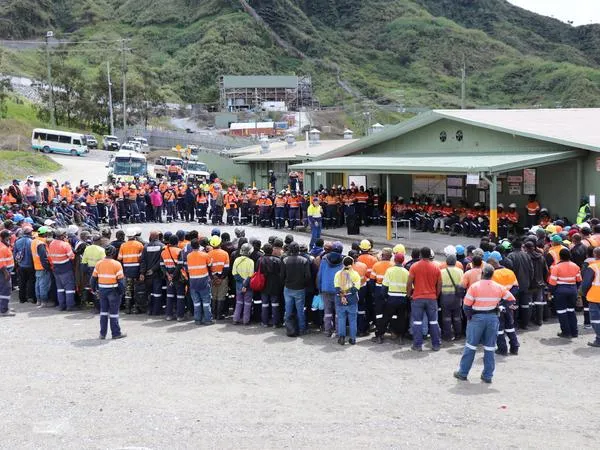
Photo: Barrick CEO and President Mark Bristow addressing PJV Town Hall meeting at Porgera Mine site during a quaterly visit in 2022

Barrick Niugini Limited (BNL) has clarified in a media statement that the Porgera Mine remains and is progressing in a care and maintenance mode of operation and that the current defined rehiring process of the skilled workforce is only to assist with ongoing maintenance work carried out in the mine.

A protest was held in Porgera on Friday (6th January) claiming that Barrick's current recruitment process was improperly overlooking unemployed locals within the Special Mining Lease area. Barrick Niugini Limited has completely opposed these claims.

Since the closure of the mine, Porgera was placed into care and maintenance operations in April 2020, BNL has invested more than K1 billion in maintaining its integrity in the hope and expectation that the various structural and regulatory conditions for its reopening can be satisfied to allow for its reopening.

While these conditions have not yet been satisfied, BNL has approved limited maintenance work on plant infrastructure and the repairing of mobile equipment, with rehabilitation work on the open pit and underground sections of the mine.

The ongoing maintenance at the mining site requires highly skilled and experienced work personnel to ensure that operational readiness is maintained, the company said in a statement.

“BNLs recruitment policy is based on transparency and best practice and gives first preference to skilled and experienced workers with the best-recorded performances who are based in Porgera,” it said.

Due to a limited pool of local workers that need the necessary requirements for the current ongoing work, Barrick highlighted that they had to rehire a small number of skilled workers from beyond Porgera and within Enga and PNG. Most of these workers are on short-term contracts.

BNL claims that certain individuals have been creating false exploitations of employment by unskilled youth in Porgera and spreading baseless claims and rumours of inappropriate hiring practices by the company.

“The current maintenance work at the Porgera Mine, however, requires specific skill sets so that safety and other important requirement are properly compiled. As with any other professional organisation, BNL has stated and made a firm stance that it would not recruit a person with unsatisfactory employment or community history,” it said.

Once the mine restarts the new Porgera will commence the “historically successful” job-ready programme for the benefit of youths in Porgera, the company added.

Job Ready Program provides the best avenue for inexperienced local youth to enter the mining workforce and has produced skilled miners who are now employed at Porgera as well as other mines in PNG and abroad.

It is also the responsibility of local leaders to work with the Government and other stakeholders to invest in training and other opportunities for the youths in Porgera.

BNL has made its stance clear that any threat to the Porgera mine assets or employees and contractors will be immediately referred to the relevant authorities.

January 12, 2023

Many of Papua New Guinea’s most unruly problems are inseparably tied up with the country’s most promising sources of wealth. Mining, gas, timber, and other extractive industries are the most productive sectors of Papua New Guinea’s otherwise ailing economy. But exploitation of these resources has also led to violence, corruption, and lack of service delivery.

Porgera is the site of the disputed giant gold mine which has been closed for 3 years now. A violent tribal fight between the Aiyala and Nomali tribes has been raging and has put a complete halt to Government services in the district, which has severely affected the communities in this once thriving mining township.

The tribal conflicts at Paiam Station last year in July in the Porgera-Paiea District in Enga Province now have refocused the attention of the mining township over the Government’s failure to restore and provide basic services, such as health, education, law and order, and banking services in the district.

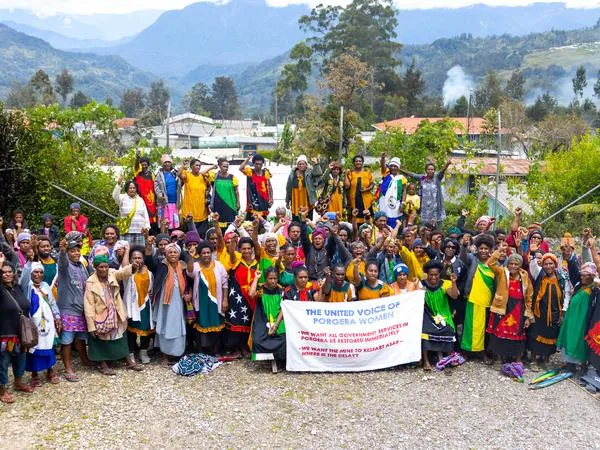
In a recent media conference in Porgera, representatives from women's groups in the area voiced their concerns that despite “significant increases in resourcing over the last two decades, service delivery in Porgera is still failing to reach its people.”

This conclusion was drawn following the recent tribal conflicts and the breakdown of law and order in the district. Women’s groups in the district expressed their grievances and called on their leaders to assess the deteriorating state of the Government’s service delivery in the valley and restore basic services in the area.

Many businesses, especially in Paiam, had closed amid the fighting or had been operating on reduced schedules; there were a lot of commercial disruptions during the fighting as well as the closure of Government services in the district. Security measures and clashes had also triggered localized transport disruptions.

For months, the people have urged and called for the restoration of Government services in Porgera District after essential services that included the Paiam Hospital, Porgera Secondary and Primary Schools, Judicial Services, and the District Administration office had been closed down following the tribal conflict. The government has consistently failed to maintain law and order in the face of these security challenges

Porgera Women in Business President and Aumbi Lodge Owner Elizabeth Iarume stated that restoration of government services in Porgera needs to be a priority for the National and Provincial Government as the daily challenges of accessing government services outside of Porgera has seen people dying on the road while seeking medical services, looting and hold-up of public transport, and now students are expected to miss another year of education as schools remain closed.

"So many people in Porgera have been affected, The communities struggle with economic and social hardship far from public view, because access to these areas is difficult and State presence is limited," Iarume said.

The women have observed that provincial administrators generally failed to perform responsibly; provincial accountability mechanisms were severely weakened, provincial governments lacked resources and oversight of what happens in the district; and legal arrangements had minimal impact on the behaviour of politicians in ways that would improve service delivery.

Youth rep Joy Tero recently spoke on behalf of impacted young girls and women of Porgera on the ongoing challenges faced as government services remain closed in Porgera. Joy highlighted that young girls have been the main victims of kidnapping and rapes during tribal conflict and asked for a Police/PNG Defense Force Barracks to be set up permanently in Porgera. 

The women have also made calls for the restart of Porgera Mine in 2023 as the economic impact of the mine closures continues to be a day-to-day struggle for small businesses and the informal sector in Porgera. 

A key question addressed by the women was whether the decline in service delivery is “causally related to the country's political precedence on the Porgera Mine.”

Porgera District Women Association President Serah Erasi called on the National Government and Barrick Niugini Limited to make it known on when the Porgera Mine will reopen, as economic struggles of the people of Porgera drag onto 4th year since the closure of the mine.

"Why has the mine not been reopened? We have been struggling to sustain our families since the closure of the mine. When the mine was in operation we benefited from its economic outputs, The Prime Minister must come to Porgera and give us an amswer on when the mine will be reopened," Erasi said.

Porgera is one of Papua New Guinea’s longest running goldmines. Operating for 30 years in the highlands province of Enga, this large mine was expected to produce around 250,000 ounces of gold in 2019. It employs more than 5,000 people and the 5% landowner and provincial equity stake has helped to fast-track the efforts to bring services and education to one of the country’s most remote provinces. In spite of all the wealth it generates, Porgera still suffers from poverty and a lack of basic government services.

January 11, 2023

Photo credit: K92 Mining

K92 Mining has announced production results for the fourth quarter of 2022 at its Kainantu Gold Mine in Papua New Guinea, of 35,538 oz AuEq or 31,204 oz gold, 1,827,085 lbs copper and 40,517 oz silver. Annual production achieved a record of 122,806 oz AuEq or 107,546 oz gold, 6,247,950 lbs copper and 126,043 oz silver, achieving the guidance range of 115,000 to 140,000 oz AuEq and increasing 18% year over year. Sales during the fourth quarter were 35,212 oz gold, 1,923,116 lbs copper and 44,828 oz silver. Annual sales were 110,654 oz gold, 6,072,879 lbs copper and 125,155 oz silver.

During the fourth quarter, the process plant delivered record quarterly ore processed of 121,686 tonnes or 1,323 tpd, an increase of 22% from Q4 2021. On an annual basis, a record 448 kt of ore was processed, increasing 33% from 2021. Importantly, in November, the process plant achieved record monthly throughput of 1,382 tpd, greater than the Stage 2A Expansion run-rate of 1,370 tpd. The strong throughput is especially significant as the final Stage 2A Expansion plant upgrade is not yet complete, with the flotation expansion that will double rougher capacity expected to be commissioned in Q1 2023.

The flotation expansion is expected to provide a boost to metallurgical recoveries and provide flexibility to potentially increase throughput further and beyond the Stage 2A design-run rate (500,000 tpa / 1,370 tpd). The new filter press and TC-1000 secondary/tertiary crusher for Stage 2A are installed and operational.

Mine performance during the fourth quarter recorded 111,448 tonnes of ore mined, and delivered a total material mined (ore plus waste) record of 287,446 tonnes mined, representing an increase of 28% from Q4 2021. On an annual basis, material movements of 448 kt of ore mined and 994 kt of total material mined both achieved records, increasing 40% and 25% from 2021, respectively. During the quarter, long hole stoping continued to perform to the design, with operations focused on Kora’s K1 and K2 veins, and Judd’s J1 Vein for a total of 11 levels mined. Mining on Kora was conducted on the 1130, 1150, 1170, 1205, 1245, 1265 and 1285 levels, and Judd on the 1235, 1265, 1285 and 1305 levels.

The operation delivered head grades of 8.75 g/t gold, 0.74% copper and 13.31 g/t silver (9.98 g/t AuEq) in Q4. Metallurgical recoveries averaged 91.2% for gold and 91.8% for copper during the quarter, with recoveries expected to improve upon the commissioning of the flotation expansion in Q1 2023.

Record mine development advance was achieved in the fourth quarter, of 2,221 metres (including the twin incline), a 45% increase from Q4 2021. Twin incline development advance also made significant progress, exceeding the budget by 76% during the quarter and by 52% during 2022. As of December 31, 2022, incline #2 (6m x 6.5m) advanced to 1,843 metres and #3 (5m x 5.5m) advanced to 1,811 metres. On an annual basis, record overall underground development of 7.5 km was achieved, a 31% increase from 2021.

John Lewins, K92 Chief Executive Officer and Director, stated, “We are very pleased with the performance of the Kainantu Gold Mine in the fourth quarter. Once again, Kainantu achieved multiple operational records, delivering record mill throughput, total mined material, and underground development rates. Quarterly production was the second highest on record, with 35,538 oz AuEq produced and on an annual basis we confidently achieved our production guidance.

The performance of the process plant has been a major positive. During the quarter, another new daily throughput record of 1,714 tonnes processed was achieved and on a monthly basis, Stage 2A Expansion throughput rates of 1,370 tpd have already been achieved ahead of the flotation expansion, the last major upgrade of the Stage 2A Expansion. The flotation expansion which will double rougher capacity, is now planned to be commissioned in Q1 2023, and is expected to provide a boost to not only recoveries but also plant flexibility, with the potential to ultimately exceed the Stage 2A Expansion run-rate.

In the mine, Kainantu delivered record material mined of 287 kt and record development advance of 2,221 metres, representing a 28% and 45% increase from Q4 2021, respectively. Development, as noted in previous press releases, is a major focus going forward as we open up the mine ahead of the Stage 3 and Stage 4 Expansions while also boosting our immediate mine operational flexibility. I am pleased to report that quarter over quarter, development advance increased 18% in Q4. The strong increase has been driven by a combination of a new replacement jumbo, improvements in ventilation, haulage, drill and blast, plus improvements to maintenance and servicing, benefiting from the recently constructed new equipment workshop. We expect development advance to continue to increase through 2023, as new equipment arrives and the development cycle continues to be optimized.

As we look at 2023, we have tremendous excitement about our exploration programs. The number of drills will be ramping up from 11 to 13 and our focus is on resource growth. Surface drilling plans to focus on Kora South, Judd South, Judd and the A1 Porphyry, with underground drilling focusing on Kora, Kora South, Judd, Judd South and Northern Deeps. The strong development advance from our southern drill drive and twin incline is also opening up new prospective drilling horizons.”


Article courtesy of K92 Mining
January 02, 2023

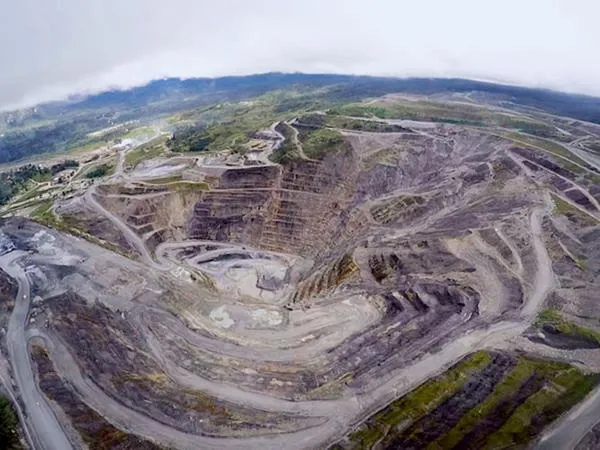
Photo credit: Zijin Mining. Aerial view of the Porgera gold mine

The Prime Minister recently responded to the press statement that was published by the Deputy Opposition Leader in relation to the reopening of the Porgera Mine.

“The Deputy Opposition Leader has never sat down at the table with any project stake holders to negotiate a way forward for any national projects and can only make uninformed statements from the sidelines.

“The National Government together with Barrick have jointly concluded all the important milestones contained in the Porgera Project Framework Agreement, which was initially signed in April 2021. Since then, we have concluded the Commencement Agreement, the Shareholders agreement and now Kumul mining is completing the Operators Agreement which is between the new joint venture company and the Barrick Operating entity rather than with the State,” Prime Minister Marape said.

“The New Porgera Limited has been incorporated and the State parties are now 51% majority owner of the mine which means the risks and responsibilities that must be negotiated through the various legal agreements are different and more complex than what the State is used to. They must now go through the regulatory process with the Mineral Resources Authority in accordance with the Mining Act which will include dealing with licensing, other technical regulations and a Development Forum for the Landowners and Provincial Government stakeholders.”

He said it is now this internal process and the settlement of legacy issues that the old Porgera Joint Venture between the Mineral Resources Enga (owned jointly by the Landowners and Provincial Government) and Barrick that needed to settled that will drive the timing of the reopening of the mine and not further commercial, technical and administrative negotiations with the Marape – Rosso Government.

“PNG deserves the best outcome in our resources negotiations and our stakeholders have a right to be heard and benefit from those projects,” the Prime Minister said.

“There are no ulterior motives in the delay, other than to ensure that all stakeholders views are considered. It was important for both Barrick and the National Government to secure the support of the Enga Provincial Government, and the landowners in the early part of the negotiations, and with the signing of the revised PPCA in September 2022, those issues are now sorted out.

“The government is working through a process of properly establishing the SNT as an organization. But these two processes are happening simultaneously,” the Prime Minister said.

“We have had State Negotiation Teams since 2007 when we started negotiations on the PNG LNG Project, and we are fortunate that a handful of these experienced resources are still around and available to the State. These are high value industries and we have had some high quality resources who have effectively secured important gains for our people.

“I want high quality negotiations, advisory services and project coordination that result in positive results and reputation for our people and our government. If we do not have those immediately available, we procure them.

“The Government part of the negotiation is supported by high technical advisors and advisory firms where required who are procured internationally. These advisors support Public Servants who serve the interest of the SNT over and above their day-to-day duties. The consultants are paid industry rates within the legal limits of the authorizing officer and within the terms of their contracts.”

In relation to Wafi Golpu project, Prime Minister Marape said that the negotiations were focused on ensuring that the landowners are able to participate throughout the construction phase and then build value over the life of the project.

“My government is committed to ensuring that we get better fiscal terms from large scale projects such as those proposed for the New Porgera Gold Mine, Wafi Golpu, and the gas projects P’nyang and Papua LNG Project. In P’nyang we achieved a 63% benefit split outcome which is a record. I have achieved more than the previous governments and a large part of this is due to the leadership of the various State Negotiations Team over the last two years under my leadership,” the Prime Minister said.

“Any bonuses that may be due and payable to public servants working in this space would normally be based on the bonus guidelines approved by NEC and the SRC back in 2009 when the PNG LNG was first negotiated.

“This is not something that my government initiated, but we are determined to support and recognize the commitments made by good public servants who are useful to any government in this line of work. Most importantly these incentives are performance based and allow us to compete with the Statutory Authorities and the private sector where our public servants could go to because of remuneration.”

Prime Minister Marape said he is surprised that the good Deputy Opposition Leader has chosen to rubbish the efforts that our public servants put into this work, which is over and above the regular duties they have on a day to day basis.

The Prime Minister added that considering the work of the SNT is negotiating an estimated USD30 billion worth of resource projects, arguing over the payments to advisors and advisory firms shows inexperience and immaturity.

December 08, 2022

Photo: Sandeep Biswas

According to the International Energy Agency, copper is essential for additional solar PV, wind, bioenergy, networks, electric vehicles (EVs), and battery storage in the field of clean energy solutions.

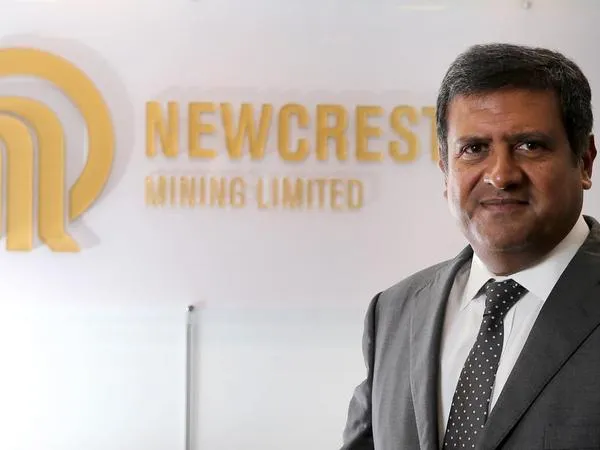
According to Sandeep Biswas, managing director and chief executive officer of Newcrest Mining Limited, the International Energy Agency has predicted that by 2040, the entire mineral demand for usage in clean energy solutions alone is likely to rise by 300%.

By weight, copper, graphite, and nickel, according to him, will be the most in demand minerals in 2040.

“As Newcrest steps up our role in addressing climate change, it makes plenty of sense for us to increase our focus on copper.

It is important for hydro, nuclear and concentrating solar power, while playing a role in geothermal and hydrogen,” he said.

The forecasts vary, but according to Australian government research, 31.1 million tonnes of copper will be consumed in 2030 – but only if it can be supplied.

That’s an increase of 26 per cent on estimated 2022 consumption.”

According to Mr. Biswas, current copper inventories are the lowest they have been since 2006. “Of course, the other side of the equation is supply, and that’s a significant factor in PNG’s continued relevance as a major global resources player,” he said.

However, the world’s insatiable hunger for the commodities we produce to help countries reach net zero doesn’t guarantee us an acceptable return on investment, income, profitability or efficient project approvals by any means.”

According to Mr. Biswas, Newcrest and other ethical global miners recognise that mining is much more than a for-profit business.

“The investments that we make in PNG are for the long term and must be built on a shared vision with the government and community if they are to succeed,” he said.

“We are committed to mine responsibly, produce less waste, use safer processes, incorporate new technologies, promote the wellbeing of local and Indigenous communities, curb emissions, and strengthen environmental stewardship.

Large, long-term investments are necessary to search for minerals, establish mines, and run them for a number of years before they become profitable. These investments are not made randomly or haphazardly.

“PNG, while not the cheapest operating environment in the world, certainly has the potential to become one of the best.

In PNG, as in the rest of the world, we value certainty, stability and pro-mining government policies to ensure we can maintain and grow our mining of copper, gold and silver.

“Companies who want to operate successfully in PNG should understand how to navigate not just the global challenges, but how to build, maintain and grow strong and enduring relationships with communities and governments.

“Long-term partnerships based on actions as well as words are central to the future of a successful PNG resources sector.”


Reference. Post-Courier (7 December 2022). “Newcrest Looks To Copper For Climate Change”.

December 07, 2022

Photo credit: K92 Mining

K92 Mining is pleased to announce that the Government of Papua New Guinea has granted an extension of Mining Lease 150 for the Kainantu Gold Mine in Papua New Guinea for a period of 10 years to June 13, 2034.

Concurrent with this announcement, K92’s Board of Directors have approved the Stage 3 and Stage 4 Expansions (collectively the “ Expansions ”), increasing the annual processing throughput to 1.2 mtpa and 1.7 mtpa, respectively. This represents a 140% increase and 240% increase, respectively, from the Stage 2A processing capacity of 500,000 tonnes per annum. The current Stage 2A Expansion run-rate throughput has already been achieved, with the last major process plant upgrade, the installation of flotation cells to double rougher capacity expected in early 2023.

The Expansions are expected to be transformational for Kainantu, as demonstrated in the Integrated Development Plan (“ IDP ”) Stage 4 PEA Case, outlining a peak annual production of 500,192 oz AuEq in 2027, a life of mine average all-in sustaining cost of $687/oz (co-product) or $444/oz net of by-product credits. Importantly, the growth capital cost of US$187 million, sustaining capital cost until operating both process plants of approximately US$60 million per annum, and life of mine sustaining capital cost of US$429 million are expected to be self-funded from mine cash flow at US$1,600/oz Au (see press release dated September 12, 2022 - K92 Mining Inc Announces Robust Kainantu Gold Mine Integrated Development Plan ). Tendering for long-lead time items for the expansion has already commenced.

John Lewins, K92 Chief Executive Officer and Director, stated, “ The extension of the Mining Lease by the Government of Papua New Guinea and the approval of the Stage 3 and 4 Expansions by the Board of Directors of K92 are major milestones for the Kainantu Gold Mine, Papua New Guinea, our communities, investors and many other stakeholders.

When we acquired the Kainantu Gold Mine in 2015, it was under care and maintenance and had a designed throughput of 150,000 tpa – the Stage 4 Expansion targets throughput of 1.7 million tonnes per annum, a more than 11-fold increase. The throughput increase, as outlined in the IDP Stage 4 PEA Case, transforms Kainantu into a Tier 1 mine, with peak production of 500,192 oz AuEq in 2027, low life of mine average all-in sustaining costs of $687/oz (co-product) or $444/oz net of by-product credits and capital self-funded from mine cash flow. The boost to the economy of Papua New Guinea, in terms of jobs, exports, royalties and income tax will be very significant. We also plan to expand our community programs as we expand the mine so that the benefits to our community continue to grow as the mine grows.

Beyond the mine expansion, as we approach 2023, we are very excited about our exploration programs at Kainantu. We plan to expand the number of drill rigs in 2023 from the 11 currently operating, with a focus on resource expansion of our vein fields and porphyries. ”

December 07, 2022

Photo: OTML General Manager and Chief Financial Officer Cameron Clark speaking at the PNG Mining and Petroleum Investment Conference

The Ok Tedi Mine will generate over PGK19 Billion in dividends for the benefit of Papua New Guinea over the next 11 years, says Ok Tedi Mining Ltd (OTML) General Manager Commercial and Chief Financial Officer Cameron Clark.

Mr Clark said this today when speaking at the PNG Mining and Petroleum Investment Conference in Sydney, Australia.

He said although the mine has been impacted by high fuel cost, and the expected low grade ore transition in 2022, OTML remains profitable and is committed to delivering for its shareholders.

“The outlook for Ok Tedi is a positive one. The Company has tripled its value in the last 6 years and extended mine life by 7 years. This has been made possible by a combination of technical improvements, cost improvement, accelerated mining rates and internal investment in key strategic projects,” Mr. Clark said.

He put this amount into context by saying dividends over the next 11 years will exceed what has been paid in the last 35 years making the period ahead a very important one.

He added that along with taxes, royalties and compensation payments approximating PGK 7 Billion, the overall benefit generated by Ok Tedi in the future is expected to approach PGK 30 Billion. 

We have solid plans in place, and therefore execution of those plans remains the key to ensuring this value is realised he said.

He also said that the Company continues in its efforts to extend mine life beyond 2033, having spent more than PGK350 Million on exploration in recent years.

He added that “We have a 2039 mine life case however this case reduces NPV by 30% and causes additional environmental impact and therefore requires further work before it can be considered a viable option.

See Our Latest Issue