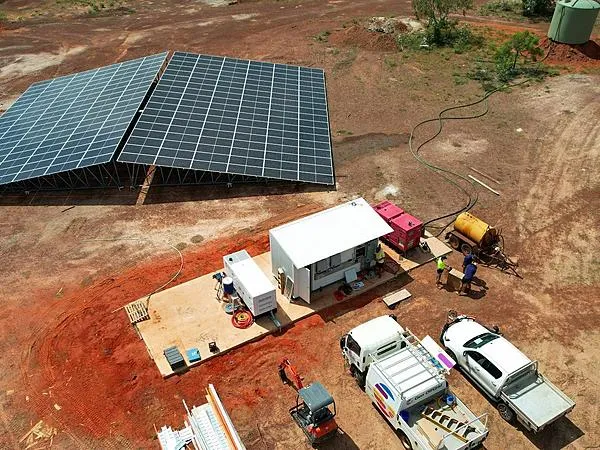
The Hides Gas Development Company Ltd (HGDC) recently signed a Memorandum of Understanding (MoU) with GenOffGrid to train and hire tradesmen, engineers, and technical staff in both Papua New Guinea and Australia with the goal of building remote solar power stations.
In a statement, the companies said the agreement will enable them to immediately establish in-country capacity building within PNG through joint training programs and technology exchange.
Driving the deal is the growing number of projects sponsored by foreign aid agencies for energy infrastructure, to support the Marape government's objective to increase PNG’s access to electricity from 15 per cent to 70 per cent by 2030.
John Davidson, managing director of GenOffGrid, said the company was incredibly pleased to partner with HGDC.
"We build remote solar power stations in Northern Australia and are very pleased to be partnering with HGDC to bring our expertise to PNG. This partnership will help us to fast track the building of in country capability and capacity to meet PNG's remote electrification program," said Davidson.
GenOffGrid are establishing a logistics base in Lae with administration offices in Port Moresby and recently built a solar project under a foreign aid program in remote PNG.
Libe Parindali, Chairman of HGDC, said the company was impressed with GenOffGrid's technology.
"We are very impressed with Gen OffGrid's technology, track record, and the desire to train PNG nationals to build in-country capacity for remote power generation using renewable energy sources,” Parindali said.
"We believe that together we will be able to help provide energy solutions to the PNG population and the long-term employment opportunities this creates. This integrates very well with our own development strategies," he added.
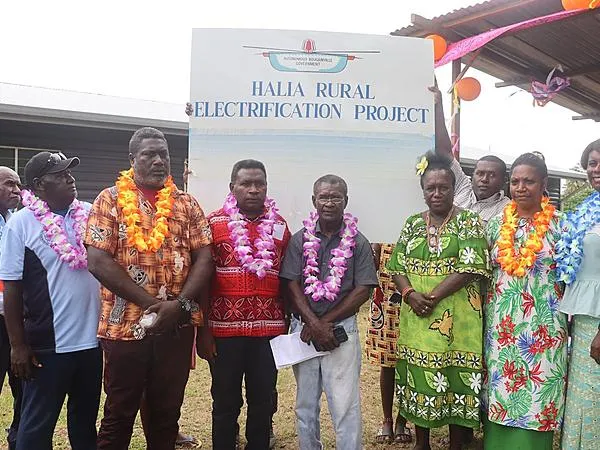
The people of Halia and Haku constituencies in North Bougainville can look forward to transformational change following the launch of the Rural Electrification Program today in Buka.
The Program was officially launched today by ABG Vice President and Member for Halia Hon. Patrick Nisira and National Member for North Bougainville Hon. Francesca Semoso, in the presence of ABG Member for Haku Constituency Hon. Patrick Koles, ABG Member for Veterans North Bougainville Hon. Callen Matuna, ABG Caretaker Chief Secretary Esther Usurup and other senior public servants.
ABG Vice President Hon. Patrick Nisira said that the Rural Electrification Program was significant because it is now being launched under ABG-owned company, Bougainville Power and Water Limited, who will lead this major development work.
The Rural Electrification Program for Bougainville was first launched in 2009 during the term of the first house of the ABG and had started in Tsitalato Constituency and gradually progressed on into Hagogohe Constituency.
“Through this Program now, lives will be transformed. It will help businesses to grow and other development will continue to happen. It will also compliment the road development that we already have,” he said.
Vice President Nisira emphasized to his constituents that during the initial rollout of this program, an understanding was reached with local chiefs that there should not be any compensation for clearance of land or food crops for this vital development, and appealed to his people that this same understanding must remain in order to access this service at the village level.
National Member for North Bougainville Hon. Francesca Semoso in her remarks, made a commitment of K1million towards the program, reaffirming her support to the development of North Bougainville.
“This is your money,” Semoso said, while pledging her support to see the Program continue on into Haku Constituency.
Hon. Semoso also announced that during her term, she is committed to seeing through major projects such as the completion of the sealing of the Buka Ring Road, including the highway on mainland North Bougainville.
Vice President Nisira thanked Member Semoso for her commitment, saying that over the years, despite commitments made by former national Bougainville members, they never lived up to their words to support the rural electrification program. However, he said that with this commitment made now by the National Member for North Bougainville, it will change the way things have been done in the past.
Nisira reiterated the ABG’s commitment to continue supporting real development for the people of Bougainville and the region’s collective preparedness for independence-readiness.
Australia has embarked on a collaborative effort with Papua New Guinea to enhance the nation’s access to reliable renewable energy sources, addressing the growing demand for electrification.
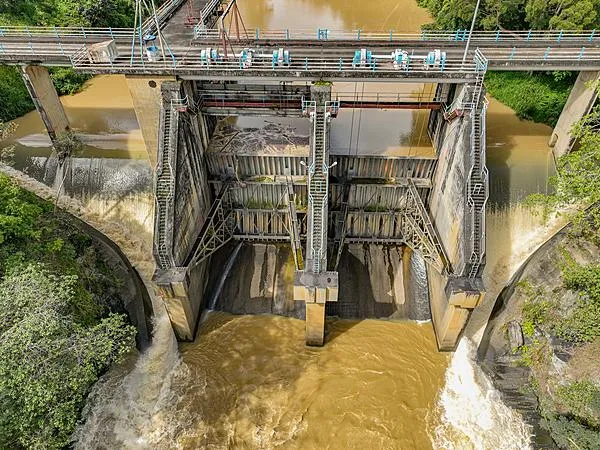
According to recent updates from the Australian High Commission in PNG, the partnership involves strategic initiatives aimed at bolstering PNG’s electrification requirements. One key initiative involves substantial repairs at the Ramu 1 hydropower station in Kainantu, Eastern Highlands Province. This operation has successfully unlocked an additional 17 megawatts of generation capacity for the Ramu grid, significantly improving the power supply reliability in major centers such as Madang, Morobe, and the Highlands region.
Australia’s commitment extends to the Port Moresby grid, where the focus is on installing new capacitor banks and transformers at crucial substations. These interventions are designed to strengthen power stability, mitigating instances of power outages within the region.
Significant strides have been made through refurbishment efforts, notably at the Rouna hydropower stations in Sogeri, Central Province. The completion of improvement works at these stations aims to enhance both the reliability and generation capacity of the grid. Further improvements are anticipated in early 2024, marking a pivotal moment in PNG’s journey toward a more robust and sustainable energy infrastructure.
The collaborative initiatives between Australia and PNG underscore a shared commitment to fortify access and reliability of renewa
ble energy. This partnership signifies substantial progress in meeting PNG’s escalating electrification needs, emphasising the importance of international cooperation in addressing the energy challenges faced by developing nations.
Australia is PNG’s largest trading and commercial partner, with bilateral trade worth AU$ 6.7 billion in 2018.
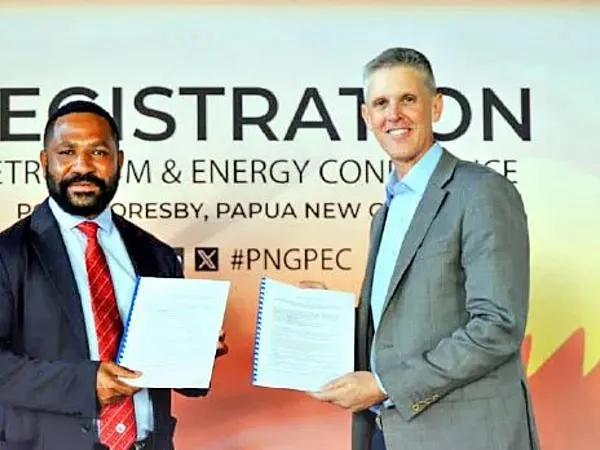
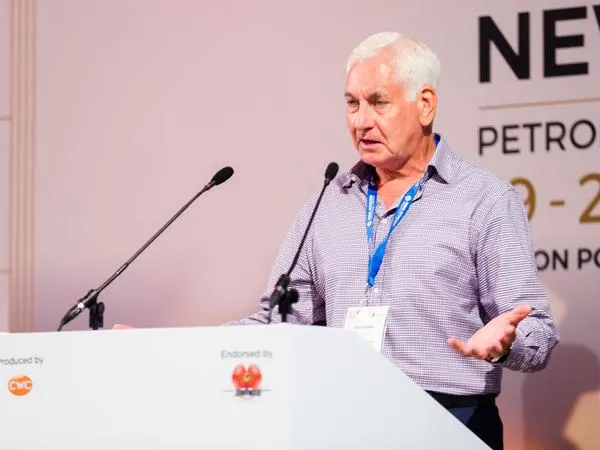
Newcrest Mining Limited and the National Energy Authority (NEA) have formalized their collaboration by signing a Memorandum of Understanding (MOU) aimed at identifying, developing, implementing, and financing potential renewable energy initiatives in selected locations across Papua New Guinea (PNG). The signing ceremony, which marked a significant milestone in the extractive industry, took place on September 13th, 2023, at the Hilton Hotel in Port Moresby during the Petroleum & Energy Conference.
National Energy Authority (NEA) Managing Director, Ronald Meketa, underscored the groundbreaking nature of this MOU, stating, "This MOU is a first for the extractive industry, leading the way for other capital-intensive operators, and/or for net emitters operating in PNG, to align their operations with the government vision to address the country’s lack of electricity coverage by developing renewable energy projects throughout the country at the same time achieving their own target in its transitioning to become a net-zero emitter by 2050."
Meketa further elaborated on the significance of this collaboration, saying, "As the custodian of the National Energy Policy 2017-2027 target to provide electricity to 70 per cent of households in the country by 2030 by harnessing renewable energy sources, the MOU sets out the framework for closer cooperation and partnership with the Newcrest Mining Limited to deliver strategically placed development of renewable energy projects throughout the country."
He praised Newcrest Mining Limited's commitment to the cause and added, "From the MOU, relevant parties will enter into separate implementation Agreements to operationalize the areas of cooperation stated therein."
Newcrest Mining Limited has already begun mobilization of a dedication to develop a technological roadmap towards decarbonization, including their supply chain, as a critical part of building a business for the future.
Newcrest Mining's intervention into the country’s energy space also reflects its appreciation of the National Government’s vision to address the country’s lack of electricity coverage to improve the socio-economic development of PNG.
Both the National Energy Authority and Newcrest Mining Limited have acknowledged there are options for hybrid power systems that will improve current power system and establish new power generation systems for areas where there is lack or unreliable power supply.
Mr. Meketa said the effort by the NEA and Newcrest is also consistent with the global effort in addressing climate change and greenhouse effect by providing greener and friendlier energy for the government, businesses, civic societies, and the people of the country.
A visionary collaboration unfolds at the heart of Buang LLG, Bulolo District, Morobe Province – the 9MW Bapa Hydropower Project, a partnership between contractors AG Energy Ltd, local landowners, and the district. The impact of this venture reached a crescendo on August 18th, as we celebrated the monumental breakthrough of our Phase One achievement: a striking 1200-meter tunnel with a width and height of 3.8meters. Apart from AG Energy’s Managing Director Allan Guo and staff, the event was attended by esteemed guests, with the District Member, Honorable. Sam Basil (Jnr), PPL Chairman Mr. McRonald Nale, Mr. David Wissink, General Manager of Environment and Community Affairs at Wafi Golpu, Mr.Sujan Ghimire, Senior Hydropower and Dam Engineer from SMEC and the notable inclusion of Mr. Justin Parker, a local entrepreneur, gracing the occasion.
Over the past two years, the project team, with a majority of local workers, has been diligently working on the tunnel. Local labor was trained by an international team to handle explosives, lay foundations, and move rock debris. The 1200-meter tunnel is a crucial element for the Dam penstock, The 1200-meter tunnel stands as a beacon of progress, poised to become the conduit for the Dam’s penstock pipes, and the project now looks to move ahead to its next stages.
Spanning across the ancestral lands of the Dando, Baiyun, and Kwasang clans, the project's significance is underscored by Mr. Nalai Iru, the clans' representative, he highlighted the increasing number of projects in Morobe Province and the need for enhanced energy sources. This sentiment resonated with Mr. David Wissink from Wafi Golpu, who spotlighted the imminent demand for 100MW during the mine's construction phase. It is with this backdrop that initiatives like the Bapa Hydropower Project shine as pivotal answers to Morobe's energy needs.
The resounding endorsement from Mr. McRonald Nale, Chairman of PNG Power Limited, underscores the project's worthiness. AG Energy garners praise as an unwavering partner to PNG Power Limited, and is looking forward to continued collaboration in the future.
Bulolo District Member, Hon. Sam Basil (Junior), accentuates the essence of renewable energy, noting the district's contribution of nearly 26MW to bolster the PPL grid. In this light, the Bapa Hydropower Project stands as a testament to progress, enriching the lives of Buang LLG's residents. The district's support becomes a cornerstone for a brighter future.
As the celebration reached its zenith, a mesmerizing demonstration by the drilling and blasting team was staged, a reflection of remarkable expertise. AGE's Managing Director, Mr. Allan Guo, extended gratitude with thoughtful tokens to the three clans and the District. In a heartwarming turn, the District and the clans reciprocated, mirroring the unity that propels this transformative project.
The 1200-meter tunnel stood not just as a marvel but as a testament to unity, witnessed by an assembly of over 200 attendees. With each milestone, the Bapa Hydropower Project surges forward, a beacon of promise that charts a course towards a future of sustainable energy abundance.
Prime Minister Hon. James Marape expressed his satisfaction upon receiving the announcement that the monumental K770 million Edevu Hydropower Project, situated along the Brown River in Central, is set to commence operations next month.
Having inaugurated the project in April earlier this year, Prime Minister Marape acknowledged the government’s collaboration, facilitated by Kumul Consolidated Holdings, in partnership with the project. The government has committed K120 million towards the establishment of a 132KV transmission line connecting Edevu to Port Moresby. This contribution supplements the K650 million already invested by Chinese investor PNG Hydro Development Ltd.
In light of the imminent project launch, Prime Minister Marape emphasised the significant positive impact the endeavor will bring to the Port Moresby Grid, which is currently facing operational constraints and frequent power outages.
“This initiative will play a crucial role in alleviating power supply challenges in the National Capital District, as well as Central and Gulf provinces,” Prime Minister Marape stated.
Reflecting on the broader implications, Prime Minister Marape underscored the Edevu Hydropower Project as an exemplary achievement of what a government agency accomplished through a collaborative effort with a private enterprise.
He recounted the progress achieved during the past four years of his tenure, refuting criticisms that have cast doubt on the government’s accomplishments.
“The K650 million hydro power station and the K120 million allocation for the 132 KV transmission lines exemplify strategic investments aimed at lighting up previously underserved regions of Papua New Guinea, including National Capital District, Central, and Gulf provinces. These regions stand to gain the most from this transformative initiative,” Prime Minister Marape said.
Moreover, Prime Minister Marape took the opportunity to highlight the project’s socio-economic contribution. “An estimated 2,000 jobs have been generated, both directly and indirectly, benefitting the communities of Central and NCD,” he affirmed.
Prime Minister Marape extended gratitude towards the landowners and developers for their dedicated efforts in bringing this ambitious project to fruition. He commended the proactive approach of Edevu landowners, exemplifying effective collaboration with foreign investors as a model for other landholders across the nation.
Acknowledging the commitment of PNG Hydro Development Ltd and its Managing Director, Allan Guo, as well as the Chinese financier, Prime Minister Marape hailed their unwavering dedication to the project since its inception in 2009. In particular, he highlighted their perseverance during the challenging times posed by the COVID-19 pandemic.
“The dedication demonstrated by Mr. Guo and his team amidst the global adversity caused by COVID-19 is truly remarkable. It serves as a testament to the confidence of an international investor in Papua New Guinea’s potential,” Prime Minister Marape said.
Papua New Guinea has one of the lowest electrification rates in the Pacific, with only 13% of the population having access to electricity. In PNG, grid-connected power is still primarily restricted to the main urban areas.
One party driving investment in this area is the United States Agency for International Development's Papua New Guinea Electrification Partnership (USAID-PEP), as the United States is committed in contributing to the project that would connect 70 per cent of PNG’s population to electricity by the year 2030.
To help accomplish this goal, USAID-PEP is focused on facilitating at least 220,000 new on- and off grid household electricity connections, and a key part of this will be deploying renewable solutions, such as solar mini grids.
The USAID-PEP is a five-year (2020–2025) partnership with the Government of Papua New Guinea to advance the country’s journey to energy self-reliance. Their main aim is to strengthen PNG Power Limited’s a(PPL) capacity to expand connections, reduce system and commercial losses, and increase its revenues, as well as develop at least ten viable off grid electrification models in select remote communities.
US Investment Potential
According to the USAID PEP, the PNG energy sector is measured to have a K14 billion (about US$4 billion) investment potential.
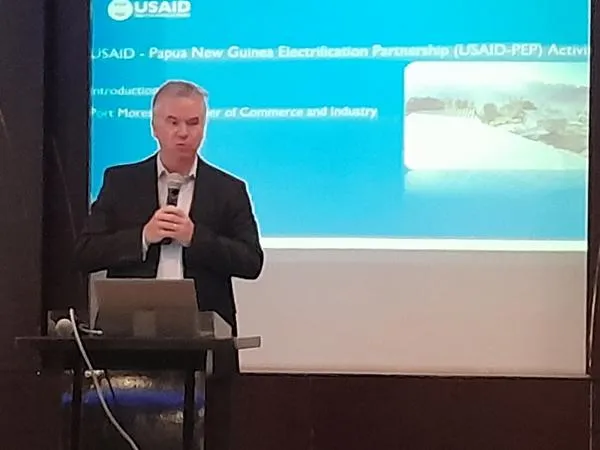
USAID Chief of Party Bruce Corbet told the Port Moresby Chamber of Commerce and Industry in a meeting on 1st June 2023 that they are continuing to provide technical support to the energy sector.
Corbet said challenges in the sector were familiar in the country, but PNG is very well-suited to mini grids and micro grids, given the geography and the highly disparate populations, noting they exist already and there is a huge opportunity with the need to do a lot more.
“Challenging climate and environment, land access and cost-recovery tariffs, uncertain policy and regulatory environment, foreign currency exchange, insufficient public and private investment, and dispersed and isolated populations are some aspects that create setbacks,” he said.
Corbet said with the continuous work and studies, some of the electrification modes versus the investment potential (or capital expenditure) around the country included:
Cobert added this development starts with an ‘anchor’ -- a large, financially sound company such as a telco or mining company to pledge its support with an existing pioneer company to take the majority of the power produced. Then come smaller businesses that need access to power and, lastly, a ‘community’ that is looking for reliable electricity.
Cobert said PNG should be looking to solar mini grids as part of the PEP. "We see mini grids within PNG as a way to advance access to energy, as well as energy security. The key is making these niche grids viable for investors," he said
Despite challenges, the off-grid market in PNG is at an exciting crossroads; advances are being made in solar lanterns, small solar systems, and mini grids. USAID-PEP is developing viable off-grid electrification models that will provide electricity to remote communities.
USAID-PEP Project Implementation
USAID-PEP’s project is implemented through RTI International, an independent, nonprofit research institute dedicated to improving human conditions.
As lead implementer, RTI International works with the PNG government and PNG Power Ltd to increase access to affordable and reliable electricity as an important part of advancing inclusive growth, development, and empowerment in communities throughout the country.
Currently, RTI's work has improved the financial viability and operational efficiency of PNG’s energy utility. Their goals are to enhance the regulator and regulatory environment, develop and advance off grid connections in remote communities, and promote private sector investment that will facilitate at least 200,000 new on- and off-grid household electricity connections, and institutionalize key reforms that will enable PNG to achieve its 70-percent target.
In particular, RTI is supporting PNG Power Ltd on end-to-end utility transformation of PPL by improving competitive procurement through group discussions with selected government and private sector representatives and supporting the conduct of transparency on the existing independent power producer pipeline as well as the development of measurable improvement in PNG’s energy regulator, the National Energy Authority (NEA).
RTI is currently assisting NEA with improving the national regulatory framework for off-grid electrification, and a process for stakeholder engagement to inform and implement enabling policies and regulation.
References:
1) POMCCI Business Breakfast, Lamana Hotel Port Moresby, 1st June 2023/ Presentation by Mr Bruce Cobert, Chief of Party at the US agency on International Development on the PNG Electrification Partnership (PEP) implemented by RTI international. [Paul Oeka/PNG Business News]
2) United States Agency for International Development (.gov) https://www.usaid.gov › papua-new... Papua New Guinea | Humanitarian Assistance
https://www.google.com/url?sa=t&source=web&rct=j&url=https://www.usaid.gov/humanitarian-assistance/papua-new-guinea
The Port Moresby Chamber of Commerce and Industry (POMCCI) held its business breakfast meeting with the National Energy Authority and USAID PNG Electrification Partnership (PEP) on 1st of June 2023 at the Lamana Hotel.
The topic of discussion was on the "Update of the Energy Industry" with brief presentations given by Chief of Party, USAID-PEP Program Mr Bruce Corbet, and Chairman of National Energy Authority (NEA) Mr Joseph Gabut.
Mr Corbet, in his brief presentation, highlighted the current technical assistance provided in the country through the PEP program which includes the following:
"We focus on technical assistance and do not give big capital funding assistance. We try our best to provide technical expertise, engage the private sector, and provide regulatory advice and policy framework", said Mr. Corbet.
He concluded that PNG energy policy had a lot of inconsistencies, lacked tariff cost measures, but are willing to work along with National Energy Authority in terms of energy development.
The next presentation was given by Mr Gabut, who spoke on National Energy Authority's role in the country as the energy industry regulator, and gave the following challenges and efforts faced by the Authority;
"Papua New Guinea is blessed with a lot of natural resources in terms of Energy and Power Generation, but we have little energy policy and are yet to develop more policies in place to strengthen NEA and build up its funding to operate more efficiently.
"All Pacific Islands are doing better than PNG and we are yet to perform well. Once the new bill is passed power undertakers and Utilities will have to perform well to expectations or either recommendations will be made by NEA to cease operations", said Mr Gabut.
He concluded that the NEA was recently formed and heard a lot of tasks ahead of them in terms of capacity building and formulation of its untapped energy policies.
Photo: Chairman David Burbidge
According to the Independent Power Producers of Papua New Guinea, the debts of PNG Power Limited (PPL) to independent power producers (IPPs) have exceeded K500 million. IPPs are the primary source of electricity for PPL, and the accumulation of arrears has reached a critical level where it cannot continue without severe consequences, including the potential collapse of the power sector in the country.
Chairman David Burbidge expressed concern about the mounting debt, saying, "It remains of concern that PNG Power still has significant arrears in payments to independent power producers (IPPs) who provide the majority of electricity to PNG Power and its customers. This amount exceeds half a billion kina, and this situation cannot continue without significant consequences, which may include a total collapse of the power sector as PNG Power’s creditors see no option but to pursue legal remedies for non-payment of their mounting debts."
Mr Burbidge emphasized that the situation is unsustainable and could have dire consequences if not addressed promptly.
Mr Rio Fiocco, the President of the Port Moresby Chamber of Commerce and Industry, also commented on the issue, saying, "In Moresby, we have been experiencing power blackouts fairly regularly lately. But compared to other centres, we are actually doing well, very well, because in other towns such as Wewak, Vanimo, Kavieng and others, they have blackouts that sometimes last the whole day. That's because for whatever reasons PPL is not supplying diesel for the generators."
Mr Fiocco noted that many businesses have resorted to using backup generators to cope with the unreliable power supply. However, this is not a sustainable solution, and the situation calls for urgent action from all stakeholders to address the mounting debts and ensure a reliable and consistent supply of electricity in the country.
Photo credit: AG Energy Limited
Project to Provide Resilience to Port Moresby's Energy Grid
Power is considered as the major backbone for all nations throughout the world including PNG on the basis of which the development of the country depends. Within this context, Energy has become an essential element in man's efforts to meet basic human needs, as energy generates power.
Due to Papua New Guinea's mountainous terrain and high rainfall in many parts of the country, Papua New Guinea has abundant, although largely untapped, hydropower resources but despite many years of economic growth, less than 20 per cent of the country’s population is connected to the power grid, which is owned and operated by state own entity, PNG Power Ltd. Over the years the government has been working closely with the private sector and international partners to scale up household access, having set a goal of 70 per cent by 2030.
Generally, if a country has the resources to generate power at a competitive price the people of the country get the benefits in terms of improvement in their social and economic life. Given the relatively small population size, low access to electricity, commercial and technical challenges of hydropower, Papua New Guinea today has an installed capacity of less than 250 Mega Watts (MW). However, this is likely to increase over the coming decade with several projects under development.
With solar and renewable energy lacking clear strategic development plans, hydropower is expected to drive future renewable energy generation, as evidenced by the launch of several new hydro projects in recent years such as the Ramu 2 Hydro project and the recently completed Edevu Hydro Power plant.
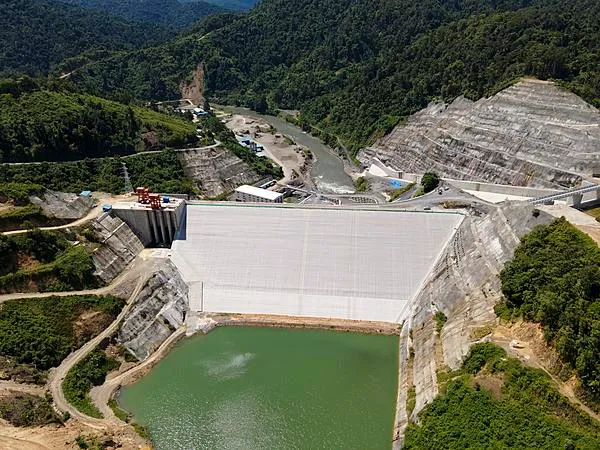
The recent Edevu Dam impounding Ceremony Launched by Chinese investment firm PNG Hydro Power Ltd kicked off the opening of the Hydroelectric Power plant in Edevu on Friday 21 April, with a view to delivering accessible energy and power supply to local communities to the country's Capital and surrounding areas. [1]
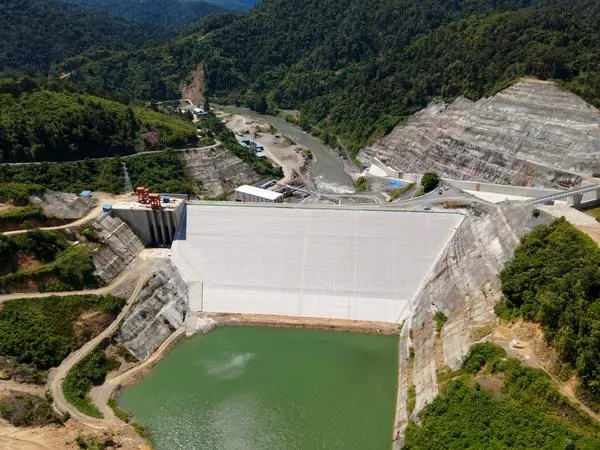
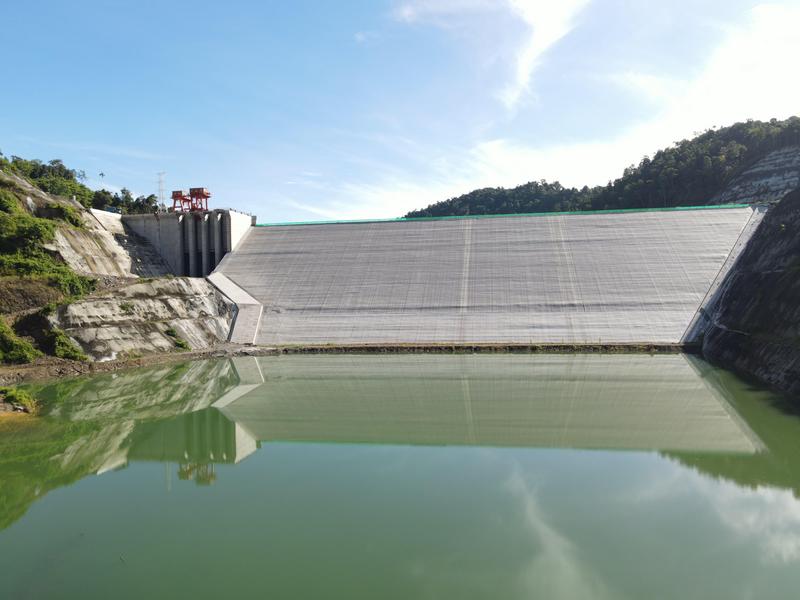
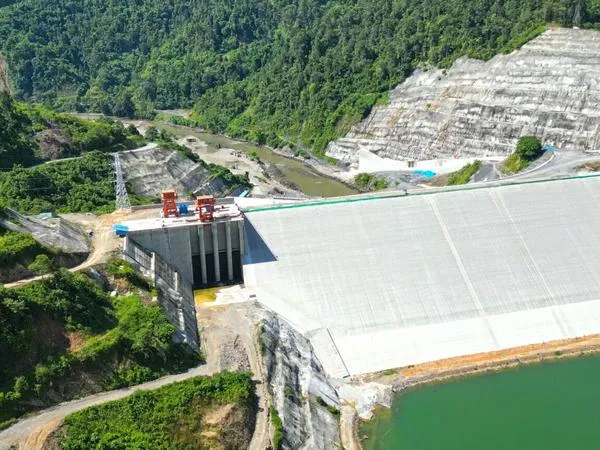
Photo: The newly constructed K650 million Edevu hydro project is seated below the Brown River in the new Hiri Koiari District of Central Province.
Representing a total investment of over K700 million, the hydro power project will have an installed power generation capacity of 54 Mega Watts (MW) which is set to bring a reliable supply of electricity to the Southern region of the country. Within its 15-year development process the Edevu hydro power plant project has lived up to its expectations despite the social and economic challenges it has faced. In terms of its local content component, the construction of the hydropower project created a lot of jobs and is still expected to provide an abundance of opportunities in the coming years.
The company PNG Hydro Development Limited has invested K650 million in the project which is one of Central Province’s biggest assets that will supply electricity not only to Port Moresby but the whole Southern region in the near future. [1]
At the launching ceremony of the project, Prime Minister Hon. James Marape thanked the Koiari landowners of Central province and Chinese investor PNG Hydro Development Ltd for making the massive K750 million Edevu Hydropower Project along the Brown River possible.
“We are a nation in pursuit of development. In the power sector, we want 70 per cent of our country – by 2030 – to have accessibility to cheap, reliable, and green energy to our country,” PM Marape said.
He said what the Edevu landowners had done, by going into partnership with a foreign investor, was a good example for traditional landowners in the rest of the country.
“You have shown a wonderful example to other landowners right across our country. You (landowners) own 97 per cent of land rights. My government, like governments of the past, and any government in the future, will not break that right you have. It is your inherent, God-given right to your land.
“But land sitting idle is of no use to us, or more importantly, our children and their children that will come into the future.”
While hydropower remains economically attractive in many regions of the country, the development of the Edevu Hydro project highlights a number of major game changing factors to improve the energy grid of the country's capital which has been subjected to constant blackouts over the years.
As most studies portray, new hydropower projects often face long lead times, lengthy permitting processes, high costs and risks from environmental assessments, and opposition from local communities. These pressures mostly result in higher investment risks and financing costs compared with other power generation and storage technologies, thereby discouraging investors.
PNG Hydro Development Ltd managing director Allan Guo said it took them almost 15 years to reach the launch of the project and this was possible through the good relationship and discussions they had with the landowners of Edevu.
“We worked hard on this project. Port Moresby, Central and NCD will benefit from it,” PNG Hydro Development Ltd managing director Allan Guo said.
The Edevu Hydropower Plant is an impressive medium-scale plant built on the mainstream of the Brown River in the Hiri Koiari district of the Central Province. The powerhouse has four turbines with a total installed capacity of 50 MW. Once fully operative, the plant will provide electricity to about 40 per cent of homes and help PNG's Nation's Capital, Port Moresby, to meet its growing energy demands. [1]
Power consumption in PNG has been steadily growing by about 15 percent annually for the last several years, and hydropower is now part of a comprehensive plan the PNG government has developed to increase electricity access for its population.
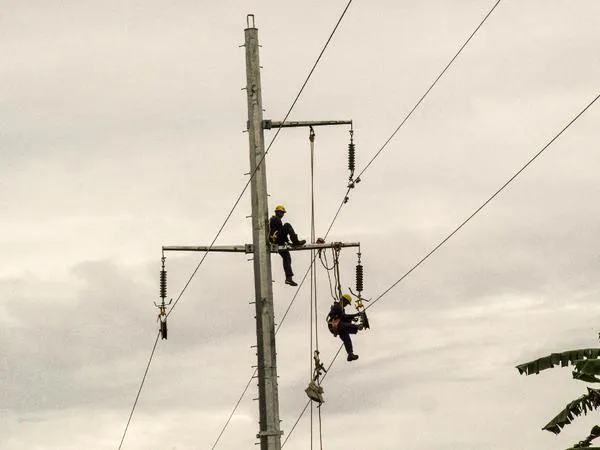
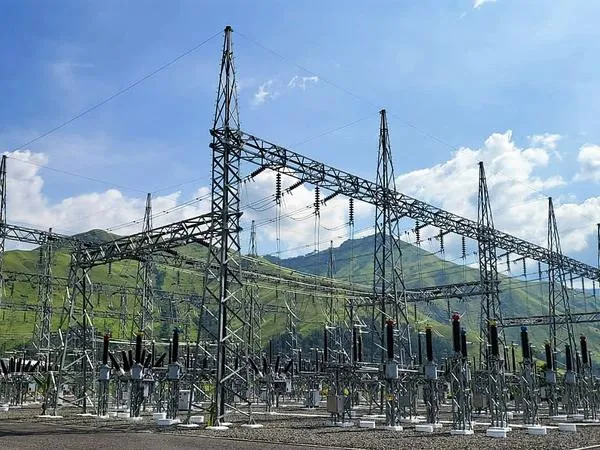
Currently PNG Hydro Development Ltd will also construct the Edevu-Moitaka 132 kV transmission line under their subsidiary AG Investment to transport electricity from the Edevu plant, and eventually from the Naoro-Brown plant to the Central Province. AG Investment started working on the Edevu-Moitaka 132kV Transmission Line Project at the end of 2022. This ambitious undertaking involves building 104 towers to connect the grid and bring clean and reliable energy to the country's capital. This project will connect the Edevu Hydropower Station to the Port Moresby grid. [1]
In relation to the Nation's Capital's stance on this Energy development Governor Parkop, accompanied by City Manager Ravu Frank, inspected the project and was very impressed. He applauded the project initiative, a substantial foreign direct investment that will provide a reliable and cost-effective energy supply to NCD and Central Province. [2]
One of the major challenges of NCD has been reliable energy. The Edevu Hydropower Project will cater for an efficient energy supply.
"Port Moresby needs reliable, cheap and constant power supply for domestic needs and, more importantly, to industrialize our city. [2]
The Edevu project was launched in February 2017 by PNG Power and has been constructed by the Chinese company PNG Hydro Development Ltd, with operations expected to be carried out in the coming month. [1]
Hydro power is considered a renewable, environmentally friendly and a nonpolluting source of energy. Hydropower development will be critical to not only improving household electricity access, affordability, and grid reliability but also in achieving the government’s 2050 vision of a decarbonised power supply.
1) Project insight from Margaret Tambagle/ Manager & Communications / PNG Hydro Power Ltd/AG Energy Limited https://www.google.com/url?sa=t&source=web&rct=j&url=https://www.aginvestmentpng.com/&ved=2ahUKEwitg-bmw8P-AhUka2wGHe80AWcQFnoECAkQAQ&usg=AOvVaw1S58Qvl__3PiYDZ9UVNlqd
2) City Sivarai April 16th, 2023 (NCDC Media) Sivarai/https://ncdc.gov.pg/media/city_sivarai/governor-parkop-visits-edevu-dam.html
Photo credit: Japanese International Cooperation Agency
The Ramu System Transmission Reinforcement Project (RSTRP) in Morobe Province, which is being funded by the Japanese International Cooperation Agency, is nearing completion with 85 to 90 per cent of the project already finished. Ramu grid project manager, Hitler Alseth, revealed that this includes land acquisition, construction of towers, a new Singsing Creek substation, as well as rehabilitation and replacement of existing substations and transmission lines.
During a visit to the province on Wednesday, the Lae PPL Ramu grid project team provided project progress and updates to JICA President Professor Akihiko Tanaka and his delegates at the PNG Power substation at Erap. Alseth explained that under the funding provided, PNG Power Limited was able to re-service PPL substations at Erap, Yonki, Ramu, and Gusap, and also construct a new substation at Singsing Creek.
Alseth added that 90 per cent of the transmission line is complete, and while there is a double circuit line from Singsing Creek substation down to Erap substation and from Erap to Taraka substation, a single circuit will be used. He also stated that "Taraka substation will be serviced this year and the project is ongoing, with 15 months left to fully complete it." The electricity from this grid is supplied to Bayune in Bulolo, including Lae and Singsing Creek to Madang.
JICA’s support in improving electricity, particularly for the Ramu grid, is much appreciated, said PPL board member Leo Meninga. He hopes that when this project is completed, it will address the daily unreliability of power currently experienced. It is worth noting that the Japanese government provided K300 million to PNG Power Limited for the project, which was funded through a loan agreement by JICA and the government of Papua New Guinea.
The project agreement was signed in 2016, with works on the grid beginning in 2017. Out of the K300 million, K30 million is for the construction of a new substation at Singsing Creek while the rest is allocated for transmission and upgrading of Erap and Taraka substations. In a feasibility study conducted by a Japanese company on the existing 132 kV between Ramu Power Station in Madang and Taraka substation in Lae, it was identified to have low electricity supply. Therefore, the project is based on the suggestion to PPL to rehabilitate the existing 132kV to increase transmission capacity.
In Alseth's words, "the project is ongoing, with 15 months left to fully complete it."
Photo: A bird’s eye view of the Edevu Hydropower Project - PM’s Office Media
Prime Minister Hon. James Marape has thanked Koiari landowners of Central and Chinese investor PNG Hydro Development Ltd for making the massive K770 million Edevu Hydropower Project along the Brown River possible.
He also announced that the Government was partnering the project by way of K120 million for a 132KV transmission line from Edevu to Port Moresby which is already under construction, on top of the K650 million spent by the company.
The Prime Minister said this at Edevu Village on Friday, April 21, 2023, when launching the Edevu Hydropower Reservoir Impoundment. This is a major step towards commencement of the project – which started in 2009 with a first visit to the area by the investor.
He was accompanied by State Enterprises Minister Hon. William Duma, Petroleum and Energy Minister Hon. Kerenga Kua, Central Governor Hon. Rufina Peter, Hiri-Koiari MP Hon. Keith Iduhu, Kairuku MP Hon. Peter Isoaimo, other Ministers and MPs.
“You have shown a wonderful example to other landowners right across our country. You (landowners) own 97 per cent of land rights. My Government, as governments of past, and any government into the future, will not break that right you have. It is your inherent, God-given right to your land.
PM Marape also thanked PNG Hydro Development Ltd, and particularly Managing-Director, Allan Guo and the Chinese financier, for their perseverance in the project since 2009.
“Thank you, investors, for having faith and confidence in my country. When the whole world was shut down, due to COVID-19, Mr Guo and his team of over 500 Papua New Guineans were still hard at work here in the Edevu mountains,” he said.
“It’s a wonderful reflection of an investor, who saw this opportunity thousands of miles away, and had faith in Papua New Guinea.
“For investors out there, who are wanting government gurantee and security, here is an example of a junior Papua New Guinea resident investor putting in money and making it happen.
“I want this to be an example to all you investors out there – Chinese, Japanese, Australia, US, European, Indonesian – that we want foreign investment in this country.
“I call on all those who have capacity in our country, including our super funds and Mineral Resources Development Company, who have billions of Kina in assets: ‘Be adventurous, step up like Allan Guo who had no strong balance sheet’.
“There is potential to move into the clean energy space because country’s energy needs will grow, with clean energy to take precedence.”
The Autonomous Bougainville Government recently launched the Bougainville Energy Policy.
The Policy was developed together with the Bougainville Strategic Energy Plan that will guide the development of the energy sector in Bougainville over the next ten years.
Speaking at the launch, ABG Minister for Mineral & Energy Resources, Hon. Robin Wilson said that energy is fundamental for Bougainville’s economic and social growth and development.
“Given the very broad and cross-cutting nature of the energy sector, having a comprehensive overarching energy policy is imperative for Bougainville,” he said.
“On the eve of independence and nationhood by 2027 at the latest, Bougainville has this unique opportunity to do things right from the start. Having this energy policy and the legislative framework in place is critical from the onset if sustainable and reliable energy-derived socioeconomic development is to be realized.”
Minister Wilson said that the energy policy is launched under a sector vision of “accessible, affordable, reliable and sustained modern energy for the people of Bougainville”, and noted the current challenges in the energy sector being experienced in Bougainville and across the country.
“We have energy reliability issues. We also have energy accessibility issues. Not everyone has access to electricity. It is indeed a sad reality that above 90% of the population in Bougainville do not have access to, and cannot, at this juncture, afford modern electricity,” Minister Wilson highlighted.
The Bougainville Energy Policy has 8 broad goals to be implemented over the short, medium and long term period of the policy.
“The short term independence-ready goals include putting in place the energy policy and legislative frameworks as well as the administrative capacity for the energy sector. Additionally, another immediate priority includes improving on reliability and accessibility of fuel issues; this includes looking at local direct importation, from a primary supplier of cheap and clean bulk fuel into Bougainville by 2025.”
Photo credit: International Trade and Investment Ministry of Papua New Guinea Facebook page
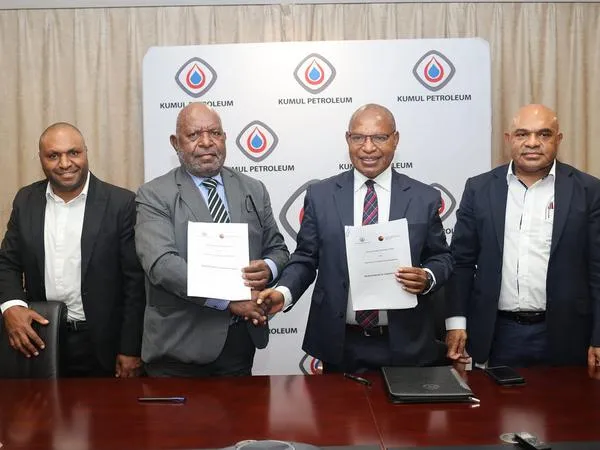
Kumul Petroleum Holdings Limited (KPHL) signed a Memorandum of Understanding (MOU) recently with the Ministry and the Department of International Trade and Investment to establish a long-term collaborative relationship where KPHL will be the energy solution provider to support the development and operation of all the Special Economic Zones (SEZs) in Papua New Guinea (PNG).
Minister for International Trade and Investment, Hon. Richard Maru during the signing said that securing reliable and affordable energy supply to the SEZs was a critical foundational input to the commencement and development of the SEZs.
“Our country is known by most of the investors as one of the most difficult and expensive places to do business and one of the primary reasons is because we have very unreliable power and the most expensive cost of energy. Even the cost of producing goods in PNG is ten times more when we are competing with other countries like Thailand, Vietnam and Malaysia,” said Minister Maru.
“The vision of the Marape-Rosso Government is clear, we want to replace all food imports, we want to process everything that we currently produce into final products, and we want to grow our exports, but we cannot do that without cheap, reliable and clean energy. Without innovative solutions to our electricity to bring the cost down and make power more reliable, we will never succeed as a country to develop this nation because we are living in a global community where we need to compete with the rest of the world. It is our job as the Government to make sure that the country has cheap and reliable and clean energy. The time has come for us to stop pretending that everything is well, accept the responsibility and look at organizations like KPHL who have the mandate to provide energy so we can attract investors. We can dream about all the big projects, but they will only be dreams unless we find real solutions to electricity and all the other factors that attract investments and investor confidence in our country. There are other inputs too like the freight cost but for now electricity is one of the biggest hinderance to our economic growth and to our ability to process and to compete with the rest of the world,” added Minister Maru.
Minister Maru said the Ministry and the Department of International Trade and Investment had made a deliberate choice to partner KPHL as their partner of choice to help them find energy solutions to power up all our economic zones into the future because they have the financial muscle, they have technical competence, they have energy, they are the producer of energy, and they have a record where they constructed and operated a gas fired 58MW power generation facility in Port Moresby under a 50/50 ownership arrangement with an experienced international operator at zero loss of time and zero incidents.
“KPHL has already started to be a player in the energy market, not only to produce the resource but to supply electricity. Our country needs innovative solutions providers and we have decided to partner KPHL because we have the agenda to announce the SEZ Masterplan by May this year,” said Minister Maru.
Minister Maru said the Ministry and the Department of International Trade and Investment was determined to partner KPHL to help them find solutions for Madang and East Sepik Province as a matter of priority.
“I am looking forward to working with the Board and Management of KPHL to start with these two provinces where we have the proposed PMIZ and the Sepik Plains SEZ,” said Minister Maru.
According to an official, the National Energy Authority is enforcing stricter regulations on the energy and electrical industries in Papua New Guinea, and experts must hold a licence to practise.
In Kavieng, New Ireland, recently, acting managing director Ronald Meketa made this statement at the start of the first electrical licensure exam for the New Guinea Islands conducted under his supervision.
“Power-generating firms and plants will have to adhere to industry best practices and technical standards when setting up operations, so professionals in the electrical sector must be certified or have a licence to be able to carry out installation work in PNG,” he said.
The initial 29 electricians took their two-day electrical exams under test subjects ‘Theory of Applied Electricity’ and ‘PNG Wiring Rules’.
“We will continue to conduct these examinations in the other regions of PNG because it is of importance that we have well equipped and certified professionals carrying out electrical installations in the energy sector,” Meketa said.
He stated that candidates taking the exam had to meet requirements such as being at least 19 years old, having finished an apprenticeship program, holding an electrical trade certificate, having graduated from electrical engineering school, and having at least five years of work experience.
“The electrical licences are recognised internationally and have to be renewed after every seven years,” Meketa said.
“While all overseas electrical professionals will also be required to show the same certification to work in PNG.”
Meketa said that his organisation was working to enlist additional alternative power producers to assist address the ongoing power disruptions that
“For better management of power distribution, we have to have separate power producers and distributors,” he said.
“The authority is on the path to rectifying this issue by engaging a wider stakeholder approach which involves provincial governments and district development authorities.”
Reference: The National (16 November 2022). “Energy sector lifts standards”.
Minister for Environment, Conservation and Climate Change and Lufa Open MP Hon Simo Kilepa is determined to connect the Lufa District in Eastern Highlands Province with reliable electricity supply under the PNG Electrification Partnership (PEP) Activity Program fully funded by the United States of America Aid (US AID).
The first term MP plans to connect his district with reliable electricity supply as it will boost internal generating economic activities and better alleviate poverty in rural areas of concern in his district and Eastern Highlands Province as a whole.
Kilepa said that he held talks with senior executives of the USAID PEP Team concerning the planned off-grid electrification project.
The plan which is environmentally friendly positively reflects the Environment and Conservation ministerial portfolio he is leading in the Marape-Rosso Cabinet.
After his discussions Kilpea said that his district will prioritise Clean Renewable Energy alternatives which is specifically priotised under Solar Energy and Hydro Electricity, respectively.
Kilepa confirmed that this is a Public Private Partnership Program where USAID is providing technical support in partnership with district and provincial governments for the purpose of project fundings.
According to the US AID PEP Activity Program, only about 13% of Papua New Guinea’s total population has reliable access to electricity which is a major developmental obstacle.
The USAID PEP Activity is a developmental initiative to focus on the accessibility of electricity to rural areas which was made possible during the 2018 Asia-Pacific Economic Cooperation (APEC) Leaders’ Summit in Port Moresby when the United States (US), Australia, Japan, and New Zealand, entered into the PNG Electricity Partnership (PEP), which aims to increase PNG’s electricity access to 70 percent by 2030.
Minister Kilepa is committed to ensure the people of Lufa District have reliable electricity supply using Clean Renewable Energy methods of generating electricity.
Follow on LinkedIn:
PNG Business News
Be the "First" to get our exclusive Digital Magazine & Weekly Newsletter.