August 02, 2021

The Independent Consumer and Competition Commission is debating whether or not to accept Kina Bank's bid to buy Westpac's share in Westpac Bank PNG Limited.

Commissioner Paulus Ain of the ICCC has also issued a draft determination on Kina Securities Limited's Authorisation Application for the planned acquisition of 89.91 per cent of Westpac Bank-PNG-Limited ($420 million).

The ICCC intends to deny approval for the proposed purchase following public discussions, which included opinions from key parties and market data.

“For the reasons outlined in its draft determination, the ICCC is not satisfied that this proposed acquisition would not have, and would not be likely to have, the effect of substantially lessening of competition in the relevant markets; and is not satisfied that the proposed acquisition will result, or will be likely to result, in such a benefit to the public that it should be authorised,” Ain said.

“Therefore, the ICCC proposes to decline authorisation to KSL.”

However, the ICCC has scheduled a meeting on August 11, 2021, for the parties and other stakeholders to comment on the draft finding before the ICCC makes a final conclusion on the proposed purchase.

Kina Securities Limited has also verified receiving a copy of the ICCC's draft determination.

In response to the draft finding, the bank stated that it remains committed to the acquisition because it thinks it would strengthen competition in the relevant markets and provide a number of significant public benefits.

Westpac has also stated that it is working with Kina to evaluate the ICCC's draft determination.

Both are expected to submit additional comments to the ICCC before the commission's final judgment is published in September, following the public consultation period that begins next month.

“Given Kina Bank’s commitment to financial inclusion and innovation, its proposal to retain all local staff and branches, and its intention to maintain two brands in PNG, Westpac believes that the transaction is in the interests of Westpac’s customers and staff and the people of Papua New Guinea and Fiji,” the bank said in a statement.

In December 2020, Westpac announced its plan to sell its Pacific businesses in Fiji and Papua New Guinea to Kina Securities Limited.

Kina Securities applied to the ICCC in March seeking approval for its proposal to acquire 89.91 per cent of Westpac PNG's shares, and Kina shareholders approved the acquisition of Westpac's Pacific businesses in April. However, the sale is still pending regulatory approvals in both Fiji and Papua New Guinea.


Reference:

Yafoi, Melisha. Post-Courier (28 July 2021). “ICCC Looks To Reject Westpac Acquisition”.

August 02, 2021

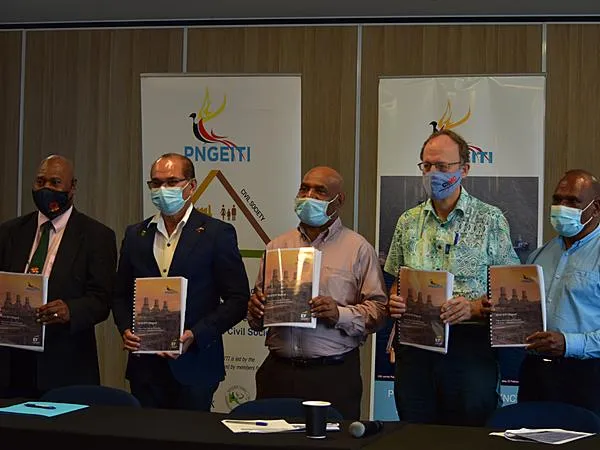
From Left to Right: Shannon Kumalau (DPE), Richard Kassman Senior VP PNG Chamber of Mines and Petroleum, Lucas Alkan Head of National Secretariat (EITI), Paul Barker (INA), Arnold Lakamanga (MRA)

The PNG Chamber of Mines and Petroleum congratulates and also expresses its support to the PNG Extractive Industry Transparency Initiative (EITI) on the release of the 7th Papua New Guinea Extractive Industries Transparency Report which details the industry’s mandatory payments to government in 2019. 

The Chamber notes with satisfaction the full participation of the extractive industry operating projects in furnishing information required to compile the 2019 Report.  We are pleased that the current report provides a more comprehensive information from industry and government of the revenue derived from the resource projects and also noting the enormous voluntary contribution in community infrastructure projects and flow-on socio-

economic benefits such as community health and education programs as well as spin-off business opportunities. 

Some highlights from the report include:

  • Over 6 billion Kina of contributions from the extractive industry to PNG
  • Contributed 28% of government revenue
  • Responsible for 28% of PNG’s GDP, and this does not include the multiplier effect from contributions by all the contractors and subcontractors who support our industry
  • Contributed nearly 450M kina in cash and in-kind social expenditures, mostly voluntary, for such things as community infrastructure projects, community health and education programs, as well as spin-off business opportunities supporting SMEs. 

Present at the release of the EITI report was Mr Richard Kassman, Senior Vice President of the PNG Chamber of Mines and Petroleum.

The report has been strong in 2019, because we have been able to focus and ensure better reporting and better reconciliation.” Mr Kassman reiterated that while matters of reconciliation were not unusual, strides were being made to ensure that those matters were minimized.

“I want to assure the public that this is a work in progress, that the industry, together with the regulators together and reporting entities of government remain  committed to minimize this.” 

Mr Kassman added “The whole concept and the intention of the concept of EITI is that we in the industry report various streams of revenue that we pay to the state and that on the other side, the state agencies confirm what we say we’ve paid is correct.”

The Extractive Industry Transparency Initiative has continued to provide an invaluable insight into the operations of the resource sector, particularly the extractive industry in Papua New Guinea, the contributions of current extractive production operations and accountability of Government in terms of revenue receipt.

With the contributions of the sector playing a significant role in the economy of the country, the PNG Chamber of mines and Petroleum commends the efforts of EITI in the compilation and dissemination of the 2019 report which promotes revenue transparency and accountability in the extractive sector.

The release of the report took place at 11am on Friday 30th of July at the Treasury Building in Port Moresby.

July 30, 2021

Photo Credit: ADB

Despite a weakening economic growth forecast for the Pacific, recent progress in vaccination rollouts and stronger public health measures are providing optimism for the safe reopening of borders in the near term, according to the latest issue of the Asian Development Bank’s (ADB) Pacific Economic Monitor (PEM) launched today.

After a pandemic-induced contraction of 5.8% in 2020, the economies of ADB’s 14 Pacific developing member countries (DMCs) are forecast to grow by 0.3% in 2021 and 4.0% in 2022. The growth is expected on the back of the outlook for Papua New Guinea (PNG), the subregion’s largest economy, where a modest recovery is projected this year before strengthening in 2022.

The forecast for 2021 represents a slight weakening from the Asian Development Outlook (ADO) 2021 in April, largely due to impacts of the ongoing coronavirus disease (COVID-19) outbreak in Fiji, as well as delays in Vanuatu’s planned partial reopening of its borders. Future growth will be influenced by the spread of the virus, the rollout of COVID-19 vaccines, and the ability to sustain fiscal stimulus international coordination.

“Safe travel bubbles are expected to contribute to a gradual recovery in the Pacific and bring hope to some of the region’s smaller, tourism-dependent economies,” said ADB Director General for the Pacific Leah Gutierrez. “Widespread vaccination, both within Pacific economies and in their major economic partners, will play a major role in boosting growth in 2022.”

Tourism to the Pacific remains largely closed, with arrivals during January–April 2021 plunging by 100% compared with the same period in 2020. Some Pacific destinations are looking to travel bubbles as a means of reviving their ailing tourism sectors.

The PEM examines a broad range of issues affecting Pacific economies including:

  • “Travel bubbles of hope” in the Cook Islands, Niue, and Palau
  • Fiji’s economic recovery efforts amid a new pandemic wave
  • Navigating the recovery, strategic fiscal policy, and development support in Kiribati and Tuvalu
  • Cautious steps toward reopening borders in the Federated States of Micronesia and the Marshall Islands
  • The role of strong public financial management in PNG in supporting economic recovery
  • How Nauru achieved full adult vaccination
  • The role of the private sector in Vanuatu’s economic recovery from COVID-19
  • How concessional finance helped Samoa and Tonga avoid potential debt sustainability issues
  • Labor market landscape and challenges in Solomon Islands.

The PEM includes two policy briefs: an overview of COVID-19 vaccine coverage in the Pacific and the factors affecting country rollouts; and an examination of the impact of pandemic-related school closures on losses in learning and potential earnings in the subregion and options for improving education resilience in the face of disruptions.

ADB is committed to achieving a prosperous, inclusive, resilient, and sustainable Asia and the Pacific, while sustaining its efforts to eradicate extreme poverty. Established in 1966, it is owned by 68 members—49 from the region.
July 27, 2021

Photo Credit: The National Fisheries Authority

The National Fisheries Authority (NFA) is the latest Government organization to join the Expo2020 Team to tell the Papua New Guinea story on the fisheries industry. 

The Authority will inform the world stockholders on Papua New Guinea’s efforts to commercialise our tuna resources in a sustainable way, including having the most recent surveillance technology ensure compliance.

NFA will also package and promote several projects as well as market the Madang Marine Park and Economic Trade Zone.

More companies and SMEs have indicated participating in the Exposition in Dubai either through product display or physical and/or virtual presentation at the pavilion and Expo led thematic events.

The Investment Promotion Authority and the Tourism Promotion Authority have commenced aligning the interests of the participants in the participation strategy and roadshow programmes, including packaging projects for Foreign Direct Investments with a project value of over two billion Kina in the agriculture, minerals, energy, construction, transportation and manufacturing sectors.

Apart from the NFA, other companies will also showcase their products and services. Latest participants include;

  • Charcoal and vegetable export business in Eastern Highlands, and
  • Kokola Beach Retreat in New Ireland.

Expression of interest from stakeholders are still open until end of July. This will give time for the project packaging teams to complete the documentation and consultation with the Expo2020 Organising Committee in Dubai to finalise the participation strategy before 1st of October. This work will also include finalizing slots at the pavilion and expo thematic events for the companies and individuals that would be participating physically and or virtually.

July 26, 2021

According to Bank South Pacific Group Ltd chief executive officer Robin Fleming, foreign direct investment (FDI) will play a key part in Papua New Guinea's recovery from the Covid-19.

“Bank of PNG data indicates that in 2020 FDI flows into the country will be reduced by 66 per cent to K387 million from K1.1 billion in 2019,” Fleming said.

“This statistic, however, does not reflect that the level of international investor interest increased in 2020 and that one of the key challenges is converting that interest into definite projects.

“It is promising to see a number of opportunities for businesses going forward.

“For example, PNG businesses can participate in Government infrastructure initiatives such as the Pacific step-up partnership between the PNG and Australian governments where K582 million has been committed.”

Other examples, according to Fleming, include the K1.1 billion national port rehabilitation program; the PNG electrification partnership with Australia, Japan, the United States, and New Zealand, which aims to connect 70% of PNG's population to electricity by 2030; and the ongoing Nadzab Airport Redevelopment worth K692 million by the Japan International Cooperation Agency (Jica) and the National Airports Corporation (NAC).

According to him, the mining, oil, and gas industries received the majority of foreign direct investment.

Some key factors to consider when reviewing an FDI proposal, according to Fleming, are the net economic benefit and alignment with national interests, such as the potential for the positive development of human and natural resources; creation of jobs and other income-earning opportunities; technology and skill transfer; and contribution to training Papua New Guineans.

“This screening process highlights the government's continued focus on developing a supportive environment for businesses to grow and attracting FDI.”

According to Fleming, the PNG Investment Conference, which will take place in September, is one of the most important conferences that has enhanced PNG's reputation on the international arena.

“The platform is a great way of promoting PNG’s business and investment opportunities.”

“Over the three-day event, a line-up of distinguished panellists will cover a number of key topics,, ranging from PNG’s place in a post Covid-19 world and the prevailing investment climate to important industry trends and major project updates.”


Reference:

The National (21 July 2021). “Foreign direct investment to help PNG recover from Covid effects”.

July 21, 2021

At the annual general meeting last month, the board named Richard Sinamoi as interim chairman.

“There has been an orderly transition to new leadership and the new board is stable and strongly aligned in our thinking,” Sinamoi said.

He described becoming chairman of Credit Corporation as an "honour" at "such a critical period for the business and the financial services sector."

“Throughout this challenging period due to the Covid-19 pandemic, maintaining our balance sheet strength and supporting our small-medium enterprise customers in the Pacific have been key strategic priorities,” he said.

“Our customers have generally displayed a high degree of resilience throughout this period.

“However, some continue to be challenged by restrictions and changes to consumer behaviour.

“As a director, I have been fortunate to have worked with the current board members in helping to contribute to Credit Corporation successive results over the years.”

Sinamoi acknowledged the outgoing chairman Syd Yates and welcomed newly-elected directors Stephen Humphries and Sir Melchior Togolo.

“I look forward to my ongoing work with the board, management and the entire Credit Corporation team to continue our mission to support SMEs (small to medium enterprises) throughout the Pacific with their financial needs.

“The board is currently working with our interim CEO Danny Robinson and chief financial officer Jeff Undah as we undertake a review of the group’s strategy to ensure we are well-positioned to seize the opportunities presented as we transition out of the Covid-19 pandemic.”


Reference:

The National (20 July 2021). “Sinamoi is chairman of Credit Corp”.

July 21, 2021

After 17 months in charge, Oil Search managing director Keiran Wulff resigned owing to concerns about his behaviour and bad health.

Dr Wulff has been dealing with a long-term medical problem that has lately worsened.

According to Oil Search chairman Rick Lee, the board met with Dr Wulff after receiving recent concerns and accusations about him.

According to Lee, the board believed Dr Wulff had acted in a way that was inconsistent with the board's expectations in terms of his managerial style.

Dr Wulff has taken on a large number of duties since his appointment as managing director in February, according to Lee, and the board recognizes the difficulty he has faced as a result of his recent health concerns.

“This period has been marked by extreme challenges including global lockdowns associated with the Covid-19 pandemic, a plunge in oil prices, crisis measures to protect the company’s financial position and developing a clear strategy to steer a path to a sustainable future through the energy transition.

“It is a tribute to all staff that Oil Search is now in a solid position with record levels of production in PNG, a strengthened balance sheet and our Alaskan development plans meeting milestone targets.”

Dr Wulff praised all Oil Search employees for their efforts, especially since the epidemic began and the firm began putting plans in place to protect its facilities in PNG and Alaska.

“It has been a great privilege to work at Oil Search and I believe the company is very well-positioned for the future.

“It has, however, become apparent to me that due to my health challenges, it is becoming increasingly difficult for me to perform at the level required of the position,” he said. 

Peter Fredricson, who joined the firm as chief financial officer earlier this year, has agreed to take over as interim CEO with immediate effect.

Interviews with internal and external applicants will commence soon in the hunt for a permanent managing director/CEO.

Lee said the board was looking forward to working with Fredricson to keep PNG production projects on track and on budget, as well as development efforts in both PNG and Alaska.


Reference:

The National (20 July 2021). “Wulff resigns from Oil Search”.

July 21, 2021

According to BSP Financial Group Limited (BSP), Papua New Guinea's GDP would increase by 4.2 per cent next year as the country recovers from a pandemic-induced slump.

“Economic growth is anticipated to rise to 4.2 per cent in 2022 as PNG's economy continues to recover from a pandemic-induced recession in 2020,” according to the bank's Pacific Economic and Market Insight 2021 second-quarter report.

“2021 economic growth is expected at 3.5 per cent, although the recent surge in the Covid-19 cases poses a threat.”

The reopening of the Porgera gold mine in Enga, according to the report, will pave the way for all stakeholder relationships over the following ten years. According to the study, copper and oil, two of the country's primary exports, are at multi-year highs.

Group chief executive officer Robin Fleming said: “With the recent government announcements, BSP is looking to further increase its services as PNG’s economy begins to stabilise.

“BSP is always looking at opportunities to increase and improve its service levels and customers convenience.

“We are expanding our branch networks – starting with the opening of Koroba branch in Hela last week.

“Later this month, we’re opening a larger premise of our Namatanai sub-branch in New Ireland.

“We are currently in the process of finalising the construction of a new branch in Eriku in Lae, Morobe, which is expected to be completed later this year.

“We are also looking into opening a second branch in Mt Hagen, recognising its position as being the central point for the Highlands region.

“Discussions are in progress with potential landlords.”

Aside from the new facilities, Fleming stated that the BSP has 200 registered agents in each of the 22 provinces who provided basic banking services to the public.

“Our agency network is an essential part of BSP’s commitment to the country and to the provision of banking services to the more remote communities in the country,” Flemming said. “This also represents the group’s commitment to financial inclusion.”


Reference:

The National (16 July 2021). “Bank predicts 4.2pc growth”.

July 21, 2021

Photo Credit: The Department of Lands & Physical Planning of Papua New Guinea

Prime Minister James Marape has stated that his government is considering tax incentives, one of which will be a 100% tax break on capital expenditures.

He stated that this was one of the incentives his government was considering implementing to help businesses thrive in the country.

Marape made the remarks while speaking to the business community at a breakfast event on Papua New Guinea's participation in the 2020 Dubai Expo, which will take place in October.

“We also have tax review to attract foreign direct investments,” he said.

“For those of you who are partnering with us in this sort of expo, tax incentives are being looked at.

“Some examples, a 100 per cent deduction for capital expenditure.

“A 100 per cent deduction on assets used in the manufacturing processes.

“Exemption of income derived from the export of manufactured goods.

“These are being looked at.

“A 10-year tax exemption for businesses who are located in some parts of our country, especially the special economic zones.

“Tax policies and incentives are some of the things we are looking at in terms of public policy.

Marape called on the business sector to use the Dubai Expo to promote the country's goods and services.

“When the Dubai expo was presented to us, we thought instead of sitting back why don’t we step out and show the world who we really are,” he said.

“When you have Total investing in PNG when you have ExxonMobil investing in PNG.

“Interestingly enough, ExxonMobil came into PNG in 2007 or 2008.

“And in 2009 we had the global financial crisis.

“At the back of the global financial crisis, ExxonMobil descended into our country.

“Today, ExxonMobil tells me, PNG LNG project is one of the success stories, in fact the production efficiency is at global high as far as ExxonMobil is concerned.

“That in itself is a good story for us.”


Reference:

Mauludu, Shirley. The National (16 July 2021). “PM reveals tax deduction plan”.

July 21, 2021

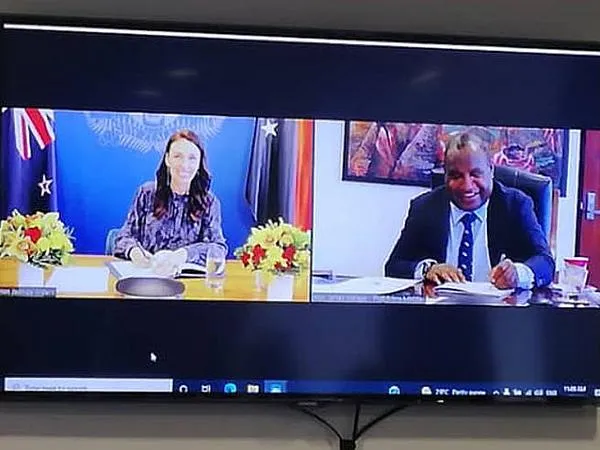
The prime ministers of Papua New Guinea and New Zealand have signed a memorandum of agreement to further their cooperation.

The leaders signed a Statement of Partnership in a virtual conference, reinforcing efforts to work through issues of trade and economics, as well as regional solidarity, amid the epidemic.

PNG's Prime Minister, James Marape, has suggested that New Zealand and Australia must do more to help Pacific economies cope with Covid-19.

"As I have stated to the Japanese Prime Minister at a recent meeting, and again at the recent Pacific Alliance Leaders Meeting, we would like to call on these bigger countries to step in and intervene, create 'economic bubble' or put in similar measures to assist these smaller economies.

"Many of us are really stuck. Fiji, for example, survives on tourism dollars. For us, Covid19 is not just a health issue; it is also an economic issue as well," Marape explained.

Ardern sounded receptive, saying the new Statement of Partnership underlined New Zealand's commitment to tight economic, cultural, and people-to-people ties with Papua New Guinea.

"It is an important milestone in our relationship. By formalising the values, priorities and principles which underpin our strengthening partnership, we've set a clear pathway forward for the future engagement between our countries."

"We look forward to continuing to work alongside Papua New Guinea on issues facing our Pacific region, including the ongoing management of COVID-19 and the regional economic recovery," Ardern said.

The statement said the countries have committed to "a safe and stable Pacific region where Pacific sovereignty is respected, and unhindered access to open waterways and marine resources are preserved, in line with the international rules-based system".

Bougainville link

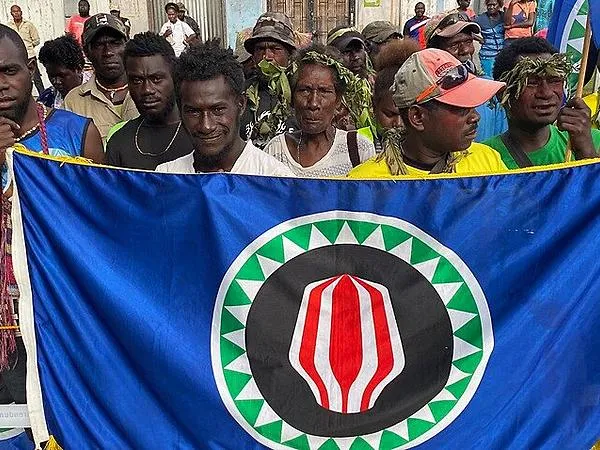
The two presidents also spoke about Bougainville, PNG's autonomous province, which had a historic referendum in 2019 in which over 98 per cent of voters opted for independence from PNG.

Negotiations between Bougainville's autonomous administration and PNG's national government, as well as wide-ranging discussions, must take place before PNG's parliament can consider whether to accept the outcome.

Marape updated Ardern on the current status of the discussions, expressing his thanks for New Zealand's long-term assistance in ending the civil conflict on Bougainville and the ensuing peace process, which the referendum is a part of.

"Thank you also for your interventions in the matter of the Bougainville Referendum and under your leadership, we have been able to ramp up our warm relationship through the New Zealand and Papua New Guinea Statement of Partnership," Marape said.

He also requested New Zealand's assistance in providing 'eminent individuals' to mediate the Bougainville discussions once more.

Other topics discussed were PNG's public sector reforms based on the New Zealand model, as well as PNG's labour export to New Zealand.

Marape and Ardern also talked about Micronesia's decision to resign from the Pacific Islands Forum, with both leaders pledging to attempt to prevent this from happening.

The gathering served as a warm-up for the APEC Informal Leaders Retreat on July 16th, with Marape emphasizing the importance of the group's role in assisting smaller Pacific nations.

"The APEC family of nations can also assist (us) to maintain specific niche trade while being sensitive to COVID19, as many of our island nations are dependent on these niche businesses for the sustenance of our economies."


Reference: 

RNZ (15 July 2021). “'Economic bubble' idea floated as PNG and NZ sign partnership”.

July 21, 2021

External investors can now apply to do business in Bougainville under an amended Inward Investment Act.

ABG Minister for Commerce, Trade and Industry Hon. Patrick Nisira made this announcement recently saying that Bougainville is ‘open for business’.

“We are looking to deliver on the Autonomous Bougainville Government’s ambition for a strong local economy which will be recognized both nationally and internationally as a good place for business investment,” Minister Nisira said.

“Bougainville now has its own Bougainville Inward Investment Act and Board to assess foreign investment applications. Together they support responsible investment and productive business partnerships with local companies and communities. All foreign investment applications into the region must come through this ‘front door’ for assessment,” he said.

In 2019, Bougainville held a referendum to decide its political future where the people voted overwhelmingly to become an independent nation. Aligned to this political aspiration, the Bougainville Government has plans underway to build its economy through economic-focused programs such as the establishment of duty free and tax-free zones in selected sites in Bougainville and the development of financial hubs to make Bougainville attractive for investment.

“We will follow the footsteps of successful countries in the world to make Bougainville safe and secure for investment, and for the people to have a harmonious lifestyle,” Nisira said.

“Bougainville will have a strong focus on maintaining peace and a law-abiding environment to provide investors and communities alike confidence to build and grow. This includes a strong police force and military,” Nisira added.

Minister Nisira outlined some of the potential sectors for investment in Bougainville including agriculture, fisheries, mining, tourism, construction and service industries respectively.

“The agriculture sector in Bougainville has shown great resilience and is largest employer of Bougainvilleans. Bougainville exports world class cocoa as primary products and chocolate from Bougainville is winning awards around the world.”

“Opportunities exist in input supplies to service the small holder cocoa blocks and plantations and value adding and downstream processing activities that would attract higher incomes,” Nisira said.

The fisheries and tourism sectors in Bougainville are also sleeping giants that hold great potential opportunities for further investments.

“Bougainville’s tourism sector is expected to grow in the coming decades. Our region is blessed with a fascinating history and beautiful scenery,” he said. 

While the ABG welcomes external investors, it also has the responsibility to empower indigenous people to participate in economic development in Bougainville through the Bougainville Reserve Business Activities.

“This means that foreigners are not allowed or are ineligible to participate in the restricted business activities that are meant for Bougainvilleans only,” he explained.

The ABG through the Ministry for Commerce, Trade and Industry is developing an economic strategy that focuses on supporting local businesses through a wide range of business support activities and large scale infrastructure projects.

“Bougainville people are hard-working, industrious, entrepreneurial and resilient and the region is blessed with an abundance of natural resources.

“Our government aims to ensure that any investment into Bougainville would therefore have mutual sustained benefits to the resource owners, government and the economy,” he said.

Businesses are encouraged to download information and application forms on the government website www.abg.gov.pg

July 20, 2021

The Asian Development Bank (ADB) has launched a new strategy to help ADB’s Pacific developing member countries (DMCs) improve connectivity and tackle other core development challenges across the Pacific over the next 5 years.

The Transport Sector Assessment, Strategy, and Road Map 2021–2025 reviews transport sector performance, summarizes development constraints, and articulates the rationale and strategic direction behind ADB’s support. The report explains how ADB will support its Pacific DMCs to achieve domestic and regional transport objectives that enable men and women in both remote areas and urban centers to better access employment, markets, education, and health services.

“Whether it’s upgrades to roads, ports, or airports, transport is one of the ways ADB can have the biggest impact in the Pacific,” said Director of ADB Pacific Department’s Transport and Communications Division Dong Kyu Lee. “Through this new road map, ADB will leverage its extensive experience in the transport sector and its strong partnerships in the region to provide transport support that improves connectivity, makes cities more livable, builds resilience to climate change, and spurs inclusive economic growth through regional cooperation.

The report notes ADB’s 14 Pacific DMCs are scattered across 30 million square kilometers of ocean, with a total population of 10 million people. The combination of remote geography and dispersed populations present unique challenges to establishing transport networks that lower the costs of trade, address climate risks, and deepen interaction in global markets.

The report says that in 2019 ADB had 17 transport projects valued at more than $1.4 billion underway in the Pacific, comprising 59% of its work in the region. Another 27 transport projects valued at $2.3 billion are planned for 2020–2023.

Ongoing ADB-supported projects include the $65 million upgrade of Nauru’s port in Aiwo to strengthen resilience to climate change and increase efficiency and capacity. Port upgrades are also planned for Apia in Samoa, Honiara in Solomon Islands, and Nuku’alofa in Tonga.

In Papua New Guinea, since 2010 ADB has been helping upgrade and rehabilitate national airports under the $480 million Civil Aviation Development Investment Program to deliver safe, effective, and reliable aviation services. A related program will link airports with all-weather airstrips and develop aviation sector institutional capacity.

The report highlights how ADB works with governments and regional bodies to identify and address shared challenges in the Pacific, including strengthening the resilience of transport systems to climate change and disasters; the development of intermodal transport links to boost tourism; connecting remote populations through roads, wharves, and airstrips, and commercially viable transport services; incorporating the private sector in transport service delivery; and designing socially inclusive and gender-responsive transport infrastructure.

The Transport Sector Assessment, Strategy, and Road Map is linked to and informs ADB’s strategy document for Pacific small island developing states, the Pacific Approach, and aligned with ADB’s Strategy 2030.

ADB is committed to achieving a prosperous, inclusive, resilient, and sustainable Asia and the Pacific, while sustaining its efforts to eradicate extreme poverty. Established in 1966, it is owned by 68 members—49 from the region.

July 15, 2021

The Kokoda Track Foundation has appointed Peter Aitsi to its board of directors.

Aitsi brings his wealth of experience gained over 30 years in corporate leadership roles and directorships across Papua New Guinea, most recently as group CEO of Credit Corporation PNG and country manager of Newcrest Mining, to his new position, which was confirmed at the recent directors' meeting.

His engagement in numerous well-respected community organizations, including Transparency International PNG, where he is the current chair, the Media Council of PNG, the City Mission of PNG, and the Badili Club of PNG, has bolstered his private-sector expertise.

In 2007, Aitsi was given an MBE for services to media and broadcasting for his dedication to both his corporate and community endeavors.

“I have had some past exposure to KTF having worked with chair Ian Kemish and also through several engagements with CEO Genevieve Nelson.

I am particularly looking forward to assisting in strengthening the partnering approach KTF uses in the delivery of its community projects and also offer to mentor to the growing number of Archer Leadership Award Alumni,” he said.

Aitsi will be working in Port Moresby with Stephannie Kirriwom, a KTF Director since 2016 and a graduate of KTF's Archer Leadership Development Program, which has been identifying and nurturing future leaders for the past eleven years.

Kirriwom is a youthful advocate for good change in Papua New Guinea, as evidenced by her present position as a policy lawyer at the Centre for Environmental Law and Community Rights. Along with Australian directors, the duo will create a powerful local team.

As KTF's newest ambassador, Dr. Andrew Moutu, director of the PNG National Museum and Art Gallery, contributes his profound understanding of Papua New Guinea's culture and history to the organization's work.

Despite being new to this position, Dr. Moutu is no stranger to the KTF board of directors, having served on the board since 2016.

The experience of this group, along with Sir Kostas Constantinou's support, will aid KTF's continued expansion in delivering health, education, equality, and leadership initiatives in cooperation with local people to better lives, livelihoods, and futures in Papua New Guinea.


Reference:

Post-Courier (12 July 2021). “Aitsi Joins Kokoda Board”. 

July 15, 2021

According to Independent Consumer and Competition Commission chief executive officer Paulus Ain, the proposed code-sharing agreement between Link PNG Ltd and PNG Air should only be approved if a number of criterias are met.

The criteria, he added, should be targeted at modifying the planned code-share agreement to reduce the likelihood of anti-competitive consequences and ensuring that the two airlines could compete in the long run.

Link PNG filed an application for permission under section 70 of the ICC Act 2002 on April 9.

For a period of five years, the proposal requested a joint operating agreement (JOA) with PNG Air for code-sharing.

According to Link PNG, the proposed JOA would allow the two airlines to coordinate flight schedules, fleet allocation, operational and maintenance services, and charter airline operations.

The ICCC, according to Ain, recognized important markets for domestic scheduled and regular passenger transport, air freight, and air charter services.

“The ICCC has considered that the proposed JOA should not form part of the authorisation because it constitutes an unjustifiable intrusion by Link PNG into the management of PNG Air.

“The former would gain decision-making control over key aspects of the strategy, operations and, consequently, the financial structure of the latter and, therefore, would be likely to substantially lessen competition and result in greater detriment than benefit to the public.”

He added Link PNG's bid to buy 40% of Nasfund's stake in PNG Air is presently being reviewed.


Reference:

The National (9 July 2021). “Proposal should be authorised with conditions: Ain”.

July 15, 2021

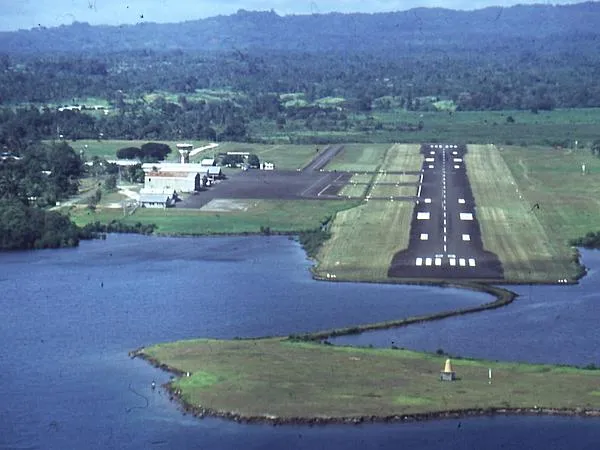
Due to the National Airports Corporations' ongoing rehabilitation work on the airport runway, air traffic into Madang will be disrupted.

The airport will be closed from July 23 until August 8, 2021, for renovation.

Runway restoration is presently in Stage 5 of the Method of Works Plan (MOWP) for Madang Aerodrome, according to NAC interim managing director Rex Kiponge, and is expected to be completed by July 22 depending on the weather.

According to him, the usable runway is 820 meters long on the western end and is adequate for Dash 8, ATR, and other smaller aircraft.

The construction of MOWP Stage 6 is set to begin on July 23, with a runway length of 680 meters. 

“Unfortunately, this length is for viable operations by Dash 8 and ATR type aircraft and the Runway will be available for Twin Otter and smaller aircraft operations during this 3-week period. This is unavoidable. Work on MOWP stage 7 is planned to commence on August 14, 2021, and will take 3 weeks to complete. The runway length available will be 880 meters which will permit operations by Dash 8, ATR and smaller aircraft. The full runway of 1570m is planned to be available on 31 October 2021 for Fokker 100, F70 and smaller aircraft operations,” Mr Kiponge said.

As a result, Air Niugini's subsidiary, Link PNG, will help with all Dash-8 turboprop flights into Wewak and Madang.

In a statement released yesterday, the airline stated that owing to the decreased length of both runways, even these Dash-8 planes are limited in the number of people they can transport.

Due to the shorter runway, Air Niugini has also announced that all Dash-8 operations would be temporarily stopped between July 23 and August 13.

Meanwhile, Sir Peter Barter, acting chairman of the Madang Tourist Industry Association and President of the Madang Chamber of Commerce, said that the closure of the airport will have a far-reaching impact, including the possible closure of hotels and other businesses that rely on air transportation, based on consultations with respective members of the association.

“Air travel in PNG is not a luxury it is an essential means of communication, safe transport not only for people but also for cargo, medicine and in some cases, lives of people,” Sir Peter said.


Reference:

Post-Courier (8 July 2021). “Closure of Madang Airport Will Have Far Reaching Impact On Other Sectors”.