August 09, 2021

Photo Credit: PNGEITI / Lucas Alkan

Among the 35 nations on the Extractive Industries Transparency Initiative list, the Papua New Guinea Extractive Industries Transparency Initiative has made significant progress.

The EITI website listed 55 countries incorporated into individual countries at various stages of implementing the EITI Standard; nine countries have made satisfactory progress, 35 (including PNG) have made meaningful progress, and three countries have made insufficient progress or have been suspended due to political instability or missing the reporting deadline.

According to Lucas Alkan, the head of the PNGEITI, gathering data for a report is not an easy task, but despite the difficulties, the PNGEITI has since issued its yearly report to the worldwide organization and has maintained its progress on the EITI list.

The Extractive Industries Openness Initiative was founded in 2002 to help nations improve transparency and accountability along the value chain of oil, gas, and mineral resources.

The EITI is a global organization that brings together sponsored nations, civil society groups, and businesses to create a transparency framework.

PNG applied for candidacy in 2013 and was accepted as an EITI implementing country in 2014. Since then, the country has published annual reports for the years 2013 to 2018.

The 2018 report aimed to improve the completeness of the data collected, while the 2019 report aims to meet all validation recommendations from its validators, including additional disclosures on sub-national payments, improved presentation, and meeting all validation recommendations. 

PNG Chamber of Mines and Petroleum President Richard Kassman stated that producing a report every year is critical to the country's EITI candidacy.

He stated that if PNG fails to provide a report, it may be suspended for missing the reporting date and that he is happy with PNGEITI's annual reports.


Reference:

Kamus, Maxine. Post-Courier (3 August 2021). “PNG Extractive Industry Among 35 Progressing Countries: List”.

August 09, 2021

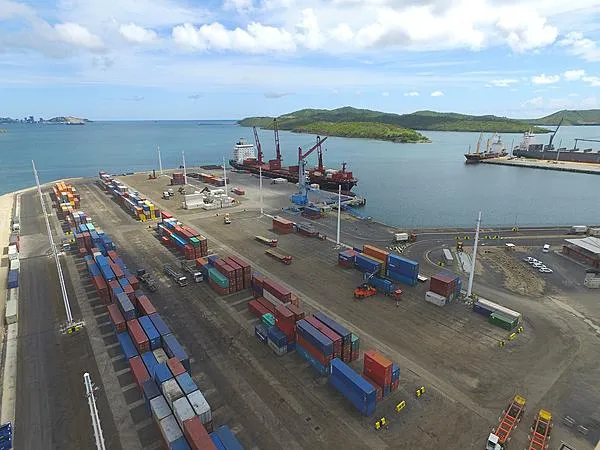
PNG Ports Corporation is redeveloping and investing in its ports in the future as part of its 30-year master plan.

Rodney Begley, the chief operating officer of the PNG Ports Corporation, said the company completed a 30-year master plan 18 months ago that included evaluations of every port in the country.

“We did an economical assessment, environmental assessments, and constructional assessments.

“This is a general everyday roster on the master plan.

This document now manifests PNG Ports as we look forward to the next 30 years.

“We are working with the Australian government in port redevelopment and investments.”

He stated that ports in Daru, Kimbe, Madang, Kavieng, Lae Tidal Basin, Rabaul, Vanimo, and Lorengau are being considered for redevelopment.

Over the next five years, this will spend K1.1 billion ($AU400) in reconstruction across the country.

“Over the last 12 months, I’ve come to recognize the importance of the Highlands region as the food basket of the country.

“We at PNG Ports have visions to develop three inland trade hubs to support the Highlands.

“This idea is that we replicate a traditional ocean seaport and we place it at the base of the Highlands in Goroka and maybe in Mt Hagen,” said Mr. Begley.

He explained that the goal is to make it easier for people to transport fruits and vegetables, as well as other items, up and down the highway by utilizing these three stations.

“That’s a visionary idea and something that they are talking to the government about.

“This is the Australian Infrastructure Financing Facility (AIFFP) funding of the Pacific.

“In November last year, I wrote to the Australian government and they granted us K26m, and this year in January I wrote to Australian government and we are now in negotiations to secure and finalize $AU400 or K1.1 billion.”

PNG Ports will invest money through a mixed financial package, with 80 percent being soft loans and 20 percent being grants, according to Begley.

“All of this is underpinned by the PNG Ports 30-year master plan. Those eight ports will be the fundamental focus of this spending,” he added.


Reference:

Post-Courier (2 August 2021). “Ports Redevelopment, Investments To Cost K1.1 Billion”.

August 09, 2021

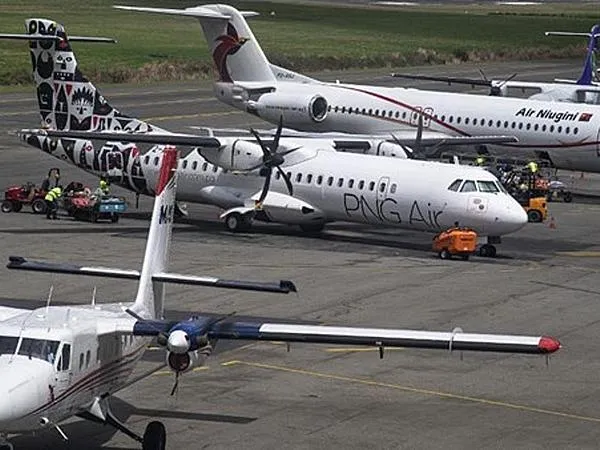
The Independent Consumer and Competition Commission (ICCC) has rejected Link PNG's proposal to purchase shares in PNG Air Ltd for the second time.

PNG Air Ltd had asked Link PNG Ltd to buy 40% of the company from the National Superannuation Fund and 9% from other shareholders.

Last week, the consumer and competition watchdog said that after completing its review of the proposed purchase, it was likely to have a significant impact on competition in the relevant areas.

According to their analysis, the purchase would have possible public costs that would outweigh the anticipated public benefits.

Link PNG stated in its application that PNG Air was not profitable and that, as a result of the Covid-19's influence on the aviation sector, PNG Air would most likely quit the market.

Link PNG, an Air Niugini subsidiary, has claimed that the planned share acquisition must be approved in order to retain present service levels, competitiveness, and the employment of current PNG Air personnel.

According to ICCC Commissioner Paulus Ain, the watchdog noticed that PNG Air had been losing money, but that the losses had been minimized as the airline increased its market share and revenues.

“There was no evidence of any significant rationalization or restructure carried out by PNG Air to suggest that such measures have already been exhausted, such that continued losses are a sign of a failing firm,” Ain said.

“No application provided by PNG Air or the applicant to satisfy the ICCC that PNG Air has done all it could to make it a profitable entity.

“For example, there has not been any cost-cutting in 2019 and 2020 have tripled from 2017 and 2018 figures.

“Whilst the financials for 2019 and 2020 are unaudited and much weight are not placed on them, the ICCC considers that the costs should relatively remain the same because, from the information available, there has not been any major changes in the administrative aspect that would contribute to such large increase.

“The ICCC also understands that besides Link PNG, there are other parties that have shown an interest to acquire the Nasfund shares.”


Reference:

The National (2 August 2021). “ICCC rejects Link PNG’s bid to acquire shares in PNG Air”.

August 06, 2021

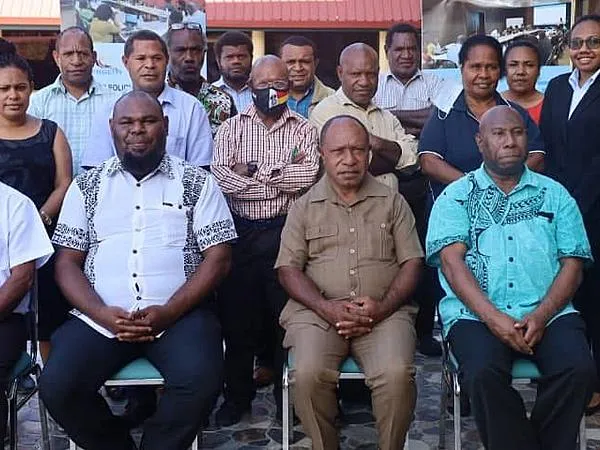
Morobe Governor and Deputy leader of the ruling Pangu Pati Hon Ginson Saonu today opened the PNG Extractive Industries Transparency Commission Bill Momase Regional consultation in Lae and gave his backing for the establishment of the Extractive Industries Transparency Commission.

He welcomed a State Technical working group comprising the Department of Petroleum, Department of National Planning, Constitutional and Law Reform Commission, Department of Treasury and staff from the PNGEITI National Secretariat to administer the consultation.

The Governor underscored the importance of reflecting the national goals and directives enshrined in the Constitution in making policies and laws that govern the resource sector.

The Momase consultation is the second leg of a series of regional consultation to gauge views from stakeholders to shape a bill that is reflective of views from wider community for better implementation of EITI Global Standard in Papa New Guinea.

Consultation workshop starts today and ends on Thursday this week.

The implementation of EITI Principles and the Standard in Papua New Guinea rides on a National Executive Council Decision administered by as a secretariat under the Department of Treasury.

The proposed law aims to establish the PNGEITI National Secretariat as a commission to provide policy recommendations to the Government and more so provide a clear description of activities taking place in the PNG mining and petroleum industry.

Deputy Head of PNGEITI National Secretariat Christopher Tabel thanked the Governor for opening the workshop which is the second of regional consultation rolled out and will continue to two other regions.

“The PNGEITI is a state initiative and it’s only fitting and delightful moment for the state working group on the legislation and the instrumentalities involved in the process to have a Governor of existing and upcoming resource projects of huge magnitude.

“PNGEITI has been in operation since 2014 effected by a NEC decision and now we are moving into the next step in anchoring this extractive industry reporting process into PNG’s legal and administrative system.

PNGEITI has published 7 country reports detailing activities taking placing in the PNG mining and petroleum space.

“We thank the Morobe Governor and his hardworking administration team for the support and the welcome that we have received from Morobe.

We look forward to a meaningful consultation in the coming days with all stakeholders from Government, Civil Society organizations and resource companies,’’ Mr. Tabel said.

August 06, 2021

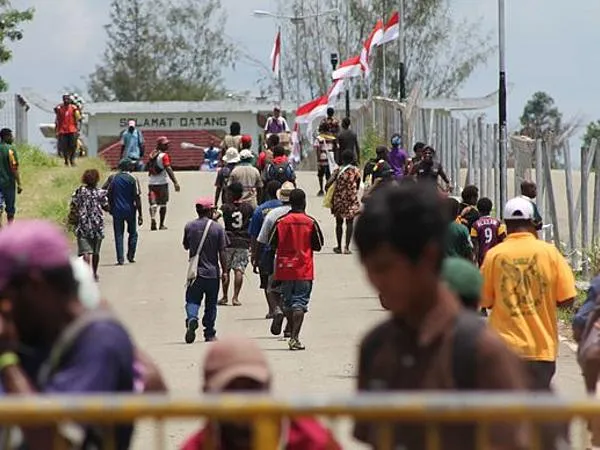
Indonesia border at Wutung Photo: RNZ / Johnny Blades

Indonesian Ambassador to PNG, H.E Andrias Supandi has paid a courtesy call on Prime Minister James Marape recently during which they discussed new and ongoing issues of mutual concern.

The leaders discussed cooperation on COVID-19 and the reopening of the border, among other things.

Both agreed to ensure the border was properly policed to prevent the spread of COVID-19 along the border areas.

Ambassador Supandi used the opportunity to propose for the two countries to enter into a Free Trade Agreement (FTA) to facilitate trade and commerce given that there is potential as demonstrated in the success of vanilla trade.

He said this could be better coordinated and managed through such an arrangement as a Free Trade Agreement.

Ambassador Supandi also informed Prime Minister Marape that Indonesia has already ratified the Border & Defence Cooperation Agreement and Land Border Transport Agreement and was awaiting PNG to do the same.

He said these agreements would pave the way for a more robust bilateral tie between the two countries.

On West Papua, Indonesia is very much appreciative of the consistent position that PNG has taken in acknowledging that West Papua was an integral part of Indonesia and the West Papuan issue remained as an internal issue for Indonesia to resolve, he said.

Other matters discussed included the need for joint cooperation in power connectivity to areas in Western and West Sepik provinces.

Both agreed for the two countries to consider jointly developing the border areas through a Special Economic Zone (SEZ). This would facilitate trade, commerce and in doing so, open up employment opportunities for people living on both sides of the border.

Regarding investment, Prime Minister Marape requested Ambassador Supandi to identify an Indonesian investor who was interested in buying cattle from PNG, as, he said, Papua New Guinea was ready to enter into a joint venture in this area.

Prime Minister Marape finally proposed a Special Travel Protocol between Indonesia and Papua New Guinea. This, he added, would not only allow for more people-to-people interactions but would help facilitate easier access by traditional border crossers to continue visiting relatives on each side of the border.

August 06, 2021

Prime Minister Hon. James Marape, MP says the PNG Government is fully aware of the Santos Limited and Oil Search Limited proposed merger as announced on 21 July 2021 and is closely monitoring it.

Prime Minister Marape said his Government has also noted the recent board and management changes at the Oil Search Limited.

“Oil Search Limited is a prominent PNG company whose activities comprise a significant percentage of PNG’s GDP and provides the livelihood to thousands of Papua New Guineans both directly and indirectly. Any proposed merger must satisfy the national interest test.”

The Prime Minister further stated that his Government’s top priority is to ensure that projects such as Papua LNG, Pasca A and Pn’yang are progressed as soon as possible.

He said it is in this context that the Government is keen to see how the merger talks go with Oil Search and Santos adding that he could see some positive developments from this deal.

“I strongly recognise that the merger of these two important license players in the market can deliver higher capacity and value to our projects. It brings a stronger combined balance sheet to the table. I also recognise that this proposed merger is a strong positive statement in terms of investor confidence in the operating environment.”

He said PNG welcomes the fast-tracking or prioritising of any upstream oil and gas development and downstream LNG export investment in PNG, whether by capital raising and investment or as a direct consequence of a merger or an acquisition. This can only result in demonstrable long-term benefits to PNG including:

  • Rapid development of PNG’s significant world-class proven reserves.
  • Prioritising of PNG projects including integration where-ever possible.
  • Employment and industry training of PNG citizens/residents.
  • Emergence of PNG as a regional energy supplier with best environmental, social and governance (ESG) principles being adhered to by operators.

Prime Minister Marape said while any business mergers or takeovers is determined by the parties themselves and their commercial interests he emphasized on the importance of having meaningful capacity and participation through an extensive and senior management level in-country corporate office and leadership thrust.

"It is important that the merged entity ensures significant local influence on decisions affecting Papua New Guinea assets, jobs and broader community.

"We do not wish for the largest oil and gas company operating in our country to simply be a branch office of a foreign company. It is important that while maintaining a strictly commercial focus, the interests of all employees, contractors and service providers are given the highest priority," he said.

The Prime Minister also noted the given fact that Oil Search is dual listed in Papua New Guinea and Australia, that all takeover regulatory requirements are strictly observed at this time.

It is the Prime Minister's expectation that the Securities Commission of Papua New Guinea is fully informed of this takeover and that includes ensuring that detailed and appropriate disclosures are maintained in the process for the regulator to do its job well.

August 02, 2021

The Independent Consumer and Competition Commission is debating whether or not to accept Kina Bank's bid to buy Westpac's share in Westpac Bank PNG Limited.

Commissioner Paulus Ain of the ICCC has also issued a draft determination on Kina Securities Limited's Authorisation Application for the planned acquisition of 89.91 per cent of Westpac Bank-PNG-Limited ($420 million).

The ICCC intends to deny approval for the proposed purchase following public discussions, which included opinions from key parties and market data.

“For the reasons outlined in its draft determination, the ICCC is not satisfied that this proposed acquisition would not have, and would not be likely to have, the effect of substantially lessening of competition in the relevant markets; and is not satisfied that the proposed acquisition will result, or will be likely to result, in such a benefit to the public that it should be authorised,” Ain said.

“Therefore, the ICCC proposes to decline authorisation to KSL.”

However, the ICCC has scheduled a meeting on August 11, 2021, for the parties and other stakeholders to comment on the draft finding before the ICCC makes a final conclusion on the proposed purchase.

Kina Securities Limited has also verified receiving a copy of the ICCC's draft determination.

In response to the draft finding, the bank stated that it remains committed to the acquisition because it thinks it would strengthen competition in the relevant markets and provide a number of significant public benefits.

Westpac has also stated that it is working with Kina to evaluate the ICCC's draft determination.

Both are expected to submit additional comments to the ICCC before the commission's final judgment is published in September, following the public consultation period that begins next month.

“Given Kina Bank’s commitment to financial inclusion and innovation, its proposal to retain all local staff and branches, and its intention to maintain two brands in PNG, Westpac believes that the transaction is in the interests of Westpac’s customers and staff and the people of Papua New Guinea and Fiji,” the bank said in a statement.

In December 2020, Westpac announced its plan to sell its Pacific businesses in Fiji and Papua New Guinea to Kina Securities Limited.

Kina Securities applied to the ICCC in March seeking approval for its proposal to acquire 89.91 per cent of Westpac PNG's shares, and Kina shareholders approved the acquisition of Westpac's Pacific businesses in April. However, the sale is still pending regulatory approvals in both Fiji and Papua New Guinea.


Reference:

Yafoi, Melisha. Post-Courier (28 July 2021). “ICCC Looks To Reject Westpac Acquisition”.

August 02, 2021

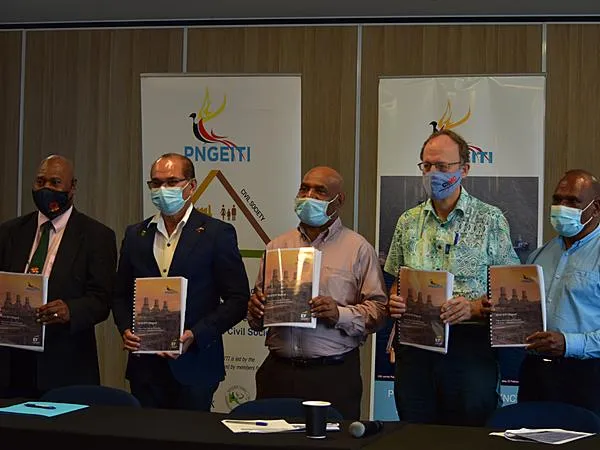
From Left to Right: Shannon Kumalau (DPE), Richard Kassman Senior VP PNG Chamber of Mines and Petroleum, Lucas Alkan Head of National Secretariat (EITI), Paul Barker (INA), Arnold Lakamanga (MRA)

The PNG Chamber of Mines and Petroleum congratulates and also expresses its support to the PNG Extractive Industry Transparency Initiative (EITI) on the release of the 7th Papua New Guinea Extractive Industries Transparency Report which details the industry’s mandatory payments to government in 2019. 

The Chamber notes with satisfaction the full participation of the extractive industry operating projects in furnishing information required to compile the 2019 Report.  We are pleased that the current report provides a more comprehensive information from industry and government of the revenue derived from the resource projects and also noting the enormous voluntary contribution in community infrastructure projects and flow-on socio-

economic benefits such as community health and education programs as well as spin-off business opportunities. 

Some highlights from the report include:

  • Over 6 billion Kina of contributions from the extractive industry to PNG
  • Contributed 28% of government revenue
  • Responsible for 28% of PNG’s GDP, and this does not include the multiplier effect from contributions by all the contractors and subcontractors who support our industry
  • Contributed nearly 450M kina in cash and in-kind social expenditures, mostly voluntary, for such things as community infrastructure projects, community health and education programs, as well as spin-off business opportunities supporting SMEs. 

Present at the release of the EITI report was Mr Richard Kassman, Senior Vice President of the PNG Chamber of Mines and Petroleum.

The report has been strong in 2019, because we have been able to focus and ensure better reporting and better reconciliation.” Mr Kassman reiterated that while matters of reconciliation were not unusual, strides were being made to ensure that those matters were minimized.

“I want to assure the public that this is a work in progress, that the industry, together with the regulators together and reporting entities of government remain  committed to minimize this.” 

Mr Kassman added “The whole concept and the intention of the concept of EITI is that we in the industry report various streams of revenue that we pay to the state and that on the other side, the state agencies confirm what we say we’ve paid is correct.”

The Extractive Industry Transparency Initiative has continued to provide an invaluable insight into the operations of the resource sector, particularly the extractive industry in Papua New Guinea, the contributions of current extractive production operations and accountability of Government in terms of revenue receipt.

With the contributions of the sector playing a significant role in the economy of the country, the PNG Chamber of mines and Petroleum commends the efforts of EITI in the compilation and dissemination of the 2019 report which promotes revenue transparency and accountability in the extractive sector.

The release of the report took place at 11am on Friday 30th of July at the Treasury Building in Port Moresby.

July 30, 2021

Photo Credit: ADB

Despite a weakening economic growth forecast for the Pacific, recent progress in vaccination rollouts and stronger public health measures are providing optimism for the safe reopening of borders in the near term, according to the latest issue of the Asian Development Bank’s (ADB) Pacific Economic Monitor (PEM) launched today.

After a pandemic-induced contraction of 5.8% in 2020, the economies of ADB’s 14 Pacific developing member countries (DMCs) are forecast to grow by 0.3% in 2021 and 4.0% in 2022. The growth is expected on the back of the outlook for Papua New Guinea (PNG), the subregion’s largest economy, where a modest recovery is projected this year before strengthening in 2022.

The forecast for 2021 represents a slight weakening from the Asian Development Outlook (ADO) 2021 in April, largely due to impacts of the ongoing coronavirus disease (COVID-19) outbreak in Fiji, as well as delays in Vanuatu’s planned partial reopening of its borders. Future growth will be influenced by the spread of the virus, the rollout of COVID-19 vaccines, and the ability to sustain fiscal stimulus international coordination.

“Safe travel bubbles are expected to contribute to a gradual recovery in the Pacific and bring hope to some of the region’s smaller, tourism-dependent economies,” said ADB Director General for the Pacific Leah Gutierrez. “Widespread vaccination, both within Pacific economies and in their major economic partners, will play a major role in boosting growth in 2022.”

Tourism to the Pacific remains largely closed, with arrivals during January–April 2021 plunging by 100% compared with the same period in 2020. Some Pacific destinations are looking to travel bubbles as a means of reviving their ailing tourism sectors.

The PEM examines a broad range of issues affecting Pacific economies including:

  • “Travel bubbles of hope” in the Cook Islands, Niue, and Palau
  • Fiji’s economic recovery efforts amid a new pandemic wave
  • Navigating the recovery, strategic fiscal policy, and development support in Kiribati and Tuvalu
  • Cautious steps toward reopening borders in the Federated States of Micronesia and the Marshall Islands
  • The role of strong public financial management in PNG in supporting economic recovery
  • How Nauru achieved full adult vaccination
  • The role of the private sector in Vanuatu’s economic recovery from COVID-19
  • How concessional finance helped Samoa and Tonga avoid potential debt sustainability issues
  • Labor market landscape and challenges in Solomon Islands.

The PEM includes two policy briefs: an overview of COVID-19 vaccine coverage in the Pacific and the factors affecting country rollouts; and an examination of the impact of pandemic-related school closures on losses in learning and potential earnings in the subregion and options for improving education resilience in the face of disruptions.

ADB is committed to achieving a prosperous, inclusive, resilient, and sustainable Asia and the Pacific, while sustaining its efforts to eradicate extreme poverty. Established in 1966, it is owned by 68 members—49 from the region.
July 27, 2021

Photo Credit: The National Fisheries Authority

The National Fisheries Authority (NFA) is the latest Government organization to join the Expo2020 Team to tell the Papua New Guinea story on the fisheries industry. 

The Authority will inform the world stockholders on Papua New Guinea’s efforts to commercialise our tuna resources in a sustainable way, including having the most recent surveillance technology ensure compliance.

NFA will also package and promote several projects as well as market the Madang Marine Park and Economic Trade Zone.

More companies and SMEs have indicated participating in the Exposition in Dubai either through product display or physical and/or virtual presentation at the pavilion and Expo led thematic events.

The Investment Promotion Authority and the Tourism Promotion Authority have commenced aligning the interests of the participants in the participation strategy and roadshow programmes, including packaging projects for Foreign Direct Investments with a project value of over two billion Kina in the agriculture, minerals, energy, construction, transportation and manufacturing sectors.

Apart from the NFA, other companies will also showcase their products and services. Latest participants include;

  • Charcoal and vegetable export business in Eastern Highlands, and
  • Kokola Beach Retreat in New Ireland.

Expression of interest from stakeholders are still open until end of July. This will give time for the project packaging teams to complete the documentation and consultation with the Expo2020 Organising Committee in Dubai to finalise the participation strategy before 1st of October. This work will also include finalizing slots at the pavilion and expo thematic events for the companies and individuals that would be participating physically and or virtually.

July 26, 2021

According to Bank South Pacific Group Ltd chief executive officer Robin Fleming, foreign direct investment (FDI) will play a key part in Papua New Guinea's recovery from the Covid-19.

“Bank of PNG data indicates that in 2020 FDI flows into the country will be reduced by 66 per cent to K387 million from K1.1 billion in 2019,” Fleming said.

“This statistic, however, does not reflect that the level of international investor interest increased in 2020 and that one of the key challenges is converting that interest into definite projects.

“It is promising to see a number of opportunities for businesses going forward.

“For example, PNG businesses can participate in Government infrastructure initiatives such as the Pacific step-up partnership between the PNG and Australian governments where K582 million has been committed.”

Other examples, according to Fleming, include the K1.1 billion national port rehabilitation program; the PNG electrification partnership with Australia, Japan, the United States, and New Zealand, which aims to connect 70% of PNG's population to electricity by 2030; and the ongoing Nadzab Airport Redevelopment worth K692 million by the Japan International Cooperation Agency (Jica) and the National Airports Corporation (NAC).

According to him, the mining, oil, and gas industries received the majority of foreign direct investment.

Some key factors to consider when reviewing an FDI proposal, according to Fleming, are the net economic benefit and alignment with national interests, such as the potential for the positive development of human and natural resources; creation of jobs and other income-earning opportunities; technology and skill transfer; and contribution to training Papua New Guineans.

“This screening process highlights the government's continued focus on developing a supportive environment for businesses to grow and attracting FDI.”

According to Fleming, the PNG Investment Conference, which will take place in September, is one of the most important conferences that has enhanced PNG's reputation on the international arena.

“The platform is a great way of promoting PNG’s business and investment opportunities.”

“Over the three-day event, a line-up of distinguished panellists will cover a number of key topics,, ranging from PNG’s place in a post Covid-19 world and the prevailing investment climate to important industry trends and major project updates.”


Reference:

The National (21 July 2021). “Foreign direct investment to help PNG recover from Covid effects”.

July 21, 2021

At the annual general meeting last month, the board named Richard Sinamoi as interim chairman.

“There has been an orderly transition to new leadership and the new board is stable and strongly aligned in our thinking,” Sinamoi said.

He described becoming chairman of Credit Corporation as an "honour" at "such a critical period for the business and the financial services sector."

“Throughout this challenging period due to the Covid-19 pandemic, maintaining our balance sheet strength and supporting our small-medium enterprise customers in the Pacific have been key strategic priorities,” he said.

“Our customers have generally displayed a high degree of resilience throughout this period.

“However, some continue to be challenged by restrictions and changes to consumer behaviour.

“As a director, I have been fortunate to have worked with the current board members in helping to contribute to Credit Corporation successive results over the years.”

Sinamoi acknowledged the outgoing chairman Syd Yates and welcomed newly-elected directors Stephen Humphries and Sir Melchior Togolo.

“I look forward to my ongoing work with the board, management and the entire Credit Corporation team to continue our mission to support SMEs (small to medium enterprises) throughout the Pacific with their financial needs.

“The board is currently working with our interim CEO Danny Robinson and chief financial officer Jeff Undah as we undertake a review of the group’s strategy to ensure we are well-positioned to seize the opportunities presented as we transition out of the Covid-19 pandemic.”


Reference:

The National (20 July 2021). “Sinamoi is chairman of Credit Corp”.

July 21, 2021

After 17 months in charge, Oil Search managing director Keiran Wulff resigned owing to concerns about his behaviour and bad health.

Dr Wulff has been dealing with a long-term medical problem that has lately worsened.

According to Oil Search chairman Rick Lee, the board met with Dr Wulff after receiving recent concerns and accusations about him.

According to Lee, the board believed Dr Wulff had acted in a way that was inconsistent with the board's expectations in terms of his managerial style.

Dr Wulff has taken on a large number of duties since his appointment as managing director in February, according to Lee, and the board recognizes the difficulty he has faced as a result of his recent health concerns.

“This period has been marked by extreme challenges including global lockdowns associated with the Covid-19 pandemic, a plunge in oil prices, crisis measures to protect the company’s financial position and developing a clear strategy to steer a path to a sustainable future through the energy transition.

“It is a tribute to all staff that Oil Search is now in a solid position with record levels of production in PNG, a strengthened balance sheet and our Alaskan development plans meeting milestone targets.”

Dr Wulff praised all Oil Search employees for their efforts, especially since the epidemic began and the firm began putting plans in place to protect its facilities in PNG and Alaska.

“It has been a great privilege to work at Oil Search and I believe the company is very well-positioned for the future.

“It has, however, become apparent to me that due to my health challenges, it is becoming increasingly difficult for me to perform at the level required of the position,” he said. 

Peter Fredricson, who joined the firm as chief financial officer earlier this year, has agreed to take over as interim CEO with immediate effect.

Interviews with internal and external applicants will commence soon in the hunt for a permanent managing director/CEO.

Lee said the board was looking forward to working with Fredricson to keep PNG production projects on track and on budget, as well as development efforts in both PNG and Alaska.


Reference:

The National (20 July 2021). “Wulff resigns from Oil Search”.

July 21, 2021

According to BSP Financial Group Limited (BSP), Papua New Guinea's GDP would increase by 4.2 per cent next year as the country recovers from a pandemic-induced slump.

“Economic growth is anticipated to rise to 4.2 per cent in 2022 as PNG's economy continues to recover from a pandemic-induced recession in 2020,” according to the bank's Pacific Economic and Market Insight 2021 second-quarter report.

“2021 economic growth is expected at 3.5 per cent, although the recent surge in the Covid-19 cases poses a threat.”

The reopening of the Porgera gold mine in Enga, according to the report, will pave the way for all stakeholder relationships over the following ten years. According to the study, copper and oil, two of the country's primary exports, are at multi-year highs.

Group chief executive officer Robin Fleming said: “With the recent government announcements, BSP is looking to further increase its services as PNG’s economy begins to stabilise.

“BSP is always looking at opportunities to increase and improve its service levels and customers convenience.

“We are expanding our branch networks – starting with the opening of Koroba branch in Hela last week.

“Later this month, we’re opening a larger premise of our Namatanai sub-branch in New Ireland.

“We are currently in the process of finalising the construction of a new branch in Eriku in Lae, Morobe, which is expected to be completed later this year.

“We are also looking into opening a second branch in Mt Hagen, recognising its position as being the central point for the Highlands region.

“Discussions are in progress with potential landlords.”

Aside from the new facilities, Fleming stated that the BSP has 200 registered agents in each of the 22 provinces who provided basic banking services to the public.

“Our agency network is an essential part of BSP’s commitment to the country and to the provision of banking services to the more remote communities in the country,” Flemming said. “This also represents the group’s commitment to financial inclusion.”


Reference:

The National (16 July 2021). “Bank predicts 4.2pc growth”.

July 21, 2021

Photo Credit: The Department of Lands & Physical Planning of Papua New Guinea

Prime Minister James Marape has stated that his government is considering tax incentives, one of which will be a 100% tax break on capital expenditures.

He stated that this was one of the incentives his government was considering implementing to help businesses thrive in the country.

Marape made the remarks while speaking to the business community at a breakfast event on Papua New Guinea's participation in the 2020 Dubai Expo, which will take place in October.

“We also have tax review to attract foreign direct investments,” he said.

“For those of you who are partnering with us in this sort of expo, tax incentives are being looked at.

“Some examples, a 100 per cent deduction for capital expenditure.

“A 100 per cent deduction on assets used in the manufacturing processes.

“Exemption of income derived from the export of manufactured goods.

“These are being looked at.

“A 10-year tax exemption for businesses who are located in some parts of our country, especially the special economic zones.

“Tax policies and incentives are some of the things we are looking at in terms of public policy.

Marape called on the business sector to use the Dubai Expo to promote the country's goods and services.

“When the Dubai expo was presented to us, we thought instead of sitting back why don’t we step out and show the world who we really are,” he said.

“When you have Total investing in PNG when you have ExxonMobil investing in PNG.

“Interestingly enough, ExxonMobil came into PNG in 2007 or 2008.

“And in 2009 we had the global financial crisis.

“At the back of the global financial crisis, ExxonMobil descended into our country.

“Today, ExxonMobil tells me, PNG LNG project is one of the success stories, in fact the production efficiency is at global high as far as ExxonMobil is concerned.

“That in itself is a good story for us.”


Reference:

Mauludu, Shirley. The National (16 July 2021). “PM reveals tax deduction plan”.