September 24, 2021

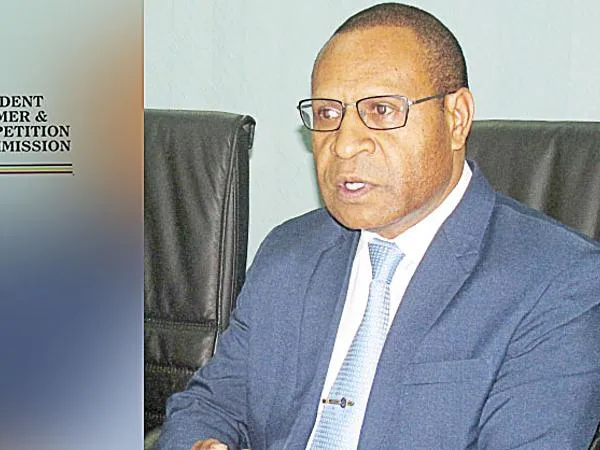
Following the release of its issue paper on October 1st, the Constitutional and Law Reform Commission (CLRC) will review personal income tax rules.

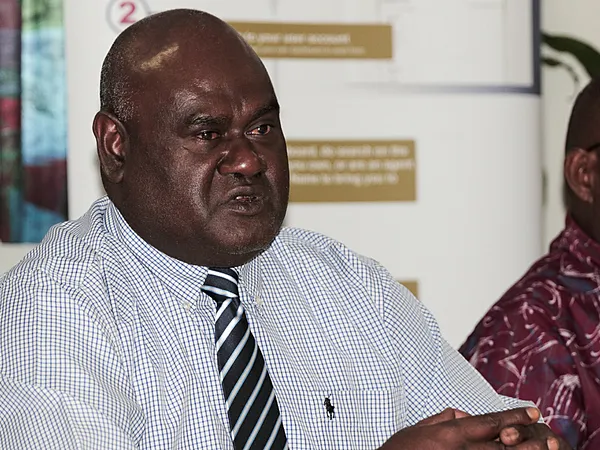
According to CLRC Secretary Dr Mange Matui, the Terms of Reference on the revision of Income Tax Laws in Papua New Guinea focuses primarily on the Personal Income Tax paid by public officials and private sector employees.

 “This review is quite necessary because income tax seems to be very high in PNG,” he said, adding, this is according to the submissions made to the Tax Review Committee in 2014.

According to him, an internal discussion paper from 2018 sparked the review because it revealed, among other things, that public servants, in particular, are not benefiting from tax incentives and privileges, and as a result, most public servants working in towns and cities have been pushed to live and work in settlements and villages, putting their lives in danger.

Dr Matui stated that the public and relevant stakeholders would be polled on the Key Issues, which include:

  • the connection between living costs and taxable income, and if the tax rate should be changed;
  • public service tax incentives;
  • whether the government should lower the income tax rate for public servants;
  • ways the informal sector may help with taxes;
  • whether tax-free superannuation and retirement benefits should be available,
  • other tax-related concerns. 

CLRC is also aware of the Government's concerns and reliance on taxes to support the National Budget, he added, adding that the review would be conducted with care.

Dr Matui added consultations, which are required by law, would begin on the 4th and 5th of October in the Eastern Highlands and Madang, on the 7th and 8th of October in Simbu and Morobe, on the 12th and 13th of October in Manus and Oro, and on the 27th of October in NCD.

Written contributions are also being accepted through November 5th, 2021, by the CLRC.

The Commission is encouraging members of the public, tax professionals, and anyone with working knowledge of tax or tax-related issues to participate in the regional consultations through their Facebook page or website. 


Reference:

Loop (24 September 2021). “Personal Income Tax Laws In Review”. 

September 24, 2021

As part of the American Rescue Plan Act, the US government announced $3.8 million in urgent COVID-19 assistance for PNG through the United States Agency for International Development (USAID).

This assistance will assist in accelerating widespread and equitable access to and delivery of safe and effective COVID-19 vaccines, strengthening health systems, and supporting other public health measures to combat COVID-19 and the recent emergence of the Delta variant in PNG.

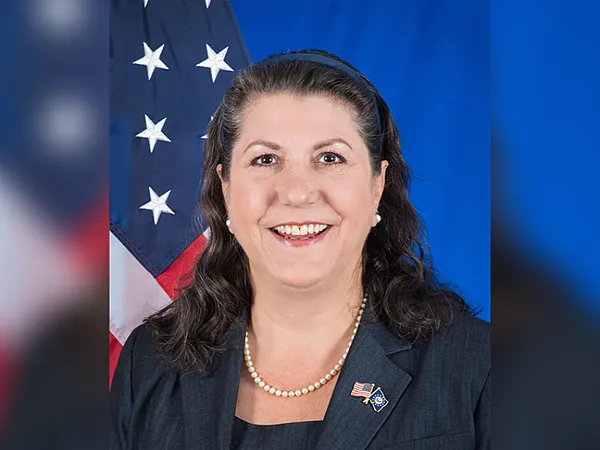
“PNG is struggling to address the challenges caused by the COVID-19 pandemic within its communities,” US Ambassador to Papua New Guinea, Solomon Islands, and Vanuatu Erin McKee said.

She stated that the American people's support demonstrates their long-term collaboration and commitment to working together to address the tremendous global health issue.

“With this assistance, the US government, through USAID, has provided more than $9.2 million to address COVID-19 in PNG.

“USAID assistance has helped the country implement internationally recognised infection prevention and control strategies, strengthen laboratory systems, case management and surveillance tracking and communicate effectively about COVID-19 prevention and care.

Additionally, the United States has already contributed $2 billion as part of its $4 billion pledge, to support COVAX — a global effort to provide safe and effective vaccines for 92 countries, including Papua New Guinea,” she said.

The country has already received 580,400 vaccine doses from the COVAX Facility, including 302,400 Johnson & Johnson vaccines given directly by the US government, according to Ambassador Mckee.

She stated that the United States is committed to working with Papua New Guinea and other Pacific Island countries to stop the COVID-19 epidemic, alleviate its terrible social and economic effects, and rebuild a world that is better prepared for future outbreaks.

“These efforts build on decades of lifesaving work and US leadership in tackling global health crisis.

“For the past 60 years since its founding in 1961, USAID has saved millions of lives from diseases such as Ebola, HIV/AIDS, tuberculosis, malaria, and now, COVID-19,” she said. 


Reference: Post-Courier (21 September 2021). “US Provides Extra US$3.8M For COVID-19 In PNG”.

September 24, 2021

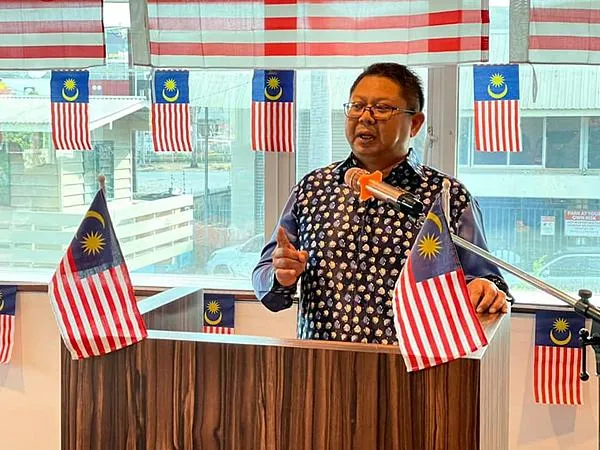
Malaysia has a $5 billion (K17 billion) investment in Papua New Guinea, according to Mohamad Nasri Abdul Rahman, Malaysia's High Commissioner to PNG.

Nasri stated that Malaysia was delighted and looking forward to contributing more to PNG's socio-economic development at the Malaysia Day celebrations over the weekend.

“Both countries have been working side by side for more than 20 years,” he said.

“We have a big community in PNG, with about 8,000 Malaysians nationwide.

“It is good to see Malaysians living side by side with the Papua New Guineans.

“We have some investments here and are happy to help develop the country.

“We have companies supporting businesses here and that is why we have many Malaysians here.

“We support PNG and PNG supports us.

“In the future, we will explore more between Malaysia and Papua New Guinea.

“We have been given investment opportunities and we will bring in more investments.”

Nasri said currently Malaysians were involved in agriculture, health, trading and many more, and “we want to do more”.

“PNG is developing and we have to make it easy in terms of people to people contact to facilitate business opportunities,” he said.

Nasri stated that the government might always improve in order to attract foreign investment, but that security is paramount in many choices.

“Security is the most important which needs to be improved, then we can come and do more businesses here,” he said.

“Currently, looking from outside iares concerns on security issues.

“That is the only biggest challenge here which we can slowly improve.”


Reference: Luma, Dale. The National (20 September 2021). “M’sia investment at US$5bil”.

September 24, 2021

A new World Bank report on the challenges facing the Pacific region’s outer island communities identifies investment in people and livelihoods as a key for inclusive economic growth.    

Archipelagic Economies: Spatial Economic Development in the Pacific looks at the challenges Pacific governments must address to provide services and infrastructure to populations spread across hundreds of islands spanning the vast Pacific Ocean. The report puts forward a series of practical steps that countries can take to overcome these challenges in a way that supports resilient and inclusive economic growth.

“Many Pacific countries are faced with significant challenges in delivering services and connecting remote, outer island communities; with difficult decisions around resources and how to best invest often limited resources into outer island communities,” said the report’s lead author, World Bank Lead Economist for Fiscal Policy and Sustainable Growth Robert Utz.

“This report aims to provide Pacific governments, development partners and decision-makers with evidence to assess options for fostering development for the people in those outer islands, so they can make stronger contributions to the larger economic development of the whole country.”   

The report identifies six guiding economic policy principles:

  1. Policy solutions that seek to achieve equitable increases in living standards need to be grounded in an understanding of the economic implications of the Pacific region’s unique economic geography.
  2. Outer islands’ development should be assessed from a spatial perspective; one that considers interactions with the country’s main island and the region beyond.
  3. A balanced approach that combines investments in urban areas to accommodate migration from outer islands to main islands with support for outer island populations is likely to achieve better welfare and equity outcomes than an approach that neglects one side or the other.
  4. Growth-enhancing investments should be guided by clearly-identified opportunities, rather than by a desire to try to equalize economic opportunities across islands.
  5. With limited scope to close the gap in economic opportunities between outer and main islands investments to promote livelihoods and human development should be given preference.
  6. Outer islands are subject to a complex political economy of intra-island and outer island-main island relationships that need to be considered in development interventions.

“This is an important and timely study,” said Denton Rarawa, Senior Economic Advisor at the Pacific Islands Forum Secretariat. “The current COVID-19 crisis has highlighted the need to address the institutional, service delivery and capacity gaps of nations across the Pacific. As we strive for greater vaccination rates and begin to think about how we’d like to rebuild after the pandemic, I believe this report has a lot to offer the future of the Pacific, especially in our efforts to leave no one behind.”   

The Archipelagic Economies report is a companion publication to the World Bank’s Pacific Possible series, which in 2017 and 2018 looked at opportunities for economic growth in Pacific Islands Countries across key sectors including tourism, fisheries, and labour mobility. 

The World Bank works in partnership with 12 countries across the Pacific, supporting 87 projects totaling US$2.09 billion in commitments in sectors including agriculture, aviation and transport, climate resilience and adaptation, economic policy, education and employment, energy, fisheries, health, macroeconomic management, rural development, telecommunications and tourism.


Article courtesy of World Bank Group
September 20, 2021

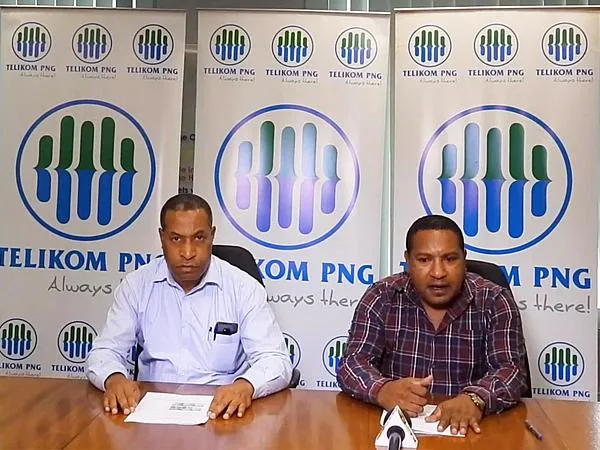
Telikom PNG Ltd interim chief executive officer Amos Tepi said the Telikom-bmobile merger should be finalized by the end of the month.

Tepi stated that the merger was roughly 85% complete.

“We are just looking at the regulatory and legal aspects and once that is over, we are going over the line so we should meet the deadline,” he said.

“It’s all progressing and about 85 per cent completed.”

Communications and Information Technology minister Timothy Masiu previously stated the merging of bmobile and Telikom PNG into a single retail operator was critical as it would improve access in the country.

“Legally speaking, merging bmobile and Telikom is a challenge because of the cross-collateralisation arrangements in place on assets,” Masiu said.

“Technically speaking, the integration of two SOE (state-owned enterprise) mobile networks also has cost implications.”

Masiu stated that, in light of the K1.6 billion loan obtained from China's Exim Bank to expand network coverage, as well as recent asset audits, the government was now prepared to consider investing in the merger – before considering any other options for the telecommunication state-owned enterprise's future.

“After considering a wide range of reform options, merging is the best decision for the business and this will pave a way forward to a liberalised market.”

The government spent five years ago in a nationwide broadband initiative that gave Telikom a converged 4G communications network.

Following that, bmobile's RediSIM subscribers were able to experience 4GLTE network capabilities thanks to a phased upgrade that was completed this year.

Kumul Telikom Holdings Limited (KTHL) made significant efforts to achieve the merger and consolidation of the mobile company as part of the Government's communications reform instructions to create a single mobile network.

It is the final key component in KTHL's attempts to deliver competent, cost-effective, and competitive mobile communications.

The Government's October 2019 state-owned enterprise reforms covered a number of critical business components, including improved governance and accountability.

It also necessitated a stronger focus on achieving fundamental SOE goals, such as providing accessible, cheap, and dependable services while generating a reasonable return on investment.

The KTHL mobile network integration was the company's first significant infrastructure expenditure in the previous three years.

As part of the reform, the National Executive Council authorized the merger, and work began in 2018.


Reference: Luma, Dale. The National (15 September 2021). “‘Telco merger 85pc complete’”

September 20, 2021

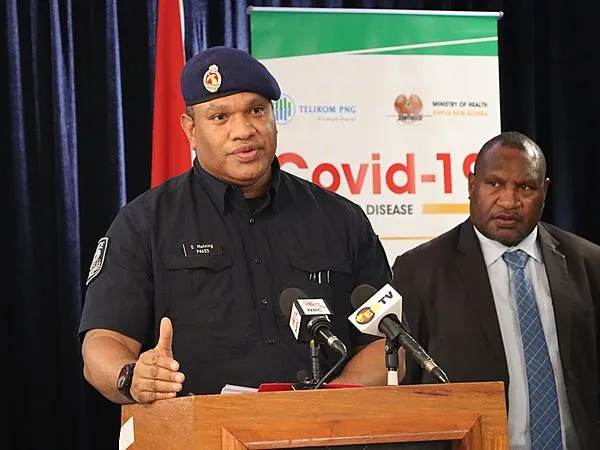
David Manning, the Police Commissioner and Controller of PNG's National Pandemic Response, has approved the release of new measures to combat the COVID-19 pandemic.

These new measures, which took effect on September 15, 2021, were developed in response to the ongoing threat of COVID-19 while also ensuring continuity and normalcy in all aspects, according to Manning.

The national prohibition on the selling of alcoholic beverages on weekends is still in effect.

International and local travel, as well as social and commercial interactions, are all undergoing significant changes.

The new measures for overseas travel are as follows:

  1. New Quarantine Periods - Those who are completely vaccinated must be quarantined for seven days, while those who are just partially vaccinated must be quarantined for fourteen days. Unvaccinated PNG nationals and permanent residents would be quarantined for 21 days. Unvaccinated foreign nationals will not be allowed entrance into PNG. Children under the age of 18 who travel with a parent or guardian will be confined for the same amount of time. Unaccompanied children under the age of 18 will be evaluated and quarantined on a case-by-case basis. Children under the age of five are exempt;
  2. Unless an exemption is granted, these additional quarantine durations do not apply to all those who are presently in quarantine.
  3. Approvals to enter PNG now have a 60-day validity period rather than the prior 90-day period.
  4. Persons travelling to PNG only for the purpose of holidaying, vacationing, or other similar activities will not be granted entry permission.
  5. All visitors to Papua New Guinea must obtain a valid COVID-19 test 72 hours before leaving their original port of departure, rather than seven days before arriving in Port Moresby. To be clear, if a person began their journey in the United States of America and flew to Port Moresby through Singapore, they would need to be tested 72 hours before to their aircraft from the United States of America, not the flight departing from Singapore. Children under the age of five are excluded from being tested;
  6. All visitors to Papua New Guinea must be tested upon arrival and while in quarantine. This is the duty of the confined person's host facility. The expense may be passed on to the person, but it is the quarantine facility's obligation to organize the tests and report the results to the NCC.
  7. If a person refuses to get tested, they will be placed on a 14-day quarantine.
  8. There are no restrictions on which medical practitioners are allowed to perform these tests, save that they and their personnel must be legally licensed. All medical testing providers' results will be accepted by the NCC.
  9. Individual tracking for quarantine reasons is now limited to house quarantine exclusively. Quarantines in regularly scheduled facilities are not needed to be tracked; and
  10. All Charter Flights require the Controller's written permission in addition to the usual approvals. This authority is not delegated. Measure No. 3 "Domestic Metrics" combines domestic travel and social measures.

Other domestic restrictions continue to apply, including;

  1. If a person has COVID-19 symptoms, they are not allowed to travel, and
  2. All passengers must have their temperature checked by airline personnel, and no one may travel if their temperature is 37.5 degrees Celsius or above (except for medivac and emergency flights).


Reference: Salmang, Grace Auka. Post-Courer (15 September 2021). “Conttoller Issues New Measures as COVID-19 Remains A Threat.”

September 20, 2021

According to PNGX chairman David Lawrence, listing on the PNG Stock Exchange (PNGX) for the benefit of PNG investors should be a requirement for doing business in the nation.

After Santos said it had entered into a merger implementation agreement with Oil Search PNG Ltd, Lawrence said that the firms had not stated whether Santos will be listed on the PNGX.

“Of immediate impact to PNGX is that the loss of Oil Search will have a significant adverse impact on our ability to further develop the market,” Lawrence said.

“Having a presence in the PNG capital market by listing on PNGX for the benefit of PNG investors should be a condition of operating in the country, given the potential significance of the access some of those companies have to PNG’s natural resources.

“Whether the takeover proceeds or not is a matter for Oil Search shareholders and the Government. The PNGX does not have a role in those decisions.

“Market capitalisation will drop by 30 per cent if Oil Search leaves the PNG market and that would lower the profile of Papua New Guinea among markets internationally.

“This will significantly damage PNG’s already fragile emerging domestic savings and investment market at this time would be a pity, as Papua New Guineans are showing an increasing interest in the stock market and investing.”

According to Lawrence, there has been no discussion of Santos going public on the PNGX.

“Oil Search has been a major contributor to, and a central part of, the PNG capital market since the inception of the PNG stock exchange,” he said.

“Obviously we would like to see Santos listed on PNGX to replace Oil Search and to provide Papua New Guineans an easy opportunity to invest in their own Oil and Gas sector.”


Reference: Luma, Dale. The National (14 September 2021). ‘Set conditions for investors’

September 20, 2021

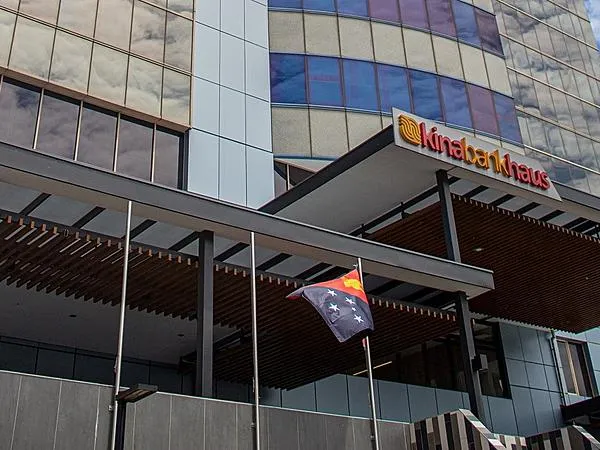
Kina Securities Ltd's attempt to purchase Westpac PNG Ltd was denied by the Independent Consumer and Competition Commission (ICCC) (Westpac).

After going through the ICCC Act's procedures, ICCC commissioner and chief executive officer Paulus Ain verified this.

On March 17, Kina Securities submitted an application to purchase 89.91 per cent of Westpac.

“The outcomes and the findings were based on financial information provided and gathered by the ICCC,” he said.

“The ICCC has now made the final determination to decline the authorisation sought by Kina Bank.”

Despite Kina Securities' proposal to run Westpac as a distinct bank, he said the ICCC was not convinced there would be two independent banks because of a similar ownership structure.

Other justifications include:

  • Markets are now extremely concentrated and will continue to be so as long as there are few participants in the market.
  • With the transaction, the number of commercial banks will be decreased to two.
  • The planned purchase would raise the hurdles to entrance and expansion even higher, since the number of banks would be decreased, giving the two current incumbents more market dominance.

“The ICCC is concerned that the proposed acquisition is likely to result in prices and profit margins increase,” he said.

“Although Westpac has decided to divest its PNG business, it appeared that this would not immediately happen without the proposed acquisition proceeding.

“Hence the ICCC considered that Westpac PNG would not be a significant source of competition for at least several years.”

Kina Securities and Westpac were contacted for comment but did not respond.


Reference: Mauludu, Shirley. The National (14 September 2021). “ICCC Rejects Kina’s Bid”. 

September 20, 2021

Retail internet rates would be decreased by around 50% by the end of next year, according to Dataco PNG Ltd chief executive officer Paul Komboi.

Wholesale prices had already been slashed by nearly 40%, he said at an investment conference.

However, due to market competition, it was not cut at the retail level.

“I hope in 2022, we will see at least a 50 per cent reduction in the retail price, and I can guarantee you that,” Komboi said.

“I think the market will move very fast and it will be very aggressive.

“Vodafone is coming in at the end of this year and one of the challenges we see is that a drop in the wholesale price is not being passed to the end-user.

“Either the market will force that to happen or we will see the regulator stepping in.

“We know that Telstar is also coming on board if everything goes well after their final assessment and due diligence. They will also create different dynamics in the marketplace to continue to put pressure on reducing the price of services offered to the people.”

Because of the retail market's rivalry, the reduction was not felt by end-users, according to Komboi.

“But there is an uptake by the usage of mobile phones by other carriers that are out there now,” Komboi said.

“It means that there is competition in the marketplace.

“Once Vodafone comes in, that will add on to that competition and continue a reduction in pricing.

“That’s when customers will win.”


Reference: The National (11 September 2021). “Internet price to drop by 50pc’”.

September 20, 2021

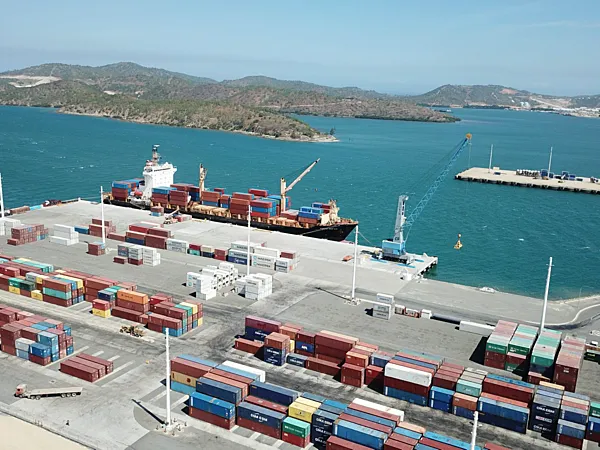
According to PNG Ports Corporation chairman Kepas Wali, the Motukea international port facility west of Port Moresby will undergo a multi-million kina makeover next month.

It is estimated that the repair and reconstruction work will take ten months and cost K56 million.

“The pavement covering the Motukea international terminal surface has deteriorated to a stage where it requires immediate remedial works to prevent further impact on traffic operations, and health, safety and environment issues,” Wali said.

The PNG Ports Corporation and Hebou Construction in Port Moresby have inked a deal.

Wali stated that they wished for the project to be completed on schedule.

“We trust that Hebou, given its proven record of quality and sustained performance over the decades, will provide quality construction on time and budget,” he said.

After the terminal was repaired, he said PNG Ports aimed to improve service at the facility.

Wali claimed that the investment at Motukea has yielded economic benefits such as shorter supply chain turnaround times, reduced waiting times, and increased cargo volumes passing through.

“Motukea receives at least 19 international vessels, accommodates cargo revenue tonnages of approximately 106,700, and 5,220 containers passing through,” he said.

The K300 million port, which replaced the Port Moresby port, was finished in 2018.


Reference: The National (10 September 2021). “Port will undergo renovation, says official”.

September 20, 2021

Market capitalisation will drop by 30 per cent if Oil Search leaves the PNG Stock Exchange (PNGX) due to a possible Santos merger, says PNGX chairman David Lawrence.

The PNG stock market is currently valued at K120 billion, according to the PNG Securities Commission, with 13 businesses listed.

According to Lawrence, Oil Search is an important component of the PNG market, and PNGX is hopeful that Santos will join if the deal goes through.

He also stated that the existing 5,000 Oil Search investors in PNG will have continued access to the market.

“That change increases the visibility of the Papua New Guinea market internationally which further serves to attract international investment,” Lawrence said.

“We are hoping and believe the PNG Government is also working towards Santos’ listing in Papua New Guinea.”

The proposed transaction is valued at AU$21 million (about K53 billion).

Shareholders of Oil Search will own 38.5 per cent of the company, while Santos would possess 61.5 per cent.

PNG's Commerce and Industry Minister, Sam Basil, warned the merger will have economic consequences for the country.

“The planned merger between Oil Search and Santos can bite both ways,” Basil said.

“Oil Search is a PNG company publicly listed in the PNG National Stock Exchange first, and in the Australian stock exchange while Santos is not listed in Papua New Guinea,” he said.

“From our perspective, this is an outbound transaction.

“At the conclusion of this merger process, Oil Search ceases to exist.

“If the arrangement succeeds, shareholders will become shareholders of an Australian company which has no presence in the PNG capital market.

“The merged entity, which will be a foreign company, will be the biggest partner in the PNG LNG project with a more than 42.5 per cent stake.”


Reference: Luma, Dale. The National (10 September 2021). “Merger To Affect Stock Market”.

September 15, 2021

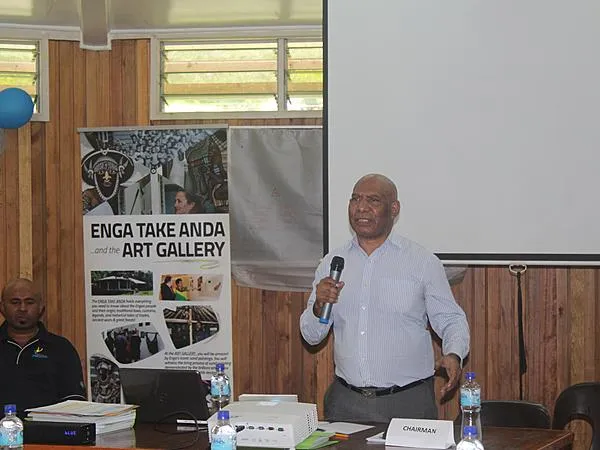
Head of the PNGEITI Mr Lucas Alkan last week in Wabag at the opening of the consultation.

The Head of the PNG Extractive Industries Transparency Initiative (EITI) Mr. Lucas Alkan has issued a strong challenge to stakeholders in the extractive industries to embrace and promote the work of EITI in Papua New Guinea to derive best value from the industry.

Mr. Alkan spoke of this last week in Wabag when he opened the upper highlands regional consultation on a proposed law to transition the PNGEITI into a statutory authority. 

“PNG EITI is a government driven initiative to promote transparency and accountability in the PNG mining and petroleum space which has been driving the PNG economy for a sustained period of time.

“But there is this misconception about proceeds from mining and petroleum activities not being translated well into development on the ground and this sentiment is shared by many at both the provincial and national level.

“What PNGEITI is doing is to shed light on the leakages on revenues and proceeds from the mining and petroleum activities with the ultimate aim of improving governance in the mining and petroleum sectors using international best practice standards to see the desired development outcome from this important sector.

“Seven years into PNGEITI implementation in PNG, we’ve now seen the need to make the PNGEITI administrative body, the PNGEITI into a statutory body to see more improvement in the EITI reports to enhance good governance in the sector to derive the best development outcome.  

“We’ve covered two regions; the New Guinea Islands and Momase regions and we are now conducting consultations in Enga and Eastern Highalnds to cover the big highlands region.

“I encourage the best knowledge and views from all stakeholders from the stakeholders in these consultations so that we give birth to a law that truly reflects the genuine views of all stakeholders for better development outcomes.

A State Technical working group comprising the Department of Petroleum, State Solicitor, Internal Revenue Commission, Department of Personnel Management, Department of Treasury, the National Economic Fiscal Commission and Department of Finance were in the Enga capital, Wabag for a four days consultation for the Upper Highlands region”

“PNGEITI has been in operations since 2014 effected by a NEC decision and now we are moving into the next step in anchoring this extractive industry reporting process into PNG’s legal and administrative system. PNGEITI published 7 reports detailing activities taking placing inn the PNG mining and petroleum space,” Mr. Alkan said.


Article Courtesy of PNG Extractive Industries Transparency Initiative