October 13, 2021

According to the Asian Development Bank, Papua New Guinea's economy will remain difficult in the short term until some resource projects begin (ADB).

Edward Faber, a country economist with the Asian Development Bank in PNG, said the country was presently dealing with a variety of challenges, including the impact of the Coronavirus (Covid-19) epidemic, a foreign exchange deficit, and national elections next year.

He recently spoke at a symposium in Port Moresby on EU-PNG business, trade, and investment.

According to Faber, PNG's economy would be worth around US$23.7 billion (K81 billion) in 2020, with the mining sector accounting for a quarter of the total, helping to fuel considerable growth across the board.

“In 2020, the growth forecasts had been to be about two per cent pre-Covid-19, so that was still seen to be relatively subdued and weak,” Faber said.

“There’s no major investment, no major mega projects generating growth and also a number of impediments including foreign exchange shortages and infrastructure.

“With the Covid-19 pandemic effects, growth was then revised between negative three to four per cent.

“So as we take a closure look at 2020 then, the major sectors to show contraction were accommodation and food services, transport and stage, trade, construction and elsewhere.

“These sectors being specifically impacted by the lockdowns, restriction to movement of people and goods and weaker international demand for Papua New Guinea's exports and difficulties with having imports.”

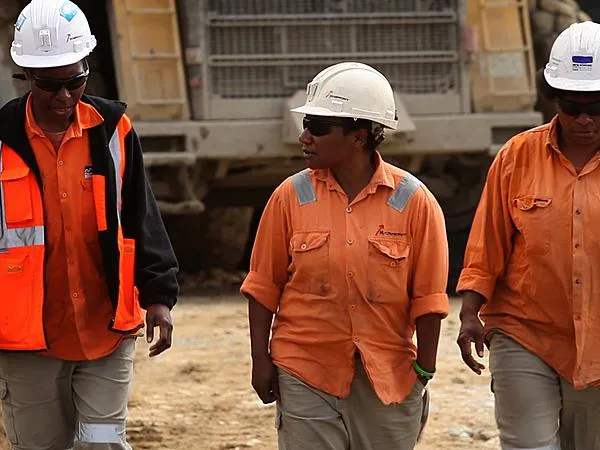
The mining industry, according to Faber, was the most affected by the shutdown of the Porgera mine, while the Ok Tedi mine was shut down for roughly six weeks and the Lihir mine reported lower output.

Bright spots, said Faber, include the planned reopening of the Porgera gold mine and other big initiatives in the works, such as fiscal changes.


Reference: Luma, Dale. The National (12 October 2021). “Economy needs projects: Bank”. 

October 13, 2021

Photo credit:

According to the Bank of Papua New Guinea, total real GDP would rise by about 1.0 per cent in 2021, compared to a previous projection of 2.5 per cent in the bank's March monetary policy statement, Michael Sullivan, President of the Papua New Guinea-European Union Business Council, said.

Sullivan made the remarks at the Lamana Hotel in Port Moresby at the Second EU-PNG Business Trade and Investment Conference.

He provided an outline of the PNG economy's predicted performance, stating that the lower-than-expected recovery for 2021 is mostly attributable to an expected drop in the mineral sector and the uncertainty connected with COVID-19's continued impact.

“This growth in the mineral sector which includes oil and gas has also been revised downwards because of the closure of the Porgera gold mine while the non-mineral sector is expected to do better,” Sullivan said.

The expected growth in the non-mineral sector, according to Sullivan, is due to favourable international prices for many agricultural products, increased production, the government's price support and freight subsidy program for selected agricultural commodities, and further easing of COVID-19 containment measures.

He also stated that early survey data available to the BPNG indicates that employment will be greater in the second half of 2021 than in the first.

“Growth in the normal working environment and increased economic adjustments to the new agriculture, forestry, fishing, wholesale, retail, manufacturing, mining and the other services sectors.


Reference: Kamus, Maxine. Post-Courier (12 October 2021). “BPNG Predicts Real GDP Gwoth By 1% In 2021”.

October 11, 2021

Photo credit: The National

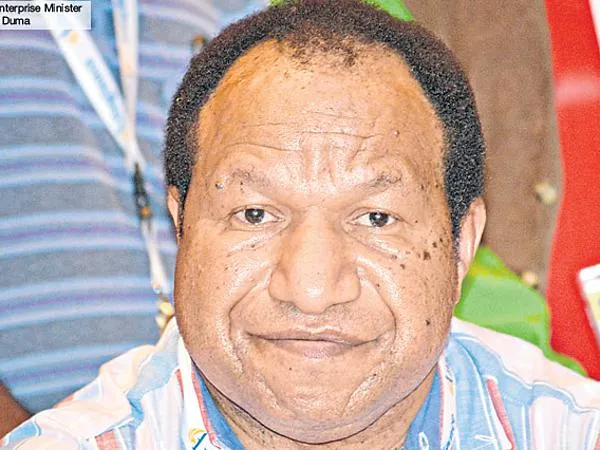
According to State Enterprises Minister William Duma, the Telikom-bmobile merger is on track, with a big announcement expected next month.

Duma said he couldn't talk about the merger yet since there were other parties involved and business agreements to think about. Prime Minister James Marape stated last month that the two companies will merge to become Telikom Ltd, a single retail telecoms business.

Meanwhile, Duma stated that the launch of Vodafone, the third telecoms provider, will be beneficial to the sector.

“We already have a third player, the new mobile company, Vodafone,” he said. Duma said Digicel presently enjoyed a lion’s share of the market at around 80 per cent but the arrival of a new competitor would ensure a competitive environment which would benefit the consumer.

“This is good for all of us, when there is competition, the prices are reduced, the quality is improved and the consumer, the ordinary people in PNG will benefit,” he said.

PNG is an emerging market with tremendous potential, according to Vodafone Fiji chief commercial director Ronald Prasad, as the country continues its transformation into a modern nation.

“It means more competition, overall improvement in product portfolios resulting in better service delivery, competitive pricing and of course new ways of doing things,” he said.

“The existing providers, bmobile, Telikom PNG, DataCo and Digicel PNG have done well in terms of expanding the infrastructure and investing in it and now with Vodafone coming onto the ground, you should expect more competition.” Prasad said.


Reference: Esila, Peter. The National (4 October 2021). “Telco Merger On Track: Duma”. 

October 11, 2021

Photo credit: BSP

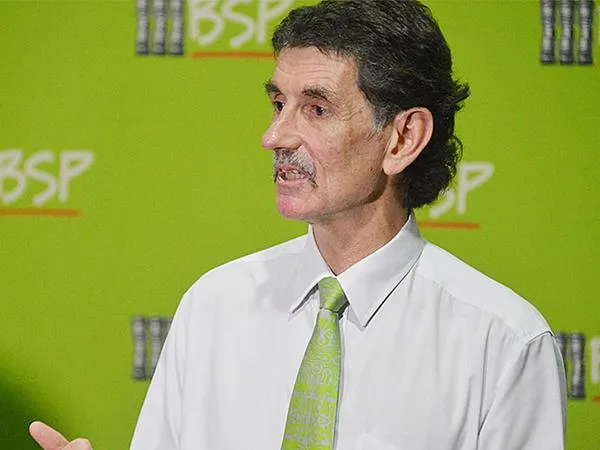
BSP Financial Group Limited (BSP) has confirmed that BSP shareholders can transfer all or part of their BSP shares to the ASX and trade them on the ASX Market.

BSP Financial Limited Group CEO Robin Fleming noted that since the company's listing on the Australian Stock Exchange (ASX) in May, stockholders have been able to trade on the ASX market.

BSP PNGX shareholders were needed to complete out two necessary documents in order to transfer their shares to ASX, according to Fleming: the PNG Registries Shunt Form and an IRC Tax Clearance Form.

He said that the shunting or migration procedure refers to the movement of issuer (BSP) shares from PNG Registries to the issuer's AUS sponsored sub-register (Link Australia).

“Once the forms are filled, submitted and they meet the requirements, which would normally take six (6) days in total, your shares will be transferred to Link Australia and held in preparation for trading on the ASX,” he said.

It will take another 10 working days for the shareholder to acquire their Security-holder Reference Number [SRN] while the shares remain with Link Australia, according to Fleming.

To trade shares on the ASX, you'll need your SRN.

“The ten (10) days taken to receive the SRN will reduce to one (1) day for subsequent shunts and trades, given that the shareholder’s AUS stockbroker has on hand their SRN and can convert the shares from the issuer-sponsored sub register,” he said.

BSP is also recommending shareholders who do not have an established Australian brokerage account and want to migrate and trade their shares on the ASX to contact JMP Securities, a Port Moresby-based stockbroker.

“In the coming months, BSP is expecting to see more BSP shares traded on the ASX after the announcement,” Fleming said.


Reference: Post-Courier (5 October 2021). “PNGX BSP Shareholders To Trade On ASX”.

October 11, 2021

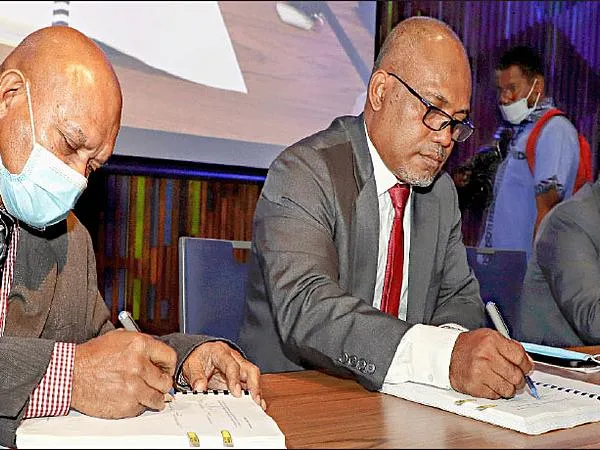
Water PNG Limited has signed a contract for K43 million for two water supply projects in Kundiawa and Bulolo townships, which would increase water availability for residents.

Two water supply contracts were signed: one for K20 million with Water PNG Limited and Kaia Works Civil Engineering Contractors Limited for the Kundiawa water supply project, and another for K23 million with Sino Hydro Corporation Limited for the Bulolo water supply project.

Minister of State-Owned Enterprises William Duma stressed the significance of water as a source of life in his speech, encouraging landowners to collaborate with the government and contractors to ensure that these projects are finished on time.

The signing, according to Duma, is a watershed moment for the people of Kundiawa, Chimbu Province, and the Bulolo region of Morobe Province.

“Water is an essential service that every human being needs and for us to hear that important and historical towns like Kundiawa and Bulolo have had water issues is totally unacceptable.

“I really appreciate the patience of the leaders of these two provinces,” he said.

“The actual contract signing ceremony is here and I am grateful as the minister responsible for the patience and understanding of the leaders and their people as far as water is concerned,” said Duma.

Ambassador Aiwa Olmi, Chairman of the Water PNG Limited Board, said the event was historic and that the two towns involved would only continue to add value to the country.

“One of the major policies of the Marape Government is the drive for water to reach where all human beings are whether you are living in a town, settlement, and village or wherever,” said Chairman Olmi.

He stated that Water PNG's objective is to guarantee that the Government's goal is met.

Parkop Kurua, the new acting managing director, thanked and welcomed the two contractors, as well as provincial and district authorities, who had come to witness the historic event.

The Bulolo water supply system, according to Kurua, is divided into two parts: part A is the civil works pipeline reticulation system, and part B is the intake, earthworks, and treatment plant construction.

“We are here to witness the signing of part A of the contract which was awarded to Sino Hydro Corporation Limited,” he said.

‘’The second signing is for the Kundiawa water supply system project which is the first project at Water PNG after the merger.

This project will be jointly funded with the Government and the project is estimated at K20 million.”


Reference: Post-Courier (4 October 2021). “Water PNG Inks K43 Million Deal”.

October 04, 2021

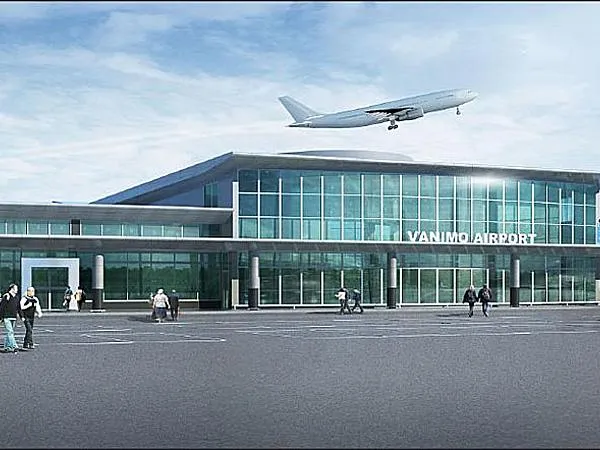
The National Airport Corporation Civil Aviation Development Program One upgrade and maintenance is anticipated to be finished in November.

According to Rex Kiponge, the NAC's acting managing director.

He said that on November 24, all projects under CADIP One (Tranches One, Two, and Three) will come to an end, with the goal of redeveloping and revitalising the country's aviation infrastructure while also ensuring operational safety and security compliance with ICAO standards and regulations as administered by Civil Aviation Organisation standards and regulations (CASA) PNG.

“Discussion for CADIP Two is currently taking place with the department of transport, department of Treasury, department of planning and NAC.

“We have also spoken with the Asian Development Bank (ADB) and at this stage, the indication is that ADB is in full support to assist with CADIP Two.”

During a zoom meeting with the Asian Development Bank, Kiponge was questioned how prepared he was to take on the project, and he told ADB that the NAC CADIP team was in a strong position to carry out the CADIP Two project because of their experience with the CADIP One project.

“All the aircraft's pavement and upgrading works will have achieved completion by November 24 for unrestricted aircraft operations, the constructions of the new terminal buildings are envisaged to achieve substantial completion by the end of CADIP and NAC is currently working closely with the constructors to ensure that these projects are delivered on time,” Kiponge said.

He said that NAC is performing substantial repairs on the runways in Wewak, Kavieng, and Madang, and asked for the travelling public's tolerance and understanding.

The NAC CADIP team will ensure that all works are properly carried out as it is a huge investment, according to Kiponge. Part of the delay in the completion of these projects is due to weather, but these works are being undertaken to improve and maintain safety and compliance at the airports, so the NAC CADIP team will ensure that all works are properly carried out as it is a huge investment.


Reference: Kamus, Maxine. Post-Courier (30 Septeber 2021). “Airports Upgrade To Be Completed In November.”

October 04, 2021

Papua New Guinea, according to Prime Minister James Marape, "remains open for business" and welcomes genuine foreign investment.

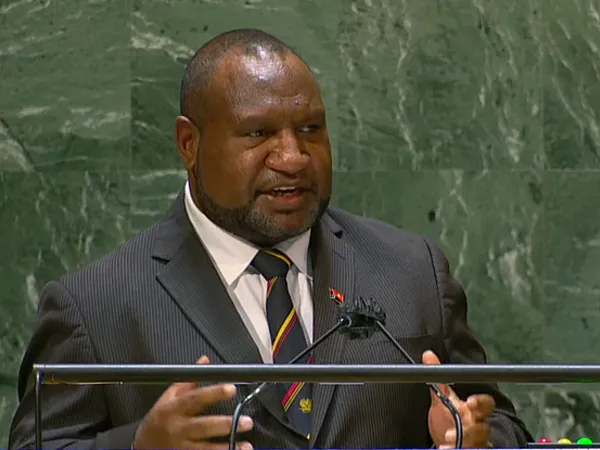
On Friday, September 24, he delivered his maiden UN speech at the 76th United Nations General Assembly in New York.

PM Marape made the guarantee while giving an update on PNG's extractive sectors in light of the current government's resource laws and policy changes.

“We strongly recognise the importance of generating sufficient revenue from domestic sources to complement external budget support for our national development priorities, as called for under the General Assembly’s 2030 Agenda and the Addis Ababa Financing for Development Framework,” he said.

“It is in this spirit that my government has embarked on reviewing and reforming our legislation and policies in the resource sector to ensure appropriate levels of national content in projects and to facilitate fair and equitable returns for all stakeholders with shared interests.

“At the same time, we continue to value, respect and uphold our partnership obligations with the private sector in our national resources sector.

“We remain open for business and therefore welcome bona fide international investors to join us in exploring opportunities available in my country.”

PNG's growth continues to be fueled by the petroleum, energy, and mining industries, which account for over 60% of the country's GDP, according to Marape.

He continued, “We continue to advocate for these developments to take place, and do as much as we can, as hard as we can, to advocate for important policies in these sectors.

“Our policies on developments in the extractive sector has begun to be cognizant of the finishing financing envelop from external sources such as loans and grants.

“At the same time, we have had to move towards better management of our national public debt.”


Reference: Post-Courier (1 October 2021). “PM Marape Invites Bona Fide Investors To PNG”.

October 04, 2021

According to the World Bank, Papua New Guinea's GDP shrank by 3.9 per cent last year as a result of Coronavirus (Covid-19)-related limitations and lower demand.

The fiscal deficit increased to 8.9% of GDP, according to the bank's recent East Asia and Pacific Economic Update report, with income underperformance rather than a dramatic increase in spending being the major cause.

“Consequently, the debt-to-GDP ratio surged to an estimated 49.2 per cent.

To address transitory budgetary imbalances created by the Covid-19 epidemic, the revised Fiscal Responsibility Act raised the public debt cap from 45 to 60% of GDP for a five-year period, with the goal of returning to below 40% of GDP within ten years.

Falling gold and LNG output, as well as the reinstatement of Covid-19 limitations, have slowed economic recovery this year.

The Lihir, Simberi, and Hidden Valley mines all produced less gold in the first half of this year, while the Porgera mine remained closed.

Due to planned maintenance at the PNG LNG project, gas output was reduced.

Meanwhile, fresh waves of Covid-19 infections (95 per cent of the 18,000 total cases have been reported since February), delayed vaccine roll-out (only 0.4 per cent of the population is completely vaccinated), and related restrictions have hampered travel, reducing non-resource economic activities.

In mid-2021, inflation had slowed to 3.3% year on year.

The Bank of Papua New Guinea maintained its 3% interest rate.

According to three rounds of a World Bank mobile phone poll performed in June 2020, December 2020, and May 2021, the impact of Covid-19 on poor and vulnerable people' livelihoods was severe.

by December.

The agriculture industry saw the most job losses.

Despite modest improvement in the second half of 2020, overall employment fell by 28% between January and December of that year.

According to a preliminary analysis of the May poll, employment has been stable since the beginning of the year.

While the majority of families in the May poll said their income had remained unchanged since January, moreover a quarter said it had decreased or ceased altogether.

The majority of households were concerned about their financial situation in the coming month.

Overall, the poll findings point to a slowdown in economic recovery.


Reference: The National (29 September 2021). “Economy contracted by 3.9pc’

October 04, 2021

Photo credit: UNGA

Prime Minister James Marape has attempted to advance a number of issues on behalf of Papua New Guinea and the Pacific Blue Economy at the United Nations Climate Change Conference (COP-26) in November 2021 in the United Kingdom.

On Friday, he addressed this in a speech to the United Nations General Assembly (UNGA) in New York City (Saturday morning, PNG local time).

Marape encouraged governments to commit to energy objectives, address land use issues, fight for biodiversity protection, and be more aggressive in their climate funding pledges.

“These issues are important to PNG and the Pacific Islands Forum countries and we will be seeking support and advocacy from developed and industrialised countries to back our domestic and regional efforts towards adaptation and mitigation through global funding assistance,” he said.

“I will be seeking an understanding to build a special set of criteria that is simplified to enable us to qualify for financial support for our adaptation and mitigation strategies.”

Marape urged the world community to fulfill its commitments under the Paris Agreement by submitting individual Nationally Determined Contributions (NDCs) as soon as possible.

“PNG was among the first countries to submit our Nationally Determined Contributions (NDC) in 2020, outlining our goal to be carbon neutral by 2050,” he said.

“This plan includes the drafting of our NDCs implementation plan, regulations and alignment of NDC adaptation and national adaptation plan, thanks to the support of the UNDP.

“We want to see major carbon emitters in the industrialised nations to be genuine and committed in their actions to fund climate change mitigation and adaptations.

“A failure in that regard is a denial of that responsibility.”

Marape argued that the US$100 billion yearly climate finance commitment made by rich countries to developing countries should be treated differently from official development assistance.

“This will allow its guidelines to be sensitive to the climate change mitigation and adaptation agenda and their specific requirement,” he said.

“As a natural gas and oil exporter, PNG is working towards ensuring our carbon footprint is minimised by implementing our Sustainable Development Goal 13 Roadmap 2020-2030 on climate change launched last year.

“We need to see a more practical demonstration of genuine commitments.”


Reference: Post Courier (27 September 2021). “PNG’s Chief Executive Highlights Pacific’s Concerns At UN” 

October 04, 2021

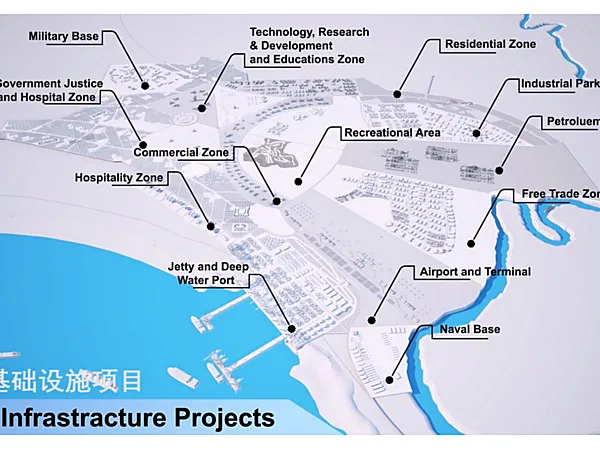
The Ihu Special Economic Zone (ISEZ) project in Kikori, Gulf, Papua New Guinea, will get a grant of K80 million from China.

Last week in Port Moresby, Chinese Ambassador Zeng Fanhua signed an economic and technical cooperation agreement with acting Prime Minister and Kikori MP Soroi Eoe. Prime Minister James Marape, according to Eoe, chose to provide the grant to the project.

Eoe expressed gratitude to China for the donation and stated that the two nations' diplomatic and bilateral ties had remained strong.

He claimed that his region contained roughly 80% of all found oil and gas.

“Kikori is the host of many projects, but there has been no infrastructure,” Eoe said.

“This is one area that the Government has recognised.

“If we are to harvest resources in Kikori, we need to prepare the people for projects that are coming.”

He claimed that the ISEZ will create 12,000 employment, boosting the economy and improving people's lives.

The award was announced during Eoe's visit to China as Foreign Affairs and Trade Minister in June, according to Ambassador Zeng.

“The agreement signed today is the latest fruits of our bilateral relations and reaffirm China’s commitment to developing a comprehensive strategic partnership with PNG and supporting Papua New Guinea’s economic and social development in a challenging time,” he said.

“I believe that with our joint efforts, our bilateral relations and cooperation will bring more tangible benefits both to the Chinese and the PNG people.”


Reference: Pacific Mining Watch (27 September 2021). “China funding PNG's Ihu Economic Zone Project in Gulf Province”.

October 04, 2021

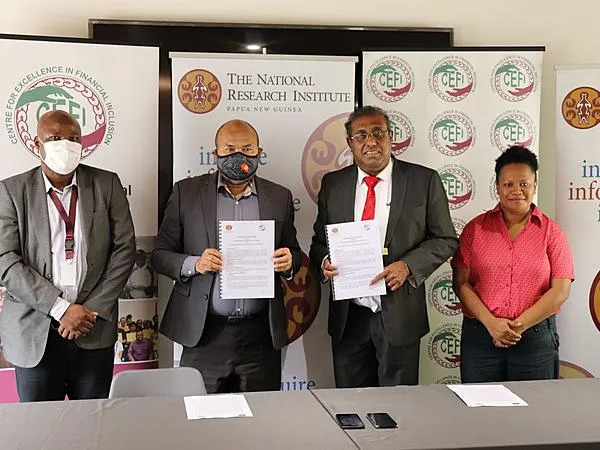
(from left to right) PNG NRI, Deputy Director for Research Associate Professor Eugene Ezebilo, NRI Acting Director Dr Osborne Sanida, CEFI Executive Director Saliya Ranasinghe and CEFI Manager Communications and Stakeholder Mobilisation Eva Kuson following the signing of the MoU.

A Memorandum of Understanding (MoU) was signed today (24 September 2021) between the Centre for Excellence in Financial Inclusion (CEFI) Executive Director Saliya Ranasinghe, and the PNG National Research Institute (NRI) Acting Director Dr. Osborne Sanida with the aim to consolidate and strengthen cooperation between the institutions.

The NRI is a publicly-funded policy think-tank in PNG mandated by legislation to carry out independent research and analysis on development issues affecting PNG. The National Research Institute Act 1993, states that the functions of NRI include the following:
(a) “The promotion of research into Papua New Guinea Society and the economy, and
(b) the undertaking of research into social, political and economic problems of Papua New Guinea in order to enable practical solutions to such problems to be formulated.” (Section5, NRI Act, 1993).

The NRI’s mission is to provide quality research which contributes to evidence-based public policies and decision-making processes that improve service delivery, leading to better quality of life for all Papua New Guineans. CEFI was established under the Association Incorporation Act and officially launched on 24th April 2013 serves as the industry apex organisation for coordinating, advocating and monitoring all financial inclusion activities in PNG. CEFI’s vision, mission and values focus on financial inclusion and literacy, poverty elimination and the promotion of vibrant financial institutional operation in PNG.

The agreement reflects the mutual value both institution hold in terms of extension and strengthening of research exchange for the general benefit of Papua New Guinea. The partnership signals new research grounds into the country’s economic and social development, with special focus on the role of education in development, and the impact of economic and social change on education. Other research activities under the signed partnership will include exchange of research staff, joint research partnerships and co-hosting of seminars and workshops to disseminate research findings through networks of both organizations.

CEFI Executive Director Mr Saliya Ranasinghe stated the partnership is in compliance with CEFI’s mandate on financial inclusion and literacy, poverty elimination and promotion of vibrant financial institutional operations in PNG.

“The main areas of this agreement between CEFI and NRI will be on researching the impact of Financial Inclusion Activities, Digital Financial Services, Financial Literacy and Financial Education, Micro Insurance, SME and Agriculture Lending.” Mr Ranasinghe addressed at the signing event. “Synergies like the one between the CEFI and the PNGNRI contribute to the more effective research ecosystem that enriches both the education and economic sectors.” Mr Ranasinghe said. 

NRI Acting Director Dr. Osborne Sanida equally elated about the partnership states, “NRI as a policy think-tank in PNG looks forward to working closely with CEFI to provide practical solutions to financial inclusion constraints, and contribute evidence-based solutions to improve financial inclusivity for all Papua New Guineans.” “Close cooperation is needed between our institutions and the academic community in order to develop the necessary methodologies and to create the appropriate tools to enable CEFI to carry out their work effectively.” Dr. Sanida remarked. This MOU is effective today and will be renewed every five years between the institutions.


Article courtesy of CEFI

September 30, 2021

The East Asia and Pacific region’s recovery has been undermined by the spread of the COVID-19 Delta variant, prolonging the distress for firms and households, likely slowing economic growth and increasing inequality, the World Bank said.

Economic activity began to slow down in the second quarter of 2021, and growth forecasts have been downgraded for most countries in the region, according to the World Bank’s East Asia and Pacific Fall 2021 Economic Update.  While China’s economy is projected to expand by 8.5%, the rest of the region is forecast to grow at 2.5%, nearly 2 percentage points less than forecast in April 2021.  Employment rates and labor force participation have dropped, and as many as 24 million people will not be able to escape poverty in 2021.

“The economic recovery of developing East Asia and Pacific faces a reversal of fortune,” said World Bank Vice President for East Asia and Pacific Manuela Ferro. “Whereas in 2020 the region contained COVID-19 while other regions of the world struggled, the rise in COVID-19 cases in 2021 has decreased growth prospects for 2021. However, the region has emerged stronger from crises before and with the right policies could do so again.”

The damage done by the resurgence and persistence of COVID-19 is likely to hurt growth and increase inequality over the longer-term, the Update finds. The failure of otherwise viable firms is leading to the loss of valuable intangible assets, while surviving companies are deferring productive investments. Smaller companies have been hit the hardest. While most firms have faced difficulty, larger firms are likely to see a smaller decline in sales and more likely to adopt sophisticated technologies and receive government support.

Households have suffered, especially poorer ones, which have been more likely to lose income, suffer greater food insecurity, have children not engaged in learning, and make distress sales of scarce assets. The resulting increase in stunting, erosion of human capital, and loss of productive assets will hurt the future earnings of these households. Increased inequality between firms could also increase inequality between workers.

“Accelerated vaccination and testing to control COVID-19 infections could revive economic activity in struggling countries as early as the first half of 2022, and double their growth rate next year,” said East Asia and Pacific Chief Economist Aaditya Mattoo. “But in the longer term, only deeper reforms can prevent slower growth and increasing inequality, an impoverishing combination the region has not seen this century.”

The report estimates that most countries in the region, including Indonesia and the Philippines, can vaccinate more than 60 percent of their populations by the first half of 2022. While that would not eliminate infections, it would significantly reduce mortality, allowing a resumption of economic activity.

However, the region will need to make a serious effort on four fronts to deal with long COVID: addressing vaccine hesitancy and limitations in distribution capacity to prevent plateauing coverage; enhancing testing, tracing, and isolation to control infections; increasing regional production of vaccines to reduce dependence on imported supplies; and strengthening health systems to deal with the prolonged presence of the disease.  International assistance is needed to support national efforts in all these areas, especially in countries with limited capacity.

Beyond containing COVID-19, a comprehensive strategy will be needed to boost growth and ensure it is inclusive.  The report identifies accelerated technology diffusion as a possible silver lining of the crisis that could boost productivity, democratize education, and transform state institutions. However, complementary reforms are necessary. Equipping firms with the skills to embed technology in their business must be accompanied by openness to trade and investment and by competition policies that strengthen incentives for firms to adopt new technology. Implementing long-delayed reforms in education to improve teaching quality and curriculum relevance could ensure wider access to the benefits of new learning technologies.


Article courtesy of The World Bank
September 29, 2021

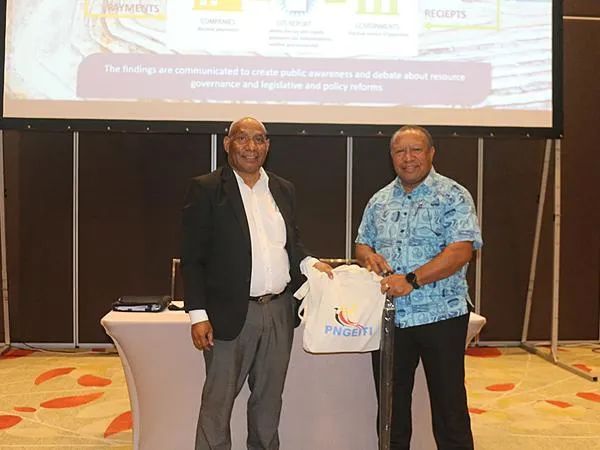
The final leg of the Papua New Guinea Extractive Industries Transparency Commission Bill covering the Southern Region is underway in Port Moresby this week.

Central Governor Robert Agarobe opened yesterday  the workshop with the key message that honesty and transparency must be the cornerstone principle guiding the management of PNG’s resource to derive best value for development.

Mr. Agarobe gave the backing of the Central Province on the proposed law to transition the PNGEITI National Secretariat into a statutory body to be known as the “PNG Extractive Industries Transparency Commission”. 

“The Central Provincial Government and its people recognize the need to have visibility of the various revenue streams and other benefits received from our extractive projects in the country, and particularly in our province,” Mr. Agarobe said.

“Our government also recognizes the importance of supporting the work of the PNGEITI in transforming itself into a Statutory Commission to effectively administer and sustain EITI implementation in PNG. 

We also recognize the importance of having an efficient and an independent administrative body or a commission that would enable better management and governance of the extractive sector and the proposed EITI Commission law to transition the PNGEITI National Secretariat currently parked at the Department of Treasury is a step in the right direction going forward,” he said.

PNGEITI Head of National Secretariat Mr. Lucas Alkan said: “The sustainability and effectiveness of implementing EITI in PNG is dependent on having it legally established”.

Mr. Alkan said a NEC decision on which the PNGEITI operations rode held “no legal obligation to reporting entities to ensure compliance.

“Furthermore, the NEC Decision that created PNGEITI holds limited powers in enforcing compliance therefore presenting risks susceptible to being made redundant and dissolved,” Mr Alkan explained.

Voluntary compliance in EITI reporting is high, however, comprehensiveness in reporting is low. These incomprehensiveness results from the absence of EITI enabling legislation. To mitigate incomprehensiveness in the short term, the State Solicitors and MRA have prescribed EITI reporting and transparency undertakings in mining MOA agreements. So far EITI provisions are captured in the K92 and Woodlark Mining contractual agreement with all future mining MoAs to receive similar undertakings.

Limited visibility in revenue reporting over the years have hindered informed decision making for effective governance in the extractive sector. The introduction of the EITI concept and the subsequent intervention of the PNGEITI National Policy now sets the framework for effective governance, not only in the mineral sector, but also in the non- mineral sector utilizing the EITI model for improved transparency and accountability. “Mr Alkan said.

September 28, 2021

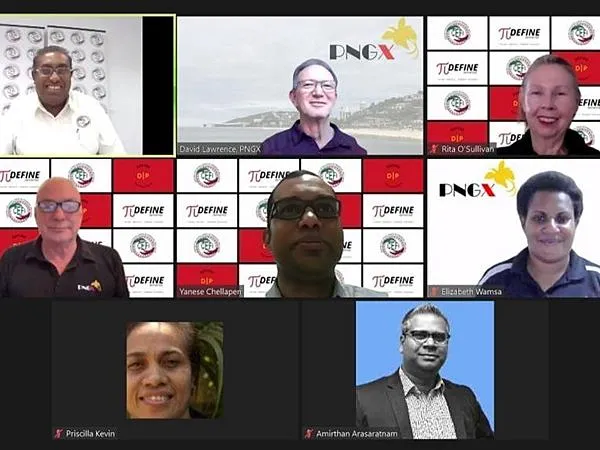
CEFI, the Centre for Excellence in Financial Inclusion has signed a Memorandum of Understanding with PNGX Markets, the PNG Digital ICT Cluster and Emerging Venture Management (Unkapt), together the proponents of the DEFINE Initiative, to provide for a framework of cooperation and communication. 

To achieve the targets of the Sustainable Development Goals (SDG) in the country, one of the initiatives to implement work on the Fintech space is the Developing Financial Markets for Enterprises in the Pacific Islands (DEFINE) Initiative that is being spearheaded by partners which includes Centre for Excellence in Financial Inclusion (CEFI), with PNGX Markets, the PNG Digital ICT Cluster and Emerging Venture Management (Unkapt). 

The objective of the DEFINE Initiative is to contribute to the development of financial markets, products, and services for – aligned enterprises in Papua New Guinea and the Pacific Island countries, with the ultimate goals of diversifying their sources of capital and enhancing access to finance. This includes the establishment of specialist SME funding facilities for debt, debt-like, and equity-like investments in SDG-aligned private enterprises which demonstrate governance, performance, return and impact potential with a special focus on Women-led enterprises, clean energy initiatives, agribusinesses, and businesses in the ICT sector.

Mr. Saliya Ranasinghe, Executive Director for CEFI expressed his views on the journey taken to be working with and supporting the DEFINE Initiative. He further stated that the objectives of the DEFINE Initiative are very well aligned with those of CEFI and together is hopeful that the collaboration of all parties can deliver greater financial inclusion, financial literacy and business capability to the SME sector.

PNGX Chairman Mr. David Lawrence stated that a key objective of the DEFINE Initiative is to strengthen the capacity of domestic financial institutions to encourage and expand access to banking and financial services for all, in particular women and the vulnerable, and their integration into value chains and markets. Mr. Lawrence elaborated that as a locally driven initiative, CEFI will be a key partner for meeting our objectives within Papua New Guinea and using the experience gained to export financial services and financial access across the Pacific.