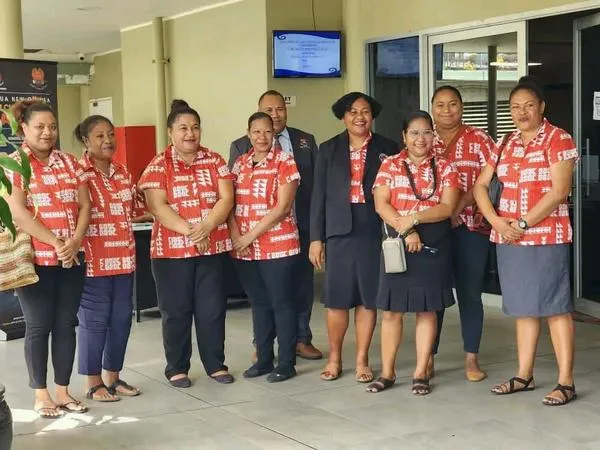
The office of censorship has finally launched its Corporate Censorship Plan 2022 to 2026 in Port Moresby recently.
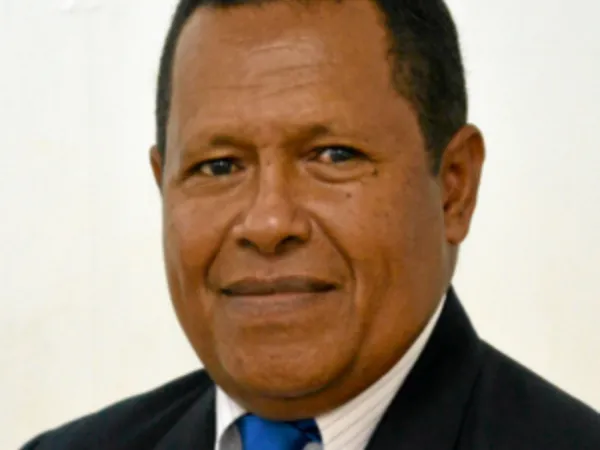
In launching the plan, Community development Youth and Religion Minister, Hon Jason Peter said the document was important as it focuses on the organisations capacity and it will help them to implement ‘The National Censorship Policy II’ to run from 2022 to 2025.
“This is one of the important corporate plans that our Government has introduced, I want to thank the Chief Censor for his leadership in driving the policy process to its conclusion and also the hardworking staff of The Censorship board of Papua New Guinea for leading a very consultative process in developing the corporate strategic Plan of the organisation.” Said Minister Peter.
“The office of Censorship plays an important role in protecting our values, our minds and the overall national security of our country by ensuring that information that is available for public consumption is safe and clean”. He further stated.
On the same note, Chief Censor of the Office of Censorship, Mr Jim Abani also stressed on the importance of the plan by emphasizing on the significance of partnerships.
“As a Government agency we can achieve our expected outcomes if we strengthen our partnerships. Sustainable partnership is the key and its strategies are very clear for smooth functioning and expansion of our services with others,”
“Censorship is about making a judgement call on the values of content and information.” Chief Censor Abani said.
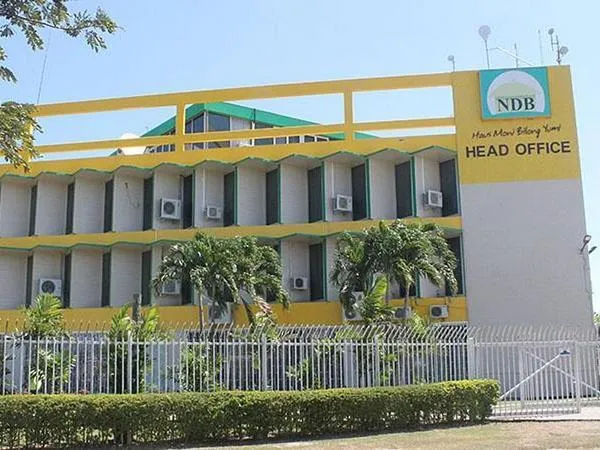
Photo: National Development Bank Head Office
The National Development Bank (NDB) in partnership with the Sohe District has launched its Small to Medium Enterprise (SME) credit scheme program, last week in Oro, Northern Province.
Member for Sohe and Minister for Commerce and industry, Henry Amuli, together with executives of The National Development Bank (NDB) and other important dignitaries were present to witness the ceremony. The occasion was witnessed by hundreds that had interest in engaging in the SME sector.
Speaking during the launching of the Sohe District SME credit scheme program, Executive Manager for NDB, Gary Copeland stated that K500, 000 had been paid by Sohe District into NDB to roll out the credit scheme program. Prior to this, the Sohe District paid an initial sum of K500, 000 and with the current deposit the district now has K1 million in totals to carry out the credit scheme program.
Mr Copeland said this is a partnership between the Sohe district and The National Development Bank to assist local people who are engaged in SME activities in the district.
“We welcome everyone in the District who are engaged in SME activities to visit the branch and open an account with Peoples Micro bank and be able to access and take out loans to grow your SME”, he said.
“All it takes from you is 20% deposit, so if you want to borrow K10, 000, you can access the loan with equity of K2, 000, why because the rest of the loan security is taken care of by the Hon Minister and MP through the credit scheme”, Mr Copeland explained.
Meantime, Mr Copeland said one of the main factors of NDB facilitating such services is because of the reopening of the NDB branch in Northern Province that had been closed for almost 3-4 years. He also challenged the people of Oro to utilise the services of National Development Bank for business purposes.
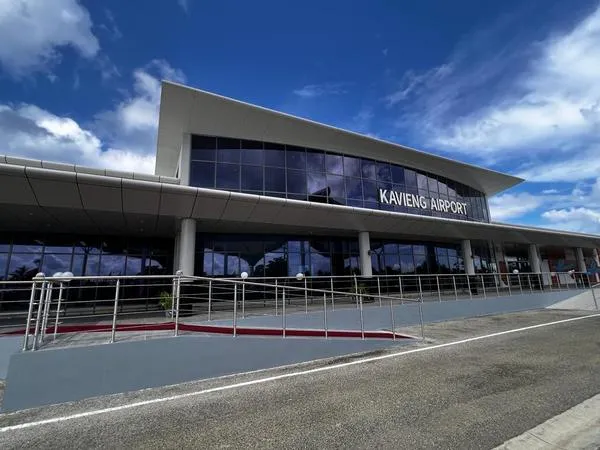
Photo: Kavieng Airport
Minister for Treasury Ian Lin-Stuckey has stated that the upgrade of Airports in the Country is Vital for Papua New Guinea's Development.
“I was honoured that Prime Minister James Marape opened the Kavieng Airport upgrade. This was a historic day for Kavieng, making for safer and better linkages to the rest of PNG and the world."
The expansion of the runway by 500 metres to 2,200 metres means that larger aircraft can take more produce to international markets. More tourists can visit. Kavieng becomes an easier place for doing business. These types of benefits flow from airport upgrades anywhere in our country. Our country’s geography is beautiful but challenging for transport with so many islands and high mountains. The Marape-Rosso Government understands these challenges.
"The historic PNG Connect program includes not only major road connections but also airport upgrades and wharf upgrades. This is an infrastructure government working towards a fully connected PNG” stated the Treasurer, Ian Ling-Stuckey.
“In addition to the airport runway extension, the quality of the runway was upgraded to make for safer travel. An upgraded airport terminal also makes for more comfortable travel and better handling of cargo and produce. New lights and navigational aids have been added. A public market has also been built to tap into the expanded economic opportunities from the airport upgrade. The upgrades open the door for direct international flights from Australia and other destinations, making Kavieng more accessible to the world.
“The Kavieng airport upgrade represents the close work between the National Airports Corporation (NAC) and the Asian Development Bank (ADB). It is one of many airports across the country that have been upgraded under the “Civil Aviation Development Investment Program” (CADIP).
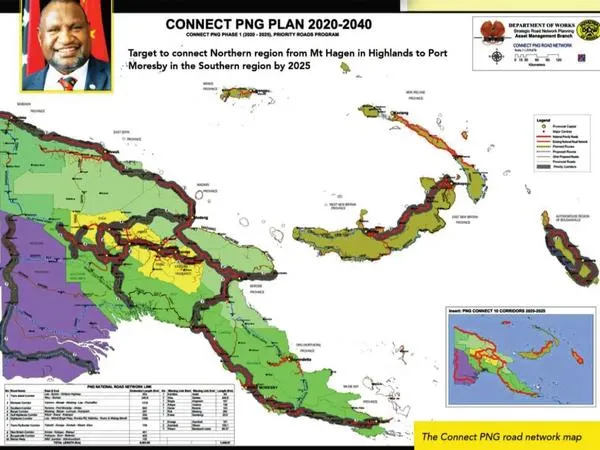
Since taking Office in 2019 and continuing his tenure as the Prime Minister after the recent elections, Hon James Marape has always been adamant about connecting the whole of Papua New Guinea through a road network that links the whole nation.
Prime Minister Marape continues to be vocal about the Connect PNG Program of which his government has already commenced work on and ensuring funds are available to realize his vision.
The Marape-Rosso Government has now legislated the Connect PNG Program making it legally binding for the following two decades. This will now make certain successive governments obliged to make funding available for the program, which began in 2020 and will conclude in 2040. The anticipated overall cost is estimated at K20 billion.
This is a prime public funded infrastructure improvement ever undertaken in the last forty seven years. Within this remaining month, the people of Papua New Guinea will witness the launching of 3 of the six roads recognized to be funded under the Connect PNG Program.
They are the Manus East West Highway, which was launched on November 3, Vanimo-Wewak Coastal Highway, which was launched on November 17 and East and West New Britain Highway, which is to be launched before the end of the year.
During the launching of the Wewak to Aitape Road Upgrading and Sealing Project under the Connect PNG Program, Minister for Works and Highway Hon. Solan Mirisim emphasised that the Marape-Rosso Government is devoted to empowering all Papua New Guineans with sustainable road connectivity and accessibility to an entire variety of activities inclusive of easy access basic goods and services and easy access to sell their cash crops and market their fresh produce.
“I must highlight and emphasise that the Connect PNG Program is a National Roads Infrastructure Development Program implemented in all regions and provinces. It involves improving existing key economic roads and constructing the missing links,” he said.
“In the medium term, the program aims to connect the Momase and Highlands Regions to the Southern Region through the Trans-national Highway by 2025.
“For the long term, the program aims to have 100 percent road connectivity from the Wutung Border Post all the way to the East Cape in Milne Bay Province.
The Minister for Works and Highways said the Sepik Coastal Highway is part of a larger road network under the Connect PNG program that is considered as the Momase Economic Road Corridor that starts from the Wutung Border Post, passing through East Sepik and Madang provinces and ending in Morobe Province.
“Marape-Rosso Government recognises the strategic importance of the Momase Economic Corridor Road Network and its huge potential to effect socio-economic development in the Momase Region and PNG as a whole.” Mr Mirisim said the Sepik Coastal Highway is valued at K139.85 million. An initial funding of 10 percent of the total value has already been paid to the local Contractor, Green Hills Limited and the road works will cover 40 kilometres of the 1,318 kilometres of the Momase Economic Corridor Road network.
Minister for Tourism arts and Culture, Hon Isi Henry Leonard said the culture and creative industry in Papua New Guinea is an untapped industry and a sleeping giant. The Minister made a bold statement pointing out that the industry can also contribute immensely to the country’s economic growth.
“Besides, we have so much to offer especially in tourism in terms of creativity from our diverse culture. We have traditional items and artefacts, tattoos, traditional wood carvings, sculptures and many more. Many of these activities were part of our ancestral culture and have been passed down from many generations”, Minister Leonard said.
The creative arts industry in the country is still struggling to get to its prominence in many of its respective areas. This industry plays a significant role in connecting and uniting Papua New Guineans through their creative arts establishments. The industry has had less recognition by authorities for a long time and has desperately struggled to sustain itself.
Creative arts and culture involve sub sectors of economical value such as modern day contemporary music, traditional sculptures and carvings, dances, paintings and crafts, films, drama etc.
Last year, during the opening of the National contemporary arts exhibition in Port Moresby, Minister Leonard stated that the Culture and creative arts industry if given proper recognition will contribute to the National purse and will assist and support in building the economy.
Upholding of cultural arts heritage has been part of our society’s foundation such as the cultural significance and importance of the Haus Tambaran in which PNG’s House of parliament resembles.
However, something must be done to push this industry forward to be in line with global standard especially in the aspects of modern music and film making which other countries benefit from economically. Although we are new in the other areas of advance modern arts, dance drama and music, the school of creative arts in PNG has produced several qualified people in various aspects and fields of the strand since the school’s inception.
This industry needs immediate help to create development programs and policy interventions that can be harnessed into economic value and sustainability. There is likely potential in this industry but lack of understanding and supporting mechanisms have deprived its growth.
The industry presents an opening to build economic opportunities through the unique capabilities of artists, musicians, designers, and performers to showcase their talents and what they can offer. It is a massive part of Papua New Guineas diverse culture that needs to be developed, utilised, and supported regularly.
Photo credit: Shuttershock
The government rating's outlook has been improved by Moody's Investors Service from "negative" to "stable."
The move from negative to stable is attributed to "a stabilisation in the Government's debt load coming in part from the positive terms of trade shock from better global prices for Papua New Guinea's commodities exports," according to the report.
A "renewed commitment to long-term fiscal sustainability that has been strengthened by its re-engagement with development partners" is another factor that contributed to it.
“Moody’s now expects a stable debt burden and debt affordability in the next few years,” a statement said.
“In addition, government liquidity and external vulnerability risks have ebbed given improvements in domestic funding conditions and the balance of payments, leading to lower domestic interest rates and higher foreign exchange reserves, respectively, which Moody’s expects to continue. The affirmation of the B2 rating reflects the confluence of relatively weak economic strength, institutions and governance strength, and susceptibility to event risk.
“Nonetheless, progress on large resource projects, particularly for liquefied natural gas (LNG), improve the outlook for medium-term growth and fiscal repair, while the re-election of the Government of Prime Minister James Marape allows for policy continuity and no meaningful deviation from the negotiations already conducted with regards to the large resource projects or with development partners and the International Monetary Fund (IMF).”
PNG's performance under several IMF staff-monitored programmes during the past two years, according to Treasurer Ian Ling-Stuckey, demonstrates a renewed emphasis on interaction with the international community. He also noted that PNG has exhibited progress on reforms.
According to Ling-Stuckey, the Government is now negotiating a new programme with the IMF's extended loan facility that is scheduled to begin in 2019.
“The shift towards more concessional funding sources and away from the PNG’s traditional reliance on domestic market-based financing will lower debt servicing costs and debt affordability, as well as bolster external stability,” he said.
Reference: The National (15 November 2022). “PNG outlook stable: Moody’s”.
The Queensland government through the Ministry of Treasurer and International Trade and Investment will be appointing a Queensland Trade Commissioner for the Pacific by next year 2023.
This is part of the Queensland government’s effort in strengthening the trade, economic and relationship that exists between Papua New Guinea and Queensland.
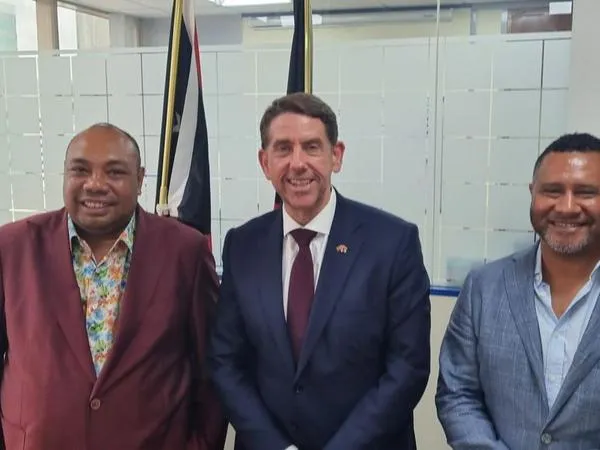
Queensland Treasurer and Minister for Trade and Investment, Cameron Dick made this announcement during his official trip to the country on Sunday, November 12.
He said the establishment of the Trade Commissioners Office in the country is part of their new trade investment strategy for the Pacific that their government will be releasing.
“As part of that we wish to base a business development manager in PNG to work on supporting the relationship and strengthening the relationship that exists between PNG and Queensland,” he said.
“That is part of the AU$150 million trade strategy that will run for 10 years.
“As part of that we will spend around $4.5 million investing in the Pacific because of the value and importance of the Pacific in Queensland.”
Mr Dick said in 2021 and 2022 financial year, Queensland’s goods exported to the Pacific region were worth about AU$1 billion.
“About K2.3 billion of that amount, 80 per cent of that (K1.8 billion), was with PNG and that emphasises how important the relationship both the country and the state have,” he said.
“We want to further develop the economic opportunities both for PNG and for Queensland.
“We want the relationship to be based on partnership and values, whether that is in the development of skills and training, for individuals, whether it is economic opportunities for businesses, whether it is the investment pathway that exists between PNG and Queensland and Queensland and PNG, whether that is opportunities in sporting and cultural pursuits.
We think that is the first inland area of development between the two states.”
Reference: Wohi, Lorraine. Post-Courier (15 November 2022). “QLD To Set Up Trade Commissioners Office In PNG”.
Photo credit: Papua New Guinea Today
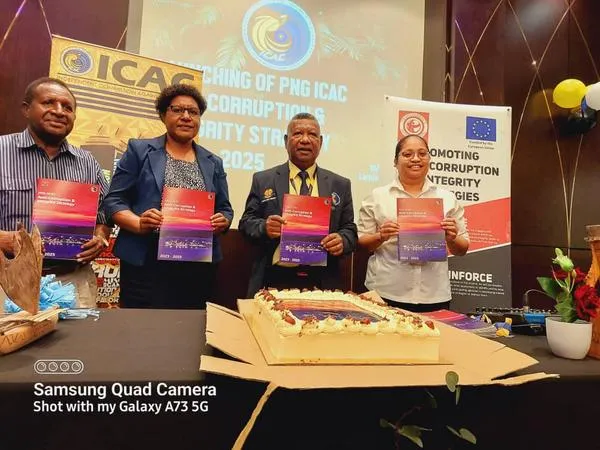
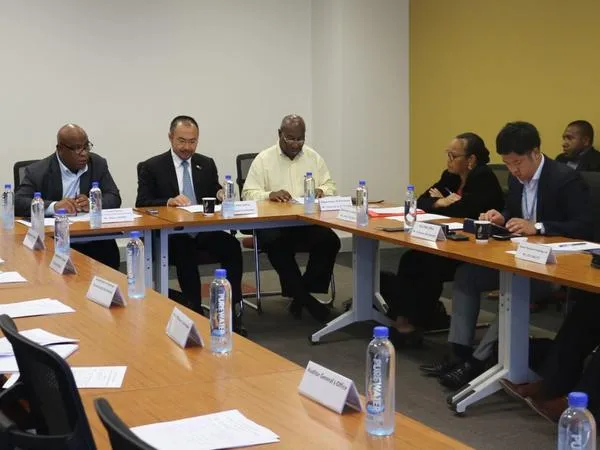
The Papua New Guinea Independent Commission Against Corruption (ICAC) launched its Anti-Corruption and Integrity Strategy 2023-2025 in Port Moresby recently.
The two-year Strategy is a roadmap for combating corruption within ICAC.
The document is an outcome of a Memorandum of Understanding between ICAC and its partner Transparency International signed in 2021.
In a small but significant ceremony, the document was officially launched.
According to ICAC Interim Chairman, Thomas Eluh, ICAC foresees that the threat of corruption is not only from the outside but also within, thus it is critically important for ICAC to ensure that they have systems and processes that can help them eradicate corruption.
The document ties ICAC down to four key objectives.
Mr. Eluh called for greater collaboration among its partners to fight corruption in the country collectively.
Transparency International Chief Executive Officer, Arianne Kassman described the launch of the two-year strategy as a milestone achievement towards the State’s efforts in achieving its National Anti-Corruption Strategy 2010-2030 and equally important as the establishment and operationalization of ICAC.
With the launch of the strategy, ICAC is now ready to carry out its mandated responsibilities.
Reference: Papua New Guinea Today (11 November 2022). “ICAC launches Strategy to Combat Corruption in PNG”.
As a result of climate change, international crime, and tax evasion, Pacific Island nations must continue to collaborate in order to solve security challenges.
David Towe, the Chief Commissioner of PNG Customs, made this statement at the fourth Joint Heads of Pacific Security conference in Fiji.
According to him, it was necessary to utilise the regional organisations and institutions already in place to support the Pacific region's security capabilities. In order to improve regional maritime security and lessen the security concerns the Pacific Island countries are currently experiencing as a result of climate change, illegal fishing, illicit drug use, and other threats, according to Towe, the delegates decided to establish a partnership for information sharing.
The participants talked about how climate change would affect security and looked at ways to build security capacities throughout the Pacific for readiness and efficient response.
More than 70 delegates, including officials of regional bodies and observers from Australia, Japan and the United States, attended the meeting.
Anote Tong, the keynote speaker and former president of Kiribati, asked the chiefs of security to discover the answers to the queries he
“We must save the island to save the world,” he said.
Towe stressed to the meeting that it needed to act quickly since the repercussions of climate change were real as she talked about the consequences of increasing sea levels and the eviction of Bougainville's Carteret Islanders.
He stated that 18 results, known as the "Denarau Outcomes," had been agreed upon by the forum and would be distributed to the member nations.
Following Palau's acceptance of the offer to host the fifth edition the following year, PNG will host the sixth conference in November 2024.
Reference: The National (16 November 2022). “Pacific Island countries urged to address security issues”.
ransparency mechanisms built into the topical Papua New Guinea Sovereign Wealth Fund (SFW) will enable an effective functioning of the fund, according to the PNG Extractive Industries Transparency Initiative.
PNGEITI welcomed the announcement of an initial injection of K5.6 million into the fund making it operational more than five years after the enactment of its enabling legislation. However, the PNGEITI raised concern over the lack of transparency around the operational and structural se-up of the fund.
“While PNGEITI commends the operationalization of the fund, the status quo raises transparency questions that needs to be answered by way of building in transparency mechanisms into the SWF arrangement” Head of PNGEITI National Secretariat Mr Lucas Alkan said. “The PNGEITI which has been implementing the global best practice standard on transparency around revenues generated from the mining and petroleum sectors of the economy strongly holds the view that international best practice standard is also built into the SWF arrangement for better governance of the SWF operation, derived from the Santiago principles to be adhered to,” Mr. Lucas Alkan said.
“One of the key objectives for SWF under the Santiago principle underpins a transparent and sound governance structure that provides for adequate operational controls, risks management and accountability- PNGEITI strongly encourages that this objective be fully met in the PNG SWF set-up.
“SWF are regarded as important players in the international monetary system and for Papua New Guinea to have one requires due diligence in ensuring the fund stands out well in the international monetary system and is credible” Mr Alkan commented.
“Consistent with the Santiago principles, the PNG SWF must bear economic and financial benefits for Papua New Guinea and the international financial system.
“We welcome the first SWF payment and hope to capture more payments and distributions of funds in the EITI Reports, particularly those taken from our lucrative extractive industry.
While commenting on the Government’s effort to operationalise the long-awaited SWF which is a positive step Mr Alkan said the Government needed to seriously conclude its pending dividend policy review and address the current parallel arrangements or set ups through the Kumul entities that have been empowered through their respective boards as to how much windfall revenues from the extractive sector could be paid to the Treasury or the SWF. He said to ensure the SWF operates on a strong financial footing to perform what it was set up to do, it needs to have access to all the windfalls that come out from extractive sector.
“The opportunity cost of parking such funds (which may be significant in the long run when commodity prices are good) in entities of State that are playing duplicate functions will not assist in using such windfalls to pay down current high levels of public debt.
We would be better off using the windfalls to pay off current high levels of debt than parking money in such arrangements that may be tempted to use for other purpose than what was intended for originally. Therefore, transparency mechanism is highly encouraged in the SWF set up”, Mr Alkan suggested.
“We have had similar experiences in the 1980s and 1990s where the so-called commodity stabilisation funds that were established for similar purpose that never worked and we need to learn from these and ensure the SWF is properly established and operationalised,” Mr Alkan said.
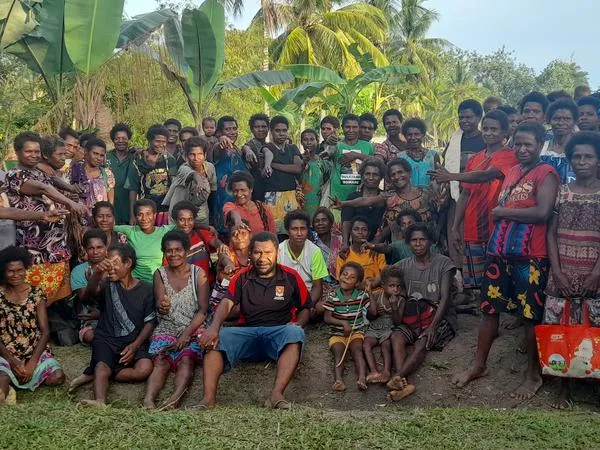
EU-STREIT PNG, in collaboration with local partners and government agencies, trained 1375 farmers, including women and youths, in the Sepik River area of Papua New Guinea on best cocoa farming techniques and on gender inclusion in agriculture development and financial literacy skills.
The FAO-led EU-STREIT PNG Programme continues to provide learning opportunities to improve cocoa farmers’ skills in hard-to-reach areas of the Sepik region for increased profitability and improved livelihoods of thousands of households who depend on this cash crop.
In collaboration with the Division of Agriculture and Livestock (DAL) in Angoram District of East Sepik Province and PNG Cocoa Board, a total of 1375 farmers, inclusive of women and youths from three villages, were upskilled in best block management practices, and cocoa propagation techniques – critical to producing pest tolerant seedlings.
Conducted in Asangumut, Murken and Jungit villages (in Yuwat and Marienberg Rural Local Level Governments), the training sessions had lasted for three weeks, brought together 1350 participants from the three villages plus an additional 25 farmers who enthusiastically trekked from surrounding villages to join. In terms of gender and youth participation, there were 665 women and youths representing 48% of total 1375 farmers who were very keen to attend the training and learn new skills.
In Asangumut Village, residents in collaboration with Manbanda Cooperative Society, assisted the Programme to organise the training which was conducted under the theme ‘Integrated Pest and Disease Management (IPDM) and focused on application of appropriate pruning methods on matured cocoa trees following the crop calendar.
Pruning is an important cocoa farming activity in block management that allows for shade control for sufficient sunlight and airflow to reduce risk of diseases such as black pod and to provide more nutrients that leads to abundant flowering and hence increased fruit yields.
The cocoa budding training was the focus of training sessions organised in Murken and Jungit villages, in partnership with Jangama Apaukra Cooperative Society and Jungit Cooperative Society, which pulled together 943 farmers with a high interest from women and youths numbering 487 or 52% of the participants.
“I learned many good things, like how to properly look after our cocoa trees to produce quality beans that will give us more money to pay school fees for our children, buy new clothes to wear and pots to cook. Only cocoa will move us, and I want to say thank you,” said a female farmer and mother Mrs Ruta Sore form Jungit Village.
Sharing on behalf of the youth, Vincent Anduare and young cocoa farmers said: “The budding skills will help us to produce CPB pest tolerant cocoas that will provide a source of income to help get rural youths out of poverty.”
Commenting on the challenges people in these remote communities face and how the Programme, in collaboration with local partners, is trying to improve cash flow and economic opportunities in these rural communities, the FAO National Cocoa Production Officer, Michael Lames, said: “These are very remote and hard-to-reach communities like Jungit which is located towards Madang Province, so it was a relief to come to their aid. When these cocoa trees come into production, the income will support improve their lives in the villages.”
Lames added: “It was good to see many villagers opening their bank accounts with MiBank – a partner of EU-STREIT PNG Programme – instead of taking the risk to travel long distances along the Sepik River and then onto a Public Motor Vehicle to Wewak Town and it’s good we came to them.”
As is the practice in all STREIT’s implementation sites, the Programme will follow up with the distribution of agricultural inputs and materials like polybags and shade cloths to help the trained farmers in these three locations to set up their nurseries for the production of CPB tolerant seedlings. These seedlings will then be procured by FAO and re-distributed to farmers in the same area.
During the gender and youth mainstreaming sessions, aimed at promoting women and youths’ involvement in decision-making processes for an increased income from agrifood value chain activities, farmers were divided into groups according to their ages and sex in a view to discussing their 24-hour activities. Men and women, both old and young, explored their roles and responsibilities, starting from household chores to farming, in order to identify where workloads could be shared to improve production and income as well as respect and togetherness at household levels.
Through this activity, participants came to the self-realisation that valued labour inputs especially by women that were neither balanced and nor recognised within family farming setups.
The Gender and Youth Inclusion team will conduct regular follow-ups to ensure women and youths are included in the cocoa cooperative management committees and also to ensure the official registration and lagalisation of youth groups in these remote villages.
MiBank officers under the Programme’s mandate to create an enabling environment for improved access to finance and banking services also accompanied the FAO mission team and staged multiple sessions on financial literacy awareness and opened bank accounts for the farmers and villagers.
The EU-STREIT PNG Programme, being implemented as a UN Joint Programme (FAO as the leading agency, and ILO, ITU, UNCDF and UNDP as partners), is the largest grant-funded Programme of the European Union in the country and the Pacific region. The Programme aims to help improve the lives of the people from East Sepik and Sandaun provinces, by focusing on increasing sustainable and inclusive economic development of rural areas through improved economic returns and opportunities from cocoa, vanilla and fishery value chains while strengthening and improving the efficiency of value chain enablers, including the business environment and supporting sustainable, climate-proof transport and energy infrastructure development.
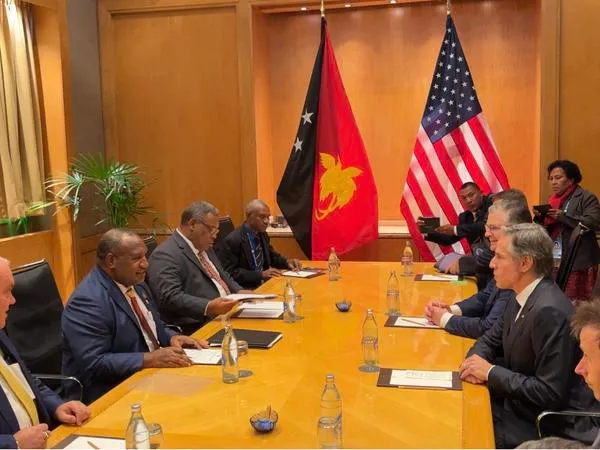
Photo: PM Marape and Secretary Blinken during a recent bilateral meeting
Prime Minister Hon. James Marape has invited the United States of America to invest in downstream processing in Papua New Guinea, especially in fisheries.
He made the invitation to US Secretary of State, Antony Blinken, during their bilateral meeting on the sidelines of APEC 2022 in Bangkok, Thailand.
PM Marape said it was a privilege for PNG to have been given the honor of meeting Secretary Blinken.
The bilateral also comes after the Biden administration hosted the first-ever U.S.-Pacific Island Country Summit in Washington, D.C. on September 28–29, bringing together more than a dozen Pacific Island leaders and other key observers to discuss areas of shared interest, including climate change, maritime security, and economic development; and as the US prepares to open its new Embassy building in Port Moresby later this month.
The bilateral was the culmination of a busy first day at APEC 2022 at which PM Marape had meetings with several international companies in which he invited them to invest in PNG.
PM Marape was accompanied by Foreign Affairs Minister Hon. Justin Tkatchenko, Secretary for PM and NEC Ivan Pomaleu and Foreign Affairs Secretary Elias Wohengu at today’s meeting with Secretary Blinken.
The US pledged to engage more with us and asked us what kind of support we wanted,” he said after the meeting.
“We didn’t ask them to give us more grants and aid – all we asked was for them to bring in more US businesses into PNG, particularly in the downstream sector.
“We pointed them to the area of fisheries, saying that’s the best they can do for us, to economically empower us not just today, but more importantly into the future.
“We invited them, as the biggest global economy, to bring in their companies and take up residence in PNG.”
The meeting also touched on:
Article courtesy of PM James Marape
Photo: Deputy PM Hon John Rosso
The Government plans on implementing a affordable land and housing program in the market to alleviate housing issues for middle and low income earners in the country's urban areas. This was stated by Deputy Prime Minister Hon John Rosso in light of questions raised by the media in relation to the recent evictions on settlers who have settled on government and privately owned land in most parts of urban areas around Papua New Guinea.
He said the Government has inherited a legacy issue on the issue of unplanned and illegal settlements in and around the vicinity and boundaries of urban areas in many parts of PNG. Mr. Rosso who is also the Lands, Physical Planning and Urbanisation Minister said the issue of people living in settlements and illegal settlements is a critical issue that needs a comprehensive approach. These settlements also have a lot of working-class people and taxpayers who are living there.
“I have been brought up in a settlement myself and I do feel for those people being evicted from the settlements. However, you cannot just settle on land that someone else owns,” Rosso said.
“Most of those recent evictions are based on court orders from the National and Supreme courts by people who have the legal titles. These titles were issued before my tenure as Lands Minister, sometime in 2011.
“That is something beyond the National Government’s control as the title holders have the legal authority and right to remove or evict the settlers from their land for development purposes.
“And to be direct, some of those evictions started as far back as 2011 and were delayed due to court battles.”
Deputy Prime Minister Rosso said that most people who go looking for opportunities and in search of better lives go and settle in this land by dealing with landowners and pay a minimal fee as there is no house and rooms for rent or are too expensive for our average wage earner.
He said previous governments have not built any new suburbs like the ones established in Port Moresby especially in many parts of other provinces and urban areas and towns such as Lae, Mt Hagen, Madang and Wewak. However, he said the National Government plans to address some of those legacy issues by introducing a house and land package in the market starting next year, 2023.
“The National Government and I as Lands Minister, we have started with the Tuhava House and Land package with the landowners of the Motu-Koitabu and their development partner people to build up to 4000 houses costing 300-400 thousand kina on the market so middle income earners can purchase and own. This will put 400 houses on the market.
“The program is at no cost to the government and we have not put in any single toea,” he said.
In the Tuhava case, the landowners have formed their company and will have shares in the program and get their land subdivided and portioned so that the land remains with them through their landowner company.
The Lands Department will help with the necessary support to the program including Policy and Planning of the land in close collaboration and consultation with the landowners who have allowed their land to be piloted.
Mr Rosso also said some of the houses on the markets are more than 500-600 thousand kina and that is very expensive for our middle-income earners, he said.
Deputy Prime Minister Rosso said the Government will and is looking at acquiring more land as there is a shortage of State land in many parts of the country’s urban areas. There is no more land in areas such as Port Moresby, Lae, Kokopo and Rabaul and in West New Britain, Eastern Highlands, Western Highlands, Madang and East Sepik provinces. We want to access more land and extend the urban boundaries with careful planning and to pay or partner those land in careful consultation with the landowners.”
The Deputy Prime Minister said that they will ensure that also low-income earners are part of the program. That will be targeted at our lower income workers and SME around the 100 thousand kina packages.
Minister for International trade and Investment and MP for Yangoru-Sausia in the East Sepik Province, Hon. Richard Maru announced that his district headquarters in Yangoru station will be upgraded to a town.
“We are determined to develop a new town plan and start putting a new shopping Centre within the Yangoru station to have it transformed into a township so people no longer have to go to Wewak every day by waking up at 4am and spending K20 on PMVs just to go to Wewak and K20 to come back; this is an unnecessary waste of money and time.
“We are determined to build a township in Yangoru so our people can be serviced from our district headquarter,” he said.
Maru said the Department of Lands would be sending their officers to Yangoru in the next couple of weeks to look at the district’s town development plan.
Maru added that he was also looking at building a district hospital that would house three doctors in the district headquarter of Yangoru as well.
Photo: James Marape
Prime Minister James Marape has directed the Chairman and Managing Directors of all State-Owned Enterprises to run their sectors as private businesses. PM Marape made this directive when speaking at the K80m dividend cheque presentation by Kumul Consolidated Holdings to the State last Thursday.
He said this will signify greater profit and performance outcomes. Marape made this remark when officiating at Kumul Consolidated Holdings (KCH) Limited’s first ever dividend of K80 million cheque presentation to the State on Thursday. While acknowledging the KCH and its subsidiary companies for returning the historic K80 million dividends in a very hard year, the Prime Minister indicated that there are more rooms for profit and performance improvement.
PM said starting next year, his government will fully empower KCH to ensure not just K80 million is returned but greater returns in the future.
“Because really you have no excuses. You run the biggest monopoly in this place. Time for you to run in public service mindset is over,” PM said.
“Move it or you will be left behind. You have started a good work and I repeat, move it or you will be left behand. “Do not think public service but think and run like a private sector. We are working to ensure that those of you are employed in those sectors.
“You get ranked and renumerated better but the earnings are passed on to the country whether in dividend or a better service to our people. “Let us get to work. Do not expect miracles to happen overnight. No angel will come down to do our jobs.”
He said good signs have emerged in Telikom, Water PNG, Air Niugini, and I’m also seeing good signs in PNG Power but much work needs to be done there.
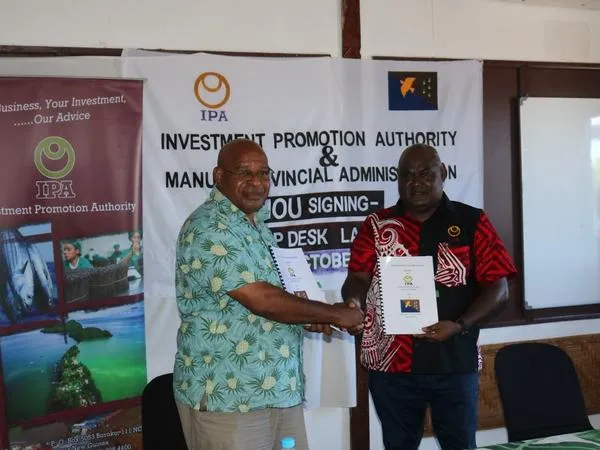
Photo: Manus Acting Provincial Administrator Mr. Oka Nungu and IPA Managing Director Mr. Clarence Hoot proudly showing the signed MOUs after the signing.
The Investment Promotion Authority (IPA) has signed a Memorandum of Understanding (MOU) with the Manus Provincial Administration (MPA).
The MOU paves way for the Manus Provincial Administration to deliver IPA services through the Help Desk which was also launched as part of the week-long IPA outreach program in Manus Province.
The MOU was signed by the IPA Managing Director Mr. Clarence Hoot and Manus Acting Provincial Administrator Mr. Oka Nungu.
To kick-start the implementation of the MOU, IPA officers trained Commerce Officers within the Manus Provincial Administration on how to use the IPA’s online registry services to lodge business applications. The IPA also donated a computer set including a printer and wifi modem to assist the Commerce Officers’ use in providing these services.
In his statement during the MOU signing, Mr. Hoot said he was happy to see that the MOU was finally signed after a while. He reinforced the IPA’s commitment in making available its services right down to the district level with the use of information technology. “The IPA over the years has been committed in ensuring that its services trickle down to ordinary citizens,” Mr. Hoot said. “That is why we have been investing resources in strengthening partnerships and enhancing collaboration with Provincial Administrations as well as other stakeholders,” he added.
Mr Hoot further added that in acknowledging the internet connectivity issues currently being experienced in some parts of the country, that should not stop us from continuing to strive for service delivery using technology as connectivity issues will be addressed in no time into the future.
In response Mr. Nungu expressed satisfaction and gave assurance of his Administration’s support towards the IPA’s cause saying that the gesture by IPA to purchase the equipment demonstrated that the IPA was serious about how businesses are conducted in Manus. “What IPA did was a symbol of commitment towards making it cheaper for Manusians to do business,” Mr. Nungu said.
The signing of the MOU with Manus Provincial Administration now brings the number of MOUs and IPA help desks established with Provincial Administrations to eight provinces.
Others include East New Britain, West New Britain, New Ireland, East Sepik, Milne Bay, Oro, Morobe and Madang.
This is aside from the IPA regional offices which are located in Buka, Kokopo, Lae and Mt. Hagen.
IPA also has existing MOUs with its colleague regulatory agencies such as the Internal Revenue Commission, Immigration and Citizenship Services Authority, Customs PNG, Financial Analysis and Supervision Unit (Bank of Papua New Guinea), PNG Fraud Directorate and National Cultural Commission.
Mr. Hoot is calling on other Provincial Administrations and Government Agencies to partner with the IPA so that all government services can be streamlined and delivered to the people in rural communities and provinces so they can equally participate in building the economy of the country.
Follow on LinkedIn:
PNG Business News
Be the "First" to get our exclusive Digital Magazine & Weekly Newsletter.