

Papua New Guinea’s growth outlook is expected to moderate over the next two years as global economic pressures weigh on the region, according to remarks by Asian Development Bank (ADB) country director for PNG, Takafumi Kadono, at the launch of the 2026 Asian Development Outlook (ADO) on April 17 in Port Moresby.
Kadono told stakeholders that developing Asia and the Pacific are facing mounting headwinds, driven largely by geopolitical tensions, including the ongoing conflict in the Middle East.
“The headline message is that there are significant headwinds facing the region,” he said. “High oil prices, prolonged commodity pressures and trade uncertainty are all contributing to a more moderate growth projection.”
Inflation is also expected to rise in 2026, largely due to higher energy prices. Pacific island economies, including PNG, remain particularly exposed because of their reliance on imported fuel and limited leverage in global markets.
“Pacific countries rank among the highest users of oil-based electricity in the region, and this exposes them significantly to price volatility,” Kadono said.
Despite these challenges, Kadono said PNG is entering this period of uncertainty from a relatively strong position, supported by recent macroeconomic reforms, improved domestic revenue mobilisation and fiscal consolidation efforts.
“The government is entering this uncertain period from a position of relative strength,” he said. “However, prolonged global tensions will inevitably affect the economy, and growth is expected to moderate in 2026 and 2027.”
He added that while PNG is a net exporter of hydrocarbons, its continued reliance on imported diesel for electricity generation and transport remains a structural vulnerability.
Kadono stressed that policy responses to rising fuel costs should be carefully targeted and time-bound, particularly to support vulnerable households, while maintaining a focus on long-term economic resilience.
“We must calibrate responses to manage immediate cost-of-living pressures while preserving fiscal sustainability and advancing long-term development goals,” he said.
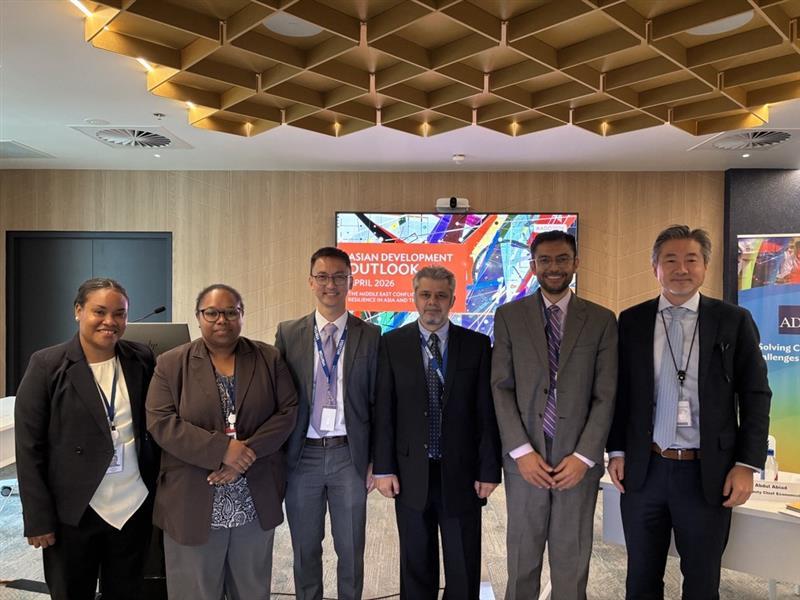
Discussions during the ADO launch also highlighted persistent structural constraints, including power shortages, dependence on fossil fuels, high business costs, limited access to finance and broader development challenges.
“There is a lot to do, but Papua New Guinea has significant potential,” Kadono said. “This is a year of reset, with an opportunity to translate the country’s resource wealth into tangible development outcomes for all citizens.”
The ADO launch coincides with ADB’s ongoing consultations with the PNG government and stakeholders on its upcoming three-year lending and technical assistance pipeline, as well as a new five-year country partnership strategy.
“These discussions are critical in shaping how we work with the government and people of Papua New Guinea,” he said.
Kadono reaffirmed ADB’s long-standing commitment to PNG, noting the institution has operated in the country since 1971.
“The challenges are significant, and coordinated efforts will be essential,” he said. “ADB will remain a steadfast partner for Papua New Guinea.”
The launch also underscored infrastructure constraints, with brief power interruptions occurring ahead of the event — an issue Kadono cited as a reminder of the need to strengthen core systems such as energy.


