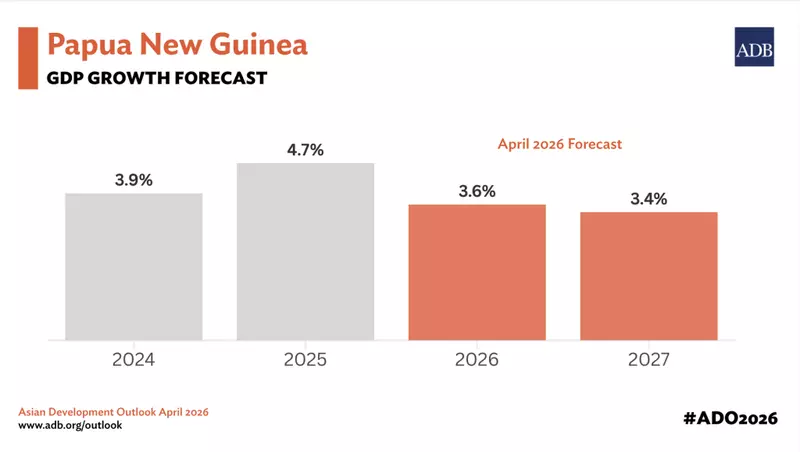
Papua New Guinea’s economic growth is forecast to moderate to 3.6% in 2026 and 3.4% in 2027, as external pressures and persistent structural constraints weigh on activity, the Asian Development Bank said.
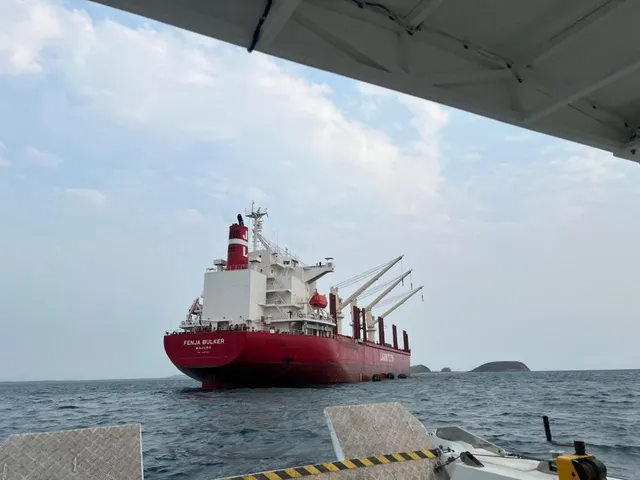
In its Asian Development Outlook April 2026, the Manila-based lender said the outlook reflects spillovers from the Middle East conflict, including higher energy and commodity prices, disrupted shipping routes and tighter financial conditions across developing Asia and the Pacific.
Inflation in PNG is projected to edge up to 4.6% in 2026 from 4.4% in 2025, before easing to 4.0% in 2027.
Recent macro-fiscal reforms have improved underlying conditions, including a narrower fiscal deficit, greater exchange-rate flexibility and better foreign-exchange availability, which have supported import-dependent sectors and lifted private-sector confidence, the report said.
However, constraints including power shortages, security concerns, inefficiencies in public capital spending and limited skilled labour continue to dampen growth prospects, compounded by inflationary pressures.
“While mining is likely to remain a key growth driver in the short term, the Middle East conflict will adversely affect the non-resource sector, particularly as PNG remains dependent on imported diesel fuel for power generation,” ADB country director for PNG Takafumi Kadono said.
The bank said the hydrocarbon sector — accounting for about 70% of resource output — could see modest gains, depending on the duration of global supply disruptions. Oil output and liquefied natural gas production are both expected to increase slightly in 2026, with LNG operations already near capacity last year.
Further upside could come from a final investment decision on the Papua LNG project and progress on other large-scale resource developments, which the bank said would provide a significant boost to economic activity.
To strengthen resilience against external shocks, the ADB said continued tax and policy reforms would be critical to improving revenue mobilisation and supporting fiscal consolidation.