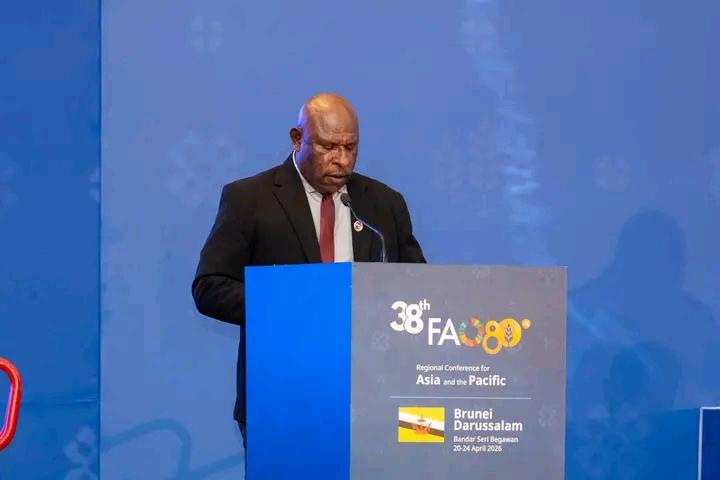
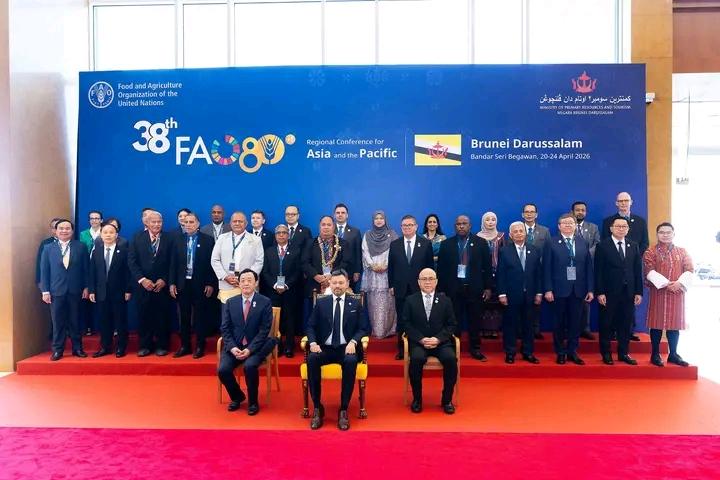
Papua New Guinea, represented by the Department of Agriculture and Livestock (DAL), has taken a strategic position in shaping regional agriculture and food security discussions at the 38th Food and Agriculture Organization of the United Nations (FAO) Regional Conference for Asia and the Pacific (APRC38), held in Bandar Seri Begawan, Brunei Darussalam, from April 20–24.
The PNG delegation joined 46 countries to address pressing challenges across the region, including food affordability, climate resilience, and sustainable agricultural development. With an estimated 1.2 billion people in Asia-Pacific unable to afford a healthy diet, the conference underscored the urgency of practical solutions that directly impact farmers, markets, and food systems.
Day 1–3: Technical Engagement and Policy Direction
The first three days of the conference (April 20–22) focused on technical sessions led by senior officials. PNG’s delegation, headed by Minister for Livestock Hon. Sekie Agisa, MP, and DAL Secretary Dr. Sergie Bang, actively contributed to discussions shaping the region’s agricultural priorities.
Key areas included agrifood systems, climate-smart farming, and trade frameworks affecting smallholder farmers. PNG officials emphasized the importance of strengthening market access and improving the affordability of nutritious food—issues closely tied to rural livelihoods.
Bilateral engagements also formed a critical part of PNG’s early participation. Meetings with FAO Deputy Director-General Beth Bechdol focused on enhancing Southwest Pacific cooperation and aligning global resources with national climate resilience priorities.
Further technical discussions with FAO’s Plant Production and Protection Division explored improving national seed systems, advancing farm mechanisation, and expanding irrigation to boost productivity. Engagements with FAO’s Animal Production and Health Division reinforced PNG’s livestock policy direction, particularly through sustainable investment and the “One Health” approach, linking animal, human, and environmental health.
Livestock Development Takes Centre Stage
A key highlight of the Senior Officers Meeting was Minister Agisa’s presentation during a special ministerial event for Small Island Developing States (SIDS), where he outlined PNG’s roadmap for livestock development.
The minister identified livestock as a central pillar of PNG’s food system, with a target to transition 600,000 rural households from subsistence farming into market-oriented enterprises.
Central to this vision is the proposed establishment of a Livestock Industry Development Authority, aimed at strengthening veterinary services and improving market pathways for smallholder farmers. The strategy also prioritises inclusion, addressing barriers faced by women in agriculture and promoting youth participation through regional initiatives such as the Asia-Pacific Food Forum.
Strengthening Partnerships and Investment
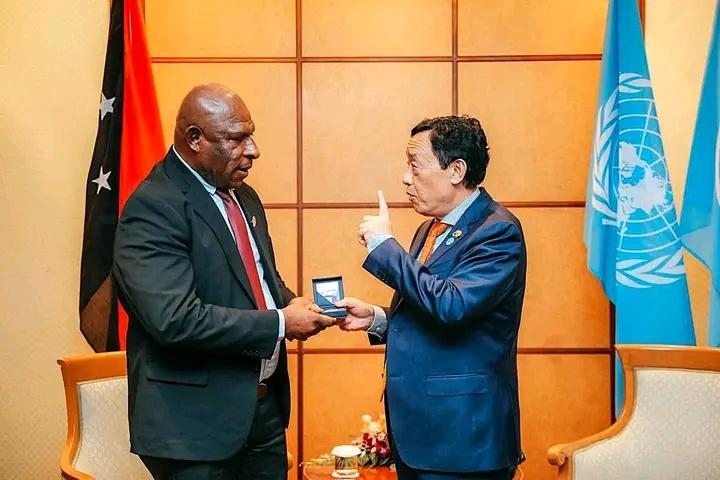
Discussions extended beyond formal sessions, with Minister Agisa holding high-level talks with FAO Director-General Dr. Qu Dongyu and senior management. These engagements focused on expanding FAO support for PNG’s livestock sector, particularly in reducing reliance on imported livestock products.
Key challenges highlighted included the high cost and limited availability of animal feed, which continue to constrain domestic production. The minister emphasized the need for increased investment, stronger partnerships, and improved supply chains to enable local farmers to operate profitable, sustainable businesses.
Day 4: Ministerial Session and Regional Commitments
The conference transitioned into high-level ministerial discussions on April 23, marked by an opening ceremony attended by His Royal Highness the Crown Prince of Brunei. Regional leaders underscored the importance of ensuring stable and accessible food supplies.
FAO Director-General Dr. Qu Dongyu highlighted the need for collaborative partnerships, encouraging countries to share technology and expertise. For PNG, this translates into practical applications such as improved weather data for farming and solar-powered storage solutions to reduce post-harvest losses.
PNG also participated in ministerial roundtables addressing “One Health” and the “Blue Transformation,” the latter focusing on sustainable fisheries and aquatic food systems as new drivers of food security and economic growth.
Day 5: Focus on Investment, Health, and Food Systems
On the final day (April 24), Minister Agisa joined the “One Health” panel, reinforcing PNG’s position that animal health is directly linked to the wellbeing of rural households and national food security.
Discussions also highlighted the need for increased rural investment, particularly in infrastructure such as roads and markets, to improve supply chains and market access for farmers.
The “Blue Transformation” agenda further explored opportunities in fisheries and aquaculture, aligning with PNG’s potential to expand food production and create employment through its marine and inland water resources.
Reducing Import Dependence in the Poultry Sector
A recurring theme throughout PNG’s participation was the need to reduce reliance on imported food, particularly poultry. High import volumes continue to drive up costs for consumers while limiting opportunities for domestic producers.
Challenges facing local poultry farmers include high feed costs, unreliable supply chains, and logistical constraints such as transport and storage. These factors make it difficult for local producers to compete with cheaper imported products.
Conference discussions linked these challenges to broader policy solutions, focusing on strengthening domestic production systems, improving infrastructure, and creating an enabling environment for agribusiness growth.
The conference concluded with the adoption of a regional report that will guide agricultural and food system priorities over the next two years.
For PNG, participation in APRC38 has reinforced its commitment to transforming the livestock sector, strengthening food security, and building resilient agricultural systems. The outcomes of the conference are expected to inform national policies and translate into tangible support for farmers, agribusinesses, and rural communities across the country.