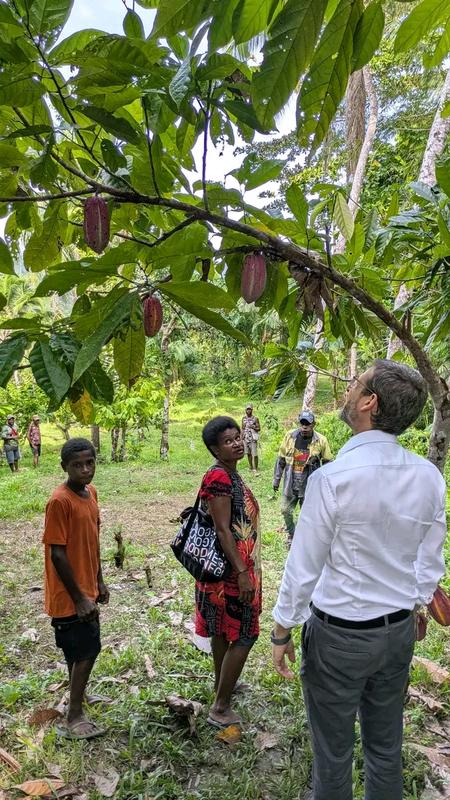
Improving access to reliable and affordable energy will be critical to unlocking Papua New Guinea’s export potential, particularly in agriculture, British High Commissioner Paul Eastwood said during a recent visit to cacao farms in East Sepik Province.
Speaking after engagements in Wewak, Eastwood highlighted the province’s role as the country’s largest cacao producer — a key export commodity and a primary source of cash income for many households. While noting the strong production base and commitment of local farmers, he identified energy constraints as a major barrier limiting growth across the value chain.
“Papua New Guinea needs to expand its export trade to grow its economy and raise living standards,” Eastwood said on April 27, citing remarks published by the UK in PNG – British High Commission. He added that long-term economic progress will depend on the country’s ability to connect producers more effectively to international markets.
Drawing on discussions on the ground, Eastwood said producing export-quality goods and transporting them efficiently to overseas buyers remains a complex challenge, compounded by inconsistent energy supply.
At the farm level, limited access to dependable power reduces efficiency in processing and storage, directly affecting the quality and volume of cacao reaching markets. This translates into fewer sales and lower incomes for farming households, as well as reduced capital for reinvestment.
“The absence of reliable energy creates barriers at every stage — from production through to transport,” he said. “It ultimately affects the ability of farmers and businesses to scale up and compete.”
He added that many rural communities rely on lower-cost energy solutions, such as basic solar systems, which can be inconsistent and, at times, pose safety concerns. This limits the adoption of improved processing methods that could add value to raw produce.
Despite these challenges, Eastwood struck an optimistic note, pointing to the resilience and determination of local farmers and leaders. His visit included a stop at a cacao farm operated by a local farmer, Maureen, where he observed firsthand the realities faced by smallholder producers working to maintain quality and meet market demand.
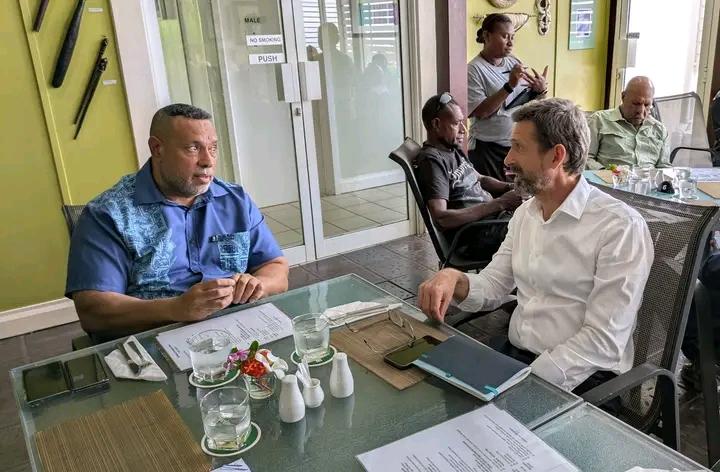
He also met with East Sepik Governor Allan Bird and Provincial Administrator Samson Torovi, commending efforts to strengthen economic opportunities and improve services across the province.
“It’s clear there is strong leadership and a real drive to improve outcomes for communities,” Eastwood said, adding that such commitment is essential to translating potential into tangible economic gains.
Eastwood emphasised that expanding energy access — particularly solutions that are reliable, secure and affordable — will be a key enabler for growth in the cacao sector and other export industries. Improved energy infrastructure, he said, would support better processing, reduce post-harvest losses and enhance producers’ ability to meet international standards.
His visit reinforces the broader development message that while Papua New Guinea has significant natural and agricultural advantages, targeted investment in enabling infrastructure — especially energy — will be crucial to converting those advantages into sustained export growth.
Eastwood also acknowledged the strong sense of community and hospitality he experienced in East Sepik, describing it as a defining feature of his engagements and a reminder of the human dimension behind the country’s economic ambitions.