September 19, 2022

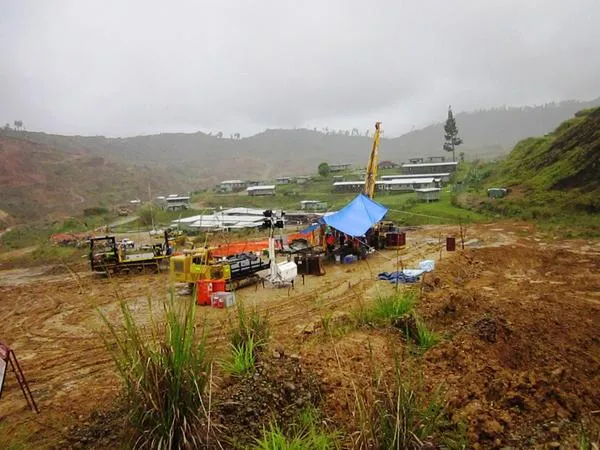
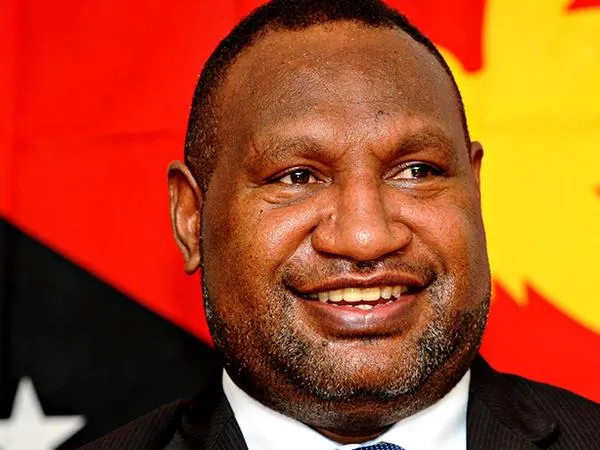
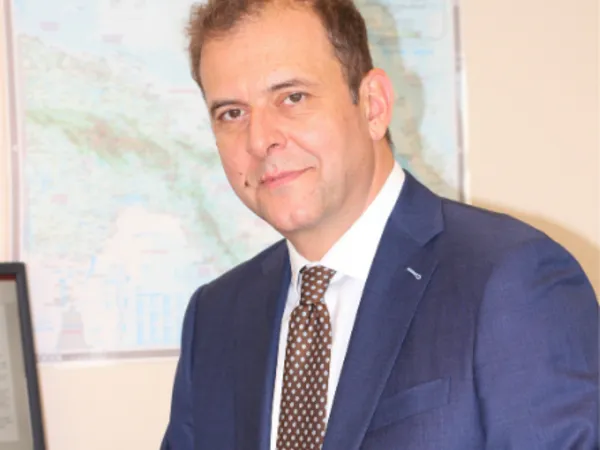
Photo credit: Niuminco Group

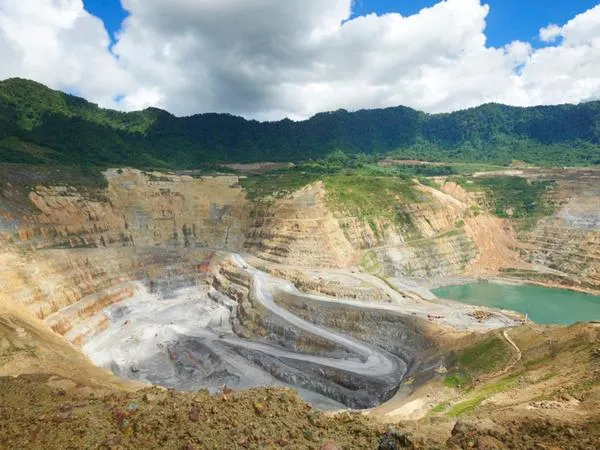
Niuminco Group Limited is pleased to announce that the Group’s application for an extension of term of its Edie Creek mining lease, ML 511, in the Morobe Goldfields of Papua New Guinea has been approved by the Minister for Mining for a further 10 years from 5 October 2021 to 5 October 2031.

ML 511 covers 3.89 sqr. kms and is located in Morobe Province, approximately 5km from Harmony Gold’s Hidden Valley Mine, which produced ~200Koz of Au and 2Moz of Ag in 2021.

ML 511 includes high grade Au-Ag veins and lower grade bulk tonnage options with substantial economic potential.

Within the mining lease Niuminco has developed a 120-person camp, mining/processing infrastructure, maintenance and administration facilities and has undertaken measured scale-up of mining & processing over the past 11 years with over AUD$10M spent on exploration during that period.

In the financial year ending 30 June 2022 the Edie Creek Mine produced 262.6 ounces (8,165.5grams) of gold and 244.5 ounces (7,606.2grams) of silver at an average recovered gold grade of 126 grams per tonne for sales of PGK1,643,278 (AUD$652,612 @ avg 2022 exchange rate).

The Edie Creek mining lease remains significantly underexplored with only 51 holes drilled for approximately 6,800 metres since drilling commenced in 1988 (24 drilled by NIU since 2011).

With the lease renewal now approved, the Company plans to carry out a 62-hole JORC Resource drilling programme along with an upgrading of its mobile mining fleet and processing plant.


Article courtesy of Niuminco Group

September 19, 2022

Photo credit: Newcrest

According to managing director Jerry Garry of the Papua New Guinea Mineral Resources Authority (MRA), processing and shipping of the gold or copper from the Wafi-Golpu project will take six years.

He commended the province executive council and Morobe Governor Luther Wenge for promoting the project's launch.

Wenge announced that Morobe has approved the start-up of the US$5.4 billion (K18.5 billion) Wafi-Golpu project.

Wenge said that Wafi Golpu was a source of income that Morobe was losing out on as a result of the delay in starting it up.

He declared that the Morobe administration, commanded by the late governor Gibson Saonu, would drop all legal actions.

Wenge stated that the province was ready to formally approve the mine and the deep sea tailing placement (Dstp) technique of mine waste disposal in December.

“Wafi-Golpu will open and DSTP will go on.

“Anyone who disagrees can take it to court with their own research and facts,” he said.

Garry said: “That is very positive support. As a regulator, (the MRA is) pleased.

“In terms of project permitting, we recognise that the project has some more work to do.

“They (operator) must be permitted to go underground, drill more holes, understand the rock formation and improve their confidence in the mineral resource itself.

“Within the five years, they will be doing a lot of drilling and developing platforms for the construction of the mine, etc.”


Reference: Pacific Mining Watch (11 September 2022). “It will take six years to process gold, copper for Wafi-Golpu Project in PNG : MRA”. 

September 19, 2022

Photo credit: Sam Moko

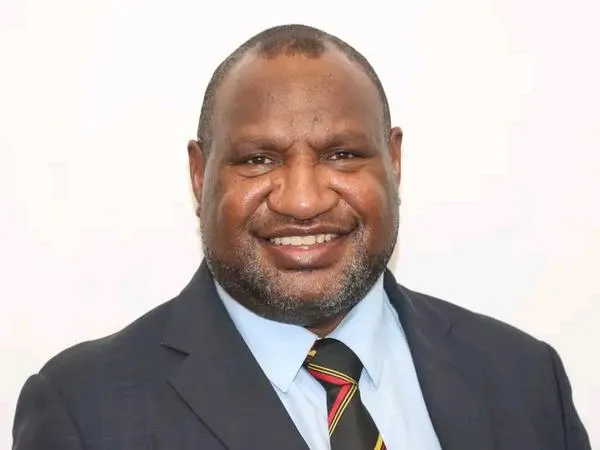
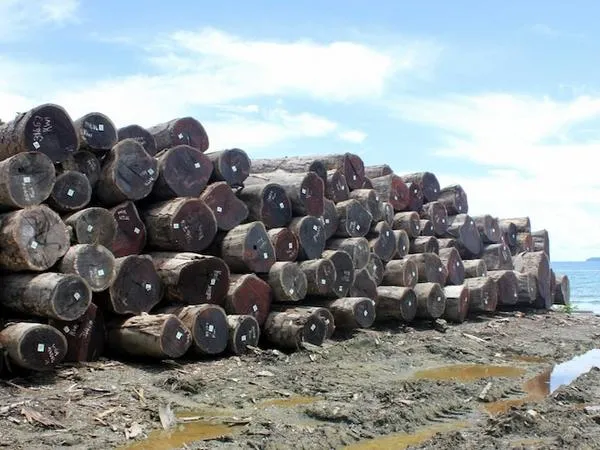
Prime Minister James Marape has ordered officials to halt the issuance of new logging licences until the 205 active ones have undergone "a comprehensive stock-take."

“We want to make more money for our country but at a sustainable rate,” he said during a visit to the PNG Forest Authority office in Port Moresby.

“This sector is a sleeping giant. We’ve been playing marbles (with it) for too long,” Marape said.

“I want you to recommend to the (forestry) minister through the board and MD (managing director) how best we can ramp up our production in this sector without compromising sustainability and good environment practises.”

Marape is also interested in learning how long the 205 permits have been active.

“And businesses not (owned by) landowner (companies) must have an element of downstream processing built into their business plan,” he said.

“(After) three years, I come to this place and I am very discouraged because we have not done much.

“There is no substantial progress in the downstream processing phase.

“No new license is to be issued. Let’s take stock of the 205 first. Inform stakeholders that the Government wants a serious placement on downstream processing.”

He requests that all already operating forestry-related firms submit their business plans on down-streaming to the Forest Authority.

“No more renewal of permits until this comes in. For those that do not have an association with downstream in their business plan, the State will exercise its right in the state marketing option that all logs cut will be put into our log ports.”

For every log that leaves the nation, a "corresponding Kina or dollar must come back into the country," he added, adding that Treasury will work on a regulation enforcing this.

“I may seem hard but I make no apology to anyone.

“It’s not just for Forestry. We will do the same for fisheries and agriculture.

“Gold, oil, and gas will follow the same process as well,” he said.

“Our resources have been plundered (with) minimum return to our country.”


Reference: Mauludu, Shirley. The National (8 September 2022). “PM halts logging permits”.

September 19, 2022

Photo: Richard Maru

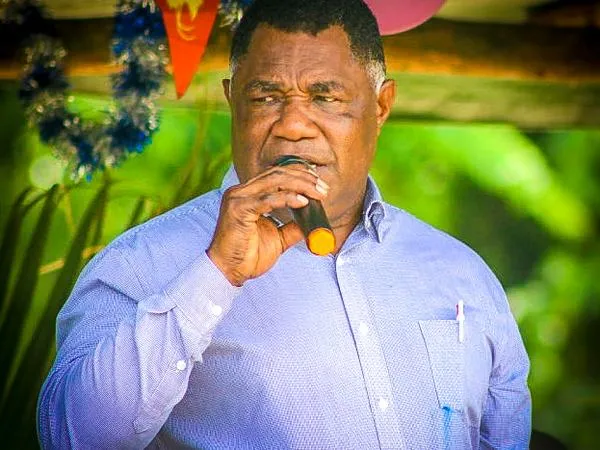
According to Richard Maru, the minister for international trade and investment, the feasibility study for a free trade agreement with the People's Republic of China should be carried out before the end of the year.

Maru reiterated PNG's commitment to a potential free trade deal with China during a meeting he conducted with Chen Jiliang, the charge de affairs of the People's Republic of China embassy.

The cost and advantages of such an arrangement would be determined by the study, he claimed.

“Both parties need to agree to the terms of reference for the study and agree to hire a neutral independent global expert to undertake the study. Without that, we cannot proceed with the study,” he said.

He anticipates that the two nations will be debating the adoption of the study's findings by January or February of the following year.

It was a result of discussions between Li Keqiang, the Chinese premier, and former prime minister Peter O'Neill in 2016.

During a trip to Beijing last year, Prime Minister James Marape repeated it.

Maru praised the Chinese government for contributing K1 million so that Papua New Guinea could hire a consultant to carry out the study's PNG portion.

Additionally, he is pleading with both domestic and foreign investors to collaborate with the government in the downstream processing sector.

“We need local and international investors to support the government in aggressively pursuing its new policy direction of replacing all food imports by investing in the downstream processing industries,” he said.

He said that before they are shipped, PNG must prepare fish, coconut, cocoa, and coffee.

“(They should) also invest in large-scale oil palm plantations in the savannah land especially in the Sepik Plains, Western, Madang and Morobe, and in cattle and other agriculture projects as well, and in the PMIZ,” he said.


Reference: The National (9 September 2022). “Maru firm on trade agreement”.

September 19, 2022

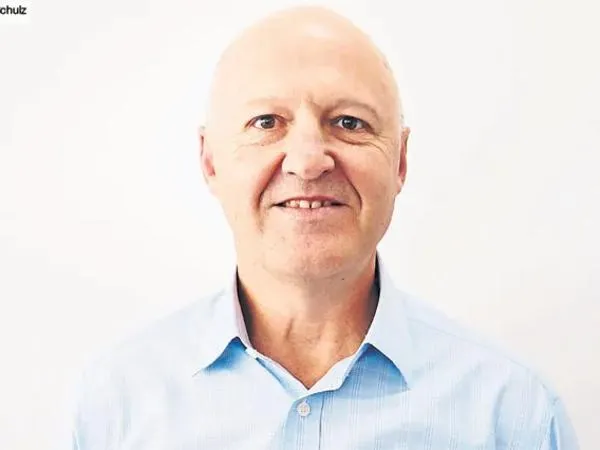
Craig Schulz has been appointed as Kumul Petroleum Holdings Limited's new chief operating officer, filling a long-standing vacancy.

According to managing director Wapu Sonk, it is essential that they have senior technical management personnel who are sufficient and properly qualified given their current level of operations in the petroleum sector, in non-petroleum related national development activities, and with upcoming major projects like Papua LNG and P'nyang LNG.

With his decades of expertise in engineering and petroleum development projects in Australia, PNG, and other countries, he said he is convinced Mr. Schulz would be a tremendous asset for Kumul Petroleum.

“As an organisation we have to be technically and managerially ready to participate in a meaningful manner in Papua LNG, P’nyang LNG and other petroleum development projects that are in the pipeline,” he said.

Having worked with Kellogg, Brown & Root, BHP, and Santos, Mr. Schulz has more than 25 years of leadership and significant project management expertise in the energy and resources sectors in Australia and other countries.

“This experience includes three years in PNG from 2010-2012 as country manager for Santos, a major partner in the PNG LNG Project and operator of the country’s oil fields,” Mr. Sonk said.

Mr. Sonk said Mr. Schulz is not new to Papua New Guinea or the PNG petroleum business and has good links to other national and international stakeholders.

“He will hit the ground running and will be actively supporting Kumul Petroleum’s existing cadre of national professionals,” Mr. Sonk said.

“Development of PNG’s natural gas resources will underpin future national development so it is important that the economic and social benefits from petroleum projects can be maximised.

“Kumul Petroleum has to have the right team members to ensure that this is achieved.”


Reference: Post-Courier (9 September 2022). “Kumul Petroleum Appoints New COO”.

September 19, 2022

The newly formed Papua New Guinea Parliamentary Election Committee has received the backing of the New Zealand Government in order to handle election-related concerns that arose during this election.

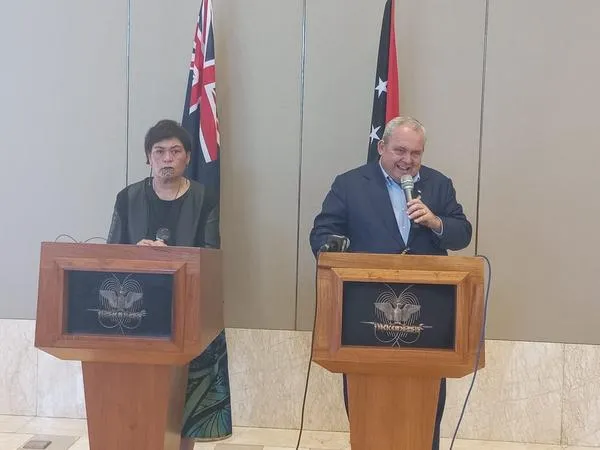
This was said by Nanaia Mahuta, the minister of foreign affairs for New Zealand, at a news conference that both nations held in Port Moresby.

In order to ensure that the electoral reform process is done correctly, the New Zealand government will advise and support the committee, according to her PNG counterpart, PNG's Foreign Affairs Minister Justin Tkatchenko.

''We have just come out of an election and we have just set up a Parliamentary Committee to address election-related issues encountered in this election and East Sepik Governor Allan Bird will Chair the Committee.

''We are pleased that the New Zealand government is very keen in offering its assistance in providing advice and other necessary support as we have many electoral issues such as the common roll,'' said Tkatchenko.     

Meanwhile, PNG has always been a solid partner, according to New Zealand's Foreign Minister Nanaia Mahuta, and the country is still dedicated to helping PNG.

''Every democratic society continues to shift and improve its electoral process and New Zealand is happy to assist PNG to improve its electoral process and strengthen the integrity of the electoral process,'' said Mahuta .


Reference: Papua New Guinea Today (8 September 2022). “New Zealand Government to support PNG Election committee Electoral Process”.

September 19, 2022

Prime Minister Hon. James Marape recently (September 13, 2022) announced 12 Vice-Ministerial allocations, in line with his Government’s focus on ‘Growing the Economy’ and ‘Strengthening Internal Security’.

He made the announcements before he left for London to attend the funeral service of Queen Elizabeth II.

Of the 12 Vice-Ministers, four will be directly assisting PM Marape, in his role as Prime Minister and Minister for National Planning.

The four Vice Ministers assisting PM Marape are:
• Hon. Jimmy Maladina (Office of State Negotiations);
• Hon. Kinoka Feo (Strategic Planning);
• Hon. Muguwa Dilu (Constitutional Matters); and
• Hon. James Nomane (Planning PIP Budgeting)

The other eight Vice-Ministers and their allocations are:
• Hon. Solen Loifa (Treasury);
• Hon. John Boito (Finance and Implementation);
• Hon. Kessy Sawang (International Trade and Investment);
• Hon. Miki Kaeok (Works and Highways);
• Hon. Thomas Opa (Petroleum and Energy);
• Hon. Raphael Tonpi (State Enterprises);
• Hon. Graham Piniau Rumet (Cocoa and Copra); and
• Hon. James Donald (Mining and Border Issues).

“The four Vice-Ministers have been given specific tasks to assist me, likewise, the other eight Vice-Ministers,” PM Marape said.

“We are timebound and want to achieve results

“It is not just a ceremonial office they are holding, unlike the past, and they have been given specific tasks just like Ministers.

“We expect the Vice-Ministers to achieve in the tasks that they have been given.”

PM Marape said Ministers’ jobs were so “wide and huge” with Papua New Guinea not being like it was back in 1975, especially population growth.

He said when he returned from his international tour-of-duty, he would sit down with individual Ministers and Vice-Ministers, and tell them what was expected of them.

“All Ministers have already been given Key Result Areas, and when I return, I will sit down with them and the Vice-Ministers,” PM Marape said.

“Likewise, when I come back, I will meet all Governors at a Governors’ Forum and engage with them on what they must do.

“We will focus especially on provinces being less dependent on Waigani for finances, with more focus on agriculture, downstream processing of forestry, fisheries, tourism and other businesses.

“I want provinces to step up in these areas and take ownership of businesses instead of just being spectators and waiting for handouts from Waigani.

“This will complement our focus on Special Economic Zones (SEZ) in all provinces and the Autonomous Region of Bougainville.

“This, I believe, will really jumpstart our economy.”


Article courtesy of PM James Marape News Page

September 15, 2022

The economy in Papua New Guinea is forecast to expand by four percent in 2022, up from one percent in the previous year, according to the latest World Bank Economic Update, released recently. This return to growth following a sharp contraction of -3.5 percent in 2020 was mostly driven by strong performance in the non-extractive sector, with agriculture being among the key contributors to economic recovery.

The report, Benefiting from High Commodity Prices, looks at recent key developments in PNG’s economy, and places these in the longer-term global and regional context where growth is decelerating, and inflation is surging in many countries due to rising food and energy prices, largely caused by disruptions in the supply chain triggered by the Russia-Ukraine war.

Despite the challenging external environment, the economic outlook in PNG remains positive, underpinned by a projected recovery in the extractive sector, higher commodity prices, and gradual recovery in economic activity. On top of this, the easing of COVID-19 policies by local authorities is increasing domestic economic activity.

“It is encouraging to see the economy returning to growth after a very challenging few years,” said Stefano Mocci, World Bank Country Manager for Papua New Guinea. “Now is the time to consolidate economic reforms that focus on key development challenges for the benefit of all the people in the country.”

Agriculture played a key role in the economic recovery beginning in 2021 driven by higher export volumes of tea, palm oil, and copra. The extractive sector did not rebound in 2021 also due to disruptions to mining operations. Nonetheless, elevated prices for commodities – in particular natural gas – will likely provide the country with additional revenue this year.

“International commodity markets have been performing well for PNG, helping the economy to grow, and revenue coming into the national budget has increased. However, these conditions are not likely to remain for long,” said Ruslan Piontkivsky, World Bank Country Economist for Papua New Guinea. “A reduction in commodity prices, and a lower demand for exports from the decelerating global economy are significant risks, and might result in slower than expected economic growth. Authorities should be prepared for this, in particular by continuing fiscal reforms that include higher revenue mobilization.”

The PNG Economic Update also includes a special focus on Boosting Economic Growth. Given the country’s abundant geographic and natural resources, the report argues that PNG’s economy can – and should – grow faster. Although the economy has more than tripled in size since independence in 1975, real GDP per capita has increased by only 0.9 percent per year; a low growth rate compared to peer countries.

The report recommends a renewed policy focus on economic growth, not only on the short-term factors affecting the outlook for the next year, but also on the longer-term drivers of the growth and welfare of the people. To achieve this, PNG should aim to renew its growth strategy to address three interrelated challenges: excessive macroeconomic volatility, low productivity growth, as well as excessive reliance on natural capital and not enough investment in human and institutional capital.

“With a growing young population, PNG’s future growth and quality of life hinge on improving human capital,” said Stefano Mocci, World Bank Country Manager for Papua New Guinea. “While PNG’s wealth has been dominated by natural capital, over the decades PNG has made limited progress in improving human capital and it is vital for government and its partners to invest in this area."

“We will continue to work closely with the PNG Government to help create opportunities and improved access to markets, education, and health– this will be essential to creating sustainable growth.”


Article courtesy of the World Bank
September 15, 2022

PNGX, Papua New Guinea’s national stock exchange, has received the Securities Commission’s approval of the new PNGX Debt Market Rules.

The new PNGX Debt Market Rules allow a company to issue corporate bonds and have those bonds listed on PNGX where they can be traded.

Corporate bonds are a type of debt security issued by a company. The company may be listed on PNGX, it may be privately owned, or it may be a State Owned Enterprise (“SOE”).

Initially, bonds traded on PNGX will be limited to wholesale corporate bonds. Retail investors will not be able to invest in wholesale corporate bonds within the first year. This is to allow the market to become familiar with the products before opening it up to the retail sector.

“Receipt of Securities Commission approval is very exciting for PNGX” said PNGX Chairman, Mr David Lawrence. “It is part of our ongoing commitment to develop the PNGX capital markets, provide companies with new ways of raising funding and providing Papua New Guinean investors with new investment opportunities” he said.

“We are in early discussions with some potential issuers of wholesale corporate bonds. We are hopeful that we can bring at least one of them to the market soon” said Ms Elizabeth Wamsa, PNGX General Manager. “We will be publishing materials explaining this new market to both investors and companies in coming weeks” she said.

As the wholesale corporate bond market is very different in its nature to the existing equities market, unlike listing on the equities market where a large number of holders are required, only one holder of a corporate bond is required for listing.

Investors eligible to invest in wholesale corporate bonds include:

  • a holder of a capital market licence; 
  • a licensed financial institution as defined in the Banks and Financial Institutions Act, 2000; 
  • an insurance company registered under the Insurance Act, 1995; 
  • a superannuation fund authorised under the Superannuation (General Provisions) Act, 2000;  
  • a unit trust scheme or a managed investment scheme;
  • a body corporate that has net assets of at least K10 million as set out in its most recent audited annual financial statements; 
  • an individual where the minimum amount payable for the securities on acceptance of the offer by the person to whom the offer is made is at least K250,000; 
  • a land group incorporated under the Land Groups Incorporation Act, 1974; 
  • a church group incorporated and existing under an Act of PNG;  
  • any other types of investor specified by the Securities Commission.

A healthy bond market brings a number of benefits to Papua New Guinea. It provides an alternative funding source for government and companies and reduced dependence on banks and secured loans. It improves access by companies to fixed-price, longer-term credit which allows companies to fund projects which have solid potential for growth and job creation, but which may find it hard to find bank funding. The ability to issue bonds with terms of up to 20 or 30 years can be attractive for funding infrastructure projects. The ability to readily issue longer term bonds also allows banks to offer longer-term loans and mortgages. From an investor’s perspective, they are able to diversify their investments to reduce both the capital risks and the volatility of returns.


PNGX has also received formal notification of approval and pending gazettal of Orders under the Capital Market Act 2015 by the Securities Commission relating to facilitating issuance of corporate bonds to wholesale investors. PNGX is awaiting approval by the new Minister for International Trade and Investment of the second set of orders which will allow PNGX to bring the new Debt Market Rules into effect for the wholesale corporate bond market.


PNGX has previously announced that it has entered into a Memorandum of Understanding with XBourse and Pacific Capital Markets Development to work together to explore the phased development of state-of-the-art digital market infrastructure and services for multicurrency post-trade settlement and registration solutions for public and private markets, including bonds.


Article courtesy of PNGX

September 15, 2022

Photo credit: IRC

Prime Minister Hon. James Marape today announced a record K9.7 billion tax revenue collection by the Internal Revenue Commission (IRC).

He made the announcement as he prepares to travel to London for the funeral service of Queen Elizabeth II and as Papua New Guinea prepares to celebrate its 47th Independence anniversary on Friday, September 16, 2022.

I commend the sterling performance by the Internal Revenue Commission for the last eight months, PM Marape said.

Papua New Guinea could not have asked for a better 47th Independence Anniversary performance indicator of a key State energy working its heart out. This record collection is the highest ever since 1975, and most importantly, highest collection ever in a tough year.

As of week ending September 9, 2022, the Internal Revenue Commission has collected around K9.7 billion with net transfers of K9.4 billion to the Waigani Public Accounts as projected by the 2022 National Budget. 

This is a record achievement in a fiscal year, where IRC was able to surpass its annual target in the space of only eight months. 

Compare the first eight months of this year with first eight months of last four years: IRC’s Tax Revenue Collections in 2022 was boosted by a windfall in the petroleum and gas sector directly related to the Russian-Ukraine conflict. The global supply constraint coupled with higher demand as a result of post-COVID normalcy has seen the price of oil nearly double in space of just 12 months. Total Mining and Petroleum Tax (MPT) collection in the first eight months of 2022 totalled K2.965 billion. 

Whilst windfall from MPT is acknowledged, other taxes have also performed strongly in 2022 – a reflection of some of the transformational interventions introduced at IRC since 2019. 

The average MPT collections for the past four years (2018-2021) was K379 million.

The average total collection for first eight months of the last four years was K5.657 billion.

2022 total collection for the first eight months, less the MPT windfall, is K7.163 billion.


A total of K1.5 billion in increase revenue not attributed to MPT windfall has eventuated in the last eight months of 2022. 

Non MPT taxes have performed well above the average of the last four years. IRC is beginning to see the fruits of its revenue initiatives and will continue to strive on becoming a robust and efficient tax administration by 2025.”

PM Marape said some of the notable initiatives and their revenue gains were as follows:

  • Introduced stringent Goods and Services Tax (GST) verification for refunds.  This resulted in 20 per cent increase in GST collection annually or K200 million; 
  • Cessation of credit offsets of GST to pay Salary and Wages Tax (SWT) liability. This resulted in K30-K40 million plus /month or K500 million annually;
  • GST s65 was rolled out. This resulted in K200 million-plus in the last eight months;
  • Increased media presence and awareness via media, resulting in on time payment improvement;
  • Increased support to provincial officers for tax inspections and awareness; and 
  • The overall taxpayer awareness, improvement in efficiencies, increase in compliance activities and use of technology, amongst others, has contributed towards the sustained improved performance of IRC since 2019.

The Marape Government is intentional in raising internal revenues, hence, this year the Government increased the budget of the Internal Revenue Commission, the Prime Minister said.

In 2022, the Government provided K160 million. This is the biggest budget support ever for IRC. 

I understand that IRC has initiated 32 major reform projects to transform IRC into a robust, modern and efficient tax administration by 2025. The Government will continue to support IRC in the next two years to ensure that those projects are implemented successfully.

The Marape Government’s focus is on growing the economy, raising internal revenue and reducing borrowing over time. 

The Government has intentions to introduce the immediate tax reliefs to cushion the impact of inflation.

The Government is also work toward the Golden Jubilee Anniversary in 2025 where most of the taxes, especially Salary and Wages Taxes and Corporate Income Taxes, will be reduced. IRC is currently undertaking all these projects to establish a cohesive collection mechanism so that any reduction in tax rates (tax revenue forgone) will have revenue positive effect.

September 13, 2022

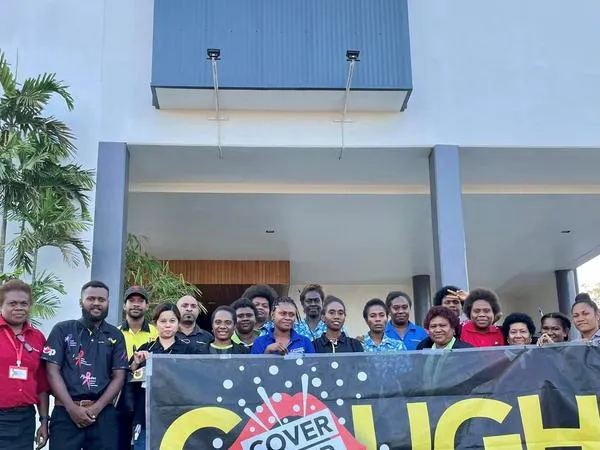
This week in Kokopo the Businesses for Health (B4H) TB project partnered with leading businesses to address PNG’s ongoing Tuberculosis crisis. Even though drugs that eradicate TB have been around since 1944, worldwide 1.5 million people still died of the illness in 2020.

TB has been in PNG a long time. In the 1930s it was the largest cause of death at the Nonga hospital in East New Britain. In 2022, TB remains the most common reason for admission to hospital both in ENB and at the Port Moresby General Hospital in the National Capital.  This year PNG will record at least another 4300 deaths from TB. B4H is working with businesses to change this.

B4H works hand in hand with business to generate workplace TB leaders who learn to address TB issues in their workplaces as well as with their families and local communities.  “TB is a serious development challenge for Papua New Guinea. At B4H we work to grow leaders in the workplace who can speak up and act.  Awareness alone is not enough.  Ignorance, stigma and complacency about poor health kills people, says Dr Ann Clarke B4H project manager, “to help address this every workplace needs policies and people trained to deliver activities to enable early case finding and swift return to work.

This is why Kokopo businesses sent people to our 3-day workplace TB course. They will now go on to change the mindset and improve health seeking behaviour. Employees leave our training knowing that coughing is not normal. They learn coughing is a sign of disease, and all people with persistent coughs need kindly and respectfully to be supported to get checked.  It is completely unacceptable to let workers, family or community members die of this preventable and treatable disease.”

Over thirty local business leaders attended our TB update evening hosted by the Rabaul Hotel in ENB. PNG Air flew us here, The Gazelle Hotel hosted our team to deliver workplace training, the Remington Group printed our training manuals. These businesses know exactly how much just one ignored, or badly managed case of TB can impact their people and profits. TB is a massive burden on the PNG economy, Dr Clarke continued.

“By teaching people about the long and complex clinical pathways for TB, introducing them to the provincial health teams and services we build confidence in and access to free TB services.  We are so pleased to include local experts like Dr Grace Baiwan, Physician at NONGA. Dr Grace made it very clear, we can end TB if people bring her patients quickly before they create more TB patients. The trainees also met the TB and HIV teams at Butuwin Health Centre as part of our course. This is not just sit-down training. This is about building health leadership and learning to speak up, B4H TB HEO Koratsi explained.

TB is not just an East New Britain issue; this is a regional issue. We need everyone in our region to pitch in with all their political, economic, and humanitarian might.  The suffering generated by 40,000 TB cases in PNG is a crisis for anyone seeking to live, work or study overseas or enjoy a long and healthy life in PNG.

B4H is grateful for some support for the project managers role from the Global Fund’s COVID-19 response grant to PNG. Without it, Dr Clarke would be unable to be here at all. Her task is to restore business participation in their mission to end TB. The trainees in Kokopo are strong women (and a few men) who are now empowered to speak up. We leave ENB knowing we have 19 more loud and informed voices to drive change and save lives.  B4H is a brilliant example of what we achieve in partnership with the Department of Health, the private sector and donors.  Dr Clarke said.

September 13, 2022

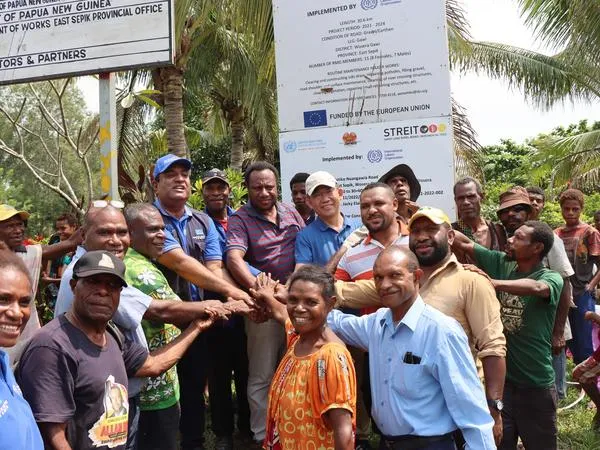
EU-STREIT PNG started work on two additional farm-to-market access roads in Sandaun and East Sepik provinces totalling 56 plus km, to serve over 16,000 villagers, including businesspersons, women and school children, with improved access to towns, health posts and schools.  

The International Labour Organization (ILO) under the EU Funded UN Joint STREIT EU-STREIT PNG has started major improvement work on two key Farm-to-Market Access Roads in Vanimo-Green District, Sandaun Province and Wosera-Gawi District, East Sepik Province.

Connecting two Pasi and Krisa rural communities in Bewani-Wutung Onei LLG of Sandaun Province, this 25 km road will serve more than 3,000 rural population.

Thirteen thousand plus villagers living in South Wosera and North Wosera LLGs, East Sepik Province, will also benefit from a road rehabilitation project started by ILO to improve the 31.6 KM Farm-to-Market Access Road connecting Patiko and Nuangawai rural communities, it includes 13,000 plus farming-dependant population who lives along this road.

The roads rehabilitation and maintenance projects implemented by the EU-STREIT PNG Programme will provide safe, reliable, and climate-resilient transport infrastructure to cocoa, vanilla and fishery-dependant farming communities in the Sepik region, facilitating agribusiness nourishment, people, goods and crops movements and better marketing for locally produced agri-food products.

“These roads are important since they help the trade and open business opportunities, market access and also help who provide services such as trucking and Public Motor Vehicle (PMV) operators for movement of people and goods,” said Mr Wesley Weli, Director of National Authorising Officer Support Unit, Department of National Planning and Monitoring. 

Likewise, these farm-to-market access roads are also a relief to villagers, particularly women and mothers who carry heavy loads and walk with their children for hours to the main highway to catch a PMV to town to sell their produce and get medical treatment.

“These roads are very important also in terms of enabling socioeconomic indicators, including health, education, and financial services. These roads also help local businesses and movement along the roads. These projects are a win for all fronts, for all people living around roads,” explained Mr Weli.

“We mothers feel the pain of carrying heavy garden produce as well as our sick children and walk this road for hours to the junction. If we’re lucky, we catch a PMV to town. If not, we walk back to the village and do the same thing the next day,” said Maria Mali, a mother of 11 children and grandmother of 12 grandchildren, living along Pasi-Krisa road in Bewani-Wutung Onei LLG.

Maria was part of about 500 villagers who celebrated the start of specific maintenance and Rehabilitation work on the Pasi Krisa road. She has been married for 45 years and shares the dilemma the women in the area face. She said there has been no proper maintenance on this road until the recent intervention by ILO under the European Union-funded STREIT Programme in Papua New Guinea.

The two roads rehabilitation and improvement projects will be completed in 12 months which include scarifying and reshaping of existing surface, spot re-gravelling, construction of reinforced concrete cement (RCC) box and pipe culverts, and gabion retaining wall as well as installation of crash barrier at different locations. The works also include erecting traffic signs and signages to increase visibility and ensure safety of passengers. 

Speaking at the ground-breaking ceremony to mark the start of Patiko-Nuangawai access road’s rehabilitation work, the EU-STREIT PNG Programme Coordinator, Dr Xuebing Sun said, “Road is the backbone of many rural infrastructure systems. Road provides assurance for the supply of the agricultural inputs, facilitates the delivery of the farm outputs to the markets, and assure your accesses to financing, health and education services. Road will also help you to strengthen competitiveness of your products in the market.  Sincere thanks to the EU for its generous funding support, I am really happy that after one year, this road can reach you. I want to request for your active support, contribution, and participation to this road project as much as possible. Sustainability and long-term use of the road through effective maintenance rely on you; you are the ones who are going to use and own this road.”

Calling on the community to support the road project, ILO’s Chief Infrastructure Specialist, Mr Shailendra Kumar Jha, said, “the contractor is willing to complete the whole roads with quality before the 12 months period, that will generate thousands of paid decent jobs for local community and youths, however community support and collaborations are must. The Road project will also transfer the skills to local youths for future use and employability.”

This Pasi-Krisa (25 km) & Patiko-Nuangawai (30.6 km) are two out of 15 selected rural roads in the Sepik totalling 264 km in length for rehabilitation/specific maintenance by ILO to support the market access initiative implemented by the FAO-led EU-STREIT PNG to boost agribusiness activities and cocoa, vanilla and fisheries value chains for an improved income and cash flow for the rural sector. The roads will also support other agricultural, business, markets, services, inputs and social and community activities and facilities like schools, aid posts and health centres that are in dire need of better accessible roads.

The EU-STREIT PNG, as a UN Joint Programme (FAO as the leading agency, and ILO, ITU, UNCDF and UNDP as partners), is the largest grant-funded Programme of the European Union in the country and the Pacific region. Being implemented in close cooperation with the National and provincial government institutions, research entities, civil society organisations, and private sector enterprises, the Programme aims to help improve the lives of the people from East Sepik and Sandaun provinces by focusing on increasing sustainable and inclusive economic development of rural areas through improved economic returns and opportunities from cocoa, vanilla and fishery value chains while strengthening and improving the efficiency of value chain enablers, including the business environment, and supporting sustainable, climate-resilient transport and energy infrastructure development. 

September 13, 2022

The Grand Papua Hotel in Port Moresby is a proud winner of The World Travel Award 2022.

The World Travel Award recognizes and celebrates the hotel industry worldwide, with votes cast by travellers, guests, and industry players. It is the first year the Grand Papua Hotel has entered The World Travel Award and we are proud to have been awarded the following:

Grand Papua Hotel – World Travel Award – Papua New Guinea’s Leading Business Hotel 2022

“It is another prestigious milestone for the Grand Papua Hotel again this year to be recognized as a world class upscale boutique hotel providing a high-end product and services in Papua New Guinea”. Says Senior Vice President & Group General Manager Peter Laigaard Jensen

Grand Papua Hotel is situated in Port Moresby’s Central Business District, and offers 161 upscale guest rooms, suites, and residences. The Hotel was built in 2011 and continues to provide a high standard in its products and services for business travellers and corporate guests who want an upscale hotel experience with friendly service. And not at least the newly opened roof garden concept on 15th floor with culinary delights open from Thursday to Sunday

Peter Laigaard Jensen explains: “We continue to take pride in giving our guests reasons for coming back not only to Grand Papua Hotel but also to Papua New Guinea and Port Moresby – this award is dedicated to all our hardworking employees and loyal guests”

The Grand Papua Hotel boasts an upscale setting and guest experience with the Grand Brasserie, the 15th Floor, Grand Bar, and Grand Café, Grand Spa, and the Executive Lounge located on the 15th Floor as well.

Group General Manger, Radisson Individuals Peter Tudehope express his gratitude to all staff and management in Grand Papua Hotel. I am very pleased Grand Papua Hotel – A Member of Radisson Individuals are awarded as a best-in-class property”.

September 12, 2022

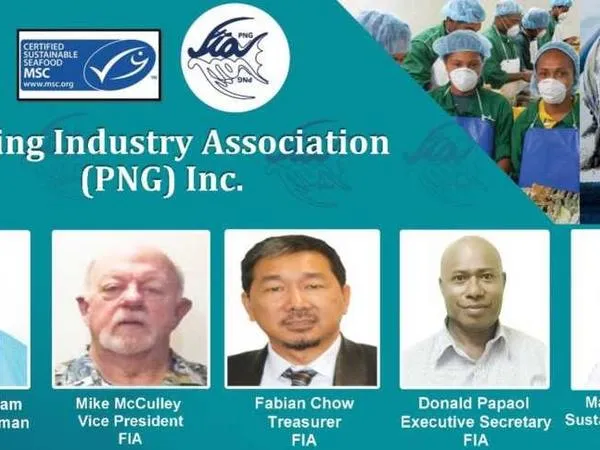
The president & chairman of Papua New Guinea's Fishing Industry Association (FIA), Sylvester Barth Pokajam is calling on the new Government to reform its National Fisheries Authority policy document. This policy document provides the legal framework and guides the regulatory regime of the fisheries sector.

The policy should focus more on key areas on building basic and appropriate infrastructure such as fishing ports, having affordable and readily accessible utilities such as water, electricity and communication is vital for the growth of the industry and to foster interest amongst many individual groupings and businesses both within and outside to look at fisheries investment opportunities in PNG.

Mr. Pokajam said, “Attracting Foreign Direct Investment (FDI) has stalled since 2013 due to inconsistent and sudden shift in Government policy after Grand Chief Sir Michael Somare’s regime”.

“In fact, between 1998 and 2013, six new tuna-processing plants were built in PNG, but investment has been stalled since then”.

The FIA also refutes the claim by so called external advisors and experts that attracting investors is not the main problem.

“It is not just investment but finding the right investment. Investors must be enticed or attracted to invest where there is a win-win situation for both parties”. Said Pokajam

Mr. Pokajam emphasized on two factors that determine potential fishing operators to invest, which are;

  • Fishing operators invest in processing to gain license concession. This is a conventional global practice that rewards frontrunners for investing substantially in developing the local industry and the sector.
  • We need processors to invest not fishing operators to invest. This is a situation where a processor is able to put in place additional shifts in its processing operation as a result of the expansionary government policy where the negative impacts are reduced.


The FIA strongly supports the Marape Government in taking back PNG as it strives to fully involve and support the participation and inclusion of PNG in the fishing and processing business.

Pokajam said "The FIA is happy that the Prime Minister continues to support the PNG aspiration to make PNG the tuna capital of the world, a feat that is not impossible under his leadership".

"This is a quest we planned for after we were able to negotiate a Tariff free access to the EU." added Mr. Pokajam.

During Pokajam's tenure as the former Managing Director of the National Fisheries Authority from 2004 to 2014 he had seen the rush of serious proposals for on-shore investments. A lot of major investors such as Frabelle PNG Ltd, International Food Corporation Ltd, Nambawan Seafood Corporation Ltd, and Majestic Seafood Ltd were established in Lae, in addition to RD in Madang and South Seas Tuna Corporation Ltd/FCF in Wewak.

Two other investors who had already acquired land in Lae, signed project agreement with the State in 2013, but did not continue due to sudden change in Government Policy.

One of the biggest investors was Majestic sea food Ltd which is partly owned by the two world players in the tuna processing industry, Thai Union Group of Thailand and Century Pacific Food Inc of Philippines, Thai being the biggest tuna processor in the world and Century the biggest in the Philippines. Majestic Sea Food Ltd and our current tuna industry players have played a huge role in helping to boost our export to EU markets.

Pokajam explained that the Cost to operate a processing facility in PNG that competes in the world continues to be a big challenge. An ideal set up should be an entity doing fishing and processing at the same time ensuring supply of tuna for processing and the flexibility to market its products so that it can reduce the impact of high cost.

FIA was also able to secure a reputable Marine Steward Council (MSC certification scheme) ECO label for PNG.

"There is a lot more work to do. We shall work closely with the Prime Minister and his Government by providing accurate industry market information to guide the Government to enable us to achieve our aspiration". Said Pokajam.

In relation, another issue with the current Government policy is the higher prices it charges for the country’s vessel-day scheme (VDS), which governs its tuna-fishing sector.

From hard facts, other Pacific nations are charging USD 6,000 to USD 7,000 (PGK21,700 – PGK25,300) for daily access for their domestic fleets, but in PNG, the cost is USD 10,500 (PGK38,000) daily.

Investors that would like to invest in PNG look for competitive cost of license and the VDS is a scheme PNG can use to attract both local investor and foreign direct investors.

In late February 2022, the number of tuna purse-seiners (Large fishing vessels) flagged to Papua New Guinea had dropped significantly as a result of the higher prices. More PNG flagged vessels are reflagging to other Pacific countries, especially Nauru and FSM (Federated States of Micronesia).

Since 2019, a total of 28 vessels have moved to reflag to Federated States of Micronesia and 9 reflagged to Nauru. These two countries offered discounted vessel day scheme fees and facilitated access for vessels to fish in the Eastern High Seas Pocket. Only a dozen purse-seiners remain flagged to PNG.

The National Fisheries Authority (NFA) is very much aware of this dilemma and have stated that the country needed “conducive policies in place to attract vessels to carry the PNG flag and fish in the country's fishing zones.”

In addition, the FIA also shares the same sentiments as expressed by “The Farmers and Settlers Association Inc.,” that the Government should not get involved directly in the industries whether it be fisheries, forestry and downstream processing of precious metals which is something that should be discouraged at the outset.

Past experiences have shown the many failed ventures that the Government had been involved in and therefore the Government should concentrate more in supporting domestic PNG private sector entities and foreign direct Investors through an expansionary fiscal policy.

September 12, 2022

Photo: PM Marape speaking during the launching of the K130 million Paga Hill Paradise project in Port Moresby

Prime Minister Hon. James Marape has welcomed foreign investors into Papua New Guinea, as he launched the K130 million Paga Hill Paradise project in Port Moresby recently (September 8 2022).

He said the 22-storey luxury apartments project, besides Fairfax Harbour, was at the heart of the Special Economic Zone (SEZ) earmarked by Government in the National Capital District and would be completed over two years.

Present with PM Marape were NCD Governor Hon. Powes Parkop; Moresby North-East MP Hon. John Kaupa; Sarawak (Malaysia) Minister for Tourism Creative Industry and Performing Arts His Excellency Dato Sri Haji Abdul Karim Rahman Hamzah; Malaysian Ambassador His Excellency Mohamad Nasri Abdul Rahman; Chinese Embassy representative Jiliang Chen; developers of Paga Hill Paradise and members of the private sector.

PM Marape thanked the investors for having faith in Port Moresby and PNG by investing K130 million.

“My Government – regardless of colour, political divide, religion or tribe – encourages business investments,” he said.

“This is a country that has shown its ability to repay its investors with a substantial return on investments.

“Going forward, you will not be discouraged if you invest in our country, you will have a good return on your investment.

“In 1975 we had an economy that was under K5 billion, in 2011 we had an economy of K44.4 billion, in 2019 when I took over from Government we had an economy of K79.6 billion, today after three hard years – and endorsed by International Monetary Fund and World Bank – our economy is peaking at K110 billion.

“We are a nation that is growing.

“My generation of leaders envisages growing our economy to a K200 billion economy over the next eight years.

“This time, 10 years from today, our economy would have gone past K200 billion.

“As the economy expands, there’ll be a lot of room and need for services, infrastructure, buildings, entertainment precincts.

“Special economic zones are meant to be places of investment, expansion, and I thank the investors for choosing to invest here.”

PM Marape said the Port Moresby SEZ was one of many that would be established in all 21 provinces and the Autonomous Region of Bougainville.

“The special economic zones must attract investments, and we invite investors to go into those special economic zones,” he said.

“Paga Hill Precinct in the city centre has been ticked by Government as a special economic zone, with the support of the National Capital District Commission, and investors must come here to this all-inclusive ‘city within a city’ and business centre.

“This area must be given a modern outlook in line with Governor Parkop’s ambitious, but achievable, plan to deliver Port Moresby as the ‘amazing city’ of the Pacific.”


Article courtesy of James Marape News Page

September 12, 2022

Photo credit: The Statesmen

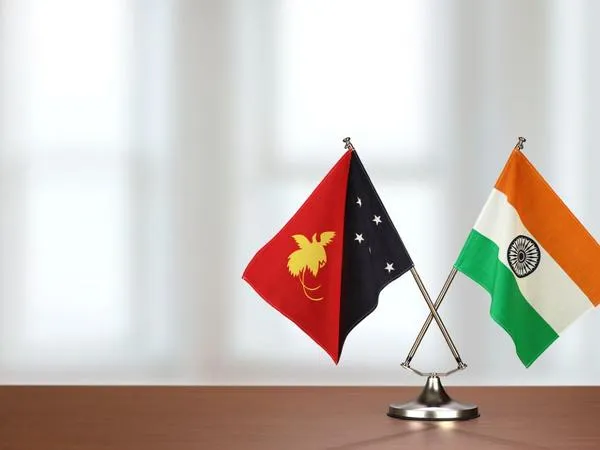
According to India's High Commissioner Inbasekar Sundaramamurthi, Papua New Guinea exports to India five times more than India does to PNG.

“This means the balance of trade is in (PNG’s) favour,” he said.

According to Sundaramamurthi, India and PNG had bilateral trade of about $427 million (K1,471.13 million).

Around US$70 million (K241.168 million) is what India exports to PNG, and US$357 million is what PNG imports from India (K1,229.96 million).

“But we are okay with that (trade) because as a country in the Pacific, PNG needs all the support.

“So we buy commodities, raw materials and minerals.

“We are also ready to transfer technology to you through agriculture.”

Sundaramamurthi explained that India “understand the sentiments because Prime Minister James Marape wants jobs to remain here and downstream processing to happen in the country”.

“So we are all ready to support that,” he said.

“In other countries, you have to move beyond just selling commodities.

“We are ready to buy commodities but we are also ready to teach you technology, and capacity building,” Sundaramamurthi said.

According to him, India exports PNG textiles, machinery, food, medicines, surgical supplies, and rubber.

However, the exports from India travel through China, Malaysia, and possibly Australia to reach PNG.

“Which means cost becomes higher,” he said.

“We could avoid the middlemen.PNG exports to India nickel, copper, pearl, wood, wooden articles and cocoa.”


Reference: Moi, Clarissa. The National (5 September 2022). “Envoy: India ready to help PNG”.  

September 12, 2022

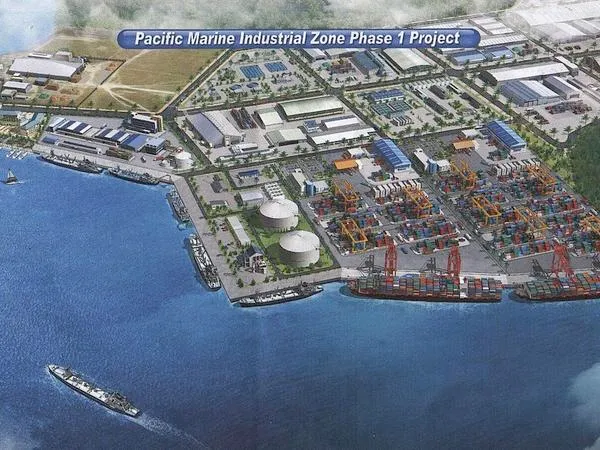
According to International Trade and Investment Minister Richard Maru, the construction cost of the Pacific Marine Industrial Zone (PMIZ) project in Madang may be close to K1 billion.

Maru stated that although the government had set out roughly K70 million for the project, it might not be sufficient.

“We are going to make sure that PMIZ is going to be constructed as soon as possible,” he said yesterday.

“We will shortly be calling a meeting with the Fisheries (and Marine Resources) Minister (Jelta Wong), PNG Ports, KCH (Kumul Consolidated Holdings) on how we can raise K1 billion to build the park.

“I’m talking wharves, sewerage system, water, power.

“We need to raise the funds internally if we can, and get on with the construction of PMIZ as soon as possible.”

The undertaking would fall within the purview of the ministry that Maru oversees.

To move on with the project, the National Fisheries Authority secured 130 property titles from the Department of Lands and Physical Planning. Wong received the titles from department secretary Benjamin Samson Wednesday at the start of the PNG provincial fisheries conference in Port Moresby.

Samson said: “117 of the titles are for industrial purpose and 13 are for underwater resource and residence.”

“This makes PMIZ the first of three projects to have land titles issued, considering we are yet to get titles for Motukea Wharf and Manus Wharf.”

In 2004, the then-cabinet of Prime Minister Peter O'Neill approved the PMIZ project to be built at Vidar.

According to the NFA, the nation's 2.4 million square kilometre fisheries zone is the biggest in the South Pacific.


Reference: The National (7 September 2022). “Maru optimistic about PMIZ”.

September 12, 2022

When Parliament convenes in October, it is anticipated that the National Trade Bill, which was approved by the National Executive Council in 2021, will be presented.

The National Trade Office Bill aims to address the need for anchoring the government's trade policy role, removing redundancy and resource waste, and giving the newly established National Trade Office a legislative authority to carry out its duties.

Richard Maru, the minister of international trade and investment, promised to see to it that the law is introduced at the next session of Congress.

During the handover-takeover ceremony with the departing Minister for Foreign Affairs and International Trade, Soroi Eoe, he announced this.

The National Trade Office will oversee international trade and investment.

Since its founding in October 2020, the National Trade Office has been operating for approximately two years.

The new ministry will operate independently of the previous Ministry of Foreign Affairs, with an emphasis on global commerce and economic security as part of the government's "Take Back PNG" policy.

The Electronic Transaction Act (ETA), the Trade Defense Bill, the National Trade Office Bill, and the Trade Policy Implementation were all introduced by the National Trade Office under the direction of Minister Eoe.

The National Trade Policy Strategic Implementation Plan has been authorised by the NEC and is prepared for implementation by the different trade players.

The ministry has to be improved, according to Mr Maru, who also pledged to keep working on some of the projects launched for the benefit of the populace.


Reference: Wohi, Lorraine. Post-Courier (8 September 2022). “National Trade Bill To Be Tabled In Parlt”.

September 12, 2022

Photo credit: Newcrest

With the help of royalties, taxes, a production levy, and vendor agreements, PNG has received K1.5 billion from Newcrest's Lihir Gold Mine in the province of New Ireland.

Speaking during the recent induction of the Members of the 11th Parliament in Port Moresby, Newcrest PNG country manager Stanley Komunt stated that the business is dedicated to investing in PNG.

He stated that Newcrest is pleased with the progress it has made toward a more powerful and affluent Papua New Guinea and that it looks forward to "expanding our presence in the nation for many years to come."

“In financial year 2022 (from July 2021 to June 2022) the highlights of Lihir’s contribution to PNG include, but are not limited to the following K238.8 million total tax and production levy paid to the PNG government, K85.8 million in royalties paid to the PNG government and Newcrest prioritises the purchase of goods and services from local suppliers and contractors in PNG,” Mr Komunt said.

“In 2022, the company paid K1.2 billion to PNG suppliers for operating costs including equipment, labour, maintenance, consumables, food and fuel and out of this, over K553 million was to Lihirian vendors, which is an increase of 8 per cent on the same period last year.”

One of the biggest foreign exchange donors to PNG, according to him, is Newcrest, which purchased K1.711 billion in cash and contributed almost US$487 million to the country's foreign exchange balance.

Measures attempted to lessen the effects of COVID-19 on Lihir's communities and activities, according to Mr. Komunt, resulted in an extra K144 million in management expenses.

He also emphasised the need of stable policies and regulations, which will promote expanded mining exploration and the approval of new mining enterprises.

September 08, 2022

Prime Minister Hon James Marape recently addressed the importance of the partnership that the government and businesses can foster to discuss policy, financial barriers, technology and innovation so that growth in business can be accelerated. 

He highlighted this during the Business Council of PNG's Back to Business Breakfast which was held on the 30th of August at the Stanley Hotel and attended by Ministers of State, executives of the business council and members of the private sector.

The Prime Minister's address was followed by a panel discussion and a question-and-answer session with "key economic ministers".

As this was the PM's second business breakfast, He said "businesses are key drivers of the economy that I acknowledge, so conducive policy, and a regulatory business environment are key ingredients".

"Last year when I addressed the business council I stated that the government will be responsive to create a a conducive environment for business, trade, and investment. The consultation of the private sector is significant in putting together policies so that interventions can be established to grow the private sector".

Marape said that during the second year of his tenure as the Prime Minister, the country was just recovering from the peak of the Covid - 19 pandemic.  At that time, his government was at the stage of placing critical actions to restore the economy, growing it as well as dealing with the aftermath of the pandemic. Despite these challenges the economy showed stability as the country adapted through well managed investments from that period of great uncertainty to a period of more hope.

The PM also took the time to show his gratitude and appreciation to the many investors and business houses who continued to operate and provide vital services and employment opportunities for the people during those trying times. The government has pledged to do its best and plans to build confidence in the business environment to support them in growing and sustaining their businesses.

Furthermore, Marape added that his Government remains fully focused on implementing Micro Small and Medium Enterprises (MSMEs) that will empower the people to become productive and self-sustaining. The number of MSME's has continued to expand and business and investors have a major role to assist this sector grow through provision of credit and business literacy skills. A thriving SME sector empowers the small business owners to be self-sustaining and contributes to economic development.

In relation to this, Marape continued by highlighting that in order to  create and increase business opportunities key ministers have been retained in their portfolios for continuity and stability while some portfolios have been merged to free up ministerial positions. This has now allowed the government to create new ministries that best reflect its key priorities. The new ministries created are International Trade and investment, Oil Palm, Livestock, Coffee, and Agriculture. These ministries will ensure that more focus and attention is given to their mandate to strengthen their capabilities and production. This will allow this economic sub sectors to grow and harness their potential for increased investment and revenue generation by business houses and the rural population.

The government is also focused on unlocking customary land for business and commercial purposes. That is why it is placing great emphasis on sustaining Agriculture for over 82 per cent of the population. The restructure of the ministries and separation of Livestock, Coffee and Oil Palm is important in making this a successful process.

"We want to grow our economy and create more opportunities for our people. The road ahead requires a concerted and collective effort to fully realize our economic potential"

"We would like to return our country to a place where it is safe for our investors to do business and I encourage the private sector to to work with the government to grow the economy through effective partnership arrangements”. Marape said.

The Prime Minister concluded his statement by saying "To achieve this I am confident that the restructuring of my cabinet and its refocus will derive the desired outcome that is beneficial to our socio-economic development aspirations in the next five years”.

September 08, 2022

Oil Palm growers, investors and stakeholders need to take notice and work closely with the government to revamp the once thriving industry.

The newly appointed minister for Oil Palm Hon. Francis Maneke realizes and sees the creation of the Oil Palm industry as a way forward and a huge advance in the industry that has been subjected to indifference for the past 40 to 50 years.

Maneke who is also the MP for the Nakanai electorate in the West New Britain Province said

" It was unfortunate that over the years the cash crop had been allowed to deteriorate through lack of attention, research and development, grower incentives, downstream processing and other value adding innovations".

 "The government's vision to take back PNG is in line with the the timely creation of the the Oil Palm Ministry. Prime Minister James Marape and his PANGU led government have taken a bold stance by showing the initiative to create this ministry along with three other newly created ministries under the Marape - Rosso government, " he said.

 "With the Prime Minister's vision in taking back PNG and leading onwards to a better economic independence, the creation of the Oil Palm Ministry is a revival of the industry which will add more value towards the economy," Maneke explained.

The Minister is also very vocal about the sector and has pushed for legislations to evaluate the oil palm act so it can maximize the growers interest.

To take advantage of this positive outlook the new Oil Palm Ministry wil work hard and closely with the industry to restore the lucrative and ongoing market for the benefit of the economy amidst this hardships that are currently faced during this hard times for the sake of Papua New Guinea Oil Palm growers.

Manake is adamant that the initiative to establish the ministry is an added bonus for the growers and the country as a whole. The Oil Palm industry is sustainable in terms of its revenue and can really support the economy if there is much assistance by the government.

Furthermore he said that we must start managing our land so that we can be able to to develope it in line with the organizations that are managing PNG's climate change and global warming impacts.

Now that the Oil Palm industry has been given prominence the Minister is sure that production will increase as well as the revenue generated. This will then have a positive effect in boosting the economy.

The Oil Palm industry is to valuable to remain neglected due to its economic value and importance for the future benefit of Papua New Guinea.

September 08, 2022

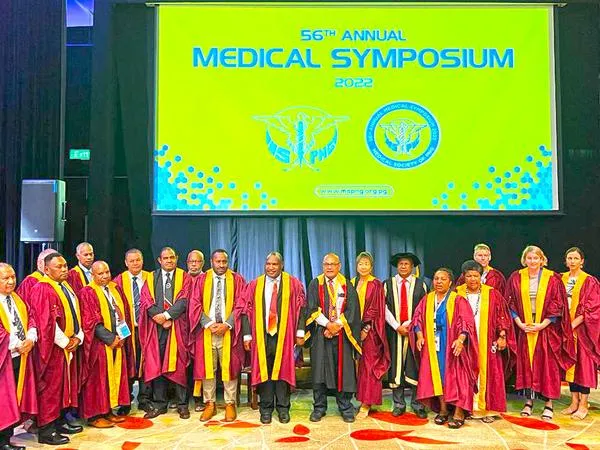
Photo: PM Marape and Health Minister Hon. Dr Lino Tom with members of the medical fraternity at the Medical Symposium recently

Prime Minister Hon. James Marape recently (September 5 2022) announced a K42.7 billion health intervention programme for the next 10-15 years in Papua New Guinea.

He made the announcement today (September 5 2022) when addressing the 56th Medical Symposium of the Medical Society of PNG in Port Moresby, with the theme, ‘ICT in COVID-19 Pandemic, Education and Research’.

“Our Government has committed to a K42.7 billion 10–15-year programme of interventions in the health sector,” PM Marape said.

“These interventions must be made correctly, in the correct places, so that small steps are being worked upon for the collective dreams of the country going forward.

“It calls upon every one of us to work together, and at this juncture, let me thank those of you who have played your part for our country to be where it is today.

“I bring to you our total commitment to ensure that our National Health Plan is financed to the best of our ability, and we can together work to ensure that the standard of health is better for our people to benefit from going forward.”

PM Marape said his Government was putting its money where its mouth was with the biggest-ever allocation of K2.8 billion to Health in the 2022 Budget.

“Our Government is committed to making health our major focus,” he said.

“You cannot find a better place to read Government policy than every year’s annual appropriations.

“In the last annual appropriation, Health sector received the highest-ever presented to any sector, since 1975.

“Health has always come behind infrastructure and education, but we have turned this around, with Health receiving the highest.”

PM Marape said COVID-19 had awoken PNG to the ailing state of health facilities throughout the country.

“The COVID-19 pandemic exposed our vulnerability that we have been carrying all along,” he said.

“How can a nation of 10 million people have only 200 ICU beds nationwide?

“Of the 200 ICU beds nationwide, only 40 had oxygen and ventilation, 26 of which were in Port Moresby.

“I was dumfounded and I was stunned, I was embarrassed.

“Having been a politician since 2007, I felt that I had let the country down in a very big way.”

PM Marape said PNG must “leapfrog” in ICT and his Government was prepared to make substantial investment in this.

He urged all medical practitioners to look into the National Health Plan 2021-2030, which he launched last year, and recommend ways to improved PNG’s health system based on research.

PM Marape also talked about the need for PNG patients to be treated in-country than going overseas and for quality health services to be just one-hour away.

He said his Government was committed to supporting medical research.


Article courtesy of PM JAMES MARAPE News Page

September 08, 2022

Photo: James Marape

Prime Minister Hon. James Marape says fisheries must be put on the pedestal in Papua New Guinean as a major business for the country.

He said this today (Tuesday September 6 2022) when addressing the Provincial Fisheries Conference in Port Moresby organised by the National Fisheries Authority (NFA).

PM Marape challenged the NFA to set up a fishing company to partner provinces and local fisherfolk.

“Fisheries is not a small-time business, leisure business or pastime for sustenance and food,” PM Marape said.

“Fisheries must be seen as a major business in our country.

“It must be given its correct emphasis and placement.

“If it was not for this line of conversation I would not be here, if you (NFA) are a minor player I would not be here.

“Fisheries is an economic powerhouse and is left untapped.

“We have Special Economic Zones in Manus, Madang, Kavieng, Rabaul, Wewak and others that must be used for industry and rural-based fisheries, forestry and agriculture to drive our economy from K110 billion to K200 billion over the next nine years.”

PM Marape said he had gone unannounced to the National Forest Authority the previous day (Monday September 5 2022) and told them in no uncertain terms that they must start contributing to the Government’s vision of a K200 billion economy this decade.

He said this must be through downstream processing and bringing markets directly to primary producers.

“Today, the Pangu Pati-led Government and my generation of leadership, want to put our focus on fisheries, forestry and agriculture,” PM Marape said.

“Our modus operandi over the last 30 years has been just on mining, oil and gas in a big way when they touch only 10 per cent of Papua New Guinea where the footprints of the projects are

“The neglect of fisheries, the neglect of forestry and the neglect of agriculture has had a big toll on people power and participation.

“Eighty (80) per cent of our people are in touch with sea, forests and land.

“It is now Government’s business, at the national level, to frame policies or corrective legislative amendments.

“It is now time for the provinces and the Autonomous Region of Bougainville to run with what needs to be done.”

PM Marape commended the NFA for being a Government agency that was working and bringing money regularly into the country.

“We must now work and I’m happy that National Fisheries Authority has been one of the success stories of Government since 2019,” PM Marape said.

“You (NFA) have not waited, you have gone to work, and that was reflected in the Fisheries Strategic Plan 2021-2030 that we launched last year.”

PM Marape said NFA had now gone a step further by bringing in 15 key partners from the provinces, and the Autonomous Region of Bougainville, for the Provincial Fisheries Conference.

“Let’s now start the concept of having a fishing company, and through that, you (NFA) partner provinces and fisherfolk in the space of doing business,” PM Marape said.

He cited the case of a fish market in Manus established by the NFA which bought fish from the local people.


Article courtesy of PM JAMES MARAPE News Page