




July 15, 2021

Flat pack building specialist Ark Pacific is further expanding its business in Papua New Guinea while simultaneously exploring opportunities in both Africa and Indonesia.  The company’s growth and international business development initiatives are on the back of 10+ years’ project delivery in Papua New Guinea, primarily in the resources sector.

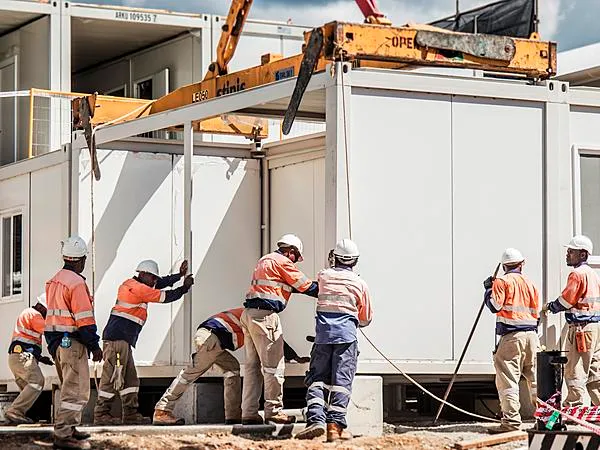
The first half of 2021 has seen Ark Pacific continue to deliver a diverse range of buildings throughout PNG for multiple resource sector clients.  Ark buildings (i.e., mining camps, office facilities, ablution blocks, workshops, senior staff housing, etc.,) are being assembled at both remote inland and island resource operations.

To date, there are thousands of Ark building modules – all assembled by local workforces – to be found across the country.  General Manager, Cassius Ruka, who has over 10 years’ experience in PNG’s construction and mining sectors, describes Ark’s building systems as “perfectly suited” to the remote and challenging conditions of resource operations. 

“Mining companies prefer our buildings for several reasons” said Ruka.  “They are designed and engineered to minimise freight (which in turn reduces client costs and the environmental impact of transporting them), they’re super quick and easy to install even by unskilled workforces, we use high quality steel as opposed to wood which means less maintenance and greater durability, and there are almost endless design options because the modules can be put together in a multitude of configurations.”

Ark’s design team works closely with their clients.  Most recently they’ve been collaborating with a major gold mining company on the design of a new minerals testing laboratory.  “The client wanted us to do a few things differently and achieve even greater cost efficiencies through minimising the use of on-site concrete by utilising galvanised steel column footings instead which we manufacture ourselves and ship as part of the kit” said Ruka.  “We can be very flexible with our designs and the design process and anticipate finalising the laboratory build early in 2022.”

The travel restrictions and cost cuttings brought about by the COVID-19 pandemic have resulted in construction clients all over the world needing to restructure their onsite requirements to accommodate more long term staff.  Ark Pacific is responding to these changes by going back to the drawing board for some of its clients.  An example of which involves redesigning senior management housing layouts; transforming them into high density accommodation blocks.

The popularity of Ark buildings in PNG’s resource sector inspired Ruka to look further afield to grow his business.  “There are plenty of parallels between what PNG’s resource sector needs in its buildings and what’s required by resource operations in many African countries and Indonesia.  In other words, our flat pack building systems which are perfect for PNG are equally suited to resource projects over there too.”

Ark Pacific are looking to penetrate the African and Indonesian market via partnerships with Australia’s Mincore and Lycopodium.  The companies are working together on feasibility studies on several greenfield opportunities.

July 08, 2021

Photo Credit: Post Courier

In the year 2020, Exxonmobil PNG has invested a total of K8.4 million in local communities through contributions, sponsorships, in-kind assistance, and community-based initiatives.

Through tax credit initiatives, an additional K57.4 million was spent on local infrastructure.

Despite multiple COVID-19 challenges, EMPNG's team achieved record LNG production levels, delivering the company's best safety performance since production began while continuing to meet environmental and social commitments, according to outgoing managing director Andrew Barry's annual PNG LNG Environmental and Social report.

“EMPNG has completed over 70 million hours of work since production began and had not lost time incidents for more than three years, with no significant process safety events for almost seven years.

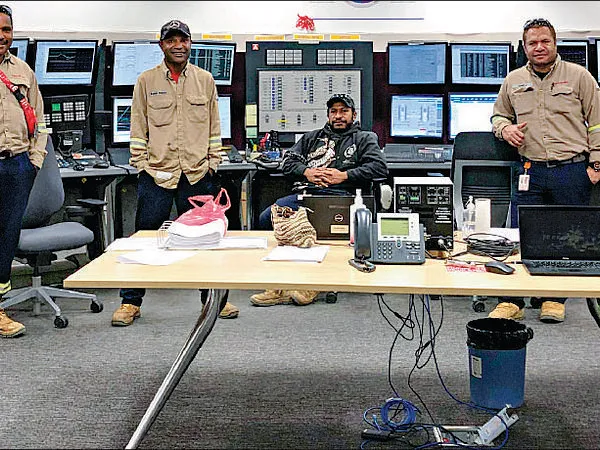
“A significant milestone was achieved on September 1 with EMPNG’s first shift fully managed and operated by qualified Papua New Guinean workers.

This included the Hides Gas Conditioning Plant and Pipeline Operations Supervisors, and control room, field and pipeline technicians,” Barry said.

He said the K8.4 million investment comprises the continuation of the PNG LNG Project's contract with ANU enterprise proprietary limited, which began in 2015, to enhance community livelihoods.

According to the study, more than 5400 community interactions would be held in 2020, with over 2000 official and 3400 informal encounters with 36,650 stakeholders.

New managing director Peter Larden remarked, “I look forward to building upon the standards Andrew Barry and EMPNG have set to further cement PNG’s reputation as a world-class LNG producer and to be able to contribute in a sustainable and meaningful way to enhancing the communities in which we operate and the nation of PNG.”


Reference:

Post-Courier (7 July 2021). “ExxonMobil Proud OfK8.4M Investment In Local Communities”.

July 01, 2021

Weir Minerals, global leader in the provision of mill circuit technology, dewatering solutions and services, has launched the new Multiflo® MudfloTM hydraulic submersible slurry pump. Engineered for abrasive applications and large particle handling, the Multiflo® MudfloTM pump features a hydraulically driven wet-end specifically designed to efficiently and safely reprocess and relocate tailings ponds, maintain water retention dams and manage slimes and sludge ponds.

The innovative solution combines the Warman® MGS pump-end, Multiflo® CB32 hydraulic cutters and ESCO® excavation teeth to provide efficient pumping of highly charged and abrasive slurries.

Weir Minerals' unique Ultrachrome® A05 chrome alloy impeller ensures high wear resistance and the specially engineered suction strainer minimises the risk of clogging by preventing large solids & debris  from entering the pump. Drawing on decades of Warman® pump design experience, the Multiflo® Mudflo™ pump is capable of pumping between 150 and 1,200m3/h, up to 82m head.

The Multiflo® CB32 hydraulic cutters feature market-leading ESCO® Ultralok® tooth system to prevent premature breakage, avoid tooth loss and protect the integral locking system to ensure the continuous operation of the pump.

Engineered by the Weir Minerals dewatering pump experts in Australia, it is available for global customers from July 2021.

“The Multiflo brand is synonymous with high quality and long-lasting equipment. In designing the Mudflo pump, our dewatering experts drew from the very best Multiflo, Warman and ESCO technology and used advanced hydraulics to create an innovative and cost-effective new solution for mine dredging applications,” Cameron Murphy, Director of Dewatering Weir Minerals APAC said.

Weir Minerals understands that success is built from enduring partnerships based on close collaboration and a mutual commitment to safety and technical excellence.

 “It is not uncommon for sites to use a combination of pumps, shovels, excavators and trucks for dredging applications. When one of our long-time partners in Indonesia contacted us about developing a custom solution for the slurry build-up in their sumps, we knew we could provide a better solution,” Geoff Way, Weir Minerals Dewatering Specialist said.

“We’re problem solvers. We considered our customer’s pain points and engineered a new solution to efficiently and safely manage their site processes,” he said.

The Multiflo® MudfloTM pump can also be retrofitted to competitor OEM equipment; the quick-hitch plate attachment ensures convenient installation and removal from hydraulic excavators.  

The Multiflo® Mudflo™ pump can be assembled on land, eliminating the safety risks associated with assembling pumps over water. Furthermore, the new hydraulic hose management system reduces the risk of hose entanglement and trip hazards, all the while providing a reliable hose bend radius to ensure smooth oil flow.

The Multiflo® MudfloTM pump will be available globally from July 2021. Discover more at https://info.global.weir/mudflo

June 15, 2021

Dr. Nancy Irwin (left) with the Deputy Commissioner General for Expo2020 and Head of the PNG Expo2020 Secretariat, Mrs. Jacinta Warakai-Manua began the partnership to tell the PNG Vanilla story in Dubai, by exchanging ideas in Port Moresby last week.

A vanilla production and export company is partnering with the PNG Expo2020 Team to promote their products in the Dubai World Exposition that starts in October this year.

KAMAPIM, a company working with landowners in the Madang and Morobe Provinces produces top quality vanilla beans and is already exporting to the EU market.

The Managing Director of the company Dr. Nancy Irwin, met with the PNG Commissioner General to Expo2020 Ambassador Joshua Kalinoe and his Deputy Mrs. Jacinta Warakai-Manua in Port Moresby last week to firm up the arrangements.

Dr. Irwin said Kamapim (pidgin for develop and to improve) concentrates its efforts in producing the best quality bean for the international market through quality assurance production methods.

“PNG farmers can grow anything, they have instinctive ability to grow well any crops. When I first started the project, the quality of the beans were poor, full of fungus due to lack of processing knowledge. We saw huge potential of the organically grown beans and started working with landowners through a cooperative production and marketing structure to improve quality”

“The company provide extension services to farmers and buy the beans directly, ensuring farmers are paid a fair price for their efforts”, she said.

Dr Irwin said the beans are tested internationally and are consistently classed as the top-quality A grade level.

“While PNG has a good perception of growing environment friendly organic vanilla beans, the challenge is for the relevant Government authorities to work with farmers to improve quality. I believe the cooperative production methods applied by our company, Kamapim, could be used nationally as one of the models to improve quality for the export market as well as to maximize revenue gain for farmers”, Dr. Irwin said.

She said the company is looking forward to partnering with the PNG Expo2020 Team to tell the PNG story and to connect with niche importers in Dubai and the Arab world in general.

Dr. Irwin said the company would promote its products in specially branded PNG Expo2020 containers to create visibility for the country as well as to preserve quality at the company’s cost.

June 14, 2021

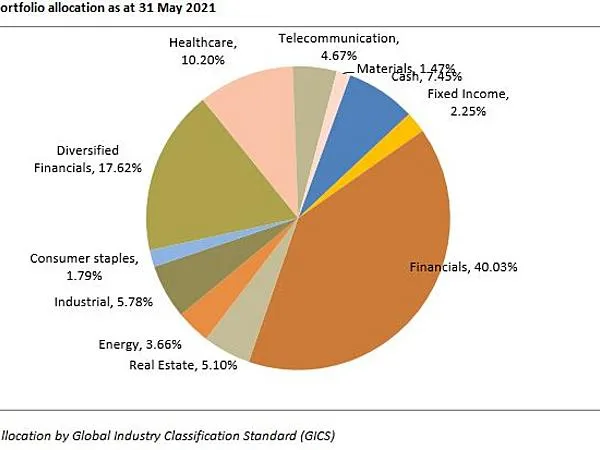
Photo Credit: Kina Asset Management Limited - Portfolio Allocation as at 31st May 2021

For the fiscal year ending December 31, 2020, Kina Asset Management Limited made a net profit of K3.3 million.

Shareholders benefited from a 6.2 per cent portfolio return in a market that has begun to recover from the significant drops saw in the first quarter of 2020.

As of December 31, 2020, the company's net assets were K78.3 million, up 5.5 per cent from the previous year.

With the world economy recuperating from the COVID-19 pandemic and the early-year financial market meltdown, Chairman Sir Rabbie Namaliu warned 2020 will be a difficult year for KAML shareholders.

Sir Rabbie stated that the firm has fared well in adverse market conditions and is well-positioned for the challenges that lay ahead.

The company's success in 2020, according to the study, reflects its strategic investment approach, which focuses on long-term holdings of top enterprises in PNG and Australia, delivering excellent returns in growing markets while reducing downside in more tough market situations.

The main components of the result were K5.2 million in capital losses due to declines in the values of most of the company's stock holdings.

Bank South Pacific (K0.3 million) and Credit Corp (K0.2 million) in PNG, as well as CSL (K0.2 million) and ResMed (K0.1 million) in Australia, were among the few corporations to declare increases.

Sir Rabbie stated that the business does not trade the securities that make up its portfolio since it is a long-term investment.

Kina Funds Management Limited, the company's investment manager, takes a long-term perspective of markets and investments and builds a portfolio appropriately.


Reference:

Post-Courier (10 June 2021). “KAML records K3.3M Profit”. 

June 09, 2021

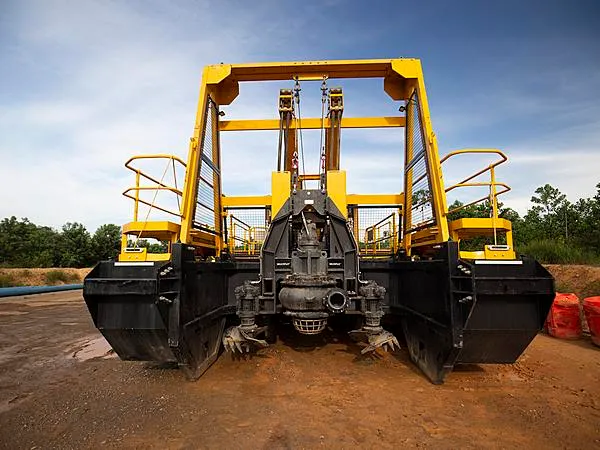
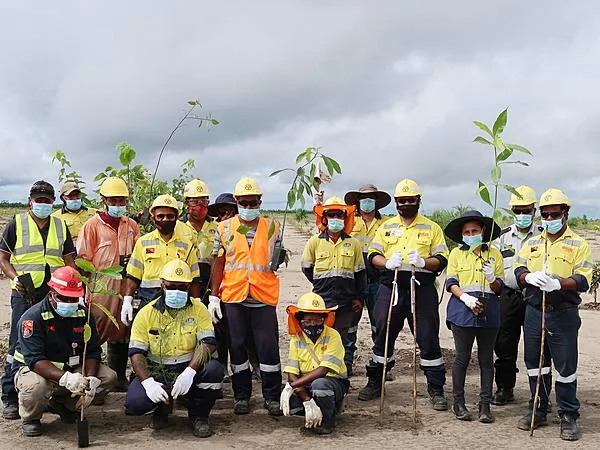
Ok Tedi Mining Limited (OTML) commemorated the World Environment Day on June 5th by planting over 1,000 trees in Tabubil, and at its Mine Waste Management project site at Bige located 80 kilometres downriver from the mine.

In line with this year’s World Environment Day (WED) Theme ‘Ecosystem Restoration’, the Bige project is testament of the company’s commitment to rehabilitate and restore the ecosystem that is impacted by the mining operations.

The dredging project was established in 1997 as one of OTML’s mitigation measures to reduce impacts on the environment and the livelihoods of the people that rely on the river system.

The dredge removes at least 10 million cubic meters of sand annually which reduces riverbed levels and prevents overbank flooding and forest dieback from occurring.

The dredged sand is hydraulically placed in engineered stockpiles on the east and west banks at Bige covering an area of 1000 ha of land that had been impacted by dieback in the mid[1]1990s.

Since the commencement of the dredge operations, over 200 million cubic metres of material have been dredged from the lower Ok Tedi river.

In a statement, the OTML Environment Department Manager, Jesse Pile said, “After more than two decades of dredging, at a cost of USD55 Million per annum, the riverbed levels have reduced by 2 to 4 metres in the lower Ok Tedi, and have stabilised, including in the Middle Fly region.”

“Overbank flooding and the associated forest dieback have decreased compared to 1996/1997 period and recovery of some forest species are observed in the lower Ok Tedi and upper Middle Fly River as a result of bed level reduction.”

This year the OTML Environment Department was unable to engage in other activities such as conducting school essay competitions and doing clean-a-thons due to COVID-19.

“Our celebration this year was low key with the COVID-19 restrictions and control measures at our operational sites and in Tabubil.” Mr Pile said.

June 07, 2021

Photo of: Tasman Samuel, General Manager, Colony Papua New Guinea

Colony is a 100% independent, full-service strategic communications agency that had its inception in Asia-Pacific in 2012. So, it’s only befitting that for the first time ever Colony were a Diamond Sponsor of the 36th Australia Papua New Guinea Business Forum and Trade Expo along with Kina Bank, IPA, BSP, Westpac, ANZ, Newcrest Mining and Austrade. The sponsorship was undertaken in support of one of Colony’s key markets in the Asia-Pacific – Papua New Guinea – and its close relationship with Australia.

From humble beginnings assisting with the launch of the Sir Brian Bell Foundation in Papua New Guinea, Colony have expanded to three offices across Asia-Pacific and continues to play a critical role in their client partners’ organisations – providing everything from strategic direction, creative development and production, crisis management, to acting as full in-house end to end marketing and production departments for key clients. Colony’s presence in Papua New Guinea has unequivocally been instrumental to this growth and ongoing business success.

Matt McCarthy, Co-Founder of Colony stated, “Since the beginning, we have been working with the boards and CEOs of national and global organisations to set the business direction for communications, strategy and planning in Asia-Pacific. As well as being instrumental in assisting them to navigate the nuances of operating in markets with cultural and business etiquette differences. So, it just felt like a natural fit to become a Diamond Sponsor of this key international business event to assist in strengthening the relationship between both countries from a trade and investment plus strategic communications perspective.”

Tasman Samuel, General Manager, Colony – Papua New Guinea stated, “I’m passionate about my country doing well and being able to contribute to that through this sponsorship is a very proud moment for me. With Papua New Guinea being the most diverse group of people in the world with over a thousand tribes and 860 languages, Colony is best suited to assist any brand or organisation wanting to market their products, services or simply wanting to navigate the nuances of doing business here.” 

Mark Gregory, Client Growth and Partnerships Director at Colony said, “As a new Colony team member attending the Australia Papua New Guinea Business Forum and Trade Expo for the first time, it truly was an informative, educational and yet humbling experience. Having been to many events of this nature across the world before, what took me by complete surprise was the genuinely open nature of every single person no matter what role they played within an organisation – Chairman, CEO, Global Engagement Manager, Chief of Staff or an Area Sales Manager. They were all open to sharing their business insights and contact details to continue the conversation post the event. All of which can only benefit both countries from a mutually beneficial business and consequent GDP growth perspective. I look forward to what lies ahead for Colony as a key strategic communications agency partner in Papua New Guinea as a direct result of this key annual event.”  

June 01, 2021

Swire Shipping serves the many communities in the Pacific which are directly impacted by global warming.

“With many communities at risk of disappearing we must take action to drive change. We are committed to reducing our GHG footprint, ultimately to net zero by, and preferably well before, 2050,” said James Woodrow, Managing Director, The China Navigation Company; parent of Swire Shipping.

“Whilst we have already invested USD 650 million over the last seven years to renew our fleet to be more carbon efficient, further reductions in our GHG footprint will require more Technical and Operational (T&O) measures to be adopted. Ultimately though we will not be able to reduce sufficiently our contribution to global warming until a sustainable alternative - low or zero carbon fuel - becomes technically and financially viable,” added Mr Woodrow.

We believe that the upstream development of the necessary global delivery infrastructure for sustainable low or zero carbon fuels will be expedited if Market Based Measures are introduced that more realistically price our sector’s GHG emissions.

Accordingly, Swire Shipping:

1. Supports the earliest global adoption and implementation of the “Proposal for IMO to Establish a Universal Mandatory Greenhouse Gas Levy” submitted by the Republic of the Marshall Islands and The Solomon Islands to IMO MEPC 76.

2. will reduce environmental footprint, ultimately to net zero by, and preferably well before, 2050 by;

  • a. Implementing T&O measures and offsetting any outstanding Scope 1 and 2 emissions. We will be offering to offset these emissions for our Swire Shipping clients on a voluntary basis through our new “Sail Greener” programme that we will be launching in mid-2021. However ultimately these emissions will have to be paid for by the customer on a mandatory basis.
  • b. Engaging as an active partner with leading decarbonisation centres globally, and like-minded organisations including The Sustainable Shipping Initiative and The Getting to Zero Coalition, both at the knowledge-partner level and also to cooperate as a provider of commercial shipping test-beds where viable.
  • c. Delivering in the longer term a low or zero carbon fleet, starting by at least 2030, using sustainable, alternate fuels, for which current science points to one or more of green Ammonia, Biofuel, Hydrogen and Methanol, once the safety, scalability, technological and training issues have been mitigated.

3. will Finance initiatives that promote low carbon shipping, such as our Project Cerulean. This project seeks to build the first low-carbon, low-cost sail-assisted inter-island cargo vessel (see attached photo) to serve communities in the Pacific that lack cargo handling infrastructure. We plan to sign the building contract for the pilot vessel of this class by the end of June 2021, for delivery 12 months later.

“The real and urgent change that is necessary now will be driven by the earliest adoption of a mandatory high-ambition levy on all greenhouse gas (GHG) emissions from international shipping. This is an immediate priority measure and must run alongside a revised, heightened level of ambition in the Revised IMO Strategy on the reduction of GHG emissions from ships.

The Pacific Islands’ Communities are relying on organisations such as ours to provide leadership and to take positive action now.” said Jeremy Sutton, General Manager, Swire Shipping.

June 01, 2021

Kina Bank is pleased to announce the appointment of Judith Ugava-Taunao as Chief of Staff reporting directly to the Chief Executive Officer. In this new senior leadership role, Judith will take a position on the Executive Committee, demonstrating Kina’s continued commitment to promoting PNG women into leadership roles.

Judith joins Kina Bank with a distinguished career, having worked in international development, organisational transformation, and human resource development and leadership. For 18 years she has built a career that spans across international borders and sectors. Prior to joining Kina Bank, Judith was at Oil Search where she served as the Vice President, Change Management Lead and as the General Manager for OSL’s Citizen Development Program.

“I am pleased to join the Kina Bank team at a time when the opportunity to introduce new and transformative change in the banking industry is upon us,” said Ms Ugava-Taunao. “It is exciting to consider Kina’s growth over the next five years and the drive to bring improved financial services to Papua New Guineans who want more out of their banks.”

In her new role, Judith will be responsible for developing and delivering key strategic, business priorities. The appointment is critical to the success of the business, ensuring the bank delivers on its long-term aspirations. Judith adds significant strength to the executive team.

Greg Pawson, Kina Bank’s Chief Executive Officer said: “I am delighted that Judith is joining the Kina Bank team. She has a tremendous amount of knowledge and experience that will benefit the Bank in its transformational journey. Judith’s appointment also demonstrates our continued commitment to promoting women into leadership roles. It’s an exciting time of growth and expansion for us and with Judith’s expertise in business development and change management, we have an exciting future ahead.”

May 31, 2021

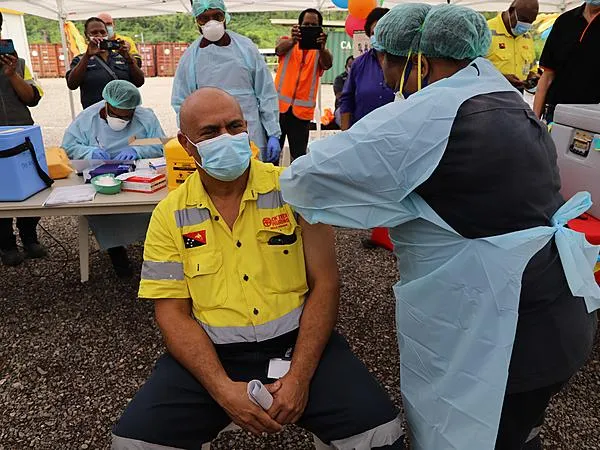
Ok Tedi Mining Limited (OTML) launched its COVID-19 Vaccination Roll-out on Friday 21st May in Tabubil, Western Province.

The launching marked the first batch of 1,000 doses of the AstraZeneca vaccine which OTML received from the National Department of Health on Wednesday 19th May.

OTML Managing Director and Chief Executive Officer Musje Werror with the Company’s senior management and employees, including its contractors, business partners, Tabubil Hospital staff, and teachers received their first dose of the vaccine.

A total of 213 people were vaccinated during the launch while a further 150 people have already registered to be vaccinated this week.

“The support we have received from everyone who made the decision to keep themselves, their families, colleagues and our operations safe from COVID-19 by getting their first dose of vaccine during the launch was very encouraging.” Mr Werror said. “However, there is still a long way to go to achieve herd immunity so that we can return to some level of normality.”

Mr Werror said the Company is encouraging all its employees, contractors, public servants, town residents, business partners and teachers to receive the vaccine because it is important for the wellbeing of themselves, their families and the communities as well as the continuity of operations. He re-affirmed however, that the decision to be vaccinated remains voluntary.

Tabubil Hospital Administrator Ms Margareth Samei said the significant number of people who received the vaccine during the launch was a reflection of the level of vaccine awareness her medical team had presented to front line workers such as teachers, bankers, shop attendants, security personnel, and health care workers in the last week.

“The hospital has been working together with OTML to conduct awareness on the vaccine, and its health benefits which has helped people to make informed decisions before they get the jab. We will continue this awareness throughout the Company’s operations so that more people have the correct information on the vaccine,” she said.

OTML Superintendent for Logistics Operations, Walimu Karo, who received the vaccine said he decided to get vaccinated to protect himself and his family from the virus.

Ok Tedi Mining Limited “People overseas have taken the vaccine and they are beginning to lift restrictions such as allowing people into stadiums to watch rugby. That’s basically why I wanted to get the vaccine so that our lives can return to normal," Mr Karo said.

Since the pandemic began in March last year, mining operations at the Ok Tedi mine have been suspended twice due to an escalation of COVID-19 positive cases.

May 26, 2021

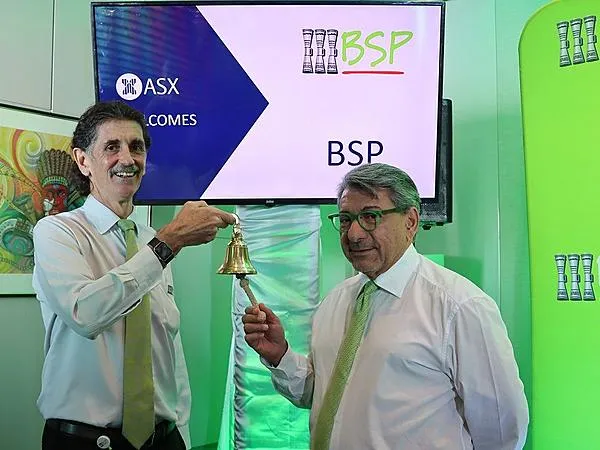
The Bank South Pacific Financial Group Ltd has had its application to join the Australian Securities Exchange (ASX) accepted.

The bank will be listed on the ASX this week, according to Group Chief Executive Officer Robin Fleming, and shareholders will be able to transfer partial shares to the ASX.

“We were listed on the PNGX (PNG Stock Exchange) in 2003 but because of the size of BSP, that market capitalisation was close to K5.6 billion,” he said. “And because of the size of BSP, it was difficult for shareholders to have larger partials of shares and actively trade their shareholdings. Being listed on the Australian Stock Exchange, shareholders can move their shares either in full or in parts to the ASX and, therefore, trade their shares far more easily on a very liquid stock exchange market. PNG resident shareholders still have to go through a process in making sure their compliant with the Internal Revenue Commission (IRC) and Bank of PNG guidelines in respect to exchange control as to how they deal with any share sales. But once they move to the Australian stock exchange, they then have the capability to trade their shares far more readily and in a far more accessible format than is the case for PNG.

He added, “While we have a good shareholding base in PNG because of BSP’s success, the composition of BSPs investment and the portfolio of some of the superannuation funds which is very high, we’ve been successful. Our portfolio continues to increase and even if they want to trade more actively, it is constrained by the absence of liquidity in PNG.”

Sir Kostas Constantinou, the bank's chairman, said it was a watershed moment for the bank, allowing it to collect money and grow more.

“It gives us liquidity, it gives our shareholders liquidity so that they can buy and sell shares and trade on the Australian Stock Exchange,” he said.


Reference:

The National (24 May 2021). BSP set to start trading on ASX

May 26, 2021

In the first quarter of 2021, South Pacific Financial Group Ltd recorded a net profit of K203 million.

According to the bank, this is a 2.6 per cent decrease from the first quarter of 2020, owing to a decrease in net insurance revenue and a rise in computing costs.

Some highlights included net assets of K3.6 billion, a cost to income ratio of 40.3 per cent, a capital adequacy ratio of 25 per cent, a provision coverage ratio of 5.7 per cent, a market capitalisation of K5.6 billion, and earnings per share of 43 toea. 

The last 12 months had been tough, according to Group Chairman Sir Kostas Constantinou, "but we did well with the profits that we achieved."

“We have an excellent staff, everybody’s committed,” he said. “It is unfortunate with the Covid-19, but we progress forward now with the inoculation of our staff who are behind it. The intention is to do most of the branches. We have had problems through the Pacific, places like Samoa, Tonga which have been restricted because of tourism. The Cook Islands have opened up so we are yet to see what happens.

In spite of this, Sir Kostas remained positive.

“Good times are coming for Papua New Guinea with the recent announcements on the progress of some of the country’s resource projects,” he said. “We are fortunate that we have the Papua LNG project that has been successfully completed and is proceeding with Total who’s the lead partner doing the upstream and Exxon doing the downstream. These projects are K48 billion and right on our doorstep and there’s not a lot of countries in the world that have these types of projects.”

The news about P'Nyang was also embraced, according to Sir Kostas.


Reference:

The National (24 May 2021). Bank records first quarter profit of K203 million

May 24, 2021

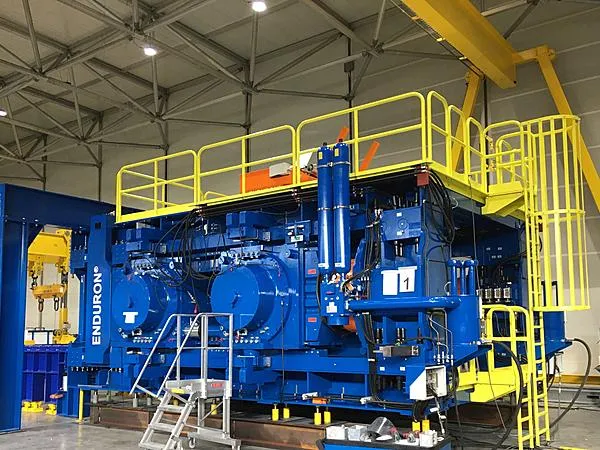
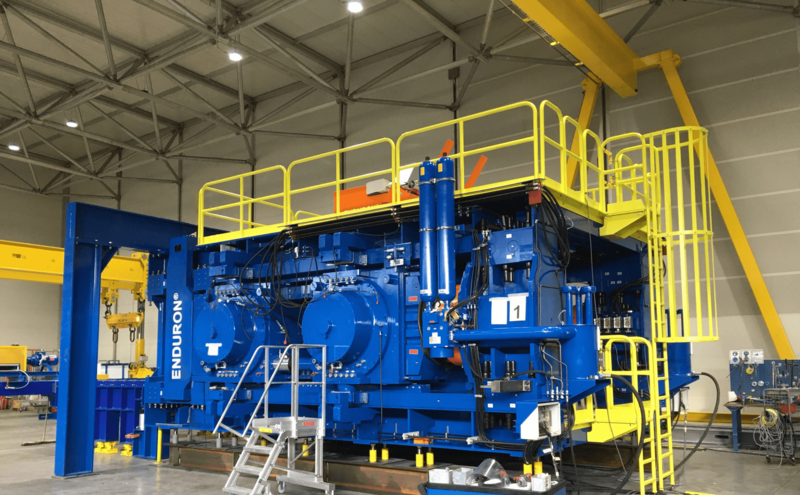
Weir Minerals is proud to announce another major order of Enduron® HPGR in Gold application with our valued Customer IAMGOLD.

An Enduron® HPGR with rolls measuring 2.4 m x 2.4 m (length : diameter) will be installed at IAMGOLD's Côté Gold Project. This will be the largest HPGR in Canada and the largest in the world in a gold hard rock application.

Weir Minerals’ Enduron® HPGR unique design is perfectly suited to IAMGOLD’s Côté Gold operations to achieve industry-leading particle size reduction and with the lowest total operating costs.

  • Enduron® HPGR is the market proven HPGR with the mechanical design to support efficient and durable skewing thanks to its unique bearing arrangement and control philosophy
  • Enduron® HPGR has a unique roll diameter-width ratio which maximizes throughput at the desired product grind
  • Enduron® HPGR self-adjusting cheek plates provide equal sealing distance as flanges at minimum costs
  • Enduron® HPGR is the market leader in large format, high tonnage hard rock HPGR

Tim Lundquist, HPGR Regional Sales Manager North America: “Our Enduron® HPGR design will create energy savings of up to 40% compared to an equivalent SABC comminution circuit, while also significantly reducing the need for downstream grinding media.  This power and grinding media savings will optimize total ownership cost and also account for a significant reduction in carbon emissions”.

Weir Minerals prides itself in being close to its customers at all times. Our Weir Minerals Canada team and purpose-built facilities will be providing full HPGR service for the Côté Gold operations.

For more information about Enduron® HPGR please visit enduronhpgr.weir

May 11, 2021


  • New analysis lays out the scale of the mining industry’s energy use and identifies ways it can be reduced using currently available technologies
  • Materials such as copper, lithium and nickel play an essential role in the technologies like electric vehicles and renewables that will help the world meet its decarbonisation targets
  • As demand for these metals increases, the mining industry must itself become more efficient and environmentally sustainable


The global mining industry must move away from legacy systems and processes if it is to meet the challenge of decarbonisation, according to a new report released today which calculates mining’s share of global energy consumption and identifies ways the industry can aid the transition to net zero emissions needed to limit temperatures in line with the Paris Agreement.

The report, commissioned by the Weir Group plc, analyses mine energy data from over 40 published studies to give a comprehensive understanding of where energy is consumed in mining and minerals processing. It shows that the total amount of power used by the mining industry – which plays an essential role providing the metals used at the heart of the modern economy – is equal to c.3.5% of global energy use.

The metals produced by mining are critical for enabling the global transition to low-carbon infrastructure. But without action, energy use in mining itself is set to trend higher in the coming years as demand increases for metals like copper, nickel and zinc. The report suggests there are technologies available today that could make a significant difference to this trend.  For example, it highlights that comminution – i.e. crushing and grinding processes – is the single biggest user of energy at mine sites, typically accounting for 25% of mining’s final energy consumption. This is equivalent to the power used by 221 million typical UK homes, or c.1% of total consumption globally. Comminution is therefore a natural target for the most impactful energy savings opportunities.

Small improvements in comminution technologies can lead to relatively large savings in both energy consumption and greenhouse gas emissions. For example, a 5% incremental improvement in energy efficiency across comminution could result in greenhouse gas emissions reductions of more than 30m tonnes of CO2-e. The replacement of traditional comminution equipment with new grinding technology also reduces indirect emissions in the mining value chain, for example by removing the need for the manufacture of emission-intensive steel grinding balls.

Of the remaining energy consumption by the mining industry, diesel in varied forms of mobile equipment accounts for 46%, electricity in mining (ventilation) 15% and “other electricity” 14%.

Other significant opportunities identified by the report for reducing mining’s energy consumption include optimisation, big data and artificial intelligence. In addition, if zero emissions energy sources are deployed for mining equipment – e.g., renewable energy, energy storage and alternative fuels – then the industry may well be able to achieve zero emissions, leaving a relatively small role for offsets and carbon credits to play.

The report comes as the mining industry is under ever-greater pressure to produce essential minerals that

support some of the biggest global structural trends, from population growth to urbanisation and decarbonisation. Copper, nickel, steel and lithium are core components of electricity transmission and storage, electric vehicles and renewable energy infrastructure. The move to a decarbonised economy will result in increased primary consumption of these mined commodities, even after factoring for recycling, so it is important that mining itself becomes more sustainable.

Download the independent Mining Energy Consumption 2021 report here: www.energysavingsinmining.com
Commenting, Weir Group Chief Executive Jon Stanton said:

“The mining industry is central to economic development globally, with critical minerals enabling the low-carbon transition required in the rest of the economy. But the environment in which it will operate in future will be very different from the past, requiring comprehensive change and investment. In short: mining needs to become more sustainable and efficient if it is to provide essential resources the world needs for decarbonisation while reducing its own environmental impact.This report is an important contribution to that debate which we hope will spark thoughtful conversations around the world on the way forward.”

Alison Keogh, Chief Executive of the Coalition for Energy Efficient Comminution, said:

“This report highlights both a challenge and an opportunity to revitalize cross-industry discussion and actions on decarbonisation and ESG solutions. We invite industry leaders to actively contribute and collaborate through mining-vendor-research partnerships and share knowledge. Together, we can accelerate improved energy, emissions and water footprint across industry faster.”

Ricardo Garib, Weir Minerals Divisional President commented:
“Weir Minerals is focused on making mining more efficient and sustainable by leading technology change in the industry. Our Enduron HPGRs are increasingly replacing conventional milling systems in comminution (crushing, screening and grinding) circuits because of their substantially lower energy consumption, finer rock reduction requiring less water downstream and potential for significant total cost of ownership reductions.”

Stuart Hayton, Managing Director of Weir Minerals Netherlands, where the Enduron® HPGRs are designed and manufactured, added: “Not only do Enduron HPGRs require as much as 40% less energy than traditional alternatives, their wearable components last much longer and the maintenance time required to replace worn out parts is significantly lower. The estimated carbon saving of each Enduron HPGR in operation is equivalent to taking more than 3,600 petrol fuelled cars off the roads each year.”

Notes:

  • The report quantifies energy use in five commodities: copper, gold, iron ore, nickel and lithium. Bringing together mine energy use data from more than 40 published studies (each of which references dozens more studies) from 2007 to 2020 into a single narrative, the report aims to build a more comprehensive understanding of energy use in the mining industry.
  • Using the current production rates of the commodities in question, and the energy intensities for each of the commodities, a total of 1,68 EJ/a (1,680,000,000,000,000,000 joules per year) has been calculated. This is approximately 0.5% of total final energy consumption globally. Published information indicates that the entire mining industry consumes approximately 12 EJ per year – or 3.5% of total final energy consumption globally.
  • Assuming that present trends continue, there will be 250m electric vehicles on the road by 2030. To meet this demand, production of cobalt, lithium, graphite and nickel will need to be scaled up significantly.
  • Current projections show that the current rate of decarbonisation globally is far below what is required to meet the goals of the Paris Agreement. A sustained decarbonisation rate of up to 7% per year, year on year should be sufficient to achieve the goal of a temperature increase of well below 2°C by 2100. For the mining industry, there are multiple ways to achieve decarbonisation including energy efficiency and fuel/energy switching. Many of these opportunities are starting to be explored by both the mining companies and the mining services providers, who see decarbonisation and energy reduction as a key way to reduce exposure to the risks of climate change.
April 29, 2021

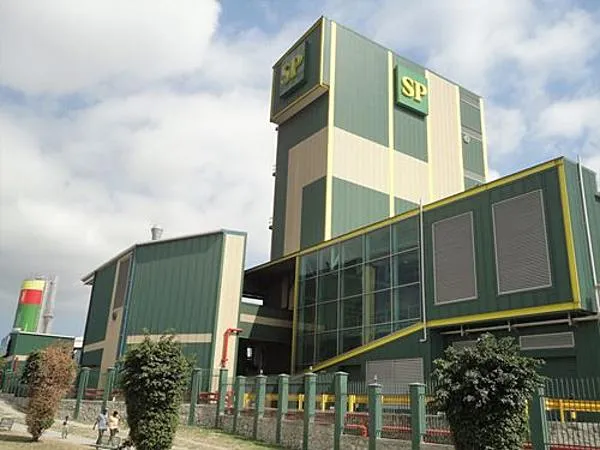
According to South Pacific Brewery managing director Ed Weggemans, the national isolation strategy's ban on the selling of alcohol has resulted in a sales loss of K21.46 million.

According to Weggemans, this amounted to an 85 per cent drop in the volume of sales in the closed channels, which would have provided K17.08 million in excise duty and K4.38 million in goods and services tax (GST).

He said the company had lost another K1 million in services for water and gas, and that it had started a redundancy program in January that would result in a 20% reduction in employees.

“The following compelling points tell the story of the impact and unintended consequences of the liquor restrictions,” Weggemans said.

“Liquor restrictions are forcing consumers to the illicit trade; alcohol consumption continues while the Government loses out on income from this licit trade.

“The loss of revenue from excise and GST from SP Brewery alone for the duration of the latest announced liquor restrictions is calculated shows that the channels that were closed accounted for 85 per cent of the projected sales volume in the past four weeks.

“The volume lost would have generated K17,080,644 in excise duty and K4,383,528 in GST.

“This loss of K21,464,172 is irreversible and will not be recovered when the outlets open again.

“A further K1 million in utility revenue was lost (WaterPNG/PNG Power).

“To right-size the organisation to the new volume levels, since January, SP Brewery has begun a redundancy programme which would see a reduction of our employees by 20 per cent.

“This will have a ripple effect on many families in the community and we also anticipate that many other manufacturers/suppliers/customers are also downsizing their organisation to cut down on costs relative to productivity.”

SP Brewery has 2,682 registered customers around the country, and the ban will force the closing of 2,228 of them, with 75% of them being small-to-medium-sized businesses (1,671 SMEs would be affected).

Liquor bans, according to Weggemans, caused drinkers to turn to the black market, but alcohol intake persisted.

“Home brew and steam can have devastating effects on the people of PNG as the production methods are extremely unsafe and the production process produces a product with an undefined alcoholic content that affects people’s health, which is a burden for the healthcare system in Papua New Guinea,” he said.

“Illicit alcohol operators thrive during liquor restrictions as these present the ideal opportunity for uncontested sales.”

According to Weggemans, the brewer recommends that the government:

  • TAKEAWAY sales of alcohol in all major retail supermarkets;
  • TRADING to occur every day except Sundays;
  • OUTLETS to maintain Covid-19 protocols all the time.

April 21, 2021

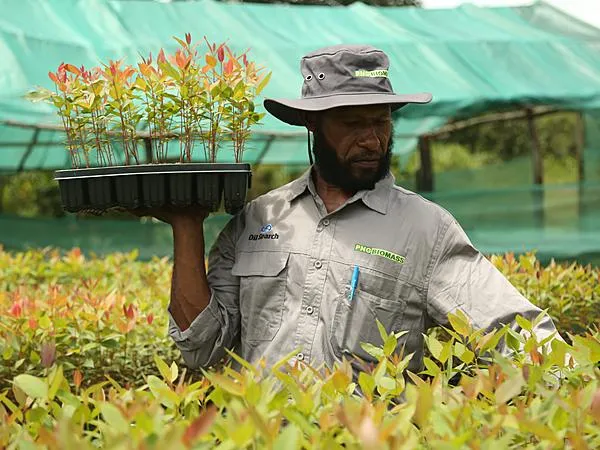
PNG Biomass is Oil Search’s renewable energy and sustainable tree farming business. Subject to a final investment decision, PNG Biomass will be Oil Search’s first targeted investment into the energy transition.

Establishing a renewable energy and sustainable development project in the Markham Valley in Morobe Province is a strategic and sustainable diversification of the Company’s energy portfolio. Designed with a two-fold purpose, PNG Biomass will be powering PNG with domestic low-emission renewable energy and empowering communities by using an inclusive economic growth model.

PNG Biomass leverages the strengths and experience of Oil Search in delivering world class infrastructure projects. By building capability in environmental, social and economic responsible energy investments, Oil Search helps offset carbon emissions, develop attractive growth options at an acceptable risk level, and opens pathways to new global partnerships and financing opportunities for both Company and country.

The value created by PNG Biomass is shared between landowners, communities, women and youth, future generations, local and regional businesses, provincial and national government, and the Company itself. It is equally a sustainable investment for Oil Search and an investment in the people and prosperity of PNG.

Powering Papua New Guinea

As an integrated renewable energy project, PNG Biomass will offer biomass power, solar energy, and battery storage technology to generate clean, affordable and reliable energy for the Ramu Grid. This project demonstrates how modular, incremental, diversified and dispatchable energy can pave the way for a new power paradigm that diversifies the country’s energy mix, makes power supply reliable, and helps PNG transition to renewable energy by 2050.

Delivering 30 megawatt of electricity to the Ramu Grid, the biomass power plant is integrated with 16,000 hectares of dedicated, sustainable forestry plantations in the Markham Valley established and maintained by local landowners and communities. PNG Biomass will also oversee construction, operation and dispatch of an adjacent 11 megawatt peak solar farm and battery energy storage system, both grant-funded and owned by PNG Power. Together, the biomass power plant and solar farm will provide the Ramu grid with up to 40MW of renewable energy with the battery storage providing firming and grid stabilisation services.

By using renewable energy there will be significant carbon emission reductions as generation from diesel and heavy fuel oil (HFO) will be displaced. The battery storage technology will enable load-shifting of solar energy to the highest demand at peak hours and displace more diesel and HFO. As an integrated project there will be ancillary services benefits, including grid stabilization by providing baseload supply to the city of Lae – which represents about 90% of the Ramu Grid load.

Sustainable development

PNG Biomass delivers many benefits beyond electrification; it is designed to deliver sustainable development closely aligned with PNG development priorities and the Sustainable Development Goals.

When fully operational, PNG Biomass will have 500 ongoing local jobs and driving the creation of 2,000 indirect jobs across the region. In 2020 some 300 full-time equivalent (FTE) jobs were created for local in the Markham Valley. The majority of jobs (280 FTE) is contracted directly to community members and landowners through Community Business Groups.

With communities and landowners at the core of the project, they can realise the full potential of sustainable rural inclusive economic growth opportunities created by PNG Biomass. Throughout the Markham Valley, close relationships with communities have been built since 2011. Landowners participate actively in the Project by offering select areas of their land for the establishment of sustainable forestry plantations. Landowners come together in community-owned business groups to provide PNG Biomass with labour and services to prepare, plant and maintain plantations. This way PNG Biomass creates significant and diverse income streams for local communities.

Agroforestry

PNG Biomass encourages and supports women and youth to take advantage of business opportunities to generate substantial benefits and income streams. In particular the agroforestry practice commonly referred to by communities as ‘intercropping’ is popular. Markham Valley communities receive support to help them get started with growing small-scale and short-rotation cash crops in between the rows of trees on plantation land. A team from PNG Biomass regularly conducts intercropping training and field demonstration, focused on ensuring communities understand the basic requirements of weeding, distancing crops from trees and plough lines.

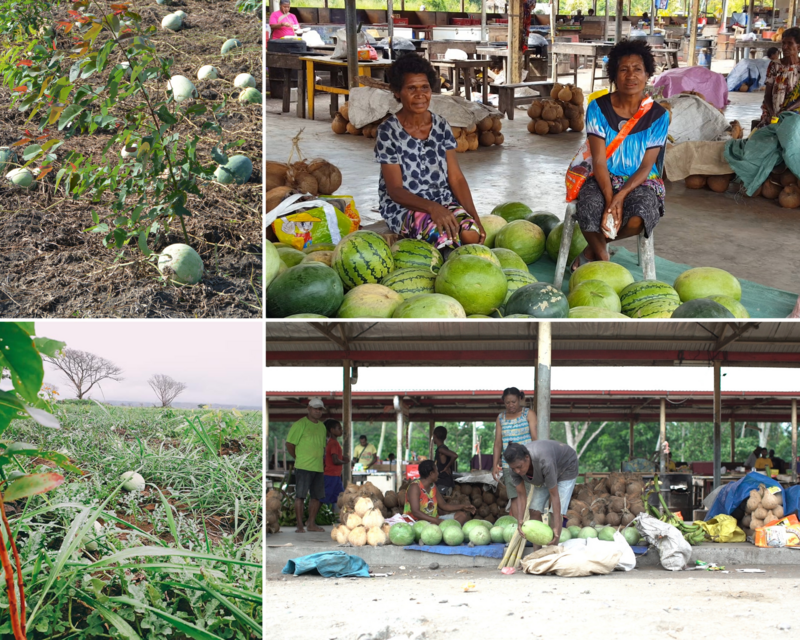
In early 2019 a baseline assessment was conducted on intercropping practices across the Markham Valley. The results included that best harvests and incomes are generated from pumpkins, melons and cucumbers. Women reported single harvest incomes of around K3,000 from intercropping on areas smaller than half a hectare. With, at the time, around 400 families involved in small scale intercropping, each harvesting twice a year, they generated together an increase in household income of K2.4 million a year – a number that communities themselves claim to be conservative as they assert the overall intercropping income stream is substantially higher. With more land opening up, more and more local farmers are taking up this agroforestry practice.
 

Local entrepreneurs

Entrepreneurs are also making most of opportunities arising; putting their forestry skills to work in the Markham Valley. Two former employees of PNG Biomass are leveraging the skills and experience they gained during their employment in the Company’s forestry division. Both have founded their own forestry businesses and are now suppliers of PNG Biomass, providing expert forestry services.

Community business group development

PNG Biomass provides ongoing support to landowners to organise themselves in formal community business groups. The Zif Faring Business Group, representing the business interest of communities around Chivasing village, provides employment opportunities for over sixty landowners contracting them to PNG Biomass.

In June 2020, Zif Faring Business Group was also awarded a contract for the provision of transport and delivery services to PNG Biomass. Management of the Zif Faring Business Group subsequently decided to purchase an Isuzu truck to dedicate to the transport services under the contract.

Native bee program

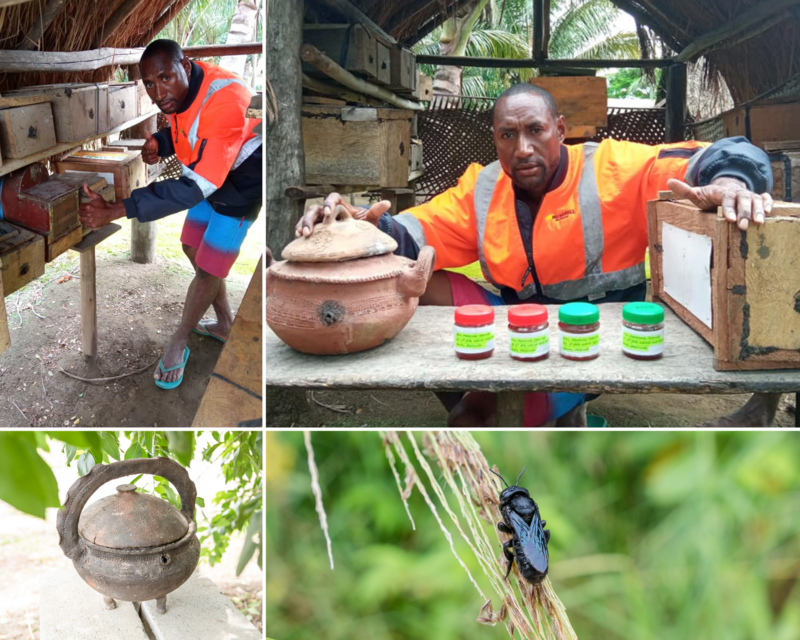
Switpela Bi Hani was established in 2018 by PNG Biomass as a native stingless bee community development program aimed at helping communities establish a local market for bee products in the Markham Valley. Community training was provided by PNG Biomass in 2018 and 2019, with community members driving expansion themselves in 2020 due to limited options during the COVID-19 pandemic for the continuation of training by foreign bee experts. Community uptake is extremely good, with hundreds of local hives established and new bee-hive materials trialled.

More and more communities are participating and together creating a thriving native bee industry. The beekeepers are predominantly subsistence farmers, family units, women groups, and small-scale entrepreneurs – some are involved already with PNG Biomass as tree farmers while others are non-tree farmers.