November 21, 2021

Migration Plus is a leading Migration firm in Cairns, in the Far North Queensland region providing professional migration advice to students, individuals, government, businesses and corporate groups including the mining, hospitality, tourism, agricultural and air services industries.

Migration Plus are also Education Agents with Qualified Education Counsellors on their team and we represent a number of reputable universities and colleges across Australia, including Education Queensland International (EQI) for student enrolments.  We work closely with EQI and have successfully assisted PNG students enrol in schools across Queensland and also assisted with visa applications for the students for many years.  

Education Queensland is offering an exciting Year 10 Virtual High School online for students from PNG who are affected by COVID-19 and unable to travel to Australia. Find out more at Virtual High School Year 10 . Contact us for more information and enrolment.

We also work closely with colleges and assist their study groups and individual students with visa applications.

With an in-depth knowledge of migration law, their specialist team provides a complete solution to clients’ migration requirements and coordinate all facets of their migration needs.

We are very passionate about what we do – the rewards of being able to assist in changing lives and helping clients achieve their goals is first and foremost.  With over 90 years of combined experience available to you, you can count on our highly specialised team for accurate advice.
November 21, 2021

Think of two words, sewage and nutrients. Now create a mental picture that puts them together in a context that makes sense for you. For most people, the picture they create is some form of liquid that is beneficial to the growth of plants.

Yes, effluent reuse on landscapes is one of the biological nutrients that can spin out of sewage treatment, but there are so many more nutrients, and the majority of them are known as technical nutrients derived from rethinking and improving business processes.

It is organisations, like Hydroflux Epco where thinking of design as an opportunity to develop technical nutrients who will make the real difference in combating climate change. Developing technical nutrients is achieved by designing out wasteful processes, keeping products in operation longer and considering processes to regenerate natural systems.

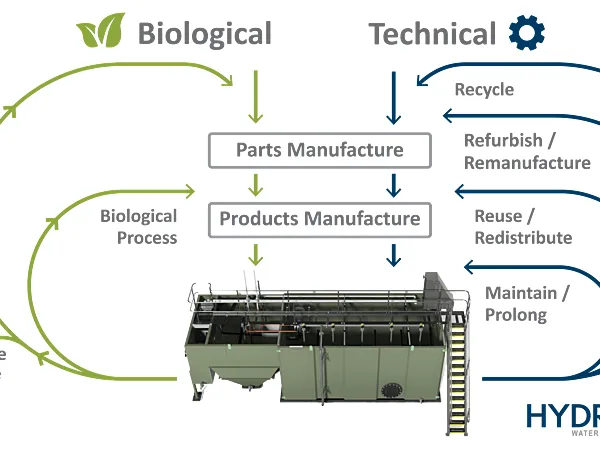
Biological nutrients are the natural by-products of a process that can be consumed by something. Sewage treatment has two of these in effluent and sludge. Effluent can be reused on landscaping, toilet flushing and dust suppression while sludge can be reused after composting, as a soil amendment for projects such as reforestation of mining leases.

Technical nutrients are the alternative business processes that contribute positively to reducing the negative impact of a product on its environment. In this instance we are referring to a product’s environment as its impact on people, the planet and prosperity.

These three perspectives are known as the triple bottom line and Hydroflux Epco considers all three when designing projects for decentralised solutions in water and wastewater. Decentralised solutions are often very remote and if not considered appropriately they can have a significantly negative impact due to the tyranny of distance.

Using the Hydroflux Epco RoadTrain® decentralised wastewater system as the example we can demonstrate both biological and technical nutrients being generated. Biological nutrients were covered above so now let us look closer at the technical nutrient side of the butterfly diagram in the infographic.

One of the first circular design objectives is to keep a product in operation for as long as possible. The robust construction of the RoadTrain® using 6mm thick steel combined with advanced coatings means the Hydroflux Epco plant is designed to last more than thirty years.  Most cheap alternatives are lucky to last ten to fifteen.

The manufacture of the RoadTrain® is performed as close to the client site as practical, often in the destination country, which provides economic value to the local community and reduces unnecessary CO2 generated by excessive transport.

Decentralised projects also require consideration of the installation and commissioning phase as an opportunity to find hidden nutrients. In the Hydroflux Epco case, local representatives and client crews are engaged to provide installation and commissioning services. A reduction in logistics is achieved by taking advantage of cutting-edge communication to allow engineers on site and in the office to execute a project without leaving their place of origin.  

A question often asked, is how to tell the difference between an organisation in the circular economy, and one locked in the linear traditional economy. To find the answer, look for an organisation like Hydroflux Epco who deliberate how their design is going to be prolonged, reused, refurbished and ultimately recycled after it leaves the front gate.

The question you should ask yourself is; will the product continue to produce technical nutrients once the project is completed? If the answer is yes, then you have found a circular product design.

Using the Hydroflux Epco RoadTrain™ as the example.

Earlier we outlined how the RoadTrain is designed to be robust, but the full design has to be considered as well. Hydroflux Epco extends their design thinking to the selection of quality peripheral equipment, appropriate level of automation (as little as possible for very remote sites) and the simplification of the maintenance routine. With appropriate selection there is a higher likelihood of a plant lasting generations if local operators can maintain it easily.

The equipment itself is not the only consideration when thinking about technical nutrients.

Over time, conditions of a site change. Companies get sold or closed and equipment gets removed so it is often critically important for a system to be able to be relocatable and thus reused. Additionally, it is near impossible to predict future compliance regimes so the wastewater plant must have the ability to be augmented if it is to continue to be of value.

RoadTrains® are in service for generations and that means a plant installed in the 1980’s is unlikely to have the same level of compliance as a plant made in the 2020’s. A classic example is a mining client in PNG whose Epco RoadTrain® was installed in 1982. In circular fashion, that system was renovated in 2021 and additional process equipment added so it can remain in service for another 20 years being the design life of the mine.

Expansion of capacity is yet another technical nutrient often overlooked. When expansion is forgotten, a take, make, waste, linear business thinking, of throwing away old equipment occurs. This happens because future expansion is not considered during the initial project phase.

Feedback loops during the design phase ensure that Hydroflux Epco decentralised solutions start with looking at possible expansion plans. Of course, all contingencies can’t be considered but a simple design concept such as leaving room on the site and in equipment design for future stages improves the lifecycle outcome.

Finally, how will the materials be recycled when the lifecycle of the plant has come to an end?

The answer to this question boils down to material selection, and a steel-based plant of any form is a better choice than no recyclable alternatives.

Climate change is here to stay, and we all have an obligation to do what we can to improve our impact on people, the planet and prosperity by considering how we and our organisations design equipment through the lens of both biological AND technical nutrients.

November 21, 2021

On the surface, the Terrain Tamer story is simply one of a spare parts business that has grown to see international success

But at its heart, it is one of a company that has not only survived but thrived thanks to a consistent, ongoing culture of listening, problem solving and customer obsession.

Coupled with an innate understanding of what is needed to take on the Australian Outback, this culture is what has driven five decades of innovation.

When 24-year-old Frank Hutchinson and his business partner Don Kyatt started their company in 1969, they did so with little more than their computer-like minds for Parts Interpreting, and a few hundred dollars.

But more than this, Frank’s acute will to serve and commitment to service would become the driving force behind what would eventually become the company’s true north, the Terrain Tamer brand.

This emphasis on service was made clear to everyone who worked with Frank. Without the customer, there was no business, so when someone came in with a vehicle, they wanted to make sure they got the right part.

If it wasn’t in stock, they would find it from somewhere and if they couldn’t get a new part, they would try reconditioned.

If a part had failed, they looked at why and how it could be strengthened or upgraded. Frank’s ‘service first’ policy and determination to get whatever was needed, delivered as quickly as possible, was how he would repeatedly win customers to his business – customers like tour operator Bill King, who operated out of Melbourne and pioneered tours into the red centre in the 1960s and 70s, at a time when there was no Stuart Highway, no road houses or roadside assistance and more often than not, no other people in sight.

There was no beaten track, and this meant taking his tourists through rough, uncharted terrain and private cattle station gates to eventually reach their destination of Ayers Rock (Uluru).

Of course, with these conditions came breakages, and in the isolated and unforgiving outback, where a poor-quality part can literally be the difference between life and death, a need for something stronger and more reliable arose.

When Bill King remembers the early days of his business, he recalls Frank’s dedication to customer service.

“When I visited a dealer, I was just another customer, but when I went to Frank for a part, I was Bill,” Bill said.

Frank’s determination to really talk to customers like Bill, find out what they needed and create a solution, was the foundation of Terrain Tamer. And as the 4WD community grew over the years, the goal was to do the same for the problems of mine operators, cattle station owners and recreational drivers around the world.

In the early days, others weren’t interested in creating parts that were stronger than OE, seeing it as simply trying to fix what wasn’t broken, but Terrain Tamer was.

Innovation had driven them from the start and the ideas they had, that came from talking to their customers, watching how people actually used their vehicles and how mechanics did their work, was the future they envisioned for their business.

TERRAIN TAMER: OLD SCHOOL SERVICE MEETS INNOVATION

Terrain Tamer invested heavily in overseas travel throughout the 1970s and 80s, allowing the team to meet with the OE manufacturers of the world and come up with solutions to these customer problems, essentially laying the groundwork for the future.

The customers themselves couldn’t do it themselves, as it requires such a large-scale investment in tooling. The manufacturers couldn’t do it because they didn’t have the required understanding of the customer. And Terrain Tamer says the opposition couldn’t do it because they weren’t focused specifically on 4WD customers.

It was only Terrain Tamer that had the critical mass needed to bridge the gap and bring the solution together.

Everything that was done was grounded in day-to-day use, and the information that Frank had gathered from his customers, not just on what the Terrain Tamer team thought would be better. If it wasn’t going to improve the use of the vehicle, no one would want it and it wasn’t worth modifying.

When Terrain Tamer introduced kits to its range, for instance, they were almost unheard of in the industry.

Previously, overhauling a gearbox or transfer case meant sourcing a hundred parts separately, often from different suppliers. It was extremely easy to forget something and then be delayed while waiting for that last part to arrive.

Terrain Tamer says it changed the game by putting together complete kits that included exactly what was needed for any job.

Terrain Tamer knew from talking to its customers that for the recreational four-wheel driver, spending their time off-road and in the bush was a priority, not having to spend time fixing their broken-down vehicle.

For mechanics, time is expensive, so when a car comes in that needs a wheel bearing adjustment, it is easy to go to the shelf and grab a Terrain Tamer kit with everything inside, rather than missing one or two crucial pieces.

When operators of 79 Series LandCruisers were experiencing an issue in the vehicle’s gearbox, where the short spline of the main shaft was prone to stripping, even in easy conditions, Terrain Tamer addressed the problem by designing a shaft with a longer spline, doubling the surface area.

A similar issue with the vehicle’s input gear was where the inner spline was also stripping during use. By removing the spacer that was connected to the original gear and instead lengthening the inner spline, Terrain Tamer made a part that was far more hard wearing.

Terrain Tamer’s modifications essentially made the gearbox three times stronger, provided a significant increase in the performance of the vehicle’s driveline and was the precursor for many modified parts to come.

The company was now putting its name behind parts that they had developed and created themselves. It was they who were now responsible for the quality of these parts and ultimately, the safety of customers.

Terrain Tamer says this has meant that from the beginning, the rigorous research, development and testing that every part has gone through before it is able to bear the Terrain Tamer stamp has ensured that “every part is at least equal to original equipment and often far exceeding the standard.”

Manufacturers are reportedly hand selected from the best in their fields in the world, often resulting in collaborative relationships where ideas are shared, ensuring parts that are created with Terrain Tamer tooling are of the highest quality and cannot be replicated by competitors, says Terrain Tamer.

So many of Terrain Tamer’s solutions that are developed for the Australian market are then shared with the wider global market via the Terrain Tamer network across 80 countries. This allows for expensive tooling to be justified, and it is that connecting tissue that has grown the company to be as truly international as it is today, with 17 branches worldwide, and almost as many branches overseas as here in Australia, including Africa, Europe, New Zealand, PNG and Fiji.

Today, the business remains independent and family owned, having carved out a unique international niche among the industries major corporations.

This is in no small way due to Frank’s belief, right from the very beginning, that his company is not just a business of parts, but of people.

The same culture that is ingrained in Terrain Tamer’s head office of innovation that stems from having had that deep connection to the customer, is replicated in each of those branches, and over 50 years on, Frank is often still last to leave each night as he drives the culture overseas.

It stemmed from Frank all those years ago, but took up a life of its own when he trained the first generation of managers, who then trained the next generation, who have now been with Terrain Tamer for over 25 years.

Frank’s son Brent has spent his life in the company, learning from those who have been there almost from the beginning, and is now the General Manager.

As a result, Terrain Tamer’s people are those who listen to the customers’ needs by instinct and connect the need with the innovative solution, day in and day out.

Terrain Tamer says it has been this culture that has propelled the company and the brand forward, decade after decade for 52 years, and ensures they will be of great service to the industry as they continue to be discovered by 4WD specialists around the world.

November 08, 2021

The Weir Group has agreed to acquire Motion Metrics, a leading Canada-based global mining technology business, for an initial consideration of £89m1 payable in cash upon completion, subject to customary net debt and working capital adjustments.

Motion Metrics is the market leading developer of innovative Artificial Intelligence (AI) and 3D rugged Machine Vision Technology used in mines worldwide.  Its technology helps miners increase safety, efficiency and sustainability of their operations.  As part of the agreement, Motion Metrics Vancouver headquarters will become Weir’s global centre for excellence in AI and Machine Vision technology.

Motion Metrics applications are highly complementary to Weir’s product portfolio.  It will join the ESCO division reflecting the early adoption of its technology in ground engaging tools (GET) where ESCO is an established global leader.  Motion Metrics AI and Machine Vision capabilities are expected to be leveraged across the whole mining value chain served by the Weir Group. 

Transaction highlights

  • Strengthens Weir’s industry leadership in making mining more sustainable and efficient
  • Significantly increases the Group’s capability in critical AI and Machine Vision Technologies
  • Fully aligned to ESCO’s ambitious growth strategy through further digitisation of its portfolio 
  • Enables rapid globalisation of Motion Metrics technology through Weir’s global network
  • Highly complementary to Weir’s aftermarket-focused business model

In 2021, Motion Metrics generated revenues of £9m1 and was modestly profitable.  Initial integration efforts will focus on leveraging Weir’s global sales network and the ESCO division’s large installed base to rapidly expand adoption of this value enhancing technology by our mining customers thereby driving significant revenue growth.    Motion Metrics is expected to be accretive to ESCO’s margins by 2023 with returns expected to exceed the Group’s cost of capital by 2024 in line with Weir’s capital allocation policy.  Up to a further £59m1 will be payable in cash by Weir at the end of 2024, depending on revenue and profit performance.  The transaction will be funded through cash and existing banking facilities.  Over the next two years integration costs are expected to total £3m.

Jon Stanton, Weir Group CEO said:

“The combination of Weir and Motion Metrics will be extremely powerful and reflects our ambition to play a leading role in mining’s technology transformation.  Motion Metrics not only provides access to innovative and highly relevant technology that will accelerate growth in our ESCO division, but it also brings world-class expertise in AI, rugged 3D Machine Vision technology and data science that is applicable across the Group.  This acquisition is fully aligned with our strategy and our commitment to grow ahead of our markets, expand our margins and significantly reduce our customers’ environmental footprint.”   

A leading mining technology business specialising in AI and Machine Vision applications

Miners are increasingly focused on improving the safety, efficiency and sustainability of their operations.  Motion Metrics has developed proprietary products and solutions that supports these critical ambitions leveraging innovative Machine Vision, distributed AI and machine learning. 

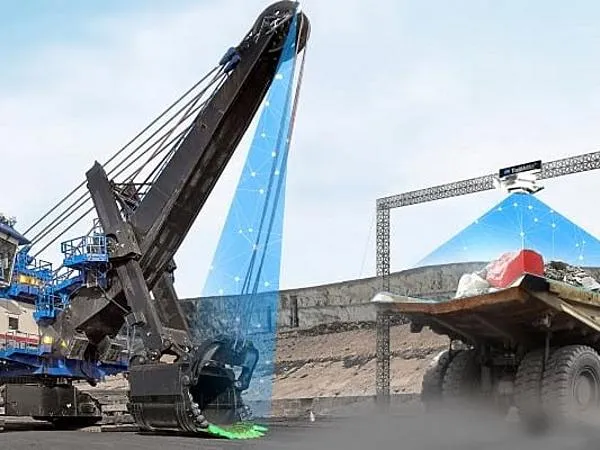
Motion Metrics produces smart, rugged cameras that monitor and provide valuable and timely data on equipment performance, faults, payloads and rock fragmentation.  This data is then analysed using embedded and cloud-based machine learning to provide real-time feedback to the mining operation.  This enables immediate identification of potential issues that could impact safety and cause expensive unplanned downtime.  This includes boulder and foreign body detection to dislodged ground engaging tools that can critically damage crushing equipment if undetected.  It also provides information that can be used to optimise asset efficiency, supporting better decision making as miners seek to increase productivity while reducing energy consumption, particularly in areas such as comminution (crushing, screening and grinding), one of the most energy-intensive processes in mining.

These technologies were initially developed for GET applications but have recently been extended into a suite of products and solutions that can be applied from drill and blast through to primary processing.  Motion Metrics technology is currently used on more than 80 mine sites and its customers include some of the world’s largest mining companies.   Its revenues are generated from the initial sale of equipment and subsequent recurring aftermarket revenues including subscriptions to its cloud computing platform, services and spare parts; a model that is highly complementary to Weir’s aftermarket-based business model.

Motion Metrics was founded in 1999 by Dr. Shahram Tafazoli.  In addition to its headquarters in Vancouver, Canada, Motion Metrics has offices in Chile, Australia, Brazil, Russia and South Africa.  The business employs c.125 people focused largely on research and development, alongside sales and field support.  Dr. Tafazoli will continue to lead the business when it joins the Weir Group, overseeing the new Weir centre for excellence in AI and Machine Vision technology.  Weir’s existing Canadian operations employ c.600 people and include manufacturing facilities as well as sales and service centres. 

Motion Metrics Founder, Dr. Tafazoli said:

“Motion Metrics was established to harness the power of AI and Machine Vision to help the global mining industry make its essential transition to safer, more productive and sustainable operations. Having proven our technology and grown rapidly over recent years, the time is right for us to accelerate our development as part of the Weir Group, which brings access to every major mining region in the world, from pit to plant.  I am also excited to establish in Canada a global centre of excellence for AI and Machine Vision for mining applications, reflecting Canada's domain expertise in both mining and machine intelligence.”

Motion Metrics will become part of Weir’s ESCO division, with its extensive team of researchers, data scientists and engineers also supporting the increased digitisation of the broader Weir product portfolio. 

Accelerating ESCO’s growth strategy following its successful integration into the Group

ESCO was acquired in July 2018 and the business has been successfully integrated into the Weir Group over the past 3-years.  Cost synergies in excess of US$30m were realised ahead of schedule and the business is on track to surpass its acquisition margin targets.  Despite the impact of the COVID pandemic on market conditions over the past 18-months, returns on capital employed will exceed the Group’s cost of capital in 2021, in line with the Group’s capital allocation policy. 

Moving forward, ESCO’s focus is on accelerating growth through geographic expansion and the continued extension of its market leading front-of-shovel offering, creating new solutions to support customers’ safety, efficiency and sustainability goals. Motion Metrics is fully aligned to this strategy, including the early realisation of the digitally instrumented smart bucket concept which provides information on bucket and GET health alongside payload and ore fragmentation analysis. Combining ESCO’s deep knowledge of mining operations with the data-led insights from Motion Metrics’ AI capabilities will enable the business to create new solutions that integrate and extend the technological differentiation of its best-in-class offerings across the mine. 

Andrew Neilson, Division President of Weir ESCO commented:

“This is a perfect partnership.  Our customers want more digital solutions to help them improve safety, efficiency and sustainability and providing these is a key part of our growth strategy.  Motion Metrics brings patent-protected technology that reduces expensive downtime in GET applications, helping improve ESCO’s differentiated technology offering even further.  The additional capability in AI and Machine Vision will also accelerate our expansion into adjacent markets including developing smart eco-system offerings encompassing the load and haul operations of our customers.”

The acquisition is expected to complete in the fourth quarter of 2021.

November 01, 2021

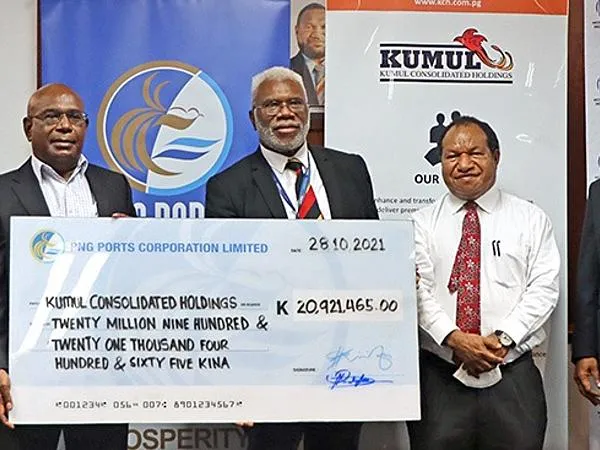
The State has received a dividend of over K21 million from PNG Ports Corporation Limited for the fiscal year 2020. This payment of K20, 921, 465.00 comes on the heels of a net profit after tax of K83, 685, 862 last year.

PNG Ports Board Chairman Kepas Wali said the payment was made as a result of the company's good financial management and operating standards.

Despite being severely impacted by the virus, he also stated that PNG Ports was in a secure financial position.

 “Even though the current economic conditions are tough, coupled with the pandemic and the unstable performances in the overall throughput volumes at the ports, we have performed well.

“Our cash flow for this year is positive,” Mr Wali said.

He praised the board, management, and employees for continuing to generate results while maintaining prudence, accountability, and openness in all aspects of their work.

PNG Ports, according to Wali, is a robust and viable all-state-owned organization (SOE) dedicated to the Government and its people and has been working relentlessly to modernize the ports in order to improve efficiency and production.

“During this period of uncertainty, PNG Ports is investing in its employees, and not only the port facilities.”

The presentation of a dividend to Kumul Consolidated Holdings, the holding company of SOEs, was observed by William Duma, the Minister for State Enterprise.


Reference: Loop (29 October 2021). “PNG Ports Pays Dividend”.

November 01, 2021

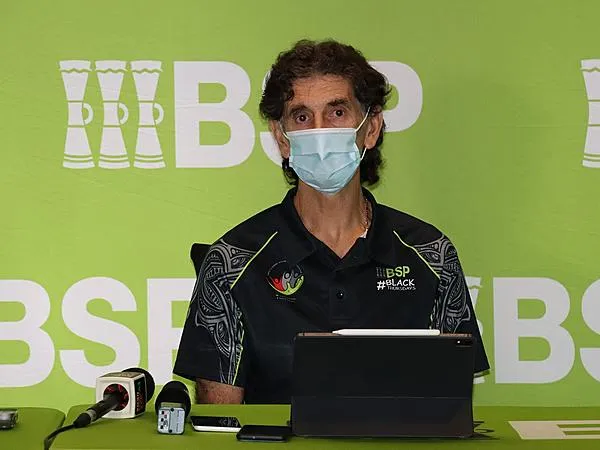
Photo credit: BSP

Despite continuing to face reduced economic activity, BSP Financial Group Ltd has issued its unaudited September 2021 results, with a Net Profit After Tax of K698 million.

COVID-19 continues to have an impact on enterprises in all nations, although tourism-dependent countries have been hit more than others due to limited or non-existent international travel.

BSP Group CEO, Robin Fleming said: “With overall system lending in all countries contracting as the business became more cautious with investment decisions, interest on loans had reduced somewhat compared to the previous quarter, but non-lending income remained strong, based on more transaction growth and increases in merchant activity. 

“Costs had been contained through a combination of more favourable exchange rates during the quarter and a considered approach to discretionary expenditure.”

On October 18, Kumul Consolidated Holdings, Nasfund, Nambawan Super, Teachers Savings & Loans, MVIL, Petroleum Resources Kutubu, Credit Corporation, and Fiji National Provident Fund received an interim dividend of K0.39 per share, totalling K182 million.

The price of BSP shares on the PNGX jumped to K12.31, while BSP shares on the ASX were trading at $5.00. BSP also made a significant contribution to PNG's business tax collection, paying K295 million in company tax last year, accounting for around 17% of total company tax paid in the country.

Finally, CEO Fleming emphasized BSP's commitment to providing traditional branch-based services to customers in all provinces of PNG, citing recent sub-branch upgrades such as Koroba and Namatanai, the re-opening of Kerema in September, and upgrades of Palmalmal before the end of 2021 and Telefomin early in 2022.


Reference: Loop (28 October 2021). “BSP Delivers K698m Profit”.

October 20, 2021

Decentralised sewage treatment is not common in Papua New Guinea (PNG) yet according to the United Nations sustainability development goals (SDG's) sanitation and clean drinking water are two of the core fundamentals for society. Whether your site is a community village, an educational institute, regional hospital or mining camp, it needs to adequately sewage to maintain a healthy virus free community.

Logistically however, remote decentralised sewage systems are one of the hardest projects to undertake because they involve sizable infrastructure. With Hydroflux you do have choices and the skills are here in-country, so in this article we review the options to achieve sanitation in remote areas through the appropriate selection of decentralised sewage solutions.

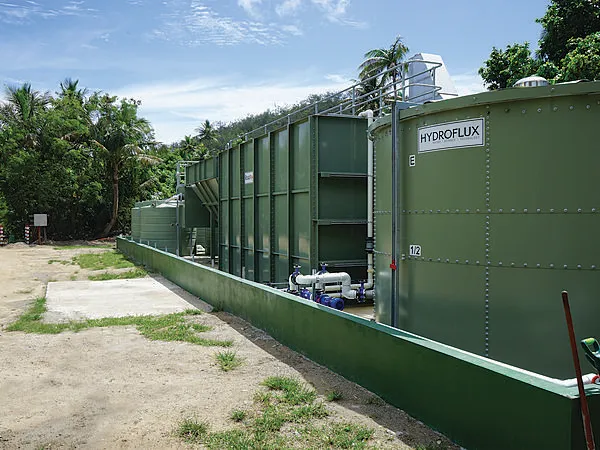
Prefabricated tanks are generally the best option because they can be constructed off site, tested, and sent to site ready to install in a "plug and play" format. An important sustainable benefit of the Hydroflux Epco decentralised STP is that we construct the tanks in Port Moresby or Lae increasing local economic value through our in-country partnerships.

There are two decentralised STP options available through Hydroflux Epco and both have their merits if applied appropriately. Selecting the appropriate solution is centered around the life span of your site. In simple terms, ask yourself; Does the site have a medium-term lifespan of less than 10 to 15 years duration or is the project for a community style site to last 25 years or more?

The first option for medium to short term sites is a fully containerised system. Fully containerised systems are often more economical because they are built offshore in high volume production lines and are built using sheet metal stainless steel inside standard shipping containers. Yes, they are purpose built from the ground up but they are a one size fits all standardised solution with little ability for customisation. The containerised solution by Mena Water, is an excellent example of a quality German owned design made in the United Arab Emirates from quality European components. Quality containerised systems are appropriate where CAPEX budget is a limiting factor or for a maximum effective site life of between 10 to 15 years.

The second, and most appropriate option for PNG is fabricated here in country. The Hydroflux Epco RoadTrain® STP is purpose built from the ground up and is designed for longevity, thus having significant circular economic value. The RoadTrains are readily refurbished and are capable of accepting future process improvements. As of 2021, the Tabubil RoadTrain STP is 39 years old and being successfully refurbished and upgraded for inlet screening of in-organics and sludge handling prior to effluent discharge. Both modern technologies were not available in 1981 when the site was first built.

There are two installation variants available in the RoadTrain series depending on your site's logistical disposition. The first variant is a fully welded tank configuration for transporting as a standalone low and wide load for sites with little if any logistical issues. The second is a bolted panel configuration for flat pack delivery and assembly on site where road access and or cranage is limited or problematic. You can watch an animated assembly of the Hydroflux Epco bolted RoadTrain in this edition of PNG Business News and on the Hydroflux Epco website. Just look for our advertisement or follow the link to our website at the end of this article.

Recently, Hydroflux Epco and their in-country representative's, constructed each of the decentralised options mentioned in this article.

Enga province in the western highlands is the site of one of our most recent containerised installations. The Wabag decentralised solution was built over the Summer of 2020/21. The site was accessible, a stock standard solution fitted the brief and a Mena Water containerised solution was selected.

The Kundiawa STP in Chimbu province is a bolted panel design because the access road down to the site is very narrow and steep, virtually impossible for wide load access. In this case the bolted RoadTrain assembly as seen in the animation on our website was the most appropriate choice.

In contrast, the fully welded version of the RoadTrain Original was used for Lihir, Kiunga and Wangbin townships because of ready access via road and coastal sea freight. The RoadTrains for the Western Province towns were fabricated in Port Moresby for ready access to the Fly River via coastal shipping and the Lihir project would have been produced in Lae for shipping east to New Ireland Province except for unfortunate Covid related delays in Morobe Province at the time.

Hydroflux Epco are the regional leaders of this type of design with over 60 years’ experience in PNG across some 40 plus locations from the Western Highlands to the Eastern most islands of Bougainville and New Ireland. The Hydroflux Epco product range is trademarked as the RoadTrain® STP and Hydroflux Epco are proud to say our RoadTrain STP's provide the highest level of economic value for PNG because they can be produced locally.

When it comes to robustness and longevity, the RoadTrain STP is the best choice for project life spans greater than 25 years and when your site logistics are problematic, for any reason, the Hydroflux Epco bolted RoadTrain is the design of choice. So, if you are considering sewage treatment for your next project, think about logistics first, and let Hydroflux Epco take care of producing a treatment outcome that protects your community into the future, whatever distance that horizon is.

October 20, 2021

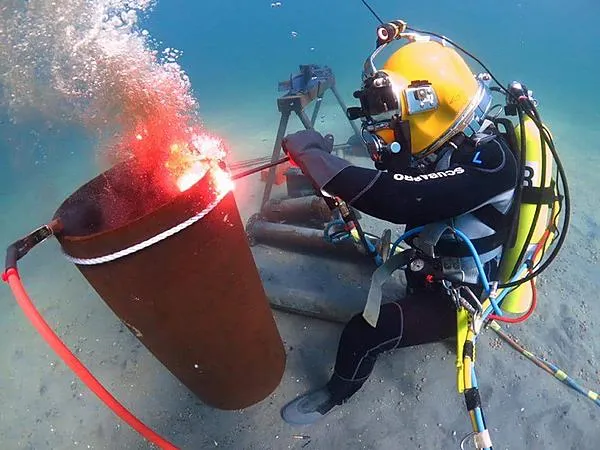
Pacific Towing’s commercial dive team is central to the numerous services it provides PNG’s O&G sector including in-water surveys to class with live feeds back to international survey technicians.

Pacific Towing, a 44 year old marine services business headquartered in Papua New Guinea has been servicing the oil and gas sector in excess of 10 years.  The company is a member of both the International Spill Control Organization and the International Salvage Union.  With its own Australian trained and certified commercial dive team, ‘PacTow’ is now providing its in-water surveys to class with live feeds streamed back to internationally located survey technicians.

PacTow provides a diverse range of services to not just O&G companies themselves but also to some of the largest offshore support operators.  General Manager, Neil Papenfus says that the company’s commercial dive team at its dedicated tug base in Port Moresby is central to the many services it provides its O&G clientele, including the sector’s offshore operators.

Of considerable value to these offshore entities, are PacTow’s in-water class surveys.  “Because our dive team can provide a live feed to surveyors in just about any country, we’re able to negate their need for international travel.  The live feed component of our service is obviously highly valued given that COVID-19 is making it next to impossible to get specialist international technicians both in to and out of PNG.”

Papenfus confirms that the company’s commercial divers are all Australian trained and certified.  In addition to being highly trained, he says that "as PNG nationals they have an intimate knowledge of the country’s water ways, its weather patterns and overall marine conditions – they are definitely the best in-country and easily equal to their international counterparts.”

Other services PacTow provides to the O&G sector include oil spill response and prevention; video pipeline inspections; PLEM valve hook up and release; towage, berthing and mooring; hull cleaning; and a range of niche, as well as project-based customised solutions. Specific to the country’s PNG-LNG project are the installation of current sensors, inspection of navigational piles/systems, and sea water intake inspections.  Additional services provided to two of its downstream clients include mooring inspections and repair, annual pressure testing of fuel transfer sub hoses, and also seabed survey and sampling.

The company anticipates introducing new services to support PNG’s O&G sector as it invests further in its re-fleeting program which will see it acquire another three Azimuth Stern Drive (ASD) tugs by 2025. 

October 04, 2021

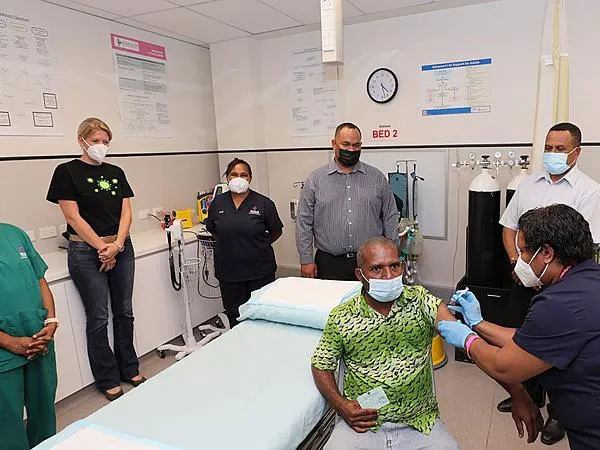
From L – R: Dr Flora Jethro, Oil Search Field Lead Medical Officer, Dr Julia Stinshoff, Senior Medical Officer, Sr Ruth Sala, Oil Search Registered Nurse, Api Kassman, Head of the COVID-19 Vaccination Ministerial Task Force and Leon Buskens, Oil Search Executive Vice President & Co-Head PNG witnessing Oil Search employee Nicholas Koromugo being vaccinated in the Company’s medical clinic by Sr Janet Hoiba, Oil Search Clinic Supervisor.

Oil Search is strongly committed to protecting the people of Papua New Guinea from the spread of COVID-19.

After signing a Memorandum of Understanding with the Papua New Guinean National Control Centre (NCC) for COVID19, the company is now administering the COVID-19 vaccination to staff and community.

“We are happy that we are able to be a major part of the solution by working collaboratively with our National Government and NCC, in proactively managing the growing severe risks of COVID-19 through vaccination,” said Leon Buskens, Oil Search Executive Vice President & Co-Head PNG.

“Oil Search is always there in times of disaster such as the earthquake and droughts working with our leaders and communities. We are pleased to be able to again contribute with the COVID-19 disaster. COVID-19 is real and has and can further cripple social and economic living.”

To date, all of Oil Search’s PNG field operations including its Moro site remain COVID-free. This has been a result of strict protocols, including quarantine, twice weekly testing and wastewater testing.

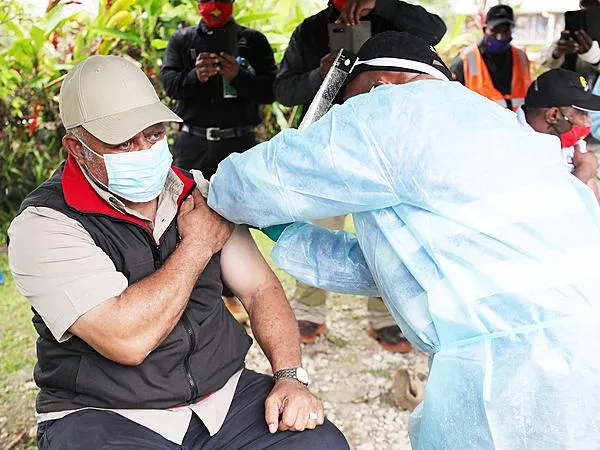
Oil Search has conducted more than 54,000 COVID-19 tests at its medical clinics and quarantine facilities, distributed 450,000 items of personal protective equipment to health workers, and administered more than 1300 doses of the AstraZeneca and J&J vaccines. More than 1150 Oil Search staff and contractors in PNG have now received their COVID-19 vaccination.

In addition, the Company continues to assist the PNG Government COVID-19 response through dedicated PNG industry task force with supply chain and logistics as requested.

Api Kassman, the head of the COVID-19 Vaccination Ministerial Task Force said that the Government is now directly engaging with companies that have registered medical staff so they can administer vaccines.

“Companies such as Oil Search have medical staff who are able to administer vaccinations and so they are expanding vaccine coverage to workers, their families and community members. We appreciate these companies that are playing an important role in helping our people to vaccine.

“For other private sector businesses who are looking to have their workforce fully vaccinated, we also have mobile vaccine units that can visit the offices and workshops. After the first phase of the vaccine rollout, it has become very clear that we must have more mobile units to take vaccines to our people.”

Mr Kassman called on businesses around the country to register their interests in receiving vaccines through the National Call Centre. “The number to call is 1-800-200. You just need to call and leave your details and you will be contacted to arrange an appointment. The range of vaccines available has also expanded with the Johnson & Johnson vaccine which is made by the same company that makes the baby powder and shampoo.

“Johnson & Johnson is also a single-dose vaccine, and this means people only need one shot to be fully vaccinated. Everyone is strongly encouraged to be vaccinated to protect individuals, families and communities from this deadly virus,” Mr Kassman said.


Article courtesy of Oil Search

October 04, 2021

The Board and Management of landowner owned companies operating in Southern Highlands, Hela and Gulf Provinces have been vaccinated against COVID-19, sending a strong and clear message of solidarity in the fight against a life-threatening disease.

The landowner owned companies who provide essential camp management, catering, security, construction, and logistics support to Oil Search include Kutubu Security Services (KSS), Gobe Field Engineering (GFE), KutMor, PNG Mining and Petroleum Hospitality Services (PNGMPHS), Gigira Development Corporation (GDC), Mananda Umbrella Joint Venture (MUJV) and Trans Wonderland Limited (TWL).

John Kapi-Natto, KSS Chairman was vaccinated in Kutubu by the Oil Search Medical Team said KSS recognises the HSES impact of COVID-19 and stands together with Oil Search to support the response to this pandemic. “I made the choice to get vaccinated to protect myself and to ensure continued business operation. We support the Company’s response plan which is in line with the National Government’s Niupela Pasin guidelines.”

Benjamin Wabua, GFE Chairman was one of the first leaders to get vaccinated at the Oil Search National Football Stadium vaccination site in Port Moresby. Chairman Wabua said: “It was a personal decision and as a company Chairman, I am setting an example for my management and staff. Vaccination is the only way to protect myself, my employees and our business against more serious impacts of COVID-19”.

Larry Andagali, TWL Managing Director, has also demonstrated ongoing commitment and leadership in the fight against COVID-19. Mr Andagali who was one of the first to be vaccinated when the vaccines became available to the public said: “COVID is deadly as it has killed a lot of people around the world and it continues to claim more lives. We need to believe in science and not conspiracy theories and get vaccinated.”

Other vaccinated landowner owned company leaders include Sakai Kei, KutMor Chairman, Nathan Nason, KutMor General Manager, Peter Heno, PNGMPHS Chairman, Jonathan Corotan, CEO PNGMPHS, Peterson Pipi, GDC Managing Director and Ipape Hulijeli, MUJV Chairman.

All leaders called upon their employees and other contractors to take up vaccination. “In addition, measures such as ongoing testing and quarantine can be relaxed. Prolonged quarantine also takes away valuable time you could be spending with your families,” Chairman Wabua added.

Leon Buskens, Oil Search Executive Vice President & Co-Head PNG highly commended each of the landowner owned company leaders for demonstrating shared responsibility for the collective health and safety of all employees and contractors. “Your leadership and duty of care are exemplary. We thank you for contributing to a safe workplace and community.”


Article courtesy of Oil Search

October 04, 2021

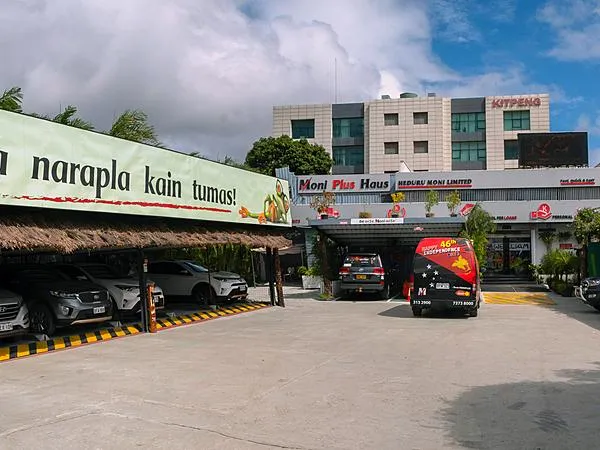
Heduru Moni Limited is successfully running its 22nd year of operation and is quickly earning the reputation as one of the most exciting financial services firms on the rise in Papua New Guinea. The company was incorporated and commenced trading in 1998 as a financial intermediary under the trading name Kina Plus and started operations by providing small personal loans for employees of both the public and private sector. In February 2006, the Bank of Papua New Guinea granted Heduru Moni Ltd a license as a Financial Institution under the Banks and Financial Institutions Act.  Attaining the license allowed the company to raise deposits and expand its lending portfolio.  In 2006, the company’s trading name was changed to what it is now known today, "MoniPlus"

This company is a full-fledged financial institution and is “The leading lender in unsecured Personal loans in the country in its category”. The current leadership position is achieved and maintained due to exceptional friendly service quality, Turnaround time, promptness, flexibility, affordability of loans offered with innovative products to suit every Papua New Guinean’s financial need. It is operating from PORT MORESBY (HO) at present with nationwide presence having branches at POM, Mt HAGEN, ALOTAU, LAE & KOKOPO.

"MoniPlus" also provides SME Financing, Asset and Equipment Finance, Loan Against Properties, Financier Guarantee, FX Remittance services (known as Moni Plus FX) and offers highly competitive rates for Term Deposits.  In 2012 the company created a state-of-the-art on-line, Foreign Exchange delivery service and had its license approved as a Foreign Exchange dealer in May 2012. 

With respect to its lending division, the company reported in its 2020 key disclosure statement total loans and advances of K 284 million. The year 2021 continues to see steady growth & promising particularly in terms of Education Loans, Asset and Equipment Finance portfolio and foresees this to continue as more opportunities within the economy in all sectors are unlocked. 

"MoniPlus" strength lies in its ability to respond to all type of business sectors, from corporate heavies in transport, logistics and construction right across to SMEs such as vehicle hire and public motor vehicle (PMV) operators nationwide and through its lending portfolio shows optimistic signs ahead for Papua New Guinea. With "MoniPlus" continued branch expansion plans over the coming years, its sights are on regional opportunities for unsecured Personal Loans, Education Loans and Asset Financing with particular interest in growing its mining and petroleum lending portfolio. "MoniPlus” has made its name in the market on its fast, quick and easy service and its speed to funding for all customers.
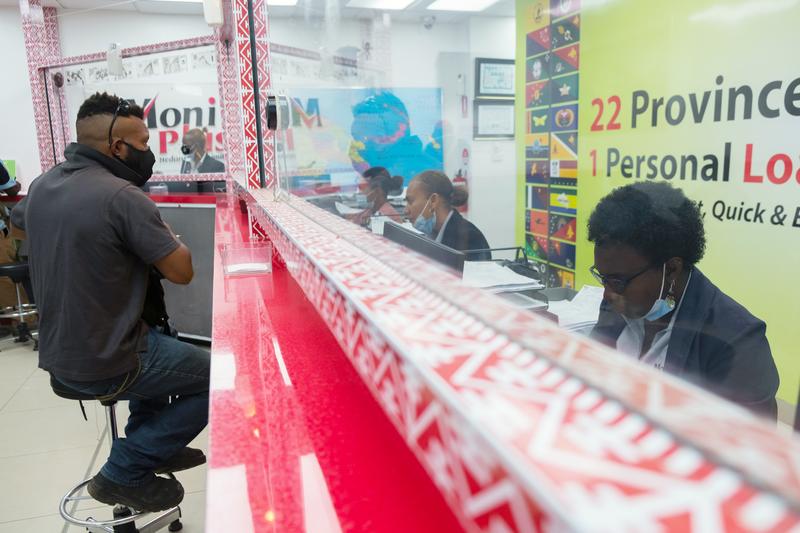
"MoniPlus" provides the most modern, online foreign currency exchange and money transfers in Papua New Guinea. Services are available to individuals and commercial enterprises alike.

The online service is available 24 hours a day 5 days a week and allows clients to complete currency transactions from home or office, or from our branches if preferred.

Features include:

  • Competitive rates and low fees - check a live rate on your online dashboard any time.
  • Exceptional service - Fast, easy and secure.
  • Seamless intuitive interface is very user friendly
  • 24 hour / 5 day per week availability

While subject to usual regulatory Know Your Customer requirements, its registration process can also be handled online, with a user-friendly process meaning you can be transacting within normally 24 hours. For inquiries email info@moniplus.com or visit www.moniplus.com.
September 29, 2021

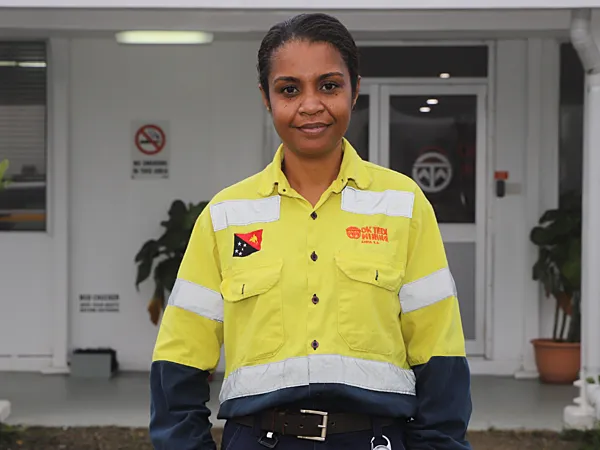
Manager Safety, Anna Ila

Ok Tedi Mining Limited (OTML) has appointed a national female employee to head its Safety Department. Anna Ila is now the Manager Safety after her appointment on August 27th. 

Ms Ila brings to the Company a vast knowledge and experience in safety and occupational health having served as Superintendent in Safety Systems, Compliance and Statutory Training over the last seven years prior to her appointment, and with plans to continue the implementation and improvement of the Company’s safety performance. 

“At Ok Tedi, we ensure that applicants are appropriately qualified and experienced to be successful in their role. Ms Ila is well placed to lead the Team in the implementation of Ok Tedi’s plans to continue to improve our safety performance,” said OTML General Manager, People and Capability, Mark Stone. 

“Ok Tedi is an equal opportunity employer and in line with the Company’s 2025 Vision, diversity and inclusion is an important part of its strategy indicated by the aspiration to achieve 20% female representation in the Ok Tedi workforce as well as a 25% female representation in the leadership roles.” 

Ok Tedi now has four female national managers across the business, and it is currently developing other female employees for senior roles in the future. 

“I would like to thank the OTML management for the recognition and opportunity, and look forward to working with the team to deliver our plans to achieve OTML’s safety goal of zero harm,” Ms Ila said. 

Also, in line with the Company’s vision to nationalise all managerial positions by 2025, there have been other appointments recently of qualified nationals, including that of the Manager Mine Support Services in Mr Masket Siune. 

Mr Siune is no stranger to this role having started his career in the industry through Ok Tedi’s Graduate Development Scheme in 2005 and worked his way up the ladder and assuming superintendent roles in the Mining Business Unit’s Improvement, Training and Analysis sections of the Company. 

“Congratulations to these newly appointed managers and we look forward to their continuing input to the success of Ok Tedi going forward,” said Mr Stone.

September 29, 2021

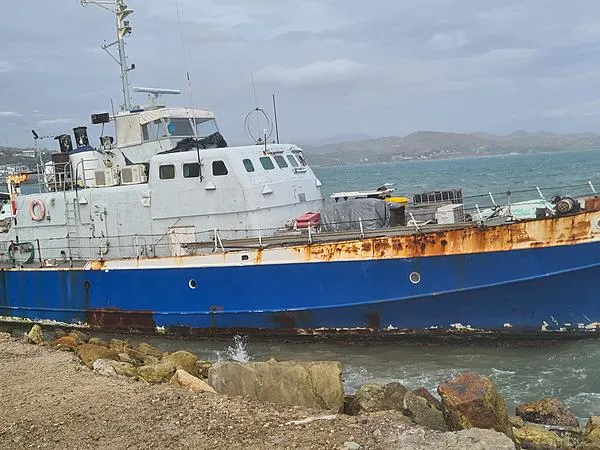
Pacific Towing (PacTow) saved APEC Haus from likely and significant damage after it salvaged an abandoned vessel that had run aground within metres of the landmark building.  The salvage of the ex New Zealand navy patrol boat ‘Hawea’ occurred last Thursday evening during strong winds and a rising tide.  The PacTow salvage team expertly manoeuvred the leaking vessel off the rocks it was lodged on, then towed it back to its dedicated tug base at Motukea. 

After receiving notification of the marine casualty from the National Maritime Safety Authority (NMSA) and PNG Ports Corporation, PacTow rapidly despatched its tug ‘Wato’ and lifeboat ‘Buru’. Twelve crew and five members of PacTow’s commercial dive team were directly involved in the salvage; with additional support provided by senior managers and operational personnel located at the company’s headquarters. 

Upon arrival at Ela Beach at 7.00pm it was evident to the PacTow team that given the high waves and shallow water, the vessel was in imminent risk of breaking up.  The divers quickly assessed the integrity of the Hawea’s hull and bollards for towing.  The vessel was then towed by its stern to dislodge it from the rocks and then by its bow once it was in safer waters.  The Wato and her crew proceeded to tow the vessel back to PacTow’s tug base at Motukea, where she was securely moored shortly before 10.00 pm.

The following day, when daylight permitted a thorough inspection of the vessel by PacTow marine engineers, it was discovered that the aging vessel was in exceptionally poor condition with several leaks.  PacTow reports that the vessel’s intake of water is currently mitigated by around-the-clock mechanical pumping.  

It is understood that the National Maritime Safety Authority (NMSA) is in the process of trying to track down the vessel’s owners.  PacTow plans on disposing of the vessel if the owners can’t be located and the relevant authorities provide them with instruction to do so.

PacTow has performed well over 50 salvages in the region and is Melanesia’s leading marine salvage and emergency response company.  General Manager Neil Papenfus described the most recent salvage as one of “patriotic duty given the significance of APEC Haus to our country.”

To learn more about Pacific Towing and its salvage capabilities, as well as its commitment to serving PNG and its communities:  www.pacifictowingmarineservices.com