

January 19, 2023

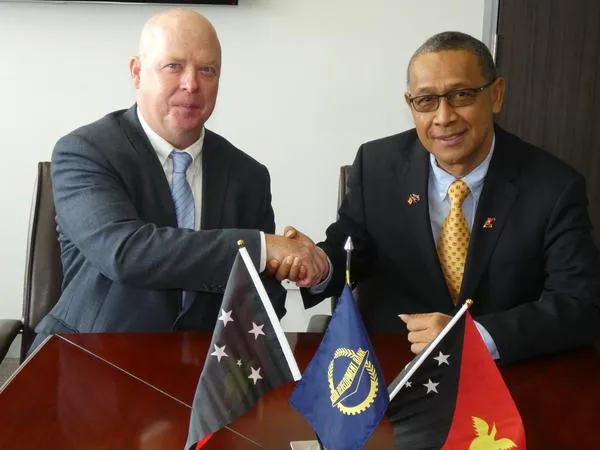
Photo: BSP Group GM for Corporate Banking, Peter Beswick

“Business and consumer confidence continued to improve during the final quarter of 2022, with anecdotal evidence across a broad section of our retailers and hotel operators experiencing record pre and post-Christmas sales activity”, said BSP Group GM for Corporate Banking, Peter Beswick.

In giving his insight in the 2022 BSP Quarter 4 Pacific Economic and Market Insights Report, Mr. Beswick said, “increased business and leisure travel has seen hotel occupancies reach pre-COVID levels, with many hotel and accommodation facilities near full occupancy.”

Mr. Beswick said for its Corporate Banking Customers BSP is projecting that demand velocity will continue throughout 2023.

“Inflation on the other hand remains the primary concern for BPNG, businesses and consumers,” according to Mr. Beswick.

On 12th December, 2022, BPNG increased the Cash Reserve Requirement to reduce market liquidity, as a further measure to counter imported inflation. On 3rd January, 2023, BPNG signalled a further increase in interest rates, with its third lift in the Kina Facility Rate by 25 basis points to 3.50%. This is likely to dampen investment and consumer spending.

The report also highlighted that strong demand and ongoing supply issues, continue to boost goods’ price inflation. Key inflation drivers remain unchanged with elevated price levels ascribed to supply-chain disruptions, logistics costs and fuel prices.

“Foreign Currency Reserves have hit multi-year highs at USD3.6 billion, delivering strong coverage for Government Foreign Currency loan repayment obligations and BPNG intervention for importers throughout 2023,” Mr. Beswick added.

Back to investor confidence, Mr. Beswick said Papua LNG is a “go”, with Final Investment Decision (FID) expected late 2023 and this will deliver significant opportunities through local content for landowner and PNG companies, direct or through Joint Ventures with global engineering procurement and construction contractors. At end 2022, a number of tender packages were

released to the market in the lead-up to FID. Papua LNG, Government infrastructure projects (Ports & Roads) plus our delayed resource opportunities — Porgera, Wafi-Golpu, Pnyang, and Twinza — are leading multiple customers to build people and resource capacity.

Mr. Beswick concluded that “while there is a shortage of skilled and unskilled labour globally, our customers are focusing on looking after their best people. Retention strategies are now critical.


Article courtesy of BSP

January 19, 2023

Photo: BSP Acting Group Chief Executive Officer Ronesh Dayal

Papua New Guinea's economy through the course of 2022, has experienced higher levels of activity post the COVID-19 period. To maintain this shift in momentum, government needs to accelerate foreign direct investment (FDI) in 2023.

According to the 2022 BSP Quarter 4 Pacific Economic and Market Insights Report, the Pacific region’s economies collectively grew by 5.3% in 2022, mainly driven by growth in PNG’s mineral sector and Fiji’s tourism sector. In 2023, all Pacific economies are expected to post positive GDP growth, with regional growth of 4.8% as the recovery in some countries stabilizes.

BSP Acting Group Chief Executive Officer Ronesh Dayal said, “with the reopening of borders across the Pacific, we have seen marked improvement in economic activity across the Group compared to the COVID-19 period.”

PNG’s economy grew by 4.6% in 2022, led by higher oil and gas production, as developers sought to capitalise on high prices.  Production is expected to normalise in 2023, leading to a lower growth forecast of 4.0%.

Non-resource sector GDP is estimated to have grown by 4.5% in 2022, and 4.6% is forecast for 2023. Whereas, resource sector GDP is forecasted to grow by 1.2% in 2023. Given PNG’s reliance on imports, the country was prone to the effects of heightened global inflation, driven largely by imported inflation for crude oil and foods.

Though global inflation is expected to subside in 2023, we do not expect that this will immediately translate to lower prices for PNG consumers. Monetary policy tools including the Kina Facility Rate (KFR) and the Cash Reserve Requirement (CRR) have been used to tighten money supply and combat inflation. The KFR was increased to 3.50% in January 2023 and the CRR has increased steadily from 7% to 10% (pre-COVID levels) by the end of 2022.

When speaking on the potential upsides for the PNG economy, Mr. Dayal added “In early 2023, we need to see tangible foreign direct investment (FDI) commitments particularly from the extractive sector, before we see PNG’s economic recovery commence,” and stressed that PNG needs FDIs in 2023 to consolidate its growth trajectory and achieve a sustainable recovery.

Regarding the financial sectors role in the economic growth expected for PNG, Mr. Dayal added “differentiating industry corporate income tax rates, like those seen for commercial banks in PNG, can be particularly damaging for emerging economies such as PNG. Such tax policies are detrimental to the proper functioning of market forces and conflicts with modern economic theory.”

“The tax rate increase to 45% on commercial banks comes at a time when other locally-grown financial institutions are looking to obtain commercial banking licenses. The timing is unfortunate and will act as a deterrent for the much needed expansion of the financial sector and investments in PNG,” he concluded.


Article courtesy of BSP

January 19, 2023

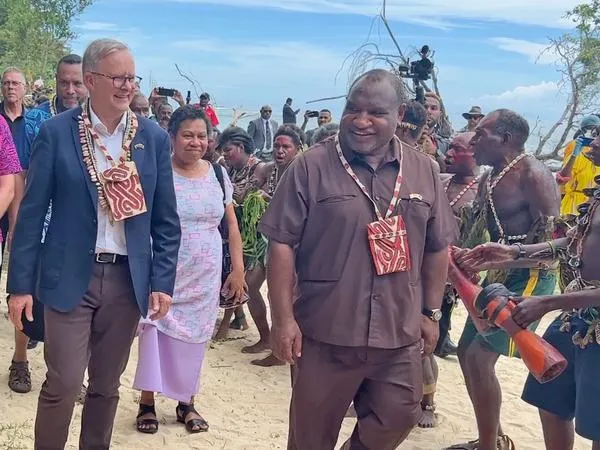
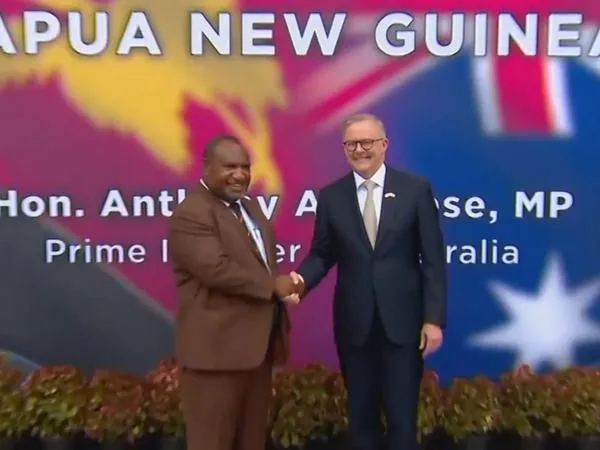
Photo: Prime Ministers Albanese and Marape at Commander’s Beach at Moem Barracks in Wewak .- PM’s Office Media

Prime Minister Hon. James Marape says for the first time in 47 years of Independence for Papua New Guinea from Australia, an Australian Government and Prime Minister are addressing all outstanding issues between both countries.

He said this recently (Tuesday, January 17, 2023) when commenting on the visit by Australian Prime Minister, Hon. Anthony Albanese, last Thursday (January 12, 2023) and Friday (January 13, 2023).

“We do not want the moment of the visit of PM Albanese to be wasted,” PM Marape said.

“There have been many bilateral meetings and visits, but this one was historic, in that he also addressed our Parliament.

“Australia is committed to addressing all the outstanding issues with us. I have already written a letter to PM Albanese thanking his for the visit and the issues that he raised.

“If you listened to his speech, he talked about increasing the trade relationships between our two countries, including in agriculture and food production. PM Albanese also talked about increased people-to-people relationships, addressing visa issues, exchange programmes between our police and military, public service, interventions in health and infrastructure, among others.

“This visit was not about requesting money. We never requested any money from Australia or did they make a commitment to help us with money.

“This visit was all about the outstanding bilaterals we have with them. We want to finetune and improve this relationship to one that will anchor Australia and PNG going forward.

“Our upcoming meeting between Australia and PNG Ministers in February will consolidate this and move things forward. We want to achieve results and do not want this to be another round of wasted bilateral visits.”

PM Marape added: “The relationship between our two countries is no ordinary relationship.

“Australia and PNG have a strong foundational relationship from our colonial shared history up to today.”

In Parliament recently, PM Marape thanked all MPs for allowing PM Albanese to address Parliament last Thursday.

He said he would present a full report on PM Albanese’s visit later to Parliament.

“I thank everyone for allowing the guest of our country, Australian Prime Minister Hon. Anthony Albanese, to have a presence in our Parliament and address our people,” PM Marape said.

“A big thank you to all MPs, from the Speaker down, for allowing him to be in our Parliament last Thursday.

“On Friday, he visited Wewak where he paid his respect to the late Grand Chief Sir Michael Thomas Somare, as well as visited one or two other places.

“We had an official farewell and sendoff in Wewak, and he made a transition out of Port Moresby (back to Australia).”

January 16, 2023

Photo credit: International Trade and Investment Ministry of Papua New Guinea

Minister for International Trade and Investment, Hon. Richard Maru welcomed Australian Government’s Commitment to work with Papua New Guinea on the development of Special Economic Zones (SEZs). Minister Maru in his meeting today with the Australian High Commissioner to PNG, His Excellency Jon Philp said that he wanted to particularly work with the Australian Government and investors in the Manus Special Economic Region and the Western Province SEZ. Minister Maru also said that he wanted to work with the Australian Government and investors to look into the development of feed industry, cotton industry, cattle industry and the chicken industry of PNG.

“We need to have more competition across all industries and new industries to replace imports, create jobs and create wealth for our citizens. I am committed to assist Australian investors to take care of issues like the land issues if they are keen to invest in these industries that are of great importance to PNG,” said Minister Maru.

Minister Maru also requested the Australian Government to help PNG fund the development of hybrid electricity systems, especially solar farms, mainly at areas that were using expensive diesel generators, especially in provinces like Manus, New Ireland and East and West Sepik Provinces.

“We cannot attract investors and grow and develop our economy without cheap and reliable energy. Apart from law and order, cheap and reliable energy is key to economic growth,” said Minister Maru.

Minister Maru also added that Carbon Credit was one of the areas that Australia could help PNG with.

“This can be our next biggest industry with the world heading towards total decarbonization by 2050,” said Minister Maru.

January 16, 2023

Photo credit: Papua New Guinea's Prime Minister James Marape and his Australian counterpart Anthony Albanese

Australia's Prime Minister Anthony Albanese has announced plans to increase two-way trade with Papua New Guinea (PNG) in areas such as coffee, cocoa, fisheries, and tourism. In a speech to Parliament, Albanese stated that the Australian and PNG governments should work together to "unlock a new generation of prosperity" and build on the current $24 billion of direct investment from the Australian private sector in PNG.

Albanese acknowledged that PNG is looking to expand its exports of more processed goods and varied agricultural products, and sees this as an area where the Australian business community can play a key role. He also stated that the Australian government is willing to assist PNG in improving its bio-security measures to allow for greater exports of processed goods and agricultural products.

Furthermore, the Prime Minister sees opportunities for PNG to expand its green economy, and that Australian companies are interested in exploring opportunities in this area, including in hydro and hydrogen production. He said "I know a number of Australian companies are keen to explore what can be done in this area, including in hydro and hydrogen production, for example. Together, I am confident we can ensure that the rich natural resources of PNG are made to deliver good jobs, lasting investment and sustainable development for your nation."

PNG Prime Minister James Marape, in response, emphasized the importance of stronger economic ties to ensure a safer Indo-Pacific region. He said "Our focus on ramping up trade, free flow of exports and our people to Australia will be a main issue of discussion with the Australian leadership we are so privileged to have today. This is not just a social conversation, it is deep economic strategy of our nation."

This announcement highlights the potential for increased collaboration between Australia and PNG in various sectors, and the willingness of both governments to work towards a prosperous and sustainable future for both nations. The focus on expanding trade and investment in agriculture, bio-security, and green economy are promising steps towards achieving this goal.

January 12, 2023

Small and medium-sized enterprises (SMEs) can be a force to reckon with in Papua New Guinea if the funds parked in the two banks, National Development Bank (NDB) Ltd and Bank South Pacific (BSP) Financial Group Ltd, by the Government are fully fulfilling the vision of the Government by reaching the wider population and are in line with the goals outlined in the Government’s SME policy.

In 2016 through the draft of the Small and Medium Enterprise Policy, the Government of Papua New Guinea positioned SMEs as a vehicle for inclusive growth, job creation and poverty reduction. A master plan was introduced at the same time to grow the number of SME business in the country in which a target of 500,000 small and medium enterprises were to be established by 2030, which is now just 7 years away.

Back in August 2020, the Papua New Guinea government announced that it would provide K200 million for loans to help small businesses struggling in the wake of the global pandemic. The money was to be split between Bank South Pacific (50%), the National Development Bank (40%) and Department of Commerce and Industry (10%) and be loaned out at a competitive rate to in-need SMEs as subsidised business loans. The first K100 million was delivered to BSP and the next grant of K80 million was later given to the NDB.

However, reports suggested in a recent business forum that there are currently about 45,000 SMEs operating in PNG, notwithstanding the recent economic slowdown. It has been generally acknowledged that a lack of financial inclusion and financial infrastructure, little or no entrepreneurial training, limited access to commercial land, markets and infrastructure are just some of the barriers people face when trying to open a new business in PNG.

So, what can be done to help create those additional SMEs to reach the Governments goal of establishing 500,000 SMEs by 2030?

Chairman of the SME Corporation, John Pora, stated that if the PNG government is to reach its stated goal of bringing 500,000 small and medium-sized enterprises (MSMEs) into existence by 2030, the Small and Medium Enterprises Corporation (SME Corp.) must have the capacity to activate around 240 new entities every day across PNG’s 22 provinces.

As the arm of the PNG government that deals with all things SME, Pora said the SME Corporation has formulated three strategies geared towards building a bridge between the government and the MSME sector.

The SME Corp. had launched a strategy document last year in September and the strategy is based on three principles: integration, communication and people, processes and performance.

However, many Papua New Guineans in the SME sector have spoken out about their grievances in the country's two dailies, saying the two banks that the SME funds are parked at to help develop local businesses are not doing much to reach the wider population.

The two banks have their own separate criteria of giving out loans to entrepreneurs in the country as one is state owned (NDB) and the other is privately owned (BSP), but it always differs on how the loans are awarded to the successful applicant as there is always a profit motive.

The SME funds should be spread out to other commercial and national micro banks operating in the country as well, apart from the two nominated banks for the wider population to have access because a lot of business enterprises don’t have equity available to them.

A leading commercial bank in the country, Kina Bank, had also unveiled its long-term plan for the development of SME in PNG even though the commercial bank was not nominated into the Government’s K200 million funding.

Chief Executive Officer Greg Pawson said Kina Bank are very encouraged by the Government’s focus on the SME sector.

“We see that as being integral to the future growth and prosperity of PNG. Kina Bank has come out with a SME loan product of up to K500,000 (secured) or K100,000 (unsecured) at four per cent interest per annum, with an extended term of up to 15 years. It goes to businesses that are turning over up to K5 million a year. We’ve allocated an initial amount of K50 million for that particular product and we’ll see how that goes.

The underlying understanding and the core purpose of these SME funds is to give meaning and add value to the lives of Papua New Guineans and impacting the nation at a larger scale. It is time the Government serves the entire population to see lives changing and moving forward and not a select group of people being served by the financial institutions the funds are being parked in.

But the government has stated otherwise. In Prime Minister James Marape's New Year speech, he stated that small and medium enterprises (SME) have been an emerging class of business in PNG, thanks in part to government policies designed to support their development, such as preferential tendering and subsidised loans.

"In Micro, Small and Medium Enterprises, the government will continue to support the growth of small businesses in the sector. This follows through from the success of 2021, where almost 600 SMEs Papua New Guineans have started out of low cost borrowings," PM Marape said.

He said that the Government will support the SMEs contribution to the country and continue to diversify its economy, which has been dependent on the extractives industry for several decades. Even when COVID-19 disrupted global economies, most SMEs in PNG remained steadfast in their growth despite the drastic challenges they faced financially.

In 2022, when the world started rebounding from the fallout of the pandemic, the support offered by the government to SMEs in PNG was instrumental in helping them get back on their feet. With new regulations, reforms and financial support aimed to create an accommodative environment, the government is transforming the SME sector into an engine for economic growth.

The growth of SMEs in 2021 was successful as the number of registered SMEs in PNG hit more than 50,000. The Government will continue to offer entrepreneurial platforms such as business incubators, business accelerators, and co-working spaces for SMEs to evolve and thrive in the market.

Through these initiatives, the Marape Government aims to successfully achieve the targets outlined in it SME policy to have 500,000 registered SMEs by 2030 which include lowering the unemployment rate, increasing women’s participation in the workforce, and expanding SME contribution to the gross domestic product (GDP) by the end of this decade.

There are still many opportunities in PNG for small business. it’s a matter of choosing the right type of business.

"At the end, you need to look at what’s needed in the local environment and understand how your business can serve that need," Marape explained.

January 11, 2023

A review into the Superannuation and Life Insurance industry has been compiled and recommendations have been presented to the regulator, The Bank of Papua New Guinea.

It is a step towards making the necessary amendments towards Superannuation and Life Insurance legislations passed by Parliament more than two decades ago.

The Superannuation and Life Insurance Act review committee worked over 18 months conducting various public forums across the key regions of the country in order to seek reviews from a wide spectrum from the urban, semi-urban and the rural population.

The committee’s findings and recommendations were presented on Thursday to the Acting Governor for the Bank of Papua New Guinea Mr Benny Popoitai.

The Superannuation and Life Insurance Act has not been reviewed after it was passed nearly 23 yeras ago. BPNG Acting Governor Popoitai, before receiving the review recommendations in Port Moresby last Thursday, spoke on the importance of legislations adapting to the changing economic trend.

"With economic development there are challenges that need to be identified, where there are inefficiency we need to improve so that amendments and changes in legislation may be necessary," Popoitai said.

The superannuation and life insurance industry plays a huge and critical role in mobilising savings and making strategic investments with the objective of providing a comfortable retirement for contributing members and to protect policy holders and their beneficiaries from the risk of illness and death.

Given the significance of both industries to Papua New Guinea's economy, it is vital to ensure the legislative regulatory framework in which they operate is consistent and is in line with international best practices that takes into consideration domestic circumstances and stakeholder expectations.

The superannuation and life insurance review committee chairman, Erastus Kamburi, said the contents of the two reports will be made public and available by the Bank of PNG after its presentation to the Minister for Treasury, who had commissioned the review of the act back in 2020.

"The report has been formally presented to the owner of the report which is the Bank of PNG and Treasury and the contents of the report will be made available to the public by the Central Bank and the Department of Treasury," Mr Kamburi said.

January 11, 2023

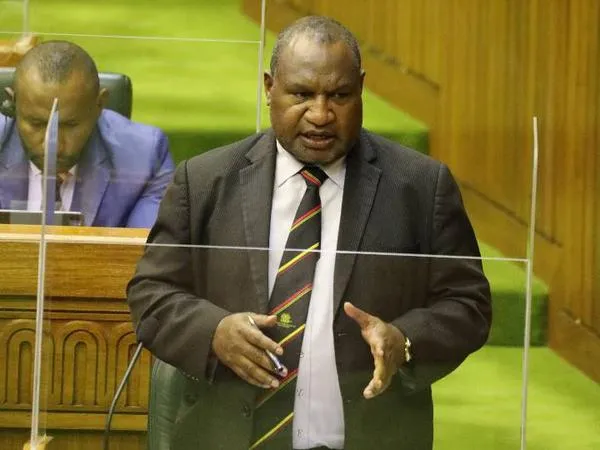
Photo: PM Marape in Parliament

Prime Minister Hon. James Marape has welcomed the Investment Promotion (Amendment) Bill 2022, unanimously passed by Parliament today (January 11, 2023), which encourages the growth of Papua New Guinea-owned small-to-medium enterprises (SMEs) while at the same time attracting foreign direct investment (FDI).

PM Marape also welcomed passage of the accompanying Associations Incorporation Bill 2022, which will ensure better governance and accountability, especially among rural people who form associations to benefit their communities.

Both bills were passed 91-0 by Parliament after introduction by Commerce and Industry Minister Hon. Henry Amuli.

The Investment Promotion (Amendment) Bill 2022 is a change from the Foreign Investment Regulatory Authority (FIRA) Bill, tabled by the previous Government, in response to concerns that SMEs were facing unfair competition by foreign businesses. The FIRA Bill went too far in restricting business activities and was damaging PNG’s reputation as an attractive destination for foreign investors.

After in-depth consultation with the public and the business community, the Government accepted a balanced policy proposal put forth by the Investment Promotion Authority (IPA), which addresses SME concerns while providing investors with confidence.

Key changes are:

  • Changing the foreign certification system to process applications quicker, and automatically rejecting applications for reserved activities to support SMEs;
  • Reviewing the Reserved Activities List at least every three years;
  • Introducing more reporting obligations on foreign investors, and providing powers to cancel certification where key business laws are breached;
  • Improving IPA’s enforcement and compliance, and making better allowances for cross-agency enforcement;
  • Creating a dedicated Registrar of Foreign Investment to oversee the system with powers to speed up unwanted incoming investment, automatically deny unwanted investment, and enforce compliance.

PM Marape said the new law was the culmination of work started by his Government in 2019 after he became Prime Minister.

“As we took office, our focus was on taking back the country from wrong hands, and one major focus was on business and SMEs,” he said.

“We made a commitment to empower our people to be engaged in businesses – a key focus which differentiates our Government from past governments.

“In the 2021 Budget, 20222 Budget and now the 2023 Budget, we have placed more support and funding to ensure SMEs start moving.

“We have also put in money this year to unlock land for people to settle on and do business, both big and small.

“This bill is a first step towards clearly segregating and ringfencing businesses that PNG citizens can participate in.”

January 02, 2023

First elected member for the Newly created electorate Hiri Koiari in the Central Province, Keith Iduhu launched the District's Five Year Development plan recently at the Apec Haus. Government Representatives and distinguished guests led by the Prime Minister were present to attend the launching ceremony.

Mr Iduhu stated in his speech that he had promised to bring change to his people and the Five Year development plan is the first step forward.

"I have promised to provide services where they are needed and the District Development plan has been created basically from the ground up through listening and consulting with my people and coming up with initiatives and workable interventions to provide solutions through adheering to processes and proper planning that can get the job done," Mr Iduhu said.

In the next five years Mr Iduhu and his team are looking forward to delivering basic services and infrastructural development were needed to see the district prosper.

Governor for Central Province Rufina Peter congratulated Mr. Iduhu in taking the lead in launching his District's Five Year Development plan and is certain that other districts in the province will also do the same. She said the Central Provincial Budget is underway and is hopeful that by the end of January 2023 the Central Provincial Assembly will pass the budget.

Prime Minister James Marape said Hiri Koiari was one economic district that was split by his government to bring leadership and development closer to its people.

December 30, 2022

Photo credit: International Trade and Investment Ministry of Papua New Guinea Facebook Page

The Minister for International Trade and Investment, Hon. Richard Maru who is the Minister responsible for the capital market of Papua New Guinea along with its regulator the Securities Commission of Papua New Guinea (SCPNG) said the capital markert will see major reforms over the next few months to modernize the capital market and improve governance in the industry. Minister Maru said that these reforms are critical as the Marape-Rosso government sets out to grow the capital market in Papua New Guinea as a key vehicle to mobilize domestic capital for critical investments in helping the government grow the economy of the country.

“While our government is going all out to attract direct foreign investors, we must develop our domestic capital market to be a major source of capital raising in the domestic market. The government needs to attract more PNG institutional investors in many of our large investments in our proposed Special Economic Zones in the country,” said Minister Maru.

Work has already started with the assistance of the Australian Government who have engaged ADB at the cost of K1.3 million to assist the SCPNG by way of technical assistance. The reforms will be broad and will cover the following areas including SME capital raising platforms, equity crowd funding, debt securities issuance, and reforms in many schemes.

The Securities Commissions Act is being reviewed with major changes to include the complete separation of the Board and Management of the Commission where no longer will we have an Executive Chairman. The Board and Management functions and powers will be defined clearly by the amended legislation in 2023.

“Due to the public confusion of the name of the Securities Commission over security companies, even the name of the regulatory body, the Securities Commission will be reviewed,” said Minister Maru.

Minister Maru has also written to the Acting Chairman of the SCPNG, Mr. James Joshua and asked him to remove all stock brokers or market intermediaries to have any shareholding in the Port Moresby Stock Exchange. Their shares should be sold to Papua New Guinea shareholders who have no conflicts as market intermediaries in the capital market in Papua New Guinea. They have three months to share sell their shares as part of the Marape-Rosso government’s clean-up of the capital market under the reforms of the capital market our government is instituting.

“We are keen to develop a world class capital market in Papua New Guinea. We have advertised globally for Directors who will be on the Board of the Securities Commission and for the appointment of a very qualified and experienced CEO for the Securities Commission,” said Minister Maru.

The new Board and CEO will be appointed early in the New Year, 2023 to fill these critical positions.

“These reforms are aimed at making sure the PNG capital market is robust, agile and risk free and we are able to secure and maintain investor confidence for capital formation,” said Minister Maru.

December 22, 2022

Photo: PNG Treasurer Ian Ling-Stuckey and ADB Country Director for Papua New Guinea David Hill  Credit: ADB in the Pacific Facebook Page

The Asian Development Bank (ADB) and the Government of Papua New Guinea (PNG) recently signed loan and grant agreements amounting to more than $66 million to help improve the country’s technical and vocational education and training (TVET) program.

The agreements, part of the Improved Technical and Vocational Education and Training for Employment Project approved on 29 November, were signed by PNG Treasurer Ian Ling-Stuckey and ADB Country Director for Papua New Guinea David Hill. PNG Ministry of Higher Education, Research, Science and Technology Acting Secretary Francis Hualupmomi and Australian High Commission Minister Counsellor Paul Lehmann witnessed the signing.

The project, financed by ADB and the governments of Australia and PNG, will strengthen the country’s TVET program and help prepare students to be more competitive and responsive to employment and industry demands.

“We look forward to working with the governments of PNG and Australia through this project to help reduce youth unemployment,” said Mr. Hill. “The project will support TVET colleges by providing programs that are relevant and responsive to labor market needs in priority sectors of construction and agriculture.”

Planned reforms include strengthening the capacity and management of 10 colleges, providing high-quality teacher training, developing a curriculum for demand-driven TVET programs, upgrading teaching facilities at colleges to increase female students access to TVET, and strengthening governance of the TVET program. The project will forge closer partnerships with industry and business groups.

“This project aims to boost the numbers of skilled workers—both men and women—in the construction and agriculture sectors where demand is high,” said Mr. Ling-Stuckey. “This innovative project will expedite the government’s reform in TVET and will create centers of excellence, as models for subsequent reforms to other TVET colleges in the country.”

“We are thankful to ADB and the Government of Australia in supporting us in building our abundant human capital, especially in developing the critical skills needed to grow our economy. I am pleased to note that they understand the skills required in the construction sector, which is a focus for skills development in this project, as well in developing skills in the agriculture sector,” said PNG Minister of Higher Education, Research, Science and Technology, and Sports Don Polye.

“Australia is committed to supporting the Government of PNG to achieve its reform goals in the TVET sector and increase the number and quality of skilled, job-ready workers in the country,” said Australian High Commission Minister Counsellor Paul Lehmann. “TVET is a key element of the Comprehensive Strategic Economic Partnership between Australia and PNG and will contribute to PNG’s economic recovery from COVID-19.”

The TVET sector of PNG’s education system comprises public, private, and church-affiliated institutions. These include technical and business colleges offering post-secondary courses and vocational training.

The Improved Technical and Vocational Education and Training for Employment Project is funded through a $50 million concessional loan from ADB and a $10.6 million grant from Australia. The Government of PNG is also contributing $5.7 million.

December 22, 2022

Economic growth in the Pacific will rebound in 2022–2023, according to the latest issue of the Asian Development Bank’s (ADB) Pacific Economic Monitor (PEM) launched today.

Growth for the subregion is projected to be 5.3% in 2022 and 4.8% in 2023, partly fueled by stronger-than-expected tourism activity in Fiji and a recovery in Papua New Guinea’s minerals sector. The PEM says the positive outlook masks economic challenges in the subregion, including the impact of the volcanic eruption in Tonga in January; slower-than-expected tourism recovery in Palau; and rising inflation due to volatile international prices. 

“While modest recovery is expected for the subregion, Pacific economies cannot be complacent,” said ADB Director General for the Pacific Leah Gutierrez. “Now is the time to strengthen social protection systems to help build resilience to future economic shocks.”

This issue of the PEM explores ways Pacific countries could improve social protection systems despite constrained fiscal resources, to help address long-standing development concerns and boost resilience to further shocks. Country-specific articles cover different aspects of social protection, including food security, social insurance schemes, youth and overseas employment, and protection of vulnerable groups.

The PEM’s policy briefs examine key issues on social protection, which has critical implications for the Pacific’s broader economic recovery in the wake of the COVID-19 crisis. An article based on a forthcoming ADB publication, The Social Protection Indicator for the Pacific–Tracking Development in Social Protection, highlights the significant challenges and unique opportunities to channel the impacts of the pandemic into resilience-building strategies. A policy brief contributed by an Australian government initiative, Partnerships for Social Protection, examines the history of social protection in the Pacific and how governments can sustainably finance their social protection systems. A contribution from the International Labour Organization makes the case for universal access to comprehensive, adapted, and sustainable social protection systems.
December 22, 2022

The Asian Development Bank (ADB) and the Government of Papua New Guinea (PNG) recently signed two loans to fund improvements to air services in PNG.

Minister for Treasury Ian Ling-Stuckey and ADB Country Director for PNG David Hill participated in the signing ceremony.

“This innovative program will help boost economic and social development in PNG,” said Mr. Hill. “Our investments aim to improve connectivity in the country and, in doing so, drive growth in businesses and jobs.”

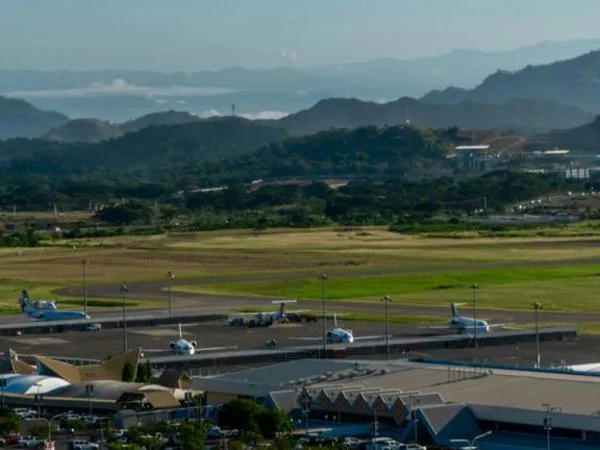
Loans amounting to almost $163 million were signed at the ceremony for the newly approved $171.5 million Civil Aviation Development Investment Program Phase 2. The program will upgrade five national airports for better safety and security, improve the power supply at Port Moresby International Airport, and enhance navigation and weather services by installing a standard automatic weather observation system.

“Major sectors of PNG’s economy such as mining, tourism, and agriculture rely on civil aviation for access to production sites and markets,” said Mr. Ling-Stuckey. “This ADB-supported program will play a lead role in enabling economic recovery after COVID-19.”

The program will pilot the upgrading of rural airstrips in four locations: Finschhafen, Hayfield, Jacquinot Bay, and Tapini. Civil aviation institutions in PNG will be strengthened through the provision of training on project management and gender inclusiveness.

The program builds on the successes of the ADB-supported Civil Aviation Development Investment Program, which was approved in 2009 and targeted sweeping improvements to 21 national airports that serve more than three million people in PNG per year. It also strengthened the safety, accessibility, and reliability of air services, and opened new economic opportunities in regional centers.

December 19, 2022

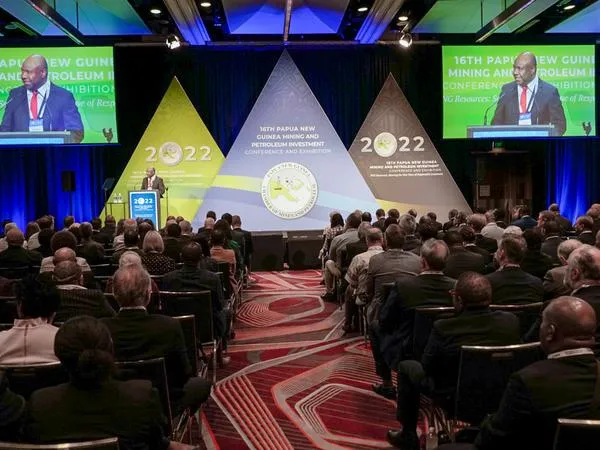
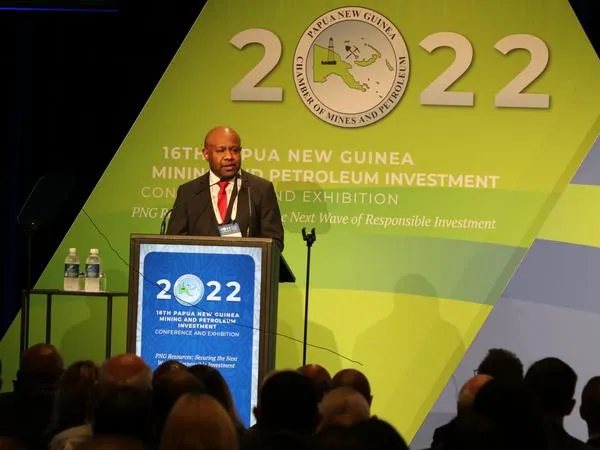
Photo: PNG Chamber of Mines and Petroleum President Anthony Smaré addressing delegates at the opening of the 16th PNG Mining and Petroleum Investment Conference and Exhibition in Sydney, Australia.

President of the PNG Chamber of Mines and Petroleum, Mr Anthony Smaré during the 16th PNG Mining and Petroleum Investment Conference and Exhibition, acknowledged that Australia remains a vital development partner to PNG, but stated, the country no longer holds the position as dominant investor in PNG.

Mr Smaré presented Australia’s historic relationship with PNG in the mining and petroleum sector, in terms of early exploration and investing.

“Much of the Wau-Bulolo gold rush of the 1920s was funded by Australian capital, and Australian funded explorers and mining companies discovered and/or developed much of our most important projects – for example, Conzinc Rio Tinto found and developed Panguna, Australia’s BHP was the majority partner who developed Ok Tedi in the early 1980s, Australia’s Niugini Gold discovered Misima and Lihir, and Rio Tinto was the majority partner in the development of Lihir in the early 1990s.”

He also stated that while Australia remains one PNG’s most important investors, the resources and energy sector has in the last 15 years seen major investments other economies, such as the US, Canada, France and China through multiple large-to-mega investments.

Australia remains one our most important investors, but the PNG resources and energy sector has in the last 15 years seen major investments from America primarily through Exxon Mobil, Canada through Barrick and K92, France through Total and China through multiple large-to-mega investments.  Australia’s significant interests in our sector are represented by Newcrest, the owner of the Lihir gold mine and the developer of the Wafi Golpu Gold Copper project with South Africa’s Harmony Gold,  and Santos the largest interest holder in the PNGLNG, supported by smaller companies such as St Barbara,  Twinza and GeoPacific.   Australian resource and energy companies are important and valued members of our industry family in PNG, but Australia no longer holds that position of dominance as the clear leader in new investment into PNG in a year to year basis. 

President Mr Smaré in closing, posing to the Australian audience, the question of what role did they wish for Australia to play in PNG in the future.

“So what role will Australia play in PNG’s development going forward? Will it take up the running to match the US, France and China with their increased investment in PNG, drawing inspiration from Australia’s historical legacy of driving development of PNG’s resources and energy sector by investing in exploration and development of new projects that can power the growth of a country and the social and economic progress of its people, projects in transition minerals, renewable energy and non-resource priority projects identified by the PNG Government?”