April 17, 2023

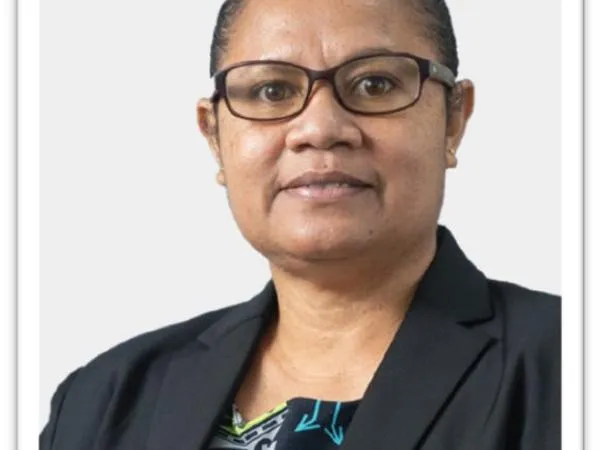
The PNG Chamber of Mines and Petroleum has announced the appointment of Ms. Gretel Orake as its new Policy Manager.

President for the Chamber of Mines and Petroleum, Mr. Anthony Smaré, said the Chamber is delighted to welcome Ms Orake onto the leadership team at the Chamber. “All corporate players in the mining and petroleum industry know and respect Ms Orake given her past history in the government environment and mining regulatory agencies, particularly in assessing new mining projects, and the more recent work that she has been doing with renewable energy policy previously with the UNDP. She is another home-grown leading Papua New Guinean in her field. We are delighted that she is coming on board to lead how the Chamber engages with Government and stakeholders in the development of policy - particularly the research and collation of data to inform constructive dialogue and support policy formulation - that influences the role that the industry can play in the future of the country and all stakeholders.”

“Ms Orake joins the Chamber team currently led by our COO Mrs. Pansy Taueni-Sialis. It’s all part of a restructuring and reorganization of the Chamber by the industry, and the Chamber expects to announce other leadership additions over the next two months”

Ms Orake joins the Chamber from United Nations Development Program where she was project manager overseeing various environmental and energy projects and working to develop renewable energy policies and regulations working closely with industry stakeholders, government, and communities.

Ms Orake holds a Master of Science and Environmental Law from the University of Sydney and a Bachelor of Science with Honours from the University of Papua New Guinea and has twenty-three (23) years of experience in mining and environmental sustainability, where she has played instrumental roles mainly in regulatory and planning of mining and environmental matters in Papua New Guinea.

Ms Orake’s career started with Ok Tedi Mining Limited as a graduate biologist working on monitoring the environmental impacts of mining activities. She then joined the Office of Environment and Conservation and gained first-hand experience in government processes involved with environmental impact assessment, permitting and enforcement including mine closure planning and compensation.

In 2008, Ms Orake joined Mineral Resources Authority as a mining regulator. Her role involved technical assessments of exploration and mining licenses providing advice to the Mining Advisory Council and contributing to the State review teams to inform the Mining Act Review. She was instrumental in the installation of the mining cadaster system for Papua New Guinea with funding support from the World Bank. During her time with MRA, Ms Orake was also involved in working with state lawyers providing technical guidance to assist the courts in relation to mining and environment in Papua New Guinea.

Ms Orake is passionate about sustainable development and believes there is opportunity to maximize benefits from limited resources for all Papua New Guineans. She believes in empowering women in entrepreneurship and leadership. In her spare time, she works on community development projects.

April 17, 2023

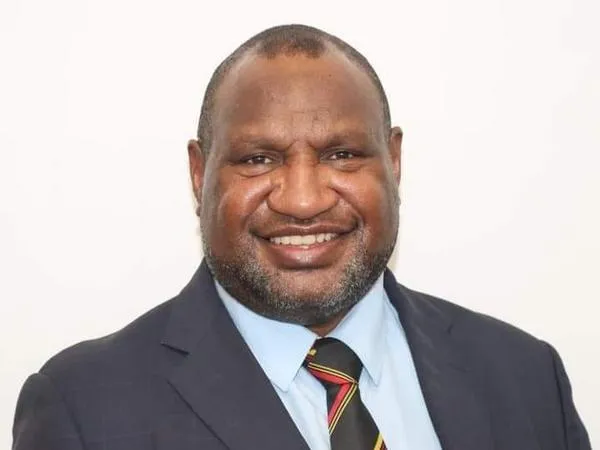
James Marape has urged government regulatory agencies in the agriculture, fisheries, forestry and commodity sectors to embrace accountability and monitor the resources being harvested in the country. This call comes after the Mineral Resources Authority (MRA) launched its data repository recently, which will provide real-time data on minerals produced in the country's operating mines.

"I appeal to other sectors, National Fisheries Authority, National Forestry Authority and all the agriculture and commodity boards to step up your game to ensure that you are equally responsive to the desire for accountability of all our resources that are harvested in our country and harvested," said Mr Marape.

The MRA's data repository will receive live data from the country's three operating mines, which include Lihir Gold Mine, Ok Tedi, and Simberi. According to MRA's acting managing director, Jerry Garry, the live data is "the heart of the processing system in any mine." He added that "the application of this artificial intelligence is the first of its kind in any regulators have deployed across the globe."

In addition to the data repository, the MRA has also launched its 2022 to 2026 corporate plan. The plan includes initiatives to boost the mining industry, such as implementing a mining cadastre system, developing a mining engineering institute, and building an online portal for stakeholder engagement.

The launch of the MRA's data repository and corporate plan is a positive step towards greater transparency and accountability in Papua New Guinea's mining industry. As Mr Marape has emphasized, it is crucial for other regulatory agencies in the agriculture, fisheries, forestry, and commodity sectors to follow suit and take stock of the country's resources being harvested.

April 13, 2023

Minister for International Trade and Investment, Hon. Richard Maru whilst thanking Kumul Petroleum Holdings Limited (KPHL) for its sponsorship of K100, 000 towards the very first Papua New Guinea (PNG) International Special Economic Zone (SEZ) Summit said KPHL will go beyond being a sponsor to becoming a very important partner in the SEZ journey.

“One of the biggest problems faced by most companies in Papua New Guinea is unreliable power and very expensive rates of power in this country. We can no longer accept continuous power blackouts; Papua New Guinea must say no to this,” said Minister Maru.

“As the Minister for International Trade and Investment I want to see the private sector grow and we will only do that on the back of cheap and reliable power. We can have all the plans about having SEZs in the country but without cheap and reliable energy, we are not going to do it,” added Minister Maru.

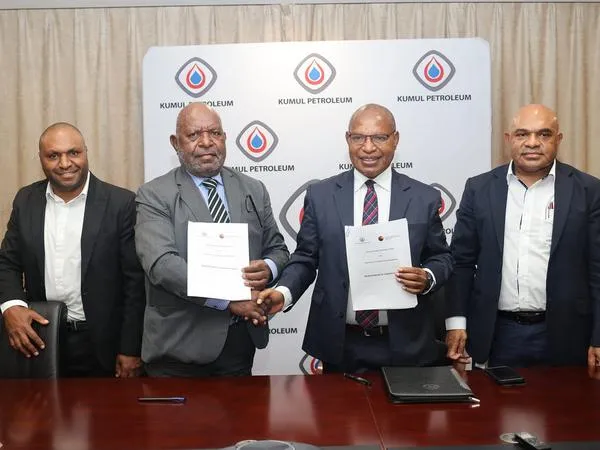
The Ministry of International Trade and Investment recently signed a Memorandum of Agreement (MOA) with KPHL for them to be the energy solutions provider in all the SEZs in the country, starting with the PMIZ in Madang.

“We will not have an SEZ (PMIZ) in Madang if we do not sort out the power problem in the province,” said Minister Maru.

Minister Maru encouraged KPHL and NFA to get the work at PMIZ started by sending a team there to undertake a feasibility study.

“Start talking and working together and let us start on the design of a new power station so we can show that we are not just talking but we are starting now,” said Minister Maru.

“Apart from supplying the PMIZ, all the excess energy will be sold into Madang because the province has continuous power blackouts, so we have to start the work in Madang to not just support the PMIZ but also to support the province,” added Minister Maru.

Meanwhile, KPHL will be given a slot to speak at the PNG International Summit which will be hosted in Port Moresby from May 8-9, 2023.

“KPHL will talk about their vision to connect cheap and reliable energy to all the SEZs in the country,” said Minister Maru.

April 09, 2023

Photo credit: ADB

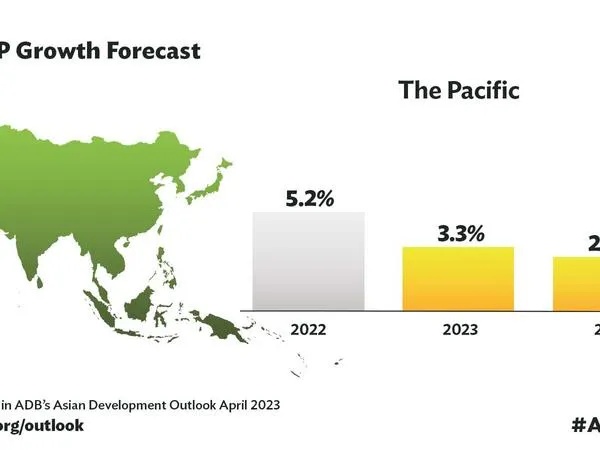
The Pacific is expected to sustain its economic recovery, with growth across all of Asian Development Bank’s (ADB) Pacific developing member countries this year, according to the Asian Development Outlook (ADO) April 2023, ADB’s flagship economic publication, released today.

Pacific economies expanded by an average of 5.2% in 2022 as borders reopened and business activity resumed following the COVID-19 pandemic. Growth in the Pacific is expected to continue albeit moderating to an average of 3.3% in 2023 and 2.8% in 2024 with all 14 Pacific economies projected to expand over the period.

“A broad-based recovery across the Pacific is now on the horizon as the impact of the pandemic recedes and economies reopen,” said ADB Director General for the Pacific Leah Gutierrez. “But this recovery faces several headwinds, including structural risks from disaster impacts and climate change. To help manage these challenges, growth-enhancing reforms such as improving human capital and financial resources should be embraced to help rebuild resilient and sustainable economies.” 

Among external risks, high global fuel prices due to the Russian invasion of Ukraine are compounding inflationary pressures in the Pacific through higher transportation costs and costs of imports. On average, inflation in the Pacific is projected to reach 5.0% in 2023, before slightly easing to 4.4% in 2024. Elevated inflation and the prospect of higher interest rates will weigh on the world economy over the forecast period. 

In 2022, growth in Papua New Guinea (PNG), the biggest economy in the Pacific, rebounded on normalization of economic activity and increased production in the resource sector. Increased mining activities and liquefied natural gas production, supported by elevated commodity prices, should contribute to growth of 2.4% in 2023 and 2.6% in 2024.

Tourism will continue as the main driver of growth for Fiji in 2023. The subregion’s second-largest economy is projected to record 6.3% growth in 2023, which will moderate to 3.0% in 2024. The ADB report says as travel normalizes further, Fiji will increasingly face intense competition from other tourist destinations, such as Indonesia and Thailand. Increasing emigration of skilled workers, due to enhanced access to labor mobility schemes in Australia and New Zealand, will also pose a significant challenge for Fiji’s tourism sector and wider economy.

COVID-19 restrictions in Solomon Islands caused the worst economic contraction in 20 years in 2022. ADO April 2023 expects the Solomon Islands economy to grow by 3.0% in 2023, spurred by the country’s hosting of the Pacific Games. To be held for 2 weeks in mid-November,  the games are expected to bring more than 5,000 athletes and staff from 24 nations. The report says growth will remain relatively robust at 2.5% in 2024 on higher government spending in the lead-up to national elections. 

Growth in Vanuatu is forecast to slow to 1.0% this year following two category 4 cyclones and earthquakes in March 2023. Economic recovery will partly depend on the revival of tourism, but frequent disasters threaten the outlook and divert resources towards reconstruction. According to the ADO April 2023, growth is forecast to accelerate to 4.2% in 2024 driven by reconstruction and recoveries in agriculture, and trade and tourism services. 

The South Pacific economies of the Cook Islands, Niue, Samoa, and Tonga have struggled to recover from 3 years of economic disruption. Growth in the Cook Islands is projected to be 11.2% in 2023 and 9.1% in 2024 due to a steady recovery in tourist arrivals and public investment. Economic recovery in Niue will likewise depend on tourism, with travel having been frequently interrupted by new COVID-19 cases. Meanwhile, mobilization of public investment projects and the initial return of tourists will likely support growth in Samoa—4.8% in 2023 and 2.5% in 2024. Eased mobility and a revival in public investment in Tonga will likely increase gross domestic product by 2.5% in 2023 with growth expanding further to 3.2% in 2024.  

Following the full reopening of international borders, a pick-up in public construction and a nascent recovery in tourism is expected to boost recovery in the North Pacific economies. Economic expansion of 4.1% is expected in the Federated States of Micronesia in 2023 before slowing to 0.5% in 2024, while the Marshall Islands economy is projected to return to growth of 1.5% in 2023 before picking up to 2.0% in 2024. Growth in the tourism-driven economy of Palau is expected to reach 3.8% in 2023 then accelerating to 6.5% in 2024 as demand from its main tourist markets improve. The report says the anticipated renewal of compacts with the United States brightens economic and fiscal prospects but requires strengthened implementation capacity and public financial management. 

Three years into the pandemic, the Central Pacific economies have started on the road to recovery, with growth expected in all three economies. Economic expansion of 2.3% is expected in Kiribati in 2023, picking up to 2.8% in 2024. Nauru’s economic growth will edge up to 1.8% in 2023 and to 2.2% in 2024 while Tuvalu will see 2.5% growth in 2023 before slowing to 2.0% in 2024. The growth outlook in all three economies is driven by the rollout of public infrastructure projects, supported by the reopening of international borders. 

ADB is committed to achieving a prosperous, inclusive, resilient, and sustainable Asia and the Pacific, while sustaining its efforts to eradicate extreme poverty. Established in 1966, it is owned by 68 members—49 from the region.


Article courtesy of the ADB
April 09, 2023

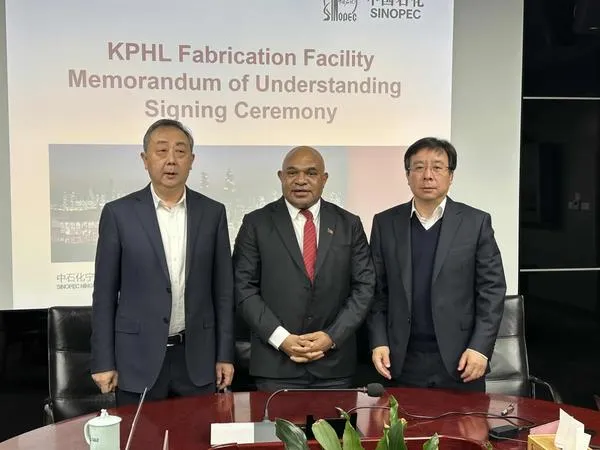
Photo: KPHL managing director Mr Wapu Sonk (centre) with Mr Zheng Lijun, President SNEC and Mr Chen Lie, Vice President CSCEC, at the MOU signing ceremony

The Kumul Petroleum Holdings Limited fabrication facility is now one step closer, after the signing of an MOU with two international companies to oversee the engineering, procurement and construction phase of the project.

Managing director Mr Wapu Sonk said, “We have now secured an MOU with  Sinopec (Ningbo) Engineering and Construction (SNEC) and China State Construction and Engineering Company (CSCEC) to work with us on the EPC phase of this fabrication facility. This complements the agreements we already have in place with two Dubai based companies – A2Z LLC to design the heavy fabrication engineering plant and Fabtech International to manage the facility for us.”

“The Facility will have a capacity of 20,000 tonnes per year, producing steel, mechanical, piping and electrical modular packages, such as those that will be necessary in the construction phase of the Papua LNG Project and subsequent LNG and mining projects.”

Mr Sonk outlined that the fabrication facility would provide direct employment for 1000 skilled Papua New Guineans and indirect jobs for up to 3000 more local people when operating at full capacity. He noted that if the facility was run 24hrs per day, the number of jobs could even double.

Managing director Sonk added, “Kumul Petroleum is expecting to work with the Papua LNG Project’s EPC contractors to start using the Facility when the project achieves FID and enters the construction phase later this year or early next year.”

Mr Sonk reinforced that the Facility was designed to meet national content requirements for petroleum, energy, mining and major infrastructure construction in the country, for provision of professional technical services, in addition to the likely high number of employment and training opportunities that such projects would generate.

Mr Sonk added,” Site works for the construction of the Facility and associated construction training academy have already started, close to the existing ExxonMobil managed LNG plant at Caution Bay outside Port Moresby. Kumul Petroleum is advertising for recruitment of trainees for the Facility, through the KPHL job search and advertisement software portal (www.wanpng.com) and other agencies.”

“We intend that the Papua LNG Project will have a greater national content than the previous PNG LNG Project, and this Facility will contribute greatly towards this goal.”

April 03, 2023

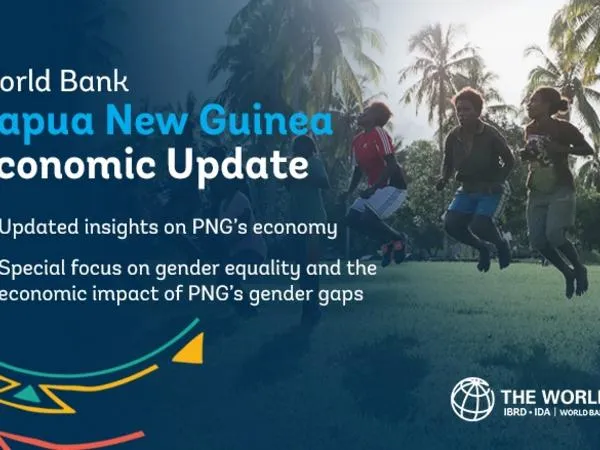
Papua New Guinea’s economy has recovered above its pre-pandemic GDP, with high commodity prices and the removal of COVID-19 restrictions accelerating economic growth to 4.5 percent for 2022, the World Bank’s latest Economic Update for Papua New Guinea has found.

The World Bank Papua New Guinea Economic Update reports that PNG’s fiscal deficit is estimated to have narrowed to 5.4 percent of GDP in 2022, compared to 6.8 percent in 2021. This reflects the Papua New Guinea Government’s continued fiscal consolidation and work to safeguard macroeconomic stability. The Economic Update recommends that the country continues implementing its plan to reduce the budget deficit.

The new report says that economic growth is expected to slow to 3.7 percent in 2023, due to lower global demand and supply constraints. It suggests that medium-term plans for fiscal consolidation could become more challenging. On the one hand, PNG’s needs for human capital (education, health and social protection) and infrastructure spending are substantial. On the other hand, substantial resource revenue boosts from commodity prices in the coming years are unlikely.

The World Bank report, subtitled Unlocking the Economic Benefits of Gender Equality, also makes a clear economic case for faster action on gender equality in PNG. The report says that bridging the substantial difference between men’s and women’s participation in better, more productive paid employment could raise GDP per capita by an additional 20 percent in the space of a generation.

The report also finds that addressing gender-based violence could bring other substantial economic benefits – beyond the obvious improvement to social wellbeing for women in PNG. The report estimates that annual productivity losses from absenteeism related to gender-based violence account for at least 0.5% of GDP, though the real cost is much higher.

The new report highlights the potentially significant economic gains to be made in PNG through efforts to address gender inequality, including improvements in overall family incomes, more substantial education and training and increased economic productivity. The report recommends:

  • a review of PNG’s Employment Act, including the removal of discriminatory employment clauses;
  • strengthened enforcement of the Family Protection Act;
  • genuine implementation of the National Strategy to Prevent and Respond to Gender-Based Violence; and
  • the expansion of programs that support women’s employment through targeted outreach, upskilling and access to women’s employment networks.

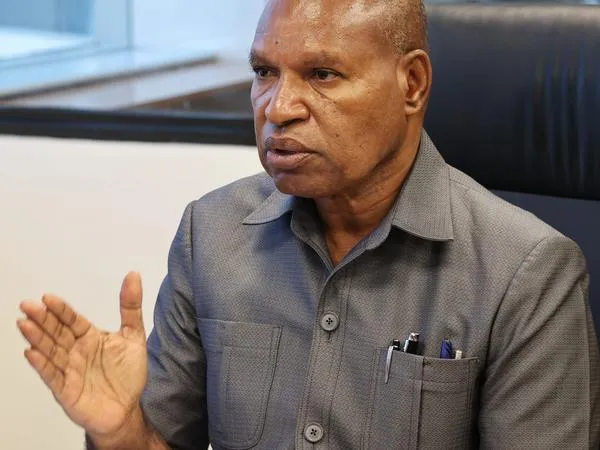
“We are now at a time of critical importance for Papua New Guinea as it returns to positive economic growth after the immense challenges of the past three years,” said Khwima Nthara, Country Manager for the World Bank in Papua New Guinea. “Work to drive fiscal consolidation – and reduce PNG’s debt burden – are now showing results that will help to sustain many of the hard-fought gains made.”

Mr Nthara said the World Bank’s new Economic Update sent a clear message that addressing gender inequities was not only a social imperative, but also an economic one for the benefit of all Papua New Guineans.

“The message from this report is clear; that addressing many of the most urgent gender inequities in Papua New Guinea will deliver major economic benefits for the country, and the reverse; that inaction will leave all Papua New Guineans – men and women – worse off.”
April 03, 2023

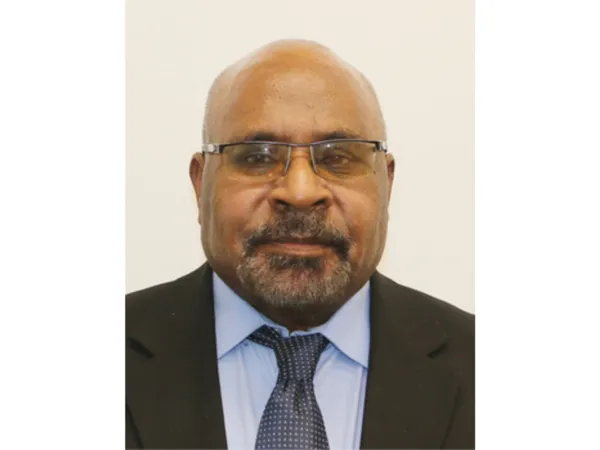
Photo: Mr. Benny Popoitai

Minister for International Trade and Investment, Hon Richard Maru today announced the appointment of Mr. Benny Popoitai as the Director to Papua New Guinea National Stock Exchange (PNGX). Mr. Popoitai’s appointment was made pursuant to Section 12 (1) of the Capital Market Act 2015.

“It gives me the great honor and privilege to announce the appointment of Mr. Popoitai as a state nominated Director to the Board of PNGX. Mr. Popoitai brings in wealth of experience to the domestic capital market. He has been a distinguished person within PNG’s financial sector, especially with the Bank of Papua New Guinea (BPNG) as Deputy Governor, Acting Governor, and currently the Director of Financial Analysis and Supervision Unit (FASU) within BPNG. Mr. Popoitai’s experience and expertise will guide the market to major reforms for growth as he has been in the forefront of BPNG’s regulatory reforms over the years and his appointment adds value, creditability, and public confidence to our market,” said Minister Maru.

Minister Maru said that since the inception of capital markets in PNG in 1997, there has been no significant progress to grow the markets until 2015 when PNG’s capital market went through reforms to build regulatory fundamentals to a modern standard to keep up with the fast changes in technologies and ways of doing business in the capital market space.

“Since then, there has been no public interest representative on the stock exchange over the past 24 years to improve governance and provide direction for the development of our market. Mr. Popotai’s leadership will greatly help to further the reforms, especially in the new bond market and the proposed platform for SMEs to raise capital,” said Minister Maru.

Minister Maru added that Mr. Popoitai’s appointments will also improve transparency and collaboration in the working relationship with Securities Commission of Papua New Guinea (SCPNG) and PNGX.

“SCPNG and other stakeholders must work with Mr. Popoitai and the PNGX for further market developments,” said Minister Maru.

April 03, 2023

Photo: Minister for International Trade and Investment, Hon. Richard Maru

The Pacific Balance Fund (PBF) and other Unit Trust/Investment Schemes in Papua New Guinea (PNG) must improve to help grow the capital market and support domestic investments, says Minister for International Trade and Investment, Hon. Richard Maru.

Minister Maru raised concern that PBF had regressed in its growth while other similar unit trusts managed by Mineral Resources Development Company (MRDC) grew tremendously from K680 million in 2008 to K7 billion net worth to date and Mineral Resources Lihir Ltd (MRL) has also grown fund from K60 million in 2009 to K700 million today while PBF’s net assets was K556m in 2018 and it was KK584 million at end the end of 2021. PBF fund established in 1973 but has not grown to expectation over the years.

“Financial institutions are a key sector that our nation will rely on in the future when mineral deposits and other non-renewable resources run out at some point. Our economy can be built at the back of financial institutions with sound monetary policies and prudent financial management. Many strong and successful economies around the world is backed by financial institutions,” said Minister Maru.

PBF is one of the Papua New Guinea’s largest equity funds that is owned by nearly 20, 000-unit holders (PNG citizens). PBF was created as a commercial unit trust from the Investment Corporation Fund of Papua New Guinea in 2001 during the privatization of state-owned enterprises.

“PBF was initially invested by our fathers and mothers way back in 1973. Some have already passed on and most contributors are in their 60s and 70s. Whether they were paid with the dividend in full or not is the question that needs to be answered by the trustee and fund manager of the fund,” said Minister Maru.

Minister Maru has directed the Securities Commission of PNG (SCPNG) to take stock of all the Unit Trusts and Investment Schemes in PNG.

“PBF is a key investment driver that can provide liquidity and meet investment needs domestically instead of looking for capital and investors outside that are associated with many setbacks and costs involved. As Minister responsible, I would like to know why it has not grown and who is responsible for it, so I have tasked the Securities Commission to look into the management of PBF.

“SCPNG must conduct thorough investigations on the PBF and ascertain the management approaches undertaken on the fund’s portfolios by the trustee and fund manager,” said Minister Maru.

“The National Government needs full report of the PBF as to how it has grown, who are the trustee and fund managers, and what are the objectives and investment portfolios that can contribute and attribute value to the investee,” added Minister Maru.

April 03, 2023

Photo: Minister for International Trade and Investment, Hon. Richard Maru 

The Marape-Rosso Government has directed the Securities Commission of Papua New Guinea (SCPNG) to work with all key stakeholders like Asian Development Bank (ADB), Bank of Papua New Guinea (BPNG), Port Moresby Stock Exchange, and all capital market players to immediately formulate a new 10-year Development Plan for the Capital Market of Papua New Guinea (PNG). The aim of this plan is to ensure that PNG has a world class capital market that is internationally respected and recognized by having a market structure, and regulatory and governance structure that meets the highest world standards.

“This is essential to attract investors to bring more capital into the market and allow us to provide more products and services using the capital market in Papua New Guinea,” said the Minister for International Trade and Investment, Hon. Richard Maru when issuing the directives today.

Minister Maru said the initial consultation will take place on Monday, May 22, 2023, in a one-day PNG Capital Market Summit.

“The aim of the Summit is to bring together experts from around the world including our development partners, ADB, and International Finance Corporation (IFC), and the Financial Market Authority of New Zealand,” said Minister Maru.

“We want the capital market to grow exponentially to the point where all foreign listed companies who buy into or operate and profit from PNG to have secondary listing in the PNG National Stock Exchange. This includes companies like Telstra from Australia who recently bought Digicel. Our Government is now looking at a law or policy where all such investors cannot buy or operate in Papua New Guinea without first listing in our local Stock Exchange,” said Minister Maru.

Minister Maru also added that to attract such listing, PNG must also get its act together and develop a world-class capital market and Stock Exchange.

“The new proposed capital market Development Plan will be formulated with the input of industry and international experts. I would like the plan to be finalized and be ready in the third quarter of this year for presentation to the NEC and to Parliament. We cannot as a country sit back and allow other people only to benefit from our resources and business opportunities. By listing in our Stock Exchange our people can trade in the market and become owners of these businesses that operate and profit from our resources and from our country,” said Minister Maru.

Minister Maru said the Government, in the June session of parliament, will introduce critical amendments to the Securities Commission Act of 2015 and the Capital Market Act of 2015 to begin its reform process.

“We will also be announcing the new Board and Management to the Securities Commission of Papua New Guinea after the amendments of the two respective legislations to improve the governance structure of the Securities Commission,” said Minister Maru.

April 03, 2023

Member of Parliament for Alotau Ricky Morris has called for the review of the Minimum Wage Law to include workers in the agriculture sector.

Mr Morris made this call in a series of questions directed to the deputy Prime Minister and acting Minister for Labour and Industrial relations, John Rosso, in a Parliament Sitting on Thursday 23rd March.

He asked that the "clause 7" in the minimum wage law, which exempted workers in the agriculture sector, be reviewed.

While all sectors have benefited from the minimum wage of K3.50 per hour, the agriculture sector has been left out, Mr Morris noted.

"Can the Minister make a commitment to undertake a review on the minimum wage law clause 7 that exempts our workers in the agriculture sector to participate under the minimum wage determination," the member for Alotau said.

In response, Mr Rosso said the exemption of minimum wage on the agriculture sector was upon the request of the sector itself, because most aspects of agriculture are based on rural settings.

"Through all employment sectors in urban areas, the minimum wage is K3.50, but in terms of agriculture it has been determined that most agricultural activity in the country is based in rural areas and much of the reliability of income on cash crops are dependent on factors concerning the environment such as weather, climate and so forth," he said.

"So many of our people still ask if it (minimum wage) should be increased. But it must be noted that the minimum wage is set at the K3.50 mark but no one is stopping companies to pay their employees at their own desired rates. That is solely up to the companies," Mr Rosso added.

He further clarified that the minimum wage is the lowest mark that employees can get paid at. Companies can pay their workers at the minimum wage rate or go beyond the rate, but not less than K3.50 per hour.

Speaking in his capacity as Labour Minister, John Rosso revealed that the minimum wage law will be amended to impose tougher penalties for noncompliance by employers.

He said the current penalty of K5,000 for companies who pay their employees below the minimum wage is not sufficient.

Companies who continue to defy the minimum wage law will be heavily penalised, as Mr Rosso said amendments will be made to the current minimum wage law to increase the penalty to K100,000.

"Another thing that we will be doing in this term of Parliament is to ensure that we bring amendments to the floor that companies who knowingly pay below the minimum wage will be penalised K100,000," he said.

"Right now, the K5,000 penalty that is currently in our laws is insufficient and companies are not afraid to meet the cost and are treating our people with indifference," Mr Rosso said.

"A lot of companies pay below minimum wage, especially with shops and security firms. Most security guards are paid 80 toea to K1.00 an hour and that comes back to compliance from the Department of Labor which I am currently heading," he said.

Mr Rosso also directed the Labour and Industrial Relations department to carry out a minimum wage enforcement exercise to ensure companies comply with the law.

With the Department of Labour now reviewing and amending the Act, Mr Rosso stated that he would like to significantly increase the penalty.

“We have the minimum amount for penalties, for people who don’t comply with the labour laws like not paying the minimum wage what we’re trying to do now is ensure that the department amend these laws so that we raise the fines,” he said.

Mr Rosso observed that there are systems in place for employees to make complaints if they are not receiving the minimum wage, but the penalties to punish companies are insufficient.

“The secretary is looking to amend the penalties, after which compliance will be enforced. So, he’s in the process of setting up a team that will go out in Port Moresby, then Lae and a few other places to make it compliant,” Rosso said.


March 31, 2023

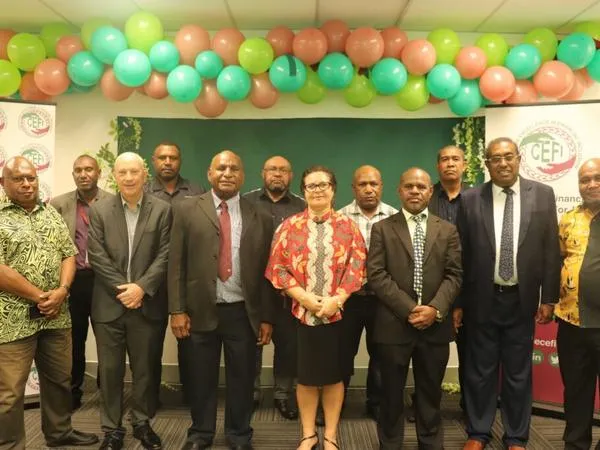
Photo: Acting Governor of Bank of PNG, Mrs. Elizabeth Genia, Acting Assistant Governor, FSSG, Bank of PNG Mr. George Awap, CEFI Executive Director Mr. Garima Tongia and CEFI Financial Inclusion Adviser Mr. Saliya Ranasighe pose for a group photo with CEFI Board Members, Mr. Tony Westaway (2nd from left-front row) and Paulus Laveil (1st from right-front row).

The Centre for Excellence in Financial Inclusion (CEFI) commemorated its 10 year anniversary in a small but significant ceremony at its Port Moresby office on Friday March 24.

CEFI’s humble beginning was the outcome of the Microfinance Expansion Project in 2013, under the direction of the Bank of Papua New Guinea, Department of National Planning and Department of Treasury.

Since its establishment 10 years ago, CEFI has grown from strength to strength in becoming the leading industry apex organization in coordinating, advocating and monitoring financial inclusion activities in Papua New Guinea.

CEFI Executive Director Mr. Garima Tongia during his opening remarks acknowledge Bank of PNG, CEFI Board Members, CEFI Staff, stakeholders and partners for playing very important roles in ensuring CEFI continued to carry out its mandate in Financial Inclusion.

Acting Governor of Bank of PNG and Chair of CEFI Board, Mrs. Elizabeth Genia during her congratulatory remarks applauded CEFI’s accomplishments in areas of financial literacy training, developing and implementing financial inclusion policies and documents and partnering with key stakeholders to deliver financial inclusion projects.

“It’s important to note CEFI board members and staff contribution to achieving this important financial inclusion milestone and also gratifying to see that the financial inclusion agenda is being actively promoted,” Mrs. Genia said.

The Acting Governor highlighted CEFI’s partnership with financial institutions in the area of financial literacy training stressing on CEFI’s collaboration with its partners to deliver financial literacy training to over 350,000 Papua New Guineans.

“CEFI is now trying to work with an international agency to conduct impact assessment of the trainings delivered and improve the training material,” Mrs. Genia added.

She praised CEFI’s dedicated strategy in using innovative technology to attract more women into the financial mainstream and economically empower them.

Some of the important projects that CEFI have used to bring gender equity into the financial inclusion domain include, introduction of the Ledger pal Application for women SME’s, digital online training for women and development of a financial literacy mobile application.

Mrs. Genia also highlighted CEFI’s financial inclusion strategies developed and implemented in partnership with its important stakeholders from Government and private sectors between 2014-2020 and participating of women in CEFI’s training programs.

Mrs. Genia also thanked Bank of PNG for some of its initiatives such as the SME Accelerator Program, Financial Consumer Protection, National Payment System and the Regulatory Sandbox approach, that supplemented the work of CEFI by providing assistance for Papua New Guineans to access knowledge, skills and information to run projects and businesses in the financial inclusive space.

Acting Assistant Governor, Financial System Stability Group, Bank of PNG, Mr. George Awap, who played a very key role in CEFI’s establishment, paid tribute and gave recognition to important key stakeholders who had worked with CEFI during the 10 years such as the Bank of PNG, the National Government, Asian Development Bank, Alliance for Financial Inclusion, World Bank and International Finance Corporation.

Mr. Awap acknowledge former governors of Bank of PNG for the foresight in supporting and driving the agenda of financial inclusion in PNG.

CEFI’s Financial Inclusion Adviser, Mr. Saliya Ranasinghe , who was the organizations second Executive Director, reflected on some of CEFI’s key achievements including, NEC’s approval for CEFI established as an organization, development of financial literacy training materials, development of the first financial inclusion strategy, launching and implementation of the financial inclusive strategy, partnership with international agencies, statutory authorities, provincial governments, civil societies, and the many other important stakeholders that CEFI works with and continues to collaborate in the financial inclusion space.

March 31, 2023

Minister for International Trade and Investment, Hon. Richard Maru invited the CEOs of provident fund, superannuation fund, sovereign wealth funds, trust funds, and social security administrations from across the Pacific who had gathered in Port Moresby for the 2023 Pacific Islands Investment CEO’s Forum to invest in Papua New Guinea (PNG), especially in the non- resource sector.

“We have exciting investment opportunities in Papua New Guinea. We are looking for investors in rice, chicken, dairy (we need two more dairies), feed, and beef industry, and also in the space of downstream processing of our coffee, cocoa, coconut, and fish (we want to process 100 percent of our catch in country). We are the market, so the investor does not have to look for the market. And once we are able to feed ourselves, then we can start exporting to other countries in the region as we already have the MSG Trade Agreement. There are also huge opportunities for investments in energy, solar farms, and hydros,” said Minister Maru in his address at the forum yesterday during the opening ceremony.

Minister Maru also extended an invitation to the CEOs to look at investing in PNG’s proposed Special Economic Zones (SEZs).

“Our Government has made a very important policy decision for PNG to go down the path of SEZs to be the primary drive of our economic growth. SEZs will drive the economic growth of our country, especially in the non-resource sector, into the future, this is going to be a major shift in policy. We are going to give incentives to attract investors to come in and be located in the SEZs because all the SEZs will require investors to make them work. Our challenge as the Government is to provide infrastructure and improve national security and climate to encourage the investors to come in and invest. We are going to drive this very aggressively,” said Minister Maru.

Minister Maru added that Marape-Rosso Government was very keen for PNG to transit as an economy anchored by resource sector to the non-resource sector.

“At where we are today, we have realized that we cannot over rely on the resource sector as we have in the last 47 years. We have to learn from countries like New Zealand. It has an internal revenue of K190 billion while ours sits at K19 billion this year when we have more land and more resources than New Zealand. Their economy is so strong, and it is now a first world country because they have been really focused on agriculture sector. This is the path that Papua New Guinea will follow and will start following this year. We are looking for investors in our non-resource sector,” said Minister Maru.

“I have seen the transition of Thailand, Vietnam and Malaysia. They were just like us, but they transformed by going into downstream processing and manufacturing, and now they have become industrialized countries. This is the path that we want to follow,” added Minister Maru.

March 28, 2023

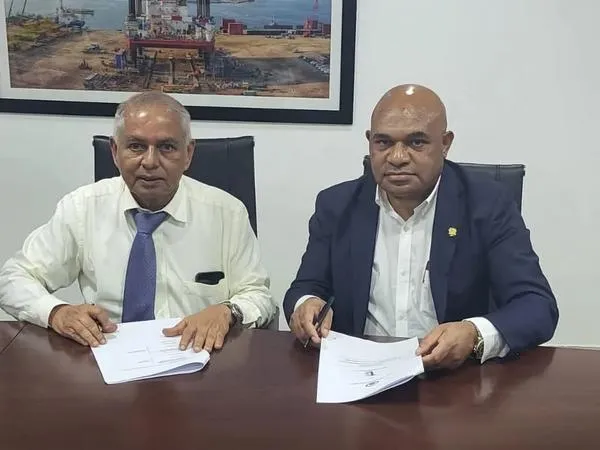
On the 10th of March,  Kumul Petroleum Holdings Limited and Fabtech International, a Dubai based Fabrication Facility Operator, signed a management and operations agreement for a Fabrication Facility to be established in Port Moresby, in preparation for the construction phase of the Papua LNG and subsequent LNG and mining projects.

Mr Sonk said, “This Facility is expected to have a capacity of 20,000 tonne per year, producing steel, mechanical, piping and electrical modular packages. It is expected to provide direct employment for 1000 skilled Papua New Guineans and indirect jobs for up to 3000 more people when it is operating at full capacity. The number of jobs could double if the facility is run 24hrs per day.”

In addition, on the same day Kumul Petroleum Holdings also signed a design and engineering contract with A2Z LLC, a Dubai based engineering company with significant experience in the design and engineering of heavy fabrication facilities globally.

“Kumul Petroleum and it’s investors are expecting to work with the Papua LNG Project’s EPC contractors to start using the Facility when the project achieves FID and enters the construction phase later this year or early next year.”

Mr Sonk outlined that the Facility is designed to meet national content requirements for petroleum, energy, mining and major infrastructure construction in the country. He added that it was likely that work orders could also come from elsewhere in the the region, since in relative terms, PNG will have highly skilled labour force, cheap domestic gas-powered electricity, resulting in a competive cost per unit that will drive efficiency.

Mr Sonk noted,” Site works for the construction of the Facility have already begun, located close to the existing ExxonMobil managed LNG plant.”

“Kumul Petroleum will soon be advertising for recruitment of trainees for the Facility, through the KPHL job search and advertisement software portal (www.wanpng.com) and other agencies. KPHL is encouraging interested job seekers to start applying and posting expressions of interest at this portal.”

March 27, 2023

Photo: Foreign Affairs Minister Justin Tkatchenko

In another milestone achievement in Australia-Papua New Guinea relations, visa issues that businesses and individuals face will come to an end as both countries agreed to set up a visa office in Port Moresby with a 14-day processing turnaround period.

The Australian visa office in Port Moresby is set to be opened in July this year and will be managed by a competent dual committee from both countries, Foreign Affairs Minister Justin Tkatchenko said in a press conference.

The Minister for Foreign Affairs said the new Australian visa office committee will ensure strict management with the visa processing.

"We have set up one of the strongest and most powerful committee ever in the history of this country between Australia and Papua New Guinea, which will include the two Deputy Prime Ministers, the two Foreign Affairs Ministers, the Internal Security Minister of PNG, the immigration minister of Australia, and we will also have the Minister for Pacific Affairs, Pat Conroy, in this committee as well," Minister Tkatchenko said.

The committee will focus on dealing with visas on arrival or going into Australia, and also will address issues arising from within the immigration and foreign affairs departments.

Tkatchenko also expressed his sentiments on a reciprocal arrangement that was earlier revealed by Deputy Prime Minister John Rosso that will see the issuing of short-term visas to Australian businesses over a 12-month period.

"I would like to thank the Deputy Prime Minister on his commitment and assistance in ensuring that PNG also will be announcing a reciprocal arrangement for multiple entry visas for Australian businesses. This will make it easier for Australians when coming into the country to do business," Mr. Tkatchenko stated.

Previously, the Australian High Commission in Port Moresby had no visa function. Their office in Suva, Fiji managed visa services for clients in Papua New Guinea, which had been one of the biggest issues surrounding processing.

The difficulty and delays many Papua New Guineans face when applying to visit Australia has been a long-standing frustration for the country, as people had to wait for months to get their travel documents processed and approved.

Earlier this year during the 29th Australia-PNG Ministerial Forum, Australian Foreign Minister Penny Wong announced the return of the facility to Port Moresby. The decision was made to further strengthen Australia-PNG relations in working more collaboratively and ensuring regional cooperation and stability, she said.

March 27, 2023

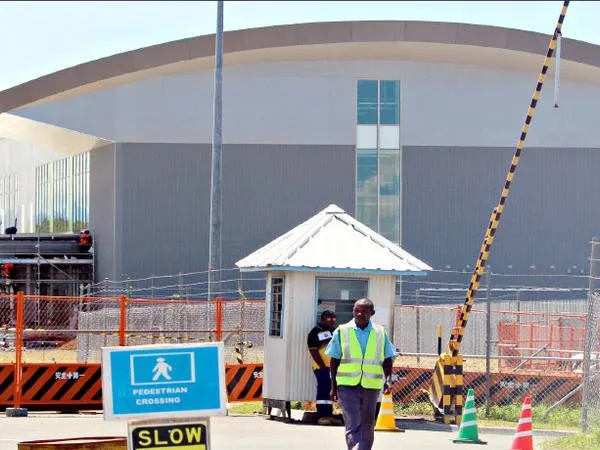
According to Tom Nou, the Nadzab International Airport is close to completion and is expected to be finished by the end of April this year. Mr. Nou, who is the National Airports Corporation's (NAC) Nadzab Project director, stated that 98% of the project has been completed, and the remaining 2% involves handovers and takeovers. He made these comments during the signing of a memorandum of understanding (MoU) between NAC and the National Polytechnic Institute of Papua New Guinea, on behalf of the acting managing director and CEO, Joseph Tupiri.

The Nadzab International Airport project, which is funded by the Japan International Cooperation Agency with K578 million, is contracted to Dai Nippon - Nippo JV contractors and the PNG government with K114 million. The new airport terminal is bigger and more spacious than the Jackson’s airport in Port Moresby, and it has been designed to operate international flights.

Mr. Nou stated that proper procedures need to be followed with other international airlines before the airport can operate international flights. Once the PNG government has gone through these procedures with other airlines, they will give NAC permission to proceed with international flights. The terminal is of two storeys, with the top floor capable of being fitted with additional facilities like a coffee shop or kiosks. The building will have a management system in place to manage the power and air conditioning to reduce operating costs.

"It will be an open-door terminal where people are not restricted to go in so that they can buy stuff in the terminal," Mr. Nou added. He also mentioned that the terminal has been designed to accommodate all the requirements of Customs, quarantine, and immigration, and that they all have offices in the building.

March 27, 2023

Photo: PM Marape

Prime Minister Hon. James Marape says the Independent Commission Against Corruption (ICAC) is now being operationalised after establishment by law in November 2020.

He also said the Ombudsman Commision would remain, however, would be subject to review of its roles and responsibilities.

PM Marape said this in Parliament on Tuesday (March 21, 2023) when answering questions from Moresby North-East MP, Hon. John Kaupa, on when ICAC would be established and what would happen to the Ombudsman Commission as a result of ICAC.

He said the Whistle Blowers’ Act (2020) and Proceeds Of Crime Act (2022) would complement ICAC in the fight against corruption.

PM Marape said MPs from both sides of Parliament were concerned about corruption, hence, their overwhelming support for ICAC, Whistle Blowers’ Act and Proceeds of Crime Act.

“The process of selecting the commissioner and two assistant commissioners of ICAC has been completed,” he said.

“Because of concerns that Papua New Guineans should not run ICAC, on the grounds of impartiality, the commissioners were selected independently of the Executive Government.

“We appointed Transparency International to supervise the selection process, so that we start the work of ICAC on a clean slate, right from day one.

“Transparency International, under the chairmanship of Mr. Peter Aitsi, supervised the process of appointing the commissioner and two assistant-commissioners.”

PM Marape said two Australians and a New Zealander, all with vast experience, had been selected and had taken up the offer. He said the Chief Justice, Opposition Leader and himself as Prime Minister were on the committee that made the appointment.

“ICAC will be operational very soon with funding already set aside. We are fully committed to get ICAC up and running at the earliest,” he said.

PM Marape said ICAC would not take over the role of the Ombudsman Commission.

“The Ombudsman Commission will focus on those of us who come under the Leadership Code,” he said.

“As we set up ICAC, and it becomes fully operational, we will look holistically at the role of the Ombudsman Commission.

“There is an outstanding issue of ‘double jeopardy’, which we will look at, so that leaders do not have to come under the scrutiny of different offices to prosecute them on alleged corruption that may arise.

“The Ombudsman Commission’s role will not be diluted, however, there should not be two different organisations doing the same task. This makes it such that matters are progressed and not stalled.”

PM Marape encouraged the people not to make accusations against leaders on social media, but rather, report to ICAC, Ombudsman Commission or Police.

“Take your allegations to Ombudsman Commission, Police and ICAC. Facebook is not a police station, Facebook is not an Ombudsman Commission office, Facebook is not ICAC,” he said.

“It is our collective responsibility to report corruption.”