Category:




Launch of the 4th EU-PNG Business Trade & Investment Conference and PNG-Europe Business Council website
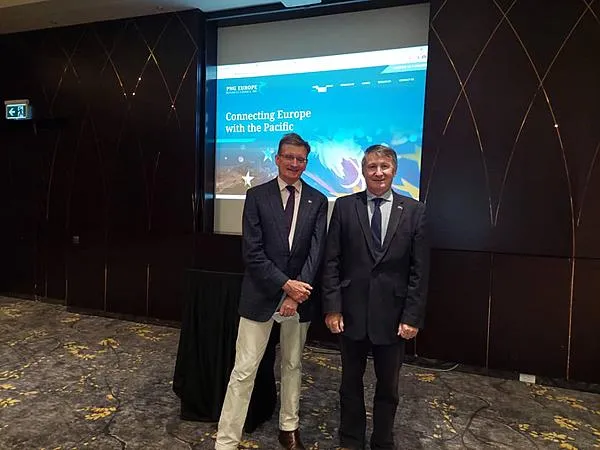
The European Union and the PNG- Europe Business Council Inc. launched on 1st August the 4th EU-PNG Business Trade and Investment Conference that will be held on the 30th of October, 2023 at Apec Haus. They also officially opened the PNG Europe Businesses Council website at the Lamana Hotel.
Present to witness the occasion was the European Union Ambassador Jacques Fradin, PNG-Europe Business Council Present Mr. Michael Sullivan, National Trade Office Chief Trade Officer Richard Yakam, Investment Promotion Authority Managing Director Clarence Hoot, members of the council, and stakeholders who witnessed this significant event progressing to enhancing greater opportunities.
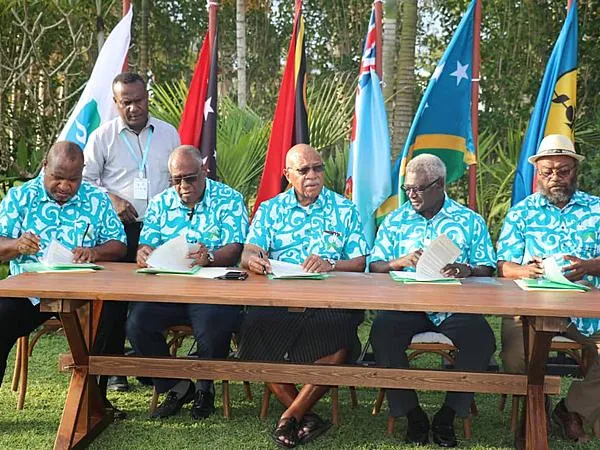
Ambassador Fradin thanked everyone for attending the occasion and expressed its support and funding for the establishment and progress of the PNG Europe Businesses Council which is in line with the Economic Partnership Agreement (EPA) signed with the PNG government along with the other Pacific Island countries including Fiji, Tonga, Solomon Island, and East Timor.
'We want to widen and deepen our agreement in a fruitful and meaningful way by hosting the 4th Europe PNG Business Trade and Investment Conference in terms of business by connecting with people, providing quality products, and utilizing the market," stated Ambassador Fradin.
In support of Ambassador Fradin's remarks, Mr. Sullivan thanked the European Union for its ongoing support and funding towards the PNG Europe Businesses Council. He eluded that PNG and Europe had a tremendous history over the years with European Explorers entering PNG and creating business opportunities that will continue to be enhanced through the council.
"In light of the great economic boom set to bring business opportunities to PNG with the reopening of Porgera Mine, the upcoming Wapu Golpu Project and the Papua LNG project the 4th Europe PNG Business Trade and Investment Conference will be a great opportunity for the Council and Papua New Guineans to position itself for business development and partnerships", stated Mr. Sullivan.
The Government on the other hand represented by Commissioner Yakam thanked and welcome the European Union, Europe PNG Business Council along with Investment Promotion Authority for collaborating and hosting the upcoming 4th Europe PNG Business Trade and Investment Conference.
He expressed that his office will be partnering with them to achieve a strategic role in its economic development policy working in line with the Economic Partnership Agreement in place with the European Union.
"Despite the setbacks, the government is working on creating a conducive business environment and values Europe as its important investment partner for business development", stated Mr. Yakam.
The Theme of the Europe PNG Business Trade and Investment Conference is "New Business New Opportunities for Europe and the Pacific."
For participants interested in joining the upcoming conference registration will be available on the newly launched PNG Europe Business Council website: www.pngeubc.org.pg



ADB Forecasts Continued Pandemic Recovery for Pacific Economies in 2023, 2024
Economies in the Pacific are projected to grow collectively by 3.3% in 2023 and 2.8% in 2024 as the subregion continues to recover from the COVID-19 pandemic, according to the latest issue of the Asian Development Bank’s (ADB) Pacific Economic Monitor (PEM) launched recently.
In Papua New Guinea (PNG), the subregion’s largest economy, increased output outside the resource sector will underpin economic activity. Some tourism-driven economies, such as the Cook Islands and Samoa, will benefit from the lifting of pandemic travel restrictions along with increased public investment spending. Fiji is also expected to grow, albeit at a more modest pace, due to increasing tourism competition from other destinations.
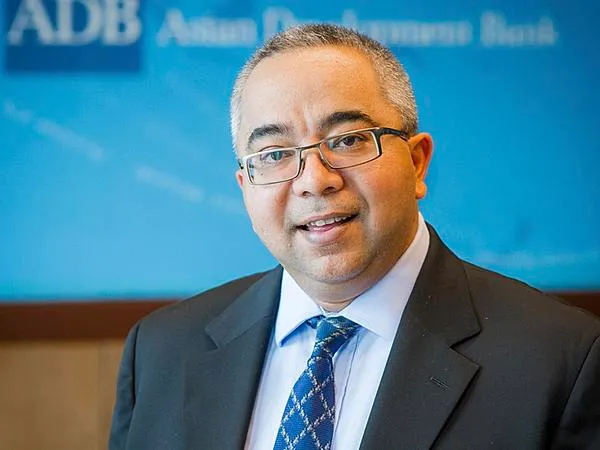
“The lifting of the last pandemic mobility restrictions has enabled economic activity, such as tourism and implementation of public infrastructure projects, to resume in earnest,” said ADB Director General for the Pacific Leah Gutierrez. “The outlook for the Pacific is subject to downside risks, such as sensitivity to international commodity prices and longstanding vulnerability to disasters, but ADB continues to work closely with government counterparts across the Pacific to help mitigate these risks, restore development gains, and support inclusive, sustainable growth in the subregion.”
Other short-term downside risks to the Pacific’s outlook include uncertainties around the resumption of stalled public investment projects and the uneven recovery of the crucial tourism sector, exacerbated by possible economic scarring from the pandemic.
The latest PEM explores the development impact of the pandemic and challenges to recovery and fiscal sustainability. It examines efforts in the Cook Islands, Fiji, and PNG to address fiscal risks and support sustainable recovery; studies debt management in Nauru amid the pandemic and emerging fuel cost issues in Niue; and assesses the economic costs of and responses to the disasters that struck Vanuatu in 2023. Other articles provide updates on post-pandemic tourism in Samoa and Tonga, explore new growth engines for Kiribati, Solomon Islands, and Tuvalu, and outline how to offset pandemic-induced social and economic losses in the North Pacific.
Topical policy briefs in the PEM highlight key findings from two ADB-supported reports, Women’s Economic Empowerment in the Pacific Region and Finding Balance 2023: Benchmarking Performance and Building Climate Resilience in Pacific State-Owned Enterprises, while presenting efforts in Solomon Islands to meet local demand for wood products as log exports slowed.
The PEM is ADB’s biannual review of economic developments and policy issues in ADB’s 14 developing member countries in the Pacific. In combination with the Asian Development Outlook (ADO) series, ADB provides quarterly reports on economic trends and policy developments in the Pacific.
ADB is committed to achieving a prosperous, inclusive, resilient, and sustainable Asia and the Pacific, while sustaining its efforts to eradicate extreme poverty. Established in 1966, it is owned by 68 members—49 from the region.