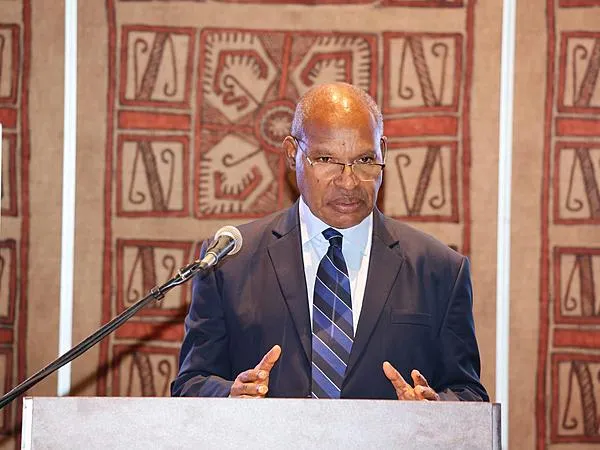
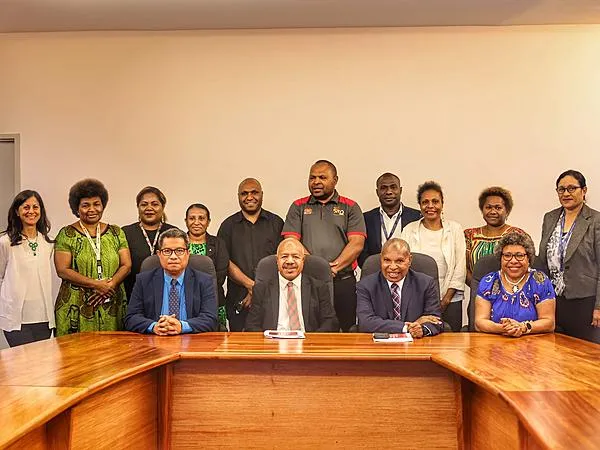
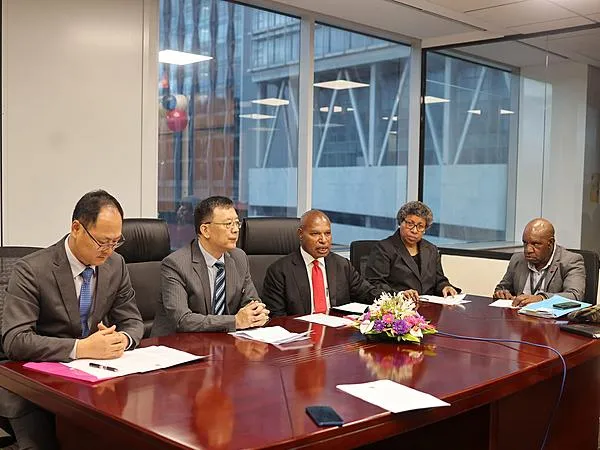
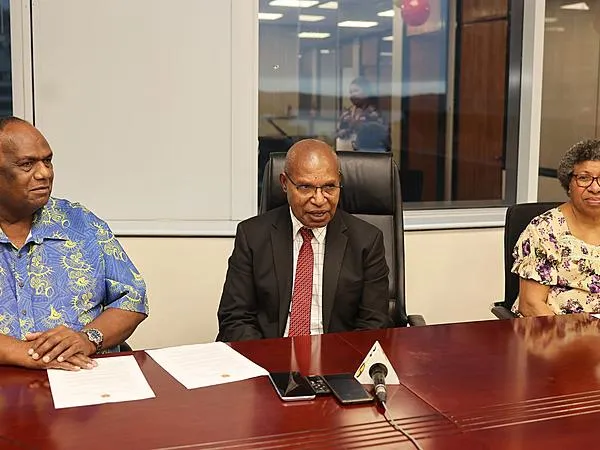
Papua New Guinea (PNG) is ready to grow its trade and investment relationship with the European Union (EU), says the Minister for International Trade and Investment, Hon. Richard Maru. Minister Maru said this in his welcome address at the 4th EU-PNG Business, Trade & Investment Conference in Port Moresby.
“We welcome the theme of this year’s conference- ‘Unlocking Sustainable Economic Opportunities for a more ambitious EU partnership with the Pacific’. Papua New Guinea is ready as a Government and I am sure our private sector is ready too to grow our trade and investment relationship with the European Union and its member States under our current Interim Economic Partnership Agreement with the European Union,” said Minister Maru.
Minister Maru reaffirmed PNG’s commitment to EU which was one of PNG’s most important trading partners.
“While we are negotiating Free Trade Agreements with other countries and working hard to walk across Asia, I want to reaffirm our commitment to European Union as one of the most important trading partners that Papua New Guinea has. We recognize fully that the current trade balance is totally in favor of Papua New Guinea with an estimated USD 994 million of goods sold into the European Union each year while European Union only sells USD 100 million to Papua New Guinea. We have built our fishing industry on the back of the free-market access agreement that the European Union has provided for us and for that we are extremely grateful. The European Union is one of the most important trading partners of Papua New Guinea and a relationship that we value very much. Our country showed the value of our relationship by being the first Pacific Island State to enter into the Interim Economic Partnership Agreement with the European Union long before any other Pacific member States did. We will continue to work very closely with the European Union delegation and the European Union to deepen and strengthen our trade and investment relationship now and into the future,” said Minister Maru.
Minister Maru said there were more opportunities for Papua New Guinea to sell more in the European Union market apart from marine products, coffee, vanilla, and gold amongst PNG’s major exports.
“We firmly believe that we can build a bigger and a deeper relationship with the European Union not only in the fisheries sector where we want to downstream process all our tuna in Papua New Guinea and sell to our European Union market as finished goods under their global sourcing provisions within the IEPA. In terms of two-way trade, we are extremely grateful that TOTAL from France, the world’s leading energy company has now decided to invest in Papua New Guinea, and we look forward to the Final Investment Decision (FID) early next year and the construction phase to follow. This is a very welcoming European Union investment in the Papua LNG project by one of our companies from Europe and we would like to see more and more investments in this space by companies from Europe, not only in the gas sector but also in the mining sector. We would also like to encourage more European Union companies to invest not only in the mining and petroleum sector but in the renewable sectors of fisheries, tourism, forestry, agriculture, and manufacturing. There are limitless opportunities in this country, and we look forward to working with the European Union Mission in Papua New Guinea to support European Union and its member States’ investments in Papua New Guinea where we will also be very happy to offer them incentives under the Special Economic Zones Scheme that our Government is now embarking on as our major driver for economic growth,” said Minister Maru.
“We are also aware of European Union member States’ LNG supply difficulties caused by the over- reliance on supplies from Russia during the Russia- Ukraine war and I am sure Papua New Guinea could be considered a good alternative supply source for LNG for European member States in the future,” added Minister Maru.
Minister Maru said Papua New Guinea was aware of European Union’s new laws, regulations, and policies in relation to trade and was committed to taking steps to meet these requirements.
“We are very much aware of the changes in European Union’s rules to ban coffee that is grown and produced in deforested areas, and we want to seek the assistance of the European Union under their Aid for Trade assistance to help our farmers and industry to secure certification, so they are allowed to export to the European Union market. We are also aware of the European Union’s De Facto Suspension of the vanilla extract exports from the United States and the possibility of the ban extending to other parts of the world that use pesticides that contain ethylene oxide, a fumigant for dry food products. Although Papua New Guinea is not using pesticides containing the ethylene oxide on its vanilla, we have to take all actions necessary to protect our vanilla market within the European Union that stands at an estimated USD 6 million annually. Vanilla is a very important export commodity for thousands of our village-based vanilla growers so as a responsible Government, the Marape-Rosso Government will have to ban the import of ethylene oxide into Papua New Guinea. I have issued instructions to the National Trade Office to commence work with the Department of Agriculture, the Health Department and Environment Protection Authority (CEPA), and other relevant Government agencies to have the ban imposed as a matter of absolute priority. I will be making further announcements on this matter shortly,” said Minister Maru.
Minister Maru also called on EU to support the African, Caribbean and Pacific (ACP) Group of States to value-add their resources by going down the path of downstream processing to produce finished products to sell to the European Union market.
“We want to emphasize on unlocking of more export opportunities for exports from ACP Group of States to have access to the European Union market especially for our finished goods rather than our raw materials. The European Union cannot continue to expect the ACP Group of States to continue to be a raw material supplier to their market. We are evolving and we want to export finished goods and not raw materials to the European Union, and we expect understanding and appreciation on the part of the European Union that this is what we want. We are happy to use the European Union technology and capital to walk down this path and get more value from our raw materials and create jobs in our countries rather than exporting jobs and opportunities in products like cocoa, coffee, vanilla, palm oil, kava, etc. If the European Union is serious about unlocking and building a more serious trade partnership with the Pacific, this is the future we are looking at. We are looking to the European Union to acquire their technology and work with their companies even under joint ventures to manufacture our products and export to their markets even under their own local brands. We still need the assistance of the European Union under their Aid for Trade programs to assist us with their technical regulatory requirements and certifications to meet the stringent European Union marketing and legal requirements,” said Minister Maru.
Minister Maru also requested EU for their support in reviewing the National Trade Policy which needed to be updated commencing early next year.
“We will be requesting the European Union to assist us by providing technical expertise. We need a new policy platform that is current with market circumstances today also given the emerging trade opportunities that technology now provides and also a policy that takes into account new and emerging products and services, new regulations, trade partnerships, and taste and preferences of consumers,” said Minister Maru.
Papua New Guinea has found another important ally in the European Union for its push for greater environment conservation recognition, Prime Minister Hon. James Marape has said.
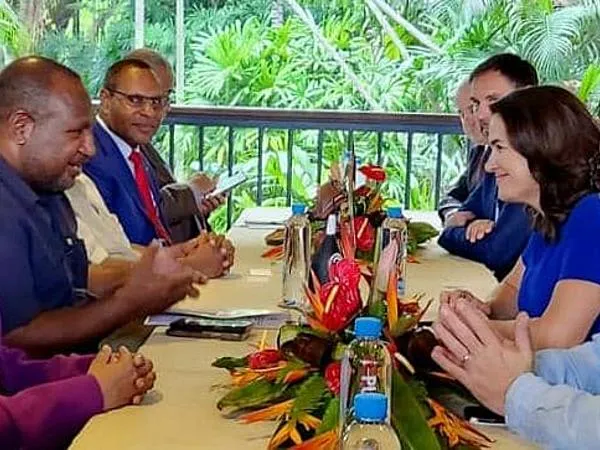
Prime Minister Marape said this as he commended Hungarian President, H.E Katalin Novak for agreeing to advocate for PNG at the EU when she chairs over the European block from next year 2024 onwards.
PM Marape said President Novak now joins French President Emmanual Macron who is a staunch advocate for PNG and the Small Island countries of the Pacific in environment conservation and climate change mitigation.
He said, “I am glad to report that President Novak’s visit to our country has consolidated our bilateral relations with Hungary.
“From her conversations, she had a good visit to our country. She is fascinated with our environment, and agreed to partner with President Macron on our forests advocacy.
“At our bi-lateral meeting this morning at the Nature Park, she said she would advocate for Papua New Guinea on the European Union when she assumes chairmanship in 2024.
“This is excellent news as we continue to strengthen our collaboration in environment advocacy, first with France and now Hungary through their Heads of State, who are becoming close friends of Papua New Guinea.
“The European Union is a powerful block of nations, which has supported us with some trade and in our development agenda. President Novak’s chairmanship next year will help to strengthen EU’s connection to us in the middle of the Indo-Pacific focus,” said PM Marape.
Prime Minister Hon. James Marape has expressed his commendation to International Trade and Investment Minister Hon. Richard Maru for his strong leadership in Papua New Guinea’s hosting of the World Indigenous Business Forum (WIBF) from October 24 to 26, 2023.
The international event, which drew participation from 150 international delegates representing 14 countries, as well as 350 participants from all corners of Papua New Guinea, reached its conclusion on the evening of Thursday, October 26.
Prime Minister Marape, speaking on behalf of the people of Papua New Guinea, extended his profound gratitude to WIBF for selecting Port Moresby as the host city and conveyed his appreciation to all international delegates who graced the event with their presence.
Furthermore, Prime Minister Marape lauded the diligent efforts of National Capital District Governor, Hon. Powes Parkop, and his dedicated team from ‘Amazing Port Moresby’ for their commendable work in promoting both Port Moresby and Papua New Guinea on the global stage throughout the duration of the event.
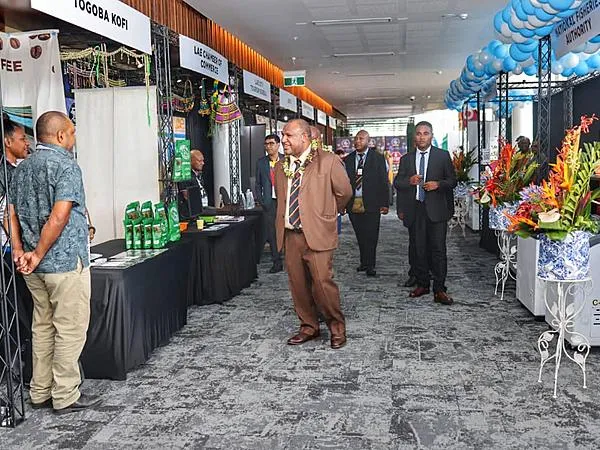
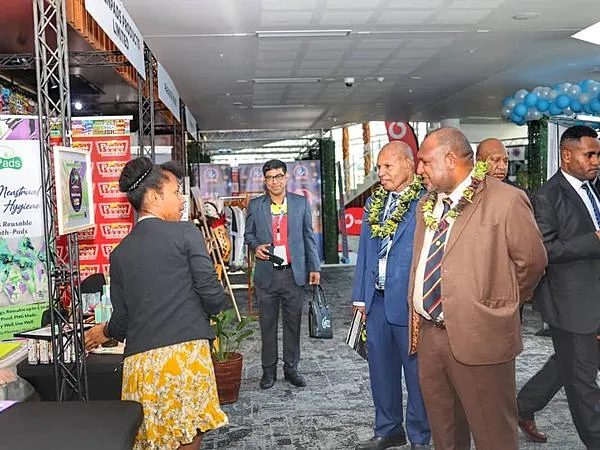
He also extended his thanks to the local businesses that seized the opportunity to showcase their products, establish global connections, foster partnerships, and explore market prospects among the diverse array of countries represented at the forum.
Prime Minister Marape emphasised the significance of Minister Maru’s strong leadership in successfully hosting the WIBF. He noted that this event stands as the most significant international gathering hosted by Papua New Guinea since APEC 2018.
The Prime Minister expressed his delight at the participation of micro, small to medium enterprises (MSMEs) in the WIBF, highlighting their ability to establish international contacts and gain insights from the global participants. He commended the wide range of products produced by Papua New Guineans and underscored the importance of exporting goods to boost the country’s economy.
He remarked, “Whatever we can export, whether big or small, brings in much-needed foreign exchange into our country and builds a stronger economy. I am very happy that Minister Maru is focused on ensuring that indigenous Papua New Guinea businesses are given greater support to progress into manufacturing and downstream processing. This very much complements the government’s focus on downstream processing.”
Prime Minister Marape emphasised the government’s commitment to supporting MSMEs, particularly women, with increased assistance to Women’s Micro Bank (Mama Bank). He pledged to review and enhance efforts to ensure that the benefits reach as many MSMEs as possible.
Encouraging investors to explore opportunities in Papua New Guinea, Prime Minister Marape said, “Papua New Guinea is in the most-exciting part of Earth as far as commerce, trade, and business are concerned. Our accessibility to the Asian market is second to none.”
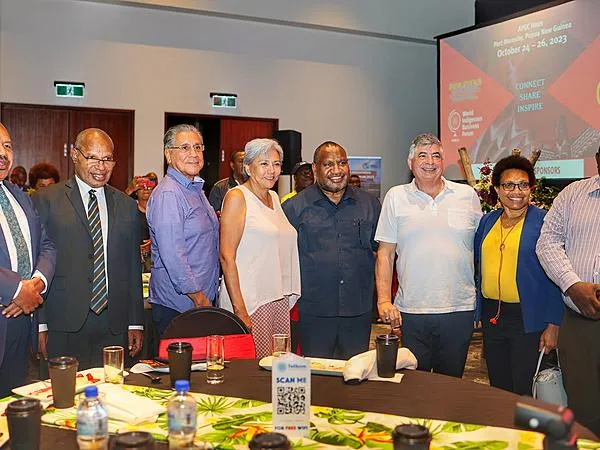
Prime Minister Hon. James Marape has urged participants of the three-day World Indigenous Business Forum (WIBF) in Port Moresby to "think globally and act locally" in as far as international commerce and trade is concerned.
This message was conveyed recently as Prime Minister Marape inaugurated the three-day WIBF, hosted at the APEC Haus in Port Moresby. The prestigious international event was attended by 150 international delegates from 14 countries, along with 350 participants from throughout Papua New Guinea. The event was organised by the Government, under the leadership of Minister for International Trade and Investment, Hon. Richard Maru, in collaboration with the National Capital District Commission (NCDC). Prime Minister Marape commended the efforts of Minister Maru and NCD Governor, Hon. Powes Parkop, along with his dedicated team from 'Amazing Port Moresby’.
The WIBF commenced with a grand opening ceremony hosted by NCDC and the Amazing Port Moresby team at Sir Hubert Murray Stadium on Tuesday, October 24, 2023, from 5pm to 9pm. The official forum proceedings were inaugurated today by Prime Minister Marape. The event will culminate with an official closing ceremony, orchestrated by NCDC and the Amazing Port Moresby team, at Ela Beach on Thursday, October 26, 2023, from 6pm to 9pm.
Prime Minister Marape, on behalf of the people of PNG, expressed gratitude to WIBF for choosing Port Moresby as the host city and extended a warm welcome to all international delegates. He also thanked Labor and Employment Minister, Hon. Kessy Sawang, who attended the 2022 WIBF as Vice-Minister for International Trade and Investment and played a pivotal role in bringing the event to PNG.
In his address, Prime Minister Marape emphasised the importance of thinking globally and acting locally, asserting, "Every human being must blend and coexist. The world out there needs us to interface and relate with them." He highlighted Papua New Guinea's rich diversity, with over 800 languages spoken by its people of Melanesian, Polynesian, and Micronesian descent.
Prime Minister Marape stated that PNG has placed significant focus on micro, small, and medium enterprises (MSMEs) over the last four years to stimulate economic growth, investing K200 million annually since 2020. He committed to reviewing these efforts to ensure benefits reach as many MSMEs as possible.
Furthermore, Prime Minister Marape encouraged investors to explore opportunities in Papua New Guinea, stating, "Papua New Guinea is in the most-exciting part of Earth as far as commerce, trade, and business are concerned. Our accessibility to the Asian market is second to none."
In addition to the international attendees, the Prime Minister expressed enthusiasm for local businesses to seize the opportunity to showcase their products, establish global connections, forge partnerships, and explore market prospects among the diverse array of countries represented at the forum.
Minister for International Trade and Investment, Hon. Richard Maru says it is time the Government recognize the need for Papua New Guinean indigenous businesses to be recognized and supported as a unit in the country. Minister Maru said this recently during his closing address at the 14th World Indigenous Business Forum which was jointly hosted in Port Moresby by the Government of Papua New Guinea led by Prime Minister, Hon. James Marape and the National Capital District Commission led by NCD Governor, Hon. Powes Parkop from October 24-26, 2023.
“There are so many Papua new Guinean indigenous entrepreneurs who have done so much without Government support. This Forum allowed them to come and display their products and many of us were really inspired. I am so impressed of the energy and the drive of our people. They did not wait for the Government; they did what they had to do. Papua New Guineans have the potential. All they need is support. We need to look at how we can support our entrepreneurs, how we can nurture them, and how we can incentivize the growth of the indigenous private sector. These are the issues that we need to look at and organize ourselves to support our indigenous business community especially in industries that replace imports and grows our exports. Our Government must build a broad based economy that will create job and generate wealth,” said Minister Maru.
Minister Maru announced that first Papua New Guinea Indigenous Business Forum will be hosted next year with the theme ‘Replacing Imports and Growing Exports’.
“We need to help our indigenous businesses to rise up and take their place in this country,” said Minister Maru.
Minister Maru said he was happy that PNG connected with the world indigenous business family as a result of hosting the 14th World Indigenous Business Forum.
“The indigenous economy is a USD8 Trillion economy. We have been really inspired by all the presentations from the speakers who came from around the world and from our own entrepreneurs who spoke about their experience, their journey, their struggles, and their hardships. I want to thank Governor Parkop for co-hosting this event and for being behind MSMEs in Port Moresby since he became a Governor. Together we can provide the leadership and work on how we can mobilize our indigenous businesses, be their voice, and can work with them to unleash their talents,” said Minister Maru.
Minister Maru said he was very impressed with the quality and the ability of PNG indigenous women entrepreneurs.
“I want to tell all women entrepreneurs that our Government will get behind you. We are ready to back you up in the strongest way possible and we will start by supporting you to go and attend the Indigenous Women in Industry Conference in Aotearoa, New Zealand next year,” said Minister Maru.
“We also heard from PNG Women in Business Foundation of how they dreamed to have a bank and how they achieved that dream by establishing Women’s Micro Bank in 2014 with 90 per cent of its current clients being mothers from the villages. Our Government should really look at supporting them to grow,” said Minister Maru.
Minister Maru added that there were so many exciting outcomes from this Forum.
“The connections that we have made during this Forum will not stop here. The Papua New Guinea indigenous business community want to connect to the global indigenous business network, and we want to work with the Indigenous Leadership Development Institute to make sure we have a chapter in this country through a body that best represents our indigenous businesses so that we will connect directly with the rest of the world indigenous business community including recognizing our need to establish kava industry in Papua New Guinea. The demand for kava in Fiji and the Pacific has outgrown supply. Papua New Guinea has the potential to become the biggest producer of kava in the world if we establish kava as an industry and undertake multicropping with kava being planted under the cocoa trees to fully utilize the land so our farmers can make money from both cocoa and kava using the same land. This is one industry that is ready to boom,” said Minister Maru.
Minister Maru said he was also very impressed with National Fisheries Authority’s Inland Fisheries Unit.
“I am especially impressed with the very successful inland fisheries businesses in the highlands. We need to support them. Inland fishing is a huge industry in other countries.
This is an industry that we need to explore and invest more in to support our inland fish industry and our inland fish farmers,” said Minister Maru.
Minister Maru thanked Prime Minister Marape for his strong leadership and for his support in hosting this global event.
“We believe that we have delivered one of the best World Indigenous Business Forum ever hosted by any country in the world, and we could not have done it without the support of our Government and sponsors,” said Minister Maru.
Minister Maru also thanked all the sponsors who made it possible to host this event.
Prime Minister Hon. James Marape has passionately called for China’s assistance in land reclamation, water desalination, and green energy initiatives to support small Pacific island states facing the challenges of climate change.
Prime Minister Marape, representing the Pacific Islands Forum, has proposed to China that countries with significant carbon footprints, such as China, should collaborate with smaller island communities and states to mitigate the effects of climate change.
Prime Minister Marape is in Beijing at the invitation of Chinese President H.E. Xi Jinping to attend the Third Belt and Road Forum for International Development and Cooperation, a prominent event spanning yesterday and today.
“I have consistently advocated for the preference of land reclamation over the relocation of islanders who are grappling with rising sea levels and the salination of their water and arable land,” Prime Minister Marape emphasised.
“I have been a staunch proponent of this approach and hope that nations like China can partner with Papua New Guinea, offering resources like rocks, soil, and sand to support land reclamation efforts.”
During discussions with Chinese leaders, Prime Minister Marape specifically highlighted Pacific Island nations such as Tuvalu, Kiribati, the Federated States of Micronesia, the Marshall Islands, and Nauru. Additionally, he emphasised the importance of assisting islands and atolls within Papua New Guinea, including the Cartarets, Mortlock, Nissan, Wuvulu, and many others.
A team of investors from one of China's biggest cities, Guangzhou, will be in the country at the behest of their government to explore downstream processing opportunities in PNG.
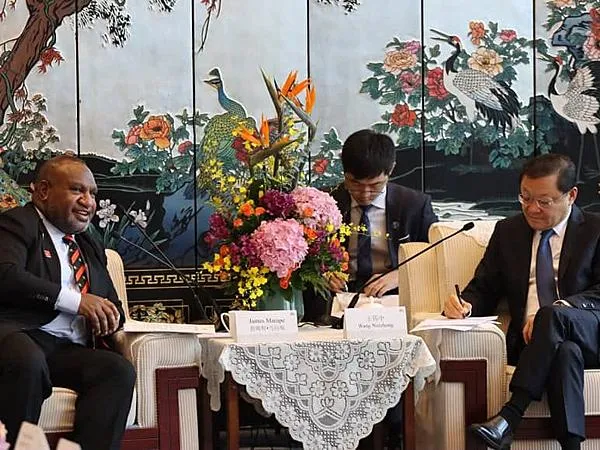
Prime Minister Hon. James Marape was informed of this by Governor of Guangdong Province, H.E Wang Weizhong, when the two leaders met after PM Marape ended his attendance of the Third Belt and Road forum in Beijing.
At the meeting, Prime Minister Marape thanked Governor Wang for his warm welcome and also for promoting a development and economic cooperation with PNG.
PM Marape said he was "very happy" with progress being made to enhance development cooperation between PNG and China through Guangdong Province.
Governor Wang, in turn, congratulated the Prime Minister on the successful outcomes of the discussions between PNG and China in the areas of investment, trade, infrastructure, energy, sustainable development and climate change, among other areas.
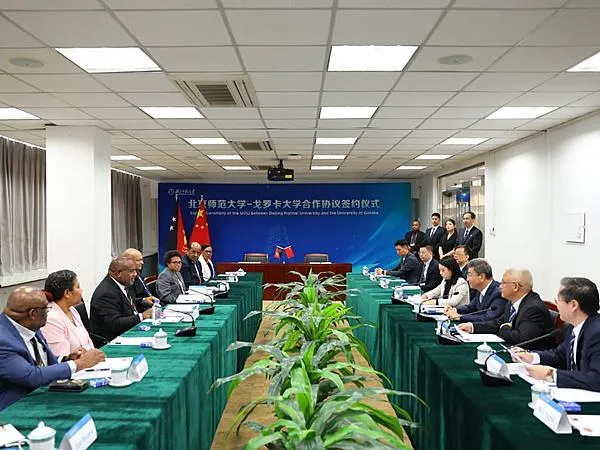
H.E Wang also congratulated Prime Minister Marape on Papua New Guinea issuing a joint declaration with China and signing a cooperation agreement on the margins of the Third Road and Belt forum.
He then went on to update the Prime Minister on the International Air Service Agreement, which will see Southern China Airline fly direct to Port Moresby, starting with once a week schedule and eventually increasing as the demand for the route increases.
Trade between Papua New Guinea and China has surpassed K13 billion, with a surplus in our favour as PNG continues to export more to China than import from the Asian superpower.
This clearly demonstrates the huge significance in maintaining and expanding the existing bi-lateral relationship with China as the superpower continues to provide the needed markets for Papua New Guinea in Agriculture, Forestry, Fisheries, and Oil & Gas.
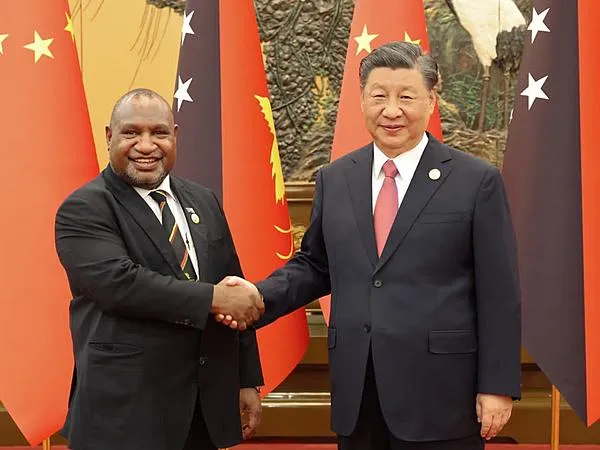
Prime Minister Hon. James Marape revealed this today as he provided a brief on his meetings with China’s two most senior leaders – Premier Li Qiang and President Xi Jinping, adding that the reception and opportunities for meetings accorded to him and his delegation were at the highest level.
He said: “I have had very successful separate bilateral meetings with the Premier and the President. Out of the 150 nations attending the Belt & Road forum, we were accorded this rare privilege – to meet the head of government and head of State in our own meetings. Not too many were given this opportunity.
“This shows the importance China has attached to the relationship it has with PNG. The PNG-China relationship is a result of work we have been doing over the years since I took office in 2019.
“We have successfully marketed our country as a place for the production of food and energy, and we are receiving very good response from China.
“China is no ordinary nation. It has security of markets for all our produce. Papua New Guinea needs good markets for the export of our natural resources, and China is that market – just as India, Indonesia and the rest of Asia are.
“We are successfully deepening the trading and bilateral relationship with China, and under my watch, we will continue to expand it even further.
“Over the last four years, trade volume between PNG and China has seen a surplus for our country, meaning that PNG is exporting more to China than we are importing.
“Today, K13 billion is the volume of transaction that has taken place between our two countries, making China the most important trading partner besides Australia,” said Prime Minister Marape.
The Prime Minister said because of this deepening relationship with China, it was important that relevant ministers in the fields of trade, commerce and investments accompanied him on the trip for implementation upon return to PNG.
“Papua New Guineans must see the big picture. You want the economy to grow, so does your government. This is the number one focus of our government since 2019, and we are making it happen now,” said PM Marape.
Over 500 delegates are expected to converge into Port Moresby next week to attend and participate in the World Indigenous Business Forum (WIBF) that will be hosted from October 24-26, 2023. From the 500 delegates, 150 will be international delegates who will be coming from 14 countries.
Minister for International Trade and Investment, Hon. Richard Maru said: “This is really a wonderful opportunity for us to market our country. I want to call on all our citizens, especially those in NCD to welcome all our delegates and give them a very good impression of our city. We must all work together to ensure that they go back with very good memories of their time in Papua New Guinea.”
“I also look forward to seeing our local businesses showcasing their products, building international networks, creating partnerships, and looking for markets among all the countries that will attend the forum. I call on all our indigenous SMEs and large companies who have registered to prepare well and take full advantage of this one-off opportunity to market your products and services and our country to the delegates from around the world who will be coming to attend this forum. You must also canvas new business opportunities and forge partnerships to grow your businesses with new indigenous partners from around the world,” said Minister Maru.
This three-day event will start with a grand opening ceremony hosted by NCDC and the Amazing Port Moresby Team at Sir Hubert Murray Stadium on Tuesday, October 24, 2023, from 5pm to 9pm. The forum will be officially opened on Wednesday, October 25, 2023, by Prime Minister, Hon. James Marape, and will end with an official closing ceremony which will be hosted by NCDC and the Amazing Port Moresby Team at Ela Beach on Thursday, October 26, 2023, from 6pm to 9pm.
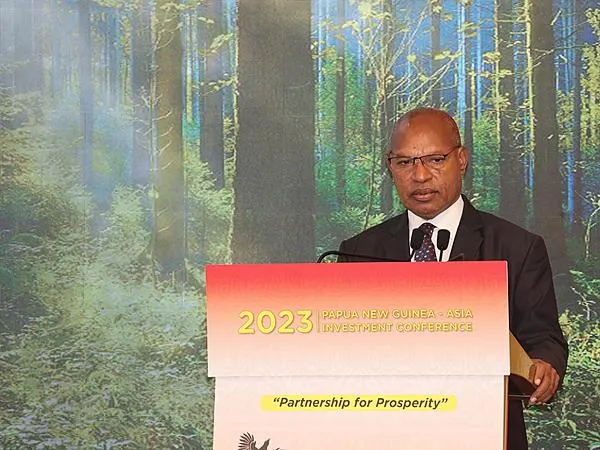
The Minister for International Trade and Investment, Hon. Richard Maru says Papua New Guinea (PNG) needs investments in all sectors and not just in the mining and petroleum sector. Minister Maru said this after hosting of the inaugural PNG-Asia Investment Conference in Hong Kong on October 16-17, 2023.
“We need investments across all sectors in order to create jobs. From the presentations at the PNG-Asia Investment Conference, we learnt that ExxonMobil PNG only has 3, 000 employees after construction phase whilst New Britain Palm Oil which is the biggest agriculture company in PNG has 29, 000 permanent employees. We also learnt that one fish cannery can create 5, 000 jobs. If we have ten canneries in the PMIZ we will create over 50, 000 new jobs. The agriculture, fisheries, forestry, and the manufacturing sector will provide mass creation of jobs. That is why we are going to China to look for investors to come and invest in this space, and we also continue to encourage local investors to partner such investors. Our biggest national challenge is unemployment. We have the highest level of unemployment since independence. Our state of law and order is largely attributed to our very high level of unemployment. This is why we are desperately trying to market our country as an investment destination, and we are specifically looking for investors to come and invest in the critical sectors that will create more jobs,” said Minister Maru.
“The extractive sector brings in the revenue and we must re-invest it in the non-extractive sector to create jobs and for an inclusive and sustainable economic development,” added Minister Maru.
Minister Maru said the hosting of PNG- Asia Investment Conference in Hong Kong was a start of a new beginning in PNG’s relationship with the People’s Republic of China.
“China is our most important trading partner with two-way trade of approximately K15 billion each year and growing. With more mining and petroleum projects coming on board, China will continue to be our biggest market in the future. This conference is well overdue, and our decision to host the conference in Hong Kong is the start of a new beginning in our relationship with China. We want to take our relationship to the next level and anchor the future of our relationship on trade and investment. We know that China will continue to be a big market for our goods with trade currently in our favour,” said Minister Maru.
Minister Maru said PNG was serious with its relationship with the People’s Republic of China.
“Our decision to host the inaugural PNG-Asia Investment Conference in Hong Kong, the one-week State visit of our Prime Minister, Hon. James Marape to China for the Belt and Road Initiative Leaders Meeting in Beijing, the commencement of the joint feasibility study this week for a possible Free Trade Agreement between PNG and China, the first direct flight between Port Moresby and Guangzhou expected to take place in December this year, and the opening of a trade mission in Shenzhen early next year should be a statement to the Government and the people of China that PNG really wants to strengthen and deepen its relationship with China,” said Minister Maru.
Minister Maru said he was happy with the outcome of the inaugural PNG-Asia Investment Conference that was hosted in Hong Kong from October 16-17, 2023.
“Papua New Guinea is now walking across Asia and entering into meaningful partnership with China and other countries in the region to secure export markets for our products including our Liquified Natural Gas (LNG). China is an economic powerhouse and Papua New Guinea must establish a closer relationship with China for mutual benefit,” said Minister Maru.
“We have to consolidate and deepen our relationship with China in order to secure future market not only for our resource industries but also our non-extractive industries of forestry, fisheries, agriculture, and manufacturing,” added Minister Maru.
Minister Maru said the next PNG-Asia Investment Conference will be hosted in mainland China in 2025.
“I look forward to it been even bigger and better having learnt from all our experiences in our first ever PNG-Asia Investment Conference in Hong Kong,” said Minister Maru.
The European Union (EU) has transferred EUR 4.25 million (around 17 million Kina) to the Government of PNG to support key national policies on Good Governance and Anti-Corruption in the Social, Law and Order Sector (SLOS). With this grant, the EU recognizes and supports the Government’s commitment to the promotion of Good Governance and the eradication of corruption, along with its commitment to achieve the Sustainable Development Goals.
The EU has already disbursed EUR 3 million in December 2021 and this is the second disbursement under the EU sector budget support ‘EU-PNG Partnership for Good Governance’. In line with the National Policies and Strategies, the EU support aims to contribute to the Government of PNG’s effort in strengthening the Good Governance and the Rule of Law in the country.
"Good Governance is fundamental for the economic growth of a country and remains at the core of EU’s development cooperation in PNG,” said the EU Ambassador to PNG, H.E. Jacques Fradin. “The EU has been working side by side with the Government of PNG supporting it in its fight against corruption and will continue to work together towards its eradications.”
The programme of support to Good Governance reforms intends to provide a total of EUR 26.9 million (or approximately 110 million Kina). In addition to the budget support, which is linked to jointly-agreed performance indicators, the EU has also mobilised technical assistance under the 'PNG Anti-corruption project' (implemented jointly by the United Nations Development Programme (UNDP) and United Nations Office on Drugs and Crime (UNODC)) and a complementary assistance to the SLOS Secretariat to support in its coordination role, crucial for supporting economic growth and strengthening the national security.
The disbursement of this second payment comes after a positive decision of the Budget Support Steering Committee of the European Commission's Directorate-General for International Partnerships in October 2023.
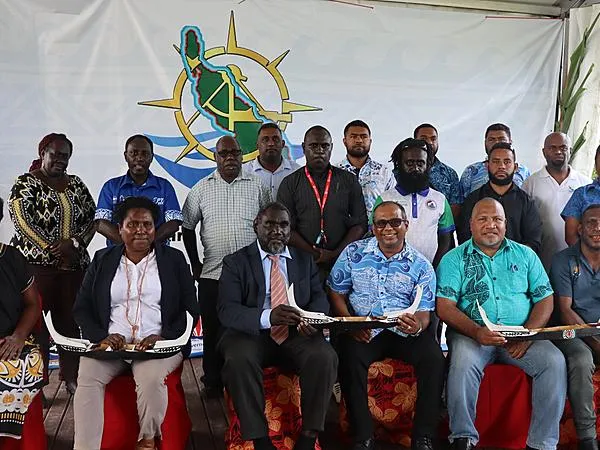
The Bougainville Coastal Waters Survey Program is set to commence this month to map out areas that constitute as ‘Bougainville waters’, as part of the drawdown of fisheries powers and functions to the Autonomous Bougainville Government.
ABG President Hon. Ishmael Toroama officially launched the Survey today in Buka, signifying a milestone for Bougainville, being the first maritime region in Papua New Guinea to undergo this coastal mapping process.
“Today, we embark on a journey that will play a pivotal role in shaping the future of Bougainville. This Survey will contribute to our preparation for political independence as it will mark the benchmarks for Bougainville’s coastal waters,” Toroama said.
“The delimitation of sea boundaries is more than just drawing lines on a map; it is about defining the territorial sovereignty and the rights of the people of Bougainville. It is about ensuring that Bougainville's voice is heard and respected on the global stage as we move closer to realizing their aspirations.”
The mapping of Bougainville’s coastal waters will enhance maritime services, regulate shipping services, reap economic benefits from infrastructure and marine resource development, as well as enable Bougainville to possess reference coordinates that determines its baseline, internal waters and coastal waters.
ABG technical officers from the ABG Departments of Primary Industries, Lands, Commerce, Mineral and Energy Resources and other supporting departments in the Bougainville Public Service, also completed a week-long workshop learning about using modern geospatial techniques to be applied during the field survey.
Beginning on 16 to 28 October 2023, four survey teams will be deployed to identified coastal communities across North, Central and South Bougainville to undergo the field survey of the coastal mapping.
The Bougainville Coastal Waters Survey is being facilitated through the ABG Department of Primary Industries & Marine Resources, the National Fisheries Authority, the National Department of Justice and Attorney General, the National Maritime Safety Authority and the Geoscience Energy & Maritime (GEM) Division of Pacific Community (SPC).
The formalizing of Bougainville’s maritime boundaries is being done under the guidance of the international framework of the United Nations Convention on the Law of the Sea (UNCLOS).
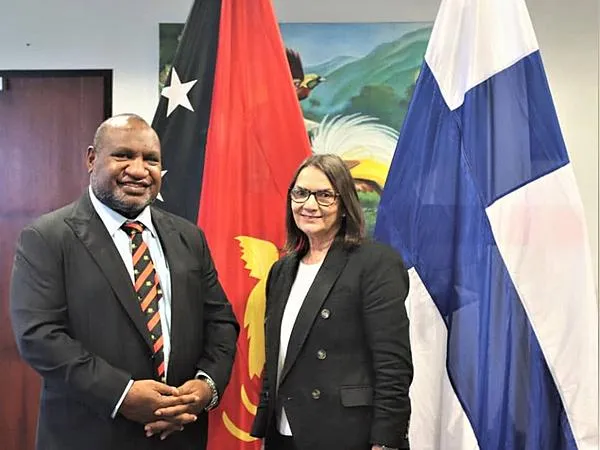
Prime Minister Hon. James Marape has welcomed H.E Satu Mattila-Budich, the Ambassador-designate of the Republic of Finland to Papua New Guinea.
Her Excellency, Mrs Mattila-Budich was introduced to the Prime Minister at his Sir Manasupe House Office, as PM Marape took the opportunity to invite Finnish investments into the country and highlight PNG’s proximity to the huge, flourishing markets of Asia.
Prime Minister Marape pointed out to the Ambassador-designate investment opportunities in the resource sectors of Agriculture, Fisheries, Forestry, Green Energy, Information Technology, Telecommunications and Manufacturing.
He said: “I welcome and congratulate you as you take up your appointment as the Ambassador of the Republic of Finland to PNG. We look forward to working closely with you during your tour of duty.
“Papua New Guinea is a leader among the small island nations of the Pacific. We have a robust democracy and a strong cultural affinity to Asia.
“Over the years, we have developed strong relations with nearly all countries of Asia – Indonesia, Malaysia, Japan, India, South Korea, and China.
“Our Foreign policy is defined by our philosophy to be a ‘Friend to All and Enemy to None’ because we ourselves are a nation of huge diversities. So we tolerate diversity.
“In the area of Agriculture, we have a great deal of arable land with produce that are still very much organic.
“I invite businesses and companies from your country to ours, whether your businesses want to partner with our State-owned companies, with other businesses in our private sector, or set up on their own; the opportunities are here.
“There is now a direct trade route from Papua New Guinea to Asia and I invite Finland to capitalize on this opportunity.
“China, for example, has a huge market on its own with nearly 1.5 billion people; India with over 1.4 billion; and Indonesia with over 273 million; while the total Asian market is nearly 5 billion people.”
Papua New Guinea and Finland formally established diplomatic ties on 25 August 1977 at a non-resident ambassadorial level.
Although trade and economic activities have been small between the two countries with volume of trade in Finland’s favour since 2015, PM Marape is keen on increasing this with the new post being taken up by Mrs Mattila-Budich.
In regional matters, Finland has been supportive of Climate Change efforts in the South Pacific with the establishment of the Finnish-Pacific Project through the Secretariat of the Pacific Regional Environment Programme (SHREP).
Minister for International Trade and Investment, Hon Richard Maru officially announced the commencement of the joint feasibility study for a possible Free Trade Agreement between Papua New Guinea (PNG) and the People’s Republic of China (PRC). Minister Maru made the announcement today on the eve of Prime Minister, Hon. James Marape’s official state visit to China next week for the Belt and Road Summit in Beijing where one of the key agenda for discussion will be the Free Trade Agreement between the two countries.
“This joint feasibility study was agreed to at a meeting between our Prime Minister and the Chinese President, Xi Jinping during Prime Minister Marape’s state visit in 2021. This joint feasibility study will commence next week after the contract is being executed between the state through the National Trade Office and the consultants this Friday,” said Minister Maru.
“This feasibility study is of our highest priority as this will serve to further strengthen our trade and investment relationship with China which is our most important trading partner with two-way trade of approximately K15 billion each year and growing. Our second highest priority is to undertake similar study with Indonesia which has the biggest opportunity for us,” said Minister Maru.
Minister Maru thanked the Government and the People’s Republic of China for providing the funding to undertake this study. The PRC provided K1 million under the Grant Assistance Program and the Government of PNG provided K2 million for this study.
“This joint feasibility study is very critical for two reasons; Firstly, the National Trade Policy 2017-2032 stipulates that a Cost-Benefit Analysis (CBA) be conducted and all affected stakeholders to be consulted before committing the country to any form of Trade Negotiations or prior to signing any Trade Arrangement/Agreement amongst other guiding principles and measures. Secondly, China is a global economic superpower, and any trade and economic relations must be treated carefully on the socio-economic impact it will have particularly for a small economy like PNG. PNG’s exports are mainly raw and semi-processed, and the Government is embarking on policies and reforms towards downstream processing of our raw materials and to become a net exporter of processed goods to create employment and wealth for our people in the long term. Therefore, the study is important to determine what areas or sectors to open up and reserve sectors that are critical in line with Government policy for development. In the event that the Government decides to negotiate a Free Trade Agreement with China our negotiators need to have the data, facts, and figures in the respective sectors to maximize gains from the free trade,” said Minister Maru.
Minister Maru said the feasibility study will commence next week and should be completed within 70 days and negotiations should commence thereafter depending on the outcome of the study.
“The study will be undertaken by a group of consultants as the scope of study is very wide and covers a lot of sectors and or issues, such as trade in goods, trade in services, investment, intellectual property, MSMEs, climate change, and digital trade and development amongst others. PNG is a party to several bilateral, regional, and multilateral trading arrangements but we have not covered much of these issues in these agreements. It is, therefore, incumbent on us to do a proper analysis on the respective sectors,” said Minister Maru.
“I look forward to the outcome of the study and eventually a Free Trade Agreement between PNG and PRC that is beneficial to both countries,” added Minister Maru.
The first direct flight between Port Moresby and Guangzhou of the People’s Republic of China is expected to take place in December this year. This announcement was made yesterday by the Minister for International Trade and Investment, Hon. Richard Maru.
The discussion on opening of direct flights between Port Moresby and Guangzhou was held between Prime Minister, Hon. James Marape and the Governor for Guangdong Province of China, Wang Weizhong during his visit to Port Moresby in July this year. This was further discussed when Minister Maru met with Governor Weizhong in his recent visit to Guangzhou.
“On the eve of Prime Minister Marape’s state visit to the Republic of China to attend the Belt and Road Summit, we are glad to inform the country that the proposed direct flight between Port Moresby and Guangzhou looks positive and possible,” said Minister Maru.
A technical team from the China Southern Airlines visited Port Moresby last week and they met with the Department of Transport, Civil Aviation Safety Authority (CASA), and National Airports Corporation (NAC).
“They are planning to have the first direct flight between Guangzhou and Port Moresby to take place in December this year. Prior to that, a technical team from China Southern Airlines will return to Port Moresby in two weeks’ time to meet with CASA to make sure all technical requirements are met before the flight resumes,” said Minister Maru.
Minister Maru said the opening of the direct flights between Port Moresby and Guangzhou will improve more business connectivity between PNG and Guangzhou, Guangdong Province, and China.
“It will also strengthen the sister-city relationship between Port Moresby and Guangzhou; strengthen our proposal to open a Trade Commission in Shenzhen; and it will now call on us to quickly open a Consulate in Guangzhou to facilitate visas for not only business travelers but also for tourists with tourism being a huge market in Papua New Guinea which is untapped. China has 100 million tourists that travel the world every year. This direct flight will give us the greatest opportunity to start tapping into this market. I will be working very closely with the Minister for Tourism, Arts, and Culture, and the Tourism Promotion Authority to look at how we can develop products and a plan to market Papua New Guinea as a tourism destination specifically for Chinese tourists. This is a very exciting development as we will tap into huge tourism market that Papua New Guinea has not tapped into all these years,” said Minister Maru.
Minister Maru thanked the Premier of Guangdong Province and China Southern Airlines for their commitment to starting the process to having direct flights between Port Moresby and Guangzhou.
“Prime Minister Marape, on his way back from Beijing will call in at Guangzhou to meet with Governor Weizhong and the China Southern Airlines to reaffirm our partnership,” said Minister Maru.
The Bank of Papua New Guinea presented to the Port Moresby Chamber of Commerce and Industry the September 2023 Monetary Policy Statement at the Hilton Hotel on the 4th of October 2023.
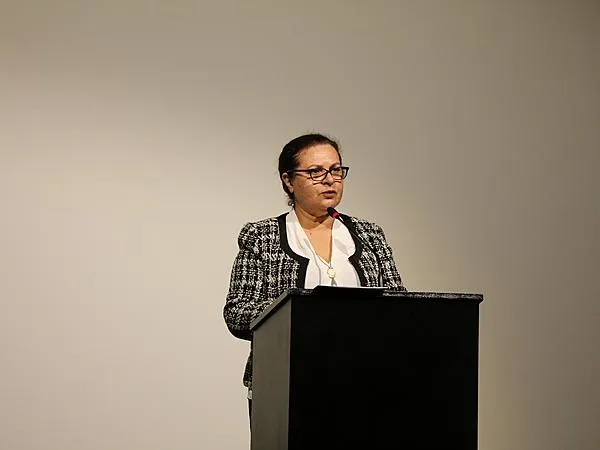
Ms. Elizabeth Genia, Acting Governor of the Bank of PNG, said: "I would like to thank the POMCCI for inviting the Bank of Papua New Guinea to present the September Monetary Policy Statement over breakfast this morning. Thank you also to the Hilton and to your staff for looking after us so well.”
“I would also like to acknowledge my predecessor, previous Governor of the Bank of Papua New Guinea, Mr. Loi Bakani,” said Ms. Genia.
“We are all impacted by the Bank’s Monetary Policy Decisions, and the Bank needs to express those decisions simply and clearly,” she stated as she highlighted key topics, namely the Bank’s outlook for growth and inflation and recent adjustments to the Monetary Policy Framework.
She also touched on the exchange rate and foreign currency availability and later, some broader issues.
GROWTH OUTLOOK
Ms. Genia said PNG’s economy is likely to grow at a rate of around 2.5 percent this year.
This growth rate is lower than the forecasts from both the IMF and the Mid-Year Economic and Fiscal Outlook (MYEFO), “and that is OK, it’s important for the Bank to be able to independently assess the economic outlook,” she said.
The Bank of Papua New Guinea made assessments a few months after the IMF issued their forecasts, and after the MYEFO was released, the bank updated the information to incorporate into the GDP assessment, she said. This included the likely impact of the delay in re-opening the Porgera Mine on the country's growth forecasts.
“But more important than the percentage point difference in the forecasts, which of course is a constant source of debate among economists, is the source of the growth,” Ms. Genia said.
A projected slowdown in the global economy may see a decline in international commodity prices and this will affect PNG’s traditional growth sectors, she said. In the short term, growth will be driven domestically by the non-mineral sector - the real economy - with growth prospects picking up significantly in both the mineral and non-mineral sectors again in 2024, she added.
ON INFLATION
Inflation peaked above 6.0 per cent in September of last year but eased to 3.4 per cent in December and was as low as 1.7% in March, Ms. Genia noted.
She said 1.7 per cent “is a very low CPI, or headline inflation number, and it masks a lot of the underlying price increases the Bank of PNG have seen in the country's economy over the last 3 to 4 years.”
“Mid-2020 and the arrival of COVID-19, headline inflation increased very quickly and stayed relatively high through to September of last year,” she added.
That two-year-plus period saw significant price increases “that have since moderated, but we have still seen a very large increase in the cost of living and in the cost of doing business - for our SMEs and for our multinationals,” Ms. Genia said.
“There is a mixed message with inflation recently. One of the main reasons is the recent strength in the US Dollar against most of the major traded currencies around the world. As you know, the value of the PNG Kina is set against the US dollar, and this means any change in the value of the US dollar affects our purchasing power in other currencies.”
“The US Federal Reserve has been consistently raising their interest rates to rein in inflation. They paused in September at between 5.25 per cent and 5.5 per cent, but since April 2022, the Fed has increased their policy rate eleven times. This has resulted in a significant flow of funds into the US Dollar to take advantage of those higher interest rates. Australian interest rates have also been rising but not at the same rate, and this led to the selling of Australian Dollars to buy US Dollars.”
The Australian Dollar has declined around 15 per cent this year, to around 64 cents against the US Dollar currently compared to more than 76 cents a year earlier, she noted. “This has been very good news for the Kina-Aussie cross rate.”
“While the Kina has been depreciating against the US Dollar and is more than three per cent lower this year, the Kina has been appreciating against the Aussie Dollar and is close to six per cent higher over the last 12 months,” Ms. Genia said.
“In addition, another major source of imports is China, and the Chinese Yuan has also depreciated against the US dollar - by around five percent since the beginning of this year, and this has also helped to keep inflation down,” she noted.
Australia and China are two of PNG's significant trading partners, and the strengthening Kina against their respective currencies has contributed to lower imported inflation, Ms. Genia said.
Moving away from the US Dollar strengthening against other major currencies, other contributing factors to the lower headline inflation figure have been the subsidies in school fees and in fuel, she said.
“BPNG have now reached the end of fuel subsidies and can expect those international currencies to rebalance against the US Dollar and at some point, this will result in inflationary pressures building and a drop in the value of the Kina-Aussie cross rate.”
The Bank of Papua New Guinea is only too aware of this, and acknowledge inflationary pressures are on the horizon and they will continue to build, Ms. Genia said.
“This small window of easing inflationary pressure is temporary and we are watching closely for when things start to turn. Looking at these inflationary pressures emerging, appropriate action will be taken but for now, the Monetary Policy Stance is neutral,” she added.
ADJUSTMENTS TO THE MONETARY POLICY FRAMEWORK
BPNG know and understand the pressures that individual, the business community, are facing the country's economy, Ms. Genia said. “Its job is to balance the pressures falling on all parts of society – on individuals, on families, on communities, and on small, medium, and large businesses,” she said.
As part of the Government’s economic reforms to stabilise the economy, BPNG is working with the IMF to introduce changes to the Monetary Policy Framework, Ms. Genia said.
The first action, in August this year, was to introduce the Bank’s first Fixed Rate Full Allotment Auction for the 7-Day Central Bank Bill at 2.0%.
“High liquidity - essentially, too much cash sitting with the commercial banks - has been a major issue for the Bank of PNG in implementing Monetary Policy and in being able to influence market interest rates,” she said.
The introduction of the 7-Day Bill is intended to absorb that excess liquidity and improve interest rates by bringing them closer to the rates set by the Bank of PNG, Ms. Genia added.
“When the Central Bank raises interest rates via the Kina Facility Rate, the effect SHOULD be felt in terms of higher lending costs and in higher rates paid on deposits. This is how it works in most countries around the world. But in PNG, there is increase passed on to depositors,” she noted.
No country will see a 100 percent pass-through from a change in Central Bank rates to deposit rates and to lending rates, but PNG “has a particularly weak transmission mechanism through to deposit rates,” Ms. Genia noted.
“BPNG's aim is to improve this situation, so that there is some level of pass through to those deposit rates as well as to lending rates,” she said.
AVAILABILITY OF FOREIGN CURRENCY
September was a very difficult month for foreign currency inflows and the Bank “has an important role to play in balancing the inflows of foreign currency with the demand for imports through our FX intervention program,” Ms. Genia noted.
After many years where the allocation of foreign currency was around USD 40 million per month, in 2023 the Bank significantly increased that allocation to USD 100 million per month, she said.
“In May of this year, BPNG increased this to almost USD 300 million in an attempt to meaningfully decrease the volume of foreign exchange orders, clearing one billion Kina of outstanding orders. This is by far the most significant support provided to the foreign exchange market in many years and there is prudency in keeping with the ability to maintain the FX reserves at an appropriate level,” Ms. Genia said.
“The BPNG is committed to supporting the Kina through this adjustment phase lower in the exchange rate. The inflationary impact of a lower Kina is first and foremost in everyone’s mind at the Bank, this depreciation needs to be undertaken steadily, and it also needs to be undertaken purposefully.”
“The theory says to test the sensitivity of foreign currency inflows increasing in response to the lower exchange rate. However, in practical terms is to know that a Final Investment Decision on Papua LNG and the re-opening of Porgera will ease some of the pressures seen in PNG’s foreign exchange market and the Government is working in the background with both these projects to ensure they get started,” she said.
“September was a particularly difficult month for inward flows and the Bank is currently looking at what can be done to assist with the intervention program through to the end of the year,” Ms. Genia said.
There will be better times ahead turning into mid-2024, she said, as the Government “is also working very hard, to ensure having the right policy settings to lead into that growth.”
BROADER ISSUES
Ms. Genia also gave an update on the IMF Program.
The end of August was a very important deadline for the Central Bank to meet structural benchmarks on
“Both benchmarks I am happy to say have been met and if needed we will look at making further adjustments in the months ahead to the Monetary Policy Framework and the exchange rate regime to ensure we have the correct policy setting for both,” she said.
On the Phase II IAG Report, Ms. Genia said it is nearing completion, and just as the reforms from the Phase I review strengthened the Governance of the Central Bank and resulted in the amendments to the Central Banking Act in 2021, the Phase II report will likely see further reforms to the roles and to the functions of the Central Bank.
The Phase II Report will primarily look at the Bank of Papua New Guinea’s role in the broader development of the financial system, she said.
She also noted the Bank of Papua New Guinea turns 50 on November 1st this year “and will be celebrating its Golden Anniversary - a milestone the nation itself will reach in just under two years’ time.”
“The official establishment of the Bank of Papua New Guinea as the country’s Central Bank in November 1973 was one of the essential steps needed before ultimately achieving Independence in 1975,” she said.
"Our story is inextricably linked with the history of our country and 50 years on, the Bank continues to play an important role in the stability of our financial system and in its future development.”
"This significant milestone marks an important time to reflect on the challenges we have faced, to look back on our trials and on our triumphs and to acknowledge the challenges ahead – challenges that are to be embraced, because with challenge - comes opportunity,” Ms. Genia added.
"Just as in the early 2000s when the Bank underwent a series of significant reforms introduced by the Mekere government to strengthen both the Bank and the financial system, we are now seeing similar reforms being considered and introduced to prepare us for the next 25 years and I look forward to being able to share some of that change with you over the next 12 months as we move through our 50th year.”
"I remain, as always, available to meet and discuss these and other issues relating to the Bank,” said Ms. Genia.
Follow on LinkedIn:
PNG Business News
Be the "First" to get our exclusive Digital Magazine & Weekly Newsletter.