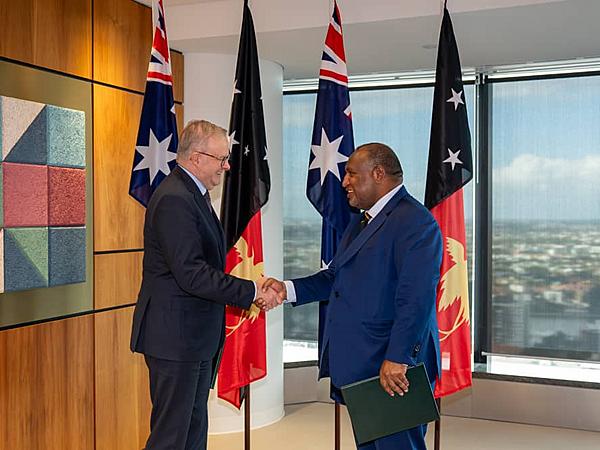
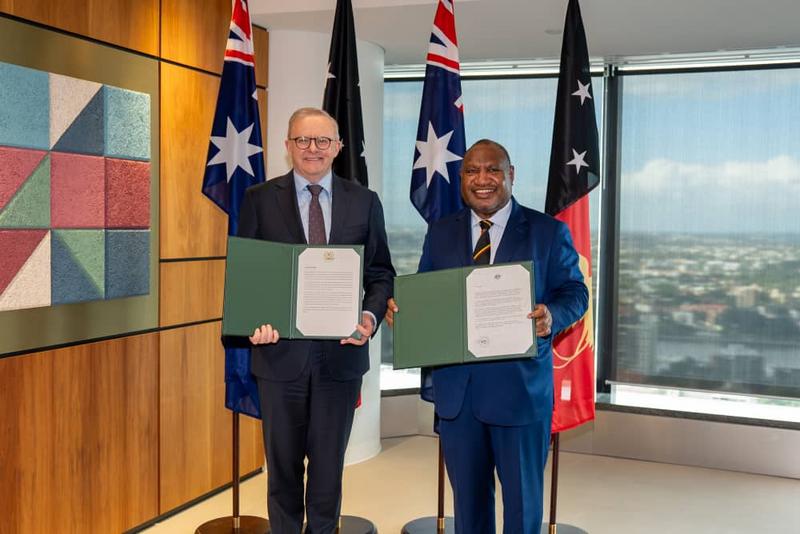
Papua New Guinea and Australia have entered what Prime Minister James Marape described as a new era of "equal partnership" following the signing of a landmark defence treaty that will deepen military cooperation while expanding collaboration in trade, investment, labour mobility and skills development.
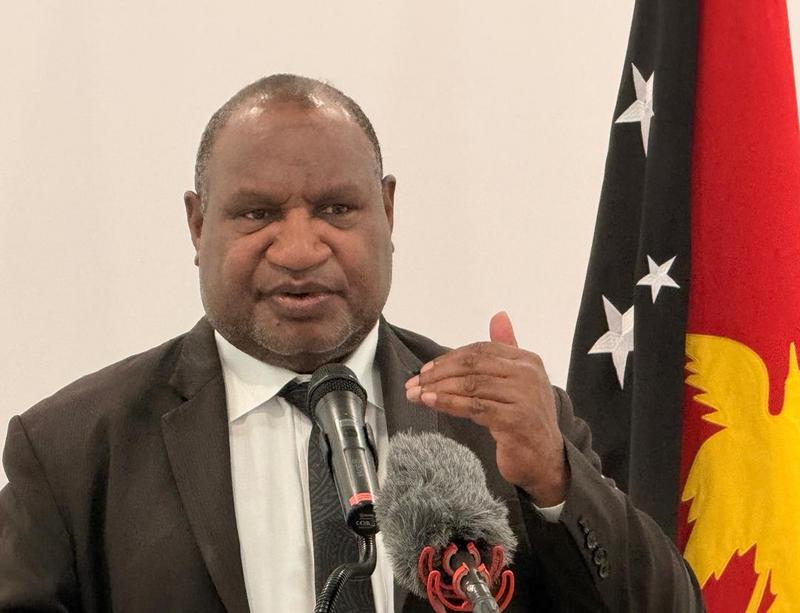
Marape said the Papua New Guinea-Australia Defence Treaty is the first formal defence treaty signed by Papua New Guinea since independence and marks a significant step in strengthening the country's national security without compromising its sovereignty or the independence of the Papua New Guinea Defence Force (PNGDF).
The agreement was concluded following the annual Papua New Guinea-Australia Leaders' Dialogue in Brisbane with Australian Prime Minister Anthony Albanese.
Marape said Papua New Guinea initiated discussions that led to the treaty, recognising the country's growing strategic importance and the need to modernise its defence capabilities amid an increasingly complex regional security environment.
"Papua New Guinea sits at the centre of our region, between east and west, north and south. As our economy grows and our strategic importance increases, it is in our national interest to build a stronger, more capable and modern Defence Force," he said.
He described Australia as Papua New Guinea's closest strategic partner because of the two countries' shared maritime and airspace boundaries, longstanding historical ties and extensive economic and people-to-people links.
"It is fitting that our first defence treaty is with Australia — a country with which we share history, geography and enduring people-to-people ties," Marape said.
The prime minister also noted the significance of the agreement for Australia, saying it is Canberra's first defence treaty of its kind with another nation in more than 70 years.
Sovereignty preserved
Marape stressed that the treaty does not integrate the two defence forces or diminish Papua New Guinea's sovereignty.
"Our Defence Force remains completely independent," he said.
"PNGDF personnel will continue to serve under the command of the Commander of the Papua New Guinea Defence Force and under Papua New Guinea's Constitution and laws. Likewise, Australian Defence Force personnel remain under the command of Australia. This treaty is about interoperability — not integration."
Under the agreement, both countries will expand cooperation in military training, joint exercises, capability development, humanitarian assistance, disaster response and the joint use of agreed facilities and assets.
Marape said the treaty provides Papua New Guinea with unprecedented access to Australia's defence expertise, technology, logistics systems and operational experience.
"It gives Papua New Guinea the opportunity to rapidly build the capability of our Defence Force in ways that would otherwise take decades," he said.
The agreement takes effect immediately, allowing implementation to begin without delay.
More than 100 Papua New Guineans have already been recruited into the Australian Defence Force under existing arrangements, with the programme expected to expand.
PNGDF reforms
Alongside the treaty, the government plans to accelerate reforms within the PNGDF.
Marape said a review into the recent PNGDF recruitment exercise is expected within two weeks, after which a new recruitment programme will begin.
The government is also considering engaging the recruitment agency used by the Australian Defence Force to improve transparency and professionalism in PNGDF recruitment.
In addition, the government plans to review salaries, conditions of service, welfare, training and career pathways for defence personnel as part of a broader effort to modernise the military.
Marape reaffirmed the government's long-term target of expanding the PNGDF to around 10,000 personnel while investing in new equipment, infrastructure and training.
"Our soldiers, sailors and air personnel deserve modern equipment, quality training, decent living conditions and clear opportunities for professional advancement," he said.
Beyond defence
Marape said the treaty extends well beyond military cooperation and reflects a broader strategic partnership between the two countries.
"This is not merely a defence arrangement. It is an umbrella agreement that strengthens every aspect of our relationship with Australia," he said.
He described the relationship as "two houses, one fence" — two sovereign nations working side by side while maintaining their independence.
According to Marape, the agreement will strengthen business partnerships, encourage two-way investment and create more opportunities for Papua New Guineans through education, skills development and employment.
He said Papua New Guinea hopes to see more Australian businesses invest in the country while encouraging Papua New Guinean companies to expand into Australia as economic integration deepens.
Australia's growing demand for skilled workers also presents significant opportunities for Papua New Guinea.
Marape said the government will work to align qualifications from Papua New Guinean universities, technical colleges, nursing schools and vocational institutions more closely with Australian standards to enable more citizens to access skilled employment opportunities.
"Australia faces significant labour shortages across many sectors, including construction, trades, healthcare, aged care, policing and defence," he said.
"My Government has consistently encouraged Australia that, whenever it looks overseas to meet labour shortages, Papua New Guinea should be considered among its first partners."
He said Papua New Guinea's greatest long-term export may increasingly become its skilled workforce rather than its natural resources.
"The greatest export Papua New Guinea can offer in the future is not only its natural resources but also the skills, knowledge and talents of its people," he said.
Equal partnership
Marape said the treaty reflects the evolution of bilateral relations from traditional cooperation to what he called an "equal partnership" founded on mutual respect, shared interests and common aspirations.
While recent public attention has focused on the defence treaty and Papua New Guinea's entry into Australia's National Rugby League competition, Marape said these developments represent only part of a much broader relationship.
"The real objective is to strengthen connections between our people, expand business-to-business engagement, increase investment flowing both ways, and create more opportunities for Papua New Guineans and Australians alike," he said.
He added that the annual leaders' dialogue remains an important mechanism for ensuring both governments remain aligned on regional priorities and future cooperation.
"This agreement demonstrates the trust between our two nations and our shared commitment to peace, stability and prosperity," Marape said.
"As neighbours, partners and friends, we will continue to work side by side for the benefit of our peoples and our region."