

Papua New Guinea has launched the K2.5 billion Port Moresby International Airport (PMIA) Redevelopment Project, one of the country's largest aviation infrastructure investments, aimed at transforming Jacksons International Airport into a modern aviation gateway and strengthening PNG's position as a regional aviation and economic hub over the next 50 years.
Officially launched by the National Government and the National Airports Corporation (NAC), the project will be delivered in four phases over six and a half years. It combines public investment with private sector participation to expand airport capacity, improve passenger services and support long-term growth in trade, tourism and investment.
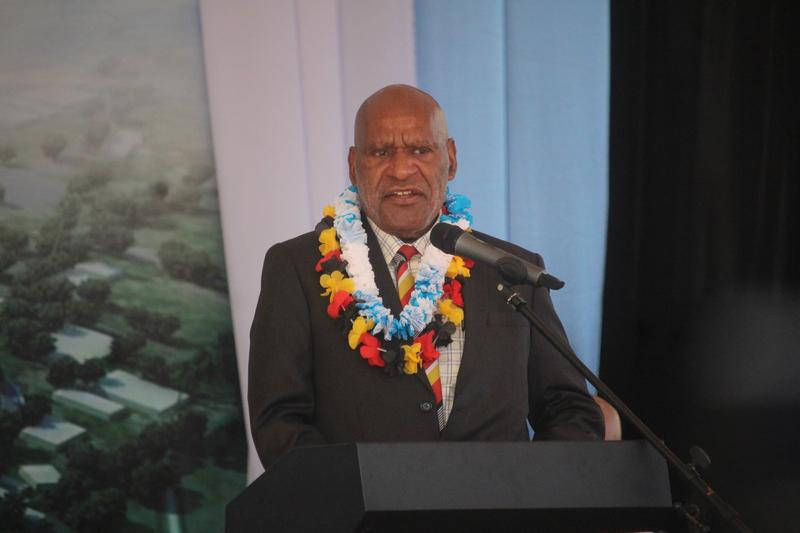
Speaking at the launch, Minister for Civil Aviation Waki Goi thanked Prime Minister James Marape and the National Executive Council (NEC) for backing what he described as a transformational national investment.
Goi said the project would begin with a K25 million government investment and was expected to attract substantial additional funding from both the public and private sectors over its lifetime.
"Investing in areas that bring big returns is the way to go forward for the next 50 years," he said.
The redevelopment includes major runway upgrades, expansion of the domestic and international terminals, and the replacement of ageing airport infrastructure with modern aviation facilities.
"You will see many changes over the coming years. We will improve the runway, upgrade the domestic and international terminals, and replace ageing facilities with modern infrastructure," Goi said.
A key component of the redevelopment is the creation of "airport cities" around major airports to stimulate commercial development and attract private investment.
Goi said investors were prepared to commit significant capital to Papua New Guinea's aviation sector, provided the country demonstrated sound financial management and fiscal discipline. He urged the newly restructured NAC board and management to maintain strong financial governance by keeping expenditure below revenue to reinforce investor confidence.
According to NAC, the redevelopment represents one of the largest aviation infrastructure projects in Papua New Guinea's history. It is expected to increase airport capacity, improve operational efficiency, deliver passenger services to international standards, strengthen PNG's preparations for APEC 2033, and support long-term expansion of the country's aviation sector.
The minister also called for closer collaboration between the country's major aviation centres, including Tokua, Lae and Mount Hagen, describing them as important drivers of future economic growth.
"I would like to encourage all of you, we must not fight for positions, we must not fight for the cake, we must fight for the real development that must take place. This is where our major income for Papua New Guinea lies. We must partner equally, talk equally, understand each other and move forward," he said.
Four-phase redevelopment
The redevelopment will be delivered in four stages over the next six and a half years.
Phase One will focus on relieving congestion by extending the domestic terminal by 110 metres while upgrading the airport's airfield ground lighting (AGL) and power supply systems.
Phase Two, funded under the Civil Aviation Development Investment Programme (CADIP III), will significantly expand and reconfigure the domestic terminal. Works include new check-in counters, aerobridges, upgraded baggage handling systems, VIP lounges, expanded retail and concession areas, and improved accessibility for passengers with disabilities.
Phase Three will expand apron facilities to accommodate Air Niugini's new Airbus A220 and Boeing 737 aircraft.
Phase Four will deliver a new international terminal equipped with modern passenger-processing technology, including self-service check-in, advanced baggage screening, walk-through metal detectors and expanded commercial facilities.
The final phase will also extend the airport's existing 2,750-metre runway to 3,500 metres, construct rapid-exit and parallel taxiways, expand cargo and aircraft maintenance facilities, incorporate green energy solutions, and develop associated landside infrastructure through public-private partnerships.
Prime Minister James Marape described airports as critical national infrastructure supporting trade, investment, tourism and economic growth.
"Airport is crucial, airport is key," he said.
Marape commended the NAC board, chaired by Shannon Anga, and Acting Managing Director Conway for prioritising the expansion of the domestic terminal, describing it as the corporation's strongest revenue-generating asset and the financial engine needed to sustain airport operations nationwide.
To accelerate the first stage of the project, Marape announced K20 million in National Government funding, complemented by K5 million allocated internally by NAC.
Marape linked the redevelopment to Papua New Guinea's broader economic outlook, noting that the country's non-resource sector has recorded annual growth of around four per cent over the past four years.
He pointed to strong occupancy rates at major hotels, including the Hilton and Airways Hotel, as evidence of rising business activity and increasing visitor numbers.
The Prime Minister said Papua New Guinea was preparing for a significant increase in passenger and business travel, driven by major resource developments expected through the late 2020s and early 2030s. These include Papua LNG, PNG LNG expansion, Pasca gas development, the reopening of the Porgera gold mine, the Wafi-Golpu and Yandera projects, the Frieda River project, and the 20-year extension of the Ok Tedi mine.
"By 2028, the volume of traffic will decrease, but into 2033 with APEC coming aboard, I see future growth in the economy," Marape said.
Passenger growth underpins expansion
Passenger growth projections reinforce the need for the redevelopment.
National Airports Corporation data shows that Port Moresby International Airport handled 779,039 passengers in 1997. That figure had risen to 1.68 million by 2025—an increase of almost one million passengers over 28 years, representing a compound annual growth rate of 2.8 per cent.
Based on an estimated annual growth rate of four per cent, passenger numbers are projected to reach 2.5 million by 2035 and 3.7 million by 2045.
Across NAC's network of 22 airports, passenger movements increased from 1.9 million in 1997 to 3.04 million in 2025. The corporation projects this will grow to 4.4 million by 2035 and 6.6 million by 2045, highlighting the need for continued investment in airport infrastructure nationwide.
Expanding international links
Marape said Papua New Guinea was also strengthening international connectivity.
Following recent discussions with the President of China, he said China Southern Airlines had increased services between Guangdong Province and Port Moresby from one weekly flight to three, boosting tourism, trade and business links between the two countries.
The Prime Minister also emphasised the importance of transparency and accountability within the National Airports Corporation, saying the organisation must remain free from corruption, favouritism and nepotism to maintain investor confidence and safeguard the country's aviation sector.
In a direct message to Air Niugini, he urged the national carrier to settle outstanding debts owed to NAC.
"I know you owe NAC some money. For goodness' sake, Chairman of Air Niugini, pay NAC the money. Don't hold back. If you don't have enough to pay ASAP, pay something and not nothing. Work as a business with NAC and sequence your payments," he said.
Marape also commended Airlines PNG for maintaining strong operational reliability and encouraged the airline to continue complementing the domestic aviation market as demand continues to grow.
Building on decades of investment
The redevelopment builds on decades of investment at Jacksons International Airport.
Since transitioning from military to civilian operations in 1945, the airport has undergone several major upgrades, including the commissioning of new terminal facilities in 1963, refurbishment for the 2015 Pacific Games, and the opening of the APEC Terminal in 2018.
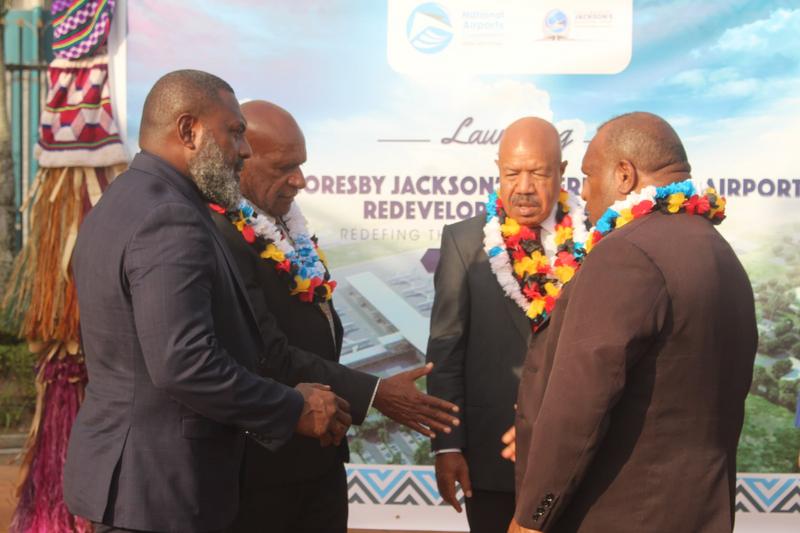
The launch also demonstrated a whole-of-government commitment to the project, with the Minister for Foreign Affairs, the Minister for Works and Highways, and the Governor of the National Capital District joining the project team.
Goi called on government agencies, industry and development partners to work together to ensure the success of Papua New Guinea's aviation sector.
"If you are listening now, please contribute one way or the other to make civil aviation work for us all as we move into the future," he said.
The phased redevelopment is expected to provide immediate relief from congestion while laying the foundation for long-term expansion of Papua New Guinea's principal international gateway.
Feasibility studies and financing arrangements for the fourth phase are scheduled to begin in 2027. NAC is expected to invite investors, contractors and development partners to participate in delivering what is set to become one of the country's most significant aviation infrastructure projects, reshaping PNG's aviation sector and supporting economic growth for decades to come.


